The volcano Ol Doinyo Lengai in Tanzania is unique on Earth: Its lava is rich in carbon compounds that melt at significantly lower temperatures than typical silicon-rich lavas from other terrestrial volcanoes.
It is possible, however, that carbon volcanoes could exist elsewhere, including on exoplanets, or—as suggested in a recently published article in Icarus—perhaps even on planet Mercury.
Despite being known from antiquity, Mercury is very hard to study because of its closeness to the
The volcano Ol Doinyo Lengai in Tanzania is unique on Earth: Its lava is rich in carbon compounds that melt at significantly lower temperatures than typical silicon-rich lavas from other terrestrial volcanoes.
It is possible, however, that carbon volcanoes could exist elsewhere, including on exoplanets, or—as suggested in a recently published article in Icarus—perhaps even on planet Mercury.
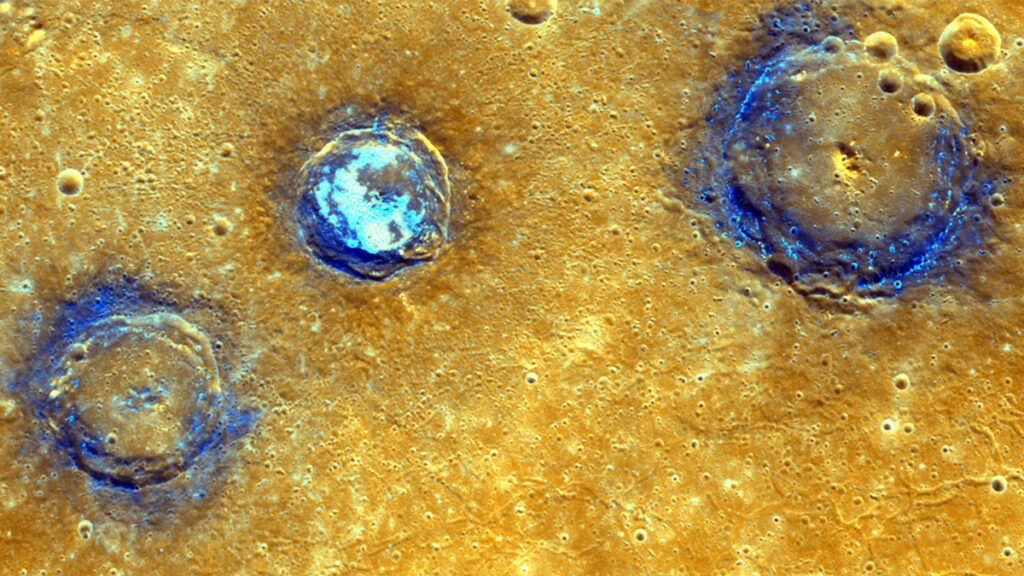
Despite being known from antiquity, Mercury is very hard to study because of its closeness to the Sun. As a result, the best data so far were gathered within the past 20 years by NASA’s MESSENGER (Mercury Surface, Space Environment, Geochemistry, and Ranging) probe. In particular, scientists identified mysterious pits they dubbed “hollows” scattered across Mercury’s surface. The hollows’ relatively bright appearance indicates they were formed in recent geological times, and could even be still forming today. The origins and geochemical makeup of these hollows are unknown.
“Mercury looks like the Moon a little bit, so we don’t expect large volcanoes,” said Maximilian Paul Reitze, a planetologist at Universität Münster’s Institut für Planetologie who is first author of the Icarus study. Without volcanic conditions like those on Earth or even on Jupiter’s moon Io, researchers expect Mercury to be largely geologically dormant. In other words, to explain hollows, “we need some volcanism under the conditions we expect on Mercury,” Reitze said.
Hence the interest in Ol Doinyo Lengai, known as the Mountain of God to the Maasai and Sonjo peoples. This volcano produces lava made up of carbonatites, igneous rocks composed of more than half carbon (and which are known to host critical minerals). These lavas flow at temperatures roughly 100°C lower than Mercury’s blazingly hot daytime temperature of 424°C. If the planet has a carbon-rich subsurface, as Reitze and his collaborators proposed, then the hollows could be Mercury’s version of Ol Doinyo Lengai.
This theory, however, has its skeptics.
“We know that there is carbon in [Mercury’s] crust, but the amount is very low,” said Paul Byrne, a planetary scientist at Washington University in St. Louis, who was not involved in the Icarus study. He also pointed out that the surface regions where carbon is most concentrated don’t correspond to higher concentrations of hollows. “For this to be some kind of carbon-based lava, it would imply a lot more carbon than we might think, given how widespread the hollows are.”
The Making of a Weird Planet
Mercury’s proximity to the Sun means that NASA’s Mariner 10 spacecraft provided humanity’s first-ever views when it flew by in 1974 and 1975. Three decades later, the MESSENGER mission was the first probe to orbit Mercury, mapping the planet’s full surface and turning up unexpected features like the hollows. The BepiColombo mission, a joint project of the European Space Agency and the Japan Aerospace Exploration Agency, is only the third mission ever to visit the planet, so when its two spacecraft settle into orbit in November 2026, it will almost inevitably reveal something unexpected, because it’s a weird planet.
“Basically, Mercury is a molten ball bearing wrapped in a thin blanket of rock.”
Unlike Earth, Mars, or the Moon, Mercury has a freakishly large core and a thin mantle.
“Basically, Mercury is a molten ball bearing wrapped in a thin blanket of rock,” Byrne said. “One explanation is that early in the planet’s life, either one large or several smaller impacts stripped the outer portion away.”
The question then becomes what got vaporized, and what was left behind, particularly when trying to understand hollows. Many planetary researchers proposed that sulfides in the mantle could drive volcanism, but Reitze had doubts.
“The problem with sulfides I see is that they’re stable up to 1,000°C or so, which cannot explain the explosive volcanism that’s needed to form those hollows,” he said.
Instead, he and his coauthors contacted a colleague working on Ol Doinyo Lengai, who obtained a sample of the lava for laboratory study while it was still molten. Because carbonatite lava reacts chemically with Earth’s air very quickly, the researchers needed to isolate it to understand how the unaltered materials might behave under conditions on Mercury, particularly infrared spectra that could be confirmed by the BepiColombo mission.
In the hypothesis proposed by Reitze and colleagues, impacts from meteorites heat the carbon-rich magma below Mercury’s surface, melting it and driving eruptions. The hollows, which are found frequently on the slopes of Mercury’s craters or their central peaks, are the remains of those eruptions. Over time, further meteorite bombardments and intense solar radiation destroyed older hollows, which is why the ones in MESSENGER data were all formed within the past 270 million years—a short time ago, geologically speaking.
“Anytime people have been confident about anything in planetary science, [planets have] shown you wrong.”
“The carbonatite angle is an interesting one, and I certainly wouldn’t rule it out,” Byrne said. “Anytime people have been confident about anything in planetary science, [planets have] shown you wrong. I’m certainly open to it, but is it the only explanation for all of the hollows? I am skeptical of that.”
Byrne and Reitze both dream of a future Mercury lander, a very challenging and expensive proposition nobody expects will happen soon. In the meantime, they agreed that BepiColombo data will help settle the question of whether the most Mercury-like place on Earth is a volcano in Tanzania.
Citation: Francis, M. R. (2026), A unique African volcano could solve a mystery on Mercury, Eos, 107, https://doi.org/10.1029/2026EO260176. Published on 2 June 2026.
Source: Geochemistry, Geophysics, Geosystems
About 600 million years ago, the continents wandered Earth, yet to settle into their current positions. Their locations during the Ediacaran (as this time is called) have been tough for scientists to pin down. Earth’s magnetic field appears to have behaved in erratic ways, and applying standard techniques to calculate the continents’ positions based on records of the magnetic field yields implausible results. In particular, scientists debate the l
About 600 million years ago, the continents wandered Earth, yet to settle into their current positions. Their locations during the Ediacaran (as this time is called) have been tough for scientists to pin down. Earth’s magnetic field appears to have behaved in erratic ways, and applying standard techniques to calculate the continents’ positions based on records of the magnetic field yields implausible results. In particular, scientists debate the location of an ancient continent called Baltica, which is now part of Europe.
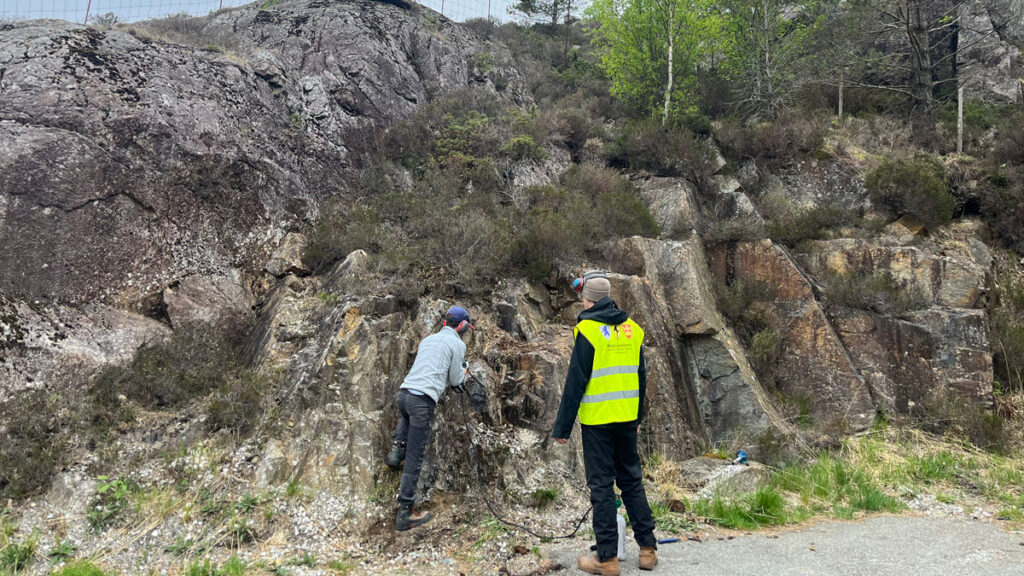
To investigate, Xue et al. traveled to Egersund, Norway, to collect samples of rock that formed during a time when Baltica’s crust was being pulled apart, allowing magma to percolate up from below. As that magma hardened, it recorded snapshots of Earth’s magnetic field, storing information about Baltica’s position in the process.
The results of studying these samples revealed a much more complex picture of the ancient rocks than the scientists initially envisioned. The rocks contained a messy mix of at least six magnetic signals. Several appeared to have formed when more modern geological processes altered the original rocks. Three distinct signals may have survived from the Ediacaran period, two of which diverge from the most plausible Ediacaran signal, which places Baltica near the equator. These conflicting signals further support the idea that Earth’s magnetic field was behaving strangely at the time, adding new complexity to an already puzzling picture.
On the basis of the new results, the researchers place the Egersund paleomagnetic pole at 20.8°N, 89.0°E during the Ediacaran—which diverges from previous results—and suggest that Baltica was located near the equator, adjacent to the ancient continent Laurentia, but rotated slightly clockwise relative to previous reconstructions. The study demonstrates the convoluted nature of the magnetic signals preserved in ancient rocks and the importance of dissecting those records into their constituent components. Doing so, the researchers suggest, can shed new light on the enigmatic behavior of Earth’s magnetic field during the Ediacaran. (Geochemistry, Geophysics, Geosystems, https://doi.org/10.1029/2025GC012730, 2026)
Source: Geochemistry, Geophysics, Geosystems
This is an authorized translation of an Eos article. 本文是Eos文章的授权翻译。
大约 6 亿年前,各大洲在地球上漂移,尚未最终定格在现在的位置。在埃迪卡拉纪时期,各大洲的位置对于科学家来说一直难以确定。地球的磁场似乎表现得异常不稳定,而利用标准方法根据磁场记录来计算大陆位置的做法却得出了一些难以置信的结果。尤其是,科学家们对一块名为波罗的大陆的古老大陆的位置存在争议,这块大陆如今是欧洲的一部分。
为了探究这一问题,Xue等人前往挪威埃格尔松德,采集了波罗的大陆地壳被撕裂、岩浆从下方涌出时形成的岩石样本。随着这些岩浆冷却凝固,它们记录了地球磁场的瞬时变化,并在此过程中存储了有关波罗的大陆位置的信息。
对这些样本的研究结果揭示了远比科学家们最初设想的更为复杂的古代岩石图景。这些岩石中至少包含了六种不同的磁信号,构成了一幅复杂的混合图景。其中一些信号似乎是在更现代的地质过程改变原始岩石时形成的。埃迪卡拉纪时期可能保存了三种
Since 1989, Utah’s Great Salt Lake has lost some 70% of its surface area, reducing its ecosystem services and creating stretches of drying lake bed (playa) that send toxic dust into the air.
That drying ground has also provided opportunities for scientists to survey what lies below the lake’s floor. In a study published in Geosciences, researchers revealed glimpses of fresh water and salt water, with some fresh water lurking only a few meters below the surface. The work could provide clues f
Since 1989, Utah’s Great Salt Lake has lost some 70% of its surface area, reducing its ecosystem services and creating stretches of drying lake bed (playa) that send toxic dust into the air.
That drying ground has also provided opportunities for scientists to survey what lies below the lake’s floor. In a study published in Geosciences, researchers revealed glimpses of fresh water and salt water, with some fresh water lurking only a few meters below the surface. The work could provide clues for conserving the lake, a crucial resource for both the ecology and the economy of the region.
Salt Lake, Fresh Water
In 2023, Michael Thorne and colleagues began using a technique known as electrical resistivity tomography (ERT), which can reveal the presence of fresh or salty water, at dozens of spots near the southern and eastern edges of the Great Salt Lake. Thorne is a geophysicist at the University of Utah in Salt Lake City and a coauthor of the new study.
The lake’s desiccation allowed the researchers to access areas where “at previous times, you would never be able to do measurements because [they] would be underwater,” said Thorne.
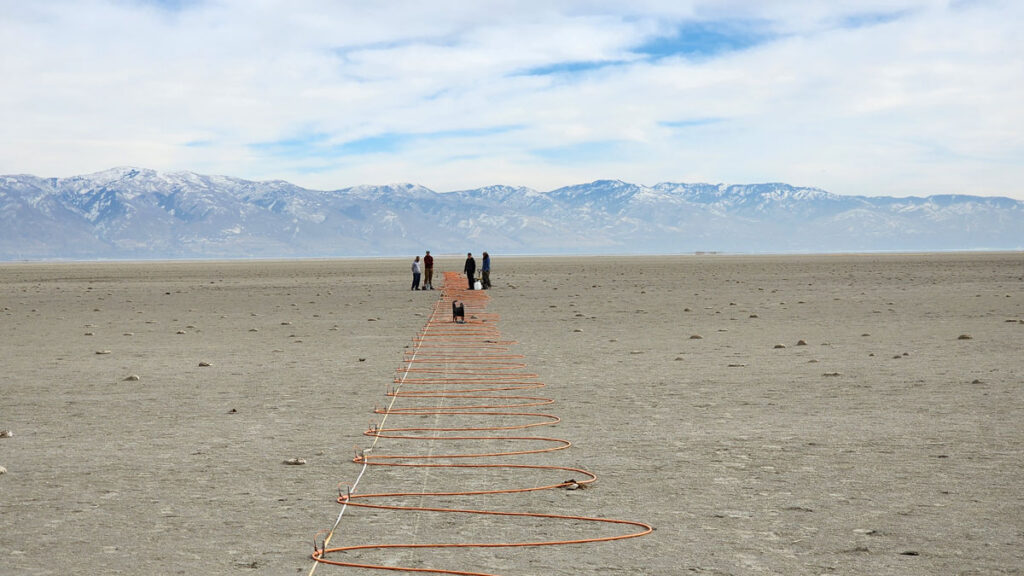
Establishing a network of ERT sensors requires robust fieldwork. Over the course of long days in the field, Mason Jacketta, lead author of the new study, and others placed electrodes into the ground a few meters apart, making lines that stretched hundreds of meters. Between pairs of electrodes, they measured the resistance to electrical current. Salty water, filled with electricity-conducting ions, has lower resistance than fresh water.
Paired with information on the rock and sediment beneath the surface, as well as with measurements from nearby wells, the ERT data allowed the team to work out a profile of how electrical resistance varied with depth and to figure out what kind of water seeped through pores in the ground below. The team shared the results of their work on the southern part of the lake in Geosciences, while more in-depth findings about the eastern shore will appear in an upcoming publication.
“What this is really showing is that [fresh water is] prevalent all over the place.”
At many of the sites, Jacketta and others found fresh water near the surface.
“What this is really showing is that [fresh water is] prevalent all over the place,” said Elliot Jagniecki, a geologist at the Utah Geological Survey who wasn’t part of the work.
That fresh water was often in close proximity to patches of salty groundwater. At one spot in the southeastern part of the lake, the team found a shallow layer of brine. But right below that, at only 5 meters of depth, they encountered fresh water. At the team’s most northern study site, they found fresh water around 2 meters deep. On the southern shore, they found fresh water in some places as shallow as 2.8 meters.
Mysterious Formations
The team’s results also helped explain curious features around the Great Salt Lake, including mounds made of salt and islands made of reeds.
The lacy-looking layers of the lake’s so-called mirabilite mounds form in the winter, when the cold freezes upwelling salty water, concentrating its salts. With measurements taken next to where some mirabilite mounds form, the researchers could visualize the underground conduits that send salty water to the surface.
While mirabilite mounds form close to shore, mounds made of Phragmites reeds appear in the lake’s interior as well as along its periphery. Thorne and his colleague William Johnson first noticed these mysterious circles popping up in Google Maps more than a decade ago. When they went to investigate, they found Phragmites.
“The population of Phragmites around the Great Salt Lake is really not allowing fresh groundwater to go back into the Great Salt Lake.”
In the new work, the team placed a line for electrical resistivity tomography straight through a Phragmites mound. These reeds wouldn’t be able to survive in the lake’s briny water, Thorne said, but the team’s results showed fresh water rising right to where the invasive reeds grew thick.
“The population of Phragmites around the Great Salt Lake is really not allowing fresh groundwater to go back into the Great Salt Lake,” said study coauthor Tonie van Dam, a geophysicist at the University of Utah. The reeds suck up some 70,000 acre-feet of fresh water that could go back into the lake, she said. In “sucking up [fresh water] for their own existence,” van Dam explained, the reeds crowd out native plant species that provide habitat for native birds.
More Than a Beautiful Landscape
Overall, the study provides a new picture of the fresh and salty groundwater beneath the lake and how these resources feed what people observe at the surface.
It’s also helped to prompt other work, Thorne said, including one recent study in which researchers used a helicopter carrying a wire loop to create and sense electrical currents underground. That study, published in Scientific Reports, suggested there could be a large amount of fresh water under one part of the lake.
But that work is a proof of concept, Jagniecki said, and accessing such potential aquifers might not be sufficient to help address the lake’s current desiccation. Even if they could, refilling them could take thousands of years. “I just don’t think that’s a solution,” he said.
Saline lakes are fragile ecosystems sensitive to climate change, Jagniecki said. The Great Salt Lake harbors plenty of life, such as brine shrimp that become food for a host of migratory birds that use the lake as a stopover. Mineral extraction and the use of brine shrimp for feed in aquaculture are important drivers of Utah’s economy.
Getting a better understanding of how saline lake systems function could be helpful in conserving them and maintaining the resources they provide humans, Jagniecki explained.
“It’s actually more than that. It’s a beautiful landscape,” he said.
—Carolyn Wilke, Science Writer
Citation: Wilke, C. (2026), What’s below the Great Salt Lake? More water, Eos, 107, https://doi.org/10.1029/2026EO260127. Published on 21 April 2026.
Albert Einstein postulated in his 1905 theory of special relativity that the speed of light in a vacuum is constant. Ever since, that’s been one of the fundamental assumptions of physics.
Now Enbang Li, a physicist at the University of Wollongong in Australia, has challenged this idea by building a machine he says is capable of detecting changes in the speed of light as it crosses Earth’s surface. The findings suggest that light is, in fact, sped up by gravity, which could have implications
Albert Einstein postulated in his 1905 theory of special relativity that the speed of light in a vacuum is constant. Ever since, that’s been one of the fundamental assumptions of physics.
Now Enbang Li, a physicist at the University of Wollongong in Australia, has challenged this idea by building a machine he says is capable of detecting changes in the speed of light as it crosses Earth’s surface. The findings suggest that light is, in fact, sped up by gravity, which could have implications for Earth science applications ranging from climate monitoring to mineral resource exploration.
An Old Conundrum
The idea that light is influenced by gravity is not new. Einstein’s ideas, which were further developed with his theory of general relativity in 1915, predicted massive objects in space would bend light with their gravitational grab. This theory was famously proven in 1919 when two independent teams measured starlight passing a solar eclipse at two different points on Earth’s surface and found the results matched Einstein’s predictions.
This bending of light’s path, according to general relativity, is achieved by a warping of the space-time fabric. Under this scenario, the speed of light remains constant—it just has to travel farther as it navigates the warped space-time around celestial bodies, so to a distant observer, it appears to have been slowed.
But what if light doesn’t navigate warped space-time and actually is slowed down or sped up by the gravity of large objects?
Li pointed out that Einstein himself was not always convinced the speed of light was constant. In 1911, he wrote a paper postulating that light speed changed depending on the gravity of objects it passed by. However, “when he published his general theory,” said Li, “he just abandoned this model.”
If the movement of light can be affected by gravity, Li reasoned, it might be possible to detect variations in its speed on a local level—such as an elevator shaft in a building on the campus of the University of Wollongong.
Raising the Big Issues
Gravity on Earth varies locally, depending on altitude, underground density, and topography. Gravity at the top of a tall building, for example, is measurably weaker than it is at the bottom.
With these variations in mind, Li installed an experiment in an elevator. It consisted of a coil of fiber-optic cable that if stretched out in one direction, would be 10 kilometers (6.2 miles) long. Laser beams were fired through the cables and then reflected back, thus traveling 20 kilometers (12.4 miles) before reaching an ultrafast photodetector. An oscilloscope measured the time it took for the beam to travel that distance. The experiment was run at the top of the shaft and at the bottom.
The biggest challenge, Li said, was filtering out all the surrounding environmental “noise,” such as changing temperature and humidity, electromagnetic disturbance, and building vibrations. Li designed a temperature control system, and the experiment was sealed in an enclosure with electromagnetic shielding to isolate air flows. Li ran the experiment and found light moved minutely faster at the bottom of the shaft than at the top.
Gravity Sensing on the Go
Next, Li took his research a step further by building a small, portable machine he claims can detect changes in the speed of light as it nears more gravitationally dense objects.
In this second experiment, Li positioned a moveable 72-kilogram (159-pound) weight near the machine. Light, he found, moved faster when the weight was near the machine than when it was farther away.
The results, which were published in Scientific Reports, are consistent with the variable speed of light model Einstein proposed in 1911, although Li’s preliminary results are much larger than that model predicts.
If proven, the findings would present a fundamental challenge to our understanding of both general and special relativity.
In the world of Earth sciences, they could lead to greatly improved gravity-sensing technologies. Because of their sensitivity to changes in mass, gravity sensors are used to map the seafloor and to locate underground mineral reserves. Gravity sensing can also improve our understanding of Earth’s climate as variations in the gravity field can be linked to factors like changes in ice mass and shifts in groundwater.
Currently, gravimeters are vulnerable to vibrations and movement, whereas Li’s machine, which has no moving parts, could even be used on board a plane or submarine.
“A Striking Claim”
Chris Stevens, a numerical relativist with the University of Canterbury in New Zealand, called the work “intriguing and ambitious.” While Stevens, who was not involved in the research, said that Li’s work is “well founded,” he noted that any observable effects of gravity on light on Earth would be “extraordinarily small” and therefore these results must be treated with caution.
“In my own research on observable gravitational phenomena,” he explained, “I usually require a few black holes colliding somewhere in the universe. Separating genuine gravitational signatures from environmental and instrumental noise will therefore be exceptionally demanding.”
“The work is exciting because it pushes precision photonic measurement techniques into a regime where relativistic effects may become practically useful for geophysics and sensing applications.”
Stevens said the implications of Li’s research, if validated, would be far-reaching. “The work is exciting because it pushes precision photonic measurement techniques into a regime where relativistic effects may become practically useful for geophysics and sensing applications.”
John Norton, an historian of physics at the University of Pittsburgh who was also not involved in the research, called the findings a “striking claim.” He was, however, skeptical of them, saying “if there is a coupling between light and gravity of magnitude greater than general relativity predicts, it is hard to see how the 1919 eclipse test and later studies of gravitational lensing would not have found it.”
Li acknowledged there is a long way to go before his device finds everyday use. Disentangling the intricacies of space and time, he said, is a vast challenge. “In physics, people still say gravity is a mystery. Light is another mystery. So if you put these two mysteries together, that’s going to be a giant mystery.”
—Bill Morris, Science Writer
Citation: Morris, B. (2026), How Einstein’s lost theory could help us find minerals, Eos, 107, https://doi.org/10.1029/2026EO260189. Published on 12 June 2026.
Seeking Solutions to PFAS Pollution
Chemical Companies Are Churning Out New PFAS. Where in the World Are They Ending Up?
The Persistence of PFAS
A Peculiar Polymer Paired with Sunlight Could Remove PFAS
Tracing the Path of PFAS Across Antarctica
Pollution Is Rampant. We Might As Well Make Use of It.
On a rocky archipelago in the North Atlantic Ocean, staff at the Faroese Environment Agency and the Faroe Marine Research Institute regularly sample tissues from the North At
On a rocky archipelago in the North Atlantic Ocean, staff at the Faroese Environment Agency and the Faroe Marine Research Institute regularly sample tissues from the North Atlantic long-finned pilot whales that roam the waters around the islands. The archive of these samples stretches back to the 1980s and has helped researchers determine the reach of human-made contaminants in the remote marine environment.
Jennifer Sun is one of those researchers. Sun studies PFAS—per- and polyfluoroalkyl substances, commonly known as “forever chemicals”—at Harvard University and is the lead author of a recently published study that analyzed how these toxic chemicals have accumulated in pilot whale tissue over the past 2 decades.
Using samples of whale tissue collected between 2001 and 2023, Sun and her colleagues measured a parameter called bulk extractable organofluorine, which shows the overall amount of organofluorine-containing chemicals (including PFAS) in the tissue. They then used a more targeted analysis able to confirm the identity of 28 specific chemicals out of thousands of possible PFAS formulations.
The pilot whale tissue showed an expected decrease in the concentrations of older PFAS but an unexpected scarcity of newer PFAS chemicals. Credit: Jennifer Sun
The study’s results showed an expected decrease in the concentrations of older PFAS but an unexpected absence of newer PFAS chemicals. This anomaly could be indicative of an emerging question in PFAS research: Where are the newest PFAS going?
Prolific PFAS
There are two general categories of PFAS. The first includes legacy PFAS such as perfluorooctanoic acid (PFOA) and perfluorooctane sulfonic acid (PFOS). Chemical manufacturers produced these compounds in the 1970s, 1980s, and 1990s for products including nonstick cookware and food packaging and in industries such as fabric waterproofing, industrial manufacturing, and firefighting.
Legacy PFAS were phased out in the early 2000s, and novel PFAS were made to replace them. The term “novel” is independent of chemical properties and instead refers to when the chemicals’ production began, though novel PFAS typically have formulations meant to reduce their persistence in the environment. For example, many novel PFAS molecules have shorter chains of fluorinated carbons than their legacy counterparts.
Novel PFAS include possibly millions of different chemical structures, and their production and use are increasing globally.
A generic PFAS molecule includes a compound head connected to a tail of fluorinated carbons. Older PFAS generally have longer tails (seven or eight carbons) than newer ones. Credit: Mary Heinrichs/AGU, after https://bit.ly/pennstate-ext-pfas
In the United States and elsewhere, regulatory structures that limit PFAS production target specific chemicals, such that every new formulation by a company must be tested individually before restrictions are put in place. With companies continually conjuring new PFAS formulations—which environmental advocates often call “regrettable substitutions” for their sometimes harmful effects—understanding the fate and transport of novel PFAS is difficult and time-consuming. Research on the behavior of specific PFAS may be a drop in the bucket when millions of potential PFAS, with millions of potential behaviors, pose current and future risks to people and the environment.
Scientists like Sun are determined to untangle how the fate of these new chemicals differs from their predecessors. As Sun expected, the phaseout of legacy PFAS was reflected in the pilot whale tissue she tested. These results are good news; they clearly show that the bans on legacy PFAS are working.
“We’re still finding [older] compounds, but clearly, they are no longer as abundant in the environment as they used to be, which is a positive,” said Bridger Ruyle, an environmental engineer at New York University who studies PFAS and assisted Sun and her coauthors in deciding which methods to use for the new study.
But Sun and her colleagues also expected an overall increase in concentrations of novel PFAS—after all, production of these chemicals is higher than ever, and researchers finally had the analytical tools to catch them.
“The inference is, if it’s not in the whales, and it’s not in the ocean…where is it?”
That wasn’t what they found. Instead, all but two of the emerging PFAS they tested for were virtually nowhere to be seen in the whale tissue, leaving the scientists leading the study to wonder where novel PFAS were accumulating or if instrumentation was limiting their detection.
“We do know that the novel PFAS are being produced, which means they’re going somewhere. Where they are, and how exposed people and other wildlife are, is not as clear,” Sun said.
“The inference is, if it’s not in the whales, and it’s not in the ocean…where is it?” asked Elsie Sunderland, an environmental scientist at Harvard University and coauthor of the new study.
Sun and Sunderland’s question—asking where novel PFAS are going—is one scientists are probing from multiple angles. Those who study particle transport are asking how novel PFAS might travel through Earth’s water and air. Those on the chemistry side of the investigation are deducing how novel PFAS might break down. And those who monitor environments are looking for traces of novel PFAS in various corners of Earth.
The answers to their questions have direct, practical implications for human and environmental health and could indicate whether a growing proportion of harmful PFAS may be ending up in close proximity to humans—where we work and eat and breathe.
A Toxic Legacy
The chemical properties of PFAS have made the chemicals useful since the 1940s. These same properties also make them highly persistent—the most durable types may not break down in the environment for several thousand years.
PFAS are linked to certain cancers and other human health harms. Much of the available data linking PFAS to poor health come from analyses of legacy PFOA and PFOS. They show an association between increased exposure to these chemicals and altered immune and thyroid function, liver and kidney disease, reproductive system disruptions, and more.
Chemical manufacturers phased out production of legacy PFAS after scientific evidence emerged associating PFAS and human health harms, businesses began to lose money in massive lawsuits, and regulations tightened. Novel PFAS were intended to show properties similar to legacy PFAS but were meant to break down more easily in the environment (lower persistence) and accumulate less easily in living tissue (lower bioaccumulative ability), though studies have shown mixed results about whether novel PFAS are actually safer for humans or break down more easily.
Because PFAS production data are often proprietary, scientists who study PFAS, like Sun, must rely on partial inventories of PFAS production or reverse-engineer those numbers from observations in the environment.
“We call it chemical Whac-A-Mole.”
Without a clear list of the chemical structures of novel PFAS, scientists don’t always have the analytical standards necessary for routine detection. And once scientists do understand the behavior of a PFAS chemical, it may be quickly replaced by another, unknown alternative. “We call it chemical Whac-A-Mole,” Sunderland said.
Legacy PFAS tend to have a high affinity for water and typically end up in the ocean, the place scientists refer to as the chemicals’ “terminal sink.” Many legacy PFAS also entered the ocean through atmospheric transport such as rain or snow. But because of the sheer number of chemical formulas and the chemical differences between legacy and novel PFAS, the pathways that novel PFAS take through the environment are less clear.
Tracking the movement and accumulation of novel PFAS in the environment is crucial for understanding how these chemicals may affect ecological and human health.
Still, the science is inconclusive about whether novel PFAS are moving or accumulating differently than their legacy counterparts, whether they have a different terminal sink, and where that terminal sink may be.
Close to Home
One possible answer to the question of the missing novel PFAS may have to do with geography. The chemicals may not have reached pilot whales in the Faroes because something about the new chemistry has led them elsewhere in the environment. To Sun, evidence suggests “that a lot of these novel PFAS, which we know are being produced, may not be transporting out into this more remote environment either at all or as quickly.”
Novel PFAS might be accumulating closer to their sources—and closer to us. “It may simply be that some of the replacement PFAS don’t make it all the way out into the open ocean. But if they are still in the terrestrial environment and the near-coastal environment, then wildlife and people who live close to the sources can be exposed, said Frank Wania, an environmental chemist at the University of Toronto Scarborough.
For example, one study monitored PFAS in coastal beluga whales in Canada’s St. Lawrence Estuary, relatively close to human communities and PFAS manufacturing sources. The study showed increasing concentrations of unregulated novel PFAS in whale tissue from 2000 to 2017, while concentrations of legacy PFAS declined.
The suggestion that novel PFAS are accumulating close to human communities is supported by measurements of PFAS in human tissue, too. Studies show that a high proportion of detectable organofluorine chemicals in human tissue are increasingly unidentifiable, suggesting that some of the novel PFAS production “is in us,” Sunderland said.
Far and Away
Though there are some indications that novel PFAS may be retained closer to human communities, there are also reasons to think some novel PFAS chemistries have resulted in substances that can actually travel farther and more easily than their legacy counterparts.
Anna Kärrman, an environmental chemist at Örebro University in Sweden, said that some novel PFAS may be more easily transported in the environment: “The more novel chemistries are increasing the properties of being very mobile in water, very mobile in the atmosphere, and not necessarily very bioaccumulative.”
The mobility of novel PFAS was on full display in a 2020 study that Sunderland coauthored, in which researchers reported detecting hexafluoropropylene oxide-dimer acid, a novel PFAS chemical more commonly known as GenX, in the Arctic for the first time. GenX, produced by chemical manufacturer Chemours, was meant to replace the legacy compound PFOA. The 2020 study suggested GenX “has already moved quite a bit,” said Rainer Lohmann, a marine geochemist who leads the STEEP (Sources, Transport, Exposure and Effects of PFAS) Center at the University of Rhode Island.
A pulley system mounted on a red beam pulls a small envelope filled with water along a string. Credit: Thomas Soltwedel
The 2020 study also found higher concentrations of PFAS in the Arctic Ocean’s surface water, suggesting that the atmosphere was a particularly important transport pathway for chemical transport. This idea is supported by studies of High Arctic ice caps, which experience contamination only from atmospheric sources, and polar bear tissue. Atmospheric transport of novel PFAS is a subject “at the edge” of PFAS research, Sunderland said.
Wherever researchers look, they’re finding that atmospheric transport is an important pathway by which some PFAS, especially PFAS precursors—chemicals that break down in the environment and become PFAS (either novel or legacy)—move. One idea called the PAART (precursor atmospheric and reaction transport) theory was developed by Scott Mabury, an environmental chemist at the University of Toronto, and others. The PAART theory proposes that many of the harmful PFAS that end up in the most remote parts of Earth are the result of the breakdown of volatile precursor PFAS that have traveled in the atmosphere.
According to Lohmann, atmospheric transport means the ocean remains a terminal sink because many novel PFAS transported in rain or snow will ultimately be deposited in the ocean.
In this scenario, the question of why novel PFAS are not bioaccumulating in Faroese pilot whales remains a mystery. While Lohmann suggests the novel compounds simply don’t accumulate in living tissue, Sunderland isn’t sure that’s the whole story: “As apex predators, the whales are sentinels for what is available and being taken up from the ocean,” she wrote in an email. “Since we don’t see [novel PFAS], it seems unlikely there are large quantities of these chemicals present.”
Profuse PFAS
Another possible explanation for the surprising results of Sun’s whale study could be that there’s just a lag; that is, novel PFAS will end up in Faroe Island pilot whales someday but haven’t yet. Chemicals that could eventually end up in the ocean may be temporarily trapped in soils or recycled back into terrestrial ecosystems via sea spray aerosols, for example.
“The delay we are seeing in the ocean response may in fact be [PFAS] precursors being retained in source zones,” Sunderland wrote in an email. These chemicals may be “taking a really long time to be transformed into more mobile compounds.”
In their pilot whale study, Sun and her colleagues modeled the transport of PFAS to the subarctic and found a 10- to 20-year lag existed between the production of a legacy PFAS compound and its detection in whale tissue. We’re still within that range for many novel PFAS. Sun said she would have expected them to show up in pilot whale tissue by now if they behaved like their legacy counterparts, though it’s possible that it has taken time for the volume of novel PFAS production to ramp up, increasing the time it would take for the substances to be detected in tissues.
The anomaly documented in the pilot whale study has led researchers to call for more investigation (and perhaps greater regulation) of novel PFAS. Credit: Bjarni Mikkelson
Still, the number of possible novel PFAS chemistries—again, there could be several million different compounds—makes it difficult to generalize how these new substances are, as a group, moving through the environment. “Because the exact structures of all [novel] PFAS remain unknown, some compounds may simply not be captured by the methods used,” Heidi Pickard, an environmental engineer at the consulting firm Ramboll and coauthor on the new whale study, wrote in an email.
Another reason novel PFAS are harder to study is that companies release lower concentrations of more kinds of the chemicals, rather than the “monstrously high” emissions of some legacy PFAS in the 1970s–1990s, noted Mabury, who was not involved in the new pilot whale study.
A New Regulatory Approach
According to Sun and Sunderland, cataloging differences between novel and legacy PFAS misses the broader point: We simply need to produce less PFAS. We’ve known for decades that PFAS harm human health, and some scientists have even argued that humans’ continual production and release of novel chemical compounds could drive Earth beyond a “safe operating space.”
“Researchers are critical for exposing the problem. But that, to me, is not the central issue here. The central issue here is a societal issue.”
Where scientists probe next may be less urgent than how policymakers decide to tackle the PFAS problem, Sunderland said: “Researchers are critical for exposing the problem. But that, to me, is not the central issue here. The central issue here is a societal issue.”
Chemical manufacturers are actively creating novel PFAS all the time. Kärrman, for example, has noticed patent applications for PFAS compounds with chemistries that “are nothing like we have seen before” that may start entering our environment in 5 or 10 years.
To Kärrman, that’s a reason for governments to push for chemical regulation based on properties such as persistence and bioaccumulation, rather than the chemical-by-chemical formula used in most countries, including the United States.
Such an approach has gotten traction in Europe via a proposal by the European Chemicals Agency to restrict the entire class of PFAS chemicals. The proposal is still under evaluation, and a final decision is expected by the end of the year.
In the United States, PFAS regulation and remediation are a key aspect of the Trump administration’s Make America Healthy Again movement, according to the EPA, and the federal government and some states already limit the concentrations of individual PFAS in drinking water. However, the EPA also said it planned to weaken some of those limits last year.
“We’re in a cycle of picking these regrettable alternatives [to legacy PFAS] and then figuring out that it was regrettable decades later,” Sunderland said. “We’re never going to catch up using this chemical-by-chemical approach.”
Citation: van Deelen, G. (2026), Chemical companies are churning out new PFAS. Where in the world are they ending up?, Eos, 107, https://doi.org/10.1029/2026EO260136. Published on 30 April 2026.

 Login
Login