Childhood movies become fuzzier as you get older. Sometimes all that's left is a snippet of a long-forgotten catchy tune or a specific animated scene that lives in the depths of your brain. You'll often wonder, “Where is that from?” just to realize that the mouse family on a train was an obscure film you saw as a youngster.
SEOUL, June 10 — The leaders of North Korea and China have adopted a “far-reaching blueprint” for bilateral ties during Xi Jinping’s recent visit to Pyongyang, the Korean Central News Agency said today.
China’s president made a rare visit to North Korea on Monday after hosting a series of world leaders, including US President Donald Trump and Russian leader Vladimir Putin, in Beijing.
“Comrade Kim Jong Un and Comrade Xi Jinping expressed satisfaction and deep emotion over the fact that they provided a far-reaching blueprint for the development of the relations,” KCNA, the country’s official news agency reported.
During the two-day visit, which Xi made with his wife, “the countries further deepened the revolutionary friendship and close comradely relationship and affirmed their steadfast will to develop the traditional DPRK-China friendly ties into a model of the most powerful and strategic relations,” the KCNA dispatch said.
As part of the visit, Xi and Kim toured the Central Cadres Training School of the Workers’ Party, where they discussed the training of party officials and planted a commemorative tree, before visiting the Friendship Tower memorial honouring Chinese soldiers who fought in the Korean War.
Kim later hosted Xi and their wives for a luncheon before accompanying the Chinese leader to the airport for his departure.
Following his trip, Xi sent Kim a letter of gratitude, in which he said the two leaders “made an in-depth exchange of views on the issues of mutual interest and achieved a series of important common understanding”, according to KCNA.
The talks, Xi wrote to Kim, “showed the firm determination of both sides to add luster to the traditional friendship, promote development and prosperity together and defend peace and stability in the region and the rest of the world”, the KCNA dispatch said.
Kim, whose country has been historically reliant on China, has drawn closer to Moscow in recent years while expanding his country’s nuclear weapons programme.
He boosted an alliance with Putin after sending troops to fight alongside Russian forces against Ukraine.
But China, Washington’s chief geopolitical rival, has been North Korea’s main trading partner by far for decades and a key source of diplomatic and economic support for a country hit by international sanctions.
Xi’s trip comes just weeks after he held talks with Trump, during which the White House said the leaders “confirmed their shared goal to denuclearise North Korea”. — AFP
President Xi Jinping concluded a visit to North Korea on Tuesday, after meetings with Kim Jong Un that the Chinese leader said reached an “important consensus” on building ties.
This picture taken and released by North Korea’s official Korean Central News Agency (KCNA) shows (from left) Chinese President Xi Jinping, his wife Peng Liyuan, North Korean leader Kim Jong Un and his wife Ri Sol Ju attending a welcoming ceremony at Kim Il Sung Square in Pyongyang on June 8, 2026. Photo: KCNA via KNS/AFP.
He travelled with his wife and several other top officials for a two-day trip he said aimed to bring ties between the longtime partners to “new heights”.
The timing appeared significant, coming after Xi hosted a string of world leaders, including US President Donald Trump and Russia’s Vladimir Putin, in Beijing.
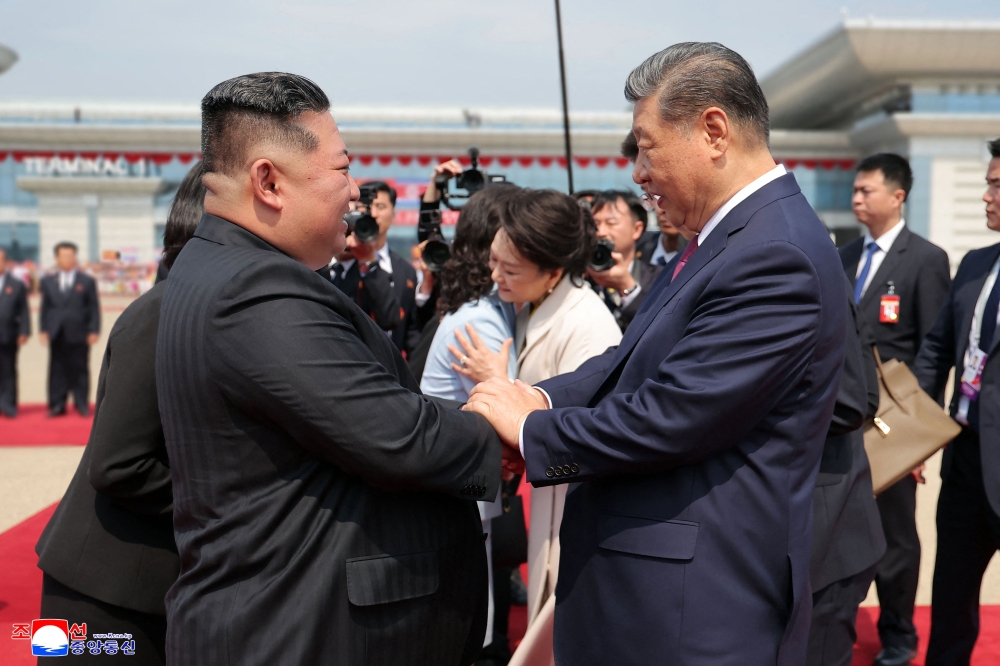
State media images showed Xi and Kim beaming as they shook each other’s hand, with the Chinese leader receiving a lavish welcome ceremony with a red-carpet military salute and cheering crowds.
What were the outcomes?
Xi said he had reached “an important consensus with Kim on developing China-DPRK relations in the new era”, China’s Xinhua news agency reported, using North Korea’s official acronym.
The leaders agreed to put the two nations’ friendly relations “on a more solid basis”, North Korea’s official Korean Central News Agency said.
Xi told Kim their countries should “should strengthen exchanges in diplomacy, law enforcement (and) the military” and expand economic cooperation, according to Chinese state media.
He also called for expanded economic cooperation, citing the recent reopening of border crossings and transport links.
Beijing has long been Pyongyang’s largest economic partner, with US and South Korean estimates indicating that China has accounted for almost all of North Korea’s annual foreign trade in recent years.
In March, flights and passenger train services between Beijing and Pyongyang resumed after a six-year hiatus due to pandemic-era border closures and their aftermath.
What about North Korea’s nukes?
Official readouts and state media reports have not said whether Xi and Kim discussed North Korea’s nuclear weapons development, for which Pyongyang languishes under international sanctions.
This picture taken and released by North Korea’s official Korean Central News Agency (KCNA) shows North Korean leader Kim Jong Un (right) and China’s President Xi Jinping shaking hands before their meeting at the Kumsusan State Guest House in Pyongyang on June 8, 2026. Photo: KCNA via KNS/AFP.
That is important because the White House said last month that the Chinese leader and Trump had “confirmed their shared goal to denuclearise North Korea” during their summit in Beijing.
Kim has repeatedly vowed never to give up his nuclear arsenal, and his powerful sister said before Xi’s visit that the programme was Pyongyang’s “line of no retreat”.
The absence of denuclearisation from official statements means the summit effectively “appeared to have been a forum where China granted Pyongyang’s rights to nuclear weapons”, Lee Ho-ryung of the Korea Institute for Defense Analyses told AFP.
In return, it appears Kim “supported Beijing’s One-China principle regarding Taiwan”, she added, referring to the self-ruled island China claims as its own.
“Our party and government will fully support the policy and stand of the Chinese party and government to defend the core interests on the ‘one-China’ principle,” KCNA said.
How did Kim emerge from the talks?
Analysts noted that the summit took place as Kim enjoys enhanced global status after backing Russia with troops and munitions in its war with Ukraine.
Kim is “no longer just a recipient of aid, but a provider of critical military assets”, having “successfully leveraged his nuisance value into strategic relevance”, Seong-Hyon Lee, a visiting scholar at the Harvard University Asia Center, told AFP.
Hong Min, an analyst at the Korea Institute for National Unification, said the meeting reflected the convergence of “North Korea’s desire to cement its status as an indispensable strategic actor through its nuclear arsenal” and “China’s expanding ambitions to shape the Northeast Asian order”.
Besides Xi and Putin, Kim’s meetings with leaders from Belarus, Laos and Vietnam since last year have proven that North Korea is no longer such a diplomatic pariah, said Minseon Ku, a diplomacy professor at DePaul University.
China and North Korea have a military alliance centred on a 1961 treaty obliging each side to come to the other’s aid in the event of an armed attack.
North Korea is the only country with which China has such a military agreement, though Pyongyang also signed a mutual defence treaty with Russia in 2024.
Beijing appears to aim “to offer economic incentives while monitoring North Korea to ensure it does not act against Beijing’s interests in the diplomatic and military spheres”, Hong said.
Nothing sucks when Scooter Braun and Sydney Sweeney link up.
The music exec documented his undercover date night with the Everything Sucks! star, filming the pair as they took a self-led tour...
On December 10, 2024, a woman arrived at a health facility in Pariak, a town in the state of Jonglei in South Sudan, with diarrhea, vomiting and symptoms of dehydration. She had recently returned from an area affected by cholera. In one of the most vulnerable countries in the world, where millions of people lack regular access to clean water and health services, this could have been the beginning of a new emergency.
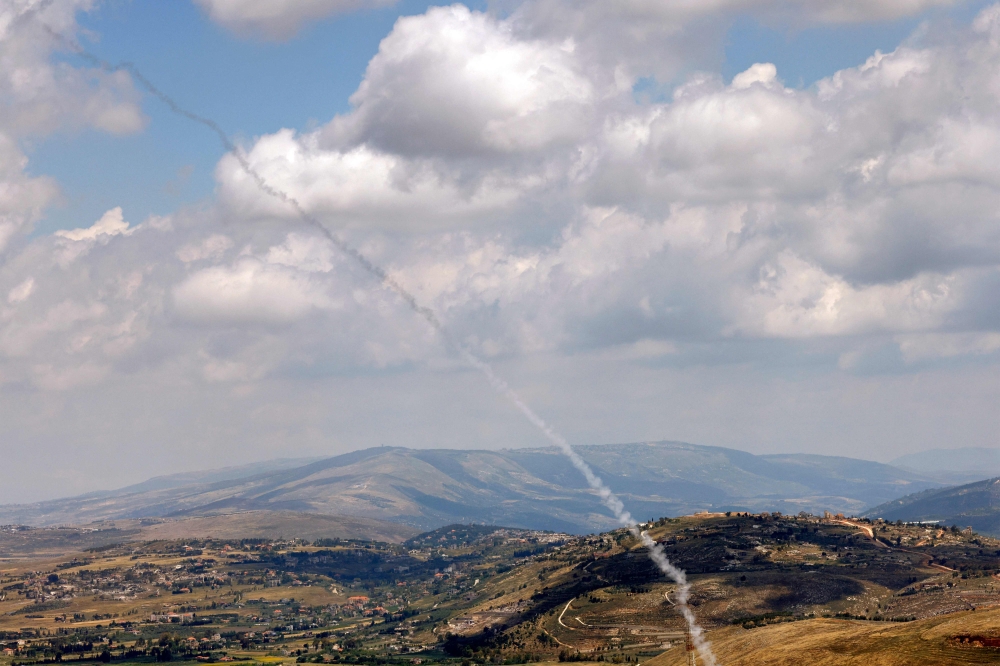
JERUSALEM, June 2 — Israel’s defence minister said today there would be “no calm in Beirut” if Hezbollah attacks continued and vowed to establish a military-controlled zone in the area of south Lebanon’s Litani River.
“The Dahiyeh in Beirut is no different from the communities in northern Israel—if there is no calm in the north, there will be no calm in Beirut,” Israel Katz said in a statement released by his office, referring to the Beirut southern suburb and Hezbollah stronghold where he had earlier Monday ordered strikes.
“At the same time, the IDF continues to operate with fire and manoeuvre against Hezbollah terrorists and infrastructure in Lebanon... in order to push threats away from IDF forces and from the residents of the State of Israel, and to turn the Litani area into a zone under IDF security control, free of weapons and terrorists,” Katz added.
Israeli Prime Minister Benjamin Netanyahu has vowed to push deeper into Lebanon after announcing on Friday that a large part of south Lebanon was now considered a “combat zone”, despite a ceasefire.
After the ceasefire came into effect on April 17, Israel established a “Yellow Line” about a dozen kilometres from its northern border, inside Lebanese territory.
Lebanese President Joseph Aoun said on Monday his country was facing “a vicious and reprehensible Israeli aggression”.
Israel and Hezbollah frequently accuse each other of violating the terms of the ceasefire. — AFP
SINGAPORE, June 3 — A 55‑year‑old woman who repeatedly assaulted her domestic worker — including pulling off the helper’s headscarf in a lift — was sentenced today to four months’ jail and ordered to pay S$5,000 (RM15,567) in compensation.
CNA reported that Hasnah Hashim pleaded guilty to two charges of voluntarily causing hurt, while three other similar offences were taken into consideration for sentencing. The incidents took place in August 2024, when the victim, a 32‑year‑old Indonesian national, was employed in her household.
On Aug 23, 2024, the pair were returning from the market when the maid entered the lift first and pressed the button to close the doors. Hasnah managed to step in but became angry, grabbing the helper’s headscarf with both hands and yanking it down.
According to the prosecution, the act caused pain when the victim’s hair was pulled and left her humiliated, as she wears the headscarf for religious reasons. The incident was captured on video and submitted to the court.
Earlier Assaults Included Slaps, Pinching and Ear‑Pulling
The victim later reported the matter to police. A medical check revealed a bruise on her upper lip from an earlier assault three days before, when Hasnah slapped her for mistakenly placing tofu in the freezer.
Other incidents that month — including hitting the helper with a mobile phone, pinching her thigh and twisting her ears — formed the remaining charges considered during sentencing.
The prosecution noted that the maid has been unable to secure new employment since the case began, as potential employers were concerned she might be required to testify. Her last drawn salary was S$882.
Prosecutors sought between four and six months’ jail and S$7,500 in compensation, while the defence asked for a three‑month term and S$1,000 compensation, citing Hasnah’s remorse and previous positive references from former helpers.
Senior District Judge Ong Hian Sun ultimately ordered S$1,000 for pain and suffering and S$4,000 for lost wages.
Under the law, offences committed against a domestic worker by her employer carry up to twice the maximum penalty for voluntarily causing hurt.
Police investigations into the case have concluded.
The Hong Kong government has announced a series of special offers and freebies covering transport, culture, retail and dining as part of the celebrations to mark the 29th anniversary of the Handover.
Celebrations for the anniversary of the Handover on July 1, 2025. Photo: GovHK.
During Hong Kong Special Administrative Region Establishment Day on July 1, residents can enjoy free rides on all trams, whilst the MTR will give away 71,000 domestic single rides in a lucky draw.
Holders of child or student Octopus cards, as well as senior citizens’ JoyYou cards, will enjoy special Airport Express offers. Several ferry routes will be free of charge, with vouchers to be distributed in advance, according to a Tuesday government press release.
Several fee-charging facilities of the Leisure and Cultural Services Department and the Wetland Park will offer free admission. Designated exhibitions at M+ and the Hong Kong Palace Museum will also be free.
Kowloon Park Swimming Pool. Photo: GovHK.
Ticket offers will also be provided by The Peak Tram, Ngong Ping 360, Ocean Park Hong Kong and Tai Kwun.
Free guided tours, dining, consumption and accommodation offers will be on offer from mid-June to early July. Moreover, over 1,000 restaurants and merchants are expected to provide dining offers, alongside government-run public markets.
Meanwhile, the Hong Kong Jockey Club will hold the Hong Kong Reunification Raceday at Sha Tin Racecourse on July 1. Both the Sha Tin and Happy Valley racecourses will be free to enter.
“The Government thanks various sectors for actively responding to its call by launching special offers and activities to celebrate with the public the HKSAR’s 29th anniversary,” the statement said.
Traditionally a day of mass protest, the last July 1 pro-democracy march was held in 2019, before the enactment of the security law a year later.
Full details of this year’s offers and events can be found at www.hksar29.gov.hk, with more announcements to come.
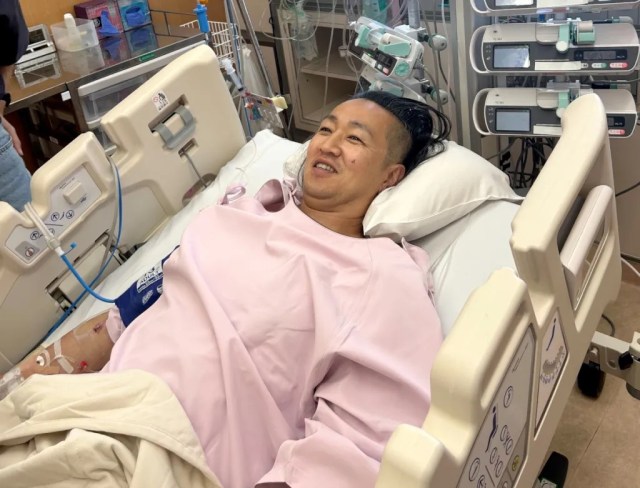
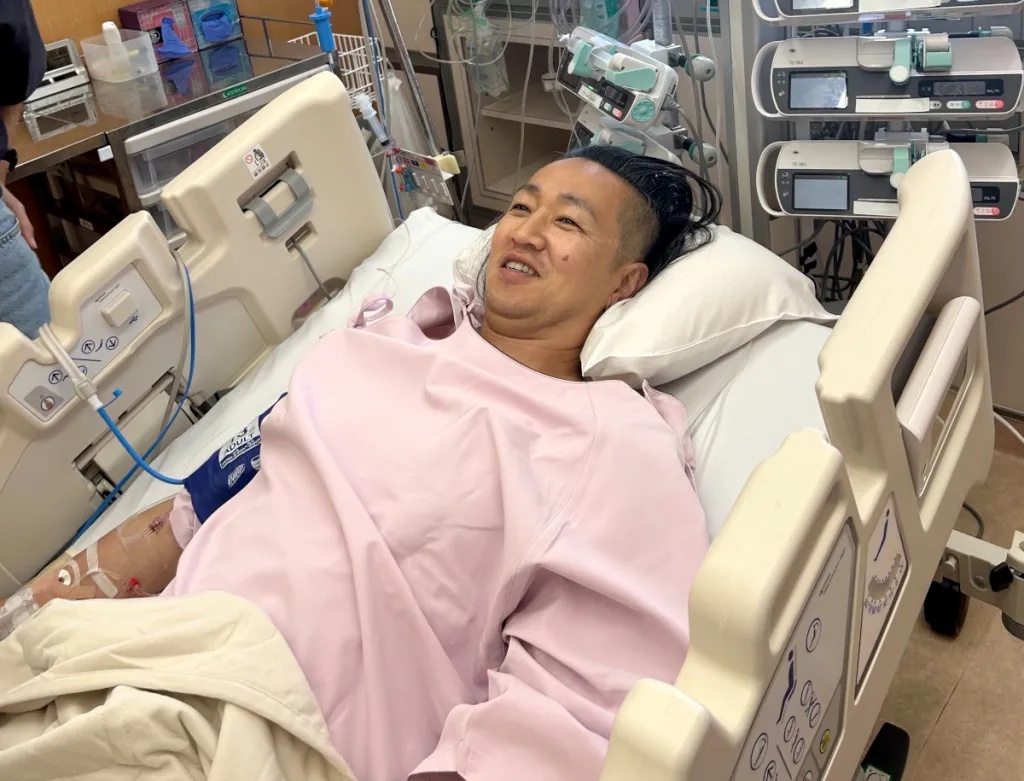
Dedicated correspondent that he is, though, P.K. still feels the urge to write while he’s recuperating. For the record, this isn’t something we asked him to do, but he wants to share the story of what happened, so we’ll turn things over to him now.
Seriously, I’m as surprised about this as anybody, but I had a heart attack.
I’m writing this on the morning of Tuesday, May 19, and I had the heart attack on Sunday morning. So yeah, it’s only been two days since it happened. “Should you be working right now?” is probably something a lot of you are thinking, but physically, I’m honestly feeling fine right now. Really, I’m getting antsy just sitting here in the hospital with so much time on my hands, so I figured I’d fire up my laptop and write something.
Getting down to business, on Sunday I woke up at about 7 in the morning and felt a weird pain in my chest. I can’t really remember if it was the pain that woke me up, or if I noticed it after I was awake, but either way, when I made a move to get out of bed, my chest was hurting. At first, it felt like my whole upper body had tensed itself up.
It was strange to feel that sensation over such a large area, and I remember thinking “Geez, is this what getting older feels like?” But after I got up and went to the bathroom, the pain went away…or so I thought. It was only gone for a second, but then it came back so much worse, and I started gushing cold sweat.
In a rush, I grabbed my phone and did a search for “chest pain sickness,” and the results said “There is a possibility that you are experiencing myocardial infarction [a heart attack] or aortic dissection” and “Please call 119 [the nationwide number for emergency medical services in Japan] immediately.” That’s when I realized “Uh oh…this might be something serious.”
But even still, I didn’t call 119 right away. I didn’t want to jam up the line calling for an ambulance if my condition turned out to be nothing major, and I can’t deny that at this point I was still thinking “No, I couldn’t be having a heart attack. Not me.”
So instead I dialed 7119, which is the Tokyo Fire Department’s Emergency Consultation number, thinking that I should ask them whether or not I really needed an ambulance. To be honest, my memory starts getting a little fuzzy from here, but I remember the operator asking me “Do you think you can make it to the hospital by yourself?”, but by that time the pain had gotten exponentially worse. “No, I don’t think I can,” I told her, and she said she’d send an ambulance, telling me to stay in my apartment, so I sat in my entryway and waited.
Actually, a fire engine arrived even before the ambulance, and they administered first aid to me. The ambulance rolled up right after that, though, and it seems like they did some other on-site treatment too. While that was going on, they kept asking me “Can you tell us your name and date of birth?” “Damn, quit asking the same thing over and over!” I thought, but now I can understand that they were doing that to make sure I was still able to think straight and communicate. Once they were done with the first aid, they loaded me into the ambulance and rushed me to the hospital and into the emergency room, with my consciousness starting to fade. The doctors diagnosed me as having had a heart attack, and I had to have surgery, but it’s crazy how a few hours later I felt so much better.
P.K. says he has more to say about his experience, but we’re going to let the guy get some rest now. As mentioned in his report, the number for emergency medical services in Japan, and emergency fire department response too, is 119, and the number in Tokyo for “emergency consultation” is 7119. We should also add, however, that we don’t necessarily recommend copying P.K.’s hesitancy to call for an ambulance when experiencing searing chest pains, since it really could be a matter of life and death.

 Login
Login



 Nothing sucks when Scooter Braun and Sydney Sweeney link up.
The music exec documented his undercover date night with the Everything Sucks! star, filming the pair as they took a self-led tour...
Nothing sucks when Scooter Braun and Sydney Sweeney link up.
The music exec documented his undercover date night with the Everything Sucks! star, filming the pair as they took a self-led tour...