 Login
Login
This Biotech Startup Thinks It Can Reverse Vision Loss and Cellular Aging. It’s Testing a Novel Therapy Now
The first human patient has received a dose of Life Biosciences’ sight recovery drug.
©

The first human patient has received a dose of Life Biosciences’ sight recovery drug.
©

Microsoft and Nvidia made joint announcements today. Microsoft is launching a brand-new Surface Laptop Ultra, the most powerful Surface Laptop ever built, and it is powered by Nvidia's new RTX Spark system-on-a-chip, a "new superchip that reinvents Windows PCs for the era of personal AI agents."
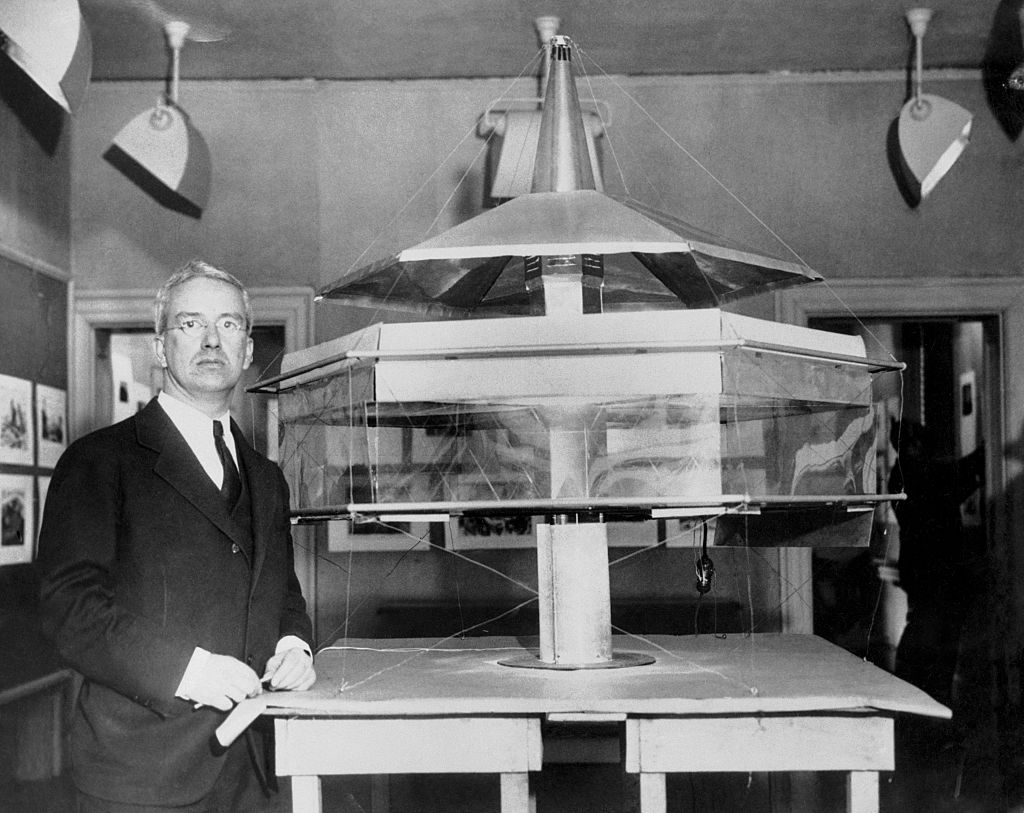
Tucked into a corner of the cavernous Henry Ford Museum of American Innovation, just outside Detroit, is a structure that looks like a cross between a Mongolian yurt and a flying saucer. All gleaming aluminum on the outside, on the inside it’s decorated like the set of The Dick Van Dyke Show, complete with a functional dinette set, midcentury modern living room furniture, and a chrome-clad fireplace. This is the Dymaxion House, and once upon a time it promised to solve a nationwide housing crisis, offering young families two bedrooms, two full baths, and a suite of modern conveniences for the low, low price of $6,500 (about $110,000 today).
“Newest answer to housing shortage is round, shiny, hangs on a mast and is made in an airplane factory,” announced LIFE Magazine, in a 1946 article about the unveiling of the prototype, designed by architect R. Buckminster “Bucky” Fuller. The Dymaxion House—its name a portmanteau of “dynamic,” “maximum,” and “tension”—was “eminently practical,” the article’s author claimed, adding that only “one major question remained: Would people buy such a strange house?”
“All indications are that there was a great deal of interest,” Marc Greuther, chief curator at The Henry Ford, tells Popular in answer to LIFE’s skepticism. Still, despite some 30,000 unsolicited orders that arrived shortly after Fuller unveiled his prototype, it was unclear “how many folks were swept up in the moment, and how many were genuinely intrigued.”
The Dymaxion House certainly did arrive at the right moment. Fuller, today best-known for popularizing the geodesic dome, had actually conceived the Dymaxion House in the 1920s, but it wasn’t until after World War II ended that circumstances aligned to make it a reality.
“The housing shortage has become a serious problem throughout the Nation,” wrote President Harry S. Truman, in a February 1946 statement calling on religious communities to help. “Thousands of our veterans are finding it impossible to obtain adequate housing for themselves and their families. In spite of our best efforts to facilitate new construction, the shortage will probably remain acute for some months.”
Meanwhile, factories that had ramped up capacity for the war effort were in need of new projects, especially ones that could make use of surplus materials no longer needed for military aircraft and shipbuilding.
“Circumstances have converged to produce Emergency in relation to House,” Fuller told a New Yorker correspondent (who transcribed the futurist’s pronouncements using somewhat idiosyncratic capitalization), “thus enabling mass production of House for the first time in the history of Man.”
Two Dymaxion prototypes were built in Wichita, Kansas, by the Beech Aircraft Corp., which aimed to build 200 houses a day (Fuller planned eventually to license the design to other manufacturers, with a goal of building 185,000 a year.)
The house would have the efficiency of a submarine, with molded plastic bathrooms and built-in, rotating shelves, and it would be hung from a central mast, its weight supported by tension like a suspension bridge. That would allow for much lighter construction than a conventional house, consistent with Fuller’s aim to “do more with less,” and it would make shipping more practical—the whole house weighed only three tons, about as much as a full-size pickup truck, and could be shipped anywhere in America for $100.
“It’s always struck me as a very technological solution to shelter,” Greuther says. “In the modern era all shelter is technological to some degree, but it rather wears it on its sleeve, doesn’t it?”
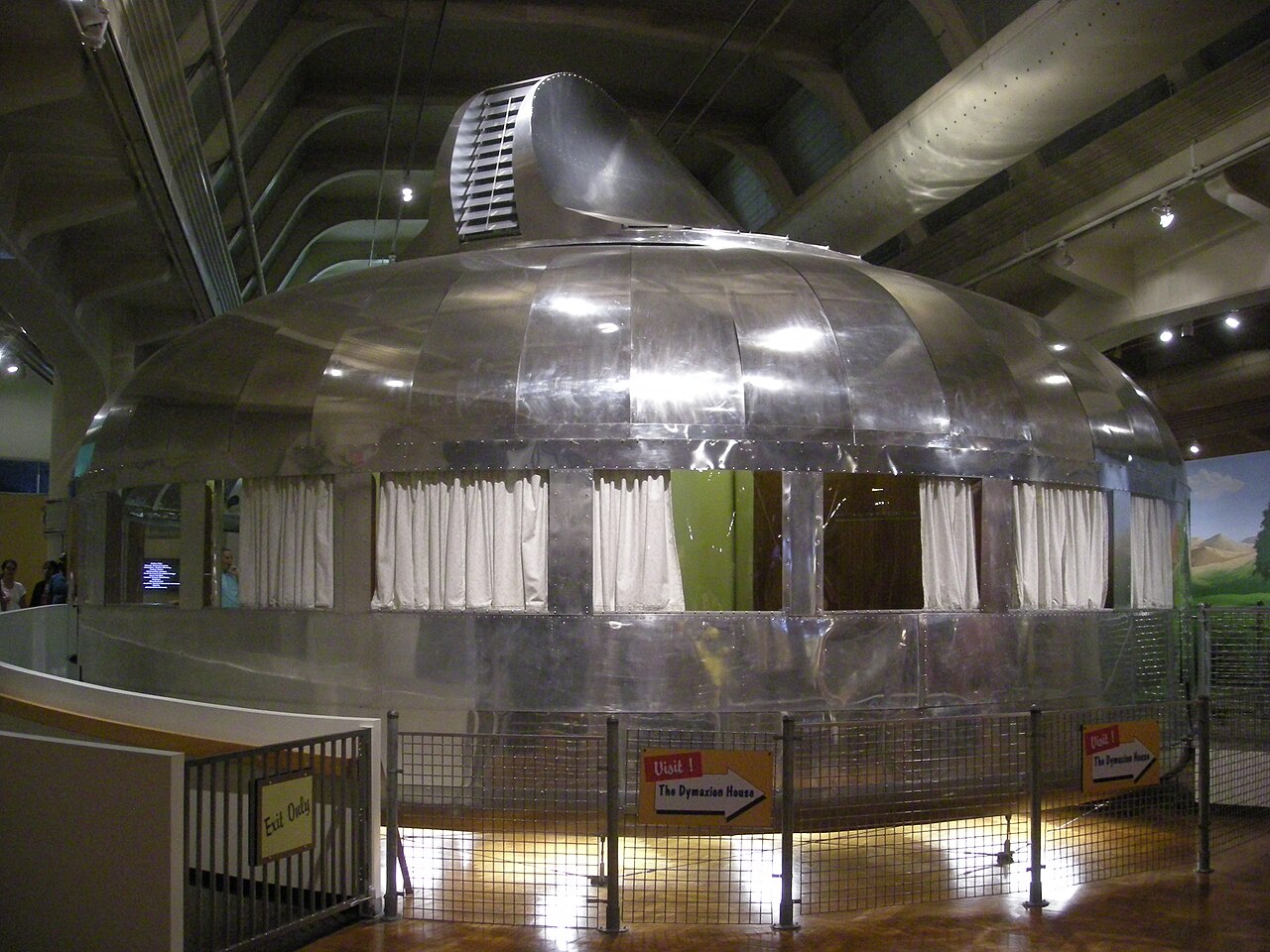
Still, while it may have looked like something from The Jetsons, the Dymaxion House was not truly “futuristic,” he argues.
“I think Fuller was at pains to indicate what was being demonstrated was possible. It wasn’t based on some future development of some kind—wireless technology or whatever. It was achievable with the manufacturing and the technological means of that time. It was designed to be realizable.”
Unfortunately for Fuller, and for the thousands of families that tried to order their own, the Dymaxion House ultimately was not realizable.
While Beech Aircraft had the capability, it would have cost more than $10 million to retrofit the factory for high-volume production. Meanwhile, Fuller, never much of a businessman, fell out with his investors. Despite the hype, only two houses were ever actually built, and one not even assembled.

A Kansas oilman, William Graham, bought one Dymaxion House, incorporating it into his family’s country home, which was abandoned to a colony of raccoons after he died in 1981. That could have been the end, except that in 1991 the Graham family donated the house to The Henry Ford, which used what was left of both prototypes to construct the model that visitors tour today.
Eight decades after the Dymaxion House almost became a reality, the United States is again facing a housing crisis, as rents soar in major metropolitan areas and young families struggle to find affordable starter homes. Might Fuller’s idea have something to teach us today?
“I think it might be in the thinking as opposed to the execution,” Greuther says, “Fuller was one of the earliest people to be really vocal about whole systems…thinking about all the world’s needs—for housing and food and all the rest of it—and how to balance them. It might be the wrong answer, but it’s still the right question.”
In That Time When, Popular Science tells the weirdest, surprising, and little-known stories that shaped science, engineering, and innovation.
The world’s first ‘hovertrain’ could reach speeds of 270 mph in the 1960s
The CIA once trained cats to be Cold War spies
In 1871, cities almost got moving sidewalks. Why are we still waiting?
In 1916, hybrid cars could’ve changed history. But Ford wouldn’t allow it.
Inventor Beulah Louise Henry’s unstoppable rise to becoming ‘Lady Edison’
The only person to win an Olympic medal and a Nobel Peace Prize
The post After WWII, flying saucer-shaped houses almost filled American suburbs appeared first on Popular Science.


More than 90 per cent of Hong Kong companies, schools, and NGOs have incorporated artificial intelligence (AI) into their workflows, according to a survey.

According to a survey of 800 organisations conducted by the Hong Kong Internet Registration Corporation Limited (HKIRC), 94 per cent said they had used AI tools.
Among those, 63 per cent had not established an internal AI usage policy for employees, while 68 per cent had not conducted any AI training, the survey found.
HKIRC CEO Wilson Wong said on Tuesday that employees at almost half of the surveyed organisations had used unauthorised AI tools.
“While the penetration rate of AI in the workplace is exceptionally high, most organisations still face security risks regarding governance, tool usage and training,” Wong was quoted as saying in a statement issued by the government’s Digital Policy Office (DPO).
He was speaking at a joint press conference on cybersecurity, alongside representatives from the DPO, the Hong Kong Police Force’s Cyber Security and Technology Crime Bureau, and the Hong Kong Computer Emergency Response Team Coordination Centre (HKCERT).
Wong cited an earlier survey by the HKCERT, which found around 35 per cent of businesses using AI admitted to feeding company information into AI tools.

Some employees used open-source AI tools to process meeting minutes, for instance, which could lead to errors or data leaks, he added.
Wong said the HKIRC, which oversees Hong Kong domain names, would launch the Secure AI@Work Enablement Campaign to provide training and assistance in formulating AI policies, as well as suggestions for suitable AI tools and regulations on information that should not be processed by AI.
The campaign “will assist organisations in plugging governance gaps through training, AI strategy and policy formulation tools and advisory services,” the statement said.
Edmond Lai, chief digital officer of the Hong Kong Productivity Council, the parent organisation of the HKCERT, said that the HKCERT would seek to bolster public education and talent cultivation in AI and cybersecurity through publicity campaigns, such as AI-generated tram advertisements and videos.

SpaceX and Anthropic have already declared their intentions with the SEC, and OpenAI is rumored to be preparing its filing in the near future.
©
The drivers will wear helmets at the Monaco Grand Prix that are exactly like their Lego creations.
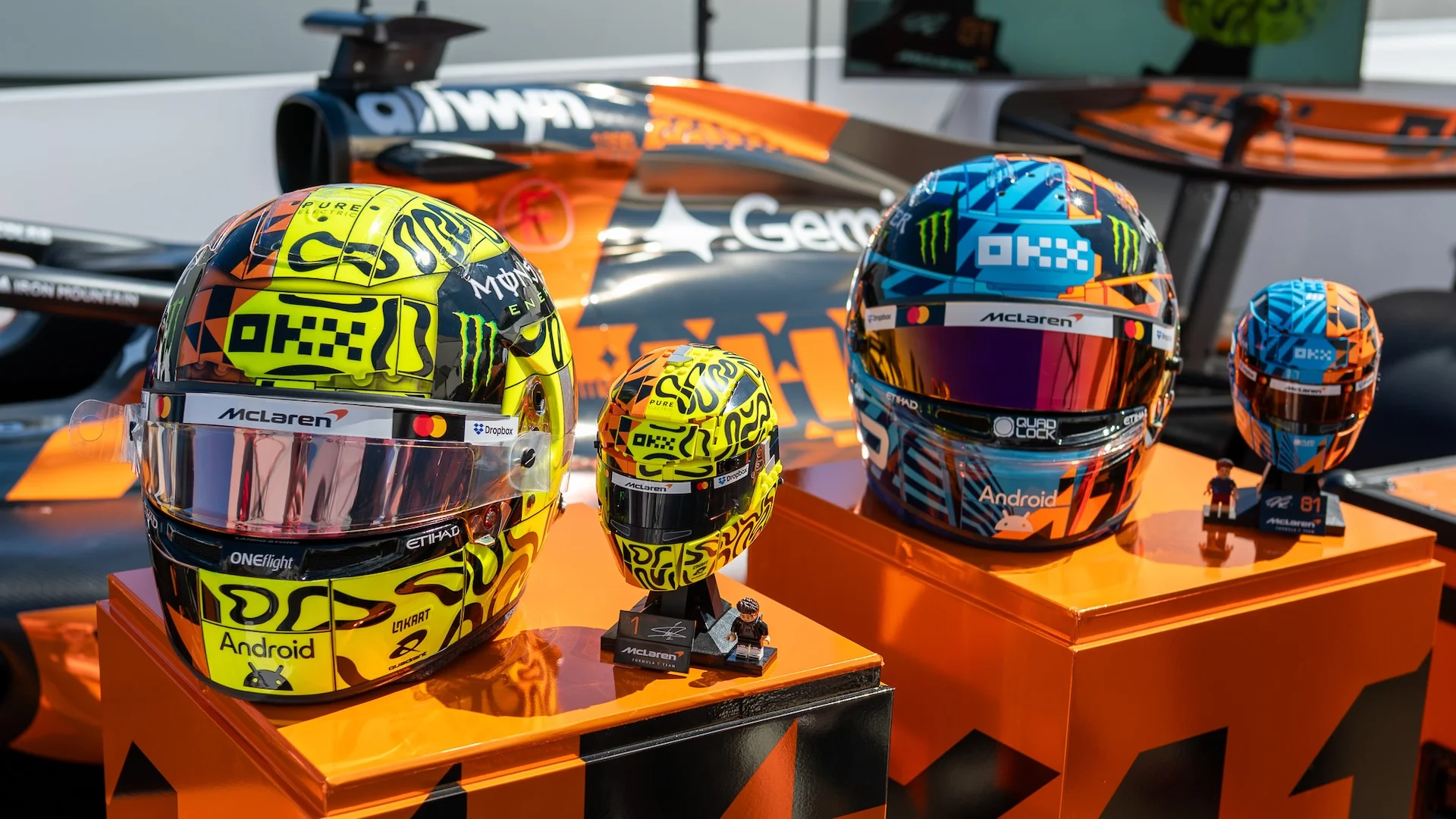
©
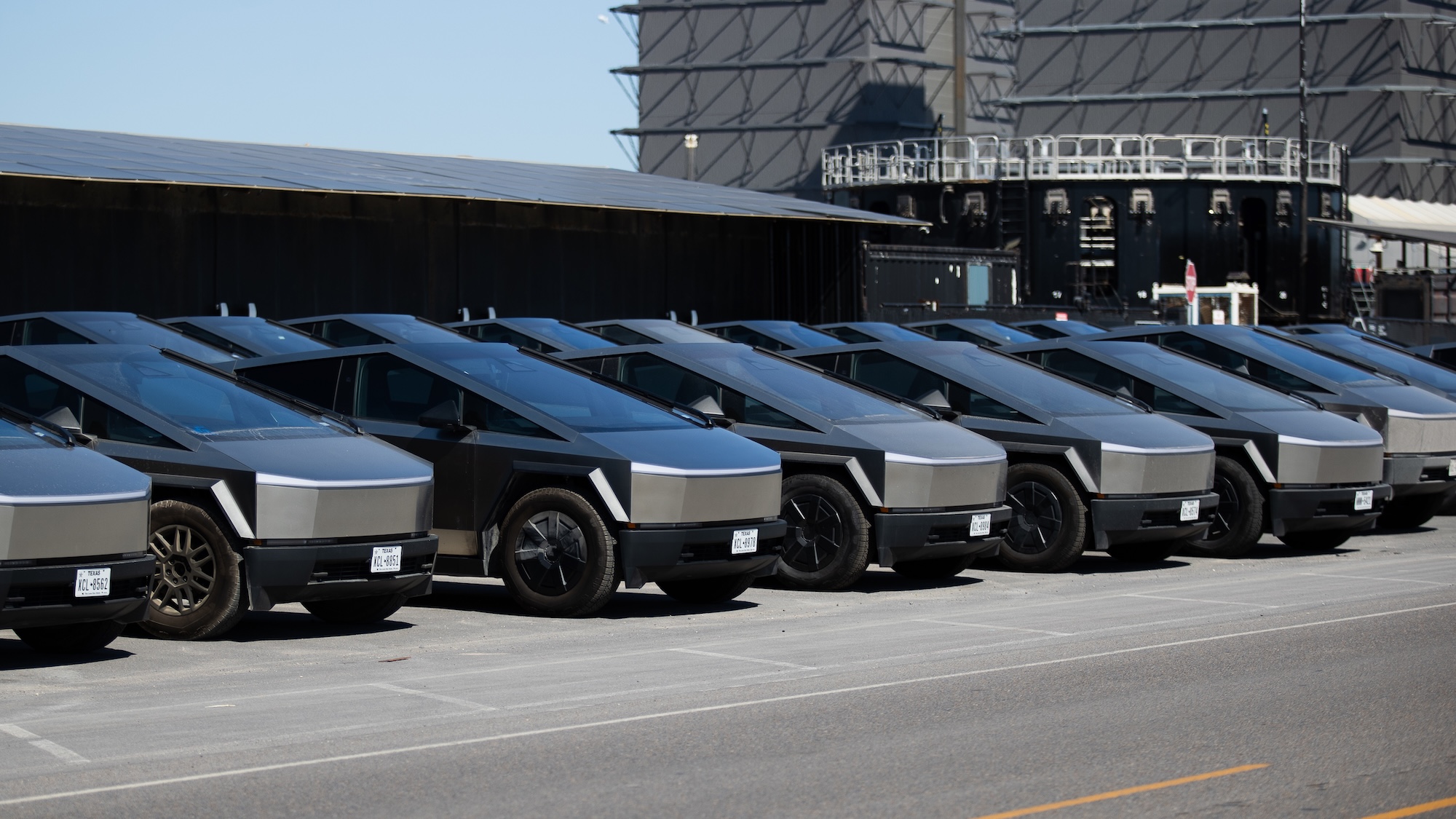
The wheels may be falling off the Tesla Cybertruck. No, seriously. According to a recent National Highway Traffic Safety Administration (NHTSA) recall alert, an estimated 173 of the stainless steel electric vehicles (EV) may be at risk of cracks forming in the brake rotor studs. These cracks could separate from their wheel hubs.
“Wheel hub separation can cause a loss of vehicle control, increasing the risk of crash,” the NHTSA explained in its recall. Such emergencies may even include an entire wheel falling off the EV.
The 173 EVs span the Cybertruck’s 2024-2026 models, specifically those equipped with the optional 18-inch steel wheels. According to Kelley Blue Book, the EVs may start vibrating or issuing a noise before the wheel stud separates. Tesla is now offering affected vehicles free wheel hub and rotor replacements, as required by U.S. law.
The latest NHTSA alert is the latest in a string of recalls to affect the Tesla Cybertruck. Although the regulatory body awarded the EV a five-star overall safety rating, the vehicle line has received 11 recalls, four investigations, and 124 complaints since its debut in 2023. Previous recalls have involved faulty accelerator pedals from misapplied soap, malfunctioning windshields, and more.
Elon Musk once hyped the Cybertruck as the “finest in apocalypse technology” and “what Bladerunner [sic] would have driven,” but Tesla’s stainless steel EV simply hasn’t gained much traction. After over four years of production delay, the Cybertruck arrived about $20,000 more expensive than its original estimated base price. Tesla hoped to sell around 250,000 vehicles in 2024, but ended the year with less than 20 percent of their goal. Those numbers have continued to plummet, with barely 3,500 Cybertrucks sold within the last few months.
The post Cybertruck recall warns that its wheels may fly off appeared first on Popular Science.

In March, we reported on a wild bobcat that had been hit and dragged by a car, who also got her head stuck in the car’s grill. As if things could get any worse, the wild feline arrived at Raven Ridge Wildlife Center in Pennsylvania on a Sunday, and the nearby veterinary practice was closed. But thanks to two lucky acquaintances, a mobile x-ray machine was brought in, revealing that the bobcat had broken two legs.
Thanks in part to the fact that her bone fractures were clean breaks, her team decided to risk a surgery. The next morning, two surgeons operated on the bobcat contemporaneously. After the operation, Tracie Young, director of the Raven Ridge Wildlife Center, told Popular Science that she was doing “fantastic” and “starting to act like a bobcat.”

In her great misfortune, the cat has been rather lucky—and it seems like the luck is holding. Two striking coincidences have now come together to get her a custom-made cage for her rehabilitation.
“After two months of recovery, the bobcat now needs to be moved outside for exercise and to begin building muscle tone,” the wildlife center wrote on social media. “We had to devise a safe and creative way to get her outdoors, necessitating the construction of special caging. We determined that a custom dog kennel would be the only viable option.”
However, the problems were twofold: time and money. The dog kennel builders the wildlife center contacted needed at least eight months to build the rehab cage, and the project would cost thousands of dollars. But then Raven Ridge’s photographer Dawn called her neighbor Glen for suggestions, who turned out to be the owner of a kennel-building business and could build the kennel in two weeks.
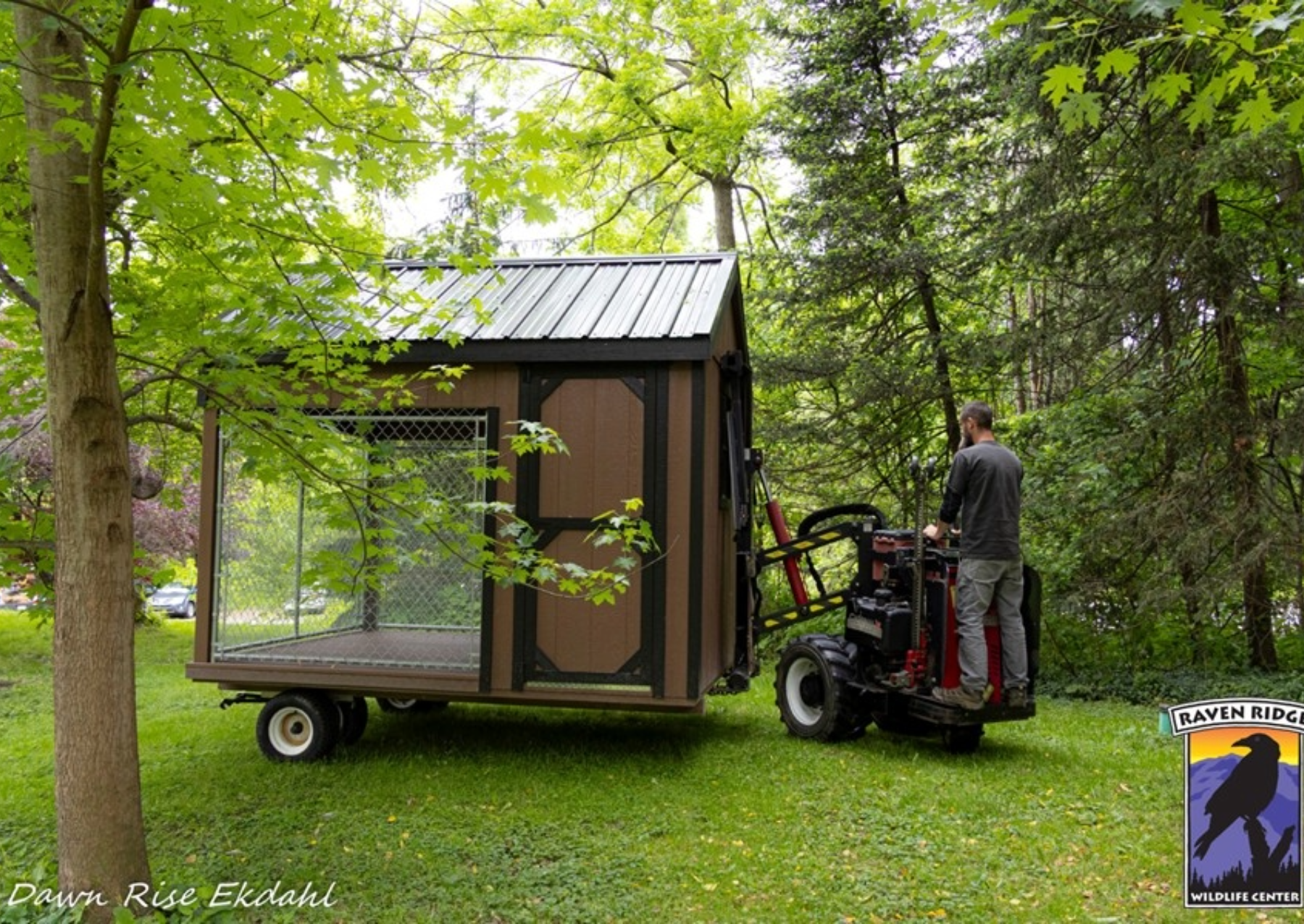
And if you think that’s enough of a coincidence, it gets even better. The very day construction commenced, Raven Ridge Wildlife Center received a letter with a generous donation. A woman named Raven Minervino has passed away, and her husband wrote that she had consistently supported the wildlife center. After she died, her husband had asked that rather than getting flowers, people make donations in her memory. The letter had a donation in her memory large enough to pay for the custom bobcat cage.
“Thanks to all this support, we successfully moved the bobcat to the new enclosure, where she is now exploring, exercising, and much happier,” reads the social media post. Raven Ridge plans to (or perhaps already has) put a plaque in Minervino’s memory on the cage.
Both of the bobcat’s broken legs have healed, and since having the custom cage, she has put on ten pounds, bringing her to the much healthier total of 19 pounds. Adult female bobcats weigh approximately 15 to 20 pounds on average
The post Bobcat that survived being hit by a car gets a custom-built kennel appeared first on Popular Science.


If you’ve ever used an online patient portal to message your doctor in the middle of the night, you won’t be surprised to learn that responding to those messages takes an increasingly big bite out of clinicians’ workdays.
So in recent years, hospitals have begun adopting an AI tool that can draft responses for them. The tool was supposed to make a time-consuming task go more quickly and smoothly, said Philip Barrison, an MD-PhD student at the University of Michigan Medical School who studies AI in healthcare.
Instead, the tool has given doctors and nurses a new to-do list. First they have to read the AI-generated response and decide if it “is actually something that they think they would say,” Barrison said. Humans are suggestible, and looking at something and deciding whether you would have thought of it on your own is a cognitively complex task.
Even if the message looks correct, the clinician still needs to “edit it to the point where they think it’s acceptable” to send to a patient, Barrison said. The AI tool introduces a totally new set of complicated judgment calls into what used to be a relatively straightforward process. As a result, many clinicians have chosen not to use it at all.
They’re fortunate to have the choice. Buoyed by expectations of cost savings and skyrocketing productivity, companies are increasingly asking (and sometimes requiring) employees to use AI to make their work more efficient. Meta, for example, last year instructed some workers to use AI to “go 5X faster by eliminating the frictions that slow us down.” The CEO of Shopify told employees they’d need to prove they “cannot get what they want done using AI” before the company would approve new hires. Some companies are even evaluating or ranking employees based on how much they use AI tools.
Workers in some sectors have found major time savings from AI. But for others, the tools just change the work rather than making it faster. Workers might be spending less time writing patient portal messages, for example, but more time editing the releases the AI tool writes.
At best, this mismatch between employer expectations and employee reality can be an annoyance. In other cases, however, it can result in workers being laid off for failing to meet unrealistic efficiency demands. Some critics say the overzealous adoption of AI in high-stakes settings like healthcare even puts people’s lives at risk. Now workers, unions, and experts are increasingly calling for guardrails to protect employees from inflated expectations around AI — and customers, students, patients, and the general public from mistakes that can happen when managers put AI adoption above all else.
Corporations are increasingly presenting employees with a choice: Use AI to be more productive or “you’re going to be automated out of a job,” said Aiha Nguyen, director of the labor futures program at the research organization Data & Society.
But the effects of AI on productivity aren’t as straightforward as some CEOs have claimed. In one 2025 study, software developers believed AI made them faster, but in fact they took 19 percent longer to complete tasks. (The researchers tried to repeat the experiment this year but had trouble recruiting developers who would agree to work without AI.) And in a recent survey of 5,000 white-collar workers, 40 percent of rank-and-file employees said AI saved them no time at all.
Workers across heavily AI-exposed fields point to hidden timesucks that come with using the technology. Julie, an art teacher, wrote in a response to a Vox reader survey that her school’s administrators routinely suggest using AI for lesson-planning, emails, and progress report comments. She’s tried AI-generated lesson plans, but they don’t account for the fact that kids may work through an activity at different speeds.
“First, I am checking what AI suggests, then I am editing them. Why add a step I can accomplish on my own?”
Julie, an art teacher who wrote in response to a Vox reader survey
“First, I am checking what AI suggests, then I am editing them,” she said. “Why add a step I can accomplish on my own?”
For an employee at an East Coast communications agency, an internal AI tool was supposed to speed up the process of drafting press releases and other documents about the pharmaceutical industry.
“The goal is, I think, to be able to plug and chug into this machine and be able to turn a lot of materials around a lot quicker than we already do,” said the employee, who asked to remain anonymous for fear of career repercussions.
But when the employee tried to use it for basic research, it made too many mistakes. Double-checking its work erased any time savings. When the employee tried using it for communications with clients, its people-pleasing tendencies became a problem, as the tool put a “weird happy spin” even on messages warning of bad news.
“Part of the reason we take a human speed to turn things around is because there is so much nuance behind everything that we do,” the employee told me. “AI is just not going to be able to catch it.”
It’s not just that AI makes errors. With the advent of agentic AI, workers are increasingly being asked to edit and oversee the output of multiple AI tools, a new kind of work that can have unexpected costs.
One recent study of 1,488 workers across industries, for example, found that excessive oversight of AI agents could lead to what the researchers called “AI brain fry,” a kind of cognitive fatigue. “Participants described a ‘buzzing’ feeling or a mental fog with difficulty focusing, slower decision-making, and headaches,” the researchers wrote in Harvard Business Review. Brain fry was also associated with an increased number of errors and an increased desire to quit one’s job.
The researchers also found that while using one or two AI tools increased productivity, adding additional tools produced diminishing returns, and after four tools, productivity actually declined.
Despite such findings, companies continue to pressure employees to use AI, and to cite AI investment as a rationale for layoffs, even as companies that try to link staff reductions to AI adoption tend to struggle on the stock market.
Some workers and organizations, however, are beginning to push back. National Nurses United, the country’s largest nurses’ union, has criticized the use of AI tools in hospitals to estimate staffing needs or to recommend treatment protocols for patients.
There’s no guarantee that these tools will take into account a patient’s individual profile, including underlying medical conditions, the way human clinicians can, Cathy Kennedy, the union’s president, told me. AI is supposed to “help us do our work more efficiently, but at the end of the day, it makes it even more burdensome,” she said.
Hospitals need to evaluate, with nurses at the table, whether AI tools really work as advertised, Kennedy said. “We have to stop — we have to go back and really see if this is truly doing what it needs to do,” she said.
The same is true across industries, Barrison, the healthcare researcher, told me. “Organizations need to be prepared to say when, if they were seeking a return on investment, if they were seeking value in a technology — how do you define what that value is? And if there’s not value there anymore, how do you turn it off?”
Some workers have found ways that AI actually helps them do their work — just not the ones management expected. Julie, the art teacher, likes to use Claude to learn more about topics she’s less familiar with, like kiln-firing ceramics.
Meanwhile, researchers have found that AI can actually reduce employee burnout, if it’s used to complete tasks employees find burdensome. “Everybody in every job has a list of things that they procrastinate on,” said Julie Bedard, a managing director and partner at Boston Consulting Group who led the AI brain fry study. “Those are the places I get, unsurprisingly, a lot of enthusiasm to try AI with.”
But employers won’t find out what those burdensome tasks are unless they listen to rank-and-file employees. “Worker standards and worker rights should continue to be at the heart of all of this,” Nguyen said, “rather than just focusing too much on the AI.”


.jpg#/media/File:Henry_Ford_Museum_July_2013_2_(Dymaxion_House).jpg)