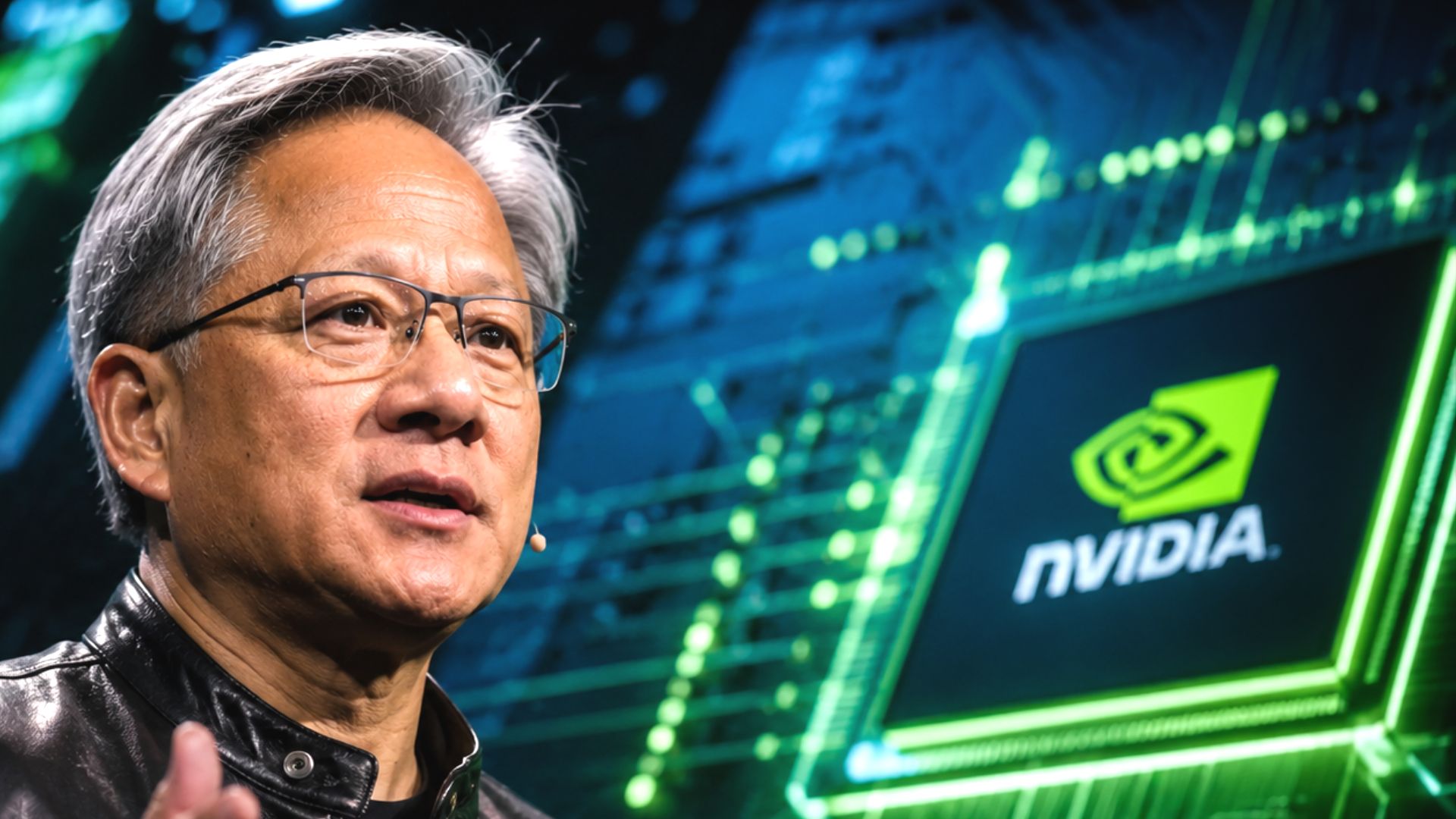
TAIWAN: Artificial intelligence (AI) may be portrayed as a threat to jobs for many workers around the globe at present times, but NVIDIA Chief Executive Officer (CEO) Jensen Huang believes that fear is simply overblown.
Speaking at Computex 2026 in Taipei, Huang pushed back against claims that AI will lead to widespread unemployment among software engineers. He described the idea that AI is reducing jobs as “complete nonsense” and argued that the technology is having the opposite effect. Instead of shrinking workforces, companies are hiring more engineers to take advantage of AI’s growing capabilities.
Huang’s remarks coincide with a growing effort by businesses across the globe to integrate AI into products, services and daily operations, raising ongoing questions about how the technology will restructure the workforce.
AI’s profitability is making engineers more productive
Huang’s argument centres on productivity. He said software engineers who use AI effectively can now produce far more work than before. Rather than making engineers obsolete, that increase in output makes them more valuable to employers.
Huang estimated that the world’s 30 to 40 million software developers, who collectively earn around US$3 trillion (S$3.85 trillion) in annual salaries, are now generating roughly three times as much productive output with the help of AI tools.
From his perspective, higher productivity creates more business opportunities. As companies discover new products and services they can build, they need more engineers to develop and maintain them.
He suggested that employers would only reduce hiring if overall output remained unchanged. Instead, businesses are expanding because AI is allowing them to do much more.
AI has become a business tool, not just an experiment
Huang also argued that AI has reached a turning point. He pointed to the rise of “agentic AI,” systems that can perform tasks using tools such as web browsers, spreadsheets and coding platforms with limited human input. Unlike traditional chatbots that mainly answer questions, these systems can plan and carry out actions.
Such upgrades are helping companies generate revenue from AI products and services. To support his view, Huang cited data from GitHub showing that software development activity continues to rise despite rapid advances in AI.
Developers made nearly one billion software updates in 2025, while more than 36 million new developers joined the platform during the year. The figures suggest that interest in software development remains strong even as AI tools become more capable.
NVIDIA’s vision for the next generation of computing
Beyond the jobs debate, Huang used the event to unveil Nvidia’s RTX Spark AI superchip, developed with Microsoft and MediaTek.
The chip is designed to run powerful AI models directly on personal computers without requiring an internet connection. Huang described it as one of the biggest changes to personal computing in decades.
He also outlined a future where dedicated AI systems operate in homes, offices, factories and robots, helping people manage everyday tasks and work more efficiently.
The long-term impact of AI on jobs remains a subject of debate. However, Huang’s message was that workers who learn to work alongside AI may find themselves in greater demand, not less.
As companies continue to invest heavily in technology, the challenge may be adapting skills fast enough to keep pace with the changes ahead.
Today at WWDC 2026, Apple unveiled a wide range of new software for its product ecosystem, including macOS 27 Golden Gate, iOS 27, and iPadOS 27. A significant part of all the new software updates is an upgraded Apple Intelligence system, which includes a revamped Image Playground, Apple's generative AI for images.
A roundup of stories tangentially connected to comic strips. A history of the Jeep that brings to mind Mort Walker’s army, a non-cartoonist barber creating comic strip promo with a.i., a real cartoonist who has moved on to using skin as his canvas, a comic stripish font for official documents, and a 1960s Saturday Morning […]
{beacon} Technology Technology The Big Story Compute becomes lifeblood, constraint of AI boom Computing power has become the lifeblood — and a key limiting factor — of the race to develop AI, as the push to integrate the technology into daily life clashes with the finite supply of one of its most crucial inputs....
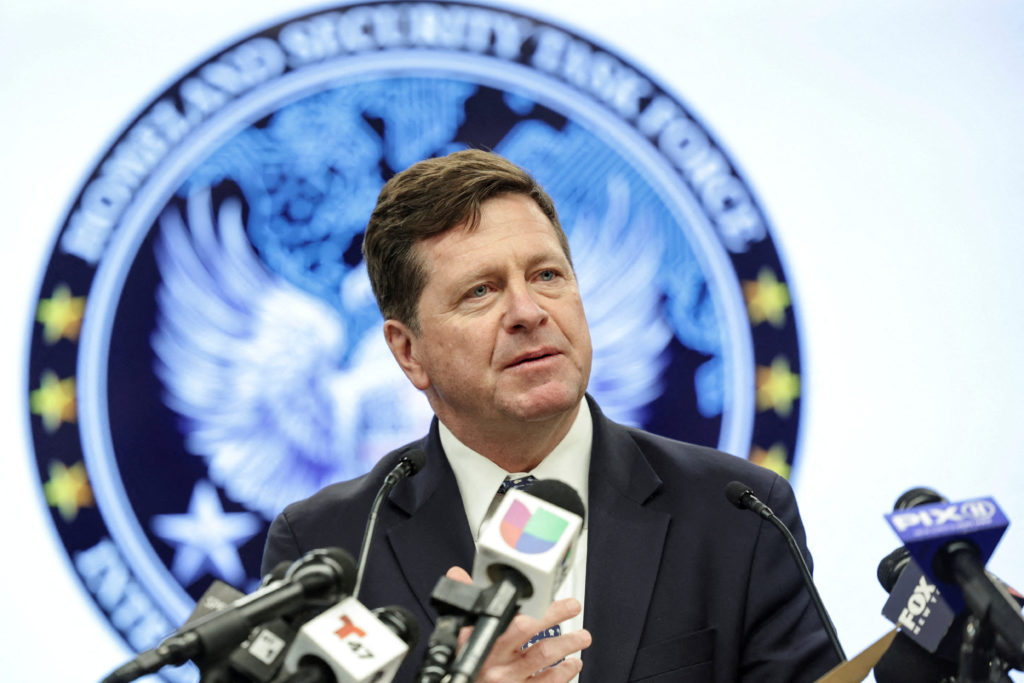
President Donald Trump nominated Jay Clayton, U.S. attorney for the Southern District of New York, to be the next permanent director of national intelligence on Thursday. A veteran Trump administration official, Clayton is seen as a more conventional choice for the role compared to the president's earlier choice made last week.
Route 66 Dreams: Classic Cars Across the American Desert
Description
A cinematic visual journey through the mythic atmosphere of Route 66, featuring vintage cars, abandoned gas stations, neon motels, desert highways, red rock landscapes, and golden sunset light. The series blends classic Americana, road trip nostalgia, open-road freedom, and a slightly surreal retro mood, evoking the timeless romance of travel across the American Southwest.
These images were generated by Artificial Intelligence.
Pope Leo XIV on Monday launched an impassioned call for regulation of Artificial Intelligence, warning that “opaque algorithms,” controlled by a handful of powerful private companies, can bring “new forms of dehumanization.” In his eagerly awaited new encyclical called “Magnificent Humanity” – an encyclical is an ancient form of Vatican communication – Pope Leo also […]
President Trump announced his plans to nominate Jay Clayton as director of national intelligence. The choice comes as lawmakers refused to extend a key surveillance tool over stalled privacy concerns and questions about the qualifications of the interim intelligence chief. Congressional correspondent Lisa Desjardins reports.
AI Minister Evan Solomon said the government has signed onto Project Glasswing, which Anthropic launched to allow companies to use Mythos to test for security vulnerabilities.
As Stop! That! Train! prepares for its Pride Month arrival, director Adam Shankman is addressing online rumors about the ensemble action comedy. On Tuesday, Shankman called claims that he used generative AI to make the film “patently not true,” urging fans to “get out there and support all these magnificent talented and PAID artists” when […]
Echoes of the 1940s Circus: Steam Trains, Big Top Lights and Forgotten Wonders
Description
A cinematic journey through a fictional vintage circus world inspired by the atmosphere of the 1940s: steam trains arriving through clouds of smoke, crowded railway platforms, canvas tents rising at dawn, performers preparing behind the scenes, glowing fairground lights, brass bands, trapeze artists, ringmasters, clowns, fortune tellers, animal acts, travelling caravans and the quiet moments hidden between spectacle and exhaustion.
This collection evokes the golden age of travelling circuses as if seen through the lens of an old documentary photographer, but with the visual richness of modern cinematic photography. Warm amber lights, deep shadows, smoky interiors, velvet costumes, weathered wood, worn posters, dusty roads and dramatic faces create a world suspended between memory, theatre and dream. Each image suggests a fragment of a larger story: the arrival of the circus by train, the construction of the tent, the anticipation of the crowd, the tension before the performance, the intimacy of backstage rituals and the melancholy beauty of a show that exists only for one night before disappearing again.
The series blends realism and fantasy, presenting the circus not only as entertainment but as a temporary city of artists, workers, animals, music, mystery and human emotion. It captures both the grand spectacle and the fragile backstage humanity of a travelling world built from canvas, light, discipline and illusion.
All images have been generated by Artificial Intelligence.
Pope Leo XIV gestures as he addresses the crowd during the weekly general audience at St Peter's Square in the Vatican on May 20, 2026. | Tiziana Fabi/AFP via Getty Images
Monday morning, the Roman Catholic Church made its biggest foray yet into the discourse on artificial intelligence and the role it should play in human life as the technology develops.
In the first encyclical of his papacy, titled Magnifica humanitas (Latin for “magnificent humanity”), Pope Leo XIV argued that AI is not intrinsically immoral, but that its adoption needed to be slowed in order to build moral guardrails, to establish better social safety nets for those displaced by economic and labor disruptions, and to create democratic processes that will ensure the public remains in control of these developments, rather than a small subset of tech oligarchs. The document also contended that the “intelligence” in artificial intelligence was a misnomer: Intelligence is something only human persons possess, and technology will never be human.
Key takeaways
The first encyclical, or official teaching letter, of Leo XIV’s papacy, dropped Monday.
It centers the uniqueness of humanity, the dignity of work, and the challenges that artificial intelligence poses to the world order and humans’ relationships with each other and God.
The Catholic Church has a long tradition of reasserting authority in the modern era, starting with the current pope’s namesake, Leo XIII, who confronted the rise of the Industrial Revolution and changing global economies.
There are deeper spiritual and material reasons the pope, and the church, are so concerned with AI now.
Encyclicals are official teaching documents of the Catholic Church: letters issued by popes to bishops after consultation with theologians, historians, and experts on pressing matters that affect humanity or the church, with the expectation that all people, faithful or secular, can learn from them and help shape their consciences and lives. Magnifica humanitas is Leo’s first encyclical since becoming pope last year, and its release now underscores the focus the new pope is putting on AI and technology. Notably, Leo also used the occasion to make a historic formal apology for the Church’s previous defense and justification of slavery — a reminder that the Catholic Church has not always been on the right side of social ills.
Though popes are traditionally not present during the release of these documents, which first began in the 18th century, Leo XIV was in attendance at its presentation, and delivered his own comments — something Vatican observers indicated reflected his desire to make sure the Church’s stance was properly understood. The Chicago-born pontiff spoke in English and was joined by AI experts and industry leaders, including Anthropic co-founder Chris Olah, who consulted on the document.
So how should the public process and think about this new document? It’s helpful to first understand the context in which the Church is speaking up about this at all.
Why the Catholic Church cares so much about AI’s development
Magnifica humanitas is dropping more than a week after Pope Leo XIV actually signed it on May 15. The timing matters.
That day marked 135 years since the release of Rerum Novarum, the seminal work of Pope Leo XIII, the current pope’s namesake, who was leading the church during the late stages of the Industrial Revolution. As they are today, the faithful, and the clergy, were facing a rapidly changing world. And the Church, the world’s leading moral authority at the time, had yet to establish its place in it.
That 19th-century document made philosophical arguments about the relationship between labor and capital, warning about the perils of communism. But it also redefined the church’s relationship to the modern world, with the papacy reasserting itself as both a source of power and a moral authority in an era of rapid change. The encyclical set a template for how a 2,000-year-old institution could still remain relevant in a modern age.
In presenting this encyclical, Pope Leo XIV made this parallel clear. He sees the rise of artificial intelligence as the defining global challenge of the day, and of his pontificate: “Like the earlier Leo, I feel entrusted to look upon another huge transformation with eyes of faith, with lucidity of reason, with openness to mystery and with cries of the poor and the earth resounding in my heart,” the pope said while presenting his encyclical.
The newer encyclical builds off his predecessor’s tradition, and the various arguments popes have made about the importance of preserving the dignity of the human person and valuing modern technology only so long as it benefits everyone, not just its creators or the rich.
In 2015, Pope Francis, for example, wrote about “the technocratic paradigm” that has taken root in modern capitalism: the sense that technological progress is unstoppable, that it will demand unlimited concessions from nature and from people, and that the world had no choice but to submit to change.
“Leo is concerned that we don’t just submit to inevitability on questions of AI, but ask critical questions and push back in ways that are necessary before it’s too late to push back, before damage is done that can’t easily be undone,” Dan Rober, an associate professor of Catholic Studies at Sacred Heart University, told me.
That role of questioning, pausing, and coming to consensus has defined the Catholic Church’s leadership and operation for the last two papacies: the notion of synodality, or teaching and making decisions based on consensus. Before AI and the technologists who have created it become the sole determinants of how politics, the economy, and society operates, the Church is asserting itself as a counterweight — even as it includes some of those leaders in the process.
“Pope Leo is trying to clearly walk in those footsteps, and I think he’s very concerned, as are a lot of people, about the possible implications, particularly for job markets and for people’s lifestyles being sustainable day to day with the rise of AI systems that may render a certain significant amount of jobs able to be automated very rapidly,” Rober said.
This kind of reflection has become standard procedure for the Vatican. Since at least the turn of the century, the Church has found itself increasingly weighing in on the crises of the day, albeit oftena bit too late.
As the Catholic writer Christopher Hale has noted, “Francis took up the climate fight with Laudato Si in 2015, after decades of scientific consensus had been ignored. Benedict XVI took up the global economic order with Caritas in Veritate in 2009, after the financial system had already collapsed. Both documents arrived in the long shadow of the crises they addressed.”
In Magnifica humanitas, Pope Leo XIV may be seeking to intervene early in the development or takeover of a new technology this time, and show that the Church wants to both work with Silicon Valley and assert itself as a powerful defender of modern values, as it has done in its defense of the liberal international order and aspects of humanism, like human autonomy and reason.
In the background, there’s also a more sci-fi element: the notion that AI could end up coming between the Church and the people — serving as a filter or layer between regular people and God, and perhaps even usurping the role of the Church itself. The Catholic Church, famously, is concerned with the proper interpretation of scripture, Biblical truths, ethics, and God. Bloody wars waged and hard-fought reformations turned on this central question of who and how one can commune with God. Now, AI enters as another middleman.
“That’s closely related to the question of people using AI as a therapist,” Rober told me. “You could see a way in which AI becomes its own kind of religion, and certainly the way a lot of the Silicon Valley founders talk about it, it does have religious overtones to it. You listen to the Google founders talk about the singularity, and that sounds a lot like religion.”
It’s in this context that this document, and its specific teachings, lands.
What the Church is teaching about AI
Magnifica Humanitas is not the Vatican’s first examination of the role of AI in modern life.
Just last year, in the twilight of Pope Francis’s pontificate, the Vatican released a teaching note, Antiqua et nova, that laid the groundwork for Leo’s encyclical. That 2025 document established that the Church is not opposed to the development of AI: technological progress and scientific discoveries are part of the natural way that humans are meant to honor God, his creation of humanity in his image, and the natural outpouring of God’s gift of reason and rationality.
But it also established a distinction between human intelligence and machines that analyze data and perform processes. It insisted that artificial intelligence, like all technology, should serve humanity, not the other way around. And it emphasized the risk that new technology poses to the ability to, right to, and dignity of work, especially for the least well off in society.
In the encyclical, Leo uses the biblical parable of the Tower of Babel — a warning about human hubris — to make this case: “We must, then, avoid the ‘Babel syndrome,’ namely the idolatry of profit that sacrifices the weak,” he writes. “The risk of dehumanization — of building a future that excludes God and reduces the other to a means — is an ancient and ever-new temptation that today takes on a technical guise.”
This builds off of a long tradition of focusing on not just the dignity of work and workers, but also more recent concerns that modern capitalism facilitates a “throwaway culture” that views people and things as, at best, cogs in the service of a greater machine.
“He wants to talk about the idea that our humanity is meaningful in and of itself and that work is part of that, even if AI systems are able to allow for more leisure and even if something like universal basic income were to be made available, people need to find to have work of some kind to have meaning in their lives,” Rober said.
The encyclical’s teachings can be broken up into three broad categories: regulations on how AI is developed and how individuals adopt it, the responses required to handle the economic effects of AI, and limits on AI’s usage in war.
The practical recommendations and concerns Leo outlines include:
The need for a “more active” democratic process for people to decide how AI will develop, “that is capable of slowing things down when everything is accelerating, and of protecting the opportunities for communities still to be able to participate and ask questions.”
Regulation of how companies collect and use personal data, which “should not be treated as something to be sold off or entrusted to a select few.”
Better education of adults, teachers, and young people for using AI in their daily lives, specifically to avoid sexual exploitation, blackmail, grooming, and disinformation.
Environmental regulations, given AI infrastructure’s impact on the natural world.
A duty for governments to protect access to, and the dignity of, work, to provide job training and professional help to workers affected by AI disruptions, and to redistribute the wealth and value created by AI to those it displaces.
Flexibility from labor unions and organizations to “be open to new types of employment and the corresponding needs of workers, in order to represent and defend them.”
New rules of war and accountability for AI usage in combat, given that “just war” theory is being made obsolete by the growing automation of warfare. “When a decision to strike becomes automated or opaque, the risk of abdicating responsibility increases,” the encyclical says. “For this reason, the chain of responsibility must be identifiable and verifiable; those who design, train, authorize and employ technology must be held accountable for their decisions.”
A new international compact on how AI should be used to avoid “the technological arms race and ensure robust protection for civilians and the infrastructures necessary for their survival.”
From an eagle-eye view, the document is fairly wonky and detailed: concerned with very practical matters and specific recommendations that could have come from academia, or a secular background — underscoring just how much Leo may hope it can provide guidance for leaders and individuals, as opposed to remaining siloed to the intellectual class. So as this technology continues to develop, the pope and the church want to help shape it. They want the faithful to be reminded that whatever AI offers is not reality, not personhood, and not God. It is a tool that should not dominate or determine the lives of its users. And it should not replace the role of the Church in teaching morality and ethics.
For the greater secular world, the Church wants to remind the public that they should have a say in how AI shapes their world; they should not allow business and tech leaders to define the terms of existence through their machines; and that they have a powerful ally in the Roman Catholic Church in the effort to preserve human dignity in the face of unprecedented technological change.

 Login
Login