To effectively travel on Mars, rovers need to deal with a lot of sand. German engineers have created a new kind of ground rover that uses swimming motions to push through sand that may otherwise cause the wheels to get stuck. Its inspiration: the African sandfish (Scincus scincus), a lizard known for burrowing into the Sahara Desert and literally swimming through its sand like a fish. It’s one of the animal kingdom’s strangest methods of propulsion, but it may help shape the future of Mars exploration.
A video of the rover, released this week by the University of Würzburg, shows a mini-fridge-sized, silver rover making its way through a sandy, Martian-mimicking test floor. Rather than rolling forward, each of its four wheels cuts through the sand in what looks like a figure-eight motion. The rover pushes on several yards and then cuts a corner and returns to where it started.
“The wheels mimic the animal’s [sandfish’s]characteristic interaction with the ground, generating both longitudinal and lateral forces,” University of Würzburg researcher Amenosis Lopez said in a statement. “The rover leaves sinusoidal tracks in the sand.”
The sandfish: nature’s cute solution to slippery sand
Though most people likely associate space rovers with round wheels or tracks reminiscent of those on WALL-E, neither design is ideal for dealing with Mars’s uniquely harsh and sandy environment. Sand is unique because it’s a material with both solid and liquid-like qualities. On top of sand’s mixed texture, rovers roaming on the Red Planet have to deal with steep slopes and uneven terrain, where varying levels of slipperiness can cause imbalance. Patches of softer sand are also a nightmare for wheels, making the prospect of a rover getting stuck never far from mind
But nature figured out a solution to this issue millions of years ago, and it’s called the sandfish. Contrary to its name, the Sahara Desert native is a lizard in the skink family. Above ground, the sandfish uses its tiny legs to scrabble around much the same as any lizard. Things get more interesting when it burrows down into the sand. X-ray imaging shows the sandfish propelling itself forward under the sand, using a powerful waving motion to generate thrust and overcome drag. The result looks like an animal swimming through the sand, remarkably similarly to how a fish would oscillate its body to move through water
Engineers at Georgia Tech took those observations and used them to create their own sandfish robot in 2011. Testing with their robots showed that the little lizard’s oddly wedged shaped head may also help it generate lift forces and more easily swim through sand.
Sink or swim: new rover did both
Researchers working on the sandfish-inspired robot said it outperformed a wheeled version when navigating through a sandy test track. Where the round wheels would wobble and weave, the oscillating wheels stayed relatively stable. That’s not to say the new approach worked right out of the gate. Early models of the design were reportedly so heavy that the rover literally sank into the sand. The team went back to the drawing board and made a second version, this time increasing each wheel’s width and reducing overall mass
It’s unlikely these oddball new wheels will become the main chassis system for NASA rovers, at least not in the immediate future. More work still needs to be done to increase their overall controllability and account for slippage that can occur in complicated, real-world environments. There are also the added variables of accounting for scientific instruments and other cargo a rover might have to carry.
More than anything, the wheel design is a testament to the sandfish’s innate ingenuity and evolutionary gifts. Many scientists only recently began to truly appreciate these traits and what other technology they could inspire.
Stonehenge is so much more than just a monumental feat of ancient engineering—it’s also a logistical marvel. Multiple generations of Neolithic designers relied on communal teamwork and clever construction techniques to precisely place each of the site’s gigantic megaliths about 5,000 years ago. Two primary types of stone known as sarcens and bluestones make up the formation. Paleoarchaeologists previously traced most of the sarcens to about 15 miles away to present-day Marlborough, England, while many of the bluestones originated in Wales.
The famed Altar Stone is far more perplexing, however. The central, six-ton sandstone megalith likely came from a region in Scotland about 400 miles away. How a prehistoric society managed to scoot the boulder so far without complex tools or transportation methods has perplexed researchers for years.
Many researchers have theorized that melting Ice Age glaciers likely helped passively shift the Altar Stone closer to southern England’s Salisbury Plain around 2500 BCE, shortening the transport distance for Stonehenge’s creators. But in 2024, a team at Curtin University used chemical analysis to determine that glaciers simply weren’t the only factor behind the megalith’s move. Now, that same team has combined ice-sheet modeling and mineral grain dating to more precisely locate the Altar Stone’s original home. Their findings, published today in the Journal of Quaternary Science, further underscore how humans played a huge part in getting their centerpiece to Stonehenge.
“Rather than being carried naturally by ice, the evidence points to a deliberate, carefully planned movement across a challenging and varied landscape,” Anthony Clarke, a geochemist and study co-author, said in a statement.
Although glaciers possibly transported many large rocks as far south as Dogger Bank in the North Sea, Clarke explained that geological modeling showed that “no viable glacial pathways” ever linked the Altar Stone’s source region to Stonehenge. This further underscores how Neolithic communities were necessary to move it to its final spot.
“Transporting a stone of this size over such a long distance would have required planning, coordination and a deep understanding of the landscape—not to mention tremendous determination,” he added.
While the exact methods remain a mystery, Clarke and colleagues believe the Altar Stone was almost certainly moved in stages, possibly through a combination of overland and river travel routes.
“The stone would still have needed to be moved hundreds of kilometers by people,” Clarke concluded.
Complex problems require creative solutions, and wildlife veterinarian Nielsen Donato is no stranger to what might seem like out-of-the-box problem solving. Last month, Donato and his team at Vets in Practice in the Philippines fixed temporary wheels onto an Aldabra giant tortoise (Aldabrachelys gigantea) that was struggling to walk.
More recently, they built a contraption to care for a four-year-old African spurred tortoise (Geochelone sulcata) that had been run over by a car not once but twice. When the unfortunate reptile was first brought to the clinic, Donato—who is the clinic’s chief surgeon and exotic animal medicine specialist—wasn’t there.
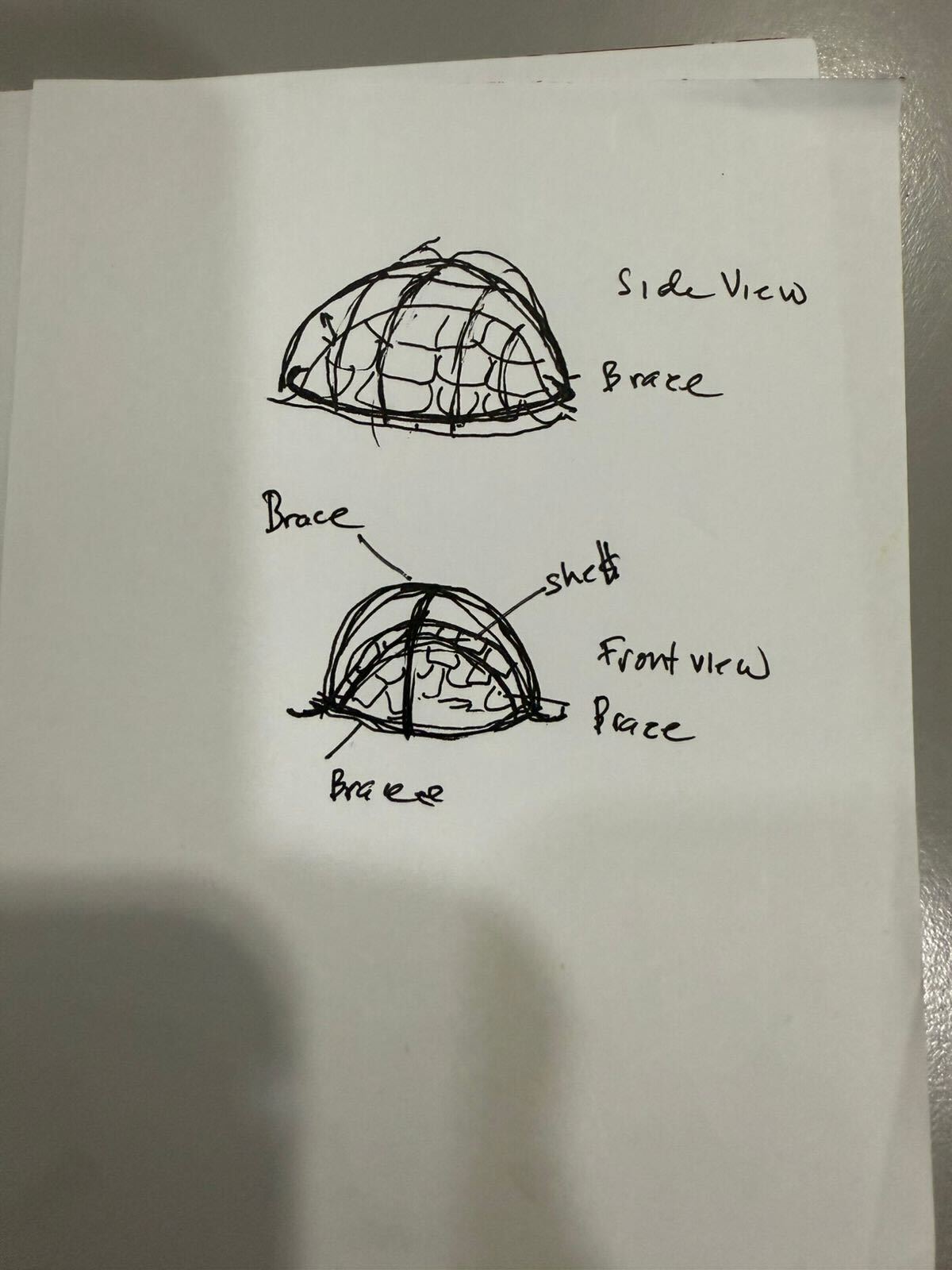
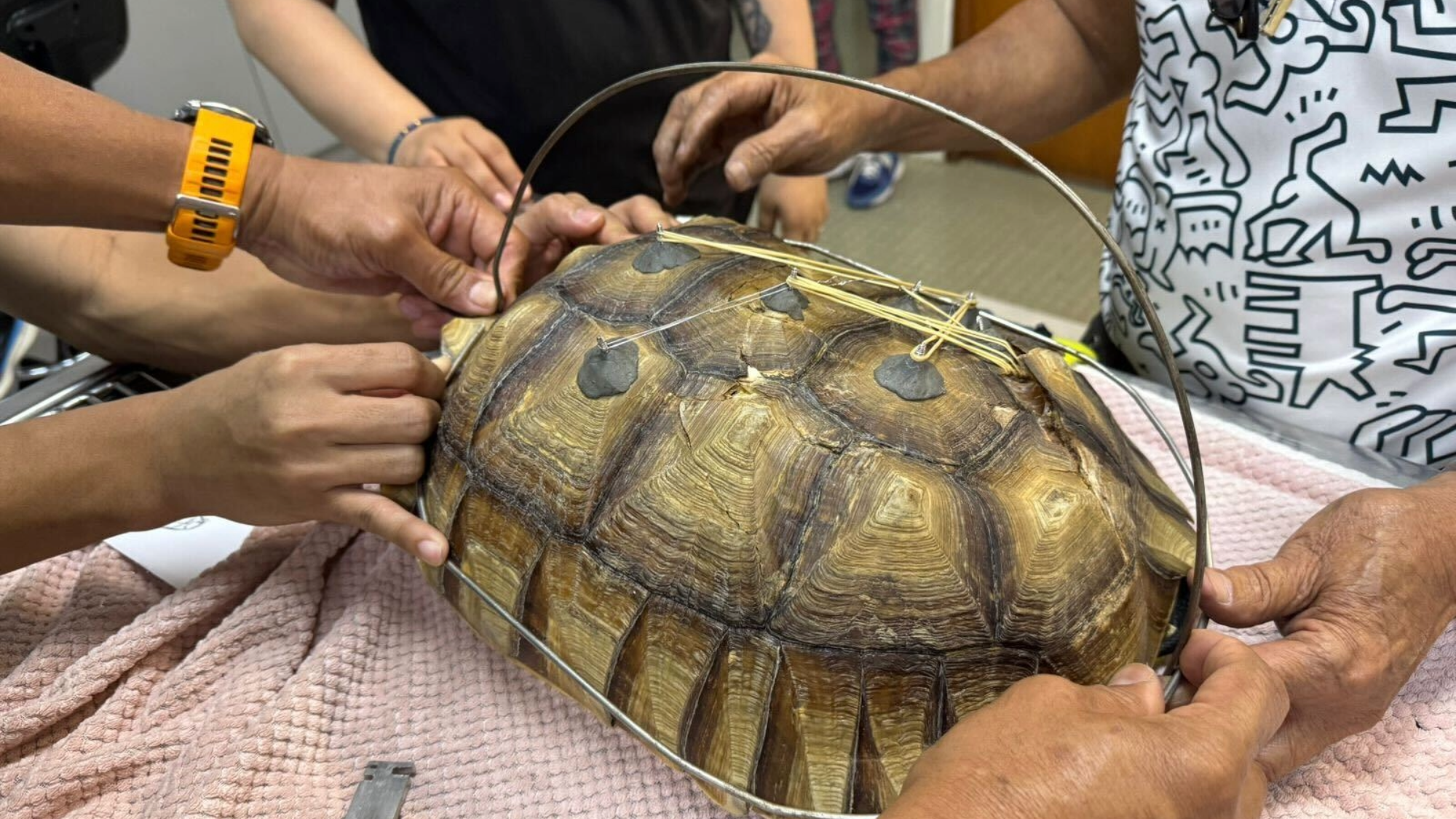
Over the phone, Donato instructed the team to keep the tortoise’s exposed soft tissue damp by rinsing the shell with saline (salt water). They also tried to stabilize the cracks, by fixing inverted screws onto various parts of the shell with epoxy putty, and then tying rubber bands around the screws.
The team sketched out their plan of action to save the tortoise’s shell. Image: Nielsen Donato.
“At this point, our main concern is to stabilize the condition of the turtle from shock, from the injury. So for the first three weeks, we made sure that there were no flies that laid eggs and turned into maggots,” Donato tells Popular Science.
They kept the tortoise hydrated, tube-fed it, kept its wound clean, basked it in the sun, and gave it antibiotics and pain medication.
The wires help keep the shell together. Image: Nielsen Donato.
“And once the tortoise, the sulcata, was more mobile and showing interest in eating on its own, we planned to repair the shell,” he says
According to Donato, the most difficult part for him was lifting the crushed parts of the shell. So he designed a frame for the shell that, with the help of wires, would pull up these shell parts. And the contraption worked.
The tortoise was hit by a car twice, but is on the road to recovery. Image: Nielsen Donato.
“When we were twisting the wire, we noticed that we were starting to align the shell and the cracks were becoming more opposed to each other,” he explains. The team sealed the cracks with dental acrylic and asked the turtle’s owner to bring it back after three weeks. By the time the tortoise was back in their clinic, the shell had become more stable. The team removed the brace, wires, screws, and putty, and sent it back home again before its next appointment.
“When it visited us lately, it started moving around more actively and the owners were not worried about its appetite because it was eating again,” Donato reports.
One thing is for certain—this tortoise went to shell and back again.
Concrete is everywhere, and that’s a problem. Manufacturing the essential material accounts for around eight percent of annual global carbon dioxide emissions, making it one of the single biggest contributors to the climate crisis. Researchers are investigating all types of creative solutions to the issue, often by replacing ingredients with more eco-friendly alternatives.
Recent propositions include adding coffee grounds, bacteria, and even recycled diapers into the mix.But engineers at Purdue University in Indiana think the answer can already be found in the natural world. According to a study recently published in the journal Chemistry of Materials, one solution may be swapping out the cement for shellfish.
“Oysters generate a natural cement. They use this material for attaching to each other when building reef structures,” chemist and study co-author Jonathan Wilker explained in a recent university profile.
Wilker has spent years examining the biological properties of oyster cement in hopes of recreating the sturdy adhesive for other applications. They have since learned that the bivalves bind together by producing the inorganic compound calcium carbonate—basically chalk. While calcium carbonate isn’t usually adhesive by itself, oysters also produce a small amount of stickier organic materials like phosphorylated proteins. This allows the shellfish to fuse together, even when saturated in water.
After breaking down the chemical composition of oyster cement, Wilker’s team recreated it in a laboratory. They then collected a bunch of limestone bathroom tiles, since their calcium carbonate is virtually identical to oyster shells. From there, they glued stacks of tiles together using their artificial, biomimetic cement. In nearly every stress test, the tiles broke before the bond itself.
Confident in their faux-oyster cement’s abilities, Wilker and colleagues finally tried combining a polymer from their creation into commercially available concrete mix. In lab tests, their oyster-inspired concrete was 10 times stronger while doubling its compressive strength. On top of all that, it also took less time to cure.
Wilker’s team plans to continue testing their patent-pending recipe. He notes that it’s not simply stronger. It’s even more eco-friendly when compared to most adhesives on the market.
“Most of the adhesives that you see at the hardware store are made of organic compounds, derived from petroleum,” he said. “There is so much more that we can learn from nature.
A senior surveyor at a government inspection unit has admitted alerting the renovation consultant ahead of site checks at Wang Fuk Court before the estate went up in flames, a public inquiry has heard.
Andy Ku (centre), a senior maintenance surveyor at the Independent Checking Unit (ICU), leaves the Wang Fuk Court independent committee hearing on May 6, 2026. Photo: James Lee/HKFP.
Victor Dawes, lead counsel to the independent committee investigating the fatal fire, questioned Andy Ku, a senior maintenance surveyor at the Housing Bureau’s Independent Checking Unit (ICU), on Wednesday.
Dawes presented to the committee Ku’s written witness statement, in which the senior surveyor said that the ICU had “no particular role in reviewing or confirming the quality, reliability, and integrity of consultants.”
The committee earlier heard in March that one of the directors of Will Power Architects, the consultancy firm overseeing the large-scale maintenance work at the Tai Po housing estate, had not carried out his duties as a “registered inspector” (RI).
“The RI’s work, in effect, is to act as a regulator. If it’s not up to you to keep them in check, who else would it be?” Dawes asked Ku.
Ku replied that the oversight system is essentially “self-regulating” and that the ICU does not have a formal auditing system.
The committee also heard on Wednesday that for most of its inspections, the ICU had notified a Will Power employee, who was also a representative for the RI. The inspector himself was not there for most of the ICU checks.
Dawes remarked that the ICU’s inspection practice deviated from the norm with other government departments, such as the Labour Department and Buildings Department.
The lead counsel also told the hearing that the ICU had conducted a total of 10 inspections at Wang Fuk Court, of which only two were held without advance notice. One of those two inspections was an impromptu check, which Ku conducted himself after a medical appointment in the same district.
“If you didn’t have a medical appointment in Tai Po that day, there wouldn’t have been an inspection?” Dawes asked. Ku agreed.
Wang Fuk Court buildings on December 29, 2025, one month after the deadly fire. Photo: Kyle Lam/HKFP.
Dawes then showed the committee screenshots of ICU maintenance surveyor Amanda Lau’s text conversations scheduling an inspection with the RI representative, who then alerted the contractor, Prestige Construction & Engineering. Ku confirmed that Lau acted on his orders.
After the fire, the ICU began conducting inspections without advance notice, Ku said.
Dawes asked if the new arrangements meant that the ICU realised there were issues with its old system. Ku replied: “There was room for improvement.”
Scaffolding nets, foam boards
Ku was also grilled on his unit’s oversight of scaffolding nets and foam boards, which a preliminary investigation has blamed for contributing to the spread of the blaze.
The lead counsel brought up the ICU’s checks on the fire retardancy of scaffolding nets used at Wang Fuk Court.
He asked Ku why he told the Buildings Department the nets were up to standard, despite the ICU’s own test showing the nets continued to burn for more than 10 seconds before the flame was extinguished.
Ku said that upon two retrials of the same piece of netting, the net did not catch fire.
Dawes showed a fire retardancy certificate to the committee and asked Ku whether the ICU could verify the legitimacy of the certificate and whether it really corresponded to the same lot of scaffold nets.
Ku said the unit could not verify, as it relied on the contractor’s word.
Despite residents’ complaints, the senior surveyor told the hearing that he did not notice the estate’s windows were covered with foam boards during an ICU inspection in September because scaffolding nets were in the way.
The blackened exterior of an apartment block in Wang Fuk Court, Tai Po, on November 27, 2025, with what appears to be styrofoam boards attached to the windows. Photo: Kyle Lam/HKFP.
A month later, the contractor and the inspector told Ku that only three floors would have windows covered with foam boards whenever spalling works were carried out.
Ku said he did not ask to see a fire retardancy certificate for the foam boards as he believed the phased arrangement would mitigate fire risks. “There was no basis to ask for a certificate,” he said.
Dawes scrolled through about a dozen photos from the site, most of which showed windows covered with foam boards in clear view. The photos were part of a slideshow report that Ku had previously seen.
Dawes questioned how Ku could have been unaware of the foam boards, to which the government surveyor said he was “focused on the concrete works.”
Ku added that in retrospect, he “had been lied to” and that he did not follow up on the matter because there were no further complaints from residents.
KUALA LUMPUR, June 10 — Bursa Malaysia edged up 0.04 per cent at the opening on Wednesday amid cautious global market sentiment, despite easing crude oil prices and the absence of local catalysts.
At 9.10 am, the benchmark FTSE Bursa Malaysia KLCI (FBM KLCI) perked up 0.68 of a point to 1,676.18 from yesterday’s close of 1,675.50.
The index opened 0.55 of a point higher at 1,676.05.
Losers led gainers in the broader market, by 234 to 129, while 299 counters were unchanged, 2,028 untraded, and 14 suspended.
Turnover stood at 261.0 million shares worth RM115.8 million.
Rakuten Trade Sdn Bhd vice-president of equity research Thong Pak Leng said market sentiment remains cautious despite the easing crude oil prices, with Brent crude dipping to around the US$91 per barrel.
“We noticed that the broad market is rather well supported at current levels, though the index remained stuck in a correction phase.
“Thus, in the absence of any clear catalysts, we expect the index to oscillate within a narrow range of between 1,670 and 1,680 today,” he added.
Among heavyweights, Maybank gained two sen to RM10.64, Public Bank advanced four sen to RM4.81, Tenaga Nasional improved six sen to RM14.20, but CIMB declined two sen to RM7.35.
Among the active stocks, Hong Seng Consolidated was flat at 1.5 sen, Tanco was down 7.5 sen to 72.5 sen, Land and General and VS Holdings both lost half-a-sen to 16 sen and 19.5 sen, respectively, while Capital A fell one sen to 40.5 sen.
As for the top gainers, Concrete Engineering was 20 sen higher at RM5.10, Ajinomoto added 12 sen to RM15.60, Itmax and IOI Corporation were five sen higher at RM4.83 and RM4.27, respectively, while KPJ Healthcare and Sarawak Oil Palms were four sen better at RM3.20 and RM4.69, respectively.
Among the top losers, Nestle was 28 sen lower at RM94.16, MN Holdings warrant was 15 sen lower at RM2.29, Unisem improved 12 sen to RM4.71, Chin Teck erased 10 sen to RM10.80, and Malayan Cement dipped nine sen to RM6.80.
On the index board, the FBM Emas Index fell 1.41 points to 12,450.55, while the FBM Top 100 Index eased 2.33 points to 12,289.66, and the FBM Emas Shariah Index edged down 8.34 points to 12,427.04.
The FBM Mid 70 Index gave up 34.77 points to 17,966.99, and the FBM ACE Index was down 19.31 points to 4,708.37.
By sector, the Financial Services Index accumulated 29.59 points to 19,526.47, while the Industrial Products and Services Index eased 0.55 of a point to 196.13, the Energy Index slid 4.72 points to 782.91, and the Plantation Index trimmed 29.76 points to 8,772.20. — Bernama
NASA’s Psyche spacecraft is currently en route to a small, metal-rich asteroid near Jupiter. However, the barely 3,600-pound probe recently required a little help from Mars to complete its lengthy 2.2-billion-mile mission. Despite its complex gravity assist earlier this month, the groundbreaking spacecraft still found time to snap some travel photos showcasing its Red Planet flyby. NASA released the latest image from Psyche’s trip on May 20, which offers a gorgeous view of Mars just hours before Earth’s neighbor temporarily eclipsed the cosmic traveller.
According to NASA, the image was taken on May 15 at about 8:03 a.m. EDT by the spacecraft’s multispectral imager instrument. The thin crescent view of Mars is due to the spacecraft’s approach at what’s known as a high phase angle. The fingernail slice of Red Planet actually looks brighter and wider than mission specialists anticipated, thanks to a large level of sunlight scattering through the dusty Martian atmosphere. Interestingly, the instrument’s original unfiltered image wouldn’t look very discernible to the human eye. Instead, scientists processed the photo into a natural-color palette using the probe’s red, blue, and green imager filter data.
Launched in October 2023, Psyche is destined for 16 Psyche, a 140-mile-wide rock that astronomers theorize may be the remnant of an ancient planetary core. Once there, the spacecraft will study its iron magnetic properties, as well as use its imagers and spectrometers to analyze the asteroid’s chemical and elemental compositions.
Thanks to the Martian gravity assist, Psyche is scheduled to reach its destination in 2029. At its closest pass, Psyche swung around the Red Planet barely 2,800 miles above the surface at a speed of around 12,333 miles per hour.
Vintage Meccano Workshop: Mechanical Dreams in Brass and Steel
Description:
A detailed visual collection inspired by classic Meccano engineering, captured inside a warm vintage workshop filled with metal strips, brass gears, pulleys, axles, wheels, tools, blueprints, cranes, bridges, clockwork mechanisms, model vehicles and carefully organized construction parts. The series celebrates the beauty of mechanical imagination, precision assembly, old workshop craftsmanship and the nostalgic charm of hands-on model engineering. Each scene evokes the atmosphere of an inventor’s bench, where miniature machines, structural frames and experimental mechanisms come together like a tribute to industrial design, educational toys and timeless creative tinkering. These images have been generated by Artificial Intelligence.
Mysterious and ancient human-made islands of timber and stone have endured amidst Scotland’s more well-known standing stones, Roman forts, and 18th century battlefields. Called crannogs, archeologists were initially not so sure what purpose these islands served, but were relatively confident that most of them date back to between the Iron Age (800 BCE to 400 CE) and the post medieval period (1550 to 1800). That is, until local diver Chris Murray found pottery fragments that were much older than they should have been.
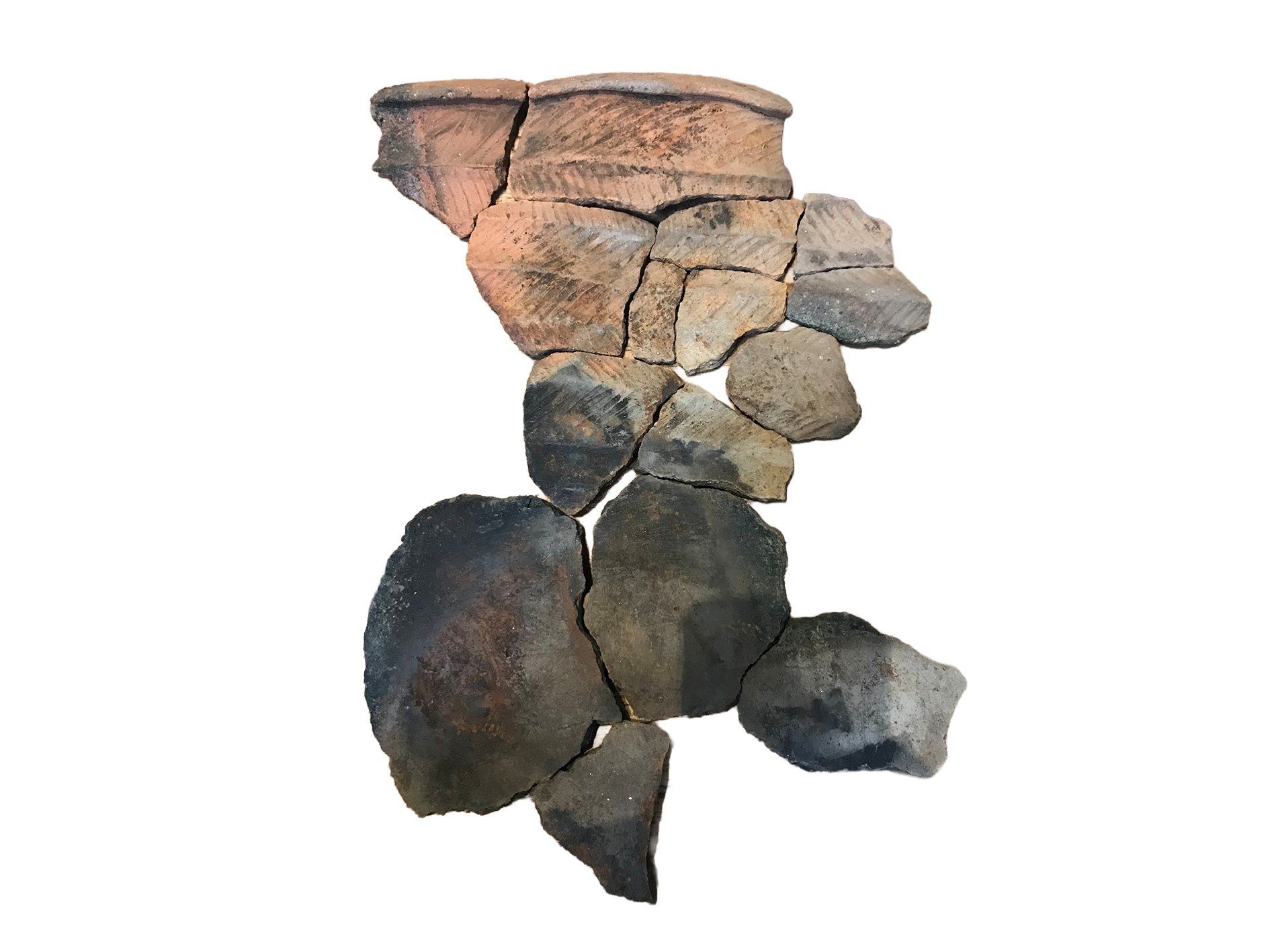
Murray discovered the pottery remains from a crannog in the Isle of Lewis, part of the Outer Hebrides island chain on the country’s northwestern coast. Experts at the National Museum at Edinburgh were bewildered to discover that they were Neolithic (4000 to 2500 BCE), and thousands of years older than they would have guessed for remains associated with crannogs. Since then, archaeologists have been taking a closer look at these artificial islands and their true origin.
“[They are] these strange little circular islands that exist in all the different watery environments in Scotland and Ireland, typically in lakes or lochs, as they call them in Scotland. You would look at one and say it doesn’t look quite natural, because it looks very uniform, a very cohesive structure with lots of small portable stones on top,” Stephanie Blankshein, a maritime archaeologist at the University of Southampton, tells Popular Science. “They’re clearly something different.”
Fragments of a Neolithic pot found near the crannog. Image: University of Southampton.
The island builders
Archaeologists have known about crannogs for more than a century, but it is quite difficult to really investigate the structures because their timelines can be complex. People occupied them for multiple time periods, either continuously or with stretches of abandonment followed by reoccupation. What’s more, it’s difficult to excavate down to the artificial island’s oldest layers.
Murray’s discovery of pottery fragments in 2012 shouldn’t have come as a huge surprise. In the 1980s, one very confused archaeologist discovered Neolithic material at his presumed Iron Age site. However, the wider archaeological community simply deemed it as a strange, hyper-local anomaly, and moved on. The belief that the vast majority of crannogs date back no more than about 2,000 years endured for decades—including for most of Blankshein’s lifetime, she points out.
The waterlogged Neolithic pottery changed all of that, and Blankshein and colleagues started investigating the matter. They gathered and dated organic material and more pottery remains from six sights—five identified during Murray’s dive and the one from the 1980s. They confirm that both the pottery and the crannog were Neolithic, and ultimately found that 11 crannogs in the Outer Hebrides were from that period, with potentially many more around the same age in that region and beyond.
“I’m sure there are many, many more just waiting to be discovered,” Blankshein explains.
So, who were these Neolithic island-builders? It’s important to note that “Neolithic” doesn’t just refer to a time period, but also a lifestyle. Neolithic people were early farmers and pastoralists, and ancient DNA studies have revealed that Neolithic communities in Britain and Ireland were genetically distinct from the Mesolithic (about 9600 to 4000 BCE) hunter-gatherers who lived in the area before them.
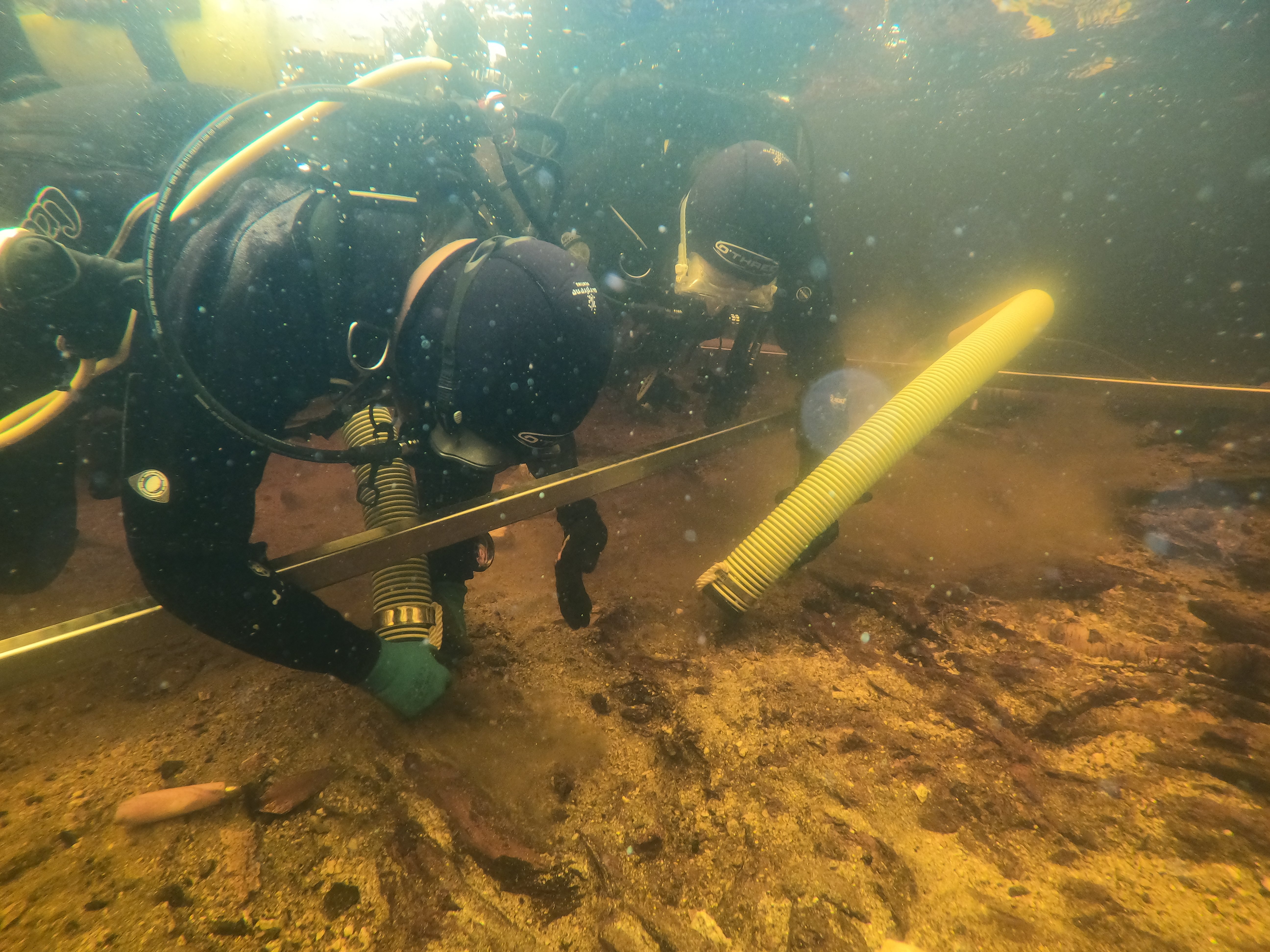
Divers xxcavating underwater at the loch. Image: University of Southampton.
Advanced research techniques such as ancient DNA and isotopic analyses are also revealing where they came from. Neolithic people originated from the present-day Middle East and eventually spread across Europe. Some people migrated along the Mediterranean coast as far as west as Gibraltar, before moving north along the Atlantic coast to Britain and Ireland, where they ultimately replaced the Mesolithic communities.
In fact, researchers have traced the strongest genetic connections of Neolithic people in Scotland not to nearby France but to the Iberian Peninsula, Blankshein says. Britain’s early farmers may have been or descended from Neolithic seafarers. Notably, they would have made landfall a few centuries before the Neolithic crannogs in the Outer Hebrides started popping up.
The oldest crannog in the Outer Hebrides dates back to 3800 BCE, while the earliest Neolithic site in the United Kingdom in southern England is from around 4100 BCE.
“So it’s entirely possible that there was a very early arrival in Scotland as well, and essentially straight away they started building these islands,” says Blankshein. “So it seems like this may have been a tradition that they actually brought with them, or that they established very quickly after their arrival.”
A big Neolithic platform
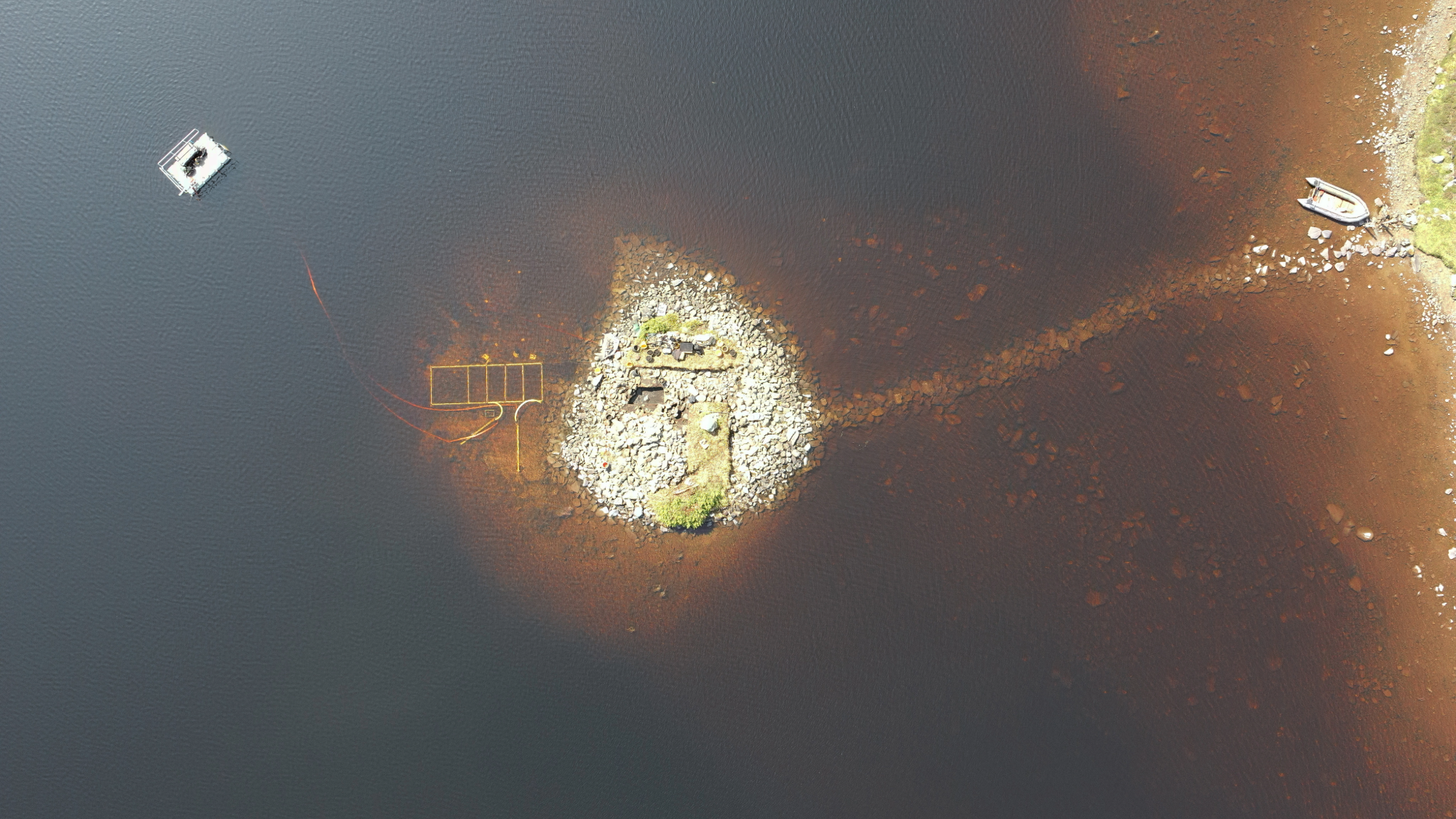
One of the crannogs that Blankshein’s team has studied in significant detail is the structure on the Isle of Lewis’ Loch Bhorgastail. It has already yielded hundreds of pottery shards, and they have also spotted pieces of timber embedded in the structure underwater. Importantly, the team could date that wood using standard carbon-14 dating. And unlike other crannogs, the Loch Bhorgastail crannog didn’t have any structures built on top of it (like a medieval castle) that could complicate excavations.
The team conducted their first serious excavation in 2021, expecting to reveal an island made of stone and reinforced with some timber. While they did not find full pieces of timber, bits of wood were scattered about, leading the maritime archaeologists to an entire underwater timber structure.
“We were just absolutely blown away because we started following this structure further and further back from the island. And by the end of the month of excavation, we hadn’t reached the end of it,” Blankshein says. “And that was about six meters [19.6 feet] that we had extended out. So we knew there was something quite interesting there.”
The wood dates to between 3500 and 3300 BCE, which is consistent with most of the other early Neolithic sites in the Outer Hebrides. When the team returned in 2023, they discovered that the timber platform wasn’t just extending from the stone base underwater, it was under the entire crannog itself.
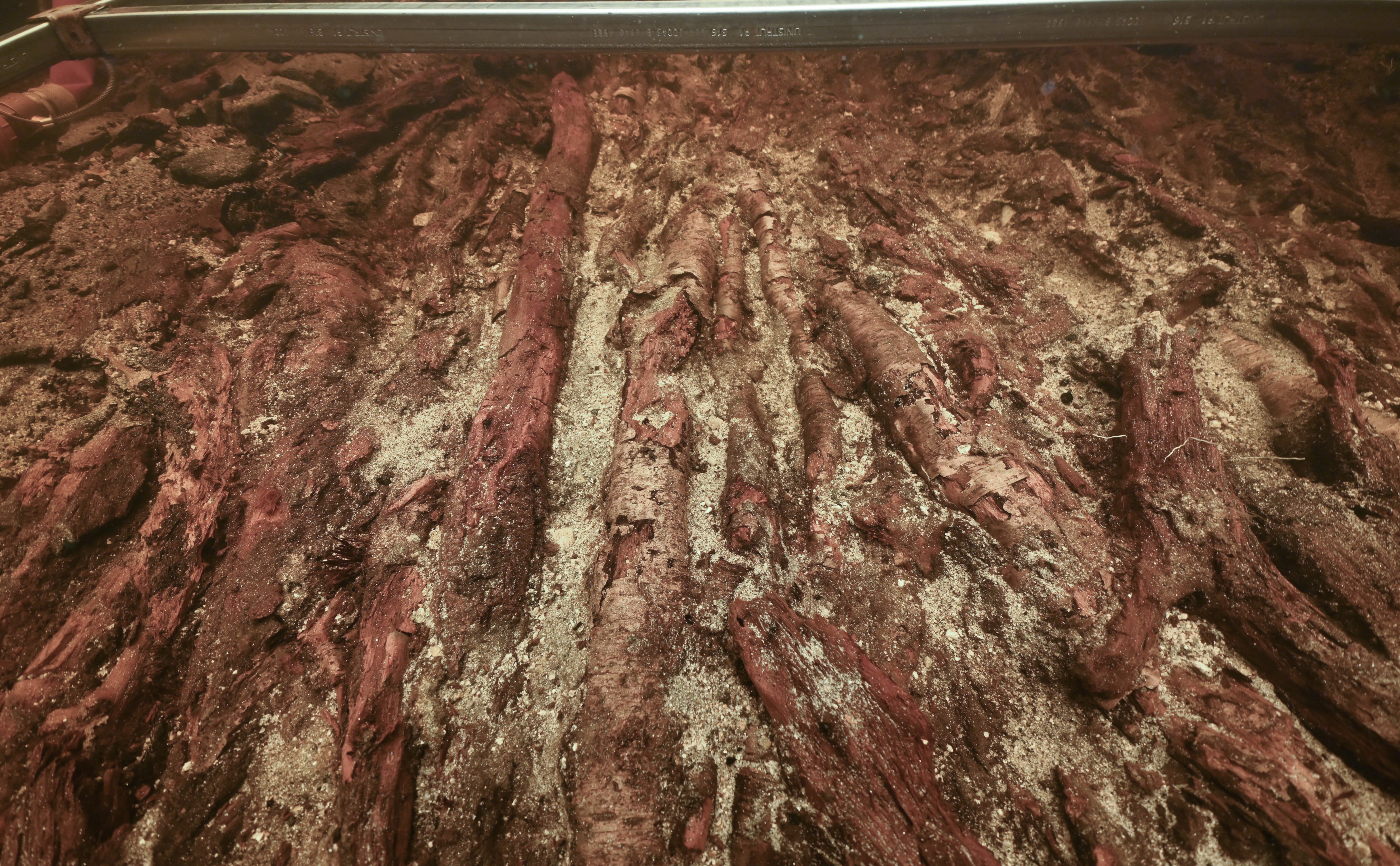
The wooden platform beneath the Lock Bhorgastail crannog. Image: University of Southampton.
directly on the lochbed, potentially circular, and potentially featured stone reinforcements around the edges and/or stakes securing it. Core samples taken from the lake’s dirt and rock indicate that the loch’s water levels would have been lower at the time of its construction, so the platform could have sat under just a foot of water, or even been dry. Another possibility is that it was dry during the summer and underwater in the winter, and so was used seasonally.
The platform is also quite large, at around 75.5 feet (23 meters) in diameter. Now that the researchers have a good understanding of how big the platform was, the next natural question is what it was used for. This is a significantly harder inquiry to answer, and researchers have a number of different theories, according to Blankshein.
Broadly, it probably served several important purposes. The presence of food residue in the many pottery fragments indicate that people were consuming food on the island, thus it could have been a gathering place for a ritual feast or ceremony. As such, one of the theories is that it was used to host coming of age ceremonies. Since the wooden platform would have been on water, another hypothesis is that it could have represented a neutral and egalitarian meeting point.
Materials last touched over 5,000 years ago
In addition to phenomenal archaeological results, the Loch Bhorgastail crannog also prompted the team to develop a new technique for photogrammetry (stitching 2D pictures together to form a 3D model of a site) in shallow water. At these depths, photogrammetry is more difficult to execute than in the deep sea. They describe their method, which involves attaching two GoPro cameras to a rig, in a study recently published in the journal Advances in Archaeological Practice.
The team is finishing the final analysis of the Loch Bhorgastail site and are detailing the excavation results for a future paper.
“Working on such an ancient site is genuinely surreal,” Blankshein admits, speaking of the work in general. “Despite the huge lapse in time, there are moments underwater when the distance between past and present suddenly feels incredibly small—lifting pottery from the loch bed that was last touched by a Neolithic person over 5,000 years ago, or seeing bark still preserved on timbers beneath the sediments as if it had been placed there yesterday. Moments like that provide connections to the past I couldn’t have imagined before working on the site.”
In March, we reported on a wild bobcat that had been hit and dragged by a car, who also got her head stuck in the car’s grill. As if things could get any worse, the wild feline arrived at Raven Ridge Wildlife Center in Pennsylvania on a Sunday, and the nearby veterinary practice was closed. But thanks to two lucky acquaintances, a mobile x-ray machine was brought in, revealing that the bobcat had broken two legs.
Thanks in part to the fact that her bone fractures were clean breaks, her team decided to risk a surgery. The next morning, two surgeons operated on the bobcat contemporaneously. After the operation, Tracie Young, director of the Raven Ridge Wildlife Center, told Popular Science that she was doing “fantastic” and “starting to act like a bobcat.”
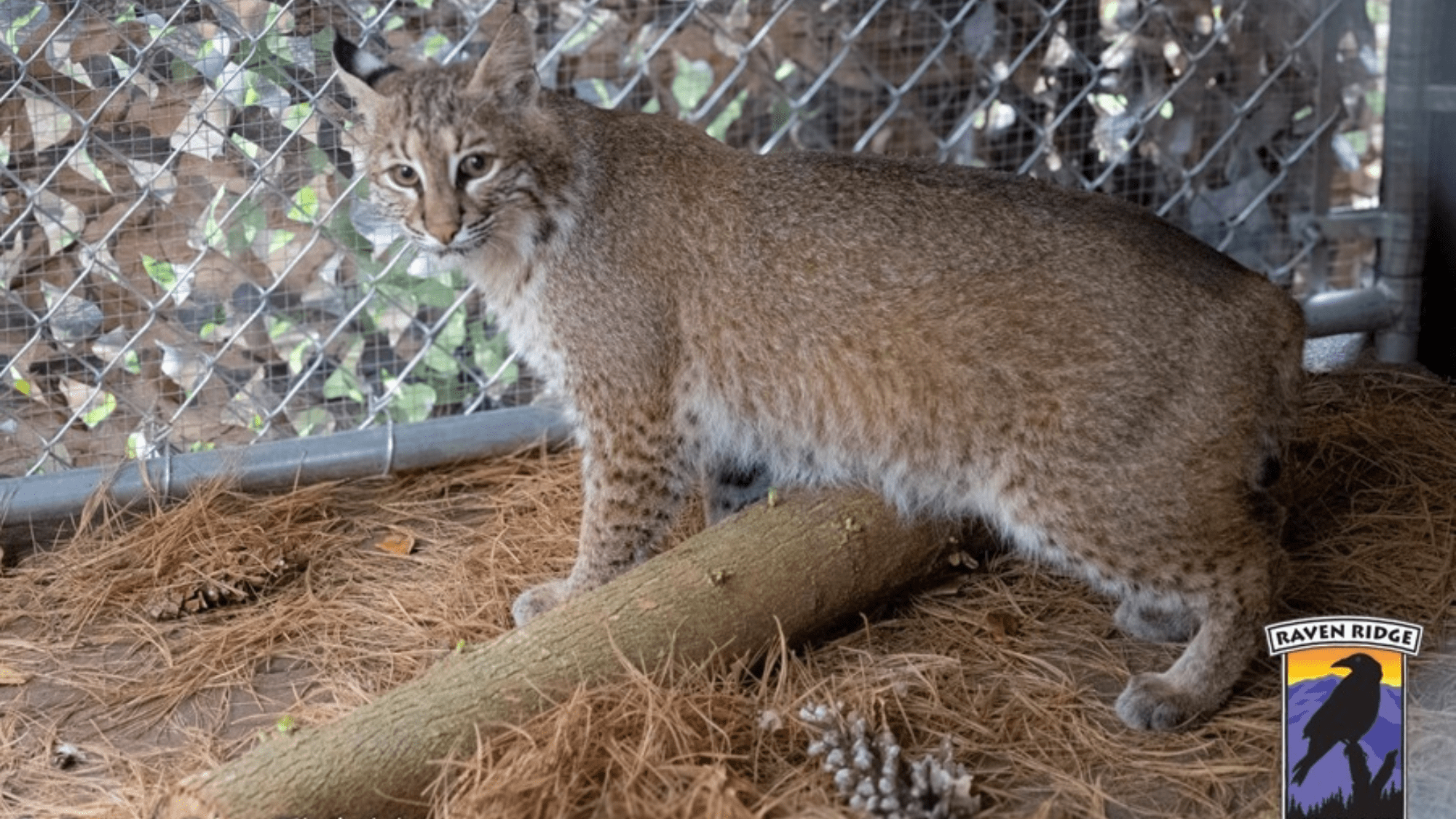
The female feline has been healing atRaven Ridge Wildlife Center for two months. Image: Dawn Rise Ekdahl / Raven Ridge Wildlife Center.
In her great misfortune, the cat has been rather lucky—and it seems like the luck is holding. Two striking coincidences have now come together to get her a custom-made cage for her rehabilitation.
“After two months of recovery, the bobcat now needs to be moved outside for exercise and to begin building muscle tone,” the wildlife center wrote on social media. “We had to devise a safe and creative way to get her outdoors, necessitating the construction of special caging. We determined that a custom dog kennel would be the only viable option.”
However, the problems were twofold: time and money. The dog kennel builders the wildlife center contacted needed at least eight months to build the rehab cage, and the project would cost thousands of dollars. But then Raven Ridge’s photographer Dawn called her neighbor Glen for suggestions, who turned out to be the owner of a kennel-building business and could build the kennel in two weeks.
The custom-built kennel was made for the bobcat in only two weeks. Image: Dawn Rise Ekdahl / Raven Ridge Wildlife Center.
And if you think that’s enough of a coincidence, it gets even better. The very day construction commenced, Raven Ridge Wildlife Center received a letter with a generous donation. A woman named Raven Minervino has passed away, and her husband wrote that she had consistently supported the wildlife center. After she died, her husband had asked that rather than getting flowers, people make donations in her memory. The letter had a donation in her memory large enough to pay for the custom bobcat cage.
“Thanks to all this support, we successfully moved the bobcat to the new enclosure, where she is now exploring, exercising, and much happier,” reads the social media post. Raven Ridge plans to (or perhaps already has) put a plaque in Minervino’s memory on the cage.
Both of the bobcat’s broken legs have healed, and since having the custom cage, she has put on ten pounds, bringing her to the much healthier total of 19 pounds. Adult female bobcats weigh approximately 15 to 20 pounds on average
Around the mid-20th century, trains were in trouble. After the first rail lines were laid in 1804 England, the locomotive’s steamy forward chug seemed unstoppable. For over a century, trains were the unmatched champion for anyone looking to get somewhere further than a short horse ride away.
But by the late 1950s, that all started to change. The automobile’s rapid technological ascent meant more commuters were opting to get behind the wheel than on commuter trains. Air travel, propped up by significant government backing in the U.S. and Europe, shed rail’s ridership further by making long-distance travel faster. On top of all that, vast stretches of rail infrastructure across France, Belgium, and the Netherlands lay in rubble, casualties of World War II German bombing runs.
With rail’s future in limbo, ambitious engineers came to the rescue…or at least tried to. The post-war period produced some radical design gambles, but none were quite as conceptually ambitious as France’s short-lived Aérotrain.
It looked like a striking, comic-book-evoking silver tube, featuring a curved nose, reminiscent of a jetliner cockpit. The shiny steel body looked like a glistening cross between a train car and an Airstream camper, with bold red lettering streaked along its side.
Maybe most eye-catching of all though was its tail, which featured another giant rotating propeller or a jet engine, depending on the model. The Aérotrain hovered above the ground without wheels and propelled itself forward using an aircraft engine capable of churning out up to 12,000 pounds of thrust, roughly equivalent to the roar of a small jet engine at takeoff. That powerful engine meant the Aérotrain could reach speeds approaching 270 miles per hour, fast enough to leave conventional rail in the dust. In December 1969, Popular Sciencecalled the train-plane hybrid “the first guided vehicle to ride on air instead of wheels.”
An unfinished section of the Aérotrain rail sits in a rural French field. Image: Shutterstock PHILIPPE MONTIGNY
The first hovertrain: fast, floating, and loud
The Aérotrain was the brainchild of French inventor Jean Bertin, who founded the firm Bertin & Cie after studying aeronautics. His concept (initially called the Terraplane) adapted hovercraft technology recently developed in Britain and applied it to a fixed-track train. The vehicle rode atop a cushion of pressurized air pumped downward between it and a concrete track shaped like an inverted T, lifting it so it never made physical contact with the surface.
That absence of friction from the ground meant it could reach top speeds faster than a typical rail car. It also meant less wear and tear from contact with the Earth which, in theory at least, meant less need to constantly repair degrading parts.
Bertin essentially borrowed this “ground effect” principle, where compressed air between a low-flying wing and the ground surface builds up pressure leading to upward lift, from the aviation industry. And that wasn’t its only similarity to planes. Instead of using a traditional motor to push itself forward, it used aircraft propellers powered by powerful turboshaft engines mounted on top of the cabin.
One of the later Aérotrain prototypes, which set a record for train speed at the time, used the same engine found on early Boeing 727 commercial airliners. That meant it was shockingly fast, but also head-rattlingly loud. The result was something like a ground level airplane that moved along a track.
Cohen says that resemblance to an airplane wasn’t accidental. Bertin had a background as an aeronautical engineer. On a broader level, academics and scientists at the time were fascinated with recent advances in airplane and jet propulsion showcased during WWII and wanted to apply it anywhere they could.
“There was this sense that airplane technology could be applied on the ground or overwater and underwater and you could get kind of frictionless or semi-frictionless transportation at high speeds, very high speeds and it was not seen as pie in the sky,” Cohen says. “It was seen as a viable form of technology that could transform ground transportation.”
Several prototypes were developed, but the most successful of the bunch carried 80 passengers in two rows of two seats. The design intrigued members of the French government who viewed it as a quick way to connect the city center to airports. Though Bertin had proposed versions meant for suburban travel, the train’s noisiness and need for purpose-built concrete guide paths made it a hard sell for more urban areas.
But after years of trial and error, Bertin did eventually receive a contract to build out a line connecting Paris’s La Défense business district with the town of Cergy-Pontoise. Despite multiple prototypes, the Aérotrain would never transport passengers along the route, or any route for that matter.
The Aérotrain was bred from a culture of science and tech optimism
The Aérotrain, and a handful of international copycats that would follow it, were a product of their environment. Kennesaw State College Professor and train historian Albert J. Churella tells Popular Science the fact that hovertrain concepts gained traction was in large part a byproduct of postwar optimism. There was a sense that recent advances in science and technology could reliably reshape the world around us, and quickly. Journalists and newscasters drawn to the sleek, sci-fi looking designs were also more than willing to amplify that optimism further.
The July 2000 issue of Popular Science describes how researchers at Tohoku University Institute of Fluid Science in Sendai, Japan, were designing a modern Aerotrain that could go 310 mph. Image: Popular Science, July 2000 issue
“Interest in hovertrains must be seen in the context of the technological enthusiasm of the post-World War II period—a time when many Americans believed that science and technology could work miracles,” Churella said. That same optimism also applied to European countries across the Atlantic.
“After all, they had grown up alongside impressive new developments, including Nylon, Rayon, penicillin, jet aircraft, and nuclear power that promised to generate electricity that was ‘too cheap to meter.’”
Cohen echoes that point.
“Both in France and in the US at this time, there’s tremendous optimism about the power of technology to transform lives,” he says.
But the Aérotrain’s single contracted route never actually came to pass. Ballooning costs and development delays dampened public support. A global recession and oil crisis in the 1970s left the French government, whose funding was essential, with increasingly little appetite for large, time-consuming infrastructure gambles.
Shifting attitudes away from flashy, high tech bets and towards more practical utilitarian solutions also reportedly played a role, as did a perception of these projects that they catered particularly to the wealthy. With daily expenses climbing, the average French citizen simply stopped seeing the value in cool but unproven technology they may never personally experience, a feeling captured by city planner Pierre Merlin, quoted by researcher Vincent Guigueno in the journal Technology and Culture:
“It will not be the average Jean-Claude Z who takes the Aérotrain, but his CEO who will travel either to Orly Airport or his factory in the new town of Trappes from the company’s head office located in the Tour Main-Montparnasse,” Merlin wrote.
John Volpe, President Nixon’s Secretary of Transportation, detailed some of those prototypes in a 1969 issue of Popular Science. Rohr’s Aerotrain showed promise, and even received a Department of Transportation contract to test an experimental version in Pueblo, Colorado, but like its French forefather, it died under the weight of mounting costs.
And while a $90 million investment (especially in the 1960s) might sound like a decent chunk of change, Churella says the funding was never sufficient to make a radically new rail technology viable. Worse, spreading the investment across multiple competing approaches doomed any single one from gaining real momentum. Plus, aside from eye-grabbing news reports, Churella says everyday commuters simply weren’t all that interested in the hovertrain’s success, one way or the other.
“Hovertrains were an idea without an application, and a concept without a viable market,” Churella says. “It was something that very few people wanted, and no one needed.”
A prototype of French inventor Jean Bertin’s Aérotrain was exhibited in 2013 in Paris. Image: Siren-Com / CC BY-SA 3.0
“The story of the hovertrains shows the dangers of technological exuberance,” Churella says. “It is all well and good to propose innovative new technologies, but they must serve a purpose.”
In the end, the upfront cost of building entirely new concrete or electromagnetic guideways made the economics of hovertrains nearly impossible to justify. Prior assumptions about the limitations of traditional rail also proved premature.
Incremental advances in conventional wheel-on-rail technology produced today’s high-speed trains—not quite as fast as the Aérotrain, but close enough, and crucially compatible with over a century of existing infrastructure. Today, France’s TGV (Train à Grande Vitesse) high speed rail system is essentially a lightweight, highly refined version of the classic locomotive designs from the early 1800s.
Still, Cohen notes that viewing Bertin’s Aérotrainand the subsequent exploration of hovertrains as a total failure misses a broad point. Refinements of that underlying technology did eventually seed the development of maglev trains, which hover using powerful electromagnets rather than compressed air.
Today, a handful of maglev lines operate in China, Japan, and South Korea at incredible speeds. The most famous of them, Shanghai’s Transrapid, covers roughly 19 miles between Pudong International Airport and Longyang Road station in eight minutes, and is capable of 268 miles per hour—though its cruising speed is capped at around 186 mph.
And maglev tech, initially pitched as a commuter rail solution, has arguably had an even larger impact in other, unexpected applications, from airport luggage transportation and wind turbine parts to numerous military uses. If you peel back the onion far enough, all of those can be traced back to Bertin and his whack train-plane hybrid.
“That’s my lesson,” Cohen said. “to say [new technologies] are wacko is missing the point.” Despite where an individual invention ends up, new tech is “going to have all sorts of other applications”—applications we might not be able to see for decades to come.
In That Time When, Popular Science tells the weirdest, surprising, and little-known stories that shaped science, engineering, and innovation.
There’s a SMILE beaming down from high above Earth. On May 19, the European Space Agency (ESA) and the Chinese Academy of Sciences (CAS) launched a Vega-C rocket from Europe’s Spaceport in French Guiana with a payload representing years of international collaboration. Known as the Solar wind Magnetosphere Ionosphere Link Explorer (SMILE), the spacecraft will soon begin studying the sun’s immensely powerful solar winds and their relationship with Earth’s atmospheric safeguards.
You wouldn’t be reading this without our magnetosphere. The protective shield generated from deep inside Earth has protected the planet from the sun’s most destructive solar winds for billions of years. Without this barrier, life could never survive on what would be a barren, irradiated rock. But while it’s clear that the magnetosphere is Earth’s natural defense system against cosmic radiation and geomagnetic storms, astronomers still aren’t sure exactly how it works.
“We are about to witness something we’ve never seen before—Earth’s invisible armor in action,” ESA director general Josef Aschbacher said in a statement.
Over the next month, SMILE will slowly increase its altitude with 11 engine burns before settling into a large elliptical orbit over the North and South Pole. Actual data collection will start in July using the spacecraft’s four tools, including a pair of X-ray and ultraviolet cameras.
SMILE is the first mission to examine the magnetosphere with X-rays, and the UV equipment will capture the northern and southern lights for up to 45 hours at a time. By combining the two data sources, astronomers hope to gain a better understanding of how the planet is affected by the sun’s constant bombardment of solar winds and frequent coronal mass ejections. The project is planned to last three years.
“The evidence that Smile collects will help us better understand planet Earth and our Solar System as a whole,” explained ESA Smile project scientist Philippe Escoubet. “And the science it uncovers will improve our models of Earth’s magnetic environment, which could ultimately help keep our astronauts and space technologies safe for decades to come.”

 Login
Login