Reading view

A ‘mystery beetle’ is devouring North Carolina’s precious blueberries

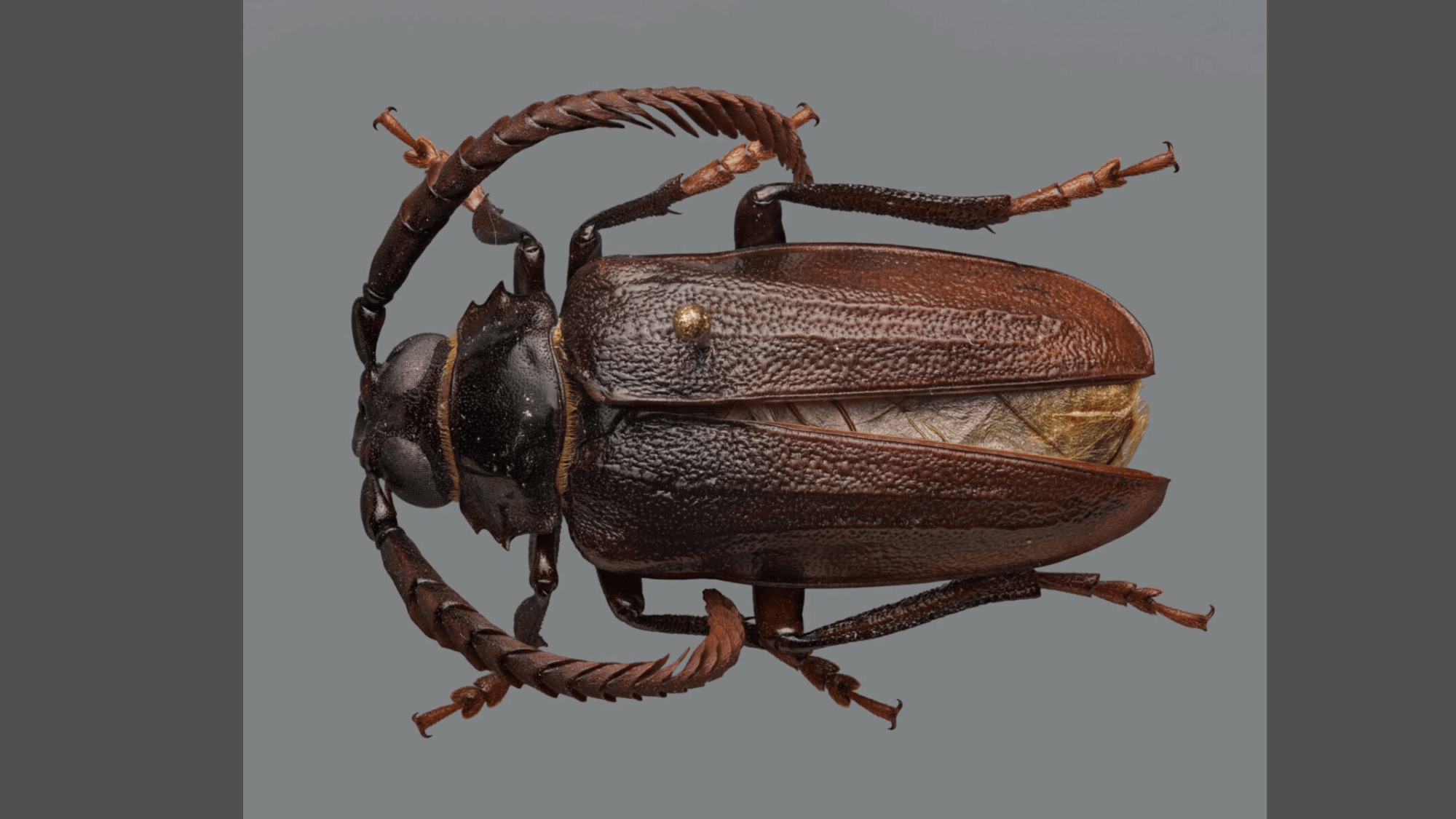
North Carolina’s blueberries may have a beetle problem. For the first time, scientists in the Tarheel State have documented the presence of Prionus imbricornus eating blueberry bushes. This longhorn beetle and its larvae can chomp their way through the state’s valuable blueberry fields. The findings are described in a study published this week in the Journal of Integrated Pest Management

Blueberries are native to North Carolina, but were not cultivated until 1935. The state is the sixth largest blueberry producer in the United States, and the blueberry industry is valued at roughly $70 million. Protecting the plants from pests is crucial, as blueberries are considered one of North Carolina’s most valuable and desirable crops. 

Several species including the blueberry maggot (Rhagoletis mendax), plum curculio (Conotrachelus nenuphar), and cranberry fruitworm (Acrobasis vaccinii Riley) can threaten blueberry crops. The long-horned beetle P. imbricornus may now join their ranks. P. imbricornus is known for their long antennae and are considered wood-boring beetles. The adult females typically lay their eggs in the soil near the roots of hardwood trees. The larvae then eat and destroy the roots. These larvae can grow up to five inches long and potentially kill trees, since the adults don’t feed. 
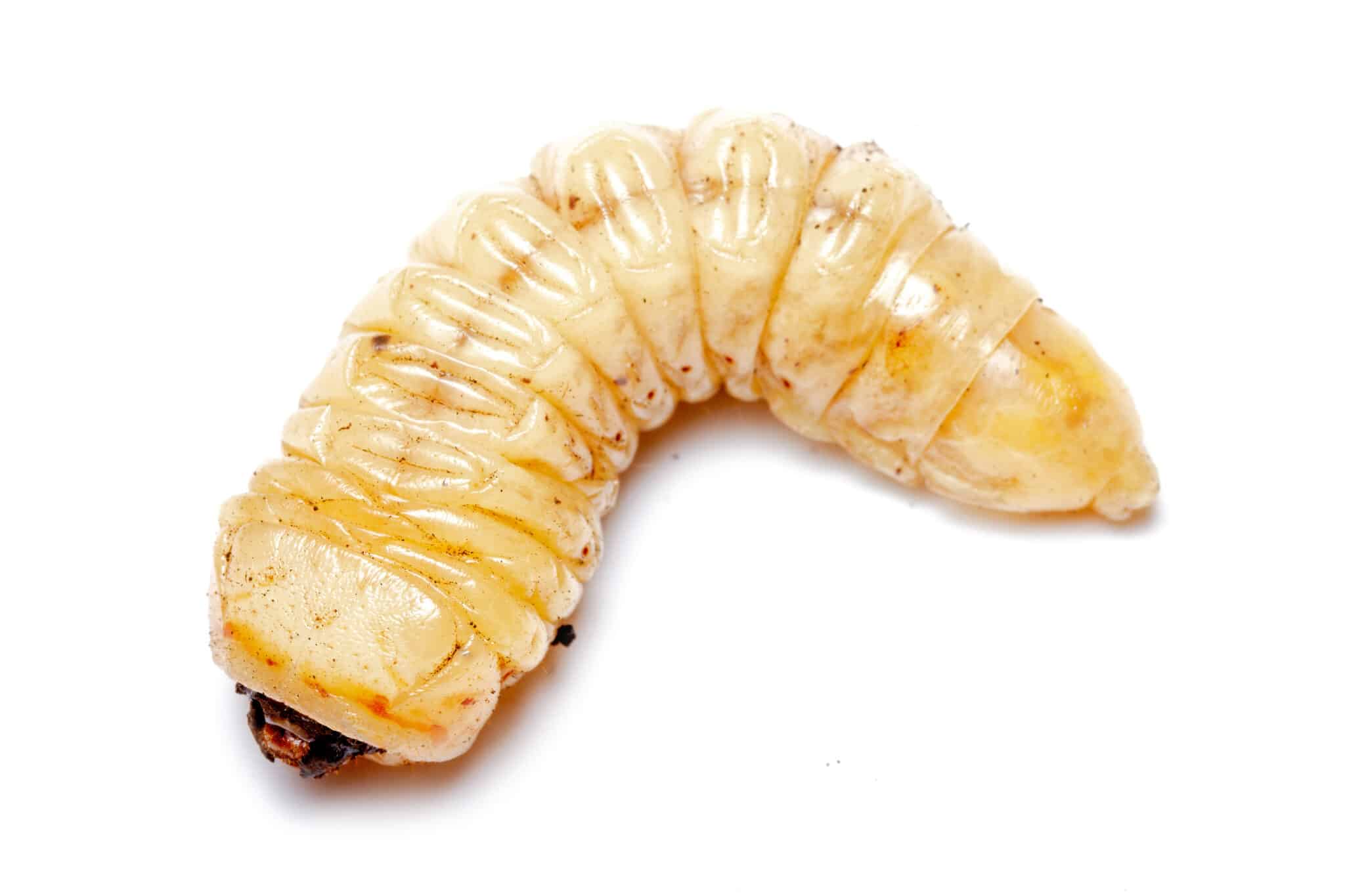
a long yellow beetle larvae
P. Imbricornis larva. The larva, which can grow up to five inches long, feed on the roots of blueberry bushes. Image: Matt Bertone/NC State.

North Carolina is the first state to report that P. imbricornus is actively feeding on blueberry bushes. However, reports of unidentified larvae from the Prionus beetle genus feeding on and damaging blueberry bush roots go back to 2010. In the 16 years since, identifying the specific species responsible has been difficult since the larvae live near the roots of the plants. Different types of longhorn beetle larvae also look very similar, and not identifying a species can harm efforts to combat harmful bugs. 

“Before now, researchers often just assumed the species of Prionus on their commodities based on adult identification,” Kenneth Geisert, a study co-author and NC State graduate student, said in a statement. “If that guess was incorrect, it could mean using a treatment strategy that did not line up with the problem and incorrectly associating species and their hosts.”

For example, P. imbricornus attacks roots, but another longhorn beetle species may go after a tree’s dead branches or trunk. 

“Without knowing which species of beetle you’re dealing with and their ecology, incorrect management can cause adverse effects on non-target insects,” Geisert added.

For this study, the team used a series of black panel traps scented with sex pheromones to attract and gather adult beetles. The traps were placed at six farms across Pender, Sampson, Bladen, and New Hanover counties. The team then used a technique called genetic barcoding on the larvae to analyze small, standardized segments of their DNA to identify the species. They then compared the unknown larval sequences with the same genetic segments from known Prionus adults.

They matched the P. imbricornus with 98 to 99 percent accuracy. According to the team, this result is both good and bad news for farmers.

“On one hand, it’s very important that we know which species we’re dealing with,” said Lorena Lopez, a study co-author and entomologist at NC State. “On the other, North Carolina was the first state to ever report Prionus infestation in blueberries, and there are no insecticides currently labeled against this pest in blueberries.”

To address this shortfall, Lopez has begun insecticide trials. Pinpointing effective insecticides and timing during P. imbricornis reproductive cycles can potentially limit larval development. Fewer larvae could help prevent major root damage and provide blueberry farmers with an effective management tool to protect their crops. 

The post A ‘mystery beetle’ is devouring North Carolina’s precious blueberries appeared first on Popular Science.

  •  

Animals have personalities. Here’s what shapes them.

We tend to think of wild animals as being spared from the messy business of personality: the family dramas, the psychological wounds, the baffling quirks that keep resurfacing like whack-a-moles.

Turns out, nobody gets out of that. Animals have personalities, too, and many of the same complex forces that shape our personalities shape theirs.

“They’re not spared,” says Dr. Alison M. Bell, a behavioral ecologist at the University of Illinois Urbana, tells Popular Science. “Life is hard for them, too.”

But life is also “rich,” says Bell, full of ups and downs, wounds and triumphs, just like human lives.

It’s one of those truths that is both surprising and incredibly obvious, especially for those of us with pets. And yet the study of animals’ personalities has faced resistance—in part because accepting it means accepting that animals are far more like us than some are willing to admit.

Personality and social psychologist Dr. Sam Gosling noticed a telling pattern among his colleagues in animal research: On coffee breaks, they’d talk freely and enthusiastically about the personalities of the animals they studied, even their pets at home. Then the break would end.

“They’d finish their tea breaks, put on their scientist white coats, and stop any kind of talk about that,” he says. 

But reluctance to engage with the topic scientifically doesn’t mean the evidence isn’t there. Decades of research across species has made one thing abundantly clear: Animals do have personalities. Here’s what the science has to say about what makes your pet special, whether they’re super smart, a risk taker, or a homebody.

1. Animals are shaped by their early environment

For animals, as for humans, the earliest experiences often form the deepest scars or the greatest strengths. 

Animals are influenced by “the early life environment,” Bell says. “They’re influenced by their early interactions with parents and siblings.”

This principle is perhaps most evident in our pets. Bell cites an example familiar to many of us: the traumatized shelter dog with a troubled past.

“Pets who are coming from an animal shelter, or have maybe experienced abuse, they don’t forget that,” says Bell. “That leaves a lasting effect.” 

Yet many of us don’t extend this understanding to, say, childhood trauma in a squirrel. But according to Bell, the same concepts apply to any animal, wild or domestic. A squirrel neglected by its mother carries that experience forward, just as we do. 

“This principle definitely applies to other organisms,” says Bell. 

2. Genetics are important, but not the main factor 

As with humans, genetics are also an influential force in animal personality. Perhaps you might expect animals to be more genetically hardwired than us, driven by pure instinct and with few individual variations. But according to Bell, genetics accounts for only about 35 percent of animal personality—the same as in humans. 

Teasing apart personality traits that come from genetics versus the environment is easier in animals than in humans, according to Gosling. For example, researchers can swap bird eggs between nests to determine whether chicks end up more like their genetic parents or the birds that raised them.

“Because of the experimental control that animal studies afford, our estimates of these effects can be much more precise than they can [be] in humans,” Gosling says. “In humans, we have to deal with them in the messy world.”

Related 'Ask Us Anything' Stories

As for which matters more, genetics or environment, the answer is complicated. 

“These studies have shown that there are genetic factors, environmental factors, biological non-genetic factors, and all kinds of other things that influence animal personality,” he says.

3. Personality varies by species

Beyond factors like genetics and environment, animal personality is also shaped by something more fundamental: the species itself. 

As an evolutionary biologist, Bell says she is particularly interested in biological diversity and its role in shaping personality across species.

“What interests me is what are the behaviors animals do that are really, really important for that particular critter, that species?” she says. “If I’m studying a parrot, what’s going to be important is the food they’re eating, the predators they might encounter, their threats, their opportunities, and their habitats. What are the behaviors that matter to that animal?”

The answer, she notes, varies widely depending on the evolutionary needs and challenges of an individual species. Those factors “will be different for a parrot compared to a fish, compared to a whale, compared to a termite,” she says. 

4. Personality is stable, but changeable

Another notable aspect of personality is continuity—the extent to which an individual’s personality remains consistent or changes over time. Bell says animal personality tends to be pretty stable over a lifetime. 

Bell describes a “signature” that persists from the juvenile to the adult stage, even as behavior naturally changes across life stages. In her research on stickleback fish, Bell and her colleagues have observed consistent personality traits in individual fish.

“We can measure them repeatedly,” she said, “and find that the individuals that were risk-takers yesterday are also the risk-takers tomorrow, and next month.”

Cat on robotic vacuum cleaner in house
Some cats hide from robot vacuum. Others stand on top of them. Their risk taking or nervous approach might all come down to personality. Image: Getty Images / witthaya_prasongsin

But that signature is not immutable, says Bell. Experience can alter it. “New environments, social interactions, even changes in health might influence behavior,” Bell says.

Whether animals can change their personalities more or less than humans over a lifetime remains an open question. 

“I don’t see any theoretical reason why we should expect more or less change in humans than in other animals,” says Gosling, though Bell notes that the answer likely varies widely across species. 

5. Human nature may be holding us back

Another factor shaping our understanding of animal personality is surprisingly close to home: human resistance to accepting it.

Part of the problem, according to Bell, is that accepting the concept of animal personality requires a sort of double reckoning: We have to be willing to see ourselves as less exceptional than we thought, while simultaneously being willing to see animals as more complex than we previously believed.

“Both of those things have to happen, and I think that’s challenging to conventional thinking,” she says. 

Why that resistance persists, even in the face of mounting evidence for animal personality, may say more about human psychology than animal behavior. 

“The most surprising thing to me is how surprising it [the fact that animals have unique personalities] is to people,” says Bell. 

In Ask Us Anything, Popular Science answers your most outlandish, mind-burning questions, from the everyday things you’ve always wondered to the bizarre things you never thought to ask. Have something you’ve always wanted to know? Ask us.

The post Animals have personalities. Here’s what shapes them. appeared first on Popular Science.

  •  

An extinct human species made surprisingly creative butchery tools

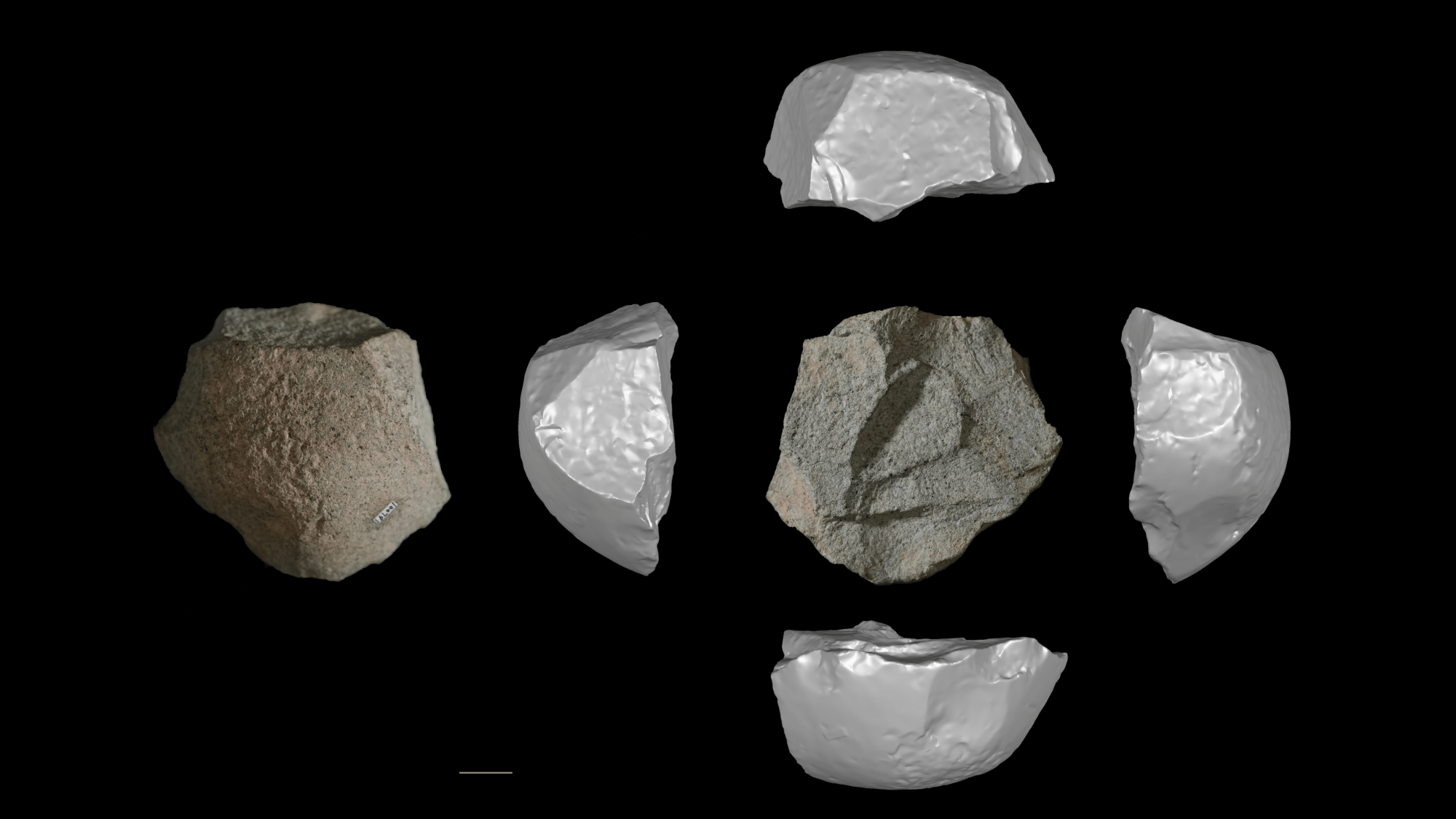
A remarkable collection of ancient stone tools proves that human creativity can thrive in challenging times. The complexity of the stone tools found amidst the bones of butchered animals in central China demonstrate an elevated level of intelligence and creativity. Early humans forged the tools during an ice age 146,000 years ago, not during the relative ease of a warm period. According to a study published today in the Journal of Human Evolution, this challenges the idea that the early humans  could not innovate. 

“People often imagine creativity as something that flourishes in good times,” Yuchao Zhao, a study co-author and the assistant curator of East Asian archaeology at the Field Museum in Chicago, said in a statement. “Finding out that these stone tools were made during a harsh ice age tells a different story. Hard times can force us to adapt.”

A distant human cousin

The stone tools were found at the Lingjing archaeological site in central China. An early human species called Homo juluensis, a cousin of our own species, occupied the area. While they went extinct about 50,000 years ago, Homo juluensis had a very large brain size and traits seen in both eastern Asian archaic humans and Neanderthals in Europe.

Until recently, archaeologists believed that ancient humans in East Asia during the late Middle Pleistocene (300,000-120,000 years ago) did not make many significant technological advances, compared to the early humans living in Europe and Africa. However, the Lingjing stone tools tell a different story.

The disc-shaped stone cores at Lingjing were part of a detailed, carefully organized tool-making process. Homo juluensis built them by striking small stones against larger stone cores. Some of the cores were wired evenly on both sides. Other cores were more carefully built. One side was primarily a surface to strike from. The other side was shaped to produce sharp flakes.

According to the team, these asymmetrical cores are especially important. They indicate that prehistoric humans were not just knocking off pieces of a stone at random. Instead, they were managing the core as a three-dimensional object, where surfaces have different roles, while keeping the right angles for producing useful flakes.

Related Stories

“This was not casual flake production, but a technology that required planning, precision, and a deep understanding of stone properties and fracture mechanics,” said Zhao. “The underlying logic of this system—and the cognitive abilities it reflects—shows important similarities to Middle Paleolithic technologies often associated with Neanderthals in Europe and with human ancestors in Africa, suggesting that advanced technological thinking was not limited to western Eurasia.”

The stone artifacts left behind by the Homo juluensis’ living at Lingjing suggest that they were capable of complex thought and creativity. However, this story  further complicates a shift in the timeline of how long ago these tools were made.

Aging bones

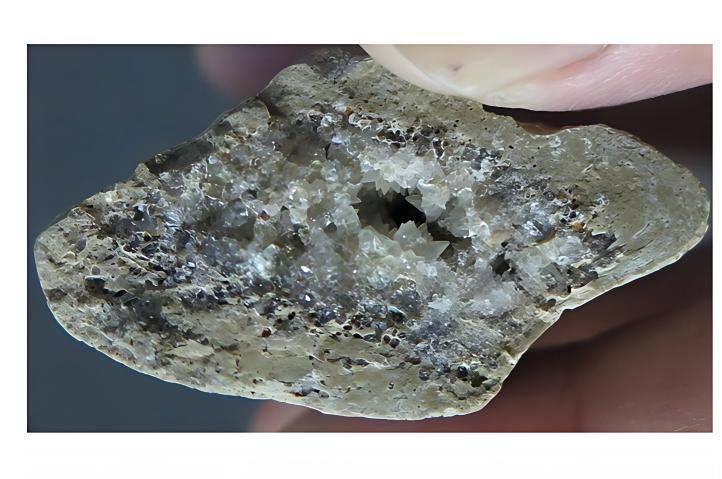
Homo juluensis at Lingjing would butcher animals like deer, with their bones found alongside the stone tools. A rib from a deer-like animal found at Lingjing contained several glittering calcite crystals—an important particle for dating objects. Calcite crystals have trace amounts of uranium, which degrades into another element called thorium over time. Scientists can then tell the age of the crystal by measuring the ratio of uranium to thorium present inside of a calcite crystal.

“The calcite crystals inside the bone acted like a natural clock, allowing us to refine the age of the site,” says Zhao.

crystals inside of a bone
Crystals growing inside a bone found at the Lingjing archaeological site; these crystals were used to date the site, and the tools found there, to an ice age 146,000 years ago. Image: Photo by Zhanyang Li.

Based on this new analysis, the team believes that these tools date back about 20,000 years older than scientists once believed. While 20,000 years doesn’t sound like  a huge amount of time in the grand scheme of things, it’s an important difference. They were likely made during a harsh and cold ice age instead of a warm period. With this new timeline, these tools were likely adaptations for surviving hard times.  

“Altogether, this research reveals a much richer story of innovation, intelligence, and human evolution in East Asia,” says Zhao.

The post An extinct human species made surprisingly creative butchery tools appeared first on Popular Science.
  •  

Newly discovered spider has smiley face on its back

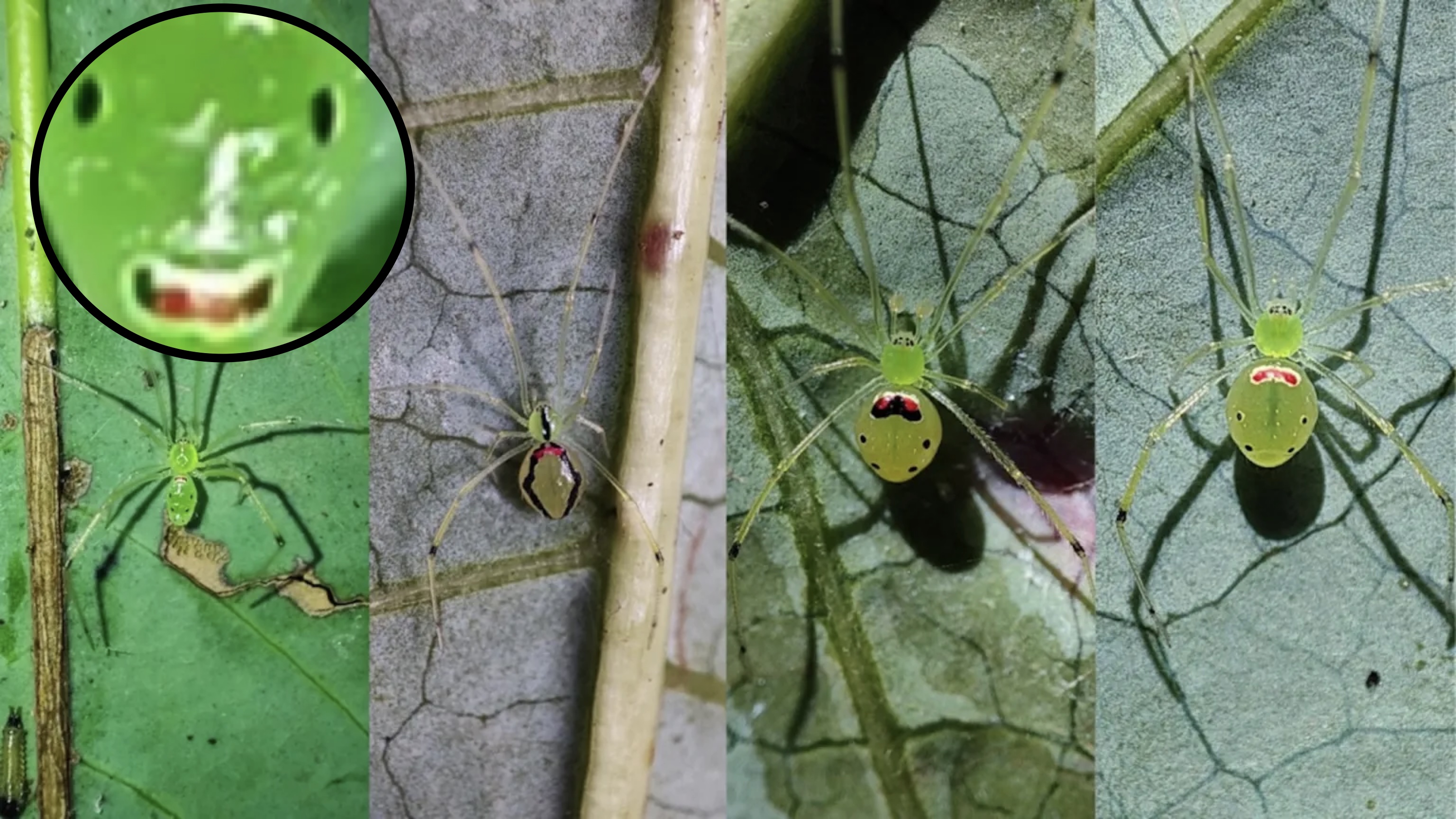
The happy-face spider (Theridion grallator) is famous for the particularly cheery looking patterns on top of its abdomen. Ecologists in Hawaii first described the tiny, vibrantly green arachnids in 1900, and have long assumed them to be unique to the islands. However, an unexpected encounter thousands of miles away recently surprised researchers combing through the forested slopes of the Himalayan mountains.

According to their study published in the journal Evolutionary Systematics, there is at least one more smiley spider species in the world. Of course, such a discovery deserves an equally appropriate name. Without further ado, it’s time to meet the Himalayan happy-face spider (Theridion himalayana).

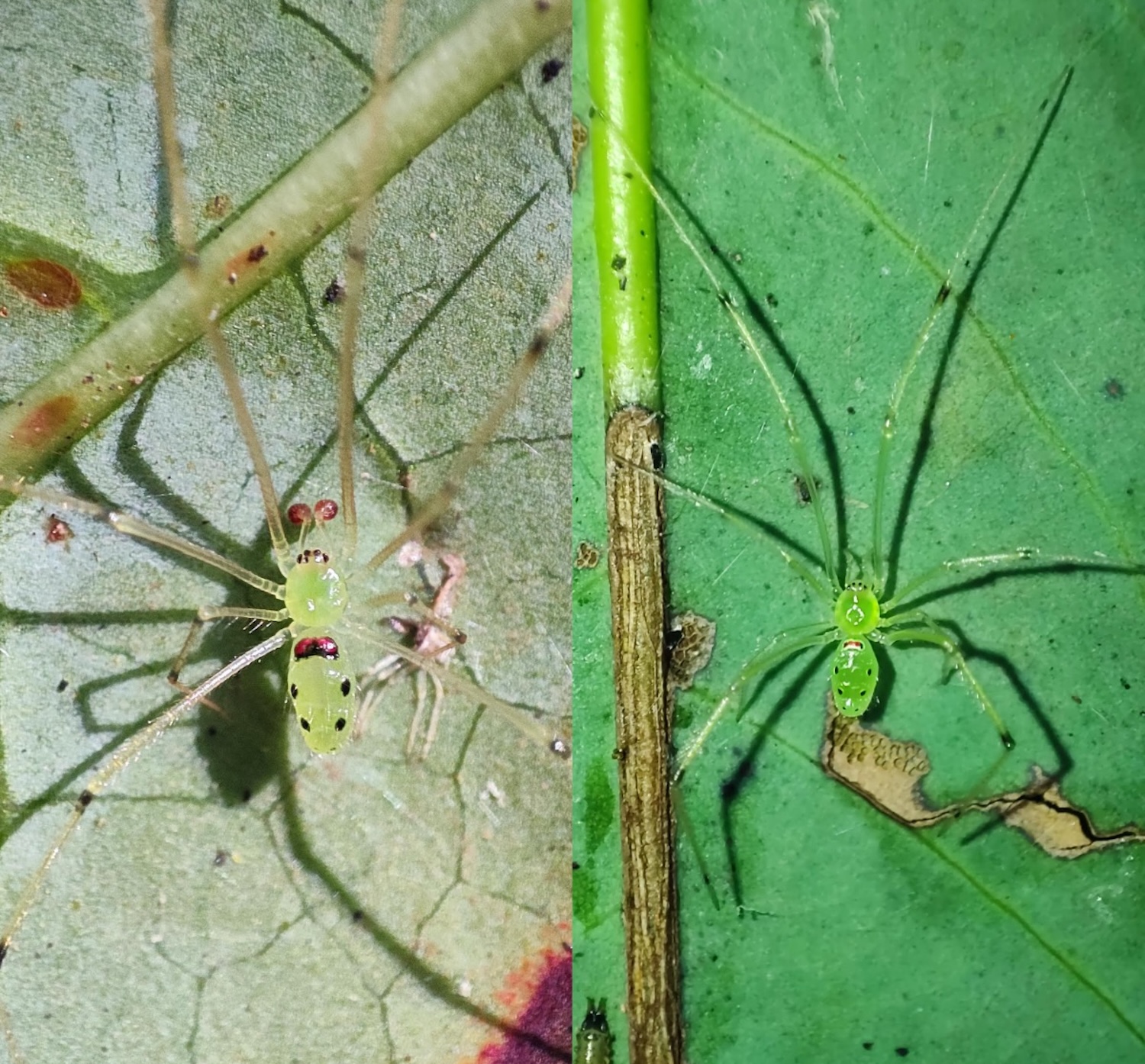
Mature male (left) and female (right) of Theridion himalayana sp. nov. Photo credit: Devi Priyadarshini and Ashirwad Tripathy.
Mature male (left) and female (right) of Theridion himalayana sp. nov. Credit: Devi Priyadarshini and Ashirwad Tripathy.

The meetup began in 2023 during an expedition in the northern state of Uttarakhand, a region home to many animals that remain unknown to science. Researchers from India’s Forest Research Institute and the Regional Museum of Natural History intended to catalogue ant biodiversity at the foot of the Himalayan mountains, but they kept getting distracted by the insects’ eight-legged neighbors.

“My co-author [Ashirwad Tripathy] kept sending me spiders from high altitude regions for identification,” Regional Museum of Natural History biologist Devi Priyadarshini said in a statement.

Priyadarshini recalled on “one fine day,” her colleague sent a photo of an arachnid clinging to a Daphniphyllum leaf. That was when she “froze in shock.”

“I had seen the Hawaiian spider during my master’s program…I knew instantly we had a jackpot because of its striking resemblance,” explained Priyadarshini.

Over the next few months, Tripathy continued to document every similar spider he saw during his survey. While each of the 32 examples clearly belonged to the same species, they all showcased an array of smiley dot-and-stripe coloration patterns (known as morphs) on their bodies. Once in the lab, the team conducted a DNA analysis of their specimens and discovered about an 8.5 percent genetic variation from the Hawaiian happy-face spider. This confirmed it evolved completely independent of the almost identical island spiders, thus earning the name Theridion himalayana.

“The name [Theridion] Himalayana was decided as the species name because we both wanted to pay our respects to the mighty Himalaya mountain ranges, which have been standing tall not just guarding our country but also holding a plethora of biodiversity within them,” added Tripathy.

Although the green coloration obviously helps both spiders blend into the surrounding vegetation, the exact reason for their back patterns remains unclear. Priyadarshini said this question is “definitely indicative of a deeper genetic mystery” that deserves further investigation. However, another shared trait is even stranger. Both species have a fondness for ginger plants, even though ginger isn’t native to Hawaii.

“How did the [Hawaiian] spiders choose an invasive species and ginger exactly?” wondered Priyadarshini, who theorized T. himalayan may be an “elder cousin” of T. grallator.“Although this sounds like a tall claim now, it will be our further scope of work to establish any missing links,” she said.

The post Newly discovered spider has smiley face on its back appeared first on Popular Science.
  •  

Sex jumpstarted Earth’s animal biodiversity

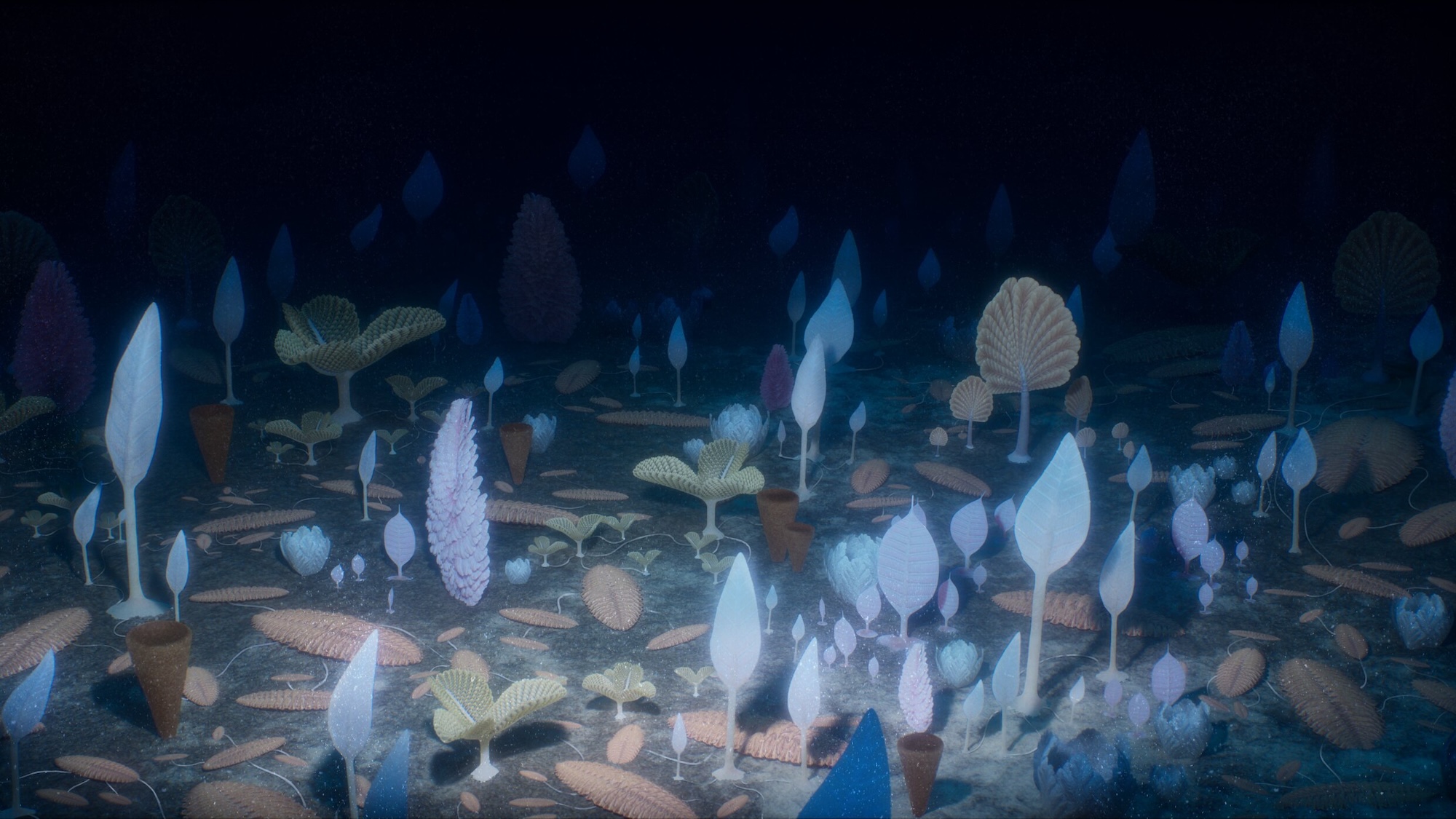
Evolution is responsible for Earth’s stunningly diverse spectrum of life, but that wasn’t always the case. In fact, the earliest eras of living organisms were comparatively boring. The earliest known animals date back about 635 million years (during the Ediacaran Period), yet they look remarkably similar to their descendents 96 million years later at the dawn of the Cambrian.

Why did evolution remain so stable for so long? It might be simply because Earth’s first creatures simply weren’t having much sex.

“Life was pretty nice during the Ediacaran, so the need for sex was rather limited,” Emily Mitchell, a paleozoologist at the University of Cambridge, explained in a statement. “There was relatively little competition, so there was no real pressure to change anything.”

Along with her colleague Andrea Manica, Mitchell recently combined spatial analysis and laser scanning with machine learning to analyze 574-million-year-old fossils excavated from southernmost Newfoundland’s Mistaken Point. Their findings, published today in the journal Nature Ecology & Evolution, show that the earliest animals’ reliance on asexual reproduction kept things largely uniform, and reduced the struggle for resources.

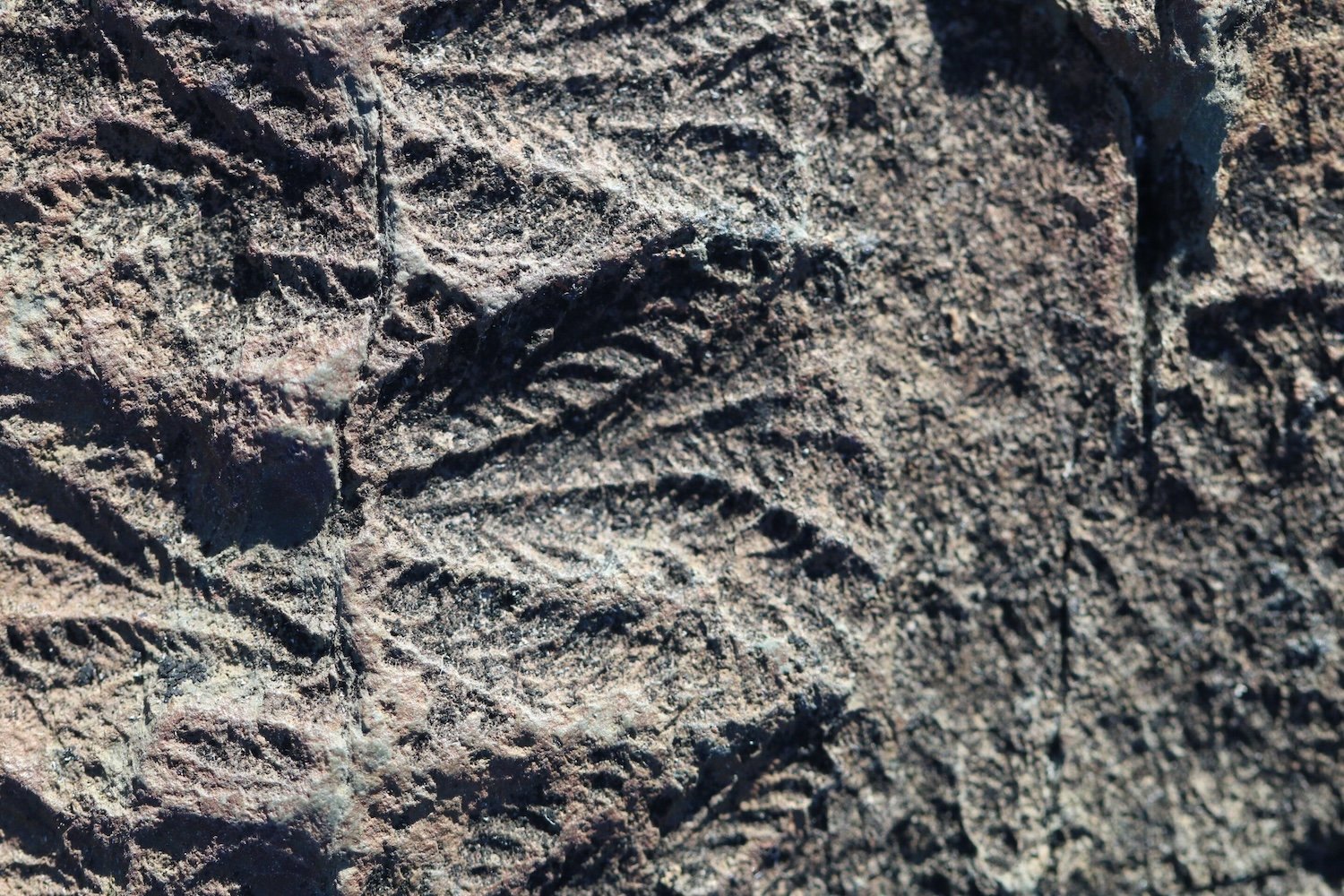
Fossils of Fractofusus
Fossils of Fractofusus, an animal from the Ediacaran period. Credit: Emily Mitchell

They offered Fractofusus as a prime example. At over 6.5 feet tall, the fern-like creatures dwarfed most of their oceanic relatives and likely lacked organs or mouths. They also absorbed food from the surrounding water while remaining anchored in place, reproducing through clones distributed by stolons or runners like present-day strawberry plants.

“If you’re connected to your neighbor by these runners, then you’re sharing nutrients and you don’t need to compete with them,” said Manica.

From there, the team constructed a machine learning model to approximate how Fractofusus and its fellow Ediacaran animals possibly behaved through varying reproductive strategies. The program’s neural network then identified simulations that aligned with known fossil record diversity patterns. Known as Approximate Bayesian Computation let them basically travel back in time to estimate how animals proliferated and squared off for limited resources.

They now believe the Ediacaran Period’s overall tranquility (and sexlessness) began to get complicated as species gradually migrated from deep waters to shallower regions. Once there, ancient animals endured new stressors like temperature swings, nutrient deficits, tides, and even storms. Life then adapted to face these increased threats—and left behind more fossils. The story they tell indicates that environmental stress often precedes a rise in sexual reproduction versus other methods of procreation. 

“When that happens, we can see a massive increase in dispersal distances as animals attempt to colonize new areas due to an increase in competition,” said Mitchell.

These shifting trends eventually ushered in what’s known as the Ediacaran “second wave” of animal evolution, which further amplified millions of years later during the Cambrian era, as animals started physically moving through their environments.

“If you’re suddenly in an environment where you’re essentially getting killed a couple of times per year, then that changes everything,” Mitchell explained.

The post Sex jumpstarted Earth’s animal biodiversity appeared first on Popular Science.
  •  

Vet constructs ingenious contraption to help a tortoise hit by a car

Complex problems require creative solutions, and wildlife veterinarian Nielsen Donato is no stranger to what might seem like out-of-the-box problem solving. Last month, Donato and his team at Vets in Practice in the Philippines fixed temporary wheels onto an Aldabra giant tortoise (Aldabrachelys gigantea) that was struggling to walk. 

More recently, they built a contraption to care for a four-year-old African spurred tortoise (Geochelone sulcata) that had been run over by a car not once but twice. When the unfortunate reptile was first brought to the clinic, Donato—who is the clinic’s chief surgeon and exotic animal medicine specialist—wasn’t there. 

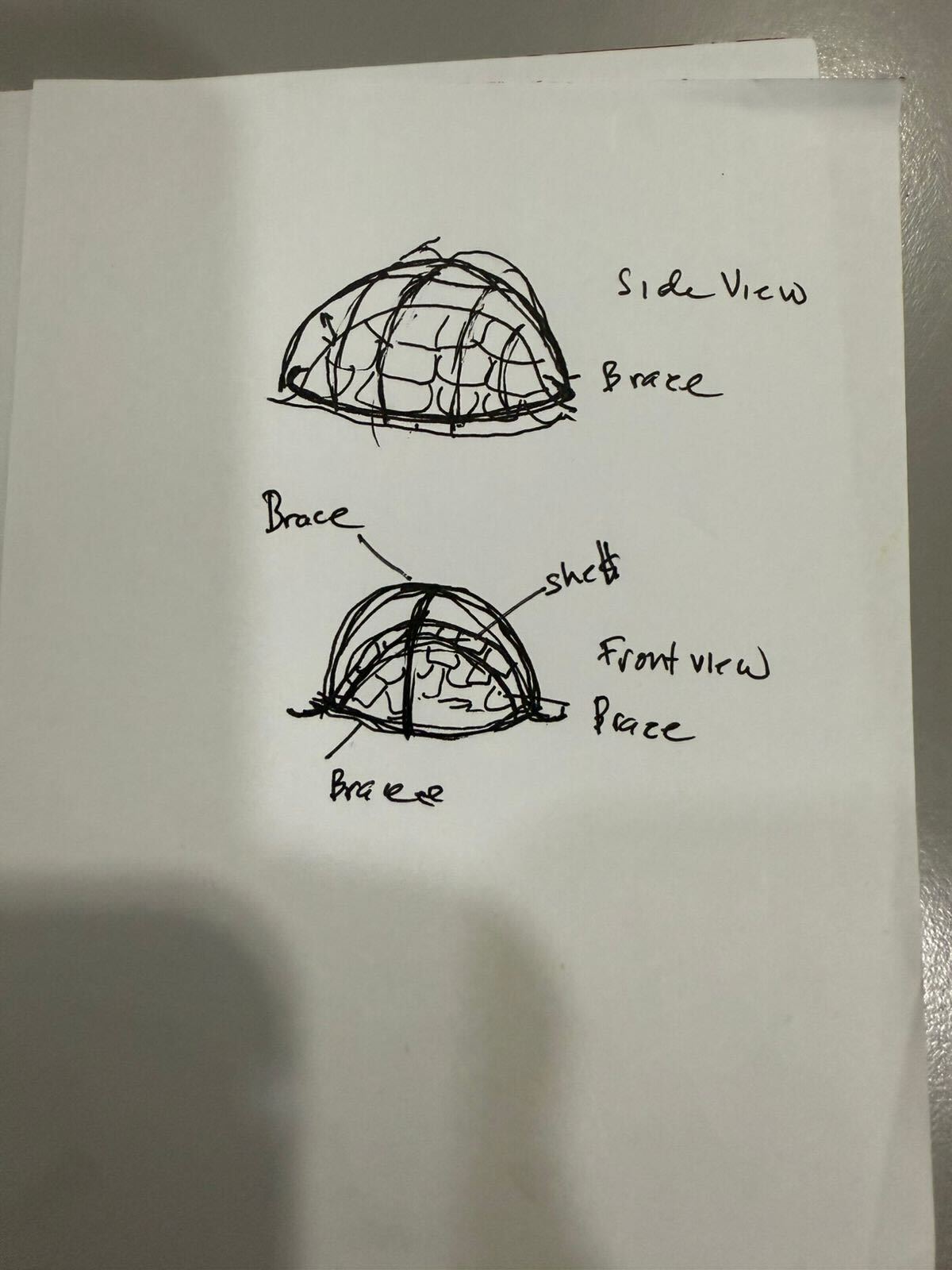
Over the phone, Donato instructed the team to keep the tortoise’s exposed soft tissue damp by rinsing the shell with saline (salt water). They also tried to stabilize the cracks, by fixing inverted screws onto various parts of the shell with epoxy putty, and then tying rubber bands around the screws.

a diagram of how to fix a turtle's shell
The team sketched out their plan of action to save the tortoise’s shell. Image: Nielsen Donato.

“At this point, our main concern is to stabilize the condition of the turtle from shock, from the injury. So for the first three weeks, we made sure that there were no flies that laid eggs and turned into maggots,” Donato tells Popular Science

They kept the tortoise hydrated, tube-fed it, kept its wound clean, basked it in the sun, and gave it antibiotics and pain medication. 

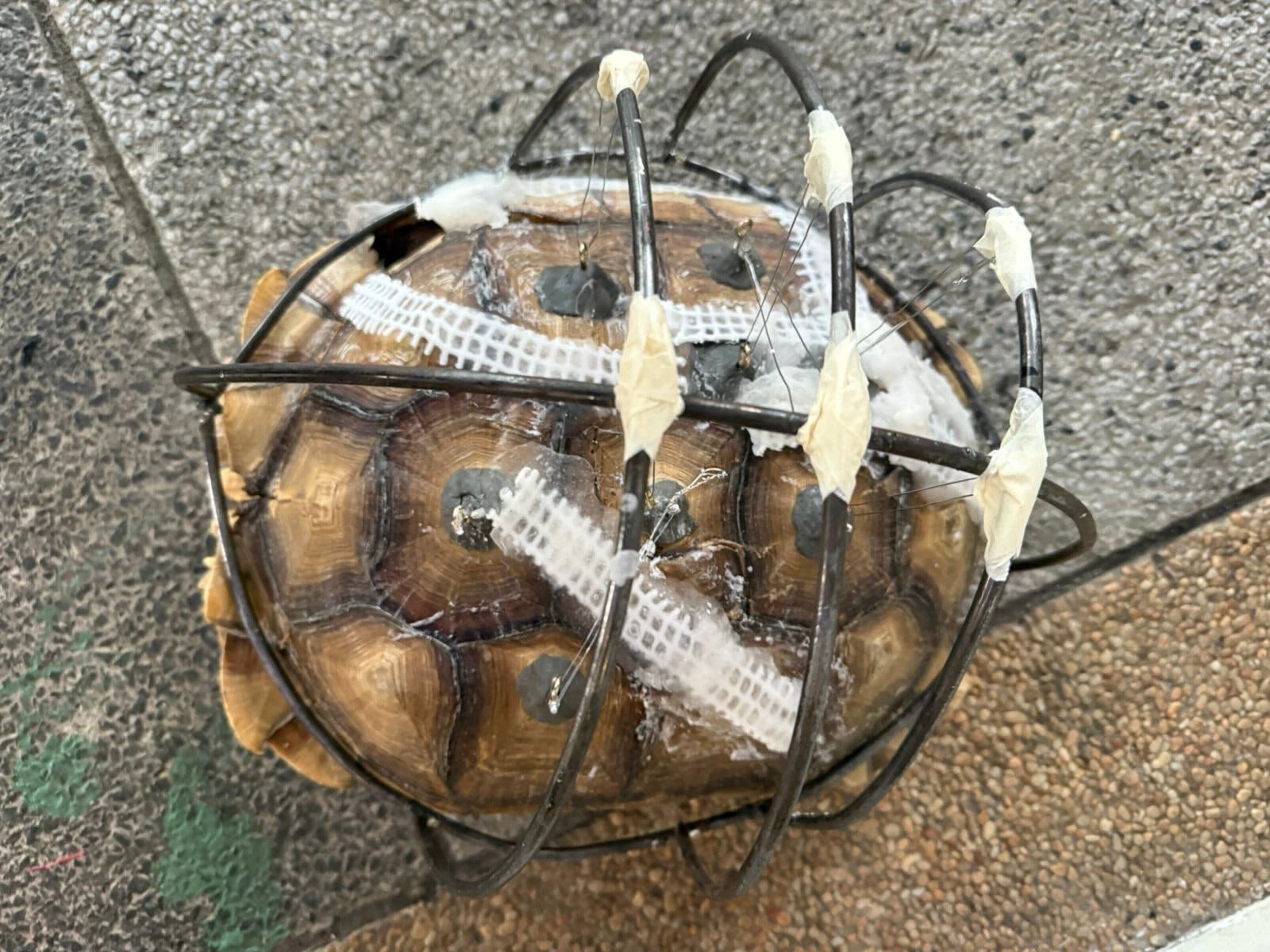
black wires over a large turtle shell keeping it together
The wires help keep the shell together. Image: Nielsen Donato.

“And once the tortoise, the sulcata, was more mobile and showing interest in eating on its own, we planned to repair the shell,” he says

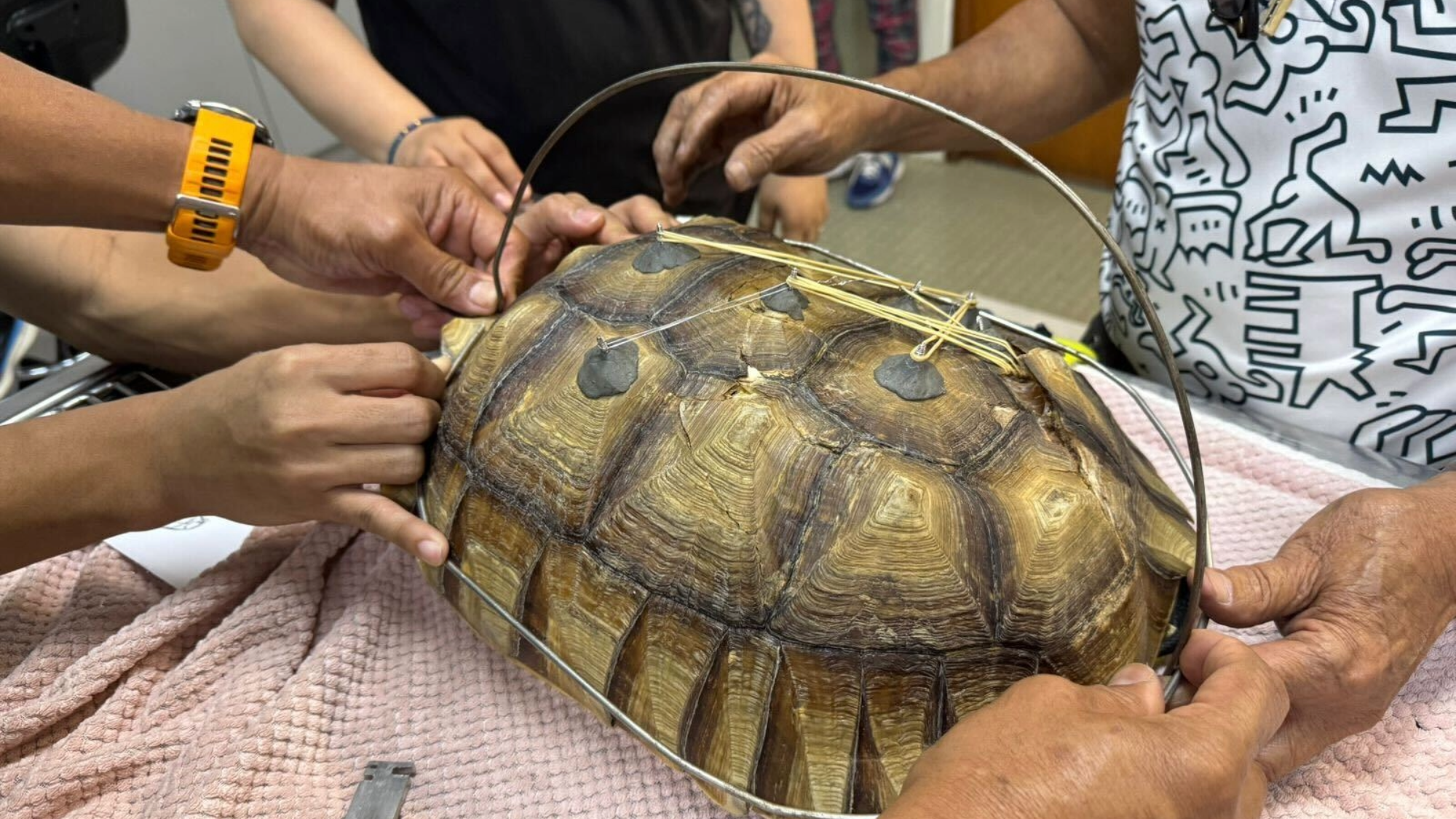
According to Donato, the most difficult part for him was lifting the crushed parts of the shell. So he designed a frame for the shell that, with the help of wires, would pull up these shell parts. And the contraption worked.

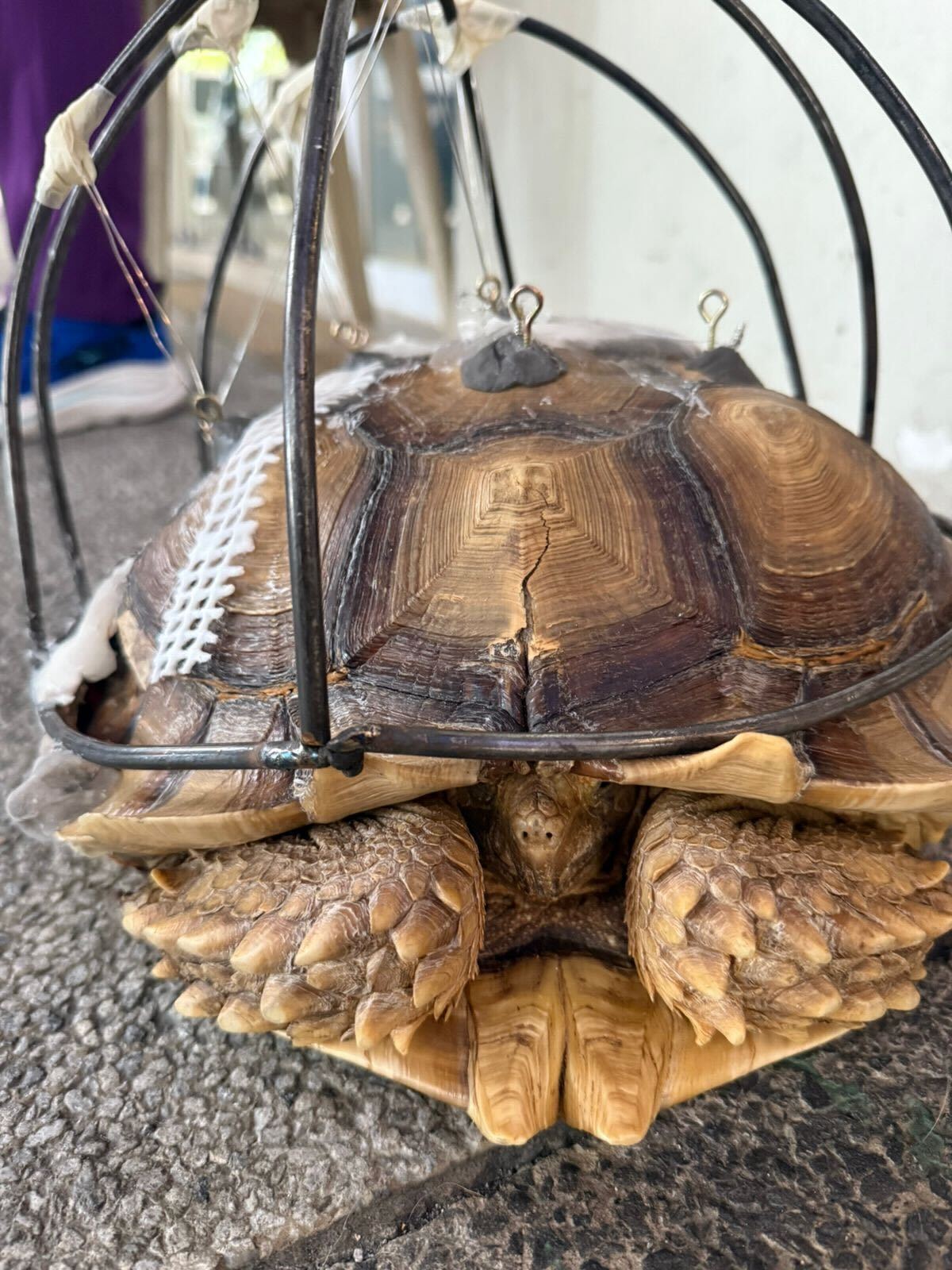
a tortoise with black wires over it shell
The tortoise was hit by a car twice, but is on the road to recovery. Image: Nielsen Donato.

“When we were twisting the wire, we noticed that we were starting to align the shell and the cracks were becoming more opposed to each other,” he explains. The team sealed the cracks with dental acrylic and asked the turtle’s owner to bring it back after three weeks. By the time the tortoise was back in their clinic, the shell had become more stable. The team removed the brace, wires, screws, and putty, and sent it back home again before its next appointment.

“When it visited us lately, it started moving around more actively and the owners were not worried about its appetite because it was eating again,” Donato reports. 

One thing is for certain—this tortoise went to shell and back again. 

The post Vet constructs ingenious contraption to help a tortoise hit by a car appeared first on Popular Science.
  •  

Orphaned baby turkeys think a feather duster is their mom

While turkeys are more associated with the fall, spring is the season of the baby turkey just like with most birds. When two turkeys were left without a mother, staff at Raven Ridge Wildlife Center in Pennsylvania resorted to a surprising replacement: a feather duster

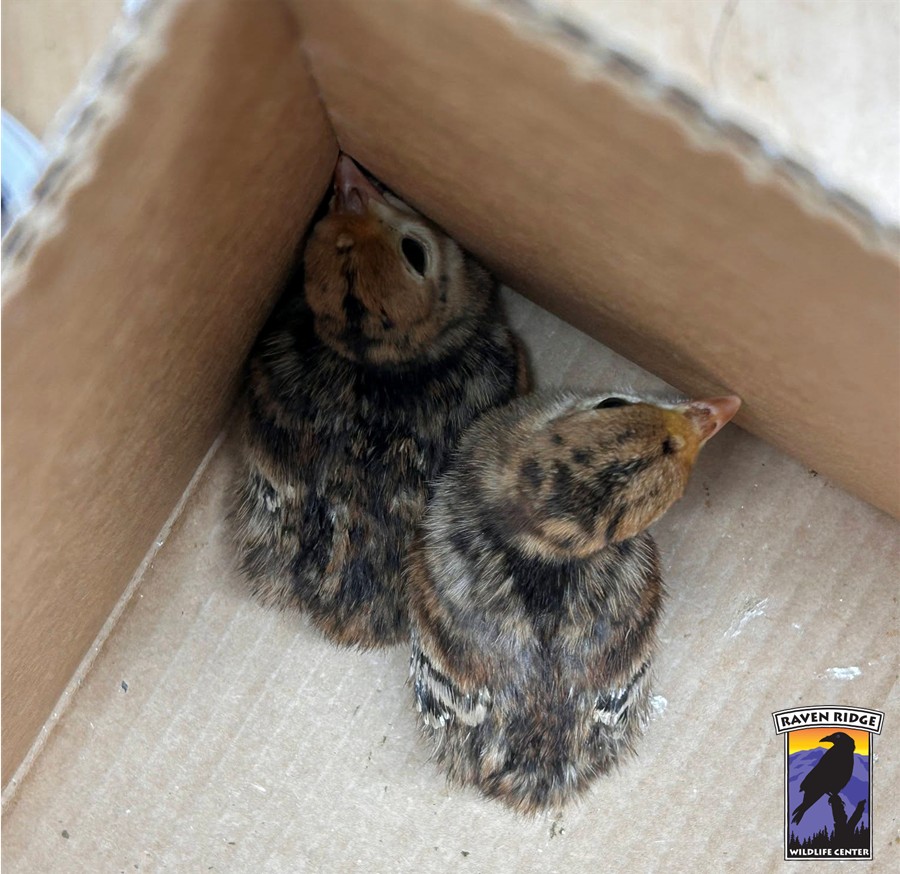
It might sound like a Disney-esque solution, but rehabilitation animals won’t start healing until they are relaxed, and these two chicks—just a day or two old—were very stressed. According to Raven Ridge’s Game Warden, a man found them running down the same road where their mother and a sibling were killed. 

Turkeys are precocial birds, meaning they’re pretty independent soon after they hatch. Unlike baby blue jays or robins, turkey and pheasant chicks eat and move on their own. However, they do rely on their mother for warmth and protection. So when these two chicks arrived at the wildlife rehabilitation center in southeastern Pennsylvania, the staff put them in an incubator to keep them warm. 

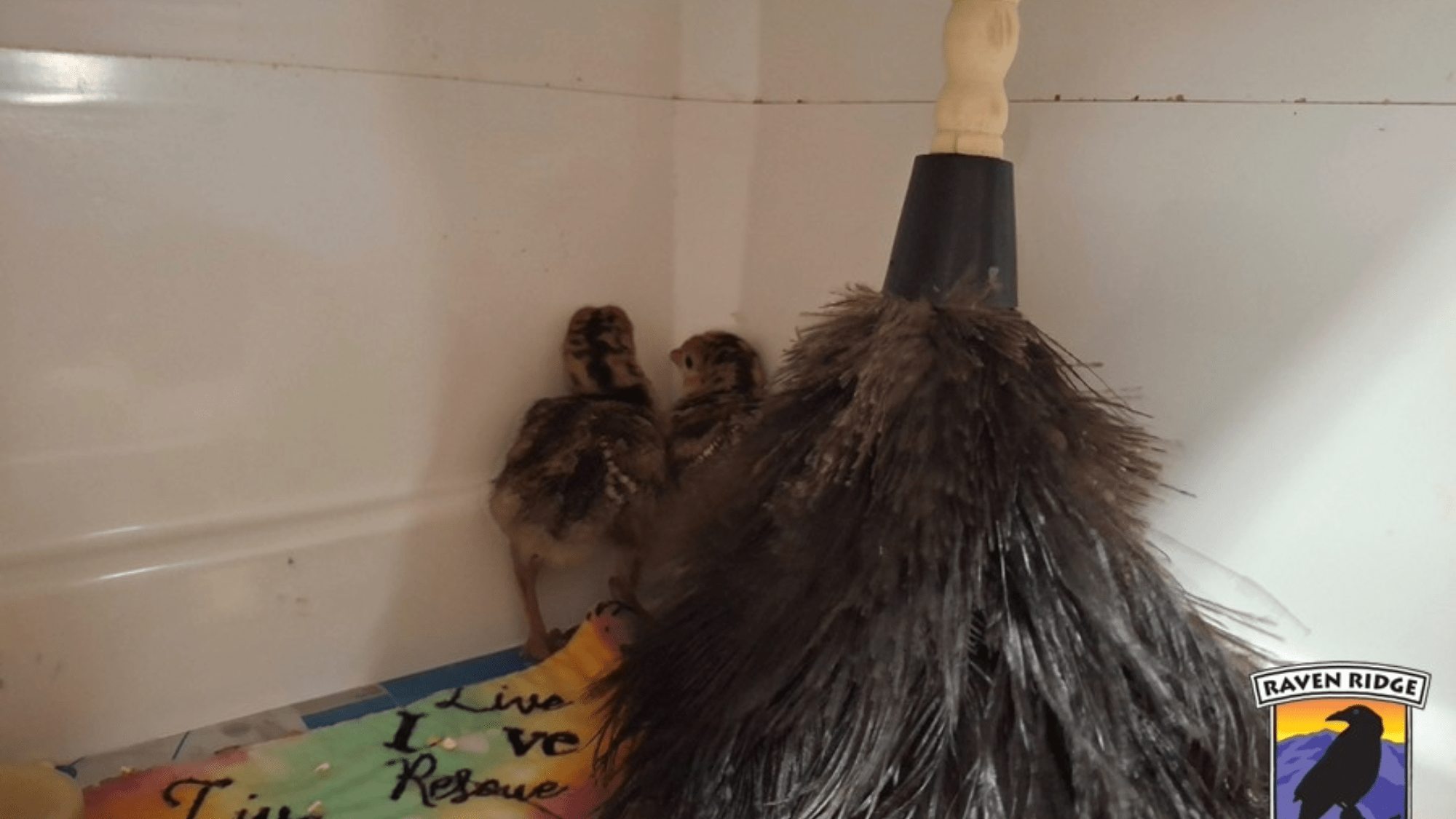
This particular incubator hosts a third presence. The staff put in a feather duster with the chickens, that they can hide under as if it were their mother. 

two turkey chicks in a box
The chicks were found after one of their siblings and mother were likely hit by a car. Image: Raven Ridge Wildlife Center.

“The incubator is nice and warm, which would be just like mom,” Tracie Young, director of the Raven Ridge Wildlife Center, tells Popular Science. “And to cut down their stress, the feather duster is hanging from the inside of the incubator. It’s more natural, more something that they’re going to recognize, and they’re able to hide under it. So it’s just like mom. It’s safety, it’s warmth. And that really does help with these animals in rehabilitation.” 

Interestingly, Young and her colleagues also put pictures of adult turkeys in the incubator so that, in the absence of a real one, the chicks can still see a sort of adult role model. It’s not unusual for wildlife centers to resort to off-beat solutions for orphaned babies in rehabilitation. In 2024, wildlife care staff wore fox masks while caring for a juvenile red fox so that it doesn’t get used to humans. 

Young says that when dealing with one or just a few ducklings at Raven Ridge, they give them adult duck decoys. As for turkey chicks, “a turkey decoy is not going to fit into an incubator,” she explains, so that’s where the pictures come in.

This isn’t the first time the team has reached for the feather duster in such a scenario, nor will it be the last. In fact, the wildlife center also just received another baby bird—its first ever ruffed grouse (Bonasa umbellus). That means they’ll have to procure another feather duster. 

The baby chicks will likely be at the wildlife center until closer to the fall, when they’ll be returned to the wild. Once the birds become bigger and able to keep themselves warm, the team will transfer them into a larger cage and then outside. For now, however, the featherduster is helping. 

“They were running out from underneath their duster, running back underneath the feather duster,” she says, “but we noticed, too, that after putting the feather duster in they were a lot calmer, they were eating more, and their weight is going up.” 

The post Orphaned baby turkeys think a feather duster is their mom appeared first on Popular Science.
  •  

700,000-year-old squirrel poop helps scientist recreate an ancient world

A treasure trove of prehistoric squirrel poop is painting a picture of a lost world. Some of the oldest DNA ever discovered and sequenced lies deep inside these ancient rodent droppings. That fossilized poop (or coprolite) is full of 700,000-year-old environmental DNA from numerous plants, insects, microbes, and large mammals that once lived in Canada’s Yukon, many of which are long gone. A study published today in the journal Nature Communications describes the findings.

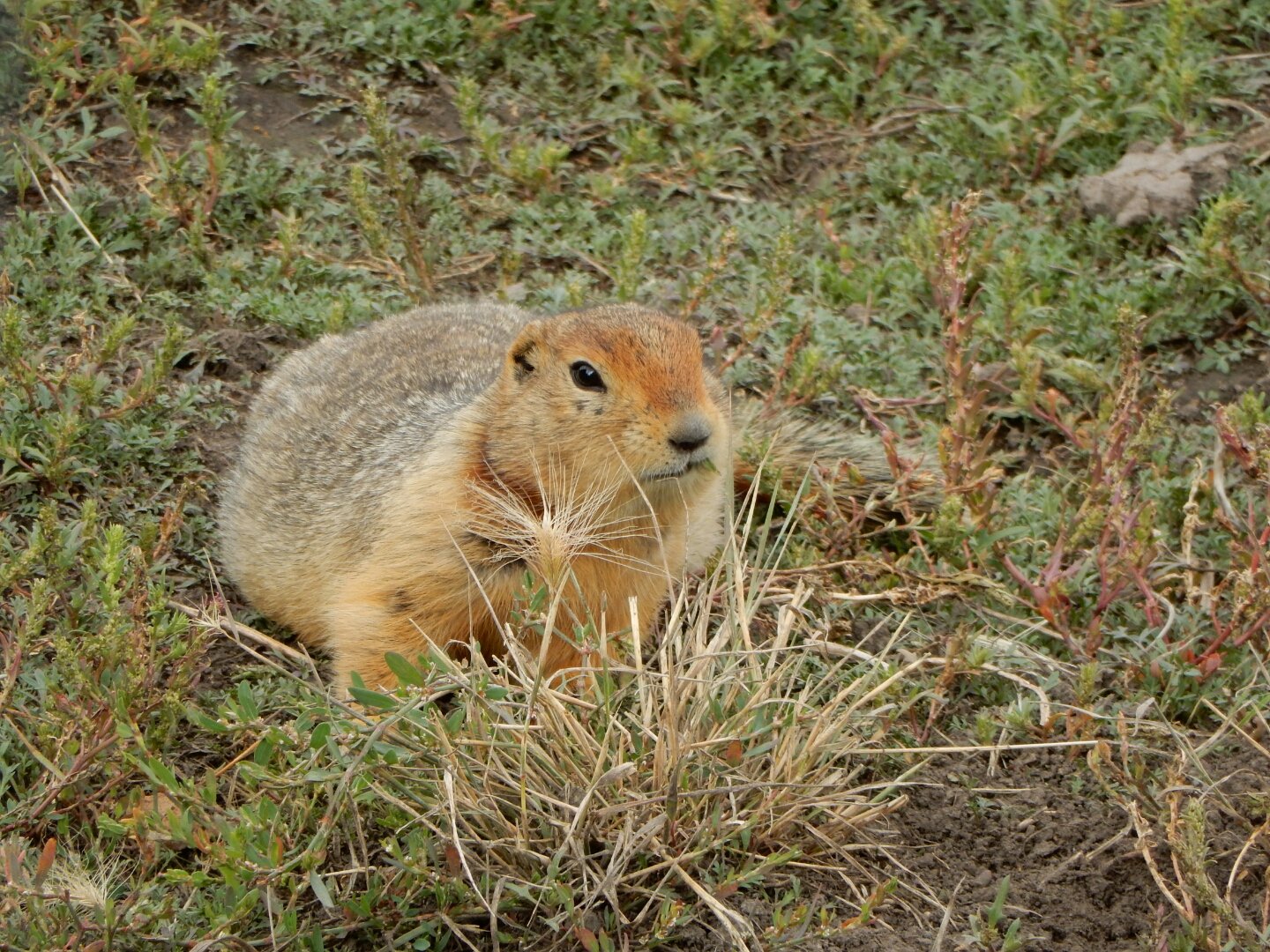
a large squirrel with brown fur laying in grass
Researchers analyzed permafrost samples collected from ground squirrel burrows that span several glacial periods and can remain frozen and sealed for thousands of years. Image: Government of Yukon.

A rodent time capsule

Arctic ground squirrels (Urocitellus parryii) are still alive today. They are widely found within Beringia, a region spanning the Yukon in Canada and Alaska in the United States. They are opportunistic feeders that eat a wide variety of plants, fungi, and insects. They will also eat meat, including dead flesh, whale meat, and even other rodents. They can also hibernate for up to seven months. Their wide diet and long-term hibernation in frozen burrows have helped create a detailed biological record of their environment.

“I’ve been describing them as acting a bit like tiny Arctic pack rats,” Tyler Murchie, a study co-author and McMaster University biomolecular archaeologist, tells Popular Science. “These squirrels are interesting both because of what they collected from the environment and because of their own evolutionary histories and how they adapted to the far north during previous glacial periods.”

The proof is in the poop

In the study, Murchie and his team analyzed 13 Arctic ground squirrel coprolite samples from the central Yukon. This research took place on the territory of the Tr’ondëk Hwëch’in First Nation and was conducted with permission. 

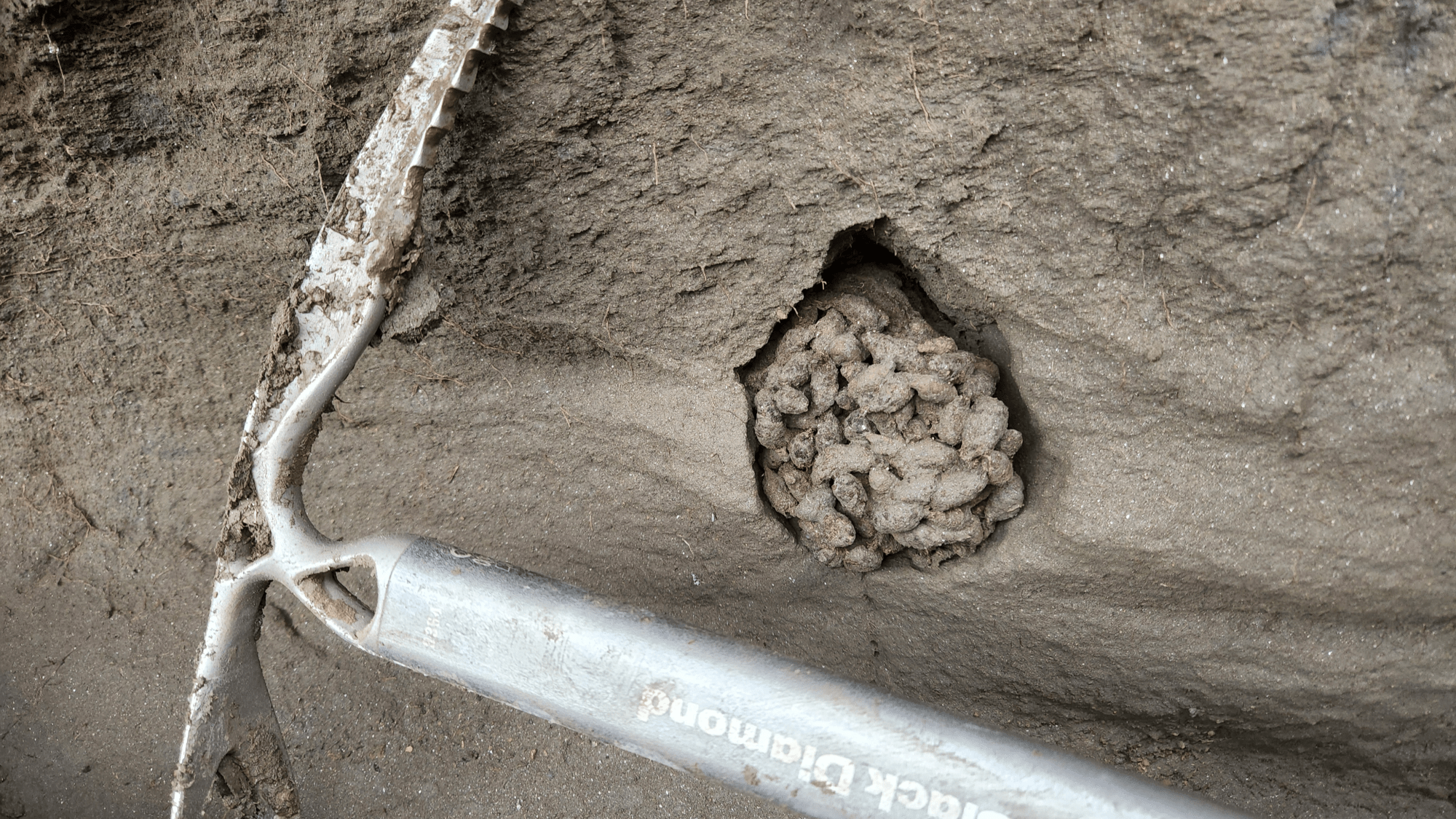
Compared to bones or sediments, fossilized feces like these coprolites are not used as often for DNA analysis since they can degrade more easily. However, the ground squirrel burrows in Arctic regions can remain frozen and sealed for thousands of years, preserving genetic material in the poop. The ground squirrel burrows here span several glacial periods, and the organic material inside can remain frozen and sealed for thousands of years. The samples in this study date back 30,000 to approximately 700,000 years ago and the biomolecules from ancient animals can be preserved in the coprolites.  

“Ancient squirrel poop was one of those ideas that sounded a bit ridiculous at first,” says Murchie. “Scott [Cocker, a study co-author] and I did it initially in part for fun and out of curiosity, not knowing what to expect. But scientifically, it made a lot of sense that these sorts of remains would be really information dense given how dense the burrows can be with macro-remains and given that they’ve been frozen continually for millenia. The squirrels were basically collecting pieces of the landscape and storing them in frozen burrows.”

To tell that something is coprolite, context matters. The scientists didn’t find a random poop pellet here or there, but found the droppings as part of a greater burrow system. 

“They are small pellets, roughly rabbit-dropping sized, and they look like dried or fossilized fecal pellets rather than random sediment clumps or plant fragments,” Murchie explains. “When you’re working with them though, they very much seem like frozen poop. When we subsample them and go to digest a portion to extract DNA, it smells like poop. So the organics are all still in there.”

Inside of these DNA samples they not only found smaller organisms like plants and microbes, but larger animals—woolly mammoths (Mammuthus primigenius), American cheetahs (Miracinonyx), horses (Equus), steppe bison (Bison priscus), and more. The team was able to reconstruct 18 mitochondrial genomes from the poop samples, including 12 ground squirrels, one hare, two bison, and three horses.

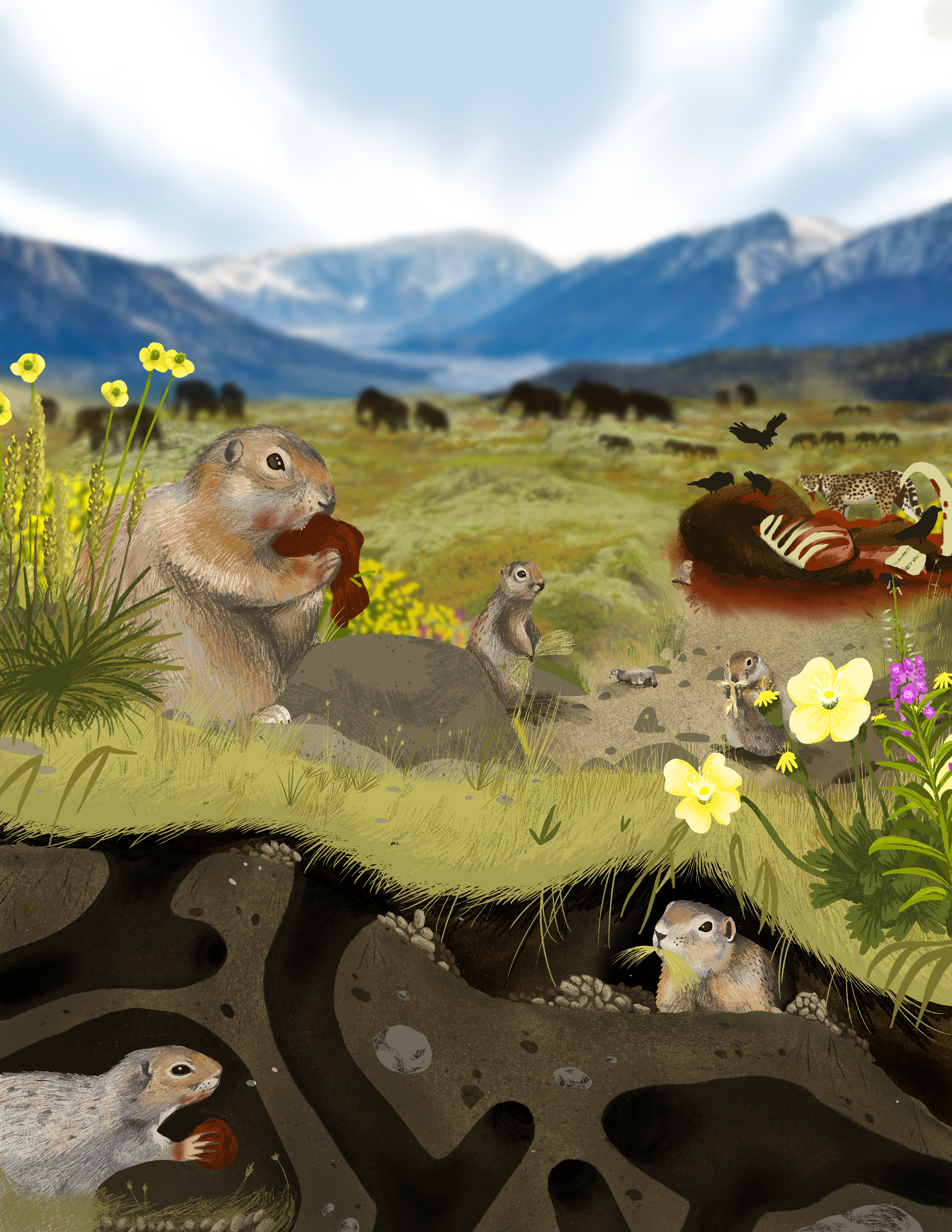
an illustration of squirrels in burrows with others on top in the grass
An artist’s reconstruction of Pleistocene Yukon, showing Arctic ground squirrels scavenging meat and foraging on plants within the mammoth-steppe ecosystem. Ancient DNA from their preserved burrows and faeces reveals this complex food web—where even small rodents fed on megafauna like mammoths. Image: Mercedes Minck/Hakai Institute.

A humbling timeline

The team also found a previously unknown genetic diversity among Arctic ground squirrels, including one lineage that dates back 700,000 years. While this squirrel does not live in the Yukon, its relatives can be found in western Siberia.

“There’s something humbling in the timescale. Some of these samples are older than our species. Homo sapiens in our modern anatomical form are usually placed at around 300,000 years ago, and our oldest sample is roughly 700,000 years old,” says Murchie. “So these squirrels were living, collecting, eating, caching, and leaving behind these tiny biological archives long before humans like us existed.”

The team acknowledges that some of the DNA may have been picked up from the coprolite’s surface at a later time and species identification may be affected by incomplete genetic reference databases for animals that lived so long ago. However, these findings show that permafrost coprolites can be part of a high-resolution snapshot of prehistoric environments and complement more typical findings like bones and teeth. 

“Science is sometimes at its best when it takes something ordinary, weird, or even funny, and shows that it contains a much larger story,” says Murchie. “In this case, squirrel poop can turn out to be a window into deep time, climate change, extinction, evolution, and ecosystems that no longer exist.”

The post 700,000-year-old squirrel poop helps scientist recreate an ancient world appeared first on Popular Science.
  •  

Mosquitoes can learn that DEET means dinner is served

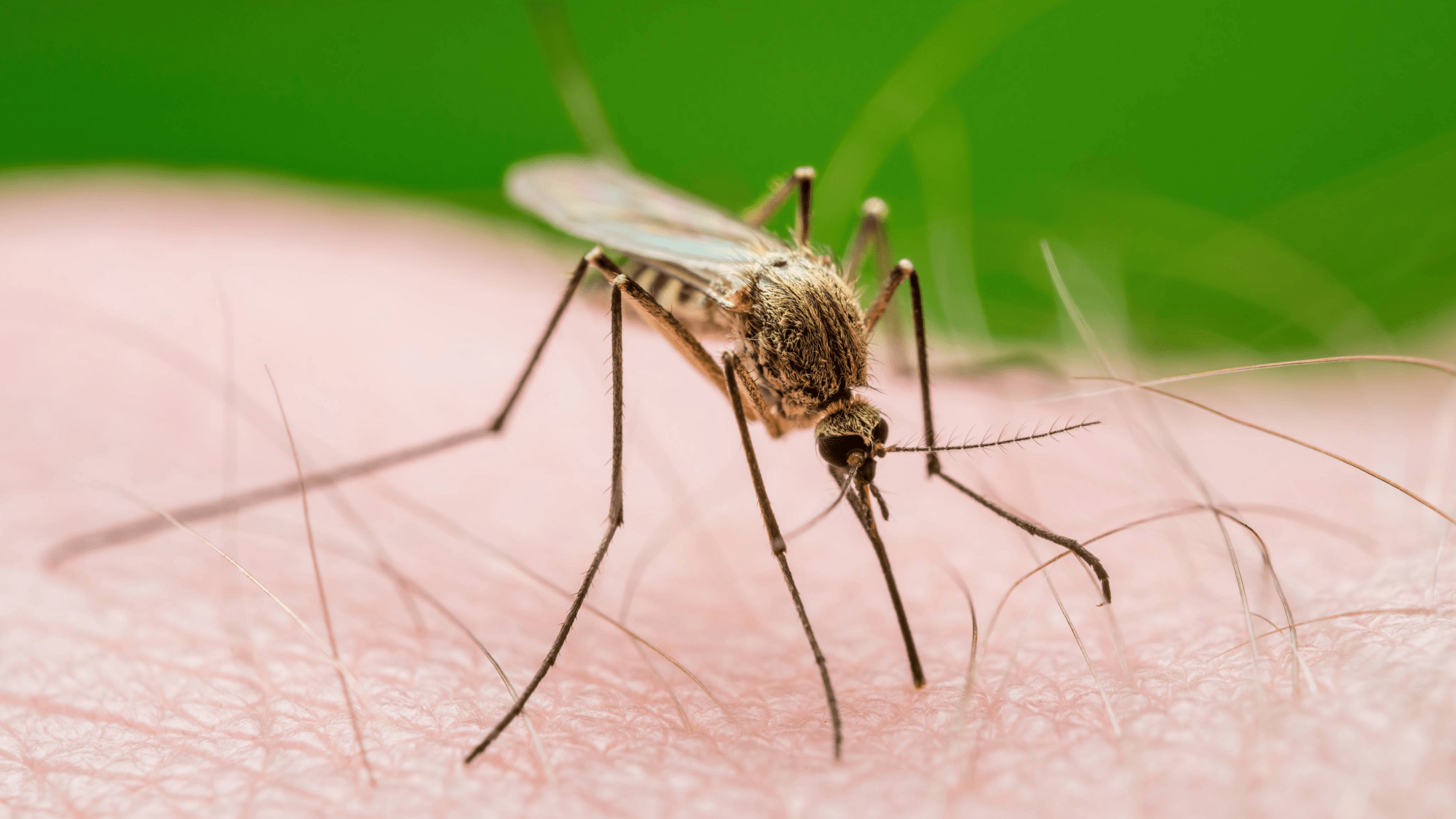
Sunburn and mosquito bites go together in the summer like a hot dog and ketchup. To keep from becoming a mosquito buffet, most of us turn to bug sprays with DEET.  An acronym built from its scientific identification (diethyltoluamide), DEET was developed for the United States Army in 1946 and entered civilian use in 1957. It is generally considered safe when used as directed

However, mosquitoes can learn to associate the repellant with food. They may even become attracted to it. The findings are detailed in a study published today in the Journal of Experimental Biology.

“If someone applies DEET and the concentration fades over time, but a mosquito still manages to feed, the insect may begin associating that smell with a reward,” Clément Vinauger, a study co-author and biochemist at Virginia Tech, said in a statement. “That’s a possibility we should take seriously when we think about how repellents are used in the real world.”

Ace processors

Like it or not, Earth’s over 3,500 known mosquito species are pretty smart and an evolutionary wonder. They use sensory information to find hosts and can adapt to changing environments.

In previous studies, Vinauger’s team has shown that the insects remember and avoid hosts who swat them away, can combine smell and vision to precisely track humans, and even gravitate toward and away from the smell of certain soaps.

“Mosquitoes are remarkable at processing information about their environment,” Vinauger said. “What we are trying to understand is not only how they detect us, but how their brains interpret those cues and turn them into behavior.”

A DEET-covered dinner bell?

In this new study, the team focused on the yellow fever mosquito (Aedes aegypti). This species spreads several diseases to tens of millions of people each year, including dengue fever, Zika, yellow fever, and chikungunya.

The team trained mosquitoes using a form of Pavlovian conditioning. Often called “Pavlov’s dogs,” this training method developed by neurologist and physiologist Ivan Pavlov in the early 20th century was used to teach dogs to associate the sound of a bell ringing with food

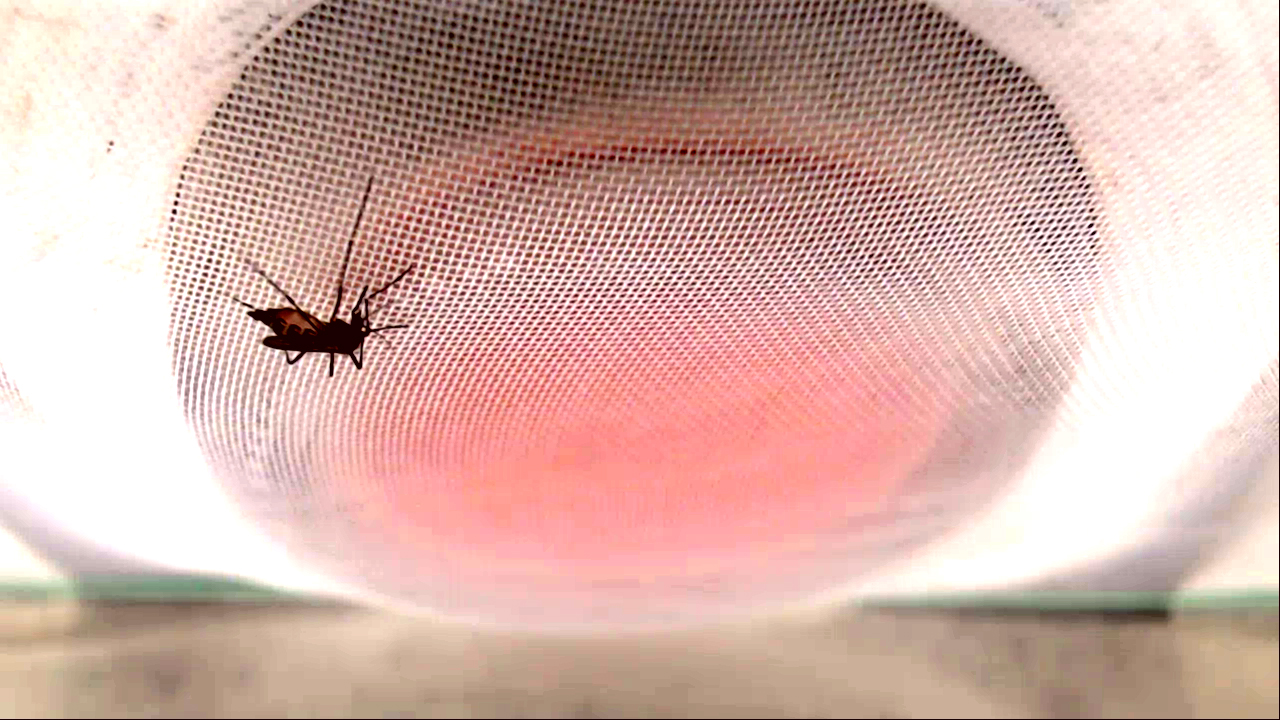
The mosquitoes were restrained behind a piece of fabric mesh. They then offered the mosquitoes a bag of warm blood (yum) that was just out of the insects’ reach to see how enthusiastically the insects stabbed at it with their proboscises. As expected, the mosquitoes were interested in the blood, particularly when the team rewarded them by lowering the bag within reach. Things changed a bit once DEET entered the experiment. When the team offered the insects blood when surrounded by the scent of DEET, they initially stayed away from the potential feast.  

a mosquito handing on a piece of mesh covering a bag of blood
A female yellow fever mosquito (Aedes aegypti), feeding on a bag of warm blood. Image: Romina Barrozo.

To see if they could be trained to associate that smell with the dinner bell, the team fed the mosquitoes warm blood for 20 seconds, squirting the scent of DEET into the enclosure in the final 10 seconds of dining. They repeated the procedure three more times before noting how the mosquitoes responded to only the scent of DEET. In this trial, over 60 percent of mosquitoes tried to bite when they smelled DEET.  

To examine further, the mosquitoes were given a choice between two human hands. The hand belonged to study co-author Ayelén Nally of the University of Buenos Aires. One of Nally’s hands was coated with DEET at normal concentrations and the other was bare. The untrained mosquitoes avoided the DEET-treated hand, while the trained mosquitoes were drawn to it.

Interestingly, the mosquitoes could form that same association when sugar, instead of blood, was used as the reward. 

According to the team, they are seeing how the mosquito’s brain can rewrite its response based on their experiences. What they have learned matters just as much as what a chemical like DEET does. 

“If mosquitoes are repeatedly exposed to DEET, it becomes less effective as a repellent,” study co-author Claudio Lazzari from University of Tours in France added.

Keep the bug spray

Importantly, this does not mean you should stop using DEET completely. It is still one of the most effective ways to keep the dangerous insects away, particularly where mosquito-borne disease is common.

“If you’re in tropical regions where disease risk is real, you should use it,” Vinauger said. “Instead of applying a lot at once, you may want to reapply regularly so it’s always active and providing continuous protection.”

Treated clothing may also be a challenge since DEET concentrations in fabric decline over time. Additional study to understand their behavior is crucial for public health as mosquito-borne illnesses increase due to climate change

“We need to understand how mosquitoes keep outsmarting our control strategies,” Vinauger concluded. “And that takes understanding how they work—at the molecular level, the neural level, the behavioral level.”

The post Mosquitoes can learn that DEET means dinner is served appeared first on Popular Science.
  •  

61 new beetles discovered in China

As if we needed reminding, new research documenting dozens of previously unknown insect species highlights just how little we know about our fellow planet-dwellers. 

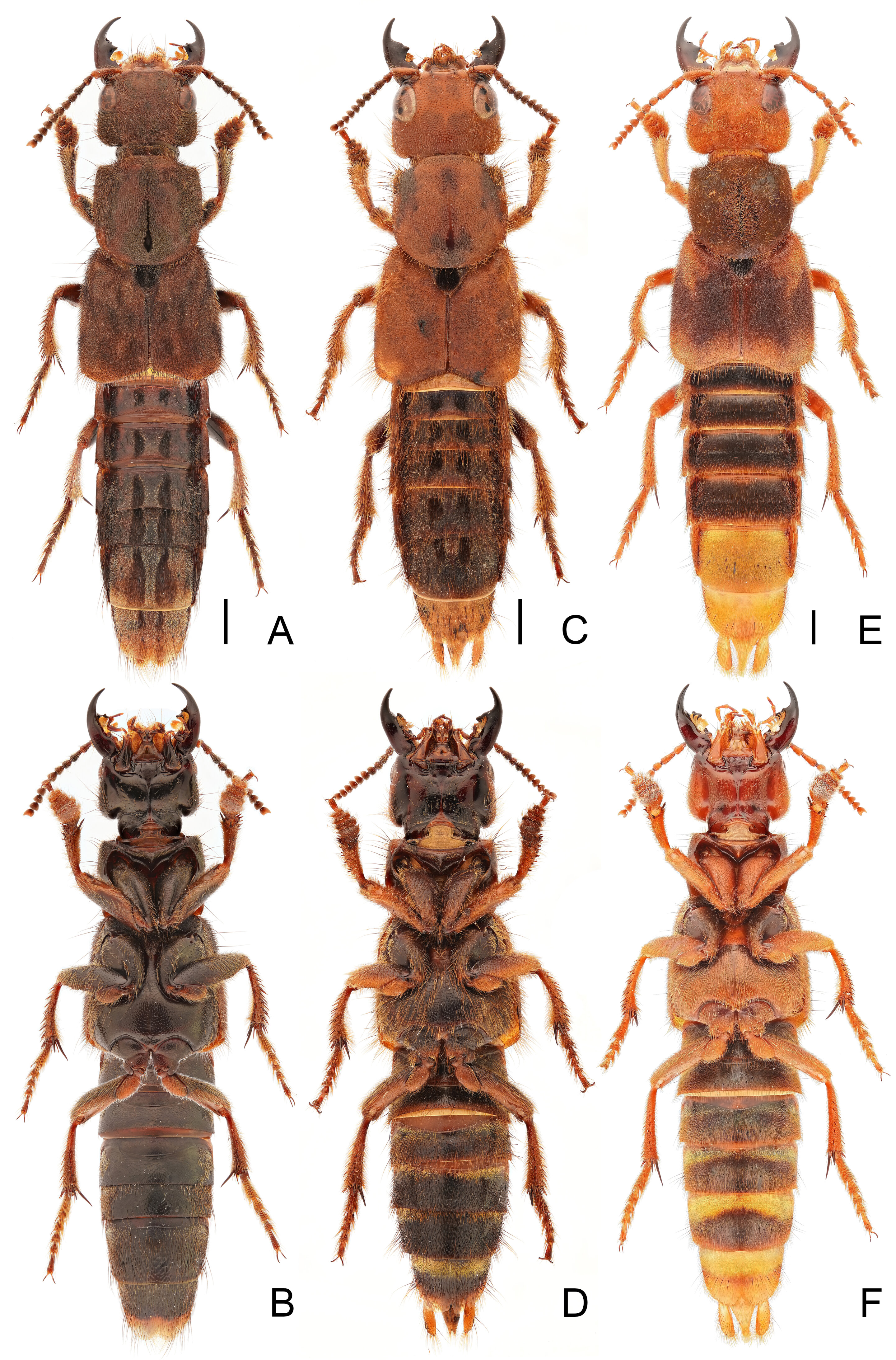
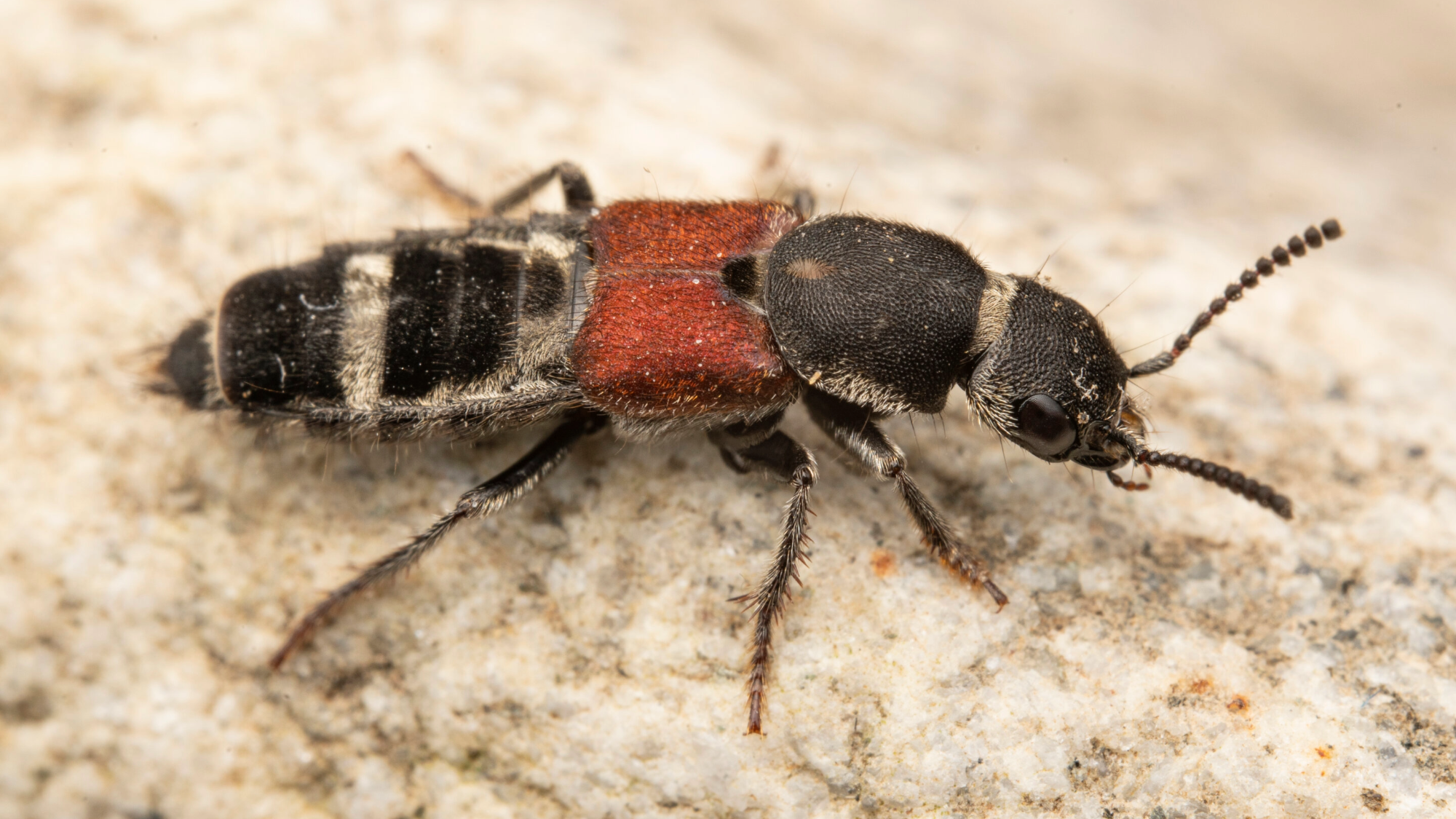
For the first time, researchers have comprehensively revisioned the Platydracus genus of beetles in China. Meaning flat dragon, Platydracus is a genus of rove beetles. In this new review, the team recorded over 100 species, a majority of which are new to science. Their work highlights how it’s not just the small and bland species that get overlooked in taxonomic work—sometimes, even large and colorful animals go unnoticed. 

In fact, these beetles are pretty large (frequently several centimeters long) and a lot of them mimic wasps or have bright colors. And yet, many of them have either gone completely unnoticed in the wild or sat for years unidentified in museum collections.

“It is striking that so many new species can remain hidden among large and colourful beetles. It shows how little we actually know about biodiversity and that even highly visible species can still go unnoticed,” Alexey Solodovnikov, senior author of the study recently published in the journal Insect Systematics and Diversity, said in a statement

Solodovnikov is a systematic entomologist at the University of Copenhagen who studies rove beetles. His team’s work puts a spotlight on the Linnean shortfall, or the difference between the number of scientifically named and described species and the number of species that exist in reality. 

six new beetle species with yellow and brown stripes
Comparison of two newly discovered Platydracus species and one previously known species. Image: Natural History Museum Denmark

For example, Platydracus is part of the rove beetle family Staphylinidae. This large family consists of approximately 70,000 known species, though researchers estimate that these are only 20-25 percent of the actual number of rove beetle species. More broadly, there are about 925,000 formally described insect species. This number is shockingly low compared to how many insect species exist, which is estimated at over five million. What’s more, even the species we do know are frequently insufficiently recorded, according to the study. 

The team also rectified some mistakes, which included cases of species having been described based on, per today’s taxonomic standards, too little knowledge. 

“Many species were originally described on a very limited basis. With more collected specimens and modern methods of examination, we can now test and refine earlier species delimitations while adding new species to nature’s mosaic,” Solodovnikov explained. “This gives us a much more accurate picture of biodiversity, which is crucial both for our understanding of nature and for our ability to protect it.” 

The researchers closely studied the beetle’s bodies and used DNA barcoding—a method that uses an organism’s genetic sequence to recognize the species. They found that sometimes species can look very different despite having the same DNA markers. The oppositescenario—having different DNA markers, but appearing very similar—can also happen.

Ultimately, the study stands as a reminder that we still have a long way to go in mapping out all the life that we share the planet with.

The post 61 new beetles discovered in China appeared first on Popular Science.
  •  

Your next sunscreen could be made from E. coli

Let’s face it, sunscreen is important to our health, but can really be a drag. Some feel greasy, they wear off after only two hours, and finding the right one can feel like a game of whack-a-mole. Certain ingredients can also pollute the planet’s critical coral reefs, so scientists around the world are looking to nature to create new formulas. Pollen could serve as an eco-friendly sunscreen solution, but there could be an even smaller source—bacteria. Escherichia coli, better known as E. coli, may help create an ultra violet (UV) compound that can be used in sunscreens. The findings are detailed in a study published today in the journal Trends in Biotechnology.

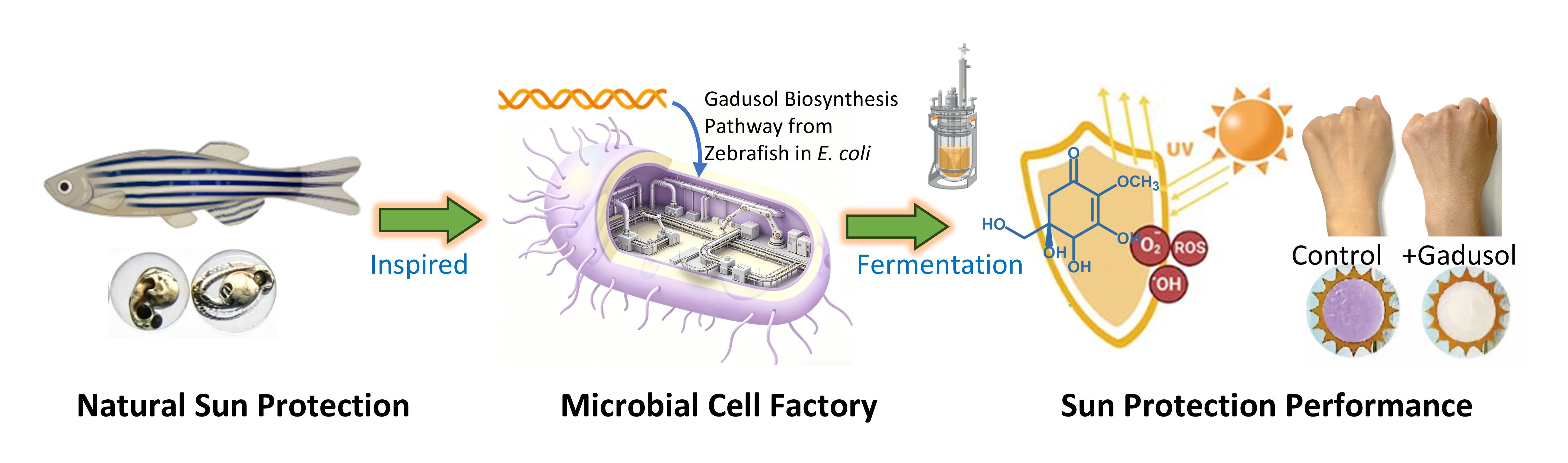
To survive relentless sunlight in the open ocean, fish can make their own natural sunscreen with a UV-protective compound called gadusol. This rare molecular compound is found in the eggs of several fish species, but is scarce elsewhere in nature and not easy, efficient, or environmentally friendly to extract. 

“We want to find a scalable and greener way to produce gadusol,” Ping Zhang, a study co-author and biochemist at Jiangnan University in China, said in a statement

Zhang and the team turned microbes into mini chemical factories, instead of taking them from nature. To do this, they rebuilt a zebrafish’s pathway for making gadusol inside of an E. coli bacterium. They then tweaked the E. coli’s genetics and growing conditions. The alterations increased the gadusol yield by nearly 93 times—from 45.2 milligrams per liter up to 4.2 grams per liter. The lab-made compound is also showing promise in early UV-protection tests. 

a graphic showing a fish, the microbes taken from it, and a hand with sunscreen on it
Producing gadusol through a microbial cell factory for sun protection. Image: Science Center for Future Foods, Jiangnan University.

“Achieving this level of production in the lab is very promising,” says Zhang. “It suggests that we may be able to meet future demand for natural sunscreen ingredients through microbial production.” 

In other experiments, gadusol showed that it may offer more than just protection from the sun. It showed antioxidant activity comparable to vitamin C, suggesting that gadusol may help neutralize cell-damaging free radicals that can result from excess sun exposure. 

These antioxidant properties also inspired a color-based screening test that allows researchers to quickly identify bacterial strains that produce more gadusol. When the gadusol neutralizes free radicals, a purple chemical signal turns yellow, indicating that it is producing more of the UV-protective compound

“Compared with traditional chemical analysis, this approach is more convenient, efficient, and economical,” added study co-author and Jiangnan University bioengineer Ruirui Xu.

While gadusol’s combination of UV protection and antioxidant activity could make it an attractive natural ingredient for future sunscreens, it won’t join your next beach day just yet. The study didn’t compare gadusol head-to-head with currently available sunscreens, or assess its long-term safety or large-scale manufacturing. Before it can hit store shelves, it will also require regulatory approval. 

However, Xu believes that this is a starting point for using gadusol in practical applications. Based on current technology, he expects that some products using gadusol could appear on the market within two years.  

“For small molecules with application potential, we hope people look beyond traditional extraction methods,” said Zhang. “Microbial cell factories are emerging as a greener and more sustainable way to bring laboratory discoveries into real-world use.”

The post Your next sunscreen could be made from E. coli appeared first on Popular Science.
  •  
❌