Source: Journal of Geophysical Research: Earth Surface
Antarctica’s snow and ice surfaces play a key role in how the continent exchanges heat and moisture with the atmosphere. A key property controlling this exchange is aerodynamic roughness length (zo), which measures how “bumpy” the surface is. Rougher surfaces, such as snow sastrugi (wind-formed ridges and grooves), interact more strongly with the air above, affecting snow movement, melting, and local environmental conditions. Despite its importance, zo is often treated as a single, constant value over large areas in Earth system models because it is difficult to measure.
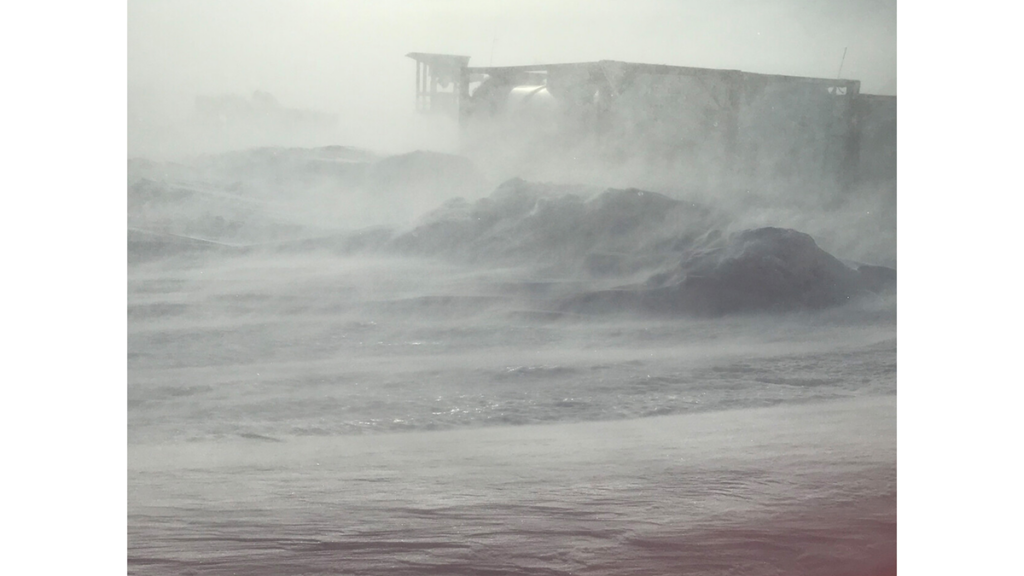
Zheng et al. [2026] use a multi-temporal Unmanned Aerial Vehicle (UAV) oblique photogrammetry to map fine scale zo variability at Qinling Station in East Antarctica. The results show that zo can vary substantially depending on surface type, measurement scale, model choice, and meteorological conditions. The complex response of surface microtopography to meteorological events is a noteworthy new finding. For example, in snow sastrugi areas, zo can vary by an order of magnitude over time, increasing after snowfall and decreasing under strong winds. These findings highlight that capturing fine-scale surface roughness is essential for accurately modeling snow–atmosphere interactions in Antarctica and could help improve current weather and climate models for polar regions.
Citation: Zheng, Z., Zheng, L., Wang, K., Clow, G. D., & Cheng, X. (2026). UAV oblique imagery reveals order-of-magnitude changes in snow aerodynamic roughness length under shifting meteorological regimes at Qinling Station, East Antarctica. Journal of Geophysical Research: Earth Surface, 131, e2025JF008781. https://doi.org/10.1029/2025JF008781
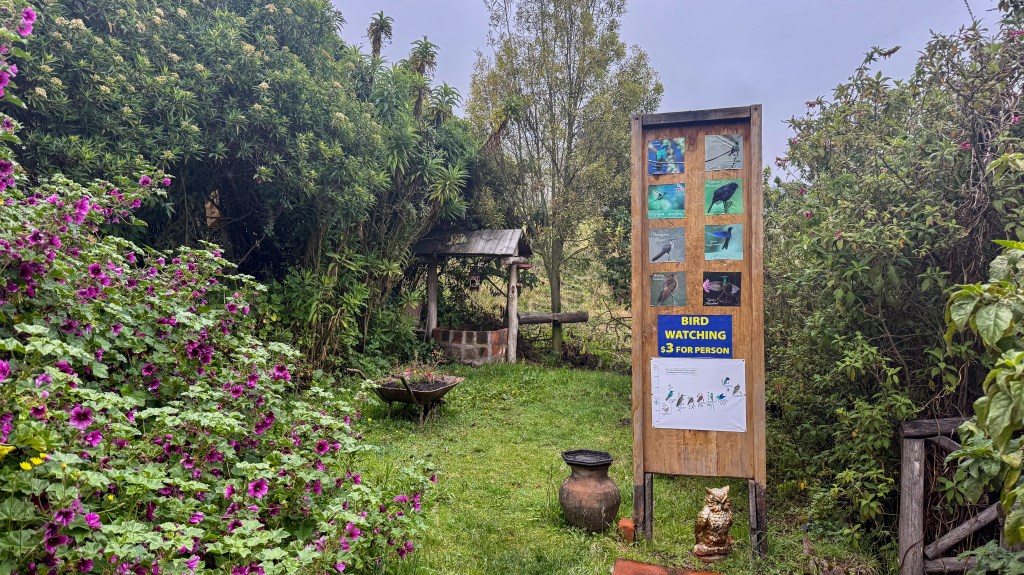
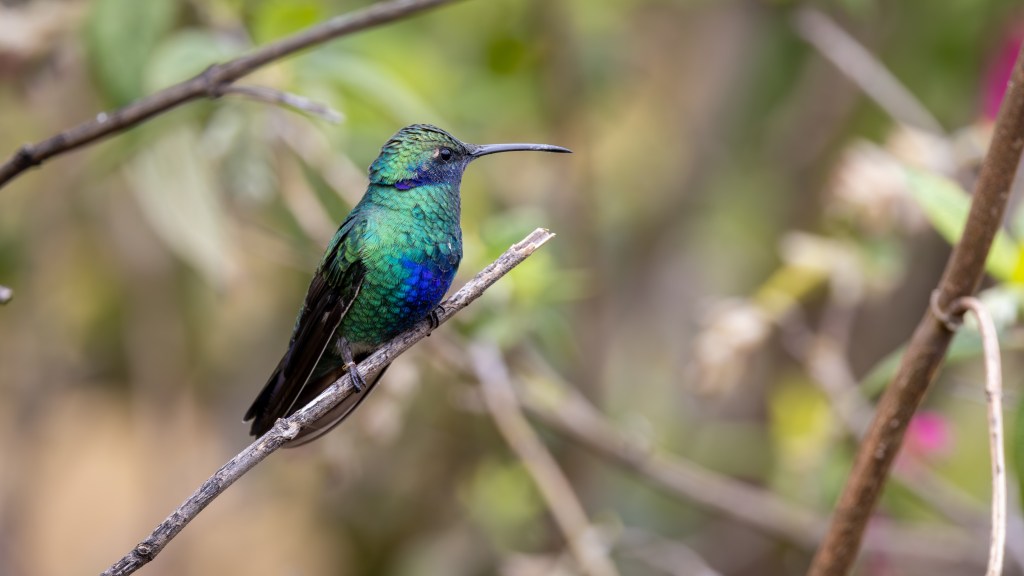
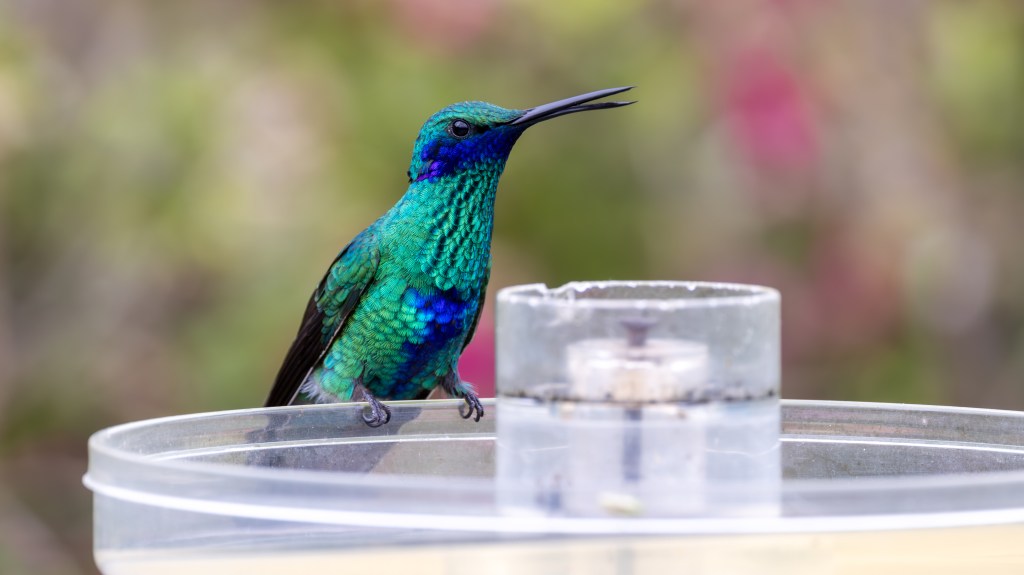
Our arrival at Tambo Cóndor unfolded as the high Andes revealed themselves in sweeping ridges, sharp light, and the first flashes of local specialists—Sparkling Violetear, Shining Sunbeam, and Cinereous Conebill—welcoming us into a landscape shaped by wind, altitude, and vast silence. This blog series chronicles Jim Gain's experiences with a birding tour in Ecuador.
On average, each American throws away about 81 pounds of clothing, shoes, and household textiles every year. That’s roughly a hamper full every month for each person. For a family of four, this adds up to over 320 pounds of textiles tossed or donated each year. Most people don’t realize how much they discard until they actually weigh it over a year.
The number comes from EPA’s most recent, 2018 sustainable-materials accounting, which puts U.S. post-consumer textile generation at roughly 17 million tons and the recovery rate at 14.7 percent. While the EPA has discontinued its reporting, ThredUp’s 2025 Resale Report and the Apparel Impact Institute updates suggest per-capita generation has continued rising. Most of what falls inside that 14.7 percent is downcycled into industrial wiping rags or insulation, not turned into new clothing.
What “donating” actually does
The mental model in most American closets is that the donation bin is the recycling bin. It isn’t. Goodwill, Salvation Army, and the secondhand chains sell what they can on the resale floor, typically only 10 to 30 percent of the clothing they accept as donations. The rest is sold by the pound to textile graders, who export the higher grades to wholesale markets in West Africa, Eastern Europe, and Central America, bale the remainder as wiping rags or insulation feedstock, and landfill the rest.
That export pipeline is under pressure. Ghana, Kenya, and Chile have moved to restrict or refuse low-grade used-clothing imports, citing the volume of unsellable fast-fashion synthetics arriving contaminated and culturally mismatched. The January 2025 GAO report on textile recovery flagged the offshore-disposal pathway as structurally fragile and quietly subsidized by U.S. consumers who treat donation as absolution.
The amount of clothing waste is closely tied to price. Since 1995, clothing prices in the U.S. have dropped by over 30 percent, even as other costs have gone up. This is mainly due to ultra-fast-fashion brands like Shein and Temu. Many clothes, especially those made from polyester-spandex blends, aren’t made to last, be repaired, or recycled. They’re often thrown out after just six wears. According to McKinsey’s State of Fashion report, the average piece of clothing is now worn only seven to ten times before being discarded, much less than in the past.
The household bill
The value of clothing can change a lot, so it’s harder to put an exact dollar amount on waste compared to food. Still, the Bureau of Labor Statistics says the average U.S. household spends about $1,900 a year on clothes. If 30 to 40 percent of those clothes are thrown out within two seasons, that means a household is tossing $570 to $760 worth of new clothing every year.
The environmental impact of clothing is even bigger before it reaches your closet. The UN Environment Programme says fashion is responsible for 2 to 8 percent of global greenhouse gas emissions and 20 percent of industrial water pollution. Making just one cotton t-shirt uses about 2,700 liters of water, which is as much as one person drinks in two and a half years.
The policy lever finally arriving
For years, there were no rules holding clothing producers responsible for textile waste in the U.S. That changed with California’s SB 707, the Responsible Textile Recovery Act of 2024, which is the first law of its kind in the country. CalRecycle chose Landbell USA to run the program starting February 27, 2026. Brands selling clothes and household textiles in California will have to help pay for collection and processing, with requirements rolling out through 2030. Other states like New York, Massachusetts, and Washington are considering similar laws that would make clothing manufacturers cover the costs of fast fashion waste.
Fiber-to-fiber recycling — the missing technology piece — is moving, slowly. Circ, Syre, and Reju are at pilot or first-commercial scale. Renewcell, the most visible name in cellulosic recycling, filed for bankruptcy in early 2024 and has since been acquired and restarted as Circulose. Textile recycling technology is real, but the economics of the business still depend on virgin-fiber prices going higher, the development of a sorting infrastructure, and the kind of policy support SB 707 is now beginning to provide.
What You Can Do
At home and while shopping:
Focus on slowing down how often you buy new clothes, not just buying less. Choose better quality items and wear them for longer. If you double how long you wear each garment, you can cut its total emissions by about half.
Try to fix your clothes before replacing them. Local tailors, Repair Cafés, and repair programs from brands like Patagonia, Nudie Jeans, and Eileen Fisher can help you get more use out of what you already have.
Be honest when sorting your donations. Clean, up-to-date, and resaleable items should go to local thrift stores. Items that are stained or torn should go to textile-specific takeback bins at places like H&M or Madewell, where they can be properly processed.
Before putting anything in your curbside bin, use Earth911’s recycling search to find local textile drop-off locations by ZIP Code. Most curbside bins don’t accept clothing or textiles.
In your community:
Support textile extended producer responsibility (EPR) laws in your state. SB 707 is the example to follow, and the next few states to pass similar laws will help decide if this approach can grow.
Ask retailers to clearly label fiber content and recyclability. The EU will require digital product passports by 2027, and U.S. brands selling overseas will have to comply. Whether these labels appear in the U.S. depends on consumer demand.
Support and volunteer at local repair and reuse programs. Repair Cafés, Buy Nothing groups, and clothing swaps help reduce waste before it starts, which is the most effective way to make a difference.
The ocean provides half the oxygen we breathe, absorbs 30% of our carbon emissions, and helps control the planet’s climate. By 2030, it’s expected to support a $3.2 trillion Blue Economy. Yet 70% of proven ocean solutions, such as coastal resilience, coral restoration, and marine pollution cleanup, never move past the pilot stage. These projects often win awards and get media attention, but then stall because funding systems don’t connect working ideas with the cities, ports, and coastal areas that need them. Stewart Sarkozy-Banoczy, co-founder and ocean lead at Okhtapus, wants to change that. Okhtapus, named with the Persian word for the octopus, uses a model that links what Stewart calls “the three hearts” of successful projects: innovators with proven solutions, cities and ports ready to use them, and funders looking for solid projects.
Stewart Sarkozy-Benoczy, Cofounder and Ocean Lead at Okhtapus.org, is our guest on Sustainability In Your Ear.
The first Okhtapus Global Replicator will launch in 2026. It will bring groups of proven innovators to work on important projects in specific places, such as a single port city like Barcelona, where Okhtapus already has strong partnerships, or a group of Caribbean islands facing similar problems. The aim is to have enough successful projects that funders stop asking “where are the deals?” and start saying “we’ve got enough.” The platform focuses on late-stage startups and scale-ups, not early-stage ideas. Stewart calls these the “Goldilocks zone”—solutions that are proven enough to copy but still need funding and partners to grow. By combining several solutions for different locations, Okhtapus can offer investors portfolios that fit their needs and make a real difference in cities, ports, and island nations.
Stewart has spent 20 years working where climate resilience and policy meet. He was part of President Obama’s Hurricane Sandy Rebuilding Task Force, led policy and investments at the Resilient Cities Network, and is now Managing Director of the World Ocean Council. “Ten years from now, if this is done fast enough,” Stewart said, “we should have pushed hard enough on the funders and the system to change it. What we don’t know is whether we’ll get to the solution status fast enough for some of these tipping points.”
To find out more about Okhtapus, visit okhtapus.org.
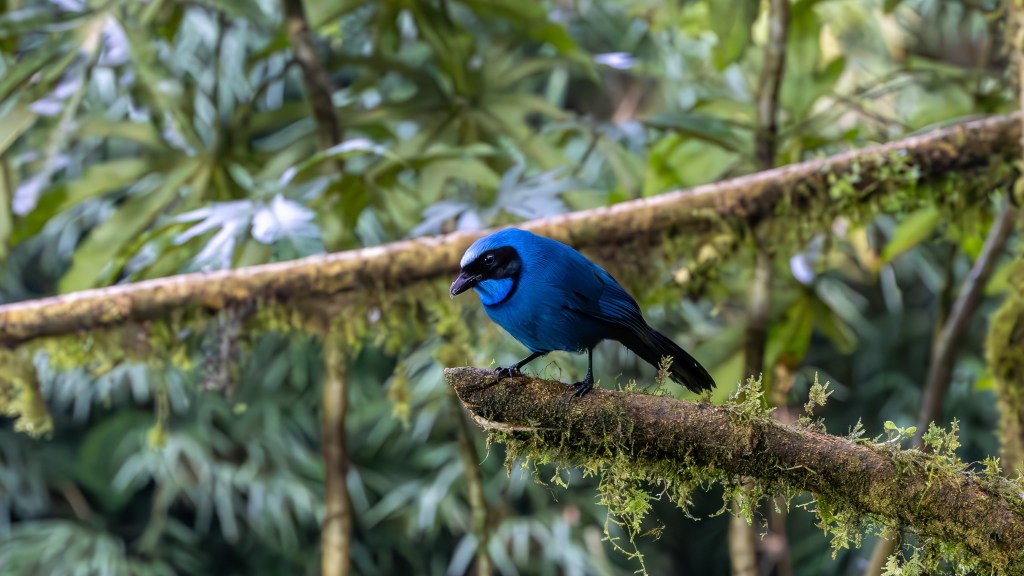
A quiet final morning at Guango Lodge eased us from the familiar rhythm of cloudforest birds into a dramatic high‑Andean crossing, where stark volcanic landscapes and sweeping vistas carried us toward the cliffs of Tambo Cóndor and the promise of a new chapter in the journey. This blog series chronicles Jim Gain's experiences with a birding tour in Ecuador.
Source: Journal of Geophysical Research: Atmospheres
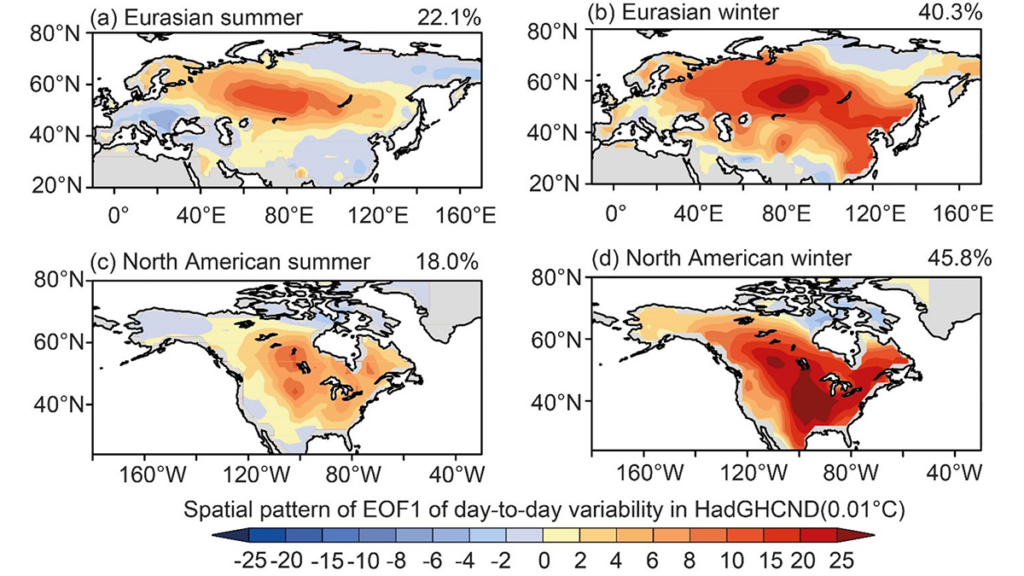
Abrupt temperature swings between consecutive days, referred to as day-to-day temperature variability, have far-reaching impacts on human health, ecosystems, and economic activity. However, how these fluctuations vary from year to year, and what drives them, has remained unclear.
Using observations, reanalysis, and CMIP6 simulations from 1961 to 2014, Liu and Fu [2026] identify a coherent large-scale pattern of variability across Eurasia and North America. This variability is primarily driven by the north–south movement of warm and cold air masses.
The dominant drivers also vary by season: large-scale meteorological patterns prevail in winter, whereas local land–atmosphere feedbacks become more influential in summer. Together, these processes reshape temperature gradients and modulate storm activity and broader weather systems.
Overall, the findings provide new insights into the mechanisms of temperature variability and offer a scientific basis for improving seasonal climate risk prediction and adaptation strategies.
Citation: Liu, Q., & Fu, C. (2026). Interannual variations in the day-to-day temperature variability in the northern hemisphere and possible causalities. Journal of Geophysical Research: Atmospheres, 131, e2025JD045754. https://doi.org/10.1029/2025JD045754
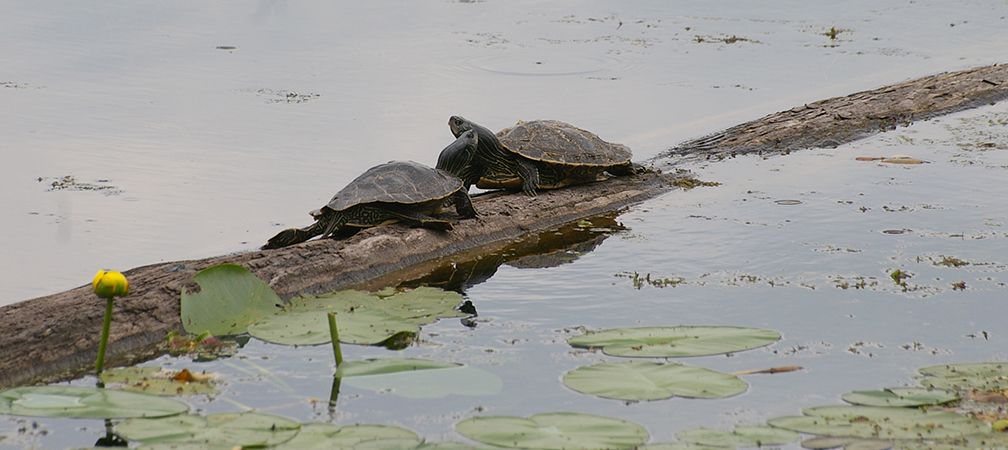
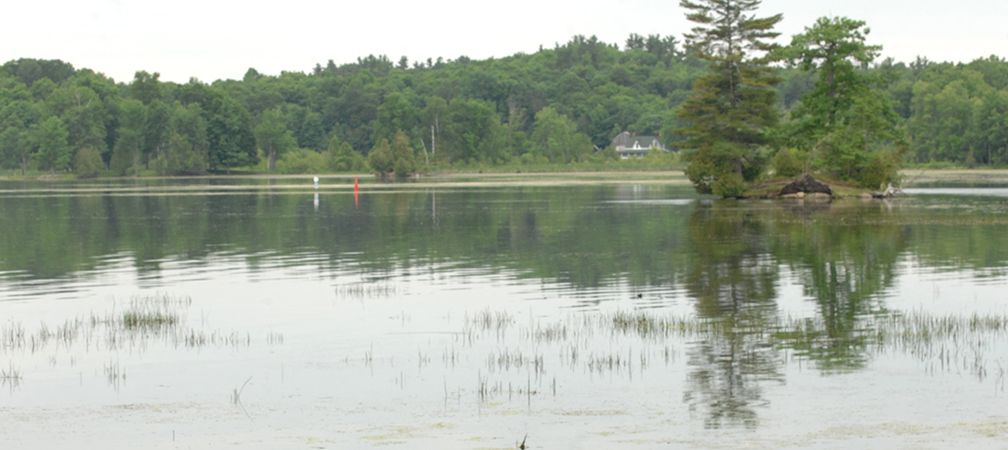
In 2022, Carleton University biologist, Grégory Bulté arrived at Opinicon Lake for his first day of field work for the season. Bulté has been studying and tracking northern map turtles since 2003, returning every spring to the lake.
As he went to retrieve his camera from the hibernation site, he spotted a dead turtle. He paddled towards it and then noticed another. Sightings of turtles with crushed shells and missing limbs continued. In his wetsuit, he swam the shoreline to pick up the carcasses, counting 142 in total —10 per cent of the total population.
This was the first time Bulté had witnessed a mass mortality like this. His research points to river otters accessing the hibernating turtles through holes in the ice.
It is uncertain how the holes in the ice formed. Climate change, human-made openings, and shifting ecosystems may be potential causes.
“We don’t have direct evidence that any cause led to this particular event. However, we thought it was important to publish this study, because what it did show, is that map turtles hibernate in such a way that it makes them vulnerable to fatality if something goes wrong,” said Bulté.
Ice protects turtles from predation. While there are no de-icing bubblers, which push bubbles into the water to stop it freezing around docks, next to the hibernation site at Opinicon Lake, Bulté has seen an increasing trend in their overall use.
“We are worried that without any regulation or knowledge of where map turtles spend their winters, we could decimate a population rapidly if these tools are put in close proximity,” said Bulté.
Since 2022, Bulté has not witnessed another mass mortality event. He is currently working alongside a statistician to analyze data from 2022 to 2026 to better understand how the population has been affected.
He believes that humans need to learn how to cohabitate better with wildlife.
“If we cannot keep them in their environment, what does that say about everything else we do to the environment?”
Ontario Nature’s Acting Conservation Science and Stewardship Director, Jenna Quinn emphasized that turtle species are at risk and cannot afford additional threats.
“It is important that we always move with nuance and understand that every action we take has a consequence,” said Quinn.
Work is being conducted to conserve the ecosystems that inhabit the turtles.
Ontario Nature’s Reptile and Amphibian Atlas (ORAA) is one tool that is currently being used to inform ongoing conservation work. It documents current knowledge of the distribution of reptiles and amphibians in the province, increasing public awareness and appreciation of these species.
Additionally, the Rideau Canal is a part of Preserving Legacies, a global organization dedicated to safeguarding heritage places and practices by advancing climate adaptation solutions that strengthen community resilience.
The canal is currently in its second phase of the project, which involves the creation of a comprehensive Risk Assessment that will be shared with the community.
The critical zone (CZ) refers to the layer of Earth extending from the bedrock up to the vegetation canopy, including interconnected systems such as river and floodplain corridors, the active soil and root zone, and the near-surface environment where plants interact with the atmosphere. The conservation of the CZ requires a detailed understanding of how it evolves under anthropogenic impacts, such as intensive agriculture.
Goodwell et al. [2026] use a data driven approach to relate shifts in the critical zone to indicators of human impact. Their findings deliver innovative knowledge on transitions, drivers, and predictability in many contexts, and support better prediction and management of the critical zone under environmental change.
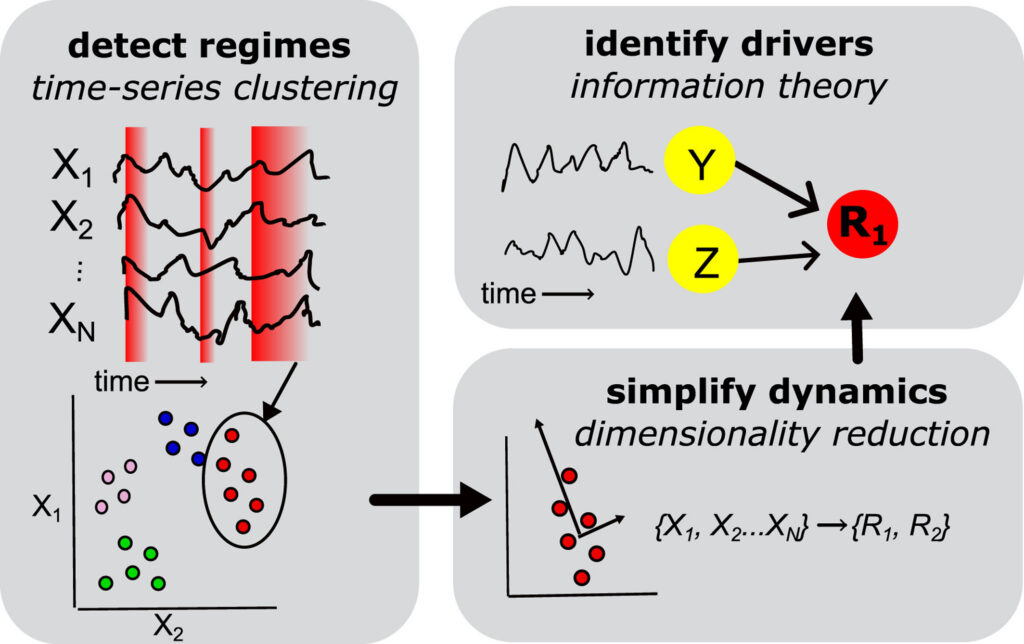
In particular, the authors find evidence of abrupt shifts in the variability of key features like stream and soil chemistry, land-atmosphere interaction and so forth, which can be attributed to intensive management, for instance due to mechanized planting and harvesting. These human-impacted and naturally appearing regimes in the dynamics of critical zone have implications for understanding processes and making predictions of the status of the critical zone under environmental change.
Data-driven methods include grouping of time-series data with clustering to detect regimes, dimensionality reduction to simplify system dynamics and identify main sources of variability. Credit: Goodwell et al. [2026], Figure 1
Citation: Goodwell, A. E., Saccardi, B., Dere, A., Druhan, J., Wang, J., Welp, L. R., et al. (2026). Detecting regimes of critical zone processes, drivers and predictability with a data-driven framework. AGU Advances, 7, e2025AV002098. https://doi.org/10.1029/2025AV002098
Every year, Americans toss out about 17 million tons of textiles, and most items left in donation bins don’t find a new home. Now, more mail-in programs are stepping in to take your old clothes, keep them out of landfills, and reward you—often with store credit or cash-like rewards you can use at familiar brands.
The programs listed here include options that take any brand or condition—even socks and stained T-shirts—as well as brand-specific trade-ins that give you real money for quality items. While none of these fully solves fashion’s waste problem, and some have fees or important details to check, each offers a more responsible choice than tossing clothes in the curbside bin. With the right program, your rewards can even cover your costs or more.
1. Trashie Take Back Bag — The Any-Brand, Any-Condition Option
Trashie ships a prepaid, prepackaged bag that holds up to 15 pounds of clothing, shoes, accessories, and home textiles from any brand, in any condition, including single socks, worn-through T-shirts, and bedsheets. A single Take Back Bag runs $20, though they are frequently on sale, and earns $5 in TrashieCash redeemable for deals at partners including Sephora, Nike, Starbucks, Allbirds, and Cozy Earth.
If you want to recycle often, Trashie Unlimited costs $68 a year and gives you unlimited bags, plus bigger rewards as you go. You get $5 for your first bag, $15 more at your fifth bag (for a total of $26), and by your tenth bag, you’ve earned back your membership with $68 in TrashieCash. After that, every bag earns you extra. Trashie reports that 95% of what they receive is repurposed, reused, or recycled, sorted into over 600 categories.
Best for: that pile of clothes you’ve been meaning to deal with for months, especially items too worn out to donate.
2. Retold Recycling — Subscription Bags With Curated Partner Rewards
Retold Recycling uses a subscription model. Their annual plan costs $99 and comes with six pre-labeled, prepaid bags—three to start, then one each quarter—each holds about five pounds of textiles. You earn Retold Rewards worth about $15 per bag, which you can use at partners like Dropps, Allyoos, Me Mother Earth, and Plaine Products. There’s also a quarterly plan for $24.75 every three months, with the same rewards per bag.
Retold accepts all textiles, including clothing, household linens, and fabric scraps, from any brand. Its recycling partners sort items by fiber content, quality, and style, with the company stating that items are kept out of landfill except when materials like leather, coated textiles, or neoprene can’t be processed. Consumer Reports said only Retold subscribers earn the rewards credits; one-time bag buyers don’t.
Best for: people who want to recycle regularly and like getting discounts at smaller sustainable brands instead of big retailers.
3. Patagonia Worn Wear — Real Trade-In Value for Well-Made Gear
Patagonia’s Worn Wear offers the best payouts if you have Patagonia items. Go to their website, take a quick quiz to check if your items qualify, print a shipping label, and send in your clean, working Patagonia jackets, fleece, pants, packs, and more. You’ll get credit as a gift card to use online or in Patagonia stores.
Trade-in values are usually about 20% of the original price. According to Patagonia’s FAQ, credits can go up to $180 for high-value items, with jackets earning between $10 and $200, and wheeled bags between $45 and $90. Sometimes, they run promotions that double your credit, so keep an eye out for those.
Keep in mind, Worn Wear only takes Patagonia-branded gear that’s still in good, usable shape. They don’t accept underwear, swimwear, or wetsuits. If your items don’t qualify, they’ll either send them back or recycle them for free.
Best for: people clearing out Patagonia gear they no longer need and who already shop at Patagonia.
4. ThredUp Clean Out Kit — Cash or Credit for What Actually Sells
ThredUp is a consignment service, not recycling: the company pays you for items it can resell, and routes the rest to donation or recycling partners. Order a Clean Out Kit, fill it with women’s or kids’ clothing in excellent or like-new condition, and ship it in. Payouts scale with listing price, from low single-digit percentages on inexpensive items to as much as 80% on premium and designer brands like Lululemon or Gucci.
You can get paid in cash or as store credit at ThredUp or partner brands like Gap, Banana Republic, Athleta, Madewell, Janie and Jack, and Reformation. If you pick store credit, you usually get a 15–20% bonus. Be aware that ThredUp takes a $14.99 processing fee from your earnings per bag, and if you want any rejected items sent back, there’s a $10.99 fee. This program isn’t for fast fashion—items from those brands or heavily worn clothes are usually rejected.
Best for: closets with name-brand, current-season women’s and kids’ clothes in good shape—not for stained T-shirts.
5. ReGirlfriend — Closed-Loop Recycling for Activewear
Girlfriend Collective, an athleisure brand, offers ReGirlfriend—a mail-in program run with SuperCircle. You can send in clean clothes from any brand and get $10 in store credit for each Girlfriend item or $5 for each non-Girlfriend item, up to 10 pieces per shipment. There’s a $15 deposit to print your shipping label, but you get it back if you make a purchase within 30 days.
You’ll get personalized discount codes for up to 30% off your next Girlfriend order. For example, a $30 credit needs at least a $100 purchase to use the full amount. Items are sorted for reuse when possible, or they’re recycled, upcycled into new yarn or fabric, or downcycled for industrial uses if they can’t be resold.
Best for: people who already shop at Girlfriend and want a mail-in option for activewear and basics from different brands.
Quick Comparison
Accepts any brand in any condition: Trashie, Retold, ReGirlfriend
Highest potential payout: Patagonia Worn Wear for premium Patagonia items; ThredUp for current-season designer women’s clothing
Get Ready for Mail-In Recycling Success
Sort your clothes before sending them. Items in good enough shape to resell or donate are worth more on ThredUp, Patagonia Worn Wear, or at a local consignment shop. Clothes that are worn out or off-brand are better suited for Trashie, Retold, or ReGirlfriend.
Consider whether a subscription makes sense for you. Trashie Unlimited is worth it if you send about 10 bags a year. Retold’s annual plan can earn you up to $90 in partner rewards. If you won’t fill several bags, it’s better to skip the subscription.
Pick store credit if you already shop at that brand. ThredUp’s 15–20% credit bonus and Patagonia’s double-credit promotions can boost your payout, but only if you were planning to spend there anyway.
Don’t mail clothes that your city already recycles. Many places offer curbside textile pickup or special drop-off bins. Use the Earth911 Recycling Search to find local options before paying to ship clothes out of state.
Check the details on fees. ThredUp charges a $14.99 processing fee, Patagonia deducts $7 for shipping, and ReGirlfriend requires a $15 refundable deposit. Make sure to consider these costs before you decide.
Try to buy less in the first place. No mail-in program can make up for the impact of owning lots of fast fashion. The best thing you can do is choose fewer, longer-lasting clothes.
 Login
Login
































 Tràm Chim was once home to over 230 species of water birds, including the red-crowned crane – a rare species named on the World Red List.