 Login
LoginSunset Magazine 1983-05 121
1 June 2026 at 00:36


Full-time job vacancies suitable for Hong Kong university graduates have plummeted by 60 per cent, as artificial intelligence (AI) sweeps through the city’s labour market, a minister has said.
Secretary for Labour and Welfare Chris Sun said on Wednesday that entry-level jobs vulnerable to automation have been hit hardest, with vacancies in administration dropping nearly 90 per cent over the three-year period and roles in information technology and programming falling by 80 per cent.
The number of full-time job vacancies suitable for university graduates shrank from 80,000 in 2022 to just 31,000 in 2025, the minister said.
The figures were derived from the Joint Institutions Job Information System, an online job search platform for students from Hong Kong’s eight publicly funded universities seeking employment, Sun said in his reply to enquiries by lawmaker Priscilla Leung.
“We all know the impact of AI is sweeping and global. We are all exploring how to help young people find jobs in a world changed by AI,” Sun told the Legislative Council in Cantonese.
Citing a survey by global consulting firm International Data Corporation, Sun said over 60 per cent of companies surveyed around the world had indicated they would cut entry-level positions in the next three years due to AI.
He vowed that the Labour and Welfare Bureau would analyse the impact of AI on Hong Kong’s overall labour market and specific industries.
Findings are expected to be released in the fourth quarter of this year as part of the mid-term update of the government’s Manpower Projections, he added.
He also said that, between 2025 and 2028, the eight University Grants Committee-funded universities will introduce 30 new academic programmes covering emerging sectors, such as AI, cybersecurity, and the creative industries.
Sun noted that, despite the drops in job vacancies, the unemployment rate among university graduates has not increased significantly.
The number of employed people aged 15 to 29 with a degree or above was about 268,000 in 2025, compared with 270,000 in the previous year, Sun said, citing government data.
Since OpenAI launched ChatGPT in November 2022, the use of generative AI chatbots and tools has become increasingly common across industries around the world.
Hong Kong Chief Executive John Lee has pushed for expanding the applications of AI across government departments and social sectors. In his Policy Address last year, he said the authorities would promote “extensive and deep integration of AI” across industries.
During his annual budget speech in February, finance chief Paul Chan announced that he would chair a new “AI+ and Industry Development Strategy” committee.
The government will also provide “AI training for all,” embedding AI education at different levels of education and vocational training, Chan said at the time.

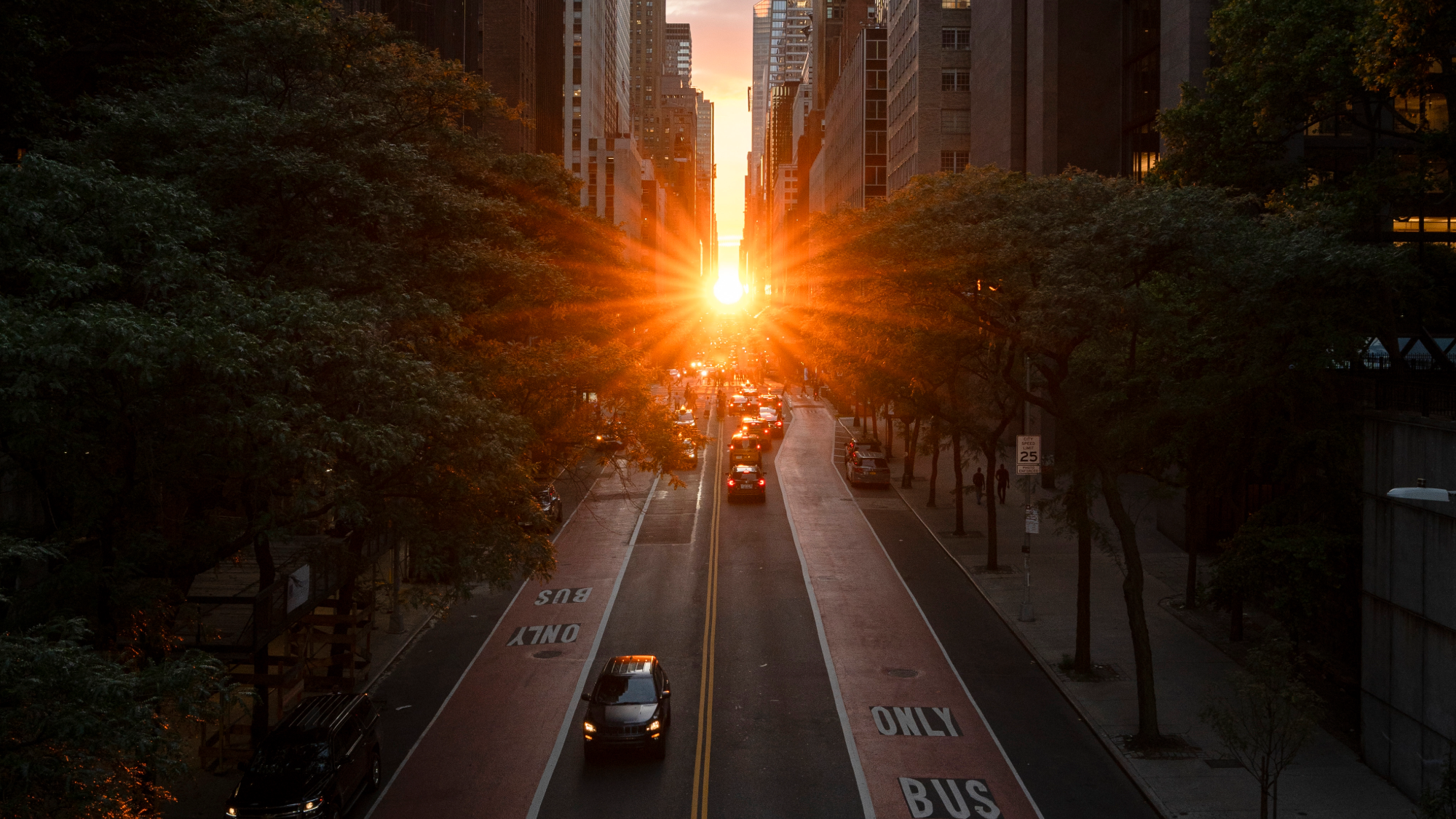
For a few select evenings in the late spring and early summer, sunlight aligns with Manhattan’s grid. The city’s bustling streets are washed with golden light as the sun sets, while tourists and locals alike flood the streets to snap that perfect picture. This event is nicknamed Manhattanhenge and it will begin on May 28 and continue through July 12.
However, you don’t need to live in the Big Apple to see a “henge” like Manhattanhenge. They actually pop up in a few places and a website called Hengefinder can help you find the closest henge.
Data scientist and engineer Victoria Ritvo created the website, while software engineer John Pribyl built the accompanying app. Ritvo wrote about creating Hedgefinder in her blog, and details the three basic steps that scientists can use to find a henge. First, find the angle of the road, or its bearing relative to true north. Second, find the angle of the sun at sunset, or its azimuth. Third, find the dates when those two angles match.
While you don’t have to do any of that high-level math, you can read about how Rivoto and Pribyl made their calculations. You simply put in an address or city and can get a calculation for the closet henge near you.
“Having Hengefinder active means henges are now explorable outside of Manhattan, and I’ve been searching for them using the app,” Ritvo writes. “My favorite one so far, I haven’t actually seen. I’m intrigued by the Haarlemmertrekvaart, a canal which traces the southern edge of Westerpark in Amsterdam.”
Interestingly, much of Europe is left out of henge mania due to medieval street design. Amsterdam’s famed canals do offer an option, where sunlight can reflect off of the water. Henges may have been occurring twice a year for the past 400 years on the Haarlemmertrekvaart.
The sun does not set in the same place every day. Its position changes along the horizon with the seasons. While the angle does not usually match the directions of a street, it will on a few days each year if the street is angled correctly.
In 1997, the term Manhattanhenge was first coined by Neil deGrasse Tyson, an astrophysicist and director of the Hayden Planetarium at New York’s American Museum of Natural History. Tyson noted that the setting sun framed by Manhattan’s building was comparable to how the sun’s rays strike the center of England’s Stonehenge on the solstice. The Neolithic humans who built the stone circle in stages between 3100 BCE and 1600 BCE intended for the light to shine that way on the solstice. But the builders of Manhattan? Not so much.
Chicagohenge in Illinois and Baltimorehenge in Maryland both occur when the sunset lines up with the grid systems in those cities around the spring and fall equinoxes in March and September. In Canada, Torontohenge occurs in February and October.
The post Manhattanhenge isn’t just for New Yorkers. Find a ‘henge’ near you. appeared first on Popular Science.
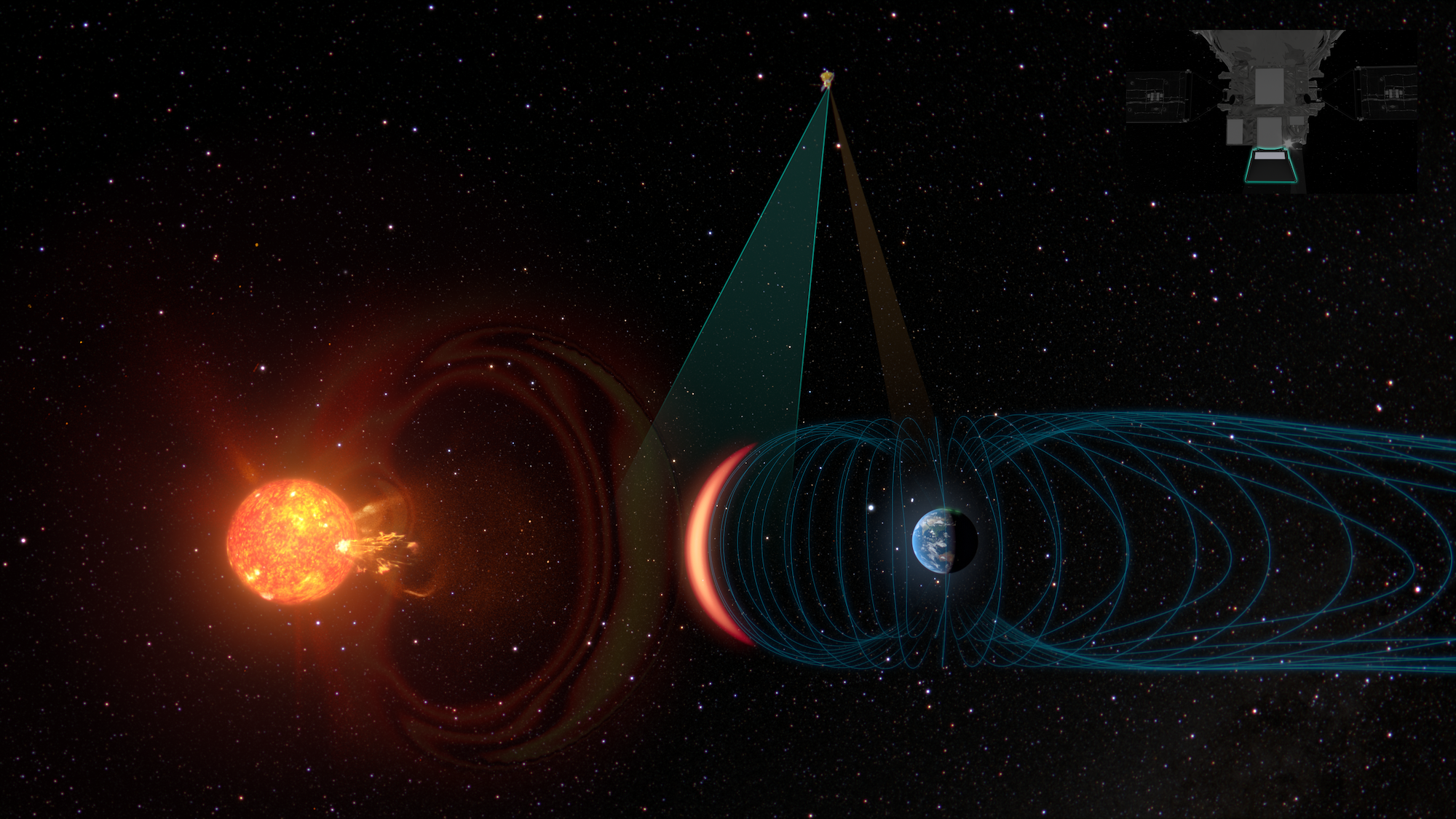
There’s a SMILE beaming down from high above Earth. On May 19, the European Space Agency (ESA) and the Chinese Academy of Sciences (CAS) launched a Vega-C rocket from Europe’s Spaceport in French Guiana with a payload representing years of international collaboration. Known as the Solar wind Magnetosphere Ionosphere Link Explorer (SMILE), the spacecraft will soon begin studying the sun’s immensely powerful solar winds and their relationship with Earth’s atmospheric safeguards.
You wouldn’t be reading this without our magnetosphere. The protective shield generated from deep inside Earth has protected the planet from the sun’s most destructive solar winds for billions of years. Without this barrier, life could never survive on what would be a barren, irradiated rock. But while it’s clear that the magnetosphere is Earth’s natural defense system against cosmic radiation and geomagnetic storms, astronomers still aren’t sure exactly how it works.
“We are about to witness something we’ve never seen before—Earth’s invisible armor in action,” ESA director general Josef Aschbacher said in a statement.
Over the next month, SMILE will slowly increase its altitude with 11 engine burns before settling into a large elliptical orbit over the North and South Pole. Actual data collection will start in July using the spacecraft’s four tools, including a pair of X-ray and ultraviolet cameras.
SMILE is the first mission to examine the magnetosphere with X-rays, and the UV equipment will capture the northern and southern lights for up to 45 hours at a time. By combining the two data sources, astronomers hope to gain a better understanding of how the planet is affected by the sun’s constant bombardment of solar winds and frequent coronal mass ejections. The project is planned to last three years.
“The evidence that Smile collects will help us better understand planet Earth and our Solar System as a whole,” explained ESA Smile project scientist Philippe Escoubet. “And the science it uncovers will improve our models of Earth’s magnetic environment, which could ultimately help keep our astronauts and space technologies safe for decades to come.”
The post SMILE spacecraft will use X-ray vision to study the northern lights and more appeared first on Popular Science.

Hong Kong’s welfare minister has defended what he called the “professional judgement” of medical and social workers following the death of a girl shortly after her mother’s.
Secretary for Labour and Welfare Chris Sun spoke to reporters on Thursday following a double tragedy involving a 12-year-old girl and her 48-year-old mother, who both fell to their deaths within hours of each other on Wednesday in Taikoo Shing.
“The daughter went to the hospital accompanied by her family” after her mother’s death, Sun said in Cantonese.
“At the hospital, doctors, nurses and social workers met with her, and they had to make a judgement. I understand that they decided [the girl] could go home.”
| 💡If you are in need of support, please call: The Samaritans 2896 0000 (24-hour, multilingual), Suicide Prevention Centre 2382 0000 or the gov’t mental health hotline on 18111. The Hong Kong Society of Counselling and Psychology provides a WhatsApp hotline in English and Chinese: 6218 1084. See also: HKFP’s mental health services guide. |
Sun said it was understandable that there were concerns about whether it was suitable to allow the girl to return home.
The daughter was accompanied by family members when she was assessed at the hospital and returned home, Sun added.
“I believe the doctors, nurses and social workers had made the decision [to let her go home] at that time based on their professional judgement.”
He said he refrained from commenting further as the police were investigating the double tragedy.
The mother, a social worker with the Social Welfare Department, was found dead on the podium of their residential block around 9.24am after she reportedly had an argument with her daughter about “educational issues,” according to local media.
At 7.21pm, roughly 10 hours later, police were notified of the fall of the daughter at the same address. The girl was certified dead at the scene.
Sun urged people to give the family space and respect their privacy at the moment of tragedy, saying that authorities sought to provide immediate support to the father and other family members.
Edward To, director of social welfare, said at the same press conference that government social workers had visited the father following the incident.
Bouquets were seen at the scene at Taikoo Shing following the tragedy, as residents paid tribute to the mother and daughter.

SINGAPORE, June 3 — A 55‑year‑old woman who repeatedly assaulted her domestic worker — including pulling off the helper’s headscarf in a lift — was sentenced today to four months’ jail and ordered to pay S$5,000 (RM15,567) in compensation.
CNA reported that Hasnah Hashim pleaded guilty to two charges of voluntarily causing hurt, while three other similar offences were taken into consideration for sentencing. The incidents took place in August 2024, when the victim, a 32‑year‑old Indonesian national, was employed in her household.
On Aug 23, 2024, the pair were returning from the market when the maid entered the lift first and pressed the button to close the doors. Hasnah managed to step in but became angry, grabbing the helper’s headscarf with both hands and yanking it down.
According to the prosecution, the act caused pain when the victim’s hair was pulled and left her humiliated, as she wears the headscarf for religious reasons. The incident was captured on video and submitted to the court.
Earlier Assaults Included Slaps, Pinching and Ear‑Pulling
The victim later reported the matter to police. A medical check revealed a bruise on her upper lip from an earlier assault three days before, when Hasnah slapped her for mistakenly placing tofu in the freezer.
Other incidents that month — including hitting the helper with a mobile phone, pinching her thigh and twisting her ears — formed the remaining charges considered during sentencing.
The prosecution noted that the maid has been unable to secure new employment since the case began, as potential employers were concerned she might be required to testify. Her last drawn salary was S$882.
Prosecutors sought between four and six months’ jail and S$7,500 in compensation, while the defence asked for a three‑month term and S$1,000 compensation, citing Hasnah’s remorse and previous positive references from former helpers.
Senior District Judge Ong Hian Sun ultimately ordered S$1,000 for pain and suffering and S$4,000 for lost wages.
Under the law, offences committed against a domestic worker by her employer carry up to twice the maximum penalty for voluntarily causing hurt.
Police investigations into the case have concluded.


A Hong Kong couple have been arrested for child neglect after refusing to allow their baby boy, who was born without any medical record, to undergo a DNA test for birth registration.
Security minister Chris Tang told journalists on Tuesday afternoon that the couple, who said they were the parents of an infant named Danny, had been arrested in Cheung Sha Wan while the infant was sent to hospital for a health check.
Tang said the couple could not provide any medical records of the pregnancy or even a photo of the pregnancy to prove their parental relationship with the infant.
The baby had not had any medical check-ups since birth, which clearly constitutes child neglect, the security chief added.
The couple – identified by local media as Mr Tsang and Ms Kwan – caught widespread attention after they said online that the Swedish government had taken custody of their daughter, Lily, in 2023.
Saying they have not met their daughter since, the couple posted on their “Save Lily” Threads and Facebook accounts, appealing for the girl’s return to Hong Kong.
The couple said they practised “free births” and their baby boy was born in Hong Kong around two months ago.
Free birth, also called unassisted birth, involves a conscious decision to undergo pregnancy and give birth without professional maternity care or medical intervention. The trend has put the lives of mothers and babies at grave risk.
According to local media, the couple’s eldest daughter was born at home in Finland but died in infancy, and the Swedish government removed the second child, Lily, from their care due to health conditions.
In a written response to HK01, Linköping municipality in Sweden said that while it could not comment on a specific case, authorities would only apply to the court for a care order if the situation of a child was so severe that further protection was required and voluntary services were no longer sufficient to prevent harm to the child’s health or physical and mental development.
The infant Danny is yet to be registered in Hong Kong, although parents must register the birth of a newborn within 42 days of delivery. According to the Births and Deaths Registration Ordinance, it is a criminal offence for anyone to deliberately fail to register the birth of a child.
Speaking on Commercial Radio on Tuesday morning, Mr Tsang said he tried to register Danny’s birth within 42 days of delivery, but he did not want to submit DNA samples to authorities to verify the relationship between the couple and Danny.
Welfare minister Chris Sun told the press on Tuesday morning that authorities were aware of the case, but social workers could not find the couple after multiple attempts to visit them.
“We had been trying to contact the parents and family through various means since last Thursday. This included social workers making daily home visits – even waiting until nearly midnight on one occasion. We also tried to locate them at different times during the morning and afternoon, and left various contact details,” Sun said in Cantonese. “However, we were unable to reach them last week.”
Sun said social workers “established contact” with the couple only on Monday and tried to arrange a meeting with them.
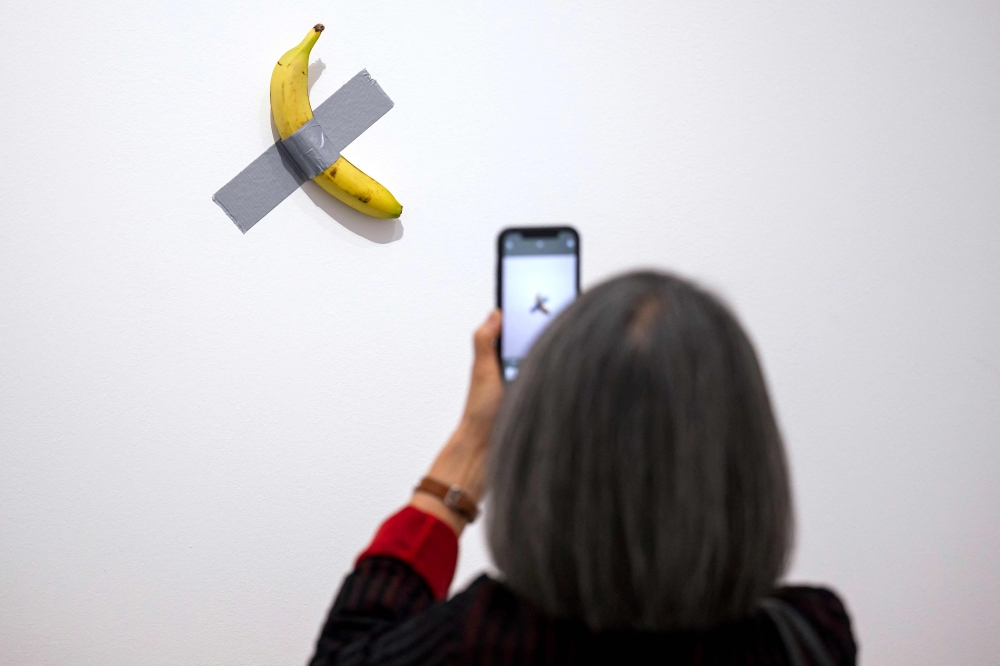
STRASBOURG, May 31 — A museum in eastern France on Sunday reported to police the theft of a banana that forms a core part of a multimillion-dollar artwork by Italian visual artist Maurizio Cattelan.
The missing fruit—which was taped to a wall to form the provocative work by Cattelan called Comedian—was noticed by a guard on Saturday to have gone missing.
The Pompidou-Metz museum, which is a branch of the famous Pompidou Centre in Paris, said in a statement it had lodged a criminal complaint for theft against persons unknown.
It also said it had replaced the banana.
It is not the first time damage has been dealt to the conceptual artwork, whose perishable banana centrepiece is replaced every three days to keep it contemporary.
In July last year, a visitor to the museum ate the fruit. But guards quickly intervened and stuck up a replacement banana.
Cattelan said at the time he was disappointed the hungry visitor had consumed only the banana and not the tape as well. The museum did not take legal action in that instance.
This time, though, it decided to make its criminal complaint because the perpetrator was unidentified, and therefore “there is no possibility of dialogue”.
It also said that “this is the second time this has happened” and it felt it was an issue of respect for the artwork.
Cattelan’s edible creation, which aims to question the notion of art and its value, has sparked controversy ever since it made its debut at the 2019 Art Basel show in Miami Beach with an asking price of US$120,000 (RM475,890).
A performance artist, David Datuna, ate Comedian at that 2019 show, saying he felt “hungry”.
But the work’s value has only risen.
Chinese-born crypto founder Justin Sun in 2024 forked out US$5.2 million for one iteration of the work, then days later ate it in front of cameras in Hong Kong.
As well as Comedian, Cattelan is also known for producing an 18-carat, fully functioning gold toilet called America that was offered to Donald Trump during his first term in the White House.
A British court in March found two men guilty of stealing it during an exhibition in 2020 in the United Kingdom, from an 18th-century stately home that was the birthplace of wartime prime minister Winston Churchill.
It was split up into parts and none of the gold was ever recovered. — AFP

Solar activity affecting Earth and its planetary neighbors encompasses a wide range of phenomena, from the steady solar wind and the interplanetary magnetic field to extreme events like solar flares, coronal mass ejections (CMEs), and solar energetic particle (SEP) events. These space weather phenomena interact in complex ways with planetary magnetospheres and atmospheres. On Earth, we see the results in the dancing lights of stunning auroras and in less frequent but sometimes severe disruptions to telecommunications, navigation, and energy infrastructure.
Forecasting conditions throughout the heliosphere (the region influenced by the solar wind), understanding the variety of Sun-Earth interactions, and predicting arrivals of space weather events—both benign and potentially hazardous—are a grand challenge.
The Sun-Earth challenge requires tracking and predicting conditions—from routine and quiet to rare and extreme—across tens of millions of kilometers of interplanetary space.
Solar flares emit electromagnetic radiation that spreads in all directions. In contrast, the propagation of CMEs and SEP events depends on their source location on the Sun and on the heliospheric magnetic field, which is carried outward by the solar wind. The impacts these events have on magnetosphere systems further vary depending on particle energies and intensities in SEPs and on particle speeds and the magnetic field orientation in CMEs. The Sun-Earth challenge thus requires tracking and predicting conditions—from routine and quiet to rare and extreme—across tens of millions of kilometers of interplanetary space.
This tracking and prediction is powered by petabyte-scale datasets from solar observatories and spacecraft measurements that provide rich observational archives. Researchers use these data to deduce physically meaningful quantities describing the heliosphere and to identify patterns to distinguish quiet from active conditions. The resulting insights not only answer fundamental science questions but also provide critical prediction time frames needed by space weather forecasters.
Even with all these data, the enormity of space between the Sun and Earth presents a major obstacle to our predictive capabilities. Another obstacle is that the data are obtained by different instruments operating at different locations and times. These factors combine to create a unique data sparsity challenge that complicates large-scale analysis.
These fundamental issues—the massive yet still insufficient supply of data available, the extreme differences in the scales of the processes we must illuminate, and the need for actionable predictions—suggest opportunities for artificial intelligence (AI) and machine learning (ML) to complement traditional physics-based analytical approaches [Camporeale, 2019]. In a series of workshops—insights from which inform the discussion below—scientists explored such opportunities and how they can advance heliophysics research and operational space weather forecasting.
Space weather events can have significant impacts on infrastructure and humans. They can disrupt satellite operations (e.g., by enhancing atmospheric drag on satellites), damage electronics in space, interfere with radio communications and GPS, and even affect power grids (e.g., through geomagnetically induced currents) during the most severe events. They can also pose risks to people, especially astronauts beyond the protection of Earth’s atmosphere and airline crews and passengers on long-distance polar flights, during which exposure to energetic particles is elevated. Forecasting offers a first line of defense in preparing for or preventing damaging and hazardous effects of space weather.
In assessing major CMEs, forecasters consider whether and when events will reach Earth and whether they will trigger geomagnetic storms and substorms. For SEP events, predictions must include arrival times, peak intensities, durations, and energy characteristics.
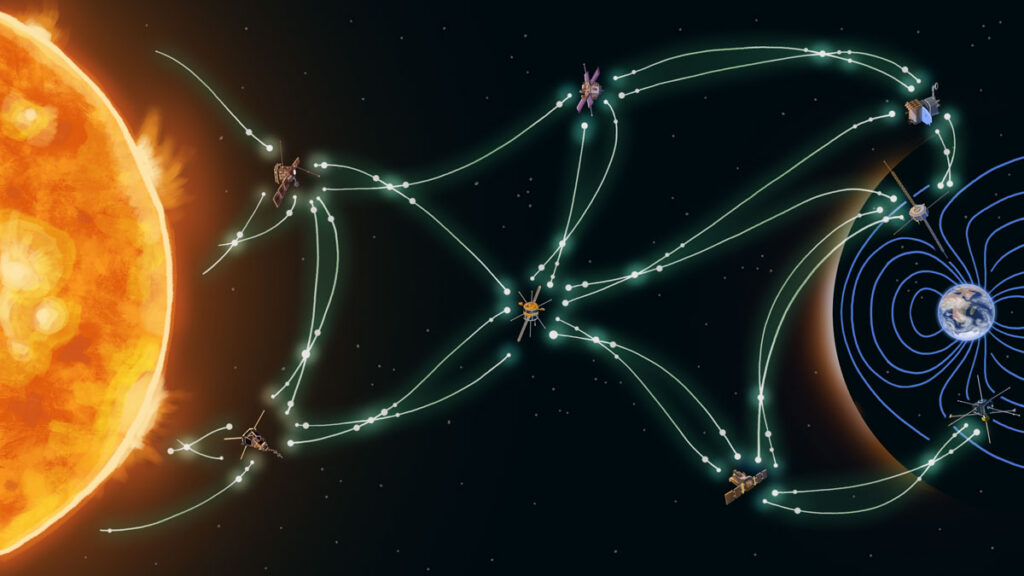
Predicting extreme space weather phenomena is vital, but equally important is forecasting periods when no significant activity is expected, which is critical information for satellite operators and other stakeholders. Making such predictions requires understanding physics spanning 8 orders of magnitude in space and time, from subsecond processes in Earth’s magnetic environment to multiday solar eruptions propagating across the 150 million kilometers between the Sun and Earth (Figure 1) and long-term interactions at scales associated with the 11-year solar cycle.
In addition to operational forecasting, these challenges are fundamental in heliophysics research. Such research includes work to reveal how the Sun generates its magnetic field, how solar wind accelerates and evolves, how planetary magnetospheres respond to external forcing, how particles are accelerated, and how energy transfers across multiple scales and regimes.
Modern AI and ML algorithms excel at analyzing well-curated, extensive datasets that include millions of training examples. For example, AI-aided terrestrial weather forecasting relying on continuous, high-resolution coverage from thousands of ground stations, weather balloons, and satellites has advanced dramatically in recent years.
Fewer than a dozen spacecraft monitor Earth’s magnetosphere, a region spanning tens of Earth radii. Solar wind observations are even sparser.
Heliophysics, however, presents a unique and somewhat opposite scenario. Fewer than a dozen spacecraft monitor Earth’s magnetosphere, a region spanning tens of Earth radii (about 6,371 kilometers). Solar wind observations are even sparser, with just a handful of monitors scattered across the space between the Sun and Earth. This fundamental scarcity poses a challenge for data-driven approaches, which typically depend on abundant observations that are well distributed in space and time to produce trustworthy (i.e., generalizable and reproducible) models.
Data sparsity is further compounded by the relative rarity of intense space weather phenomena such as CMEs, major geomagnetic storms, and extreme substorms, which occur only a few times per solar cycle. Most heliophysical observations capture quiet, low-activity conditions when the solar wind is steady and magnetospheres are calm. Standard ML approaches trained on such imbalanced datasets may achieve high statistical accuracy by simply predicting a “nothing-will-happen” outcome but completely fail when extreme events occur.
Although solar eruptions and geomagnetic storms are relatively rare, they exhibit recurring patterns and consistency in their physical drivers. This regularity suggests that historical observations, when properly clustered and analyzed, can be used to enhance prediction capabilities. The challenge therefore lies in extracting meaningful patterns from sparse measurements of rare events while avoiding models that work well for average conditions but fail when they matter most [Chu et al., 2025].
Heliophysics research employs clever approaches to extract maximum information from the limited available observations. One strategy is to mine multidecade observational records from various satellites and to match and group together measurements collected at times with similar solar wind and geomagnetic activity conditions.
This process clusters tens of thousands of data points from similar magnetospheric states. Such clustering enables reconstruction of dynamic features like nightside magnetic field changes during substorms [Stephens et al., 2019] and the presence of near-Earth magnetotail reconnections [Angelopoulos et al., 2020].
Another, more universal approach is to embed fundamental physical laws directly into ML models through physics-informed neural networks [Raissi et al., 2019], ensuring that predictions respect physical reality even when training data are limited. Data assimilation techniques used in weather forecasting similarly blend sparse observations with physics-based simulations and update models as new measurements arrive.
These methods converge on a common theme: building gray box models (so named because they’re less opaque than black box models) that are data driven but grounded in physically real constraints. For data-starved applications, hybrid approaches can outperform purely data-driven or purely physics-based methods [Liu et al., 2025].
Satellite instruments are generating increasingly large solar wind datasets. However, the variables obtained (e.g., solar wind speed and pressure) are highly intercorrelated [Borovsky, 2018], making it difficult to identify which ones truly drive magnetospheric responses. New algorithms are helping to distill datasets without losing critical scientific information [e.g., Camporeale, 2025]. Meanwhile, advanced statistical and ML methods can cut through dataset complexity by reducing dimensionality, identifying causal relationships among variables, and providing clues about dominant drivers.
For instance, information theory provides tools to detect dependencies in complex systems, establish causality, and rank variables that most effectively predict space weather outcomes [Wing et al., 2022]. Such techniques can be paired with other “explainable” tools, such as SHAP (SHapley Additive exPlanations) values, a method inspired by game theory, to pinpoint physical variables (e.g., solar wind speed or magnetic orientation) that drive a prediction [Ma et al., 2023].
Distilling datasets and improving model interpretability help make ML more practical and more scientifically trustworthy and its predictions more robust. But fully trusting ML models in operational environments requires rigorous validation and uncertainty quantification. These models must not only make predictions but also indicate their confidence levels for operational decisionmaking.
When a model forecasts a major geomagnetic storm, operators need to know whether that prediction carries 60% or 95% confidence, for example.
When a model forecasts a major geomagnetic storm, operators need to know whether that prediction carries 60% or 95% confidence, for example. Ensemble approaches, in which multiple models provide a range of outcomes, help quantify this uncertainty, while using standardized, well-documented datasets enables fair model intercomparisons.
The research community is developing ML-ready benchmark datasets with consistent formatting and clear metadata to establish such validation procedures [e.g., Angryk et al., 2020]. These resources allow researchers to test new algorithms against common baselines, accelerating progress while ensuring that advances are robust and reproducible rather than artifacts of specific data processing choices.
Notably, one domain in heliophysics that is not affected by severe data sparsity is solar imaging. Decades of continuous, high-resolution observations from the Solar Dynamics Observatory (SDO), which delivers 1.5 terabytes of data every day, have created enormous data archives. Because the Sun drives space weather throughout the heliosphere, these datasets offer an ideal opportunity for use in foundation models, large-scale ML systems trained to learn comprehensive internal representations that can then be easily adapted to specific scientific tasks with minimal additional training.
Surya, a foundation model designed to construct a digital representation of the Sun, represents one such effort. It is still in early development and has yet to be validated, but this approach illustrates how data-rich domains can be leveraged with modern AI techniques to create tools that broadly benefit heliophysics research and space weather forecasting.
In addition to the needs for data and model development and validation, applying AI to address the challenges of heliophysics requires sustained, multidisciplinary collaborations. Fostering those collaborations has been the focus of a series of workshops, with the most recent being 2025’s Machine Learning, Data Mining and Data Assimilation in Geospace (LMAG25) meeting at the Johns Hopkins University Applied Physics Laboratory. The workshops have brought together heliophysicists, machine learning experts, data scientists, and specialists from weather forecasting and applied mathematics to exchange knowledge and establish community standards.
Space weather forecasters need models that are accurate and interpretable and that provide not just statistical metrics but also actionable predictions.
The LMAG forums also serve as gathering spaces for scientists to validate models against diverse datasets, compare physics-based and data-driven approaches, develop performance benchmarks, and discuss how to bridge research and operational requirements. Space weather forecasters need models that are accurate and interpretable and that provide not just statistical metrics but also actionable predictions with known limitations and reliability. Of course, researchers also benefit. These conversations allow them to gain insight into operational constraints that shape how modeling approaches become practical in real-world settings.
LMAG and similar initiatives facilitate direct exchanges among adjacent communities, including by making meeting presentations openly available. These efforts are helping translate cutting-edge AI and ML techniques into practical tools that help protect critical infrastructure and human well-being. They are also deepening our understanding of how the Sun shapes space weather throughout the solar system and its effects—both mundane and major—on Earth.
Angelopoulos, V., et al. (2020), Near-Earth magnetotail reconnection powers space storms, Nat. Phys., 16(3), 317–321, https://doi.org/10.1038/s41567-019-0749-4.
Angryk, R. A., et al. (2020), Multivariate time series dataset for space weather data analytics, Sci. Data, 7(1), 227, https://doi.org/10.1038/s41597-020-0548-x.
Borovsky, J. E. (2018), The spatial structure of the oncoming solar wind at Earth and the shortcomings of a solar-wind monitor at L1, J. Atmos. Sol. Terr. Phys., 177, 2–11, https://doi.org/10.1016/j.jastp.2017.03.014.
Camporeale, E. (2019), The challenge of machine learning in space weather: Nowcasting and forecasting, Space Weather, 17(8), 1,166–1,207, https://doi.org/10.1029/2018SW002061.
Camporeale, E. (2025), PARIS: Pruning Algorithm via the Representer theorem for Imbalanced Scenarios, arXiv:2512.06950, https://doi.org/10.48550/arXiv.2512.06950.
Chu, X., et al. (2025), Imbalanced Regression Artificial Neural Network Model for Auroral Electrojet Indices (IRANNA): Can we predict strong events?, Space Weather, 23(5), e2024SW004236, https://doi.org/10.1029/2024SW004236.
Georgoulis, M. K., et al. (2026), Prediction of solar energetic events impacting space weather conditions, Adv. Space Res., in press, https://doi.org/10.1016/j.asr.2024.02.030.
Liu, Y., et al. (2025), Data-driven modeling of electrostatic turbulence by physics-informed Fourier neural operator, Mach. Learn. Sci. Technol., 6(4), 045050, https://doi.org/10.1088/2632-2153/ae19cd.
Ma, D., et al. (2023), Opening the black box of the radiation belt machine learning model, Space Weather, 21(4), e2022SW003339, https://doi.org/10.1029/2022SW003339.
Raissi, M., P. Perdikaris, and G. E. Karniadakis (2019), Physics-informed neural networks: A deep learning framework for solving forward and inverse problems involving nonlinear partial differential equations, J. Comput. Phys., 378, 686–707, https://doi.org/10.1016/j.jcp.2018.10.045.
Stephens, G. K., et al. (2019), Global empirical picture of magnetospheric substorms inferred from multimission magnetometer data, J. Geophys. Res. Space Phys., 124(2), 1,085–1,110, https://doi.org/10.1029/2018JA025843.
Wing, S., et al. (2022), Modeling radiation belt electrons with information theory informed neural networks, Space Weather, 20(8), e2022SW003090, https://doi.org/10.1029/2022SW003090.
Savvas Raptis (savvas.raptis@jhuapl.edu), Manolis K. Georgoulis, Mikhail Sitnov, Anthony Sciola, and Simon Wing, Johns Hopkins University Applied Physics Laboratory, Laurel, Md.
