Normal view

  • ✇Malay Mail - All
  • Buying stories: The rise of POV culture in marketing — Yusniza Kamarulzaman
    JUNE 10 — For decades, marketers relied on celebrities, spokespersons, and carefully crafted advertisements to influence consumer decisions. Today, however, influence is increasingly coming from a different source: the everyday experiences of ordinary individuals shared through digital platforms.In the age of POV (point-of-view) content, consumers are no longer persuaded solely by what brands say. Instead, they are influenced by what they see others experience.Po
     

Buying stories: The rise of POV culture in marketing — Yusniza Kamarulzaman

10 June 2026 at 02:09

Malay Mail

JUNE 10 — For decades, marketers relied on celebrities, spokespersons, and carefully crafted advertisements to influence consumer decisions. Today, however, influence is increasingly coming from a different source: the everyday experiences of ordinary individuals shared through digital platforms.

In the age of POV (point-of-view) content, consumers are no longer persuaded solely by what brands say. Instead, they are influenced by what they see others experience.

Point-of-view (POV) content, now common across Instagram Reels, YouTube Shorts, Facebook Stories, TikTok and lifestyle blogs, allows consumers to experience products, services, destinations and lifestyles through the eyes of others. Whether it is a restaurant review, a travel diary, a shopping haul, or a “day in my life” video, consumers are no longer merely receiving information; they are immersing themselves in someone else’s experience.

This shift has important implications for Malaysian consumer behaviour. Traditionally, consumers evaluated products based on price, quality, features and brand reputation. Increasingly, however, decisions are influenced by relatability and lived experiences. Consumers are drawn to content that feels authentic, personal and trustworthy. A recommendation from a relatable individual may carry more influence than a professionally produced advertisement.

One reason POV content resonates strongly with Malaysian consumers is its ability to inspire. Unlike traditional advertising that focuses on product features and sales messages, POV content connects audiences with real and relatable experiences. Whether it is a junior doctor sharing the realities of a demanding workday, a tourist discovering the cultural uniqueness of a destination, or a university student documenting the excitement of campus life, viewers can easily imagine themselves in similar situations. The appeal often lies not in the product or service itself, but in the possibility of achieving a desired lifestyle, experience or personal aspiration.

POV content is powerful because it allows consumers to experience events through another person’s perspective. Rather than observing from a distance, viewers become immersed in the narrative and emotionally connected to the experience. As consumers mentally place themselves within the story, the content becomes more authentic, memorable and influential.

The new currency of trust

Trust is being redefined in the digital marketplace. Malaysian consumers increasingly seek recommendations from individuals they perceive as relatable rather than relying solely on brand-generated messages. Over time, content creators build familiarity and credibility by sharing everyday routines, personal challenges, achievements and honest opinions in ways that feel genuine and unscripted.

This shift has also redistributed influence. Traditionally, brands relied heavily on celebrity endorsers and spokespersons to shape consumer perceptions. Today, an unknown content creator sharing a genuine experience can generate greater engagement and trust than a celebrity-backed campaign. While celebrities continue to play an important role in building awareness, consumers increasingly ask, “What does someone like me actually experience?” rather than “What does the celebrity recommend?” Authenticity, relatability and transparency are becoming more influential than fame itself.

The influence of POV content extends beyond trust and inspiration. Digital platforms have become spaces for social learning, where consumers observe how others work, travel, study, save money and manage their daily lives. Through repeated exposure, these behaviours become normalised and are often adopted. Malaysians are increasingly influenced not only by the products others use but also by the habits, routines and lifestyles demonstrated online. 

Consumers increasingly turn to POV content on platforms such as TikTok and Instagram Reels to shape purchasing decisions and lifestyle choices. — Pexels pic

Consumption behaviour is therefore shaped less by promotional messages and more by observation and imitation.

This phenomenon reflects a broader transformation in the digital marketplace. Increasingly, consumers seek experiences, meanings and identities that align with who they are or who they aspire to become. Products and brands have become symbols through which individuals express their values, aspirations and sense of self.

In many ways, consumers are no longer buying products; they are buying into stories. They are purchasing narratives of success, wellness, adventure, sustainability, achievement and belonging. The product often becomes secondary to the meaning it represents.

The expanding influence of POV content

The implications of POV culture extend far beyond retail. Prospective students watch “a day in university life” videos before selecting a programme. Travellers explore destinations through immersive content before making bookings, while financial consumers increasingly learn from the experiences of peers navigating investment and budgeting decisions. The power of POV content lies in making information more relatable, accessible and personally relevant.

The same trend is visible across healthcare, education, tourism and public communication. Organisations are increasingly recognising that audiences engage more deeply with lived experiences than with conventional promotional messages.

From a marketing perspective, this represents a shift from information-driven marketing to experience-driven marketing. Consumers no longer engage with content solely to obtain information. They seek entertainment, inspiration, social connection and a sense of belonging. The most effective brands are therefore not necessarily those that communicate the loudest, but those that enable consumers to experience products and services through credible, relatable and meaningful narratives.

However, the rise of POV culture also raises important questions. Are consumers making independent choices, or are they increasingly influenced by curated digital experiences? Are purchasing decisions driven by genuine needs or by the desire to replicate lifestyles observed online?

As artificial intelligence makes content creation easier and more sophisticated, distinguishing between authentic experiences and carefully constructed narratives may become increasingly challenging. The line between reality and representation is becoming blurred, highlighting the growing importance of digital literacy and critical consumption.

For businesses, future marketing success may depend less on how loudly brands communicate and more on how effectively they enable consumers to experience products through authentic and relatable storytelling. For consumers, the challenge is to remain aware of how these borrowed perspectives shape their preferences, aspirations and decisions.

Ultimately, the question facing Malaysian consumers is no longer whether digital content influences behaviour. The more important question is: whose perspective is influencing it?

* The author is a Professor of Marketing at the Faculty of Business and Economics, Universiti Malaya.

 ** This is the personal opinion of the writer or publication and does not necessarily represent the views of Malay Mail.


Which Emily Henry Books Are Becoming Movies? ‘Happy Place,’ ‘Book Lovers,’ Among Others 

8 June 2026 at 15:25
Romance author Emily Henry now has five of her most recent novels set to be adapted for the big screen. Henry went on a rom-com writing spree that began with Beach Read, which came out in the summer of 2020. She has published a book a year since then, with People We Meet on Vacation […]

‘Singaporeans don’t speak up because they’re damn smart!’ — SG CEO explains employees think first, ‘Will I be rewarded, or will I be punished?’ before speaking up

12 June 2026 at 21:01

SINGAPORE: Speaking at Vogue Singapore’s inaugural Wellness Day on June 6, leadership consultant Crystal Lim-Lange explained that Singaporeans aren’t silent for lack of ideas. They stay silent because they are paying close attention.

“Singaporeans don’t speak up because they’re damn smart,” she said in a TikTok and Instagram video posted after the event, adding, “They know that their workplaces are not safe enough to speak up.”

The leadership expert’s direct take on why many Singaporeans stay silent at work has resonated with Singaporeans online, exposing toxic workplace culture, underscoring the importance of psychological safety, and raising questions about whether employees are truly free to voice their concerns when they arise.

The video has since attracted strong reactions from local employees who said her remarks mirrored exactly what they experience in many workplaces. Workers are usually encouraged to speak up if they have a problem, but many these days first watch how others are treated before deciding whether it is even worth the risk.

“Will I be rewarded or will I be punished?”

Ms Lim-Lange, founder and chief executive officer (CEO) of Forest Wolf, said employees weigh in a question to themselves, “Will I be rewarded or will I be punished?” before sharing an opinion, asking a difficult question, or even challenging a superior.

According to Ms Lim-Lange, many workers believe they already know the answer to that question. She explained that speaking up involves taking what she described as an interpersonal risk, which could mean admitting a mistake, saying “I don’t know”, or simply offering a different viewpoint that has nothing to do with a lack of communication skills.

In the video, she said organisations frequently ask her to conduct workshops that encourage employees to speak up. Her response is that such programmes are unlikely to work if deeper workplace problems remain unresolved.

She explained that employers need to improve “psychological safety, inclusion, learner safety, contributor safety and challenger safety” within the organisation before expecting employees to be more vocal.

When silence feels like the only safer option

The clip gained traction fast, with many workers in Singapore saying it captured a reality they had experienced firsthand.

Several commenters shared stories of employees being labelled difficult, sidelined or ignored after raising their concerns. Others said companies promote openness in theory but react negatively when staff challenge decisions or point out problems.

Online comments also indicated that some workers felt organisations valued obedience over thoughtful disagreement.

These reactions point to similar tensions in many workplaces. Businesses seek innovation and fresh ideas, yet employees may hesitate if past examples suggest that speaking up carries career and emotional abuse risks. For workers in such unfortunate situations, silence feels like the only safer option.

Artificial harmony: The hidden cost of keeping silent

Ms Lim-Lange believes that silence also comes at a price. Speaking to Mothership, she warned against what she calls “artificial harmony,” in which workplaces appear polite and conflict-free on the surface while important problems remain unspoken and unsolved.

Problems left unaddressed can later lead to bigger disputes, poor decisions, duplicated work, and inefficiency. Her argument is that healthy organisations should encourage respectful disagreement to progress rather than suppress it.

Leaders, she said, should reward thoughtful dissent and create space for quieter voices to contribute. Employees who challenge ideas may only want to improve outcomes rather than create problems.

As artificial intelligence continues to reshape industries, organisations may find that honest feedback and diverse viewpoints become even more valuable.

Silence that goes beyond just office life

The discussion, which has resonated with many, especially local workers, on both social media platforms, also goes beyond workplace meetings and performance reviews.

Many Singaporeans recognise the instinct to avoid rocking the boat, whether at work, in school or in social discussions. Respect for authority and social harmony have long been valued traits, but they can sometimes make difficult conversations harder to have. The challenge is finding a balance.

People should be able to raise concerns respectfully, and leaders should be willing to hear them without treating disagreement as disloyalty and/or disrespect. When that happens, speaking up becomes less of a gamble and more of a contribution.

A workplace doesn’t become innovative because employees are told to be brave. It becomes innovative when people see that honesty is welcomed, thoughtful criticism is respected, and raising concerns will not come back to haunt them with unpleasant repercussions.

This article (‘Singaporeans don’t speak up because they’re damn smart!’ — SG CEO explains employees think first, ‘Will I be rewarded, or will I be punished?’ before speaking up) first appeared on The Independent Singapore News.

  • ✇Collider
  • Hulu's 4-Part Fantasy Series Is Still the Greatest Binge on the Platform 10 Years Later Kendall Myers
    As the fantasy genre has grown more popular, it's also gotten darker, but there are exceptions to every rule. Rather than giving in to the conventions, one bold 2016 series blends fantasy elements with a sitcom's tone, proving that this rare genre combination can work surprisingly well. With this choice, The Good Placeforges its own path and is now one of the best series on Hulu. The recognizable cast, laugh-out-loud moments, and shocking reveals work together to make the series an addictive bin
     

Hulu's 4-Part Fantasy Series Is Still the Greatest Binge on the Platform 10 Years Later

6 June 2026 at 03:41

As the fantasy genre has grown more popular, it's also gotten darker, but there are exceptions to every rule. Rather than giving in to the conventions, one bold 2016 series blends fantasy elements with a sitcom's tone, proving that this rare genre combination can work surprisingly well. With this choice, The Good Placeforges its own path and is now one of the best series on Hulu. The recognizable cast, laugh-out-loud moments, and shocking reveals work together to make the series an addictive binge-watch perfect for anyone willing to embrace the outlandish premise and just have a good time.

  • ✇Malay Mail - All
  • EU court annuls DMA ‘gatekeeper’ label for Meta’s Marketplace, upholds Messenger ruling
    BRUSSELS, June 3 — Meta secured a partial victory today over the EU’s powers to regulate tech giants, as a top court ruled the bloc was wrong to slap tough rules on its Facebook Marketplace platform — but threw out an appeal over Messenger.The US giant filed a challenge with the EU’s General Court in Luxembourg over both platforms’ designation under the Digital Markets Act (DMA), one of several digital laws facing fierce criticism from tech giants and US Presiden
     

EU court annuls DMA ‘gatekeeper’ label for Meta’s Marketplace, upholds Messenger ruling

3 June 2026 at 11:32

Malay Mail

BRUSSELS, June 3 — Meta secured a partial victory today over the EU’s powers to regulate tech giants, as a top court ruled the bloc was wrong to slap tough rules on its Facebook Marketplace platform — but threw out an appeal over Messenger.

The US giant filed a challenge with the EU’s General Court in Luxembourg over both platforms’ designation under the Digital Markets Act (DMA), one of several digital laws facing fierce criticism from tech giants and US President Donald Trump’s administration.

Meta faces strict rules and obligations after being designated a so-called “gatekeeper” under the DMA, and its Facebook, Instagram and WhatsApp apps are subject to extra scrutiny as “core platform services”.

In its challenge, Meta argued that Messenger and Marketplace were an extension of Facebook, and should not face stringent obligations of their own.

“By its judgment today, the General Court of the European Union annuls the decision designating Meta as a gatekeeper as regards Marketplace, while maintaining Meta’s designation for its interpersonal communications service Messenger,” the court said in a statement.

In practice, the European Commission had agreed in April last year to lift the designation of Marketplace, but Meta nonetheless welcomed the court decision — seen as a test of the EU’s powers to regulate the sector.

The Marketplace ruling “confirms that it should not have been designated in the first place”, a Meta spokesperson said.

“We are reviewing the court’s finding on Messenger and will consider our options,” they said.

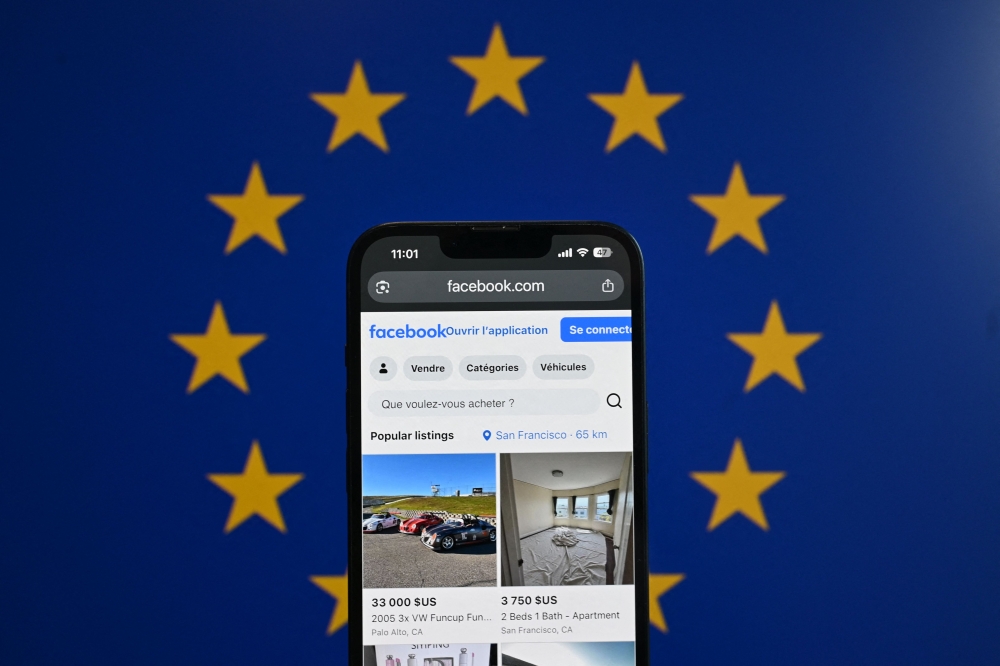
In its challenge, Meta argued that Messenger and Marketplace were an extension of Facebook, and should not face stringent obligations of their own. — AFP pic

‘Erred in law’ 

The DMA comes with a list of do’s and don’ts for the world’s biggest digital platforms in an attempt to keep them in check and create an open online space.

Concerning the imposition of tougher rules on Marketplace, the court found the European Commission had “erred in law” on several counts.

It faulted the EU executive for failing to take into account changes made to the platform in mid-2023, and more broadly said its case “lacks sufficient reasoning”.

Regarding Messenger, however, the court agreed with the commission that it was “distinct from the Facebook social network”, noting that it was “offered by means of standalone applications” and that “Meta promotes tools that are specific to that service”.

The EU court in 2024 ruled against a similar bid by TikTok to challenge its DMA designation, a decision the company has appealed.

Alongside Meta and TikTok’s owner ByteDance, the other “gatekeepers” are Google parent Alphabet, Amazon, Apple, Booking and Microsoft.

The EU last year imposed its first fines for breaking the DMA rule, hitting Meta and Apple with penalties of €200 million (RM923 million) and €500 million respectively.

The fines have given rise to accusations by Washington that the EU is deliberately targeting American companies, which Brussels denies. — AFP

❌
Subscriptions