Normal view

  • ✇Popular Science
  • Mars rover snaps a selfie near skyscraper-sized boulders Andrew Paul
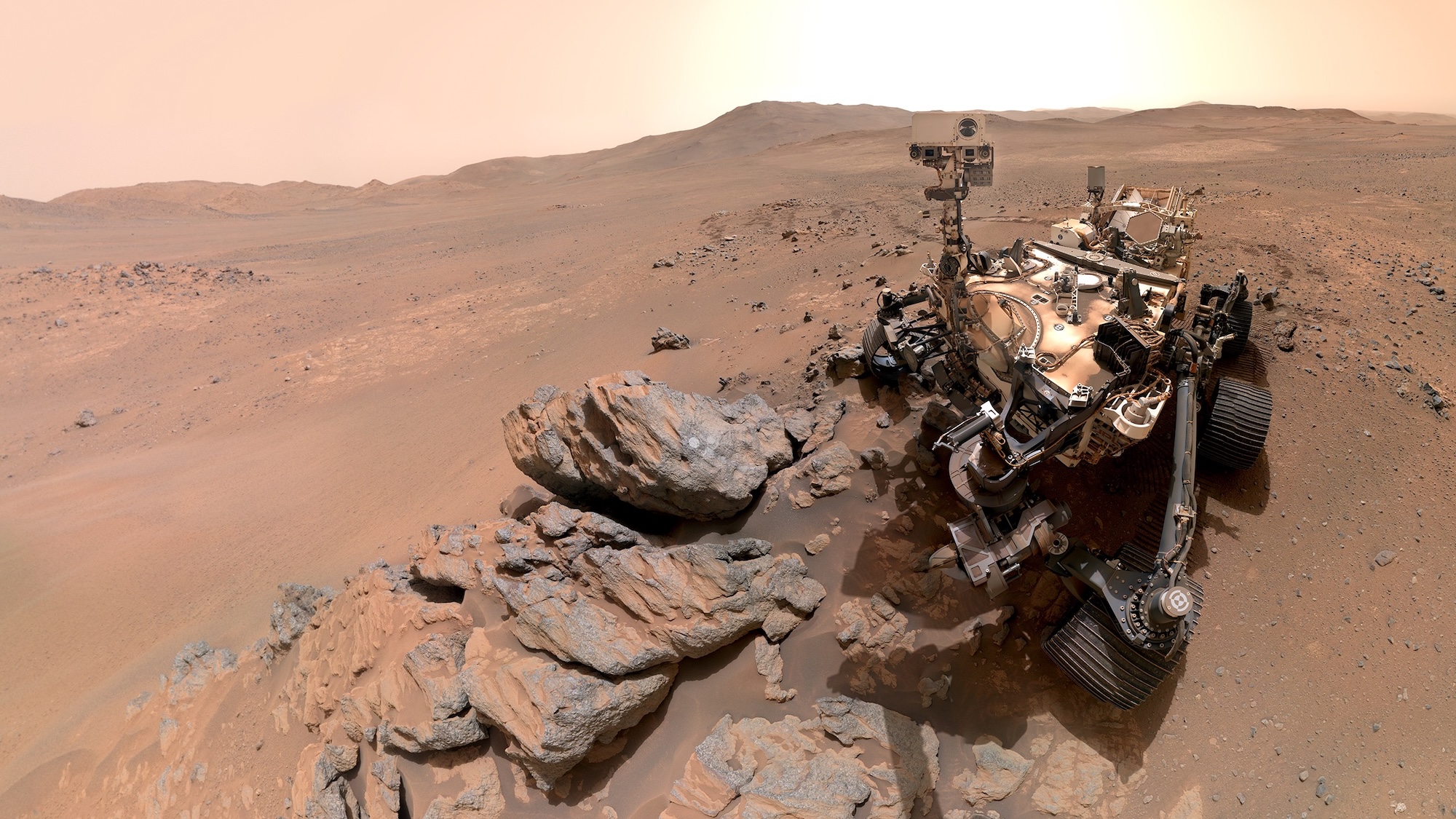
    After five years of rolling across Mars, NASA’s Perseverance rover is still going strong. And it has the selfies to prove it. NASA highlighted its “six-wheeled scientist’s” latest Red Planet excursion in a mission update on May 12, explaining that the explorer is currently engaged in the Northern Rim Campaign. This is Perseverance’s fifth project since arriving on Earth’s planetary neighbor in February 2021.  Compiled from 61 separate photos taken in March, the latest scene depicts Perseverance
     

Mars rover snaps a selfie near skyscraper-sized boulders

13 May 2026 at 15:45

After five years of rolling across Mars, NASA’s Perseverance rover is still going strong. And it has the selfies to prove it. NASA highlighted its “six-wheeled scientist’s” latest Red Planet excursion in a mission update on May 12, explaining that the explorer is currently engaged in the Northern Rim Campaign. This is Perseverance’s fifth project since arriving on Earth’s planetary neighbor in February 2021.  Compiled from 61 separate photos taken in March, the latest scene depicts Perseverance near a region known as Lac de Charmes.

“We took this image when the rover was in the ‘Wild West’ beyond the Jezero Crater rim—the farthest west we have been since we landed at Jezero a little over five years ago,” Perseverance project scientist Katie Stack Morgan said in a statement.

Prior to snapping its selfie, the rover had just finished abrading the rocky Arethusa outcrop. This task involves using the drill on its robotic arm to grind a section of the geological formation, which then offers scientists back on Earth the materials necessary to analyze its composition. After remotely examining the rock’s chemistry, researchers learned Arethusa is largely igneous minerals dating even further back than the Jezero Crater itself. The outcrop likely formed underground millions of years ago from molten material.

The latest portrait is the sixth selfie taken by Perseverance since arriving on Mars. To pull it off, the rover relied on its Wide Angle Topographic Sensor for Operations and eNgineering (WATSON) camera installed at the end of its robotic arm. It took about one hour to accomplish and required 62 extremely fine-tuned movements to ensure the clearest shot possible.

NASA’s Perseverance captured this enhanced-color panorama of an area nicknamed “Arbot” on April 5, the 1,882nd Martian day, or sol, of the mission. Made of 46 images, the panorama offers one of the richest geological vistas of the rover’s mission, revealing a windswept landscape of diverse rock textures. Credit: NASA / JPL-Caltech / ASU / MSSS

Lest anyone think Perseverance is too narcissistic, the rover also employed its Mastcam-Z to also photograph Lac de Charmes’ Arbot area a few days later. The vista scene is the result of 46 combined images, and will help NASA plot out a route to further investigate the ridge. Thanks to the new vantage points, scientists already think they have spotted a few megabreccia—massive chunks of rock as big as skyscrapers that were launched during a meteorite impact about 3.9 billion years ago.

“The rover’s study of these really ancient rocks is a whole new ballgame,” Stack Morgan explained. “These rocks—especially if they’re from deep in the crust—could give us insights applicable to the entire planet, like whether there was a magma ocean on Mars and what initial conditions eventually made it a habitable planet.”

The post Mars rover snaps a selfie near skyscraper-sized boulders appeared first on Popular Science.
NASA’s Exoplanet Hunter Reveals its Most Complete Look at the Night Sky

21 May 2026 at 16:29

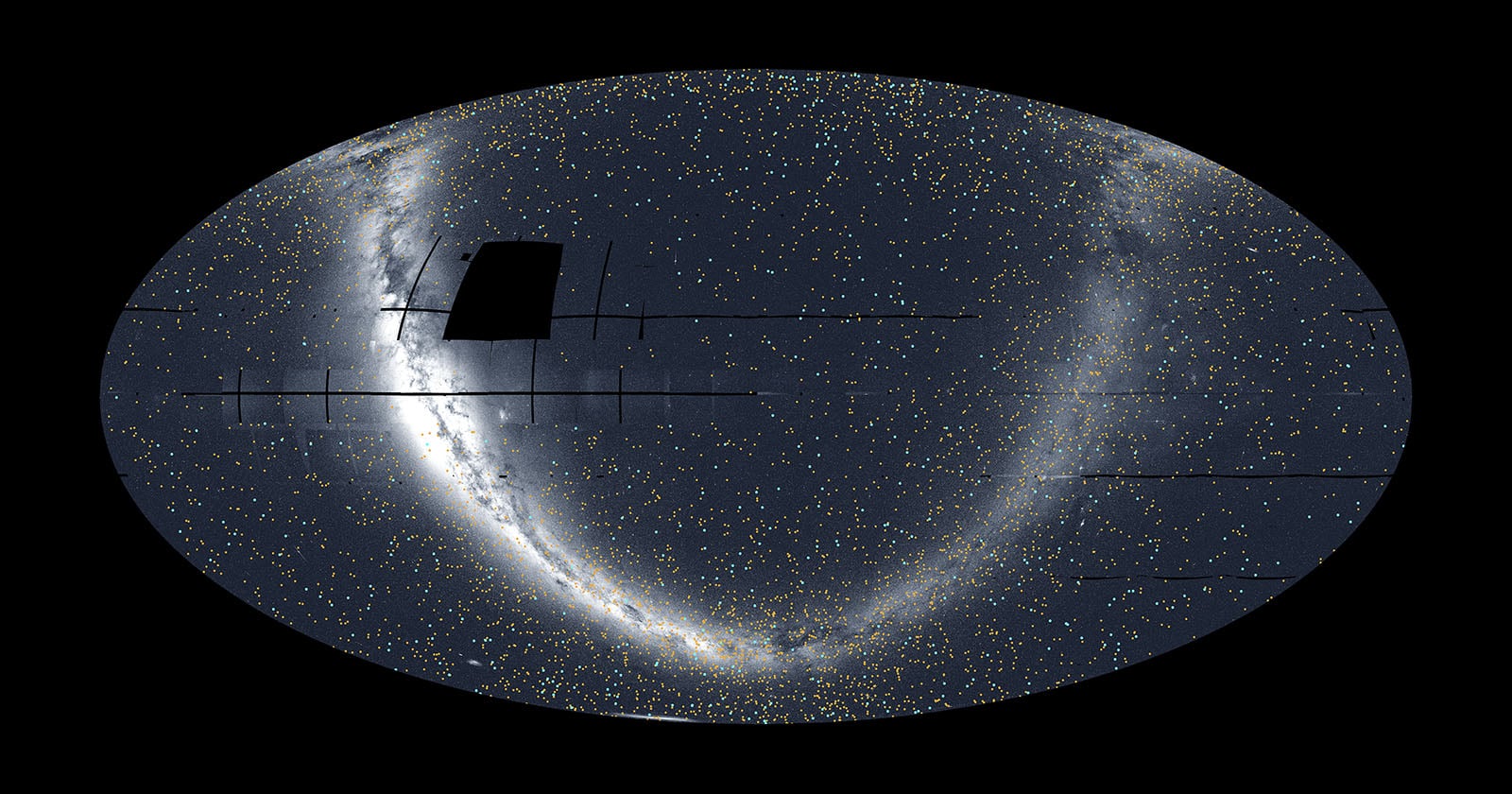
A wide, oval-shaped map of the night sky filled with tiny stars. A dense, bright arc of stars curves from the top left to the bottom right. A dark rectangular patch appears near the top left within the star field.

NASA's Transiting Exoplanet Survey Satellite (TESS) has released a new mosaic that offers its most complete view of the night sky yet. Captured over eight years, the all-sky mosaic includes 679 confirmed, newly discovered exoplanets and nearly 5,200 candidate exoplanets.

[Read More]

  • ✇Antiques and Vintage - flickr
  • 20260324-HISTORIA AVIACION 001-MJ007-2K Manuel Gual
    Manuel Gual posted a photo: A Cinematic Journey Through the History of Aviation Description: A wide cinematic collection celebrating the evolution of aviation, from fragile early biplanes and daring pioneer pilots to flying boats, wartime fighters, classic airliners, supersonic icons, stealth aircraft, and futuristic aerospace designs. The series combines golden hour light, dramatic skies, ocean crossings, misty runways, military silhouettes, retro travel atmosphere, and science fiction con
     

20260324-HISTORIA AVIACION 001-MJ007-2K

Manuel Gual posted a photo:

20260324-HISTORIA AVIACION 001-MJ007-2K

A Cinematic Journey Through the History of Aviation

Description:
A wide cinematic collection celebrating the evolution of aviation, from fragile early biplanes and daring pioneer pilots to flying boats, wartime fighters, classic airliners, supersonic icons, stealth aircraft, and futuristic aerospace designs. The series combines golden hour light, dramatic skies, ocean crossings, misty runways, military silhouettes, retro travel atmosphere, and science fiction concepts to create a visual timeline of flight as both engineering achievement and human dream.

These images have been generated by Artificial Intelligence.

  • ✇Popular Science
  • NASA wastewater system will turn human poop into plant food Mack DeGeurin
    NASA’s ambitious plan to put humans on the moon may hinge on the bathroom habits of a handful of University of North Dakota grad students. In the name of science, those researchers will test the limits of a mobile wastewater treatment system designed to convert human waste into plant nutrients and other sustainable materials. The trial will serve as a stress test of sorts, measuring how well the Divergent Deployable Wastewater Treatment Facility holds up to regular use and heavy loads in an envi
     

NASA wastewater system will turn human poop into plant food

5 June 2026 at 13:42

NASA’s ambitious plan to put humans on the moon may hinge on the bathroom habits of a handful of University of North Dakota grad students. In the name of science, those researchers will test the limits of a mobile wastewater treatment system designed to convert human waste into plant nutrients and other sustainable materials. The trial will serve as a stress test of sorts, measuring how well the Divergent Deployable Wastewater Treatment Facility holds up to regular use and heavy loads in an environment designed to mirror a lunar habitat. 

It’s not pretty work, but someone has to do it.

“The tests will help NASA evaluate real-world operation, crew training needs, system reliability, and how wastewater simulants compare with actual human metabolic waste in an analog mission environment,” Ali Alshami, University of North Dakota Chemical Engineering professor and test participant, said in a statement.

a gray trailer sits in a parking lot
The unassuming gray building could one day be an astronaut wastewater facility. Technicians prepared the Divergent Deployable Wastewater Treatment Facility for transport at NASA’s Kennedy Space Center in Florida on April 21, 2026. Image: NASA/Kim Shiflett  

Treated astronaut poop will feed lunar plants 

The mobile facility consists of three separate bioreactors, each tasked with handling a specific kind of waste. Feces, urine, and food waste are treated separately because each material contains different levels of salts, solids, carbon, nitrogen, and phosphorus. One reactor processes feces and food waste, converting it into nutrient-rich water that can feed plants. The other two handle urine and greywater from activities like showering and laundry, some of which can be filtered and recycled into  clean drinking water. From an astronauts’ perspective, the experience should feel pretty familiar to life onboard the International Space Station (ISS). They use the toilet as normal, and it automatically diverts waste at the source, routing each type to its corresponding bioreactor.

The whole process takes place in a mobile, 8.5-by-24-foot trailer. In addition to the bioreactors, the unit also houses a vertical garden maintained by the converted wastewater. The goal is to kill two birds with one stone: process waste efficiently and then use it to sustain lunar agriculture. Both are essential if astronauts want any shot at building longer-term habitats on the moon or even Mars. To that end, NASA has ambitions to start constructing a semi-permanent lunar structure or “moon base” by 2029.

Where no one has gone before 

Waste management in space has come a long way since the first moon missions. Back in the 1960s, NASA Apollo astronauts left behind 96 bags of human waste (filled with poop, urine, and vomit) on the lunar surface to save weight. Those bags are almost certainly still there. 

Thankfully, decades of research mean astronauts no longer have to relieve themselves into a bag, at least not most of the time. The most recent Artemis mission featured a fully functional space toilet, though it malfunctioned almost immediately after liftoff.

Recycling wastewater has also seen major improvements. NASA had a breakthrough in 2023 when its life support system aboard the ISS  managed to recover nearly 98 percent of all breath, sweater, and urine brought aboard by the crew. Future astronauts on prolonged spacewalks may also wear this Dune-inspired backpack that filters urine and sweat into drinking water in a single self-contained loop.

The post NASA wastewater system will turn human poop into plant food appeared first on Popular Science.

China launches crewed space flight as part of Moon ambitions, with Hong Kong police officer-turned-astronaut aboard

By: AFP
25 May 2026 at 00:00
space launch

China launched its crewed Shenzhou-23 spacecraft and eased it into a successful docking with a space station early Monday as part of Beijing’s ambitions to send humans to the Moon by 2030, state media said.

The Shenzhou-23 spacecraft launch on May 24, 2026.
The Shenzhou-23 spacecraft launch on May 24, 2026. Photo: CGTN screenshot.

During this mission, a Chinese astronaut is scheduled to spend a full year in orbit on the Tiangong space station, a crucial first in the Chinese lunar landing programme.

The Long March 2-F rocket blasted off in a cloud of flames and smoke on time at 11:08 pm (1508 GMT) Sunday night from the Jiuquan launch centre in China’s northwestern Gobi Desert, video from state broadcaster CCTV showed.

The spacecraft separated from the rocket around 10 minutes later and entered orbit, the Chinese Manned Space Agency (CMSA) said on social media.

“The astronauts are in good condition, and the launch has been a complete success,” it added.

The craft docked successfully with the Tiangong space station after a flight of about 3.5 hours, the state news agency Xinhua reported, quoting CMSA.

The mission marks the first spaceflight by an astronaut from Hong Kong: 43-year-old Li Jiaying (Lai Ka-ying in Cantonese), who previously worked for the Hong Kong police.

Lai Ka-ying
Lai Ka-ying is a police superintendent with a doctorate in computer science – she will be Hong Kong’s first astronaut. Photo: CCTV.

The two other crew members are 39-year-old space engineer Zhu Yangzhu and 39-year-old Zhang Zhiyuan, a former air force pilot, who is travelling into space for the first time.

Cheering crowds waved Chinese flags at a farewell ceremony ahead of the launch, while a band played and the three astronauts saluted on stage.

The crew is set to carry out numerous scientific projects in life sciences, materials science, fluid physics and medicine.

A key experiment of Shenzhou-23 will be the full-year stay in orbit by one of the crew in order to study the effects of a long stay in microgravity.

Year-long experiment

The experiment is part of China’s preparations for future lunar missions, as well as missions to Mars.

The astronaut selected for this one-year mission will be named at a later date, depending on the progress of the Shenzhou-23 mission, a spokesperson for the CMSA said on Saturday.

The main challenges will involve long-term effects on humans, including bone density loss, muscle wasting, radiation exposure, sleep disturbances, behavioural and psychological fatigue, said Richard de Grijs, an astrophysicist and professor at Macquarie University in Australia.

He also underlined the importance of reliable water and air recycling systems, as well as the ability to manage potential medical emergencies far from Earth.

China is “steadily” building operational experience for “sustained occupation” of its Tiangong space station, and year-long missions are an important step towards future lunar and potentially deep-space ambitions, de Grijs told AFP.

“A year in orbit pushes both hardware and humans into a different operational regime compared with the shorter Shenzhou missions of the programme’s earlier phases,” he said.

Crews aboard Tiangong have until now largely remained in orbit for six months before being replaced.

The Shenzhou-23 mission is part of China’s goal to land astronauts on the Moon before 2030, a race in which the United States is also competing with its Artemis programme.

Pakistani crew members

China is testing the equipment required for its goal, with an orbital test flight of its new Mengzhou spacecraft set for 2026.

The Mengzhou craft will replace the ageing Shenzhou line, and will carry China’s astronauts to the Moon.

Beijing hopes to have built the first phase of a manned scientific base by 2035, known as the International Lunar Research Station (ILRS).

China also plans to welcome its first foreign astronaut, from Pakistan, aboard the Tiangong station by the end of this year.

The Asian giant has significantly expanded its space programmes over the last 30 years, injecting billions of dollars into the sector in order to catch up with the United States, Russia and Europe.

In 2019, China landed a spacecraft, the Chang’e-4 probe, on the far side of the Moon — a world first.

Then in 2021, it landed a small rover on Mars.

China has been formally excluded from the International Space Station (ISS) since 2011, when the United States banned NASA from collaborating with Beijing, prompting the Asian giant to develop its own space station project.

  • ✇Openclipart
  • Mars j4p4n
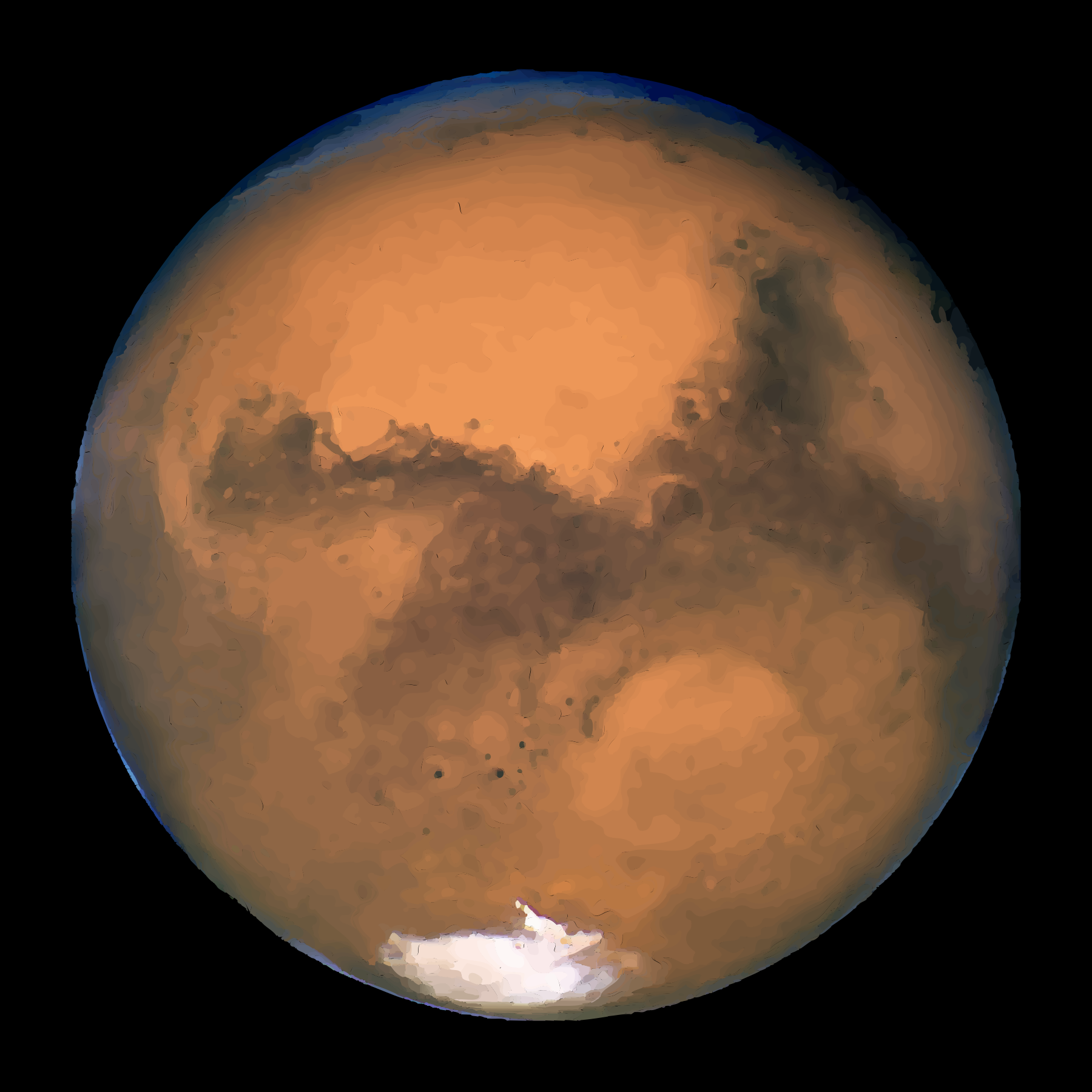
    This is a depiction of mars, based on a public domain 2003 photo by NASA <i>(incidentally the black background is separate from mars and can be removed if you want a transparent mars by itself)</i>
     
  • ✇Popular Science
  • Futuristic canned space drinks could spice up that three-year trip to Mars Mack DeGeurin
    Space is undeniably incredible—but the food options up there, not so much. Though cosmic cuisine has come a long way from the days of sucking liver and beef paste out of a tube in the 1960s, the options on the intergalactic menu are still limited. And with astronauts preparing to spend longer periods in zero gravity following the recent Artemis II mission, there’s never been a greater need for a wider variety of shelf-stable options to break up the dietary monotony. The team behind a new study p
     

Futuristic canned space drinks could spice up that three-year trip to Mars

21 May 2026 at 16:48

Space is undeniably incredible—but the food options up there, not so much. Though cosmic cuisine has come a long way from the days of sucking liver and beef paste out of a tube in the 1960s, the options on the intergalactic menu are still limited. And with astronauts preparing to spend longer periods in zero gravity following the recent Artemis II mission, there’s never been a greater need for a wider variety of shelf-stable options to break up the dietary monotony. The team behind a new study published  in the journal ACS Food Science & Technology have found a partial solution: a customizable fortified beverage made from nanoemulsions. 

The roughly soda can-sized drink comes in various flavors and sweetness levels that astronauts can choose from. It is also enriched with omega-3 fatty acids, which are largely absent from astronauts’ normal daily diet.  The emulsions are possible both on Earth and in zero gravity, which means astronauts could pick and choose which drink they want at a moment’s notice and based on their preferences or cravings. By sipping on these drinks, astronauts can break up the monotony, while simultaneously protecting their bodies against the hazards of space.

The only catch: the current version has a flat-soda consistency and a slightly sweet, fishy flavor, which isn’t exactly a crowd-pleaser. But after spending roughly three years getting to Mars, any way to shake things up (fishy or not) probably has its upside.

Spicing up space food 

Many astronauts understandably get pretty tired of their rotating menu of slightly gooey and bland food. It can be so monotonous that many may fail to fulfil their daily calorie goals. Some astronauts even experience what researchers call space anorexia. Not getting proper nutrition poses risks anywhere, but it’s doubly so in space where higher reaction levels and muscle mass loss from microgravity take a toll. The longer an astronaut spends in space, the more these issues get amplified. 

Currently, space agencies address the microgravity issue by having their astronauts engage in high resistance exercises to keep their muscles from atrophying. But that only goes so far. The chemist working on the new beverage wanted to see if they could find a way to subtly add nutrients into an astronaut’s diet that could help mitigate space’s harmful effects.  They chose to focus on omega 3 fatty acids because past research has shown they may help in bolstering  protection against space radiation and reportedly increase bone formation rate.

This  graphic breaks down how aromas, fruit acids and bioactives interact with each other during the emulsion process. Image: ACS Food Science & Technology.
This graphic breaks down how aromas, fruit acids and bioactives interact with each other during the emulsion process. Image: ACS Food Science & Technology.

Space drink: floral, sugary, and a hint of fish oil 

To actually get those nutrients into an astronaut’s body, the team turned to a concept already well established here on Earth: the fortified drink. A fortified drink is essentially any beverage with nutrients added that weren’t originally present. The practice dates back at least to the 1920s in the United States, when vitamin D was added to milk to help combat rickets. Today, nutrients such as vitamins, minerals, or fatty acids are commonly added to a variety of consumer drinks, from orange juice and energy drinks to plant-based milks.

In this case, the team used a process that combines water-soluble ingredients like sugar with omega-3 fatty acids, which are oil-soluble. The ingredients are then blended into a stable mixture to create the beverage. 

After tinkering with a variety of sugars, fats, acids, and flavorings, they settled on six drink recipes with two sweetness levels (medium or high) and three flavor profiles reminiscent of rose, orange blossom, and floral citrus. Each serving is 11 fluid ounces, roughly the same size as a standard soda, and provides up to one-third of an astronaut’s recommended daily omega-3 fatty acid intake.

Though this study focused on omega-3s specifically, there’s not really anything stopping future versions from swapping in whatever nutrient an astronaut needs most. The overarching idea is that astronauts could pick their preferred flavor profile, sweetness level, and possibly even their nutrients on the fly, right there in the moment. Think of it as a much more limited, slightly fish-forward version of Coca-Cola’s option-abounding Freestyle fountain machine.

The emulsion drink isn’t quite ready for space missions yet. The researchers want to do more testing to improve the taste. It’s also not entirely clear how prolonged time spent hurling through space could impact beverage’s shelf life. And even when those kinks are worked out, the drink’s creators make clear it isn’t intended to come across as some wonder concoction. Instead, in a statement, paper co-author Volker Hessel called the fortified drinks “one small piece in the big puzzle of human space exploration.”

The post Futuristic canned space drinks could spice up that three-year trip to Mars appeared first on Popular Science.
  • ✇Hong Kong Free Press HKFP
  • China set for latest space launch, with Hong Kong astronaut – a police superintendent – aboard AFP
    A Hong Kong astronaut will join a Chinese space mission for the first time as part of a three-person crew launching on Sunday, as Beijing edges closer to its goal of landing people on the Moon. Lai Ka-ying is a police superintendent with a doctorate in computer science – she will be Hong Kong’s first astronaut. Photo: CCTV. The Tiangong space station — crewed by teams of three astronauts that are typically rotated every six months — is the crown jewel of China’s space programme, boosted
     

China set for latest space launch, with Hong Kong astronaut – a police superintendent – aboard

By: AFP
23 May 2026 at 04:30
police in space

A Hong Kong astronaut will join a Chinese space mission for the first time as part of a three-person crew launching on Sunday, as Beijing edges closer to its goal of landing people on the Moon.

Lai Ka-ying
Lai Ka-ying is a police superintendent with a doctorate in computer science – she will be Hong Kong’s first astronaut. Photo: CCTV.

The Tiangong space station — crewed by teams of three astronauts that are typically rotated every six months — is the crown jewel of China’s space programme, boosted by billions in state investment in a bid to catch up with the United States and Russia.

The Shenzhou-23 mission will blast off at 11:08 pm (1508 GMT) on Sunday from the Jiuquan Satellite Launch Center in northwestern China, carrying three astronauts to the space station, China Manned Space Agency (CMSA) spokesman Zhang Jingbo told reporters on Saturday.

The team comprises Lai Ka-ying, hailed by state media as Hong Kong’s first astronaut, Zhu Yangzhu and Zhang Zhiyuan, the spokesman said.

Flight engineer Zhu, who participated in the Shenzhou-16 mission in 2023, will be the commander.

The mission’s primary objectives are to “continue carrying out space science and application work, conduct astronauts’ extravehicular activities and cargo transfer in and out of the cabin”, the CMSA’s Zhang told reporters.

One of the astronauts will undertake a one-year in-orbit residency experiment, he added, without specifying who.

China is “steadily” building operational experience for “sustained occupation” of its Tiangong space station, and year-long missions are an important step towards future lunar and potentially deep-space ambitions, said Macquarie University’s Richard de Grijs.

“A year in orbit pushes both hardware and humans into a different operational regime compared with the shorter Shenzhou missions of the programme’s earlier phases,” the professor of physics and astronomy told AFP.

Beijing’s space programme, the third to put humans in orbit, has also landed robotic rovers on Mars and the Moon.

China has ramped up plans to achieve its “space dream” under President Xi Jinping.

Beijing says it aims to send a crewed mission to the Moon by 2030, with the goal of constructing a base on the lunar surface.

The CMSA said on Saturday it would “make every possible effort and strive tirelessly” to achieve that goal.

  • ✇Colossal
  • NASA Just Dropped More Than 12,000 Photos from the Artemis II Mission Kate Mothes
    When it comes to photo dumps, NASA has upped the ante. The organization has added thousands of snapshots from the Artemis II mission to the Gateway to Astronaut Photography of Earth archive. The album now holds 12,217 images by cosmic travelers Reid Wiseman, Victor Glover, Christina Koch, and Jeremy Hansen during their more than 250,000-mile, 10-day flyby mission around the moon. According to PetaPixel, a couple of Nikons and an iPhone 17 were the cameras of choice for the journey. And eve
     

NASA Just Dropped More Than 12,000 Photos from the Artemis II Mission

6 May 2026 at 14:42
NASA Just Dropped More Than 12,000 Photos from the Artemis II Mission

When it comes to photo dumps, NASA has upped the ante. The organization has added thousands of snapshots from the Artemis II mission to the Gateway to Astronaut Photography of Earth archive. The album now holds 12,217 images by cosmic travelers Reid Wiseman, Victor Glover, Christina Koch, and Jeremy Hansen during their more than 250,000-mile, 10-day flyby mission around the moon.

According to PetaPixel, a couple of Nikons and an iPhone 17 were the cameras of choice for the journey. And even though many of the thousands of recently uploaded images are very similar—some are even quite blurry—scrolling through them gives the impression of being seated right next to the “Moonfarers” as they marvel at Earth and its satellite and simply can’t put the camera down—just like we tend to snap way too many photos of a beautiful sunset.

The Earth seen through a window in the Orion module during the Artemis II mission

Some of the most impactful photos include the reflections of the astronauts’ hands and faces in the window of their vehicle, the Orion module. Juxtaposed with meticulously engineered equipment, the earth and moon seem somehow less abstracted from this unique vantage point, in which these orbs appear somehow more resonant and precious—and vulnerable.

Explore more of our favorites below, and learn about the Artemis II mission on NASA’s site.

A crescent-shaped view of the Earth, mostly obscured by shadow
The Moon seen through a window in the Orion module during the Artemis II mission
A total eclipse seen from the Orion module of the Artemis II mission
Stars seen through a window in the Orion module during the Artemis II mission
The Moon seen through a window in the Orion module during the Artemis II mission
The Earth "setting" behind the Moon, seen through a window in the Orion module during the Artemis II mission
The Earth seen through a window in the Orion module during the Artemis II mission
The Earth "setting" behind the Moon

Do stories and artists like this matter to you? Become a Colossal Member today and support independent arts publishing for as little as $7 per month. The article NASA Just Dropped More Than 12,000 Photos from the Artemis II Mission appeared first on Colossal.

  • ✇Camille Styles
  • My Personal Uniform: 50 Pieces That Make Getting Dressed Effortless Camille Styles
    If you haven’t yet subscribed to my Substack, it’s where I get a little more personal—writing from the heart about self-care, motherhood, wellness, and all things in between. My community loved this post there, so I wanted to share an excerpt with you here. I really love the idea of a personal uniform. I want to walk into my closet and know that every single item is something I genuinely love and feel great in—no “I’ll wear it someday,” guilt, just pieces I’m actually excited to pull on all
     

My Personal Uniform: 50 Pieces That Make Getting Dressed Effortless

31 March 2026 at 10:00
Camille Styles living room decorated with the best affordable home decor.

If you haven’t yet subscribed to my Substack, it’s where I get a little more personal—writing from the heart about self-care, motherhood, wellness, and all things in between. My community loved this post there, so I wanted to share an excerpt with you here.

I really love the idea of a personal uniform. I want to walk into my closet and know that every single item is something I genuinely love and feel great in—no “I’ll wear it someday,” guilt, just pieces I’m actually excited to pull on all the time.

My theme for this year is about simplifying every aspect of my life, and with that, I’ve been dressing for how I want to feel on a given day. It’s really shifted my approach from choosing outfits based on what’s on my calendar to being guided by how I want to show up—and it’s made getting dressed feel so much easier.

My current life season is all about being comfortable, confident, and effortless. Broken-in jeans, soft sweaters, well-fitting t-shirts, neutral tones. It’s not about “less style,”—it’s getting dressed with more intention and not spending a ton of time overthinking it. (Seeing how crazy everyone is over Carolyn Bessette’s ultra-simple wardrobe choices, I don’t think I’m alone in craving this vibe right now.)

I’ve also noticed that the pieces I reach for over and over all have two things in common: quality materials and a great fit. Get those two things right, and you look like you have an expensive wardrobe regardless of what it actually costs. Those are really the only two style rules I follow anymore.

Pin it

At the start of every year, I do a bit of a wardrobe recalibration. I’ll pull inspo on Pinterest, create a little mood board in Canva, and settle on a few words that capture how I want to feel in my clothes this year. My words for 2026 are effortless, classic, and alive (meaning I can do anything and go anywhere in them). When I’m considering a new purchase, I hold it up against those three words as the ultimate filter against impulse buys I might later regret.

Then I shop my own closet! I’m a big believer in slowly building a wardrobe over time—adding things with purpose rather than starting over every season. Once I know what I already have that fits the vision, I can be intentional with where I need to fill in the gaps.

Unlock the full post here to read about the 50 pieces that make up my personal uniform right now. These are the wardrobe staples I reach for on repeat—the ones that help me feel comfortable, confident, and effortlessly put together without spending too much time thinking about what to wear.

The post My Personal Uniform: 50 Pieces That Make Getting Dressed Effortless appeared first on Camille Styles.

❌
Subscriptions