From April 2 to 5, the province of Ciego de Ávila will host the long-awaited 23rd edition of the Piña Colada Festival, which will take place with a cultural program adapted to current conditions, but faithful to its principles and cultural mission.Read More ...
From April 2 to 5, the province of Ciego de Ávila will host the long-awaited 23rd edition of the Piña Colada Festival, which will take place with a cultural program adapted to current conditions, but faithful to its principles and cultural mission.
Listen to “Earth911 Interview: Coastal Flooding In 2050 With Climate Scientist James Renwick” on Spreaker.
Turn back the clock to hear an early warning from James Renwick, co-author of the upcoming 2021 United Nations Intergovernmental Panel on Climate Change (UNIPCC) report and head of the School of Geography, Environment and Earth Sciences at Victoria University, Wellington, New Zealand, joins Earth911 to discuss the prospects for coastal flooding due to climate change. He shares troubling but
Turn back the clock to hear an early warning from James Renwick, co-author of the upcoming 2021 United Nations Intergovernmental Panel on Climate Change (UNIPCC) report and head of the School of Geography, Environment and Earth Sciences at Victoria University, Wellington, New Zealand, joins Earth911 to discuss the prospects for coastal flooding due to climate change. He shares troubling but important insights into how much seas have already risen since the 1800s — about one foot — and the potential for up to two feet more flooding in the coming century. He also reports the UNIPCC will acknowledge that the critical 1.5C warming threshold is locked in unless the world takes radical action to reduce emissions immediately. Humanity has already committed future generations to potentially disastrous climate impacts, he says.
James Renwick, a lead author of the 2021 United Nations Intergovernmental Panel on Climate Change report and head of the School of Geography, Environment, and Earth Sciences at Victoria University, Wellington, New Zealand.
Renwick explains how much water is stored in Antarctica and the projections for economic and housing losses along the U.S. East Coast, which is particularly prone to flooding because of the configuration of ocean currents. He also discusses the growing accuracy of climate models and how accelerated warming seen in recent years appears poised to continue speeding ice loss at the poles. But, Renwick argues, the international climate dialogue has shifted from resistance to acknowledgment of climate impacts and growing national and local action, which gives him hope. “Things are moving in the right direction,” he told Earth911’s Mitch Ratcliffe. “But we’ve got a lot of work to do.”
The upcoming COP26 meeting of global leaders, which was postponed to the fall of 2021 due to the pandemic, will feature many nations’ increased commitments to reduce emissions. In the meantime, he urges individual citizens to speak out and choose sustainably produced products, as well as support effective local remediation projects, such as tree-planting programs. Each of us can make a difference. Start your journey with this conversation with Professor James Renwick.
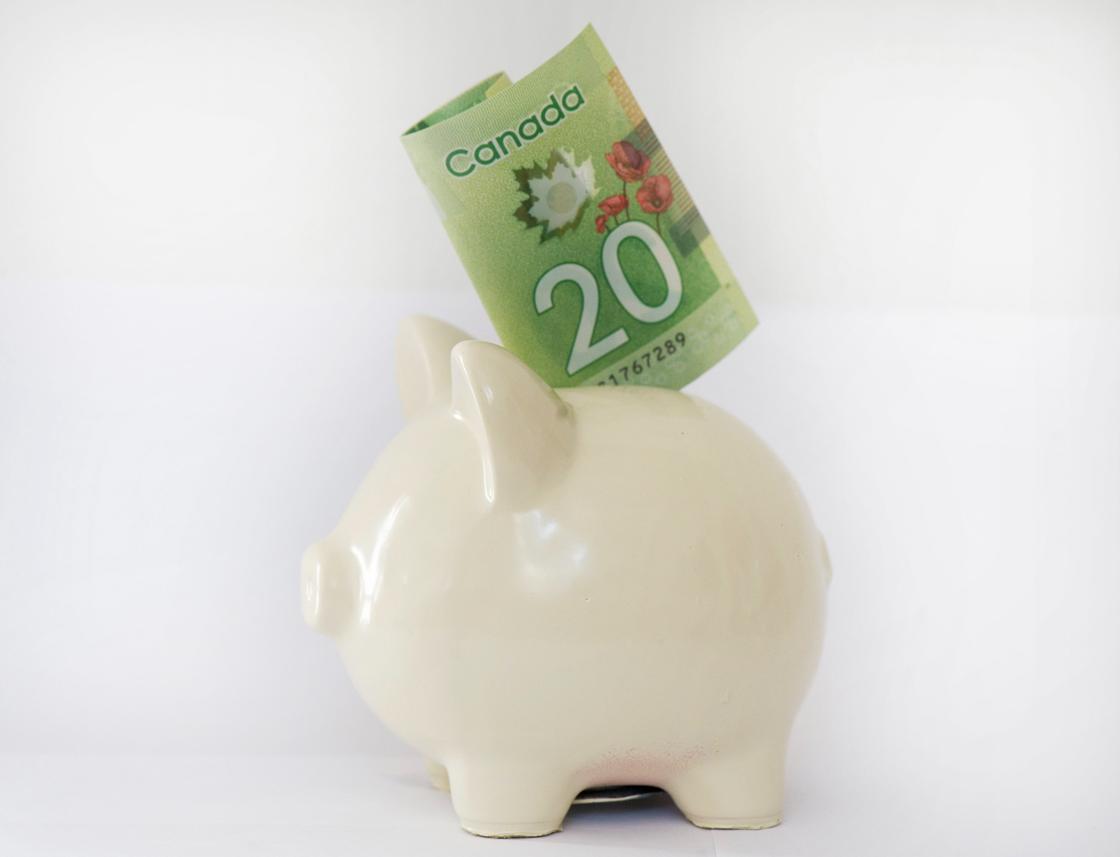
The net worth of Canadian households, calculated as the value of all assets minus all liabilities, rose 1.3 per cent in the first three months of 2026 to reach $18.6 trillion.
The net worth of Canadian households, calculated as the value of all assets minus all liabilities, rose 1.3 per cent in the first three months of 2026 to reach $18.6 trillion.
In March, Canadian analyst Rory Johnston predicted that if the Strait of Hormuz stayed closed the price of oil could hit $200/barrel by summer. Earlier this month, executives from ExxonMobil and Chevron predicted $150 by mid-July.
For Canada, high oil prices are seen as a net positive: for energy sellers, this is true. For everyone else, it will mean crisis. The largest oil shock in history is headed our way and there is nothing we can do to stop it. Johnston warned the economic impact “wi
In March, Canadian analyst Rory Johnston predicted that if the Strait of Hormuz stayed closed the price of oil could hit $200/barrel by summer. Earlier this month, executives from ExxonMobil and Chevron predicted $150 by mid-July.
For Canada, high oil prices are seen as a net positive: for energy sellers, this is true. For everyone else, it will mean crisis. The largest oil shock in history is headed our way and there is nothing we can do to stop it. Johnston warned the economic impact “will be like the pandemic without Covid.” This time, Canada has to get the crisis response right.
My non-partisan report, Outrunning the Storm exploresrisk scenarios at $90, $150 and $200 a barrel, and sets out province-by-province policies and programs, for what can be done to harden Canada’s economy and adapt to the shock. It was crafted with maximum impact and return on investment in mind: every dollar spent now will return $10 to $15 in reduced costs or increased revenue. Even at $90 a barrel, there is no scenario where these investments do not pay back. High oil costs change the landscape of the economy, with alternative investments paying back much faster.
The most important no-cost decision is approving the extension on the Bruce Nuclear Energy licence — essential in tackling Ontario’s energy crisis. Governments should spend the summer racing to shield residents against next winter’s food, fuel and supply shocks: it will deliver a guaranteed return on investment.
The three areas at the greatest risk are: Farm and food, healthcare and Northern First Nations. Manitoba alone is facing a food shock from $500 million to $900 million, and Canadians could face food inflation of 40 per cent.
Every aspect of the agricultural supply chain depends on petrochemicals. To prevent farm failure, emergency farm finance is essential, and so are propane and fertilizer reserves. Shortline railroads must be preserved. An immediate national “Victory Garden” program, launched now, will make a meaningful dent in hunger and access to food.
Health systems face multiple serious shocks – like fuel costs that will undermine rural health. Almost all medical supplies are made from petrochemicals and imported: gowns, gloves, dressings and IV lines. Medication too — insulin, antibiotics, generics, anti-cancer medications and anesthetic. Governments must establish 180-day reserves of medications while ramping up domestic drug production. The federal government must commit to emergency health transfer payments or face preventable deaths.
Without action now, Northern First Nations and Indigenous communities reliant on diesel for energy will face humanitarian crises this winter. Eighteen to 24 months of diesel should be supplied as long-term solutions are implemented.
Alberta will also face severe risks for its non-oil and gas sector, especially agriculture.
In Ontario, car sales, manufacturing and its financial risk sector are at risk. This is industrial capacity Canada cannot lose.
The Government of Canada needs to lead the response now, starting with a critical supply emergency. The report’s solutions tackle different aspects of Canada’s polycrisis, building oil shock resilience and structurally hardening the Canadian economy against future shocks:
Mediating Canada’s current mortgage and insolvency meltdown will stabilize the economy and housing.
A national passenger rail renewal and a rail transition would create or preserve up to 358,000 jobs at risk from auto industry shocks at auto and aviation plants.
A national jobs program to secure 300,000 to 600,000 jobs for desperately needed work, in care and other sectors that are unfunded.
Converting Canada’s waste methane into turquoise hydrogen and carbon materials, would create over 100,000 jobs while reducing Canada’s greenhouse gas emissions by up to 33 per cent while ending emissions from Alberta’s 80,000 abandoned wells.
Canada and the world are already in the most serious crisis since the 1930s. The U.S. is undermining our economy with tariffs, with the stated goal of making us the 51st state. Alberta separatists are helping. Extraordinary times demand the extraordinary measures of wartime-level economic responses. The Depression-era and wartime fiscal and monetary policies of C.D. Howe, Mackenzie King and the Bank of Canada provide a Canadian example of success, as the report details.
We do not have years or months to start acting. We have days. The sooner we act, the better the outcome – and fortune favors the bold.
In a collaborative initiative between the Gastown and Hastings Crossing BIAs, Mexican-owned businesses are celebrated as the city’s Latin population grows.
In a collaborative initiative between the Gastown and Hastings Crossing BIAs, Mexican-owned businesses are celebrated as the city’s Latin population grows.
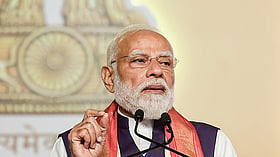
Prime Minister Narendra Modi’s recent appeal, with the eleven specific requests spanning fuel, gold, fertillisers, cooking oil, solar pumps and foreign travel, is being read by many as a prelude to administered price hikes. But there is a larger ambition: it is to make forex conservation a national movement, a civic mobilisation comparable in spirit, if not form, to Mahatma Gandhi’s Salt March of 1930. Gandhi’s genius was to choose salt, an everyday item, symbolically powerful, to make the case
Prime Minister Narendra Modi’s recent appeal, with the eleven specific requests spanning fuel, gold, fertillisers, cooking oil, solar pumps and foreign travel, is being read by many as a prelude to administered price hikes. But there is a larger ambition: it is to make forex conservation a national movement, a civic mobilisation comparable in spirit, if not form, to Mahatma Gandhi’s Salt March of 1930.
Gandhi’s genius was to choose salt, an everyday item, symbolically powerful, to make the case for economic self-reliance and to turn it into a mass movement. Modi’s pitch is to make every Indian feel personally invested in the nation’s economic resilience, when conserving foreign exchange becomes a patriotic duty.
The instinct deserves credit. India’s dependence on imports of crude oil, fertiliser inputs, gold and edible oil is a structural vulnerability that has been diagnosed for decades without adequate remedies. Modi is asking citizens to connect their everyday choices to the national balance of payments.
Lal Bahadur Shastri did something similar with food in 1965, asking Indians to voluntarily fast on Monday evening as the country faced a war and food crisis. Socialist parliamentarian Madhu Limaye pressed the point further in Parliament, arguing that voluntary austerity was a constitutional duty in times of national stress, and that the political class must lead by example rather than just preach. The tradition of appealing to civic solidarity during economic emergencies is honourable, and has worked before.
But apart from the conviction he carried with the masses, the moral force of Gandhi’s salt satyagraha movement came from the fact that the salt tax was visibly, outrageously regressive. It hurt the poor more, and Gandhi chose salt for precisely that reason. On the other hand, the forex conservation movement is not against injustice and is itself regressive. Because it asks those with the least to bear a disproportionate share of the pain.
Look at the eleven requests through this lens. Deferring foreign vacations and destination weddings abroad is something only the affluent need consider. It is irrelevant to the poor. Shifting to an electric vehicle presumes having the capital to buy one. Work-from-home is an option for white-collar professionals, not daily-wage earners. Asking to reduce edible oil consumption falls hardest on those with the least since cooking oil is not a luxury.
Some of the requests are well-targeted at the wealthy; others inadvertently ask those with the smallest margins to absorb a disproportionate share of the sacrifice.
The economic backdrop makes the equity question more urgent. India’s three state-owned oil marketing companies are losing Rs 1,600–1,700 crore a day, with cumulative losses over the past 10 weeks crossing Rs 1 lakh crore. Negative margins stand at Rs 14 per litre on petrol and Rs 18 on diesel. Excise duty cuts to cushion the blow are costing the treasury Rs 14,000 crore a month.
Fertiliser subsidies, budgeted at Rs 1.71 lakh crore, face an overrun of Rs 35,000–50,000 crore. And this crisis lands on top of an already strained fiscal position: in FY26, direct tax receipts fell short of revised estimates by Rs 80,594 crore. The FY27 direct tax target is Rs 26.97 lakh crore, a whopping 15 per cent jump over FY26 actuals. But revenues are already slowing down.
Here lies a structural paradox in Modi’s appeal. Some of what he asks, like reducing gold imports and foreign travel, will genuinely help the current account without hurting domestic output. But fuel price hikes are categorically different: they are inflationary, compress real household incomes across the board, and will force the Reserve Bank of India into the uncomfortable trade-off between defending the rupee and protecting growth.
There is also a cognitive dissonance in the government trying to suppress prices but also asking citizens to behave as if prices are too high.
There is now pressure on tax mobilisation. The Income Tax Department’s Central Action Plan for 2026–27 directs field officers to prioritise recovery of Rs 2.57 lakh crore in demands upheld at appeal, track the top 10,000 PAN-wise defaulters, and classify Rs 7.88 lakh crore in large unclassified arrears by July.
The scale of what has gone uncollected is striking: confirmed, undisputed tax demands of over Rs 9 lakh crore sit in arrears, concentrated overwhelmingly in Mumbai (Rs 1.65 lakh crore) and Delhi (Rs 1.21 lakh crore) — the wealthiest urban centres in the country. In FY26, the actual cash recovery, against a target of Rs 5.04 lakh crore, was only Rs 85,000 crore.
The government cannot credibly ask families to cut their cooking oil consumption while Rs 9 lakh crore in confirmed tax dues from large corporate and individual defaulters remain uncollected year after year. Ensuring that tax demands are recovered, using whatever digital surveillance, would be a powerful signal and lend some credence to the prime minister’s call for a national sacrifice.
This is also a moment to reconsider India’s tax architecture. Is it structurally progressive enough? India abolished wealth tax in 2015 and has had no estate or inheritance duty since 1985. The top one per cent of Indians hold an estimated 40 per cent of the nation’s wealth.
A temporary crisis surcharge on very high incomes, a windfall levy on entities benefiting from the disruption — commodity traders, domestic refiners — or a carefully designed wealth tax would serve multiple purposes: raising revenue to offset the fiscal haemorrhage, making burden-sharing visibly equitable, and giving the mass movement the moral authority it needs.
Madhu Limaye’s argument was precisely this: austerity without equity is not patriotism, it is the displacement of pain downward.
We also need to examine our resilience and risk buffers. IEA (International Energy Agency) member nations hold ninety days of strategic petroleum reserves as a treaty obligation. Europe built LNG import terminals and diversified supply at emergency speed. Japan and South Korea pass through price signals rapidly and hedge exposure through financial markets.
India’s strategic reserves cover roughly nine to ten days. India has had almost no institutional buffer to deploy. Which is why the response is perforce an appeal to voluntary restraint rather than a drawdown of non-existent reserves.
Modi’s forex conservation call will age badly if fuel prices are quietly raised while wealthy defaulters continue to defer confirmed tax dues, and the poor find cooking oil more expensive.
Gandhi’s movements succeeded because they were morally unimpeachable in their equity. If this is to be India’s forex satyagraha, the design must match the ambition. It must be progressive in burden sharing, rigorous in enforcement, structural in remedy and honest about the price signals that no amount of voluntary restraint can ultimately replace.
Ajit Ranadeis a noted economist. More of his writing may be found here
On Thursday, federal appeals court ruled that President Trump’s 10 percent global tariff is likely legal, deciding it can remain in place until the court delivers its final word. Trump imposed the new levy after the Supreme Court invalidated his previous emergency tariffs as exceeding his authority. Last month, a federal trade court found the new tariff unlawful and blocked officials from forcing a group...
On Thursday, federal appeals court ruled that President Trump’s 10 percent global tariff is likely legal, deciding it can remain in place until the court delivers its final word. Trump imposed the new levy after the Supreme Court invalidated his previous emergency tariffs as exceeding his authority. Last month, a federal trade court found the new tariff unlawful and blocked officials from forcing a group...
Before the conflict began, inflation was at 2.4%, but the closure of the strait of Hormuz has affected energy pricesUS inflation jumped to an annual rate of 4.2% in May, the third consecutive monthly increase since the start of the Iran war and a three-year high, as Americans continue to face steep oil prices.Prices have increased sharply over the past several months, rising at an annual rate of 3.3% in March before going up to 3.8% in April. In February, before the conflict began, inflation was
Before the conflict began, inflation was at 2.4%, but the closure of the strait of Hormuz has affected energy prices
US inflation jumped to an annual rate of 4.2% in May, the third consecutive monthly increase since the start of the Iran war and a three-year high, as Americans continue to face steep oil prices.
Prices have increased sharply over the past several months, rising at an annual rate of 3.3% in March before going up to 3.8% in April. In February, before the conflict began, inflation was at 2.4%.

 Login
Login