The ocean floor is covered with dead whales–but it is everything but a biohazard. When a whale dies, its body sinks to the ocean floor in a process called whale fall. The carcass then becomes its own complex ecosystem, nourishing and housing all types of marine life. Whale bones can then fossilize over time, leaving behind traces of what life looked like millions of years ago.
Now, scientists in the Indian Ocean have discovered an enormous whale graveyard. The collection of bones and communit
The ocean floor is covered with dead whales–but it is everything but a biohazard. When a whale dies, its body sinks to the ocean floor in a process called whale fall. The carcass then becomes its own complex ecosystem, nourishing and housing all types of marine life. Whale bones can then fossilize over time, leaving behind traces of what life looked like millions of years ago.
Now, scientists in the Indian Ocean have discovered an enormous whale graveyard. The collection of bones and communities supported by these whale falls stretches 745 miles across the seafloor 13,779 to 22,965 feet deep. The oldest whale fossil is roughly 5.3 million years old and the graveyard even includes a new species of extinct whale. The findings are detailed in a study published today in the journal Nature.
“The deep sea is far from barren—it’s dynamic, full of life and history,” Dr. Xiaotong Peng, a study co-author and engineer at the Chinese Academy of Sciences (CAS), tells Popular Science. “When a whale dies and sinks, it becomes an oasis, supporting unique communities for decades or centuries.”
In 2023, CAS team was studying the geology and biology of the southeast Indian Ocean’s hadal zone—the ocean’s deepest zone, extending from 19,680 to 36,000 feet-deep. While inside of a submersible, the divers spotted the first whale fossil 22,972 feet below the surface.
Recovery of whale fossil bones using the manipulator arm of the Chinese submersible Fendouzhe on the deep seafloor of the Diamantina Zone, a deep-sea rift in the Indian Ocean. Image: Global TREnD, IDSSE.
According to study co-author and geologist Dr. Peng Zhou, the remains were actually “quite easy to find” once the team began to search. “They looked unusual, so when the dive scientists first encountered them, they wanted to figure out what they were,” Zhou tells Popular Science.
Peng adds, “We immediately pivoted our objectives to systematically map, document, and sample these whale remains. So it really came down to curiosity meeting the technological capability to explore depths that had been largely inaccessible.”
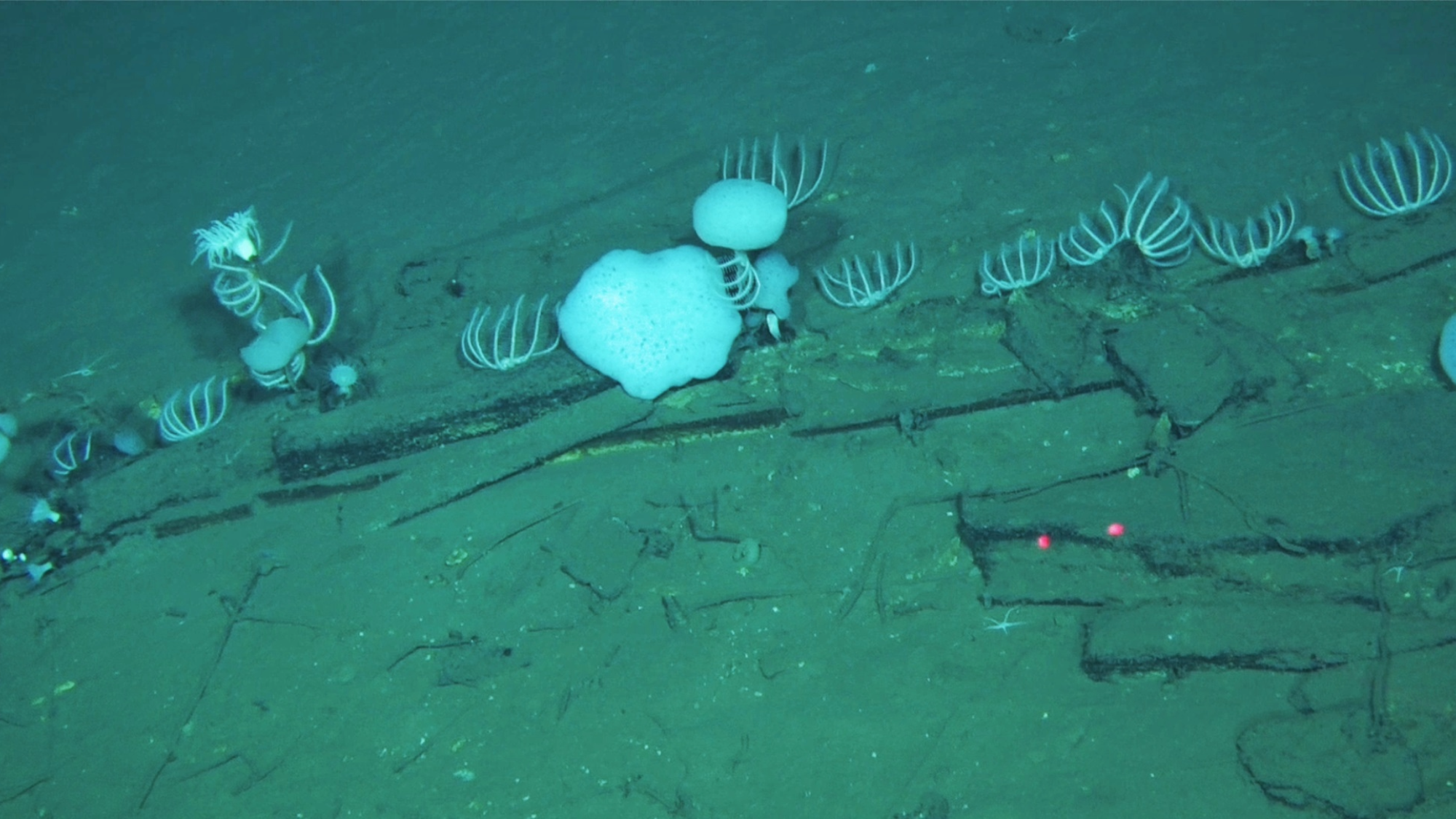
They documented 485 whale fossil sites from five active whale falls. The whale carcasses are home to a large community of jellyfish, brittle stars, bone-boring worms, and bivalves. Some of these species living in the carcasses may even be new to science, but that has not been confirmed. The oldest have been in the area for about 5.3 million years ago (the Pliocene era).
Fossil skulls of three beaked whales recovered from the seafloor at hadal depth of the Diamantina Zone, 6,584–-6,878 meters. The image shows two extinct beaked whale species, Pterocetus diamantinae sp. nov. (new species to science, on the top) and Izikoziphius rossi (the second skull), as well as an extant Andrews’ beaked whale, Mesoplodon bowdoini (two skulls on the bottom). Image: Global TREnD, IDSSE
Most of the whale fossils come from several species of deep-diving beaked whales. Some of the bones belong to beaked whales that still exist today. Others are from extinct whales, including a species new to science named Pterocetus diamantinae.
“Finding both extinct genera like Pterocetus and living species like Mesoplodon bowdoini preserved together in the same region, across 1,200 kilometres [745 miles] of seafloor at such extreme depths—that was truly unexpected,” says Zhou.
This fossil record is also continuous, so the team can track the population dynamics and evolution of deep-diving whales over time.
“These fossils give us a direct window into the Pliocene, about 5.3 million years ago,” study co-author and biologist Dr. Xikun Song tells Popular Science. “They show that beaked whales were already specialized deep‑divers in the Indian Ocean by that time. Beyond the whales themselves, the associated fossil fauna also tells us about the structure of ancient deep‑sea whale‑fall communities and broader deep‑sea biodiversity back then.”
This whale graveyard could reshape our understanding of both living and extinct beaked-whales. There are roughly 24 species of beaked-whale living today. However, their deep-sea habitat, likely low population numbers, and reclusive behavior make them difficult to study. Having such a large fossil deposit like this could help explain more about their reclusive lives.
The fossils are also shedding more light on the mysterious ecosystems living at the ocean’s deepest depths.
“Discoveries like this are possible because of curiosity, collaboration, and technology,” Peng concludes. “We’ve barely scratched the surface of the deep ocean, and there’s so much more waiting to be found.”
Evolution is responsible for Earth’s stunningly diverse spectrum of life, but that wasn’t always the case. In fact, the earliest eras of living organisms were comparatively boring. The earliest known animals date back about 635 million years (during the Ediacaran Period), yet they look remarkably similar to their descendents 96 million years later at the dawn of the Cambrian.
Why did evolution remain so stable for so long? It might be simply because Earth’s first creatures simply weren’t havi
Evolution is responsible for Earth’s stunningly diverse spectrum of life, but that wasn’t always the case. In fact, the earliest eras of living organisms were comparatively boring. The earliest known animals date back about 635 million years (during the Ediacaran Period), yet they look remarkably similar to their descendents 96 million years later at the dawn of the Cambrian.
Why did evolution remain so stable for so long? It might be simply because Earth’s first creatures simply weren’t having much sex.
“Life was pretty nice during the Ediacaran, so the need for sex was rather limited,” Emily Mitchell, a paleozoologist at the University of Cambridge, explained in a statement. “There was relatively little competition, so there was no real pressure to change anything.”
Along with her colleague Andrea Manica, Mitchell recently combined spatial analysis and laser scanning with machine learning to analyze 574-million-year-old fossils excavated from southernmost Newfoundland’s Mistaken Point. Their findings, published today in the journal Nature Ecology & Evolution, show that the earliest animals’ reliance on asexual reproduction kept things largely uniform, and reduced the struggle for resources.
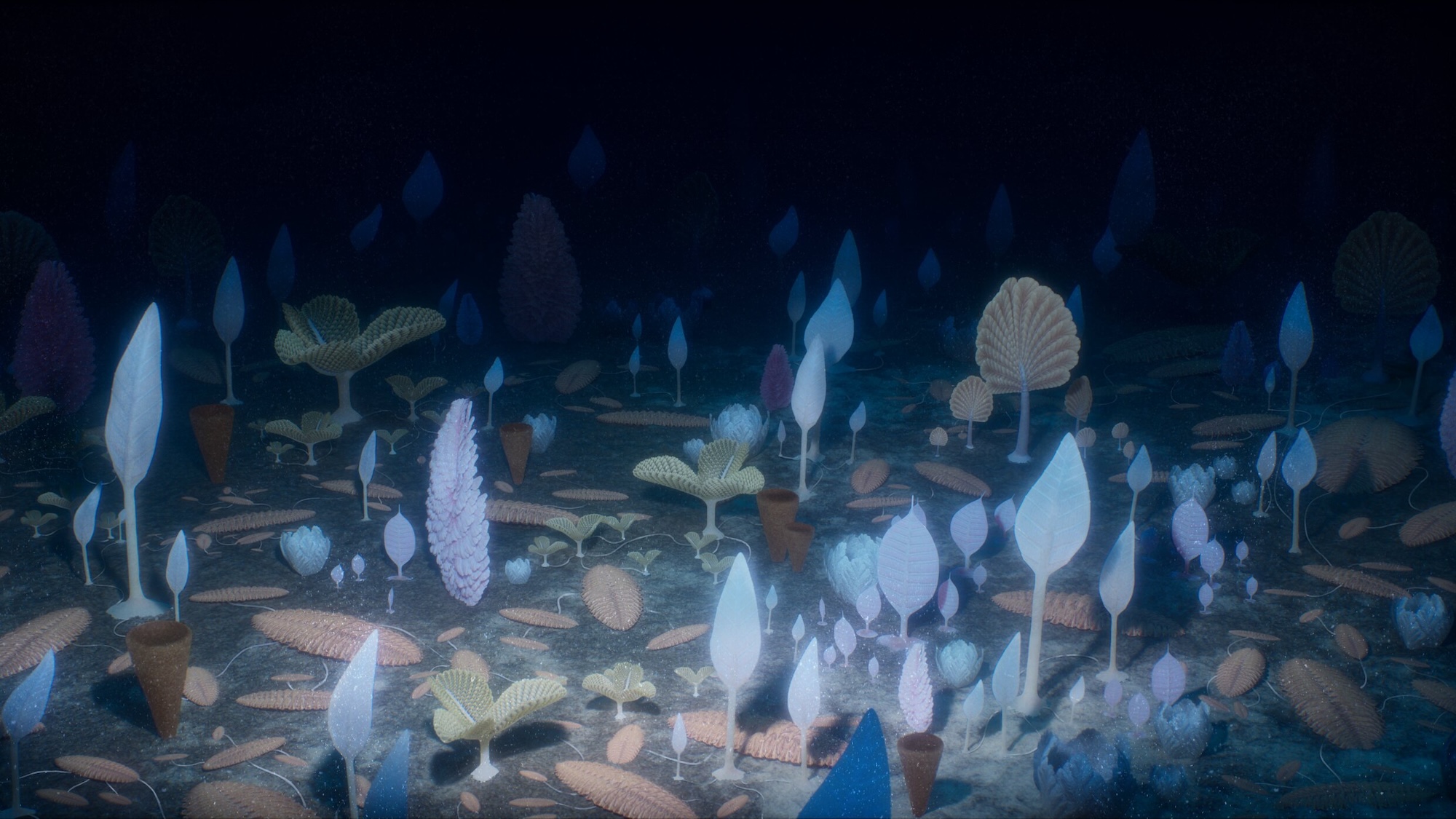
Fossils of Fractofusus, an animal from the Ediacaran period. Credit: Emily Mitchell
They offered Fractofusus as a prime example. At over 6.5 feet tall, the fern-like creatures dwarfed most of their oceanic relatives and likely lacked organs or mouths. They also absorbed food from the surrounding water while remaining anchored in place, reproducing through clones distributed by stolons or runners like present-day strawberry plants.
“If you’re connected to your neighbor by these runners, then you’re sharing nutrients and you don’t need to compete with them,” said Manica.
From there, the team constructed a machine learning model to approximate how Fractofusus and its fellow Ediacaran animals possibly behaved through varying reproductive strategies. The program’s neural network then identified simulations that aligned with known fossil record diversity patterns. Known as Approximate Bayesian Computation let them basically travel back in time to estimate how animals proliferated and squared off for limited resources.
They now believe the Ediacaran Period’s overall tranquility (and sexlessness) began to get complicated as species gradually migrated from deep waters to shallower regions. Once there, ancient animals endured new stressors like temperature swings, nutrient deficits, tides, and even storms. Life then adapted to face these increased threats—and left behind more fossils. The story they tell indicates that environmental stress often precedes a rise in sexual reproduction versus other methods of procreation.
“When that happens, we can see a massive increase in dispersal distances as animals attempt to colonize new areas due to an increase in competition,” said Mitchell.
These shifting trends eventually ushered in what’s known as the Ediacaran “second wave” of animal evolution, which further amplified millions of years later during the Cambrian era, as animals started physically moving through their environments.
“If you’re suddenly in an environment where you’re essentially getting killed a couple of times per year, then that changes everything,” Mitchell explained.
Following a record-breaking nesting season in 2025, the Great Lakes’ first piping plovers (Charadrius melodus) of the season have hatched. The nonprofit Great Lakes Piping Plover Recovery Effort reported that 12 chicks hatched in Wisconsin and Michigan in late May, with more expected to hatch.
Piping plovers are small migratory shorebirds. The United States is home to three piping plover populations. One lives along the rivers and lakes of the northern Great Plains, another along the East Coa
Following a record-breaking nesting season in 2025, the Great Lakes’ first piping plovers (Charadrius melodus) of the season have hatched. The nonprofit Great Lakes Piping Plover Recovery Effort reported that 12 chicks hatched in Wisconsin and Michigan in late May, with more expected to hatch.
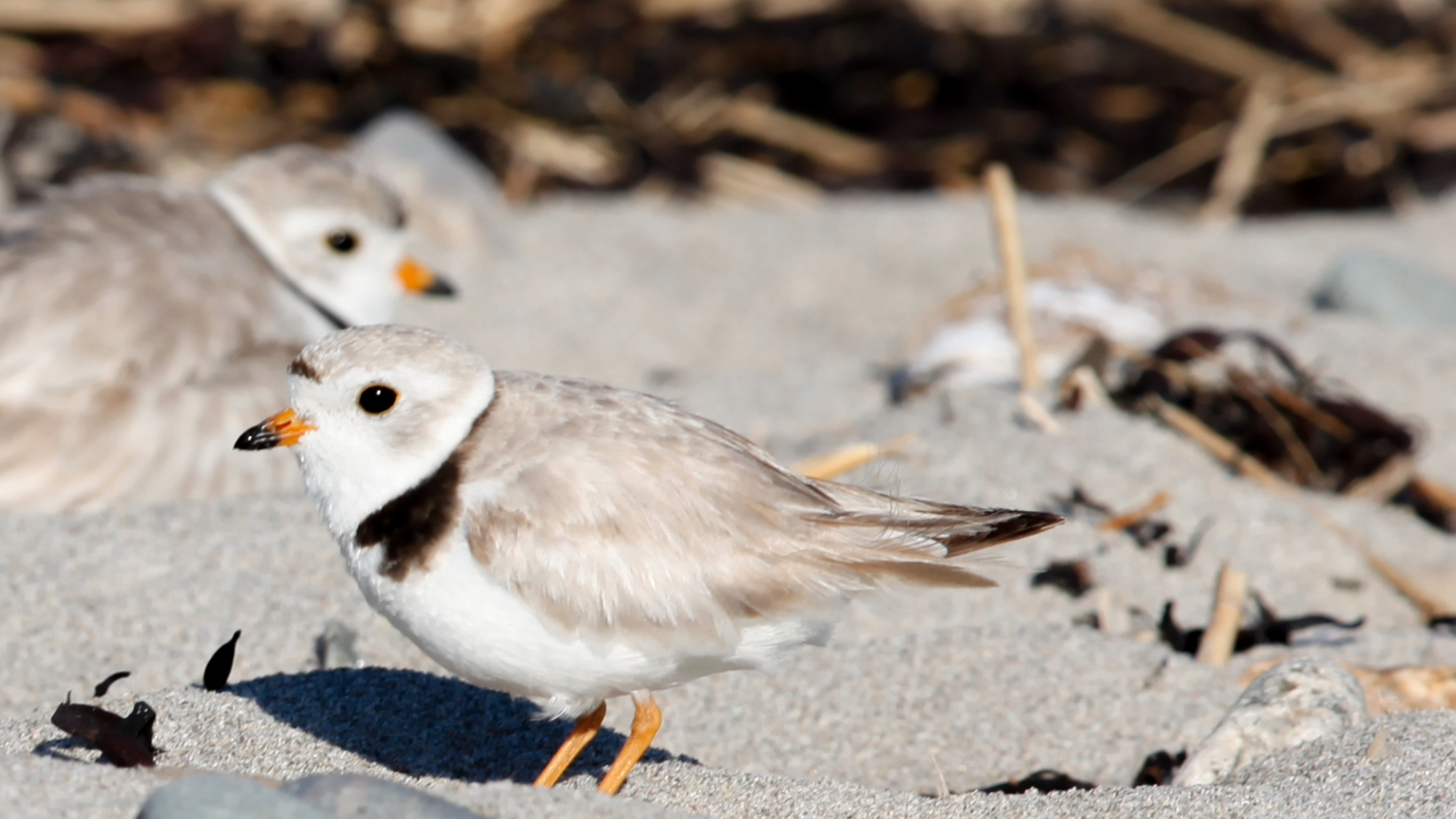
Piping plovers are small migratory shorebirds. The United States is home to three piping plover populations. One lives along the rivers and lakes of the northern Great Plains, another along the East Coast, and one in the Great Lakes. They weigh about 1.5 to 2.25 ounces and are only 5.5- to 7-inches long, and can be nearly invisible until they sprint short distance, stop, and then tilt forward to pull an insect or worm up from the sand.
The chicks are also considered precocial birds like turkeys. Within hours of hatching, piping plowers chicks can run around and forage for themselves.
Despite this independence at a young age, the species has struggled. The International Union for the Conservation of Nature (IUCN) lists them as Near Threatened, and the Great Lakes population is listed as endangered under the Endangered Species Act. Nearly 800 nesting pairs once lived along the shores of the Great Lakes, but that number plummeted to 13 in 1990. According to the Great Lakes Piping Plover Recovery Effort, the population decline is partially due to nest disturbance and predation as well as habitat deterioration.
The population has grown to over 80 nesting pairs thanks to their federal protection and conservation efforts. Last year was the fourth consecutive year of growth, with 88 unique nesting pairs recorded in the Great Lakes.
“It is a joy to observe them racing around in all directions, foraging as soon as they are hatched,” Mary Lundeberg, a photographer, volunteer and co-author of Raised to Be Wild: The Tale of a Great Lakes Piping Plover, told MLive. “Being in the wild with these tiny creatures ignites a piece of the wild in me and brings a smile to my face.”
When observing piping plovers, it’s important to stay a safe distance away for the sake of the birds. Michigan’s Friends of Sleeping Bear Dunes recommends using the Rule of Thumb—if you can’t cover-up a bird with your thumb when held at arm’s length, you are too close.
The Great Lakes Piping Plover Recovery Effort also likes to remind birdwatchers to watch their step. Chicks don’t observe closed areas, so they could be anywhere on the beach.
Since the mere presence of a dog can cause them to abandon their nests, keeping dogs on a leash and out of nesting sights is important for the bird’s wellbeing. The plovers often perceive pets as predators, so that heightened danger awareness can make the adults abandon eggs and chicks.
Many Great Lakes beaches will have areas marked off with orange rope or fencing to protect plover nests, with eggs hidden in rocks and sand. Visitors can still walk the shoreline, but are advised to steer clear of the roped off areas.
For decades, many paleoarchaeologists believed Neanderthals went extinct largely because they just weren’t intelligent enough to compete with their Homo sapien relatives. However, mounting historical evidence suggests this was far from the case. The latest discovery to help the Neanderthal’s reputation ion? The ancient hominins knew when and how to safely snack on shellfish potentially thousands of years before their human descendants.
The findings published today in the Proceedings of the Na
For decades, many paleoarchaeologists believed Neanderthals went extinct largely because they just weren’t intelligent enough to compete with their Homo sapien relatives. However, mounting historical evidence suggests this was far from the case. The latest discovery to help the Neanderthal’s reputation ion? The ancient hominins knew when and how to safely snack on shellfish potentially thousands of years before their human descendants.
The findings published today in the Proceedings of the National Academy of Sciences focus on Neanderthals who lived at Los Aviones Cave in present-day Cartagena, Spain. Researchers discovered the remains of 115,000-year-old mollusks including gastropods and limpets that were clearly harvested as food. This contradicts past theories about Neanderthals, which suggested they had difficulty adapting to coastal environments and utilizing marine resources. What’s more, the Neanderthals here didn’t eat shellfish in large quantities all the time. Instead, they knew to make the most of them between November and April during the colder seasons.
Los Aviones Cave in Spain is a notable Neanderthal archaeological site. Credit: ICTA-UAB
“They consumed marine resources throughout the year, but with a very clear preference for winter and autumn months,” explained Asier García-Escárzaga, a study co-author and archaeologist at Spain’s Universitat Autònoma de Barcelona Institute of Environmental Science and Technology.
García-Escárzaga says this seasonal pattern often followed by more modern human populations in Europe wasn’t a coincidence. The winter reproduction cycle of many mollusks also results in higher amounts of meat as well as improved flavor and texture. Summer months increase health risks like toxic algae contamination or rapid spoiling.
But how did researchers determine exactly when these shellfish were harvested? It all has to do with the mollusks’ shell carbonate and their oxygen isotopic levels. This level fluctuates depending on seawater temperature and functions like a “prehistoric thermometer,” according to García-Escárzaga.
The findings reveal that Spain’s coastal Neanderthals relied on a diverse diet featuring high-quality oceanic proteins filled with Omega-3 and zinc, both of which aid in reproductive health and brain development. With that in mind, it’s entirely possible that humans’ closest evolutionary ancestors influenced our own love of shellfish.
“What we see at Los Aviones is a fully modern subsistence strategy,” García-Escárzaga and his colleagues wrote in their study.
Neanderthals (Homo neanderthalensis) were once considered to have been extremely primitive and unsophisticated compared to us humans (Homo sapiens). However, continued research into our long-lost cousins has revealed that these extinct hominids were not quite as archaic as they seemed to early anthropologists.
While archeologists have found that Neanderthals pulled out food from their teeth with toothpicks and may have even used medicinal plants as antibiotics, researchers still aren’t sure
Neanderthals (Homo neanderthalensis) were once considered to have been extremely primitive and unsophisticated compared to us humans (Homo sapiens). However, continued research into our long-lost cousins has revealed that these extinct hominids were not quite as archaic as they seemed to early anthropologists.
While archeologists have found that Neanderthals pulled out food from their teeth with toothpicks and may have even used medicinal plants as antibiotics, researchers still aren’t sure about the extent of their medical care abilities. Now, new research published in the journal PLOS One indicates that they were capable of complex dental interventions, which adds a series of cognitive and physical updates to the Neanderthal story.
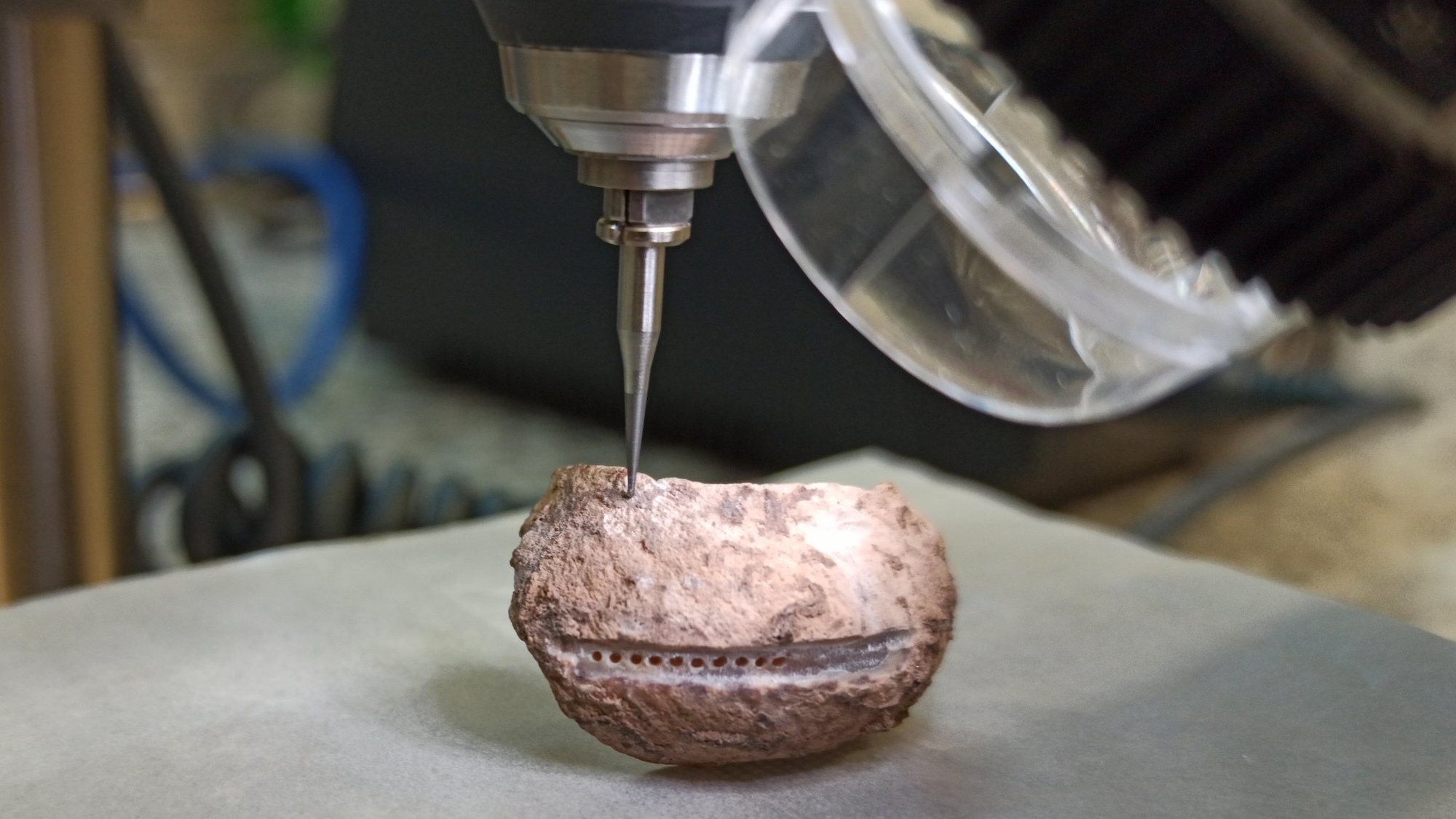
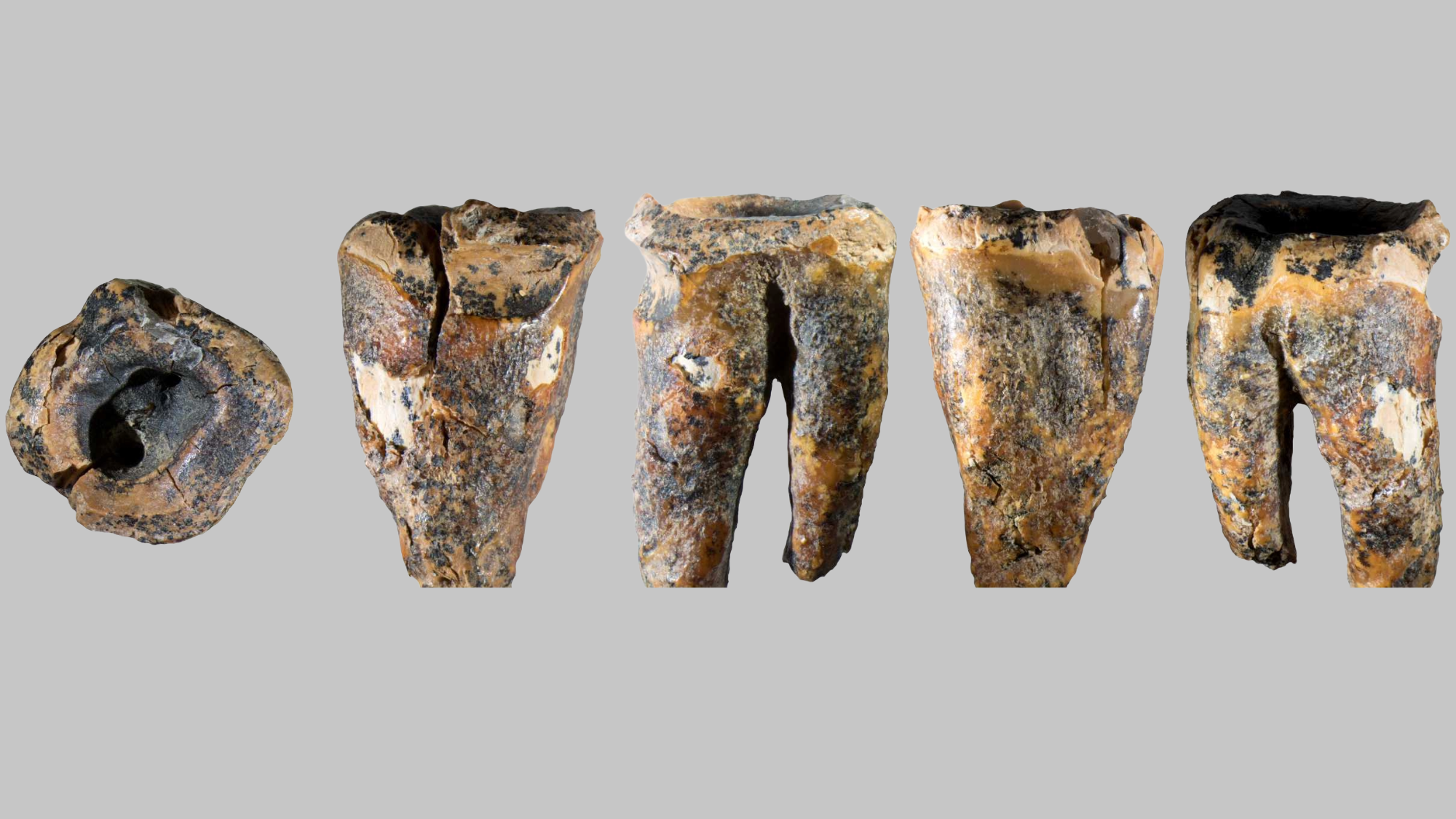
A team digging in Chagyrskaya Cave in southern Russia’s Altai region found a single Neanderthal molar that is approximately 59,000-years-old. The tooth features toothpick grooves along its sides, and a deep hole in its center that reaches into the pulp cavity. Tooth pulp is the jelly-like material that holds blood vessels, nerves, and connective tissue.
Using three modern human teeth, the team showed that it’s possible to make a hole of the same shape and same patterns of microscopic grooves by drilling with a stone point similar to tools that were previously discovered in Chagyrskaya Cave. Andrey Krivoshapkin, a co-author of the study and a researcher at the Institute of Archaeology and Ethnography at the Siberian branch of the Russian Academy of Sciences, tells Popular Science that the team eliminated all other interpretations.
For example, “natural wear from chewing could expose a pulp chamber over time, but it would not widen the chamber or create a deep, irregular concavity with smooth, rounded edges. Dental trauma, such as a fracture, would leave sharp, irregular margins and crackings, not the polished, rounded contours we see,” he explains.
They also ruled out taphonomic, geological, and chemical processes. “So while we always remain open to new interpretations, the evidence overwhelmingly supports deliberate human intervention,” he says.
Krivoshapkin and his colleagues also identified ante-mortem (before death) wear on the concavity walls and edges, showing that after the hole was made, the tooth continued to be used. In other words, the Neanderthal continued to chew and process materials with this tooth. According to Krivoshapkin, if the drilling had happened after the individual had died, the edges of the hole would be sharp and fresh and not polished in the slightest.
“So the wear proves two things: first, the procedure was performed on a living person, and second, the intervention was successful enough that the tooth continued to function. That is what makes this a medical treatment rather than just a curious modification,” he explains.
The team also found changes in dentin mineralization in the tooth that aligns with serious cavities. Ultimately, Krivoshapkin and his colleagues argue that the hole in the tooth represents a Neanderthal dental operation that dug out the infection. And yes, it would have been painful—they didn’t have laughing gas 59,000 years ago. But as with dental surgery today, getting rid of the damaged part of the tooth lessens the pain from the infection.
This intervention carries a whole set of implications about Neanderthal cognitive abilities.The tooth suggests that Neanderthals potentially could identify the source of pain, decide how to treat it, use the necessary manual dexterity to execute the operation, and withstand the intervention’s pain to diminish future pain. It represents the first time such behavior has been shown in non Homo sapiens, and it predates the earliest-known human example by over 40,000 years.
This abstract causal reasoning in Neanderthals “goes far beyond the instinctive self‑medication seen in other primates,” Krivoshapkin explains. “Along with other recent discoveries this finding challenges the old stereotype of Neanderthals as cognitively inferior to us, showing that they were not failed humans but successful, innovative people in their own right. And on a deeply human level, it reminds us that the impulse to treat disease and relieve suffering is not uniquely modern, it is ancient and part of our shared hominin heritage.”
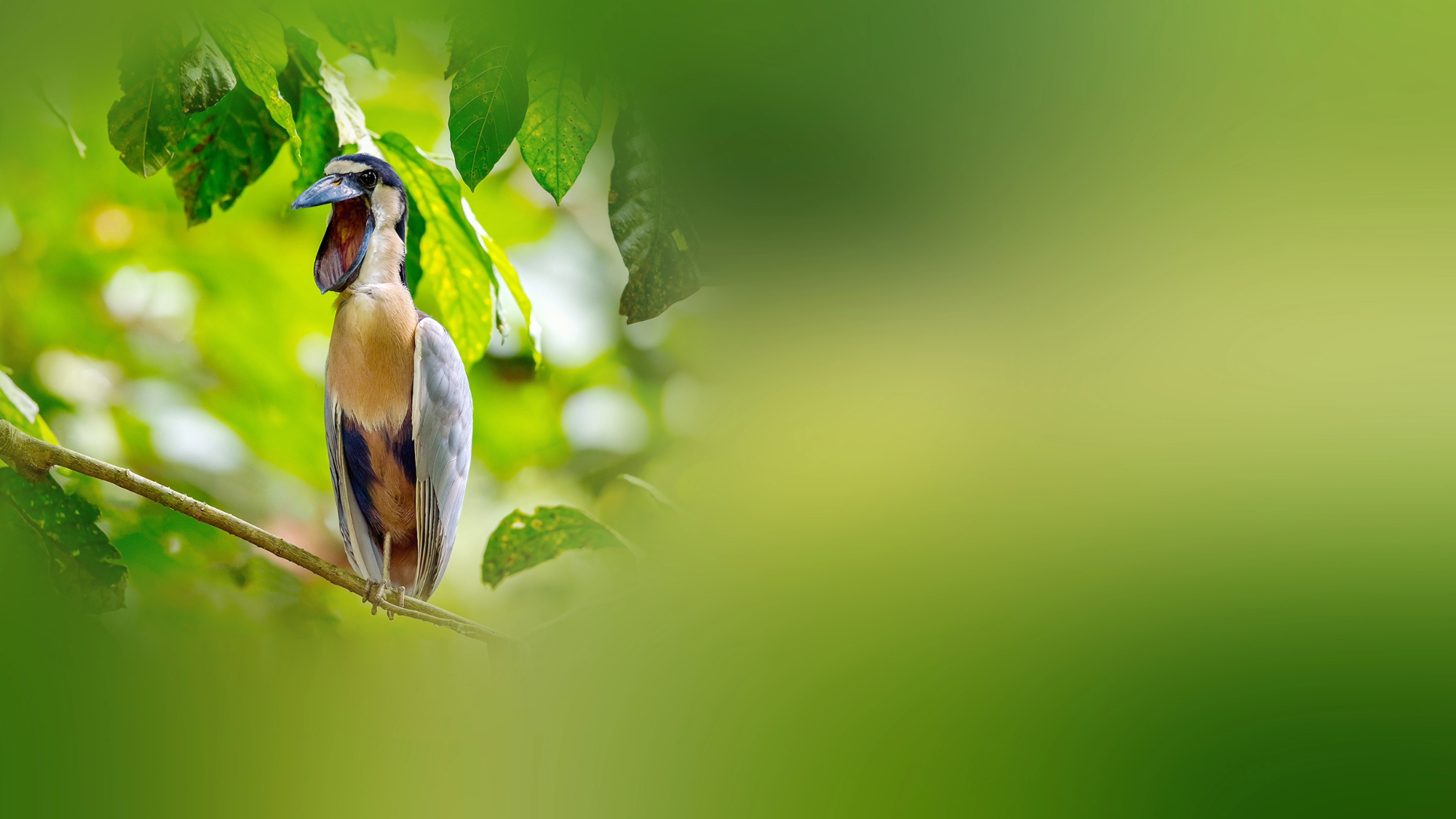
When you think of a heron, chances are you imagine an elegant, long-legged bird posing majestically on the edge of a body of water. If so, it’s time to set the record straight—not all herons are swan-necked ballerinas. In fact, the boat-billed heron (Cochlearius cochlearius) looks like someone stuck the head of a large bird onto the body of a small one, and you can forget about a graceful neck.
Roger Williams Park Zoo & Carousel Village in Rhode Island is home to a boat-billed heron. Ima
When you think of a heron, chances are you imagine an elegant, long-legged bird posing majestically on the edge of a body of water. If so, it’s time to set the record straight—not all herons are swan-necked ballerinas. In fact, the boat-billed heron (Cochlearius cochlearius) looks like someone stuck the head of a large bird onto the body of a small one, and you can forget about a graceful neck.
Roger Williams Park Zoo & Carousel Village in Rhode Island is home to a boat-billed heron. Image: Roger Williams Park Zoo & Carousel Village.
As for its bill, the large and rather flat appendage explains the bird’s name, and is extremely sensitive. “These unique birds get their name from its broad bill that resembles the hull of a boat, perfect for snatching up fish, crustaceans, insects, and amphibians,” the Roger Williams Park Zoo & Carousel Village in Rhode Island writes in a social media post, with pictures of a rather judgemental-looking boat-billed heron. “[Their] large, dark eyes are also adapted for nighttime hunting.”
The funny-looking bird doesn’t migrate and lives close to fresh or saltwater in Mexico, Central America, and parts of South America, and are usually solitary animals. They only come together to mate, and remain monogamous throughout the breeding season. Hatchling boat-billed herons come into this world blind and, unsurprisingly, completely rely on their parents, who feed them for between six to eight weeks before leaving.
Boat-billed herons are solitary animals, but are monogamous with their mates during breeding season. Image: Shutterstock.
These birds feature a type of feather called “powder down.” Instead of molting, their tips slowly turn into waterproofing powder. Interestingly, boat-billed herons produce vocalizations that sound a bit like human hand claps. And right when you think they can’t get any weirder, adults feature a black crown that makes them look like emo queens.
Though their population is decreasing, according to the IUCN red list, they are classified as a species of least concern, which is as good as it gets. However, not all heron species are doing as well as the boat-billed heron. The white-bellied heron (Ardea insignis) is considered critically endangered and the great white heron (Ardea occidentalis) is endangered.
Let’s face it, sunscreen is important to our health, but can really be a drag. Some feel greasy, they wear off after only two hours, and finding the right one can feel like a game of whack-a-mole. Certain ingredients can also pollute the planet’s critical coral reefs, so scientists around the world are looking to nature to create new formulas. Pollen could serve as an eco-friendly sunscreen solution, but there could be an even smaller source—bacteria. Escherichia coli, better known as E. coli, m
Let’s face it, sunscreen is important to our health, but can really be a drag. Some feel greasy, they wear off after only two hours, and finding the right one can feel like a game of whack-a-mole. Certain ingredients can also pollute the planet’s critical coral reefs, so scientists around the world are looking to nature to create new formulas. Pollen could serve as an eco-friendly sunscreen solution, but there could be an even smaller source—bacteria. Escherichia coli, better known as E. coli, may help create an ultra violet (UV) compound that can be used in sunscreens. The findings are detailed in a study published today in the journal Trends in Biotechnology.
To survive relentless sunlight in the open ocean, fish can make their own natural sunscreen with a UV-protective compound called gadusol. This rare molecular compound is found in the eggs of several fish species, but is scarce elsewhere in nature and not easy, efficient, or environmentally friendly to extract.
“We want to find a scalable and greener way to produce gadusol,” Ping Zhang, a study co-author and biochemist at Jiangnan University in China, said in a statement.
Zhang and the team turned microbes into mini chemical factories, instead of taking them from nature. To do this, they rebuilt a zebrafish’s pathway for making gadusol inside of an E. coli bacterium. They then tweaked the E. coli’s genetics and growing conditions. The alterations increased the gadusol yield by nearly 93 times—from 45.2 milligrams per liter up to 4.2 grams per liter. The lab-made compound is also showing promise in early UV-protection tests.
Producing gadusol through a microbial cell factory for sun protection. Image: Science Center for Future Foods, Jiangnan University.
“Achieving this level of production in the lab is very promising,” says Zhang. “It suggests that we may be able to meet future demand for natural sunscreen ingredients through microbial production.”
In other experiments, gadusol showed that it may offer more than just protection from the sun. It showed antioxidant activity comparable to vitamin C, suggesting that gadusol may help neutralize cell-damaging free radicals that can result from excess sun exposure.
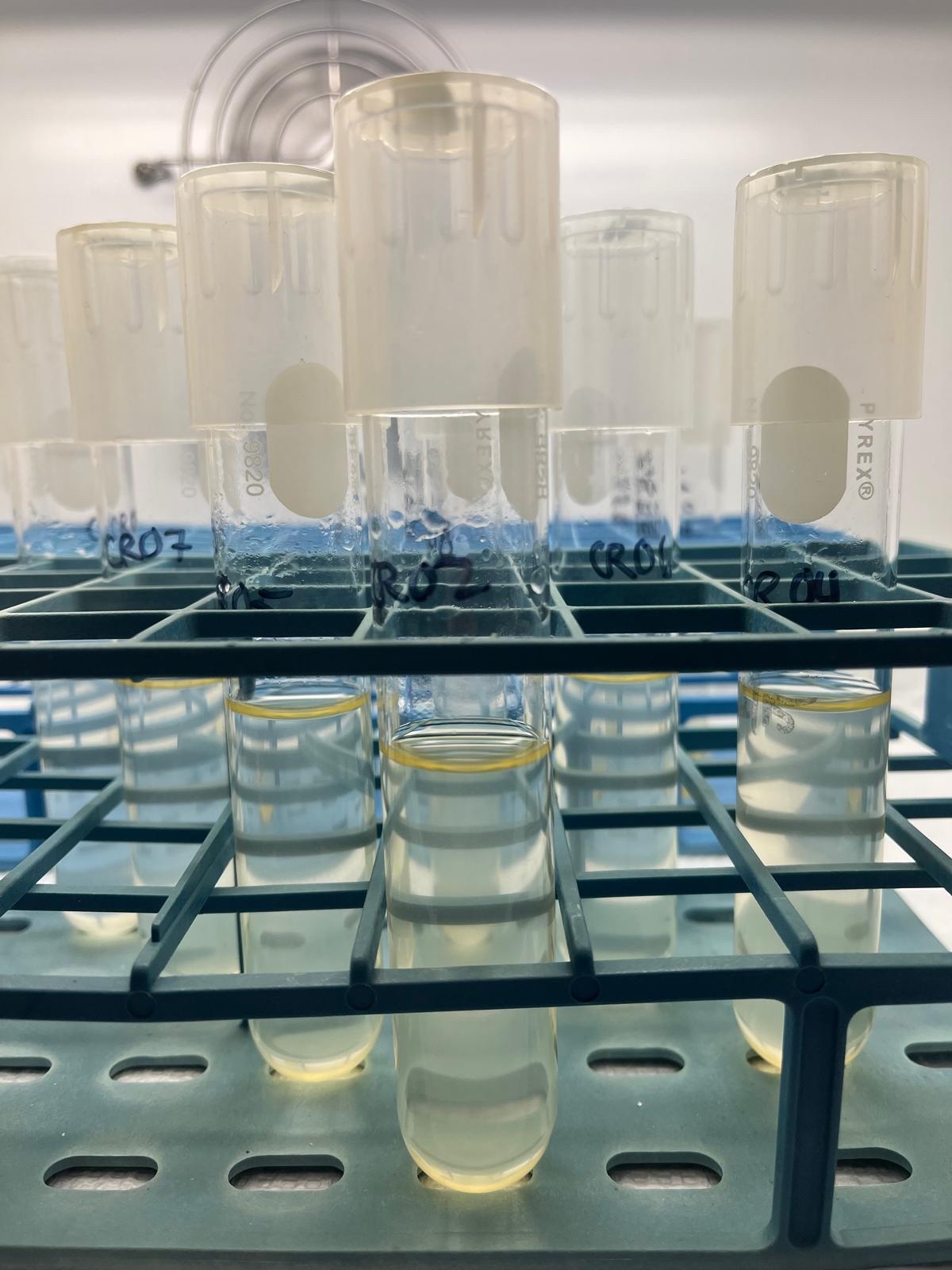
These antioxidant properties also inspired a color-based screening test that allows researchers to quickly identify bacterial strains that produce more gadusol. When the gadusol neutralizes free radicals, a purple chemical signal turns yellow, indicating that it is producing more of the UV-protective compound
“Compared with traditional chemical analysis, this approach is more convenient, efficient, and economical,” added study co-author and Jiangnan University bioengineer Ruirui Xu.
While gadusol’s combination of UV protection and antioxidant activity could make it an attractive natural ingredient for future sunscreens, it won’t join your next beach day just yet. The study didn’t compare gadusol head-to-head with currently available sunscreens, or assess its long-term safety or large-scale manufacturing. Before it can hit store shelves, it will also require regulatory approval.
However, Xu believes that this is a starting point for using gadusol in practical applications. Based on current technology, he expects that some products using gadusol could appear on the market within two years.
“For small molecules with application potential, we hope people look beyond traditional extraction methods,” said Zhang. “Microbial cell factories are emerging as a greener and more sustainable way to bring laboratory discoveries into real-world use.”
A remarkable collection of ancient stone tools proves that human creativity can thrive in challenging times. The complexity of the stone tools found amidst the bones of butchered animals in central China demonstrate an elevated level of intelligence and creativity. Early humans forged the tools during an ice age 146,000 years ago, not during the relative ease of a warm period. According to a study published today in the Journal of Human Evolution, this challenges the idea that the early humans
A remarkable collection of ancient stone tools proves that human creativity can thrive in challenging times. The complexity of the stone tools found amidst the bones of butchered animals in central China demonstrate an elevated level of intelligence and creativity. Early humans forged the tools during an ice age 146,000 years ago, not during the relative ease of a warm period. According to a study published today in the Journal of Human Evolution, this challenges the idea that the early humans could not innovate.
“People often imagine creativity as something that flourishes in good times,” Yuchao Zhao, a study co-author and the assistant curator of East Asian archaeology at the Field Museum in Chicago, said in a statement. “Finding out that these stone tools were made during a harsh ice age tells a different story. Hard times can force us to adapt.”
A distant human cousin
The stone tools were found at the Lingjing archaeological site in central China. An early human species called Homo juluensis, a cousin of our own species, occupied the area. While they went extinct about 50,000 years ago, Homo juluensis had a very large brain size and traits seen in both eastern Asian archaic humans and Neanderthals in Europe.
Until recently, archaeologists believed that ancient humans in East Asia during the late Middle Pleistocene (300,000-120,000 years ago) did not make many significant technological advances, compared to the early humans living in Europe and Africa. However, the Lingjing stone tools tell a different story.
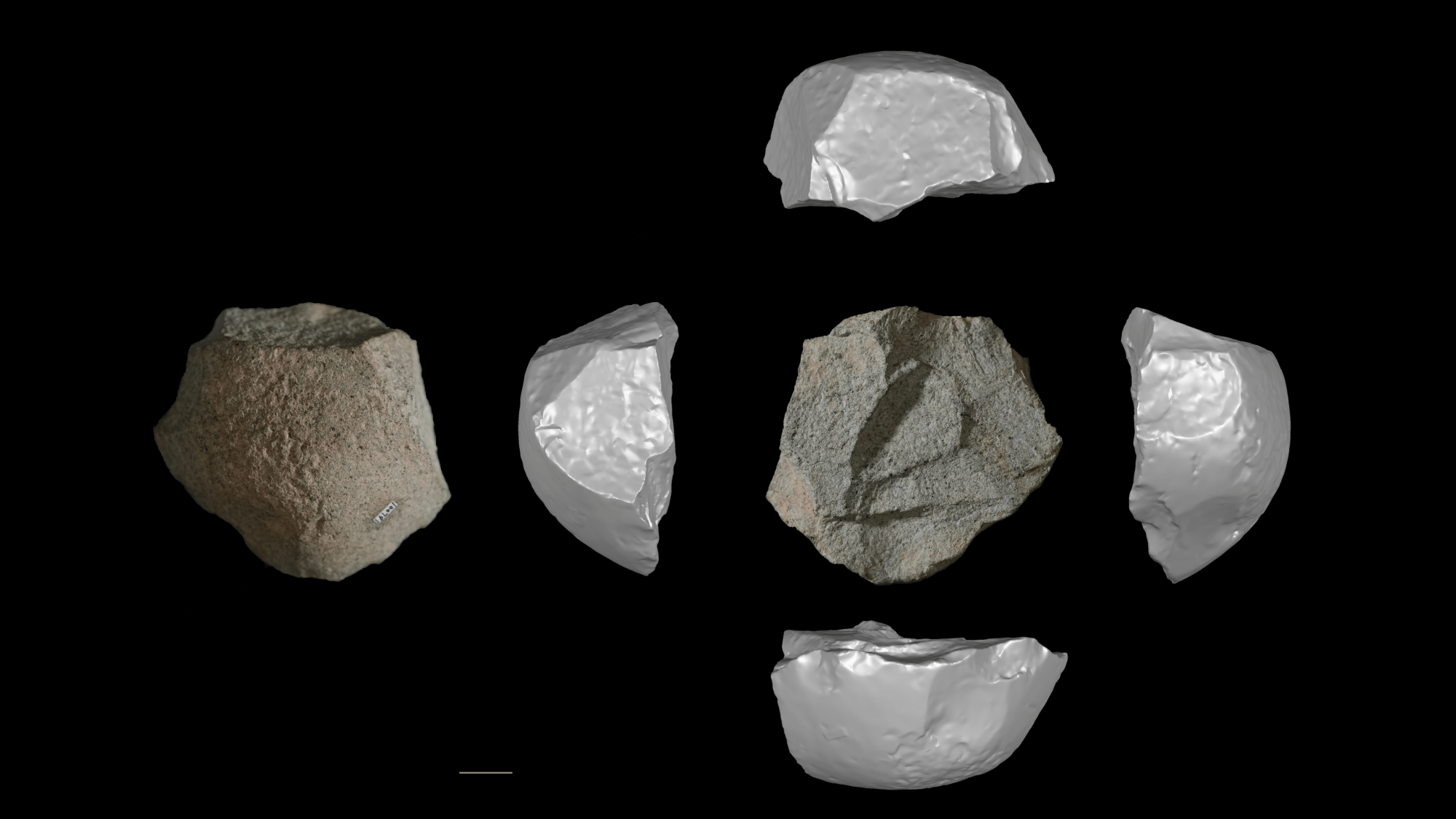
The disc-shaped stone cores at Lingjing were part of a detailed, carefully organized tool-making process. Homo juluensis built them by striking small stones against larger stone cores. Some of the cores were wired evenly on both sides. Other cores were more carefully built. One side was primarily a surface to strike from. The other side was shaped to produce sharp flakes.
According to the team, these asymmetrical cores are especially important. They indicate that prehistoric humans were not just knocking off pieces of a stone at random. Instead, they were managing the core as a three-dimensional object, where surfaces have different roles, while keeping the right angles for producing useful flakes.
“This was not casual flake production, but a technology that required planning, precision, and a deep understanding of stone properties and fracture mechanics,” said Zhao. “The underlying logic of this system—and the cognitive abilities it reflects—shows important similarities to Middle Paleolithic technologies often associated with Neanderthals in Europe and with human ancestors in Africa, suggesting that advanced technological thinking was not limited to western Eurasia.”
The stone artifacts left behind by the Homo juluensis’ living at Lingjing suggest that they were capable of complex thought and creativity. However, this story further complicates a shift in the timeline of how long ago these tools were made.
Aging bones
Homo juluensis at Lingjing would butcher animals like deer, with their bones found alongside the stone tools. A rib from a deer-like animal found at Lingjing contained several glittering calcite crystals—an important particle for dating objects. Calcite crystals have trace amounts of uranium, which degrades into another element called thorium over time. Scientists can then tell the age of the crystal by measuring the ratio of uranium to thorium present inside of a calcite crystal.
“The calcite crystals inside the bone acted like a natural clock, allowing us to refine the age of the site,” says Zhao.
Crystals growing inside a bone found at the Lingjing archaeological site; these crystals were used to date the site, and the tools found there, to an ice age 146,000 years ago. Image: Photo by Zhanyang Li.
Based on this new analysis, the team believes that these tools date back about 20,000 years older than scientists once believed. While 20,000 years doesn’t sound like a huge amount of time in the grand scheme of things, it’s an important difference. They were likely made during a harsh and cold ice age instead of a warm period. With this new timeline, these tools were likely adaptations for surviving hard times.
“Altogether, this research reveals a much richer story of innovation, intelligence, and human evolution in East Asia,” says Zhao.
Do you remember the last day of school before summer break? The clock ticking down to the end of the day, and then that wild, wonderful feeling of freedom? You have all summer to do literally anything you want.
Cut to summers in adulthood, where you blink and suddenly there are Halloween decorations up. What gives? Why do summers seem to last forever when you’re growing up but only a couple of days as an adult? Well in a new episode of Popular Science’s Ask Us Anything podcast, we explore ju
Do you remember the last day of school before summer break? The clock ticking down to the end of the day, and then that wild, wonderful feeling of freedom? You have all summer to do literally anything you want.
Cut to summers in adulthood, where you blink and suddenly there are Halloween decorations up. What gives? Why do summers seem to last forever when you’re growing up but only a couple of days as an adult? Well in a new episode of Popular Science’s Ask Us Anything podcast, we explore just that.
Sarah Durn: What’s your favorite memory of summer breaks growing up?
Alex: My favorite childhood memory of summer was doing a slip and slide at summer camp. It was an epic, epic hill, and it was really fun.
Katie: I will always remember going to the library with my mom every single day as a kid in the summer. And I think after one summer of that, I had read every single Mary-Kate and Ashley chapter book in the library.
Max: We would go to Europe for a week or two. We had a family friend who had a big house in France, so I spent a lot of my years learning to swim in a big pool in a house in France. Honestly, summer holidays felt endless to me. They went on and on, and then suddenly they stopped.
Annie Colbert: And hello, I’m editor-in-chief Annie Colbert.
SD: Here at PopSci, we’re always pondering the weirdest, quirkiest questions.
AC: And this week, we’re going back in time. So Sarah, please tell us, what’s with those seemingly never-ending summer break vibes when we were kids, and why do summers seem to whiz by now that we’re adults?
SD: Well, the short answer is your brain is kind of playing tricks on you.
AC: Ugh, rude.
SD: I know, but it’s not totally in a bad way. Scientists say childhood summers may have felt longer because your brain was literally experiencing time differently.
AC: Okay, hold on. Are we talking nostalgia? Like, things felt better when I was 10 and covered in sunscreen and popsicle juice?
SD: No, not just nostalgia.
This is actually about memory, novelty, and the fact that when you’re a kid, almost everything is happening for the first time.
AC: Hmm. Okay, so first bike ride, first summer camp crush, first gross encounter with a public pool bathroom.
SD: Exactly. For good and for bad.
AC: Yes.
SD: And weirdly, all those firsts may have stretched summer in your memory.
AC: So you’re telling me that adulthood feels faster because I’ve simply seen too many Tuesdays.
SD: Yeah, kind of. We’re gonna get into why summers seem to vanish once you grow up, and whether there’s actually anything we can do to make it feel a little slower again.
AC: Yes, please. I would like August to stop arriving in like seven minutes.
SD: I know. Very much same.
Now, before we time travel back to summer vacation, we want to hear from you. What questions are keeping you curious? Is there something weird, wonderful, or wildly specific you’ve always wanted to know?
Submit your question by clicking the “Ask Us” link at popsci.com/ask. Again, that’s popsci.com/ask, and you want to click the “Ask Us” link.
AC: Yes, send us your wildly specific questions.
SD: And with that, we’ll be right back after a quick break to talk about why time starts zooming the moment you become responsible for buying your own sunscreen.
Welcome back. Okay, Annie, before we get into the science, I feel like we have to start at the beginning. What’s your favorite childhood summer memory?
AC: I definitely had a very ’90s kid summers of watching “The Price Is Right.” I would be running free in the neighborhood, eating whatever snacks I could find in our kitchen. We are not a snacks household, so it was a lot of, like, saltines and peanut butter.
And I remember one summer that my brother and I found Pong buried in our basement. Pong, of course, being one of the first video games, and he beat me something like 74 games in a row because, one, he’s six years older than I am, but also, two, I’m terrible at video games.
But it was a really fun summer. I got to hang out with him. I was free. We just did whatever we wanted.
SD: Aw. Yeah, I mean, very similar. Also love “The Price Is Right.” I would watch it all the time with my grandmother right at 11:00 a.m.. Also too, I have the same experience of playing Halo one-on-one against my brother.
AC: Yes.
SD: I’d always wanna play campaign, but he’d wanna play against me, and he’d always kill me in, like, three seconds.
AC: Yep.
SD: It was fun for him, but not so fun for me.
AC: It was just fun to be there.
SD: Yeah. I think for me, like, what I remember is less one thing. It’s more, like, the feeling of summer break.
AC: Mm.
SD: Like, school would end, and suddenly life would seem different. One day you’re doing worksheets, and then the next day, you know, total liberation.
AC: The vibes shift immediately.
SD: Immediately. Suddenly you’re sleeping in, running around outside, eating popsicles at weird hours. I remember summer just feeling huge, like I had endless time.
I’d get my summer reading list and think, “Oh, I have forever to do this.”
AC: Oh, the optimism of June.
SD: Yeah, exactly. And then August would roll around, and I’d be panic-reading some deeply boring assigned novel thinking, “Wow, nothing stretches time quite like terrible summer reading.”
AC: Yes. Honestly, reading one chapter of required summer reading felt like surviving an entire fiscal quarter now.
SD: Right?
AC: Yeah.
SD: But here’s the weird thing. As adults, summer suddenly feels absurdly short. Like, you blink and it’s somehow already Halloween.
AC: Yes. Every year I’m like, “Wait, didn’t summer just start?”
SD: Exactly. And according to researchers, this isn’t just nostalgia messing with us. Our brains genuinely experience time differently as a kid.
AC: Okay, but how? Because this all feels deeply unfair.
SD: I know. So the short answer is memory. According to time perception researcher Dr. Marc Wittmann, our sense of how long a period of time lasts mostly comes down to how much we actually remember.
AC: Wait, so childhood summers felt long because we remember more of them?
SD: Exactly. Your brain is kinda doing a retrospective highlight reel, and when you look back on a stretch of time, your brain asks, “How much happened here?” And in childhood, the answer is a ton. You know, almost everything is new. First beach trip, first sunburn, first time discovering your neighborhood ice cream truck schedule like you’re 007.
And novelty matters because new experiences are much more likely to get stored in your memory. Dr. Whitmann basically says childhood is one long parade of firsts. When something surprises us or feels emotionally meaningful, the brain flags it like, “Okay, this matters. Save this.”
AC: Hmm. So if you’re a kid, summer isn’t just long because you have time off. It feels long because your brain is recording everything.
SD: Exactly. And there’s another layer to this. Kids’ brains are actively changing while all of this is happening. Dr. Whitmann points out that every year of childhood is wildly different developmentally. You’re growing physically, emotionally, cognitively.
His point is basically every year a child is kind of becoming a new person.
AC: Which totally tracks. I look at middle school photos of myself and I’m like, “Who is she?”
SD: Oh, I know. Completely. She’s an enigma.
AC: Yes.
SD: So your childhood summers aren’t just packed with novelty, they’re happening inside a rapidly changing brain that’s super primed to encode memories, which makes those seasons feel fuller and richer in hindsight.
AC: Okay, that all makes sense, but I have to ask about the theory everyone says online, the whole, well, when you’re five, a year is 1/5th of your life, but when you’re 50 it’s 1/50th.
SD: Yeah, yeah, the math explanation. Dr. Whitmann basically says that doesn’t totally track. While it sounds intuitively satisfying, he says there’s no evidence your brain is doing that calculation.
AC: Got it.
SD: Instead, the better explanation seems to be adulthood gets repetitive. We’ve seen summers before. You know the drill, work, vacation, barbecue, suddenly September.
AC: Rude, but fair.
SD: Yeah, and because fewer experiences feel truly novel, your brain stores less information. So when you look back, there’s just less there to mark the passage of time.
The summer didn’t vanish, it just left behind fewer memory breadcrumbs.
AC: Wow. That’s kind of existential.
SD: Yeah, and it gets slightly more existential.
AC: Ooh, fantastic.
SD: I know. So Dr. Whitmann’s newer research found something surprising when he looked at memory and aging. Older adults didn’t actually describe memories as blurrier or less vivid.
In some cases, memories felt richer and more emotional. What changes is the brain becomes worse at encoding the ordinary everyday stuff.
AC: Like Tuesday.
SD: Exactly. And apparently this decline can start surprisingly early, around our 30s, and gradually ramps up, which might help explain why people suddenly wake up and go, “Wait, how has it been 10 years?”
AC: No, I reject this information.
SD: Yeah, you and me both. But there is good news.
AC: Please tell me the good news.
SD: Researchers think we can kind of hack this effect, or at least slow it down.
AC: Okay. Everybody lean in. I want to hear it.
SD: Yeah, me too. Dr. Whitmann says what matters is novelty. New places, new people, new experiences, even tiny ones.
Take a different walking route, try a weird hobby, go somewhere unfamiliar. Eat at a restaurant you keep saying you’ll try. Basically, give your brain more material.
AC: So you’re saying I just need to do more new things.
SD: Basically, but with one caveat. Dr. Whitmann warns against turning this into a to-do list. Don’t schedule every second of your Saturday trying to maximize memories, because if you’re sprinting between activities, time weirdly speeds up again. He basically recommends staying open to what comes, like wake up, pay attention to how you feel, and just kind of see where the day goes.
AC: Okay. Unexpected science-backed permission to wander around aimlessly and get iced coffee. This is actually how I’ve been navigating New York City for years, so I am glad that it is helping my memory.
SD: There you go. You’re already way ahead of the game.
Honestly, my favorite quote from Dr. Whitmann in our story was, “Emotions are basically the glue for memory.” The more emotionally meaningful something feels, the more likely it sticks.
So maybe the goal isn’t recreating childhood summers, maybe it’s making more room for experiences that feel important enough to remember, even if it’s just, you know, reading in a park.
AC: That’s beautiful.
SD: I know. Thank you, neuroscience.
AC: I’m feeling inspired to go outside and find something new.
SD: Same. And with that, we’ll be right back after this quick break.
AC: Ah, yes. A story that forced me to confront the fact that my phone contains approximately 30,000 photos, many of which are screenshots I was absolutely convinced I would need later.
SD: And have you ever looked at them again?
AC: No. No. No, not really. That’s future Annie’s problem when I run out of storage.
SD: Yes. Well, according to Jordan’s reporting, psychologists actually have a name for this whole phenomenon, right?
AC: Yes, they do. It’s called cognitive offloading, which sounds like something you would do after a stressful meeting.
But really it just means using external tools to help your brain remember things.
SD: So kinda like iCalendar or Outlook remembering your appointments and meetings?
AC: Yes, absolutely. So cognitive offloading is basically letting technology act as a second brain.
SD: Which sounds kind of good?
AC: Yes. Honestly, sometimes it is.
Researchers say it can free up mental bandwidth. Instead of spending energy remembering a dentist appointment three weeks from now, your brain can focus on whatever’s happening right in front of you.
SD: Okay, so my phone is helping me become a more evolved human?
AC: No, no, no. Let’s not get carried away. Yes. Because Jordan’s story also gets into the downsides. If your brain knows information has been safely stored somewhere else, it may put less effort into remembering it.
SD: Okay, so when I take 75 photos of a concert—
AC: Yeah, your brain may decide, “Great, the camera’s got this. I’m heading out.”
Researchers even have a term for this. It’s called digital amnesia. The basic idea is that when we know the information is saved somewhere, we’re often less likely to remember it ourselves.
SD: Okay, so all those screenshots I save and never revisit might actually be making me worse at remembering things?
AC: Potentially. Although, I think the bigger issue here is that someday archaeologists are going to uncover your camera roll and wonder why humans are so obsessed with recipes they never cooked.
SD: Yes. Honestly, that’s very fair.
AC: And the experts Jordan spoke with aren’t saying that we should stop using technology. The point is that there’s a trade-off. You gain convenience and accuracy, but sometimes it’s at the cost of your own recall.
SD: Okay, so maybe the move is not documenting literally every second of our lives.
AC: Exactly. One of the researchers even suggested that a lot of us probably over-document. Sometimes it’s okay to take fewer photos, put the phone away, and just be present for the thing that’s happening.
SD: Which feels weirdly connected to everything we talked about today.
AC: It does. If childhood summers felt long because they were packed with memorable experiences, maybe we don’t need to spend every moment recording life. Maybe we need to spend a little more time actually living it.
SD: Okay. Wow. This episode has been so profound.
AC: I contain multitudes.
SD: And so many screenshots.
AC: So very many screenshots.
And that’s it for this episode. But don’t worry, we’ve got more episodes of Ask Us Anything live in our feed right now. Follow or subscribe to Ask Us Anything by Popular Science wherever you enjoy your podcasts. And if you like our show, leave a rating and a review.
SD: Do you have a favorite summer camp memory?
Let us know in the comments. Our producer is Alan Haburchak. This week’s episode was based on articles written for Popular Science by Jennifer Byrne and Jordan Burchette, and you’ll find links to read those stories in the show notes.
AC: Thank you, team. Thank you, summer camp. Thank you, “The Price is Right.” And thank all of you for listening.
SD: And one more time, if you want something you’ve always wondered about explained on a future episode, go to popsci.com/ask and click the “Ask Us” link. Until next time, follow the vibes to something unexpected or, you know, iced coffee.
AC: Iced coffee and Bob Barker. That’s my dream summer now. Little Jerry Springer sprinkled in. Boop, ba-da-boop, boop, boop.
When Sachita Shah sent her cardiologist brother an ultrasound of her patient’s heart, he was very confused. The heart was huge, and the left ventricle incredibly muscular. His confusion was warranted, as the ultrasound was not of a human heart. It belonged to another primate—a gorilla. Shah, emergency physician and VP of Global Health at medical equipment manufacturer Butterfly Network, tells Popular Science that if she had shown an ultrasound of a gorilla fetus to a radiologist, they would have
When Sachita Shah sent her cardiologist brother an ultrasound of her patient’s heart, he was very confused. The heart was huge, and the left ventricle incredibly muscular. His confusion was warranted, as the ultrasound was not of a human heart. It belonged to another primate—a gorilla. Shah, emergency physician and VP of Global Health at medical equipment manufacturer Butterfly Network, tells Popular Science that if she had shown an ultrasound of a gorilla fetus to a radiologist, they would have assumed it was a human baby.
Shah is on the gorilla care team currently looking after Jamani and Olympia, two western lowland gorillas (Gorilla gorilla gorilla) mothers at Woodland Park Zoo in Seattle, Washington. Jamani gave birth on Monday May 18, and Olympia is expected to deliver her new baby imminently. Shah and her colleagues’s work involves conducting ultrasounds of Jamani and Olympia’s baby bump—though now probably just Olympia’s—to keep an eye on the baby’s growth and position.
“We got a really pretty baby face,” Shah says, speaking of the ultrasounds. “We could see nose and lips and fetal breathing movements and heartbeat and drinking fluid, opening mouth and swallowing. For all intents and purposes, it was very much the same [as a human baby].”
The endangered gorilla mothers were trained to take part in the exams and procedures conducted by the gorilla care team, and they could choose whether to participate or not. The gorillas put their bellies against the edge of the enclosure for the scan (and received snacks), where there is a small opening through which the care team can reach through with the ultrasound probe.
As such, the zoo needed a small and portable imaging device. That’s where Butterfly Network and their all-in-one ultrasound probe came in.
“When you think of an ultrasound, you might think of a big cart with lots of different probes—a different probe if you wanted to do a pregnancy scan, or a heart scan, or a pediatric scan might have a tiny probe,” Shah says.
Instead, the Butterfly probe they use at Woodland Park Zoo is a handheld ultrasound that plugs into a smart phone. It is around as big as an electric shaver, and it functions with a number of different softwares for either veterinarian or human health use. Notably, an app allows the team to use it for different types of scans—from a pregnant gorilla to a child’s lungs—that would traditionally require distinct probes and machines.
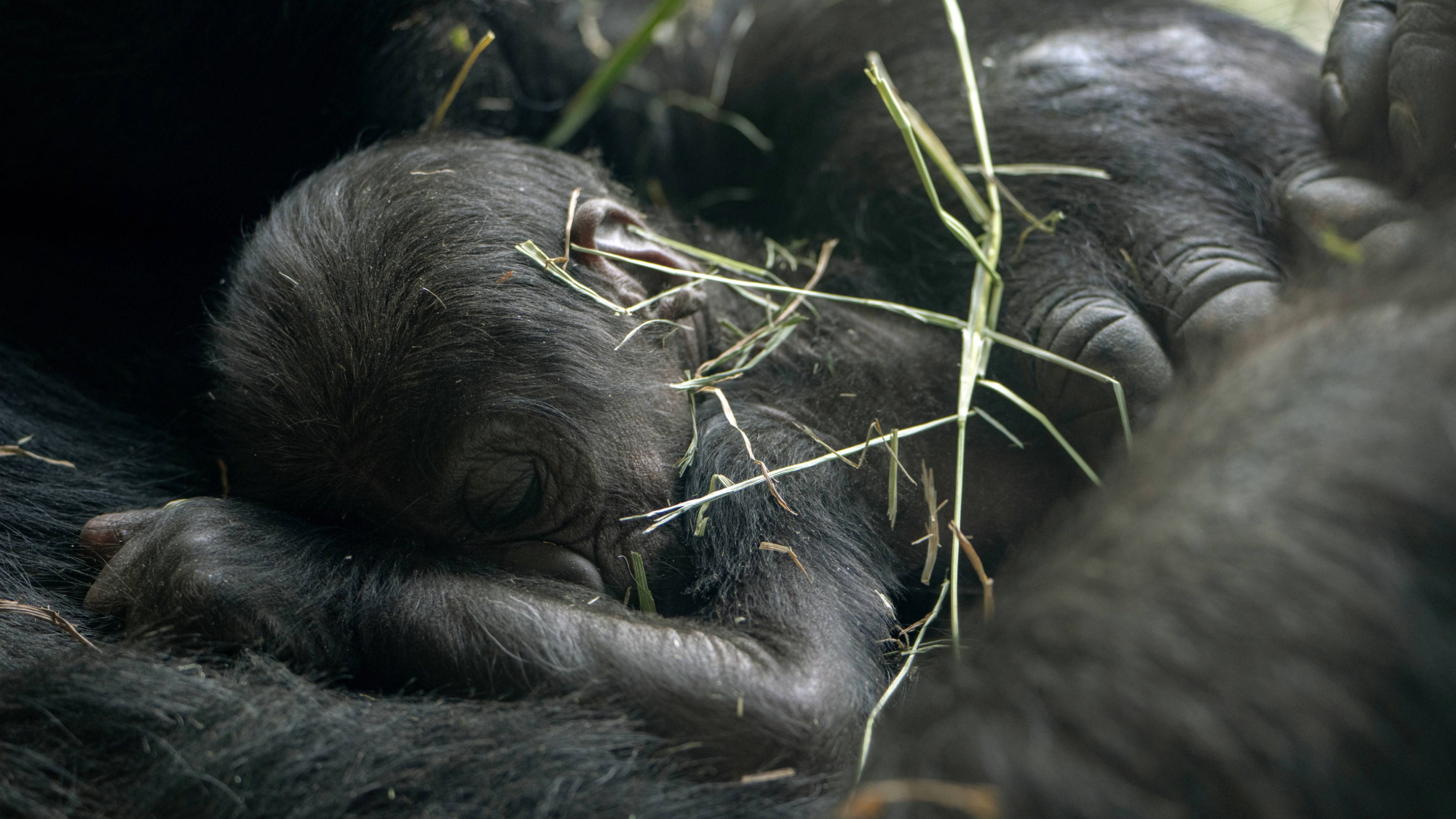
Jamani’s baby was born on May 18 at 5:50 a.m. Image: Jeremy Dwyer-Lindgren / Woodland Park Zoo.
Shah and her colleagues also used the Butterfly ultrasound device to scan the heart of Nadaya, the silverback gorilla father of both babies. In fact, the heart ultrasound Shah sent to her brother belonged to Nadaya. They used human software for that scan, even though their vet software is optimized for fur. Fortunately, Nadaya’s chest isn’t very furry.
Shah, who has gone through a pregnancy herself, was most moved by working with the gorilla mothers.
“We could tell the baby’s head had dropped and we thought, ‘oh man, she must be so uncomfortable.’ And she was waddling and walking a little differently. I was like, ‘oh, I remember that, girl.’ It was just amazing to remember that we’re all connected in that way,” she says.
Western lowland gorillas are critically endangered, so babies are always excellent news.
UPDATE May 27 8:19 a.m EDT
On Sunday, May 24, at 1:44 p.m. PDT, Olympia’s baby was delivered by an emergency C-section performed by a medical team who typically works on humans. This 5.4-pund boy is the western lowland gorilla’s second baby.
Coral reefs may soon have new swimming visitors observing their life-rich aquatic metropolises. But that visitor isn’t a fish—or even a human. It’s an autonomous, multi-sensor survey robot. Developed by the Woods Hole Oceanographic Institution (WHOI) Reef Solutions Initiative, this new underwater surveyor uses a combination of hydrophones, high-resolution cameras, and an onboard computer to find signs of marine life hotspots. It then moves in closer for a better look, creating data-rich maps th
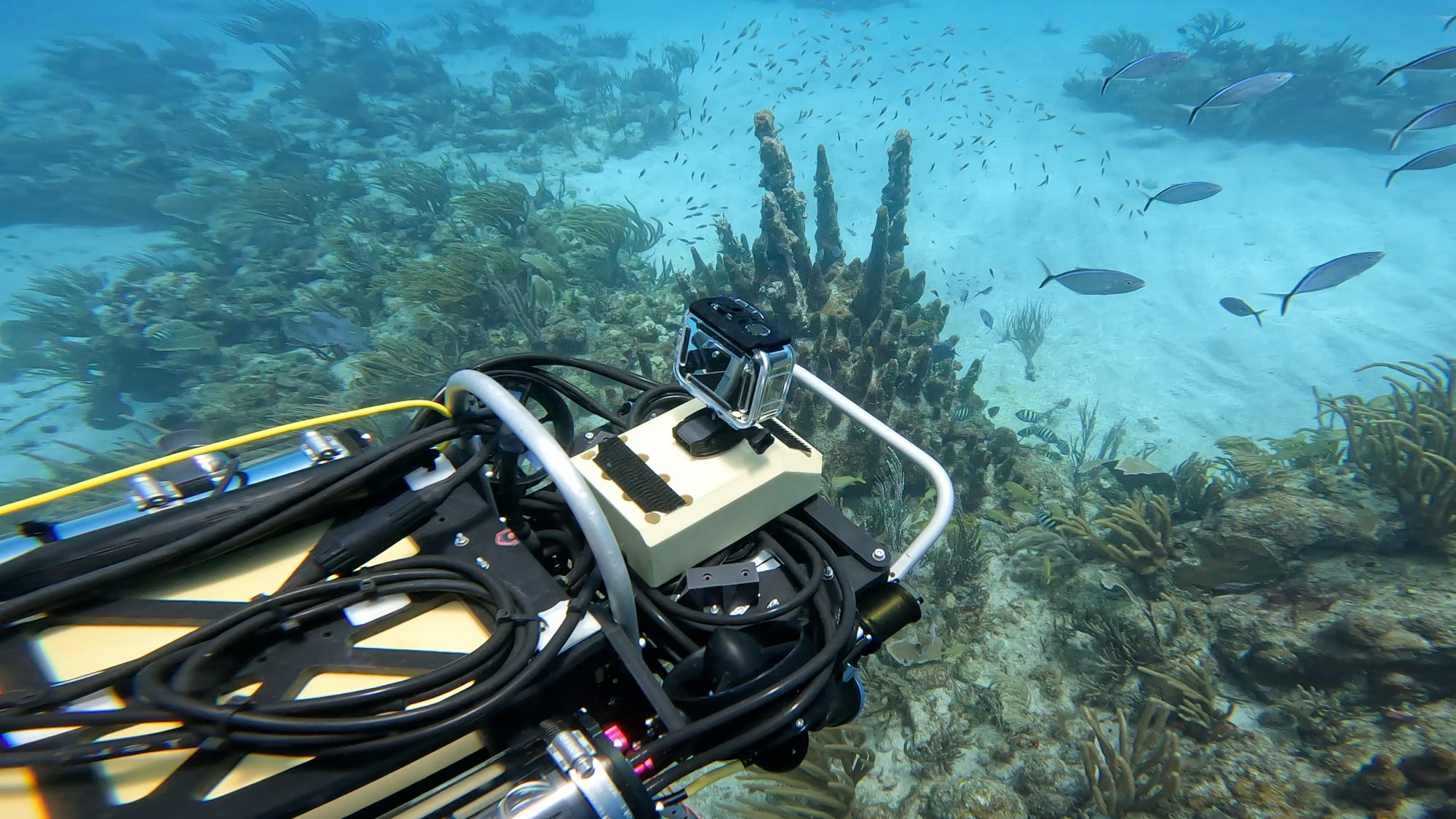
Coral reefs may soon have new swimming visitors observing their life-rich aquatic metropolises. But that visitor isn’t a fish—or even a human. It’s an autonomous, multi-sensor survey robot. Developed by the Woods Hole Oceanographic Institution (WHOI) Reef Solutions Initiative, this new underwater surveyor uses a combination of hydrophones, high-resolution cameras, and an onboard computer to find signs of marine life hotspots. It then moves in closer for a better look, creating data-rich maps that would likely take many human divers multiple trips to produce.
The system, appropriately called the Curious Underwater Robot for Ecosystem Exploration (CUREE), does all this all by itself. Well, that’s the goal, at least. In actual testing around Joel’s Shoal in the U.S. Virgin Islands, the curious robot was able to home in on the distant crackle of shrimp, and even tailed a barracuda for more than 984 feet. That last barracuda tracking bit required some human intervention to get it back on course, but the majority of the barracuda tracking occurred totally autonomously. The findings were published this week in the journal Science Robotics.
Keeping tabs on coral reef’s inhabitants
Coral reefs are like a busy neighborhood or bustling bar in the ocean. Though they account for less than 0.1 percent of physical ocean space, roughly a quarter of all marine species spend some part of their lives there. But overfishing, human development, and warming ocean temperatures are putting those bustling ecosystems at risk. Because of this threat, it’s more important than ever for marine biologists to have an accurate and timely sense of what those environments look like.
Getting a clear sense of what species are where in a reef isn’t simple, though. At any given time, most of a reef is barren, with marine life typically clumping into hotspots distributed throughout the reef. Currently, researchers primarily track those hotspots with trained human divers, though that approach isn’t perfect. Our pesky lungs and limited oxygen tanks mean human divers run on a short clock. It’s also costly for research teams to properly train and equip a human diver, which limits the amount of time and frequency with which they can take a plunge.
An underwater robot could potentially solve both those problems, but it would need the right tools for the job. That’s where CUREE comes in. Engineers outfitted the robot with a variety of sensors that can detect both visual and auditory signals. The system can analyze far-off audio signals in real time to hear distant noises as subtle as fish calling out to each other. It can then triangulate that data using an onboard computer system that moves toward areas it suspects have a high chance of containing marine life. If it spots life once there, it can then use its cameras to provide more precise data about the species and their behavior.
“In some sense, they’re almost a perfect compliment for each other,” WHOI roboticist Seth McCammon said of the multiple sensor method in a statement. “Passive acoustics gives you a broad sense of the environment, while vision is short range, but is this really information-rich data stream.”
Curious robot stalks a barracuda
The team put CUREE to the test near Joel’s Shoal, a coral reef located on the coast of St. John in the U.S. Virgin Islands. In one test, the robot could accurately find and count the number of fish in a region. It was able to detect signs of fish from up to 82 feet away and then use those clues to identify life hotspots.
However, the most interesting result was CUREE’s successful barracuda tracking. Once locked on to its target, CUREE followed the apex predator for a total of nine minutes and 55 seconds, as the fish weaved its way around, looking for lunch. The tracking video in the study shows the barracuda traveling first to a hotspot and then backtracking to another spot where it had previously startled a large reef snapper. And while a human diver had to initiate the robot’s lock on the barracuda,and had to re-lock on the target several times, CUREE did most of the work on its own. The team says eight minutes and 59 seconds of the tracking was done with full autonomy.
Though this isn’t the first underwater robot, its use of multiple sensor types makes it unique because it’s eventually a jack of all trades. Researchers can, in theory at least, drop the robot in a broad area of water and let it get to work surveying.

 Login
Login