One of Japan’s most popular dessert mascots is set to go with you as you tap through ticket gates.
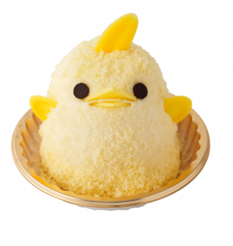
Last year, one of Japan’s many railway companies, JR East, announced that they would be retiring their iconic mascot character featured on their rechargeable prepaid transit card, Suica, much to the dismay of many of its fans. Meanwhile, JR Central, another rail company, has decided to celebrate the 15th anniversary of Nagoya’s beloved dessert Piyorin with a special release of its Toica card.
Despite the similar sounding names, the massive JR (Japan Railways) network is split into independent regional companies that operate within their own territories. For example, JR East handles Tokyo and northern Japan, while JR Central manages the lines surrounding Nagoya and the central Tokai region. Unlike several countries where trains are state-run, Japan’s rail networks are entirely privately owned by companies such as these (though the JR network was previously the government-run Japanese National Railways from 1949 until 1987).
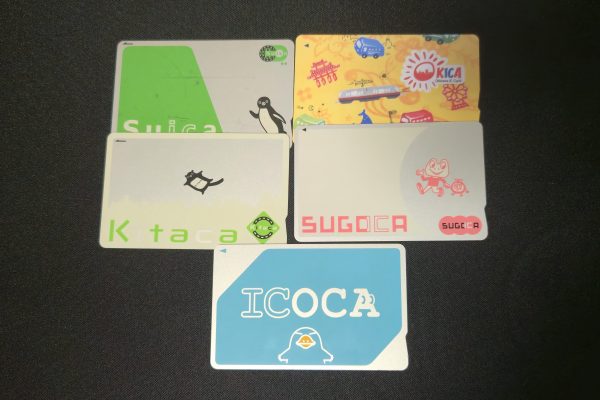
As a result of this regional division, each JR company issues its own transit card, commonly referred to as an IC card, for daily travel. Travelers arriving into Tokyo are usually introduced to the Suica (JR East) or Pasmo (Tokyo Metro and many other non-JR lines around Tokyo) cards that let them tap through ticket gates seamlessly. In the Central Japan region around Nagoya, the local equivalents are the Toica (JR Central) and Manaca (Nagoya Subway, Meitetsu, and other non-JR lines around Nagoya) cards.
While these cards are issued separately within their own regions and feature different mascots, which can lead some to travel around Japan collecting them, many of the cards are completely interoperable.
▼ I have a long way to go.
A Toica card purchased in Nagoya, for example, can be used on Tokyo subways, Kyoto buses, and at thousands of convenience stores nationwide.
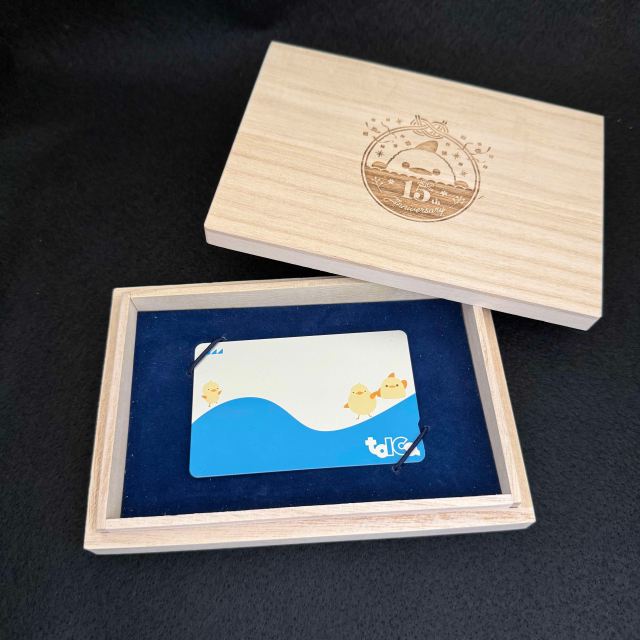
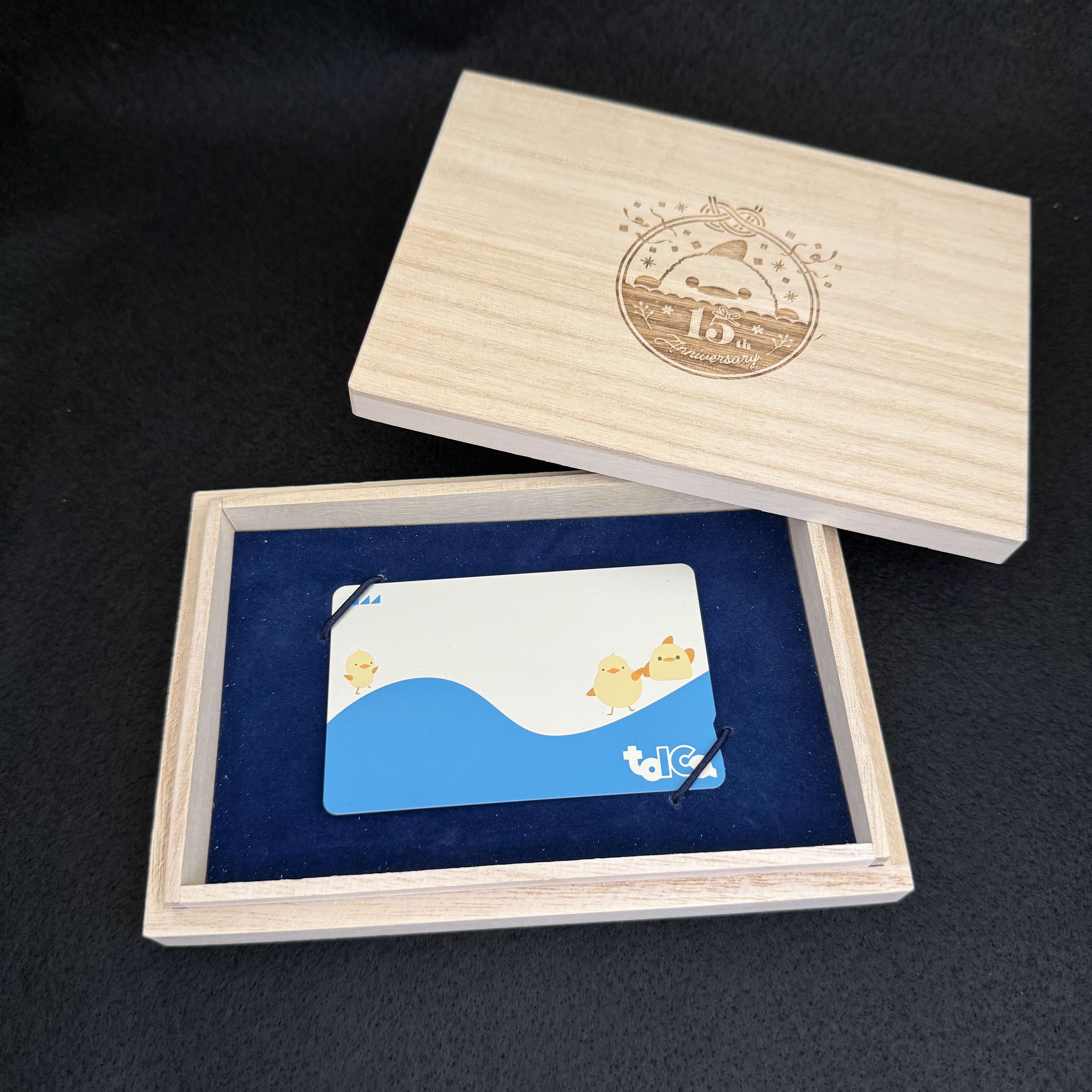
The commemorative Piyorin Toica card has the standard Toica chick mascots alongside Piyorin on the face of the card.
People looking to grab the new Piyorin Toica card will need to make their way to the region operated by JR Central (Nagoya and its surroundings) where it will begin being dispensed in late May 2026 from automatic ticket vending machines and customer service windows at major train stations. For those further away, sales will start at JR Tokai ticket windows at major Shinkansen stations along the Tokaido line from September 1, 2026. Smaller stations within the coverage area will also get access to the Piyorin card supply at this time. Each card will cost 2,000 yen (US$13), which includes 1,500 yen as a usable amount and a 500 yen deposit.
As part of the celebration JR Central released a special online-exclusive Piyorin Toica card in a paulownia wood storage box costing 4,980 yen. However, the 3,000 sets were completely sold out within a couple of days of its launch, attesting to Piyorin’s popularity.
If you’re expecting to go out tomorrow and pick up a Piyorin Toica, you might face some disappointment, as they’ll only start to be dispensed when current Toica card stocks run out, so the start date of the sales will vary depending on the station. Sales of the Piyorin cards will also end when they run out at each station, so there is definitely an element of luck to getting one, if the online sales are anything to go by. That being said, a Piyorin card is a great way to make a souvenir of your travels just a little bit sweeter.
Transforming iconic characters into delicious works of art.
Pokémon is a beloved franchise, and you’d be hard-pressed to find anyone in Japan who has not heard of it, even if they have never personally interacted with any of its media. Through collaborations with famous brands from all areas of the market, the cute and charming character designs can be seen in many places throughout the country.
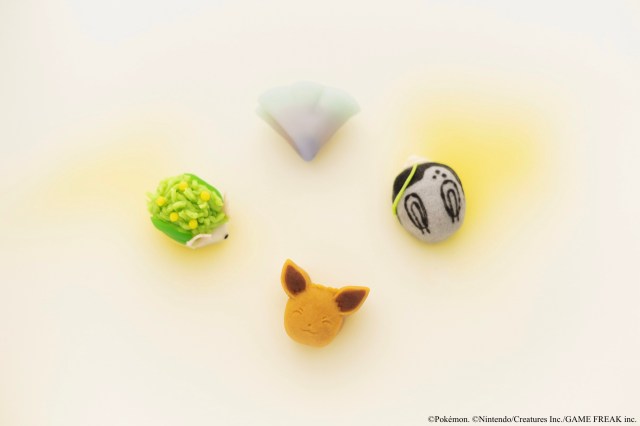
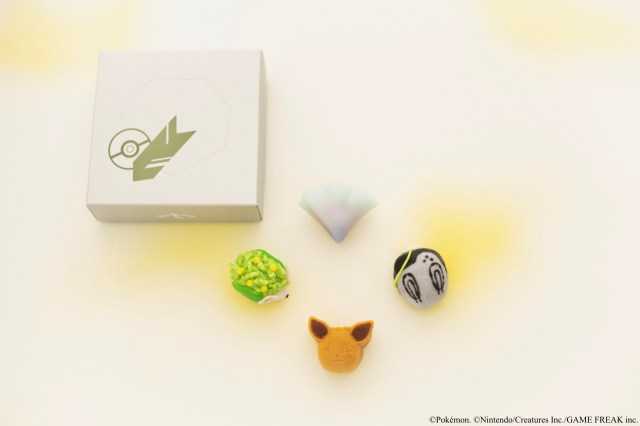
Despite both being of Japanese origin, the combination of a 161-year-old traditional Japanese confectionery maker and an electric mouse and its friends may not be the natural pairing for most people. However, over the last few years, the shop Shichijo Kanshundo has been releasing delightful treats that blend history with pop culture, and from May 11, they have expanded that lineup with another set of four Pokémon kyo-gashi (traditional Kyoto-style sweets).
The shop is renowned for its jonamagashi, which are handmade by craftsmen one by one. While these sweets, traditionally served during tea ceremonies, typically reflect the changing seasons or classical poetry, Shichijo Kanshundo is using their delicate artistry to bring Eevee and Poltchageist into the physical world.
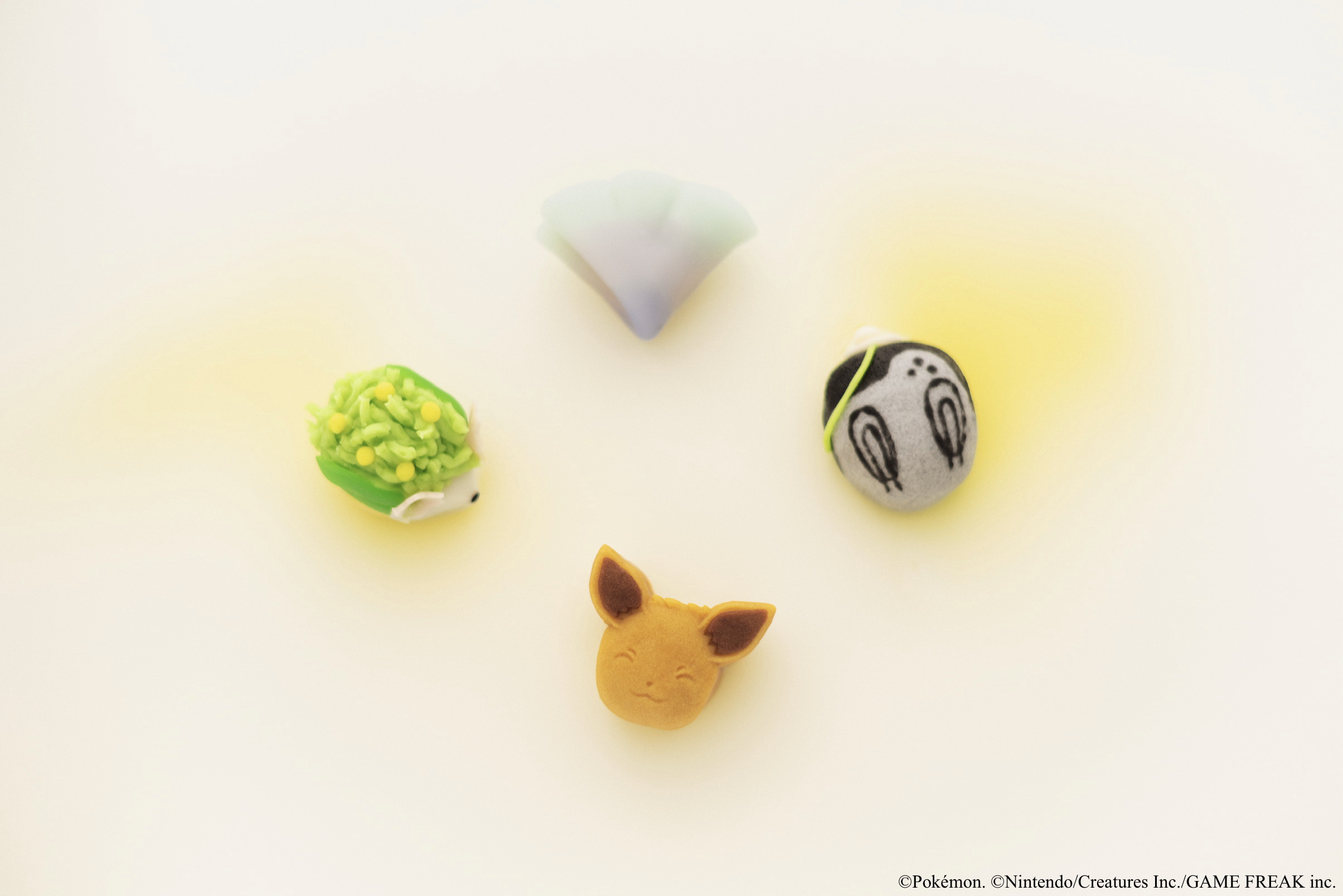
The Eevee sweet is crafted using nerikiri, a traditional mixture of sweet white bean paste, starch syrup, and gyuhi (glutinous rice flour) that artisans sculpt by hand into intricate, soft shapes. Poltchageist is made as a jonyo manju, a light, fluffy steamed bun made with yam, sugar, and joyo-ko (fine rice flour).
These two Pokémon join two others that were previously released to form this new set of four: Shaymin (Land Forme) and Oricorio (Sensu Style). Shaymin is a kinton, made by crumbling white bean paste or nerikiri into a soboro (ground/crumb-like) state and applying it around a core of bean paste. Oricorio, on the other hand, is expressed using uiro, a Japanese sweet made by adding sugar and water to rice flour, among other ingredients, and steaming it until firm, which results in a chewy texture. The set costs 2,916 yen (US$18) and, since they’re made without unnecessary preservatives, are best enjoyed immediately.
Catching these sweets requires a little bit of extra planning, because the physical store in Kyoto only sells these sets on their special sales event on the seventh of every month, so starting June 7, visitors will be able to pick some up on the afternoon stroll through one of Kyoto’s most historic neighborhoods near Sanjusangendo Temple.
There is another method to get your hands on them earlier: you can order them online and receive them directly at your home, although they will be delivered frozen. However, that also means you don’t need to enjoy them all at once, and can take your time to savor the flavors over a period of 14 days from the date of shipment.
If you do happen to find yourself in the Higashiyama area in Kyoto on the seventh of a month, though, be sure to stop by the shop early. These limited-edition treats are a wonderful way to experience Kyoto’s traditional craftsmanship, even if you’re not a dedicated Pokémon fan.
Store information
Shichijo Kanshundo / 七條甘春堂
Address: Kyoto-fu, Higashiyama-ku, Shichijo-doori, Nishinomon-cho 551-banchi
京都市東山区七条通西の門町551番地
Open 9:00 a.m.–5:30 p.m.
Closed January 1 Website
No tentacles here, folks! Only beautifully strange plants.
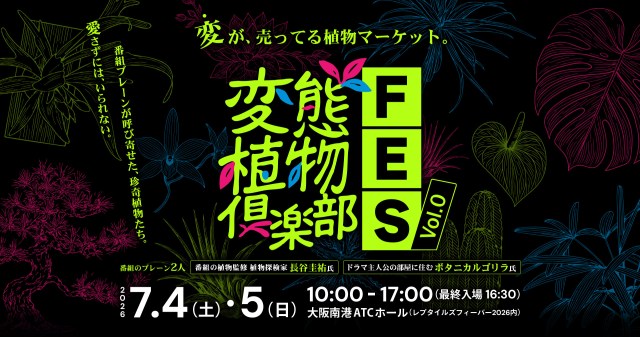
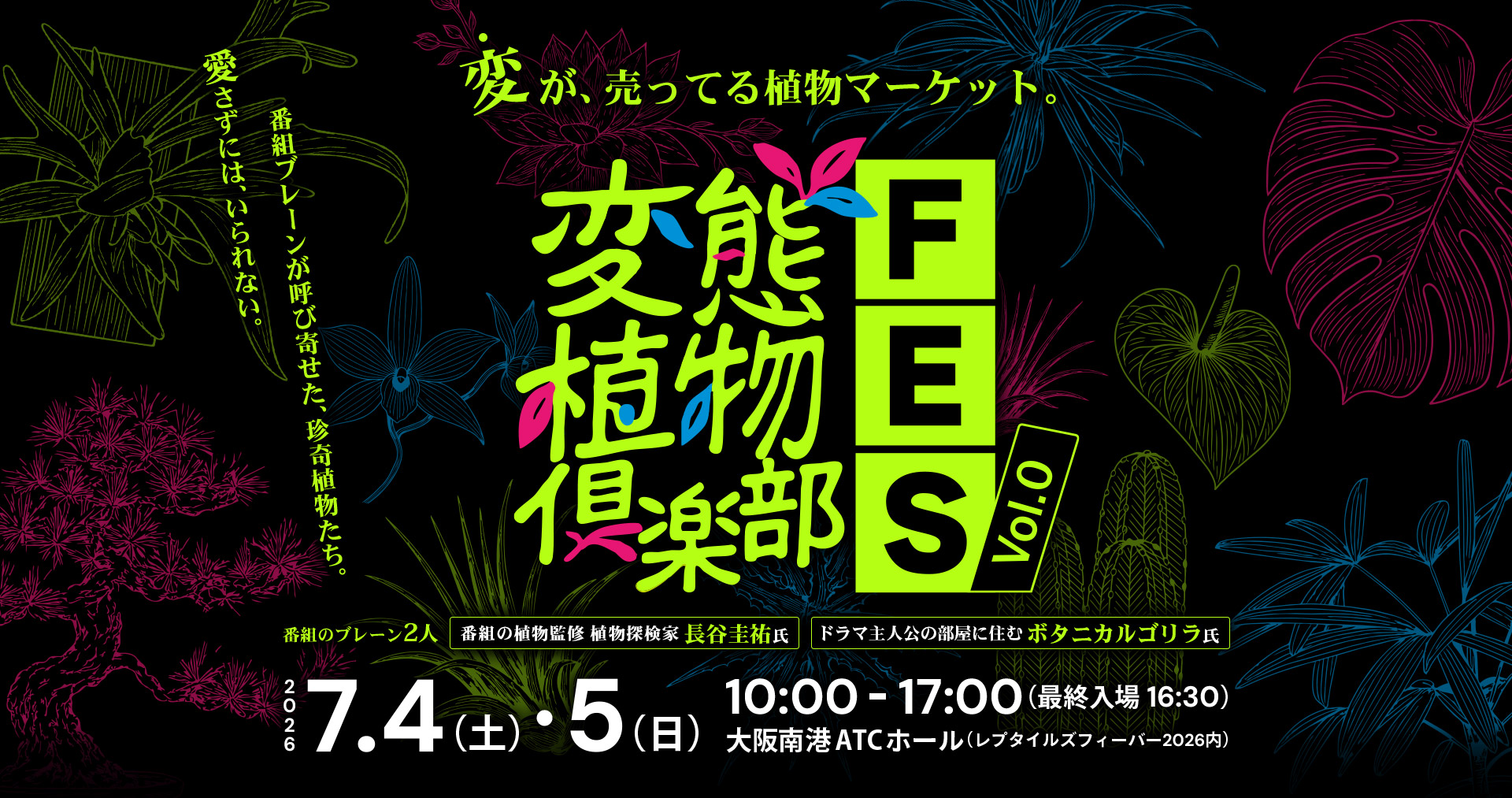
If you’ve spent any time online, the word “hentai” probably conjures up some very specific imagery that you may not feel comfortable talking about with your family. However, Osaka is playing host to an event called the Hentai Shokubutsu Club (or “Hentai Plant Club”), where you can say without shame, “Hey, Mom! Let’s go see some hentai plants.”
To be perfectly clear, this event will involve substantially less tentacle-like appendages than you might be imagining, as in botanical science, “hentai” translates to the process of metamorphosis, or structural transformation. It refers to the fascinating way certain flora abandon typical plant architecture, morphing their leaves, roots and stems into unorthodox shapes to survive, and this summer will see a showcase of unusual yet absolutely gorgeous exotic plants.
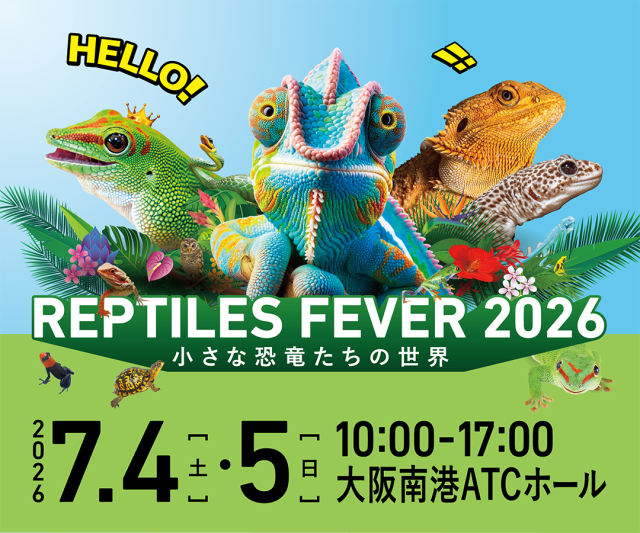
Taking place on July 4 to July 5 at the Osaka Nanko ATC Hall, a short walk from Trade Center Mae on the New Tram Line, the Hentai Shokubutsu Club brings a Japanese television show of the same name to life, curated by the celebrity plant explorer Keisuke Hase and Tokyo influencer Botanical Gorilla, and introduces 20 vendors who will be showing off some of nature’s eccentric plants.
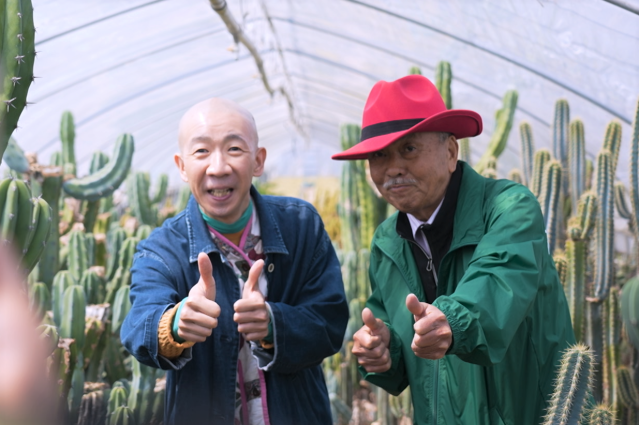
▼ Actor and comedian Hyoroku (left) is the face of the Hentai Shokubutsu Club show.
A selection of the transformations you can hope to see, as well as buy, at the venue are:
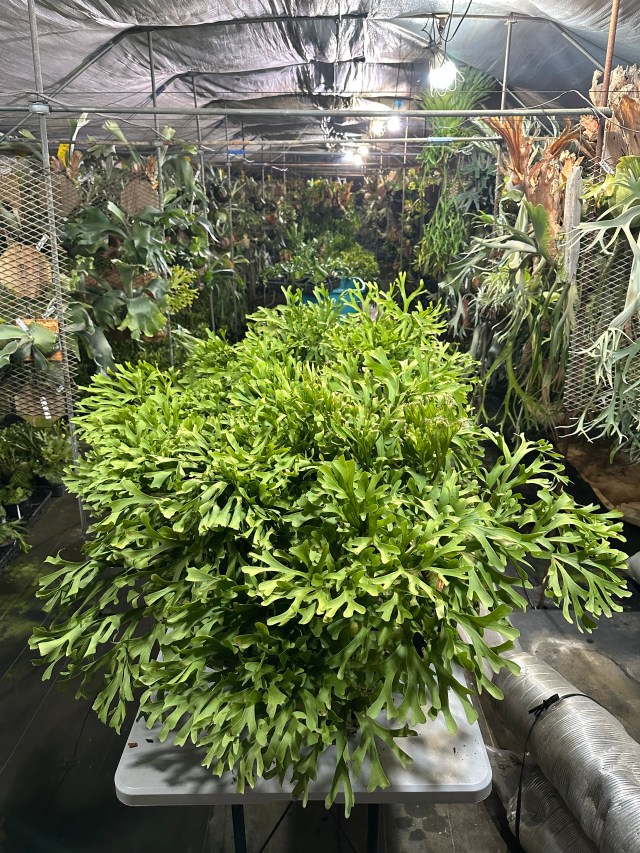
● Platycerium: These plants feature leaf dimorphism, where they grow two completely different types of leaves, one for trapping food, and the other to catch the sun. The company Groote Plantage specialize in the sale of platycerium and are based in Saitama, often traveling to Thailand to carefully select and import high-quality plants in a wide range of varieties.
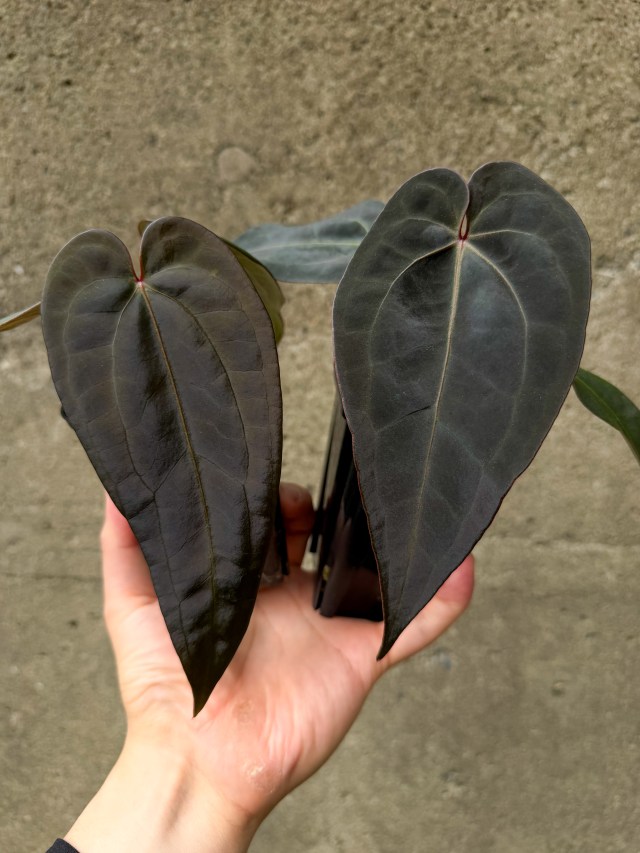
● Anthurium: With deceiving heart-shaped “flowers” that are actually leaves that have undergone metamorphosis to trick pollinators, whereas the actual flowers are microscopic bumps on the central spike. The anthurium is on show by Acu’s Forest, based in Osaka, who sell domestically bred variants with a focus on leaf color, texture, and shape. This time, they’ll focus on anthurium with a velvet texture and veins with unique physical characteristics.
● Dyckia: Bromeliads that reflected the rainforest lifestyle, transforming their leaves into water tanks to survive arid cliffs, lining them with vicious-looking thorns to keep thirsty animals away. Thorns and Leaves handle both terrestrial and tank bromeliads, focusing on original dyckia hybridized and grown by themselves.
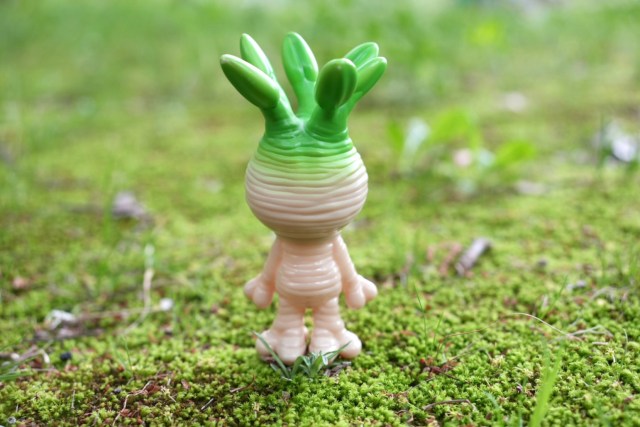
Alongside the plants, you could even take home some quirky little collectibles, like the adorable Mandragora figures crafted by B-The-U.
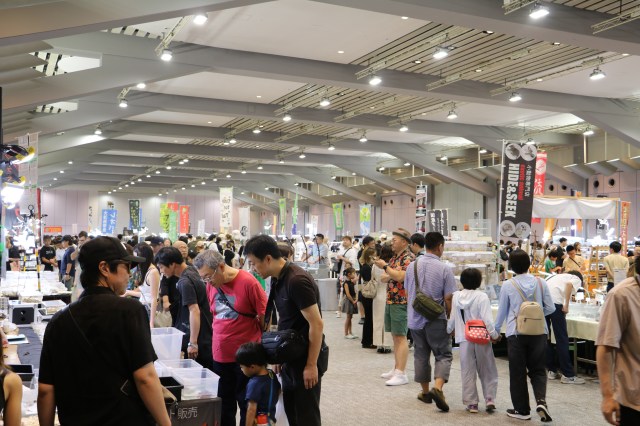
However, the activities don’t just stop with the plants, as the Hentai Shokubutsu Club is actually a special exhibition within the larger Reptiles Fever 2026 event, the largest of western Japan’s reptile expos.
Discount advance tickets, priced at 1,200 yen (US$7.50), are available online via platforms like Rakuten Travel, and convenience stores (links below), but it’s also possible to purchase an entry ticket on the day for 1,400 yen.
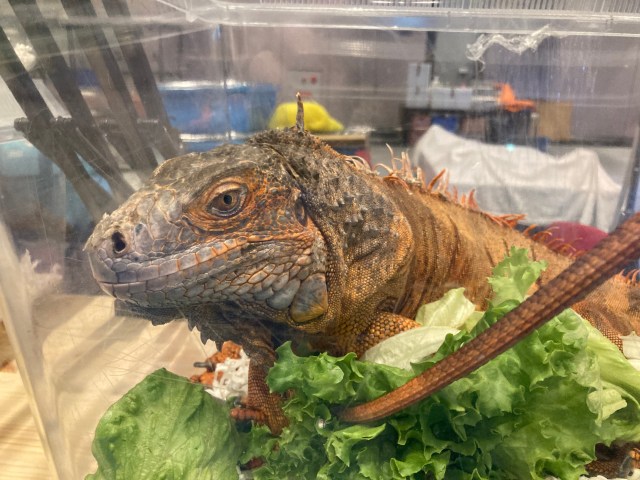
With how the plants have adapted for survival, they make for great additions to lush, bioactive terrariums for many of the reptiles attending the festival.
▼ Like this little guy!
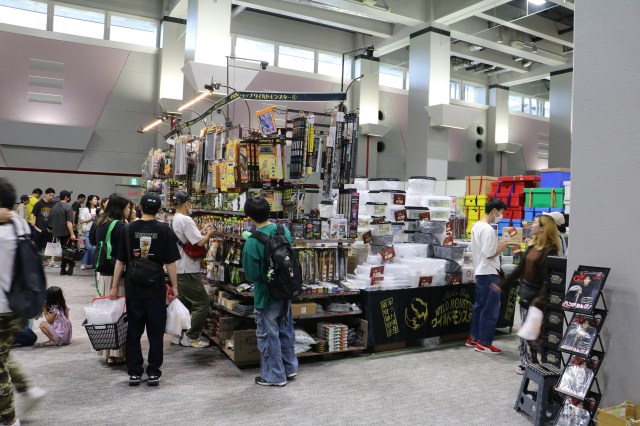
The venue will be packed with reptiles, amphibians, breeding gear, and a family-friendly petting corner, making it the perfect weekend plan for anyone looking to experience the reptile-keeping hobby.
▼ Cute though they may be, I can’t vouch for how “reptilian” hedgehogs are, but they still make an appearance in the petting zoo.
So, grab your tickets and get ready to be amazed by reptilian beauty and the bizarre world of botanical hentai this summer.
Exhibition information
Hentai Shokubutsu Club / 変態植物倶楽部
Address: Osaka-fu, Osaka-shi, Suminoe-ku, Nankokite 2-1-10
大阪府大阪市住之江区南港北2-1-10
Dates: July 4, 2026–July 5, 2026
Open 10:00 a.m.–5:00 p.m. (last entry 4:30 p.m.) Website
Sample ramen pizza, alongside other limited-edition items to pick up, or just make your own treats.
Snacks in Japan come in all sorts of shapes and sizes, from ever-feuding mushrooms and bamboo shoots to make-your-own sweets, but one that I see fairly often in the hands of little children are packets of Baby Star Ramen. A popular snack made of deep-fried, crunchy, bite-sized pieces of instant noodles, Baby Star Ramen came about in 1959 when the founder of Oyatsu Company realized that the broken noodle fragments left at the bottom of instant noodle production lines could actually be seasoned and packaged up as a snack by themselves.
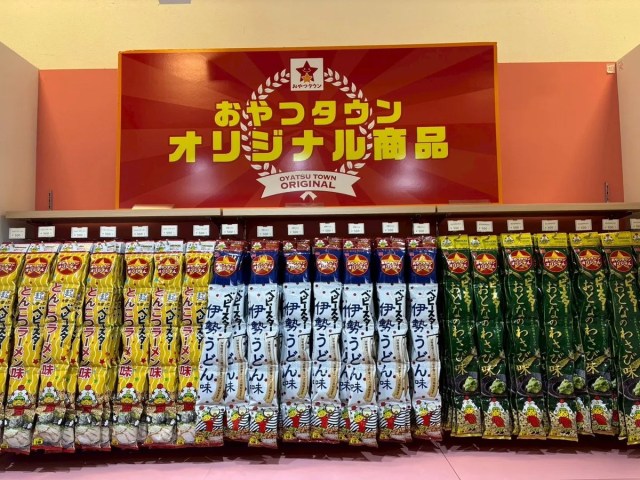
The Oyatsu Company factory is located in Tsu, Mie, and while factory tours are currently suspended, for those who want to dive into the world of Baby Star, right next door is Oyatsu Town, a theme park offering everything from a giant athletic course to making original Baby Star Ramen, as well as limited-edition food you can only eat there, resulting in an enjoyable experience for child and adult alike.
▼ Sadly, no factory tours are currently available.
Our Japanese-language reporter Natsuno Futon visited the theme park with her kids in tow during Golden Week, one of Japan’s busiest periods for travel and day excursions, so upon arriving and noting that same-day entry was limited until after lunch, it wasn’t too unexpected. So, Natsuno’s first recommendation for any future visit is to always reserve your entry tickets in advance, particularly if you plan to go on a weekend or holiday.
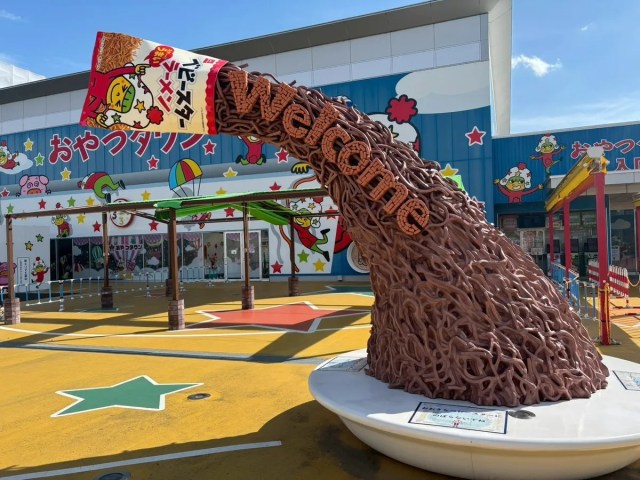
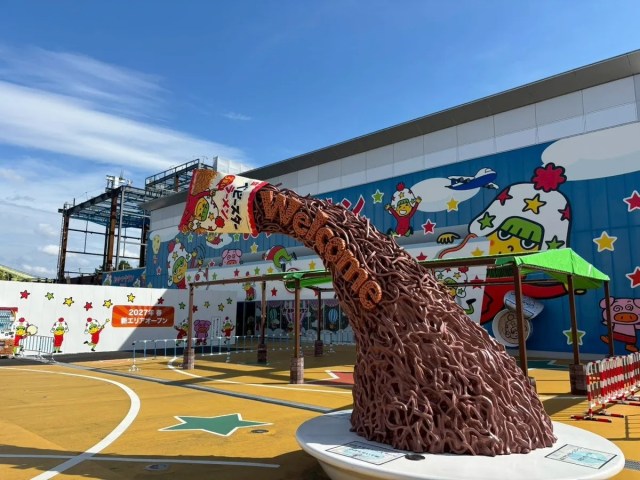
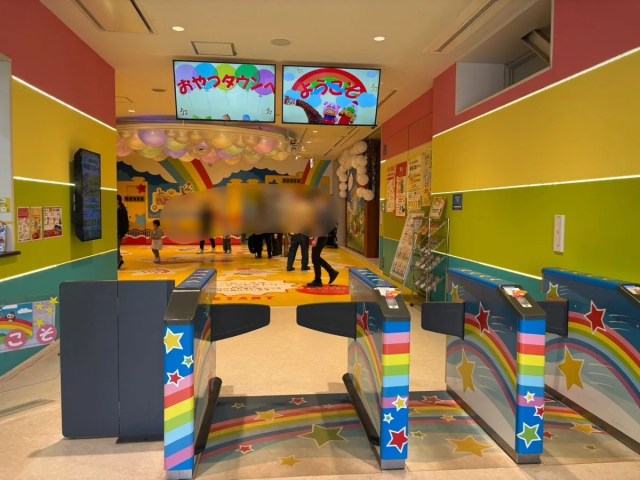
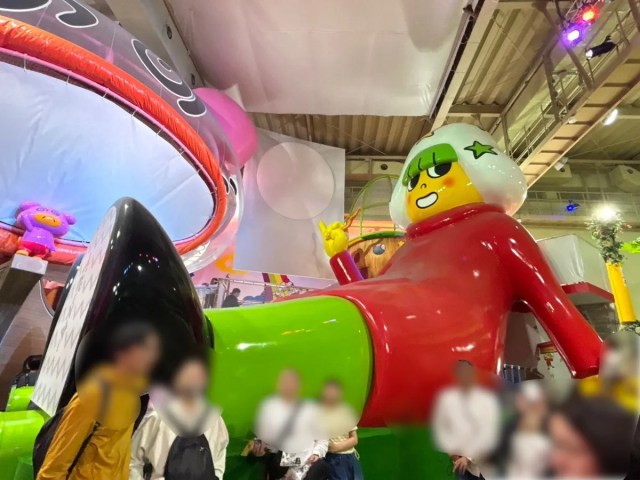
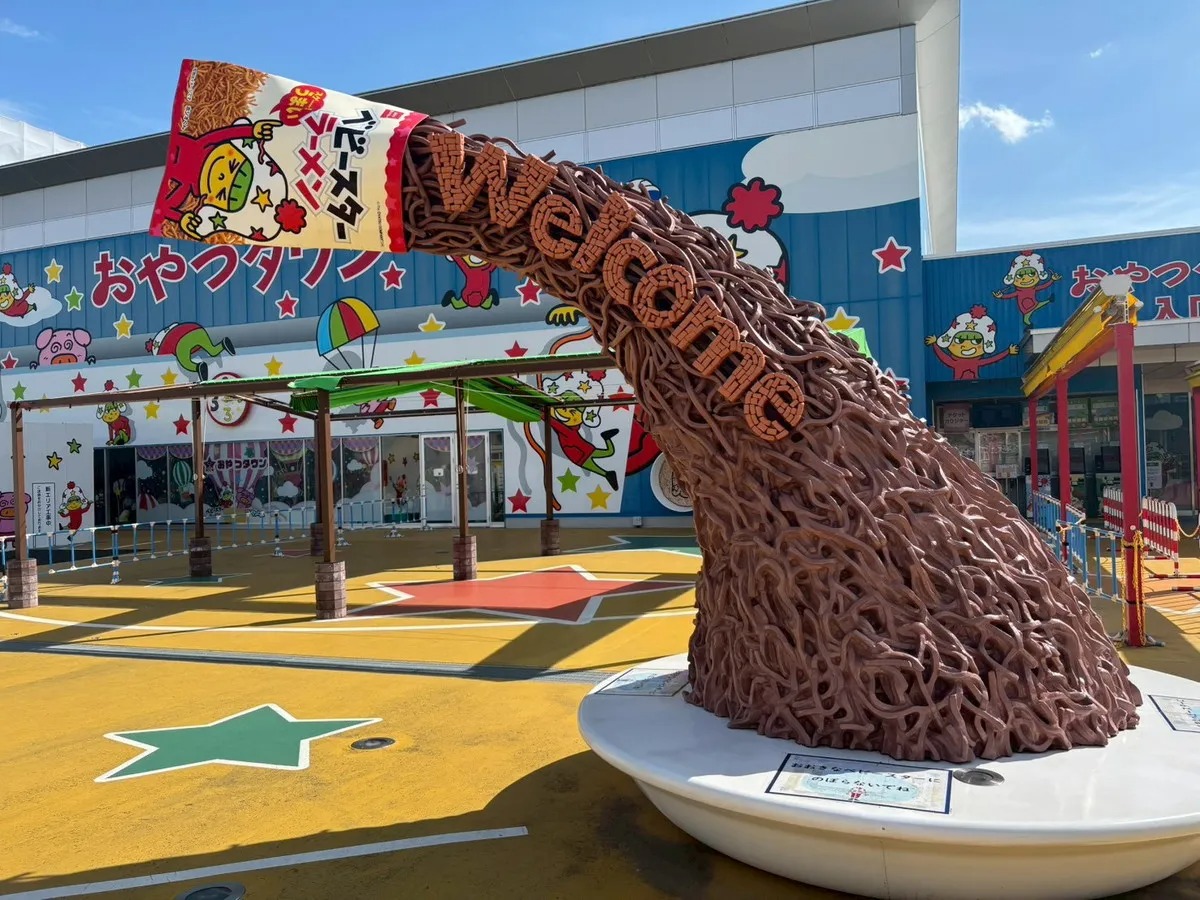
Arriving at the entrance, the first thing to welcome Natsuno and her family was a giant Baby Star photo spot, appearing as if Baby Star was flowing like a waterfall, along with a spot where you could get inside a Butamen cup, Oyatsu Company’s line of instant cup noodles, adorned with designs of Hoshio-kun, the Baby Star Ramen mascot.
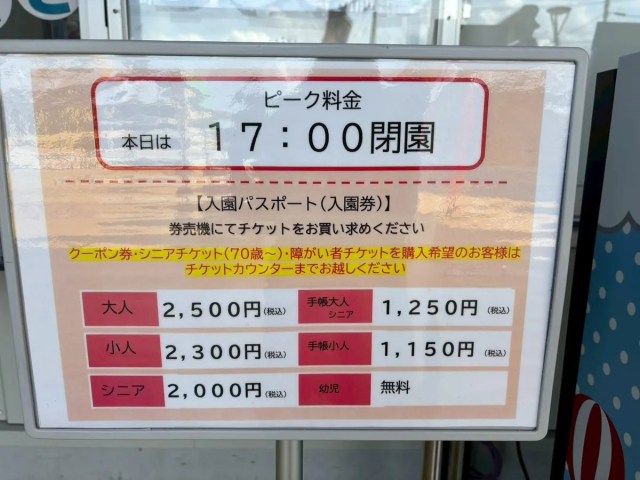
Peak season entry is 2,500 yen (US$15.70) for adults, whereas it drops down to 2,200 yen during the Regular days, and 1,600 yen for the Value days.
It’s best to check the company website for absolute clarity, but the general rule seems to be Saturday through Monday is Regular, Tuesday through Friday is Value, and national holidays like Golden Week in May and Obon in August are Peak.
▼ Natsuno couldn’t help but take one last look at the factory, as she really enjoys factory tours, but it sadly wasn’t to be.
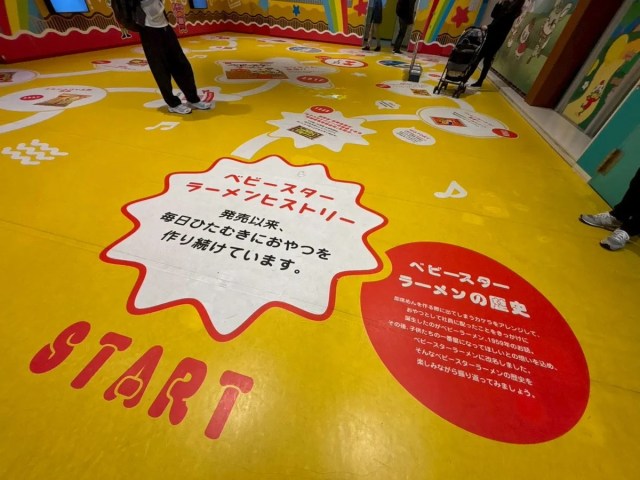
Stepping inside, Natsuno was greeted with the company’s history spread out on the floor, designed almost like a board game.
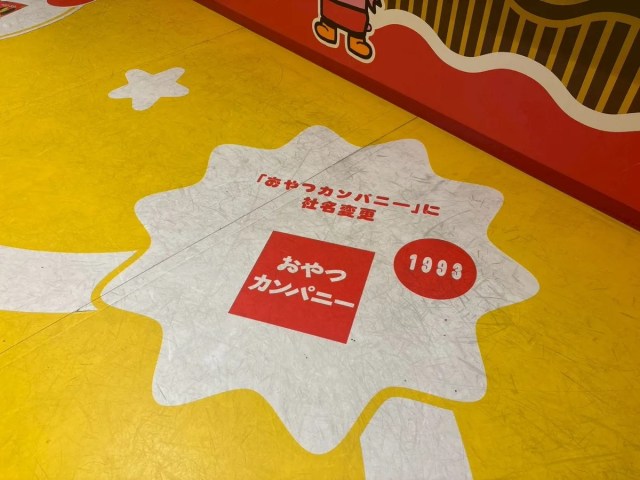
It was quite interesting to learn that the name change to Oyatsu Company was an unexpectedly recent development.
▼ Not at all spoken through the pitch-black sunglasses of denial: 1993 is still very recent.
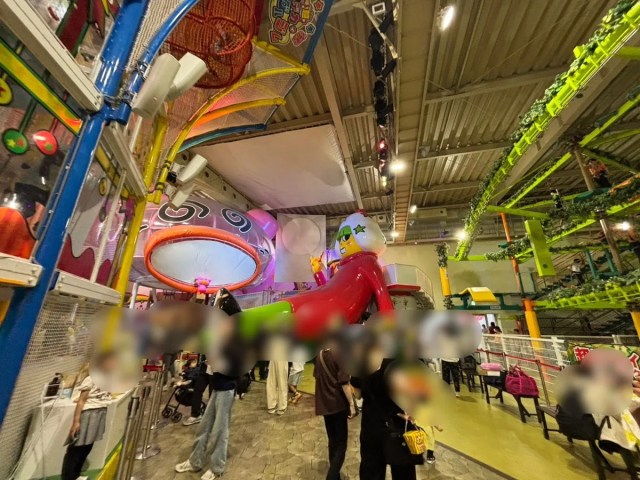
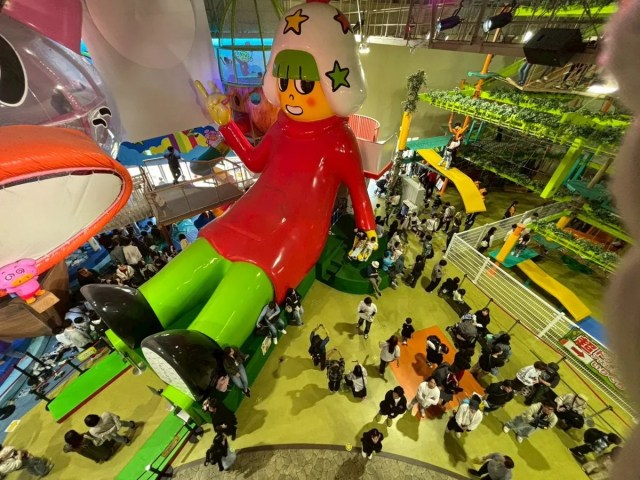
Proceeding further inwards, a giant athletic area appears, teeming with the Golden Week crowd of people.
While as an adult, Natsuno tends to curb her childhood playfulness and instead let her children loose to gallivant through play areas, she couldn’t quite restrain herself from wanting to join in on the fun. Looking around, she could even see many adults playing there quite seriously, so she embraced her inner child and entered the play equipment.
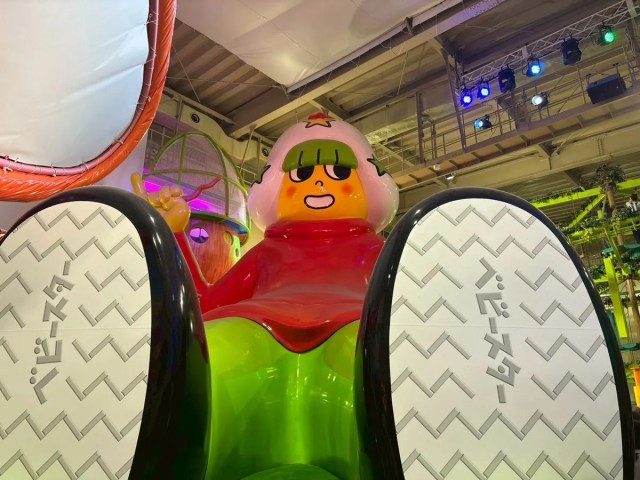
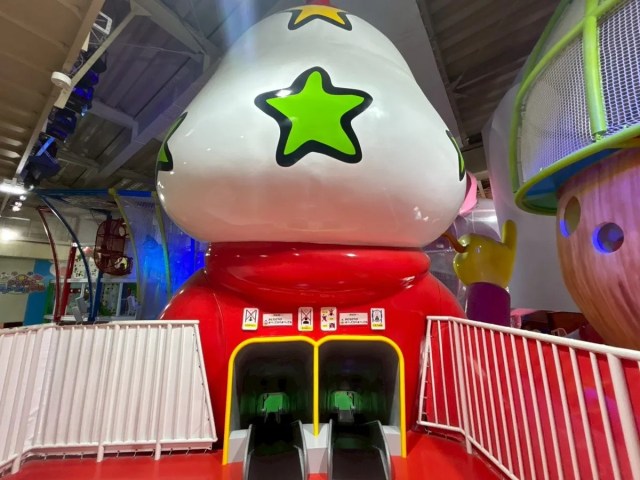
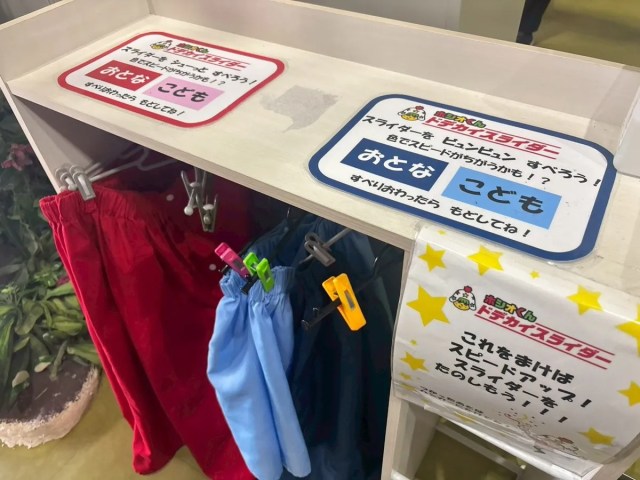
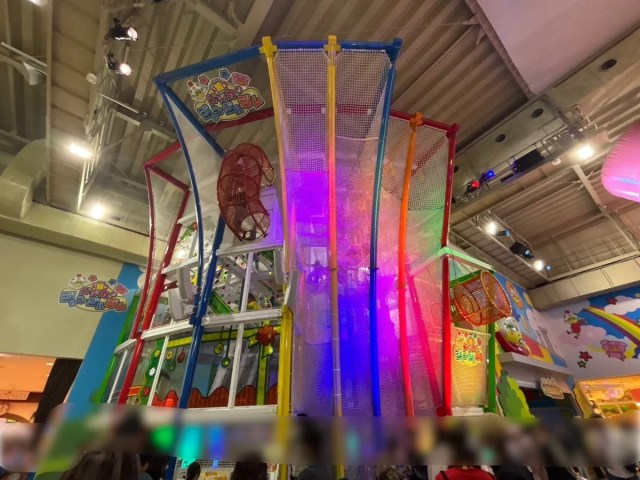
Among them, what was particularly enjoyable was the Hoshio-kun Giant Slide, which gets quite a bit of speed.
▼ They’re even considerate enough to provide wrap-around skirts to make sliding even more speedy.
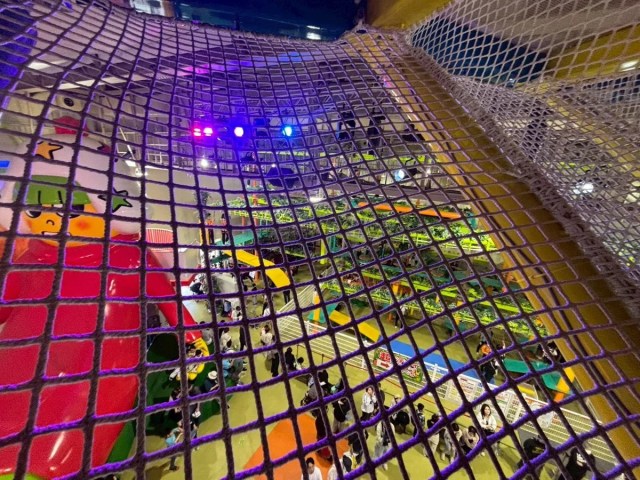
The Super Giant Butamen-kun Adventure and Giant Jungle Gym are also extremely fun.
Since you walk on the net, the stimulation to the soles of your feet is amazing, nearing the level where you might mistake it for a minor piece of health equipment.
▼ Natsuno is still a child at heart, she promises.
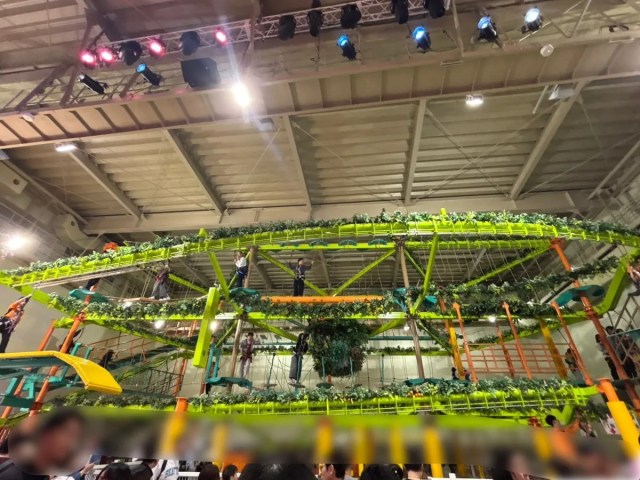
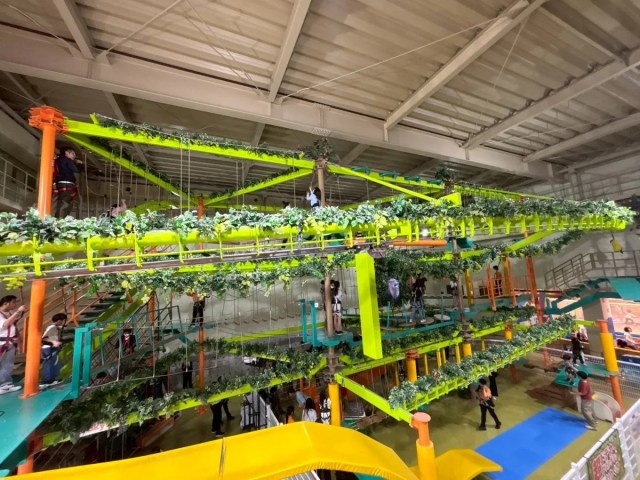
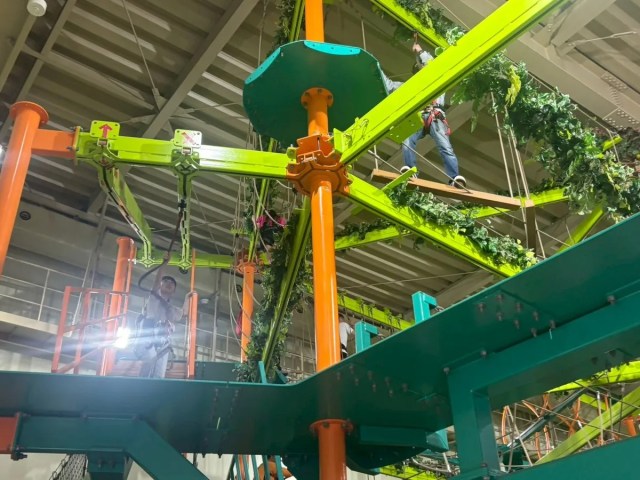
The most popular one, though, is the giant athletic course consisting of three whole floors, which are divided by height; the first floor is for small children, but the second and third floors offer up more of a challenge.
Natsuno ventured up to the third floor together with her children but had to retire halfway through for a very specific reason: her sweaty hands.
It’s a little difficult to see in the image below, but this is a course where you have to move forward while moving around the outside of orange bars that bulge outward.
With hands that get particularly sweaty, Natsuno could just foresee herself slipping off due to them. Yet, because she wanted to show her children an inspirational figure that takes on challenges even in the face of adversity, plus it was too frustrating to just give up, she attempted it a second time and cleared it safely. However, she later heard from her children, “since we were moving ahead of you, we couldn’t see you.” Sad though she was, she still felt a sense of accomplishment, so it wasn’t all bad.
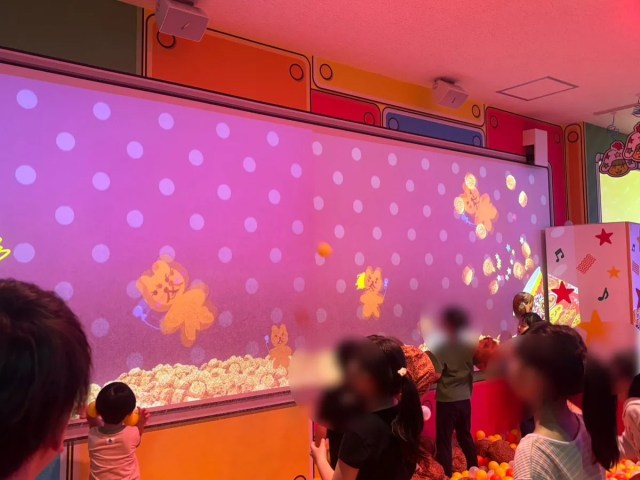
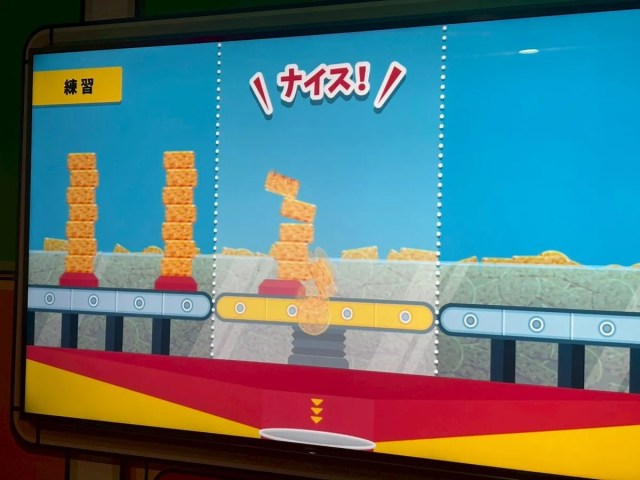
▼ There is even a section of the park dedicated to interactive digital content that kids can have fun with.
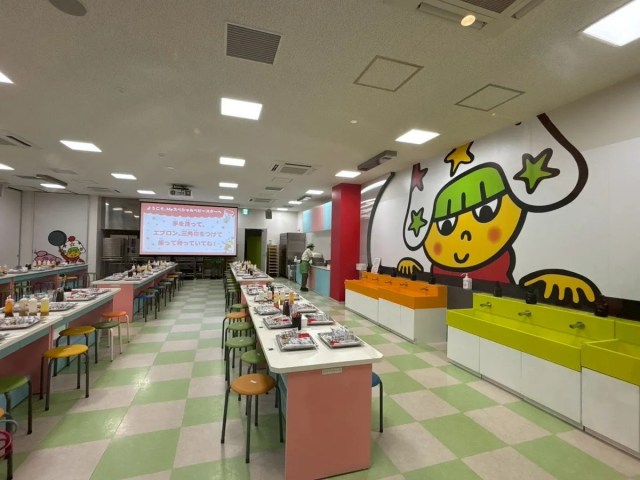
Next, the family moved on to the experience of making Baby Star at Hoshio-kun Kitchen, where you can make your very own original Baby Star Ramen.
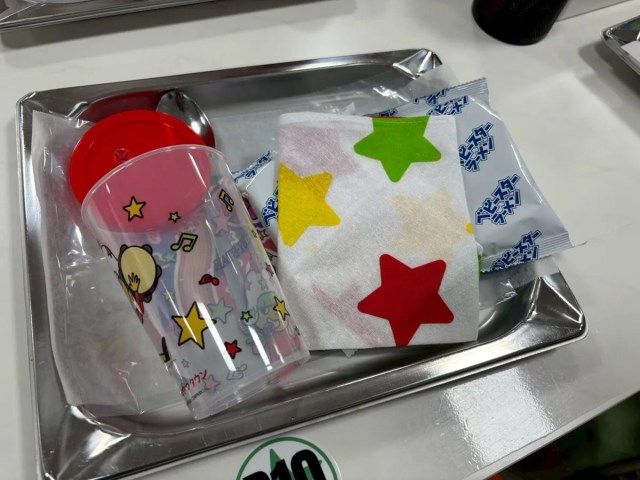
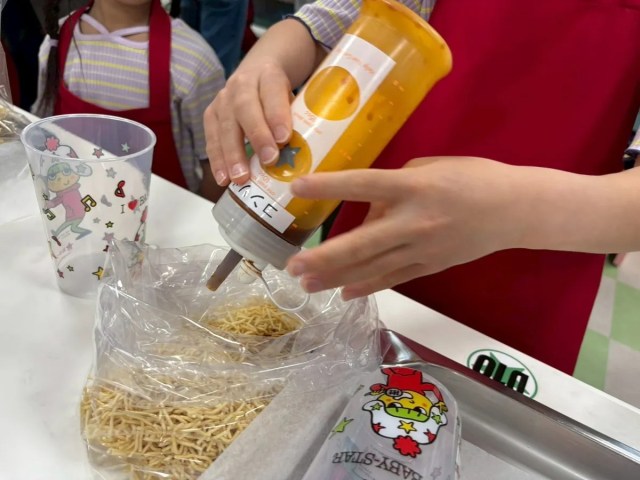
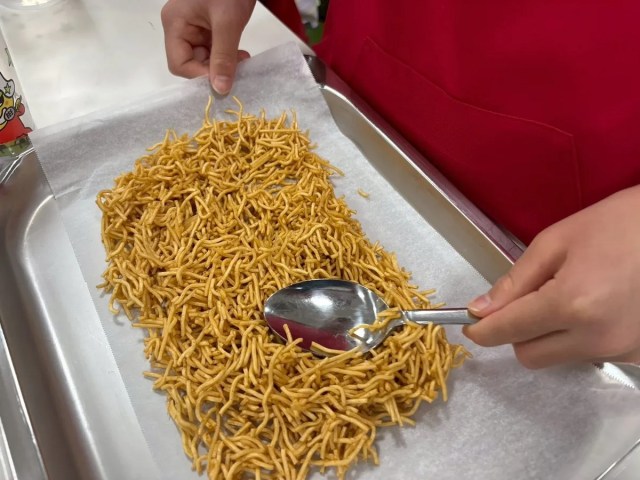
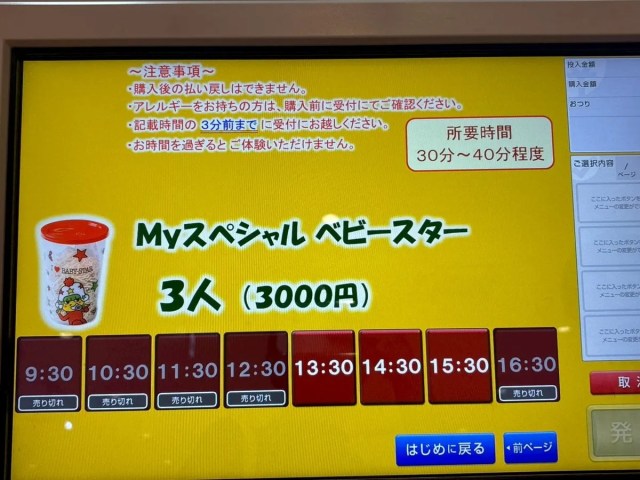
For an additional 1,000 yen each to the park entrance fee, the children challenged the “My Special Baby Star,” where you can choose your favorite flavor from several types, season it yourself, and then have the staff bake it for you in the oven.
Natsuno had reserved in advance, but there seemed to be sufficient availability that you could even reserve on the day itself.
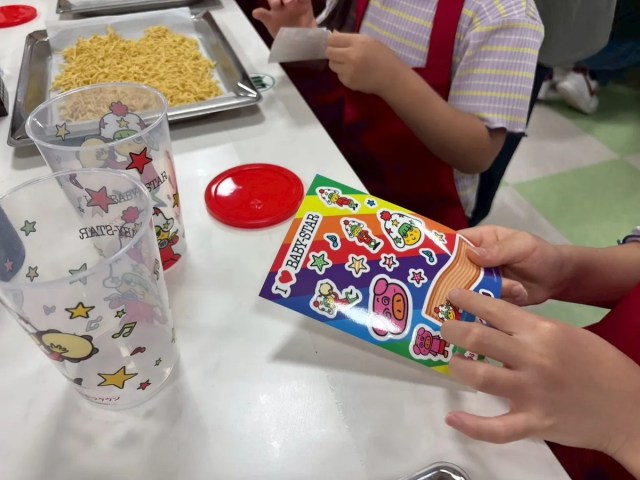
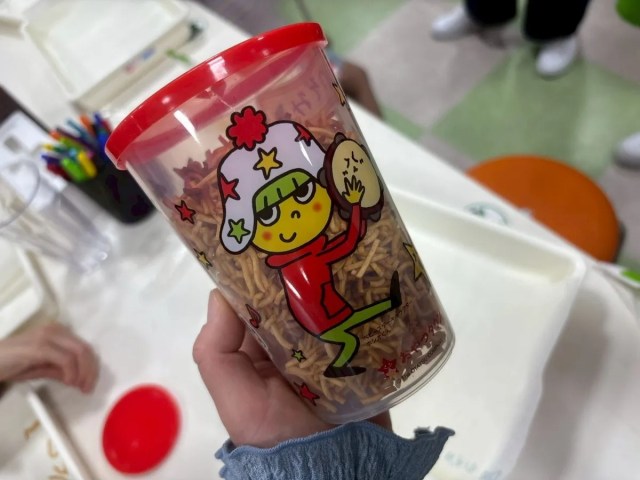
After completing the ramen, you put stickers on the original container, though her children instead opted to put on only a few, saving the rest for later to add to their sticker collection albums.
The family came away from the experience with the children beaming with happiness and proud faces for their new creations.
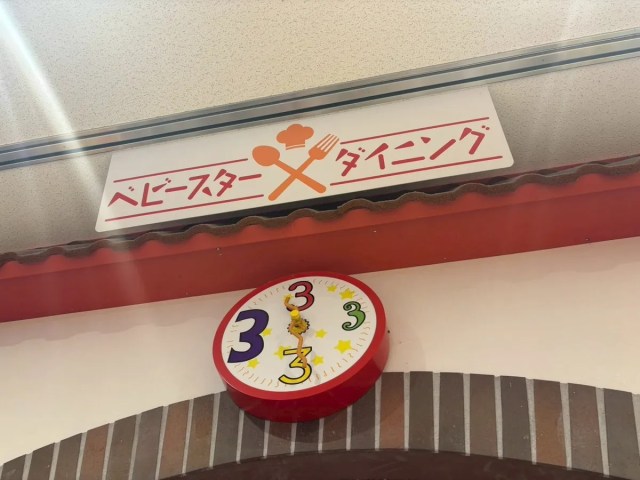
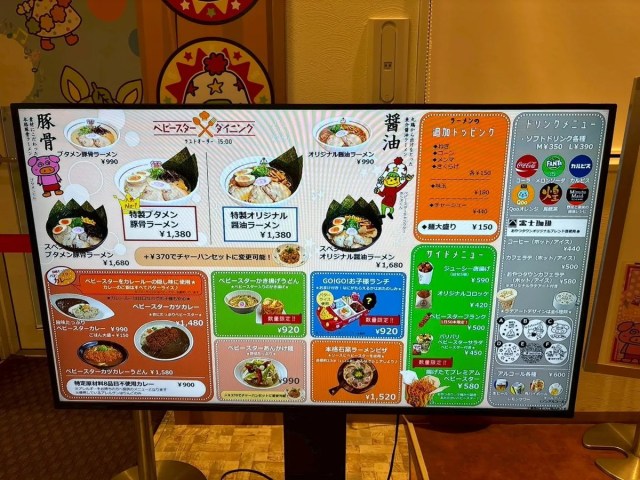
However, being hungry, they decided to swing by Baby Star Dining, where you can savor original foods using Baby Star, such as Baby Star Katsu Curry.
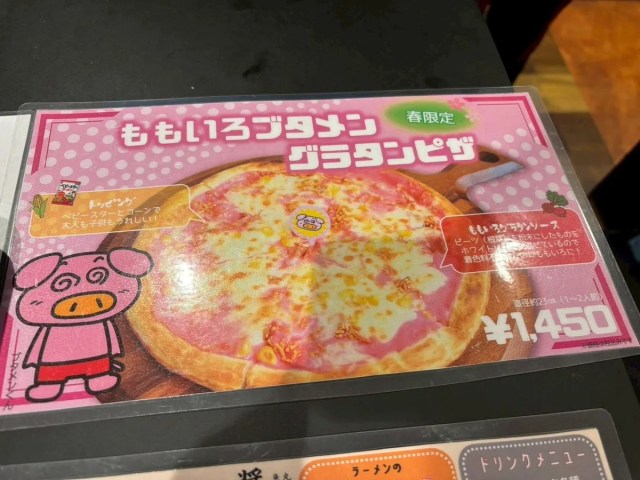
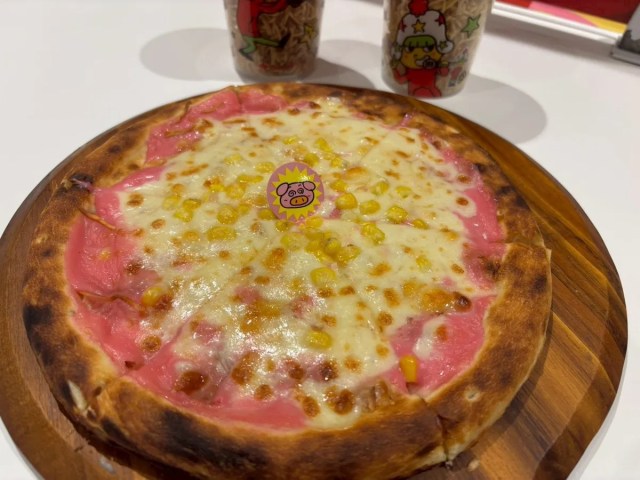
Among them all, Natsuno can personally recommend the pizza, particularly the limited-time Pink Butamen Gratin Pizza, being a lot more authentic than expected.
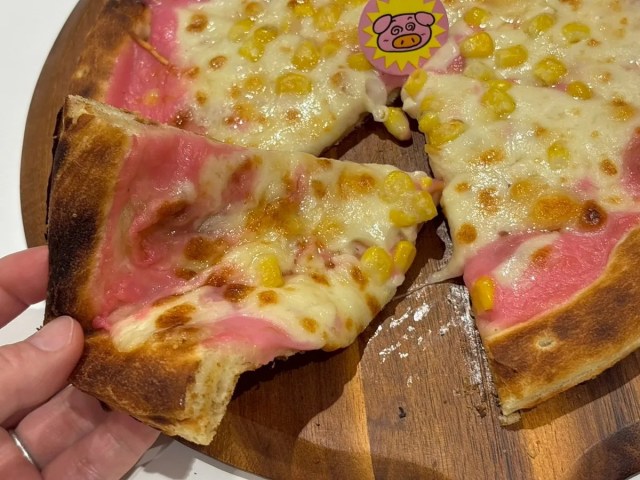
It’s baked in a pizza oven, so you get that classic pizza base texture, and the pink coloring is added via beetroot instead of food coloring.
The appearance certainly has quite the impact, referencing Butamen and its pig mascot, but the taste has no unexpected quirks and is extremely delicious.
▼ The Ramen Pizza was also full of ingredients and highly satisfying.
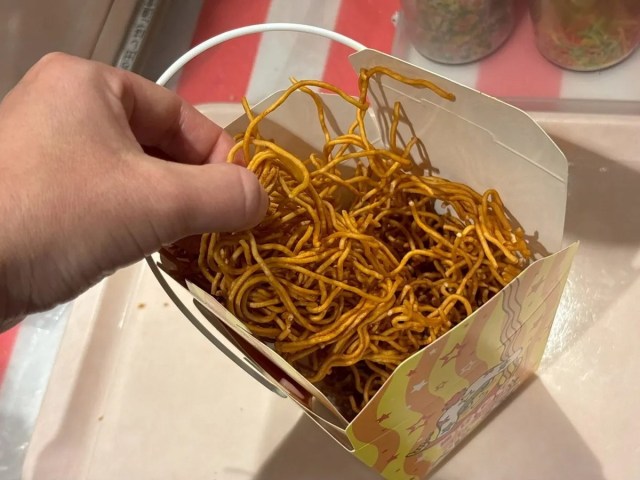
Of course, you can eat freshly-fried Baby Star Ramen.
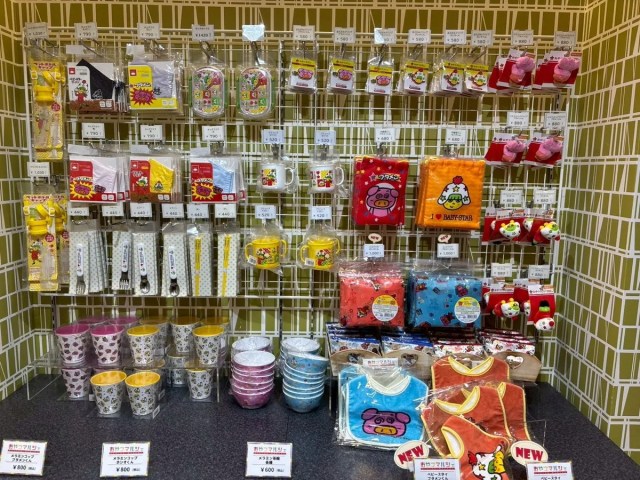
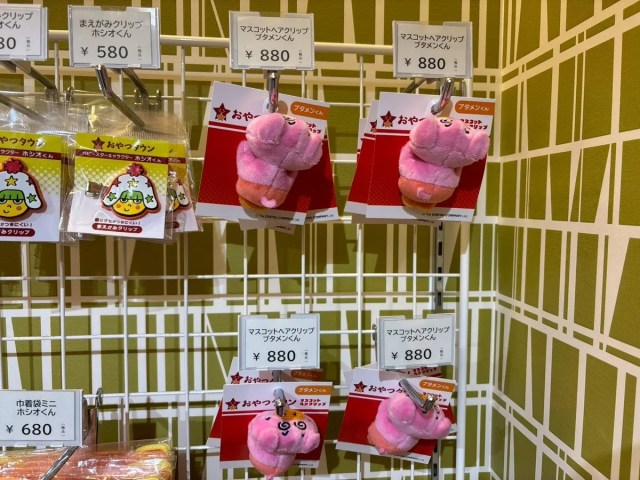
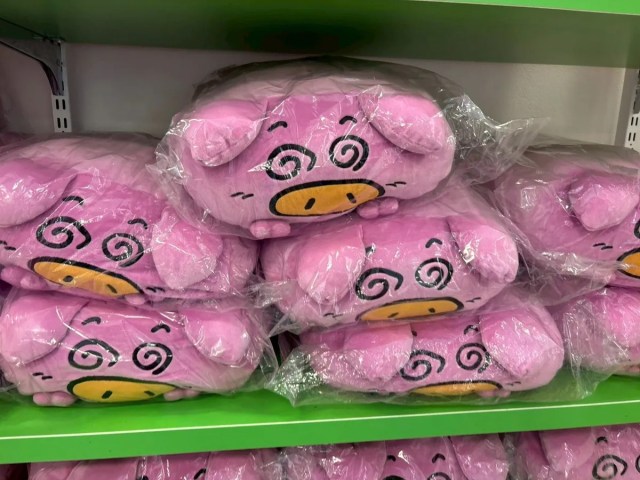
At the gift shop Oyatsu Marche, limited-edition products and character goods are lined up, with Natsuno being drawn to all of the Butamen goods. He just has such a charming presence…
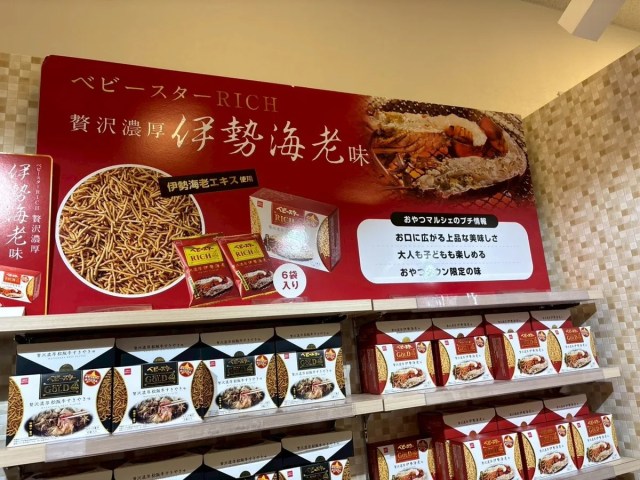
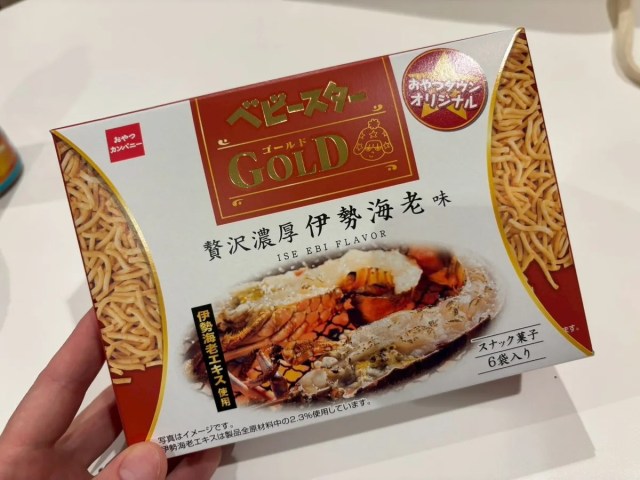
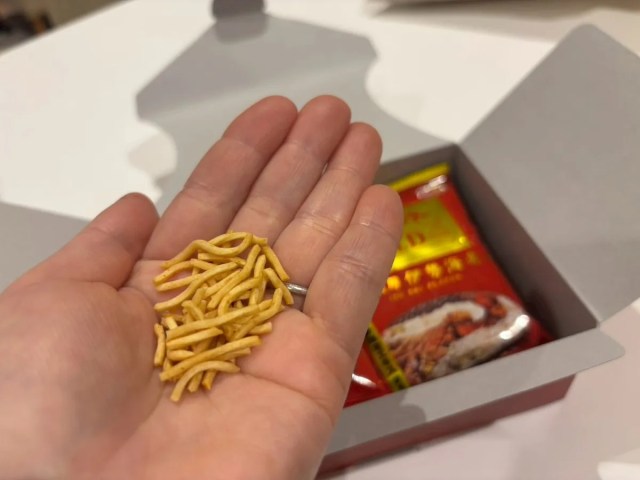
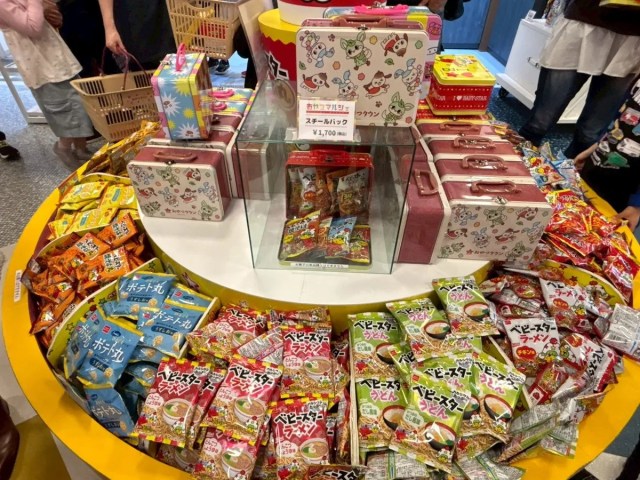
Natsuno also discovered Baby Star limited to Oyatsu Town, this time purchasing the Spiny Lobster Flavor (850 yen for a pack of six), and found it to have a very strong shrimp taste, both rich and delicious.
There was also a cute, little steel suitcase-like container that you could stuff your favorite Baby Star flavors into for just 1,700 yen.
Before walking through the doors, Natsuno had assumed she would be entering a facility designed just for children, but she ended up, even as an adult, enjoying it with all her might.
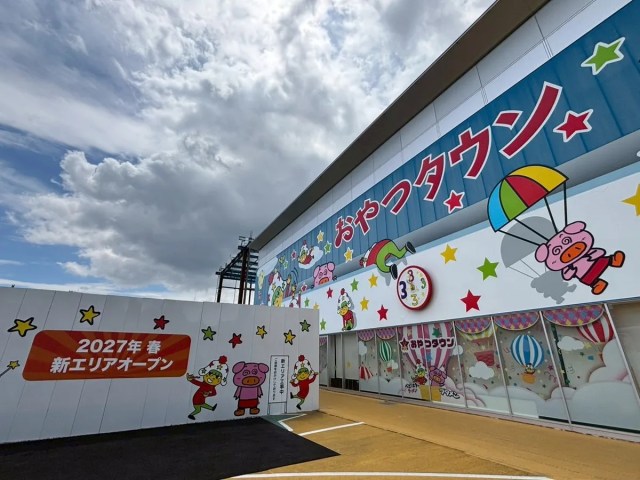
In the end, from their 10:30 a.m. start, they stayed fully until the closing time at 5:00 p.m., staying more than six hours. With the addition of a new area opening in Spring 2027, there will be even more to get lost in, although prospective visitors should take note that the park will be closed from January 12, 2027, to prepare for this new opening.
Whether you visit with kids or not, it’s all but guaranteed you’ll have a great time exploring Oyatsu Town, just remember to book in advance on the weekends and holidays.
As well as a double-sized cheesecake worth fighting battles over.
The world may be subject to the annoyances of shrinkflation, but over the past few years, there’s been a running trend in Japan of campaigns where prices remain the same though the amount of food is increased. Family Mart started the show, with Lawson, MiniStop, NewDays, and other convenience store chains now regularly holding these campaigns.
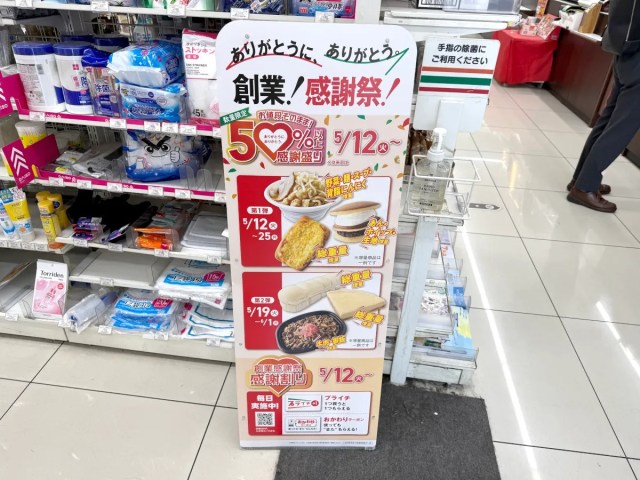
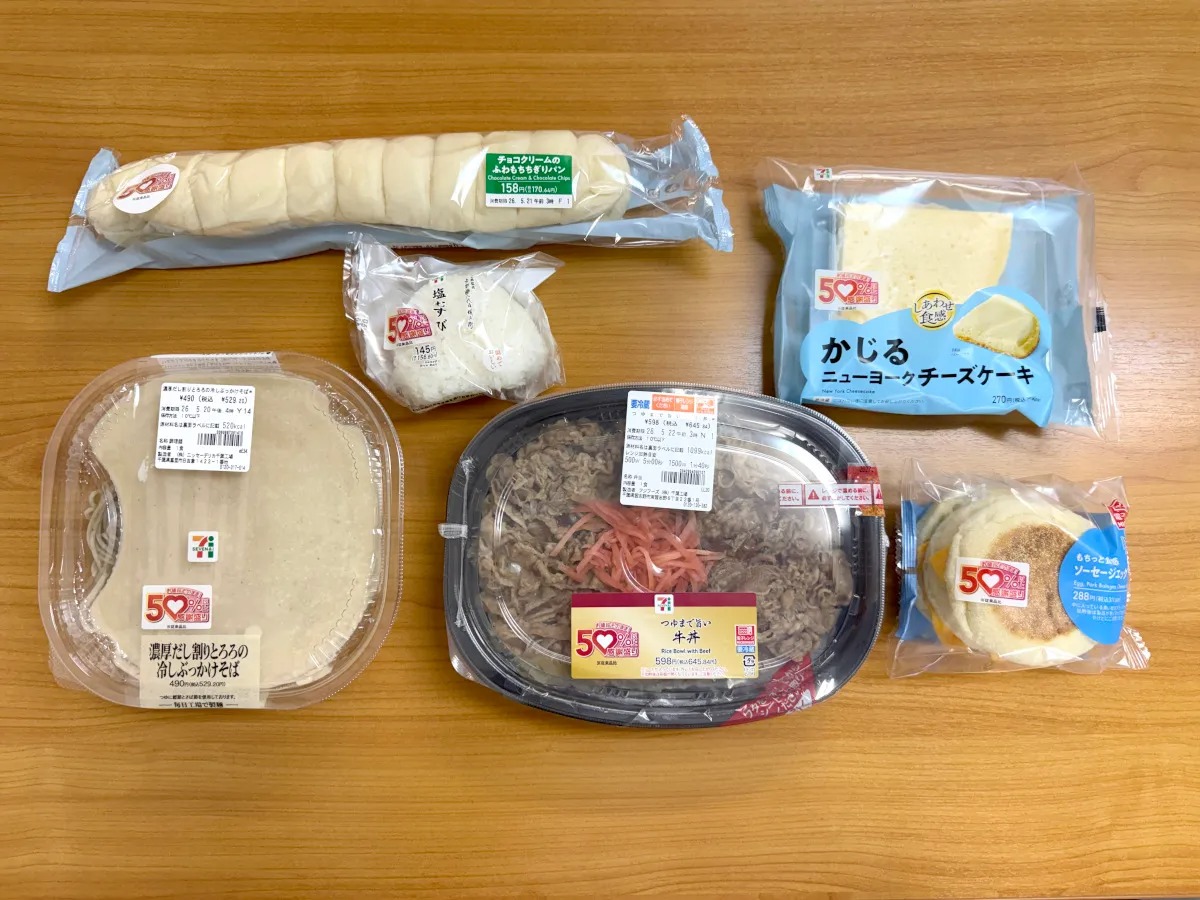
7-Eleven Japan kind of missed that wave, but with the Founding Anniversary Sale that started on May 12, they released six food items that saw increases in their amounts, including a bowl of ramen that weighed a hefty 1,084 grams (2.4 pounds).
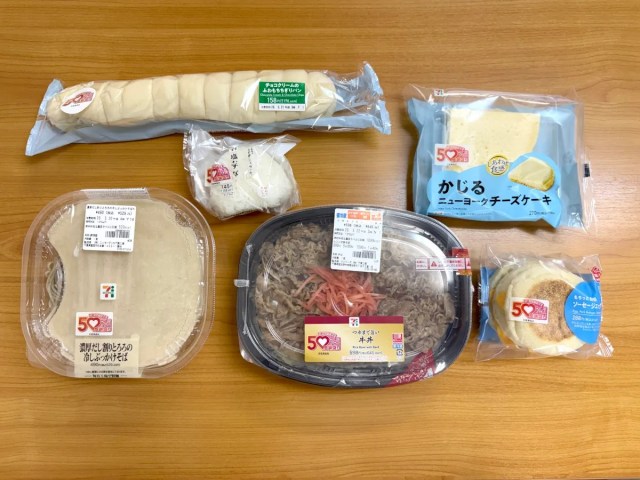
From May 19, the second phase of what they’re calling the “Thank You Extra Large” series started, with an addition of another six products. Seeing as we managed to get our hands on the entire set, let’s tap into our gastronomic senses and share our thoughts and feelings on each item.
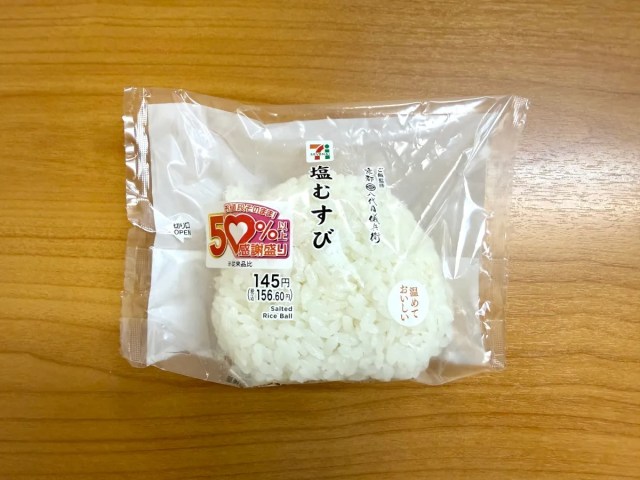
Salted Rice Ball (156 yen [US$0.98]) – ★★☆☆☆
The Salted Rice Ball is a simple but classic item, with no hidden surprises inside and only an increased amount of rice. While it is a joy just to have an increase in volume, its other characteristics haven’t changed so it’s not bad, but since it lacks excitement, it only gets two stars.
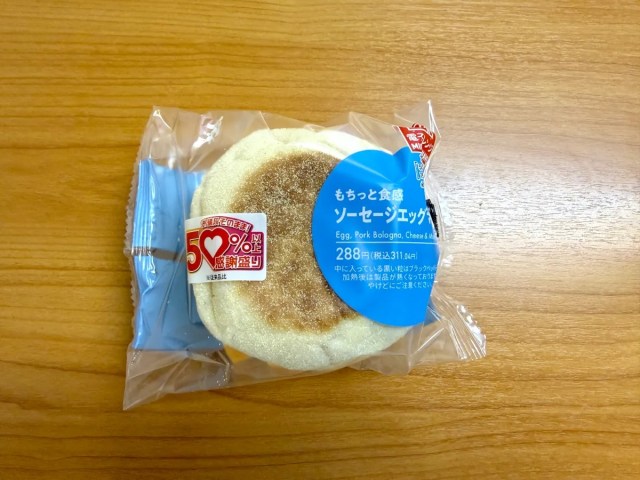
Sausage Egg Muffin (311 yen) – ★★★☆☆
This has increased muffin, sausage, and cheddar cheese, and a total weight of 215 grams (0.47 pounds), making it quite satisfying to eat. Picking it up provides you with a heavy and solid feeling in your hand, and the side-view is really tall.
This is “three stars” that leans heavily and cheesily towards four.
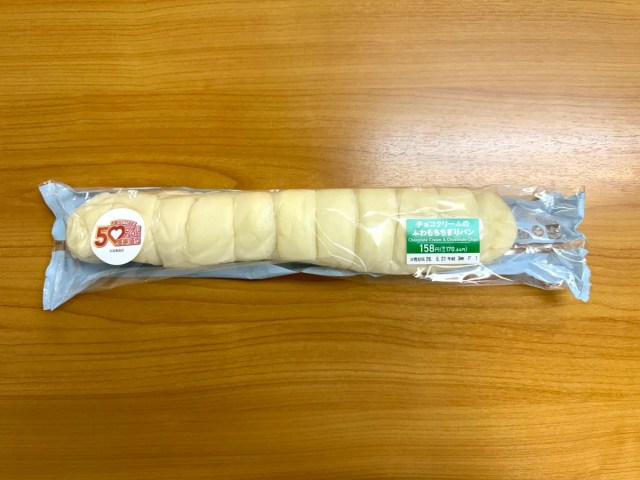
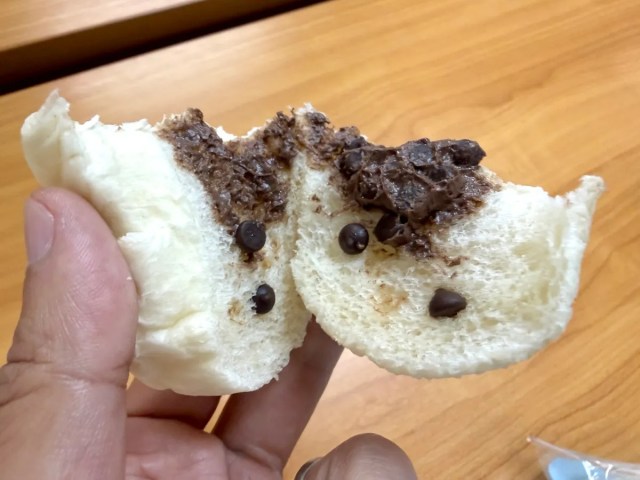
Fluffy and Chewy Pull-Apart Bread with Chocolate Cream (170 yen) ★★★★☆
The pull-apart bread with an increased total weight is visually impressive: it’s just so long. The impact is strong and has a clear sense of value. In addition to the deliciously chewy dough, the smooth chocolate cream contrasting with the chunky chocolate chips is also great.
This bread is a highly rated “four stars”.
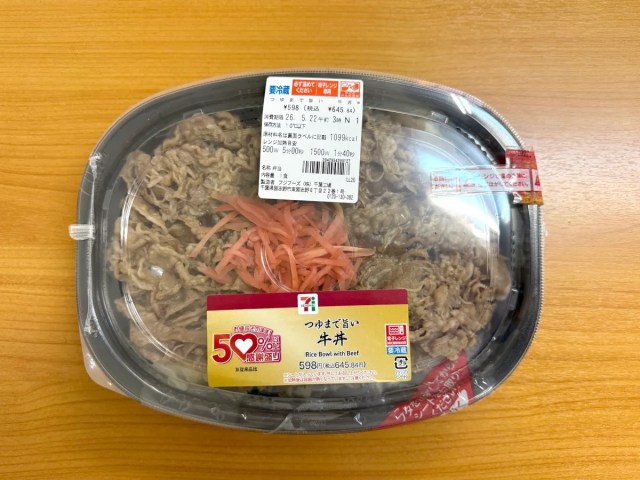
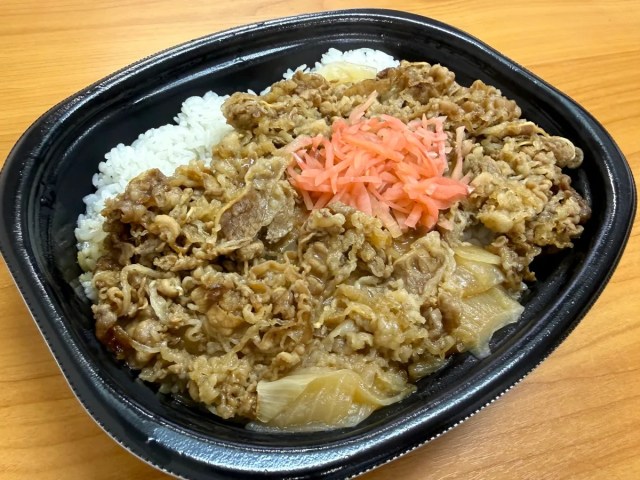
Rice Bowl with Beef (645 yen) ★★★★☆
Claiming to be delicious down to the sauce, the beef bowl has seen an increased amount of both beef and rice, recording a weight of 610 grams (1.3 pounds). Eating it up, we appreciated how it wasn’t just bulked up with extra rice, but did in fact include a decent amount more meat too.
This dish is definitely recommended for those who want a voluminous meal: four stars.
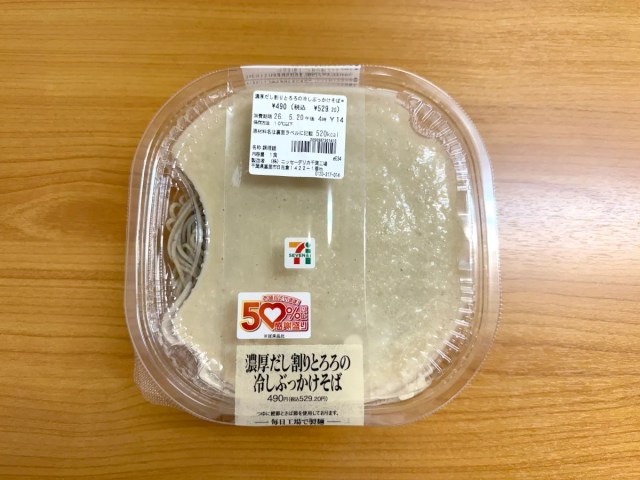
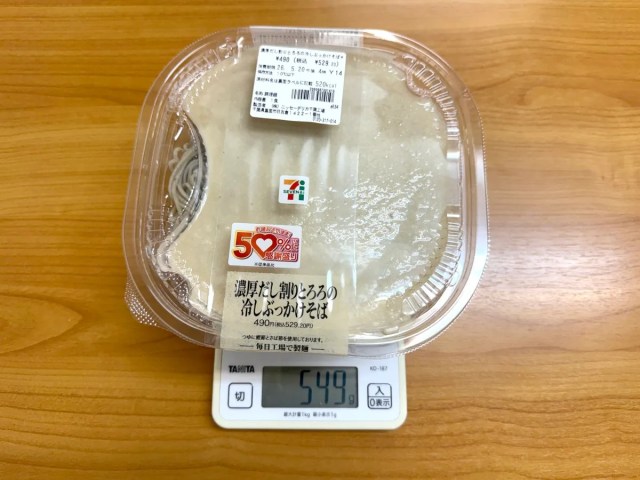
Chilled Bukkake Soba with Rich Dashi-Blended Tororo (529 yen) ★★★★☆
Here is a simple dish of tororo soba noodles with increased noodles, sauce, and tororo (grated yam). With the total weight of 549 grams (1.2 pounds) making it slightly inferior to the beef bowl, it is about 120 yen cheaper, so the value for money is excellent.
Factoring in the increasing temperatures, this cooling and refreshing meal is assuredly worth four stars.
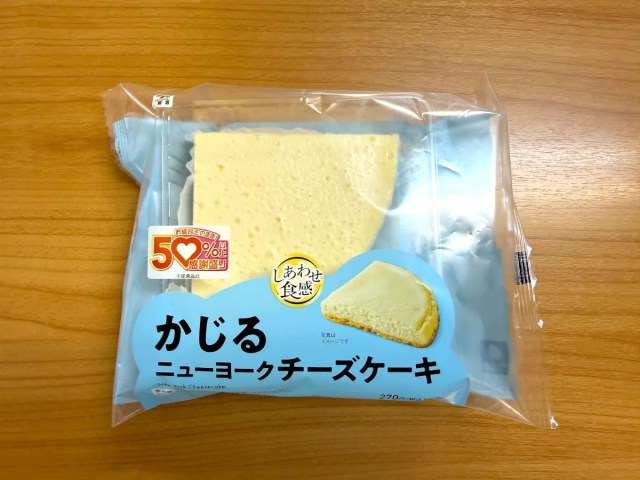
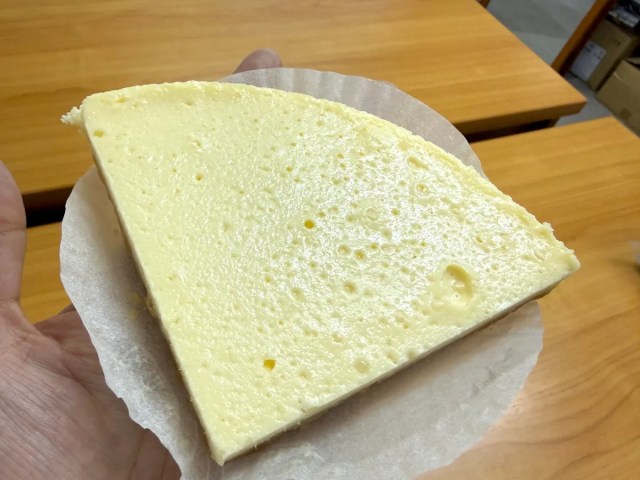
New York Cheesecake (291 yen) ★★★★★
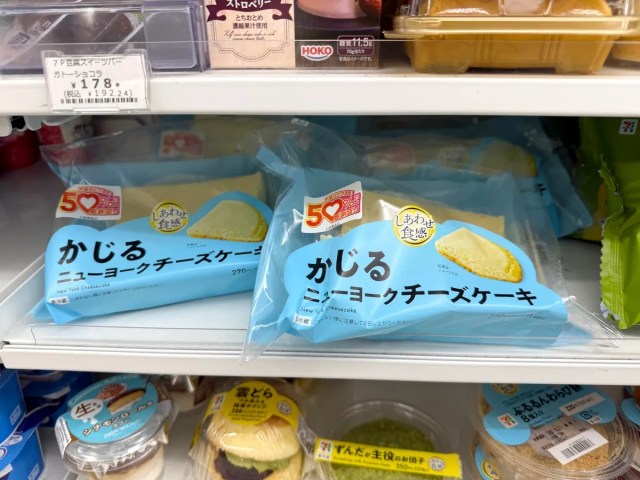
This phase’s winner by far! With a mouthwatering taste that will capture the heart of anyone with a penchant for desserts, this feels like a cheesecake on steroids, having roughly the same weight as two of the regular cheesecakes.
It’s proven to be so popular that it’s out of stock in many of the stores, so prepare for a battle to get it. A hands-down five stars.
Our number one recommendation to try is the New York Cheesecake, so even if you try nothing else from this phase, though they all have their own charms and are delicious in their own right, be sure to swing by your nearest 7-Eleven store to try it.
This item is so good that cheesecake shortages might be a common feature of the coming weeks, but you only have until the final day on Monday, June 1, to partake in this campaign, so keep your eyes locked on those refrigerator restocks.
Intense summer heat means new safety rules and ice-cold drinks.
Summer in Japan is popular for many things, from festivals and fireworks to delicious and refreshing treats, but there is also another undeniable aspect to the season: it gets pretty hot. In fact, in recent times with consistently high temperatures, the Japan Meteorological Agency officially introduced a new term to refer to days that reach over 40 degrees Celsius (104 degrees Fahrenheit), meaning that working outside this summer is not likely to be an easy feat. So, Japan Post has announced an update on how they will be looking to keep their hard-working staff safe as they strive to deliver mail in a timely manner.
The Ministry of the Environment utilizes a heat index called WBGT (Wet Bulb Globe Temperature) to issue safety warnings, which will be referenced by Japan Post’s new policy to determine their course of action. Under this policy, if a “Heatstroke Special Alert” is issued (when the index is predicted to hit 35 degrees Celsius [95 degrees Fahrenheit]), all outdoor deliveries and collections by foot, bicycle, motorcycle, and pushcart will be temporarily suspended to protect workers. Additionally, on standard “Heatstroke Alert” days (with the index at 33 or above) or when the temperatures soar past 40 degrees Celsius, local postmasters can shift the delivery windows to completely avoid the hottest afternoon hours.
For the general public, this doesn’t have a significant impact, with general mail being a little slower to arrive. However, if you’ve selected a specific time slot for a package delivery on an intensely hot day, particularly around midday, there is a possibility that it might arrive later than scheduled on the same day or on a later date.
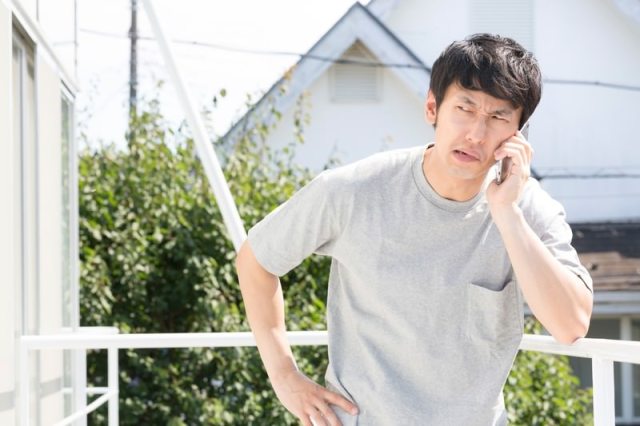
▼ Just show a little patience, instead of reaching for your phone to complain.
To make these gruelling outdoor shifts more comfortable, Japan Post is also allowing some extra gear to be worn, so you might see your local mail carriers rocking some cool sunglasses, neck coolers or fan-equipped vests.
Mail carriers are now officially encouraged to take quick hydration stops at convenience stores during their route, so don’t be surprised if you see a postal worker stopping in for a brief breather and grabbing a refreshing beverage.
This summer, if your mail happens to take a slightly more relaxed route on a blazing afternoon, don’t get too worked up. Sit back, crank up the air conditioning, and enjoy a cold drink, because your delivery is still safely on its way, being carried by a team that is also looking to stay cool and hydrated.
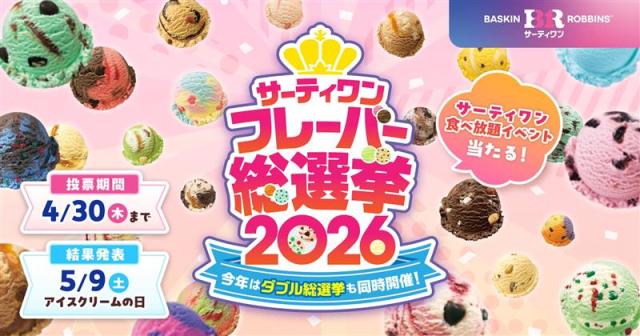
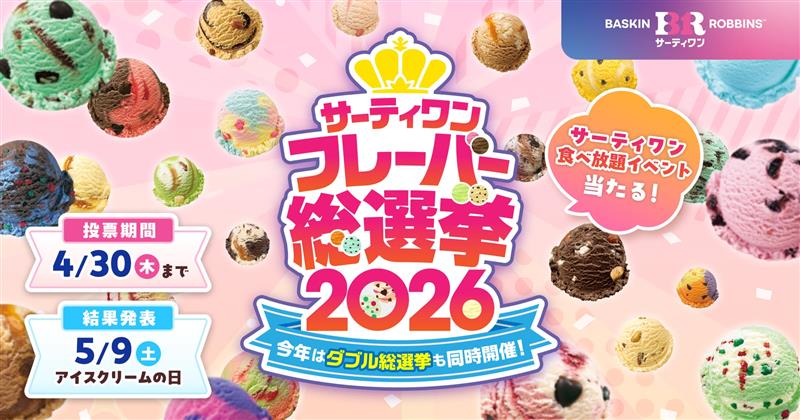
For the last five years, Baskin-Robbins Japan (colloquially known as “31”) has been holding an annual Flavor Election that petitions fans of its ice cream to vote for their top flavors to discover the nation’s favorite.
Out of a possible 1,400 original flavors that could have been potentially chosen from across the 53 years it has been operating in Japan, Baskin-Robbins narrowed down the contenders to the top 100, based on their own data, for fans to vote on and determine the tops spots in popularity.
Starting with the overall top five, the tallies are:
5. Strawberry Cheesecake – 28,593 votes
4. Jamoca Almond Fudge – 30,190 votes
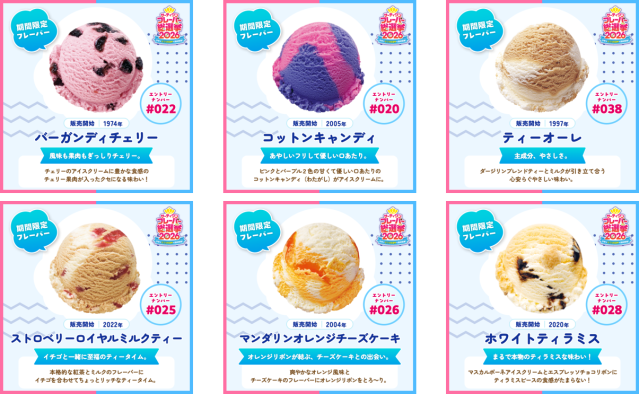
3. Burgundy Cherry – 31,163 votes
2. Cotton Candy – 31,509 votes
1. Love Potion 31 – 69,318 vote
With more than double the amount of votes as second place, this year’s runaway champion is Love Potion 31, a flavor poised to make you fall in love with it thanks to a delightful mix of raspberry and white chocolate ice cream with chocolate heart accents.
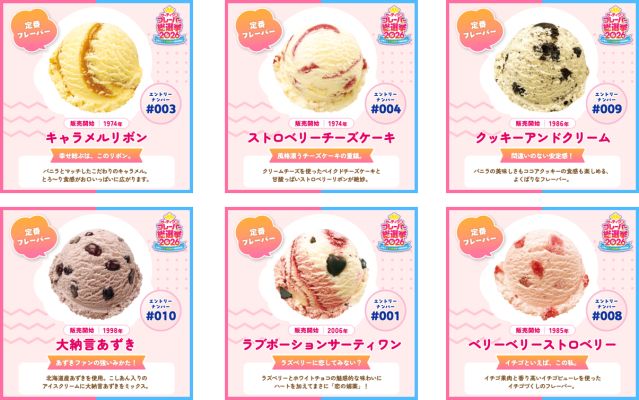
▼ Caramel Ribbon, Strawberry Cheesecake, Cookies and Cream, Dainagon Azuki, Love Potion 31, Very Berry Strawberry
One of the charms of Baskin-Robbins is the rotating limited-edition menu, with new and exciting flavors available each season, necessitating regular visits for anyone with even a hint of a sweet tooth. The most popular among the limited-edition flavors are:
5. Daiquiri Ice – 15,520 votes
4. Magical Mint Night – 17,522 votes
3. 31 All Stars – 18,646 votes
2. Burgundy Cherry – 31,163 votes
1. Cotton Candy – 31,509 votes
While Cotton Candy was second in the limited-time category in last year’s poll, this year the sweet cotton candy ice cream rose to the top of this sub-section for the first time, with Baskin-Robbins’ cherry ice cream with rich cherry chunks a very close second.
▼ Burgundy Cherry, Cotton Candy, Tea Au Lait, Strawberry Royal Milk Tea, Mandarin Orange Cheesecake, White Tiramisu
Of course, with so many new flavors making appearances each year, there are naturally promising newcomers who are looking to build their fanbase. The flavors that have overtaken their fellow new counterparts in the poll this year are:
5. Berry Meets Pistachio – 3,648 votes
4. White Tiramisu – 4,931 votes
3. Mandarin Orange Cheesecake – 5,099 votes
2. Strawberry Royal Milk Tea – 5,772 votes
1. Melty Strawberry Chocolate – 7,926 votes
Melty Strawberry Chocolate is a mouthwatering addition to Baskin-Robbins’s offerings that’s a mix of a chocolate and strawberry ice creams, further blended with a ribbon of strawberry sauce and chocolate chunks to balance its sweet and slightly sour elements.
This time around, Baskin-Robbins has introduced a new category: Double. The option of choosing two flavors and enjoying double the deliciousness is a highly recommended way to experience the ice cream at Baskin-Robbins, so what better way to find out the next combination to try than learning other people’s pairing of choice.
The top picks for Doubles are:
5. Chocolate Mint and Popping Shower – 5,872 votes
4. Strawberry Cheesecake and Popping Shower – 7,052 votes
3. Caramel Ribbon and Popping Shower – 8,132 votes
2. Cotton Candy and Popping Shower – 12,590 votes
1. Love Potion 31 and Popping Shower – 35,202 votes
Considering how popular Love Potion 31 was found to be, it comes as no surprise that a combination featuring it has reached first place with close to three times the votes as second place.
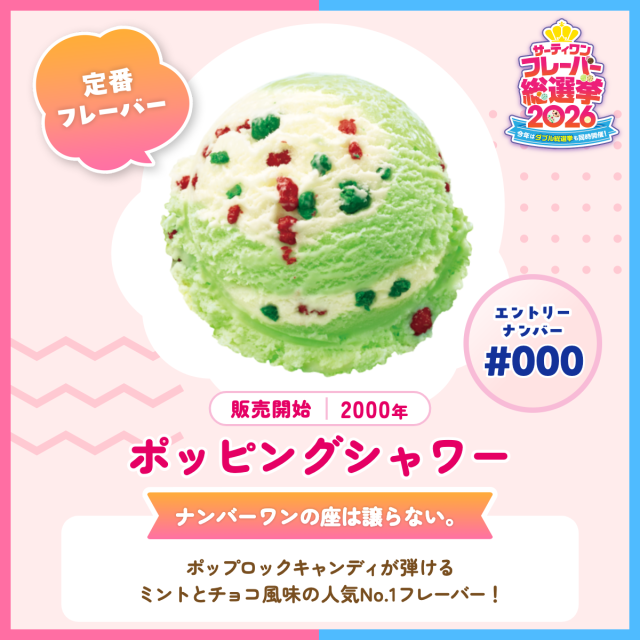
However, the list also has what might seem like an anomaly: every choice in the top five includes the PoppingShower, a flavor of mint ice cream with popping candy pieces mixed in. In fact, it was in every combination in the Top 9. Seeing the mint and chocolate ice cream, mixed with popping candy, featured so often, it is a testament to how beloved the flavor is. In total, Popping Shower enters the top 50 list a total of 19 times, including seventeenth place where it is paired with itself, so its popularity is without question. The fact remains, though, that it does not show up at all in the 100 flavors in the single category. So, why is that?
▼ The legendary Popping Shower
Well, Popping Shower is simply too popular. After its inclusion in the first-ever poll, where it absolutely crushed the competition, it was determined that any future poll would similarly be dominated by Popping Shower, so it was ceremoniously retired into the Hall of Fame and removed from the candidate list from the second poll onwards, giving the other flavors a shot at the glory of being crowned champion. Popping Shower was allowed special entry into the Double category where it demonstrated that its dominance over other flavors has not diminished at all with time.
As a result of the poll, Baskin-Robbins Japan have pledged to turn the overall winner Love Potion 31 into an original keychain to be given to 31 winners selected by lottery from those who voted for it. They also promise to re-release the top three limited-edition flavors in 2027, so keep your eyes peeled for their return. In addition, there will also be gift cards, all-you-can-eat event vouchers, and variety box vouchers up for grabs in the lottery for those who participated in the poll. If you want to be in a chance for winning, keep checking for news of the poll next year.
With the frequently rotating menu, the best time to visit Baskin-Robbins is: always. However, if you don’t eat ice cream very often, but still want to see what all the fuss is about, you can’t go wrong with getting a Double with this year’s champion, Love Potion 31, and the eternal king Popping Shower.
You can haul back thousands of yen worth of ramen, rice, and snacks for a fraction of the price.
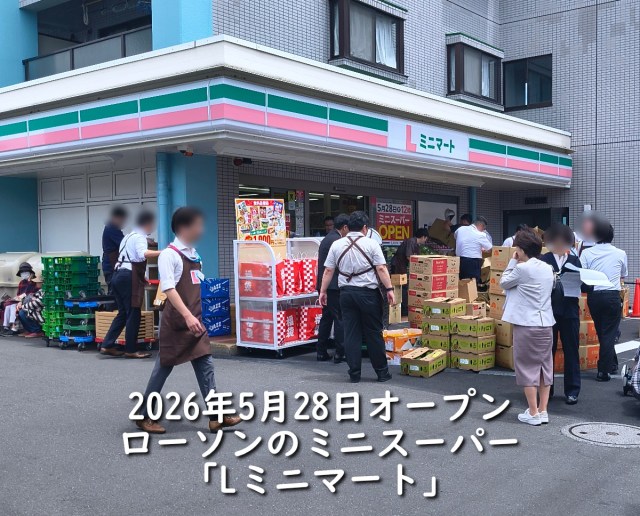
Expanding its reach with additional sub-brands, one of Japan’s big-three convenience stores, Lawson, opened the doors to L Minimart, its first “mini supermarket”, on May 28 in Kodaira, Tokyo. Excited to learn more about what this new brand will entail, our Japanese-language reporter Mr. Sato joined the crowd of the roughly 200 people who wanted to be among the first to step through the store’s doors on the day of its opening.
Mr. Sato arrived early enough that he was able to line up, peruse the store, and complete his shopping without any significant wait time or issues, but by the time he was wrapping up his visit, other prospective customers were being told that they would likely have a one-hour wait to enter.
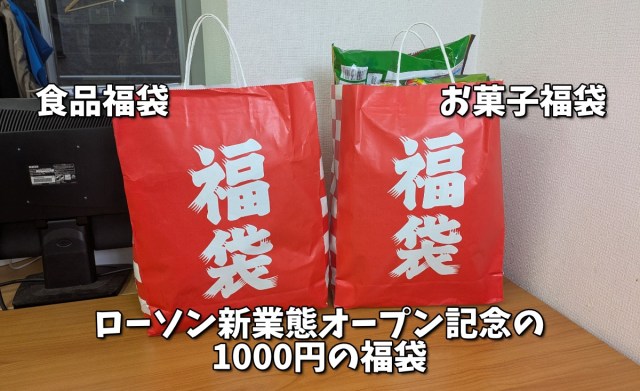
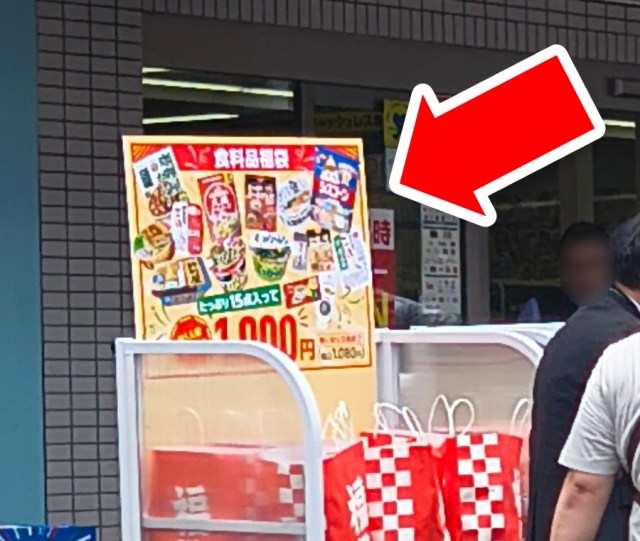
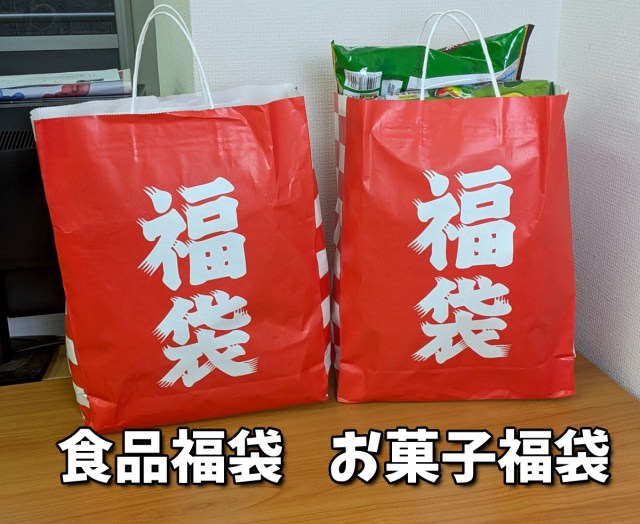
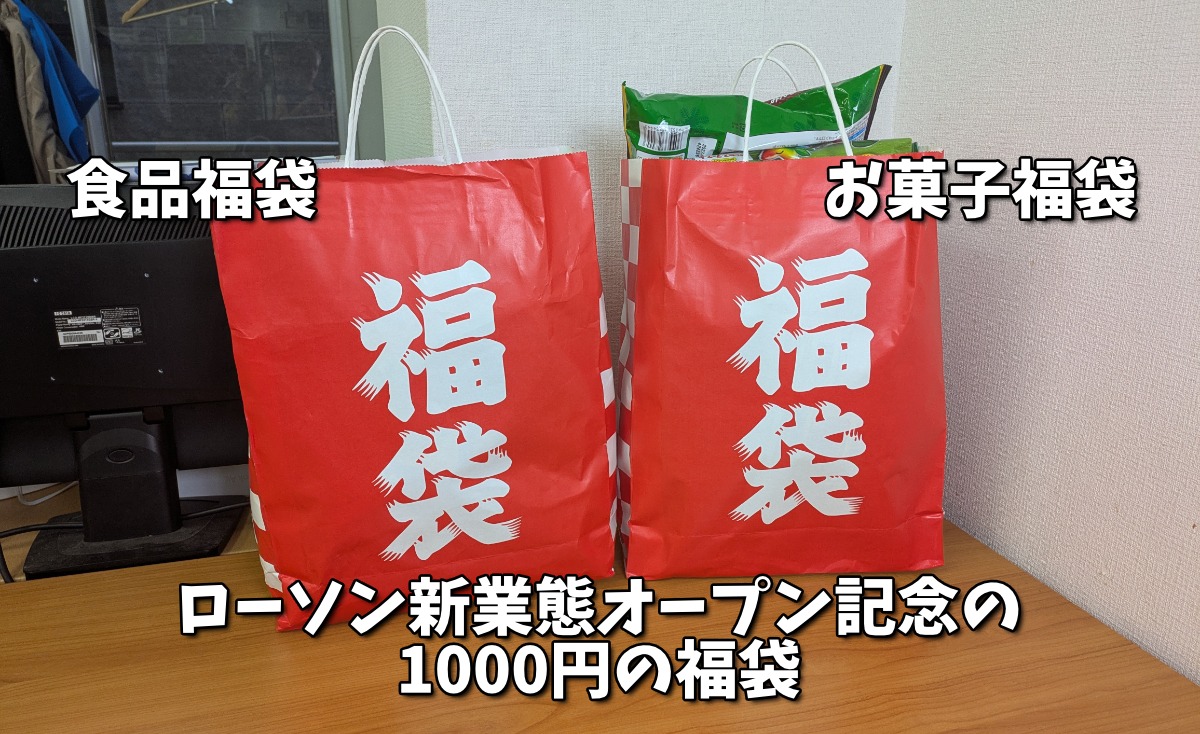
As Mr. Sato walked back from the store to the nearest train station (Kodaira Station), he couldn’t help but look down at some of his recent purchases. In commemoration of the opening, he discovered the store was selling two types of lucky bags, also known as fukubukuro: one full of food and the other stuffed with snacks, and both priced at 1,080 yen (US$6.76) per bag.
Longtime readers may be familiar with our annual report on the New Year’s fukubukuro that go on sale at all manner of stores in Japan, but they’re not an uncommon sight to see throughout the year too, particularly if the store is involved in some sort of celebration or campaign.
A lot of times when good deals like these crop up, the amount of bags that each customer can purchase is limited, so Mr. Sato was pleasantly surprised to find out that there were no official limits in place. However, he soon realized one of the unwritten limits: your arm strength.
▼ Mr. Sato only picked up one of each.
While the snack bag wasn’t so bad, the food one slowly began to feel like an iron block hanging at the end of his arm, leaving him to adjust his grip regularly, and making him pretty tired after the whole ordeal was over. He couldn’t help but wonder what it might be like for customers who are more advanced in age, and how they might struggle to haul their lucky bag back to their houses.
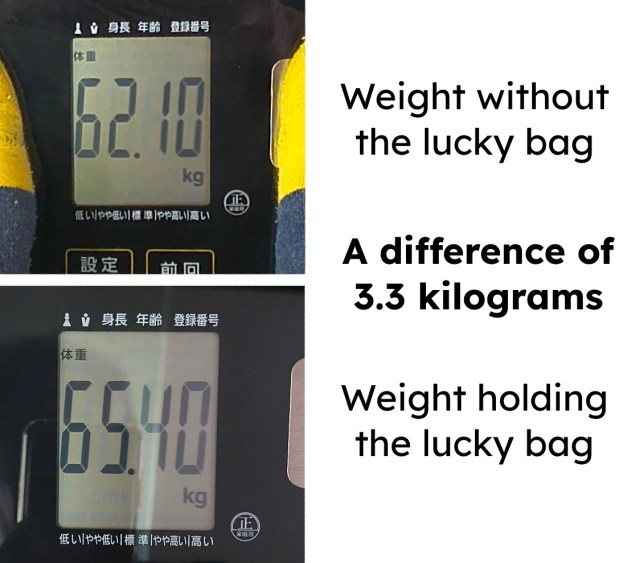
Arriving home, he quickly stepped on the scales for a base reading, before picking up the food lucky bag, filled with curiosity. How heavy was it exactly?
It turned out that the bag weighed an impressive 3.3 kilograms (7.3 pounds), so it was no wonder he was feeling a little drained.
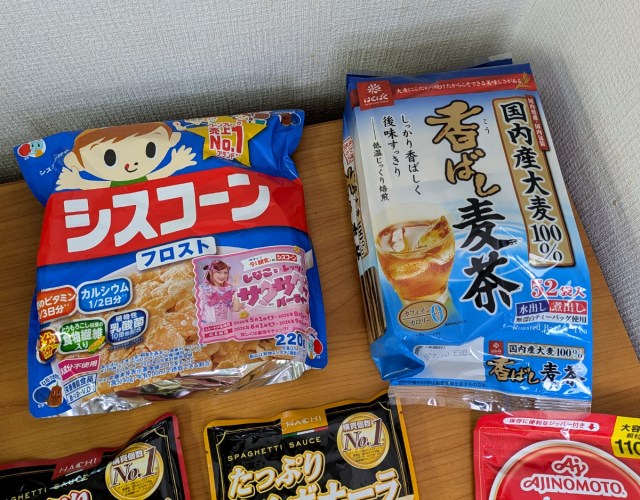
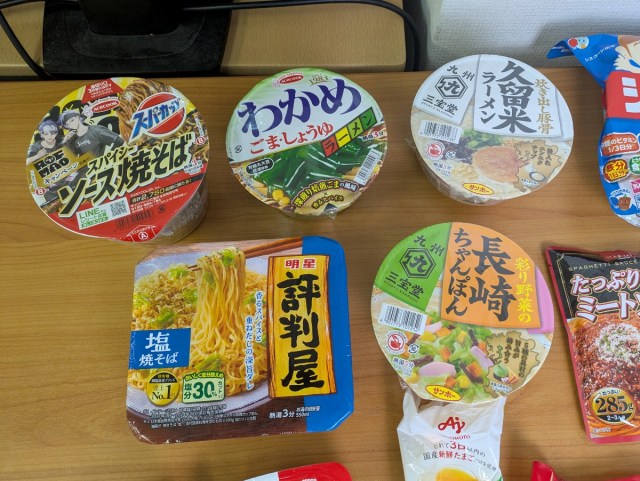
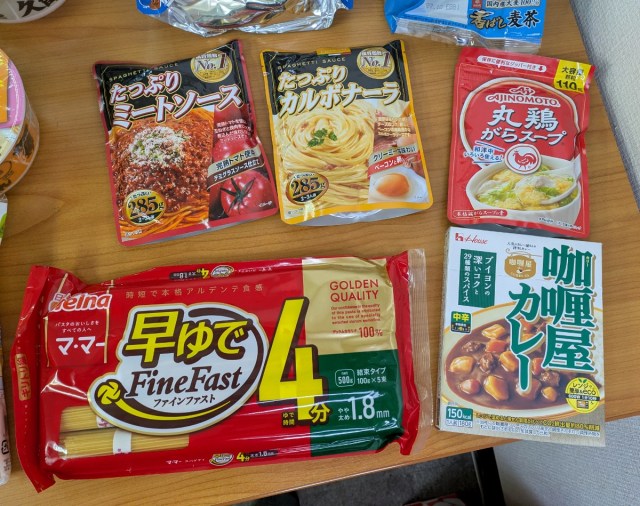
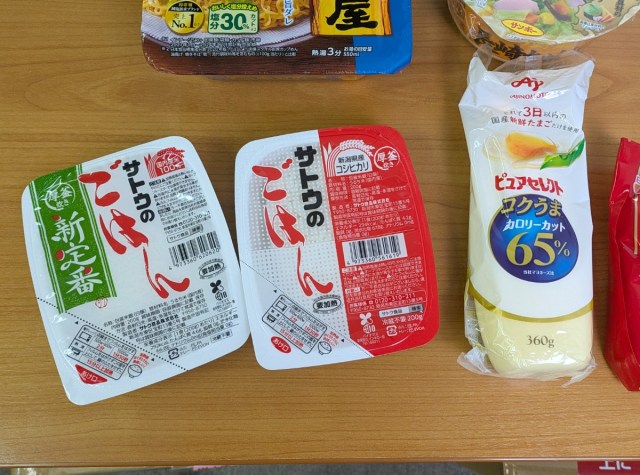
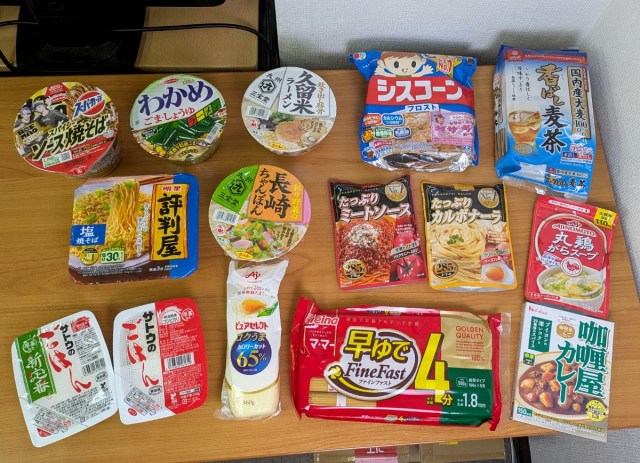
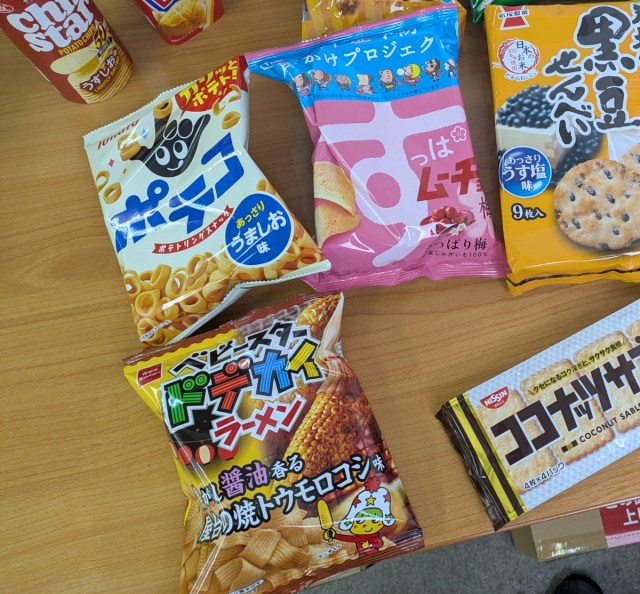
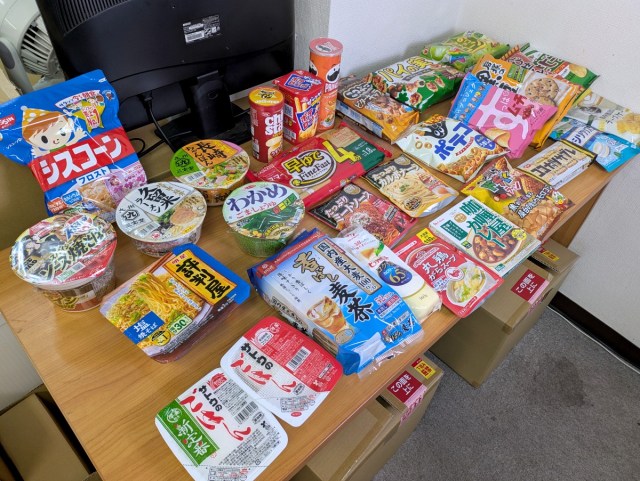
Spreading out the contents of the bag, he discovered that there were a total of 15 items:
1. Ciscorn Frost Cereal – 421 yen 2. Hakubaku Fragrant Barley Tea (52 bags) – 270 yen
3. Acecook Super Cup Sauce Yakisoba – 259 yen 4. Acecook Seaweed Ramen – 254 yen 5. Kyusyu Sanpodo Kurumeshi Ramen – 254 yen 6. Myojo Hyobanya Salt Yakisoba – 159 yen 7. Kyusyu Sanpodo Nagasaki Champon – 254 yen
8. Hachi Shokuhin Tappuri Carbonara – 226 yen 9. Hachi Shokuhin Tappuri Meat Sauce – 226 yen 10. Ajinomoto Marudorigara Soup – 400 yen 11. Mama Hayayude FineFast Four Minutes – 320 yen 12. House Shokuhin Curry-ya Curry (Medium Spice) – 130 yen
13. Sato no Gohan New Standard Microwaveable Rice – 307 yen 14. Sato no Gohan Microwaveable Rice – 200 yen 15. Ajinomoto Pure Select Rich and Tasty 65 Percent Calorie Cut Mayonnaise – 280 yen
Just a single fukubukuro contained food worth an impressive 3,960 yen, making for a saving of 2,880 yen.
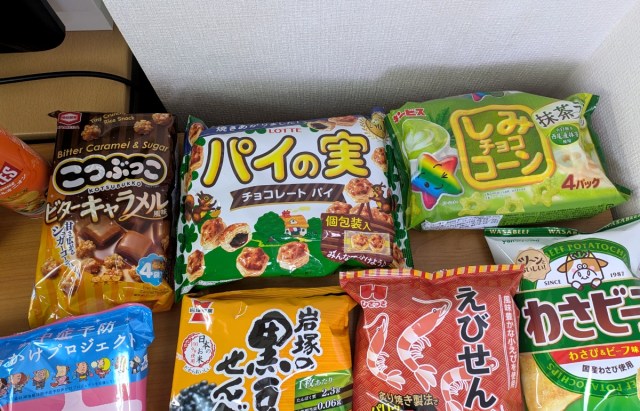
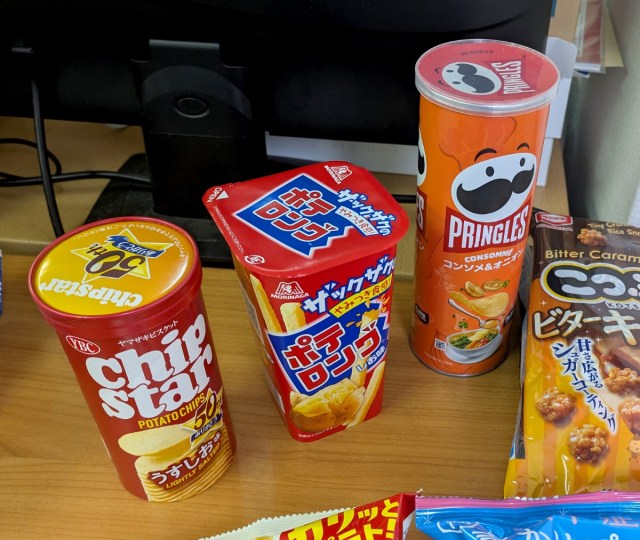
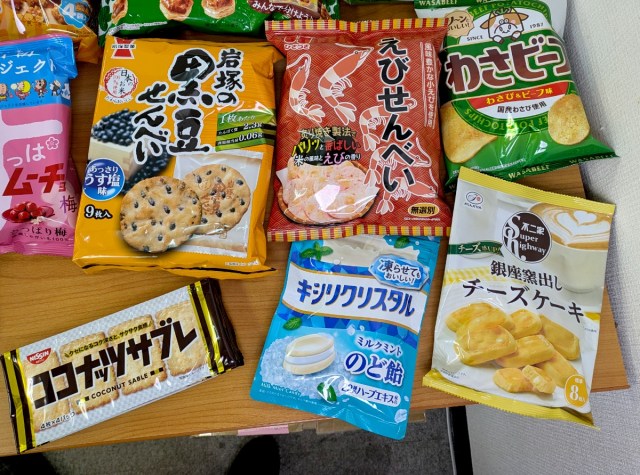
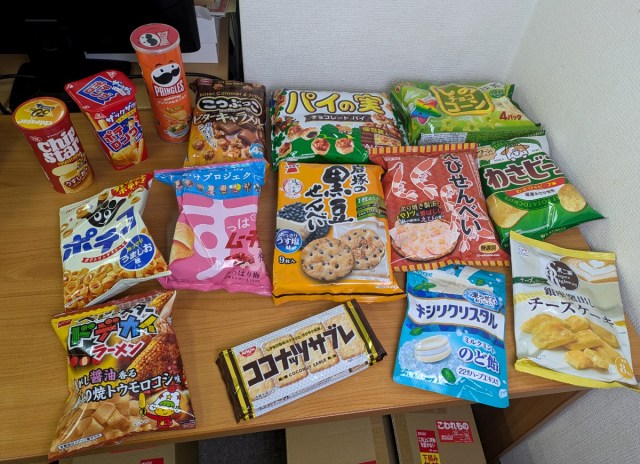
The snack bag also contained 15 items:
1. Kameda Seika Kotsubukko Bitter Caramel Rice Snack – 216 yen 2. Lotte Pie no Mi Share Pack – 300 yen 3. Ginbis Shimi Choco Corn Matcha – 328 yen
4. Yamazaki Biscuit Chip Star Lightly Salted – 100 yen 5. Morinaga Seika Pote-long Salt Flavor – 110 yen 6. Pringles Consomme and Onion – 160 yen
7. Iwatsuka Seika Black Soybean Rice Crackers – 260 yen 8. Hizatsuki Shrimp Rice Crackers – 200 yen 9. Yamayoshi Seika Wasabeef Potato Chips – 160 yen 10. Nissin Coconut Sable Cookies – 162 yen 11. Kasugai Xylicrystal Milk-Mint Candies – 200 yen 12. Fujiya Ginza Kamadashi Cheesecake – 300 yen
13. Tohato Poteko Tasty Salt Flavor Potato Ring Snack– 173 yen 14. Koikeya Sour Mucho Chips Refreshing Plum Flavor – 140 yen 15. Oyatsu Company Baby Star Giant Ramen Scorched Soy Sauce Scented Festival Stall’s Grilled Corn Flavor – 152 yen
Totaling 2,961 yen, the whopping grand total of the food’s worth is 6,921 yen, which meant a saving of 4,761 yen.
Having paid just 2,160 yen for the two bags, the results were well worth the money spent.
While many people have likely missed out on the opportunity to go and purchase one of these lucky bags, it appears that L Minimart has plans to open more stores in the future, with one coming to Itabashi, Tokyo, on June 12, and another to Hiratsuka, Kanagawa, on June 26, so when one happens to open up near you, be sure to grab these lucky bags.
Store Information
L Minimart Kodaira Nakamichi-ten / Lミニマート 小平仲町店
Address: Tokyo-to, Kodaira-shi, Nakamachi 251, Excellence
東京都小平市仲町251エクセレンス
Open: 7:00 a.m.–11:00 p.m.

 Login
Login