Local sweets-fan favorite serves as inspiration for one of two donuts not available anywhere else in the world.
You’d think it’d be hard for a city of nearly two and a half million people to get overlooked, but that’s the position Nagoya often finds itself in. Despite having some very cool stuff (like a castle and good access to the Studio Ghibli anime theme park), Nagoya is often skipped by travelers and pop stars alike, perhaps because it can’t match the big-city glamor of Tokyo and Osaka, but also doesn’t have the same traditional mystique as Kyoto or Nara.
But you know who never forgets about Nagoya? Krispy Kreme. The donut chain’s Premium Nagoya series is a selection of special, extra-decadent donuts that are only offered in Nagoya, and specifically only at the JR Nagoya Takashimaya branch in the Takashimaya department store that’s attached to Nagoya Station.
With the weather getting warmer, two new Nagoya-exclusive treats are on their way, one of which makes use of the city’s best-loved sweets themes: an (sweet bean past) and butter.
The Krispy Kreme Nagoya Premium Lemon and An Butter is a bun-style donut that wraps around a filling of sweet and tart lemon jam, an, and butter. While many Nagoya sweets shops combine butter and red an (such as in the an butter toast served by many cafes in the city), for this donut Krispy Kreme uses white an, which has a more refined sweetness and cleaner finish. Add in the richness of the butter, and you’ve got a complex flavor profile that also promises to be refreshingly citrusy as we head into the hottest time of the year.
Joining the lemon an butter donut on the menu will be the Krispy Kreme Nagoya Premium Peach and Vanilla. Aichi actually supplies quite a bit of Japan’s produce, including white peaches, and this donut is filled with peach jam with pieces of fruit in it, and also vanilla cream. You also get a swirl of cream around the top of the donut plus a pistachio accent, making the Nagoya Premium Peach and Vanilla very pretty to look at in those scant few seconds before your willpower crumbles and you dig in.
Shop information
Krispy Kreme Donuts (JR Nagoya Takashimaya branch) / クリスピー・クリーム・ドーナツ(ジェイアール名古屋タカシマヤ店)
Address: Aichi-ken, Nagoya-shi, Nakamura-ku, Meieki 1-1-4 JR Nagoya Takashimaya 1st floor North Block
愛知県名古屋市中村区名駅1-1-4ジェイアール名古屋タカシマヤ1F北ブロック
Open 10 a.m.-8 p.m. Website
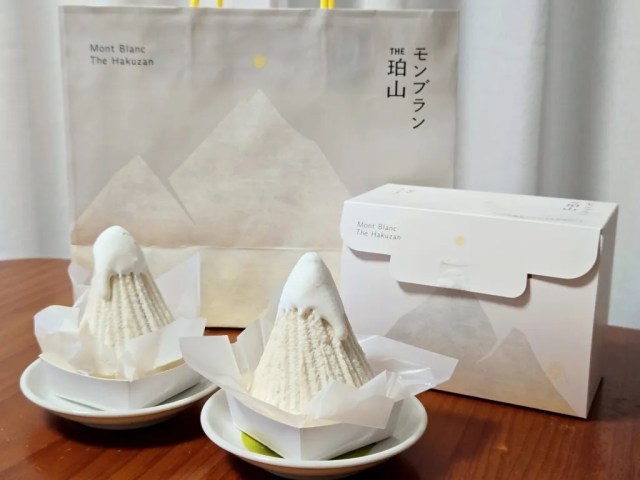
Mont Blanc The Hakuzan is a sweets shop so nice it’s named twice.
Tokyo Station isn’t just one of the most important places in the city for travelers and commuters, but for sweets fans too. Both within the station itself and inside the attached Daimaru department store are an array of dessert specialty stores, and we’ve been wanting to try one of them for months now.
Make no mistake, the reason we haven’t yet tried the desserts from Mont Blanc The Hakuzan, which opened in October, has nothing to do with willpower to resist the temptations of desserts, as such psychological fortitude is in very limited supply at SoraNews24. No, the reason it took us half a year to do this taste test is because of how incredibly popular the place is, and thus how hard it is to actually buy their desserts.
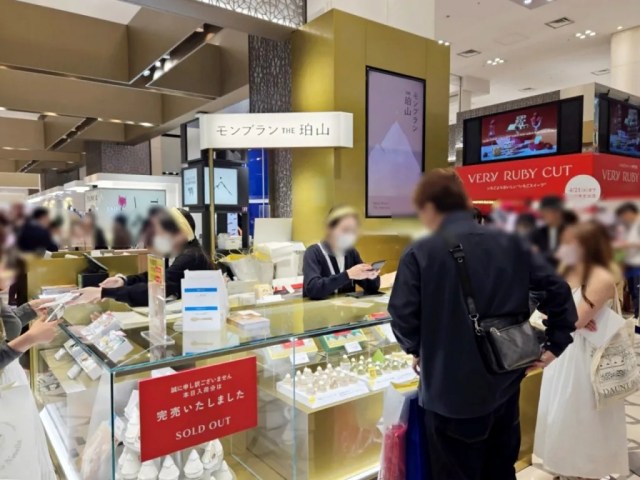
See that “sold out” sign in above photo? Notice how nicely made it is, as opposed to being a handwritten notice that the staff needed to suddenly make? That’s because they know that their entire batch of Mont Blanc, the candied chestnut dessert that’s the store’s specialty, is going to sell out on a daily basis.
We’ve walked by The Hakuzan (as we’ll call the store for short, seeing as how both “Hakuzan” and “Mont Blanc” mean “white mountain”) plenty of times since it opened, but never at a time when we could get our hands on one of the coveted desserts. When we rolled up on a recent Sunday afternoon, just as we’d expected, all of the Mont Blanc that had been stocked that morning at 10 a.m. were gone. But that was OK, because we’d gotten to the shop at around 4:30, and there’s a second batch that comes out at 5 p.m.
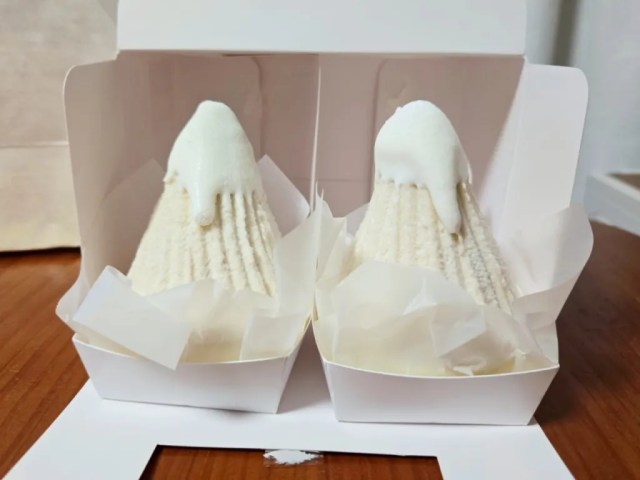
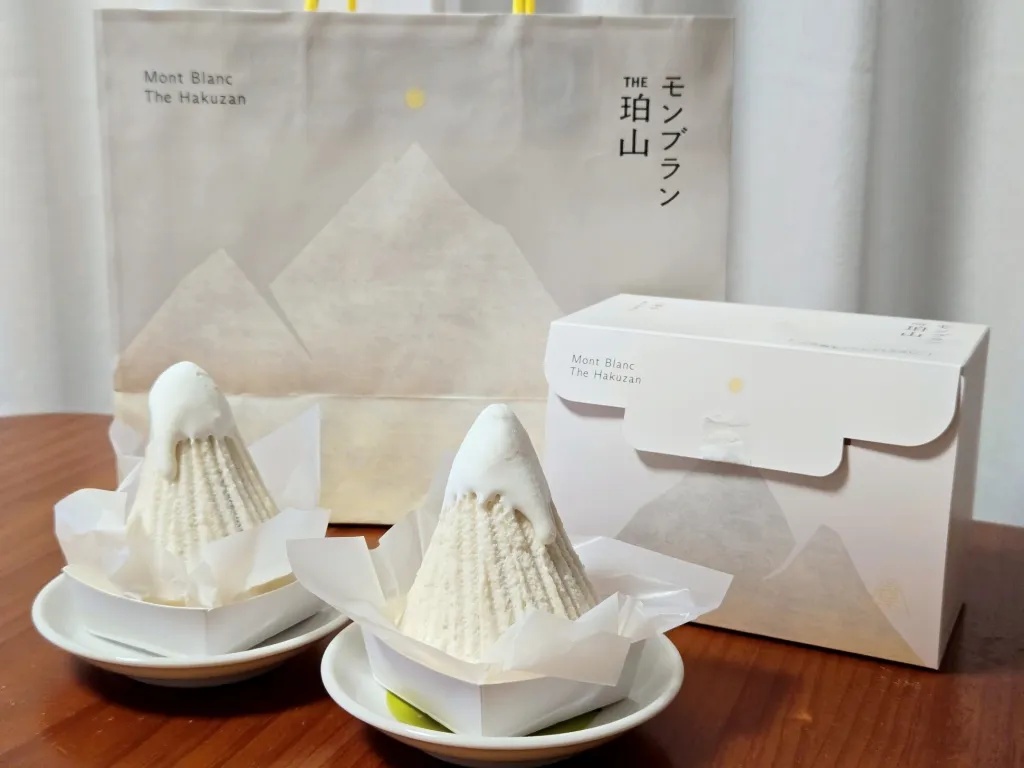
This was what we were aiming for, but even then, it turned out we’d cut things very close. The Hakuzan sells its Mont Blancs in boxes that contain two servings for 1,980 yen (US$13), and they limit each customer to a maximum of two boxes. However, they only make 30 boxes per batch, so it’s possible that as few as only 15 customers will be able to buy any, and there were already about 20 people waiting ahead of us in line.
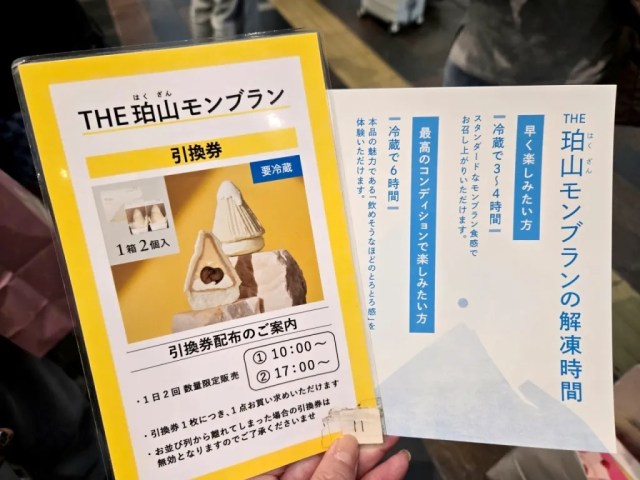
Thankfully, to help with crowd control at around 4:50, the staff asks how many boxes each person in line plans to buy, so they could guarantee us the single box we wanted, and gave us a purchase placard, shown in the photo above (note, though, that you still have to wait in line – leave the line, and your voucher will be voided).
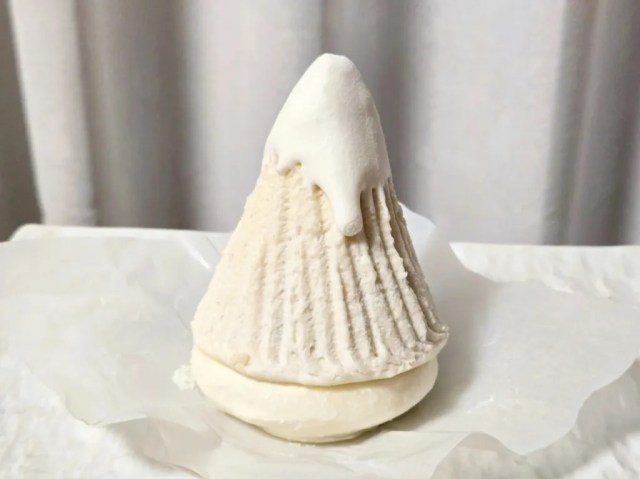
Mont Blanc gets its name because it’s supposed to look like a mountain covered in snow, but a lot of stores and cafes shape theirs like a mound, closer to a hill. The Hakuzan’s version, though, really does look a steep-sided mountain, and we couldn’t wait to dig in…except actually, we had to wait. The Hakuzan’s Mont Blanc comes frozen, and they recommend a total thawing time of six hours (combined getting it home and then putting it in your refrigerator) for the optimal texture.
That’s a longer deferment of gratification than we usually like, but after waiting a little more than six months to try this, another six hours wasn’t going to kill us. And when the Mont Blanc finally was ready to eat, our patience was handsomely, and deliciously, rewarded.
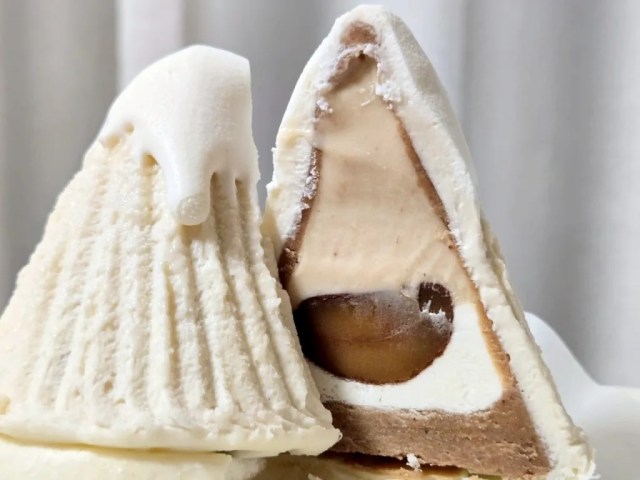
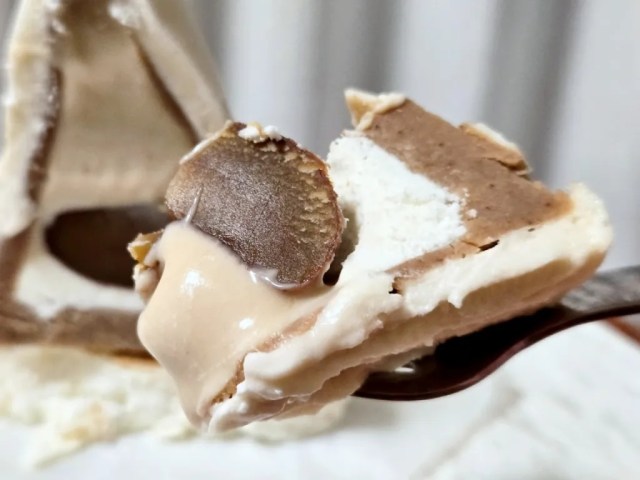
Starting at the top, our fork passed through creamy candied chestnut paste, whipped cream, and a base of crunchy merengue, and there’s a nicely sized chestnut in the middle too. This is, without question, a sweet dessert, but not in an overly sugary or oily way, and the touch of rum The Hakuzan uses gives its Mont Blanc a mature, elegantly quality as well.
So yes, we’re happy to report that the 30 minutes we spent standing in line for The Hakuzan’s Mont Blanc was well worth it. At the same time, we realize that not everyone has space for that in their schedule, and we ourselves might have lucked out by happening to visit on a less-crowded-than-usual Sunday, and on busier days getting there even 30 minutes before the batch comes out might not be early enough. Currently The Hakuzan only has this single shop inside the Tokyo Station Daimaru, so it’s not like you can cut down the waiting time by going to a more remote branch, either.
If you want to get a taste of this dessert without lining up, though, there is a way to do it, as on the 20th of every month, online Mont Blanc pre-orders start for the following month. Granted, that means you’ll actually be waiting weeks, not minutes or hours, for your Mont Blanc, but as least you won’t have to be standing in line the whole time.
Shop information
Mont Blanc The Hazizan / 店名 モンブランTHE珀山
Located inside Daimaru Tokyo / 大丸東京
Address: Tokyo-to, Chiyoda-ku, Marunouchi 1-8-9
東京都千代田区丸の内1丁目8-9
Open 10 a.m.-8 p.m. Website
There aren’t enough breath mints in the world to save us, but we’re going in anyway.
Japanese folk wisdom holds that garlic is a food that boosts physical stamina, and it’s supposed to be helpful in dealing with the adverse effects of hot weather too. The actual science behind those claims gets a little indistinct, but for garlic lovers, we’re getting into a time of year that provides ample excuses to load up on the seasoning. Today that leads us to Yoshioka, a ramen restaurant in downtown Tokyo’sMejiro neighborhood.
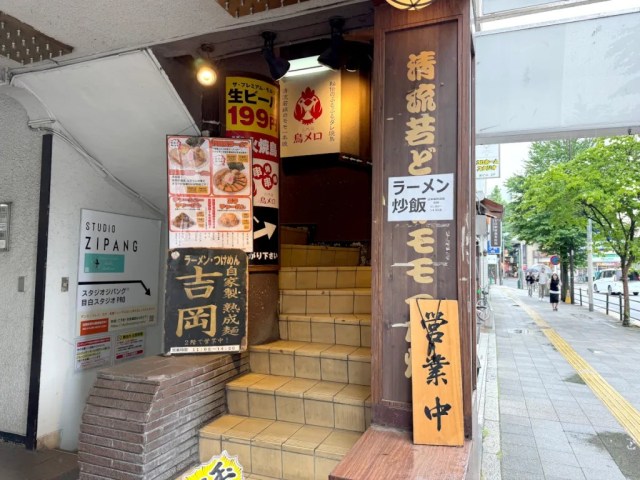
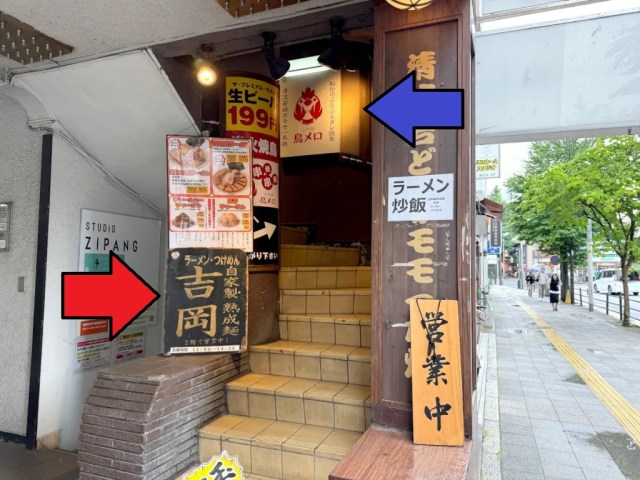
You might have a little trouble spotting Yoshioka, because it actually shares space with a branch of the izakaya (Japanese pub) chain Torimero, with Yoshioka operating in the hours when Torimero isn’t and vice-versa.
▼ The Yoshioka (吉岡) and Torimero (鳥メロ) signs, and the stairway that leads up into the hybrid eatery.
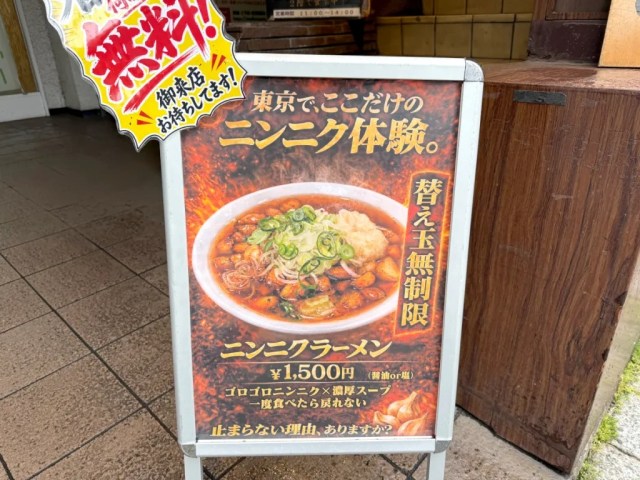
Making the place a little easier to find for us on this day, though, was the sign that was placed at the bottom of the stairs advertising Yoshioka’s Garlic Ramen (“Ninniku Ramen” in Japanese), which included the bold statement:
“Try it once, and you’ll never be able to go back.”
We weren’t sure if this open-ended prophecy was meant to imply that we would never be able to go back to less garlicky versions of ramen, or whether we’d have such strong garlic fumes coming out of ourselves that we’d never be allowed back into regular society. That second possibility might sound a little overly dramatic, but consider this: Yoshioka boasts that it uses 200 grams (7.05 ounces) of garlic in every bowl of its Garlic Ramen. To put that in perspective, an average-sized clove of garlic weighs about 5 grams, meaning that eating a bowl of the Garlic Ramen should be the equivalent of eating roughly 20 cloves of garlic.
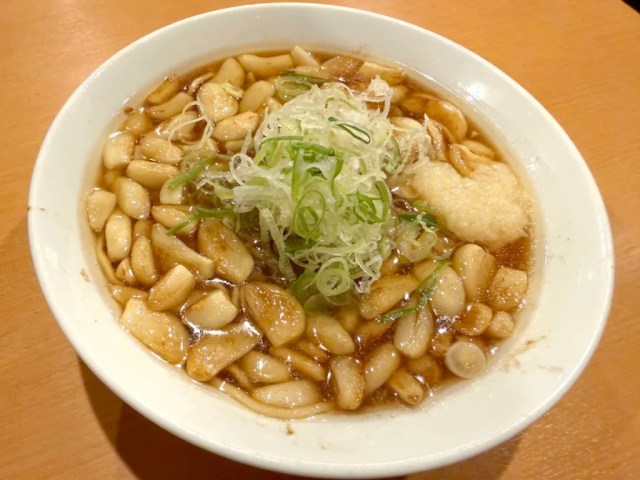
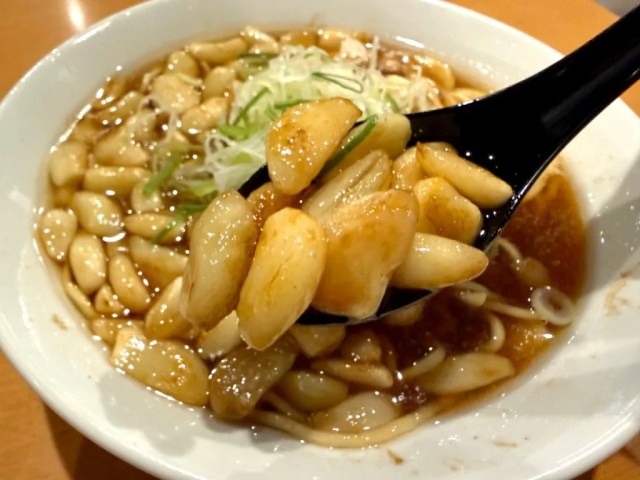
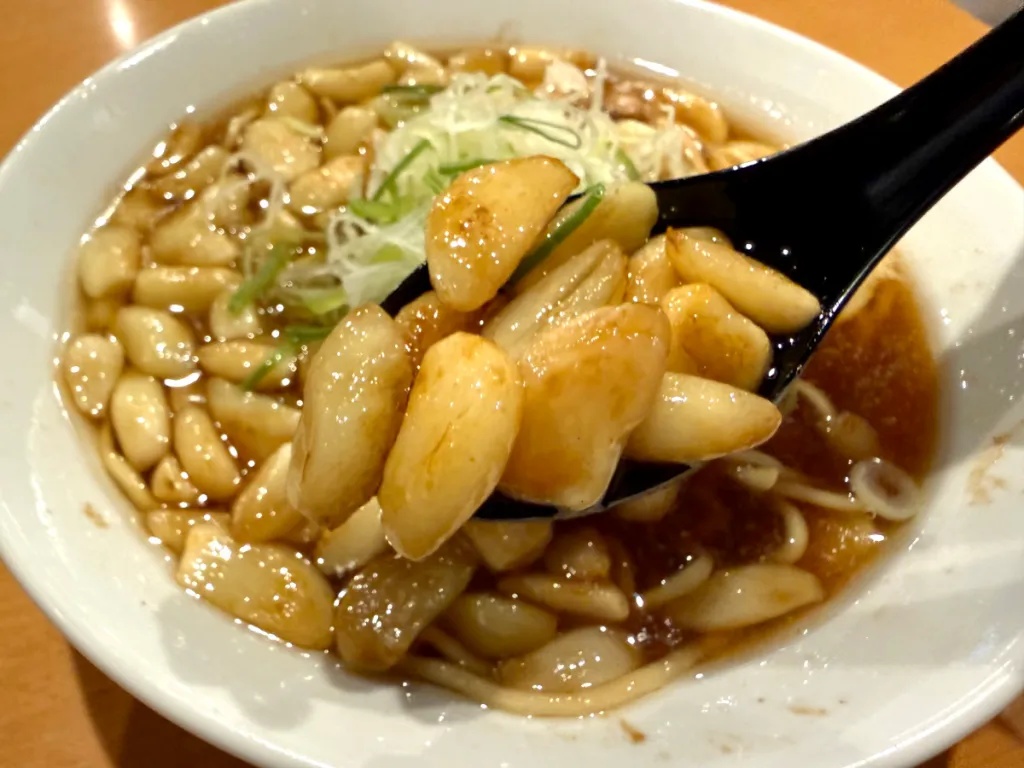
And yet, when the restaurant staff set our bowl down in front of us, it had what looked like even more garlic than that.
This is an insane amount of garlic. Like, there’re enough cloves that you could eat them by the spoonful, like the world’s most powerfully pungent cereal.
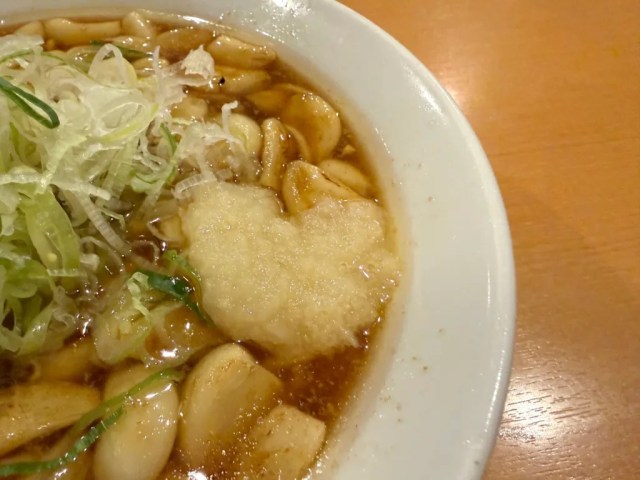
Oh, and in addition to the dozens of cloves of garlic, you get a sizeable squirt of garlic paste waiting to be mixed it into the salty soy sauce-based broth too.
And the taste? Pretty much the fiercest punch of garlic we could imagine. This is an edible declaration of the idea that one can never have too much garlic, and if that’s a conviction you share, you’ll fall in love with this instantly.
The seasoning is so powerful that by the second bite of noodles it was no longer shocking, either because of the bliss we were wrapped up in or because we’d already consumed so much garlic that we were transitioning into a clove of garlic ourselves, and so the flavor now felt natural.
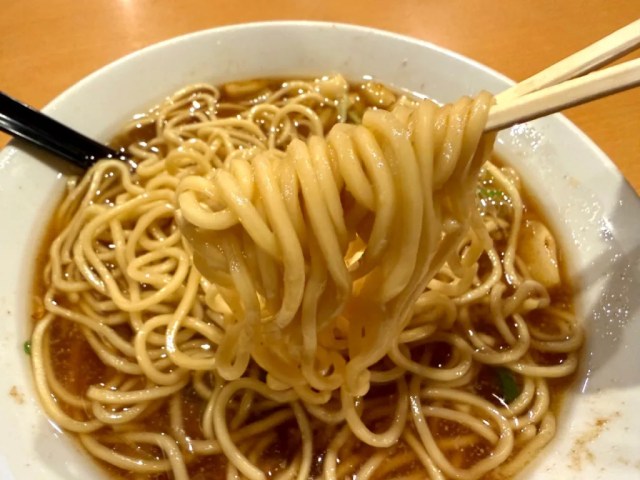
Speaking of the noodles, they’re of excellent quality, with a smooth and slippery surface and firm consistency. Actually, even the broth has a noteworthy texture, as there’s so much garlic in it that the liquid takes on some fluffy, sticky characteristics.
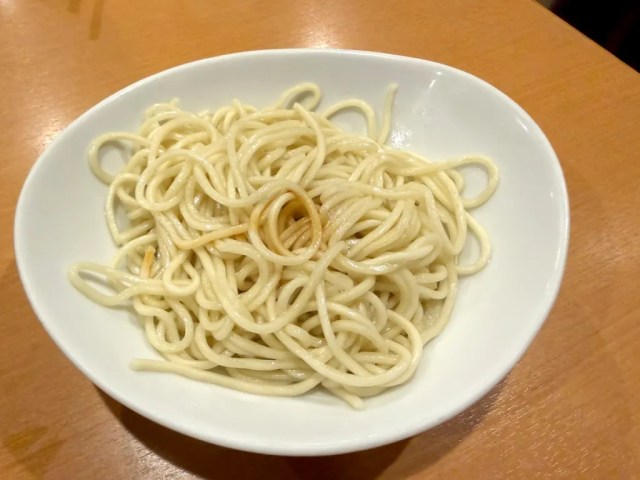
At 1,500 yen (US$9.70), Yoshioka’s Garlic Ramen is on the pricier side, but with how much garlic you get, it doesn’t feel like a bad deal at all, especially when you take into account that you’re allowed one refill of noodles for no additional charge.
All in all, the Garlic Ramen is an unforgettable food experience, but there is one potentially negative aspect to it. Remember how we said Yoshioka shares its space with another restaurant? Because of that, Yoshioka is only open for lunch, meaning you’re going to have to eat this garlicky-loaded bowl of noodles in the early afternoon, or maybe even the late morning, and there is no imaginable way that you won’t smell have the smell of garlic emanating from you wherever you go for the rest of the day. Still, if you’re a garlic lover, it’s worth it, and if you’d rather have some super-salty ramen, we can show you where to find that too.
Restaurant information
Yoshioka (Mejiro main branch) / 吉岡(目白総本店)
Address: Tokyo-to, Toshima-ku, Mejiro 35-13, Fujiya Building 2nd floor
東京都豊島区目白3-5-13 フジヤビルM2F
Open 11 a.m.-2 p.m.
Rock shochu and reggae shochu really do taste different from each other.
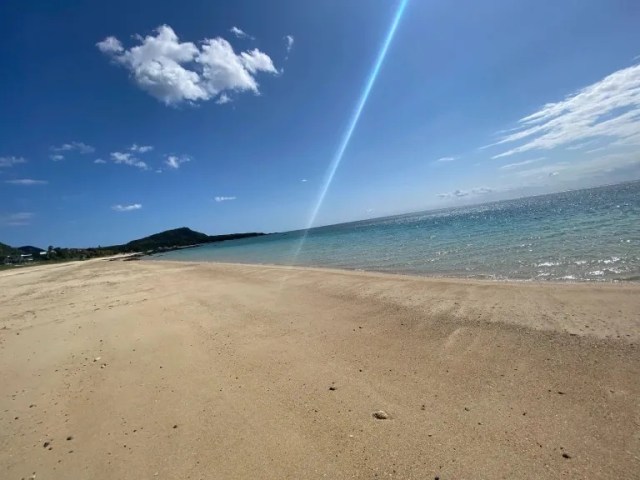
The island of Amami Oshima is part of Kagoshima Prefecture, and Kagoshima is usually pictured as making up the southwest tip of the island of Kyushu, one of Japan’s four main islands. Amami Oshima, though, is far, far away from the Kyushu coastline, so far away that the ferry from Kagoshima City takes 13 hours to get there.
▼ The route from Kagoshima City to Amami Oshima, which can alternatively be reached by plane from Tokyo in two and a half hours.
Oh, and it’s also famous for shochu, a distilled spirit with longstanding cultural connections to southwest Japan. Specifically, Awaji Oshima’s kokuto shochu, made with rice and brown sugar, is highly prized, and so on our recent visit to the island we didn’t just want to drink some, but also see how it’s made.
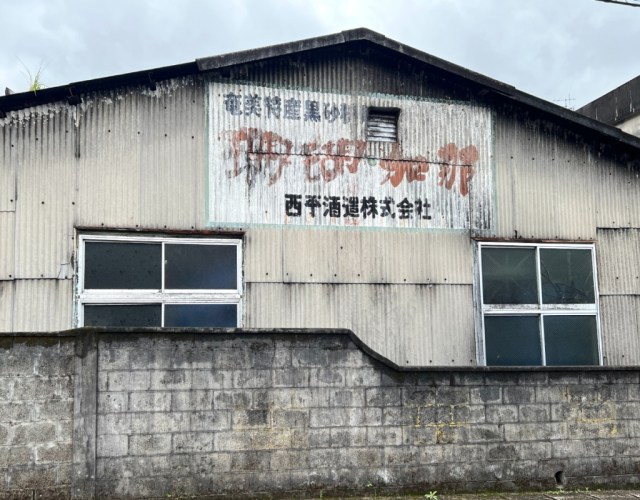
We lucked out when we contacted Nishihira Shuzo, an Amami Oshima shochu maker that’s been in business for 99 years, and they said they could offer us a tour of the facility, and a tasting too, with some very unique beverages to sample.
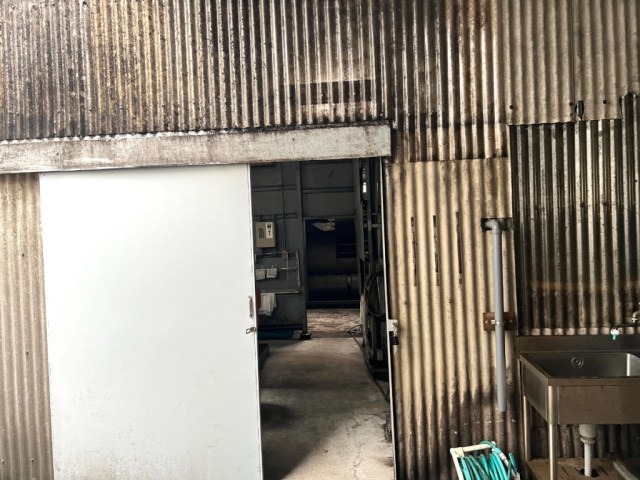
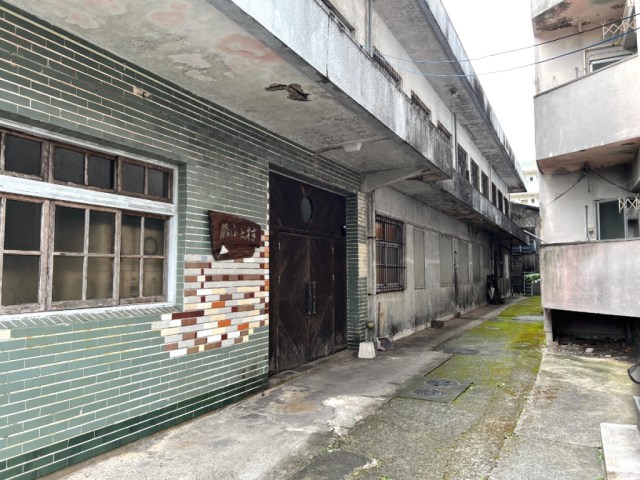
▼ The rustic exterior of the Nishihira Shuzo distillery
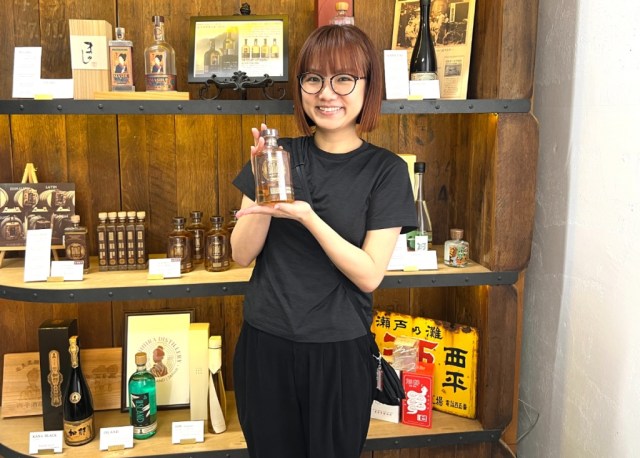
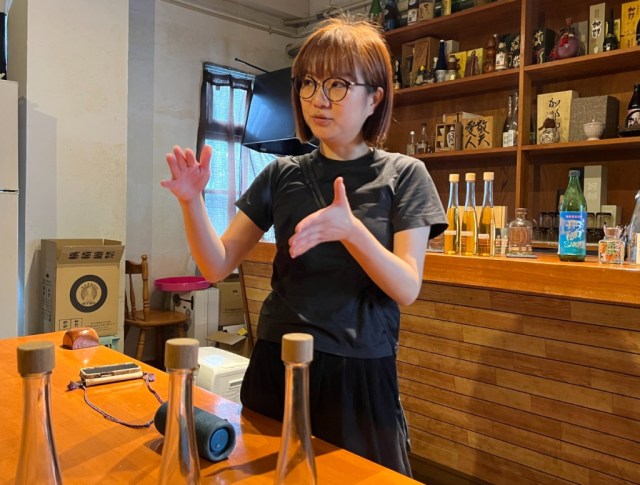
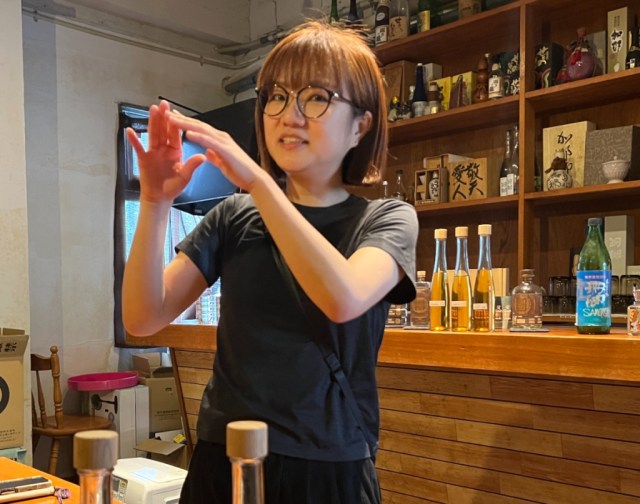
Despite being around for nearly a century, Nishihira Shuzo is still a family-run operation, and we were told that the fourth-generation owner of the business would be our guide. With shochu being a high-alcohol drink with an old-school vibe, our mental knee-jerk reaction was to expect a stern-looking, silver-bearded gentleman, but instead we were warmly greeted by Serena Nishihira and her friendly smile.
▼ Serena Nishihira
In addition to being a skilled shochu distiller and businesswoman, Nishihira is also a musician, which is something that’ll come into play later on. To start, though, she led us into the distillery’s production area.
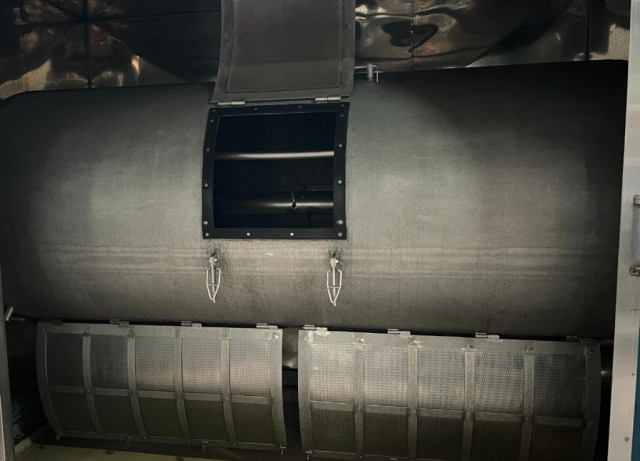
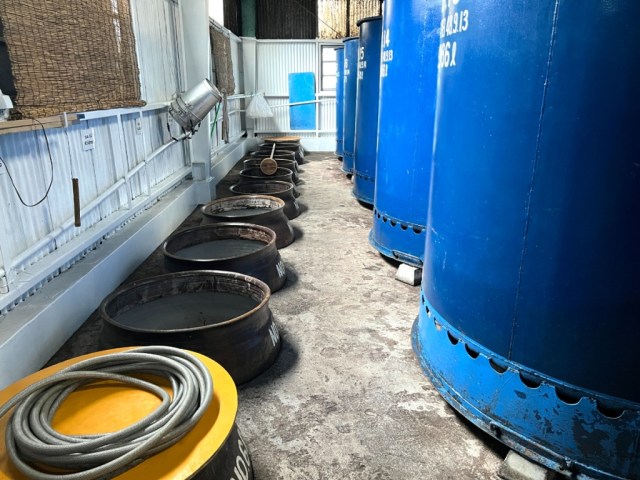
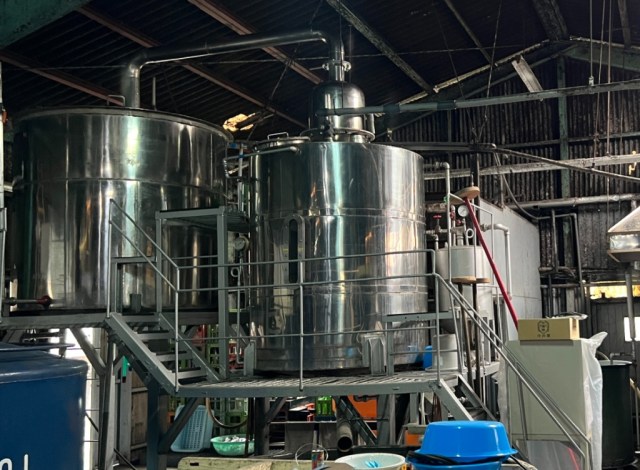
As mentioned above, Nishihira Shuzo’s shochu is made from rice, so steaming the grains is the first step in making it. The distillery has a gigantic cylinder-shaped apparatus that’s used for washing and steaming, with a typical batch using about 400 kilograms (882 pounds) of rice.
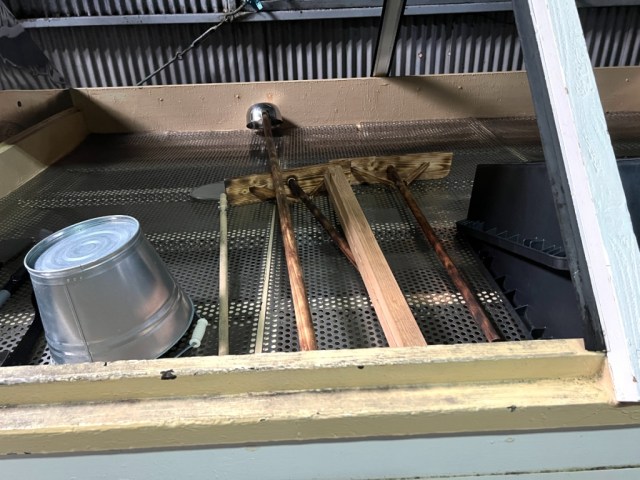
Once the rice is cooked, it’s taken out of the drum and sprinkled with koji, a fermentation-triggering type of mold that’s also used in making sake. The rice is then put on racks in a temperature-controlled environment for its initial fermentation.
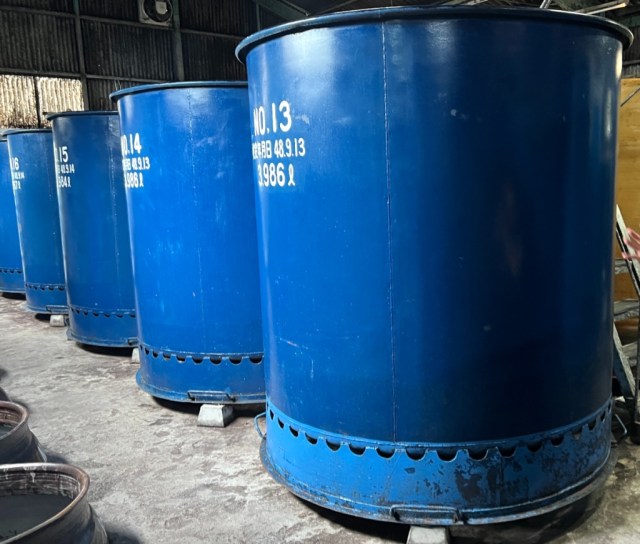
The next morning, the rice is put into jars with yeast and water to ferment for an additional five days. This isn’t a step that all shochu makers include in their process, but Nishihira Shuzo says it’s a key element of theirs.
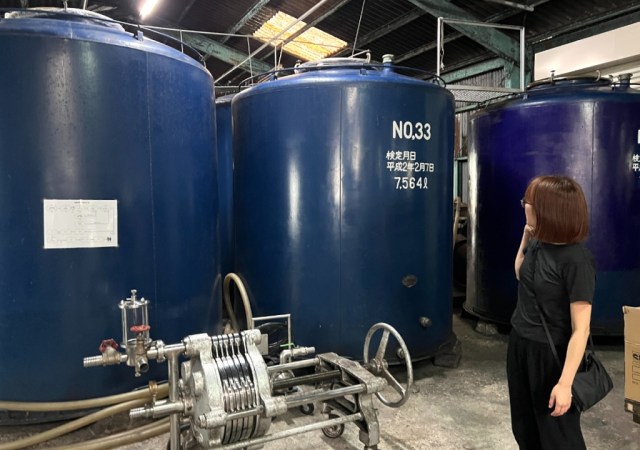
After its time in the pot, the mixture is transferred into tanks and combined with liquified brown sugar, then given another two weeks to ferment.
That produces the fermented mash which is then distilled.
But that doesn’t mean Nishihira Shuzo can whip up a whole batch of kokuto shochu, start to finish, in just three weeks, because the final step (before bottling) is to age the shochu in tanks for at least one full year.
From a 400-kilogram load of rice, Nishihira Shuzo can produce roughly 800 1.8-liter (60.9-ounce) bottles of shochu. Luckily for us, some of those bottles end up in the distillery’s tasting room, which was the next place that Nishihira led us to.
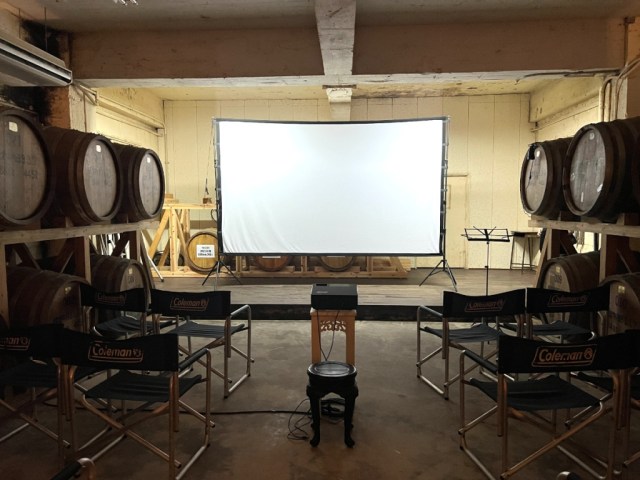
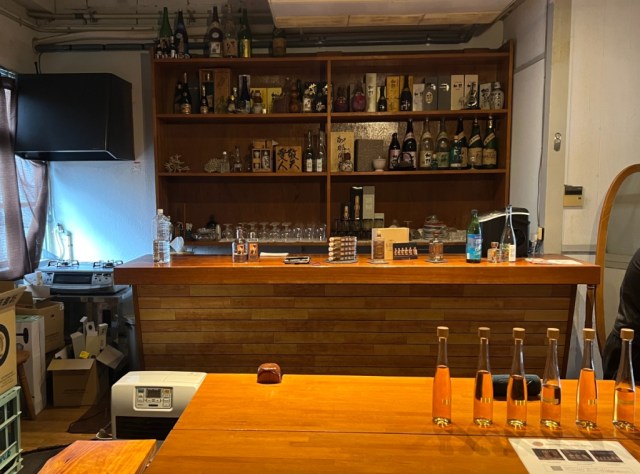
The tasting room has chairs, a projector, and a screen set up for use for group events or musical performances, but we had the place to ourselves on this day.
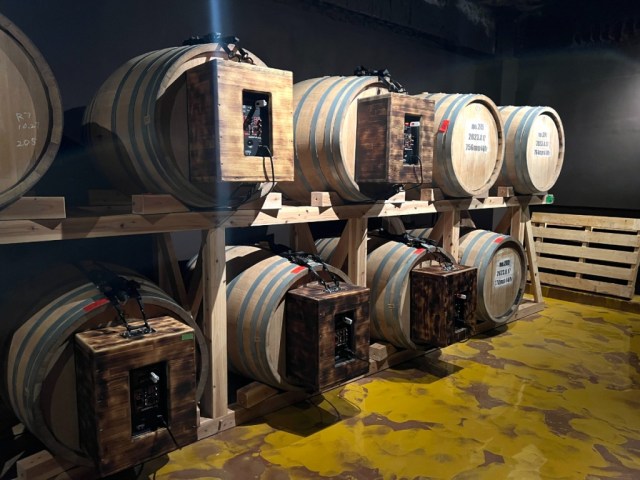
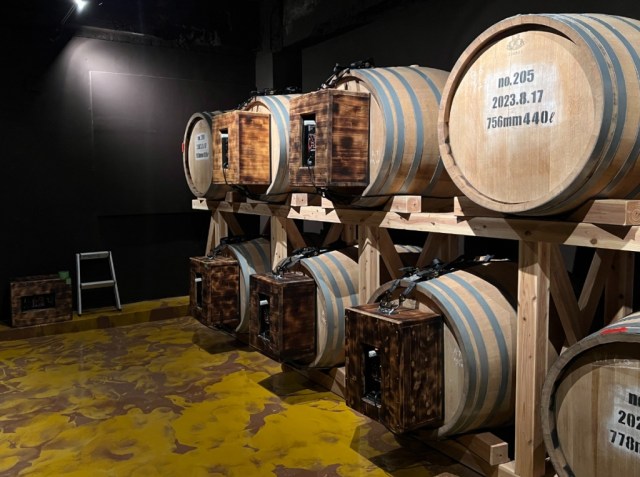
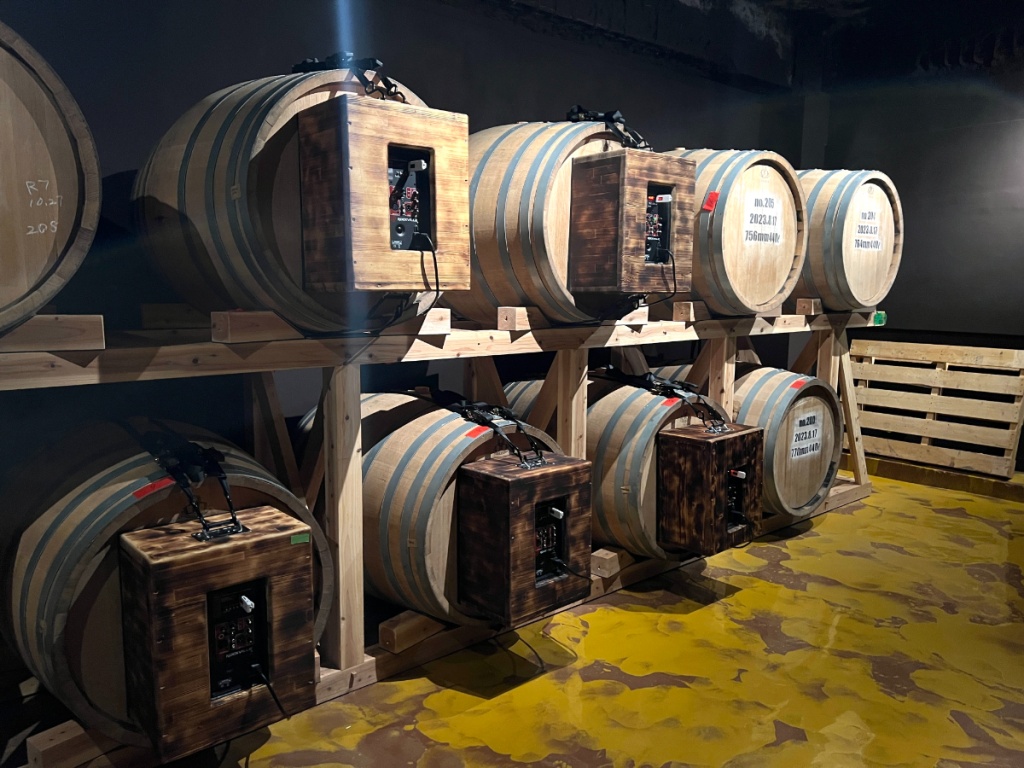
Nishira poured us a selection of the company’s products, and we found them all extremely enjoyable. But just when we thought things couldn’t get any better, she led us through a door at the back of the room where we saw this.
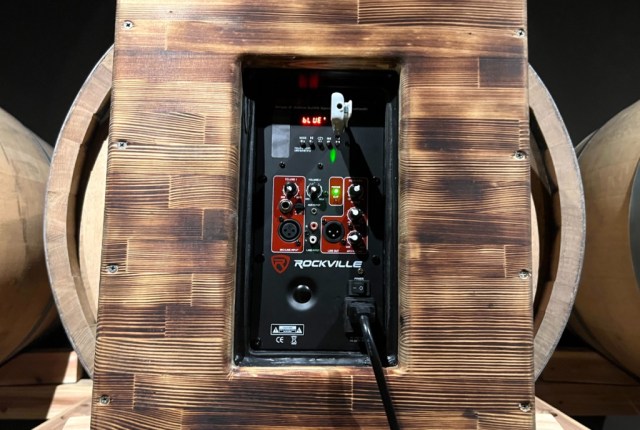
Those are shochu barrels with speakers attached to them. And not some little mini speakers that you might have set up in your kitchen to listen to tunes while you cook, but concert-size amps!
This is where the Nishihira’s Sonic Aging Project takes place. While the speakers were quiet as we looked at them, Nishihira turns all of them on when the distillery starts its shift for the day, and has them play for eight hours. Different amps play different genres of music, with a total of six styles: house, reggae, hip-hop, Latin, rock, and shima uta, or Japanese southern island folk songs.
“We play the music at high volumes,” Nishihira explained, “Depending on the genre, the music produces different vibrations within the barrels, and we want to see how that affects the shochu.”
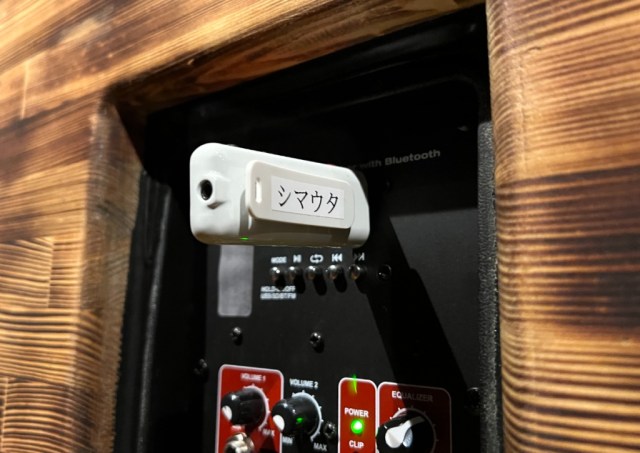
▼ The shima uta barrel
Like we said, Nishihira is a musician, so at first the idea of playing music for the shochu sounded like a whimsical, creative, but ultimately inconsequential idea. Nishihira, says, though, that with the barrels being music-treated for roughly 2,000 hours in a year, it really does make a difference.
Genres with more bass produce stronger vibrations in the barrel, and also with the shochu itself. That increased interplay between the container and its contents causes the wood to have a more significant influence on the color and flavor of the shochu that’s aging inside.
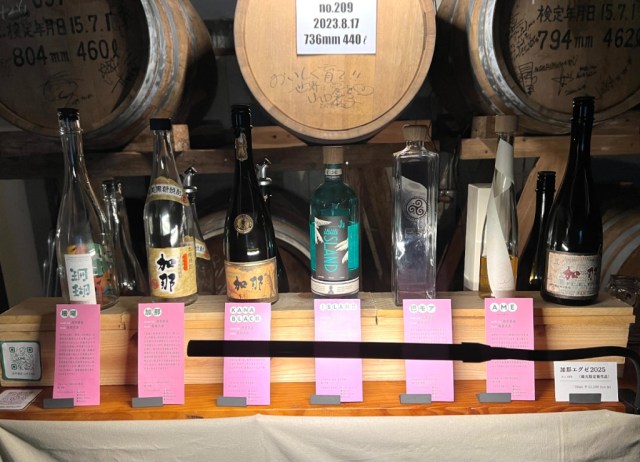
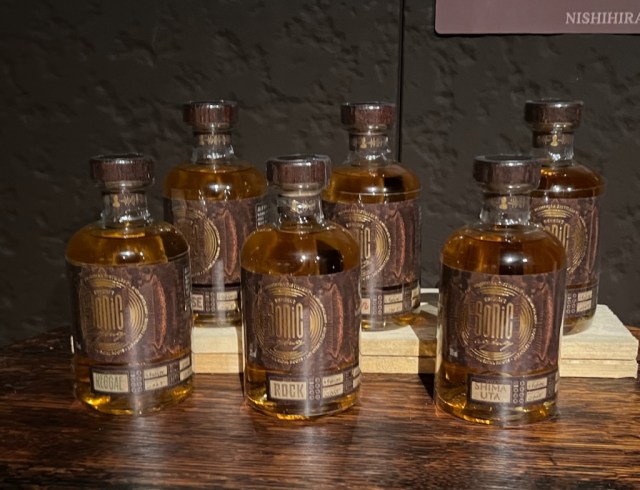
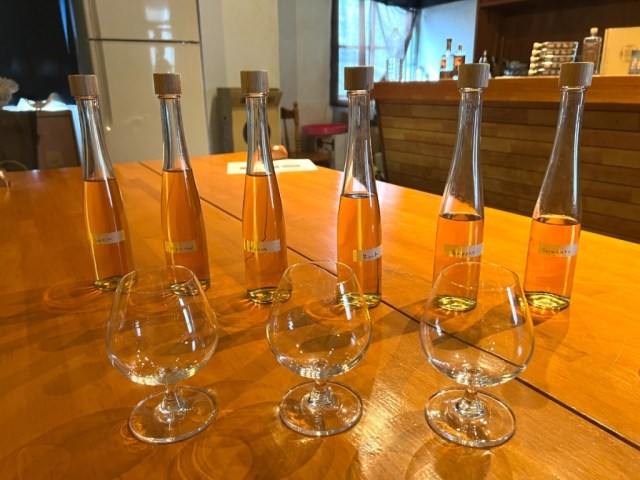
To prove this, Nishihira ushered us up to the second floor of the tasting area to try some of the Sonic Aging Project series.
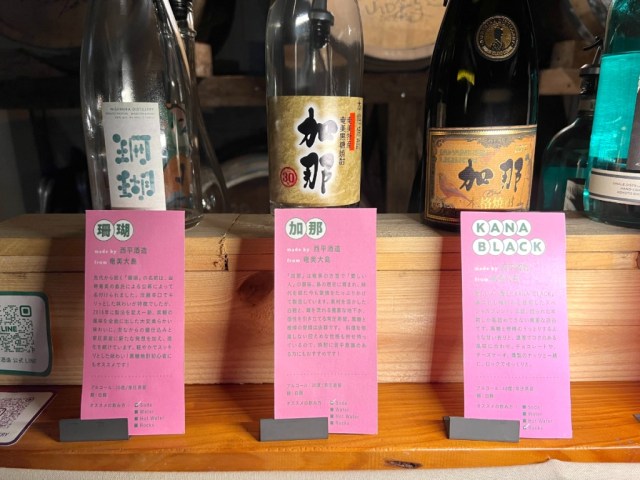
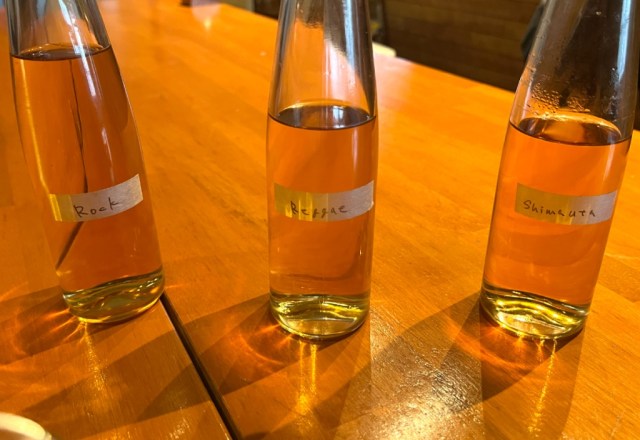
Out of the six music genres, Nishihira says that reggae produces the strongest vibrations, and shima uta the softest. So we definitely wanted to taste those two, and she also poured us some of the rock shochu, which is somewhere between the other two in the spectrum.
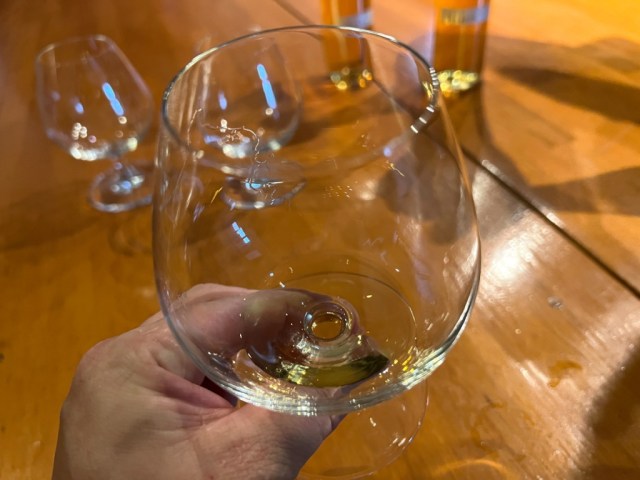
And you know what? We really could taste the difference! The reggae shochu was darker in color and had a rich flavor with some notable bitter notes from the wood. The shima uta shochu, meanwhile, was lighter in color and sharper in taste, with a more pronounced sensation of alcohol. The rock shochu, sure enough, was a mid-point between the more distinct characteristics of the reggae and shima uta.
So which of the Sonic Aging Project shochu styles is the best? There’s actually no answer to that, Nishihira says. Just like your favorite musical genre is a matter of personal taste, so too will different people have different rankings for how much they like the different types Sonic Aging Project shochu, and they’ve all got their own unique charms.
Reservations for Nishihira Shuzo tours can be made through their website here, but if you can’t make it all the down to Amami Oshima, they also offer their shochu, including the Sonic Aging series, through their online store here.
Ministry of Economy, Trade and Industry conducts study to estimate damage to producers of anime and other Japanese media.
With Japanese entertainment media growing in popularity around the world, the Japanese government’s Ministry of Economy, Trade and Industry is also growing more concerned about the effects of media piracy overseas. In its latest study of the situation, the ministry claims that damage from piracy has been rapidly increasing, but one of its proposed countermeasures might not really do much to solve the problem.
For its study, the ministry conducted surveys in six foreign countries, including the U.S. and China, regarding “content piracy,” “content” here being a loose term used for entertainment media including anime and digital manga. Based on the results of the surveys, the ministry estimates that 5.7 trillion yen (US$37 billion) worth of Japanese content was pirated overseas in 2025, roughly three times the amount estimated for 2022, the previous iteration of the ministry’s study.
For the 2025 investigation, the ministry also added a new category, estimating the amount of pirated “character goods” that were sold online outside of Japan, such as knockoff and unlicensed figures, posters, plushies, and the like. For this category, the ministry arrived at an estimate of 4.7 trillion yen, brining its total figure for pirated content and knockoff merch to 10.4 trillion yen.
The ministry is framing this as the amount of “damage” caused to the legitimate Japanese media/merchandising industry, which invites consideration of whether pirated media always directly correlates to lost sales revenue. Those of a more lenient viewpoint could argue that if someone pirates content which they weren’t going to pay for anyway, no actual damage has been done, and similar logic could be applied to pirating of Japanese content not available in the country of the pirating party. On the other hand, it’s naive to think that no one is pirating content they would have paid for in the absence of an illicit way to get it for free, and with such a significant amount of Japanese entertainment media now being distributed in major foreign markets in a fairly timely matter, it’d be disingenuous to try to frame piracy as strictly an issue of availability either.
As such, while the actual damage to Japanese rightsholders is likely less than the full 10.4 trillion yen that the Ministry of Economy, Trade and Industry is claiming, it’s also not like there are no negative effects from piracy, and so it’s not surprising that the Japanese government would want to look for ways to address the problem.
However, one of the ideas being floated by the researchers is to promote the use of AI in production to lower costs and secure profits. In addition to sidestepping the root causes of piracy (insufficient legal enforcement and/or local availability), a reliance on lower costs also ignores that a major reason Japanese content, particularly anime, has become so popular around the world is that many foreign fans see it as having a mix of high quality and unique narratives, neither of which are things that AI is particularly good at producing. Leaning on the technology as a method by which to address piracy could end up as a sort of monkey’s paw if, by eroding what makes Japanese entertainment content attractive to audiences in the first place, AI simply turns Japanese-made media into something that’s not worth watching.
Instant ramen maker shows that even hamsters will fall in love with Cup Noodle, if given the chance.
Pretty much everyone loves Cup Noodle, from hungry kids to busy college students to adults who don’t want to go through the hassle of cooking after a long day at the office. As a matter of fact, it turns out that the instant ramen brand’s appeal transcends humanity, as a new video shows the massive untapped potential of a new Cup Noodle fanbase: hamsters!
Now, we should be clear that the Cup Noodle manufacturer is not recommending letting your pet hamster eat instant ramen, as the nutritional needs of humans and hamsters are entirely different. Instead, they’ve created a Cup Noodle hamster wheel.
“We’ve made a Cup Noodle that hamsters love running in,” says the post from Nissin’s official Twitter account, along with an adorable video of a hamster taking it for a spin. However, look closely and you’ll see that isn’t a repurposed ramen container. To make the running motion as natural as possible, the apparatus is a straight cylinder, unlike Cup Noodle packages that widen as you move from the base to the brim. The interior of the cylinder also has little notches to give the hamster better traction as it runs.
The exterior design, though, is an exact match to the classic, iconic Cup Noodle packaging, and with the video representing a meeting point of Japan’s love of instant ramen and its love of cute animals, the online reaction has been overwhelmingly positive and envious.
“I want to let my pet ham-chan run on this too!” “This…this would be a huge seller!” “Please offer these for sale. I’ll do anything for one.” “Add a noodle pattern to the inside, and it’ll be perfect.” “I want to hook this up to a generator and use the power to boil water to cook my Cup Noodle with.”
As we’ve seen before, Nissin likes to let its design team share photos of its crazy and/or creative prototypes, and sometimes what starts out as just quirky fun actually does end up making it to market if the response is strong enough. That’s what happened with the Cup Noodle Measuring Cup and Cup Noodle Squid Fork, and considering that Japan is a country that has Final Fantasy scratching pads for cats and Dragon Quest dog houses, it seems like there’s probably a market for Cup Noodle hamster wheels too.
Usually when we’re talking about Japanese lifestyle brand Felissimo, we’re highlighting one of their animal-themed creations, like the Shiba Inu-shaped hot water bottle cover or red panda nap cushion. But Felissimo also has a “Museum Division” that draws inspiration from the arts, and who’ve come up with something a little less cute and cuddly looking.
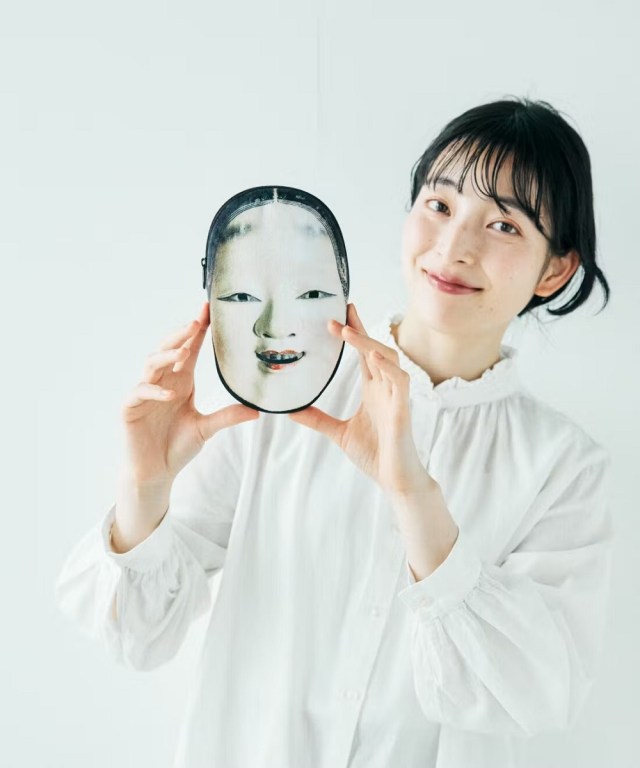
Felissimo has entered into a creative partnership with the Kyoto Kanze Kaikan, or Kyoto Kanze Noh Theater. Noh is Japan’s oldest form of stage theater that’s still performed today, with its origins predating kabuki by more than a century. Noh performers wear masks while on stage, and with many of the stories dealing with demonic possession, madness, and other such chilling topics, the masks too are often unnerving in design, but the amount of undeniably skilled craftsmanship that goes into them also makes them, one could argue, in a way, beautiful.
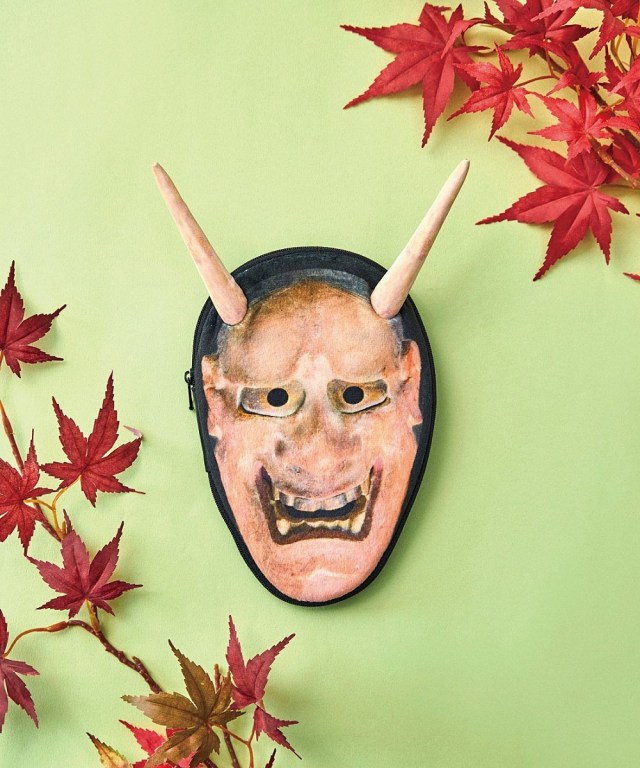
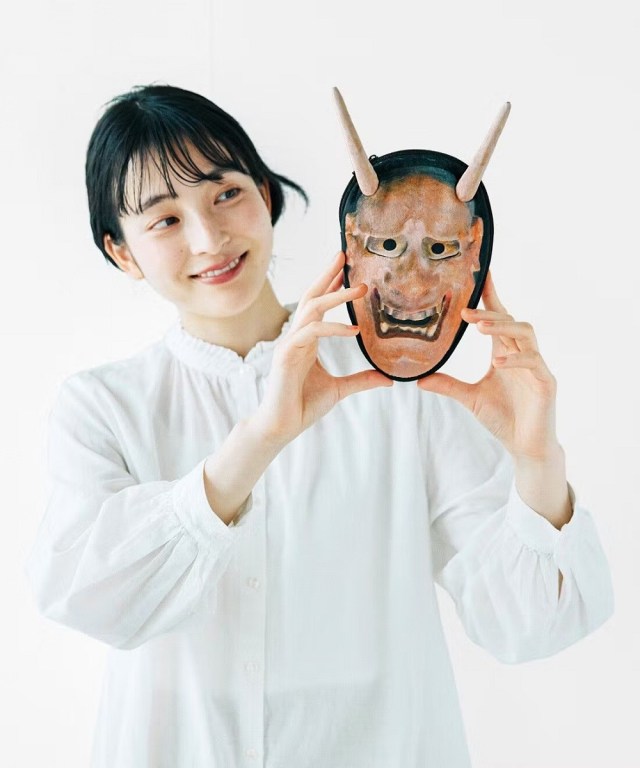
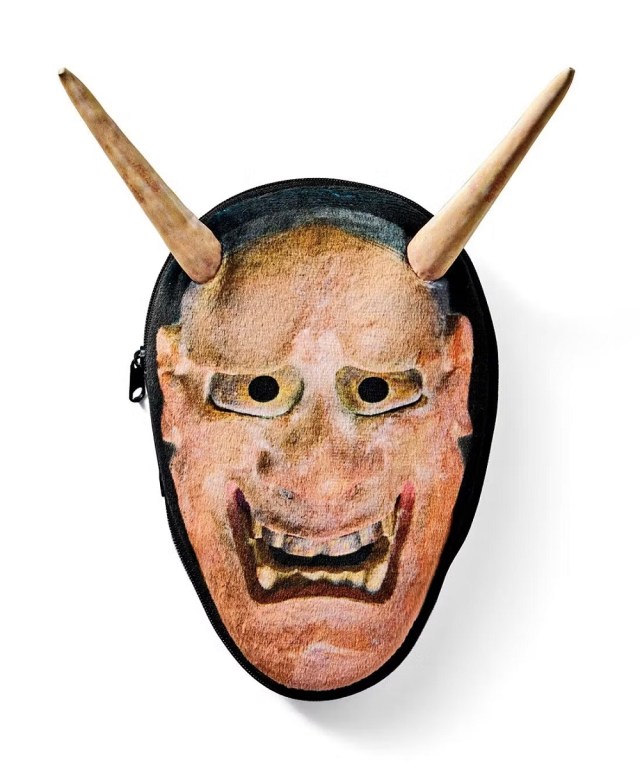
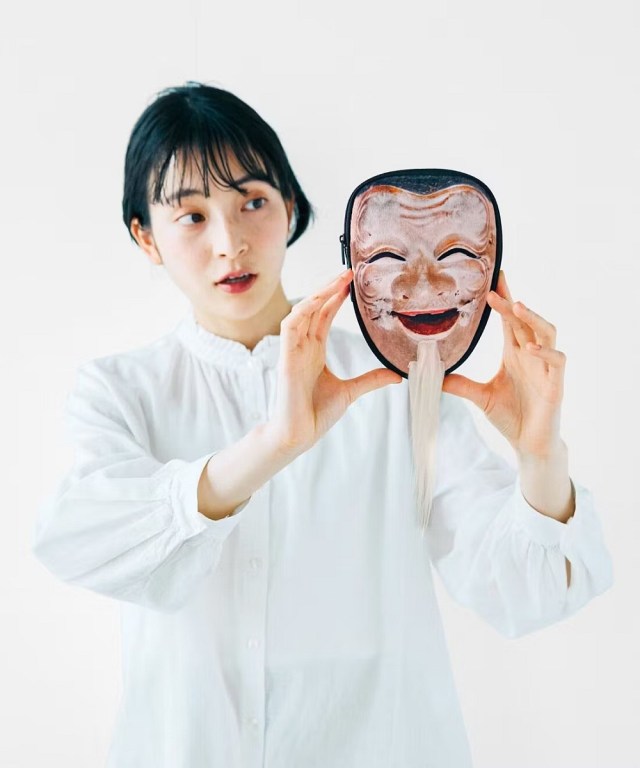
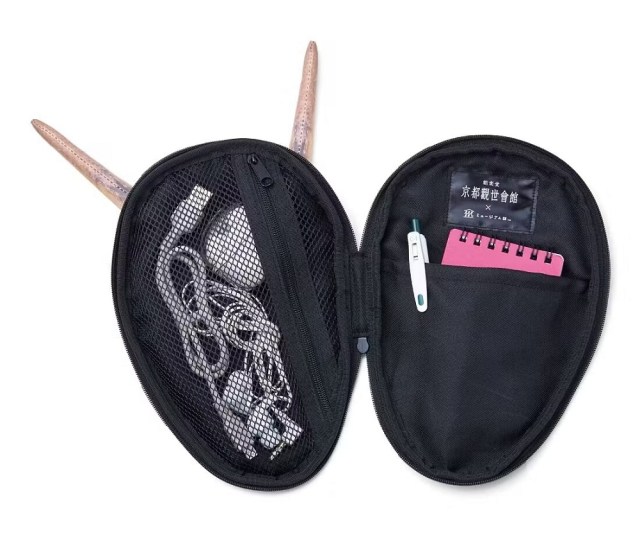
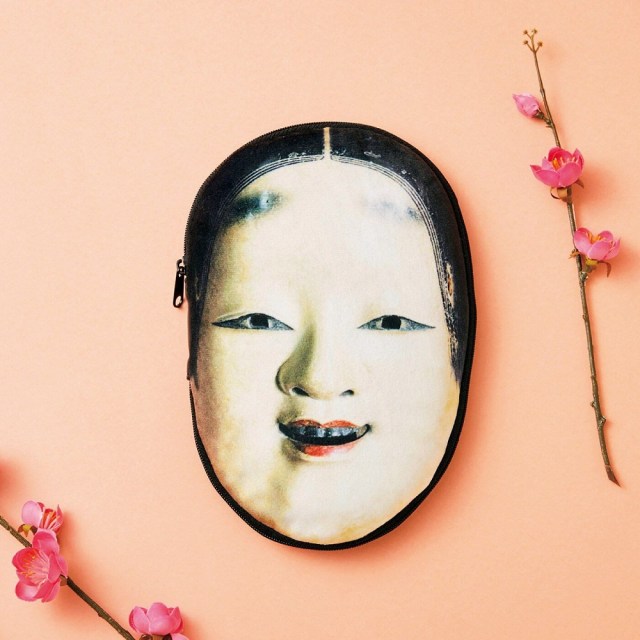
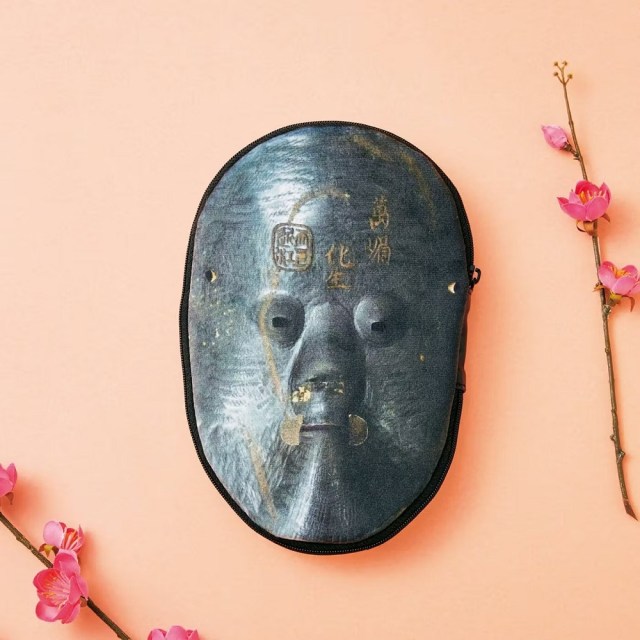
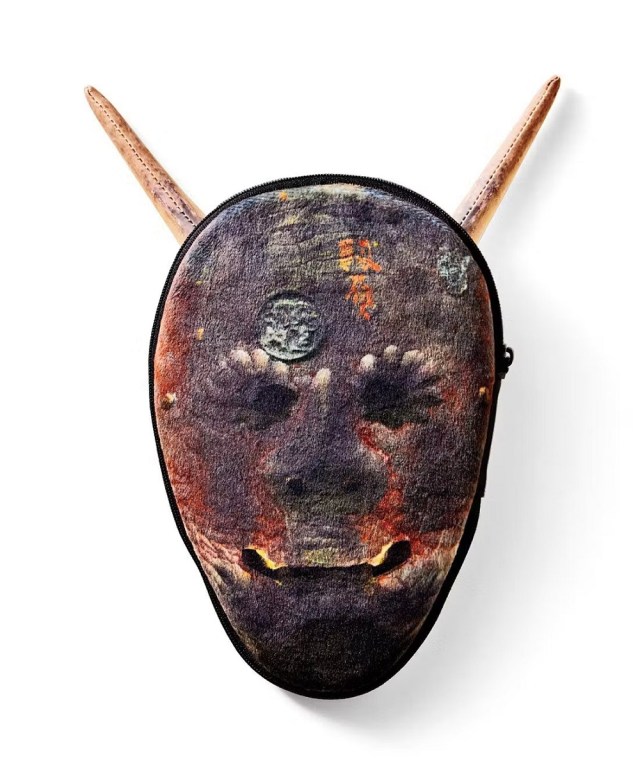
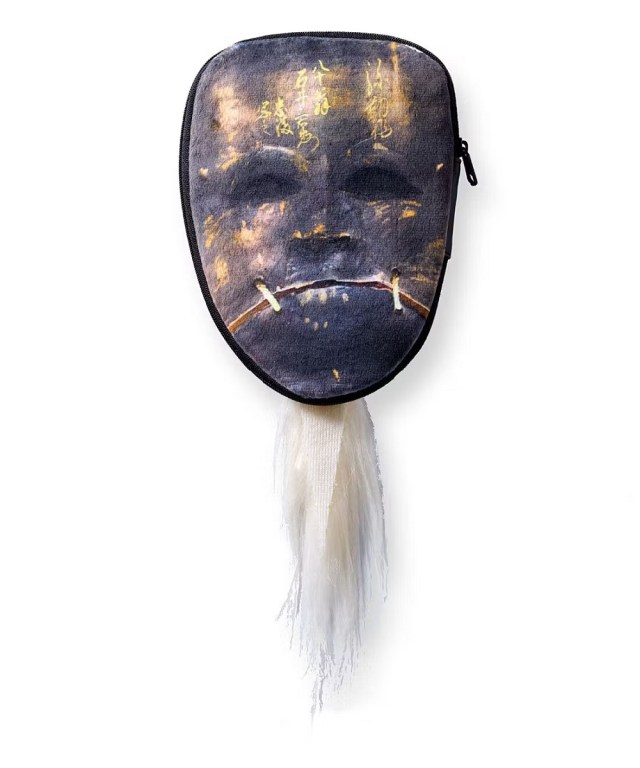
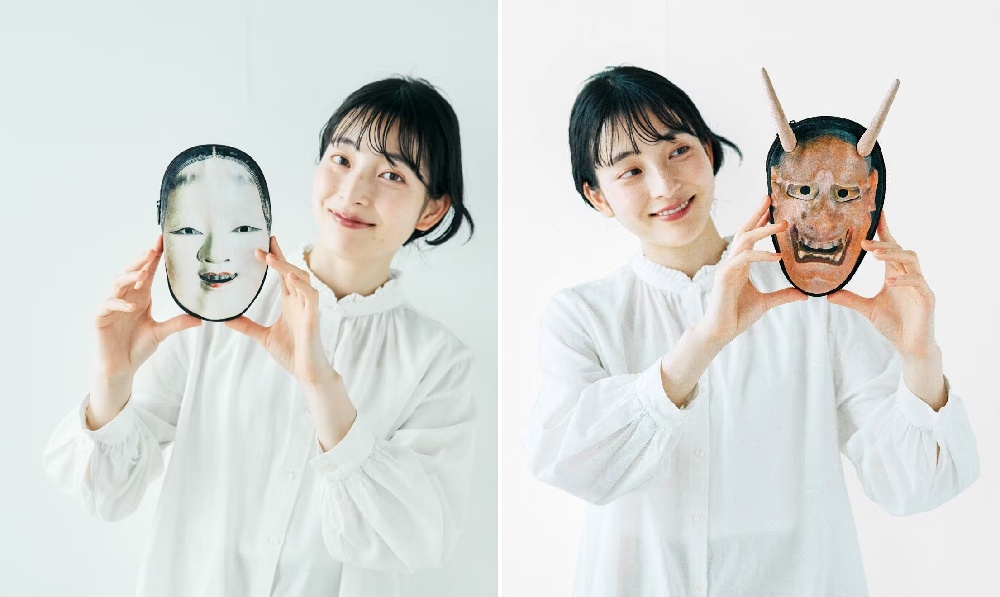
Of course, Felissimo realizes that the average person doesn’t really have many occasions on which to slip on a Noh mask, so they’ve instead applied three classical designs as motifs for organizer pouches. With help from Kyoto Kanze Kaikan, Felissimo has produced a hannya mask pouch, showing a female demon consumed by jealously and sporting intimidating horns, and also a Okina mask, showing an old man with a long beard.
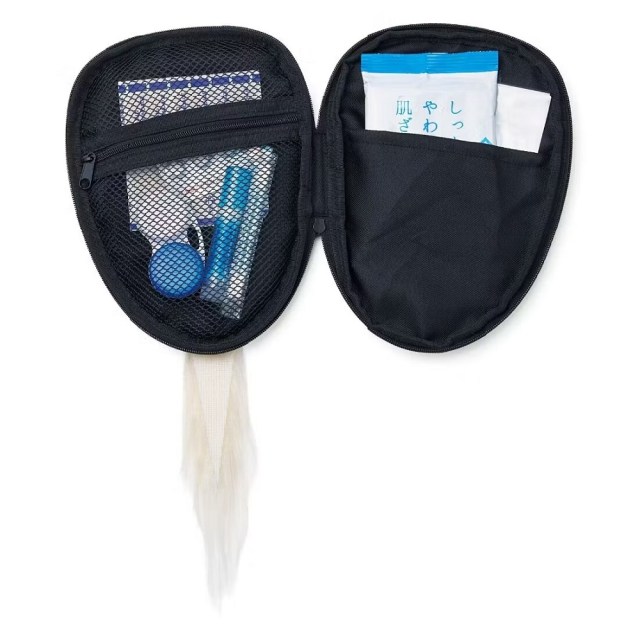
Being roughly the same size as a person’s face, they can actually hold quite a bit of stuff, with interior zippered sections and pockets to keep everything nice and organized.
Also part of the lineup is a pouch styled after a Kasei mask. Also known as a manbi mask, this type of mask is meant to create different atmosphere depending on the angle it’s viewed from, switching from a beautiful woman with a demure smile to something bolder or even sinister. The Kasei mask pouch was actually created by Felissimo’s designers prior to the start of their collaboration with Kyoto Kanze Kaikan, but as you can see, they were still able to achieve some terrifying results.
As further proof of just how committed Felissimo was to authenticity, even the backsides of the pouches mimic the interior surface of Noh masks.
The whole lineup is available from Felissimo online store here, priced at 2,860 yen (US$18.50) each. And should you find yourself instead in the mood for something that’s still strange but not quite so scary, don’t forget about Felissimo’s steamy Myaku-Myaku photo album.
Lawson opens its first “mini supermarket” in Tokyo.
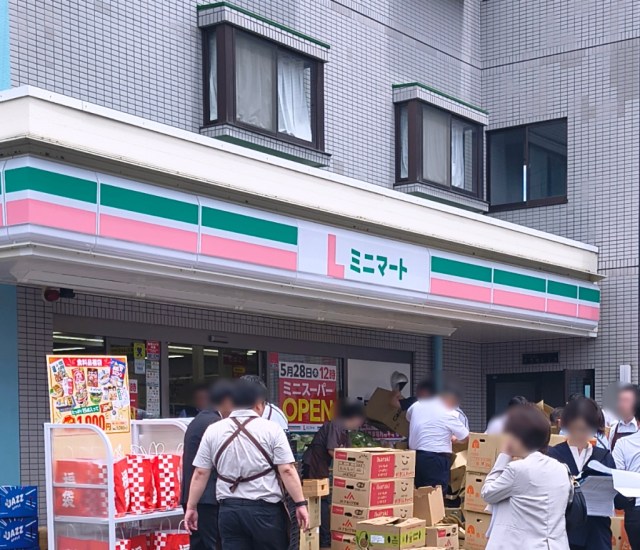
Lawson is one of Japan’s big-three convenience stores (the others being 7-Eleven and Family Mart), but Lawson itself has multiple sub-brands. For example, there’s also the budget-minded Lawson Store 100, with most items priced at 100 yen, and on May 28, the Lawson family expanded once again with the opening of L Minimart in Tokyo’s Kodaira district.
L Minimart says its mission is to be a “mini supermarket,” which sounds like a bit of a contradiction, doesn’t it? But Lawson believes there’s room for a new type of store in between convenience stores and supermarkets, with more fresh produce and ingredients than a standard Lawson would carry, but still offering more convenience and simplicity than a full-scale grocery store.
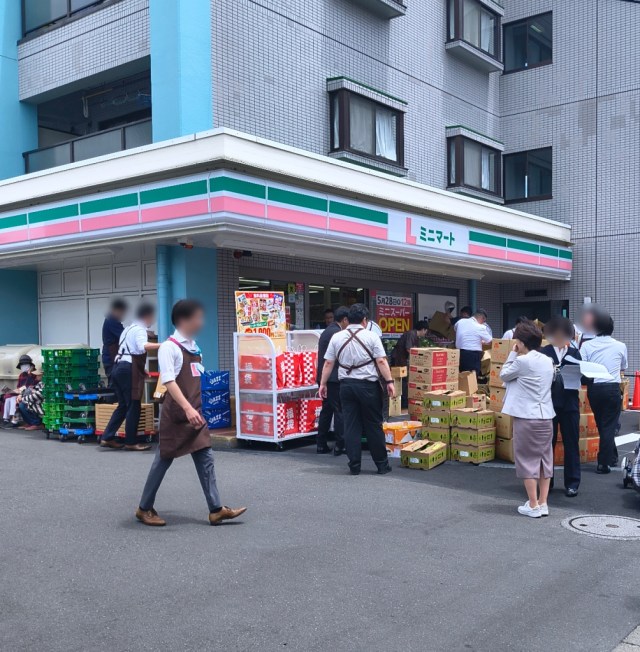
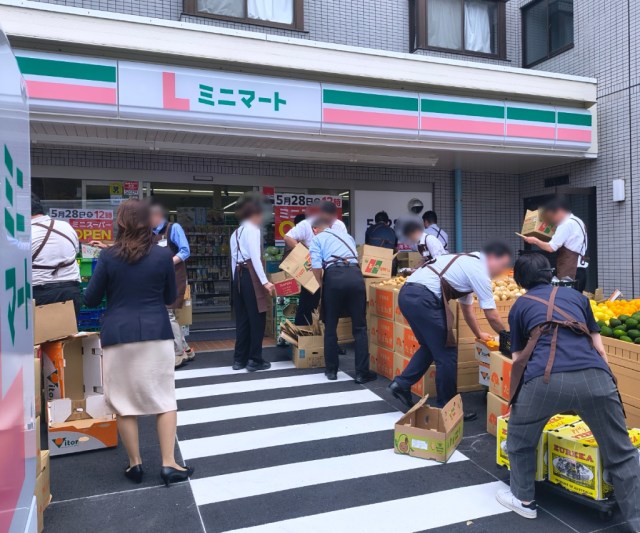
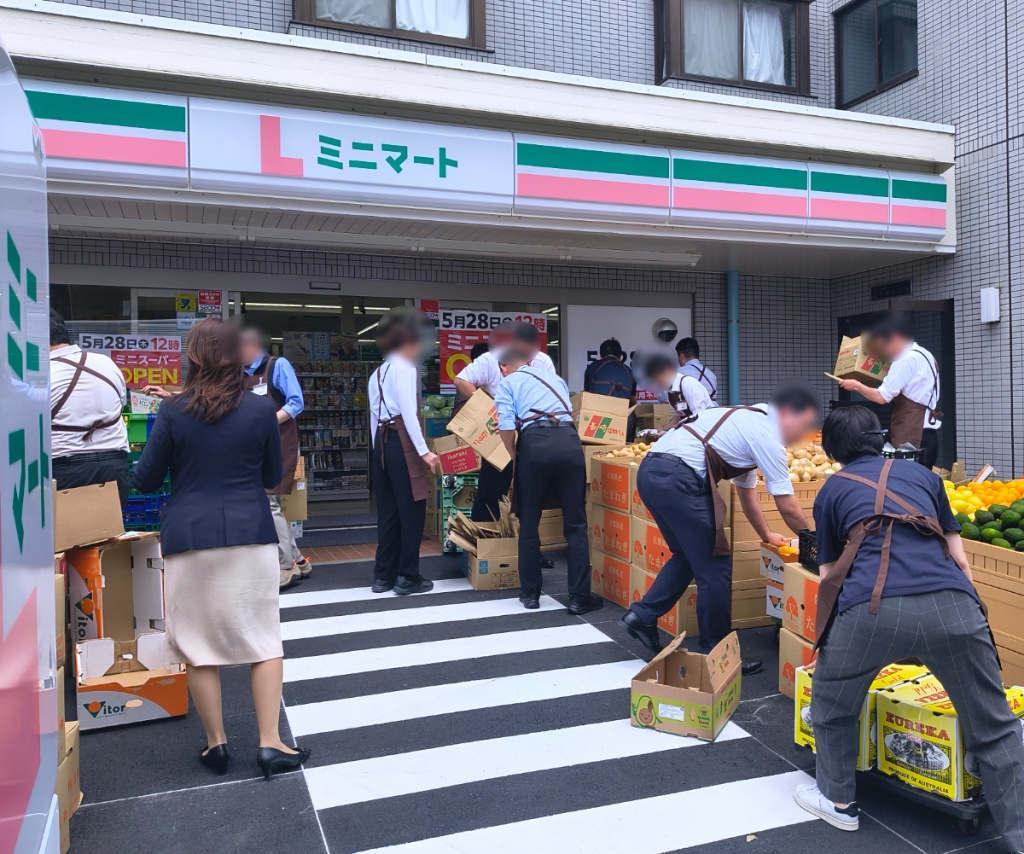
This first branch of the new L Minimart chain is about a 10-minute walk from the South Exit of Kodaira Station, and on opening day was scheduled to start welcoming shopper at noon. We rolled up at 11:15 to take a peek, and saw the staff busily taking care of their final preparations.
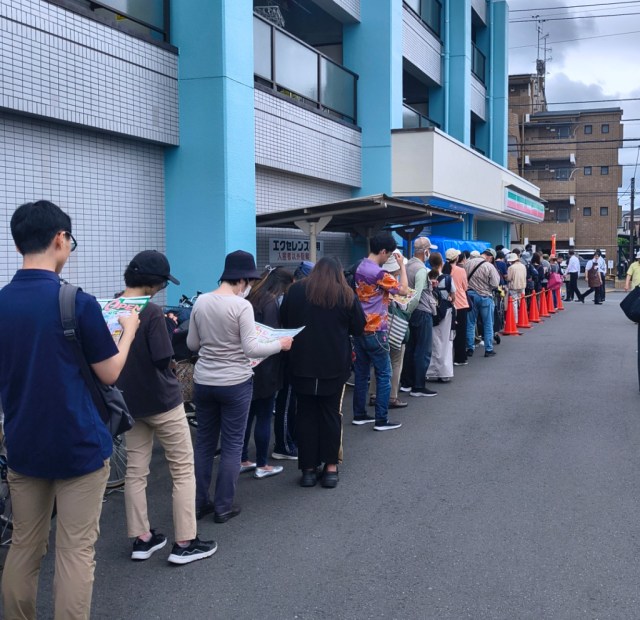
After killing some time wandering around the neighborhood, we came back at around 11:45, and were startled to see that in the 30 minutes we’d been gone, a line of some 70 people had formed!
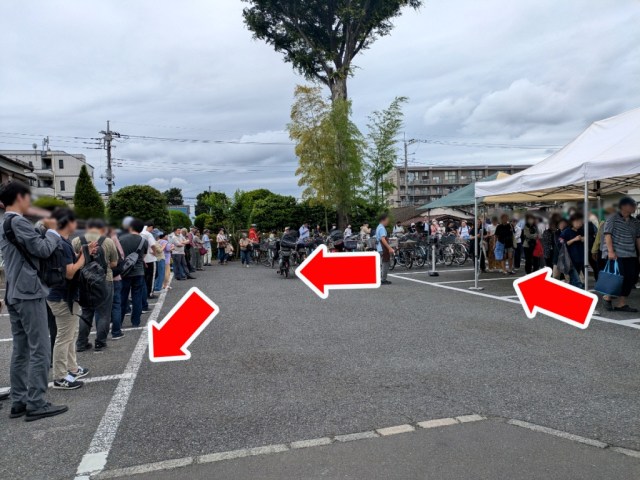
We took a spot at the end, and as the time got closer and closer to noon, more and more people started showing up. By the time the doors opened, we estimate there were about 200 people waiting to get in.
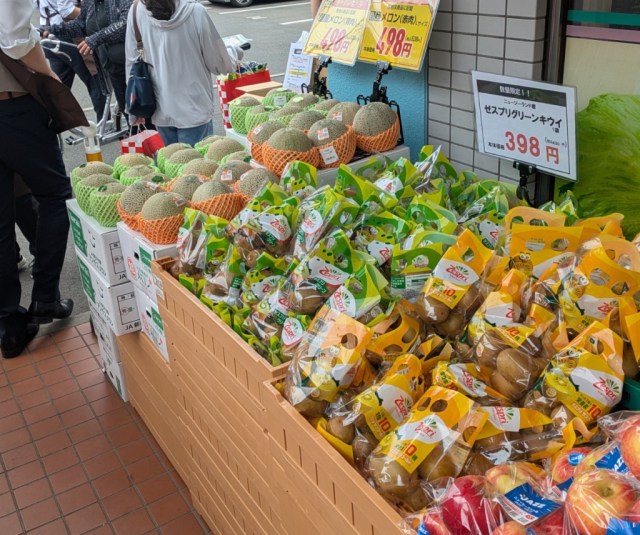
But once they started letting people in, the line moved briskly, and it only took about 10 minutes for us to get to the front of it. Outside of the store were produce stands stocked with melons and kiwis…
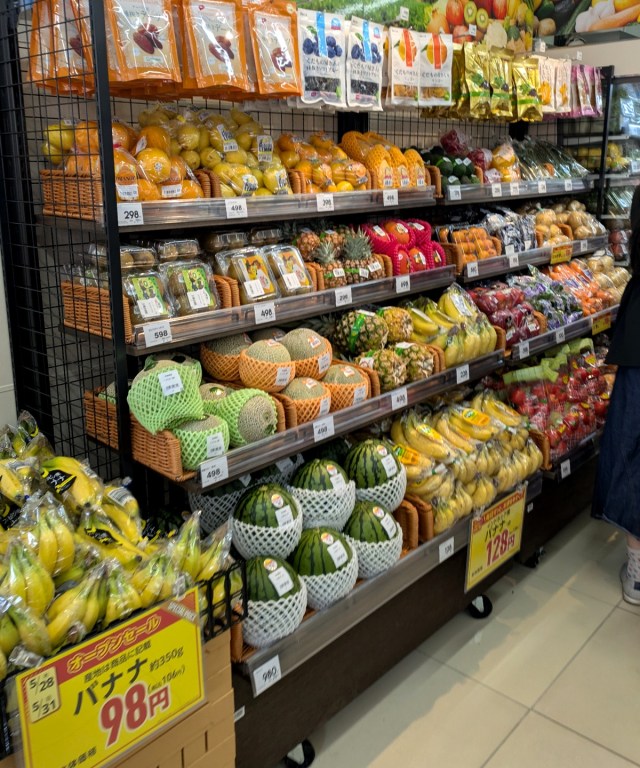
…and there were more fruits and vegetables inside.
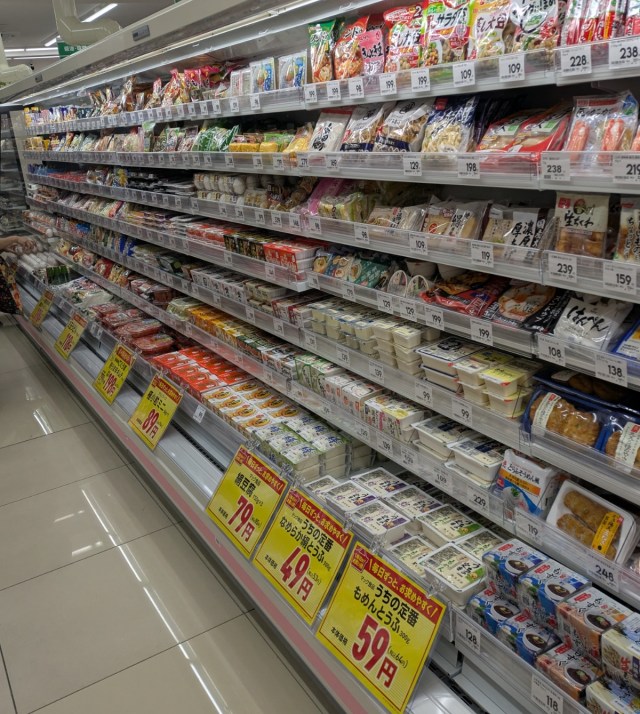
Looking around, we spotted lots of attention-grabbing yellow signs trumpeting especially low-priced items. Some of these were special discounts as part of the store’s opening sale (like 98-yen [US$0.65] bunches of bananas), and others were touted as everyday low prices, like tofu for as little as 49 yen a pack.
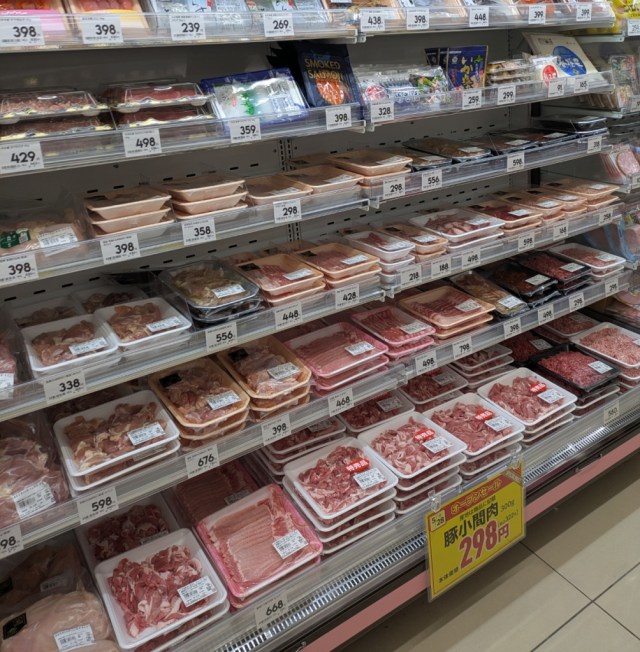
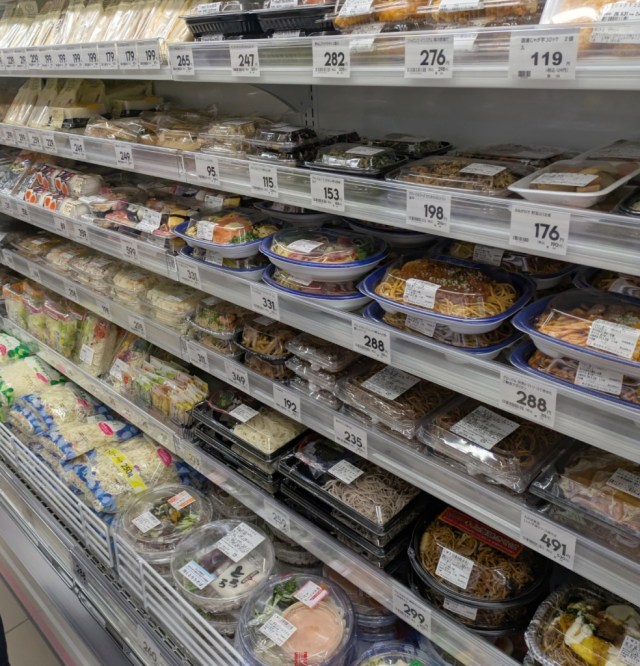
The meat section was far more expansive than anything you’d find at a regular convenience store, but L Minimart hasn’t forgotten its roots, as it has a very large selection of bento boxed lunches, sandwiches, salads, ready-to-eat-noodles, and onigiri (rice balls) as well.
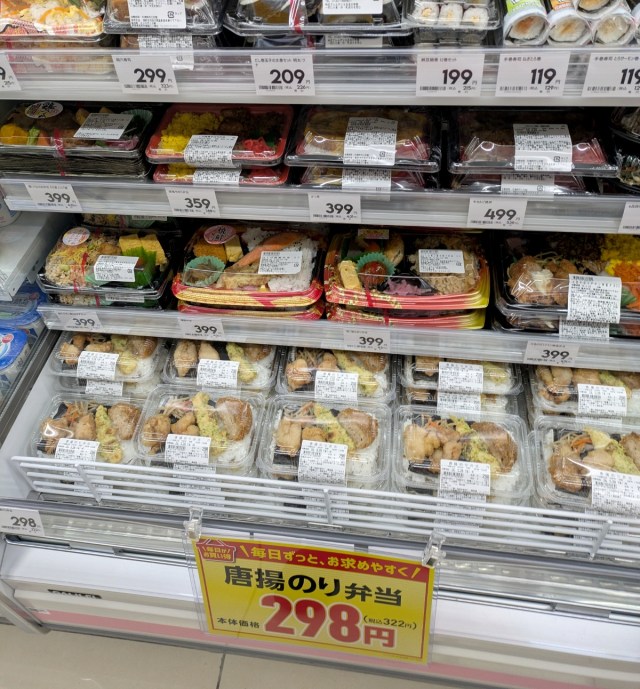
The bento come in two price tiers, 499 or 399 yen, but with one exception. L Minimart has a Karaage Nori Ben (fried chicken and seaweed bento) that costs just 298 yen (US$1.95). At that price, it was too tempting to pass up, so we grabbed one for taste-testing, along with a few other items.
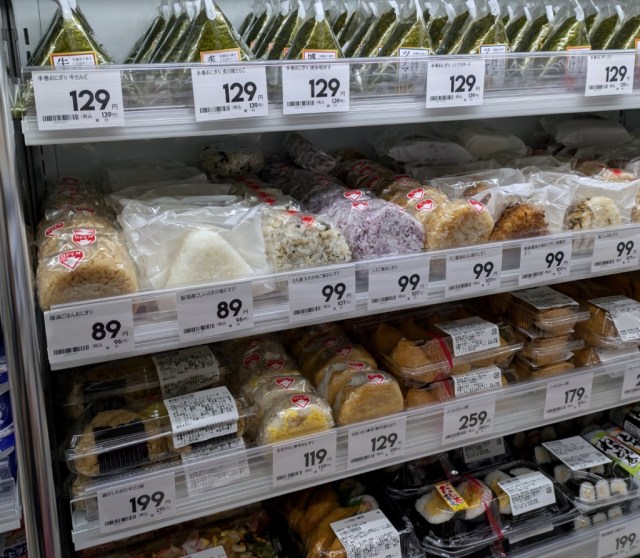
▼ The onigiri are also incredibly affordable, with seaweed-wrapped ones for 129 yen and non-seaweed ones for even less. It’s been years since major convenience store chains had prices this low.
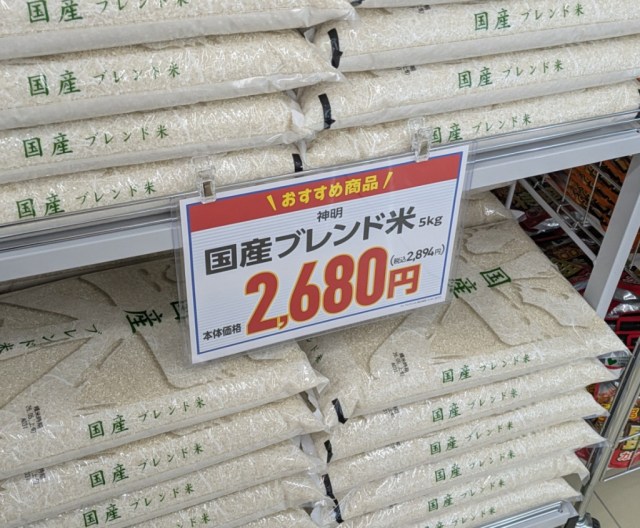
▼ Five-kilogram (11-pound) bags of rice for 2,680 yen is also a glorious throwback to an era of more affordable groceries.
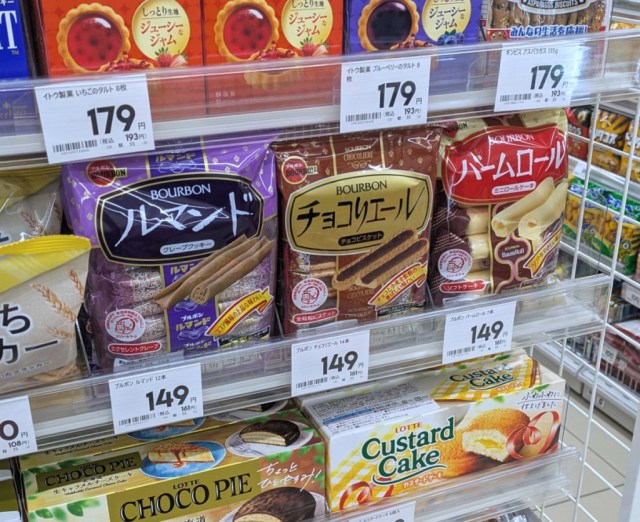
Don’t worry, L Minimart has sweets too. In addition to packaged cookies and cakes…
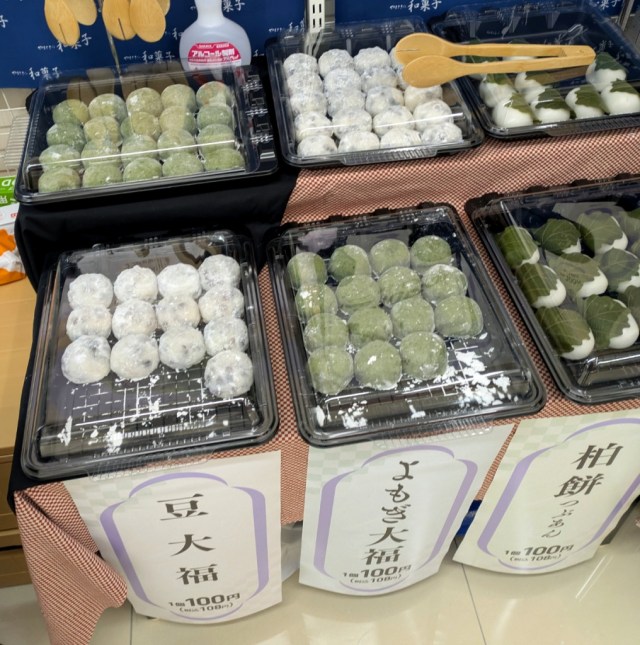
…they’ve also got a self-serve section of traditional Japanese desserts, like daifuku mochi dumplings, for just 100 yen each!
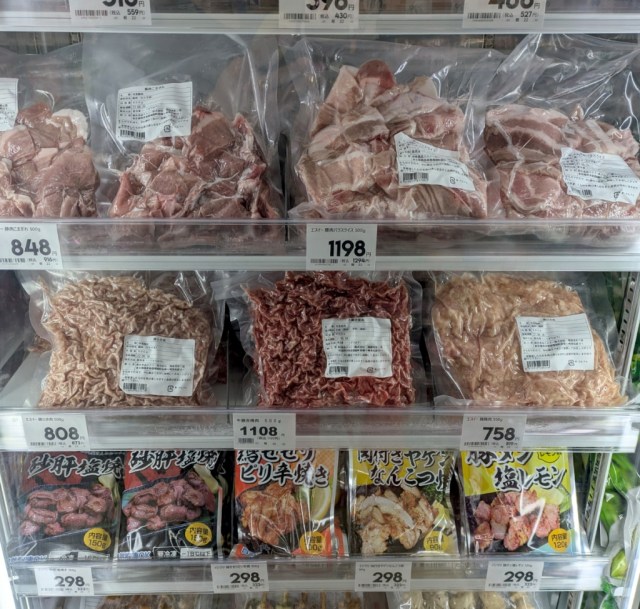
We also noticed that L Minimart sells packs of frozen meat. These aren’t always so easy to find in Japan, even at supermarkets, and look like they’d be very handy to keep on hand for meal prep.
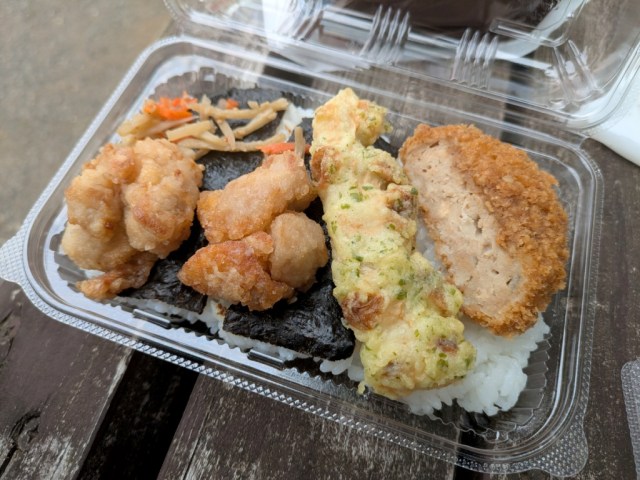
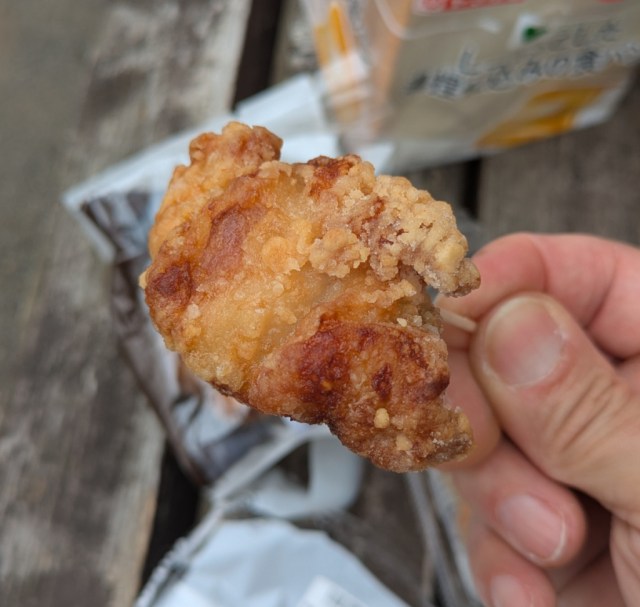
As we mentioned above, we bought one of those ultra-affordable 298-yen karaage nori bento, and it turned out to also include a croquette, isobeage (tempura seaweed), and a bit of kimpira gobo (diced carrot and burdock root).
They all tasted good, but we have to admit that the portions were a little small. We didn’t feel ripped off, but in terms of how much food you get, this feels more like a fair price than a full-on bargain.
Of course, with the bento only costing 298 yen, there’s room to add something on the side, like an extra piece of the tasty karaage for 168-yen…
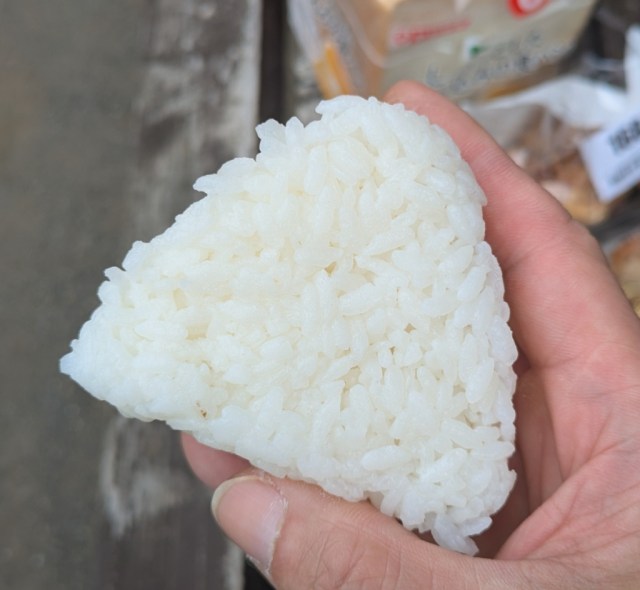
…or a 96-yen shio musubi (salted rice ball), made with delicious Koshiibuku rice from Niigata Prefecture, famed for having some of Japan’s best rice-growing farmland.
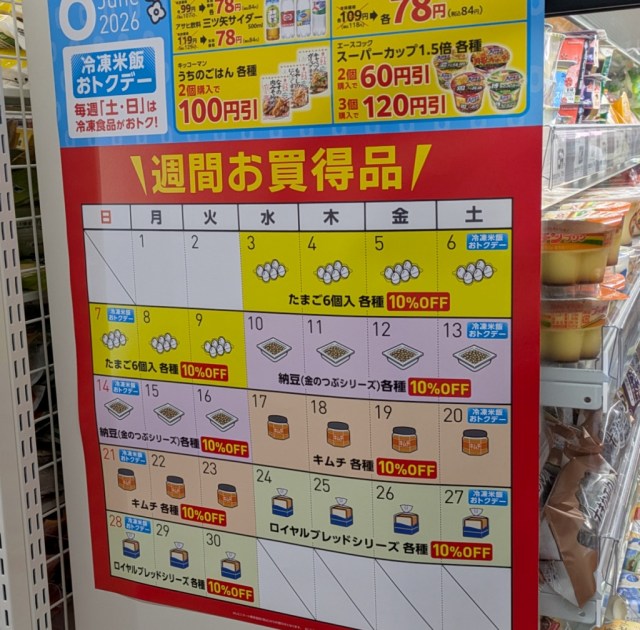
L Minimart takes another page from the supermarket playbook with rotating discounts for certain staples, and a calendar posted in the store showed the upcoming blocks of 10-percent-off days for eggs, natto, kimchi, and sandwich bread.
We came away happy from our shopping experience, and the huge crowd that L Minimart attracted on its first day shows there’s potential for a class of store between convenience stores and supermarkets (even L Minimart’s hours sort of split the difference between the two, as it’s open from 7 a.m. to 11 p.m. The Kodaira neighborhood is out in the suburbs of west Tokyo, but as major Japanese cities grow increasingly densely populated, we just might start seeing more stores like this that don’t need a large physical footprint in order to offer a full range of both groceries and ready-to-eat foods.
Shop information
L Minimart (Kodaira Nakamachi branch) / Lミニマート(小平仲町店)
Address: Tokyo-to, Kodaira-shi, Nakamichi 251 Excellence
東京都小平市仲町251エクセレンス
Open 7 a.m.-11 p.m.
Combination of factors is dimming the shine of one of the stars of Japanese restaurant culture.
Izakaya are a unique part of Japanese food culture. Their closest analogy would be pubs, since izakaya serve a wide variety of alcoholic drinks and food meant to be paired with such beverages. Their menus are much more extensive than just basic bar munchies, though, with things such as yakitori chicken skewers, grilled onigiri rice balls, and plates of sliced sashimi being long-standing favorites. As a matter of fact, unlike with a pub, the expectation is that izakaya customers will always order some kind of food too, though there’s still a greater focus on drinks than at a regular restaurant.
However, izakaya are in a tough spot in Japan these days, and since the start of the year have been going bankrupt at a faster rate than at any time in nearly the past 40 years, according to a new study.
Data from Tokyo Shoko Research, a commerce and industry research organization, shows that between January and April of 2026, 88 izakaya have declared bankruptcy with debts of 10 million yen (US$65,000) or more. That’s 54.3 percent more than for the same period last year, and the highest number Tokyo Shoko Research has observed for the first quarter of the year since it began tracking such statistics in 1989, significantly more than the previous high of 59 in 2024.
So what’s causing the closures? A mix of factors, but one of the biggest is rising prices. Japan is experiencing by far its worst inflation in a generation, and costs for not just ingredients, but also for utilities, are hitting izakaya hard. Many are responding by reducing portion sizes, reworking recipes to make use of cheaper ingredients, or raising the prices they charge their own customers to make up the increased expenses. There are limits to how much of those tactics diners will put up with, though.
Facing rising costs for their own necessities such as rent, groceries, transportation, and home utilities, many consumers are becoming much more sensitive to the value they’re getting with the reduced amount of money they have left over for discretionary spending, and izakaya are looking a lot less appealing to many people than they used to. In particular, Tokyo Shoko Research points out that izakaya offers that include a full meal’s worth of food plus unlimited drinks for a period of time (usually 90 or 120 minutes), traditionally some of their most attractive deals, have gotten more expensive and now often cost more than 5,000 yen, a price point that many diners are balking at.
The study also highlights recent changes in dining/drinking patterns in Japan. Traditionally, izakaya have gotten much of their business from groups of coworkers coming in together, either as part of a pre-planned event such as a welcome party for new employees or an end-of-the-year celebration, or as spontaneous excursions to grab a drink after clocking out, sometimes after doing overtime and being too hungry/thirsty to wait until they can commute back home. However, those gatherings largely went away during the pandemic, and while many izakaya weathered that economic storm due to financial support from the government, the custom of coworkers going to drink together hasn’t rebounded to its previous level.
Part of that is due to more people working from home, something that was extremely rare in Japan prior to the pandemic. Many jobs now offer at least some telecommuting flexibility, meaning fewer people in the office, and so fewer people to go grab a cold Asahi with on the way to the station at the end of the day. There’s also been a gradual increase in desire for a more even work/life balance in Japanese society. Even many in management positions are now more aware that constant overtime chips away at morale and the company’s ability to retain workers, and have come to accept that many employees feel that, when overtime does have to be done, having to go drinking with your boss afterward doesn’t make up for it, but actually makes the situation even worse.
So when you combine higher prices, freedom from the obligation to go to izakaya with coworkers, and the possibility of already being at home when you clock out from work, having a drink in the comfort of your living room, and one you purchased at the supermarket for half of what an izakaya would have charged you, becomes a very compelling alternative.
▼ Especially when stores in Japan have not just beer, but a wide variety of canned cocktails too.
Ah, but what about inbound foreign tourists? Japanese cuisine is one of the top reasons travelers from overseas come to Japan, and with the yen remaining so weak, many visitors still feel like dining out here is a bargain compared to their home countries. Tokyo Shoko Research, though, says that izakaya aren’t drawing in foreign tourists to the same extent that other restaurants in Japan are.
The report doesn’t offer any theories as to why this is, but it likely has something to do with international foodies’ passion for Japanese food being strongly focused on specific dishes, such as ramen, sushi, or curry rice. While many izakaya do have tasty food, their broader menu makes them a little less likely to hook a traveler’s attention than, for instance, a restaurant whose storefront is plastered with signage featuring photo after photo of steaming hot bowls of ramen. Ordering at izakaya is also a little trickier to navigate. There aren’t any vending machines at the entrance to purchase a meal ticket from, and it can be hard for newbies to estimate how many plates of food to order for a filling spread. There’s also the whole otoshi custom of unasked-for appetizers that you still have to pay for, but aren’t told the price of in advance, which can be an unpleasant bit of culinary culture shock.
Izakaya, like all pubs, are about more than just base sustenance. In a sense, they’re a form of entertainment, and much like certain genres of music or movies fluctuate in popularity, there’s a chance that izakaya will bounce back. For now, though, the situation isn’t very rosy, so if you see one that looks intriguing, they’d probably really appreciate it if you came in for a drink and a bite to eat.
Mr. Sato is filled with appreciation for the other Mr. Sato.
Tokyo has a number of neighborhoods, such as Shibuya and Harajuku, that celebrate trendy, youthful fashions and culture. There’s also a part of the city, though, with a focus on a more mature clientele.
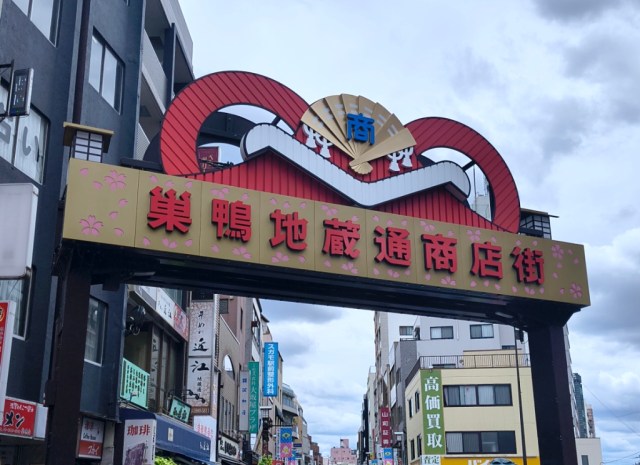
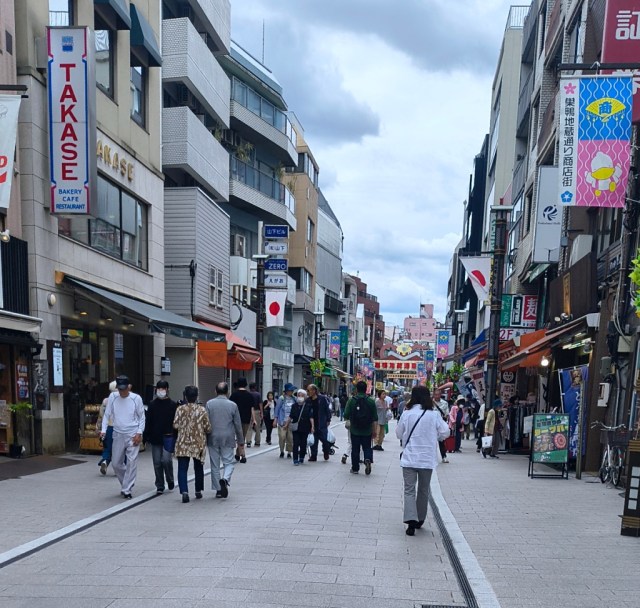
Located part-way between Ikebukuro and Ueno on the Yamanote loop line that encircles the city center, Sugamo is a gathering place for Tokyo’s senior citizens, and while it’s an interesting spot to check out on any day, our ace reporter Mr. Sato timed his most recent visit for June 4.
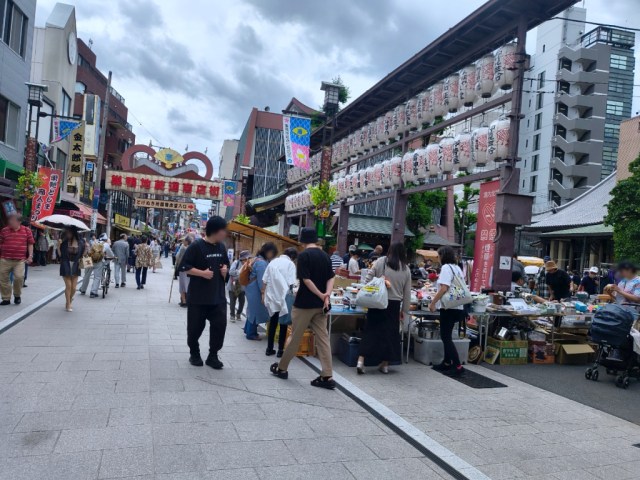
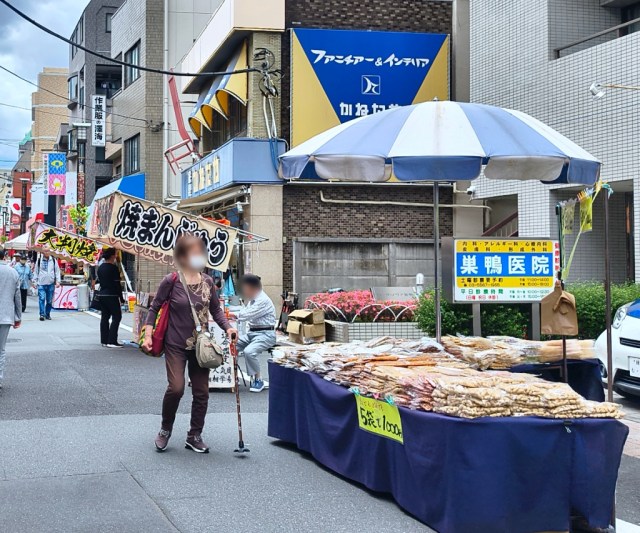
That’s because Sugamo Jizo-dori, the main shopping street in the neighborhood, has a special street market on the 4th, 14th, and 24th of every month. This being Sugamo, it’s not a wild, invasively loud block party, but various merchants set up stalls on the street selling items at especially attractive prices.
Many of the stalls sell snacks, and Mr. Sato found himself tempted by bags of dried fruit for 200 yen (US$1.25) each if you bought five at a time and bundles of three bags of senbei for 500 yen.
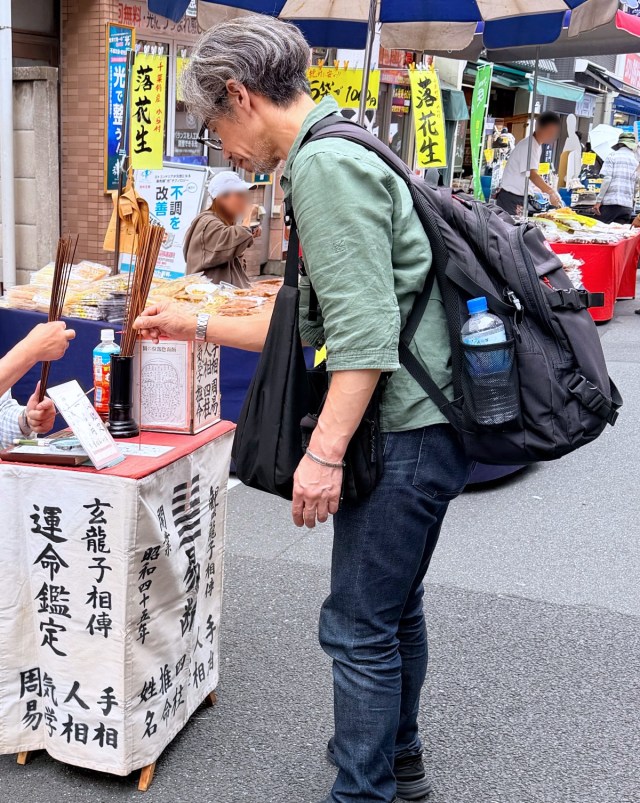
He also got his fortune told by a streetside diviner, a kindly older gentleman who read Mr. Sato’s palm and face for 2,000 yen. According to the fortune teller, there are no proverbial dark clouds looming on Mr. Sato’s horizon, though he expressed some concern over the “sun line” on his right hand not being very distinct. Apparently this is an indication that he’ll need to continue working hard to be successful, but our reporter has never backed away from a challenge, and with the fortune teller adding that though he isn’t destined to be rich, he won’t end up being poor either, Mr. Sato was happy with the overall-good forecast of his future.
▼ Mr. Sato having his fortune told
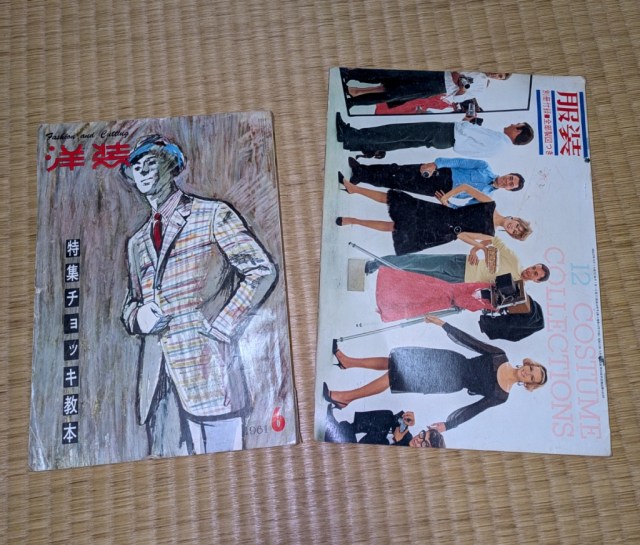
But the highlight of Mr. Sato’s visit to Sugamo’s street market was a pair of vintage fashion magazines he picked up for 100 yen each.
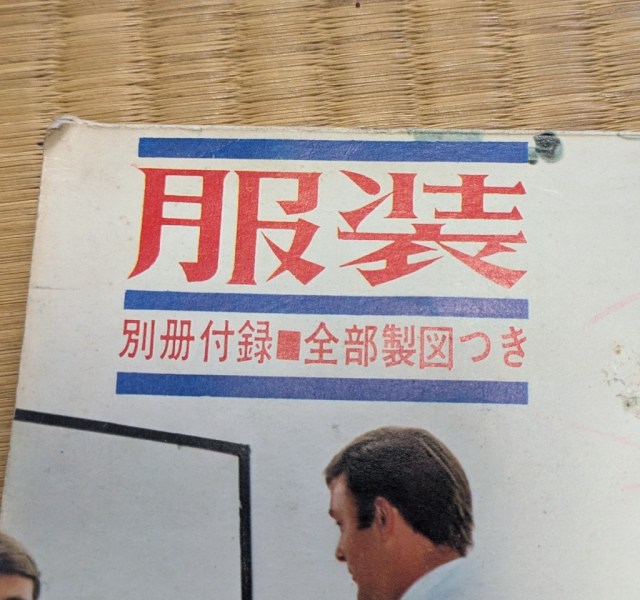
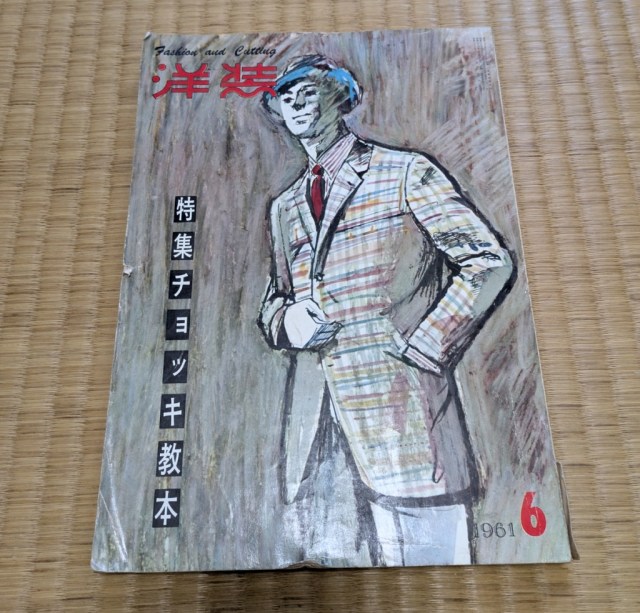
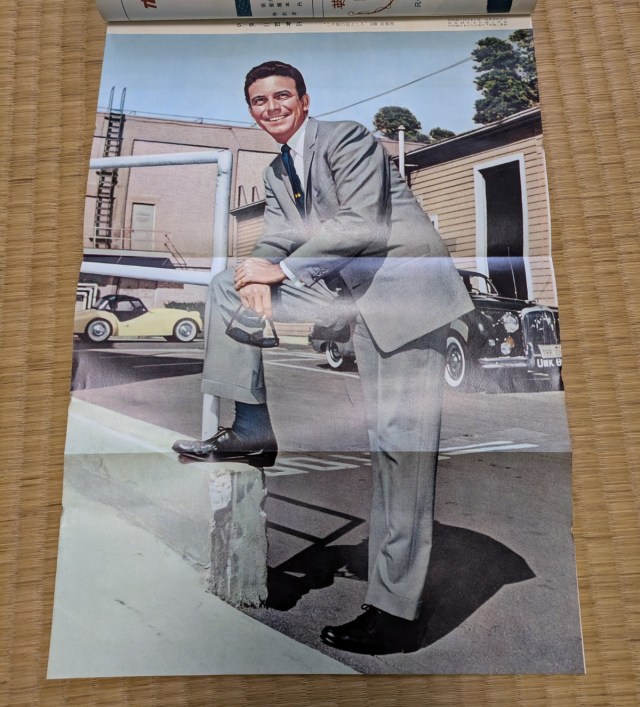
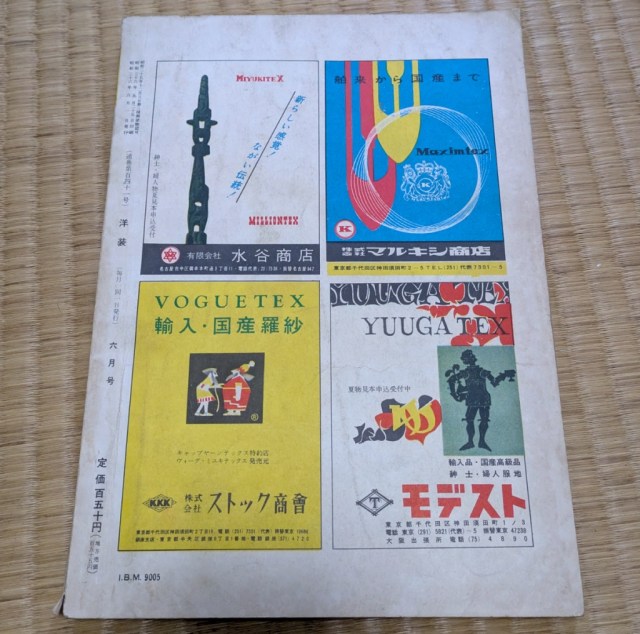
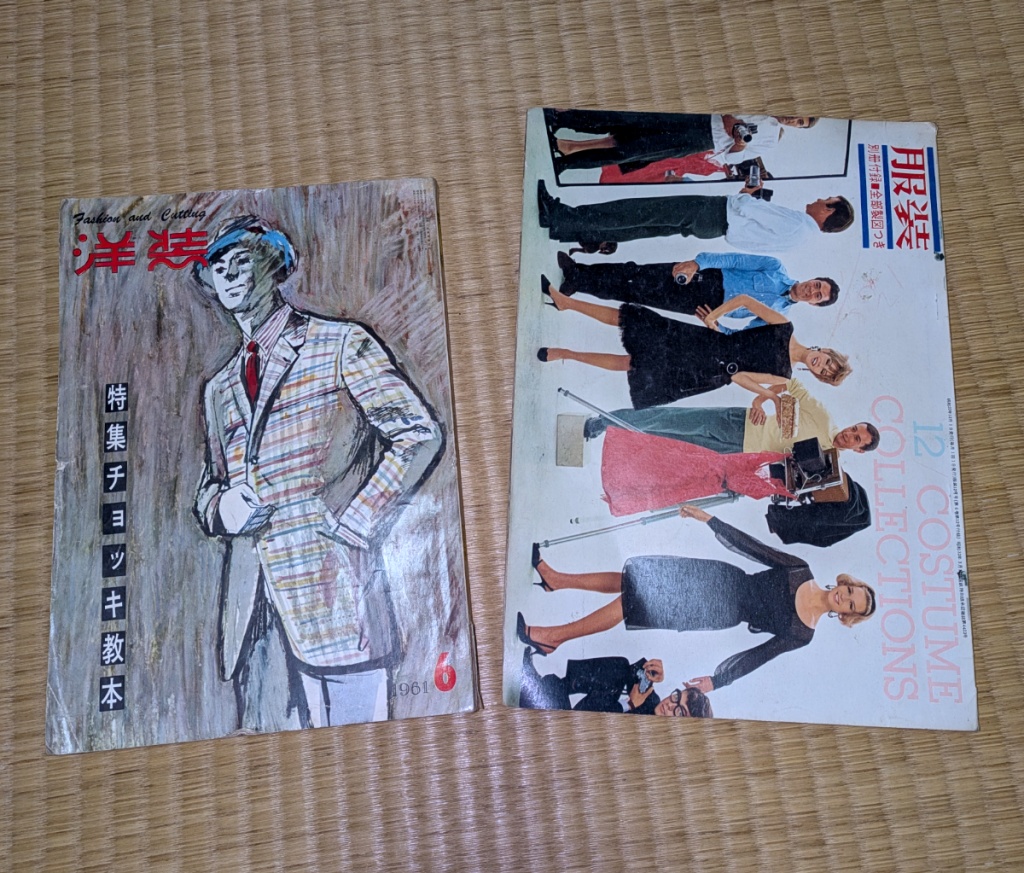
To illustrate just how classic of publications we’re talking about here, one of them is simply titled Fukuso, which means “clothing” in Japanese, and the other is Yoso (“western clothing”).
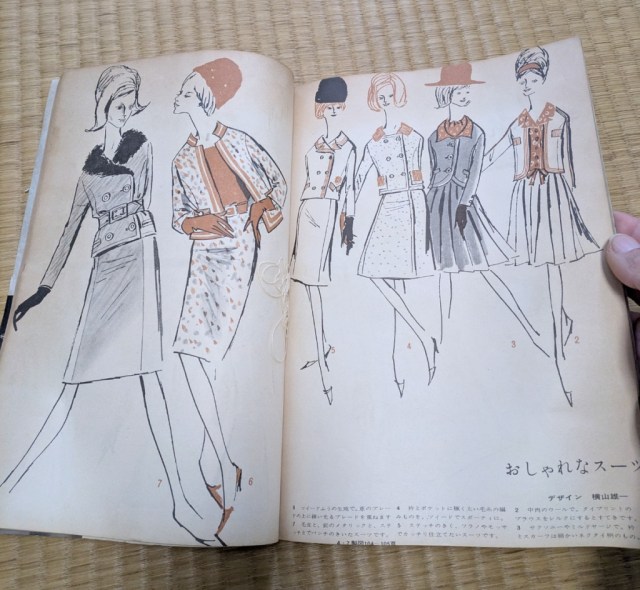
Fukuso was started by Chiho Tanaka, who was born in 1906 and became one of Japan’s first famous designers of Western-style clothing. The issue Mr. Sato purchased is from December of 1962, quite a bit before Mr. Sato was born, and leafing through it he was stuck by the distinctly charming analog feel to its layout and illustrations.
Yoso has an impressive pedigree too, with its editor being Tetsunosuke Hirukawa, the head of the Japan Western Clothing Academy.
▼ Mr. Sato’s issue is from 1961
Yoso in particular was aimed at people working within the apparel industry, highlighting not just new fashions but also effective ways to tailor and produce clothing for clients.
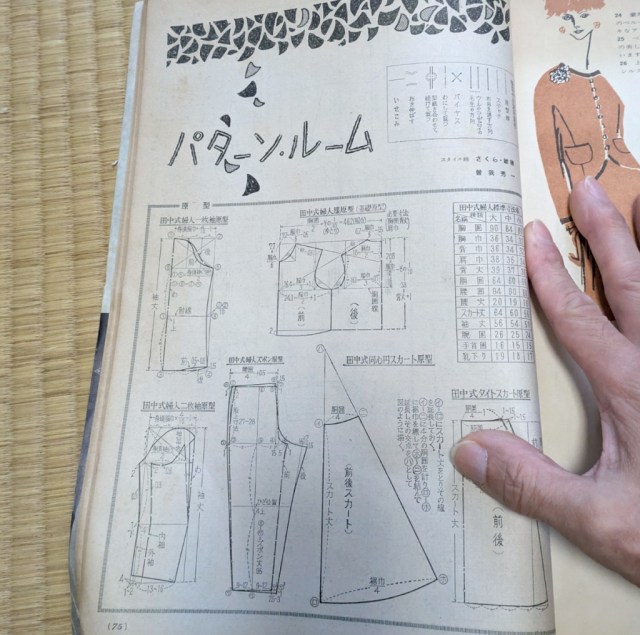
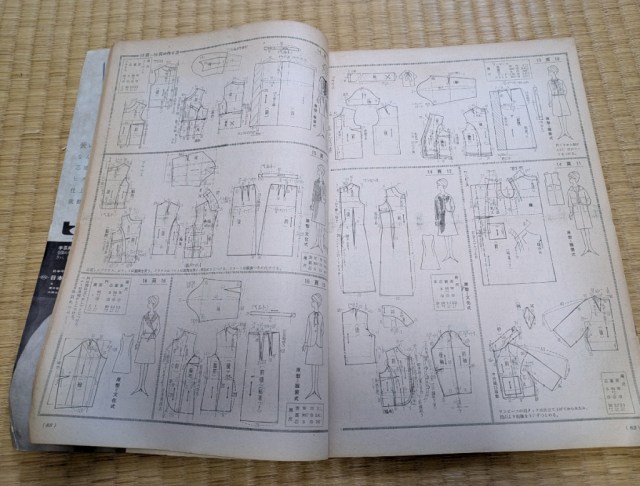
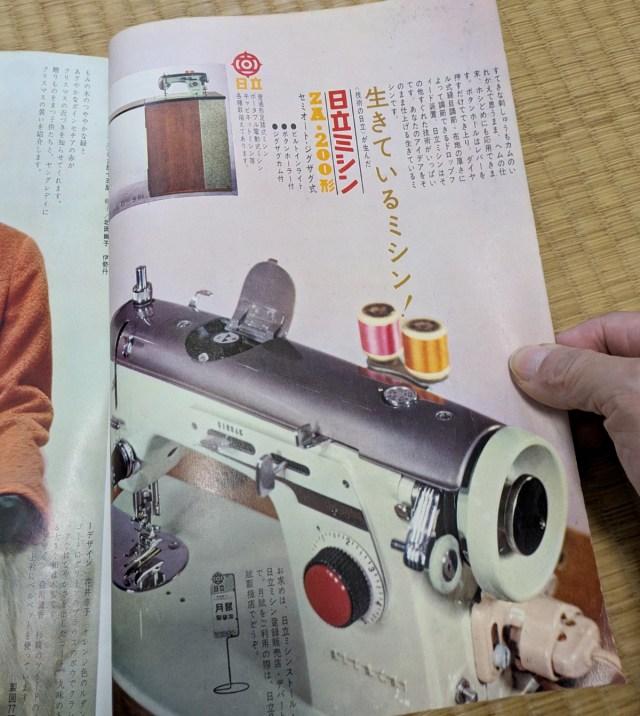
As a matter of fact, looking through the two magazines, Mr. Sato realized that this was his first time to be reading fashion magazines that predate not only the fast fashion era of store like Uniqlo and Gap, but even easy access to department stores for most Japanese people. This was a time when many people still made their own clothing at home, or else splurged for custom-made pieces from a dressmaker or tailer. As such, issues of Fukuso contained a section with patterns for self-sewn garments…
…and information to help readers choose the best sewing machine for their needs.
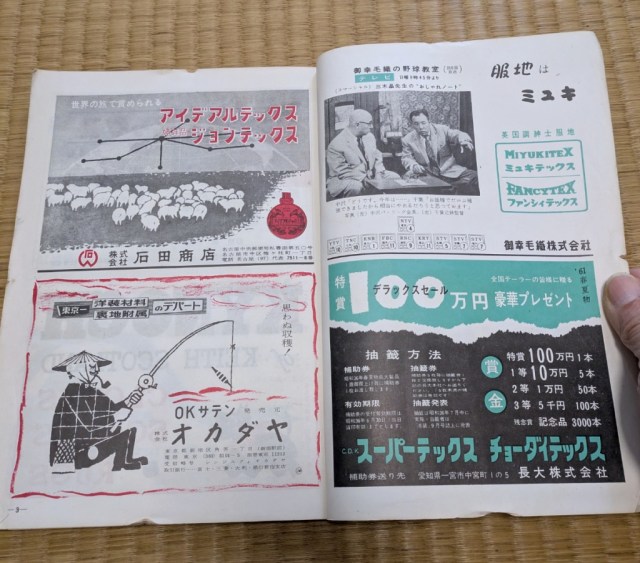
Yoso, being a more professionals industry-focused magazine, instead has advertisements for tailoring services and supplies, some with what very stylish designs.
▼ One of the ads here is for Okadaya (オカダヤ), a sewing supply shop in Tokyo’s Shinjuku neighborhood that’s still in business today.
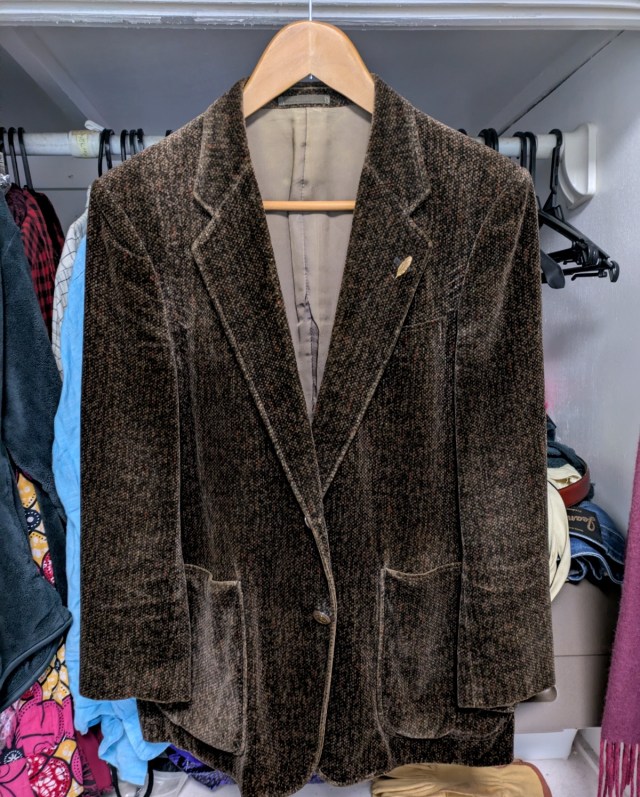
It all left Mr. Sato with a new, direct-feeling sense of how treasured articles of clothing were before you could just, say, dash over to the nearest convenience store and pick up a shirt. And that, in turn, got him thinking again about this velvet sports jacket he owns.
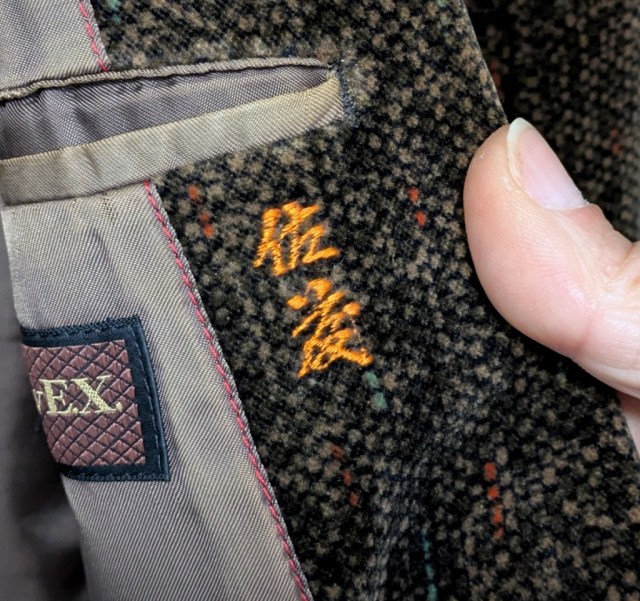
Notice we say “he owns,” not “he bought,” because this jacket originally belonged to Mr. Sato’s dad. With the jacket having been originally purchased around the time that these issues of Yoso and Fukuso were on newsstands, Mr. Sato’s dad wouldn’t have just bought it off the rack, and as further proof of its tailor-made status, “Sato” is embroidered on the inside of the lapel.
Granted, Mr. Sato’s dad gave him the jacket because it no longer fit him, but still, this would not have been a cheap piece of clothing, or one bought without a lot of thought going into the design, material, and its other aspects. And yet, Mr. Sato’s dad wanted him to have it, and several decades after the handover, it’s still in excellent condition.
There’s a bittersweet footnote to this, which is that this month marks one year since Mr. Sato’s dad passed away. When autumn comes, though, he’ll once again take the jacket out of the closet and slip it on, and it’ll feel extra special after his look back on the era in which it was made.
Rising prices in Japan have put ramen restaurants in a tricky position, since part of what makes the beloved noodle dish so beloved is that, traditionally, it’s been not only a tasty meal option, but an affordable one too. As inflation continues, though, a growing number of ramen restaurants are now charging more than 1,000 yen (US$6.50) for a bowl of ramen, and crossing over the four-figure threshold in price has made restaurant ramen a tougher sell to the general public.
So with that going on, it’s a bold choice by Kani O, a new ramen restaurant in Tokyo’s Asakusa neighborhood, to start their ramen pricing at 2,000 yen a bowl. Bold and divisive, as online reviews and chatter about Kani O, which started serving customers on May 4, have been sharply divided into love-it and hate-it camps.
Making the situation even more complex is that some (though not all) of the negative reviews our Japanese-language reporter P.K. Sanjun has seen seem to be from people who haven’t actually eaten at the restaurant. Meanwhile, on the other end of the spectrum, some of the most glowing reviews of the place that P.K. has seen come from social media influencers who’re personal acquaintances of Kani O’s owner, mixed martial artist Komeo.
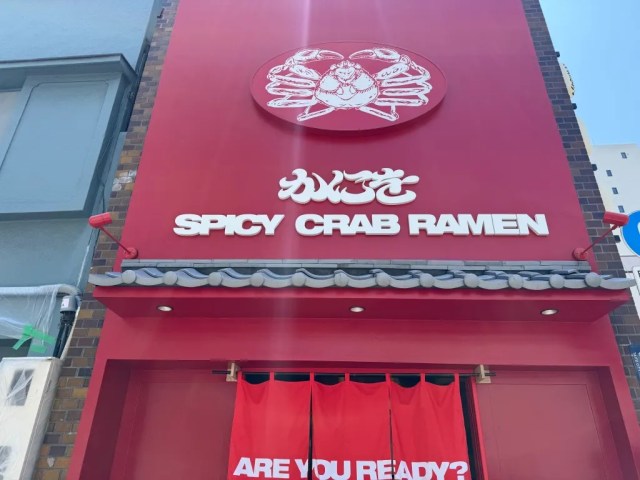
The Kani O name is written in Japanese (かにを) on the storefront, but even if you can’t read the hiragana characters you’ll know you’re there when you see the “SPICY CRAB RAMEN” underneath it and “ARE YOU READY?” across the noren cloth hanging in the doorway. Oddly enough, Kani O calls its standard ramen “The Claaaaab,” with an L, so maybe some of the negative reviews are from linguists.
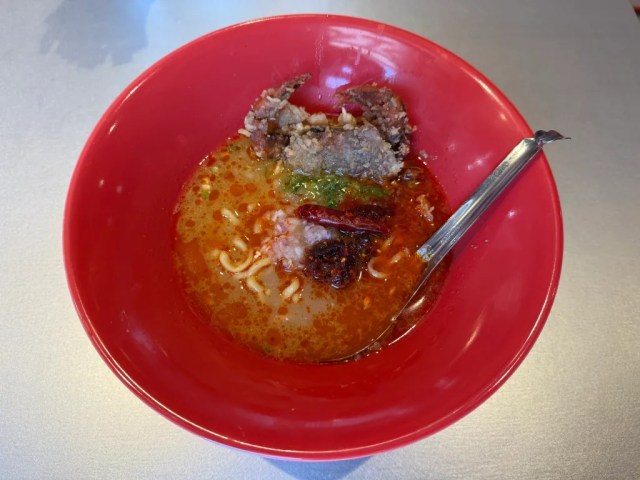
But P.K. was here to evaluate their ramen, not their spelling, and so he ordered a bowl of The Claaaaab, for 2,000 yen. You can select a spiciness level from 0 to 10, and P.K. asked for his right in the middle, at spiciness level 5.
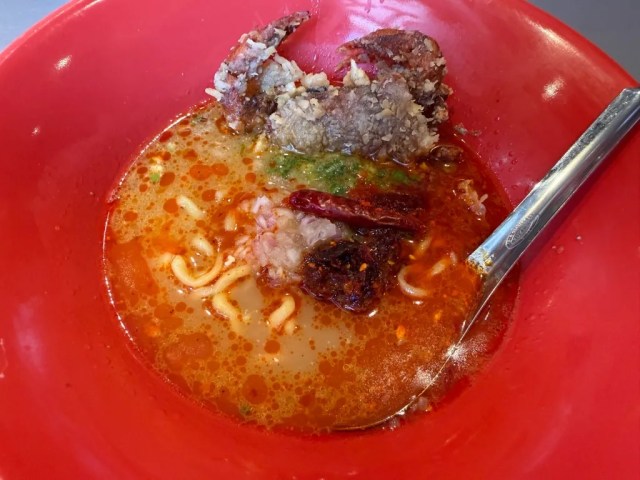
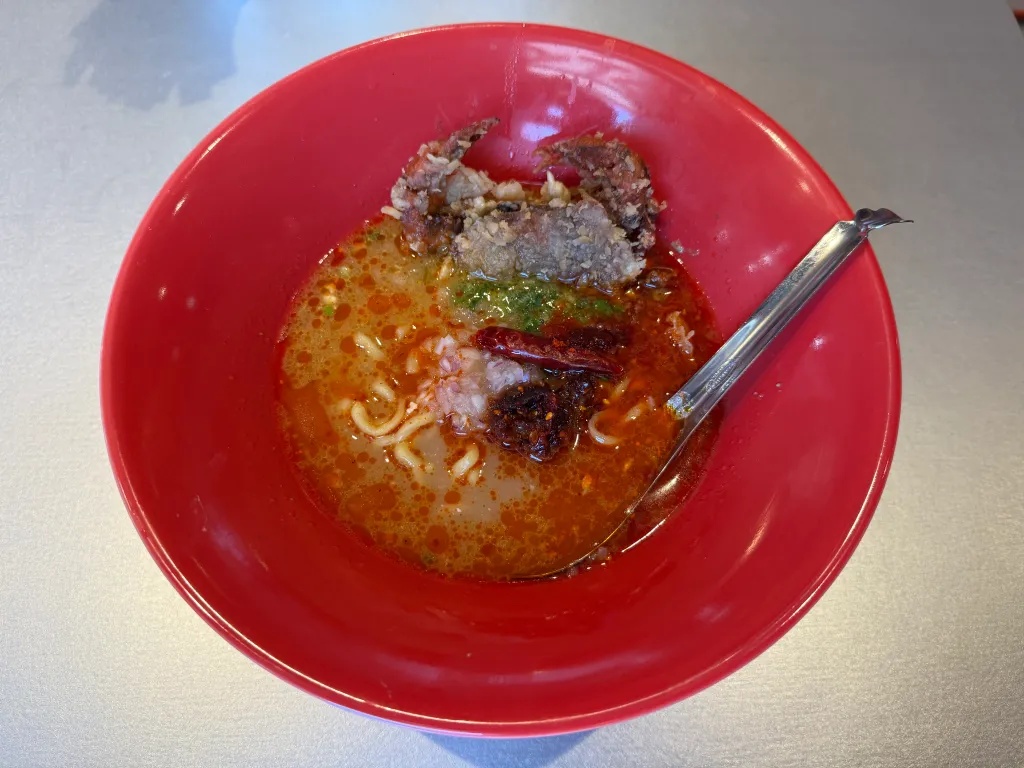
▼ And yes, that’s a whole soft-shelled crab in the bowl.
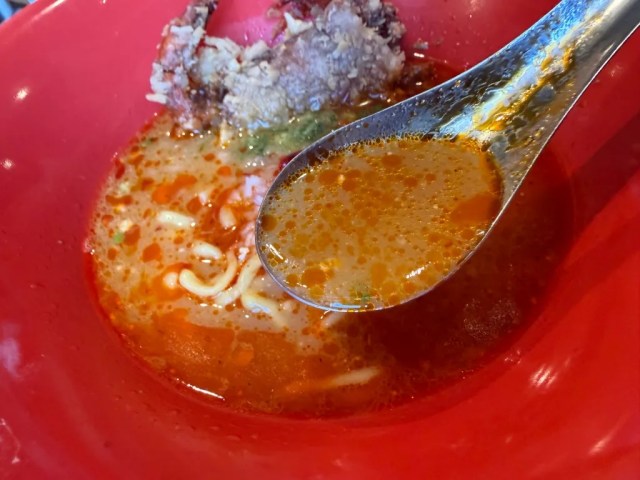
Despite its eye-catching coloring, a common complaint online about Kani O’s ramen is that the broth is bland. P.K. started his tasting by trying a spoonful, and while we wouldn’t say it was flavorless, it didn’t have an immediate strong impact on his taste buds either, nor did the level-5 spiciness set his mouth on fire. The primary players in its flavor profile were the umami shellfish notes, making for a surprisingly delicate sensation, and the gap between how the broth looks like it’s going to taste versus how it actually does taste might be contributing to some of the griping about Kani O’s broth being bland, more so than a true lack of flavor.
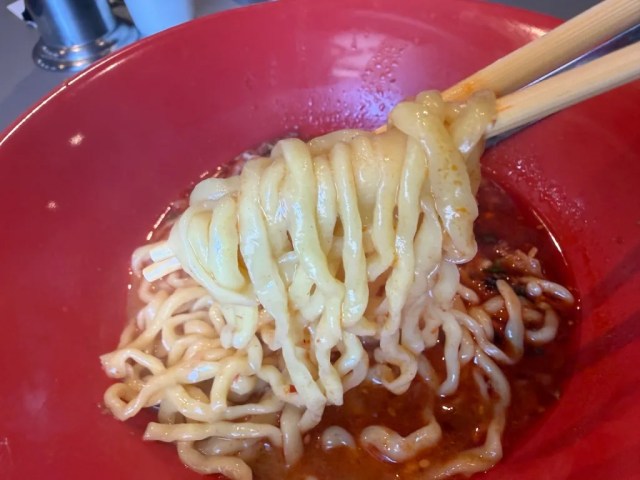
The noodles are neither thick nor thin, but right in the middle of the bell curve for ramen in Japan.
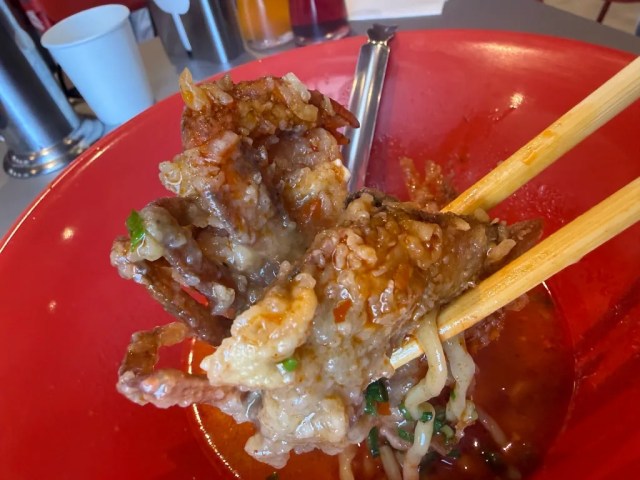
And then there’s the soft-shelled crab, imported from China and deep-fried before going into your ramen bowl. This is a proper piece of seafood, rich in flavor and even adding some of its aroma to The Claaaaab’s bouquet.
So after trying Kani Wo’s ramen for himself, does P.K. agree with the haters? Not really. In particular, he doesn’t agree wit the criticism about the broth being bland, and instead feels like it’s purposely crafted to have a mild flavor to encourage customers to drink every last drop.
On the other hand, he can see how someone could come away unsatisfied from a meal here, especially at the price of 2,000 yen. That’s a lot to ask for a bowl of ramen, and P.K. didn’t feel like Kani O’s version of the dish is on some sort of completely different level than ramen restaurants with sub-2,000-yen offerings, which aren’t at all hard to find. He’s impressed by the level of originality on display in Kani O’s ramen, but since the flavor didn’t necessarily blow him away, the novelty factor isn’t strong enough to convince him to become a repeat customer.
This puts P.K. in the unusual position of thinking “Yeah, it’s not bad, but not great either” about this love-it-or-hate-it ramen restaurant. However, with nearly a dozen people already waiting to get into the restaurant when P.K. showed up 20 minutes before opening time on a Saturday, it looks like there are currently enough people who love the place, or at least think they will, for it to stick around for at least a while.
Restaurant information
Kani O / かにを
Address: Tokyo-to, Taito-ku, Asakusa 2-22-8
東京都台東区浅草2-22-8
Open 11:30 a.m.-9:30 p.m.
Being a mecha anime, Gundam is very focused on the future. As a matter of fact, it’s so focused on the future that the franchise has made up multiple “Century” and “Era” names for its timelines, freeing it from the need to align its narratives with real-world history as its characters head out into space.
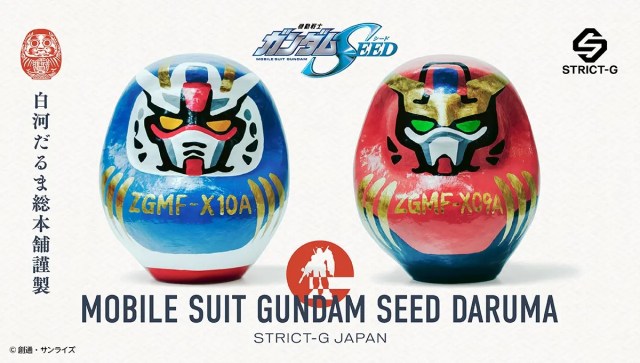
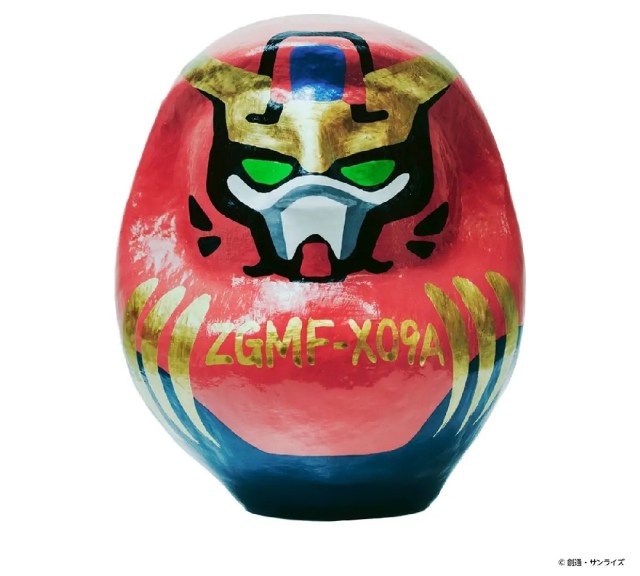
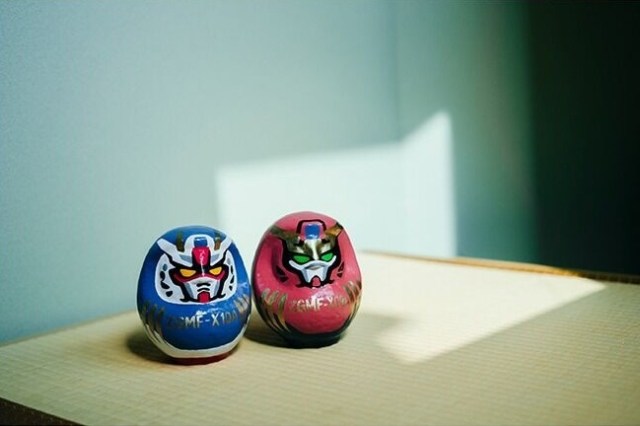
That doesn’t mean that the anime’s mobile suits can’t combine beautifully with traditional earthbound aesthetics, though, and as proof Gundam is partnering with a Fukushima craftworks company that’s roughly 300 years old.
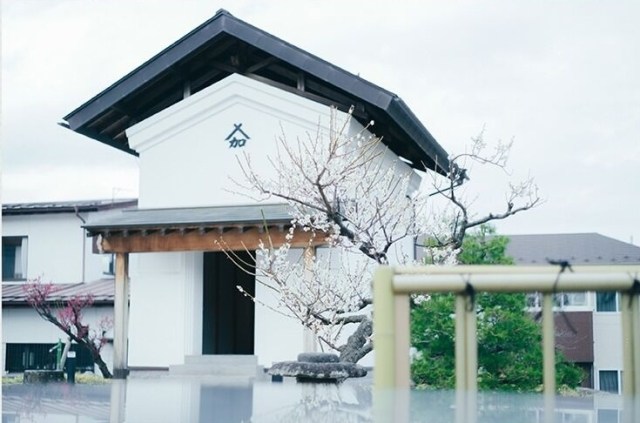
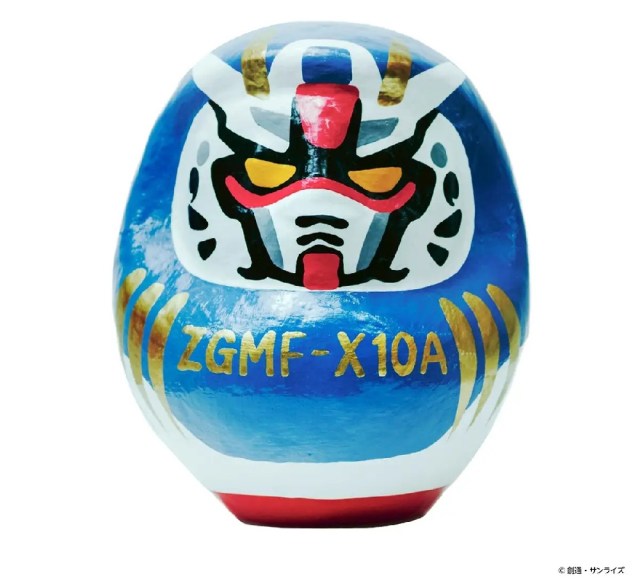
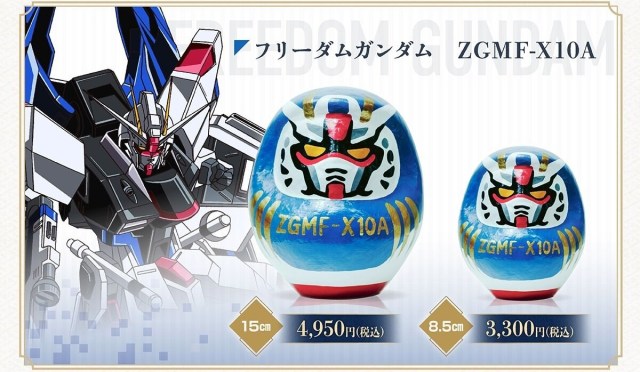
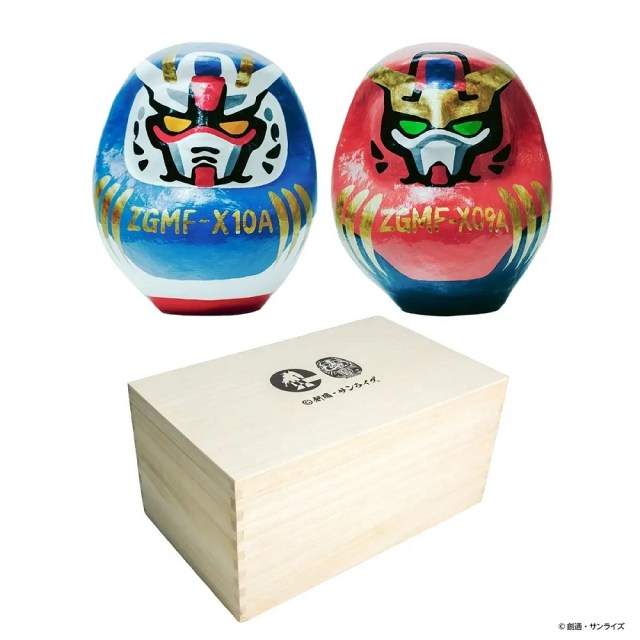
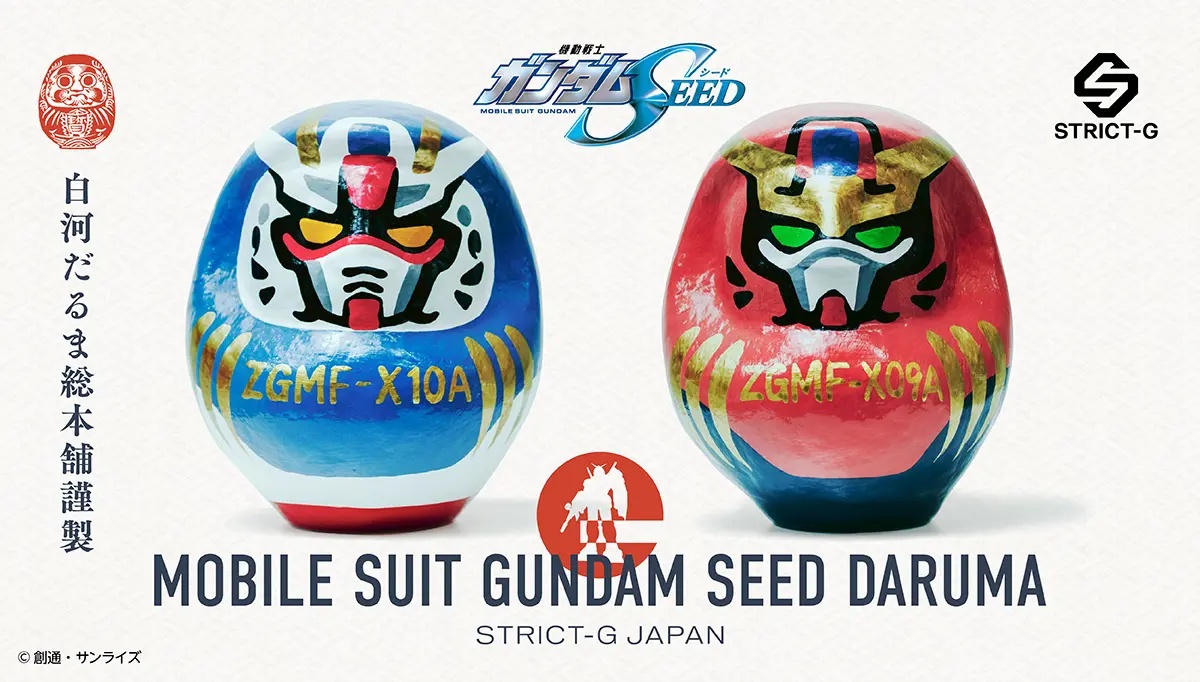
Fukushima Prefecture’s Shirakawa Daruma Sohonpo is one of those companies that’s been around for so long it can’t seem to pin down the exact year in which it was founded, but we know it was about three centuries ago. Now under the guidance of its 14th owner, Shirakawa Daruma Sohonpo’s artisans continue to carve and paint each and every one of their daruma dolls by hand, including their new ones based on Mobile Suit Gundam Seed’s ZGMF-X10A Freedom Gundam…
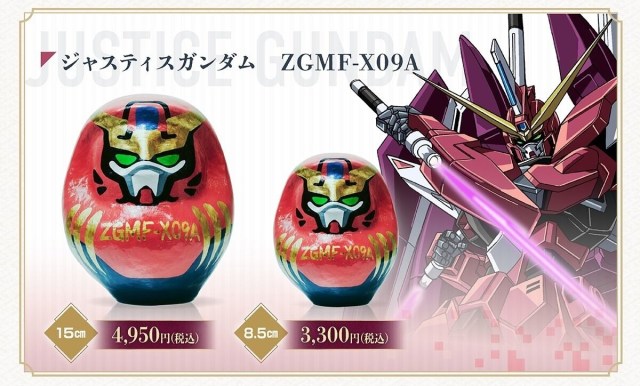
…and the ZGMF-X10A Freedom Gundam.
Daruma are made in many places in Japan, but the ones from the town of Shirakawa, where Shirakawa Daruma Sohonpo’s workshop is located, are especially prized. Because Fukushima has heavy snow in the winter, farmers had long periods when they couldn’t work their fields and had to stay indoors. With all that time on their hands, many families spent it honing their artistic skills, with some becoming such proficient craftsmen that they raised the bar for daruma quality in the community to a point where now the whole country recognizes them as among the very best.
Daruma dolls are considered auspicious signs of impending success, and ordinarily you’re supposed to paint in the pupil of one eye when you purchase or receive the doll, make a wish, and then paint in the other pupil when it comes true (or state your goal and paint in the other pupil when you achieve it, if you’re more existentially minded). Since Gundams don’t have pupils to begin with, that’s technically something you can do with these too, though that’d probably end up making them look a little closer to the super-deformed SD Gundam spinoffs than the original ZGMF-X10A and ZGMF-X10A.
The Gundam daruma come in two sizes, 15 and 8.5 centimeters (5.9 and 3.3 inches), with the larger ones priced at 4,950 yen (US$32) and the smaller ones at 3,300 yen. They’re also available in a set that gets you both mobile suit daruma (9,900 yen for the big ones and 6,600 yen for the smaller versions) plus a snazzy wooden box.
The Gundam daruma officially go on sale until August 1. Preorders are open now though through the Premium Bandai website here, giving us a way to secure a Gundam of our own to help cope with the anxiety about Tokyo being about to lose its life-sized Gundam statue.

 Login
Login