Reading view

NASA satellite images show how a massive tsunami in Alaska changed the landscape forever

New satellite images are helping scientists understand a major tsunami that changed the landscape of a popular tourist destination in Alaska forever. 

On August 10, 2025, a tsunami larger than the Eiffel Tower ripped through Tracy Arm fjord in southeast Alaska. The rapid retreat of the South Sawyer Glacier triggered a landslide that swept huge rocks down the picturesque waterway visited by millions aboard Alaskan cruises every summer. At least 64 million cubic meters of rock slid down the slope of the glacier. The rocks created an enormous tsunami that stripped trees and other vegetation from the opposing fjord wall up to 1,578 feet above sea level. 

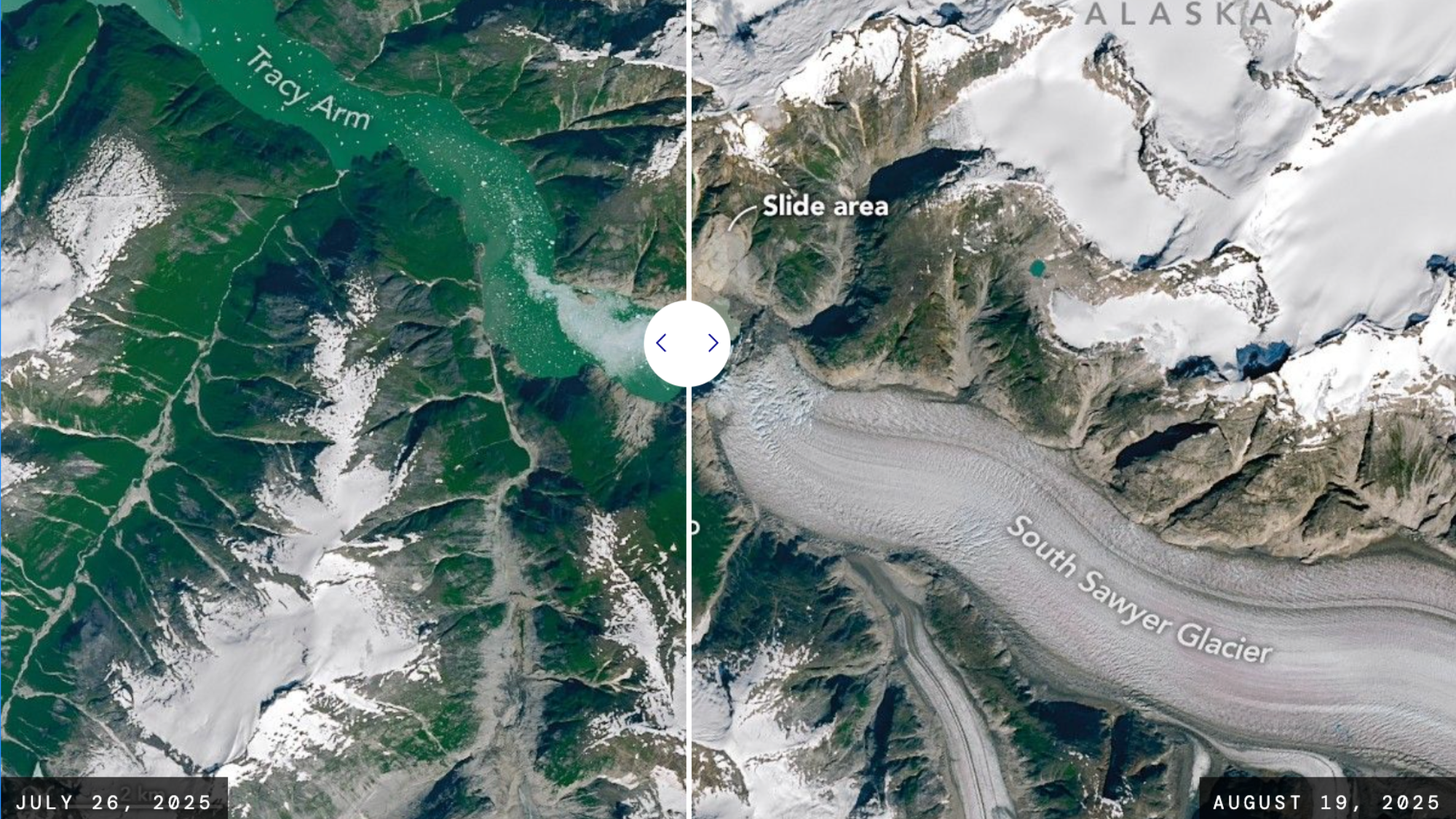
The NASA-USGS Landsat satellite images show the dramatic changes to the landscape. In one photo taken on July 26, 2025, the fjord is surrounded by green vegetation. 

a satellite image showing green vegetation on a fjord
The shores of Tracy Arm on July 26, 2025. Image: NASA Earth Observatory images by Michala Garrison, using Landsat data from the U.S. Geological Survey.

In the second image, taken nine days after the landslide on August 19, the fjord is dominated by a gray scar made by the cascading rock. 

a satellite image of a landslide
The shores of Tracy Arm on August 19, 2025. This image was taken after the tsunami and landslide. Image: NASA Earth Observatory images by Michala Garrison, using Landsat data from the U.S. Geological Survey.Image: NASA Earth Observatory images by Michala Garrison, using Landsat data from the U.S. Geological Survey.

“The bright landslide scar on the north side of the fjord is striking, as is the ‘bathtub’ ring around the fjord showing the areas where the forest was leveled by the tsunami,” said Dan Shugar, a geomorphologist at the University of Calgary.

Sawyer Island, located about 6 miles away from the landslide, also turned from green to brown. Only a few trees still stood at the island’s higher elevations.

Over the past several months, Shugar and his colleagues combined satellite, airborne, and ground-based observations with eyewitness accounts and simulations to build a complete story with how this historic event transformed. Their analysis was published May 6 in the journal Science.

Their analysis found that water continued to slosh around the fjord for more than one day. Geologists call this water-sloshing phenomenon a seiche. Both the landslide and resulting seiche produced seismic signals that were detected around the world and equivalent to a magnitude 5.4 earthquake.
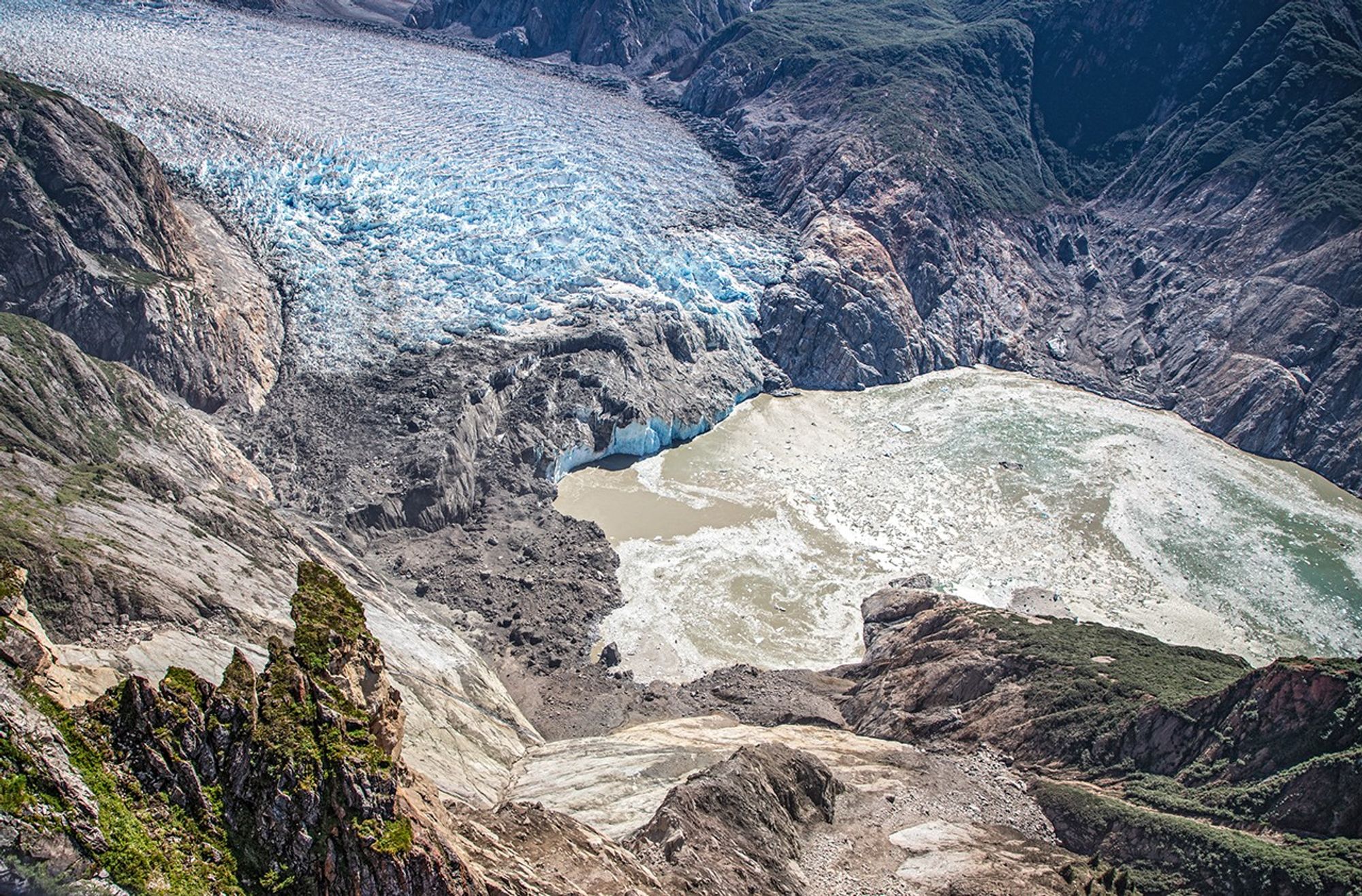
a landslide scar
The landslide scar and the zone where vegetation was stripped by the resulting tsunami are both visible in this aerial photo of Tracy Arm and South Sawyer Glacier, captured on August 13, 2025. Image: U.S. Geological Survey/John Lyons

The Landsat images also show that the South Sawyer Glacier retreated significantly in less than a month. Typically, glacial retreat takes much longer. 

“Part of that occurred between the date of the first image and the date of the landslide,” Shugar said. “But part of it is from the landslide itself, which broke off a big chunk of the terminus of South Sawyer Glacier, resulting in a slurry of icebergs in the fjord.”

Fortunately, no one was injured in the event, largely because it occurred around 5:30 a.m. local time. The wave did sweep away some gear from a group of kayakers camping on Harbor Island near the fjord’s mouth. Passengers aboard a small cruise ship in neighboring Endicott Arm also reported swings in water levels and a strong current associated with the tsunami

In response to the event, at least six cruise lines have eliminated the Tracy Arm fjord from their itineraries for 2026 due to the hazards. The United States Geological Survey also warns that steep, mountainous landslide areas are “inherently unstable” and that the Tracy Arm fjord tsunami will likely continue to change the landscape.

The post NASA satellite images show how a massive tsunami in Alaska changed the landscape forever appeared first on Popular Science.
  •  

Artemis II Captures Spectacular Images of ‘Earthset’ from Deep Space

Artemis II Captures Spectacular Images of ‘Earthset’ from Deep Space

For the first time in more than 50 years, NASA launched a mission to the Moon. A lot has changed since 1972, when we last checked in on the enormous, rocky satellite, but there is much to learn—and revisit—when it comes to traveling through deep space and considering what, as NASA describes it, a “long-term return” to our lunar companion could look like. The Artemis II mission, which is currently underway and scheduled to last a total of 10 days, has also released some remarkable images of our home planet.

A striking image of the Earth “setting” behind the cratered Moon takes a truly unique view of our planet and prompts us to consider our perspective. It’s reminiscent of one of the most iconic photographs of all time, known as “Earthrise,” which was snapped by astronaut William Anders during the 1968 Apollo 8 mission—the first crewed trip to the Moon.

A photo taken during the Artemis II mission around the Moon, showing the Earth setting beyond
The Earth setting beyond the Moon

Artemis II is scheduled to return to Earth on the evening of April 10, when the crew will splash down into the Pacific Ocean off the California coast.

A detailed image of the texture of the Moon's surface, photographed during the Artemis II mission
The Moon’s cratered surface
A photo taken during the Artemis II mission around the Moon, showing the dark side of the moon with an aura of sunlight around it
The far side of the Moon

Do stories and artists like this matter to you? Become a Colossal Member today and support independent arts publishing for as little as $7 per month. The article Artemis II Captures Spectacular Images of ‘Earthset’ from Deep Space appeared first on Colossal.

  •  

ISS astronauts pose with fresh fruit in microgravity

Astronaut food has come a long way from the freeze dried packets aboard the Apollo missions. During their historic lunar fly-by in April, the Artemis II crew dined on beef brisket, mac and cheese, quiche, and a lot of tortillas. The same can be said for the hungry inhabitants of the International Space Station (ISS). With regularly scheduled restocks, the astronauts don’t have to worry as much about issues like shelf life. That means that even when nearly 250 miles above Earth, ISS residents can still snack on fresh fruit and vegetables.

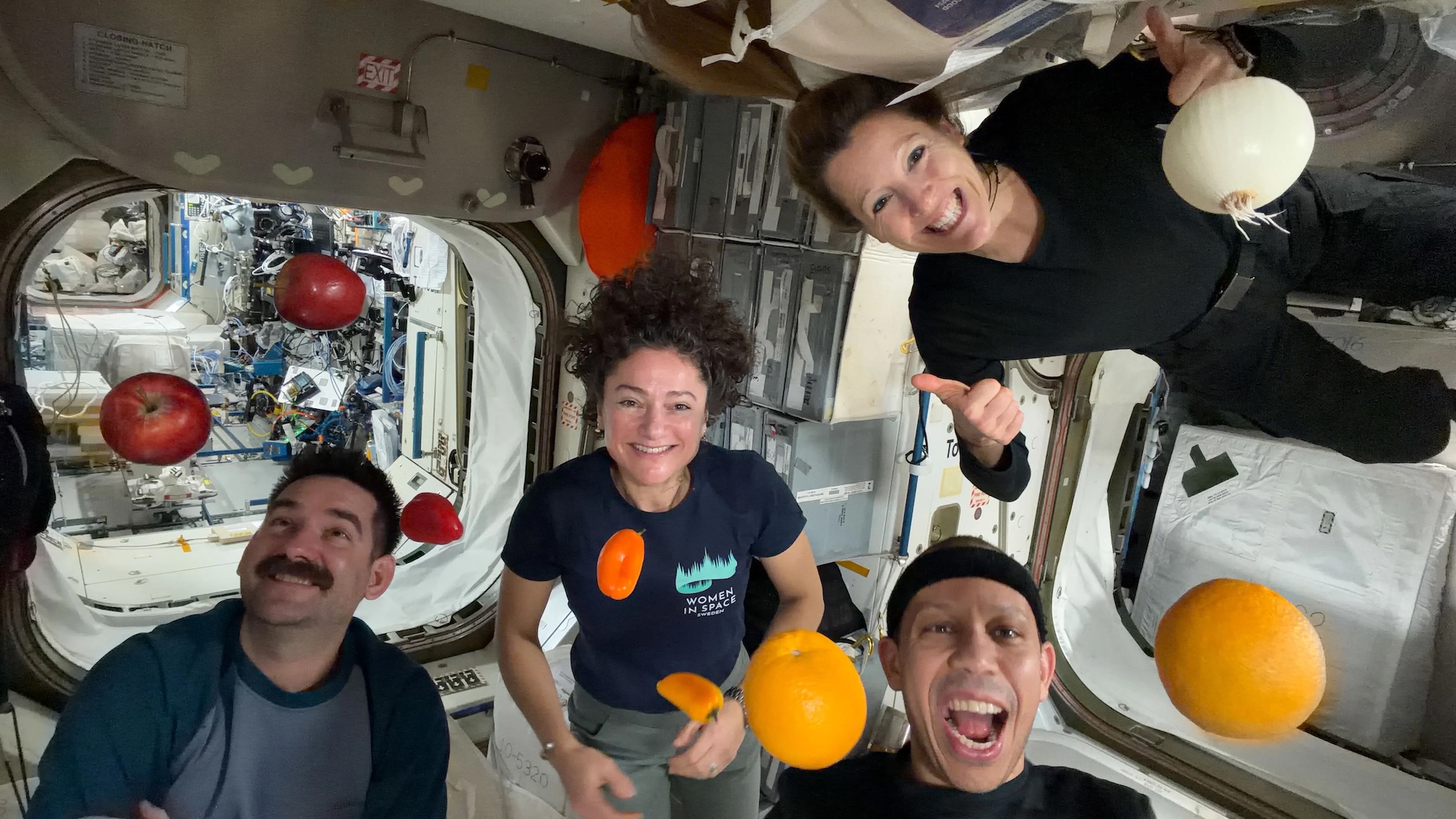
NASA highlighted one such astronaut grocery delivery in a photo released on May 14. Taken on April 19, astronauts Jack Hathaway, Jessica Meir, Chris Williams, and Sophie Adenot are seen in microgravity alongside what are presumably upcoming snacks like oranges, apples, peppers, and one conspicuous onion.

Food wasn’t the only precious cargo on the Cygnus XL spacecraft visit that month, however. In addition to the colorful produce, the ISS also received over 2,300 pounds of research hardware and science equipment. These materials encompass the tools the crew needs for their research on blood stem cells for cancer treatments and ways to strengthen astronaut gut health. The ISS is now also home to a new exercise machine, courtesy of the European Space Agency, as well as replacement nitrogen and oxygen tanks for spacesuits.

The post ISS astronauts pose with fresh fruit in microgravity appeared first on Popular Science.

  •  

Astronomers Find 10,000 Potential New Exoplanets

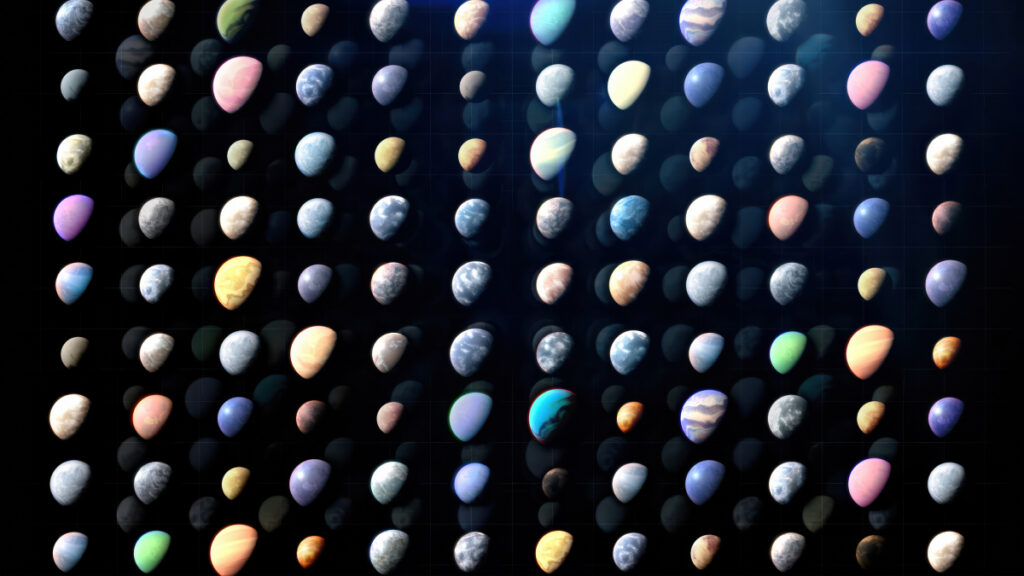
An artist’s illustration of an array of exoplanets with a 9 by 12 grid of colorful planets in a gibbous phase. A second grid of shadowed planets sits behind it.

Research & Developments is a blog for brief updates that provide context for the flurry of news that impacts science and scientists today.

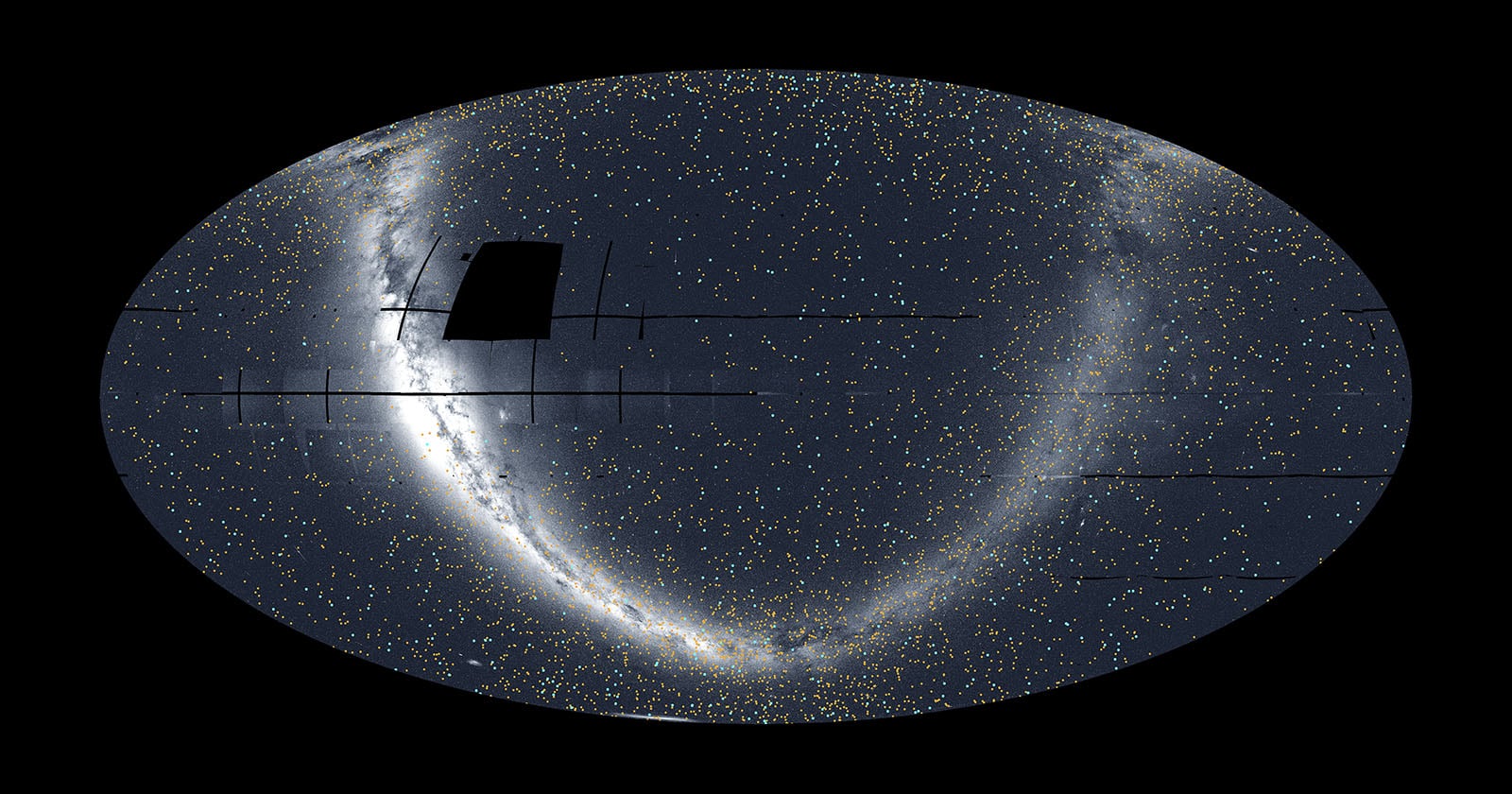
To date, astronomers have confirmed the existence of just under 6,300 exoplanets. New research could more than double that number, adding a potential 10,000 new planets in one fell swoop.

Yes, that’s right. A 1 with 4 zeros.

The T16 project has announced the discovery of 10,091 exoplanet candidates observed by NASA’s Transiting Exoplanet Survey Satellite (TESS). Since 2018, the all-sky survey has been monitoring more than 200,000 nearby stars using the transit method, which detects the faint dip in a star’s light when a planet crosses in front of it. Astronomers typically require 3 dips to be sure that what they’re seeing is actually a planet and not a one-off event such as an asteroid or comet in that distant star system.

The T16 project analyzed the light curves of more than 54 million stars observed during the first year of the TESS mission. The project’s analysis technique allowed it to search for planets around stars up to 16 times fainter than TESS typically searches, drastically increasing the field of discovery.

That’s more than were detected in the entirety of NASA’s Kepler mission and its follow-on K2.

Their pipeline detected 11,554 planet candidates. Of those, 1,052 of those had been detected previously and 411 only had one transit—not enough to confirm a planet.

That leaves 10,091 potential new planets. That’s more than were detected in the entirety of NASA’s Kepler mission and its follow-on K2 and more than double the existing planet candidates from TESS that await confirmation. These discoveries will be published in the Astrophysical Journal Supplement.

All of the new planet candidates orbit their stars quickly, with orbital periods between 12 hours and 27 days. Although most of the stars that TESS observes are smaller and cooler than the Sun, those close orbits likely mean that most of those planets are far too hot to be habitable.

 
Learn More

•  Read the paper: The T16 Planet Hunt
•  More context from The Bad Astronomer
 

The T16 project team confirmed the planet-hood of one of their candidates not using the transit method, but a different method that measures the gravitational tug a planet exerts on its host star. That planet, TIC 183374187, is hot and slightly larger than Jupiter.

The remaining 10,090 newly discovered planet candidates require additional verification to determine whether they truly are planets or not. But given the rigor of the team’s analysis and the requirement of at least 3 transits to even make this list, it’s likely that most of the new discoveries are indeed planets.

“Astronomers are a bit conservative when it comes to claims like this, and want to be sure they pass a bunch of tests to make sure everything was done correctly and these planets actually exist,” astronomer Phil Plait wrote in his Bad Astronomy Newsletter. “Having said that, the process the astronomers went through looks legit to me, and I would bet the majority of these new candidates are real. That’s amazing.”

—Kimberly M. S. Cartier (@astrokimcartier.bsky.social), Staff Writer

These updates are made possible through information from the scientific community. Do you have a story about science or scientists? Send us a tip at eos@agu.org.

A photo of a hand holding a copy of an issue of Eos appears in a circle over a field of blue along with the Eos logo and the following text: Support Eos’s mission to broadly share science news and research. Below the text is a darker blue button that reads “donate today.”
Text © 2026. AGU. CC BY-NC-ND 3.0
Except where otherwise noted, images are subject to copyright. Any reuse without express permission from the copyright owner is prohibited.
  •  

NASA wastewater system will turn human poop into plant food

NASA’s ambitious plan to put humans on the moon may hinge on the bathroom habits of a handful of University of North Dakota grad students. In the name of science, those researchers will test the limits of a mobile wastewater treatment system designed to convert human waste into plant nutrients and other sustainable materials. The trial will serve as a stress test of sorts, measuring how well the Divergent Deployable Wastewater Treatment Facility holds up to regular use and heavy loads in an environment designed to mirror a lunar habitat. 

It’s not pretty work, but someone has to do it.

“The tests will help NASA evaluate real-world operation, crew training needs, system reliability, and how wastewater simulants compare with actual human metabolic waste in an analog mission environment,” Ali Alshami, University of North Dakota Chemical Engineering professor and test participant, said in a statement.

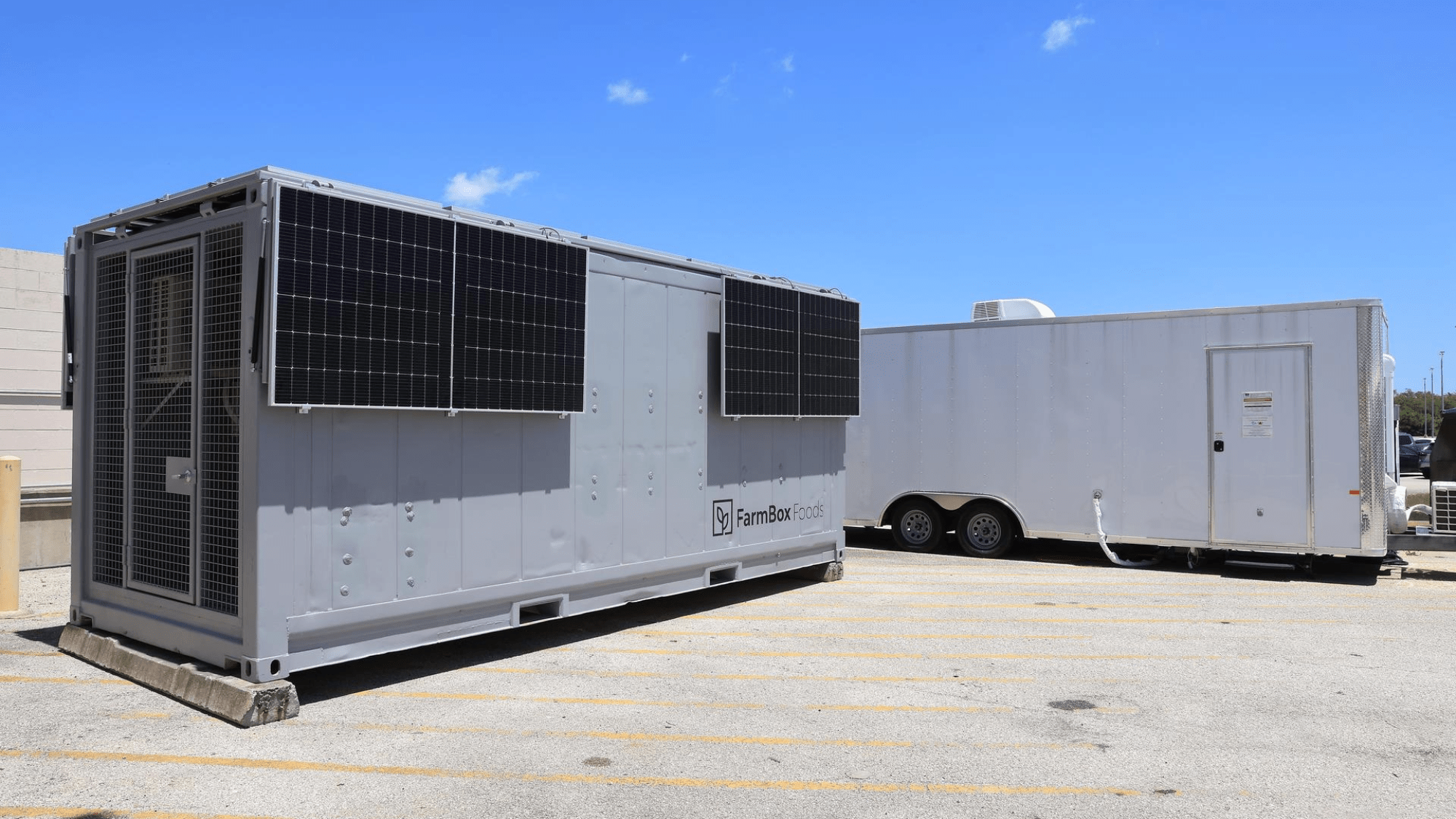
a gray trailer sits in a parking lot
The unassuming gray building could one day be an astronaut wastewater facility. Technicians prepared the Divergent Deployable Wastewater Treatment Facility for transport at NASA’s Kennedy Space Center in Florida on April 21, 2026. Image: NASA/Kim Shiflett  

Treated astronaut poop will feed lunar plants 

The mobile facility consists of three separate bioreactors, each tasked with handling a specific kind of waste. Feces, urine, and food waste are treated separately because each material contains different levels of salts, solids, carbon, nitrogen, and phosphorus. One reactor processes feces and food waste, converting it into nutrient-rich water that can feed plants. The other two handle urine and greywater from activities like showering and laundry, some of which can be filtered and recycled into  clean drinking water. From an astronauts’ perspective, the experience should feel pretty familiar to life onboard the International Space Station (ISS). They use the toilet as normal, and it automatically diverts waste at the source, routing each type to its corresponding bioreactor.

The whole process takes place in a mobile, 8.5-by-24-foot trailer. In addition to the bioreactors, the unit also houses a vertical garden maintained by the converted wastewater. The goal is to kill two birds with one stone: process waste efficiently and then use it to sustain lunar agriculture. Both are essential if astronauts want any shot at building longer-term habitats on the moon or even Mars. To that end, NASA has ambitions to start constructing a semi-permanent lunar structure or “moon base” by 2029.

Where no one has gone before 

Waste management in space has come a long way since the first moon missions. Back in the 1960s, NASA Apollo astronauts left behind 96 bags of human waste (filled with poop, urine, and vomit) on the lunar surface to save weight. Those bags are almost certainly still there. 

Thankfully, decades of research mean astronauts no longer have to relieve themselves into a bag, at least not most of the time. The most recent Artemis mission featured a fully functional space toilet, though it malfunctioned almost immediately after liftoff.

Recycling wastewater has also seen major improvements. NASA had a breakthrough in 2023 when its life support system aboard the ISS  managed to recover nearly 98 percent of all breath, sweater, and urine brought aboard by the crew. Future astronauts on prolonged spacewalks may also wear this Dune-inspired backpack that filters urine and sweat into drinking water in a single self-contained loop.

The post NASA wastewater system will turn human poop into plant food appeared first on Popular Science.
  •  

JWST spots dormant black hole 10 billion light-years from Earth

Anything unfortunate enough to venture too close to a black hole inevitably falls prey to the gargantuan object’s inescapable gravitational pull. But that doesn’t mean a black hole is constantly devouring its next cosmic meal. In many cases, there comes a time when there simply isn’t anything left in its vicinity to consume. Although these dormant black holes don’t go anywhere, astronomers have a tough time detecting and observing them.

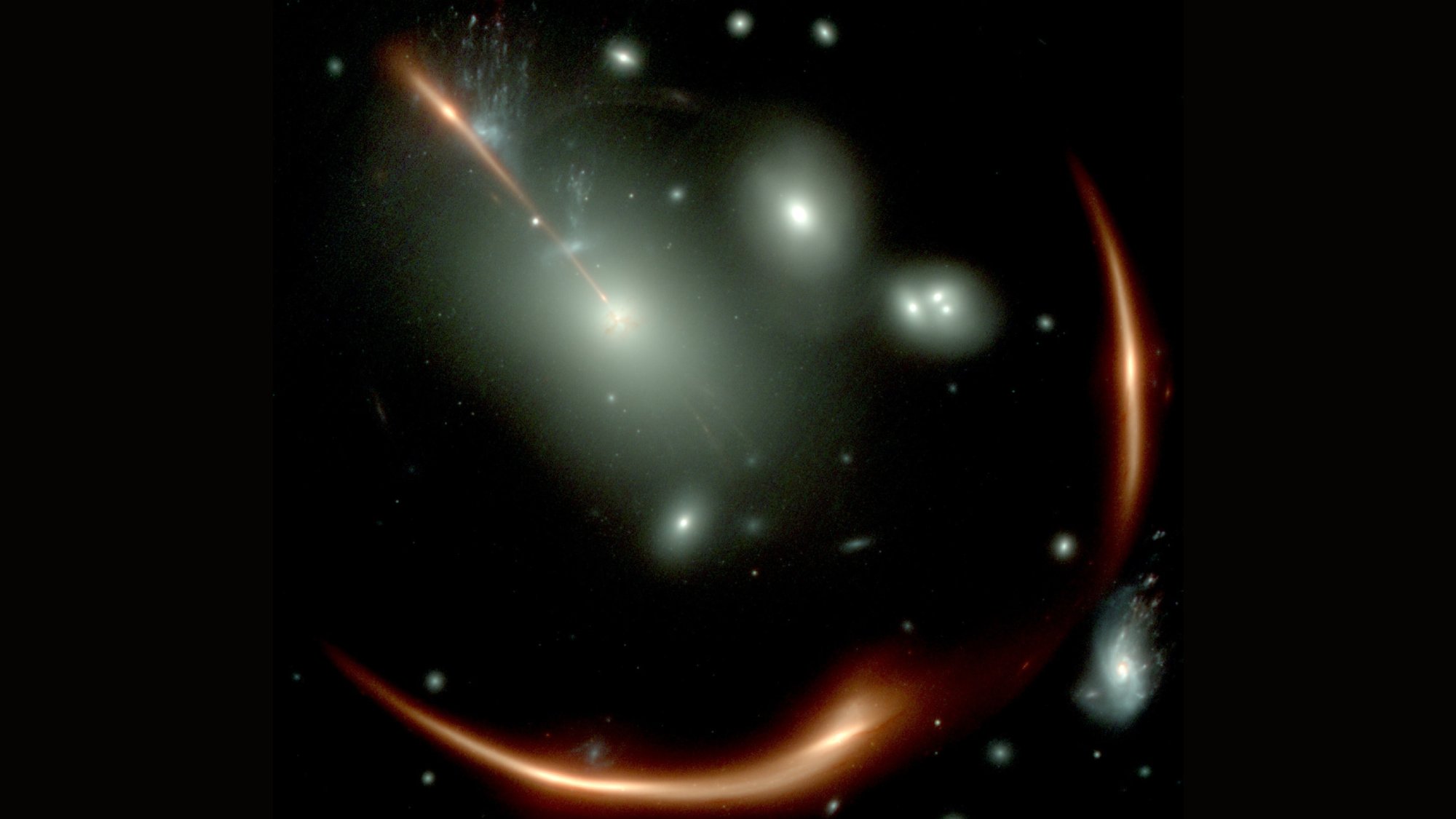
That hasn’t stopped researchers from successfully spotting the most distant example ever seen. At over 10 billion light-years from Earth, the dormant black hole inside the galaxy MRG-M0138 is 15 times farther away than the prior record holder. As astronomers explained in a study published on June 4 in the journal Science, the far-away subject is now offering experts an unprecedented look at one of the earliest regions of the universe.

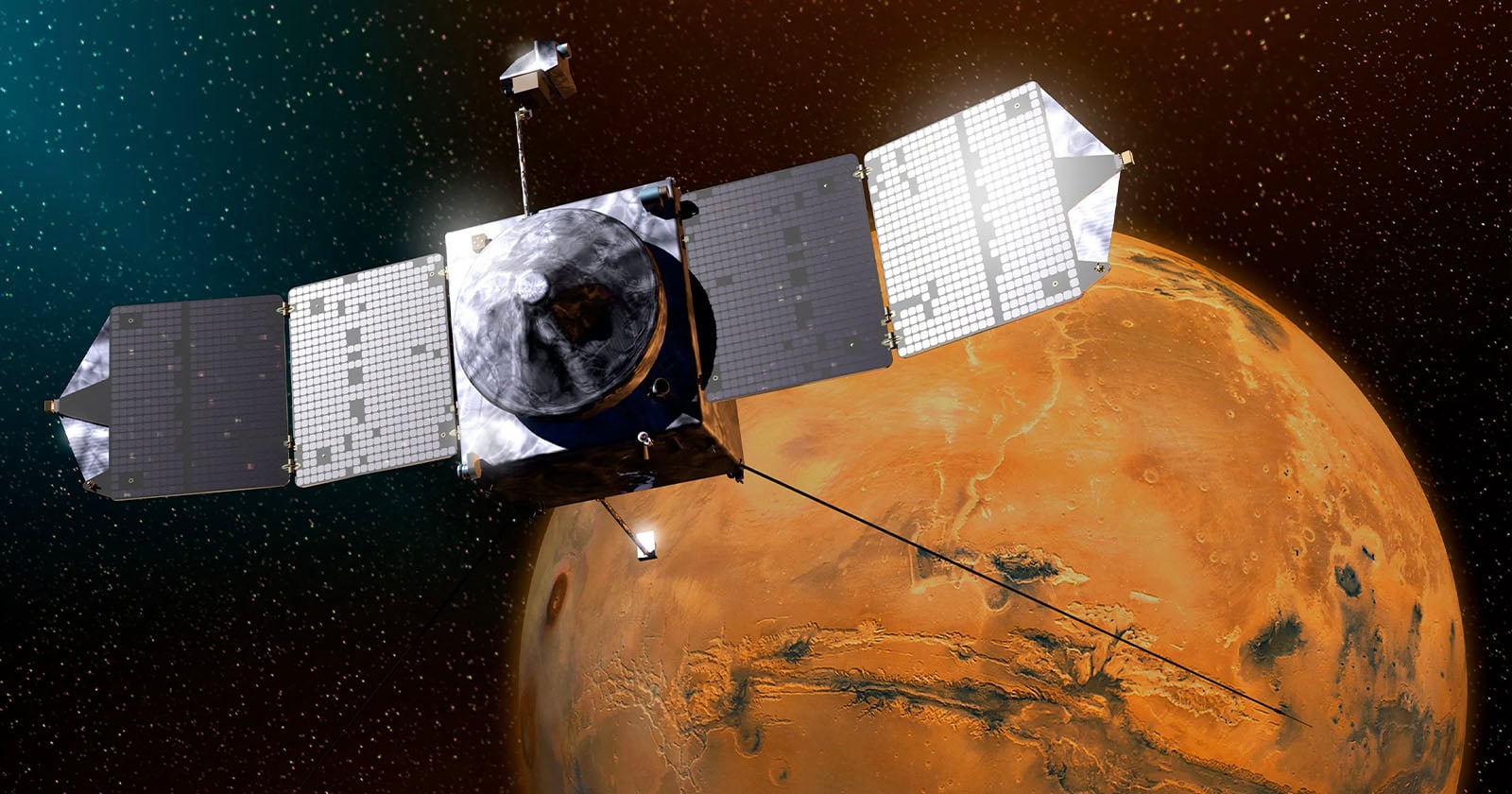
To pull off the remarkable achievement, researchers harnessed both the James Webb Space Telescope as well as a technique called stellar dynamics, which utilizes the movements of stars around an invisible black hole to assess its mass. This approach has previously helped identify similar cosmic objects inside galaxies, including our own Milky Way, but never at such a great distance.

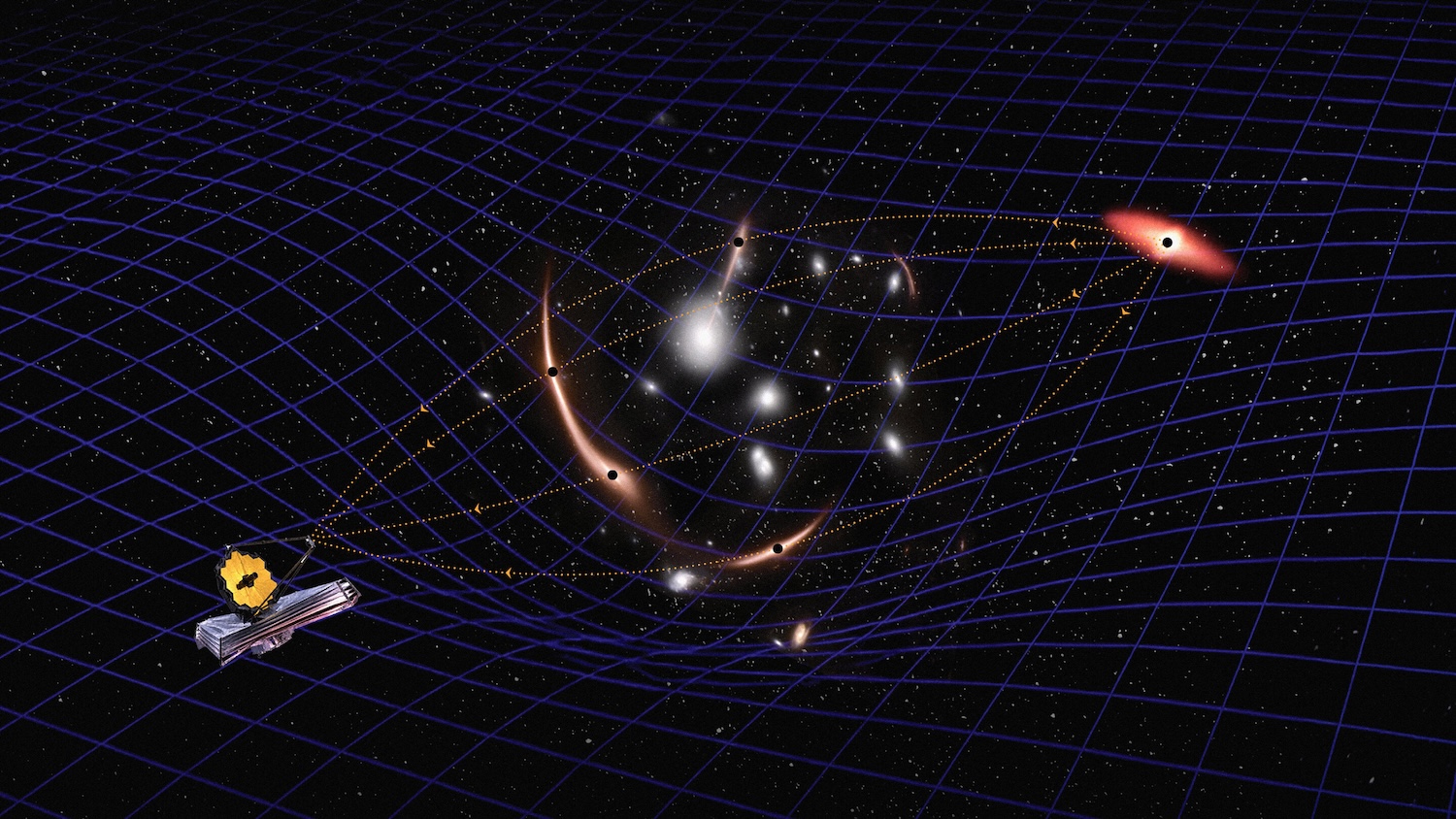
Astronomers wouldn’t be able to locate any stars moving around such a far away black hole in most scenarios. However, a galaxy located directly between Earth and MRG-M0138 enabled the otherwise impossible task through a dynamic known as gravitational lensing. Incoming light from MRG-M0138’s stars is refracted around the intermediary galaxy, which then refocuses and enlarges its appearance by 30 times its normal size. This then allowed astronomers to track and calculate the distant stellar dynamics around the dormant black hole.

Illustration of gravitational lensing between the JWST and a dormant black hole
JWST and gravitational lensing enabled an international team of astronomers led by Carnegie Science’s Andrew Newman to measure the mass of a dormant black hole from the early universe for the first time. Credit: Navid Marvi / Carnegie Science

“By combining JWST data with gravitational lensing, we could peer inside the black hole’s sphere of influence, where its gravity boosts the speeds of stars,” study co-author and Carnegie Science astronomer Andrew Newman said in a statement. “This is one of the best techniques we have to weigh a black hole, so we were excited to extend it to a much earlier period in cosmic history.”

After crunching the numbers, Newman and colleagues determined the dormant black hole has a mass about six billion times greater than the sun, and is observable from an era when the universe was barely three billion years old. That’s around a quarter of its age today, which means astronomers are now glimpsing some of the earliest moments in cosmic history.

Experts have already determined that it’s not just MRG-M0138’s black hole that is dormant—the entire galaxy itself is basically silent, with no recently formed stars. The study authors also theorize the galaxy previously included a quasar, which emits huge amounts of radiation and are some of the brightest objects in the universe.

Moving forward, astronomers can now apply their methodology to other areas of the cosmos, as well as gain a better understanding of galactic evolution throughout the eons.

“By demonstrating the feasibility of such a technique for galaxies in the early universe, we can now undertake a more complete census of how black holes develop over time and infer their role in shaping galaxy evolution,” added study co-author and University College London astronomer Richard Ellis.

The post JWST spots dormant black hole 10 billion light-years from Earth appeared first on Popular Science.
  •  

Fire dozers outfitted with NASA-made sensors help battle blazes

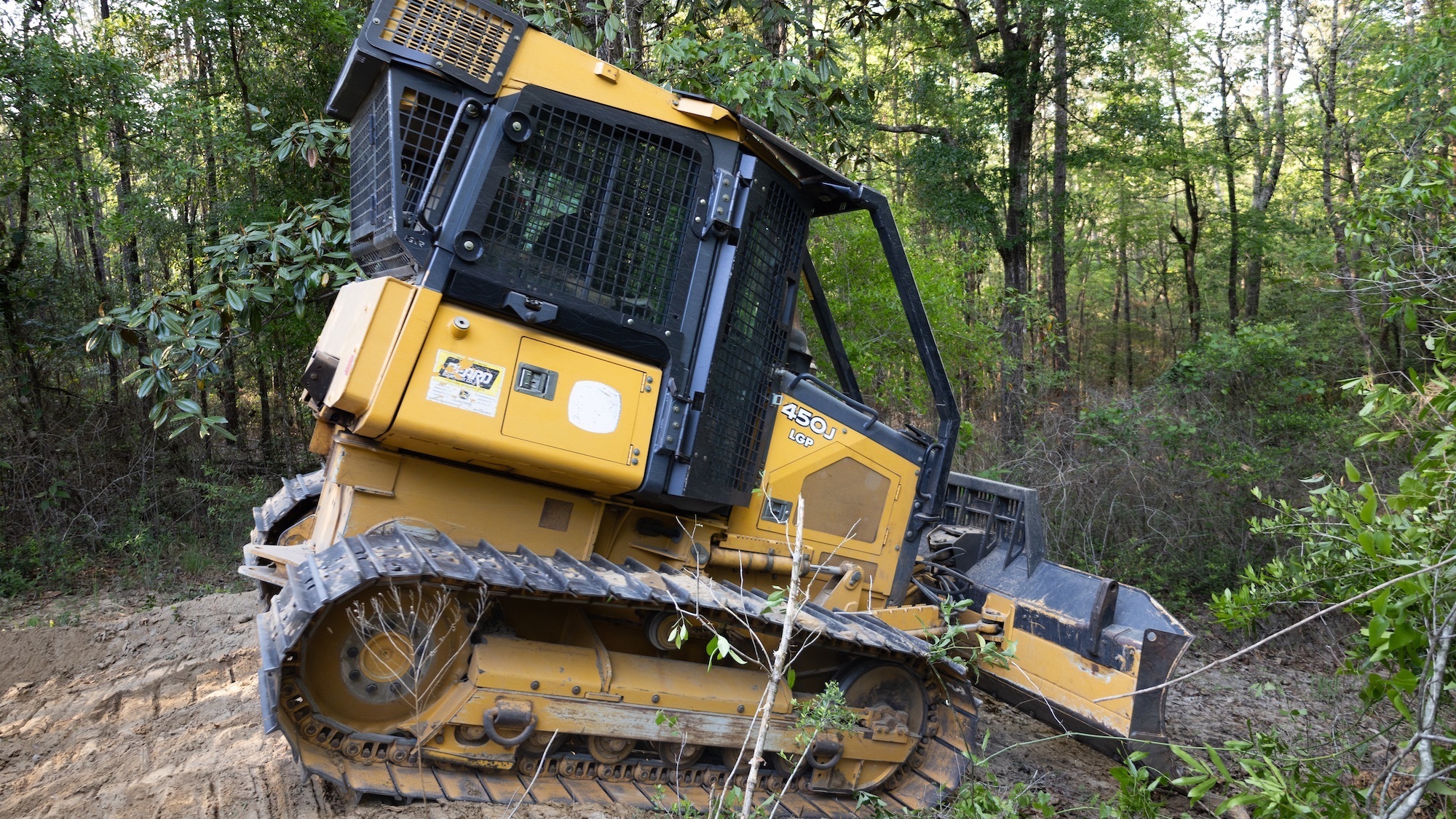
Dangerous, frontline firefighting jobs may get a bit safer thanks to new heat-sensing sensors designed by NASA. The sensors are made from commonly available household materials, and attach to the bulldozers firefighters use to clear vegetation and brush in a fire’s immediate path, triggering an alarm when temperatures reach extremely dangerous levels.

Knowing when a fire is hot might sound obvious, but many new so-called fire dozers are being outfitted with enclosures to protect their operators from the flames. That’s a welcome change, but it also reduces the operator’s ability to gauge the surrounding heat. These new sensors help solve that problem, protecting the driver and helping prevent the dozers from sustaining too much damage.

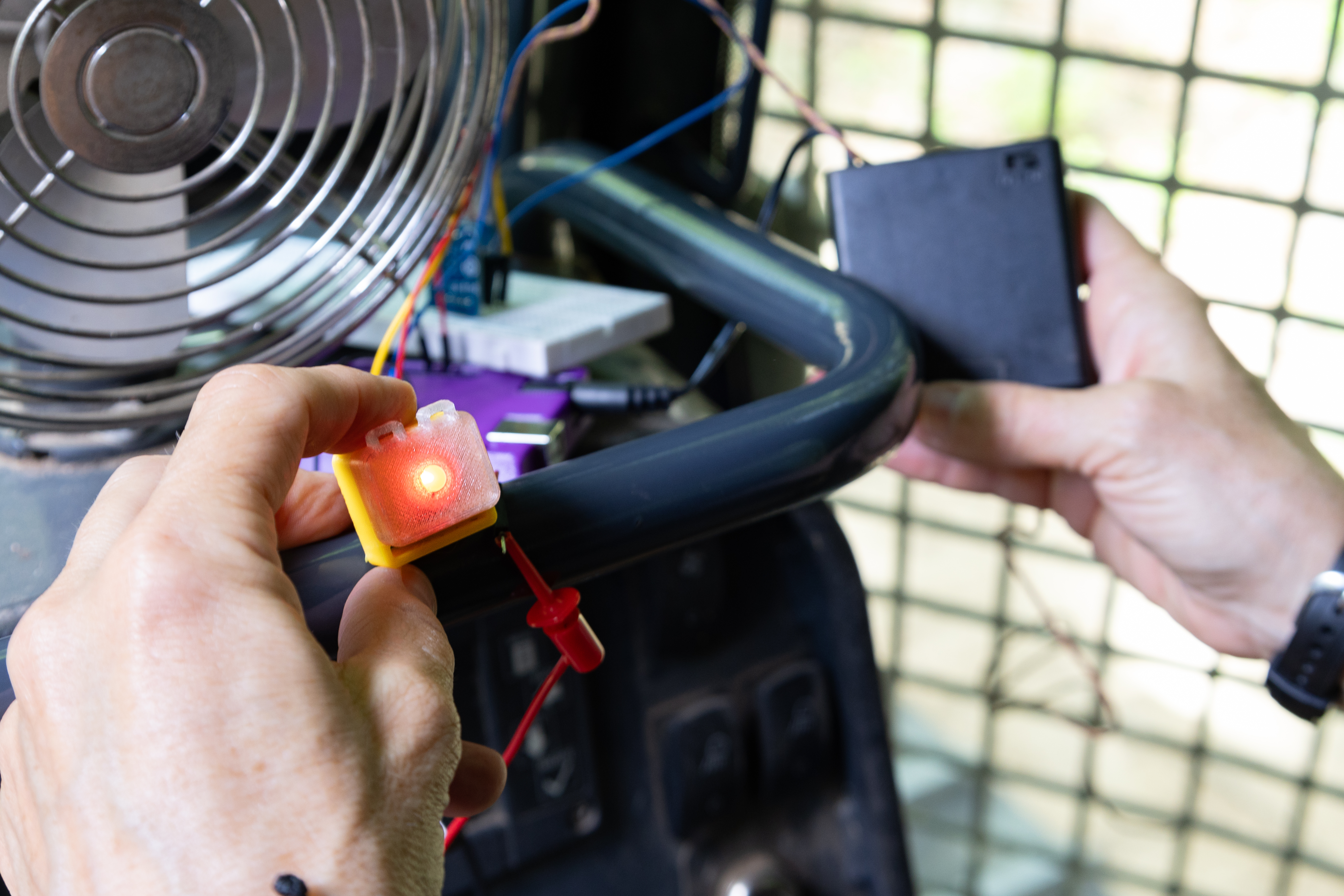
The sensor setup is simple by design. It consists of a standard thermocouple similar to those found in a home oven, which is then wired to an LED light in the dozer’s cabin. If the light starts blinking, it’s time to get out of Dodge. 

The entire system is powered by something that’s probably laying around your house: AA batteries. Using a simple power source like this is part of an attempt to make every aspect of the design affordable and accessible. University of Alabama, Huntsville research scientist Ryan Wade emphasized that point in a NASA blog post. He explained that during a recent trial installing the sensor in a fire dozer, his team realized that they were missing a part. Rather than waiting to hear back from NASA and having a custom piece shipped to them, they simply walked down the street to a hardware store and solved the problem.

a sensor with a red light being placed on a bullzoser
NASA Wildland Fires Program science integration manager Jennifer Fowler holds an LED light on the dashboard of a fire dozer belonging to the Alabama Forestry Commission (AFC). The LED light is connected to a thermal sensor mounted in the window of the dozer, which turns the light on when the radiant heat from a nearby fire reaches a dangerous threshold. FireSense scientists have been working with the AFC to develop and install these thermal sensors onto these dozers, which they showcased during a stakeholder event on April 23-24, 2026 at the Solon Dixon Forestry Education Center in Andalusia, Alabama. Image: NASA/Milan Loiacono.

“NASA’s expertise in this case comes not in the novelty of the instrument itself, but in figuring out how to solve the problem quickly and integrate that technology into their existing system,” Wade said.

That flexibility is what makes the approach so valuable for firefighters. Alabama Forestry Commission fire analyst Ethan Barrett says the devices so far work “exactly as intended.” In Alabama, at least, officials are planning to outfit their entire dozer fleet with the sensors. The sensor system was developed by NASA’s FireSense project, whose interest in it was twofold. The sensors will more immediately help firefighters on the ground as fire season approaches, but the data they collect will also prove invaluable for future research. By placing sensors in the dozers, NASA will gather reams of data about fire strength and intensity straight from the front lines.

The post Fire dozers outfitted with NASA-made sensors help battle blazes appeared first on Popular Science.

  •  

NASA Just Dropped More Than 12,000 Photos from the Artemis II Mission

NASA Just Dropped More Than 12,000 Photos from the Artemis II Mission

When it comes to photo dumps, NASA has upped the ante. The organization has added thousands of snapshots from the Artemis II mission to the Gateway to Astronaut Photography of Earth archive. The album now holds 12,217 images by cosmic travelers Reid Wiseman, Victor Glover, Christina Koch, and Jeremy Hansen during their more than 250,000-mile, 10-day flyby mission around the moon.

According to PetaPixel, a couple of Nikons and an iPhone 17 were the cameras of choice for the journey. And even though many of the thousands of recently uploaded images are very similar—some are even quite blurry—scrolling through them gives the impression of being seated right next to the “Moonfarers” as they marvel at Earth and its satellite and simply can’t put the camera down—just like we tend to snap way too many photos of a beautiful sunset.

The Earth seen through a window in the Orion module during the Artemis II mission

Some of the most impactful photos include the reflections of the astronauts’ hands and faces in the window of their vehicle, the Orion module. Juxtaposed with meticulously engineered equipment, the earth and moon seem somehow less abstracted from this unique vantage point, in which these orbs appear somehow more resonant and precious—and vulnerable.

Explore more of our favorites below, and learn about the Artemis II mission on NASA’s site.

A crescent-shaped view of the Earth, mostly obscured by shadow
The Moon seen through a window in the Orion module during the Artemis II mission
A total eclipse seen from the Orion module of the Artemis II mission
Stars seen through a window in the Orion module during the Artemis II mission
The Moon seen through a window in the Orion module during the Artemis II mission
The Earth "setting" behind the Moon, seen through a window in the Orion module during the Artemis II mission
The Earth seen through a window in the Orion module during the Artemis II mission
The Earth "setting" behind the Moon

Do stories and artists like this matter to you? Become a Colossal Member today and support independent arts publishing for as little as $7 per month. The article NASA Just Dropped More Than 12,000 Photos from the Artemis II Mission appeared first on Colossal.

  •  

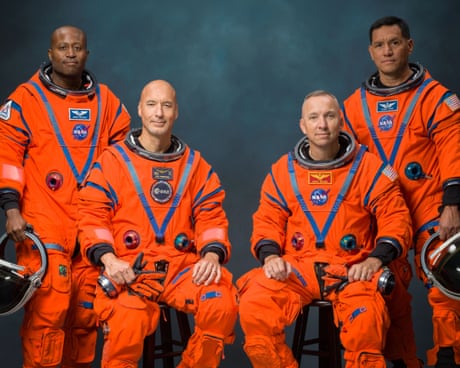
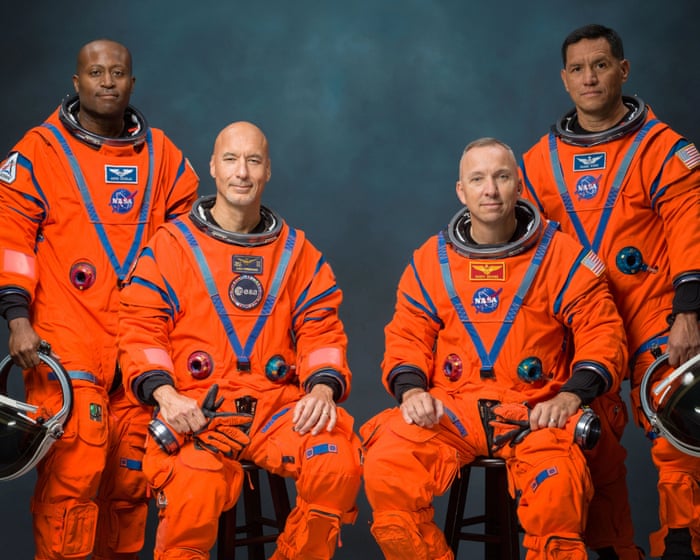
‘Earth’s first starfleet’: Nasa reveals Artemis III crew and project’s next steps

Luca Parmitano to pilot all-male crew of four paving way for planned first human landing of Artemis IV in 2028

Jared Isaacman, the Nasa administrator, hailed the creation of “Earth’s first starfleet” on Tuesday as he revealed the Artemis III crew and details of the next stages of the space agency’s project to return humans to the moon.

An Italian astronaut, Luca Parmitano of the European Space Agency (ESA), will be the pilot of the planned two-week mission to lower Earth orbit next year that will test lunar landers from private companies Blue Origin and SpaceX.

Continue reading...

© Photograph: Bill Stafford/NASA/AP

© Photograph: Bill Stafford/NASA/AP

© Photograph: Bill Stafford/NASA/AP

  •  
❌