Trendy Korean snacks get a convenience store makeover, but is it a good thing?
Last year, 7-Eleven showcased some of Korea’s most famous food in a special limited-time campaign, and it proved to be so popular that Korean cuisine is back in the spotlight again, with a series called “Mashisso! Korea’s Top Recommended Gourmet Picks”.
This two-part series kicked off on 1 June, with a second batch of items released just over a week later, on 9 June. Out of all the “mashisso!” (“delicious!”) products in this second release, there was one in particular that became a runaway hit with customers.
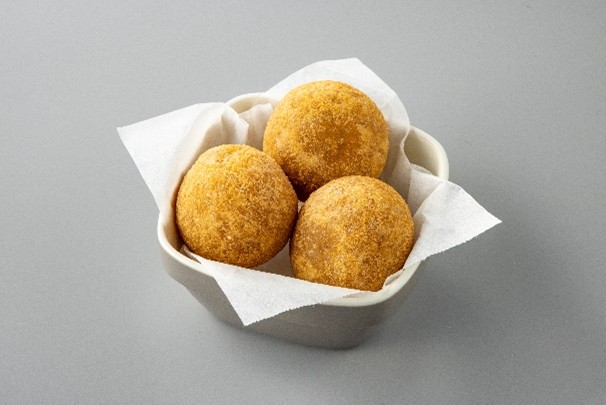
▼ Freshly Fried Gamja Cheese Balls
Gamja Cheese Balls are hugely popular in Korea, and they’re also a hit in Shin-Okubo, Tokyo’s Koreatown district. Curious to find out what a convenience store version would taste like, we stopped by 7-Eleven to give them a try, and we found them waiting for us in the hot display case next to the register, glistening in the golden light like delicious fried jewels.
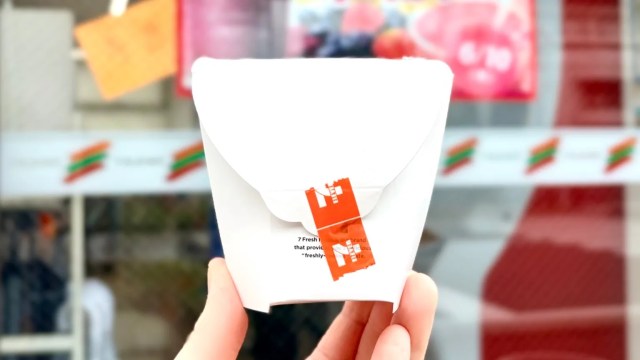
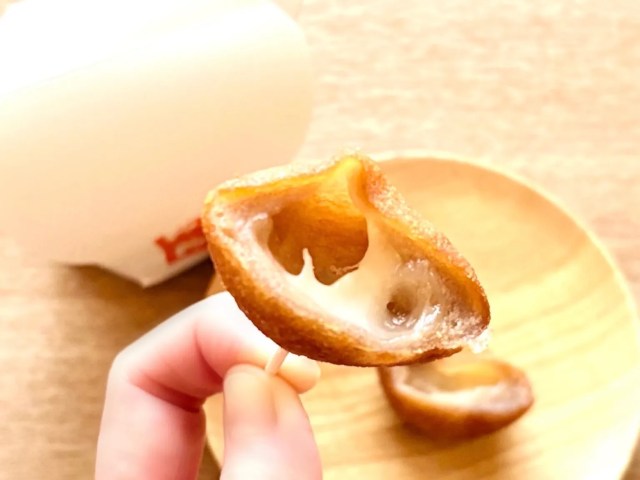
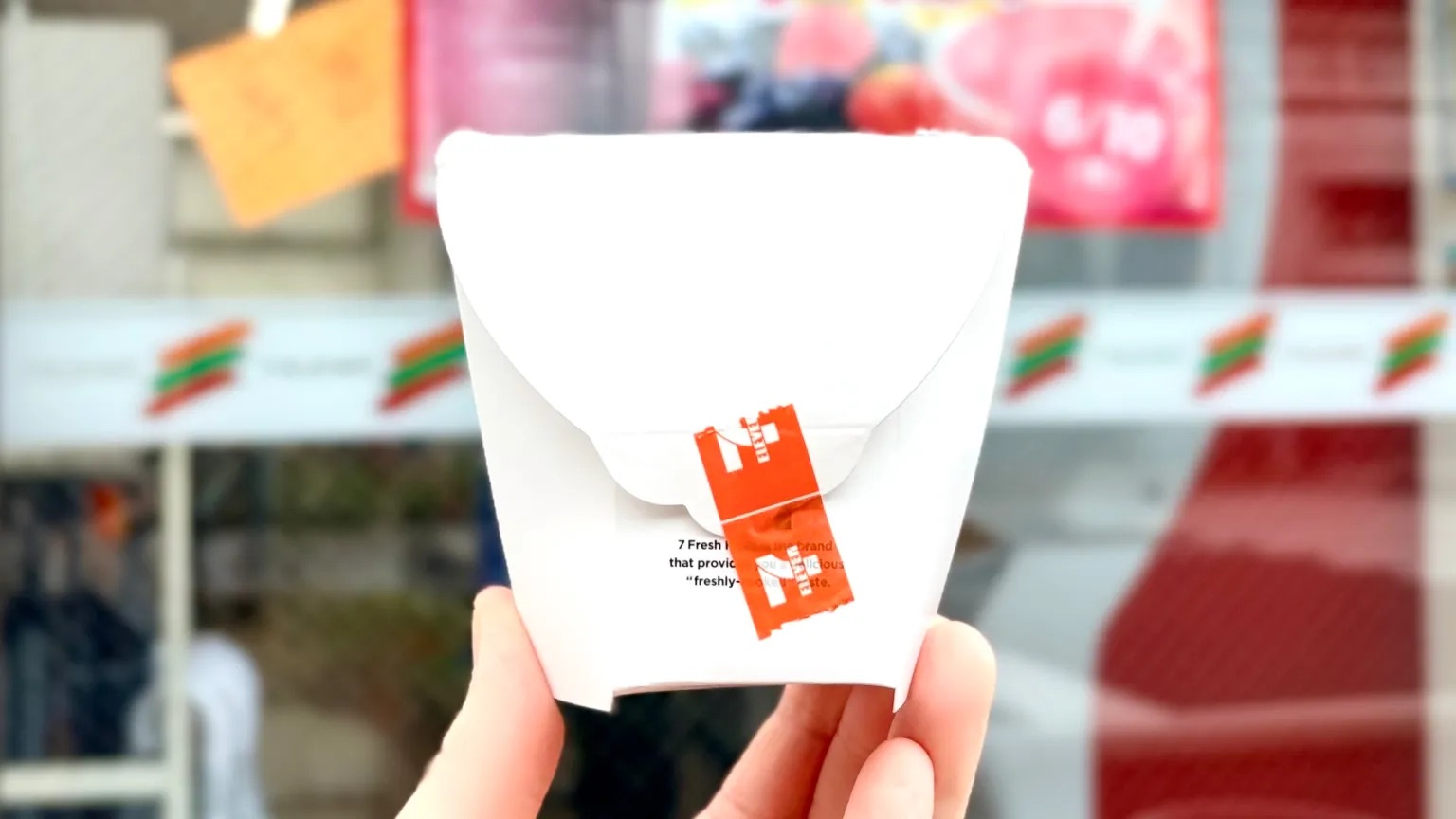
After ordering a pack, staff handed us a warm pouch of three and we raced home to try them while they were still hot. Spearing one with the included toothpick, we took a bite and found that the outside was wonderfully crisp, while the inside was incredibly chewy and soft.
With “gamja” meaning “potato” in Korean, we’d initially expected the balls to have a fluffy, hearty, mashed potato-like texture, but the potato-infused dough turned out to be satisfyingly chewy, with a springy texture that made it irresistible. Inside, the saltiness of the gooey, melted cheese paired beautifully with the subtly sweet dough, creating a combination that was absolutely addictive.
Being freshly fried in-store is another bonus, as it ensures maximum enjoyment of the interplay between gooey and crispy textures. After polishing off our balls, we realised they would also work well with some added customisations, like a drizzle of honey for an extra sweet-and-salty kick.
At just 230 yen (US$1.44) per bag, these trendy Korean snacks are an easy treat to pick up at 7-Eleven, and in our opinion, they’re well worth a repeat purchase before they disappear on 16 June.
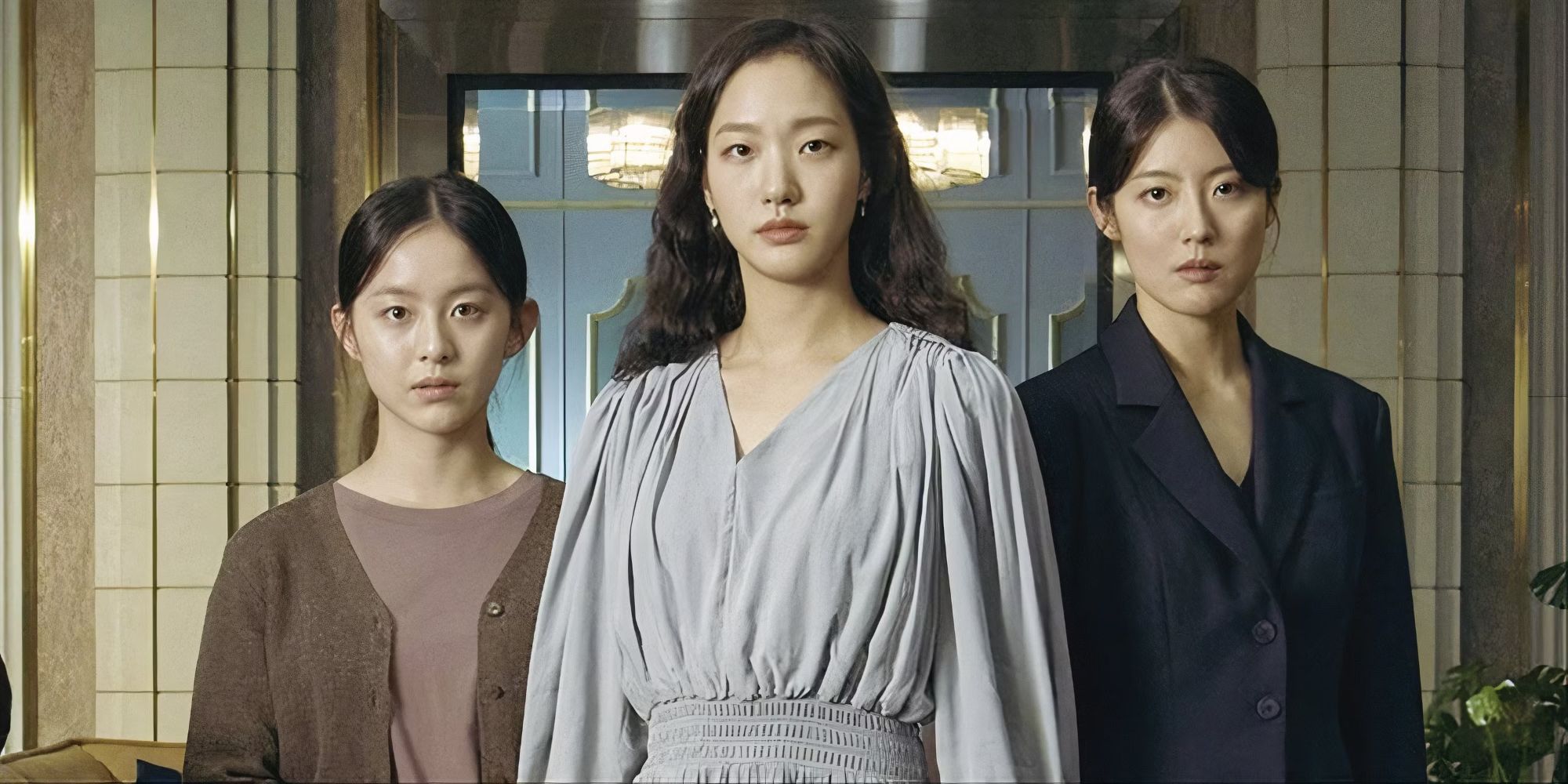
In the vast landscape of K-dramas, it's hard to keep track of the things we've watched and the things perpetually sitting on our watchlists. There are so many to choose from: the time-slip comedies, the intense office dramas, the quirky romances, and the genre-blending thrillers, all waiting to be watched.
Deals announced with SK Hynix, SK Telcom, Naver, Doosan, LG Group, Hyundai Motor
SK Hynix multi-year tie-up will secure advanced memory supply
Nvidia says SK Hynix partnerships have opportunities to keep extending
SK Telecom, Naver, Doosan to use Nvidia technology to build data centres
SEOUL, June 8 — Nvidia on Monday announced a series of deals in South Korea with tech giants including SK Hynix and Naver, as it looks to secure crucial memory chips to power its AI ambitions and entice new customers.
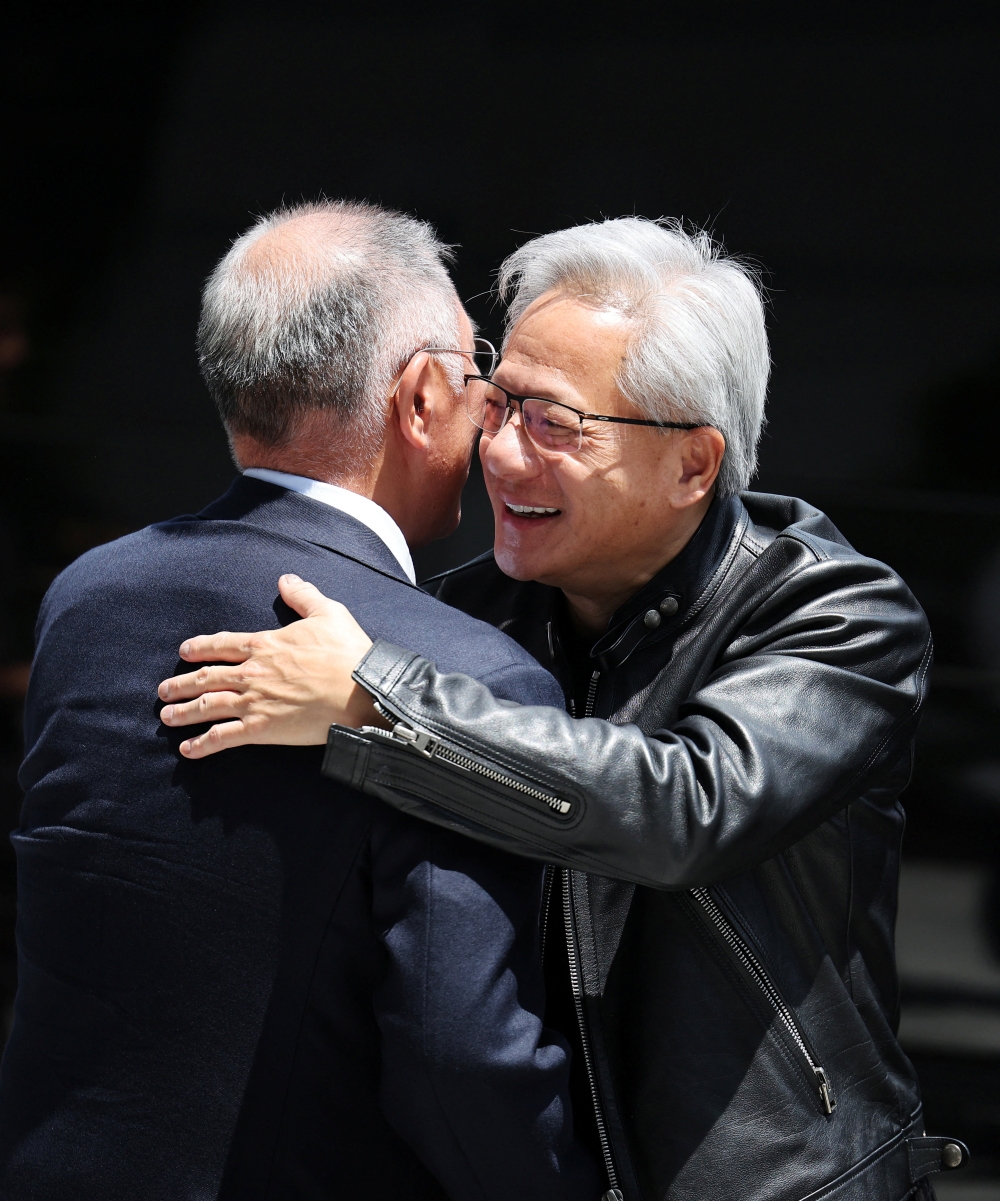
The agreements come during a high-profile trip by Nvidia CEO Jensen Huang to South Korea that began on Friday and has seen him dine on grilled pork belly and local spirit soju with the country’s top corporate bosses, throw a baseball pitch and meet with a well-known gamer.
Nvidia and its partners, which also included SK Telecom and conglomerate Doosan Group, did not disclose the value of the deals.
SK Group, South Korea’s second-largest family-owned conglomerate, said its SK Hynix and SK Telecom arms had agreed deals with Nvidia.
Memory chip maker SK Hynix signed a multi-year technology partnership that will see it commit to developing advanced types of memory for global AI data centres, SK Group said.
SK Hynix and Nvidia said the agreement, which comes as memory chip makers have been straining to keep up with demand, would enable supply to keep pace with Nvidia’s plans, which have expanded to robotics, personal computers and AI supercomputers.
“SK Hynix has been Nvidia’s largest memory partner. SK Hynix will continue to be Nvidia’s largest memory partner,” Huang said after a meeting with SK Group Chairman Chey Tae-won at the headquarters of the chipmaker’s parent.
Huang said the deal with SK Hynix, a rival to Samsung Electronics and US-based Micron Technology, was for more than two years with the option to keep extending.
“We already procure and we buy from SK Hynix already billions and billions of dollars each year, and it’s going to grow substantially,” he said.
Ryu Young-ho, a senior analyst at NH Investment & Securities, said the SK Hynix-Nvidia partnership reinforced the view that memory chips were evolving from a commodity product into a more customer-specific business.
Other deals
SK Telecom said it would build a gigawatt-scale AI cloud in South Korea using Nvidia technology, with the first AI data centre to come online in 2027. Nvidia said internet giant Naver and conglomerate Doosan would also use its technology to help build AI data centres.
Doosan, which is developing robots and makes materials used in Nvidia’s most powerful Blackwell chips, said it expected its energy solution to be used in Nvidia’s data centre platforms and for it to use the US firm’s physical AI technology as well.
Nvidia is also partnering with LG Group on electronics, mechanical systems and AI for humanoid robots, Huang said after a meeting with the tech conglomerate’s Chairman Koo Kwang-mo.
Huang said the pair were also working on the architecture of future data centres including cooling, power delivery and the entire design and building of the data centres.
After a meeting with Hyundai Motor Group’s Executive Chair Euisun Chung in the afternoon, Huang said Nvidia would deepen its partnership with Hyundai across a range of AI initiatives, including autonomous mobility, robotics and AI-powered manufacturing.
He also highlighted opportunities to accelerate the development of industrial robotics, saying Nvidia and Hyundai would work together to bring AI to “all forms of mobility” and deepen collaboration on robotics for practical industrial applications.
Huang referred to Hyundai Motor Group’s planned AI data centre in Saemangeum as an “AI Valley” akin to California’s Silicon Valley and said he was “very happy to build Nvidia in Saemangeum.”
South Korea stock rally falters
South Korea is an Asian manufacturing powerhouse, home to major producers of chips, electronics, cars and ships. SK Hynix and Samsung are the world’s two largest makers of memory chips, which are key components in data centres.
The country’s benchmark Kospi index has doubled in six months as heavyweights SK Hynix and Samsung benefited from the AI wave, but closed 8.3 per cent lower on Monday after robust US jobs data fanned bets on a Federal Reserve rate hike this year and sparked a rout in global tech stocks.
Shares in Samsung and SK Hynix closed down 10.2 per cent and 7.7 per cent respectively.
When asked about the global chip stock rout, Huang waved off concerns. “Everybody should be very excited; they can now buy stock at a cheaper price, and it’s absolutely true that the future of AI is very bright.”
Huang also planned to meet Samsung’s semiconductor business head Jun Young-hyun later on Monday.
Zombie thriller Colony, directecd by Korea’s Yeon Sang-ho, has flown past three million admissions during its second weekend of release in its home market, following its world premiere in the Midnight Screenings section at Cannes film festival. Released in Korea on May 21, the film has so far racked up 3,475,000 admissions and grossed $24.84M, […]
China’s President Xi Jinping hailed an “invincible friendship” with Pyongyang on arrival in North Korea on Monday, his first trip abroad this year after hosting back-to-back summits in Beijing.
A man watches a television screen showing a news broadcast with file footage of the 2019 meeting between China’s President Xi Jinping and North Korean leader Kim Jong Un, at a train station in Seoul on June 8, 2026. Photo: Jung Yeon-je/AFP.
China, Washington’s chief geopolitical rival, has been North Korea’s main trading partner by far for decades and a key source of diplomatic and economic support for a country hit by multiple international sanctions.
Military officers lined a red carpet as an Air China plane carrying Xi arrived for his first visit since 2019, video from Xinhua showed.
North Korean leader Kim Jong Un and his wife Ri Sol-ju welcomed Xi, who was accompanied by his wife Peng Liyuan.
The two leaders shook hands, and children presented flowers to Xi and Peng, while a banner reading “We warmly welcome Comrade Xi Jinping” and hailing the two countries’ “unbreakable friendship” hung below Chinese and North Korean flags.
The White House said last month that Xi and Trump “confirmed their shared goal to denuclearise North Korea” during their summit in Beijing.
However, Kim’s powerful sister said on the eve of Xi’s arrival that North Korea’s nuclear weapons programme was “the line of no retreat”.
South Korea’s dovish President Lee Jae Myung said Monday Seoul should not give up on North Korea’s denuclearisation, adding that “North Korea is still producing nuclear material even at this very moment”.
South Korean President Lee Jae-myung attended an event on December 2, 2025. Photo: Lee Jae-myung, via Facebook.
Minseon Ku, a diplomacy professor at DePaul University, told AFP that “Beijing probably has accepted North Korea as a nuclear state”, but Xi “will probably tell Kim that China wants stability more than anything”.
China has “always prioritised stability and is currently having to manage its relations and differences with the US”, Ku said.
‘Irreversible’ nuclear state
Seong-Hyon Lee, a visiting scholar at the Harvard University Asia Center, also said Beijing is shifting towards “underwriting regime durability” rather than seeking to coerce North Korea into denuclearisation.
“China’s broader regional strategy benefits from a stable, heavily armed, and aligned buffer state that absorbs US and allied military bandwidth,” he told AFP.
North Korea has repeatedly declared itself an “irreversible” nuclear state since Kim and Trump’s 2019 summit collapsed over the scope of denuclearisation and sanctions relief.
Kim has also been emboldened by the war in Ukraine, securing critical support from Moscow after sending troops to fight alongside Russian forces.
Some analysts say the summit could be Xi’s way of countering Russia’s growing influence over North Korea, but DePaul’s Ku stressed that “overall, Moscow is not a major power like China”.
“Moscow-Pyongyang power relations are more equal than Beijing-Pyongyang; Moscow needs Kim for their war in Ukraine as much as Kim needs technology sharing and food from Russia,” she said.
Chinese President Xi Jinping (centre) flanked by Russian President Vladimir Putin and North Korean leader Kim Jong Un walks before the military parade marking China’s 80th anniversary of Victory Day at Tiananmen Square, Beijing, on September 3, 2025. Photo: The Kremlin.
In an article published on the front page of North Korea’s Rodong Sinmun, Xi pledged closer cooperation.
“No matter how the times change or how the international situation evolves, the traditional friendship between China and North Korea is always invincible,” Xi wrote.
Xi last met Kim in September, when he invited the North Korean leader and Putin to a military parade in Beijing marking the 80th anniversary of the end of World War II.
Military alliance
Jun Sang-gab, 65, a South Korean tour guide who lives near the inter-Korean border, said he hopes that “North Korea opens its economy” and follows China’s development model.
“If they (the North) establish themselves economically, there won’t be any incidents like armed unification or war” on the Korean peninsula, he told AFP.
Trump has made little progress on North Korea, especially on the nuclear front, despite his earlier high-profile summits with Kim.
North Korea is also the only country with an official, binding military alliance with China.
North Korea could also serve as a useful counterweight to US partners in the region, including South Korea and Japan, analysts said.
Long-frosty China-Japan ties have deteriorated since Prime Minister Sanae Takaichi, a security hawk, suggested last year that Tokyo might intervene militarily in any Chinese attempt to take self-ruled Taiwan.
“As China’s international standing rises, Beijing is likely seeking to draw Pyongyang more actively into its diplomatic orbit,” said Lim Eul-chul, a North Korea expert at Kyungnam University.
President Xi Jinping concluded a visit to North Korea on Tuesday, after meetings with Kim Jong Un that the Chinese leader said reached an “important consensus” on building ties.
This picture taken and released by North Korea’s official Korean Central News Agency (KCNA) shows (from left) Chinese President Xi Jinping, his wife Peng Liyuan, North Korean leader Kim Jong Un and his wife Ri Sol Ju attending a welcoming ceremony at Kim Il Sung Square in Pyongyang on June 8, 2026. Photo: KCNA via KNS/AFP.
He travelled with his wife and several other top officials for a two-day trip he said aimed to bring ties between the longtime partners to “new heights”.
The timing appeared significant, coming after Xi hosted a string of world leaders, including US President Donald Trump and Russia’s Vladimir Putin, in Beijing.
State media images showed Xi and Kim beaming as they shook each other’s hand, with the Chinese leader receiving a lavish welcome ceremony with a red-carpet military salute and cheering crowds.
What were the outcomes?
Xi said he had reached “an important consensus with Kim on developing China-DPRK relations in the new era”, China’s Xinhua news agency reported, using North Korea’s official acronym.
The leaders agreed to put the two nations’ friendly relations “on a more solid basis”, North Korea’s official Korean Central News Agency said.
Xi told Kim their countries should “should strengthen exchanges in diplomacy, law enforcement (and) the military” and expand economic cooperation, according to Chinese state media.
He also called for expanded economic cooperation, citing the recent reopening of border crossings and transport links.
Beijing has long been Pyongyang’s largest economic partner, with US and South Korean estimates indicating that China has accounted for almost all of North Korea’s annual foreign trade in recent years.
In March, flights and passenger train services between Beijing and Pyongyang resumed after a six-year hiatus due to pandemic-era border closures and their aftermath.
What about North Korea’s nukes?
Official readouts and state media reports have not said whether Xi and Kim discussed North Korea’s nuclear weapons development, for which Pyongyang languishes under international sanctions.
This picture taken and released by North Korea’s official Korean Central News Agency (KCNA) shows North Korean leader Kim Jong Un (right) and China’s President Xi Jinping shaking hands before their meeting at the Kumsusan State Guest House in Pyongyang on June 8, 2026. Photo: KCNA via KNS/AFP.
That is important because the White House said last month that the Chinese leader and Trump had “confirmed their shared goal to denuclearise North Korea” during their summit in Beijing.
Kim has repeatedly vowed never to give up his nuclear arsenal, and his powerful sister said before Xi’s visit that the programme was Pyongyang’s “line of no retreat”.
The absence of denuclearisation from official statements means the summit effectively “appeared to have been a forum where China granted Pyongyang’s rights to nuclear weapons”, Lee Ho-ryung of the Korea Institute for Defense Analyses told AFP.
In return, it appears Kim “supported Beijing’s One-China principle regarding Taiwan”, she added, referring to the self-ruled island China claims as its own.
“Our party and government will fully support the policy and stand of the Chinese party and government to defend the core interests on the ‘one-China’ principle,” KCNA said.
How did Kim emerge from the talks?
Analysts noted that the summit took place as Kim enjoys enhanced global status after backing Russia with troops and munitions in its war with Ukraine.
Kim is “no longer just a recipient of aid, but a provider of critical military assets”, having “successfully leveraged his nuisance value into strategic relevance”, Seong-Hyon Lee, a visiting scholar at the Harvard University Asia Center, told AFP.
Hong Min, an analyst at the Korea Institute for National Unification, said the meeting reflected the convergence of “North Korea’s desire to cement its status as an indispensable strategic actor through its nuclear arsenal” and “China’s expanding ambitions to shape the Northeast Asian order”.
Besides Xi and Putin, Kim’s meetings with leaders from Belarus, Laos and Vietnam since last year have proven that North Korea is no longer such a diplomatic pariah, said Minseon Ku, a diplomacy professor at DePaul University.
China and North Korea have a military alliance centred on a 1961 treaty obliging each side to come to the other’s aid in the event of an armed attack.
North Korea is the only country with which China has such a military agreement, though Pyongyang also signed a mutual defence treaty with Russia in 2024.
Beijing appears to aim “to offer economic incentives while monitoring North Korea to ensure it does not act against Beijing’s interests in the diplomatic and military spheres”, Hong said.
SEOUL, June 1 — South Korea’s entertainment industry has entered a peculiar season of self-censorship. As the country gears up for major elections, K-pop stars and celebrities find themselves navigating a minefield where seemingly innocent choices—from a hair color to a hand gesture—can be perceived as political statements.
The latest controversy to engulf the industry unfolded in the final days of May 2026, just ahead of the June 3 local elections.
On May 30, popular rapper and entertainer Lee Young-ji made an innocent post on her Instagram story: "Isn't the hair color pretty?" accompanying a selfie of her freshly dyed red locks. A follow-up photo showed her paired the new hair with a matching red T-shirt. The timing, however, proved disastrous.
The post triggered immediate backlash on Korean online communities. Critics pointed out that repeatedly exposing a color associated with a specific political party during the early voting period was highly inappropriate. Adding to the fuel, Lee's post featured the song "REDRED" as background music.
What happened next became the story. Within 24 hours, Lee Young-ji had not only deleted the controversial post but also rushed to dye her hair back to black. On May 31, she issued a lengthy apology alongside a new photo showing her black hair.
"I must have startled many of you by posting such an untimely story," she wrote, explaining she received many direct messages from people concerned. "So many people DM'd me about it that I felt sorry and wanted to remedy the situation as quickly as possible, so I rushed to dye my hair. ... Even though I was well aware that this is an important time, my desire to communicate came first". She concluded: "I won't hide behind the cowardly excuse of ignorance; I will reflect and learn from this".
Lee Young-ji's experience is far from an isolated incident. During election season, the colors red and blue have become a de facto "traffic light" in the entertainment world.
Red: Off-limits, as it is the official color of the conservative People Power Party (PPP). During the early voting period, wearing red clothing or dyeing hair red can be interpreted as showing support for the party.
Blue: Also banned, as it is the color of the main liberal opposition, the **Democratic Party of Korea (DPK)**.
Yellow and green: Also associated with minor political parties like the Green Justice Party.
The scrutiny doesn't stop at colors. Hand gestures, emojis, and even numbers have become potential traps. During the recent election period, a female idol from the group ODD YOUTH accidentally flashed a "V" hand sign during a live broadcast and was instantly horrified, frantically signing numbers one through five to prove her neutrality. The "V" sign, also called the "peace" sign, can be seen as a reference to candidate numbers on the ballot.
Perhaps the most infamous example of the phenomenon occurred in May 2025, as the country prepared for a presidential election. Karina, the leader of the popular girl group aespa, posted a seemingly innocent casual photo on Instagram. The image showed her wearing a black jacket adorned with a red pattern and the visible number "2," accompanied by a simple red rose emoji.
She was quickly labeled "conservative Karina" and "No. 2 voter Karina" by critics. Her agency, SM Entertainment, issued an apology, stating she had "absolutely no other intention or purpose". Months later, a visibly shaken Karina offered an emotional apology on a YouTube show, revealing her guilt over how the scandal had affected her aespa members.
This controversy gave a name to an unspoken rule in K-pop: the "no color, no gesture" guideline during elections.
The mounting scrutiny has forced idols to evolve. With each election, a new "political survival guide" emerges, and the strategies are increasingly creative.
Some idols have taken to posting black-and-white photos to preemptively neutralize any color-related controversy, a trend that has been praised as "socially aware". Others have abandoned the "V" sign altogether, replacing it with casual hand waves or even clenched fists as a greeting. The extreme caution was demonstrated by the group B1A4, who during a recent live broadcast, chose to film the entire session using a black-and-white filter to completely eliminate the risk of any color being misinterpreted.
While the entertainment industry rushes to adopt these precautionary measures, a parallel debate has ignited online. Some observers argue that the scrutiny has crossed the line into unreasonable overreaction. They point out that unless a celebrity explicitly expresses support for a specific candidate or political party, it is unfair to infer political intentions solely based on colors or outfits. Others counter that celebrities, as public figures, have a responsibility to remain neutral and avoid controversy.
As the June 3 election approaches, the spotlight remains on every move, post, and selfie. For Korea's celebrities, the simplest acts of sharing daily life have become a tightrope walk, where the line between personal expression and political statement grows increasingly blurred.
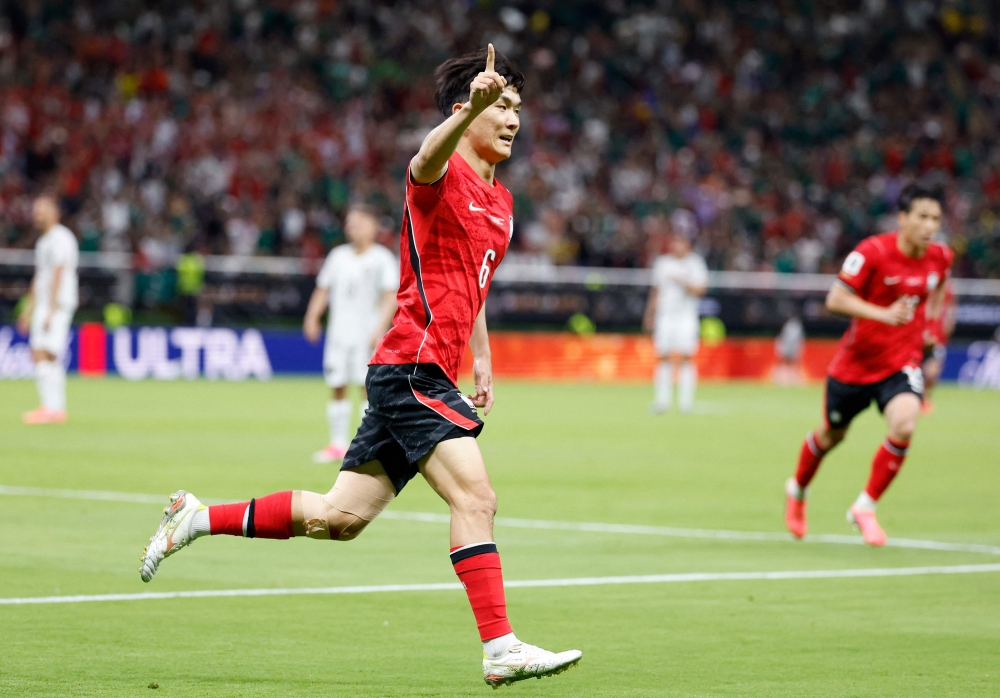
MEXICO CITY, June 12 — South Korea came back from a goal down to snatch a thrilling 2-1 win over the Czech Republic in their World Cup Group A opener today, substitute Oh Hyeon-gyu grabbing the winner in the 80th minute.
Korea captain Son Heung-Min wasted a number of decent chances before his Czech counterpart Ladislav Krejci broke the deadlock against the run of play in the 59th minute by heading home from a long throw-in, but the lead was short-lived as Hwang In-Beom kept his cool to dink the equaliser over the keeper eight minutes later.
Tomas Soucek thought he had put the Czechs back in front with a header from a free kick in the 77th minute but the goal was chalked off for offside, and less than three minutes later the Koreans went ahead as Hwang turned provider, pulling the ball back for Oh to fire home from close range.
Co-hosts Mexico top the group after their 2-0 win over South Africa and they will meet the South Koreans in Guadalajara next Thursday, while the Czechs take on South Africa in Atlanta. — Reuters
The closures, so employees can watch a recorded lecture, will cost the company an estimated 2.1bn won ($1.4m) in sales
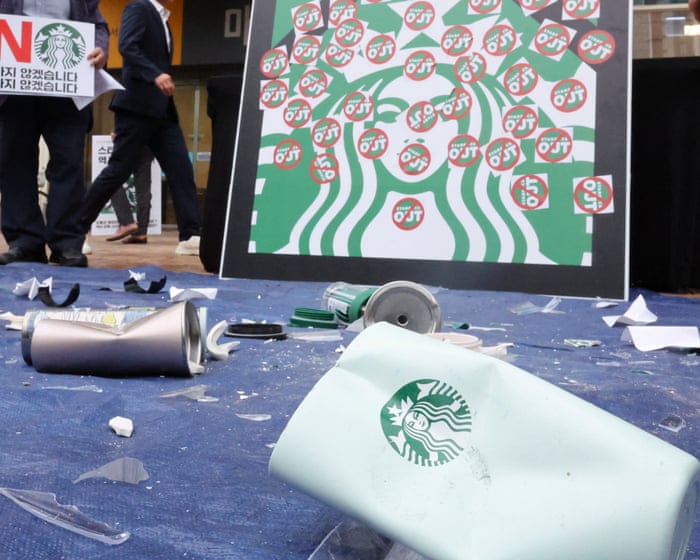
Starbucks Korea will simultaneously close all its stores for a mandatory history lesson, after a disastrous promotion that evoked memories of a pro-democracy massacre sparked public and political backlash.
More than 2,000 stores will temporarily close at 3pm on 22 June, the company said, so staff can watch recorded lectures on modern Korean history and engage in “social sensitivity” training. The half-day closures will cost Starbucks an estimated 2.1bn won ($1.4m) in lost sales, according to data firm IGAWorks.
A Chinese dissident who has long been a thorn in Beijing’s side has escaped to South Korea on a rubber boat, his lawyer confirmed on Wednesday, after repeated attempts to flee China.
Chinese dissident Dong Guangping. Photo: Front Line Defenders.
Dong Guangping, a former policeman who was imprisoned for his activism, was found by South Korean authorities on Monday night drifting off the country’s west coast on a 3.3-metre (11-foot) rubber boat with a 9.9-horsepower engine, according to police.
He was taken to shore for questioning on suspicion of violating immigration laws.
The man’s lawyer, Kim Joo-kwang, confirmed his identity to AFP.
Dong, 68, is known for his opposition to the Chinese Communist Party (CCP) and his advocacy for political reform and human rights.
He was dismissed from his work as a policeman after signing a petition a decade after Beijing’s 1989 Tiananmen Square crackdown, according to US-based advocacy group Human Rights in China.
He later spent about three years in prison from 2001 for “inciting subversion of state power”, United Nations experts said, and was detained again in 2014 over Tiananmen-related activities.
Dong fled to Thailand with his family, who later resettled in Canada as refugees, but Thai authorities handed him over to Chinese police in 2015 despite his UN-recognised refugee status.
He was released from prison after completing his sentence in 2019.
But faced with constant police surveillance, harassment and a lack of access to housing, work and financial resources, he decided to flee again in an attempt to reunite with his family, according to a UN report from 2022.
Before arriving in South Korea, Dong made several failed attempts to flee China.
In 2019, he tried to swim to the Kinmen archipelago, a Taiwanese territory, but nearly drowned at sea. In 2020, he crossed into Vietnam, but was detained by Vietnamese police.
Dong’s attorney told AFP his client’s current situation is “highly likely to be a political asylum case”.
Full protection
Chinese-Canadian journalist and human rights activist Sheng Xue, who described Dong as a friend, said in a post on X Wednesday that Dong set off from Weihai, in China’s Shandong province, after “meticulous inspection and preparation”.
Chinese-Canadian human rights activist Sheng Xue. Photo: Sheng Xue, via X.
“Last night, I spoke with him on the phone… He hadn’t slept for over fifty hours and had been at sea for more than thirty hours,” she said.
His rubber boat was spotted by the captain of a fishing boat at 9:30 pm (1230 GMT) on Monday, about 18 kilometres (11 miles) northwest of Taean County, South Chungcheong province, who then alerted the police, according to Sheng.
The Coast Guard dispatched a patrol vessel that arrived at the scene about an hour later, and Dong was detained, she added.
South Korea has granted political asylum to a relatively small number of applicants since it began formally processing refugee claims in 1994, with an overall recognition rate in the low single digits despite tens of thousands of applications.
Critics say the low approval rate reflects strict screening and lengthy procedures, while the government maintains that decisions are made on a case-by-case basis and take security considerations into account.
Seoul’s foreign ministry did not respond to a request for comment.
The opposition People Power Party has called on the government to offer Dong “full protection”.
“It should take swift humanitarian measures to ensure that he can safely travel to Canada, where his family is anxiously awaiting him,” party spokesman Choo Hyun-chul said in a statement to AFP.
“This is a matter of a fundamental responsibility as a liberal democratic state.”
This uber-rare Korean VHS release of "The Naked Cell" (1988) plays up the film's after-dark elements and includes some cunningly linguistic Hanja in the ad lines. Unusual.

 Login
Login