G-AHKX Avro Anson C19 RAF TX176 Royal Air Force
The Avro Anson was constructed in Manchester
This Anson has now been painted in the colours of one that would have been used by RAF based at Coningsby Station Flight
Photo taken at Old Warden Shuttleworth Air Show 10th May 2026
HAA_1419
G-KAPW Hunting Percival Provost RAF XF603
This Aircraft Served with the Royal Air force from 1953 until 1965
Photo taken at Old Warden Shuttleworth Wings & Wheels Air Show 30th May 2026
HAH_9045
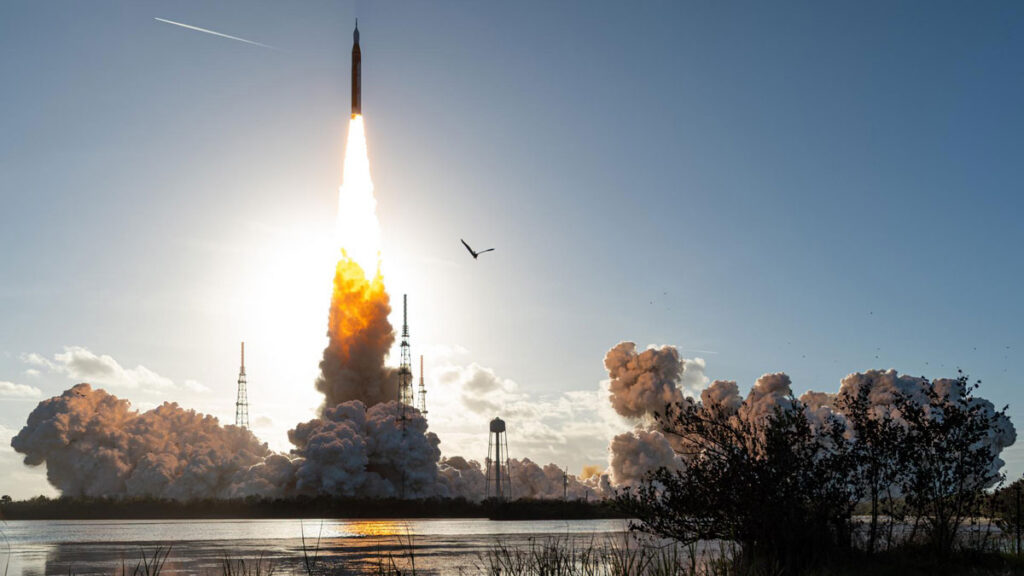
The space industry is surging. In coming years, nearly 10,000 spacecraft are slated to launch into low-Earth orbit for a variety of purposes, such as global surveillance, space tourism, and satellite “megaconstellations” providing internet service.
Rocket engine exhaust, as well as the burnup of inactive satellites and rocket parts reentering Earth’s atmosphere, releases a suite of pollutants. These chemicals have long been considered to pose little threat to our climate, given the historically small size of the space industry. Now, the sector’s rapid growth will send its emissions skyrocketing—but scientists don’t yet have a clear picture of the environmental ramifications.
An analysis by Vliex et al. of rockets launched in 2022 revealed that spaceflight depletes the ozone layer and contributes to global warming, with a significant portion of this ozone loss attributable to nitrogen oxide emissions released by objects reentering Earth’s atmosphere.
The researchers calculated emissions from all 186 rockets launched in 2022, as well as all 472 objects—with a combined total mass of nearly 5,000 tons—that reentered the atmosphere that year. They conducted computational simulations of each launch’s trajectory and emissions at various altitudes up to 100 kilometers, and they calculated emissions released by object reentry. They also accounted for the effects of chemical reactions that occur in rocket exhaust plumes, which alter emissions’ chemical composition.
Incorporation of the calculated emissions into GEOS-Chem, a computational model of atmospheric chemistry, revealed their ozone-depleting and Earth-warming effects, with reentry emissions identified as playing a key role in ozone depletion. The researchers found that accounting for plume reactions reduced the estimated effects of spaceflight emissions, highlighting the value of considering plume chemistry in future assessments.
The analysis also underscored the varying effects of different rocket fuel types. Solid-state fuels, used recently in rocket boosters for NASA’s Artemis II mission to return astronauts to the Moon, appeared to cause the greatest amount of ozone depletion relative to propellant mass, while rocket-grade kerosene caused the greatest amount of warming.
On the basis of their findings, the researchers call for further research into reentry emissions and rocket plume chemistry as the space industry continues to expand and evolve. (Earth’s Future, https://doi.org/10.1029/2025EF007795, 2026)
—Sarah Stanley, Science Writer
Citation: Stanley, S. (2026), Rocket launches and reentries harm Earth’s ozone layer, Eos, 107, https://doi.org/10.1029/2026EO260183. Published on 8 June 2026.
1942 BT-13A Valiant N79VV EM35 USAAF 42-89379
Valiant was an American World War II trainer built by Vultee Aircraft
Photo taken at EAA Airventure Wittman Regional Airport Oshkosh Wisconsin USA July 2024
DAG_4621
When we think of terms like “flowing” or “fluid,” we could be referring to the nature of water, but we can also just as easily apply these concepts to our understanding of art and craft. Fabrics “pool” and different mediums converge. The nature of creativity is often referred to in terms of an “ebb and flow.” Ecologically speaking, bodies of water are metaphorically woven into the fabric of our planet. Rivers and lakes sustain an abundance of life, shape cultures, and course through history. Amid the ongoing climate crisis, how do artists express concerns about water and the environment?
Water | Craft, a group exhibition at the Minnesota Marine Art Museum, dives into this question. The museum itself is situated on the banks of the Mississippi River and often directly engages with its expansive biological and cultural reach. Works by seven artists, whose practices incorporate weaving, pottery, basketry, glass, and textile arts, directly interface with contemporary issues of water access and cultural preservation amid climate change.
Sarah Sense, “Land, Lines, Blood, Memory 7” (detail) (2026), archival inkjet prints on Hahnemuhle bamboo paper and Hahnemuhle rice paper, wax, Arches watercolour paper, cotton thread, and artist tape
Colossal readers may be familiar with the mixed-media pieces of Tali Weinberg and Nicole McLaughlin, both of whom combine quantities of colorful thread with other materials in meditations on interconnectivity and multi-disciplinarity. Weinberg translates ecological data into tendril-like installations and abstract weavings, such as a series of three pieces from her Climate Datascapes series that visualize information about silt in the Upper Mississippi River. McLaughlin’s dramatically fringed ceramic platters reference Pre-Columbian cultures and the continuum of human history and time.
Water | Craft also includes works by Rowland Ricketts, Sarah Sense, Therman Statom, Kelly Church, and Tanya Aguiñiga. The latter is known for her intricately knotted wall works containing terracotta forms, which cascade gently to the floor. And Ricketts’ large-scale installation, “Bow,” comprises strands of indigo-dyed linen that suspend within a large gallery space, creating the effect of a current or perhaps the silhouette of a boat.
“Just as water flows through bodies, landscapes, and cultural histories, craft knowledge is passed between generations, carrying technical skills alongside cultural values,” the museum says. “The artists in Water | Craft employ traditional methods not as nostalgic gestures, but as living practices that continue to evolve in response to environmental change.”
Water | Craft continues through December 27 in Winona.
Tanya Aguiñiga, “Internal Body I” (2023), fiber, terracotta, and mixed media. Images courtesy of Volume GalleryTanya Aguiñiga, “Internal Body I” (detail). Image courtesy of Volume GalleryTherman Statom, “Pesca de la Noche” (2015), glass, mixed-media. Photo by Bailey BoltonTali Weinberg, “Silt Studies: Upper Mississippi River Basin” (2021), from the ‘Climate Datascapes’ series, woven fiber, plant-derived dyes, medical tubing, and fishing line. Photo by Bailey BoltonRowland Ricketts, “Bow” (MMAM installation view) (2023), indigo-dyed linen. Photo by Bailey BoltonNicole McLaughlin, “Confluencia (Confluence)” (detail)
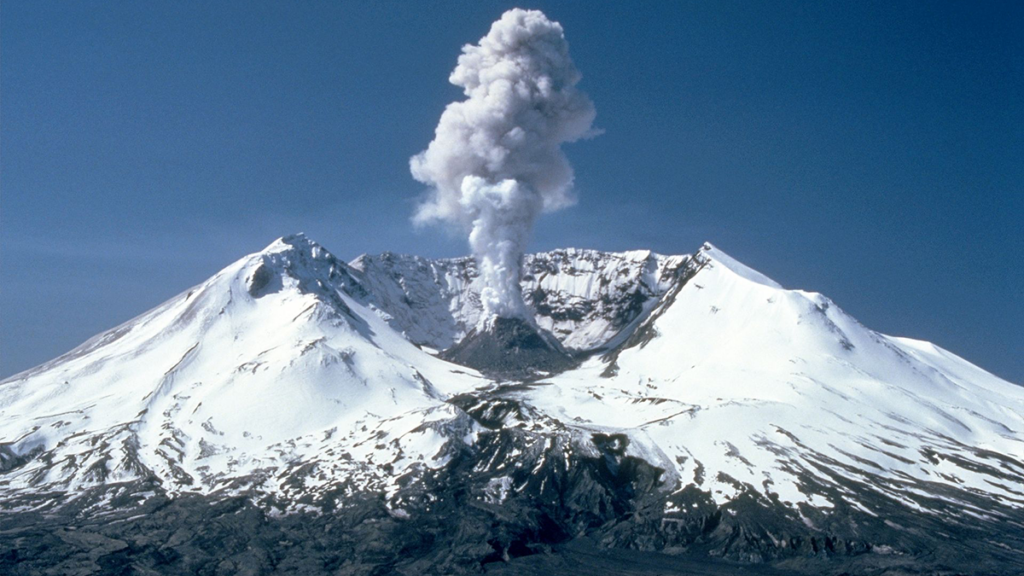
Explosive volcanic eruptions inject gases and ash into the atmosphere, posing major hazards for human health, infrastructure, and aviation. A new article in Reviews of Geophysics examines recent advances in estimating Eruption Source Parameters (ESPs), the key conditions at the volcanic vent that are a necessity for modeling the behavior of volcanic plumes. Here, we asked the authors to explain what ESPs are, what technologies are used to observe eruptions, and which scientific challenges and future research directions remain for improving volcanic plume monitoring and modeling.
In simple terms, what are Eruption Source Parameters?
Eruption Source Parameters (ESPs) describe the key conditions at the volcanic vent during an eruption.
Eruption Source Parameters (ESPs) describe the key conditions at the volcanic vent during an eruption, such as the mass eruption rate, exit velocity, temperature, and particle size distribution. These parameters define how material is injected into the atmosphere and are essential inputs for models that simulate plume rise and subsequent dispersal of volcanic gases and ash in the atmosphere. In simple terms, ESPs represent the boundary conditions that control the behavior of volcanic plumes. Because they cannot usually be measured during an eruption, they must be estimated from indirect observations and models, which introduces significant uncertainty.
Why is it important to understand how volcanic ash and gases disperse after an eruption?
Volcanic ash and gases can travel long distances and affect aviation safety, human health, infrastructure, and even climate. Fine ash particles are particularly hazardous for aircrafts, while ash fallout can disrupt communities and critical services on the ground. Gas emissions may also impact air quality and alter the atmospheric radiative budget. Understanding volcanic dispersion is therefore essential for forecasting the movement of volcanic clouds and issuing timely warnings. Reliable forecasts support risk mitigation strategies and enable more effective responses by civil protection agencies and aviation authorities.
What technologies are used to observe volcanic plumes?
Volcanic plumes are observed using a combination of satellite, ground-based, and, more rarely, airborne measurements. Satellite observations are crucial for tracking ash and gas clouds over large spatial scales and in near real time. Ground-based instruments, such as radar, cameras, and infrasound sensors, provide detailed information on plume dynamics close to the source. Increasingly, these observations are integrated with numerical models to infer eruption conditions. The combination of multiple data streams is essential for constraining ESPs and improving the reliability of plume simulations.
What are some of the recent advances in estimating Eruption Source Parameters?
Recent advances have focused on combining observations with numerical models to better constrain ESPs. Multi-sensor approaches, data inversion techniques, and improved plume models have significantly enhanced our ability to estimate eruption rates and plume dynamics. At the same time, high-resolution computational fluid dynamics (CFD) simulations provide deeper insights into the complex fluid dynamic processes governing plume behavior. However, these models are computationally expensive and unsuitable for real-time applications, highlighting the need for approaches that bridge the gap between physical realism and operational efficiency.
What strategies do you propose in your review to improve Eruption Source Parameters estimation?
A central contribution of this review is the proposal of a new class of operational models for volcanic plumes.
A central contribution of this review is the proposal of a new class of operational models for volcanic plumes. These models integrate the physical realism of high-fidelity CFD simulations with the efficiency of simplified models used in forecasting. In particular, the review highlights the potential of artificial intelligence and machine learning techniques to “learn” from CFD results and optimally calibrate the key variables controlling plume dynamics. This hybrid approach allows complex physical processes to be represented in a computationally efficient framework, making it suitable for real-time applications while retaining improved accuracy.
How does improved volcanic plume monitoring lead to more effective volcanic hazard assessment?
Improved monitoring leads to more accurate estimates of ESPs, which directly translate into better forecasts of plume rise and ash dispersion. This reduces uncertainty in hazard assessments and supports more reliable decision-making. For example, more accurate forecasts can help aviation authorities minimize disruptions while maintaining safety and enable civil protection agencies to issue targeted warnings. Ultimately, better integration of observations and models enhances the capacity to respond effectively during eruptions and to mitigate their societal and economic impacts.
What are the remaining questions or knowledge gaps where additional research is needed?
Further research is needed to improve the coupling between observations, physics-based models, and data-driven approaches.
Despite progress, significant challenges remain. ESPs are still difficult to constrain in real time, and uncertainties in both observations and models propagate into forecasts. The integration of diverse data sources is not yet fully optimized, and different estimation methods can yield inconsistent results. Further research is needed to improve the coupling between observations, physics-based models, and data-driven approaches. In particular, developing robust hybrid frameworks that combine CFD, simplified models, and machine learning represents a key direction for advancing both scientific understanding and operational forecasting.
Editor’s Note: It is the policy of AGU Publications to invite the authors of articles published in Reviews of Geophysics to write a summary for Eos Editors’ Vox.
Picture a branch in its earliest stages of waking up for spring. Slender, a little bare, and then dotted with soft blooms that hint at what’s to come. That’s the inspiration behind our Crepe Paper Apple Blossom Branch Video Workshop. Delicate and hopeful—a gentle reminder that even the quietest beginnings can carry the promise of something beautiful.
VH-HET 1945 Supermarine Spitfire HF.VIII RAF as MV239 RAAF A58-758 Marked up as A58-602 RG-V Grey Nurse
Photo Taken at Warbirds over Scone NSW Australia March 2026

 Login
Login