Often times when we think “scientist,” we picture a white lab coat, a pipette. Or, a marine biologist covered in seaweed samples. A geologist with dusty knees and hands full of rock fragments. Endless blue gloves. What we may not always picture is our favorite professors, colleagues, or even students advocating for science to policy makers.
Federal policy decisions have a direct impact on science funding, research priorities, and the role of science in society.
Federal policy decisions have a direct impact on science funding, research priorities, and the role of science in society, and the AGU community has a critical role to play in those conversations. Each year, AGU’s Science Policy and Government Relations (SPGR) team organizes and hosts Congressional Visit Days to connect Earth and space scientists to their elected officials. As a member of AGU’s scientific publications team, I joined the April 21-22 Days of Action to learn about the bills currently impacting our workforce and research, how to craft messages that both speak to our personal experiences, and to ask our elected officials to advocate with and for us.
As a D.C. native, I grew up in close proximity to the power of science, the alphabet agencies, NOAA, NASA, NIH, and USDA. Institutions where the best and brightest were given the resources and support to learn, record, and disseminate knowledge on behalf of our country. In my current role with AGU as a non-profit publisher, I took to the Hill to share my experiences on the publishing and academic peer-review landscape. My role allows me to see first-hand how budget cuts and shifting attitudes have impacted critical programs at the agencies named above. This Days of Action event brought together 58 participants with one goal: to share personal stories that related to four bills:
KEEP STEM Talent Act (H.R. 2627, S.1233)- strengthens the U.S. scientific workforce by making it easier for skilled international STEM graduates from U.S. universities to stay in the U.S.
Protect America’s Workforce Act (H.R.2550 passed House, S.2837)- seeks to protect the U.S. federal scientific workforce by restoring collective bargaining (union) rights.
Scientific Integrity Act (H.R.1106)- protects the rights of U.S. federal scientists and researchers by safeguarding scientific integrity in federal research and decision-making.
Two participants spoke on their experiences meeting with elected representatives and uniquely captured just how closely the Earth and spaces sciences touch all of our lives.
Sheila Baber, an early career scientist with The University of Maryland, felt compelled to join due to “the uncertain future for myself, my peers, and the American scientific enterprise.” She noted, “It has been especially difficult to witness the deteriorating relationship between scientists, decision makers, and the public. This past year, with its rapidly changing federal landscape, has been a wakeup call to re-engage and remind the public of how science research gives back to the community.”
Ryan Haupt, long-time AGU member and the Executive Director at National Youth Science Academy, with a 10-year track record of geoscience advocacy, emphasized the importance of building relationships with elected officials. “Regardless of party affiliation, I want those staffers to know that when they meet with me or any other AGU member, they will get honest and informed feedback from folks who are truly passionate about our fields,” Ryan told me. “[Experts who can speak to how current bills] impact issues like improved financial support for graduate students, helping international students stay in the US to join the STEM workforce, and protecting funding for federal science agencies and the folks who work for them.”
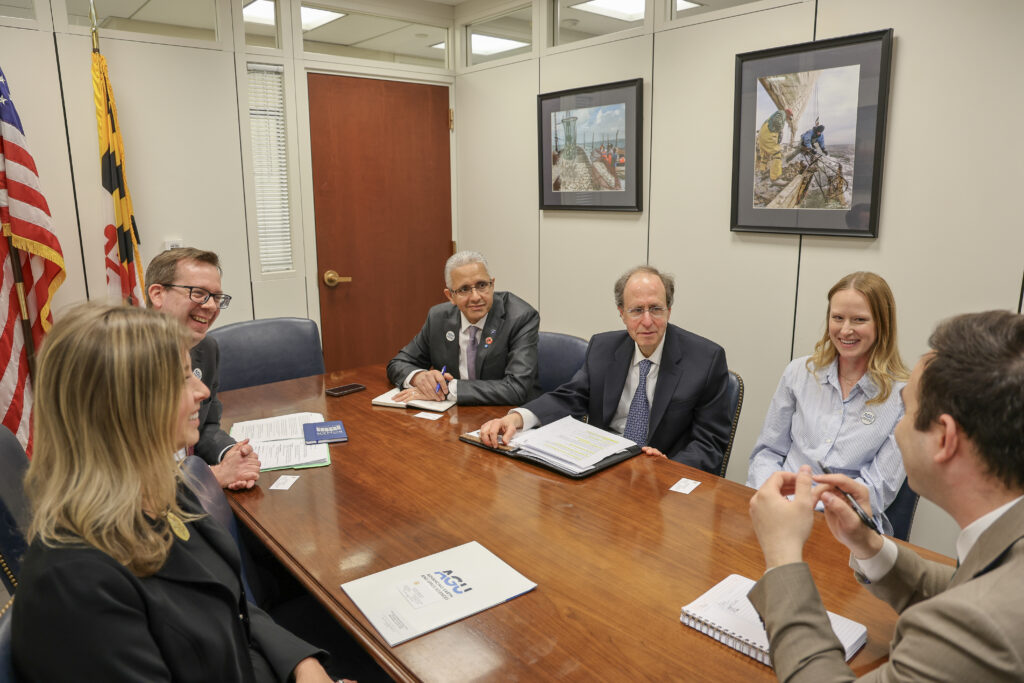
As a participant myself, I joined the Maryland group to meet with Senator Chris Van Hollen’s office. Van Hollen and I met briefly at the Stand Up for Science March in 2025. His voting track record indicates a long-standing commitment to the scientific community, and he champions bills that support funding federal agencies like NOAA.
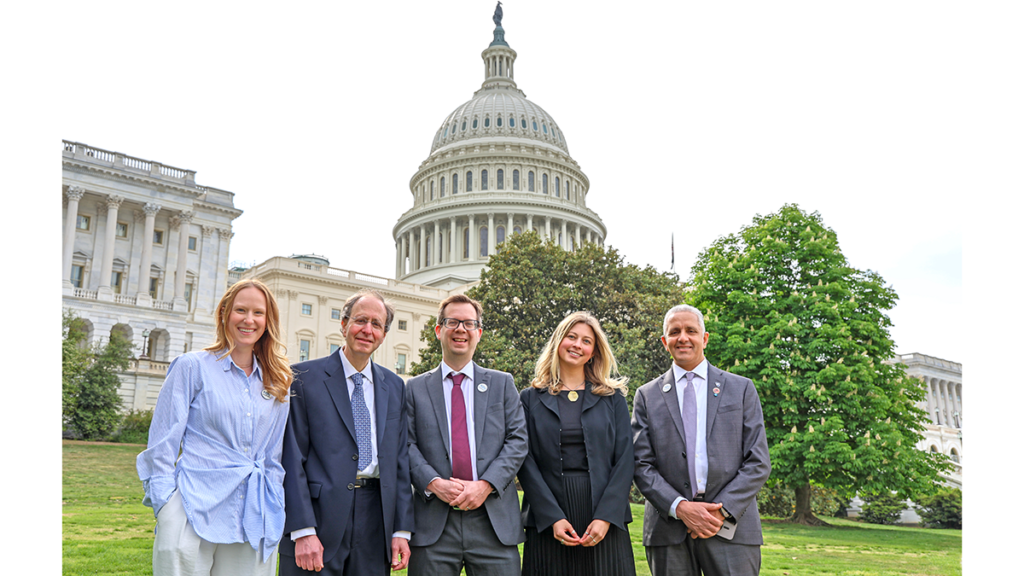
(left to right) The Maryland group, McKay Porter, Andrew Inglis, Nour Rawafi, Stephen Jascourt, and Emille Beller met with Senator Chris Van Hollen’s staffer, Leo Confalone. Credit: Beth Bagley, AGU
Finding and discovering the best and the brightest means funding, protecting, and supporting the best and the brightest.
Working in scientific publishing has allowed me to peer behind lab doors, into research vessels sailing through the Arctic, and into the entire ecosystem that is peer-reviewed research. A system that relies on incoming eager students, federal grant funding, consortium agreements between the biggest institutional libraries and the biggest publishing houses in the country, scientific integrity, and future, stable career opportunities. Finding and discovering the best and the brightest means funding, protecting, and supporting the best and the brightest.
Open, accessible science builds and supports both public trust and future scientific advancements. As the world widens and we are all met with increased access to studies, content, and news, scientific storytelling and literacy have never been more important for ensuring public trust. Transparency from the lab and from the field to published output allows for data to be discussed, fact-checked, and reused to support future scientific discovery. Days of Action demonstrates that we have a unique role to play in supporting the health, safety, and future of our country. If you feel called to get involved, please see resources available from SPGR.
Ryan reminds us, “There are lots of ways to participate in our democracy… find where you can best serve as a leader…don’t try to do it all, but try to do something.”
Citation: Beller, E. (2026), The impact of advocacy: American Geophysical Union’s Days of Action, Eos, 107, https://doi.org/10.1029/2026EO265020. Published on 14 May 2026.
This article does not represent the opinion of AGU, Eos, or any of its affiliates. It is solely the opinion of the author(s).
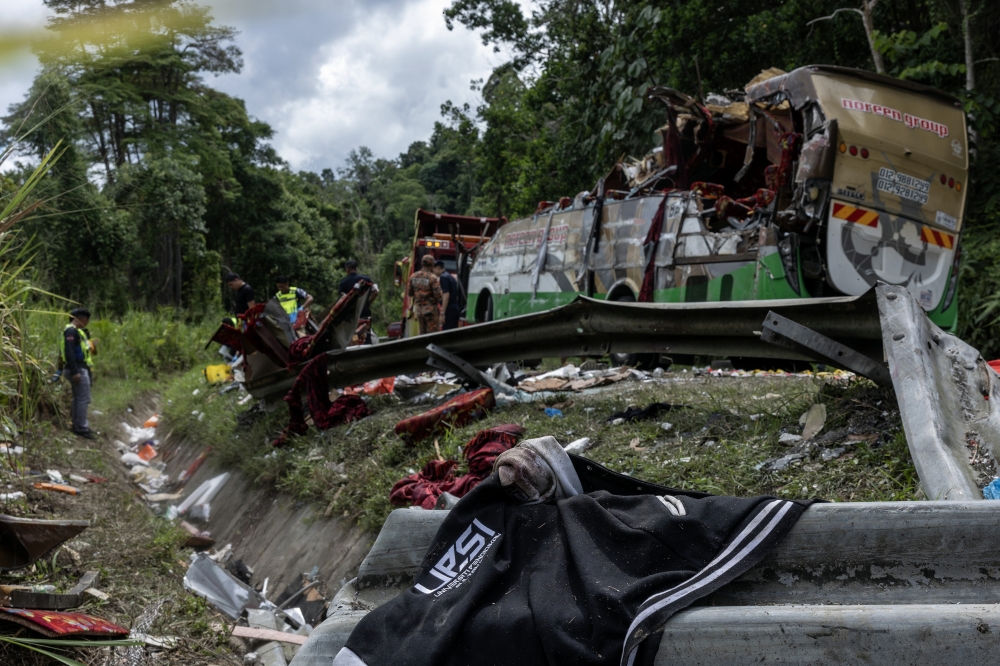
PASIR PUTEH, June 7 — Universiti Pendidikan Sultan Idris (UPSI) students who survived a bus crash in Gerik, Perak, on June 9 last year are still recovering from their trauma, thanks to the continued support of their families, friends and the university.
A crash survivor, Abdul Wafiy Kamaruddin, 24, said he has managed to deal with the trauma of using public transport, even though he had trouble being inside vehicles following his ordeal, thanks to the university’s continuous counselling support for survivors.
“Initially, I was afraid when getting into vehicles and would worry, but Alhamdulillah I’m getting better in stages and now I don’t have trouble taking the bus or public transport.
“The UPSI counsellors always follow up on those of us who survived the crash and that really helped our emotional recovery,” he told reporters during a UPSI gathering for students and families involved in the crash in Tok Bali today.
He recounted how he saw many of his fellow students staggering around injured right after the crash, while he was fortunate to sustain only minor injuries.
“I was sitting in the last back seat on the right side. When I regained consciousness after the crash, I saw many of my friends injured and wanted to help them, but I was not physically able to do so.
“I could only help those near me, and this has haunted me for almost two to three months before I managed to slowly recover,” Abdul Wafiy said.
He also pointed out that many survivors have improved emotionally after receiving various forms of support.
“So far, 27 survivors are more stable and are recovering emotionally. This shows how vital families, friends and educational institutions are in helping victims like us carry on with life after facing tragedies,” he said.
He admitted that the June 9 crash, which killed 15 UPSI students, would remain with him for the rest of his life.
Everyone on the bus was in a festive mood because of Aidilfitri, he recalled, with laughter and smiles all around.
“But in the blink of an eye, 15 of us were killed and for those of us who survived, our lives have changed forever,” he said.
Besides focusing on his recovery, Abdul Wafiy also shares his experience and views on road safety on various platforms, having appeared as an invited panellist at the Road Safety Congress in November last year. — Bernama
Donald Trump’s immigration crackdown is largely targeting people from the countries most vulnerable to displacement from climate-driven disasters, a Guardian analysis shows.
As the Trump administration pushes policies to boost planet-heating fossil fuels, millions of people are being forced to flee their homelands due to storms, floods and droughts worsened by the climate crisis.
Microsoft co-founder appears in closed-door session as part of lawmakers’ investigation into convicted sex offender
Bill Gates testifiedin front of the House committee on oversight and reform on Wednesday, and told lawmakers in his opening remarks that he “never witnessed nor had any indication” that Jeffrey Epstein was “engaged in ongoing criminal conduct”.
“I am here to answer your questions about my interactions with Jeffrey Epstein and to help contribute to the committee’s important work,” Gates said in his opening statement, seen by the Guardian. “I support the release of all the Epstein files and sincerely hope that, through your efforts and those of others advocating on their behalf, the survivors of Epstein’s crimes can get the justice that they deserve.”
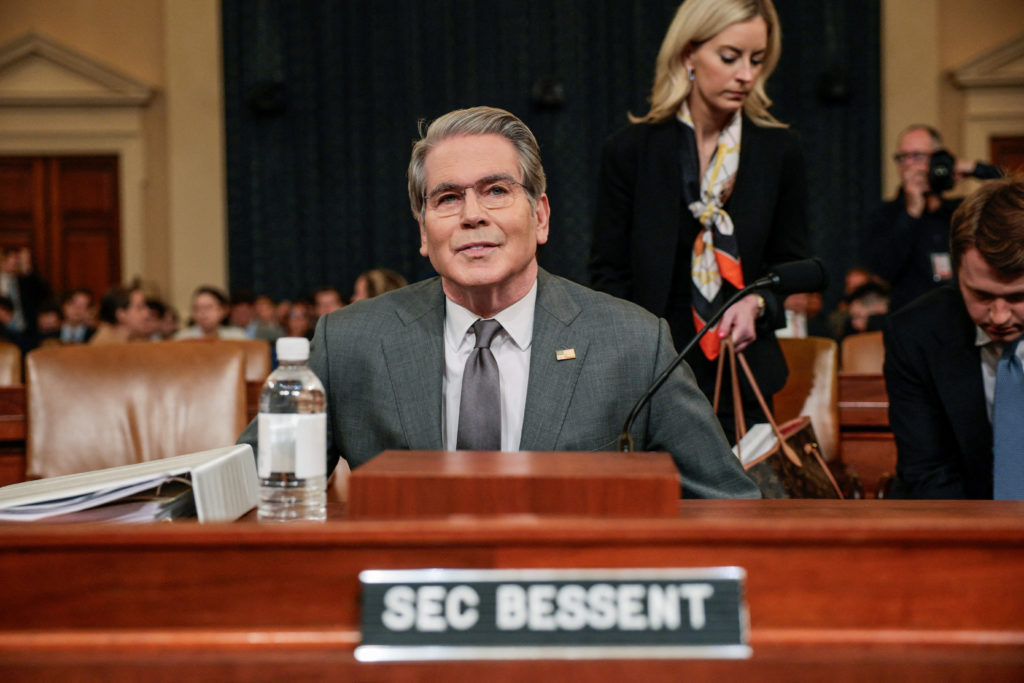
Treasury Secretary Scott Bessent was back on Capitol Hill to testify before the House Ways and Means Committee on the department's priorities, one day after he refused to say whether President Donald Trump and his family would still get immunity from IRS audits after the administration abandoned plans for a $1.776 billion compensation fund that would have benefited the president's allies.
Primaries for U.S. Senate and U.S. House on Tuesday will set the stage for a midterm general election in which Maine is expected to play a critical role in deciding control of both chambers.
President Donald Trump announced the nomination on social media amid pressure from Congress to name a permanent replacement for Tulsi Gabbard, who resigned last month.
Maya Classic Period (550-900 AD) rare polychrome pottery from the Jay I. Kislak collection, Library of Congress, Geography and Map Division. See long file names for additional information.
 Login
Login


 0009-0009-7274-0706), Senior Program Coordinator, AGU Publications