Normal view

  • ✇Latin America Reports
  • A polarized election may not matter for one of Peru’s biggest concerns: corruption Peru Reports
    In yet another polarized Latin American election, Peru’s June 7 runoff pits two ideological opposites against each other.  Keiko Fujimori, the conservative daughter of former dictator Alberto Fujimori, and Roberto Sanchez, a left-wing congressman backed by jailed former President Pedro Castillo, won the first round of voting on April 12 with 17% and 12% of the vote, respectively.  The race comes as Peruvians have become all but fed up with their elected officials. A 2025 OECD study found that
     

A polarized election may not matter for one of Peru’s biggest concerns: corruption

3 June 2026 at 19:00

In yet another polarized Latin American election, Peru’s June 7 runoff pits two ideological opposites against each other. 

Keiko Fujimori, the conservative daughter of former dictator Alberto Fujimori, and Roberto Sanchez, a left-wing congressman backed by jailed former President Pedro Castillo, won the first round of voting on April 12 with 17% and 12% of the vote, respectively. 

The race comes as Peruvians have become all but fed up with their elected officials. A 2025 OECD study found that trust in government is lower in Peru than in any other Latin American or Caribbean country. With eight presidents in office in just 10 years, political instability has become a hallmark of Peruvian politics. 

Scandals and accusations during this campaign haven’t done much to restore voter confidence.

As the final vote counts in April confirmed he would advance to the runoff, prosecutors charged Sanchez with financial crimes, accusing him and his brother of failing to disclose 280,000 soles ($81,720) in party contributions. His critics are calling for his disqualification. 

“One cannot help but see this as a politically motivated move designed to remove him as a viable candidate,” Jo-Marie Burt, a senior fellow at the Washington Office on Latin America (WOLA) focused on Peru, told Latin America Reports in May. 

In addition, delayed ballot deliveries and quick count releases during the first round prompted the resignation of the head of Peru’s elections agency. 

Rafael Lopez Aliaga, a conservative candidate and Trump acolyte who didn’t make it to the second round, alleged electoral fraud and threatened to call for mass protests. He now faces a criminal complaint for inciting civil disorder. 

Despite political differences, corruption extends beyond party lines 

Despite an Ipsos poll from last year which found that crime, corruption, and political instability were at the top of Peruvians’ concerns, the electorate may be forced to choose between divergent political and economic ideologies that hold similar patterns of corruption. 

“On economic issues, [the candidates] are substantially different. On rule of law, unclear,” Will Freeman, Latin America Fellow at the Council on Foreign Relations who studies corruption and organized crime in the region, told Latin America Reports

On one hand, Fujimori’s Fuerza Popular party has sat at the center of Peru’s institutional decay for a decade. After winning a congressional majority in 2016, the party fought the anti-corruption investigations that grew out of the region-wide Odebrecht kickback scandal — probes that, Freeman acknowledged, “could fairly be argued to have gone too far at times.” 

“But the response has been the dismantling of the justice system and rule of law in Peru,” he added. The Fujimori name is now “doubly associated” with authoritarianism. 

In the shadow of her father’s dictatorship, marred by corruption and human rights abuses, Keiko is now plagued by “not only what her dad did, but what she herself has done,” he argued. 

Opposition to the Fujimori family, or “anti-Fujimorismo”, has long been a pillar of Peruvian politics, and likely can be credited with snubbing Keiko’s three previous presidential bids. 

However, her strength in the polls suggests that her opposition is weakening. 

Pedro Castillo and Alberto Fujimori.

Freeman attributes Keiko’s current success less to her own appeal, and more to the collapse of the political coalition opposed to her family. 

Sanchez-ally and leftist President Pedro Castillo, elected in 2021 with anti-Fujimorista backing, would go on to embrace his own form of abuse of power, attempting to dissolve Congress “like Alberto Fujimori himself, almost copying him exactly,” said Freeman. Last year, Castillo was sentenced to over 11 years in prison.

While the elections are often being framed as “left versus right”, corruption and dismantling of institutional power extends beyond party lines in Peru. 

In congress, Castillo’s lawmakers and the Fujimoristas often voted together when it was in their interests, Freeman said. “Particularily in weakening the justice system and shielding themselves from investigation.” 

China and the U.S. in Peru

Governments abroad, especially the U.S. and China, are paying attention to what happens in Peru on Sunday. 

As Trump has set his sights on shoring up U.S. influence in Latin America during his second term, China, who has made significant investment inroads in LatAm countries over decades – most notably in Peru – also has its interests at stake. 

“It’s sometimes not really stressed enough just how important Peru is to China,” Freeman said. 

Beijing controls about half of Lima’s electricity supply and the new deepwater megaport at Chancay, with plans for an interoceanic corridor linking Brazil to the port as an export route for South American commodities. 

Washington, by contrast, has largely written Peru off. Even under former President Joe Biden, Freeman said, there was a “tacit acceptance that the battle was already lost.” 

It’s unclear whether the Trump administration’s more interventionist turn in Latin America will extend to Peru. A Fujimori win, and her ideological alignment with Washington, “may open space for a more direct U.S. military presence,” Freeman suggested, whether against coca production or in the ports, “similar to what Ecuador has done.”

It is unlikely Sánchez would allow the same. His progressivism and close ties to Castillo’s leftist movement could invite Trump’s ire, as has been the case in Cuba, Colombia and Venezuela. 

Freeman also cautions against reading a Fujimori win as Peru joining the U.S.-allied right wing tide across the region. 

“This is more of the culmination of that process than the start of some sudden authoritarian wave,” he said. Peru’s government has been effectively right-wing since Castillo’s removal in 2022, with a conservative Congress setting the agenda.

Featured image: Keiko Fujimori and Roberto Sanchez via their respective X accounts.

The post A polarized election may not matter for one of Peru’s biggest concerns: corruption appeared first on Perú Reports.

The post A polarized election may not matter for one of Peru’s biggest concerns: corruption appeared first on Latin America Reports.

  • ✇Latin America Reports
  • What the halt in the Strait of Hormuz means for Latin America Claire Carson
    New York, New York — The Strait of Hormuz, a major shipping lane connecting the Persian Gulf and the Gulf of Oman, has been at a virtual standstill following the United States and Israel’s joint strikes on Iran late last month.  One of the most critical passages for global energy markets, the strait handles nearly 20% of the global oil supply and 20% of the world’s liquified natural gas.  As oil prices continue to shoot up at breakneck pace and with no clear end to the war in sight, so
     

What the halt in the Strait of Hormuz means for Latin America

11 March 2026 at 16:18

New York, New York — The Strait of Hormuz, a major shipping lane connecting the Persian Gulf and the Gulf of Oman, has been at a virtual standstill following the United States and Israel’s joint strikes on Iran late last month. 

One of the most critical passages for global energy markets, the strait handles nearly 20% of the global oil supply and 20% of the world’s liquified natural gas. 

As oil prices continue to shoot up at breakneck pace and with no clear end to the war in sight, some countries are scrambling to find new sources outside of the Gulf, including Caspian nations, Scandinavia, North Africa and even Latin America. 

And while some LatAm oil producing countries like Brazil could stand to prosper from increased exports, other non-oil rich countries may have a harder time competing for energy in an increasingly expensive market. 

Brazil, Guyana could have most to gain in oil sector 

Brazil, the region’s largest oil producer at around 4 million barrels per day, is already exporting upwards of 3 million barrels per day and has limited short-term capacity to increase. However, according to the nation’s energy expansion plan, production could rise to 4.4 BPD or more in the coming years. 

With many countries, especially in Asia, searching to fill gaps in their supply, Brazil could stand to gain from oil exports. 

Cristiano Pinto da Costa, president of Shell Brasil, called the U.S.-Israel-Iran conflict an “enormous opportunity” for Brazil to attract investment, citing the country’s geopolitical stability and reliability as a producer. 

Matt Smith via LinkedIn.

Shares of the country’s state-owned oil company, Petrobras, surged on the Monday following the strikes.

According to Matt Smith, lead oil analyst for the Americas at commodity intelligence firm Kpler, for Brazil, it’s less about increasing production and more about redirecting barrels away from the U.S. and towards higher-paying Asian markets — something it was already doing before the strikes. 

“We’re seeing Brazil already going gangbusters in terms of production. It’s basically at a record,” Smith told Latin America Reports. “And so what we may see is those barrels being pulled away from other countries to Asia instead.” 

He pointed out that the shift in markets was already underway before the war, with over half of Brazil’s oil exports destined for China, as well as an uptick in shipments to India. 

Diego Rivera Rivota, an energy researcher at Columbia University’s Center on Global Energy Policy, cautioned that it may not be all upside for Brazil however. 

Any gains during the crisis are likely temporary, he explained, saying, “When you’re in crisis, I guess any volumes are useful. But can [Brazil] compete with the humongous series of volumes that flow through Hormuz to the Asia Pacific? I don’t think so.”

And while Petrobras may benefit from the crisis’ windfall, the macroeconomic picture is more complicated. 

El País reported that food costs could go up as Brazil’s transportation is largely truck-based and its agricultural center is heavily dependent on imported fertilizers tied to natural gas prices.

“Probably the balance sheet of Petrobras and other companies would look heftier. But the balance sheet of, you know, maybe some food distributor or supermarkets or other companies would not feel the same way. It’s very hard to balance that as a society,” Rivera told Latin America Reports.

Another South American country, the small but oil-rich Guyana, could also stand to benefit from the Strait’s closure. 

Oil production has been growing rapidly, with new crude streams coming online that are beginning to reach Asian markets. 

Smith noted, “As we’ve seen Guyanese production continuing to increase as they’ve added new crude streams, we’re starting to see some of these barrels heading to Asia. This developing situation is definitely going to pull more Guyanese barrels into Asia.” 

Oil platform P-51 in Brazil. Image credit: Wikimedia Commons

The Venezuela question

With the world’s largest proven oil reserves, Venezuela naturally comes to mind during a global energy crisis. 

But crumbling infrastructure means the country produces only a fraction of its potential, currently about 1.2 million barrels per day. Even so, rising prices could deliver the country significant revenue. 

Alejandro Grisanti, director of Ecoanalítica, told El País that Venezuela stands to receive about $400 million for every additional dollar in the average crude price.

The U.S. abduction of President Nicolás Maduro on January 3 and the subsequent appointment of acting President Delcy Rodríguez have raised questions about how much control the U.S. has over Venezuela’s oil flows. 

Before the intervention, Venezuelan crude allegedly flowed primarily to China through sanctioned shadow fleets. Since January, flows to the U.S. have increased significantly under supply arrangements involving trading houses such as Vitol and Trafigura.

Smith described a potential tug-of-war emerging between Washington and Beijing over Venezuelan barrels. 

“In recent months, we’ve seen Venezuelan crude, which had previously all gone to China, is now mostly going or starting to pick up to the U.S.,” Smith said. “You’ve got these trading houses, which are basically not discerning in who they sell that crude to. So if China’s going to come back into the market and is willing to pay the most for it, then it will head in that direction. But if we started to see some massive pick up in those flows back to China, there may be some response from the U.S.”

Rivera approached the scenario with more skepticism, saying he would find it “very hard” for trading houses to sell Venezuelan oil to China without “the approval, so to speak, or blessing of the U.S. administration for the specific case of Venezuela.”

Consumers take the hit

Elsewhere in Latin America, countries that import oil products could see costs go up for consumers if the war doesn’t de-escalate. 

Rising liquid natural gas prices could also feed into inflation, especially in countries like Brazil, where goods are primarily moved by truck rather than rail. 

Because so much of the food, merchandise, and manufactured goods are traveling by road, rising fuel prices would ripple across consumer products. If sustained, Rivers warns the shock could “mean a lot of inflationary pressure.” 

Chile is particularly vulnerable. Rivera described it as “a major importer in the region which imports the bulk of its consumption, both in crude and in oil products.” 

Diego Rivera Rivota via LinkedIn.

Just hours after the first U.S. strike, the Chilean peso weakened by about 14.8 pesos against the dollar, reaching 886.8 pesos per dollar.

Central American and Caribbean nations face an even greater exposure. 

“For some of them, they use oil products not only for transportation, which is pretty big, of course, but also for power generation,” Rivera said. “So they have a sort of double whammy on that price pressure.”

He noted that while some of these countries may be shielded by long-term contracts, many others, such as Jamaica, the Dominican Republic, and Nicaragua, rely heavily on the spot market and will be immediately exposed. 

The extent to which Latin America countries will feel the impact of the war in the Middle East will depend on how it develops and how long it lasts, according to the experts. 

Rivera said the crisis has pushed the world into “an absolutely unprecedented” and “nightmare” scenario, warning that if the conflict persists, the world could face “an energy crisis of major proportions that we probably haven’t seen in our lifetimes.” 

While some major oil and gas producers could stand to see windfall gains, he maintains that the broader economic consequences, inflation, and major trade disruption, outweigh any ‘benefits’. 

“The negative impacts seem to outstrip the possible wins,” Rivera concluded.

Featured image: Strait of Hormuz via Wikimedia Commons

The post What the halt in the Strait of Hormuz means for Latin America appeared first on Latin America Reports.

  • ✇Latin America Reports
  • What Delcy Rodríguez’s reshuffling of ministers means for Venezuela Julio Blanca
    Caracas, Venezuela — The cabinet of Venezuela’s interim president, Delcy Rodríguez, has seen some shake ups in recent days, with the appointments of a handful of new ministers in an apparent attempt to consolidate power just months after her predecessor, Nicolás Maduro, was captured by the United States.  The reshuffling of officials in the ministries of Defense, Transportation, Housing, Culture, Electric Power, and Higher Education is a move by Rodríguez to buy time and remain in power l
     

What Delcy Rodríguez’s reshuffling of ministers means for Venezuela

25 March 2026 at 18:38

Caracas, Venezuela — The cabinet of Venezuela’s interim president, Delcy Rodríguez, has seen some shake ups in recent days, with the appointments of a handful of new ministers in an apparent attempt to consolidate power just months after her predecessor, Nicolás Maduro, was captured by the United States. 

The reshuffling of officials in the ministries of Defense, Transportation, Housing, Culture, Electric Power, and Higher Education is a move by Rodríguez to buy time and remain in power longer, according to Benigno Alarcón, founder of the Center for Political and Government Studies at Andrés Bello Catholic University in Caracas. 

“I believe that what Delcy Rodríguez is trying to do is a political reshuffle within the government, aiming to stay in power as long as possible so that when an election is held, it will be one that she can control to some extent,” he told Latin America Reports

Alarcón believes that the roadmap proposed by the Trump administration after its January 3 attacks has not yet entered its most critical phase — a political transition — precisely because of resistance from diehards in the Chavismo movement. 

“We are seeing that the political deadlock continues, so we cannot say we are facing a transition at this moment. It is important to remember that [U.S. Secretary of State] Marco Rubio’s plan outlined a three-phase strategy, with the third phase being the transition. Well, clearly we haven’t entered that phase yet, and clearly Delcy Rodríguez is trying to prevent us from entering it,” he commented.

Ministerial changes lacking in scope

The recent appointments do not send a clear signal that a democratic reinstitutionalization is actually taking place in the country, according to the professor, since those who have been named ministers so far are part of the Chavista inner circle.

“What they’re basically doing is placing people whose merits, let’s say, are essentially their closeness to and the trust of those in power, right? In other words, in that sense, nothing has changed; everything remains more or less the same,” he stated.

Alarcón explained that there is a “recycling” of Chavista figures. “Some people from a faction within Chavismo are leaving, and others are coming in — let’s say because in the past they were either marginalized, overlooked, or had their chance and then were left out, and now they’re coming back,” he added.

He juramentado a los integrantes del Alto Mando Militar renovado de nuestra República, quienes asumen con absoluta lealtad y el más alto sentido del deber de defender la soberanía nacional, preservar la paz y resguardar la integridad territorial de Venezuela. pic.twitter.com/mYbEgbWZCj

— Delcy Rodríguez (@delcyrodriguezv) March 20, 2026

Recycling Chavismo 

The new ministers appointed by Rodríguez are: 

  • Gustavo González López as Minister of Defense; 
  • Jorge Márquez Monsalve as Minster of Housing; 
  • The engineer Rolando Alcalá as the Minister Energy and Electricity;
  • Jacqueline Faría as Transport Minister; 
  • Magistrate Carlos Alexis Castillo as the Minister of Social Process of Labor; 
  • Editor Raúl Cazal as Culture Minister;
  • Professor Ana María Sanjuán as Minister of University Education, Science and Technology.

A clear example of Alarcón’s so-called Chavista recycling is Gustavo González López, who now heads the Ministry of Defense, replacing Vladimir Padrino López — a key figure in Maduro’s government who held that position for over 10 years, making him the longest-serving minister in in that ministry’s history. 

Before joining the Ministry of Defense, González López was appointed in January 2026 by Rodríguez to lead the direct security of the presidency and military counterintelligence.

Additionally, in late 2024, he played a key role in the oil industry as Director of Strategic Affairs and Production Control.

The military officer is also known for having led the Bolivarian National Intelligence Service (SEBIN) for two terms (2014–2018 and 2019–2024). Under his command, the agency centralized much of the internal political control.

“I believe that what Maduro did at the time was to place, so to speak, the military component in the hands of a general he trusted, Vladimir Padrino López, and leave the military to him, making him a bridge between the civilian political sector and the military sector. Well, at this point, the bridge was changed, so to speak. So now you have González López as Delcy’s right-hand man, because he worked with her in the past, first as director of SEBIN,” Alarcón said. 

The reconfiguration of Rodríguez’s cabinet seems to respond more, according to Alarcón, to a strategy of internal protection than to a democratic opening. 

While the names in the portfolios are being recycled and the bridges with the military sector are being reinforced with figures of extreme trust, the true transition proposed by the international community remains in limbo.

Featured image: Delcy Rodríguez at a recent naval ceremony.

Image credit: Vice Presidency of Venezuela

The post What Delcy Rodríguez’s reshuffling of ministers means for Venezuela appeared first on Latin America Reports.

  • ✇Latin America Reports
  • Cuban President Miguel Díaz-Canel’s NBC interview: 5 key takeaways Raphael McMahon
    A conversation between Kirsten Welker, moderator of NBC News’ talk show “Meet the Press”, and Miguel Díaz-Canel aired on Sunday, marking the first time that a major U.S. media outlet has interviewed the current Cuban president.  The discussion focused on the current state of U.S.-Cuba relations and saw Díaz-Canel insist that he would not resign in the face of U.S. pressure while aguing that sanctions on the island were the driving factor behind his people’s suffering.  The Cuban politician
     

Cuban President Miguel Díaz-Canel’s NBC interview: 5 key takeaways

15 April 2026 at 08:44

A conversation between Kirsten Welker, moderator of NBC News’ talk show “Meet the Press”, and Miguel Díaz-Canel aired on Sunday, marking the first time that a major U.S. media outlet has interviewed the current Cuban president. 

The discussion focused on the current state of U.S.-Cuba relations and saw Díaz-Canel insist that he would not resign in the face of U.S. pressure while aguing that sanctions on the island were the driving factor behind his people’s suffering. 

The Cuban politician did, however, express hope that current diplomatic talks between the two nations would culminate in a peaceful resolution and reverse the recent escalation of bilateral tensions. 

1. Defiance towards U.S. threats 

Responding to reports that the U.S. sees his dismissal from power as key to any successful negotiation, Díaz-Canel emphasized that, “In Cuba, the people in positions of leadership are not elected by the U.S. government … we have a free, sovereign state”.  

Díaz-Canel warned that both he and the Cuban population would be prepared to fight for such independence; he told Welker that, if the United States attempted to enforce political regime change through military action, he himself would be “willing to give my life for the Revolution” and would not be alone in his conviction. 

Invoking the words of Cuban independence hero and general Antonio Maceo, Díaz-Canel warned that “whoever tries to take power over Cuba will only get the dust of its soil, drenched in blood, if he doesn’t perish in the struggle”. Such a sentiment, the politician warned, is universally shared amongst Cuban people because “that is how we have been trained”.

The current readiness of Cuba’s military and population for the kind of irregular and asymmetrical warfare that Díaz-Canel referred to in the interview is unclear. The Cuban National Defense Council announced in January that its regular and irregular forces would transition into a state of preparation for war. 

Also, Cuba has a mandatory national service program designed specifically to deter and defend against a U.S. invasion. Therefore, the regular forces of the Cuban military can theoretically be bolstered by a mobilization of a paramilitary force of over 1 million trained troops at any time.

Considering this well-practiced defensive posture, Díaz-Canel predicted that a U.S. invasion of the island “would be unsustainable and untenable”.  

Though there is no way to prove Díaz-Canel’s claims about Cuban political unity in the face of U.S. threats, Dr Philip Brenner, an expert in U.S.-Cuba relations and professor at American University who spoke to Latin America Reports about the state of U.S.-Cuba relations, argued that the Cuban anti-regime opposition finds itself in a weak position. 

“There is no legitimate opposition in Cuba, there is no opposition party”. Furthermore, when discussing the anti-regime Miami-based Cuban opposition movement, Brenner argued that he “see[s] no way in which people who have been living outside of Cuba will have an effect on the future of Cuba other than through investment … There is no movement in Cuba that would really bring any of these dissidents into a leadership position”.

However, growing anti-government dissent on the island could be a sign that the Cuban population is not as supportive of the Cuban political leadership as Díaz-Canel suggests. 

2. Hope for improved relations

Despite his warnings about the potentially deadly consequences of American aggression, Díaz-Canel stressed that “both the American and Cuban peoples deserve … peace” and reiterated his desire that the current talks between the U.S. and Cuba could achieve that peace. 

“I think dialogue and deals with the U.S. government are possible, but they’re difficult … Cuba has always been willing, throughout all the years of the revolution, … [to have] a civilized, neighborly relationship with the United States”. 

On occasion, both sides have shown willingness to engage in high-level diplomatic talks, as was the case when revolutionary leader Raúl Castro and former U.S. President Barack Obama oversaw a normalization in relations in the mid-2010s. 

Nevertheless, Cuba’s posture during the Cold War, when it aligned with the USSR, the principal ideological adversary of the U.S., was more hostile. 

Specifically, Díaz-Canel listed the various areas of potential cooperation between the two countries, including combatting “drug trafficking, fighting terrorism, [working on] migration, issues of … transnational crime”. 

There has indeed been cooperation in these areas before; the U.S. previously agreed with the Cuban government to the admission of at least 20,000 legal migrants from Cuba a year, a deal designed to reduce irregular migration between the countries and slow the exodus of the Cuban population to American shores.

Despite their governments’ mutual hostility, the U.S. and Cuban Coast Guards have also historically cooperated in operations against drug trafficking and terrorism. 

Although Díaz-Canel saw continued and further cooperation on such issues as desirable, his positivity about the negotiations had a strong caveat; “we have always said that we need to build that relationship from a position of respect, from a position of equal footing, without having conditions imposed on us”. 

In practical terms, that means that discussions about the nature of Cuba’s leadership and internal political system are off the table for Cuban negotiators. 

Dr. Brenner emphasized the importance of this perceived diplomatic equality to any solution: “What the United States has to understand dealing with Cuba is that Cuba is not going to respond to threats, to the appearance of giving in to U.S. demands. They want to have a respectful negotiation that is mutually satisfactory”.

3. Identifying U.S. sanctions as principal cause of Cuban suffering

The Cuban leader decried American sanctions, calling them “genocidal” and referring to them collectively as “the blockade”. Díaz-Canel attributed the Cuban people’s suffering solely to the “policy of permanent hostility by the U.S. government at the national level.” 

Because of the U.S. sanctions, he argued, “we lack financing to buy food, to buy supplies for our production and services [industries] … [to buy] the medicine that we need and to carry out the repairs that we need for our national energy system and our industrial factories”. 

“Cuba is a country that has been under attack, …  [having suffered] over 60 years of the blockade … We are talking about the longest running blockade in the history of mankind, the most severe blockade, a blockade that is not only aimed at the Cuban people but at the American people and other peoples”, Díaz-Canel added.

Many, including representatives of the United Nations, agree that U.S. sanctions on Cuba impoverish the country’s population by causing shortages of spare parts, machinery, food, medicine, fuel and other essential goods and services. 

Dr. Brenner also pointed out that Cuba’s inclusion in the U.S. State Department’s state sponsors of terrorism (SST) list “makes it … [particularly] difficult for Cuba to engage in international commerce because most international transactions, regardless of whether the United States is actually involved, … travel through New York banks … [which are] very loathe to handle any transaction that involves Cuba” for fear of being sanctioned under the SST. 

Others, however, point to Cuban government mismanagement, failure to reform and corruption as key factors in the nation’s economic woes. 

Although Díaz-Canel suggested that he himself and Cuba’s collective leadership may have made some errors in economic judgement, he did not specify any and told Welker that the Cuban “people who are suffering … largely understand who the main culprit is”. 

4. Openness to economic, not political, reform

Cuban negotiators have stressed that any reforms implemented after negotiations with the U.S. and Cuba conclude will be economic in nature. Some of these reforms have already been announced; Cuban Americans will now be allowed to invest in businesses on the island and remittances sent from abroad will be able to be withdrawn in cash as U.S. dollars in Cuban currency exchange offices. 

Dr. Brenner suggested that such reforms demonstrated that the Cuban government is “willing to bend a lot … to regularize its relationship with the United States”. 

Díaz-Canel made occasional reference to these changes and indeed seemed enthusiastic about the possibility of greater American participation in Cuban economic life. 

“We can have investments and businesses from America, businesspeople in Cuba. We have a Cuban community living in the United States and we should also provide them with facilities, both in the United States and here … American people can come to Cuba for cultural and sporting exchanges … and exchange healthcare [expertise]”, he said. 

The Cuban president cited the recent cooperation of U.S. and Cuban healthcare practitioners on a potentially revolutionary Alzheimer’s drug developed by Cuba’s Center for Molecular Immunology (CIM) as a potential blueprint for future American-Cuban cooperation in key sectors. 

Following the U.S. operation to capture Cuban ally and Venezuelan President Nicolás Maduro, the U.S. left the Venezuelan regime intact but decided to effectively control the Venezuelan oil industry. 

Perhaps Díaz-Canel is hoping for a similar arrangement of political continuity with greater economic exchange in Cuba; during the interview, he said, “We’re open for foreign investment in Cuba, in oil exploration and drilling. There will be an opportunity for American businessmen and firms to come and participate in Cuba’s energy sector”. 

The Cuban leader even expressed admiration for the development of Vietnamese and Chinese “socialism”; Vietnam and China both retain their one-party communist political systems with more market-oriented, less centrally-planned economies than Cuba. 

Díaz-Canel’s admiration of such systems could suggest that he is open to steering Cuba in the same economic direction as Vietnam and China, though he clarified that the beginning of those two nations’ major economic development coincided with the lifting of U.S. sanctions, which clearly remains the Cuban leader’s economic priority. 

5. Rejection of human rights criticism

Towards the end of the interview, Welker challenged Díaz-Canel on Cuba’s human rights record, citing the detention of Maykel “Osorbo” Castillo Pérez, a Cuban musician and the co-founder of the Cuban anti-government dissident organization Movimiento San Isidro. 

Osorbo was sentenced to nine years in prison in 2022 for alleged “public disorder and defamation of institutions and organizations”. The UN Working Group on Arbitrary Detention has concluded that he was detained solely on the basis of pro-democracy activism. 

Díaz-Canel did not directly address Osorbo’s individual case, but instead attacked what he viewed as a manipulative media-driven campaign to discredit Cuba’s political system.

“They [the media] speak about political prisoners in Cuba … there are people in Cuba who are not in favor of the revolution … and they protest on a daily basis in different ways against the revolution and they are not in prison”.

The narrative that Cuba arbitrarily detains peaceful opponents, he continued, “is a big lie … [designed] to vilify and to engage in a character assasination of the Cuban Revolution”. 

Various human rights groups contradict this claim; Amnesty International, for example, reports that Cuban authorities routinely restrict freedom of expression, criminalize peaceful dissent and mistreat arbitrarily detained prisoners. 

Díaz-Canel, however, claimed that those imprisoned were not peaceful opposition activists, but rather malicious actors who ”promote vandalistic acts and disrupt safety … often financed by terrorist organizations and … agencies of the U.S. government which promote subversion against Cuba”. 

Those prisoners, he went on to argue, “would be in jail in any country in the world … for engaging in vandalism and [seditious] crimes”. 

Amnesty International refutes this claim too, reporting that the Cuban authorities label activists and journalists “common criminals, mercenaries and foreign agents” to legitimize their detention. 

Human Rights Watch (HRW) corroborates these claims; according to HRW the majority of the approximately 1,500 people detained after the widespread protests of 2021, were peaceful demonstrators or bystanders. 

Cuban NGO Justicia 11J also claims that, of the 760 prisoners of conscience still behind bars in Cuba in March, 358 were arrested for their participation in the 2021 protests. 

Featured Image: Cuban exiles in Miami hold placards calling for an end to the Cuban dictatorship and criticizing Cuban President Miguel Díaz-Canel

Image Credit: Luis F. Rojas via Wikimedia Commons

License: Creative Commons Licenses

The post Cuban President Miguel Díaz-Canel’s NBC interview: 5 key takeaways appeared first on Latin America Reports.

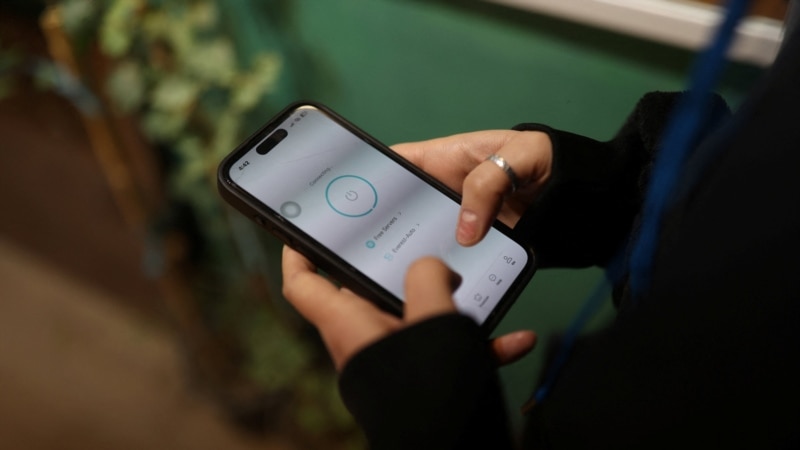
Iran Is Aiming To Use Chinese Technology To Permanently Throttle Internet Access

A senior Iranian official says Tehran has imported Chinese equipment to support a “permanent” internet shutdown, as the country’s unprecedented blackout enters its third month. Experts say Iran's censorship model is cheaper than the Chinese version and easier to replicate for other states.

  • ✇Latin America Reports
  • What to expect from Peru’s general election on Sunday Peru Reports
    Over 27 million Peruvians are set to vote in the first round of highly unpredictable presidential elections and elect a new Congress on 12 April. With a record number of 35 candidates still in the presidential race, the polls have shown strong, week-to-week volatility.  The surprise emergence of an outsider candidate making it to the second round of presidential elections — like what happened with Pedro Castillo in 2021 — remains a possibility, considering all candidates are polling nowhere ne
     

What to expect from Peru’s general election on Sunday

10 April 2026 at 19:49

Over 27 million Peruvians are set to vote in the first round of highly unpredictable presidential elections and elect a new Congress on 12 April.

With a record number of 35 candidates still in the presidential race, the polls have shown strong, week-to-week volatility. 

The surprise emergence of an outsider candidate making it to the second round of presidential elections — like what happened with Pedro Castillo in 2021 — remains a possibility, considering all candidates are polling nowhere near the 50% of votes they’d need to secure a first-round victory. 

Unstable, fragmented vote 

In the latest voting simulations, Keiko Fujimori, the daughter and political heir of former Peruvian dictator Alberto Fujimori (1990-2000), is ahead in the polls. 

The right-wing candidate gathered 18.1% of the valid votes in a survey from newspaper El Comercio, and 18.6% in an IPSOS poll published by Peru21. Both projections were calculated in early April.

The most significant development is center-right candidate Carlos Álvarez’s rise to second position in both polls, from roughly 8% last week to 10.8% in the El Comercio survey and 12.1% in Peru21’s.

Rafael López Aliaga, the far-right former mayor of Lima, could be the candidate who lost the most ground ahead of Sunday’s election. After ranking among the top frontrunners for months, even rising above Fujimori at times in the polls, he dramatically plunged to 10.3% of voter intention according to El Comercio and 10.9% according to Peru21.

The two media outlet polls, however, differ regarding candidates outside of the current podium.

According to Peru21, Roberto Sánchez, a leftist former minister from Castillo’s government, is fourth as he surges to 9% of voting intention. He distanced himself from Jorge Nieto (center), with 5.6%, and César Acuña (right), with 5.1%. Four more candidates received more than 3% of votes in the poll. 

El Comercio’s population sample does not entirely share Peru21’s sample’s enthusiasm for Sánchez. He is fifth with 7% of intended votes, behind Nieto (7.2%) and ahead of Ricardo Belmont (centre). The latter hiked up from 2.8% on March 27 to 6.5% in this latest poll. Again, four candidates stood above 3%.

Polling estimations are to be interpreted with extreme caution as the electorate’s indecision remains strong, and any of the outsiders could be misrepresented and/or profit from late momentum. 

Ten days before the 2021 first round, El Comercio’s vote simulation put Castillo in sixth position with 7.9% of vote intentions.

In first-round elections at the time, the now-jailed president obtained 18.9% of the vote, surpassing Fujimori by five and a half percentage points before defeating her in the second round. 

The left-wing president, who ran on a rural Indigenous platform, was imprisoned after attempting to dissolve Congress in late 2022. His Vice President, Dina Boluarte, took over the presidency, only to be ousted herself in October of last year. 

After 36 years, a return to a bicameral legislature

For the first time since 1990, Peruvians will be voting for a bicameral Congress. 

On Sunday, the country will vote for the lower house, known as the Chamber of Deputies, as well as seats in the Senate. 

The Senate was eliminated in Alberto Fujimori’s 1993 constitution, a year after he shuttered Congress.

The legislative elections are held in every district in a single, proportional round. 

In both chambers, parties must meet a 5% nationwide threshold or a minimum of seats (seven for the Chamber of Deputies, and five for the Senate) to enter the reformed Congress.

Peru’s deep political crisis

This Sunday’s elections will take place amid high political instability and an overall disdain for Peru’s political landscape by its electorate.  

The country has seen eight presidents in the past 10 years, many of which cycled out via resignations, impeachments, and scandals.

Many Peruvians have also lost trust in their Congress, which has effectively become more powerful than the executive branch, and is held responsible for much of Peru’s current political crisis. According to Le Monde, more than half of congressmen are under investigation for corruption. 

Out of all aforementioned candidates, only Fujimori, López Aliaga and César Acuña’s parties are members of the current Congress, highlighting the strong, yet fragmented, impetus for change in the Andean nation.

Featured image: Peru’s Congress

Image credit: Genu5960 via Wikimedia Commons

The post What to expect from Peru’s general election on Sunday appeared first on Perú Reports.

The post What to expect from Peru’s general election on Sunday appeared first on Latin America Reports.

  • ✇Latin America Reports
  • Mounting irregularities cloud Peru’s 2026 general election as runoff remains unclear Peru Reports
    Lima, Peru — Peru’s general election, held Sunday, April 12, has been thrown into uncertainty following a series of logistical failures, contested tally sheets, and newly reported irregularities that have raised doubts about the integrity of the process—even as authorities insist there is no evidence of fraud. With partial results still being processed several days later, no clear contender has emerged to face Keiko Fujimori in the runoff, despite her leading the vote with around 17%. The tight
     

Mounting irregularities cloud Peru’s 2026 general election as runoff remains unclear

18 April 2026 at 18:40

Lima, Peru — Peru’s general election, held Sunday, April 12, has been thrown into uncertainty following a series of logistical failures, contested tally sheets, and newly reported irregularities that have raised doubts about the integrity of the process—even as authorities insist there is no evidence of fraud.

With partial results still being processed several days later, no clear contender has emerged to face Keiko Fujimori in the runoff, despite her leading the vote with around 17%. The tight race for second place—separated by a razor-thin margin—between right-wing candidate Rafael López Aliaga and leftist Roberto Sánchez could ultimately be decided by thousands of challenged votes.

Delays, missing materials, and ballots found in the trash

Election day was marked by widespread delays in the delivery of voting materials, especially in Lima, forcing authorities to extend voting into Monday in several districts.

Officials are now facing scrutiny over more troubling incidents. In one of the most widely reported cases, sealed boxes containing 1,200 ballots—distributed across four tamper-evident containers—were found discarded in the trash in the Lima district of Surco.

The National Office of Electoral Processes (ONPE) attributed the incident to negligence during the transport of ballot boxes and tally sheets to its central headquarters. It maintained, however, that the chain of custody was not compromised, noting that a coordinator, a police officer, and an electoral observer from the National Jury of Elections were present in the vehicle.

However, Roberto Burneo, president of the National Jury of Elections (JNE), told a congressional oversight committee on Friday that the ONPE’s statement was “false.”

“It is important to clarify that, regarding those boxes, contrary to what ONPE indicated, there was no observer accompanying them nor a police officer. They were transported in unregistered private vehicles, and the JNE was not present,” he said.

Burneo added that evidence has already been submitted to prosecutors.

“Serious irregularities,” but no fraud, observers say

Despite the growing list of incidents, international observers from the Organization of American States and electoral experts have drawn a distinction between administrative failures and deliberate manipulation.

“There have been serious irregularities that must be investigated and sanctioned, but this is not a fraudulent situation,” former Justice Minister Aldo Vásquez told CNN. “At least up to now, there is no evidence supporting that claim.”

Observers from international organizations echoed that assessment, noting that while “egregious irregularities” were documented, they do not amount to systemic fraud.

Still, the scale and variety of problems—from late poll openings to missing materials—have eroded public confidence.

Thousands of disputed votes could decide the runoff

At the center of the uncertainty are more than 5,000 tally sheets marked as “disputed”—representing just over one million votes—due to inconsistencies such as missing signatures, illegible figures, or arithmetic errors.

These votes are now under review by electoral authorities and, in such a close race, could determine who advances to the runoff.

“Of course they can change the outcome,” said electoral lawyer Silvia Guevara. “The difference between candidates is so small that these votes could tip the balance.”

“This is a situation that won’t be resolved tomorrow or in two or three days. Citizens will need to be patient,” she added to Canal N.

Institutional crisis and ongoing investigations

The fallout has triggered multiple investigations. The Public Ministry and the Comptroller General have launched inquiries, while the National Board of Justice—the body responsible for overseeing judicial appointments—has opened a preliminary investigation against Piero Corvetto Salinas, head of the ONPE.

According to Vásquez, the process could lead to disciplinary sanctions or even suspension, noting that “it is highly likely that a formal proceeding will be opened.”

Meanwhile, electoral authorities have confirmed that at least 85 requests to annul the election have been filed, further complicating the timeline.

With the runoff scheduled for June, the coming days will be decisive not only in determining who advances, but also in whether Peru’s electoral institutions can restore public trust after one of the most controversial elections in recent years.

The post Mounting irregularities cloud Peru’s 2026 general election as runoff remains unclear appeared first on Perú Reports.

The post Mounting irregularities cloud Peru’s 2026 general election as runoff remains unclear appeared first on Latin America Reports.

  • ✇Latin America Reports
  • King Felipe VI leads Spain as latest EU country to acknowledge colonial abuses  Daniel Goldstraw
    King Felipe VI of Spain spoke publicly about the country’s colonial past upon his visit to Madrid’s Museum of Archeology in mid-March, in what has been seen as a landmark moment of recognition from the Spanish Crown.  The King attended an exhibition at the Museum titled “Half of the World: Women in the Indigenous Mexico”, alongside Mexican ambassador to Spain Quirino Ordaz Coppel.  During the visit, the royal head acknowledged “abuses” and “ethical controversies” that took place during the
     

King Felipe VI leads Spain as latest EU country to acknowledge colonial abuses 

24 March 2026 at 20:56

King Felipe VI of Spain spoke publicly about the country’s colonial past upon his visit to Madrid’s Museum of Archeology in mid-March, in what has been seen as a landmark moment of recognition from the Spanish Crown. 

The King attended an exhibition at the Museum titled “Half of the World: Women in the Indigenous Mexico”, alongside Mexican ambassador to Spain Quirino Ordaz Coppel. 

During the visit, the royal head acknowledged “abuses” and “ethical controversies” that took place during the 1500s as part of Spain’s conquest of the Aztec Empire – what is now Mexico – as well as its subsequent colonization of much of the rest of the Americas. 

This has since remained a strong point of contention across the political divide, both in Spain and the Americas. While some claimed that Spain’s conquest of the region was as a civilising mission, others point out how it entailed the deaths of as much as 80 or 90% of Indigenous populations in Central and Southern America; either directly through Spain’s wars of conquest, or through enslavement and diseases carried over by Europeans. 

If accurate, this represents the single largest-ever human mortality event in proportion to the global population at the time, second in absolute terms only to the death toll from World War II.

The Spanish Empire was one of the largest in the world at the time of its Americas conquests, and continued to rule over much of the region for the next three centuries – and was a great source of wealth and prestige for the monarchy.

Reopening old wounds

This history of colonialism has caused tension in recent years between Spain and Mexico particularly, with the Mexican government having repeatedly called for a formal apology from Spain. 

In 2019, then-President of Mexico Andrés Manuel López Obrador wrote to both the King of Spain and to the Pope, calling for an official and public recognition of historical abuses committed during the conquest. No such apology was forthcoming, however. Instead, the Spanish government stated that events which took place 500 years ago “cannot be judged by the light of contemporary ideas.”

In response, Mexico’s current President Claudia Sheinbaum Pardo elected not to invite King Felipe to her inauguration in 2024, citing the Spanish Monarchy’s lack of any formal apology. This was met with anger by the Spanish government, with Spanish Prime Minister Pedro Sánchez describing the act as “unacceptable.” 

Spain has since made attempts at redressing this, with some acknowledgements now being given of its imperial past. 

Late last year, Spanish Foreign Minister José Manuel Albares publicly recognised the “pain and injustice” experienced by Mexico’s Indigenous population, during a visit to the same exhibition in Madrid.

“The shared history between Spain and Mexico, like all human history, has its light and shadow,” Albares stated. “There was injustice, and it is only right to acknowledge and regret it. That is part of our shared history; we cannot deny it or forget it.”

This line was echoed by King Felipe in his visit earlier this month – a rare acknowledgement from the Crown. 

Whilst the King maintained that past monarchs had acted with “an intention to protect,” he accepted that this may not have been fulfilled “as intended,” and that there had also been “much, much abuse.”

“There are aspects of our past that, when examined through the lens of contemporary values, cannot make us feel proud,” the King admitted. 

“However, it is essential to evaluate these events within their historical context, utilising an objective and rigorous analysis rather than excessive moral presentism.”

Too little, too late?

How far these statements will go towards repairing relations between Spain and Mexico remains to be seen. 

The comments made both by King Felipe and Minister Albares have been welcomed by Mexico, with Sheinbaum acknowledging the “gesture of rapprochement” made by the monarch. She had previously expressed her congratulations to Albares on what she described as “this first step.”

“Forgiveness elevates nations,” Sheinbaum had stated previously. “It is not humiliating, on the contrary. Recognizing history, acknowledging grievances, asking for forgiveness – or expressing regret – and embracing it as part of history elevates governments.”

Nevertheless, Felipe’s statement still falls short of a formal apology for Spain’s actions during its imperial past. “It’s not everything we would have liked,” Sheinbaum stated in response to the King’s speech, “but it’s a step.” 

“One could say that it is not everything we would have wanted, but it is a gesture of reconciliation by the King in terms of what we were talking about: an acknowledgement of excesses, exterminations that happened during the Spaniards’ arrival,” the Mexican president added.

“It won’t be enough,” maintained historian Humberto Beck of the Colegio de México university, who claims it will be seen merely “as a substitute for an official apology.” 

“Making relations between the two countries contingent on this apology has been a mistake by the Mexican government that distracts from the deeper issues, which are reflection, a continuous process of memory and recognition on the part of both societies,” he told newspaper El Pais

A wider pattern

This avoidance of any apology from Spain largely mirrors how most nations have operated when faced with similar demands. 

Earlier this month in the UK, for example, dozens of British MPs likewise called for a formal apology from the government over its past involvement in occupied Palestine – from 1918 to 1948.  

The Britain Owes Palestine campaign group had previously submitted a 400-page petition demanding an apology over alleged war crimes committed by Britain at the time. Liberal Democrat MP Layla Moran, the first British MP of Palestinian descent, stated

“The consequences of those actions have profoundly shaped the conflict we witness today, yet successive governments have refused to acknowledge this record or offer a formal apology. If Britain is serious about promoting peace in Gaza today, it must begin by confronting its historical role, recognising the harm caused, and taking meaningful responsibility for it.” 

No apology from the UK government has as yet been forthcoming, with its Foreign Office stating it does not routinely comment on such petitions. 

Whilst countries such as Australia have, since 1998, held an annual ‘National Sorry Day,’ acknowledging abuses committed against Aboriginal people, these remain comparatively rare.

Such apologies are usually only made where countries feel compelled to do so – in cases where there would be a stronger political backlash if they did not, according to Boston University professor Thomas Berger.

“Apologies are not cheap. It is not simply having your leader say ‘I’m sorry’; it means a whole set of policies, including compensation, educational policies, commemoration policies, how to remember the past in museums, at cultural sites, and through holidays and events,” he argued

Generally, such apologies have tended to be made only in cases where this is a significant movement within the country itself calling for one – as in the case of the Aborigines in Australia – or where it has been crucial for nations to reestablish normal, working relationships with the other countries involved. 

This was the case for Germany after WWII, Berger noted, adding that it “was very much under pressure, economically, politically, geostrategically, to be sensitive to views of victims in democratic countries in particular – France, Holland, Italy, and Israel.” 

The same arguably was true for Italy when it issued an apology to Libya in 2008, whilst it was in the process of signing a key agreement with the Gaddafi regime over trade and migration. 

The UK similarly extended an apology to Ireland for the Great Famine in the run up to the Good Friday Agreement, even as it ignored similar requests for an apology from South Africa.

Contested legacies

More often than not, most governments will seek simply to issue statements of sorrow or regret rather than outright apologies in order to avoid further questions around issues such as reparations, as well as political backlash.

Mixed reactions to the Spanish King’s statement exemplify as much. While some on the left have welcomed the King’s comments – with Inclusion Minister Elma Saiz Delgado backing the King’s words – others on the right have expressed anger – particularly those who continue to defend Spain’s colonial legacy. 

Alberto Núñez Feijóo, leader of the conservative People’s Party (PP), stated that “bringing under scrutiny in the 21st century things that happened in the 15th century is crazy.” 

He went on to add that Spaniards should take pride in their history, emphasizing the positives of Empire – as well as the negatives. 

“The arrival of Spain in America led to an exceptional linguistic and cultural community. Any Spanish action during the conquest can be compared favourably to any other action by any other empire of that period.”

The far-right VOX party has gone even further in defending Spain’s actions, hailing the conquest as “the greatest work of evangelization and civilization in universal history.” 

Vox MEP Hermann Tertsch expressed his astonishment at the King for siding with those “who only seek to damage and discredit Spanish history.”

This was emphasized by British historian Felipe Fernández-Armesto, professor at the University of Notre Dame

“I’m happy to see that the King has emphatically and clearly not apologised,” Fernández-Armesto told EU Reports

“It’s meaningless to issue apologies for matters beyond one’s own responsibilities. When popes or politicians do it, you can be sure they’re concealing misdeeds of their own. The King has said that moral judgements about the past must be free of presentism: that is true, and one should not blame people in the past for being themselves or for conforming to the standards of their days.” 

“There has never been an abuse-free polity. Spaniards in general and Spain as a whole have every reason to be proud of the period when much of the Americas formed parts of the Spanish monarchy,” the scholar added.

“I don’t hear Madame Sheinbaum apologising for the massacre of Indigenous people in modern, independent Mexico. The whole enterprise of a global monarchy such as Spain’s was scarred with failure: that’s a matter for regret, but not for redress, apologues, but no apologies.”

Featured image: S.M. el Rey ha clausurado el X Congreso Iberoamericano de Periodismo
Source: Casa de América via Flickr
Creative Commons Licenses

This article was originally published by Daniel Goldstraw on EU Reports and was re-published with permission.

The post King Felipe VI leads Spain as latest EU country to acknowledge colonial abuses  appeared first on Latin America Reports.

  • ✇Latin America Reports
  • U.S. pressure mounts on Brazil to designate criminal groups as terrorists Brazil Reports
    Brazil is facing heightened pressure both internally and from the United States to designate criminal gangs operating in the country as foreign terrorist organizations (FTOs).  Foreign Minister Mauro Vieira spoke to U.S. Secretary of State Marco Rubio on March 8 and pushed back against the designation, arguing it could create precedents for military intervention similar to the recent American operations against Venezuela’s alleged drug trafficking networks. The dispute intersects with Brazil’s
     

U.S. pressure mounts on Brazil to designate criminal groups as terrorists

19 March 2026 at 02:35

Brazil is facing heightened pressure both internally and from the United States to designate criminal gangs operating in the country as foreign terrorist organizations (FTOs). 

Foreign Minister Mauro Vieira spoke to U.S. Secretary of State Marco Rubio on March 8 and pushed back against the designation, arguing it could create precedents for military intervention similar to the recent American operations against Venezuela’s alleged drug trafficking networks.

The dispute intersects with Brazil’s own election year, where the designation could hand ammunition to right-wing candidates calling for harder security measures.

As of late, the country has managed to withstand U.S. pressure via legislative action. Brazil’s Anti-Terrorism Law defines terrorism as acts intended to provoke “social or generalized terror” on the basis of race, color, ethnicity or religion. Notably, it explicitly excludes profit-driven drug trafficking. 

Deadly Rio de Janeiro raids: A precedent for U.S. pressure?

The October 28, 2025 raids in the northern Rio de Janeiro favelas resulted in 132 casualties, and were labeled as the deadliest in recent years. Meanwhile, they have also cast a long shadow over Brazil’s security capacity. 

What was intended to be an operation against the leaders of the Comando Vermelho (CV) drug trafficking group ended in the slaughter of over 120 people including four police officers.

Governor Cláudio Castro of the Liberal Party, who instructed the police on the raid, argued that this form of hard-handed policy is needed to uproot organized crime in the city: 

“This is how the Rio police are treated by criminals: with bombs dropped by drones. This is the scale of the challenge we face. This is not ordinary crime, but narco-terrorism,” said Castro

While many agree that more can be done in the country to prevent the expansion of these groups, some challenge any theoretical benefit that FTO designations could prompt. 

For one, Justice Minister Ricardo Lewandowski stood beside Rio’s governor a day following the strike: “Terrorism always involves an ideological element,” the minister said. 

Criminal gangs, on the other hand, “commit offenses already defined in the Penal Code,” he told Agencia Brasil.

The real crisis of organized crime

Roberto Uchôa de Oliveira Santos, public security specialist and former employee of the civil and federal police forces in Brazil, highlighted that Brazilian President Luiz Inácio Lula da Silva and U.S. President Donald Trump have had talks about collaborating over the issues of illicit firearm flows and money laundering, which Lula reiterated on X on March 18. 

Uchôa de Oliveira Santos told Brazil Reports that while it is important for “governments to work together across the region, [the designation is] not understood as an act of partnership” on the part of the Brazilian government. Rather, it is interpreted as a form of “geopolitical pressure” with dubious benefits.

He added that “it is not the objective of President Trump to fight criminal organizations” in Brazil. In fact, he believes this narrative conceals the U.S.’s hidden agenda. Conceding to his pressure, he added, would be a “huge mistake”; the extent of criminal governance, whereby criminal groups can control the police, judiciary, prosecutor’s office and political actors is “a virus”. 

Curbing the power of transnational crime groups such as the Primeiro Comando da Capital (PCC) and CV requires more than Trump’s designation and military-led strategy which tends to follow, the expert added. 

While outlining that “improved communications and intelligence” would upgrade security operations like Rio’s raids, Uchôa de Oliveira Santos wrote in The Conversation that there is no evidence that U.S. methods work.

Labelling organizations driven by illicit market profits as terrorists overlooks the fundamental networking nature of groups like the PCC and CV, according to Dr. Guadalupe Correa-Cabrera, professor at the Schar School of Policy and Government; in the end, these groups adapt to market opportunities. 

Uchôa de Oliveira Santos highlighted how, contrary to contemporary organizations which utilize spectacles of power to incite fear, the PCC uses forms of pragmatic violence – which often fall under the radar. 

“Instead of fighting the State, [the groups are allowed] to penetrate violence within the mechanism of the State,” Uchôa de Oliveira Santos added. The PCC, for example, bribed and co-opted policemen to murder of businessman Antonio Vinicius Gritzbach on their behalf in November 2024. 

Others decry the FTO designation could serve as a pretext for the U.S.’s CIA or FBI to enter Brazil, which would be an affront to their national sovereignty. 

Brazil remains resistant to following the example of Ecuador, where President Daniel Noboa recently invited the establishment of an FBI office on their sovereign territory. 

Read more: Colombia’s Petro accuses Ecuador of bombing near border

Mario Sarrubbo, former São Paulo prosecutor-general, explained to Valor International: “The move to declare them terrorists would only make the country vulnerable internationally to economic embargoes and even territorial violations, which would be unreasonable under any circumstances.”

FTO designations and Brazil’s upcoming elections

Geopolitical conditions have compounded on the Rio raids, creating a more partisan landscape of opinion on Brazil’s security – which is already a concern to emotive voters. 

Governor Castro called the raid a “success”, and has since aligned with the hard-handed policy of the Trump administration. Greater support from the Armed Forces, he said, is needed to protect Rio. 

Meanwhile, Tarcísio de Freitas, Republicanos Party member and Governor of São Paulo, stated that a potential FTO designation is an “opportunity” for Brazil on March 11.

“From the moment that a government like the U.S. sees the PCC as a terrorist organization – which is in fact what they are – it is easier to open the way for cooperation, integrate intelligence, access financial resources and structure an even more effective fight,” said Freitas

Uchôa de Oliveira Santos, however, challenged how effective security policy aligned with the FTO designation could be. The expert sees the designation as a form of geopolitical pressure under Trump’s so-called “Donroe Doctrine.”

With Brazilian general elections approaching on October 4, 2026, there is concern that the designation could become a domestic political weapon in a country which is already deeply polarized: right-wing candidates may embrace it as validation for harder security policies, while the Lula government faces the dilemma of appearing either soft on crime or subservient to Washington.

Amidst the clamour, dealing with the potential threats posed by the PCC and CV fades into the background of political debate. As Uchôa de Oliveira Santos suggests, the profit-driven, entrepreneurial, and resilient nature of these criminal groups would be overlooked if they were to be designated as FTOs.

Featured image: Civil police officers from the Robbery and Theft of Cargo Division during Operation Containment
Source: Wikimedia Commons
Author: CanalGov
Creative Commons Licenses

The post U.S. pressure mounts on Brazil to designate criminal groups as terrorists appeared first on Brazil Reports.

The post U.S. pressure mounts on Brazil to designate criminal groups as terrorists appeared first on Latin America Reports.

  • ✇Latin America Reports
  • Despite prominent female winners, Colombia elections highlight slow path to parity Angie Acosta
    Bogotá, Colombia – On March 8, Colombians elected members of the Senate and House of Representatives, as well as choosing their preferred candidates in three presidential primaries for the left, right, and center coalitions.  The elections, which coincided with International Women’s Day, saw a record number of female candidates partake as well as a woman, Paloma Valencia, winning the most votes in the primaries in a historic first. But with women’s representation in Congress stagnating, a
     

Despite prominent female winners, Colombia elections highlight slow path to parity

16 March 2026 at 20:42

Bogotá, Colombia – On March 8, Colombians elected members of the Senate and House of Representatives, as well as choosing their preferred candidates in three presidential primaries for the left, right, and center coalitions. 

The elections, which coincided with International Women’s Day, saw a record number of female candidates partake as well as a woman, Paloma Valencia, winning the most votes in the primaries in a historic first.

But with women’s representation in Congress stagnating, analysts say there is still much progress to be had in the way of gender equality in Colombian politics. 

Following the March 8 elections, two women emerged as the favorite presidential candidates in their primary coalitions: Paloma Valencia, representative for the Centro Democrático (Democratic Center) party, won a landslide victory in the right-wing coalition, while ex-Bogotá mayor Claudia López took the lead in the center.

“We women have to work twice as hard so that people can actually understand that we are doing our job. Female leadership is normally interpreted as being ‘too bossy,’ and then, we are restricted to certain areas,” said Valencia during an interview with Latin America Reports.

Despite Valencia receiving more than 3 million votes, soaring past the other 15 candidates in the primaries, female representation in Congress still stopped short of expectations.

“Female leadership is recognized for its power to mobilize, collaborate, and build bridges; it tends to be a much more transformational type of leadership, oriented toward motivation, building consensus,” Nathalie Méndez, associate professor in government at Bogotá’s Universidad de los Andes, told Latin America Reports.

But the success of a single individual isn’t enough. For the first time in history, female candidacies reached 40.9% of the total lists registered for Congress, according to a report by the Interior Ministry

However, despite being the election with the highest female participation, this surge was not reflected in the results. For the 2026-2030 period, there were 32 women elected to the Senate (31.4%) and 53 women elected to the House of Representatives (28.96%). This marks a total of 85 women out of 286 seats, representing only 29.7% of the total Congress.

Underscoring the lack of material advances in representation is the fact that  the exact same number of women were elected to Congress in the 2022 elections. 

“Women don’t receive the same resources as men, nor are they placed in positions with real chances to win the elections. Consequently, the rise of female candidates remains nothing more than a figure on paper,” explained Méndez.

Colombian society is also deeply conservative, creating a cultural environment where patriarchy persists and invalidates women in all spheres.

“What we see in Colombia is that a dual-type barrier persists, which I call institutional and cultural,” said Méndez. 

These barriers are especially pronounced in certain provinces, such as Caldas and Quindío, where not a single woman represents their communities in the House of Representatives.

“In local politics, financing is tied to political machineries and regional elites that are still deeply entrenched in male leadership. Breaking this panorama remains very difficult for women,” claimed Méndez. 

In addition, some party lists were closed, meaning people vote for a party logo rather than a specific person. With this, some voters are focused primarily on the party’s brand and could be unaware of the specific women’s names on the list, potentially making female candidates more invisible.

“Women are required, for example, to demonstrate much more experience, to hold more degrees, and even after proving they are just as good as men, cultural prejudices continue to surface,” Méndez declared. 

Yet the most-voted candidate for the entire Congress was Nadia Blel. The Conservative Party leader secured a massive victory, winning over 178,000 votes and becoming the highest individual vote-getter in the 2026 elections. Her success on March 8 proves that while progress for women overall appears to be blocked, individual female leaders are winning their own battles and shattering expectations at the polls.

“What this represents is that there are women who have managed to break the glass ceiling through their own trajectories or strong political legacies, but that is not enough to change the Colombian political culture,” added the researcher.

These elections showed that having names on a ballot is not enough; the real victory will come when every region in Colombia allows women to occupy political spaces on par with men.

Featured image description: International Women’s Day march in Colombia, 2024

Featured image credit: Wikimedia Commons

The post Despite prominent female winners, Colombia elections highlight slow path to parity appeared first on Latin America Reports.

  • ✇Latin America Reports
  • What María Corina Machado’s possible return to Venezuela means for the country Julio Blanca
    Caracas, Venezuela — María Corina Machado, Venezuela’s opposition leader, says she will return to the country after leaving last December to attend the 2025 Nobel Peace Prize ceremony in Oslo, Norway.  Machado, who vocally supported U.S. military attacks on Venezuela ahead of the January 3 operation that captured President Nicolás Maduro, has since been sidelined by the Trump administration who lent its support to Maduro’s Vice President Delcy Rodríguez. With Machado’s return to Venezu
     

What María Corina Machado’s possible return to Venezuela means for the country

13 March 2026 at 14:37

Caracas, Venezuela — María Corina Machado, Venezuela’s opposition leader, says she will return to the country after leaving last December to attend the 2025 Nobel Peace Prize ceremony in Oslo, Norway. 

Machado, who vocally supported U.S. military attacks on Venezuela ahead of the January 3 operation that captured President Nicolás Maduro, has since been sidelined by the Trump administration who lent its support to Maduro’s Vice President Delcy Rodríguez.

With Machado’s return to Venezuela increasingly more likely, her supporters are anxious as to what role — if any — she’ll play in the political transition of the country. 

Machado was in hiding inside Venezuela for nearly a year before being spirited away on go-fast boats on a December night with the aid of a non-profit staffed by former U.S. military members. 

Analysts who spoke to Latin America Reports said that if she returns and no attempts are made on her life, it could be a clear sign from the Rodríguez government that they are willing to open up political participation in the country. 

Alejandro Armas Díaz, a journalist and political researcher, believes that if Machado’s possible return goes smoothly, it will be a giant step forward for the country. 

“We are talking about the leader of the majority opposition. On the other hand, if she returns but suffers any reprisals, it would be an equally big setback,” he told Latin America Reports

Historian and political analyst Alejandra Martínez Cánchica, director for Latin America at the Freedom and Development Foundation, agrees. She believes that Machado’s return is a litmus test to show whether Venezuela is truly in a process of transition.

She told Latin America Reports that the politician’s safe return would be “the definitive proof that Venezuela is indeed on a path towards a democratic transition.”

Alejandro Armas Díaz via LinkedIn.

U.S. pressure, said Armas, could also force the Venezuelan government to create the right conditions for her return. 

“In Venezuela, we have seen changes that until recently were unthinkable. The source of these changes is pressure from the United States,” Armas said. “Will Washington push for Machado to be able to return without any problems? We don’t know. It may not. It may consider that it is better to leave it for later, when the country is more stable.” 

The U.S. has formulated a three-stage plan for Venezuela, with stabilisation and economic recovery coming before political transition. 

“Given that Machado has suggested that her return is imminent, we will know sooner rather than later whether she [Machado] will actually do so. I find it hard to believe that she will do so without certain guarantees,” Armas added. “If she does not, it could cause some disappointment among her supporters, for announcing something she could not do.”

Martínez sees this as an ideal moment for the opposition leader’s return. 

“Since at least mid or late January of this year, we have been seeing political leaders and activists in Venezuela take to the streets to engage in politics. Many were in hiding, many were imprisoned, and they are now protected under the Amnesty Law,” she said, referring to a law that frees political prisoners, but has also been criticized as exclusionary. 

Read more: Families of military members criticize Venezuela’s new amnesty law as exclusionary  

María Corina Machado’s leadership would be strengthened

Experts agree that one inevitable effect if Machado returned would be an even greater appreciation from her base.

Martínez said that María Corina “still has the majority preference among the population and also continues to have the highest voting intention … So, the fact that she can come to Venezuela to engage in politics on the ground will undoubtedly reconfigure the balance of power and the Venezuelan political map.”

The analyst cited a poll from Gold Glove Consulting, which estimates that the Venezuelan opposition leader has a mathematical advantage of 67% over interim President Rodríguez, should elections be held in the coming months.

Alejandra Martínez Cánchica via LinkedIn

She also said that Machado’s return could help her recapture her political base which helped her win 92% of votes during the 2023 primaries and — after he was sidelined by Maduro — helped propel her candidate, Edmundo González, to win disputed 2024 elections, according to voter tallies published by the opposition. 

“In January-February 2023, the political landscape in Venezuela, at least on the opposition side, was completely deserted. There was great demoralization, people were demobilized. And yet, from the beginning of 2023, María Corina fuelled a movement within Venezuelan society that by July 2024, a year and a half later, was an unstoppable force,” Martínez added. 

Returning from exile too, could help shore up her image among voters, said Armas. 

“Many people are left with the impression that [those in exile] have comfortable lives while the masses in Venezuela continue to suffer. This is not necessarily the case in reality, but that is the impression that, I repeat, remains. So it is in Machado’s best interest to return to the country as soon as possible. Whether she can do so is another matter,” he said.

Featured image: María Corina Machado and former presidential candidate Edmundo González in 2024.

Image credit: Edmundo González Via X.

The post What María Corina Machado’s possible return to Venezuela means for the country appeared first on Latin America Reports.

❌
Subscriptions