Reading view

Tensions rise as Colombia presidential run-off campaign gets underway

Bogotá, Colombia – A challenge to a public debate, accusations about football shirts used as political symbols, and increasingly sharp exchanges on social media — campaigning for Colombia’s run-off in its presidential election is already underway just a day after Abelardo de la Espriella emerged as the surprise first-round winner.

While Senator Iván Cepeda had been widely expected to come out on top and enter the second round in a stronger position, his camp was left disappointed after falling short of those expectations.

Although he still claimed nearly 41% of the tally, de la Espriella surpassed him by almost three points, coming out with 44%.

Analysts say the run off is wide open. An important factor is supporters of other candidates whose votes are up for grabs. But a decisive factor is also likely to be those who didn’t participate at all in the first round.

“Whoever manages to somehow win over the undecided voters who didn’t vote in the first round but will vote in the second, I think that’s already enough to be president,” political analyst Oscar Chala said.

With three weeks to go until the June 21 elections, the race is on to sweep up those votes, and the candidates haven’t wasted any time in trying to position themselves.

Shortly after the results, Cepeda’s camp alleged irregularities in the vote, although the candidate backtracked the next day, saying they were not significant.

He also criticised the wearing of Colombian football shirts as part of political campaigns, linking it to de la Espriella’s far right movement — and also challenged him to a public debate, something he had not previously participated in.

“Cepeda is now inviting and wanting to hold a debate when he had always avoided it. That is a sign of desperation,” Rubén Erazo, political consultant, told Latin America Reports.

Although de la Espriella accepted the debate — which will be held on Tuesday June 9 — he also called his rival a “coward” and accused his campaign of hiding behind Petro.

Despite the disappointing result for Cepeda, he gained roughly what polls had been predicting — even marginally higher. Yet analysts say he struggled to win over undecided and abstentionist voters and lacked a solid and coherent campaign.

“The failures of Cepeda’s campaign are that Cepeda is not himself the candidate. The candidate is the current president Petro,” political consultant Rubén Erazo said, referring to this election being more like a referendum on Petro’s legacy.

He said this incorporates “the good, the bad, and the ugly” of his presidency. While he expanded social programmes, other policies, such as opening ambitious negotiations with armed groups, were highly controversial. Those dissatisfied with what Petro stands for are likely to be against Cepeda.

Despite knockbacks, Erazo says this doesn’t mean it is game over for the senator and Petro ally.

“Cepeda could win as long as his team reorients his strategy, acknowledges mistakes, thinks calmly and does not focus solely on claiming fraud,” he said.

The race is still very much open — and analysts say anything could happen, and that a lot will depend on where they target their political energy.

“Cepeda is likely to move closer to the centre and Abelardo could become more radical. The strategy Abelardo will use to try to win is to radicalize his discourse because he knows that Iván Cepeda will start seeking centrist votes,” Chala said.

He believes Espriella will also target an abstentionist segment on the right, even further right than traditional right-wing establishment figures such as Paloma Valencia, who once polled above 20% but ultimately secured just under 7%.

This part of the electorate is conservative, often macho, and wants hardline security strategies and more investment in the country.

De la Espriella was the main candidate able to capitalize on this as well as anti-Petro sentiment, and is expected to continue drawing support from parts of Valencia’s former base.

“However, his discourse is very anti-establishment and he’s not seeking the support of political parties,” Chala explained.

Nevertheless, Paloma Valencia — and her mentor, former president Álvaro Uribe — have come out in support of de la Espriella. Her relevance is not yet completely diminished if she can convince those who supported her to shift to this camp.

Moreover, while Cepeda took a backseat in his own campaign and drew heavily on traditional strategies such as mass gatherings and marches, Espriella, as well as doing this, drew heavily on crafting his own image — calling himself “The Tiger”.

“Everything is exaggerated and trying to inspire: the planes, the Italian suits from when he was a lawyer, and even his image of advising controversial figures,” he said. “Even the beard, for example, is copied from Nayib Bukele. It’s the same style.”

De la Espriella is plainly anti-establishment and aligns himself with Nayib Bukele, Javier Milei and Donald Trump. That appeals to some of the electorate, and repels another part.

At this stage, both candidates are still very much in this race, with everything to play for.

Featured image description: Iván Cepeda (Left) and Abelardo de la Espriella (Right).

Featured image credit: Respective campaigns.

The post Tensions rise as Colombia presidential run-off campaign gets underway appeared first on Latin America Reports.

  •  
  •  

Bolivia dismisses Colombia ambassador after Petro comments

Bogotá, Colombia – Bolivia’s government ordered Colombia’s ambassador to leave the country just days after Colombian President Gustavo Petro expressed support for ongoing anti-government protests.

“The Bolivian government has decided to request that the Ambassador of the Republic of Colombia accredited to the country conclude her diplomatic duties in Bolivian territory,” read a statement on Wednesday morning by Bolivia’s Ministry of Foreign Relations.

The ministry expressed its disapproval of Colombia’s involvement in its domestic affairs amid mounting anti-government protests.

“Bolivia considers it essential that any external assessment or statement regarding the country’s internal situation be made with responsibility, diplomatic prudence, and full respect for… institutions,” continued the statement.

While the government did not explicitly mention Petro, the measure came just days after the Colombian president weighed in on the protest movement, describing it as a “popular insurrection” in an X post last Sunday.

In recent weeks, miners, teachers, farmers and Indigenous groups have been calling for President Rodrigo Paz to resign over economic hardships, including soaring inflation and the suspension of fuel subsidies.

Bolivia’s foreign ministry responded to Petro the same day, saying his words, “do not reflect the relation of friendship, respect and cooperation between the peoples of Bolivia and Colombia.”

Petro, whose term ends in August, did not backtrack following the Ambassador’s dismissal.

“If they expel the ambassador simply for proposing dialogue ​and mediation, it means we’re sliding toward extremism that could lead ​to a very difficult situation for the Bolivian people,” the president told Caracol radio today.

Despite the spat, Bolivia’s foreign ministry said diplomatic channels remained open and the expulsion did not count as a full-scale rupture in relations.

The government added that it had granted Ambassador Elizabeth García Carrillo “the appropriate period of time in accordance with current international standards” to leave the country.

Featured image description: President Gustavo Petro (L) and President Rodrigo Paz (R). I

Featured image credit: Wikimedia Commons

The post Bolivia dismisses Colombia ambassador after Petro comments appeared first on Latin America Reports.
  •  

Ecuador doubles tariff on Colombia to 100%

Bogotá, Colombia – Ecuador will impose a 100% tariff on all Colombian imports beginning on May 1, according to a statement by the Ministry of Production, Foreign Trade, and Investment today.

The move ramps up tensions between the two South American neighbors, which have imposed reciprocal levies of 50% in a trade war that began in January when Ecuador announced it would charge Colombia a “security fee”.

“This measure is based on national security criteria and seeks to reinforce shared responsibility in a task that must be undertaken jointly to address the presence of drug trafficking at the border,” read a statement by the trade ministry on Thursday announcing the tariff hike.

Bogotá and Quito have clashed over border security issues in recent months, with Ecuadorean President Daniel Noboa accusing his counterpart of failing to deter criminal groups operating in the region.

Colombian President Gustavo Petro has defended his administration’s security record and imposed reciprocal levies against Ecuador.

The two countries were due to hold talks next week to resolve the trade war but these were cancelled yesterday amid a dispute over former Ecuadorean Vice President Jorge Glas. Quito recalled its Ambassador from Bogotá after Petro suggested Glas was a political prisoner and had not been treated humanely in jail.

The tariffs threaten economic shocks on both sides of the border; Ecuador imports medicine, sugar, vehicles and coffee from Colombia and exports wood panels, canned fish, frozen seafood, palm oil, and rice.

Featured image description: Colombia-Ecuador border photographed in 2020.

Featured image credit: Burkhard Mücke via Wikimedia Commons

The post Ecuador doubles tariff on Colombia to 100% appeared first on Latin America Reports.
  •  

The keys to Abelardo de la Espriella’s first-round victory in Colombia: anti-Petro and anti-politics sentiment

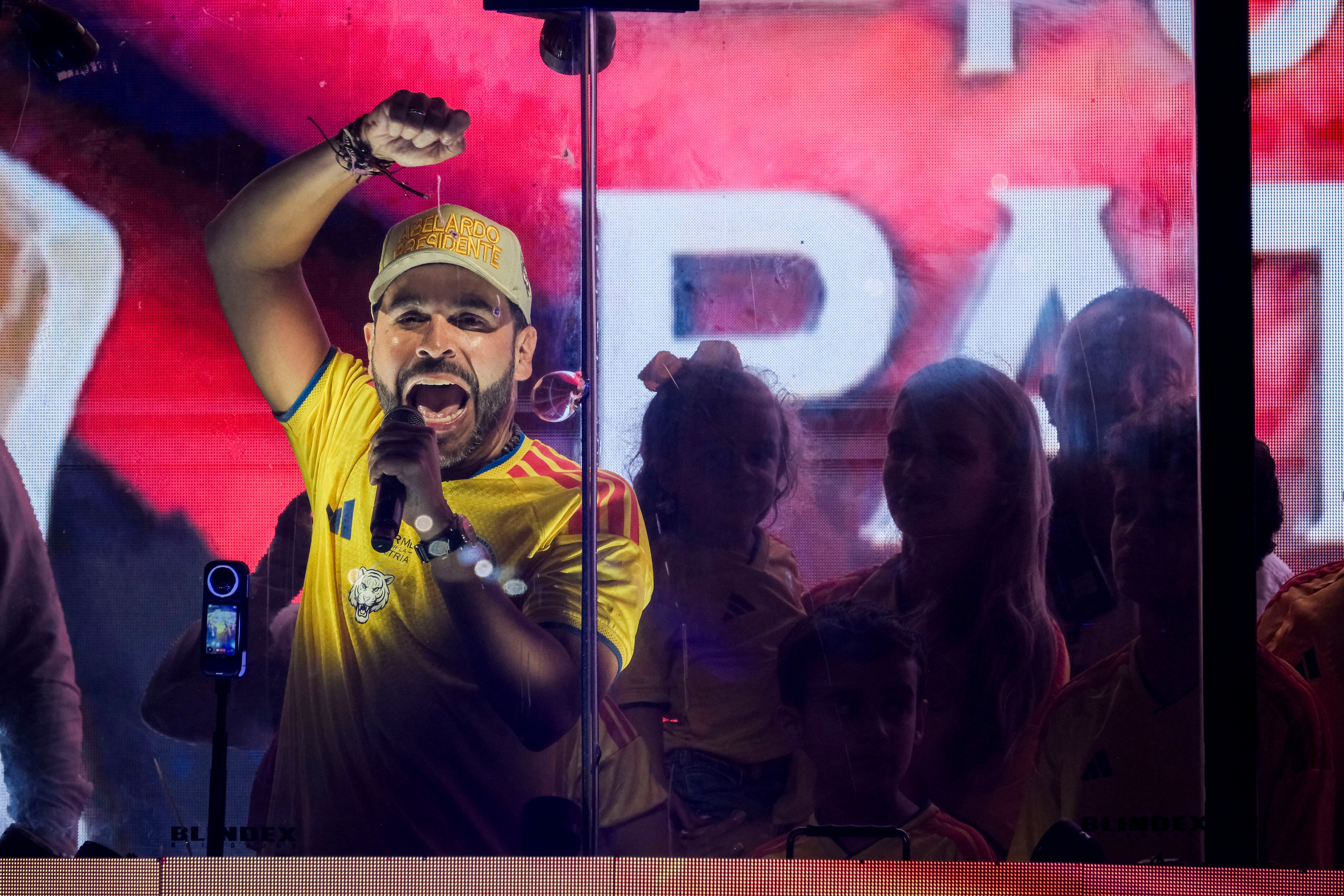
Abelardo de la Espriella delivers a speech in Barranquilla on May 31.

Abelardo de la Espriella surprised many with his first-round victory in Colombia with 44% of the vote. The leader in the polls had consistently been left-wing senator Iván Cepeda, with the far-right candidate appearing in second place. However, those polls showed Cepeda hovering around 40% of voter intention — and he received just that. They also reflected a significant rise for the far-right candidate in recent weeks, as well as a loss of appeal for traditional right-wing candidate Paloma Valencia. In those surveys the two of them together polled roughly between 35% and 40% of voting intention. In the end, De la Espriella reached 44% and Valencia managed only 6%.

Seguir leyendo

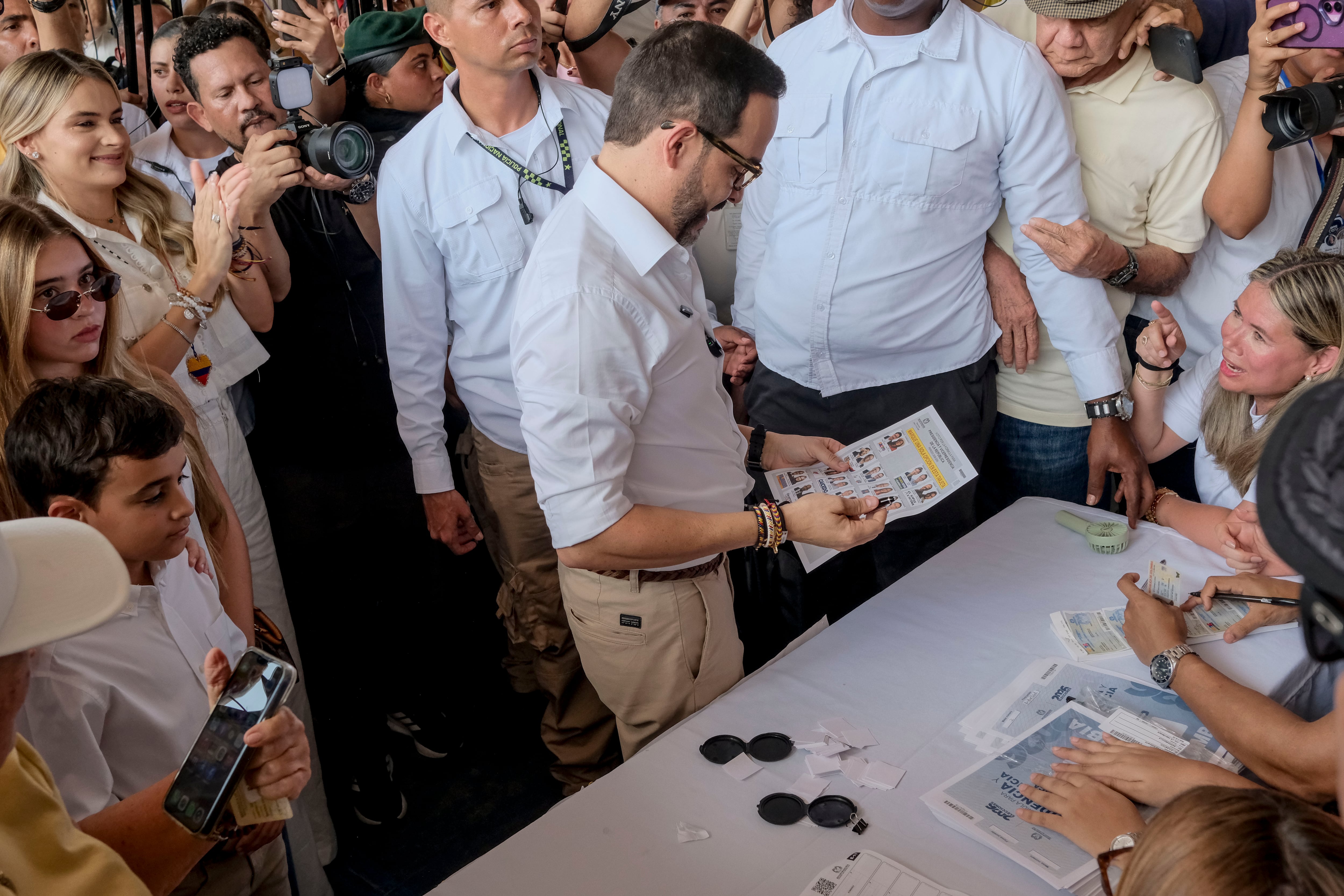
Abelardo de la Espriella votes at La Enseñanza school in Barranquilla on May 31.
  •  

Nearly 100 human rights defenders killed every year in Colombia: UN report

Medellín, Colombia – During each of the last nine years around 100 human rights defenders have been assassinated in Colombia, according to a United Nations (UN) report published this Thursday.

The 972 deaths recorded between 2016 and 2025 make Colombia “one of the most dangerous countries in the world” for such activists, according to the UN’s High Commissioner for Human Rights, Volker Türk. 

Following the historic peace accords between the government and the Revolutionary Armed Forces of Colombia (FARC) in 2016, the report noted a gradual increase in assassinations. 

This was linked to the state’s inability to maintain a strong presence in areas previously controlled by the guerrilla group. 

Over 70% of identified perpetrators were armed non-state actors, with the majority of cases analyzed by the report involved in drug trafficking, illegal mining, illegal logging, and human trafficking. 

The number of attacks and threats against human rights defenders investigated by the UN between 2022 and 2025 was 2,018, however this is thought to represent “only a fraction” of the true number due to underreporting and the lack of efficient government records of such cases. 

The report recognized the work of the current Historic Pact (Pacto Histórico) government of Gustavo Petro, which has publicly recognized the gravity of the situation and worked to develop a national strategy to counter it. 

This included the 2022 law that established peace as a matter of state policy, recognizing the state’s responsibility to “guarantee human security” through a “territorial and intersectional approach”. 

However, the UN says the state’s response has failed human rights defenders due to its fragmented nature that lacks coordination between national, departmental, and municipal authorities. 

“In addition to ensuring accountability for the murders that have taken place, addressing the structural causes of this human tragedy through a comprehensive approach must be a priority for all relevant authorities in Colombia, in order to protect human rights defenders and enable them to carry out their vital work safely,” Türk said. 

High levels of impunity have also persisted, with only 55 out of the 800 cases investigated between 2022 and 2025 ending in sentencing. In over half of these cases, no suspects have been identified. 

Nearly a quarter of victims identified by the UN were Indigenous (23%) highlighting a disproportionate effect on this population that represents less than 5% of Colombians. 

Other disproportionately affected groups include Afro-Colombians, LGBTQ+ individuals, rural community leaders and environmental protectors, as well as political leaders. 

The report concluded by urging the Colombian state to take action to combat this issue, recommending institutional reforms and criminal investigations into perpetrators.

Feature image credit: Leon Hernandez via Flickr.

The post Nearly 100 human rights defenders killed every year in Colombia: UN report appeared first on Latin America Reports.
  •  

Colombia registers most violent quarter in decade with 35 massacres

Medellín, Colombia – There were 35 massacres in Colombia in the first three months of 2026, making it the most violent quarter in a decade, according to the Institute of Peace and Development Studies (Indepaz).

The Colombian NGO’s figures revealed that 133 people had died in the massacres, which occurred across 34 municipalities in 17 departments.

The grim figures come as Colombia faces a surge in violence related to its long-running armed conflict, almost ten years after a historic peace deal with the Revolutionary Armed Forces of Colombia (FARC) rebel group.

The massacres claimed the lives of 74 men, 16 women, and 17 children. 40 of the victims have not been identified. 

The first massacre of the year, in which three women were killed, was committed in Santander de Quilichao, Cauca, on January 3. The single most violent attack took place in El Retorno, Guaviare, where 26 people were killed on January 16. 

This makes this year’s first quarter the most violent in the last ten years, during which Indepaz has recorded the deaths of nearly 3,000 people in over 700 different massacres. 

On the back of the peace accords signed in November 2016 between Colombian President Juan Manuel Santos and the FARC, 2017 was the least violent year, registering 33 massacres in total. 

However, following the election of Iván Duque in 2018, yearly records of massacres increased from 39 in the first year of his presidency to 96 in 2021.

Under the current Gustavo Petro administration, figures have remained at similar levels, oscillating between the highest point of 94 cases in 2023 and 76 cases in 2024. Petro’s policy of Paz Total (Total Peace) that has sought to counter violence by negotiating with armed groups has had mixed results. 

The period of 2021 to 2025 observed an average of 303 deaths annually, an increase on the average of 201 deaths each year in the preceding five year period.  Even the most violent periods of the last decade did not register as many quarterly cases as 2026 has witnessed so far. The first quarter of 2020 recorded 17 massacres, under half of this year’s equivalent figure. 

In the last decade, 1,657 men, 285 women, and at least 133 children have been killed. Valle del Cauca was the worst affected department with 62 massacres resulting in 215 deaths, followed by Cauca which saw 58 massacres and 200 deaths. 

The surge in violence has come at a crucial moment in Colombian politics with presidential elections set to take place on May 31. While Petro’s possible Historic Pact successor, Iván Cepeda, looks to continue the Paz total policy, other candidates have promised tougher military measures against armed groups.

Featured image credit: Policía Nacional de los colombianos via Flickr


The post Colombia registers most violent quarter in decade with 35 massacres appeared first on Latin America Reports.
  •  

Colombia’s Petro becomes first head of state to visit Venezuela since Maduro’s ouster

Bogotá, Colombia – Colombian President Gustavo Petro arrived in Caracas today to meet with his counterpart in Venezuela, Interim President Delcy Rodríguez.

The visit makes Petro the first world leader to visit the South American nation since the United States captured longtime strongman Nicolás Maduro in a military operation on January 3.

Petro and Rodríguez are expected to discuss bilateral issues including energy and security cooperation on their more than 1,300 mile shared border. 

The Colombian president landed in Caracas on Friday afternoon with his Foreign Minister, Rosa Yolanda Villavicencio, and Defense Minister, Pedro Sánchez.

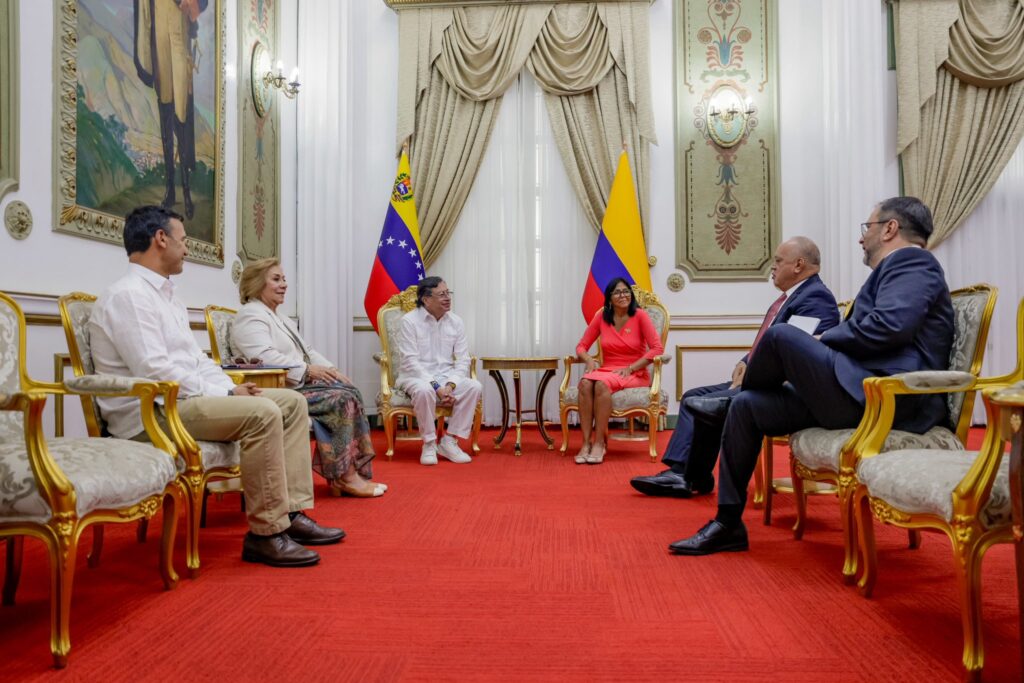
The delegation from Bogotá has been meeting with Rodríguez and her Interior Minister, Diosdado Cabello, alongside Foreign Minister Yván Gil at the Palacio de Miraflores – Venezuela’s presidential palace. 

Petro and Rodríguez were flanked by top officials at their meeting. Image courtesy of @InfoPresidencia via X

Petro and Rodríguez were scheduled to meet in Cúcuta, a Colombian city bordering Venezuela, in March but the Venezuelan president cancelled at the last minute citing security concerns.

Then last Friday, the Colombian leader announced he would head to Venezuela, saying, “If Mohammed won’t come to me, I’ll go to the mountain.”

The primary purpose of the meeting is strengthening security cooperation, according to the Petro administration.

“The aim of this meeting is for both governments to make progress on a joint plan to strengthen security and intelligence in the border area,” wrote the Office of the President in a post on X today.

The sprawling frontier is a hotbed for guerrilla activity and is largely controlled by the Colombian National Liberation Army (ELN), a rebel group involved in drug trafficking and illegal mining on both sides of the border.

The ELN was known to have ties to the Maduro regime but the Venezuelan government is under pressure from the U.S. to crack down on the rebel group, which Washington considers a “terrorist organization.”

While the Petro administration maintains the importance of strengthening bilateral cooperation, the meeting has perturbed many in the Venezuelan exile community in Colombia. 

“President Gustavo Petro’s visit to Venezuela, particularly his meeting with Delcy Rodríguez, raises serious concerns among Venezuelans,” Juan Carlos Viloria Doria, President of the Global Alliance for Human Rights and Vice-President of Venezuelans in Barranquilla, told Latin America Reports.

He noted that many Venezuelans do not consider Rodríguez to be a legitimate leader, describing her as “an extension of the regime led by Nicolás Maduro.”

“In this regard, such visits can be interpreted as a political endorsement or a form of international legitimization of a situation in Venezuela that still lacks adequate democratic guarantees,” maintained Viloria.

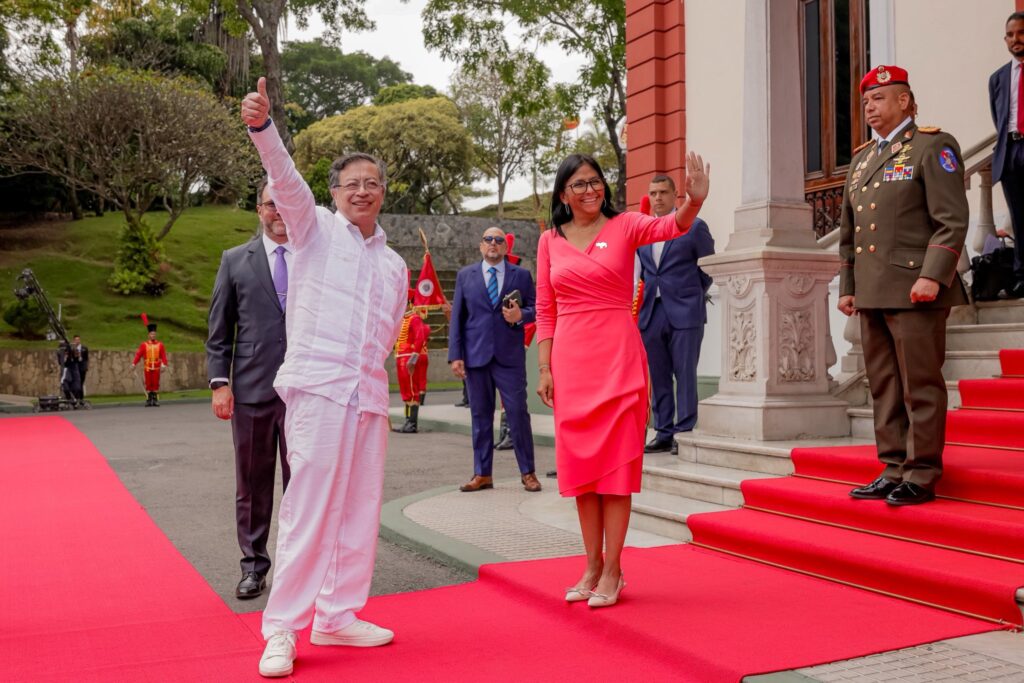
Petro and Rodríguez greet reporters. Image courtesy of @InfoPresidencia via X

There has also been pressure in Colombia for Petro to mediate the release of 16 Colombian citizens jailed in Venezuela.

The families of those detained allege the arrests were made “without a court order or evidence” and say their loved ones have faced human rights violations including torture. 

While there has been an easing in repression following Maduro’s ouster, Venezuela remains an authoritarian state and rights groups continue to denounce abuses.

“The least that we Venezuelans expect is that [the meeting] be used as an opportunity to demand concrete progress on human rights and democracy,” said Viloria.

“Any dialogue or rapprochement must be aimed at improving the living conditions of the Venezuelan people and fostering a genuinely democratic transition, not at consolidating contested power structures.”

Featured image description: Colombian President Gustavo Petro and Venezuelan Interim President Delcy Rodríguez at a meeting in Caracas on April 24, 2026.

Featured image credit: @InfoPresidencia via X

The post Colombia’s Petro becomes first head of state to visit Venezuela since Maduro’s ouster appeared first on Latin America Reports.
  •  

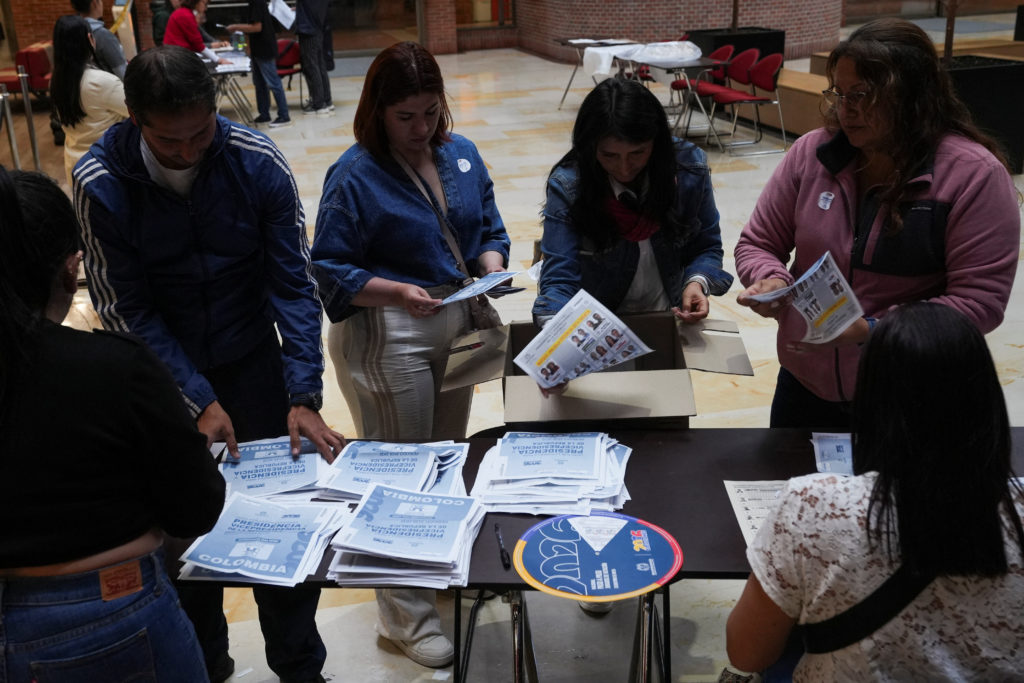
Polls close in Colombia vote with Espriella and Cepeda advancing to runoff

Lawyer Abelardo de la Espriella and peace-builder Iván Cepeda were leading the vote counts in the first round of Colombia's presidential elections on Sunday, and are to face off in a presidential runoff in the South American nation later in June.

  •  

Despite prominent female winners, Colombia elections highlight slow path to parity

Bogotá, Colombia – On March 8, Colombians elected members of the Senate and House of Representatives, as well as choosing their preferred candidates in three presidential primaries for the left, right, and center coalitions. 

The elections, which coincided with International Women’s Day, saw a record number of female candidates partake as well as a woman, Paloma Valencia, winning the most votes in the primaries in a historic first.

But with women’s representation in Congress stagnating, analysts say there is still much progress to be had in the way of gender equality in Colombian politics. 

Following the March 8 elections, two women emerged as the favorite presidential candidates in their primary coalitions: Paloma Valencia, representative for the Centro Democrático (Democratic Center) party, won a landslide victory in the right-wing coalition, while ex-Bogotá mayor Claudia López took the lead in the center.

“We women have to work twice as hard so that people can actually understand that we are doing our job. Female leadership is normally interpreted as being ‘too bossy,’ and then, we are restricted to certain areas,” said Valencia during an interview with Latin America Reports.

Despite Valencia receiving more than 3 million votes, soaring past the other 15 candidates in the primaries, female representation in Congress still stopped short of expectations.

“Female leadership is recognized for its power to mobilize, collaborate, and build bridges; it tends to be a much more transformational type of leadership, oriented toward motivation, building consensus,” Nathalie Méndez, associate professor in government at Bogotá’s Universidad de los Andes, told Latin America Reports.

But the success of a single individual isn’t enough. For the first time in history, female candidacies reached 40.9% of the total lists registered for Congress, according to a report by the Interior Ministry

However, despite being the election with the highest female participation, this surge was not reflected in the results. For the 2026-2030 period, there were 32 women elected to the Senate (31.4%) and 53 women elected to the House of Representatives (28.96%). This marks a total of 85 women out of 286 seats, representing only 29.7% of the total Congress.

Underscoring the lack of material advances in representation is the fact that  the exact same number of women were elected to Congress in the 2022 elections. 

“Women don’t receive the same resources as men, nor are they placed in positions with real chances to win the elections. Consequently, the rise of female candidates remains nothing more than a figure on paper,” explained Méndez.

Colombian society is also deeply conservative, creating a cultural environment where patriarchy persists and invalidates women in all spheres.

“What we see in Colombia is that a dual-type barrier persists, which I call institutional and cultural,” said Méndez. 

These barriers are especially pronounced in certain provinces, such as Caldas and Quindío, where not a single woman represents their communities in the House of Representatives.

“In local politics, financing is tied to political machineries and regional elites that are still deeply entrenched in male leadership. Breaking this panorama remains very difficult for women,” claimed Méndez. 

In addition, some party lists were closed, meaning people vote for a party logo rather than a specific person. With this, some voters are focused primarily on the party’s brand and could be unaware of the specific women’s names on the list, potentially making female candidates more invisible.

“Women are required, for example, to demonstrate much more experience, to hold more degrees, and even after proving they are just as good as men, cultural prejudices continue to surface,” Méndez declared. 

Yet the most-voted candidate for the entire Congress was Nadia Blel. The Conservative Party leader secured a massive victory, winning over 178,000 votes and becoming the highest individual vote-getter in the 2026 elections. Her success on March 8 proves that while progress for women overall appears to be blocked, individual female leaders are winning their own battles and shattering expectations at the polls.

“What this represents is that there are women who have managed to break the glass ceiling through their own trajectories or strong political legacies, but that is not enough to change the Colombian political culture,” added the researcher.

These elections showed that having names on a ballot is not enough; the real victory will come when every region in Colombia allows women to occupy political spaces on par with men.

Featured image description: International Women’s Day march in Colombia, 2024

Featured image credit: Wikimedia Commons

The post Despite prominent female winners, Colombia elections highlight slow path to parity appeared first on Latin America Reports.

  •  

Political violence remains an ‘Electoral Tool’ in Colombia: Ex-Petro official

Buenos Aires, Argentina – José Roberto Acosta, a former senior official in President Gustavo Petro’s government and current ambassador to Argentina, assessed Colombia’s next presidential election, in which the first progressive government in the country’s history will be tested this Sunday, May 31.

“Colombia is a protagonist, for better or worse,” said Acosta, describing the country as “the navel of the Americas” because of its strategic geopolitical position.

Acosta served as director of Public Credit under Petro, one of the most sensitive positions inside Colombia’s economic team, before being appointed ambassador in August 2025 as part of a broader cabinet reshuffle. His arrival in Buenos Aires came after a diplomatic crisis triggered by public clashes between Petro and Argentine libertarian president Javier Milei.

In an exclusive interview with Argentina Reports at the Colombian Embassy, Acosta described Colombian politics as a “sancocho,” a traditional Colombian stew, where multiple forms of violence continue to overlap within what he defined as a strong institutional framework.

“In Colombia, assassinations are undoubtedly a political tool,” he added in general terms, so as to abide by internal restrictions discouraging government officials from commenting directly on the race. He referred to the atmosphere surrounding the campaign that revives memories of the intense political violence of the 1990s, notably the attack against senator and presidential hopeful Miguel Uribe Turbay.

Acosta described Colombia as a country where “multiple forms of violence coexist simultaneously,” with conflicts tied to “drug trafficking, armed groups, illegal mining and political extremism” overlapping within the electoral environment. At the same time, he argued that Colombia remains “institutionally very strong,” pointing to the country’s 1991 Constitution and the fact that President Petro, who built his political career after being part of the guerrilla movement, reached power through democratic elections.

Asked about the possibility of continuity for Petro’s political movement, Acosta mentioned Senator Iván Cepeda, the chosen candidate to succeed Petro in leading the ruling Historic Pact party.

“The possibility of continuity is enormous,” he said.

With less than a week until Colombia’s presidential election, the latest Invamer poll shows Cepeda leading the first-round field with 44.6% of voting intention. His closest rival, an outsider and right-wing opposition candidate Abelardo de la Espriella, follows at 31.6%, while conservative Senator Paloma Valencia, candidate of the traditional right-wing Uribista movement, sits third at 14.0%.

Regarding the current administration, Acosta also defended Petro’s controversial “Total Peace” strategy despite criticism surrounding the security situation in several regions of the country.

“We are always optimistic about peace,” he said. “The priority continues to be saving lives.”

On drug trafficking, one of the central pillars of Washington’s renewed regional security agenda under Donald Trump, Acosta described the ‘war on drugs’ as “a lost war” requiring international coordination rather than unilateral responses.

“As Colombians, we saw bombs, trucks and buses loaded with explosives erase entire buildings and kill many people,” he said.

Asked about the figure of “narcoterrorism,” which has a regional dimension, he responded: “Anyone may frame it as they find convenient, but in the end the result is the same: we don’t want to see that violence again in our country.”

Ambassador José Roberto Acosta at the Colombian Embassy in Argentina. Credit: Cecilia Degl’Innocenti

The Wall Street trader who joined Petro’s government

Acosta’s profile remains unusual within Latin American diplomacy, where outsiders and traders have increasingly joined conservative governments, such as in Javier Milei’s cabinet with Economy Minister Luis Caputo or Pablo Quirno in Foreign Affairs.

Instead, Acosta served under Petro, a figure close to regional progressive leaders such as Luiz Inácio Lula da Silva, Claudia Sheinbaum and Pedro Sánchez.

A lawyer, economist and former stockbroker during Wall Street’s pre-digital era, Acosta also worked as a journalist at El Espectador, participating in investigations linked to the Odebrecht corruption scandal and the oil company Pacific Rubiales.

Throughout the interview, Acosta moved naturally between political theory and market logic, frequently referencing thinkers such as Karl Marx, Michel Foucault and Jurgen Habermas to explain global power dynamics.

“I do not know another left-wing trader or banker in Colombia,” he said jokingly.

Acosta defines himself not as a Marxist but as a “Marx scholar,” arguing that reading the German philosopher helped him understand the difference between “price” and “value,” an idea he later applied in financial markets and public policy.

“While we continue to live under a capitalist structure, whoever controls capital controls many other things: media, networks, narratives,” he said.

Between Petro and Milei

President Petro’s confrontational style on social media has repeatedly generated diplomatic tensions across the region, including disputes with governments in the United States, Ecuador and Bolivia. This “X/Twitter diplomacy,” as some analysts describe it, has become a recurring feature of the foreign policy style of several presidents, including Javier Milei.

In 2025, the Argentinian president publicly referred to Petro as a “terrorist communist” in his social media, leading to the expulsion of Argentine diplomats from Bogotá before bilateral relations were gradually normalized through diplomatic channels.

Despite the ideological distance between both presidents, Acosta described the operational relationship as pragmatic.

“In practice, the relationship works beyond the political rhetoric,” he said.

The ambassador highlighted agreements involving aviation, trade and migration, including expanded air connectivity between both countries and progress in commercial procedures affecting Argentine exports.

“One does not discuss tweets or political tensions in meetings with business sectors,” he said. “The conversation immediately moves toward infrastructure, trade, coffee or export channels.”

Acosta also reaffirmed Colombia’s historical support for Argentina’s sovereignty claim over the Malvinas Islands and suggested that Colombia could eventually pursue a more active role inside Mercosur.

“I can imagine a meeting between Milei and Petro,” he said. “But I do not think it would be easy.”

Featured image description: Ambassador José Roberto Acosta at the Colombian Embassy in Argentina.

Featured image credit: Cecilia Degl’Innocenti.

The post Political violence remains an ‘Electoral Tool’ in Colombia: Ex-Petro official appeared first on Argentina Reports.

The post Political violence remains an ‘Electoral Tool’ in Colombia: Ex-Petro official appeared first on Latin America Reports.

  •  

US flight attendant death highlights LGBTQ+ violence in Colombia

Bogotá, Colombia – After days of searching for missing American Airlines flight attendant Eric Gutiérrez, Colombian authorities discovered his body in a river in Antioquia province on Friday, several hours away from where he was last seen near Medellín.

While the coroner’s office has not issued an official cause of death, it quickly concluded Gutiérrez, a U.S.-citizen, had not died of natural means; officials are reportedly working on the hypothesis that Gutierrez’s death was a robbery gone wrong, likely involving the incapacitating drug scopolamine.

Advocacy groups say the murder of Gutiérrez – a gay man – is part of a pattern of violence against members of the LGBTQ+ community in Colombia, while officials offer reassurances to travellers, saying these crimes are rare and could happen to anyone.

What happened to Eric Gutiérrez?

Gutiérrez, 32, arrived in Colombia on March 22 after working on a flight from Miami to Medellín. He reportedly went to the Perro Negro nightclub in the El Poblado neighborhood of the city with his colleagues, where they met two men. 

Gutiérrez and his colleague then went with the men to Itagüí, a city on the outskirts of Medellín.

The flight attendant’s co-worker returned to their hotel the next day alone, feeling disoriented. He was admitted to hospital with suspected scopolamine poisoning. 

Law enforcement began searching for Gutiérrez, but did not find his body until Friday, located in the Piedras River near the town of Jericó, a roughly three-hour drive from Medellín. 

Authorities have also begun to share details of criminal investigations, saying they have found evidence linking the case to criminal rings known to use scopolamine to rob people.

Scopolamine is commonly used by thieves in Colombia to incapacitate victims in order to access their bank accounts and steal their possessions. 

‘Pattern of violence’

Gutiérrez’s death reveals a broader trend of violence against gay men, according to Caribe Afirmativo, a Colombia-based LGBTQ+ rights observatory.

“This latest death should not be viewed as an isolated incident,” read a statement by the organization released a day after the flight attendant’s body was found.

“On the contrary, it is yet another sign—serious, painful, and deeply alarming—of a pattern of violence that continues to take hold in Antioquia and that now demands a forceful response from the Colombian government,” it continued.

Caribe Afirmativo said that Gutiérrez’s murder marked the 23rd killing of an LGBTQ+ person in Colombia this year, noting “a large proportion of the cases” had occurred in Antioquia.

“What has happened cannot be dismissed as a mere coincidence or an individual risk. We are facing a systematic form of urban violence that combines organized crime, substance abuse, and contexts of vulnerability,” continued the statement. 

In April last year, Italian biologist Alessandro Coatti was found dead in Santa Marta. Authorities later discovered he had been lured into a robbery by a man on the gay dating app Grindr and was likely drugged with scopolamine.

The observatory called for “urgent” action by authorities, including information campaigns warning the public of the risks of scopolamine and robberies in the nighttime economy. 

Authorities reassure LGBTQ+ travellers 

Despite suggestions of a pattern of violence against LGBTQ+ people in Colombia, authorities in Medellin insist that LGBTQ+ travellers do not face a heightened risk.

“We have no evidence of a systematic trend of crime targeting exclusively LGBTQ+ travelers,” Manuel Villa Mejía, Medellín’s Secretary of Security, told Latin America Reports.

He maintained that the risks to travellers are the same, regardless of sexual orientation, and highlighted broader patterns in how tourists are targeted, including “the use of social media, dating apps, or fake offers of companionship to commit theft or extortion.”

Villa Mejía called on all tourists, regardless of who they are, to exercise caution and stay aware of their surroundings. 

He also offered reassurances to travellers: “In Medellin we protect all people equally and our priority is to guarantee the security of all visitors, without distinction.”  

Featured image description: Missing poster for Eric Gutierrez

Image credit: Alcaldía de Medellín

The post US flight attendant death highlights LGBTQ+ violence in Colombia appeared first on Latin America Reports.

  •  
❌