Normal view

  • ✇Popular Science
  • World’s largest blanket fort built at Las Vegas community center Andrew Paul
    The classic blanket fort is a simple structure. Entry level hideouts often only require a bedsheet and a couple of chairs, and it doesn’t take much effort to expand the floorspace to accommodate guests. Constructing an intimidatingly expansive blanket enclave is a much bigger feat of engineering, however. At least, that’s what it looks like from photos showcasing the newest Guinness World Record holder for the largest blanket fort. The current champions? Local residents and high schoolers in Las
     

World’s largest blanket fort built at Las Vegas community center

4 June 2026 at 18:34

The classic blanket fort is a simple structure. Entry level hideouts often only require a bedsheet and a couple of chairs, and it doesn’t take much effort to expand the floorspace to accommodate guests. Constructing an intimidatingly expansive blanket enclave is a much bigger feat of engineering, however. At least, that’s what it looks like from photos showcasing the newest Guinness World Record holder for the largest blanket fort. The current champions? Local residents and high schoolers in Las Vegas, Nevada.

Inside of world's largest blanket fort
The fort needed to be tall enough to allow inhabitants to sit comfortably inside it. Credit: Robert Edward / Clark County, Nevada Robert Edward

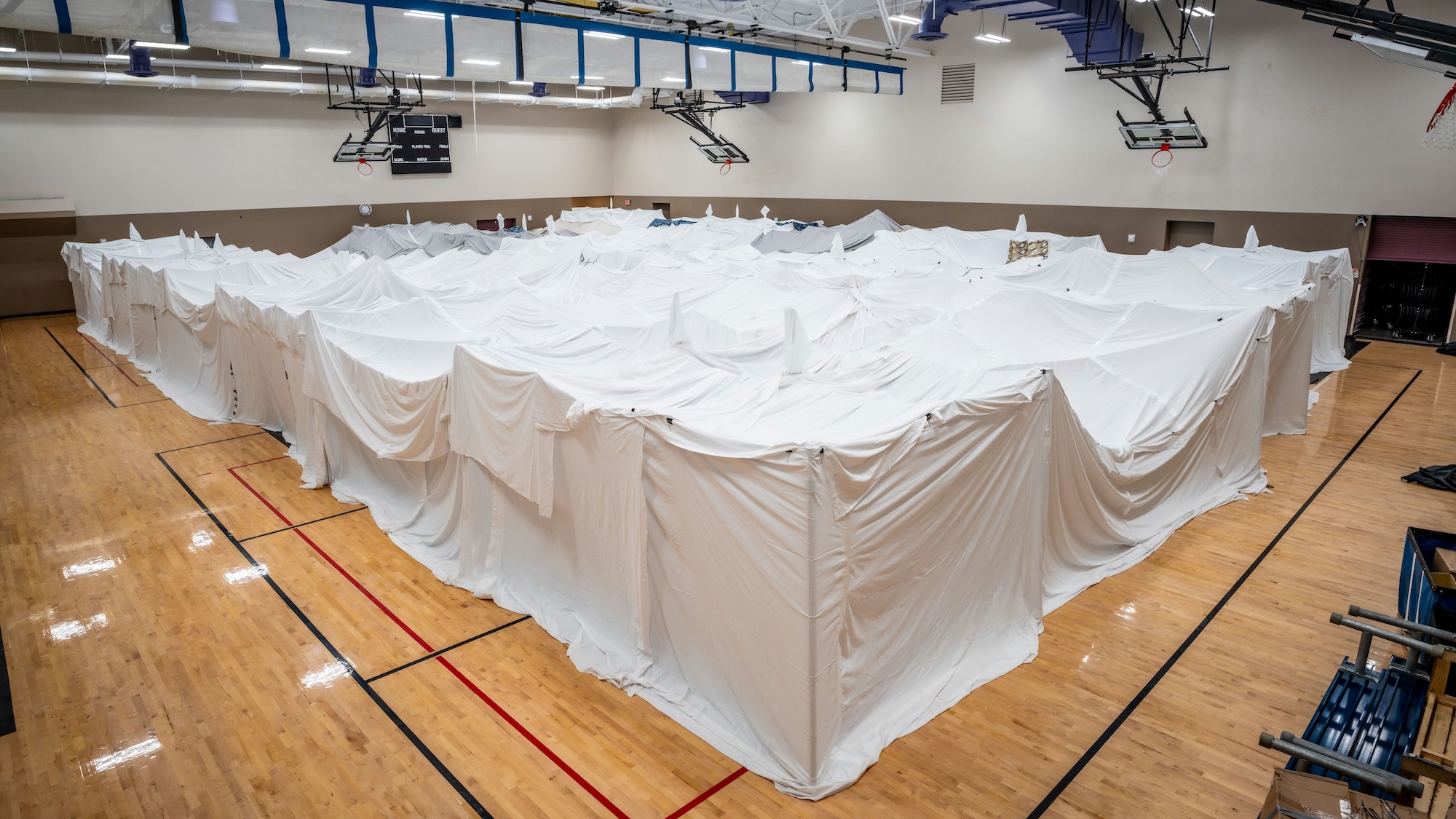
At 14,103-square feet, the billowy project overshadows the previous record holder (12,291-square-feet) that was built in South Carolina in 2024. According to the official announcement from Nevada’s Clark County, the job necessitated a small army of volunteers and community partners using a design envisioned by engineering students at Las Vegas’ West Career & Technical Academy. All told, the blanket fort included hundreds of sheets draped over tent poles and anchored by ropes, pipes, and even binder clips.

Confirming the fort’s record breaking size required a visit from an official Guinness World Records adjudicator. The assessor didn’t simply measure the floorspace inside the Desert Breeze Community Center’s basketball court, though. Eligibility requirements included making sure there weren’t any gaps between sheets larger than one inch, ensuring all sheets touched the ground, and determining minimum height requirements that allowed a person to “sit comfortably” inside the tent.

Guinness World Record inspector walking inside world's largest blanket fort
An inspection from an official Guinness adjudicator was required before certifying the structure. Credit: Robert Edward / Clark County, Nevada

A good blanket fort’s temporary nature is part of its appeal, and the recordbreaking project has since been disassembled. After all, Desert Breeze Community Center still needs its gym for pickup basketball games.

The post World’s largest blanket fort built at Las Vegas community center appeared first on Popular Science.

  • ✇Popular Science
  • ‘Two-headed snake’ confuses predators Andrew Paul
    Only around 600 of the nearly 4,000 known snake species are venomous. The recently discovered Guangxi reed snake (Calamaria incredibilis) in China is not one of those species, but its alternative defense mechanism is strange enough to keep most predators at bay. According to a study recently published in the journal Zoosystematics and Evolution by biologists at the Natural History Museum of Guangxi, C. incredibilis wields its wide, stubby tail like a second head to scare away potential threats.
     

‘Two-headed snake’ confuses predators

15 May 2026 at 15:22

Only around 600 of the nearly 4,000 known snake species are venomous. The recently discovered Guangxi reed snake (Calamaria incredibilis) in China is not one of those species, but its alternative defense mechanism is strange enough to keep most predators at bay. According to a study recently published in the journal Zoosystematics and Evolution by biologists at the Natural History Museum of Guangxi, C. incredibilis wields its wide, stubby tail like a second head to scare away potential threats.

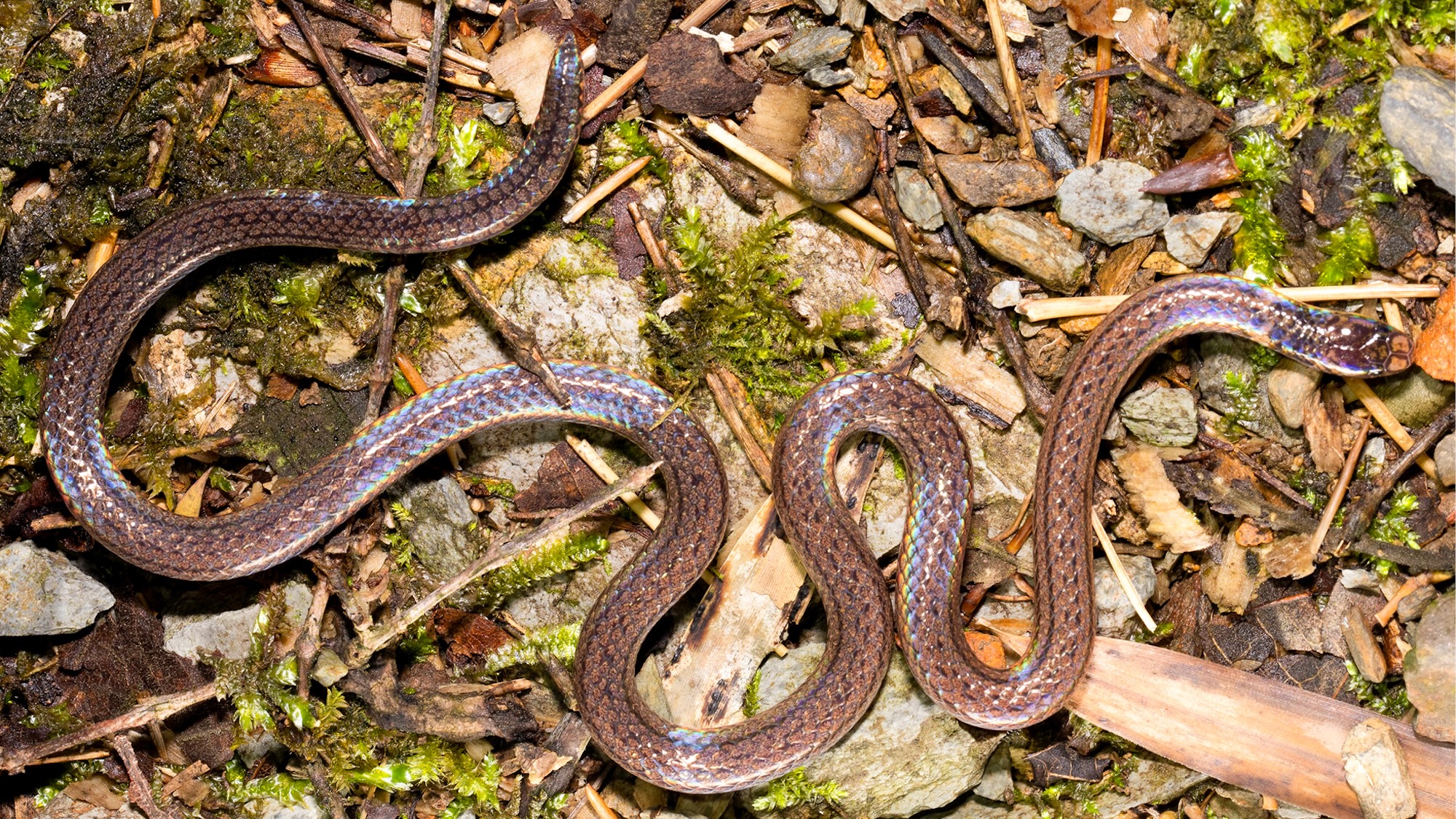
Researchers first spotted the Guangxi reed snake during a biodiversity study in China’s Huaping National Nature Reserve near the nation’s southern border with Vietnam. The mostly nocturnal, non-venomous serpent grows to about eight-inches-long, and is identifiable by its small brown scales and seven darker stripes. Largely docile, it prefers to hide away between rocks and underneath leaves, and prefers a diet of insect larvae and earthworms.

Although largely timid, the Guangxi reed snake has evolved a strategy to bluff its way out of dangerous situations. Whenever it feels threatened, the reptile raises its tail off the ground and begins waving it like an additional head. The tail even features similar markings to those seen on the snake’s head, which adds to the overall realism. 

As People recently noted, the reed snake is far from the first new snake species discovered in 2026. Earlier this year, researchers identified both a vibrantly turquoise pit viper and a flying snake in a Cambodian cave alongside previously unknown geckos, millipedes, and microsnails.

The study’s authors explained the Guangxi reed snake “highlights the underestimated diversity” in the reptile’s larger family, as well as underscores the region’s role as an “ important hotspot” of unique animals.

The post ‘Two-headed snake’ confuses predators appeared first on Popular Science.

  • ✇Popular Science
  • Injectable nanorobots may help heal spinal injuries Andrew Paul
    Despite significant medical advances, spinal cord damage remains one of the most difficult physical injuries to treat. Scarring frequently gets in the way of nerve fiber regrowth, while nerve cells usually cannot regenerate on their own. A possible solution? A fleet of stem cell-infused, injectable nanorobots that can help nerve cells regenerate. The tiny bots are detailed in a study recently published in the journal Nature Materials. To build their new tools, a team at ETH Zurich in Switzerl
     

Injectable nanorobots may help heal spinal injuries

3 June 2026 at 19:50

Despite significant medical advances, spinal cord damage remains one of the most difficult physical injuries to treat. Scarring frequently gets in the way of nerve fiber regrowth, while nerve cells usually cannot regenerate on their own. A possible solution? A fleet of stem cell-infused, injectable nanorobots that can help nerve cells regenerate. The tiny bots are detailed in a study recently published in the journal Nature Materials.

To build their new tools, a team at ETH Zurich in Switzerland engineered microscopic machines that combine living neural progenitor cells (NPCs)—specialized stem cells developed for the spine—with customized nanoparticles. These customized nanoparticles feature two layers—one that is sensitive to magnetic fields and another that translates them into electrical signals.

“We place a reservoir in the center where we trap the cells. Then we inject the nanoparticles and wait for the two components to bind,” Salvador Pané i Vidal, a study co-author and ETH Zurich roboticist, said in a statement.

Each nanorobot is about six micrometers wide, making them smaller than a red blood cell. However, the number of robots required to pull off a procedure is immense. Millions of nanobots are needed during animal trials. Even with such a high number, the initial experimental results are promising. In tests involving mice with severed spinal cords, nerve cells stimulated by the microrobots began reconnecting at the injury site within 28 days. By the end of the trial, the mice displayed major improvements in movement, gait, coordination, and exploratory behavior. 

Significantly more research is required before these nanobots are ready for primetime, but the team hopes to one day begin testing similar devices in humans. Before that, they need to determine the most effective magnetic fields and how long to apply them to patients. In the meantime, the overall design could also be applied to help treat regenerative issues in organs and wounds.

“The reproducible and scalable production of microrobots using our lab-on-a-chip system demonstrates that the platform’s application potential extends beyond basic research,” added Pané i Vidal.

The post Injectable nanorobots may help heal spinal injuries appeared first on Popular Science.
  • ✇Popular Science
  • Humans really did move Stonehenge’s six-ton centerpiece Andrew Paul
    Stonehenge is so much more than just a monumental feat of ancient engineering—it’s also a logistical marvel. Multiple generations of Neolithic designers relied on communal teamwork and clever construction techniques to precisely place each of the site’s gigantic megaliths about 5,000 years ago. Two primary types of stone known as sarcens and bluestones make up the formation. Paleoarchaeologists previously traced most of the sarcens to about 15 miles away to present-day Marlborough, England, whil
     

Humans really did move Stonehenge’s six-ton centerpiece

4 June 2026 at 14:35

Stonehenge is so much more than just a monumental feat of ancient engineering—it’s also a logistical marvel. Multiple generations of Neolithic designers relied on communal teamwork and clever construction techniques to precisely place each of the site’s gigantic megaliths about 5,000 years ago. Two primary types of stone known as sarcens and bluestones make up the formation. Paleoarchaeologists previously traced most of the sarcens to about 15 miles away to present-day Marlborough, England, while many of the bluestones originated in Wales.

The famed Altar Stone is far more perplexing, however. The central, six-ton sandstone megalith likely came from a region in Scotland about 400 miles away. How a prehistoric society managed to scoot the boulder so far without complex tools or transportation methods has perplexed researchers for years.

Many researchers have theorized that melting Ice Age glaciers likely helped passively shift the Altar Stone closer to southern England’s Salisbury Plain around 2500 BCE, shortening the transport distance for Stonehenge’s creators. But in 2024, a team at Curtin University used chemical analysis to determine that glaciers simply weren’t the only factor behind the megalith’s move. Now, that same team has combined ice-sheet modeling and mineral grain dating to more precisely locate the Altar Stone’s original home. Their findings, published today in the Journal of Quaternary Science, further underscore how humans played a huge part in getting their centerpiece to Stonehenge.

“Rather than being carried naturally by ice, the evidence points to a deliberate, carefully planned movement across a challenging and varied landscape,” Anthony Clarke, a geochemist and study co-author, said in a statement.

Although glaciers possibly transported many large rocks as far south as Dogger Bank in the North Sea, Clarke explained that geological modeling showed that “no viable glacial pathways” ever linked the Altar Stone’s source region to Stonehenge. This further underscores how Neolithic communities were necessary to move it to its final spot.

“Transporting a stone of this size over such a long distance would have required planning, coordination and a deep understanding of the landscape—not to mention tremendous determination,” he added.

While the exact methods remain a mystery, Clarke and colleagues believe the Altar Stone was almost certainly moved in stages, possibly through a combination of overland and river travel routes.

“The stone would still have needed to be moved hundreds of kilometers by people,” Clarke concluded.

The post Humans really did move Stonehenge’s six-ton centerpiece appeared first on Popular Science.
  • ✇Popular Science
  • A medieval Scot rocked a 20-carat gold dental bridge Andrew Paul
    Today, extensive tooth repair or replacement often requires the installation of a dental bridge made from durable resin and metal. That said, the procedure is nothing new. Archaeological examples of dental bridges date back thousands of years across cultures around the world. Recently, researchers discovered the oldest variant ever found in Scotland, but it’s anything but inconspicuous. According to a study recently published in the British Dental Journal, the medieval dental bridge excavated in
     

A medieval Scot rocked a 20-carat gold dental bridge

6 May 2026 at 15:22

Today, extensive tooth repair or replacement often requires the installation of a dental bridge made from durable resin and metal. That said, the procedure is nothing new. Archaeological examples of dental bridges date back thousands of years across cultures around the world. Recently, researchers discovered the oldest variant ever found in Scotland, but it’s anything but inconspicuous. According to a study recently published in the British Dental Journal, the medieval dental bridge excavated in Aberdeen was crafted using 20-carat gold.

Simplified bridges made from silver or gold wire called dental ligatures date back to at least 2,500 BCE in ancient Egypt. In some cases, funerary preparers installed them in the recently deceased to make their bodies appear more “complete” for the afterlife. However, it took until the Middle Ages before more complicated dentistry spread throughout Europe. Even then, primary texts suggest tooth maintenance likely wasn’t performed by doctors or surgeons.

“During the Middle Ages, teeth were often treated by barbers, or dentatores, who were individuals that specialized in teeth.”University of Aberdeen archaeologists wrote in their study.

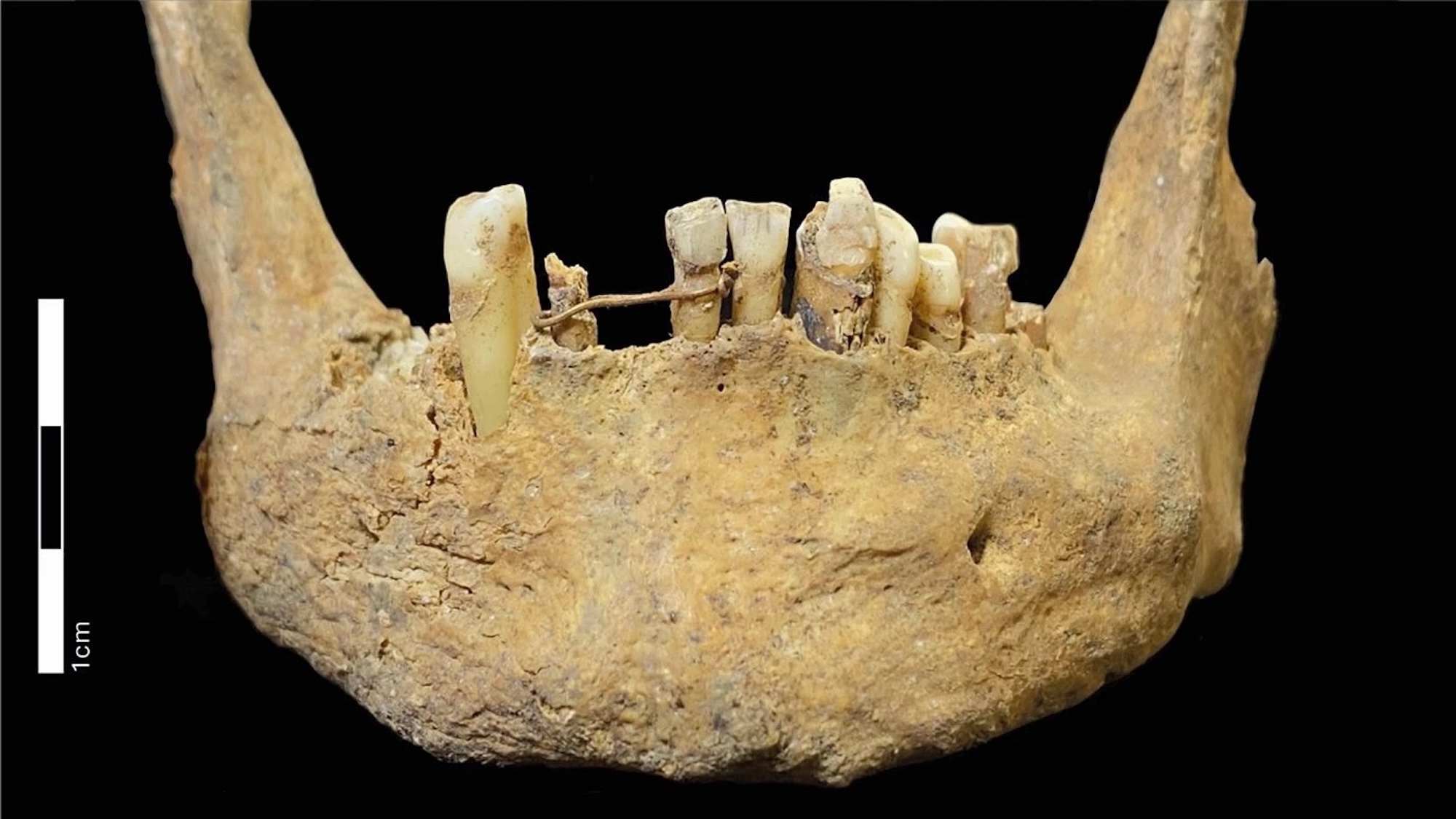
Few dental ligature artifacts exist from England prior to the 17th century, and none of them were found in Scotland before the team’s analysis. That is until 2006. A team digging on the grounds of East Kirk of St. Nicholas Kirk in Aberdeen (“kirk” is Scottish for “church”) uncovered a trove of skeletal remains including the skull in this study.. The team recently reexamined 100 of the roughly 900 individuals in the collection—only one of which featured a dental ligature.

35x magnification of the knotted end of the dental ligature. Credit: Dittmar, et al.
35x magnification of the knotted end of the ligature. Credit: Dittmar, et al.

X-ray spectroscopy, scanning electron microscopy, and radiocarbon dating filled in many gaps about the person’s identity. Based on their findings, the researchers believe the remains belonged to a middle-aged man who died in Aberdeen sometime between 1460 and 1670. Dental evidence also revealed his bridge had been installed long before his death.

The 20-carat gold alloy ligature’s existence and composition suggests that the man was not only wealthy, but well connected in his community. Although they can’t definitively know if he received care in Aberdeen, records show around 22 goldsmiths worked in the area during that era. These artisans were likely skilled enough to craft and securely knot the wiring.

The reasons for receiving the implant were probably “multifaceted,” according to the study’s authors. Physical appearance during the Late Medieval and Early Modern eras was often culturally tied to one’s character.

“The appearance of a person and their perceived health was linked to one’s sins,” they explained. “As such, the social importance of an individual’s smile encouraged those who were able to afford such treatments to seek them out.”

Apart from being the first dental discovery of its kind in Scotland, the artifact underscores just how long humans have balanced the complex interplay between wealth, beauty standards, and personal health.

The post A medieval Scot rocked a 20-carat gold dental bridge appeared first on Popular Science.

  • ✇Popular Science
  • Why coffee tastes bitter, according to molecular biology Andrew Paul
    Regular coffee drinkers know there is a big difference between a brew’s aroma and its taste. A cup may smell warm and full-bodied only to leave you with a lingering bitterness behind the first sip. Researchers have long known a coffee’s potentially acrid flavor profile is dictated at a molecular level thanks to your tongue’s taste receptors, but how that occurs has remained a mystery. Now, a team at the University of North Carolina at Chapel Hill has the answer thanks to precise imaging technolo
     

Why coffee tastes bitter, according to molecular biology

11 May 2026 at 17:59

Regular coffee drinkers know there is a big difference between a brew’s aroma and its taste. A cup may smell warm and full-bodied only to leave you with a lingering bitterness behind the first sip. Researchers have long known a coffee’s potentially acrid flavor profile is dictated at a molecular level thanks to your tongue’s taste receptors, but how that occurs has remained a mystery. Now, a team at the University of North Carolina at Chapel Hill has the answer thanks to precise imaging technology—and their findings may have much wider ramifications beyond the coffee pot.

The details were published in the journal Nature Structure & Molecular Biology, and focuses on TAS2R43, one of our 26 different bitter taste receptors. These mechanisms are expressed throughout the human body, and likely evolved to guard the species against toxic substances as well as helping regulate our metabolisms.

“Bitter taste receptors are thought to be important for detecting toxins, pathogens, and harmful bacteria in the airways, gut, skin, and organs, initiating immune responses, clearing pathogens, regulating immune cells, influencing hormone secretion, and aiding digestion,” explained study co-author and molecular biologist Bryan Roth.

Scientists first determined the microscopic structure of TAS2R43 a few years ago, but until Roth’s team, no one had analyzed how it responds to bitter compounds. To accomplish this, researchers relied on a technique called cryogenic electron microscopy (cryo-EM). This method involves flash-freezing biological molecules, then employing electrons to generate highly detailed 3D images of their overall shape. Roth and his colleagues recorded how TAS2R43 receptors responded to coffee’s bitter elements including caffeine and mozambioside, then compared those to the reaction of other receptors.

“In this work, we solved the structures of TAS2R43 bound to bitter compounds and showed, in molecular detail, how this receptor detects bitter molecules,” said molecular biologist and study co-author Yoojoong Kim.

Researchers now have a molecular framework for creating future compounds that intentionally control how someone experiences bitterness in drugs or foods. Aside from finally understanding how taste receptors like TAS2R43 physically respond to bitter molecules, the discoveries could also help develop new medical treatments. 

“In the long term, this could help guide the development of new therapeutic strategies for diseases involving airway defense, gut function, inflammation, or host responses to microbes,” Kim added.

The post Why coffee tastes bitter, according to molecular biology appeared first on Popular Science.

  • ✇Popular Science
  • New box jellyfish name warns of ‘death from behind’ Andrew Paul
    A recently discovered box jellyfish species living in near Singapore looks nearly identical to another jellyfish previously discovered by the same scientist. But regardless of whether or not you can tell Chironex blakangmati and Chironex yamaguchii apart, you’ll want to steer clear of both of them. Box jellyfish didn’t earn their “sea-wasp” nickname for yellow-and-black stripes. Cheryl Ames, a marine biologist at Japan’s Tohoku University, collected C. blakangmati during an expedition near th
     

New box jellyfish name warns of ‘death from behind’

23 May 2026 at 15:22

A recently discovered box jellyfish species living in near Singapore looks nearly identical to another jellyfish previously discovered by the same scientist. But regardless of whether or not you can tell Chironex blakangmati and Chironex yamaguchii apart, you’ll want to steer clear of both of them. Box jellyfish didn’t earn their “sea-wasp” nickname for yellow-and-black stripes.

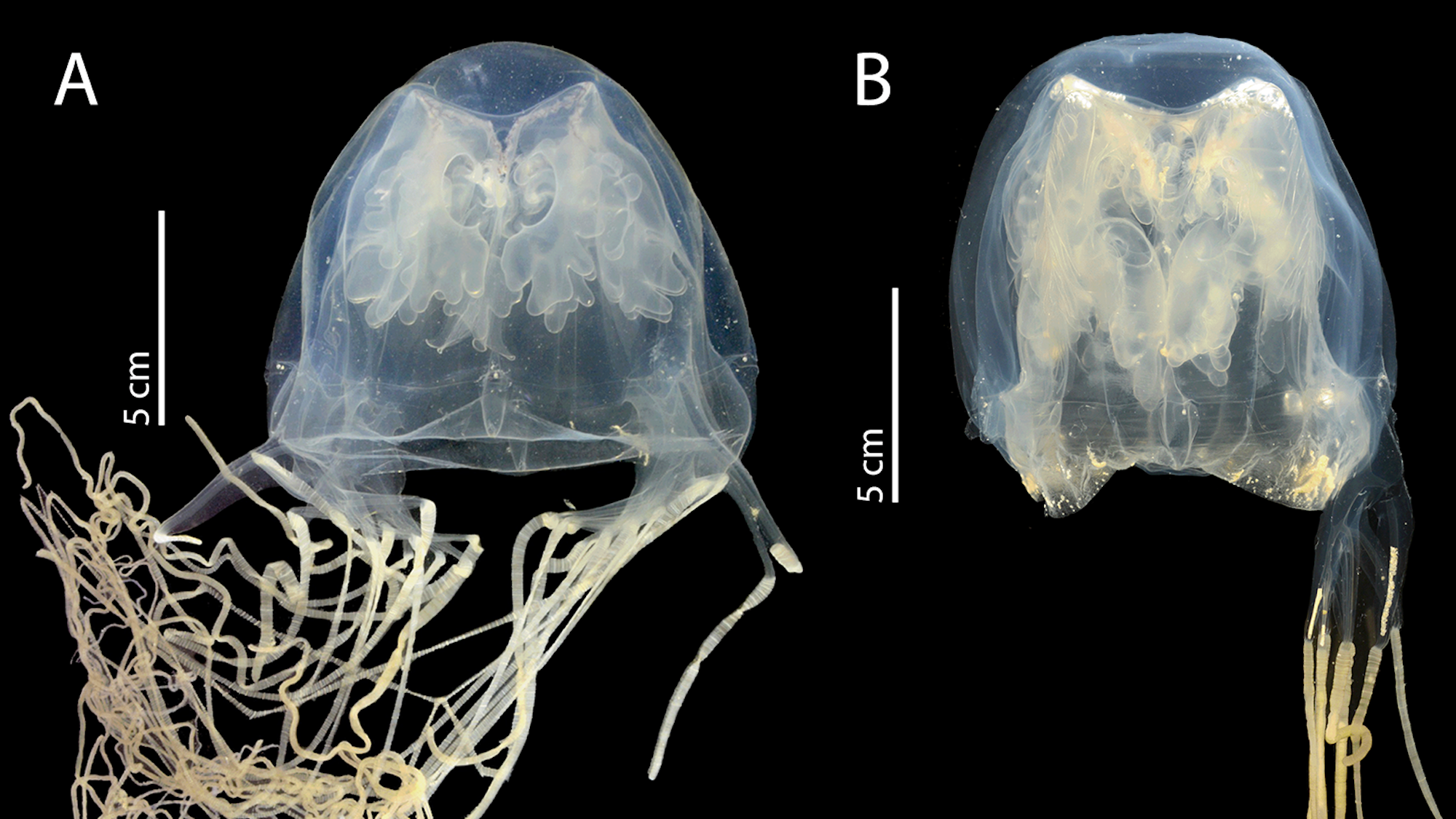
Cheryl Ames, a marine biologist at Japan’s Tohoku University, collected C. blakangmati during an expedition near the coast of Singapore’s Sentosa Island. The team initially assumed the invertebrate was an example of C. yamaguchii, but later genomic testing revealed something else entirely.

“We realized they were completely distinct,” Ames explained in a statement. “I actually went back to dust off an old sample of C. yamaguchii I still had in storage in Okinawa to help with the comparisons.”

Apart from genetics, the key difference setting C. blakangmati apart from its three known Chironex relatives is its perradial lappets. This anatomical feature on the bottom of the box jellyfish’s bell-shaped body strengthens the pulsating musculature that propels it through the water. Other Chironex species include pointy canals at the tips of their perradial lappets, but C. blakangmati notably does not.

Canals or not, they are remarkable creatures. The vast majority of jellyfish don’t rely on vision and passively float in ocean currents, but members of the Chironex genus do not. Instead, they have evolved complex eye organs that help them locate prey. They then use that same musculature supported by the perradial lappets to actively swim through the water towards its target.

In this sense, C. blakangmati certainly lives up to its scientific name. Sentosa may be Malay for “peace and tranquility,” but the island once called something very different. Historically, it is also known as Pulau Klakang Mati, which translates to the “Island of Death from Behind.”

The post New box jellyfish name warns of ‘death from behind’ appeared first on Popular Science.

  • ✇Popular Science
  • Students discover long-lost Roman villa under high school gym Andrew Paul
    Like all high schools, Cavour Scientific High School has its fair share of rumors. For years, students swore that their classrooms were built atop ancient, unexplored Roman ruins. Their theories were understandable given the school’s impressive view.. From its front steps on Via degil Annibaldi, Cavour Scientific High School is less than a five minute stroll to the Colosseum. Yes, that Colosseum. The monumental symbol of ancient Rome is only one example of the surrounding neighborhood’s histo
     

Students discover long-lost Roman villa under high school gym

8 June 2026 at 15:55

Like all high schools, Cavour Scientific High School has its fair share of rumors. For years, students swore that their classrooms were built atop ancient, unexplored Roman ruins. Their theories were understandable given the school’s impressive view.. From its front steps on Via degil Annibaldi, Cavour Scientific High School is less than a five minute stroll to the Colosseum. Yes, that Colosseum.

The monumental symbol of ancient Rome is only one example of the surrounding neighborhood’s historical significance. Famous figures including Pompey, Cicero, and Emperor Augustus all lived there, but much of the vital archaeological record remains buried underneath centuries of municipal development. The school, originally built during the late 19th century as a missionary complex, is its own testament to this constant change. Although construction work at the time revealed portions of a large Roman villa home known as a domus, no one conducted extensive surveys of the remnants. Instead, the domus’ true size and condition was a matter of speculation for generations.

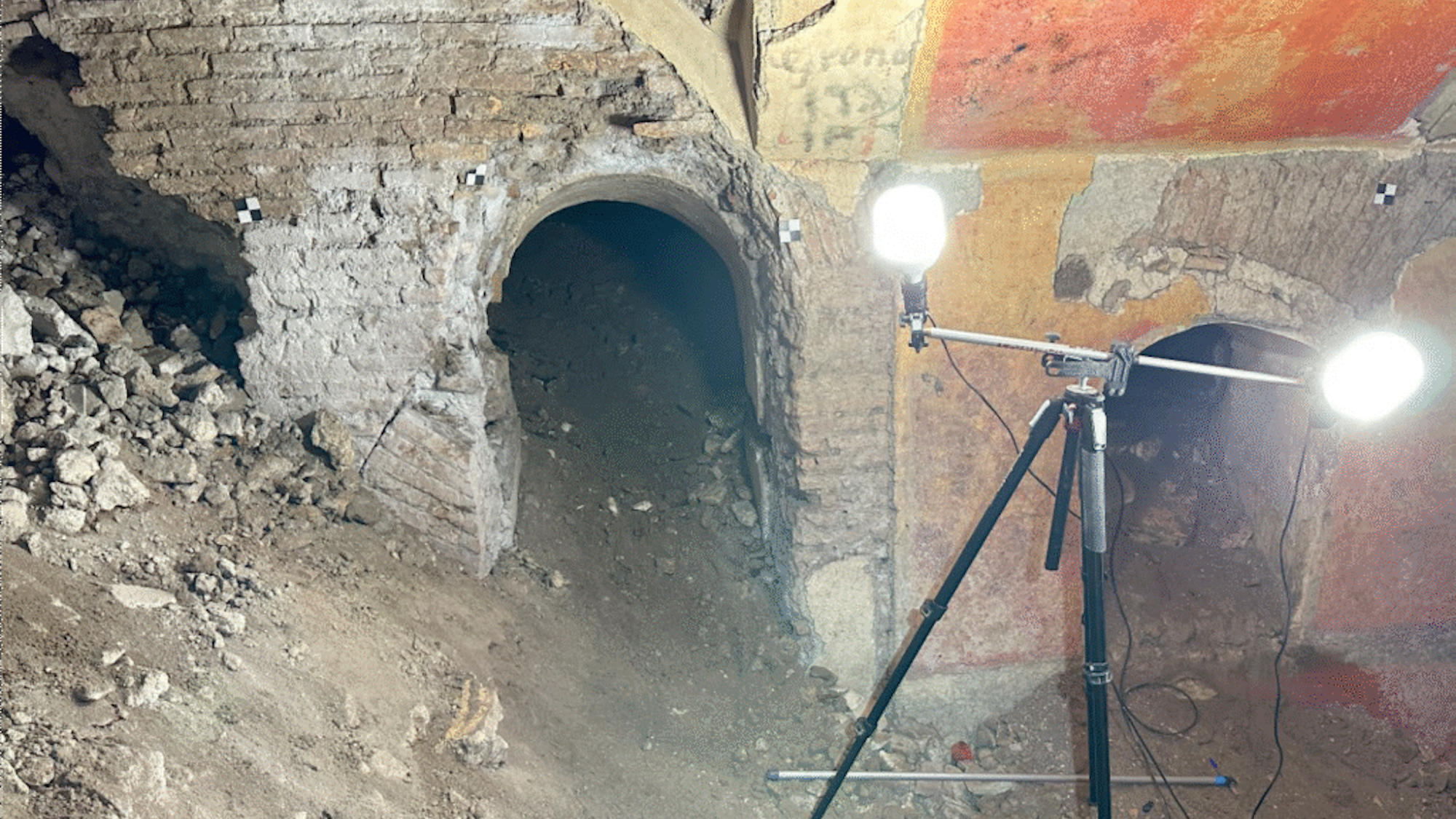
Vaulted ceilings in subterranean Roman villa ruins
The domus likely belonged to members of the Umbrius family who originated near Pompeii. Credit: Cantieri Narranti / Special Superintendency of Rome

Knowing this, local students recently undertook multiple clandestine explorations through passageways underneath the gymnasium and finally confirmed longtime suspicions: an ancient, luxurious Roman abode resides beneath their hallways. After their history and Latin teacher reported the findings to the Special Superintendency of Rome, archaeologists spent months excavating the area earlier this year. Now known as the Domus Liceo Cavour (House of the Cavour High School), is offering experts a remarkable glimpse of Roman life circa the mid-second century CE.

Roman villa walls underground that show light floral motif artwork on walls
Some of the walls still feature floral artwork. Credit: Cantieri Narranti / Special Superintendency of Rome

The house is impressively preserved despite its age. Archaeologists documented decorative stucco along the vaulted ceilings, floral wall frescos, and even a detailed mosaic featuring irregularly shaped tiles that were popular with wealthy Romans at the time. An inscription left during the first excavation project in the 19th century reports the home likely belonged to someone in the Umbrius family. Although not much is known about them, they possibly originated in Samnium, an area in south-central Italy near Pompeii.

Archaeologists hope to continue their work sometime in the future, and school officials plan to eventually open the site to the public. Until then, much more of Domus Liceo Cavour remains to be examined—including a fair amount of graffiti from former students and urban explorers.

The post Students discover long-lost Roman villa under high school gym appeared first on Popular Science.
  • ✇Popular Science
  • Inventor plays homemade electromagnetic bagpipes in rock band Andrew Paul
    Bagpipes: You either love ‘em or you hate ‘em. But even among the instrument’s diehard defenders, most wouldn’t spend years designing, building, and perfecting an electromagnetic variant. But that’s exactly what one intrepid hobbyist in the United Kingdom has accomplished—although he first began toying with the idea 30 years ago. “This project started back in 1996 when I hacked an Irish Uilleann bagpipe chanter by replacing the cane reed with a homemade reed made from carbon steel,” he explai
     

Inventor plays homemade electromagnetic bagpipes in rock band

20 May 2026 at 18:57

Bagpipes: You either love ‘em or you hate ‘em. But even among the instrument’s diehard defenders, most wouldn’t spend years designing, building, and perfecting an electromagnetic variant. But that’s exactly what one intrepid hobbyist in the United Kingdom has accomplished—although he first began toying with the idea 30 years ago.

“This project started back in 1996 when I hacked an Irish Uilleann bagpipe chanter by replacing the cane reed with a homemade reed made from carbon steel,” he explained on his Hackaday project page.

Although most famously associated with Scotland, various iterations of bagpipe instruments are documented in regions around the world like North Africa, East Asia, and the Persian Gulf. The Uilleann or Irish pipes date back to the 18th century and operate similarly to their Scottish relatives. To play them, a wearer operates small bellows strapped around the waist to blow relatively dry air through pipe reeds while using them like flutes. Uilleann pipes typically encompass two full octaves and produce a sound that many consider more melodic and mild than Scottish bagpipes.

Carbon steel reed inside electric bagpipes setup
The electric bagpipes utilize a carbon steel reed that connects to an amplifier. Credit: Goat Industries / Hackaday

This doesn’t mean they’re quiet, of course. In fact, their earliest versions could often be found on the battlefield as morale boosters. Although, the invention of electric instruments meant that even the most robust pipes couldn’t overshadow an amplifier cranked to its maximum. This posed a problem to the modernized version’s inventor.

“I desperately wanted to play the pipes in a rock band and I knew that I would only be able to sonically compete with an electric guitar by fitting an electromagnetic pickup next to a steel reed,” he explained.

Wielding a workaround may sound like a lot of work, especially when a musician could hypothetically just place a microphone near their traditional bagpipes. While certainly possible, it’s still difficult for the performer to actually hear themselves on stage compared to the electric instruments and drums. On top of that, standard microphones pick up a lot of background noise and produce feedback in stage monitors. Constructing a steel reed bypasses these issues entirely.

“Jimi Hendrix-type feedback can still be created but only by turning up the monitor amp really high and physically shoving the instrument into the speaker,” the creator wrote, adding that he can also employ the same effects used by guitarists, including distortion, pitch shifters, and delays.

The modern updates don’t end there, either. While the bellows bag is crafted from goat skin, it’s basically an exterior cosmetic accessory that houses another bag made from the same vinyl used in car seat covers. That’s all well and good—but how does it play?

“Playing gigs with this instrument, people would crowd around to watch and guitarists at the back would be scratching their heads thinking ‘That sounds like an electric guitar, but it definitely is not an electric guitar and you definitely can’t get an electric guitar to sound like that!’” he wrote.

While the full plans aren’t available online, fans of the sound can check out the inventor’s website to hear multiple original songs featuring the electro-bagpipes.

In The Workshop, Popular Science highlights the ingenious, delightful, and often surprising projects people build in their spare time. If you or someone you know is working on a hobbyist project that fits the bill, we’d love to hear about it—fill out this form to tell us more.

Related 'The Workshop' Stories

The post Inventor plays homemade electromagnetic bagpipes in rock band appeared first on Popular Science.

  • ✇Popular Science
  • SMILE spacecraft will use X-ray vision to study the northern lights and more Andrew Paul
    There’s a SMILE beaming down from high above Earth. On May 19, the European Space Agency (ESA) and the Chinese Academy of Sciences (CAS) launched a Vega-C rocket from Europe’s Spaceport in French Guiana with a payload representing years of international collaboration. Known as the Solar wind Magnetosphere Ionosphere Link Explorer (SMILE), the spacecraft will soon begin studying the sun’s immensely powerful solar winds and their relationship with Earth’s atmospheric safeguards. You woul
     

SMILE spacecraft will use X-ray vision to study the northern lights and more

19 May 2026 at 16:30

There’s a SMILE beaming down from high above Earth. On May 19, the European Space Agency (ESA) and the Chinese Academy of Sciences (CAS) launched a Vega-C rocket from Europe’s Spaceport in French Guiana with a payload representing years of international collaboration. Known as the Solar wind Magnetosphere Ionosphere Link Explorer (SMILE), the spacecraft will soon begin studying the sun’s immensely powerful solar winds and their relationship with Earth’s atmospheric safeguards.

You wouldn’t be reading this without our magnetosphere. The protective shield generated from deep inside Earth has protected the planet from the sun’s most destructive solar winds for billions of years. Without this barrier, life could never survive on what would be a barren, irradiated rock. But while it’s clear that the magnetosphere is Earth’s natural defense system against cosmic radiation and geomagnetic storms, astronomers still aren’t sure exactly how it works. 

“We are about to witness something we’ve never seen before—Earth’s invisible armor in action,” ESA director general Josef Aschbacher said in a statement.

Over the next month, SMILE will slowly increase its altitude with 11 engine burns before settling into a large elliptical orbit over the North and South Pole. Actual data collection will start in July using the spacecraft’s four tools, including a pair of X-ray and ultraviolet cameras. 

SMILE is the first mission to examine the magnetosphere with X-rays, and the UV equipment will capture the northern and southern lights for up to 45 hours at a time. By combining the two data sources, astronomers hope to gain a better understanding of how the planet is affected by the sun’s constant bombardment of solar winds and frequent coronal mass ejections. The project is planned to last three years.

“The evidence that Smile collects will help us better understand planet Earth and our Solar System as a whole,” explained ESA Smile project scientist Philippe Escoubet. “And the science it uncovers will improve our models of Earth’s magnetic environment, which could ultimately help keep our astronauts and space technologies safe for decades to come.”

The post SMILE spacecraft will use X-ray vision to study the northern lights and more appeared first on Popular Science.

  • ✇Popular Science
  • Cybertruck recall warns that its wheels may fly off Andrew Paul
    The wheels may be falling off the Tesla Cybertruck. No, seriously. According to a recent National Highway Traffic Safety Administration (NHTSA) recall alert, an estimated 173 of the stainless steel electric vehicles (EV) may be at risk of cracks forming in the brake rotor studs. These cracks could separate from their wheel hubs. “Wheel hub separation can cause a loss of vehicle control, increasing the risk of crash,” the NHTSA explained in its recall. Such emergencies may even include an enti
     

Cybertruck recall warns that its wheels may fly off

8 May 2026 at 15:17

The wheels may be falling off the Tesla Cybertruck. No, seriously. According to a recent National Highway Traffic Safety Administration (NHTSA) recall alert, an estimated 173 of the stainless steel electric vehicles (EV) may be at risk of cracks forming in the brake rotor studs. These cracks could separate from their wheel hubs.

“Wheel hub separation can cause a loss of vehicle control, increasing the risk of crash,” the NHTSA explained in its recall. Such emergencies may even include an entire wheel falling off the EV.

The 173 EVs span the Cybertruck’s 2024-2026 models, specifically those equipped with the optional 18-inch steel wheels. According to Kelley Blue Book, the EVs may start vibrating or issuing a noise before the wheel stud separates. Tesla is now offering affected vehicles free wheel hub and rotor replacements, as required by U.S. law.

The latest NHTSA alert is the latest in a string of recalls to affect the Tesla Cybertruck. Although the regulatory body awarded the EV a five-star overall safety rating, the vehicle line has received 11 recalls, four investigations, and 124 complaints since its debut in 2023. Previous recalls have involved faulty accelerator pedals from misapplied soap, malfunctioning windshields, and more.

Elon Musk once hyped the Cybertruck as the “finest in apocalypse technology” and “what Bladerunner [sic] would have driven,” but Tesla’s stainless steel EV simply hasn’t gained much traction. After over four years of production delay, the Cybertruck arrived about $20,000 more expensive than its original estimated base price. Tesla hoped to sell around 250,000 vehicles in 2024, but ended the year with less than 20 percent of their goal. Those numbers have continued to plummet, with barely 3,500 Cybertrucks sold within the last few months.

The post Cybertruck recall warns that its wheels may fly off appeared first on Popular Science.

  • ✇Popular Science
  • For 6 days, NASA’s Mars rover battled a rock Andrew Paul
    Curiosity got itself stuck between a rock and hard place last month, but NASA says there’s no reason to fret about the intrepid Mars rover. On April 25, mission engineers were remotely piloting its robotic arm’s rotary-percussive drill into a Martian rock nicknamed Atacama. It’s a relatively routine task for Curiosity, which takes the samples and then pulverizes them into a powder for future onboard chemical analysis. But Atacama is no small stone. The hefty, 1.5-foot-wide geologic formation
     

For 6 days, NASA’s Mars rover battled a rock

7 May 2026 at 15:27

Curiosity got itself stuck between a rock and hard place last month, but NASA says there’s no reason to fret about the intrepid Mars rover. On April 25, mission engineers were remotely piloting its robotic arm’s rotary-percussive drill into a Martian rock nicknamed Atacama. It’s a relatively routine task for Curiosity, which takes the samples and then pulverizes them into a powder for future onboard chemical analysis.

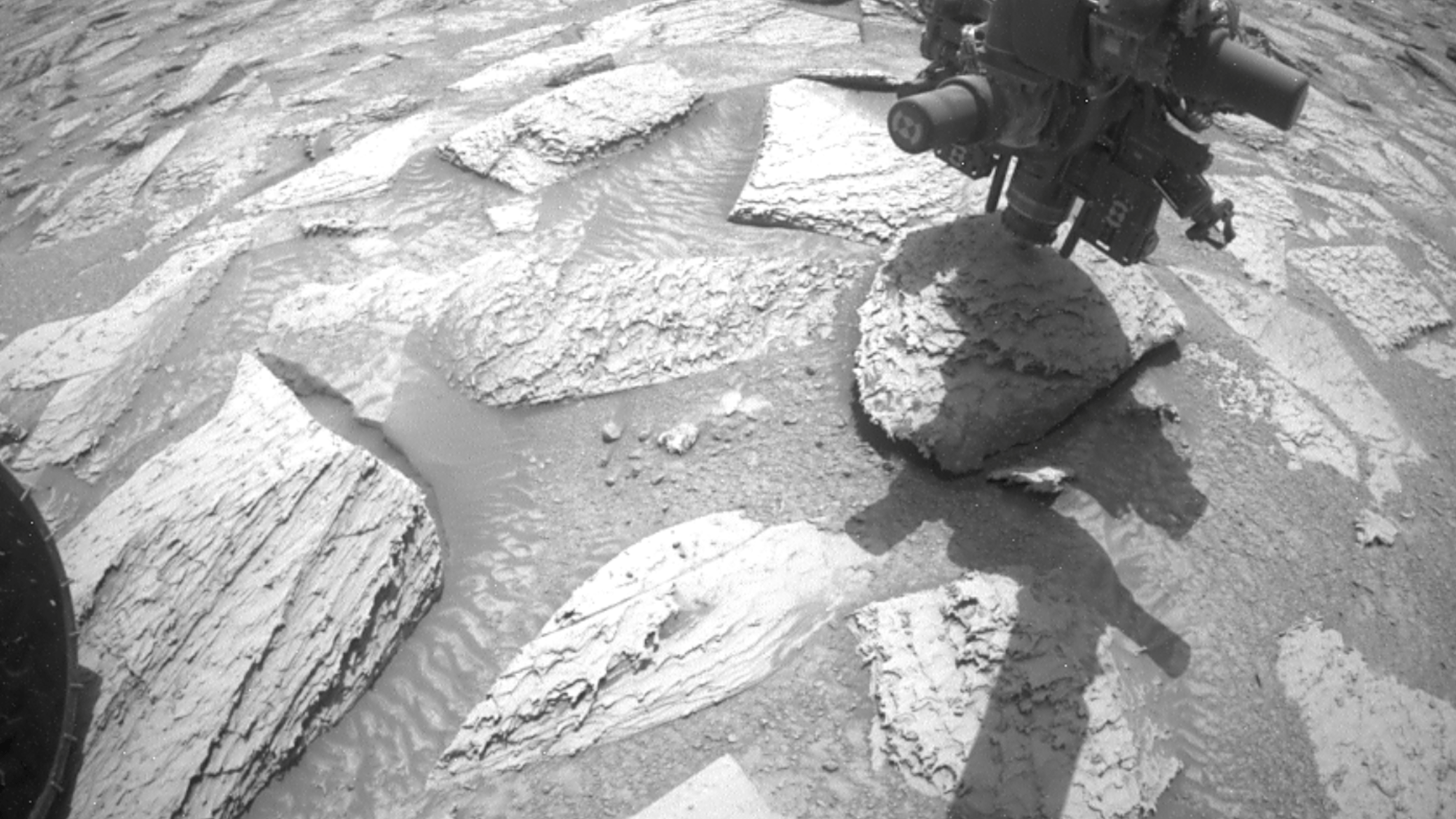
But Atacama is no small stone. The hefty, 1.5-foot-wide geologic formation is about six inches thick and weighs about 28.6 pounds. So NASA engineers were understandably a bit worried when Curiosity attempted to retract its arm—and subsequently lifted the entire rock off the ground.

“Drilling has fractured or separated the upper layers of rocks in the past, but a rock has never remained attached to the drill sleeve,” the agency explained in a recent rundown.

While amusing to envision, the situation was no laughing matter for NASA’s engineers. The rover’s drill would be of little more use with a giant rock indefinitely attached to it. But even if controllers could detach Atacama from the rover, the force might damage the tool or the arm itself. Without those capabilities, Curiosity’s ongoing mission would be in serious jeopardy.

Mission specialists first tried the drilling version of “turning it off and on again,” by vibrating the tool. However, Atacama remained stubbornly stuck on Curiosity…for another four days. NASA then tried a new approach by reorienting the robotic arm and instructing the drill to vibrate one more time. Atacama managed to shake off a bit of sand that time, but little else.

Two more stressful days passed before NASA gave it a third try. Engineers tilted the drill slightly further, then rotated and vibrated the tool while also spinning its drill bit. The Curiosity team anticipated it may take multiple attempts to pull off the feat.But in this case, Atacama finally gave way almost immediately. The nearly weeklong ordeal culminated with the giant rock fracturing as it landed on the Martian ground.

So far, NASA hasn’t reported any lingering damage to the vehicle, meaning the rover is likely ready to continue exploring the Red Planet. As for Atacama, it seems the Martian rock learned a valuable lesson: Don’t mess with Curiosity.

The post For 6 days, NASA’s Mars rover battled a rock appeared first on Popular Science.

❌
Subscriptions