Normal view

  • ✇Eos
  • Can Any Single Satellite Keep Up with the World’s Floods? Chloe Campo
    Editors’ Vox is a blog from AGU’s Publications Department. As climate change increases the frequency and intensity of flooding, it’s becoming increasingly important to monitor and predict flood hazards at different scales. A new article in Reviews of Geophysics presents a data-driven performance analysis of various space-based sensors that monitor flood hazards. Here, we asked the lead author to give an overview of satellite-based flood monitoring, the benefits and challenges of using satell
     

Can Any Single Satellite Keep Up with the World’s Floods?

20 April 2026 at 13:32
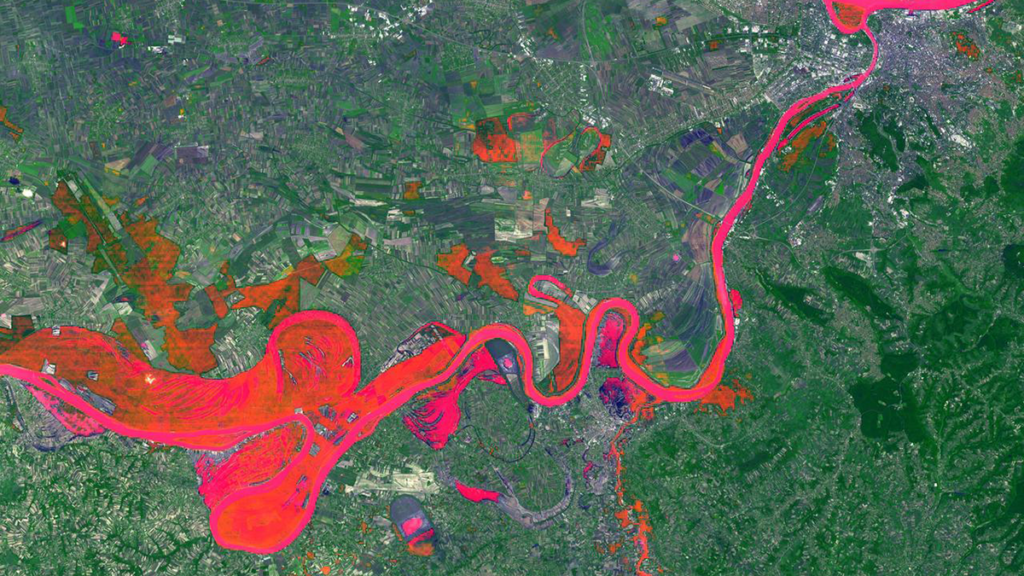
Satellite image of a river with highlights indicating flood areas.
Editors’ Vox is a blog from AGU’s Publications Department.

As climate change increases the frequency and intensity of flooding, it’s becoming increasingly important to monitor and predict flood hazards at different scales. A new article in Reviews of Geophysics presents a data-driven performance analysis of various space-based sensors that monitor flood hazards. Here, we asked the lead author to give an overview of satellite-based flood monitoring, the benefits and challenges of using satellite-based sensors, and future space-based projects.

Why is it important to monitor the surface waters on Earth? 

More than half of the world’s population lives within three kilometers of a freshwater body. When seasonal flooding behaves as anticipated, it provides essential nutrient replenishment to soils and crops. However, extreme flooding disturbs the careful balance of freshwater systems and can cause damaging flooding that disrupts livelihoods.

Climate change is making these extremes more frequent and less predictable, while expanding populations in flood-prone areas amplify the human cost. Continuous monitoring of Earth’s surface waters is essential as it helps us anticipate hazards, evaluate risk, and design interventions that protect the people and places most exposed to hydrologic hazards.

What are the benefits of monitoring flood inundation from space compared to other techniques? 

Monitoring flood inundation from space is advantageous due to the wide-scale global coverage that captures important information over large areas. In-situ sensors, such as river gauges, provide valuable data but are limited in spatial coverage and may even fail under significant flood conditions. A single satellite overpass can potentially capture an entire river basin, allowing responders to see where water has spread, which communities are affected, and how the event is evolving.

When did scientists first start using satellites to monitor surface waters?

The value of monitoring surface water from space was first realized in the early 1970s, following the launch of Landsat 1. Soon after launch, it captured imagery of the devastating 1973 Mississippi River floods, producing one of the first flood maps made from space (Figure 1).  By the early 2000s, NASA’s MODIS sensors were providing global coverage at a daily frequency. Today, multiple global flood monitoring systems are in place, including the European Union’s Copernicus Emergency Management Service, which maps floods using Sentinel-1 synthetic aperture radar (SAR), and NOAA’s VIIRS Flood Mapping system.

Figure 1. Imagery from the start of the Landsat 1 mission illustrating the extent of the Mississippi River flooding of 1973 (EROS History Project). The Earth Resources Technology Satellite 1 (ERTS-1) was renamed Landsat 1 in 1975. Credit: USGS

What are the three types of satellite-based sensors that your review focuses on? 

Our review examines three families. Multispectral (optical and thermal) sensors capture reflected sunlight or emitted heat. Microwave sensors, including SAR, passive microwave radiometers, and GNSS Reflectometry (GNSS-R), can observe through clouds and at night but involve trade-offs between resolution and coverage. Finally, altimetric sensors measure water surface elevation with high precision but only along narrow tracks. Each family has distinct strengths and weaknesses that lend themselves to use in combination for comprehensive flood inundation monitoring.

What are some of the challenges of using satellite-based sensors to monitor flooding?

The fundamental problem is that floods and satellite observations are mismatched in time and space. Optical sensors often capture clouds rather than the floodwater beneath. Cloud-penetrating sensors like SAR can miss flood peaks if their orbital schedule doesn’t align with the event, and dense vegetation can obstruct floodwater from both optical and shorter-wavelength radar. Sensors with high temporal resolution typically deliver data at coarse spatial resolutions, sometimes tens of kilometers per pixel. These trade-offs form what we describe as the “iron triangle” of Earth observation: temporal resolution, spatial resolution, and cost. A sensor can typically be optimized for two, but rarely all three. Occasionally, the timing and conditions of a flood align well with sensors whose strengths are complementary across the iron triangle, yielding the kind of multi-sensor view shown in Figure 2.

Figure 2. Sentinel‐2 MSI True Color Image with Sentinel‐1 SAR derived flood‐extent superimposed on top. The top right circle highlights the missing SAR‐derived information, whereas the bottom circle highlights the missing optical information. Credit: Campo et al. [2026], Figure 5

What are some upcoming space-based sensor projects that could advance the field of hydrology?

Several are already reshaping the field. NISAR, a joint NASA–ISRO radar satellite launched in 2025, carries an L-band sensor designed to penetrate vegetation canopy, providing new insights into flooding beneath vegetation. Sentinel-1D, launched in late 2025, has restored the Sentinel-1 constellation to full two-satellite capacity, halving the revisit time. Landsat Next, a planned three-satellite constellation with 26 spectral bands and a six-day revisit, would provide valuable hydrologic data at both high temporal and spectral resolutions. However, recent budget pressures have introduced uncertainty about its final scope. Finally, the HydroGNSS mission from ESA will use GNSS-R to monitor hydrologically linked Essential Climate Variables.

—Chloe Campo (S4088633@student.rmit.edu.au; 0009-0007-4259-300X), Royal Melbourne Institute of Technology University: Melbourne, Australia

The logo for the United Nations Sustainable Development Goal 13 is at left. To its right is the following text: The research reported here supports Sustainable Development Goal 13. AGU is committed to supporting the United Nations 2030 Agenda for Sustainable Development, which provides a shared blueprint for peace and prosperity for people and the planet, now and into the future.

Editor’s Note: It is the policy of AGU Publications to invite the authors of articles published in Reviews of Geophysics to write a summary for Eos Editors’ Vox.

Citation: Campo, C. (2026), Can any single satellite keep up with the world’s floods?, Eos, 107, https://doi.org/10.1029/2026EO265016. Published on 20 April 2026.
This article does not represent the opinion of AGU, Eos, or any of its affiliates. It is solely the opinion of the author(s).
Text © 2026. The authors. CC BY-NC-ND 3.0
Except where otherwise noted, images are subject to copyright. Any reuse without express permission from the copyright owner is prohibited.

What will happen to tourism in Cuba? Inside GAESA, the military conglomerate on Washington’s radar

When a Cuban person on the island wants to refer to “those in charge,” they lightly tap their shoulder with two fingers. The subtle gesture, shaped by nearly seven decades of censorship, is a reference to the epaulet of a military uniform. In Cuba, people do not speak of the government or the party (the Communist Party of Cuba, the only legal one), but rather of the “country’s leadership.” It is a euphemism that points to the real political and economic power: the Revolutionary Armed Forces (FAR).

Seguir leyendo

  • ✇El País in English
  • ICE arrests the sister of the head of Cuba’s military conglomerate GAESA Abel Fernández
    The United States continues to ratchet up its pressure on Cuba. U.S. immigration authorities on Thursday arrested in Miami the sister of the executive president of GAESA (Grupo de Administración Empresarial S.A.), the Cuban military conglomerate. According to a statement released by Immigration and Customs Enforcement (ICE), the detainee, Adys Lastres Morera, sister of Ania Guillermina Lastres Morera, described as “responsible for managing GAESA’s internationally held illicit assets,” had been a
     

ICE arrests the sister of the head of Cuba’s military conglomerate GAESA

22 May 2026 at 07:46

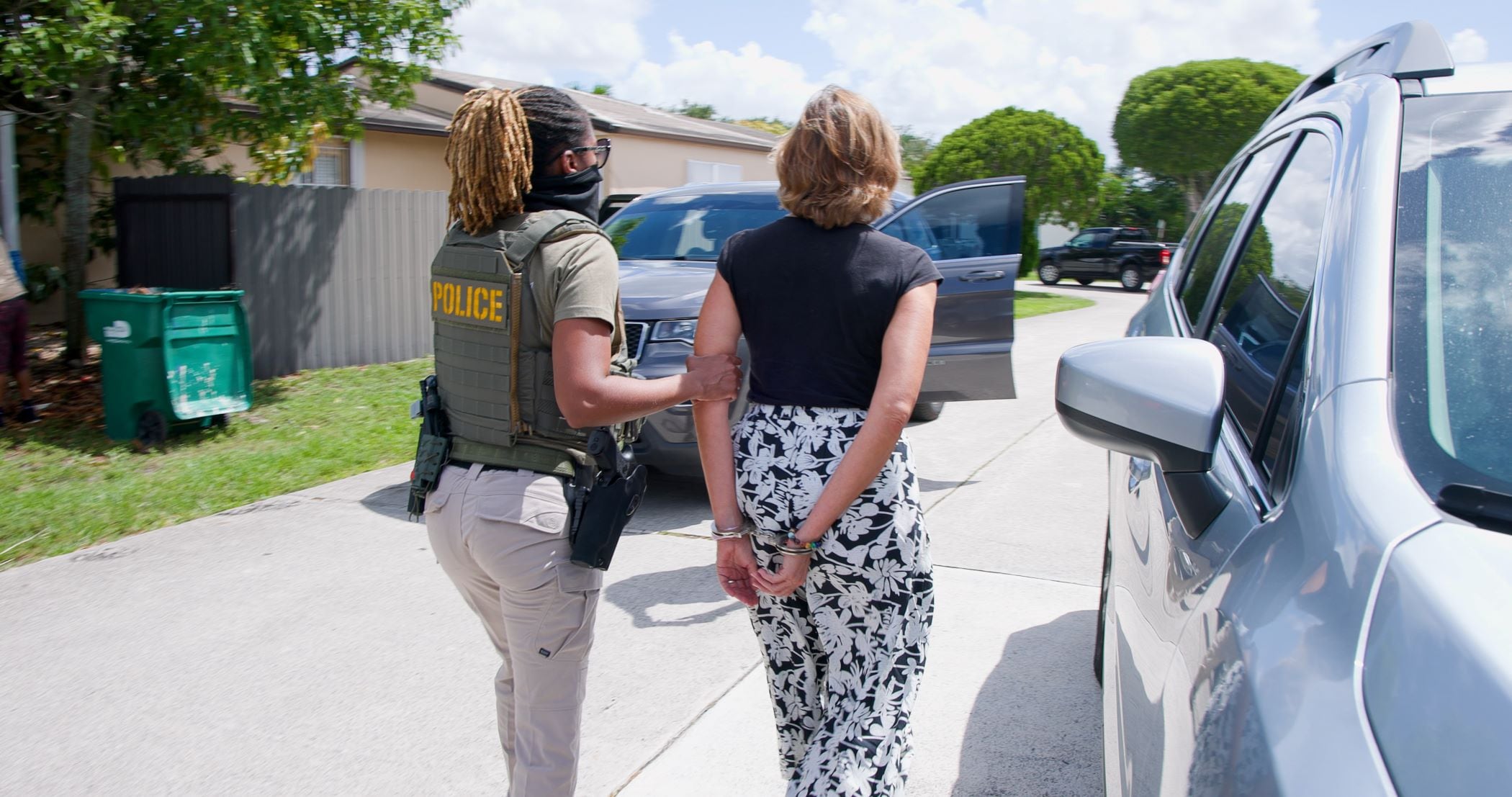
The United States continues to ratchet up its pressure on Cuba. U.S. immigration authorities on Thursday arrested in Miami the sister of the executive president of GAESA (Grupo de Administración Empresarial S.A.), the Cuban military conglomerate. According to a statement released by Immigration and Customs Enforcement (ICE), the detainee, Adys Lastres Morera, sister of Ania Guillermina Lastres Morera, described as “responsible for managing GAESA’s internationally held illicit assets,” had been a permanent resident since 2023. ICE said Lastres Morera had not applied for U.S. citizenship and will remain in custody until she is deported.

Seguir leyendo

© Servicio de Inmigración y Control de Aduanas

Adys Lastres Morera in the custody of U.S. Immigration and Customs Enforcement on May 21.

Hong Kong rugby player to stand trial in June after denying molesting customer at Central bar

11 May 2026 at 11:14
Rugby player court

A Hong Kong rugby player is set to plead not guilty to molesting a customer at a bar in Central last year, with the trial scheduled for June.

Faizal Solomona Penesa. Photo: Hong Kong China Rugby.

Faizal Solomona Penesa, a player for the Hong Kong China Rugby team, appeared at Eastern Magistrates’ Courts on Monday to face one count of indecent assault at Bobby’s Rabble, a bar in Central, and another count of criminal damage after allegedly vandalising police property at a police station following his arrest.

Solomona pleaded guilty to the criminal damage offence, in which he allegedly damaged a door latch at Central Police Station on September 28, 2025, according to local media.

According to the facts agreed by the prosecution and the defence, he was emotional when he was detained and kicked the door latch. Police filmed the incident and arrested him on suspicion of criminal damage.

But he denied the charge of indecent assault, which allegedly occurred at the Central bar on September 28 last year. The court heard that Solomona did not know the complainant, who was another customer in the bar, and that they had arrived there separately.

When he was arrested on the second charge, Solomona told officers under police caution that he “didn’t really mean to do that” and “won’t do that next time.”

Bobby's Rabble in Central. Photo: Google Maps.
Bobby’s Rabble in Central. Photo: Google Maps.

Citing a prosecution summary, local media reported that Solomona and the complainant had been drinking with their own groups at adjacent high tables.

Solomona, who is out on bail, will appear in court next on June 26 for trial. The prosecution said it planned on summoning three witnesses, including the complainant. She is known as X, and her identity will not be revealed during the hearing.

The defence said it would call one to three witnesses.

In a statement published in January, Hong Kong China Rugby said it took the allegations against Solomona “very seriously.”

Solomona has been suspended from all rugby activities until there is an outcome for the legal proceedings, it said.

  • ✇El País in English
  • How Washington delivered the final blow to Cuba’s weakened tourism industry Juan Carlos Espinosa
    The clock keeps ticking. The United States waits patiently after its latest checkmate against Cuba. The move has shaken a country that is already held together by pins, plunged into a severe crisis that has only worsened this year as economic strangulation by Washington intensifies. And all of this is unfolding in the shadow of a possible military intervention. Adding to this climate of extreme tension is an ultimatum: Friday, June 5, 2026. That is the date when a White House executive order of
     

How Washington delivered the final blow to Cuba’s weakened tourism industry

3 June 2026 at 09:19

The clock keeps ticking. The United States waits patiently after its latest checkmate against Cuba. The move has shaken a country that is already held together by pins, plunged into a severe crisis that has only worsened this year as economic strangulation by Washington intensifies. And all of this is unfolding in the shadow of a possible military intervention. Adding to this climate of extreme tension is an ultimatum: Friday, June 5, 2026. That is the date when a White House executive order of May 1 will take effect. The order threatens to freeze the assets on U.S. soil of any foreign companies or individuals that are still doing business with the Cuban regime.

Seguir leyendo

© Ernesto Mastrascusa (EFE)

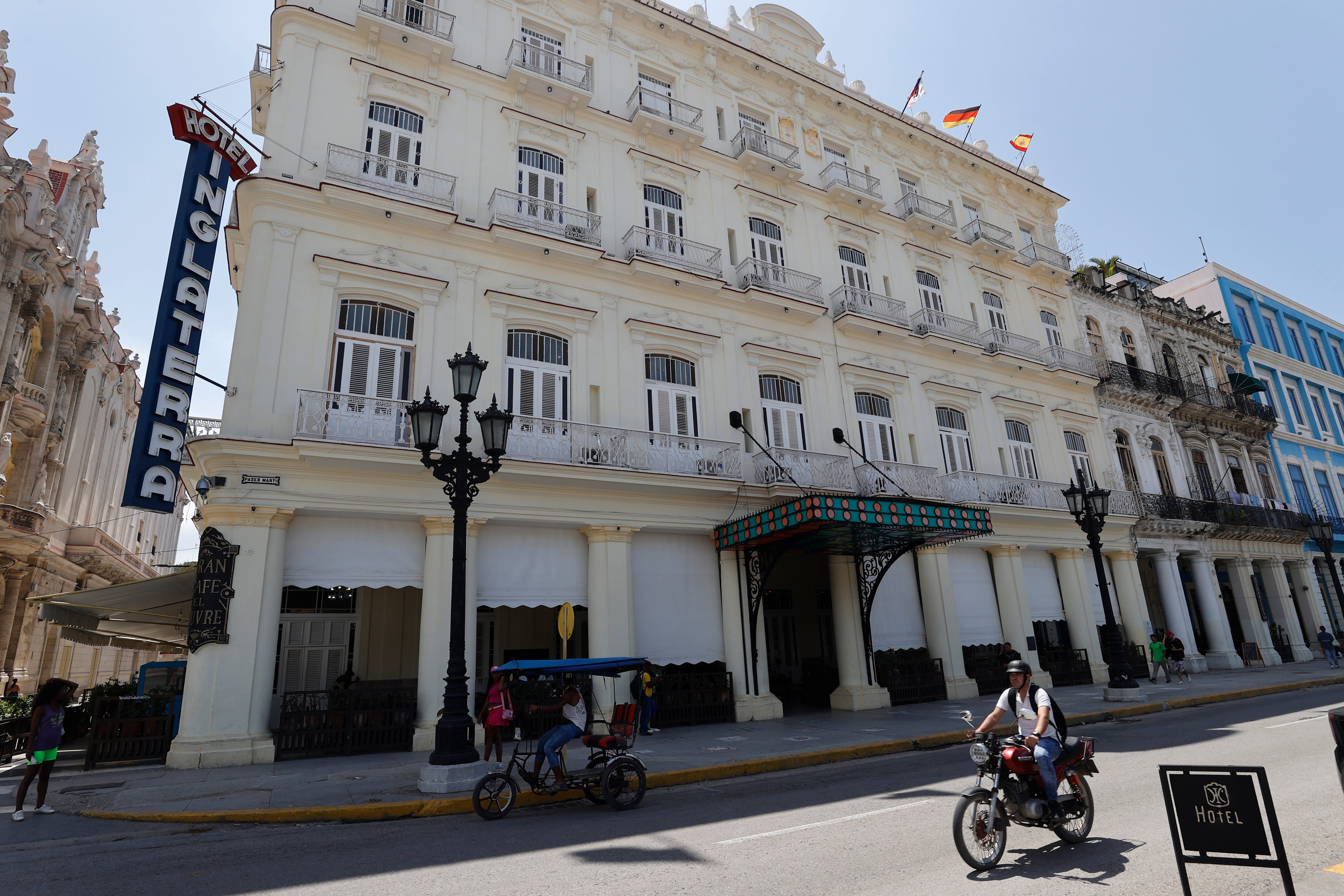
Facade of the Hotel Inglaterra this Monday, in Havana (Cuba).

Trump corners Cuba’s political leadership in a bid to force regime change

5 June 2026 at 06:40

The grill‑strategy is starting to work. With every degree the heat rises, the situation in Cuba — both on the streets and in the regime’s top offices — becomes more and more unbearable. The fall earlier this year of Venezuela’s Nicolás Maduro, Havana’s key ally, and the subsequent energy embargo on the island marked the beginning of a decline that now seems unstoppable.

Seguir leyendo

💾

© EPV

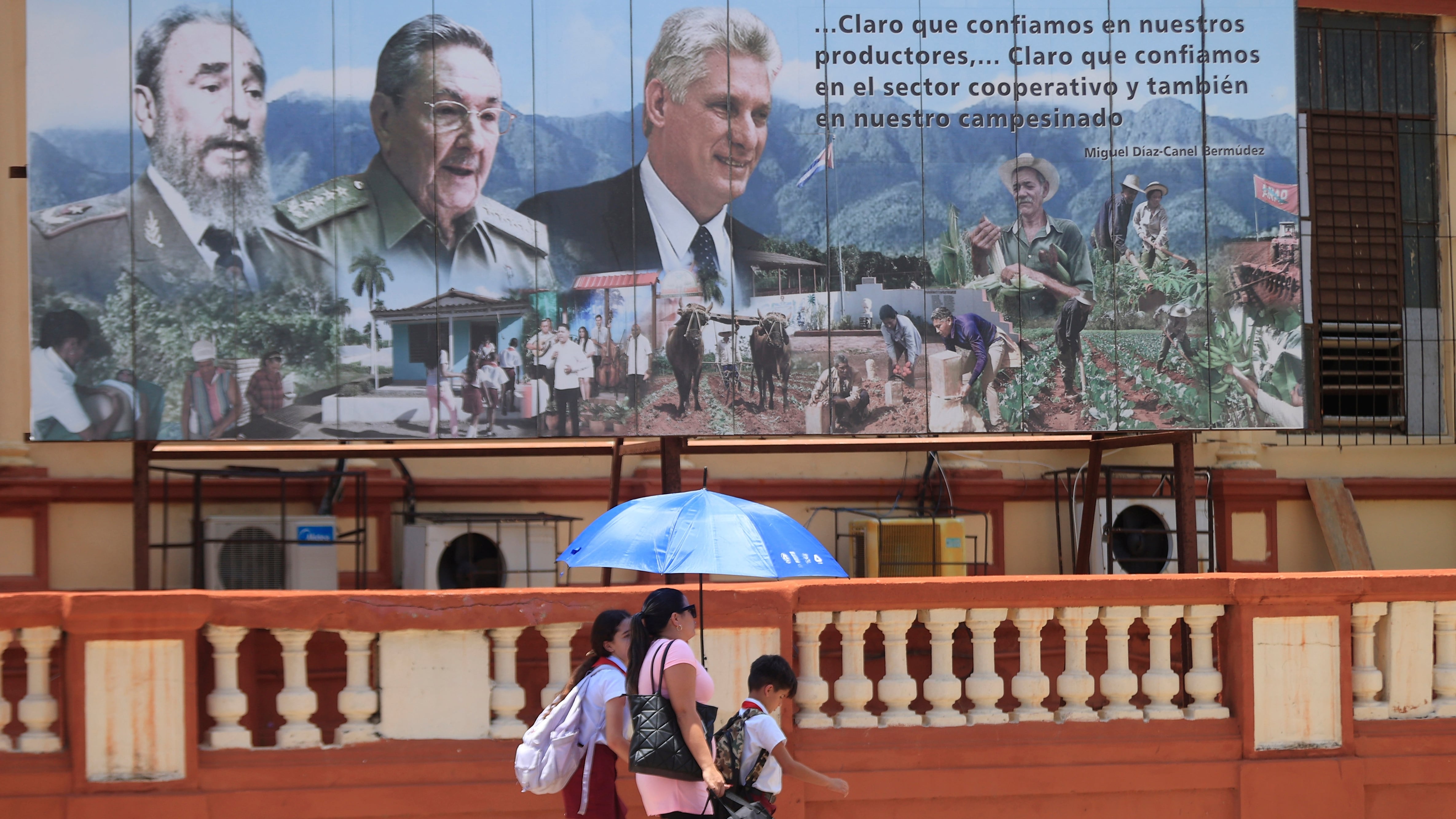
Billboard with images of Fidel and Raúl Castro and Miguel Díaz‑Canel, in Havana (Cuba), July 2.
❌
Subscriptions