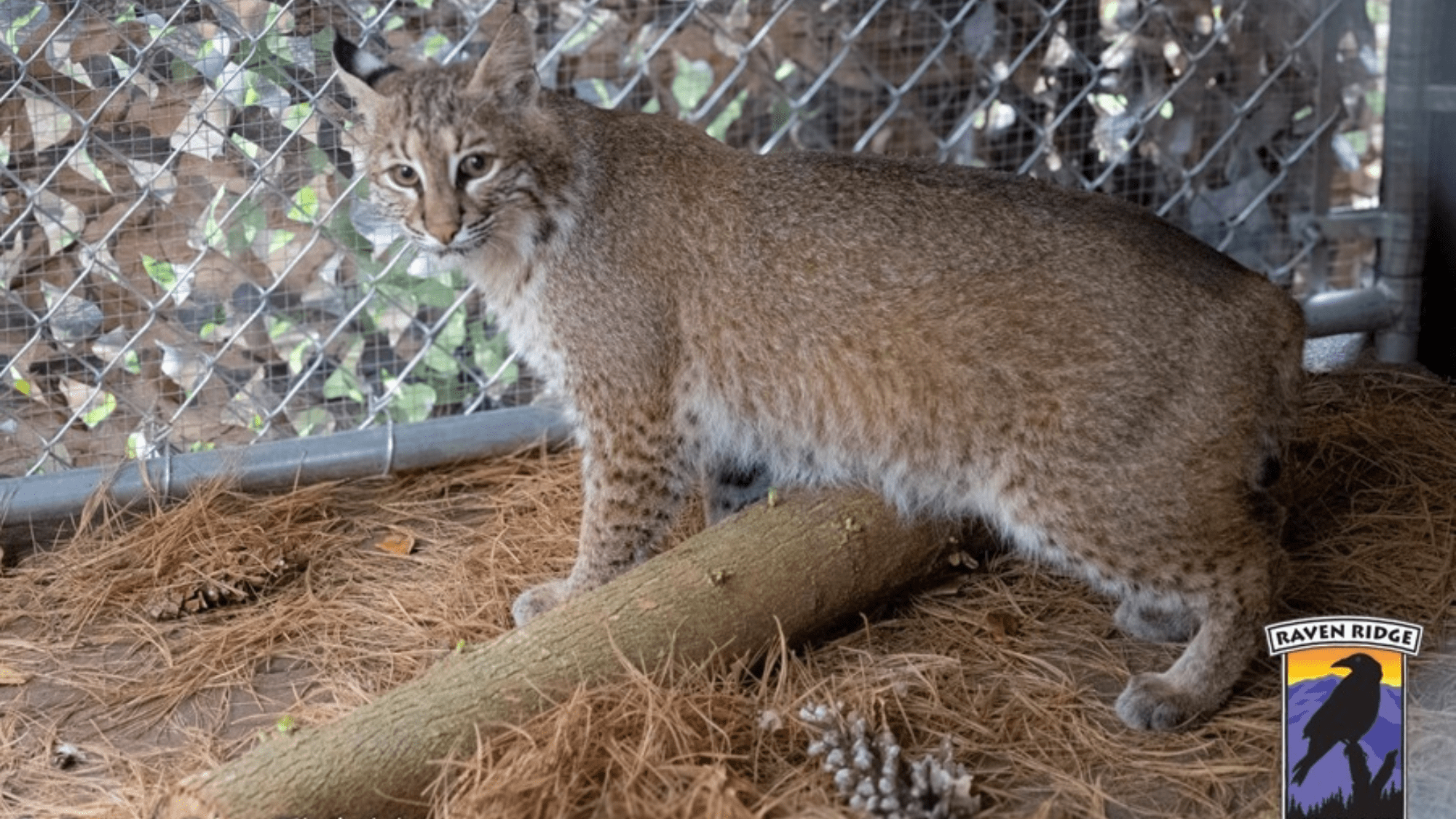
In March, we reported on a wild bobcat that had been hit and dragged by a car, who also got her head stuck in the car’s grill. As if things could get any worse, the wild feline arrived at Raven Ridge Wildlife Center in Pennsylvania on a Sunday, and the nearby veterinary practice was closed. But thanks to two lucky acquaintances, a mobile x-ray machine was brought in, revealing that the bobcat had broken two legs.
Thanks in part to the fact that her bone fractures were clean breaks, her team
In March, we reported on a wild bobcat that had been hit and dragged by a car, who also got her head stuck in the car’s grill. As if things could get any worse, the wild feline arrived at Raven Ridge Wildlife Center in Pennsylvania on a Sunday, and the nearby veterinary practice was closed. But thanks to two lucky acquaintances, a mobile x-ray machine was brought in, revealing that the bobcat had broken two legs.
Thanks in part to the fact that her bone fractures were clean breaks, her team decided to risk a surgery. The next morning, two surgeons operated on the bobcat contemporaneously. After the operation, Tracie Young, director of the Raven Ridge Wildlife Center, told Popular Science that she was doing “fantastic” and “starting to act like a bobcat.”
The female feline has been healing atRaven Ridge Wildlife Center for two months. Image: Dawn Rise Ekdahl / Raven Ridge Wildlife Center.
In her great misfortune, the cat has been rather lucky—and it seems like the luck is holding. Two striking coincidences have now come together to get her a custom-made cage for her rehabilitation.
“After two months of recovery, the bobcat now needs to be moved outside for exercise and to begin building muscle tone,” the wildlife center wrote on social media. “We had to devise a safe and creative way to get her outdoors, necessitating the construction of special caging. We determined that a custom dog kennel would be the only viable option.”
However, the problems were twofold: time and money. The dog kennel builders the wildlife center contacted needed at least eight months to build the rehab cage, and the project would cost thousands of dollars. But then Raven Ridge’s photographer Dawn called her neighbor Glen for suggestions, who turned out to be the owner of a kennel-building business and could build the kennel in two weeks.
The custom-built kennel was made for the bobcat in only two weeks. Image: Dawn Rise Ekdahl / Raven Ridge Wildlife Center.
And if you think that’s enough of a coincidence, it gets even better. The very day construction commenced, Raven Ridge Wildlife Center received a letter with a generous donation. A woman named Raven Minervino has passed away, and her husband wrote that she had consistently supported the wildlife center. After she died, her husband had asked that rather than getting flowers, people make donations in her memory. The letter had a donation in her memory large enough to pay for the custom bobcat cage.
“Thanks to all this support, we successfully moved the bobcat to the new enclosure, where she is now exploring, exercising, and much happier,” reads the social media post. Raven Ridge plans to (or perhaps already has) put a plaque in Minervino’s memory on the cage.
Both of the bobcat’s broken legs have healed, and since having the custom cage, she has put on ten pounds, bringing her to the much healthier total of 19 pounds. Adult female bobcats weigh approximately 15 to 20 pounds on average
The remains of an ancient dingo is shining new light on deep relationships between Australia’s First Nations and the wild dogs. Barkindji ancestors deliberately cared for and buried the dingo along the Baaka (Darling River) about 800 miles west of Sydney.
The dingo is known as garli in Barkindji language and they lived alongside the Barkindji as part of the community. While burying the dog, the Barkindji took great care in building a midden, or a spot to place organic material. The people li
The remains of an ancient dingo is shining new light on deep relationships between Australia’s First Nations and the wild dogs. Barkindji ancestors deliberately cared for and buried the dingo along the Baaka (Darling River) about 800 miles west of Sydney.
The dingo is known as garli in Barkindji language and they lived alongside the Barkindji as part of the community. While burying the dog, the Barkindji took great care in building a midden, or a spot to place organic material. The people living there continued to bring river mussel shells to the midden for hundreds of years after the dingo’s death. Archaeologists believe that this marks the first time this type of post-death feeding ritual has been scientifically documented. The findings are detailed in a study published today in the journal Australian Archeology.
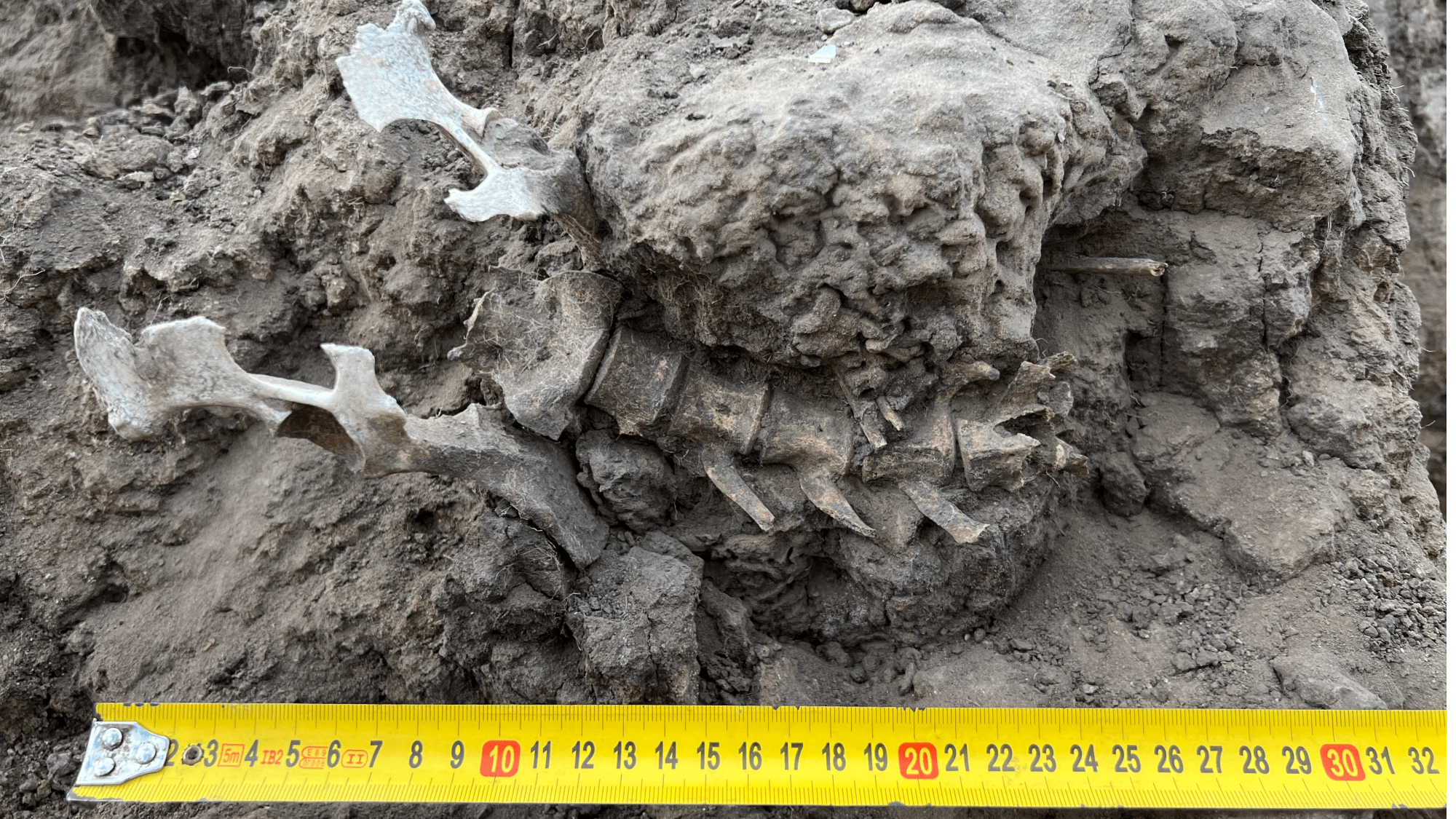
The garli skeleton site before excavation, Kinchega National Park. Image: Dr. Amy Way, Australian Museum.
“While Barkindji people have always known about this cultural practice, this discovery is really powerful because it provides new details on the depth of that relationship between Barkindji people and dingoes,” study co-author Dr. Amy Way, an archaeologist at the Australia Museum and university, said in a statement. “If garli were buried with the same care and respect we see for human ancestors, including mothers and elders, it tells us these animals were profoundly valued and loved.”
The burial site was first identified in 2020 by Barkindji Elder Uncle Badger Bates and National Parks and Wildlife Service (NPWS) archaeologist Dan Witter within a road cutting as erosion exposed the skeleton. Barkindji custodian Dave Doyleand and Elder Barb Quayle worked alongside the team during the analysis and excavation requested by the Menindee Aboriginal Elders Council. Elderlders guided the care of the remains throughout the research, including smoking ceremonies at the beginning of the excavation to honor their departed ancestor.
The male dingo was deliberately buried sometime between 963 and 916 years ago within a midden along the river. It was about four to seven years old, and his heavily worn teeth suggest a long life spent hunting.
Interestingly, the dingo had several healed injuries, including a broken lower leg and broken ribs. Based on the injuries, the dog may have been kicked by a kangaroo while hunting. This shows that the dingo likely survived with prolonged care by the Barkindji people.
“This confirms these traditions were much more widespread than we once thought,” added study co-author Dr. Loukas Koungoulos, a postdoctoral fellow at the University of Western Australia and research associate at the Australian Museum. “Dingoes like this garli weren’t simply tolerated around camps. They were tamed, lived with people and were embedded in daily life.”
Return to Country of the garli, which can be seen lying on paperbark on the table. Left to Right: Dr Amy Way, Aunty Cheryl Blore, Aunty Patsy Quayle, Uncle Badger Bates, Dr Sam Player, Dr Rebecca Jones, Aunty Evelyn Bates, Dr Loukas Koungoulos, Dave Doyle and Aunty Barb Quayle. CREDIT: Australian Museum.
When the dingo died, he was buried in a midden that appears to have been built right before the burial or at the same time People kept adding to it for hundreds of years after death. Barkindji Elders say that these ongoing additions formed part of a “feeding” ritual that honored the dog as an ancestor and that the site was maintained across multiple generations. After the analysis, the dingo’s remains were returned to Country. In Indigenous contexts, the word Country is capitalized to include the physical land and deep spiritual, cultural, and social dimensions of the area that are integral to identity and heritage.
“This research reinforces what Barkindji people have always known,” Dr Way said. “These relationships with animals, ancestors and Country were deep, deliberate and ongoing.”
People for the Ethical Treatment of Animals (PETA) is offering a HK$10,000 reward for information that may lead to the conviction of who may be responsible for the apparent mutilation and killing of a pet cat.
The funeral parlour on Lo Lung Hang Street in Hung Hom where a pet cat returned injured on May 24, 2026. Photo: Googlemaps.
The cat was suspected to have died from poisoning in Hung Hom after having its tail severed, according to TVB on Sunday.
The two-year-old feline was kept at
People for the Ethical Treatment of Animals (PETA) is offering a HK$10,000 reward for information that may lead to the conviction of who may be responsible for the apparent mutilation and killing of a pet cat.
The funeral parlour on Lo Lung Hang Street in Hung Hom where a pet cat returned injured on May 24, 2026. Photo: Googlemaps.
The cat was suspected to have died from poisoning in Hung Hom after having its tail severed, according to TVB on Sunday.
The two-year-old feline was kept at a funeral parlour on Lo Lung Hang Street in Hung Hom. The manager – who cared for the cat – called the police on Sunday after the pet returned injured. It had only been let out for a matter of minutes.
Several officers responded and are investigating whether animal abuse is involved.
“PETA is urging anyone with information about this incident to come forward to help ensure that whoever committed this attack is held accountable before more animals – or people – are harmed,” a spokesperson for the animal welfare NGO said in a Monday press release.
“Violence against animals is never an isolated issue—it is a well-documented warning sign of a broader capacity for violence that can escalate and pose serious risks to public safety,” added PETA Asia President Jason Baker. “Research consistently shows a strong link between cruelty to animals and violence toward humans. Authorities must act swiftly and send a clear message that such brutality will not be tolerated.”
The Society for the Prevention of Cruelty to Animals dispatched staff to help remove the cat’s body. A preliminary examination by a vet suggested the feline’s tail had been severed with a sharp object.
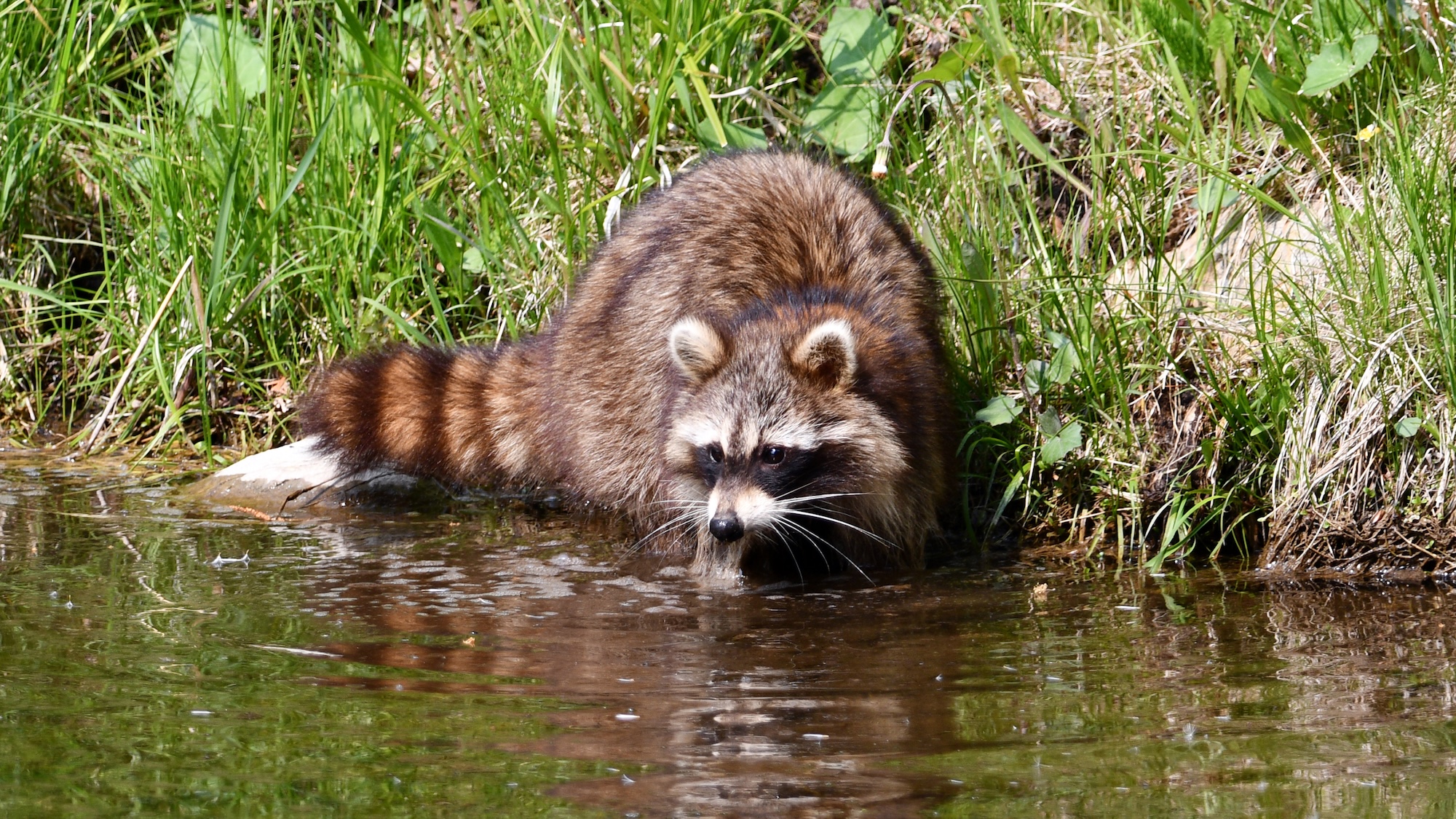
Raccoons are cute and curious creatures, but frequently carry infectious diseases. This poses serious problems for humans, especially when evidence indicates the animals are increasingly accustomed to more populated areas including cities and farms. Researchers at Japan’s Osaka Metropolitan University (OMU) say that the omnivores are now vectors for an emerging bacterium called Escherichia albertii, that’s already responsible for multiple severe outbreaks of food poisoning. However, monitoring r
Raccoons are cute and curious creatures, but frequently carry infectious diseases. This poses serious problems for humans, especially when evidence indicates the animals are increasingly accustomed to more populated areas including cities and farms. Researchers at Japan’s Osaka Metropolitan University (OMU) say that the omnivores are now vectors for an emerging bacterium called Escherichia albertii, that’s already responsible for multiple severe outbreaks of food poisoning. However, monitoring raccoons isn’t enough. To formulate the best public health policies, experts should also focus on rivers, according to a study published in the journal Applied and Environmental Microbiology.
The teams led by OMU veterinary scientist Atsushi Hinenoya recently conducted an extensive survey of both the wild raccoons and waterways in southern Japan’s Osaka Prefecture, which is known for its high concentration of the sneaky omnivores. They flagged the presence of E. albertii in 77 percent of water samples across six of the eight rivers examined,but only during the late spring, summer, and fall. Any negative samples were otherwise collected during the winter and early spring,when infected raccoon numbers are known to decline.
Moreover, Hinenoya’s team identified E. albertii upstream from populated areas and in water sources far removed from places like neighborhoods and recreational parks. Because riverborne bacteria typically accumulate downstream, this further supports the theory that wildlife—not humans—are responsible for the contamination.
From there, researchers studied 122 wild raccoons and discovered 56-percent were carrying E. albertii. Subsequent whole-genome analysis confirmed an array of bacterial strains, many aligning with those found in the water samples. This means that E. albertii was already entrenched in the ecosystem instead of starting from one outbreak. These also appeared remarkably similar to the strains documented in human patients which can cause severe diarrhea and vomiting sometimes requiring hospitalization.
“These findings are strong indicators that these [variants] pose a potential risk to public health,” Hinenoya said in a statement.
If E. albertii can survive for prolonged periods of time in both rivers and in wildlife, then that may significantly increase the risk of repeated exposure. This would make future outbreaks much harder to trace.
So what can be done about it? Hinenoya and the team emphasize the importance of adopting a “One Health” strategy that doesn’t only track human infections, but also the interconnected ecological, agricultural, and wildlife systems. From here, researchers intend to focus on more specific contamination routes that involve the raccoons, local farms, food products, and waterways. They also add that the approach will hopefully be applied to other diseases.
“We hope to expand this research toward the development of comprehensive strategies for infectious disease control,” said Hinenoya.
Critically endangered Tapanuli orangutan population falls after heavy rain and landslides, fuelled by climate crisis, in North SumatraExtreme rainfall and landslides fuelled by the climate crisis killed 7% of the remaining population of the world’s rarest great ape, a study has found, prompting fears for the species’ survival.The research suggests 58 out of the remaining 800 critically endangered Tapanuli orangutans (Pongo tapanuliensis) were killed after more than 1,000mm (39in) of rain fell ov
Critically endangered Tapanuli orangutan population falls after heavy rain and landslides, fuelled by climate crisis, in North Sumatra
Extreme rainfall and landslides fuelled by the climate crisis killed 7% of the remaining population of the world’s rarest great ape, a study has found, prompting fears for the species’ survival.
The research suggests 58 out of the remaining 800 critically endangered Tapanuli orangutans (Pongo tapanuliensis) were killed after more than 1,000mm (39in) of rain fell over four days in Indonesia’s North Sumatra province in November 2025. This equates to 11% of the local population and 7% of the entire species.
Spikes, fans, florets, waves, and other characteristics of marine creatures continue to shape the work of Lisa Stevens. The Bristol-based artist’s vibrant practice revolves around ceramic sculptures inspired by sea urchins, coral, nudibranchs, and other underwater organisms. Each piece is unique, with numerous colorful glazes and textures, and they often take on a fantastical quality, incorporating hybrid features that conjure associations with celestial objects, anatomy, and other facets of
Spikes, fans, florets, waves, and other characteristics of marine creatures continue to shape the work of Lisa Stevens. The Bristol-based artist’s vibrant practice revolves around ceramic sculptures inspired by sea urchins, coral, nudibranchs, and other underwater organisms. Each piece is unique, with numerous colorful glazes and textures, and they often take on a fantastical quality, incorporating hybrid features that conjure associations with celestial objects, anatomy, and other facets of nature.
Find more on Stevens’ Instagram, plus watch clay sculpting tutorials on YouTube.
Exclusive A vast area of the Bellingshausen Sea should be covered by sea ice by now, with one expert calling the loss of ice ‘depressing’Antarctica’s west coast is missing an area of winter sea ice the size of France, sparking concerns for threatened penguins other marine life and global sea levels.One expert said the loss of ice in the Bellingshausen Sea was “depressing” and the failure of ice to form could have intensified a heatwave over the continent’s peninsula last week that saw daytime te
Exclusive A vast area of the Bellingshausen Sea should be covered by sea ice by now, with one expert calling the loss of ice ‘depressing’
Antarctica’s west coast is missing an area of winter sea ice the size of France, sparking concerns for threatened penguins other marine life and global sea levels.
One expert said the loss of ice in the Bellingshausen Sea was “depressing” and the failure of ice to form could have intensified a heatwave over the continent’s peninsula last week that saw daytime temperatures peak at 15.4C which is more than 20C above average.

 Login
Login:max_bytes(150000):strip_icc():format(jpeg)/cochliomyia-hominivorax-new-world-screw-worm-fly-060926-2-118342f620e54a9ca99632a3aa8505cf.jpg)


:max_bytes(150000):strip_icc():format(jpeg)/carriage-horse-061026-2d1304048d65455694c02364cc2dfcf4.jpg)



:max_bytes(150000):strip_icc():format(jpeg)/eggs-bird-police-motorcycle-1-060826-87dc4b510f4743098f40a84608ff31b0.jpg)