Login
LoginMars Probe Declared Dead by NASA
4 June 2026 at 10:56

NASA has announced the death of one of its Mars imaging probes, MAVEN, after losing contact with the spacecraft at the end of last year.

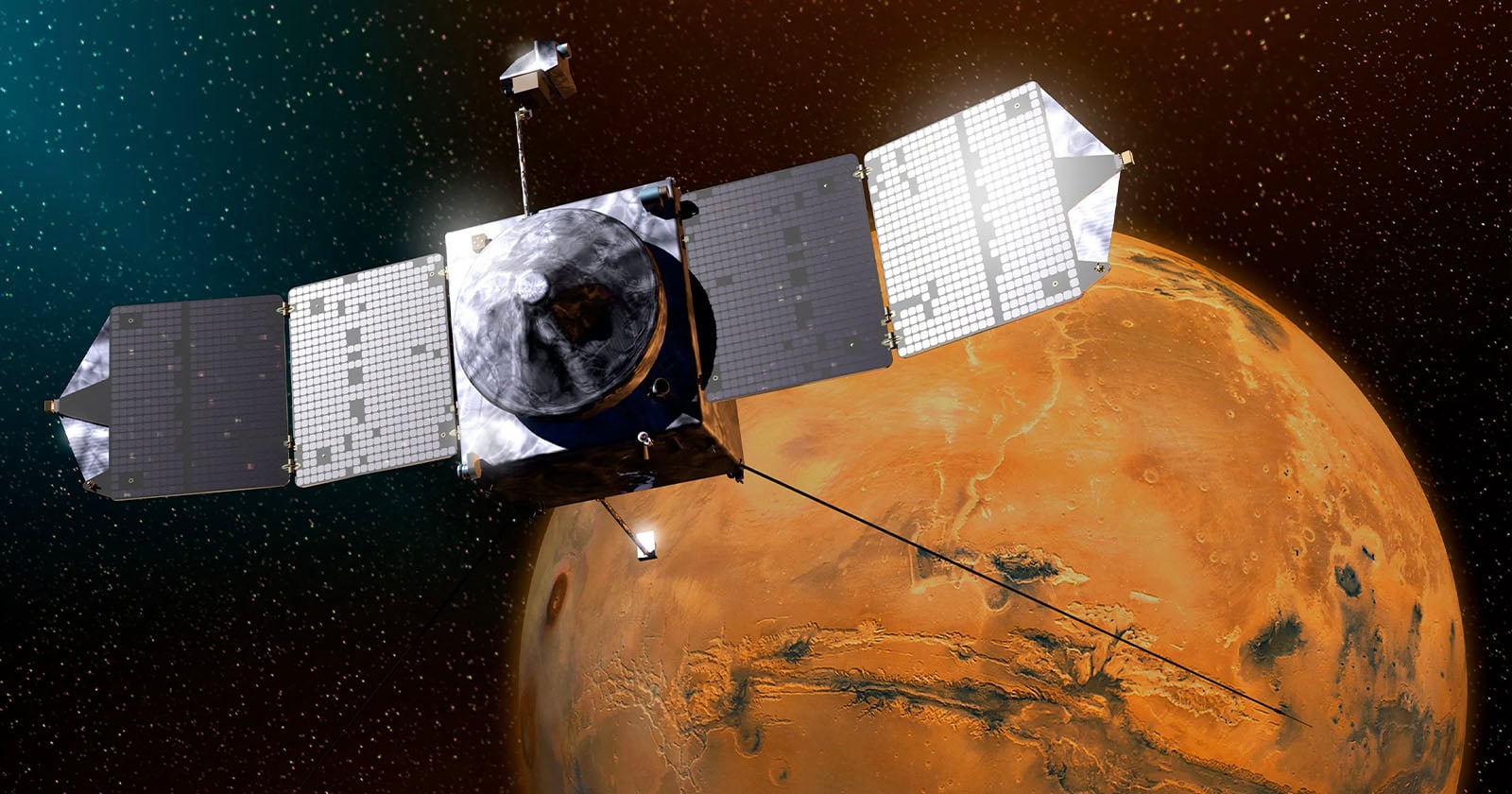


NASA has announced the death of one of its Mars imaging probes, MAVEN, after losing contact with the spacecraft at the end of last year.
Luca Parmitano to pilot all-male crew of four paving way for planned first human landing of Artemis IV in 2028
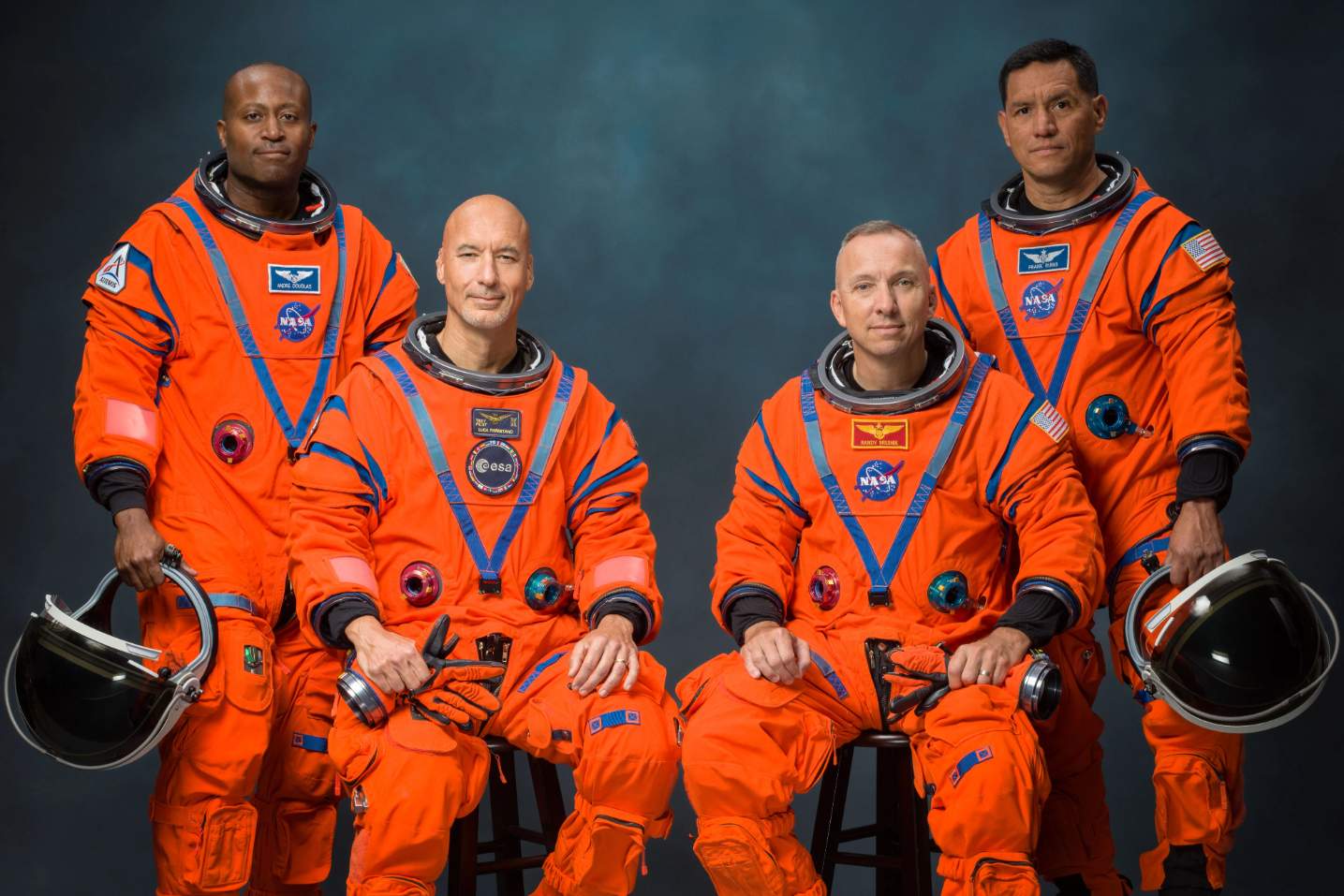
Jared Isaacman, the Nasa administrator, hailed the creation of “Earth’s first starfleet” on Tuesday as he revealed the Artemis III crew and details of the next stages of the space agency’s project to return humans to the moon.
An Italian astronaut, Luca Parmitano of the European Space Agency (ESA), will be the pilot of the planned two-week mission to lower Earth orbit next year that will test lunar landers from private companies Blue Origin and SpaceX.
Continue reading...
© Photograph: Bill Stafford/NASA/AP
© Photograph: Bill Stafford/NASA/AP
© Photograph: Bill Stafford/NASA/AP
Today, NASA announced an agencywide realignment that includes combining related mission directorates to sharpen the agency’s focus on human spaceflight.
“This initiative reflects NASA’s extreme focus on executing the mission in direct support of the National Space Policy,” NASA Administrator Jared Isaacman said in a press release about the realignment.
The National Space Policy refers to Executive Order 14369: Ensuring American Space Superiority, which was released by the Trump administration in December 2025. The order sets national priorities of returning Americans to the Moon, establishing a lunar base, developing a nuclear reactor in space, developing the commercial space economy, and enhancing the United States’ national security space architecture.
NASA’s six existing mission directorates will be slimmed down to four. Exploration Systems Development and Space Operations will be combined into a new Human Spaceflight Mission Directorate and will facilitate human spaceflight in low-Earth and lunar space environments. Aeronautics Research and Space Technology will be folded into a new Research and Technology Mission Directorate, tasked with researching and developing nuclear power and propulsion. The structure of the Science Mission Directorate (SMD) and Mission Support Directorate remain unchanged at the time of publication. All directorate leaders will now report directly to the NASA Administrator (Isaacman) to ensure that each remains focused on their directorate’s new mission.
“There will be no reduction in force, no program cancellations, no closures, but we will achieve cost savings through more efficient execution and taking an active role in delivering the outcomes the world has been waiting for from NASA,” Isaacman said.
At first glance, it is hard to see how combining four mission directorates into two, refocusing the missions of each, and pushing for increased efficiency and cost reduction will not result in some loss of talent either through positions being eliminated or individuals finding themselves in jobs they do not want to hold.
In a letter to NASA employees, Isaacman went into more detail about the specifics of this realignment and described how it will shift the agency’s internal bureaucratic authority away from directorates and toward NASA’s field centers. Prior to this, centers like Goddard Space Flight Center in Greenbelt, Md., and Johnson Space Center in Houston would need to compete for funding that had been appropriated to directorates based on the programs or missions they were tasked with.
A NASA source based in Houston told Ars Technica that the competition for funding “has been an absolute disaster.”
This new realignment “will adjust the funding distribution, so Centers have the financial support needed to sustain the baseline critical capabilities independent of near-term mission assignment,” Isaacman stated. “This shift will allow Center Directors to focus on maintaining the infrastructure, workforce, and capabilities required for current and future missions.”
Isaacman was unclear about when these changes will take effect, and policy analysts are unsure whether the realignment will be recognized by Congress through its appropriations process. The most recent Fiscal Year 2027 appropriations bill for NASA, which advanced out of the House Committee on Commerce, Justice, and Science on 13 May, allocates funding for six mission directorates, not four. The Senate appropriations committee is expected to release its proposed budget for NASA in the coming weeks, and the two bills must still undergo a lengthy reconciliation process.
In fiscal year 2026, Congress broke with the president’s budgetary priorities for NASA and passed a budget that ignored several of the administration’s proposed financial and mission cuts. Whether Congress will do the same this year and maintain the prior breakdown of directorates will become clear in the coming months.
—Kimberly M. S. Cartier (@astrokimcartier.bsky.social), Staff Writer
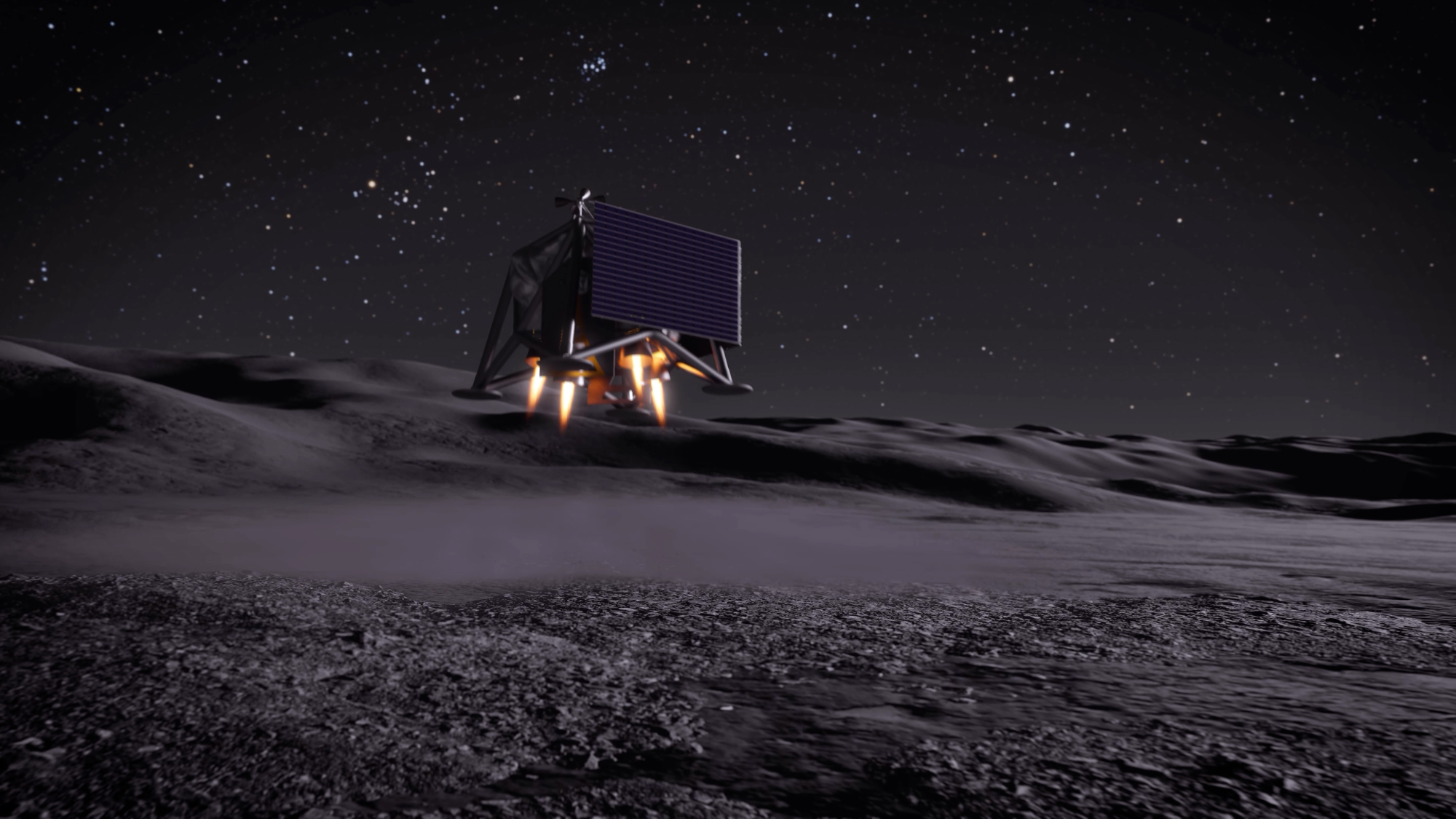
As NASA looks ahead towards Artemis III in mid-2027, the agency is sharing new details on several projects, including a future permanent moon base and a drone mission called MoonFall. The mission will send four drones to survey the surface of the moon’s South Pole to spot potential landing sites for future Artemis astronauts.
According to the update, the Jet Propulsion Laboratory (JPL) in Southern California has been developing the drone design and testing prototype hardware ahead of the scheduled 2028 launch. Each drone will land on the moon’s surface and gather high-resolution imagery of the terrain over the course of a single lunar day (up to 14 Earth days). After each drone’s last flight, its survive-the-night payload will continue to work for several months. Payloads that are designed to survive-the-night can endure the sub-zero temperatures of the lunar night, which can get as cold as -208 degrees Fahrenheit.
Each of the four drones should weigh about 550 pounds, and stand at four-feet tall and seven feet in diameter. They will use a Lunar Dashcam imaging system to create maps of the terrain. The drones will also be equipped with a laser retroflector array so that mission control can precisely locate the drones, a neutron spectrometer system to help determine how much (if any) subsurface water is present, and a spectrometer to measure radiation.
Texas-based Firefly Aerospace was selected to build the spacecraft that will transport the drones. Firefly’s Elytra spacecraft will carry the drones for a 45-day transit from the Earth to the moon. After entering lunar orbit, it will deorbit and perform a braking maneuver to send out the drones roughly 31 miles above the lunar South Pole.
No stranger to lunar exploration, Firefly Aerospace’s Blue Ghost lander became the first commercially built lander to reach the lunar surface in March 2025. While on the moon, Blue Ghost delivered 10 NASA instruments designed to gather lunar subsurface data and also snapped some beautiful images of a solar eclipse.
Some scientists worry that extracting resources from the moon could jeopardize research, while many Indigenous nations see the moon as sacred and are against any desecration.
As of now, NASA and 66 other nations have signed the Artemis Accords. While not an international treaty, the Artemis Accords is an agreement for high-level principles of space exploration and provides a basic legal framework for exploring and developing the lunar surface during this century. However, the NASA-led Artemis group is in direct competition with an initiative led by China to explore the lunar South Pole and potentially extract its resources.
The post Four drones will go where no astronaut have landed—yet appeared first on Popular Science.


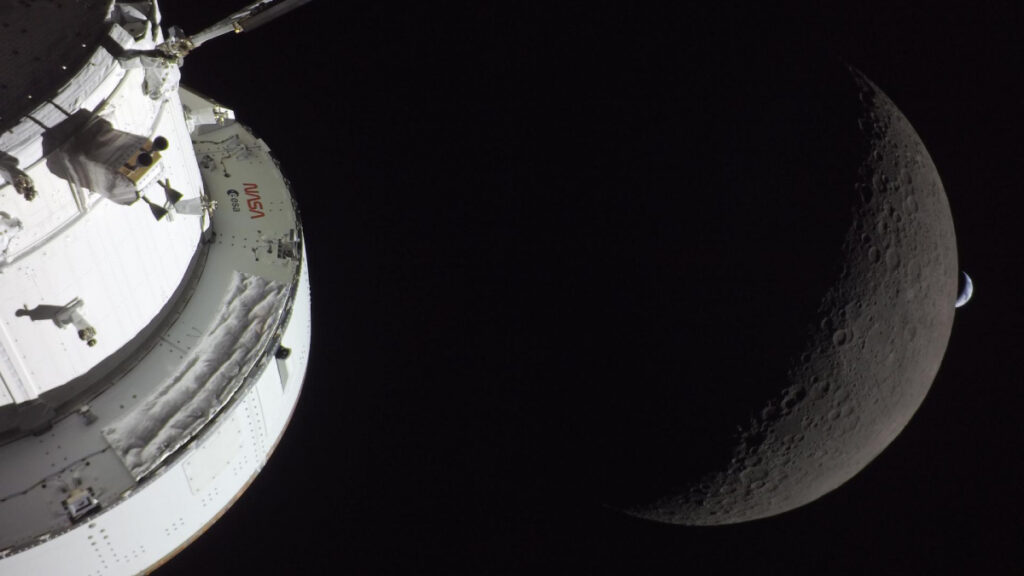
For the first time in more than 50 years, NASA launched a mission to the Moon. A lot has changed since 1972, when we last checked in on the enormous, rocky satellite, but there is much to learn—and revisit—when it comes to traveling through deep space and considering what, as NASA describes it, a “long-term return” to our lunar companion could look like. The Artemis II mission, which is currently underway and scheduled to last a total of 10 days, has also released some remarkable images of our home planet.
A striking image of the Earth “setting” behind the cratered Moon takes a truly unique view of our planet and prompts us to consider our perspective. It’s reminiscent of one of the most iconic photographs of all time, known as “Earthrise,” which was snapped by astronaut William Anders during the 1968 Apollo 8 mission—the first crewed trip to the Moon.
Artemis II is scheduled to return to Earth on the evening of April 10, when the crew will splash down into the Pacific Ocean off the California coast.
Do stories and artists like this matter to you? Become a Colossal Member today and support independent arts publishing for as little as $7 per month. The article Artemis II Captures Spectacular Images of ‘Earthset’ from Deep Space appeared first on Colossal.
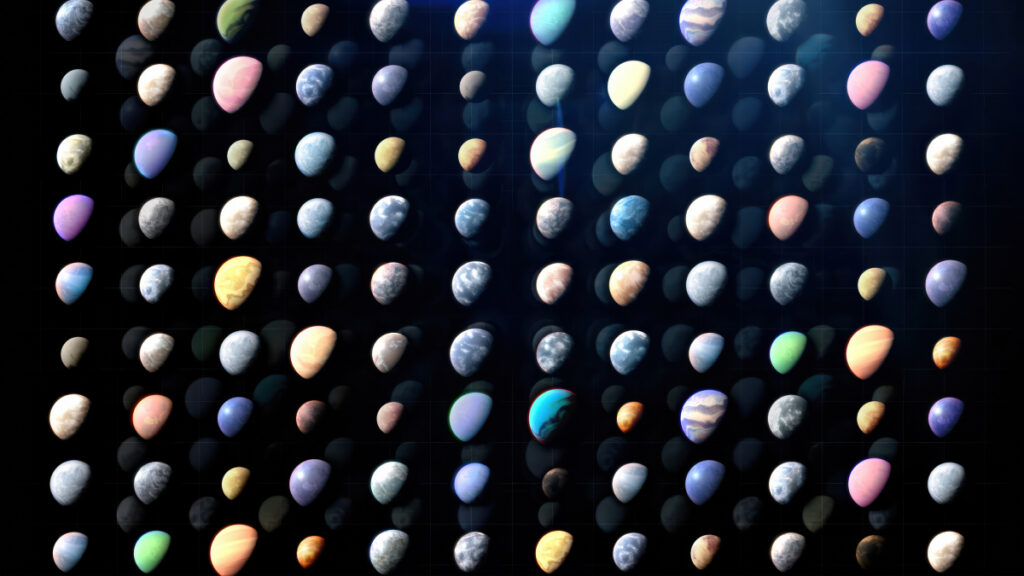
To date, astronomers have confirmed the existence of just under 6,300 exoplanets. New research could more than double that number, adding a potential 10,000 new planets in one fell swoop.
Yes, that’s right. A 1 with 4 zeros.
The T16 project has announced the discovery of 10,091 exoplanet candidates observed by NASA’s Transiting Exoplanet Survey Satellite (TESS). Since 2018, the all-sky survey has been monitoring more than 200,000 nearby stars using the transit method, which detects the faint dip in a star’s light when a planet crosses in front of it. Astronomers typically require 3 dips to be sure that what they’re seeing is actually a planet and not a one-off event such as an asteroid or comet in that distant star system.
The T16 project analyzed the light curves of more than 54 million stars observed during the first year of the TESS mission. The project’s analysis technique allowed it to search for planets around stars up to 16 times fainter than TESS typically searches, drastically increasing the field of discovery.
That’s more than were detected in the entirety of NASA’s Kepler mission and its follow-on K2.
Their pipeline detected 11,554 planet candidates. Of those, 1,052 of those had been detected previously and 411 only had one transit—not enough to confirm a planet.
That leaves 10,091 potential new planets. That’s more than were detected in the entirety of NASA’s Kepler mission and its follow-on K2 and more than double the existing planet candidates from TESS that await confirmation. These discoveries will be published in the Astrophysical Journal Supplement.
All of the new planet candidates orbit their stars quickly, with orbital periods between 12 hours and 27 days. Although most of the stars that TESS observes are smaller and cooler than the Sun, those close orbits likely mean that most of those planets are far too hot to be habitable.
• Read the paper: The T16 Planet Hunt
• More context from The Bad Astronomer
The T16 project team confirmed the planet-hood of one of their candidates not using the transit method, but a different method that measures the gravitational tug a planet exerts on its host star. That planet, TIC 183374187, is hot and slightly larger than Jupiter.
The remaining 10,090 newly discovered planet candidates require additional verification to determine whether they truly are planets or not. But given the rigor of the team’s analysis and the requirement of at least 3 transits to even make this list, it’s likely that most of the new discoveries are indeed planets.
“Astronomers are a bit conservative when it comes to claims like this, and want to be sure they pass a bunch of tests to make sure everything was done correctly and these planets actually exist,” astronomer Phil Plait wrote in his Bad Astronomy Newsletter. “Having said that, the process the astronomers went through looks legit to me, and I would bet the majority of these new candidates are real. That’s amazing.”
—Kimberly M. S. Cartier (@astrokimcartier.bsky.social), Staff Writer
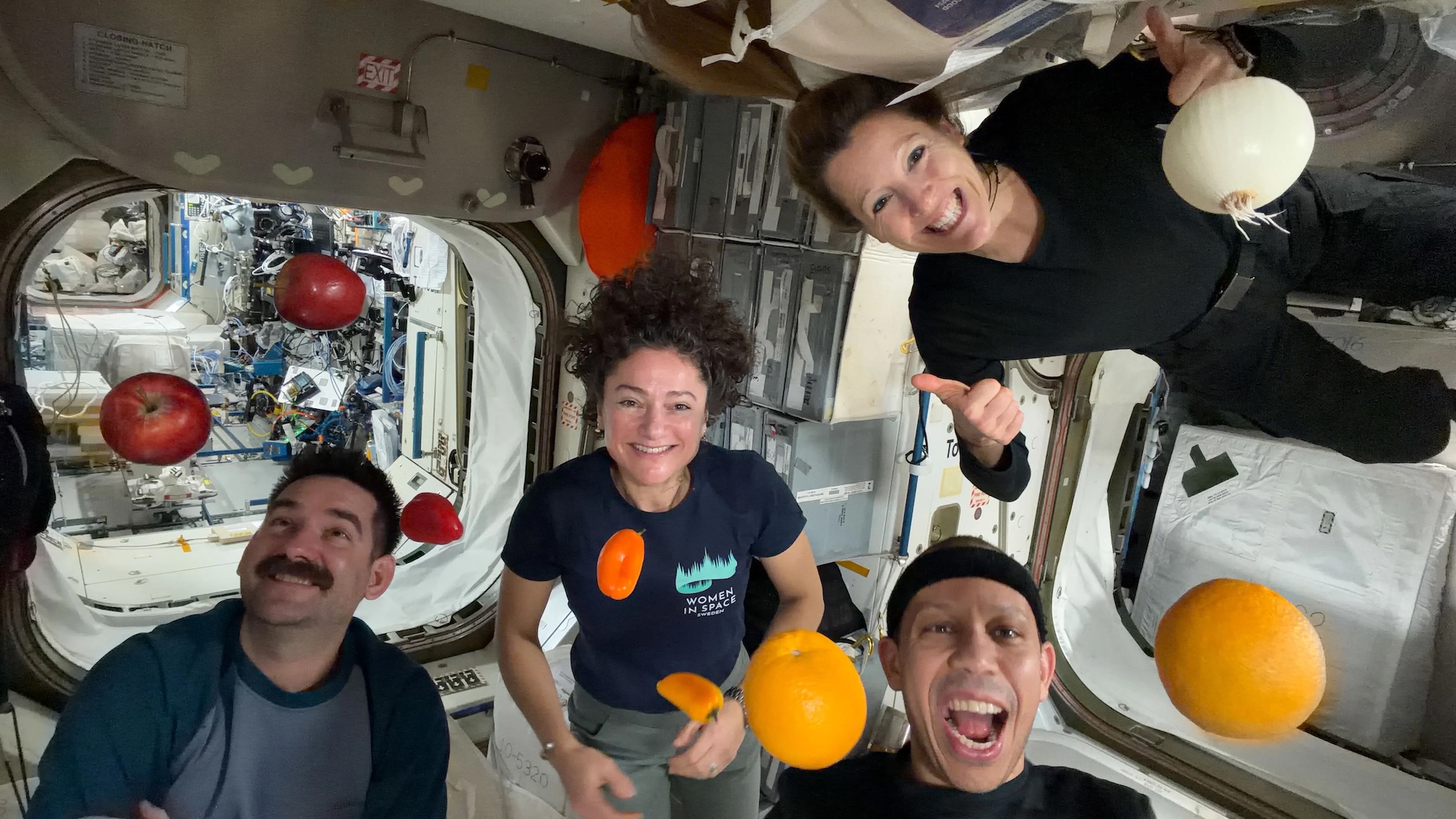
Astronaut food has come a long way from the freeze dried packets aboard the Apollo missions. During their historic lunar fly-by in April, the Artemis II crew dined on beef brisket, mac and cheese, quiche, and a lot of tortillas. The same can be said for the hungry inhabitants of the International Space Station (ISS). With regularly scheduled restocks, the astronauts don’t have to worry as much about issues like shelf life. That means that even when nearly 250 miles above Earth, ISS residents can still snack on fresh fruit and vegetables.
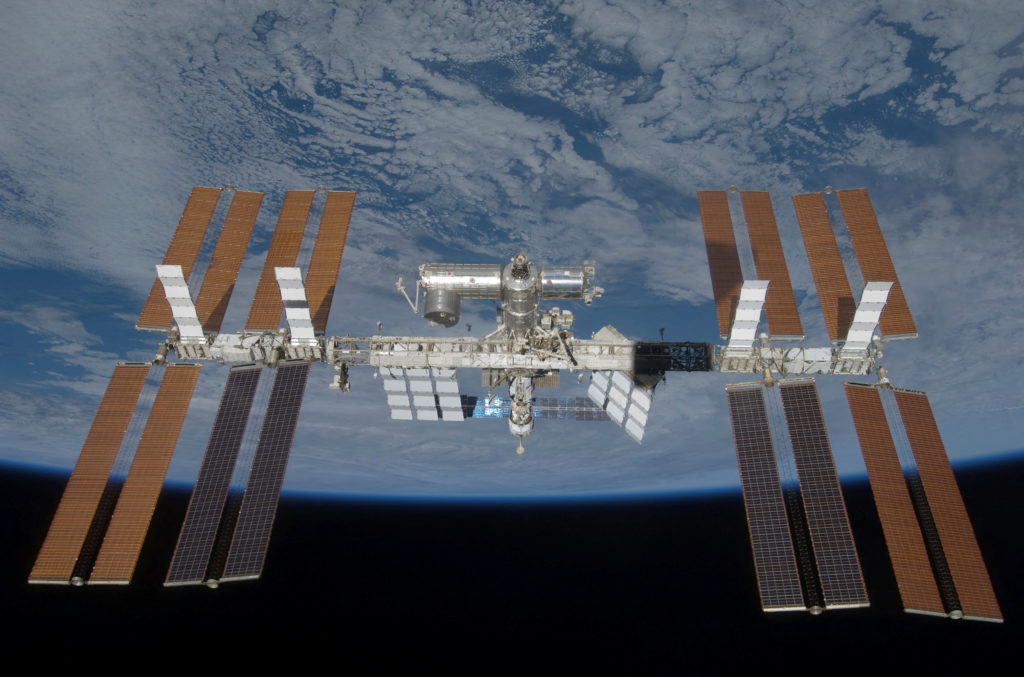
NASA highlighted one such astronaut grocery delivery in a photo released on May 14. Taken on April 19, astronauts Jack Hathaway, Jessica Meir, Chris Williams, and Sophie Adenot are seen in microgravity alongside what are presumably upcoming snacks like oranges, apples, peppers, and one conspicuous onion.
Food wasn’t the only precious cargo on the Cygnus XL spacecraft visit that month, however. In addition to the colorful produce, the ISS also received over 2,300 pounds of research hardware and science equipment. These materials encompass the tools the crew needs for their research on blood stem cells for cancer treatments and ways to strengthen astronaut gut health. The ISS is now also home to a new exercise machine, courtesy of the European Space Agency, as well as replacement nitrogen and oxygen tanks for spacesuits.
The post ISS astronauts pose with fresh fruit in microgravity appeared first on Popular Science.
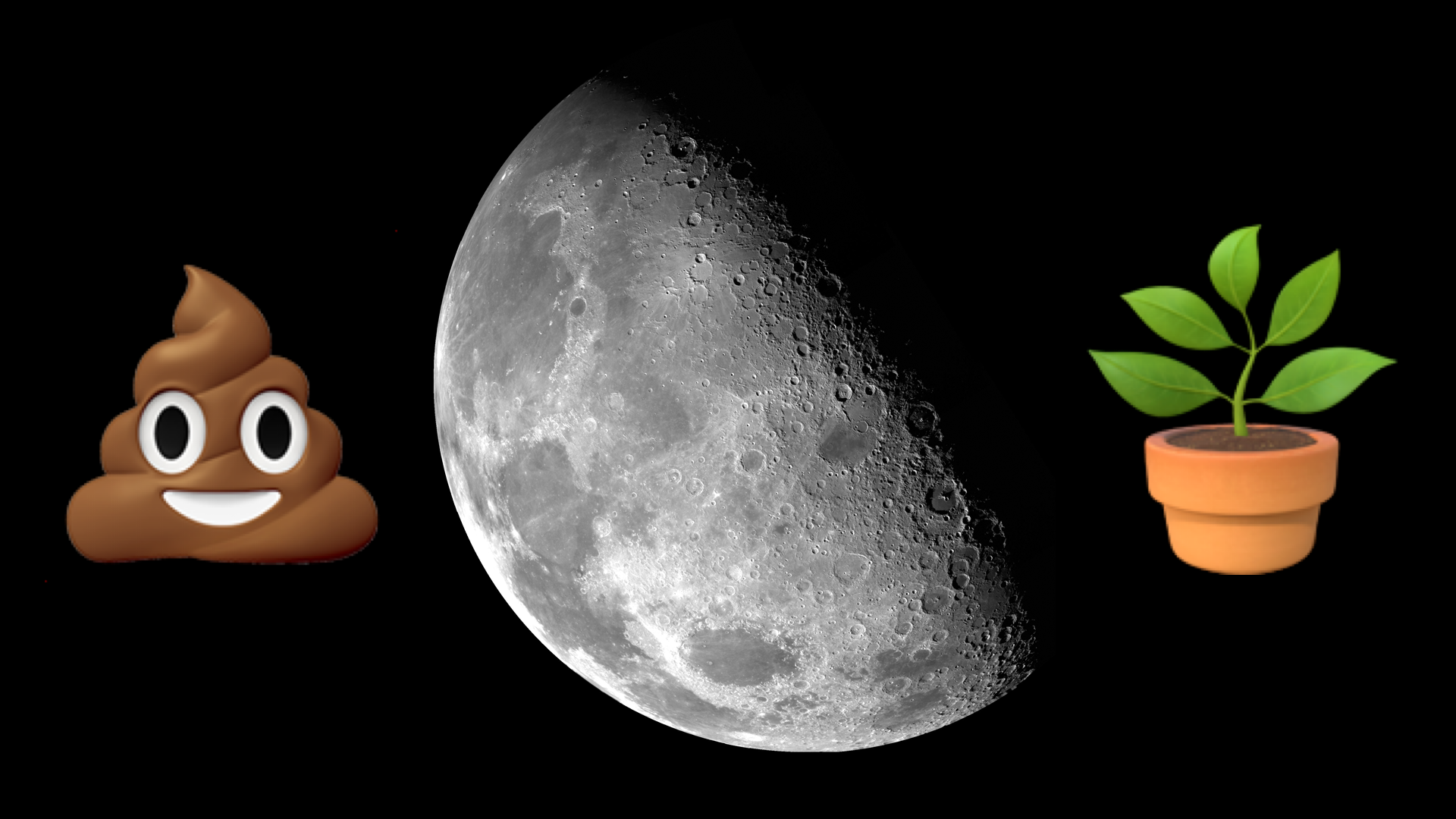
NASA’s ambitious plan to put humans on the moon may hinge on the bathroom habits of a handful of University of North Dakota grad students. In the name of science, those researchers will test the limits of a mobile wastewater treatment system designed to convert human waste into plant nutrients and other sustainable materials. The trial will serve as a stress test of sorts, measuring how well the Divergent Deployable Wastewater Treatment Facility holds up to regular use and heavy loads in an environment designed to mirror a lunar habitat.
It’s not pretty work, but someone has to do it.
“The tests will help NASA evaluate real-world operation, crew training needs, system reliability, and how wastewater simulants compare with actual human metabolic waste in an analog mission environment,” Ali Alshami, University of North Dakota Chemical Engineering professor and test participant, said in a statement.
The mobile facility consists of three separate bioreactors, each tasked with handling a specific kind of waste. Feces, urine, and food waste are treated separately because each material contains different levels of salts, solids, carbon, nitrogen, and phosphorus. One reactor processes feces and food waste, converting it into nutrient-rich water that can feed plants. The other two handle urine and greywater from activities like showering and laundry, some of which can be filtered and recycled into clean drinking water. From an astronauts’ perspective, the experience should feel pretty familiar to life onboard the International Space Station (ISS). They use the toilet as normal, and it automatically diverts waste at the source, routing each type to its corresponding bioreactor.
The whole process takes place in a mobile, 8.5-by-24-foot trailer. In addition to the bioreactors, the unit also houses a vertical garden maintained by the converted wastewater. The goal is to kill two birds with one stone: process waste efficiently and then use it to sustain lunar agriculture. Both are essential if astronauts want any shot at building longer-term habitats on the moon or even Mars. To that end, NASA has ambitions to start constructing a semi-permanent lunar structure or “moon base” by 2029.
Waste management in space has come a long way since the first moon missions. Back in the 1960s, NASA Apollo astronauts left behind 96 bags of human waste (filled with poop, urine, and vomit) on the lunar surface to save weight. Those bags are almost certainly still there.
Thankfully, decades of research mean astronauts no longer have to relieve themselves into a bag, at least not most of the time. The most recent Artemis mission featured a fully functional space toilet, though it malfunctioned almost immediately after liftoff.
Recycling wastewater has also seen major improvements. NASA had a breakthrough in 2023 when its life support system aboard the ISS managed to recover nearly 98 percent of all breath, sweater, and urine brought aboard by the crew. Future astronauts on prolonged spacewalks may also wear this Dune-inspired backpack that filters urine and sweat into drinking water in a single self-contained loop.
The post NASA wastewater system will turn human poop into plant food appeared first on Popular Science.