Saskatchewan's Realtors' association is reporting mounting supply pressures and all-time-high benchmark prices for cities across the province last month.
Saskatchewan's Realtors' association is reporting mounting supply pressures and all-time-high benchmark prices for cities across the province last month.
From April 2 to 5, the province of Ciego de Ávila will host the long-awaited 23rd edition of the Piña Colada Festival, which will take place with a cultural program adapted to current conditions, but faithful to its principles and cultural mission.Read More ...
From April 2 to 5, the province of Ciego de Ávila will host the long-awaited 23rd edition of the Piña Colada Festival, which will take place with a cultural program adapted to current conditions, but faithful to its principles and cultural mission.
Paraguay's President Santiago Peña met on Sunday in Campo Grande, the capital of Brazil's Mato Grosso do Sul state, with business leaders from the state's Federation of Industries (FIEMS) to promote investment opportunities in his country. The meeting, organized at the association's request, brought together representatives from sectors including bioenergy, food, construction and logistics.
Paraguay's President Santiago Peña met on Sunday in Campo Grande, the capital of Brazil's Mato Grosso do Sul state, with business leaders from the state's Federation of Industries (FIEMS) to promote investment opportunities in his country. The meeting, organized at the association's request, brought together representatives from sectors including bioenergy, food, construction and logistics.
In March, Canadian analyst Rory Johnston predicted that if the Strait of Hormuz stayed closed the price of oil could hit $200/barrel by summer. Earlier this month, executives from ExxonMobil and Chevron predicted $150 by mid-July.
For Canada, high oil prices are seen as a net positive: for energy sellers, this is true. For everyone else, it will mean crisis. The largest oil shock in history is headed our way and there is nothing we can do to stop it. Johnston warned the economic impact “wi
In March, Canadian analyst Rory Johnston predicted that if the Strait of Hormuz stayed closed the price of oil could hit $200/barrel by summer. Earlier this month, executives from ExxonMobil and Chevron predicted $150 by mid-July.
For Canada, high oil prices are seen as a net positive: for energy sellers, this is true. For everyone else, it will mean crisis. The largest oil shock in history is headed our way and there is nothing we can do to stop it. Johnston warned the economic impact “will be like the pandemic without Covid.” This time, Canada has to get the crisis response right.
My non-partisan report, Outrunning the Storm exploresrisk scenarios at $90, $150 and $200 a barrel, and sets out province-by-province policies and programs, for what can be done to harden Canada’s economy and adapt to the shock. It was crafted with maximum impact and return on investment in mind: every dollar spent now will return $10 to $15 in reduced costs or increased revenue. Even at $90 a barrel, there is no scenario where these investments do not pay back. High oil costs change the landscape of the economy, with alternative investments paying back much faster.
The most important no-cost decision is approving the extension on the Bruce Nuclear Energy licence — essential in tackling Ontario’s energy crisis. Governments should spend the summer racing to shield residents against next winter’s food, fuel and supply shocks: it will deliver a guaranteed return on investment.
The three areas at the greatest risk are: Farm and food, healthcare and Northern First Nations. Manitoba alone is facing a food shock from $500 million to $900 million, and Canadians could face food inflation of 40 per cent.
Every aspect of the agricultural supply chain depends on petrochemicals. To prevent farm failure, emergency farm finance is essential, and so are propane and fertilizer reserves. Shortline railroads must be preserved. An immediate national “Victory Garden” program, launched now, will make a meaningful dent in hunger and access to food.
Health systems face multiple serious shocks – like fuel costs that will undermine rural health. Almost all medical supplies are made from petrochemicals and imported: gowns, gloves, dressings and IV lines. Medication too — insulin, antibiotics, generics, anti-cancer medications and anesthetic. Governments must establish 180-day reserves of medications while ramping up domestic drug production. The federal government must commit to emergency health transfer payments or face preventable deaths.
Without action now, Northern First Nations and Indigenous communities reliant on diesel for energy will face humanitarian crises this winter. Eighteen to 24 months of diesel should be supplied as long-term solutions are implemented.
Alberta will also face severe risks for its non-oil and gas sector, especially agriculture.
In Ontario, car sales, manufacturing and its financial risk sector are at risk. This is industrial capacity Canada cannot lose.
The Government of Canada needs to lead the response now, starting with a critical supply emergency. The report’s solutions tackle different aspects of Canada’s polycrisis, building oil shock resilience and structurally hardening the Canadian economy against future shocks:
Mediating Canada’s current mortgage and insolvency meltdown will stabilize the economy and housing.
A national passenger rail renewal and a rail transition would create or preserve up to 358,000 jobs at risk from auto industry shocks at auto and aviation plants.
A national jobs program to secure 300,000 to 600,000 jobs for desperately needed work, in care and other sectors that are unfunded.
Converting Canada’s waste methane into turquoise hydrogen and carbon materials, would create over 100,000 jobs while reducing Canada’s greenhouse gas emissions by up to 33 per cent while ending emissions from Alberta’s 80,000 abandoned wells.
Canada and the world are already in the most serious crisis since the 1930s. The U.S. is undermining our economy with tariffs, with the stated goal of making us the 51st state. Alberta separatists are helping. Extraordinary times demand the extraordinary measures of wartime-level economic responses. The Depression-era and wartime fiscal and monetary policies of C.D. Howe, Mackenzie King and the Bank of Canada provide a Canadian example of success, as the report details.
We do not have years or months to start acting. We have days. The sooner we act, the better the outcome – and fortune favors the bold.
The big news seems to be that the “gold” Trump phones are finally shipping, and, as Jones says in his commentary, that should bring down the curtain on the jokes about them, or at least on the jokes about them not existing. We can still joke about them not being made in the USA as […]
The big news seems to be that the “gold” Trump phones are finally shipping, and, as Jones says in his commentary, that should bring down the curtain on the jokes about them, or at least on the jokes about them not existing. We can still joke about them not being made in the USA as […]
SINGAPORE: Singapore’s job market has taken a sharp turn. After ending 2025 on a stronger footing than many expected, businesses are now showing far less appetite to hire.
New survey data from the Economic Development Board (EDB) and Singapore Department of Statistics (DOS), reported by Vulcan Post, points to weaker business sentiment over the next six months and softer hiring plans across much of the economy.
When hiring slows there, the effects spread beyond office towers and into everyday spe
SINGAPORE: Singapore’s job market has taken a sharp turn. After ending 2025 on a stronger footing than many expected, businesses are now showing far less appetite to hire.
New survey data from the Economic Development Board (EDB) and Singapore Department of Statistics (DOS), reported by Vulcan Post, points to weaker business sentiment over the next six months and softer hiring plans across much of the economy.
When hiring slows there, the effects spread beyond office towers and into everyday spending, household planning, and career decisions.
Manufacturing finds support while other sectors lose steam
The outlook isn’t equally weak across every sector. Manufacturing seems to be holding up better than expected, supported by demand linked to artificial intelligence (AI), especially in semiconductor-related activity. According to the report, this strength has helped cushion weaker performance elsewhere in manufacturing.
Still, that support comes with limits. The article noted that gains are uneven and concentrated in select areas rather than broad-based growth, meaning stronger demand in one corner of the economy doesn’t automatically create opportunities across the board.
Services face the bigger hiring slowdown
Earlier in the year, most industries still expected to expand hiring after a stronger-than-expected 2025, but this optimism has now faded.
The latest business outlook shows that only recreation and personal services expect higher hiring activity. Several sectors that are usually seen as dependable employers are turning more cautious. Finance, viewed as a stable source of professional jobs, is also expected to face pressure rather than expansion.
Retail trade recorded one of the steepest changes in sentiment. Expectations moved from net positive territory earlier in the year into negative ground, making it one of the sectors facing the strongest pullback.
Longer job search periods and tougher competition for openings
Hiring sentiment doesn’t equal actual job losses, but it does act as an early signal. Companies usually reduce expansion plans before making larger workforce decisions. When uncertainty rises and costs increase, employers tend to delay recruitment and become more selective.
For Singaporeans planning a job switch, returning to work, or entering the market, this could mean longer search periods and tougher competition for openings.
At the same time, hiring slowdowns don’t hit every skill group equally. Areas linked to technology, automation and specialised industrial work may continue to see demand even as hiring cools.
Businesses are choosing caution in hiring for now
In summary, many employers seem to be waiting for greater stability before making hiring commitments.
Singapore has navigated difficult periods before and recovered faster than expected, but for now, the mood has changed from expansion to caution.
When hiring weakens, workers who keep skills current, stay flexible and expand their options usually give themselves the best chance of riding out slower cycles.
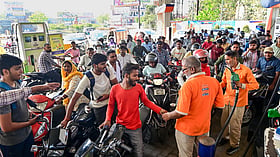
Even as Prime Minister Narendra Modi urged citizens to conserve fuel and reduce imports amid rising global energy prices, the Centre on Monday asserted that India has adequate fuel stocks and no plans to introduce rationing despite continuing disruptions in global oil markets.“There is no need to panic. There are sufficient supplies. There is no rationing in place. It’s not going to happen,” Oil Secretary Neeraj Mittal said at the Confederation of Indian Industry Annual Business Summit in New De
Even as Prime Minister Narendra Modi urged citizens to conserve fuel and reduce imports amid rising global energy prices, the Centre on Monday asserted that India has adequate fuel stocks and no plans to introduce rationing despite continuing disruptions in global oil markets.
“There is no need to panic. There are sufficient supplies. There is no rationing in place. It’s not going to happen,” Oil Secretary Neeraj Mittal said at the Confederation of Indian Industry Annual Business Summit in New Delhi.
The government’s reassurance came barely a day after Modi publicly appealed for austerity measures, asking citizens to conserve fuel, reduce import dependence and exercise restraint in gold purchases as soaring crude prices strain India’s foreign exchange reserves.
The Prime Minister’s remarks had triggered speculation about a possible fuel price hike or supply restrictions, particularly as retail petrol and diesel prices have remained frozen for nearly two years despite sharp increases in international crude prices.
Govt projects calm amid market turmoil
Mittal said India had maintained around 60 days of fuel stocks and roughly 45 days of LPG inventories during the past 67 days of geopolitical disruption affecting global energy shipments.
He said India had secured additional cargoes, diversified suppliers and increased procurement from existing exporting nations to stabilise domestic supplies.
“We have procured from other sources. We have procured from other countries. We have increased procurement from existing countries and that has kept us going in terms of supply management in the short run,” he said.
Mittal added that India had managed to safely move 14 ships through the conflict-hit Strait of Hormuz during the ongoing crisis.
A senior government source said the “default mode” of the administration remained maintaining stability in fuel prices and supplies.
Oil firms absorb mounting losses
Despite the official assurance, state-run oil marketing companies are facing growing financial pressure as global crude prices have surged by over 50 per cent since the escalation of the West Asia conflict around 10 weeks ago.
Officials indicated that oil firms are currently absorbing daily losses estimated between Rs 1,000 crore and Rs 1,200 crore because domestic petrol and diesel prices have not been revised upward in line with international rates.
Mittal said the government had absorbed part of the global price shock through excise duty cuts on petrol and diesel, resulting in a revenue impact of around Rs 1.6 lakh crore.
Push for energy security
India, the world’s third-largest oil importer and consumer, is also accelerating efforts to strengthen energy security through domestic exploration, strategic reserves and alternative fuels including green hydrogen, ethanol blending and sustainable aviation fuel.
Mittal said the government was examining “creative ways” to expand strategic crude reserves without locking up excessive capital.
“For a country like India which consumes 5 million barrels a day, to have a 90-day reserve would be putting a lot of money in a box without using it at all,” he said.
No fuel rationing planned, India has adequate stocks
The government will gradually phase out the Wholesale Price Index (WPI) over the next five years and replace it with a more comprehensive Producer Price Index (PPI), marking a major shift in how inflation is measured in the economy.The Department for Promotion of Industry and Internal Trade (DPIIT) will release a revised WPI series with a new base year of 2022-23 on 15 June, replacing the current 2011-12 series. On the same day, it will also launch a new Producer Price Index framework comprising
The government will gradually phase out the Wholesale Price Index (WPI) over the next five years and replace it with a more comprehensive Producer Price Index (PPI), marking a major shift in how inflation is measured in the economy.
The Department for Promotion of Industry and Internal Trade (DPIIT) will release a revised WPI series with a new base year of 2022-23 on 15 June, replacing the current 2011-12 series. On the same day, it will also launch a new Producer Price Index framework comprising Output PPI, Trial Input PPI and Services PPI.
Speaking to reporters, Principal Economic Adviser Praveen Mahto said the WPI would continue to be published alongside the PPI for five years before being discontinued. The transition period is intended to allow businesses, government agencies and other users to shift to the new index.
"Considering the wide usage of WPI in price escalation clauses, this index will be released for five years from the date of release of the revised series along with PPI and will be discontinued thereafter," the Commerce and Industry Ministry said.
Three new producer price indices
The new PPI framework will initially include three components — Output PPI, Trial Input PPI and Services PPI. The Services PPI will initially cover seven sectors: banking, securities transactions, insurance, pension fund management, railways, air passenger transport and telecommunications. More services are expected to be added in subsequent phases depending on data availability.
Officials said the transition aligns India with global practices followed by major economies and recommendations made by the International Monetary Fund (IMF). Unlike WPI, the new system will allow policymakers and businesses to track price movements across both inputs and outputs, providing a clearer picture of how inflationary pressures move through supply chains.
The revised WPI and Output PPI will be published monthly, while Services PPI will be released quarterly. Trial Input PPI for the manufacturing sector will initially be published on an experimental basis from March 2026 to assess data quality and gather stakeholder feedback.
Expanded WPI basket
The revised WPI series significantly expands the basket of commodities tracked. According to Dilip Kumar Sinha, Deputy Director General in the Office of the Economic Adviser, the number of items covered has increased from 697 to 957.
New energy sources such as solar, wind and nuclear power have been included under the electricity category. Crude petroleum and natural gas have also been moved from the primary articles category to fuel and power, bringing them in line with other major energy products.
Officials said WPI, Output PPI and Services PPI will be compiled using basic prices, excluding taxes and trade margins, while Input PPI will use purchaser prices because industries acquire inputs from the market.
Impact on contracts
Mahto said the Department of Expenditure is expected to issue a circular advising users to adopt PPI in future long-term contracts instead of WPI, particularly where price-escalation clauses are involved.
India's current WPI series, based on 2011-12 prices, was launched in May 2017. Since its introduction in 1942, the index has undergone seven revisions. The move to PPI is expected to bring India in line with countries such as the United States, China, Japan, Germany and France, all of which use producer price indices to track changes in prices received by producers.
The announcement comes at a time when wholesale inflation remains elevated. Wholesale price inflation rose to a 42-month high of 8.3 per cent in April, driven largely by higher energy prices linked to disruptions caused by the conflict in West Asia.
Govt to phase out WPI, introduce Producer Price Index from 15 June
Rising gas prices pushed inflation to a three-year high last month, a headache for the Federal Reserve and a potential political challenge for the Trump administration.
Rising gas prices pushed inflation to a three-year high last month, a headache for the Federal Reserve and a potential political challenge for the Trump administration.
In a collaborative initiative between the Gastown and Hastings Crossing BIAs, Mexican-owned businesses are celebrated as the city’s Latin population grows.
In a collaborative initiative between the Gastown and Hastings Crossing BIAs, Mexican-owned businesses are celebrated as the city’s Latin population grows.
There’s a lot going on at factory farms that the owners don’t want us to see — and they’ve just won the right to keep it all secret.
That’s the sad result of a ruling last week by the Ontario Court of Appeal, which no doubt has executives in the pork and poultry industry celebrating. They can rest assured that the public won’t get even a glimpse of what they’re doing to the hundreds of millions of animals in their captivity.
The ruling will have the effect of preventing clandestine investig
There’s a lot going on at factory farms that the owners don’t want us to see — and they’ve just won the right to keep it all secret.
That’s the sad result of a ruling last week by the Ontario Court of Appeal, which no doubt has executives in the pork and poultry industry celebrating. They can rest assured that the public won’t get even a glimpse of what they’re doing to the hundreds of millions of animals in their captivity.
The ruling will have the effect of preventing clandestine investigators — including journalists and animal advocates — from making false statements in order to go undercover on factory farms. It overturns a lower-court ruling that found a provincial law preventing such exposés violated free speech guarantees in the Charter.
So, as a result of the upper court ruling, there will likely be no more undercover exposés. Secrecy will prevail.
That secrecy is crucial to maintaining the gap between two conflicting realities that exist today — on one hand, there is a growing sensitivity toward animals, as humans increasingly understand them to be sentient beings capable of experiencing pain, sadness, joy and grief.
On the other hand, dramatic changes in the farming business have created a horrific world for animals on modern industrial farms — or what New York Times columnist Nicholas Kristoff recently dubbed the “livestock gulag.”
No longer grazing in outdoor fields, most farm animals now live their lives in indoor facilities where they’re confined in cramped, crowded sunless spaces and subjected to painful cutting procedures beyond the public’s view.
Exposés of these conditions by undercover activists alarmed the public and led to calls for government intervention. But governments have tended to be more responsive to demands from the powerful agriculture industry to shut down the exposés.
In 2020, Ontario Premier Doug Ford brought in an “ag-gag” law that effectively made such exposés illegal.
Without exposés, however, there’s little to protect animals locked up in these facilities.
The only regulations governing their welfare are “codes of practice,” but these codes are drawn up by an industry-controlled organization, known as the National Farm Animal Care Council.
In other words, the industry is regulating itself. And, not surprisingly, it’s not very hard on itself.
Provinces have animal protection laws that prohibit causing “distress” to animals. But procedures that are generally accepted in the industry are exempt.
So, while it would be illegal to confine a cat or a dog to small cage for its entire life, the same sort of confinement is perfectly legal — and widely used on factory farms — for pigs and hens.
“To insulate a painful practice from legal scrutiny, the only thing the farm industry has to do is ensure that the practice is widely adopted,” according to a report prepared by Animal Justice and other advocacy groups. “Our animal welfare framework enables systemic cruelty.”
Canada received a “D” on the World Animal Protection Index for allowing practices — such as the use of confining crates for long time periods and painful procedures — that are banned in some comparable jurisdictions, including some U.S. states.
Although polls show Canadians strongly support protections for farmed animals, the issue attracts almost no mainstream media attention.
That can change abruptly however with the release of a graphic undercover video. For instance, there was huge media attention and public outrage in 2014 when an undercover video captured frightening scenes inside a large dairy farm in Chilliwack, B.C.
The video showed cows being repeatedly beaten, kicked, punched and whipped with chains and canes, and a cow being lifted by a tractor with a chain around her neck.
Industry executives and their allies in the Ford government want to make sure there’s no such disturbing videos disseminated in the future, so they’re clamping down hard — not on potential abusers but on those brave enough to try to capture the abuse on film.
This article originally appeared in the Toronto Star.
 Login
Login