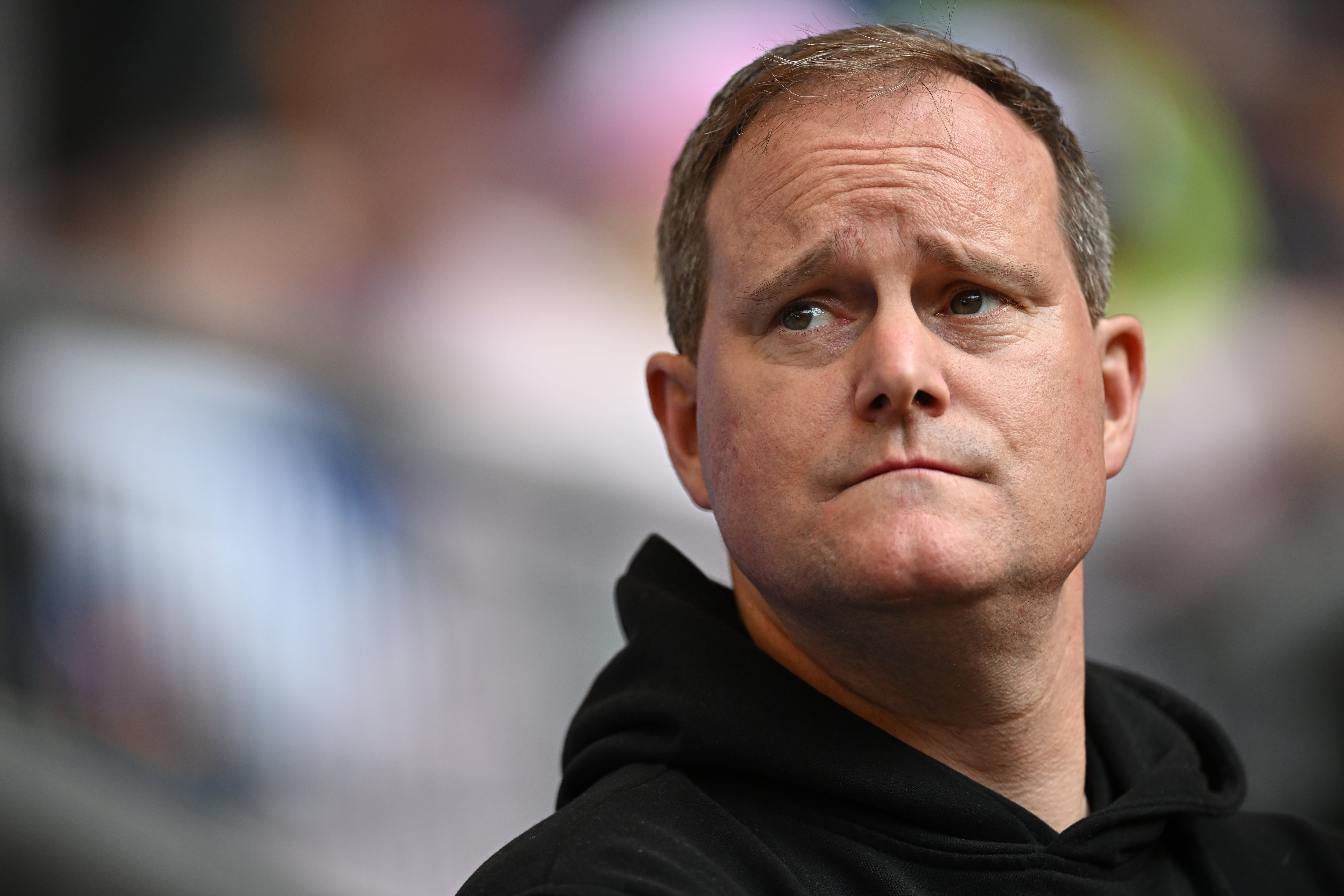
He takes this newspaper’s call on a train bound for Hamburg, home of St. Pauli, continues by car and says goodbye almost an hour later in his office at the headquarters of the modest club, which he has chaired since 2014. Oke Göttlich (Hamburg, Germany; 50) is also one of the 13 vice presidents of the DFB, the German Football Association. And earlier this year, amid threats from Donald Trump’s administration to invade Greenland, Göttlich, a trained journalist, said enough was enough. “What reaso
He takes this newspaper’s call on a train bound for Hamburg, home of St. Pauli, continues by car and says goodbye almost an hour later in his office at the headquarters of the modest club, which he has chaired since 2014. Oke Göttlich (Hamburg, Germany; 50) is also one of the 13 vice presidents of the DFB, the German Football Association. And earlier this year, amid threats from Donald Trump’s administration to invade Greenland, Göttlich, a trained journalist, said enough was enough. “What reasons justified the boycotts by certain countries of Olympic Games in the 1980s?” he asked, referring to Moscow 1980 and Los Angeles 1984, in the Hamburger Morgenpost. “In my view, the current threat is greater than back then, so we must have this discussion; a footballer’s life is not worth more than the life of any of the people being directly or indirectly attacked by the host country of the next World Cup.”
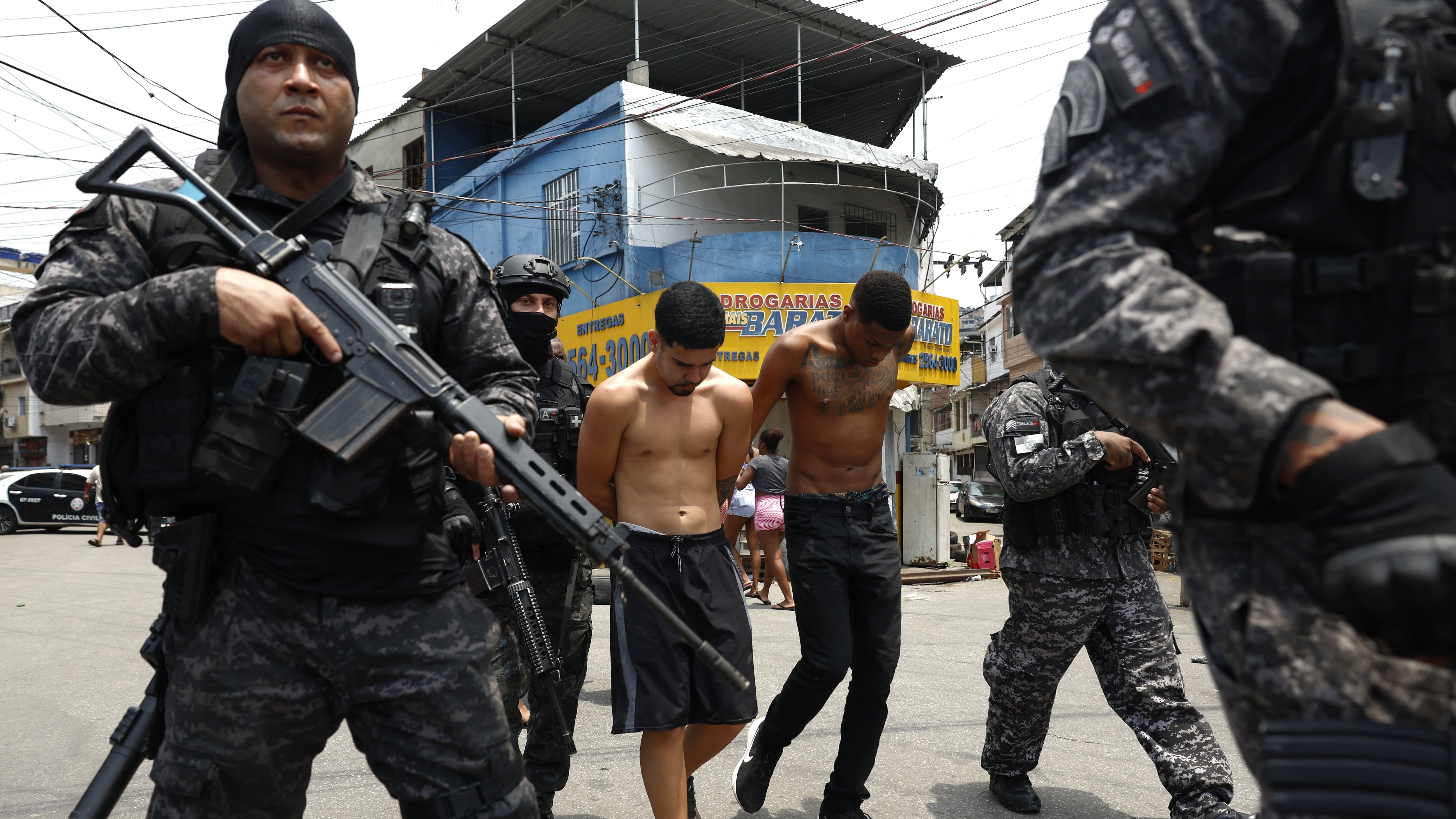
The United States will add two of Brazil’s most powerful organized crime gangs, Comando Vermelho and Primeiro Comando da Capital (PCC), to its list of Foreign Terrorist Organizations effective June 5, the State Department announced. In addition, Washington has designated both groups as Specially Designated Global Terrorists as of this Thursday, adding them to a list that includes Al Qaeda, Islamic State, and Hezbollah.Seguir leyendo
The United States will add two of Brazil’s most powerful organized crime gangs, Comando Vermelho and Primeiro Comando da Capital (PCC), to its list of Foreign Terrorist Organizations effective June 5, the State Department announced. In addition, Washington has designated both groups as Specially Designated Global Terrorists as of this Thursday, adding them to a list that includes Al Qaeda, Islamic State, and Hezbollah.
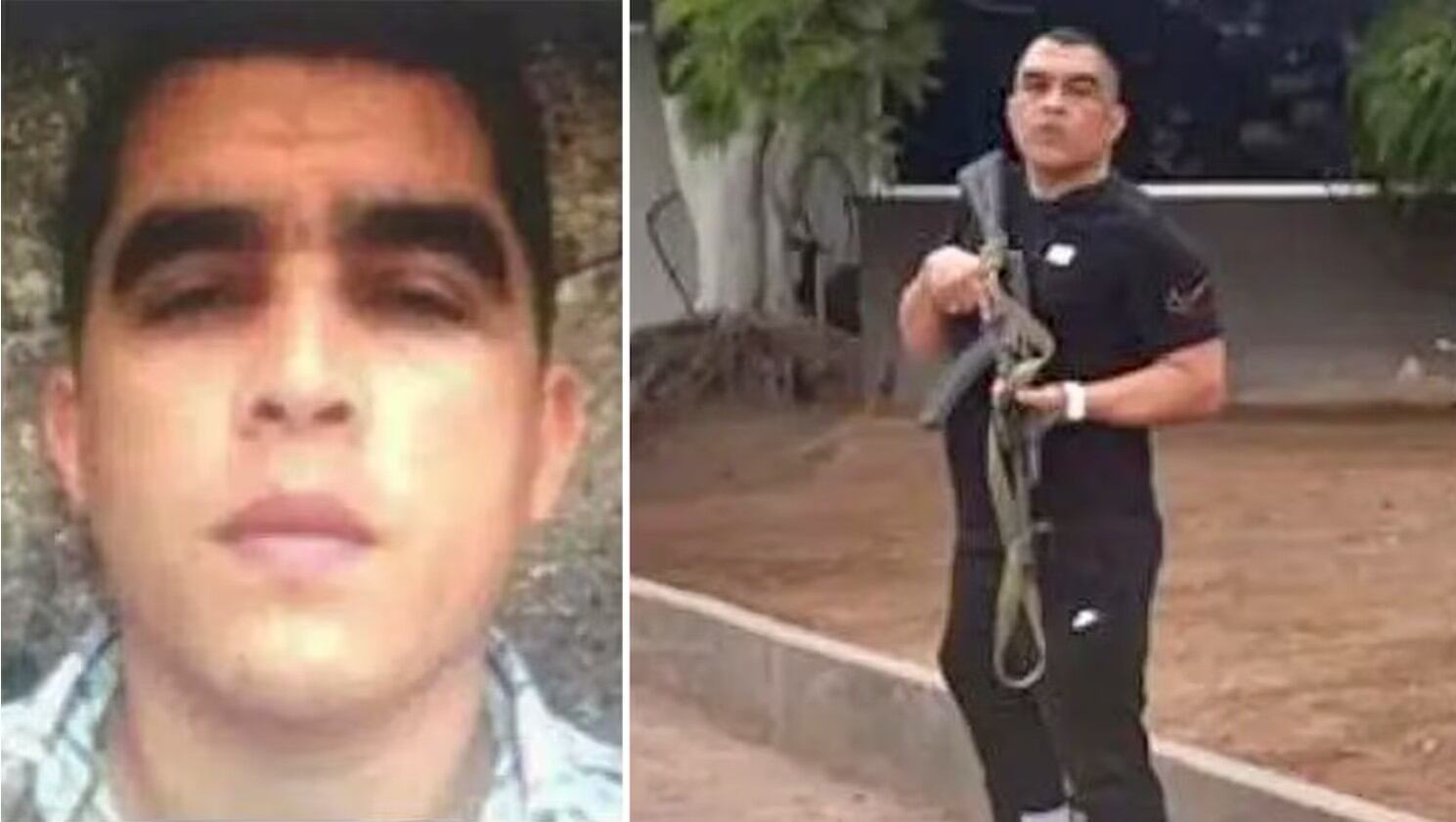
The video, taken from the air, shows a modest green-roofed building in a forest clearing in southeastern Venezuela. As in the dozens of videos Donald Trump has shared over the last months of supposed narco-boats being blasted apart in the Caribbean Sea, the house disintegrates after the missile hits. A column of black smoke rises over the trees, visible from miles away. Ten seconds is all it took to kill Héctor Rusthenford Guerrero Flores, 42, aka El Niño Guerrero, the leader of Tren de Aragua,
The video, taken from the air, shows a modest green-roofed building in a forest clearing in southeastern Venezuela. As in the dozens of videos Donald Trump has shared over the last months of supposed narco-boats being blasted apart in the Caribbean Sea, the house disintegrates after the missile hits. A column of black smoke rises over the trees, visible from miles away. Ten seconds is all it took to kill Héctor Rusthenford Guerrero Flores, 42, aka El Niño Guerrero, the leader of Tren de Aragua, Venezuela’s most powerful criminal group that operated with official complicity for years.
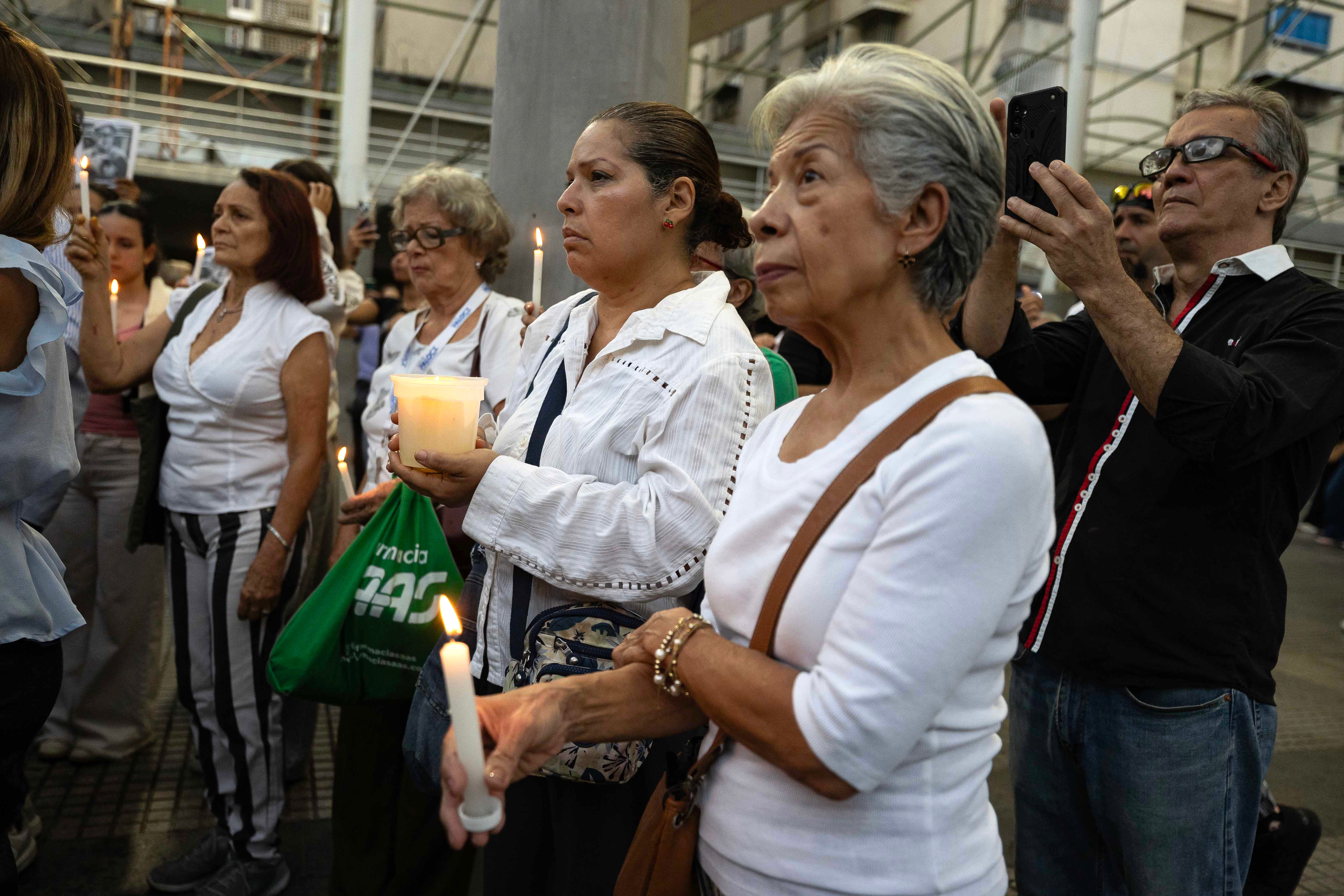
María Emely Delgado crossed paths with Carmen Navas several times this year: at the offices of the NGO Foro Penal, at the Public Ministry, and once at the El Rodeo prison on the outskirts of Caracas. Delgado is 63 years old, Navas was 82. Both were looking for their sons, who disappeared after being arbitrarily detained. Carmen Navas died 10 days after finding her son Víctor Hugo in a cemetery. She had spent 16 months searching for him. María Emely has still not found Jorgen. “You have to be in
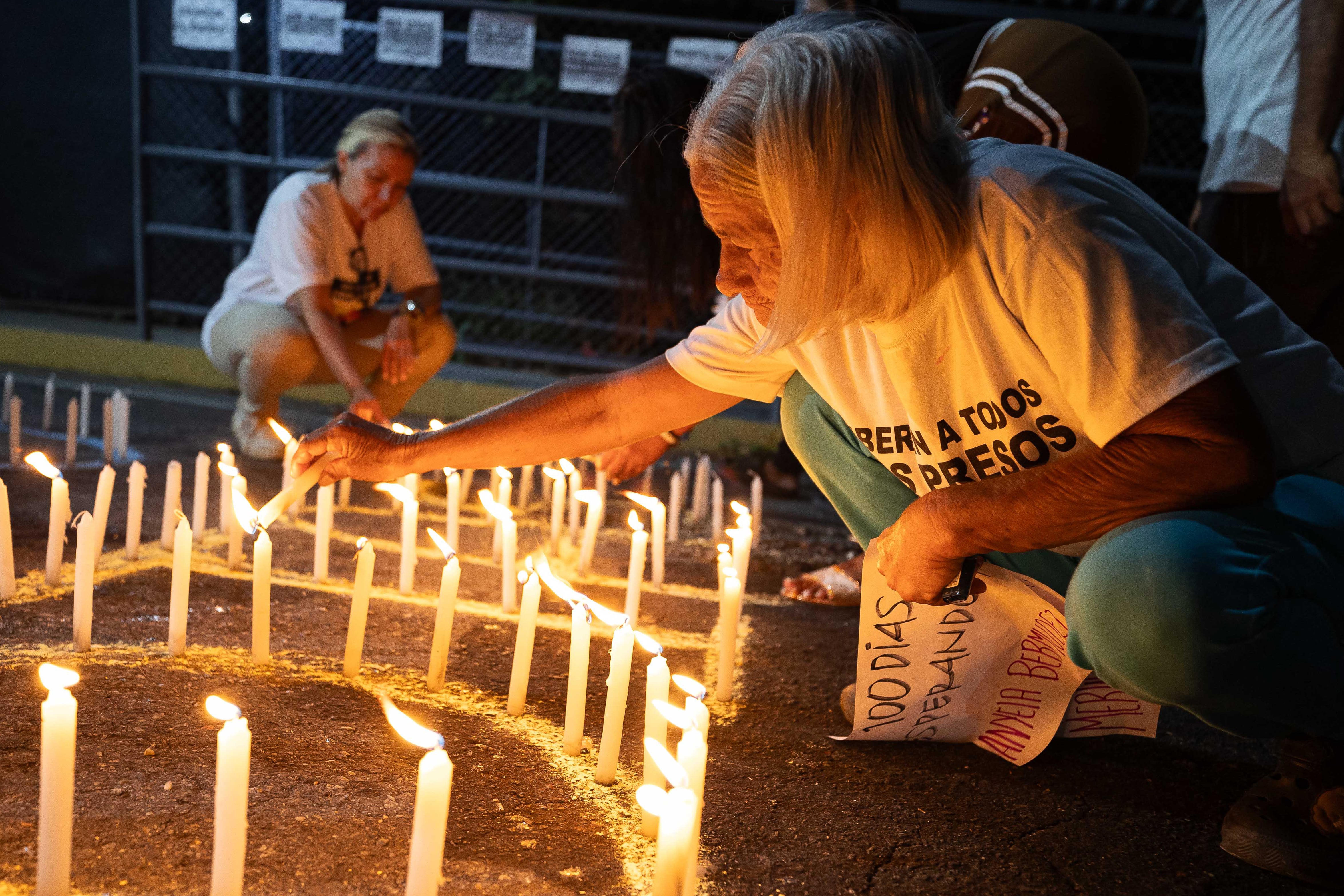
María Emely Delgado crossed paths with Carmen Navas several times this year: at the offices of the NGO Foro Penal, at the Public Ministry, and once at the El Rodeo prison on the outskirts of Caracas. Delgado is 63 years old, Navas was 82. Both were looking for their sons, who disappeared after being arbitrarily detained. Carmen Navas died 10 days after finding her son Víctor Hugo in a cemetery. She had spent 16 months searching for him. María Emely has still not found Jorgen. “You have to be in these shoes to know what this is like,” says the retired teacher, who has been wearing them for almost two years. “Her son had been missing for less time than mine; with Jorgen I’m now coming up on 22 months without news of him.”
Bogotá, Colombia – Colombian President Gustavo Petro arrived in Caracas today to meet with his counterpart in Venezuela, Interim President Delcy Rodríguez.
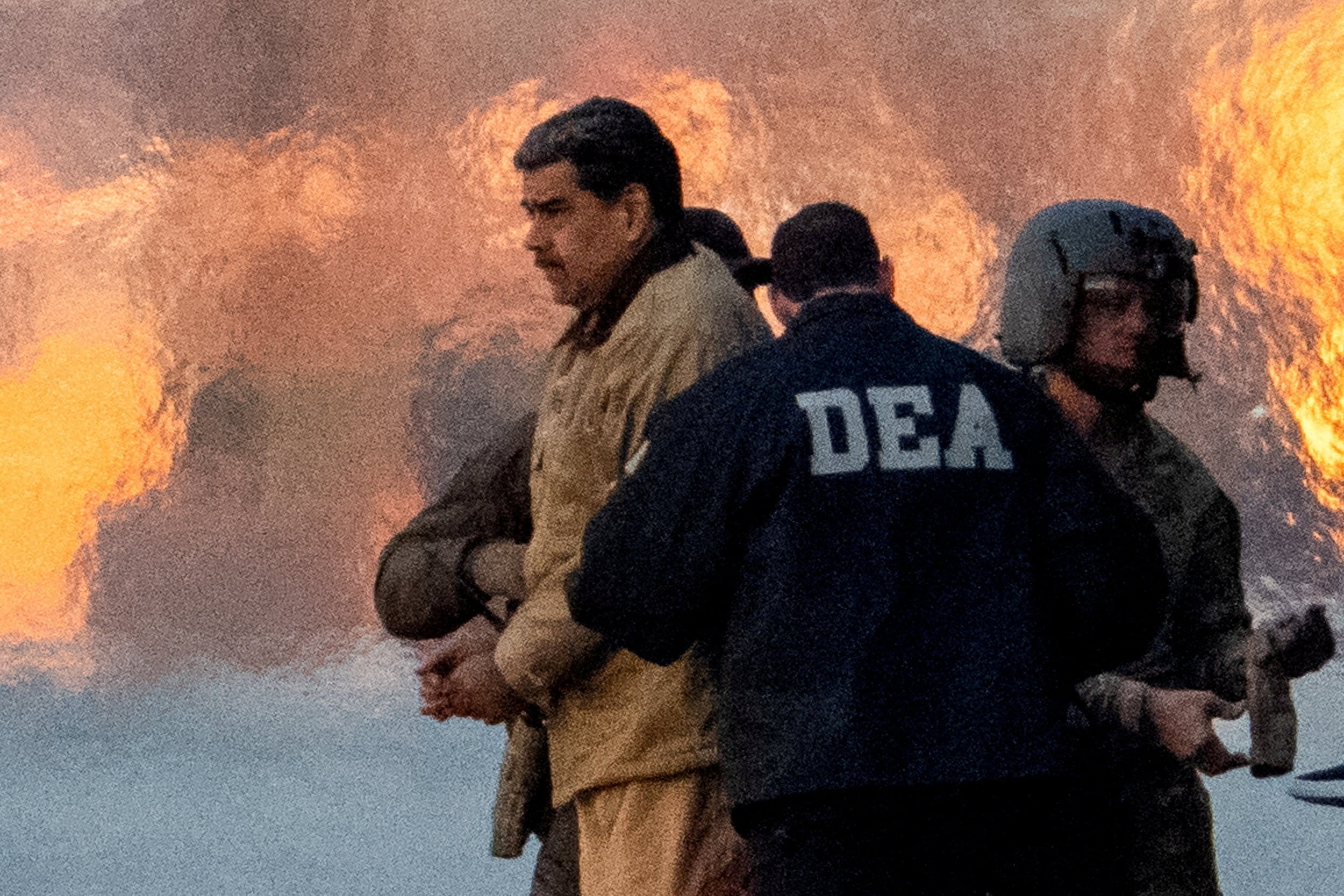
The visit makes Petro the first world leader to visit the South American nation since the United States captured longtime strongman Nicolás Maduro in a military operation on January 3.
Petro and Rodríguez are expected to discuss bilateral issues including energy and security cooperation on their more than 1,300 mile shared border.
T
Bogotá, Colombia – Colombian President Gustavo Petro arrived in Caracas today to meet with his counterpart in Venezuela, Interim President Delcy Rodríguez.
The visit makes Petro the first world leader to visit the South American nation since the United States captured longtime strongman Nicolás Maduro in a military operation on January 3.
Petro and Rodríguez are expected to discuss bilateral issues including energy and security cooperation on their more than 1,300 mile shared border.
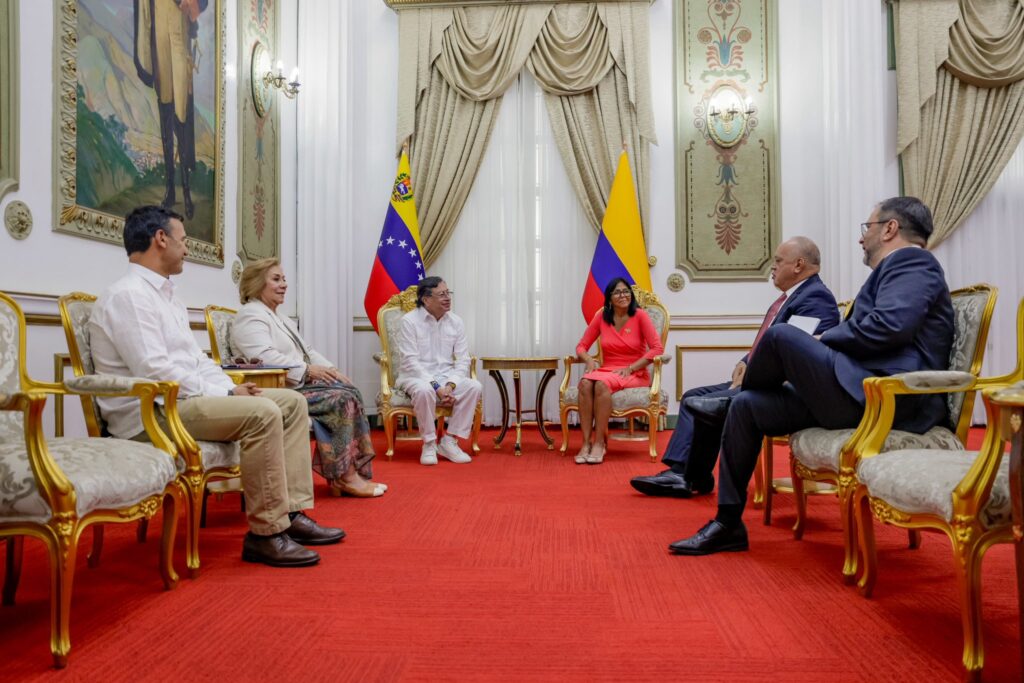
The Colombian president landed in Caracas on Friday afternoon with his Foreign Minister, Rosa Yolanda Villavicencio, and Defense Minister, Pedro Sánchez.
The delegation from Bogotá has been meeting with Rodríguez and her Interior Minister, Diosdado Cabello, alongside Foreign Minister Yván Gil at the Palacio de Miraflores – Venezuela’s presidential palace.
Petro and Rodríguez were flanked by top officials at their meeting. Image courtesy of @InfoPresidencia via X
Petro and Rodríguez were scheduled to meet in Cúcuta, a Colombian city bordering Venezuela, in March but the Venezuelan president cancelled at the last minute citing security concerns.
Then last Friday, the Colombian leader announced he would head to Venezuela, saying, “If Mohammed won’t come to me, I’ll go to the mountain.”
The primary purpose of the meeting is strengthening security cooperation, according to the Petro administration.
“The aim of this meeting is for both governments to make progress on a joint plan to strengthen security and intelligence in the border area,” wrote the Office of the President in a post on X today.
The sprawling frontier is a hotbed for guerrilla activity and is largely controlled by the Colombian National Liberation Army (ELN), a rebel group involved in drug trafficking and illegal mining on both sides of the border.
The ELN was known to have ties to the Maduro regime but the Venezuelan government is under pressure from the U.S. to crack down on the rebel group, which Washington considers a “terrorist organization.”
While the Petro administration maintains the importance of strengthening bilateral cooperation, the meeting has perturbed many in the Venezuelan exile community in Colombia.
“President Gustavo Petro’s visit to Venezuela, particularly his meeting with Delcy Rodríguez, raises serious concerns among Venezuelans,” Juan Carlos Viloria Doria, President of the Global Alliance for Human Rights and Vice-President of Venezuelans in Barranquilla, told Latin America Reports.
He noted that many Venezuelans do not consider Rodríguez to be a legitimate leader, describing her as “an extension of the regime led by Nicolás Maduro.”
“In this regard, such visits can be interpreted as a political endorsement or a form of international legitimization of a situation in Venezuela that still lacks adequate democratic guarantees,” maintained Viloria.
Petro and Rodríguez greet reporters. Image courtesy of @InfoPresidencia via X
There has also been pressure in Colombia for Petro to mediate the release of 16 Colombian citizens jailed in Venezuela.
The families of those detained allege the arrests were made “without a court order or evidence” and say their loved ones have faced human rights violations including torture.
While there has been an easing in repression following Maduro’s ouster, Venezuela remains an authoritarian state and rights groups continue to denounce abuses.
“The least that we Venezuelans expect is that [the meeting] be used as an opportunity to demand concrete progress on human rights and democracy,” said Viloria.
“Any dialogue or rapprochement must be aimed at improving the living conditions of the Venezuelan people and fostering a genuinely democratic transition, not at consolidating contested power structures.”
Featured image description: Colombian President Gustavo Petro and Venezuelan Interim President Delcy Rodríguez at a meeting in Caracas on April 24, 2026.
Bogotá, Colombia – Waiting for a vice minister on the eleventh floor of a dusty office block in downtown Caracas, a Venezuelan colleague hissed in my ear: “You can’t show that map, get rid of it”.
Surprised, I plucked the map of Venezuela out of the pile of papers that made up a project our NGO was proposing to provide health support in remote corners of the country. With economic collapse the country needed international support, but was not always open to receiving it. My job was to negotia
Bogotá, Colombia – Waiting for a vice minister on the eleventh floor of a dusty office block in downtown Caracas, a Venezuelan colleague hissed in my ear: “You can’t show that map, get rid of it”.
Surprised, I plucked the map of Venezuela out of the pile of papers that made up a project our NGO was proposing to provide health support in remote corners of the country. With economic collapse the country needed international support, but was not always open to receiving it. My job was to negotiate access to those remote corners.
Later, trudging down the gloomy stairwell (the lift wasn’t working) my colleague explained the problem: “Every Venezuelan map you show in Venezuela must include Essequibo.”
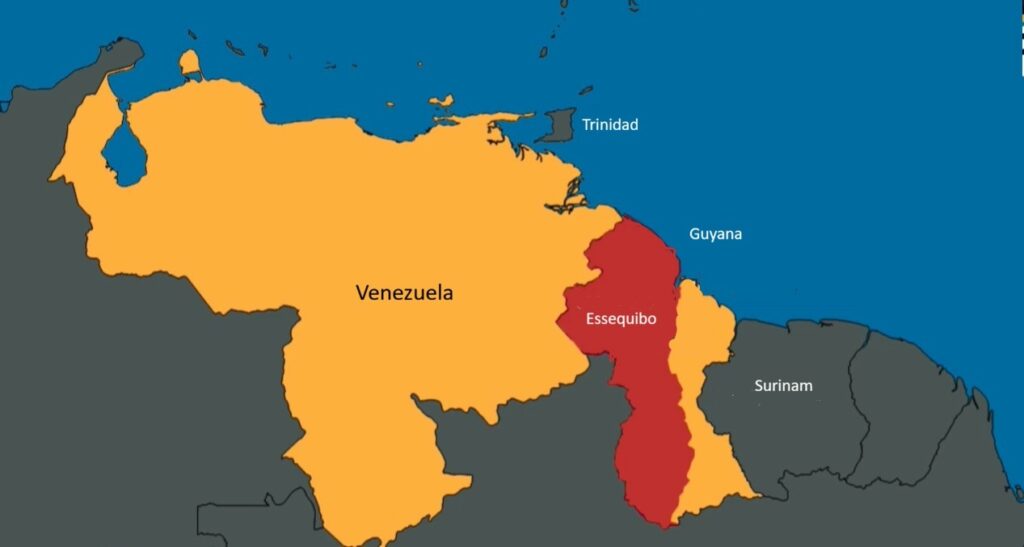
Like many newbies in Caracas, I’d never heard of Essequibo, a territory that lies in Guyana but is claimed by Venezuela. At 160,000 square kilometers (62,000 square miles) it has just 125,000 inhabitants, so is five times bigger than Belgium but with fewer people than Bruges.
I was intrigued. And grateful to my colleague: dealing with Venezuelan ministries was tricky enough without causing offense by omitting a vast tract of jungle dangling off the eastern border like a lost appendage.
But far from impotent.
To the east of Venezuela lies Essequibo, a vast tract of jungle rich in diamond and gold, as well as huge oil deposits discovered in 2015 off its coastal waters.
During his regime former president Nicolás Maduro – now facing drug charges in a U.S. court – laid claim to Essequibo and ramped up both political and military pressure for Guyana to cede the vast territory. This culminated in a legal declaration of annexation in 2023, a move sparking international condemnation.
In 2024 Maduro went further, issuing ID cards for ‘Guayana Esequiba’ as he called it, creating a phantom administrative center for the country’s “24th state”, and proposing a new governor.
Then the Venezuelan strongman sent soldiers to span the Cuyení River, close to the disputed border.
It may have been a bridge too far. In March 2025, U.S. secretary of state Marco Rubio condemned Venezuela’s moves as “illegitimate territorial claims by a narcotrafficking regime” and vowed to defend Guyana from Venezuelan incursions.
Any attacks on US oil companies exploiting oil reserves off the Essequibo coast would be a “very bad week for Maduro”, warned Rubio at a press conference in Guyana’s capital, Georgetown. In reply Maduro called the secretary of state “an imbecile”.
The rest, as they say, is history. Nine months later the Venezuelan leader would be snatched from his Caracas hideout by U.S. special forces and bundled off to a New York jail.
Map showing the disputed territory of Essequibo, which makes up most of Guyana.
Rigged arbitration
Following in her predecessor’s footsteps, Venezuela’s interim president, Delcy Rodriguez, flew to The Hague last week to argue her country’s case before the International Court of Justice (ICJ).
The case had been bumped up to the ICJ – sometimes referred to as the ‘world’s top court’ – by the UN, charged initially with untangling the misaligned borders.
First though, Rodriguez had to deal with another land grab issue: Venezuela was now the “51st State”, according to a map colored by the Stars and Stripes posted on social media by U.S. president Donald Trump.
.
Trump’s “51st State” memeAt the ICJ, journalists were quick to jump on the meme.
“We came to the court to defend our sovereignty, to defend our independence,” said Rodriguez, flustered by the irony of it all: her former boss Maduro had three years before pulled a similar stunt by declaring Essequibo – which by land mass makes up two thirds of Guyana – as a “new state of Venezuela”.
Over four days the ICJ judges heard oral arguments from both delegations, which though couched in legal jargon gave fascinating insights to centuries of colonial great games and arbitrary map-making; the case drew comparisons to centuries past when Spain, Holland, Britain and even Sweden tussled for a foothold in the jungles of northern South America.
Guyana’s position was simple: as de facto holder of Essequibo, and under aggression from Venezuela, it wanted the court to ratify the ruling of an international tribunal from 1899 – the so-called Paris Arbitral Accord – which drew the boundary largely in favor of Guyana, then a British colony.
Britain’s argument then was that they had a permanent presence in Essequibo, while both Venezuela and previous Spanish colonial administrations were largely absent.
The problem is that Venezuela never accepted the Paris accord, claiming it was a backroom deal between London and Washington, a quid pro quo where theEssequibo would remain a colony in return for regional favors.
As they put it before last week’s ICJ: “The British Empire, known throughout the world for its aggressive expansionism, negotiated with the U.S. a rigged arbitration to retain the territories usurped from Venezuela in exchange for recognizing the hegemony of the U.S.”
In some ways the Paris Accord was a problem of Venezuela’s own making. Having severed diplomatic ties with Britain, it subcontracted its 1899 negotiation to the U.S., whose delegation included no less than former president U.S. Benjamin Harrison.
Meanwhile the U.S., keen to flex its Monroe Doctrine – basically ‘keep out of our backyard’ – was happy to defend its Caribbean neighbor against old-world empires. Why they fudged the negotiation is a matter of historical debate.
This means a key question for the ICJ judges is rooted in the past: did the U.S. delegation defend Venezuela in good faith or buckle to machinations of the British Empire? And should they uphold the Paris Arbitral Accord?
Communities not consulted
While there has been much international focus on oil finds in Essequibo, there is little mention of the indigenous peoples, such as the Lokono and Warao, who have lived there since long before Europeans arrived. At least nine distinct languages are spoken within the territory.
But in 2023, at no point did Maduro consult the communities of Essequibo before declaring it annexed to Venezuela.
These communities had “moved between the borders of Venezuela and Guyana since time immemorial,” said Jean La Rose, a Lokono woman and director of the Amerindian Peoples Association of Guyana (APA), writing for Mongabay.
Those rooted in Essequibo considered it part of Guyana, she said, condemning Maduro’s announcements that had forced families to flee from the villages under threat of a military invasion.
“We are Guyanese citizens, and as such, we stand in solidarity with the Guyanese government and reject any foreign claim on this land,” said La Rose.
Warao community close to the border between Venezuela and Guyana. Indigenous people claim they were not consulted over Venezuela’s moves to annex Essequibo. Photo: S. Hide.
Rally to the flag
Though the court’s final findings are months away, most observers see it as unlikely that the ICJ will find for Venezuela.
Firstly, the geographical reality is that the troubled region makes up two thirds of Guyana’s land mass but would only add a small fraction to Venezuela’s much larger territory. Without Essequibo, Guyana shrinks off the map.
Secondly, arbitration courts often defer to the territorial status quo and self-determination of its inhabitants. ‘Possession is nine tenths of the law,’ as the saying goes.
In practical terms, U.S. oil companies are also coining it in Essequibo, also creating an economic boom in Guyana itself. So even with a foot in both camps, Washington is unlikely to back Caracas.
Any ruling in favor of Venezuela would also risk unravelling dozens of pending but stable border disputes stemming from colonial-era chicanery; most Latin American countries have at least one boundary grievance with one neighbour or another.
Such squabbles usually stay in play – a useful distraction for failing states – because leaders routinely reject international arbitration if the findings don’t go their way.
In such a vein Venezuela’s interim president Delcy Rodriguez told the court last week that her presence there “did not imply in any way a recognition of the competence of the ICJ in the territorial controversy”.
Instead any agreement, she said, had to be hammered out in direct talks between the two nations to establish “a solid and stable foundation for good neighborliness”.
Given recent history, that boat has sailed.
For guidance, Rodriguez could take a closer look at Trump’s “51st State” meme. His Venezuela map, like mine, omitted Essequibo. I doubt Caracas will correct him.
Judges hearing the Essequibo case at the International Court of Justice in The Hague last week. Photo: ICJ.
The end of the amnesty law in Venezuela, announced by the acting president, Delcy Rodríguez, last week, has left the country with a balance marked by partial relief, controversy, and a sense that the measure fell short.Seguir leyendo
The end of the amnesty law in Venezuela, announced by the acting president, Delcy Rodríguez, last week, has left the country with a balance marked by partial relief, controversy, and a sense that the measure fell short.
Nicolás Maduro, the former president of Venezuela who was seized by U.S. forces in January and taken to a New York prison, faces a new legal challenge. The U.S. Attorney’s Office in Miami is examining a new criminal inquiry into Maduro, U.S. outlets such as CBS and Reuters have reported in recent days. It is unclear whether that probe will lead to additional charges.Seguir leyendo
Nicolás Maduro, the former president of Venezuela who was seized by U.S. forces in January and taken to a New York prison, faces a new legal challenge. The U.S. Attorney’s Office in Miami is examining a new criminal inquiry into Maduro, U.S. outlets such as CBS and Reuters have reported in recent days. It is unclear whether that probe will lead to additional charges.
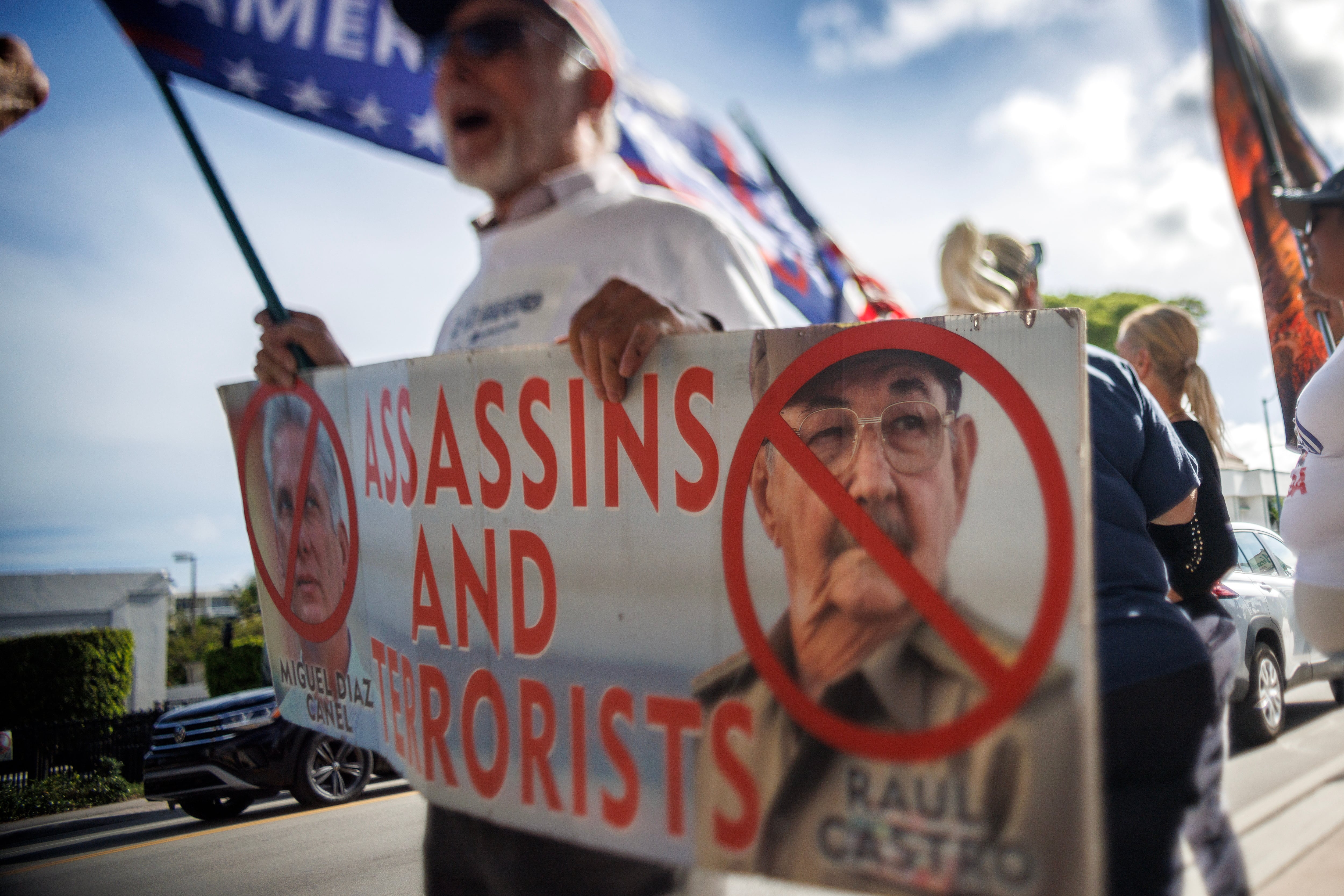
About 50 people, some holding signs and Cuban flags, gathered Wednesday outside the iconic Versailles restaurant on Calle Ocho in Miami, a regular meeting point for the Cuban exile community. The atmosphere was celebratory. And besides commemorating the island’s independence, the occasion was the indictment of Raúl Castro.Seguir leyendo
About 50 people, some holding signs and Cuban flags, gathered Wednesday outside the iconic Versailles restaurant on Calle Ocho in Miami, a regular meeting point for the Cuban exile community. The atmosphere was celebratory. And besides commemorating the island’s independence, the occasion was the indictment of Raúl Castro.
Billboards are being painted over and former allies seem eager to forget the man they once glorifiedFor years, his bewhiskered face stared down from propaganda billboards glorifying the supposedly revolutionary rule of a dictator who styled himself as “the protector of the people”.The spin-doctored adoration was such that factories churned out plastic action figures exalting Nicolás Maduro as an “indestructible” and “iron-fisted” caped crusader nicknamed “Super Moustache”. Continue reading...
Billboards are being painted over and former allies seem eager to forget the man they once glorified
For years, his bewhiskered face stared down from propaganda billboards glorifying the supposedly revolutionary rule of a dictator who styled himself as “the protector of the people”.
The spin-doctored adoration was such that factories churned out plastic action figures exalting Nicolás Maduro as an “indestructible” and “iron-fisted” caped crusader nicknamed “Super Moustache”.
Bogotá, Colombia – Waiting for a vice minister on the eleventh floor of a dusty office block in downtown Caracas, a Venezuelan colleague hissed in my ear: “You can’t show that map, get rid of it”.
Surprised, I plucked the map of Venezuela out of the pile of papers that made up a project our NGO was proposing to provide health support in remote corners of the country. With economic collapse the country needed international support, but was not always open to receiving it. My job was to negotia
Bogotá, Colombia – Waiting for a vice minister on the eleventh floor of a dusty office block in downtown Caracas, a Venezuelan colleague hissed in my ear: “You can’t show that map, get rid of it”.
Surprised, I plucked the map of Venezuela out of the pile of papers that made up a project our NGO was proposing to provide health support in remote corners of the country. With economic collapse the country needed international support, but was not always open to receiving it. My job was to negotiate access to those remote corners.
Later, trudging down the gloomy stairwell (the lift wasn’t working) my colleague explained the problem: “Every Venezuelan map you show in Venezuela must include Essequibo.”
Like many newbies in Caracas, I’d never heard of Essequibo, a territory that lies in Guyana but is claimed by Venezuela. At 160,000 square kilometers (62,000 square miles) it has just 125,000 inhabitants, so is five times bigger than Belgium but with fewer people than Bruges.
I was intrigued. And grateful to my colleague: dealing with Venezuelan ministries was tricky enough without causing offense by omitting a vast tract of jungle dangling off the eastern border like a lost appendage.
But far from impotent.
To the east of Venezuela lies Essequibo, a vast tract of jungle rich in diamond and gold, as well as huge oil deposits discovered in 2015 off its coastal waters.
During his regime former president Nicolás Maduro – now facing drug charges in a U.S. court – laid claim to Essequibo and ramped up both political and military pressure for Guyana to cede the vast territory. This culminated in a legal declaration of annexation in 2023, a move sparking international condemnation.
In 2024 Maduro went further, issuing ID cards for ‘Guayana Esequiba’ as he called it, creating a phantom administrative center for the country’s “24th state”, and proposing a new governor.
Then the Venezuelan strongman sent soldiers to span the Cuyení River, close to the disputed border.
It may have been a bridge too far. In March 2025, U.S. secretary of state Marco Rubio condemned Venezuela’s moves as “illegitimate territorial claims by a narcotrafficking regime” and vowed to defend Guyana from Venezuelan incursions.
Any attacks on US oil companies exploiting oil reserves off the Essequibo coast would be a “very bad week for Maduro”, warned Rubio at a press conference in Guyana’s capital, Georgetown. In reply Maduro called the secretary of state “an imbecile”.
The rest, as they say, is history. Nine months later the Venezuelan leader would be snatched from his Caracas hideout by U.S. special forces and bundled off to a New York jail.
Map showing the disputed territory of Essequibo, which makes up most of Guyana.
Rigged arbitration
Following in her predecessor’s footsteps, Venezuela’s interim president, Delcy Rodriguez, flew to The Hague last week to argue her country’s case before the International Court of Justice (ICJ).
The case had been bumped up to the ICJ – sometimes referred to as the ‘world’s top court’ – by the UN, charged initially with untangling the misaligned borders.
First though, Rodriguez had to deal with another land grab issue: Venezuela was now the “51st State”, according to a map colored by the Stars and Stripes posted on social media by U.S. president Donald Trump.
.
Trump’s “51st State” memeAt the ICJ, journalists were quick to jump on the meme.
“We came to the court to defend our sovereignty, to defend our independence,” said Rodriguez, flustered by the irony of it all: her former boss Maduro had three years before pulled a similar stunt by declaring Essequibo – which by land mass makes up two thirds of Guyana – as a “new state of Venezuela”.
Over four days the ICJ judges heard oral arguments from both delegations, which though couched in legal jargon gave fascinating insights to centuries of colonial great games and arbitrary map-making; the case drew comparisons to centuries past when Spain, Holland, Britain and even Sweden tussled for a foothold in the jungles of northern South America.
Guyana’s position was simple: as de facto holder of Essequibo, and under aggression from Venezuela, it wanted the court to ratify the ruling of an international tribunal from 1899 – the so-called Paris Arbitral Accord – which drew the boundary largely in favor of Guyana, then a British colony.
Britain’s argument then was that they had a permanent presence in Essequibo, while both Venezuela and previous Spanish colonial administrations were largely absent.
The problem is that Venezuela never accepted the Paris accord, claiming it was a backroom deal between London and Washington, a quid pro quo where theEssequibo would remain a colony in return for regional favors.
As they put it before last week’s ICJ: “The British Empire, known throughout the world for its aggressive expansionism, negotiated with the U.S. a rigged arbitration to retain the territories usurped from Venezuela in exchange for recognizing the hegemony of the U.S.”
In some ways the Paris Accord was a problem of Venezuela’s own making. Having severed diplomatic ties with Britain, it subcontracted its 1899 negotiation to the U.S., whose delegation included no less than former president U.S. Benjamin Harrison.
Meanwhile the U.S., keen to flex its Monroe Doctrine – basically ‘keep out of our backyard’ – was happy to defend its Caribbean neighbor against old-world empires. Why they fudged the negotiation is a matter of historical debate.
This means a key question for the ICJ judges is rooted in the past: did the U.S. delegation defend Venezuela in good faith or buckle to machinations of the British Empire? And should they uphold the Paris Arbitral Accord?
Communities not consulted
While there has been much international focus on oil finds in Essequibo, there is little mention of the indigenous peoples, such as the Lokono and Warao, who have lived there since long before Europeans arrived. At least nine distinct languages are spoken within the territory.
But in 2023, at no point did Maduro consult the communities of Essequibo before declaring it annexed to Venezuela.
These communities had “moved between the borders of Venezuela and Guyana since time immemorial,” said Jean La Rose, a Lokono woman and director of the Amerindian Peoples Association of Guyana (APA), writing for Mongabay.
Those rooted in Essequibo considered it part of Guyana, she said, condemning Maduro’s announcements that had forced families to flee from the villages under threat of a military invasion.
“We are Guyanese citizens, and as such, we stand in solidarity with the Guyanese government and reject any foreign claim on this land,” said La Rose.
Warao community close to the border between Venezuela and Guyana. Indigenous people claim they were not consulted over Venezuela’s moves to annex Essequibo. Photo: S. Hide.
Rally to the flag
Though the court’s final findings are months away, most observers see it as unlikely that the ICJ will find for Venezuela.
Firstly, the geographical reality is that the troubled region makes up two thirds of Guyana’s land mass but would only add a small fraction to Venezuela’s much larger territory. Without Essequibo, Guyana shrinks off the map.
Secondly, arbitration courts often defer to the territorial status quo and self-determination of its inhabitants. ‘Possession is nine tenths of the law,’ as the saying goes.
In practical terms, U.S. oil companies are also coining it in Essequibo, also creating an economic boom in Guyana itself. So even with a foot in both camps, Washington is unlikely to back Caracas.
Any ruling in favor of Venezuela would also risk unravelling dozens of pending but stable border disputes stemming from colonial-era chicanery; most Latin American countries have at least one boundary grievance with one neighbour or another.
Such squabbles usually stay in play – a useful distraction for failing states – because leaders routinely reject international arbitration if the findings don’t go their way.
In such a vein Venezuela’s interim president Delcy Rodriguez told the court last week that her presence there “did not imply in any way a recognition of the competence of the ICJ in the territorial controversy”.
Instead any agreement, she said, had to be hammered out in direct talks between the two nations to establish “a solid and stable foundation for good neighborliness”.
Given recent history, that boat has sailed.
For guidance, Rodriguez could take a closer look at Trump’s “51st State” meme. His Venezuela map, like mine, omitted Essequibo. I doubt Caracas will correct him.
Judges hearing the Essequibo case at the International Court of Justice in The Hague last week. Photo: ICJ.
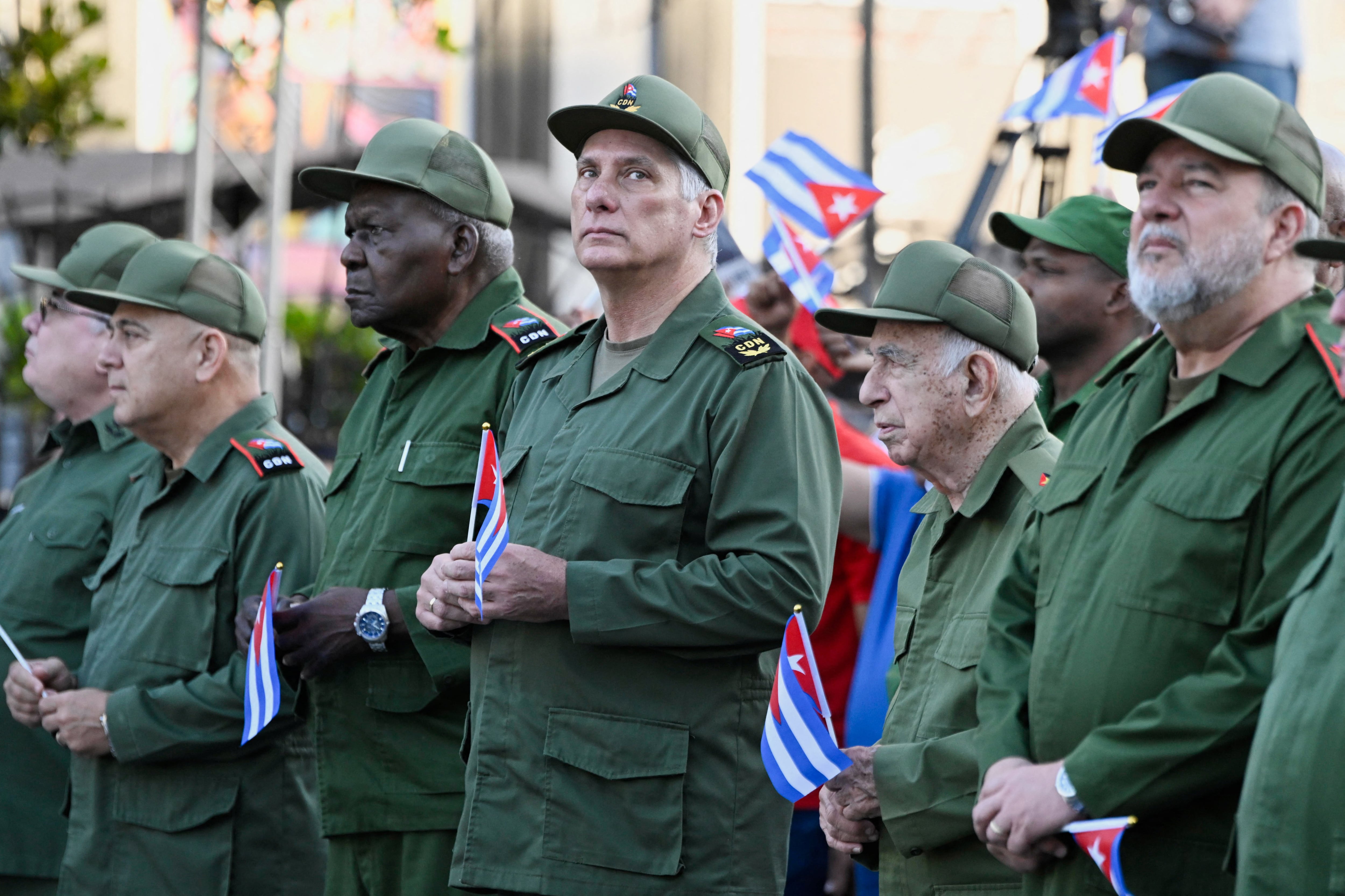
Miguel Díaz-Canel grows emotional, raising his fist before hundreds of left-wing activists from Europe and Latin America gathered at Havana’s convention center, as seen in a video recorded days before a shipment of humanitarian aid arrived, while they chant, “Cuba is not alone.” On May 22, he is seen giving a military salute amid trumpets and Cuban pennants before thousands gathered at the so-called anti-imperialist platform between the U.S. embassy and the Malecón to show support for 94-year-ol
Miguel Díaz-Canel grows emotional, raising his fist before hundreds of left-wing activists from Europe and Latin America gathered at Havana’s convention center, as seen in a video recorded days before a shipment of humanitarian aid arrived, while they chant, “Cuba is not alone.” On May 22, he is seen giving a military salute amid trumpets and Cuban pennants before thousands gathered at the so-called anti-imperialist platform between the U.S. embassy and the Malecón to show support for 94-year-old Raúl Castro, who has just been charged by a U.S. court for ordering the shooting down of two planes belonging to an anti-Castro organization in 1996, an attack that killed four people.

 Login
Login