Reading view

Xi warns Trump Taiwan issue could lead to ‘conflict’ as US-China summit kicks off

Xi Trump featured image

By Danny Kemp

Chinese President Xi Jinping warned his US counterpart Donald Trump that missteps on Taiwan could push their two countries into “conflict”, a stark opening salvo as they met in Beijing on Thursday at a superpower summit.

China's President Xi Jinping (right) and US President Donald Trump inspect the honour guard in Beijing on May 14, 2026. Photo: Mao Ning Chinese Foreign Ministry Spokesperson, via Facebook.
China’s President Xi Jinping (right) and US President Donald Trump inspect the honour guard in Beijing on May 14, 2026. Photo: Mao Ning Chinese Foreign Ministry Spokesperson, via Facebook.

Trump had arrived in China with accolades for his host, calling Xi a “great leader” and “friend”, as he predicted that their countries would have “a fantastic future together”.

But beyond the pomp as he welcomed Trump, Xi in less effusive tones said the two sides “should be partners and not rivals”, while highlighting the issue of self-ruled democratic Taiwan — which Beijing claims as its territory — straight off the bat.

“The Taiwan question is the most important issue in China-US relations,” Xi said, according to remarks published by Chinese state media shortly after talks began.

“If mishandled, the two nations could collide or even come into conflict, pushing the entire China-US relationship into a highly perilous situation,” he added at the opening talks that lasted around two hours and 15 minutes.

Trump’s trip to Beijing is the first by a US president in nearly a decade, with the grand reception belying a host of unresolved trade and geopolitical tensions between the two countries.

Xi greeted Trump with a red-carpet welcome at the opulent Great Hall of the People, with military band fanfare, a gun salute and a host of schoolchildren jumping and chanting “welcome!”.

Schoolchildren greet China's President Xi Jinping and US President Donald Trump at the Great Hall of the People in Beijing on May 14, 2026. Photo: Mao Ning Chinese Foreign Ministry Spokesperson, via Facebook.
Schoolchildren greet China’s President Xi Jinping and US President Donald Trump at the Great Hall of the People in Beijing on May 14, 2026. Photo: Mao Ning Chinese Foreign Ministry Spokesperson, via Facebook.

Seemingly enjoying the ceremony, Trump said “the relationship between China and the USA is going to be better than ever before”.

Xi instead referenced an ancient Greek political theory about the risks of war when a rising power rivals a ruling power.

“Can China and the United States transcend the so-called ‘Thucydides Trap’ and forge a new paradigm for major-power relations,” Xi asked, adding that “cooperation benefits both sides, while confrontation harms both”.

There has been plenty of the latter since Trump’s last visit in 2017, with the two countries having spent much of 2025 embroiled in a dizzying trade war and at odds on many major global issues.

‘Blunt language’

Taiwan is a longstanding sore point.

The United States recognises only Beijing but under domestic law is required to provide weapons to Taiwan so that it can defend itself.

China has sworn to take the self-ruled democracy and has not ruled out using force, ramping up military pressure in recent years.

Following Xi’s comments on Thursday, Taipei called China the “sole risk” to regional peace, and insisted that “the US side has repeatedly reaffirmed its clear and firm support”.

But Trump said Monday he would speak to Xi about US arms sales to Taiwan, a departure from historic US insistence that it will not consult Beijing on the matter.

China's President Xi Jinping (right) and US President Donald Trump at the Great Hall of the People in Beijing on May 14, 2026. Photo: Mao Ning Chinese Foreign Ministry Spokesperson, via Facebook.
China’s President Xi Jinping (right) and US President Donald Trump at the Great Hall of the People in Beijing on May 14, 2026. Photo: Mao Ning Chinese Foreign Ministry Spokesperson, via Facebook.

Adam Ni, editor of newsletter China Neican, told AFP that while such “blunt language” was not uncommon in Chinese foreign policy, it was unusual coming from Xi himself.

“Xi wants to make it very clear… he thinks the Taiwan issue is the potential powder keg between the two superpowers,” Ni added.

China has been “signalling a desire for US compromise on Taiwan in the lead up to the summit,” the National University of Singapore’s Chong Ja Ian told AFP.

Xi’s demand could suggest “they see some opportunity to convince Trump”, he said.

Iran overshadows

A new addition to the list of contentious issues to be discussed, the Iran war, threatens to weaken Trump’s position, having already forced him to postpone his trip from March.

The US president said he expected a “long talk” with Xi about Iran, which sells most of its US-sanctioned oil to China, but insisted that “I don’t think we need any help” from Beijing.

China's President Xi Jinping (right) and US President Donald Trump visit the Temple of Heaven in Beijing on May 14, 2026. Photo: Brendan Smialowski/Pool/AFP.
China’s President Xi Jinping (right) and US President Donald Trump visit the Temple of Heaven in Beijing on May 14, 2026. Photo: Brendan Smialowski/Pool/AFP.

However, his secretary of state Marco Rubio, historically a fierce opponent of Beijing, said the US side was hoping “to convince (China) to play a more active role”.

Trump is also hoping for business deals on agriculture, aircraft and other sectors.

Elite businessmen in his delegation, including Nvidia’s Jensen Huang and Tesla’s Elon Musk, were on the stairs of the Great Hall of the People on Thursday for the welcome ceremony.

Musk told reporters afterwards the meeting had been “wonderful”, while Huang said the two presidents “were incredible”.

Xi later told the delegation that his country’s “doors to the outside world will open wider and wider” and that US companies would enjoy “even brighter prospects in China”.

On the eve of the summit, US Treasury Secretary Scott Bessent and Chinese Vice Premier He Lifeng met in South Korea to seek progress in ending a long-simmering trade war between the two.

Xi said the talks “reached results that were generally balanced and positive”, and urged both sides to “safeguard the current hard-won positive momentum”.

Trump and Xi are set to discuss extending a one-year tariff truce reached during their last meeting in South Korea in October.

China’s controls on rare earth exports and AI rivalry are among other topics expected to be taken up.

After their morning meeting, the two men took a break from negotiations, heading to the Temple of Heaven, a World Heritage site where China’s emperors once prayed for good harvests.

The two will return to the Great Hall of the People this evening for a state banquet.
  •  

Trump urges Israel and Iran to ‘stop shooting,’ says both seeking ceasefire

Malay Mail

WASHINGTON, June 8 — US President Donald Trump said today that Iran and Israel were seeking an “immediate CEASEFIRE,” after the two countries attacked each other for the first time since a truce came into effect two months ago.

“Both sides, Israel and Iran, are looking to do an immediate CEASEFIRE!” Trump said on Truth Social.

“Final negotiations on ‘Peace’ are proceeding, subject to ignorance or stupidity getting in its way,” he added.

A few minutes earlier, Trump warned Israel and Iran to “immediately stop ‘shooting.’”

Iran fired a barrage of missiles at Israel overnight yesterday into today and Israel responded by targeting military sites in the Islamic republic.

Tehran’s strikes followed attacks by Israel against targets of the Iran-backed Lebanese Shia group Hezbollah in the southern suburbs of Beirut.

Trump is looking to end the conflict, which is unpopular in the United States, as the November midterm congressional elections approach. — AFP


  •  

Questions linger over U.S.-Iran deal as details remain murky

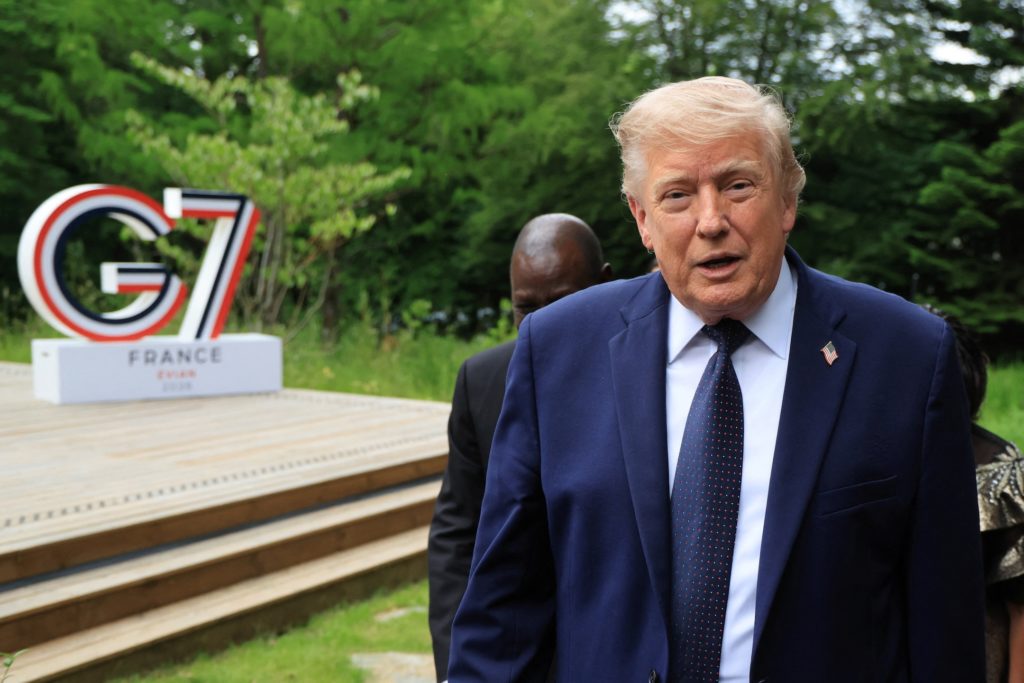
Meeting leaders of the top industrial nations at the G7 summit in the French Alps, President Trump again extolled the framework deal the U.S. struck with Iran to start nuclear negotiations and end the war. But the prevailing question remains: What is actually in that deal? Days after it was announced, no text has been released publicly. White House correspondent Liz Landers reports.

  •  

'Close doesn't count': Mideast experts assess potential U.S.-Iran agreement

To discuss the motivations and potential outcomes of this latest attempt to end the war in Iran, Amna Nawaz spoke with Alan Eyre and Miad Maleki. Eyre was part of the Obama administration's negotiating team for the Iran nuclear deal and is now at the Middle East Institute. Maleki was born and raised in Iran and is now at the Foundation for the Defense of Democracies.

  •  

U.S. officials reveal key terms of agreement to end Iran war

The Trump administration shared new details about the agreement struck between the U.S. and Iran, which aims to end the war, open the Strait of Hormuz and begin further negotiations. But it's not a done deal yet, and Trump made renewed threats to "bomb the hell" out of Iran if they don't abide by the deal. White House correspondent Liz Landers reports.

  •  

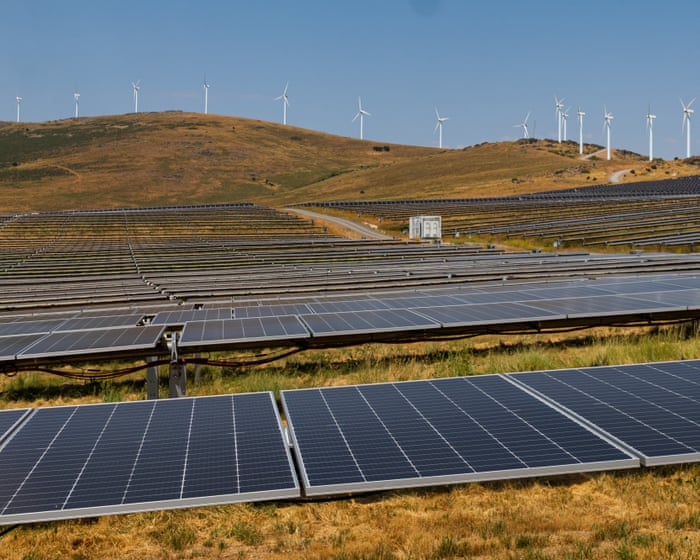
Spanish households save €10 a month thanks to renewables expansion, report finds

Thinktank says decoupling electricity from gas prices has also helped shield Spain from hikes caused by Iran war

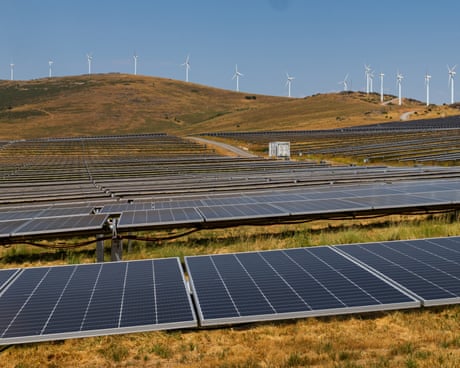
Spanish households save €10 a month on electricity bills because of wind turbines and solar panels installed in the last five years, a report has found.

Typical energy bills would be 19% more expensive if electricity costs were still as tightly coupled to gas prices as in 2021, according to Ember, a climate thinktank. It found Spain’s “strategic” expansion of renewables since Russia invaded Ukraine in 2022 has shielded Spanish households from the latest rises in fossil fuel prices caused by the Iran war.

Continue reading...

© Photograph: Bloomberg/Getty Images

© Photograph: Bloomberg/Getty Images

© Photograph: Bloomberg/Getty Images

  •  

Mixed Signals Suggest US-Iran Crisis Is Far From Over, Says Security Analyst Jake Sotiriadis

RFE/RL spoke with Jake Sotiriadis, an adviser to the US State Department, about whether these developments could signal the beginning of a diplomatic off-ramp between Washington and Tehran or merely a pause in a confrontation that still carries a significant risk of escalation.

  •  

China warns next phase of US-Iran talks will be ‘more difficult’

iran us war

China’s top diplomat told his Pakistani counterpart on Tuesday that the next phase of negotiations between the United States and Iran — which Pakistan has helped mediate — will be “more difficult”.

Tehran, Iran
Tehran, Iran. File photo: Tom Grundy/HKFP.

In a phone conversation ahead of the planned signing on Friday of a US-Iran memorandum of understanding to end their war, Chinese Foreign Minister Wang Yi told Pakistan’s Ishaq Dar that “it is foreseeable that, compared with the first stage, the second stage of negotiations will be more difficult”.

Wang added that the United Nations Security Council “should also play a greater role” in supporting these talks, according to a statement from Beijing’s foreign ministry.

“The current consensus is far from the final destination, rather it is a new starting point,” Wang said.

“Achieving lasting peace in the Middle East and Gulf region still requires unremitting efforts from all parties,” Wang said, adding that China was willing to work with Pakistan to promote peace.

Chinese Foreign Minister Wang Yi (right) and Iranian Foreign Minister Abbas Araghchi in Beijing on May 6, 2026.
Chinese Foreign Minister Wang Yi (right) and Iranian Foreign Minister Abbas Araghchi in Beijing on May 6, 2026. Photo: China’s Ministry of Foreign Affairs.

Pakistani officials have previously said China, Islamabad’s close ally and Iran’s top trading partner, played a key role in supporting its mediation efforts.

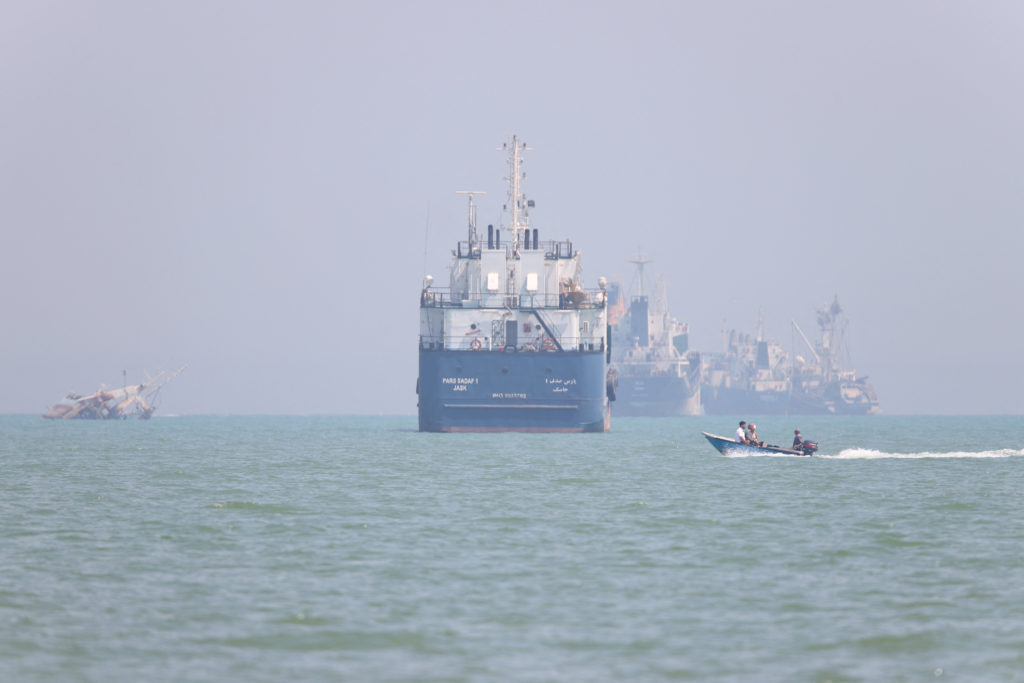
Pakistan’s foreign ministry said Wang and Dar agreed during their call to continue “engagement for the peaceful settlement of all outstanding issues”, including the Strait of Hormuz maritime oil route that is subject to competing blockades that have roiled energy markets.

“They noted the importance of opening of the Strait of Hormuz for the global economy, energy security, and international trade,” a ministry statement said.

  •  

Pakistan PM says signing of agreement confirmed – as it happened

This liveblog is closed – follow our new liveblog here

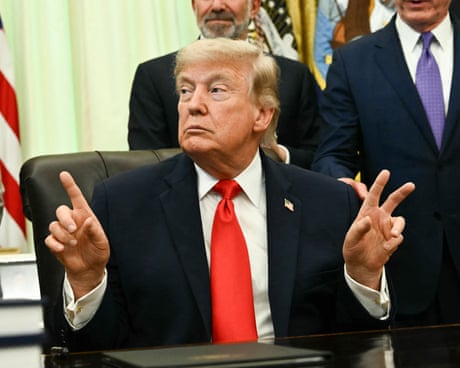
Israel says it has struck Beirut’s south suburbs, with explosions heard in the city. The Israeli military claimed the attacks on the Lebanese capital were in response to Hezbollah firing into Israeli territory.

The military were reportedly targeting Hezbollah targets in Beirut’s southern suburbs, the group’s stronghold known as Dahiyeh, according to a joint statement by prime minister Benjamin Netanyahu and defense minister Israel Katz.

Continue reading...

© Photograph: Kent Nishimura/AFP/Getty Images

© Photograph: Kent Nishimura/AFP/Getty Images

© Photograph: Kent Nishimura/AFP/Getty Images

  •  
❌