James Thurber Born, Columbus, Ohio, December 8, 1894. Died 1961, New York City. New Yorker work: 1927 -1961, with several pieces run posthumously. According to the New Yorker’s legendary editor, William Shawn, “In the early days, a small company of writers, artists, and editors — E.B. White, James Thurber, Peter Arno, and Katharine White among them — did more to make the magazine what it is than can be measured.”
Key cartoon collection: The Seal in the Bedroom and Other Predicaments (Harper & Bros., 1932). Key anthology (writings & drawings): The Thurber Carnival (Harper & Row, 1945). There have been a number of Thurber biographies. Burton Bernstein’s Thurber (Dodd, Mead, 1975) and Harrison Kinney’s James Thurber: His Life and Times (Henry Holt & Co., 1995) are essential. Website
On a spring night in 2023, Fung Hon-shing was driving on Fei Ngo Shan Road in Sai Kung when he discovered over a hundred newts that had been run over by vehicles. Some had died, while some were on the brink of death.
Fung Hon-shing films a Hong Kong newt walking on a road in Sai Kung on April 25, 2025. Photo: Kyle Lam/HKFP.
The striking scene deeply moved Fung, prompting him tocrowd-fund around HK$300,000 to make a documentary about the life cycle of the Hong Kong newt.
The 33-year-old is one of the few full-time ecological producers in Hong Kong, spending long hours in the countryside capturing footage of wild animals.
A graduate of the Department of Biology at the Chinese University of Hong Kong (CUHK), Fung once worked as a research assistant studying the distribution and habits of the Hong Kong newt (Paramesotriton hongkongensis).
But it was not the first time he had encountered the tailed amphibian.
Fung Hon-shing (front) and his colleague James Kwok hike to a stream in Tai Po with underwater filming equipment on July 9, 2025. Photo: Kyle Lam/HKFP.Fung Hon-shing shoots with underwater filming equipment at a stream in Tai Po on July 9, 2025. Photo: Kyle Lam/HKFP.
“I have known the species since I was a child, when my parents brought me to hike in the mountains near my home,” Fung said. “I discovered that newts can live in different habitats like streams, ponds or even drains. The adaptability of the newt impressed me.”
The creature belongs to a species that was first thought to be endemic only to Hong Kong – hence the name – but was later also found in Guangdong province.
In 2023, Fung, along with several other ecological photographers and videographers, formed a team to spend a year filming this unique salamander. They successfully captured the complete life cycle of the newts underwater – including courtship, fighting, mating, egg-laying, hatching, foraging, and migration – and made it into a 10-minute film, titled: Life (cycle) of the Hong Kong Newt.
The documentary was shortlisted for multiple film festivals in Hong Kong and overseas. It won the 2024 Nature Film of the Year award at the Singapore Nature Film Festival. That same year, the short film was also exhibited at an art gallery in Sham Shui Po, bringing the life of the unique creature to a wider public.
Hong Kong newts underwater. Photo: Fung Hon-shing.Hong Kong newt eggs underwater. Photo: Fung Hon-shing.
The Hong Kong newt – the only tailed amphibian in Hong Kong – has a black or brown back, and bright orange spots on its belly to warn predators of its toxicity. The orange dots also act as a fingerprint, meaning no Hong Kong newts share an identical pattern.
The species is listed as “near threatened” on the International Union for Conservation of Nature (IUCN) Red List and protected under Hong Kong’s Wild Animals Protection Ordinance.
Juvenile newts live in streams. Every April, adult newts migrate to woodlands to avoid the rapid currents of the rainy season. Fei Ngo Shan Road is one of the obstacles they must cross.
Fung collaborated with Professor Anthony Lau, a wildlife ecologist at Lingnan University, to conduct a study called “Hong Kong Newt Roadkill Survey Project,” published in July last year. According to the research, at least 1,427 newts were run over by vehicles between March and May 2024, with 870 of those deaths occurring on Fei Ngo Shan Road.
“After the results of this survey were announced, the Agriculture, Fisheries and Conservation Department (AFCD) contacted the Lingnan University team. Things are changing bit by bit, but the key is that it takes time,” Fung said.
A Hong Kong newt near a vehicle tyre on a road in Sai Kung on April 25, 2025. Every year during the rainy season, thousands of Hong Kong newts migrate to the forest, crossing the road, which becomes a roadkill hotspot. Photo: Kyle Lam/HKFP.A Hong Kong newt carcass lies on a road in Sai Kung on April 25, 2025. Photo: Kyle Lam/HKFP.Fung Hon-shing and his colleague James Kwok waiting for the right moment to film a frog species in Tai Po on July 9, 2025.Photo: Kyle Lam/HKFP.
In 2020, Fung and other wildlife filmmakers -Daphne Wong and James Kwok – founded Frigatefilms, which specialises in nature content. The production company mainly provides ecological filming and documentary services, collaborating with both the government and environmental organisations.
The producer describes his work as a way to atone for what humans have done to the environment, despite realising the impact of his projects may be limited.
“There is actually very little an individual can do in the face of climate change. Sometimes I make videos to explain why we need to conserve and why we should be more environmentally friendly, but as individuals, what we can do is rather limited,” he said.
Fung Hon-shing eats lunch in his car before filming in Sai Kung on April 25, 2025. Photo: Kyle Lam/HKFP.Fung Hon-shing shoots with underwater filming equipment at a stream in Tai Po on July 9, 2025. Photo: Kyle Lam/HKFP.
Apart from the Hong Kong newt, Fung’s projects cover freshwater fish, frogs, birds, and more. However, ecological filming often means returning empty-handed, and one does not always capture the desired footage.
Last winter, after filming a whole flock of black-faced spoonbills foraging, Fung set out again at five the following morning. He was accompanied by an HKFP photojournalist, who began following him in April last year.
As it turned out, there was only one black-faced spoonbill along the same coastline, which failed to provide any usable footage.
Yet, Fung had a level-headed response to the unlucky outcome. He explained that the speed of the rising tide was completely different from the day before, making the water level at the spot too deep for the spoonbills to stand and forage comfortably, so the birds sought out another location.
Fung Hon-shing edits videos in his studio in an industrial building in Tsuen Wan on January 16, 2026. Photo: Kyle Lam/HKFP.Chinese white dolphins swim in Hong Kong’s water. Photo: Fung Hon-shing.Black-naped terns. Photo: Fung Hon-shing.
Despite the unpredictability of his job, he savours every moment of it.
“I really enjoy filming in the wild,” he said. “For one thing, I get to set foot in many different countryside areas of Hong Kong, getting to know Hong Kong better and building many connections.
“Besides that, I can spend long periods in these habitats interacting with or waiting for species, which allows me to understand these creatures deeply. Finally, I can use images to explain the stories of these creatures to others and share them, so the filming process is quite enjoyable.”
Fung Hon-shing operates a drone in Yuen Long on November 18, 2025. Photo: Kyle Lam/HKFP.Migratory birds flock to wetlands in Yuen Long on November 18, 2025. Photo: Kyle Lam/HKFP.
Most people associate ecological documentaries with the African savannah, the Southeast Asian rainforests or the Arctic icy waters. However, Fung still wants to keep focusing on Hong Kong.
“I live in this place, and my daily observations and feelings all stem from Hong Kong’s ecology, so I want to use images to leave some records behind. It’s mainly a matter of emotional attachment rather than the diversity or uniqueness of the species,” Fung said.
“Because of the connection between this place and my own life, I want to try my best to capture more of the different facets of Hong Kong’s ecology.”
Fung Hon-shing drives to a remote shore in Yuen Long at 5am on March 25, 2026, to take pictures of migratory birds. Photo: Kyle Lam/HKFP.Fung Hon-shing at a remote shore in Yuen Long in the early morning of March 25, 2026, to photograph migratory birds. Photo: Kyle Lam/HKFP.Fung Hon-shing and a friend take photos of migratory birds at a remote shore in Yuen Long on March 25, 2026. Photo: Kyle Lam/HKFP.Black-faced spoonbills. Photo: Fung Hon-shing.Black-faced spoonbills. Photo: Fung Hon-shing.Fung Hon-shing waits to take photos of migratory birds in Yuen Long on March 25, 2026. Photo: Kyle Lam/HKFP.Fung Hon-shing and a friend wade through mud to photograph migratory birds at a remote shore in Yuen Long on March 25, 2026. Photo: Kyle Lam/HKFP.An egret standing on a mudflat in Yuen Long on March 25, 2026. Photo: Kyle Lam/HKFP.Fung Hon-shing on his bicycle in Sha Tin on May 5, 2026. Cycling is one of his hobbies. Photo: Kyle Lam/HKFP.Covered in mud, Fung Hon-shing walks back to his car after taking pictures in Yuen Long on March 25, 2026. Photo: Kyle Lam/HKFP.
“…after I had sold a few to the New Yorker magazine, Andy White, my colleague there, found me carefully shading in something and he said, “ Hey, stop that, don’t do that — if you ever became good you’d be mediocre.”
This somewhat famous quote has stuck with me for decades (I’m not really sure how famous it is). It seems, on its face, simple advice, but I believe there’s way more to it than “Hey…don’t do that.” E.B. White, who of course was an advocate of clarity in writing, was heading off a notion that so many fledgling artists develop — that they should aspire to becoming “better” at drawing. If that’s really what you want to do, than, “Hey…do that!” But I believe the hunt for “better” can sometimes stifle the artist (please remember I said, “sometimes”).
One of the very best things about The New Yorker is that it embraced Thurber’s art as it was, not as New Yorker editors might wish it would be. That’s one of the wonders of the magazine’s editorial DNA: staying out of an artist’s way. Back in 2013, in my interview with veteran artist, Dana Fradon, he discussed The New Yorker’s Art editor, James Geraghty. Mr. Fradon said Geraghty’s editorial direction was simply, “Make it beautiful.” Thanks to the magazine’s hands-off policy, and E.B. White’s two cents, Thurber did Thurber (beautifully!) and we are all the luckier for it.
James Thurber Born, Columbus, Ohio, December 8, 1894. Died 1961, New York City. New Yorker work: 1927 -1961, with several pieces run posthumously. According to the New Yorker’s legendary editor, William Shawn, “In the early days, a small company of writers, artists, and editors — E.B. White, James Thurber, Peter Arno, and Katharine White among them — did more to make the magazine what it is than can be measured.”
Key cartoon collection: The Seal in the Bedroom and Other Predicaments (Harper & Bros., 1932). Key anthology (writings & drawings): The Thurber Carnival (Harper & Row, 1945). There have been a number of Thurber biographies. Burton Bernstein’s Thurber (Dodd, Mead, 1975) and Harrison Kinney’s James Thurber: His Life and Times (Henry Holt & Co., 1995) are essential. Website
Margaret Bourke-White was already seen as a major talent in photojournalism when she was hired as one of the first four staff photographers at LIFE magazine. She quickly demonstrated her abilities when she shot the first cover story in the magazine’s history, on the building of Fort Peck Dam.
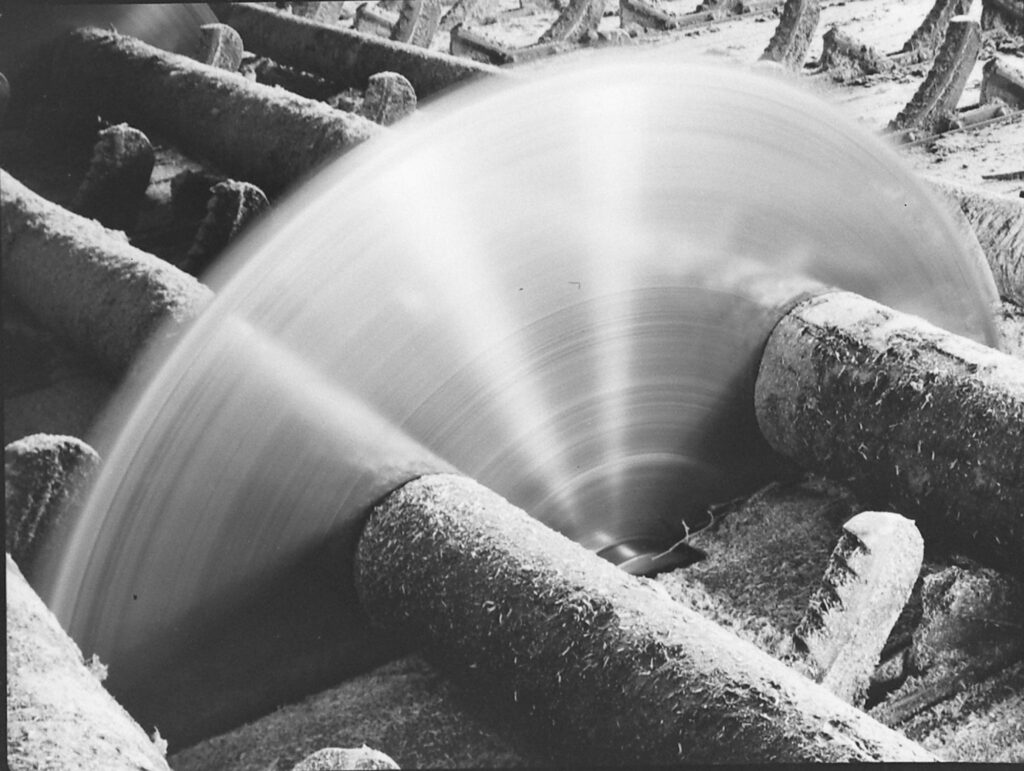
The magazine was in its second year when Bourke-White undertook a major photo essay on the manufacturing of newsprint. She followed the process from the beginning, with lumberjacks moving felled trees downriver to the paper mill, where the wood was pulverized and treated and turned into the stuff that newspapers were printed on. The photo essay ran in LIFE with the headline “Portfolio on Paper: Driving Logs from Forest to Factory“
Why was LIFE interested in this process? Well, in 1937 the demand for newsprint was skyrocketing because of the newspaper industry was in its heyday. The U.S. had 2,084 daily newspapers that year, compared to 938 in 2025.
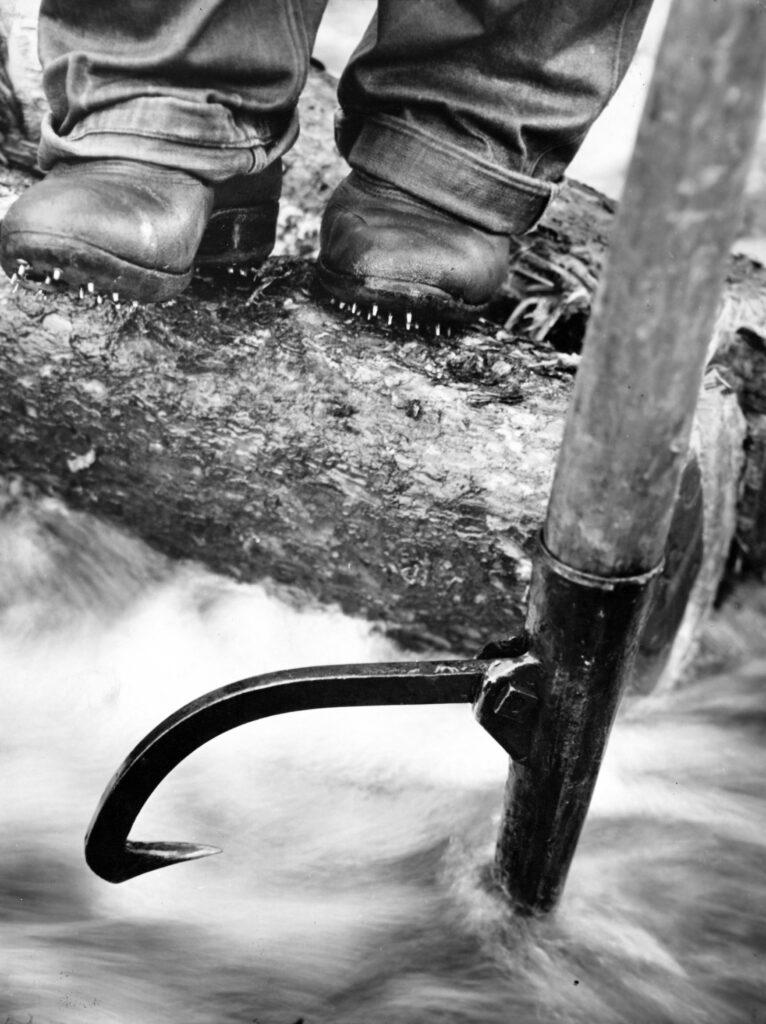
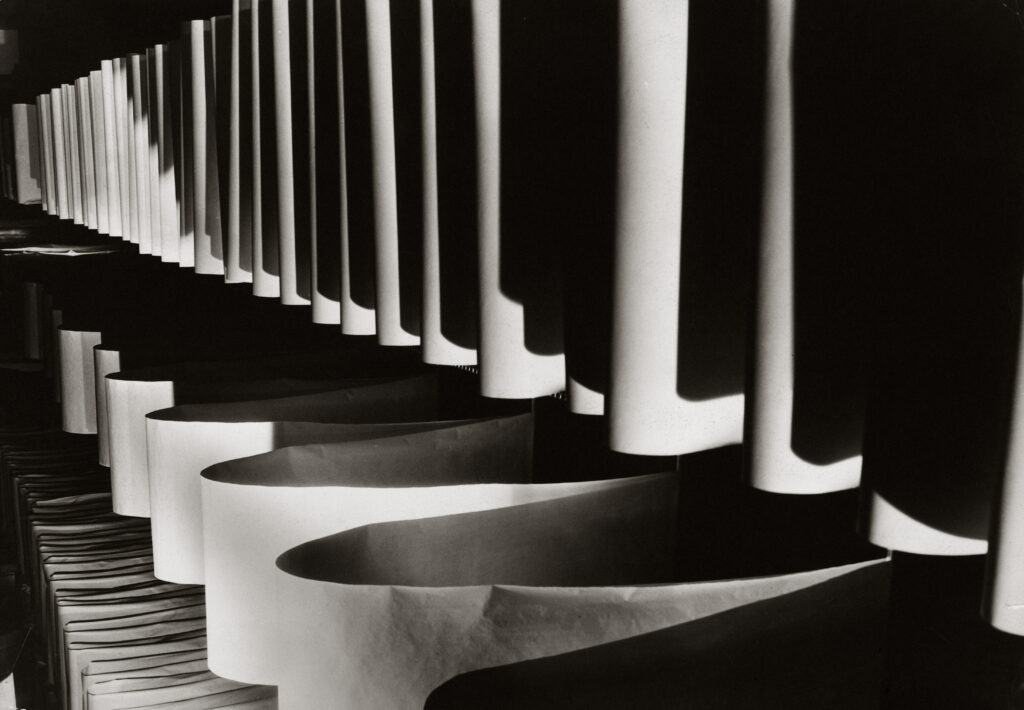
Bourke-White captured all the mechanical details involved in the making of newsprint. But with her artistic eye Bourke-White also made photos that went beyond the documentation of an industrial process. Some of the images fascinate because of the scale, as humans seem dwarfed first by the log piles and then the industrial machinery that turned the logs into newsprint. Bourke-White also captures details such as the spikes in a lumberback’s boots that help him maintain his balance atop waterborne logs, or the patterns created by freshly made newsprint hanging to dry.
If you enjoy this story and want to further appreciate—or possibly own—more of Bourke-White’s work, see some of her most famous images in the LIFE photo store.
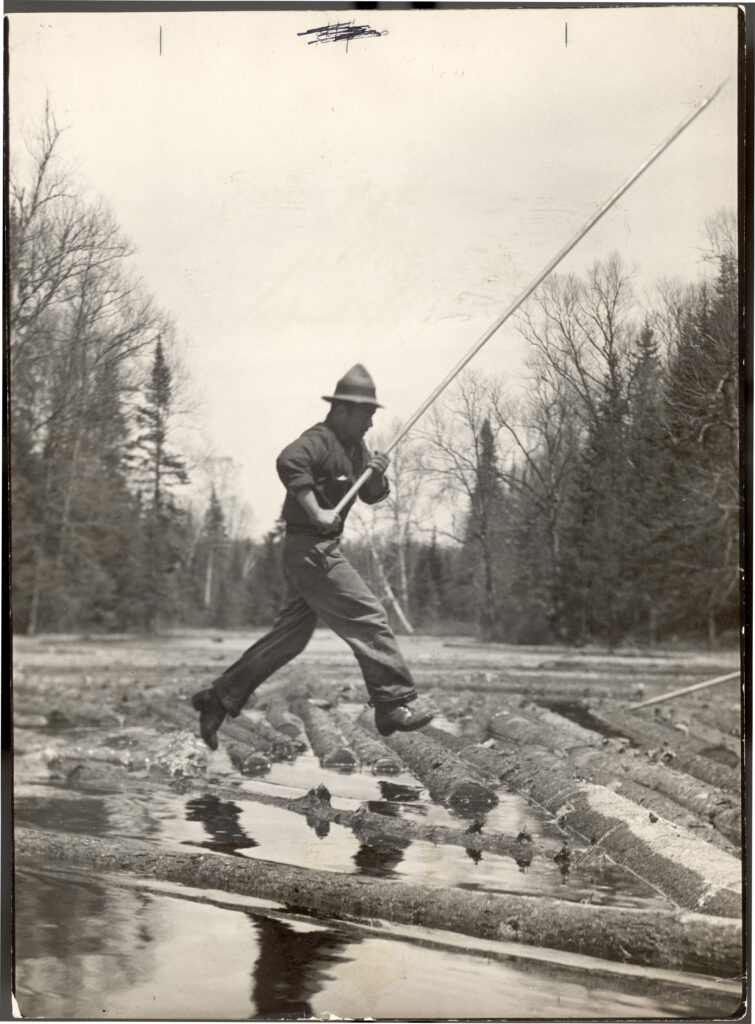
A worker prepares logs to be moved downstream to a peper mill, 1937. The International Paper Company either owned or leased 20,000,000 acres of forestland in Canada’s Upper Gatineau region.
Margaret Bourke-White/Life Picture Collection/Shutterstock
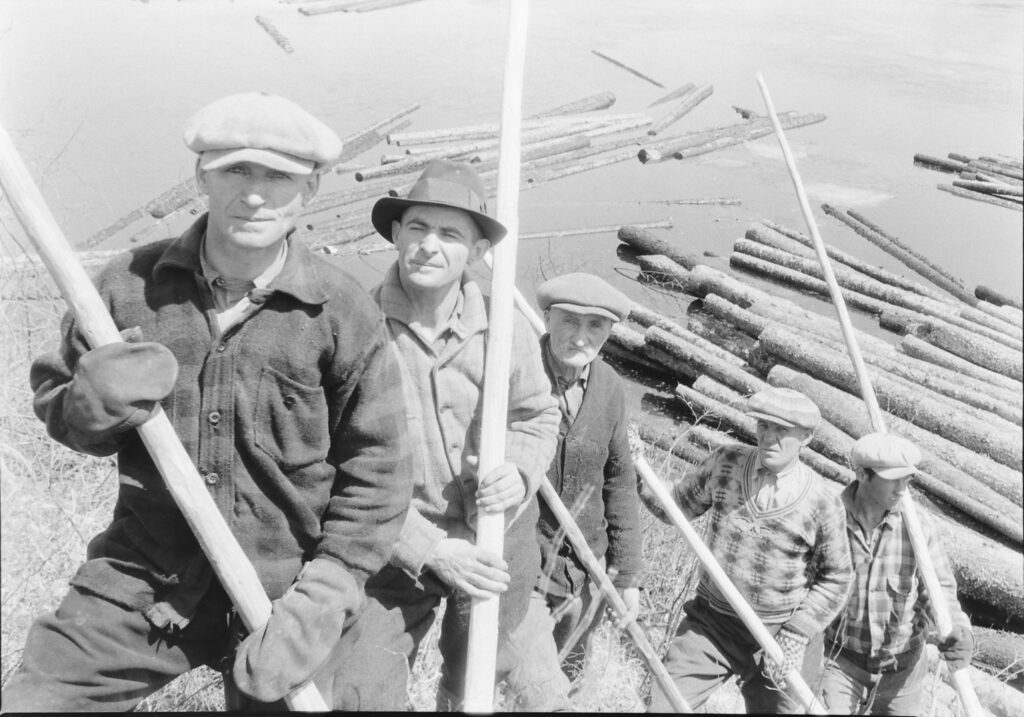
Spiked boots and a form of grappling hook known as a peavey were the favored tools of loggers guiding felled trees over the water, 1937.
Margaret Bourke-White/Life Picture Collection/Shutterstock
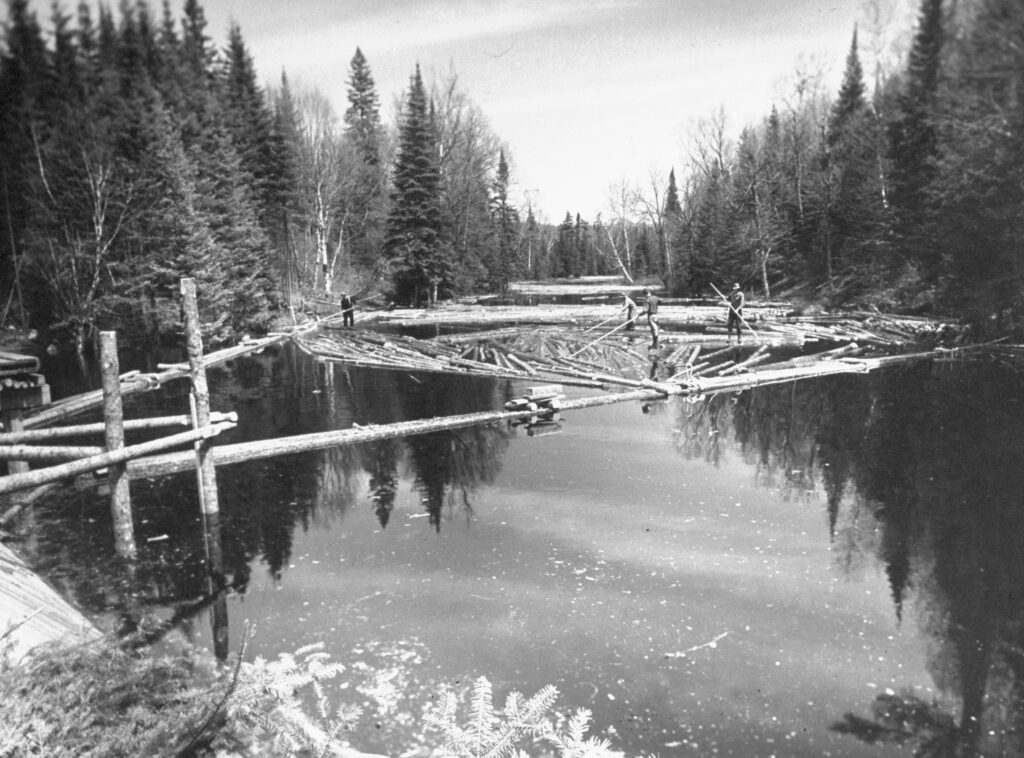
Workers formed a boom in Wahwati Creek in Canada by chaining logs together; when the boom was full, it would be carried downriver by a tugboat, 1937. formed by combining several logs together being filled by loggers floating other logs into it in preparation for travel down Wahwati Creek to the paper processing mill.
Margaret Bourke-White/Life Picture Collection/Shutterstock
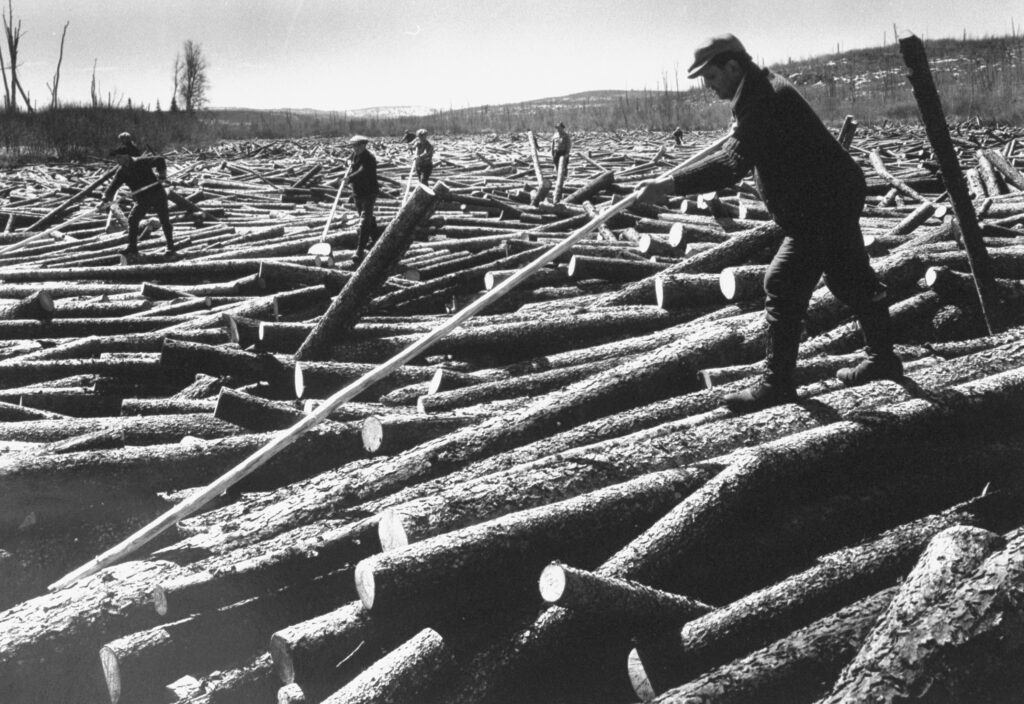
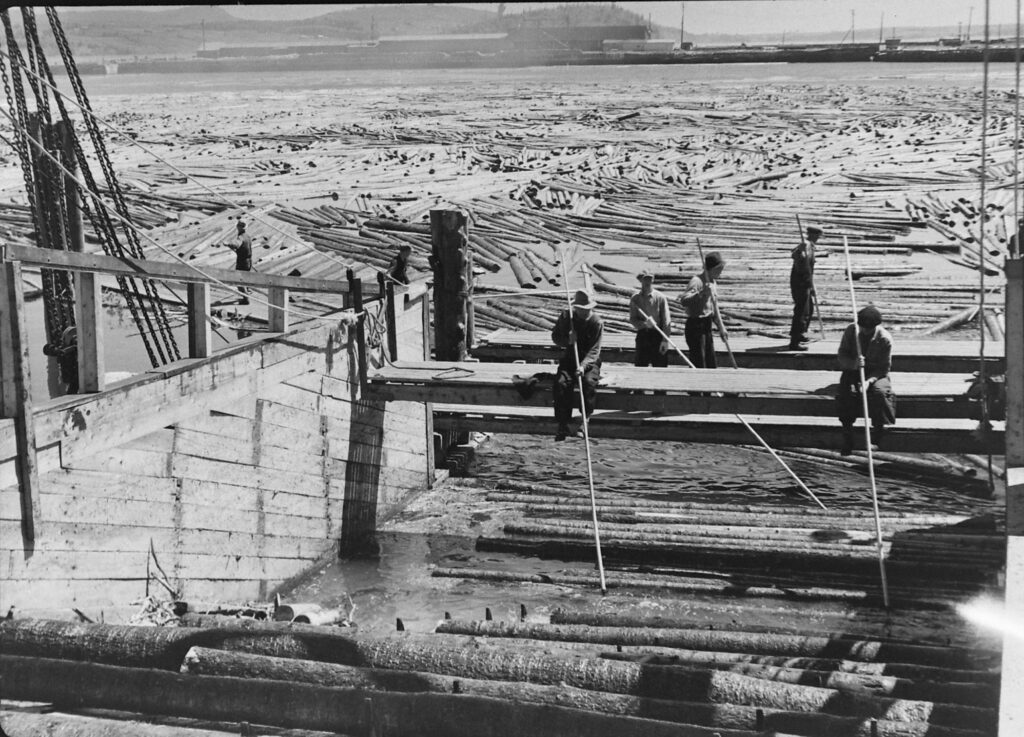
Lumberjacks working on a jam of logs on their way to the International Paper Company, 1937.
Margaret Bourke-White/Life Picture Collection/Shutterstock
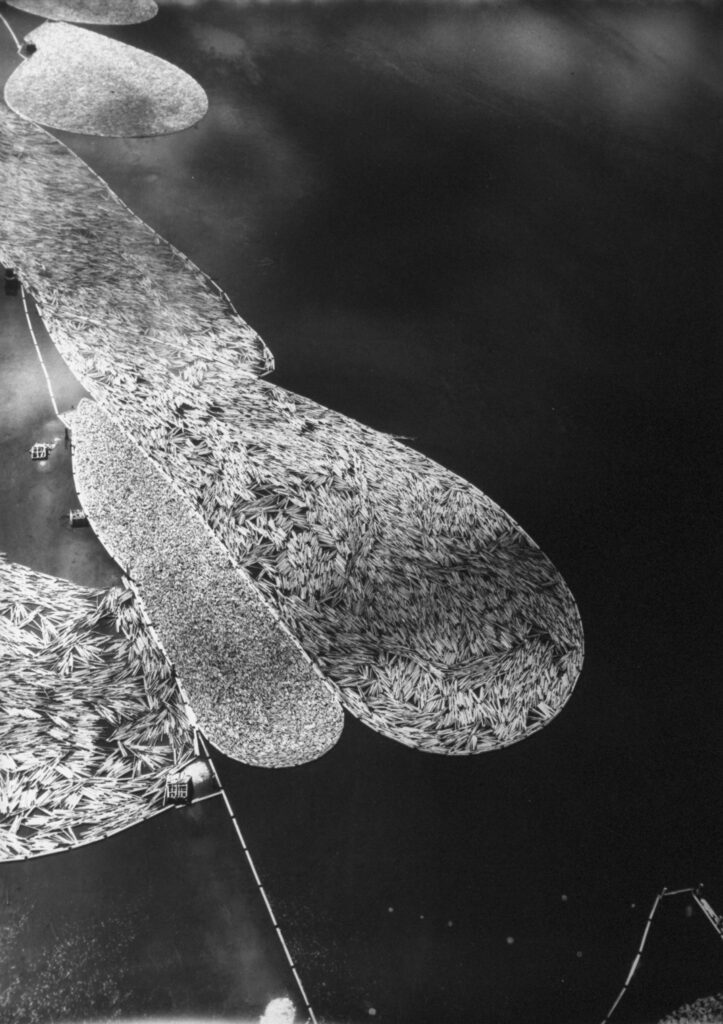
Massive collections of logs, called booms, were tugged downriver to a paper mill as part of the process of making newsprint, 1937.
Margaret Bourke-White/Life Picture Collection/Shutterstock
Loggers worked to move logs downstream to a paper mill, 1937.
Margaret Bourke-White/Life Picture Collection/Shutterstock
Workers managed logs on their way to be milled, 1937.
Margaret Bourke-White/Life Picture Collection/Shutterstock
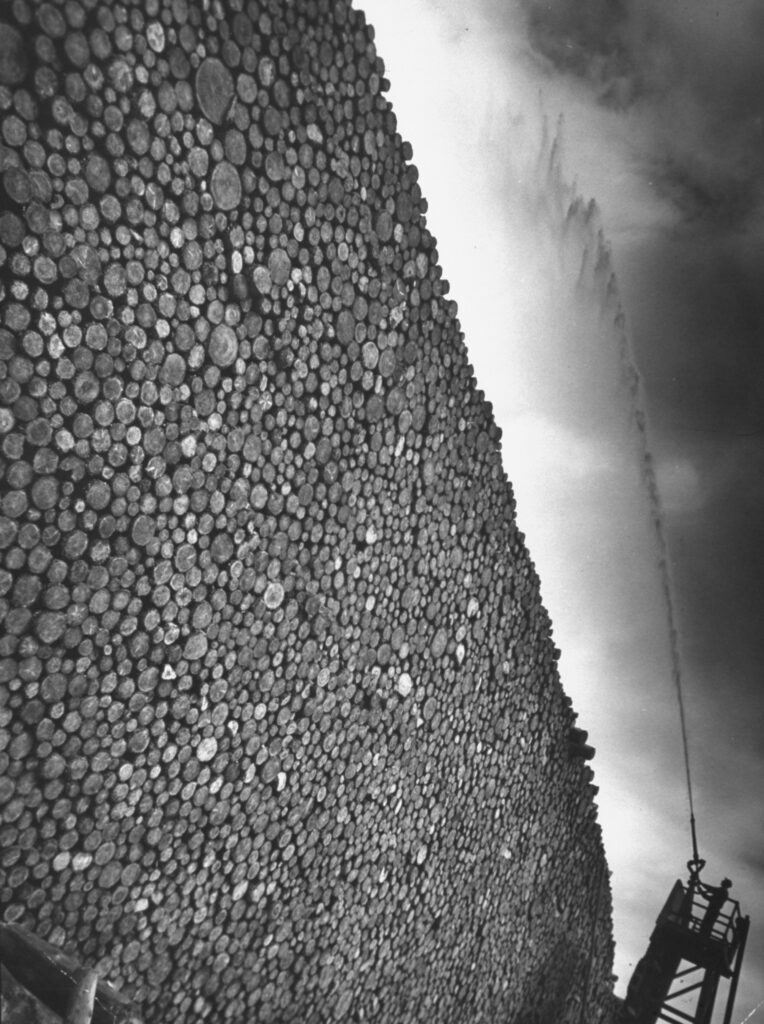
A worked sprayed water on a massive store of logs to keep them from catching fire before they could be processed at a lumber mill, 1937.
Margaret Bourke-White/Life Picture Collection/Shutterstock
Images from Margaret Bourke-White’s photo essay about the process of turning timber into newsprint, 1937.
Margaret Bourke-White/Life Picture Collection/Shutterstock
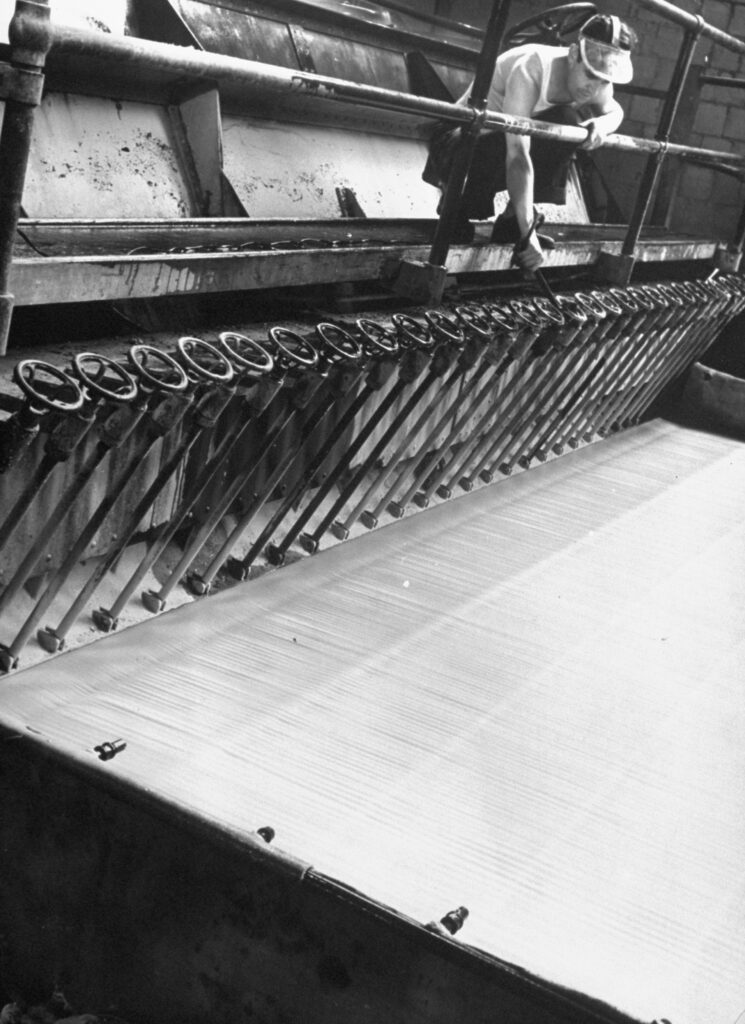
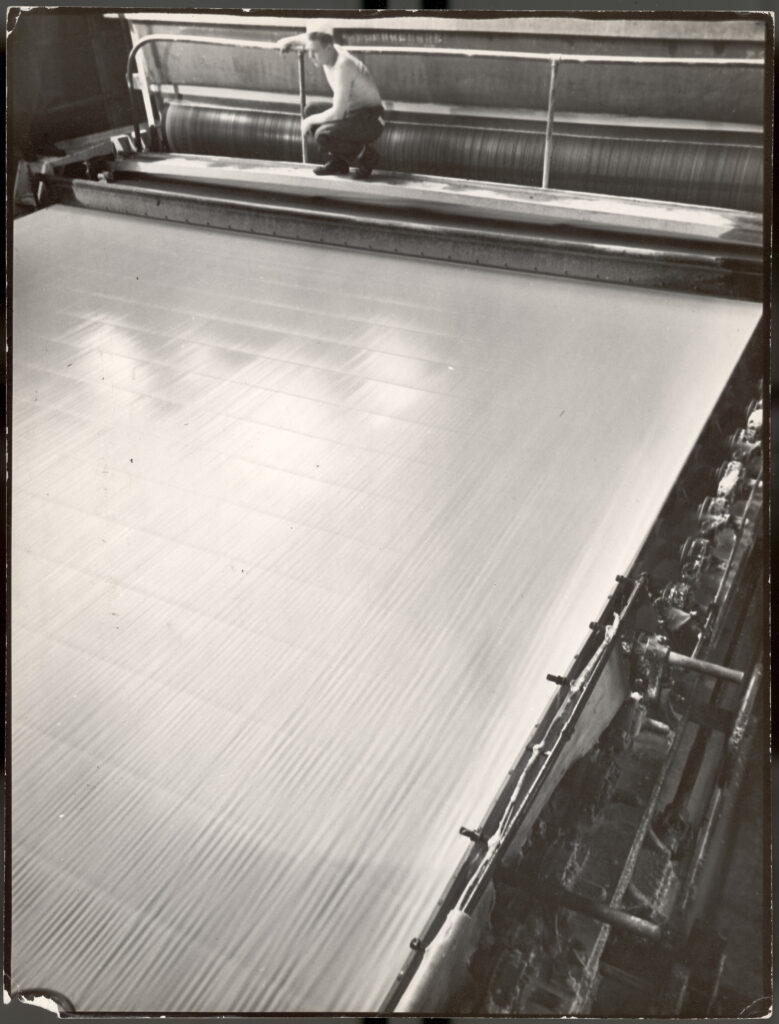
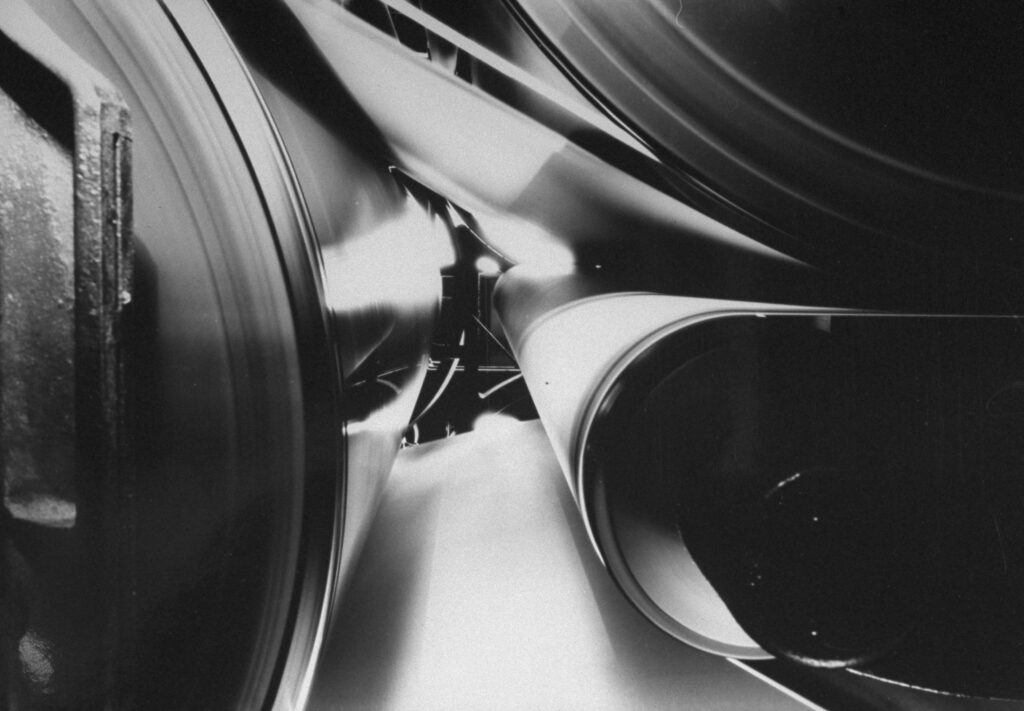
At a paper mill wood that has been pulverized and treated with chemicals is spread out into sheets and on its way to becoming newsprint, 1937.
Margaret Bourke-White/Life Picture Collection/Shutterstock
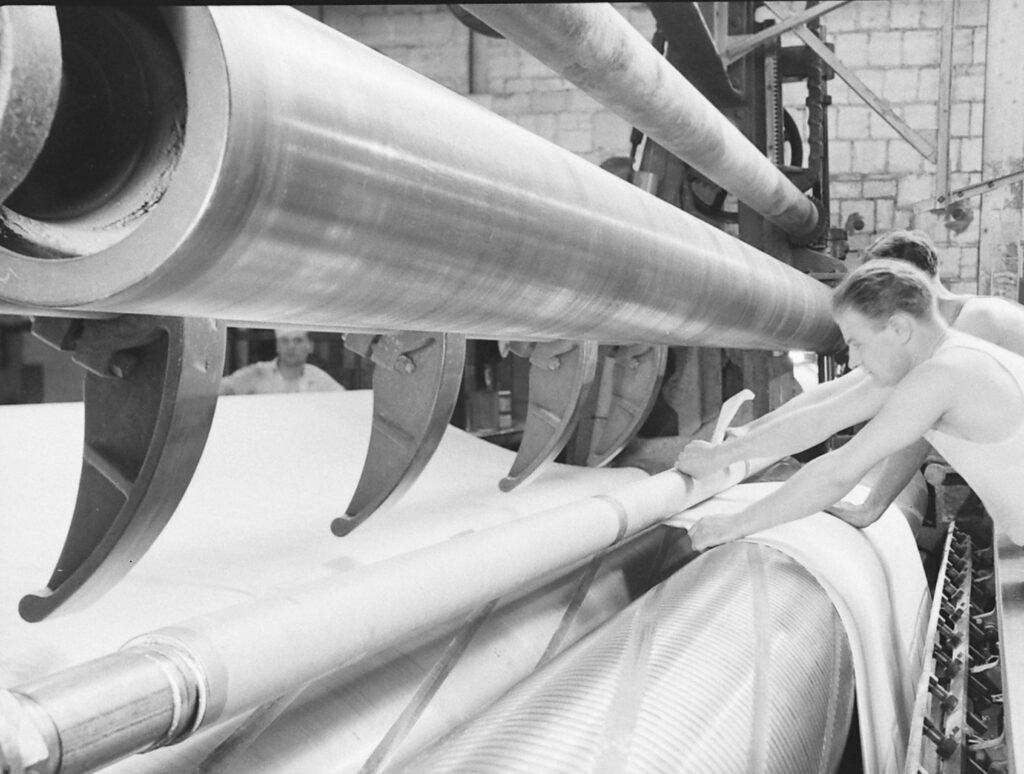
At a paper mill pulverized wood is turned into newsprint, 1937.
Margaret Bourke-White/Life Picture Collection/Shutterstock
At a paper mill freshly made newsprint hangs to dry, 1937.
Margaret Bourke-White/Life Picture Collection/Shutterstock
Paper being processed at the International Paper Company, 1937.
Margaret Bourke-White/Life Picture Collection/Shutterstock
Images from Margaret Bourke-White’s photo essay about the process of turning timber into newsprint, 1937.
Margaret Bourke-White/Life Picture Collection/Shutterstock
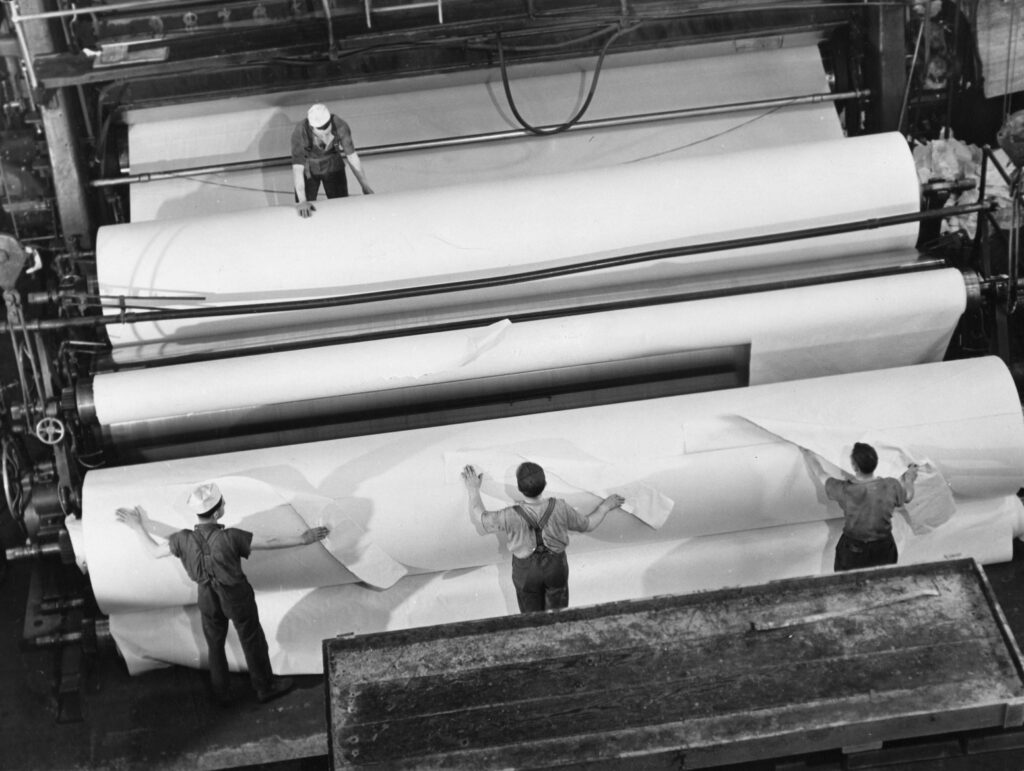
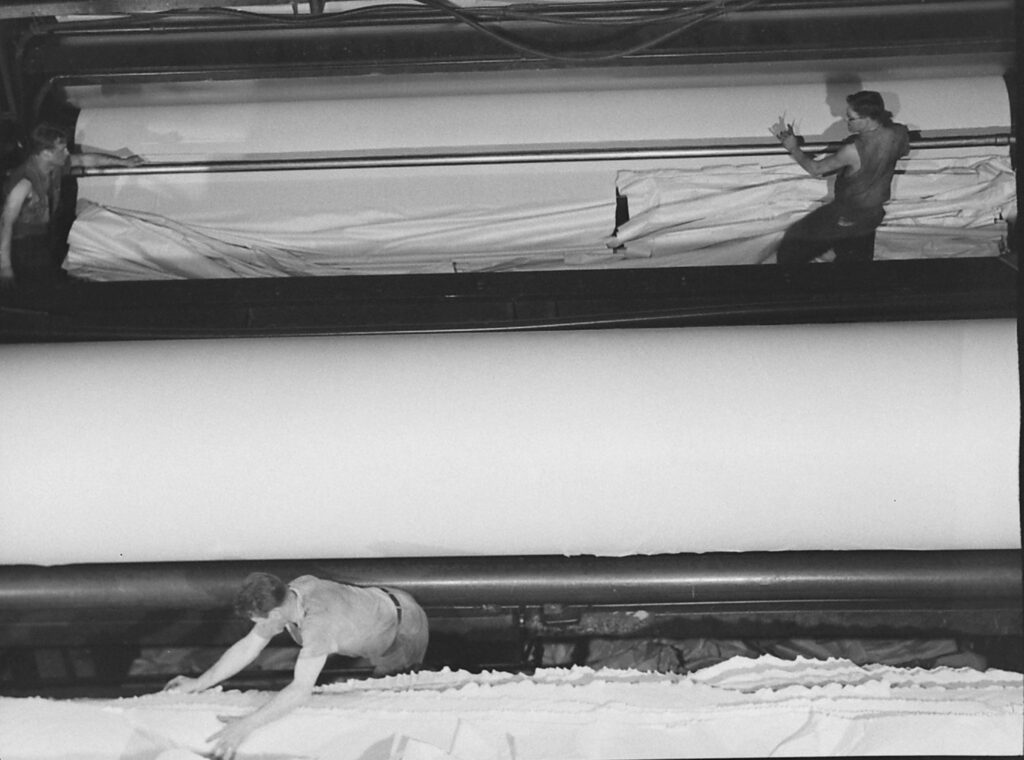
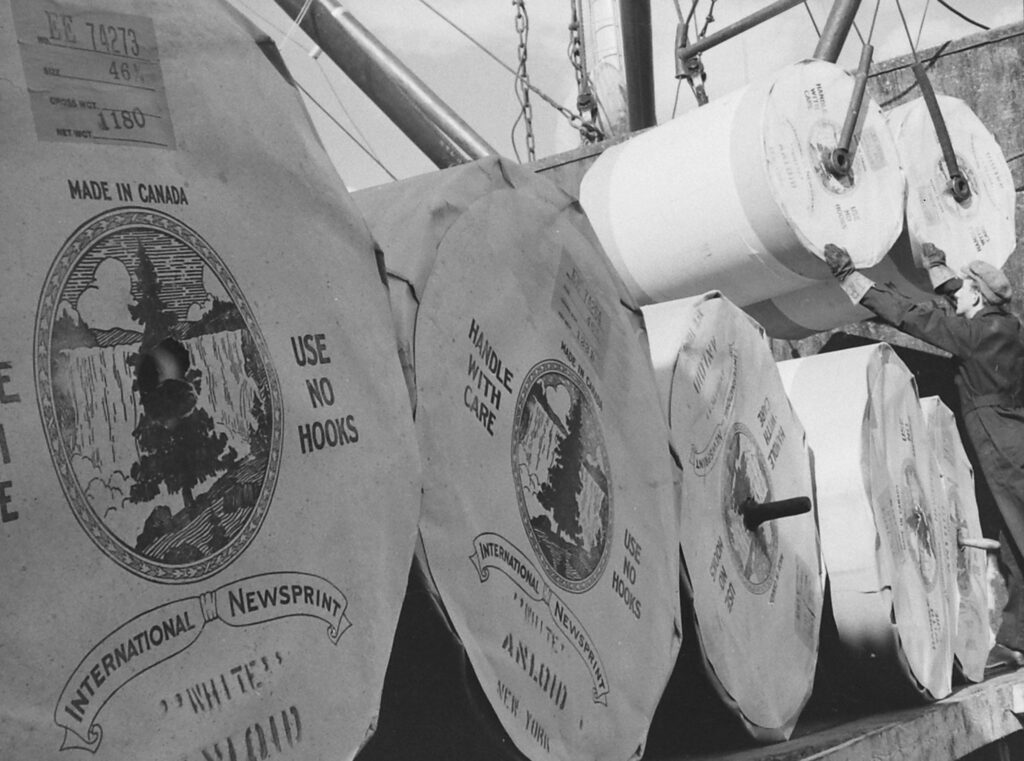
At a paper mill workers handled 20-foot-wide rolls of freshly made newsprint, 1937.
Margaret Bourke-White/Life Picture Collection/Shutterstock
Workers at a paper mill handle a freshly made 20-foot-wide roll of newsprint, 1937.
Margaret Bourke-White/Life Picture Collection/Shutterstock
At a paper mill an inspector fanned sheets of finished stock to check for flaws, 1937.
Margaret Bourke-White/Life Picture Collection/Shutterstock
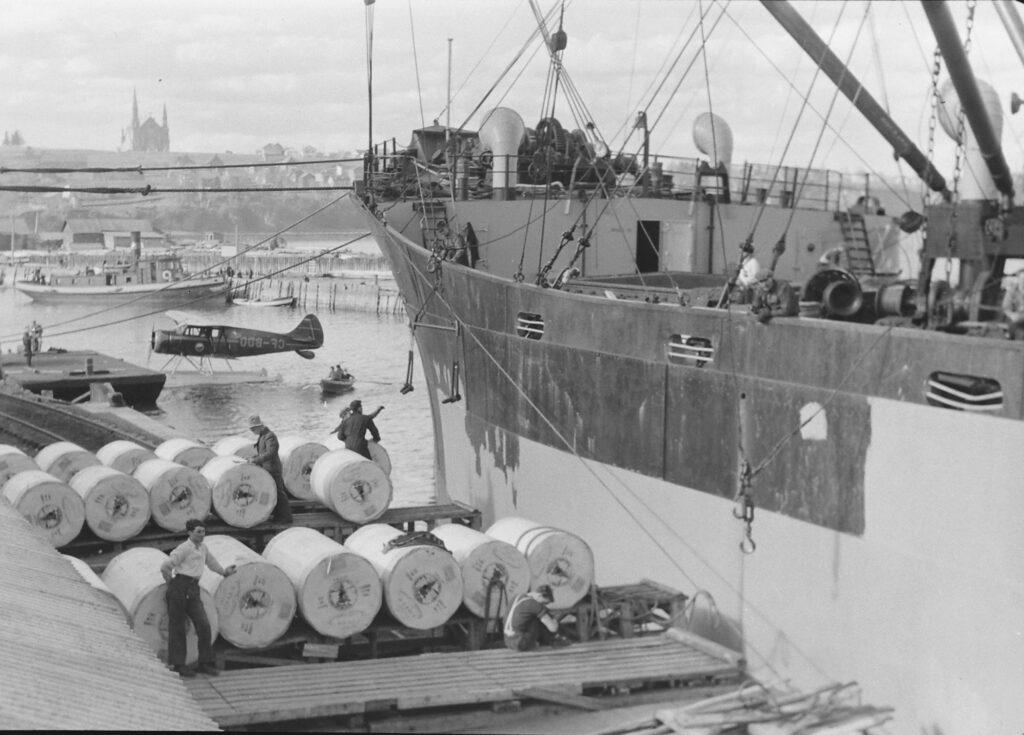
Finished rolls of newsprint, weighing 1,400 pounds each, are ready to be shipped from the International Paper Company, 1937.
Margaret Bourke-White/Life Picture Collection/Shutterstock
Finished rolls of newsprint are ready to be shipped from the International Paper Company, 1937.
Margaret Bourke-White/Life Picture Collection/Shutterstock
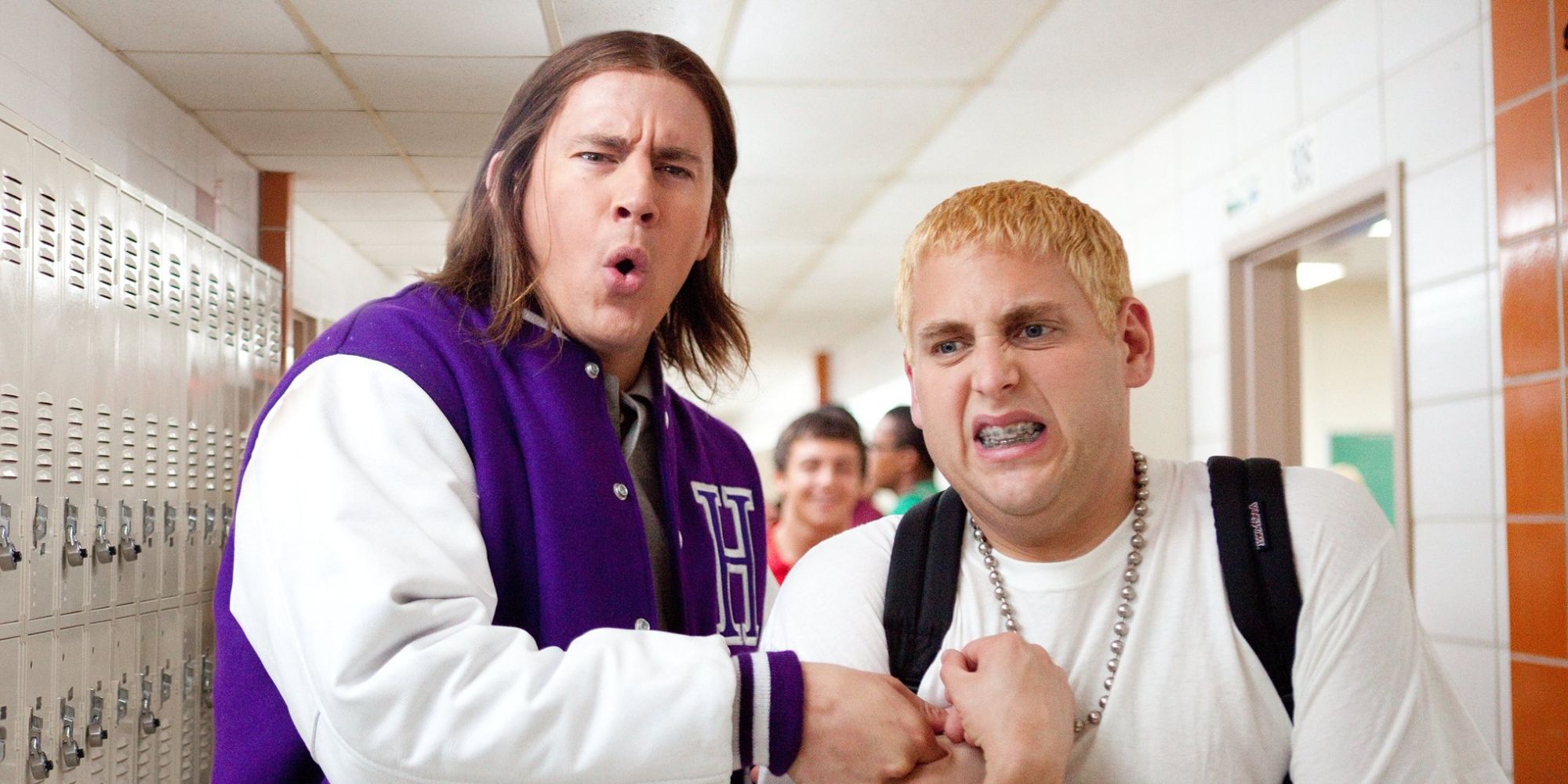
Schmidt and Jenko are back on the beat. A new report has confirmed that a long-awaited third installment in the 21 Jump Street franchise is officially happening, with both Jonah Hill and Channing Tatum in talks to reprise their leading roles, alongside Ice Cube, who's also discussing a return as Captain Dickson. Even better, Phil Lord and Chris Miller, the duo who helmed the first two installments in the cult classic action crime comedy franchise and are coming off the smash hit Project Hail Mary, are back to serve as producers. The title, fittingly, will be 24 Jump Street, and yes, you read that right.
Aggressive U.S. foreign policy has created deep instability—not only here in Canada, but globally. From the ongoing war in Iran to a devastating four-month fuel blockade in Cuba—causing medical blackouts and sanitation crises—the global impacts are severe. This week on rabble radio, we share a clip from the most recent Off the Hill political panel on American Imperialism. This webinar took place on Tuesday, May 19, 2026 and featured Gabriel De Roche, Madelaine Drohan, Thomas Ponniah and Karl Nerenberg. To watch the entire panel, visit rabbleTV or rabble’s YouTube channel.
Jon Bernthal is on a ride this year. 2026 started for the fan-favorite with Netflix’s His & Hers, a murder mystery where he stars opposite Tessa Thompson. The miniseries proved a big hit for the streamer as it broke into its all-time top 10 list with 98.2 million views. Then he inflicted some emotional damage with The Bear’s surprise prequel, Gary, which he co-wrote with co-star Ebon Moss-Bachrach.
Exhibit Of Interest: Edward Sorel & Madeline Sorel
Sorry I missed the opening date of this exhibit, but there are still two weeks left to see it. Edward Sorel and his eldest daughter, Madeline Sorel in a joint exhibit of their work. From Kingsborough Community College’sLinkedin:
Father and daughter are now launching a unique joint-show at the college where Madeline has taught illustration for the past 25 years. The Family Line: Edward and Madeline Sorel, seeks to tell the story through each artist’s work of overcoming external influences to develop one’s own voice and in doing so, develop their own sense of self.
The exhibit is at the Kingsborough Art Museum (KAM) at Kingsborough Community College, 2001 Oriental Boulevard, Brooklyn, NY. The show, free and open to the public, runs through May 20.
__________________
Madeline Sorel, an illustrator, collagist, felt artist and, the past 25 years, professor in Kingsborough Community College’s art department.
Edward Sorel’s A-Z Entry:
Edward Sorel (self-portrait above from a strip appearing in The Nation following the death of Marlene Dietrich. Drawing used by permission of Mr. Sorel). Born 1929. New Yorker work: 1990 – . All of Mr. Sorel’s books are of great interest; Unauthorized Portraits (Alfred A. Knopf, 1997) is particularly essential. Website:edwardsorel.net
Exhibit (In Spain!) Of Interest: Andrea Arroyo and Felipe Galindo
An exhibit of work by this married duo. Andrea Arroyo first contributed to The New Yorker in 1992; Felipe Galindo began contributing to The New Yorker in 2002.
We learned yesterday that Peter Kuper (above, left) and Ivan Ehlers (on the right) were named finalists in the Pulitzer Prize category of Illustrated Reporting and Commentary. The Spill congratulates both of these fine folks.
Mr. Kuper began contributing to The New Yorker in 2011; Mr. Ehlers in 2021.
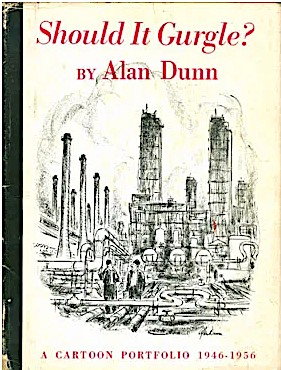
— this piece by Will Wiles comes just weeks before the publication of Gabriele Neri’s Alan Dunn: The Cartoonist As Architectural Critic (May 25, 2026. MIT Press).
Mr. Dunn was, for many years, the most published New Yorker artist.
Alan Dunn (self portrait above from Meet the Artist) Born in Belmar, New Jersey, August 11, 1900, died in New York City, May 20, 1974. New Yorker work: 1926 -1974 Key collections: Rejections (Knopf, 1931), Who’s Paying For This Cab? (Simon & Schuster, 1945), A Portfolio of Social Cartoons ( Simon & Schuster, 1968). One of the most published New Yorker cartoonists (1,906 cartoons) , Mr. Dunn was married to Mary Petty — together they lived and worked at 12 East 88th Street, where, according to the NYTs, Alan worked “seated in a small chair at a card table, drawing in charcoal and grease pencil.”

 Login
Login


 A script came this way recently, courtesy of a loyal Spill reader (thank you loyal Spill reader!).









.png)