US president had faced widespread criticism of his decision to install a controversial ally, Bill Pulte
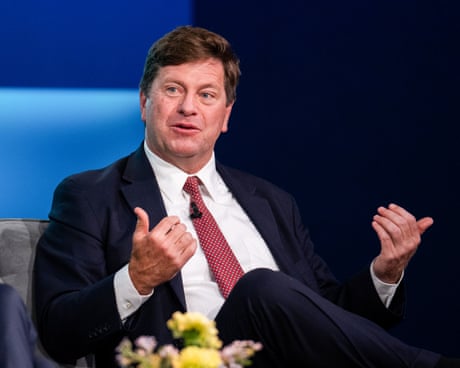
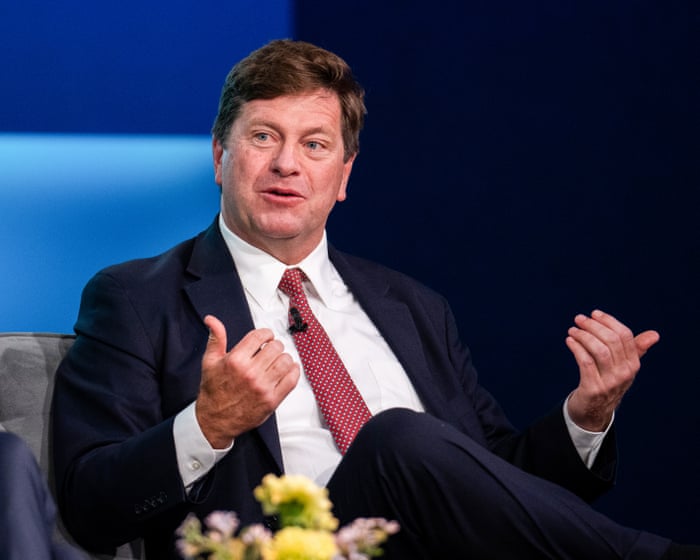
Donald Trump has nominated Jay Clayton, former head of the top US markets watchdog, to be the country’s leading intelligence official.
The US president faced widespread criticism of his decision to install a controversial ally, Bill Pulte, as acting director of national intelligence while searching for a permanent candidate.
Health advocates criticized Kennedy’s move demanding answers from journal that removed ‘flawed’ vaccine study
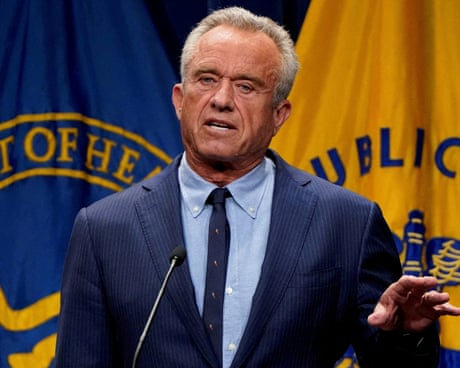
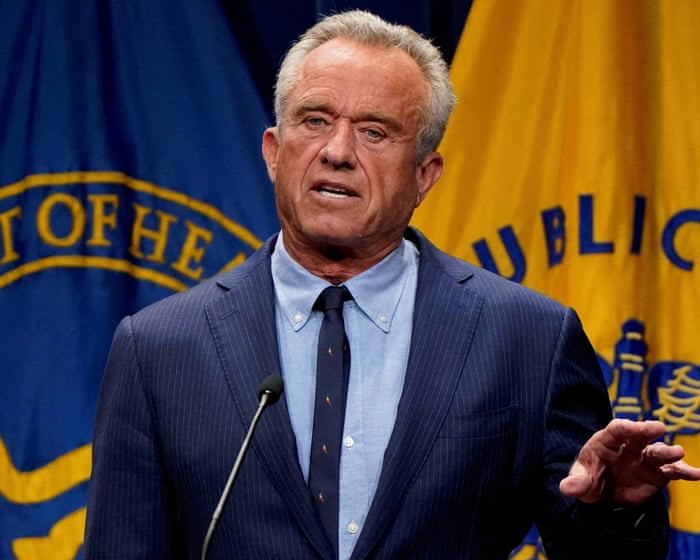
Robert F Kennedy Jr, the US health secretary, is demanding answers from a medical journal that recently removed a paper suggesting a link between vaccines and infant death, saying their decision was “of great interest to me”.
Public health advocates immediately criticized the move, and said Kennedy appeared to be trying to intimidate and influence the journal’s editorial process. The journal Toxicology Reports had removed the paper this spring after editors determined it was so seriously flawed it could harm patients and pose a risk to public health.
Trump also says in ‘friendly and frank’ phone call that US is nearing peace deal with Iran, according to Putin adviser
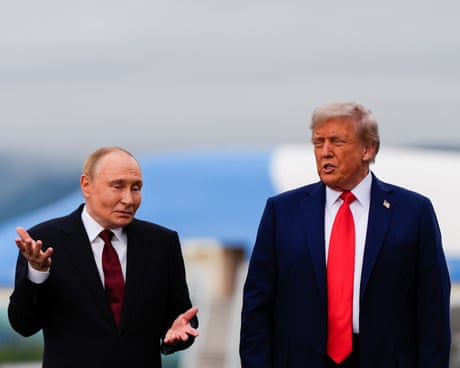
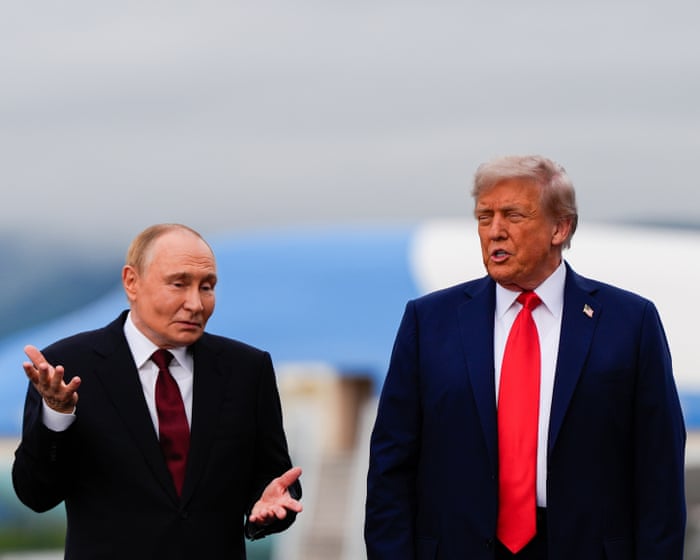
Donald Trump told Vladimir Putin that ending Russia’s ongoing war in Ukraine was critical and that he was prepared to help, reported Russia’s TASS news agency.
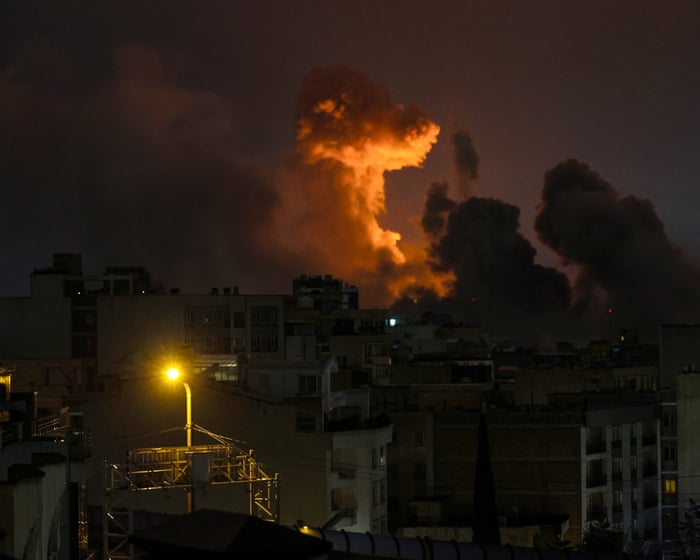
During a phone call on Sunday, Trump also informed the Russian president that the US was nearing a peace deal with Iran as the US-Israel war against the country continues, according to Yuri Ushakov, a Putin adviser. The call between Trump and Putin, which lasted about an hour, was described as “friendly and frank” by Ushakov.
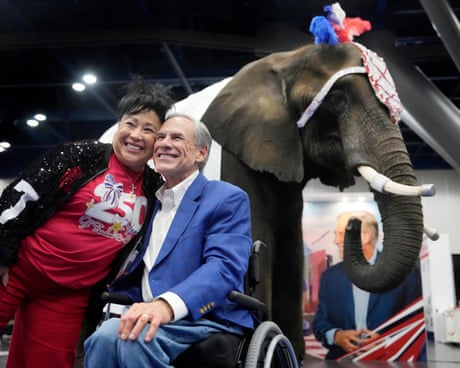
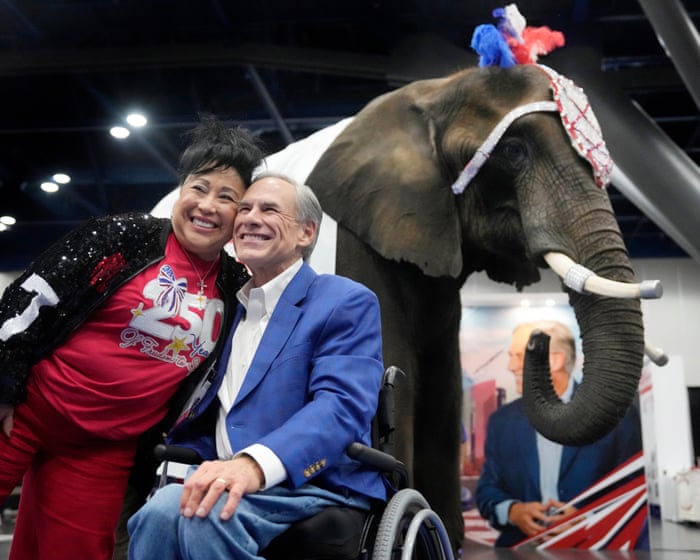
Four-ton Paige, brought in as surprise for attenders, made gushing debut after governor finished keynote speech
An African elephant weighing roughly 4 tons that was brought to the Texas Republican party’s annual convention to excite attenders ended up drawing widespread attention for the wrong reasons after she urinated on the convention floor and became the focus of animal welfare concerns.
Inside the George R Brown convention center in Houston on Friday, attenders had been told to prepare for a “larger-than-life surprise” after governor Greg Abbott finished his keynote speech. Organizers also displayed a message asking people to keep the aisles clear.
Donald Trump’s war in the Persian Gulf has killed hundreds of innocent people in 131 Iranian cities sparking increased inflation in Canada which will affect contract negotiations over the next year. An interview with Jim Stanford, the economist and executive director of the Centre for Future Work.
Music credit: UnionNation, the International Union of Machinists. Used with permission.
RadioLabour is the international labour movement’s radio service. It reports on labour union events around the world with a focus on unions in the developing world. It partners with rabble to provide coverage of news of interest to Canadian workers.
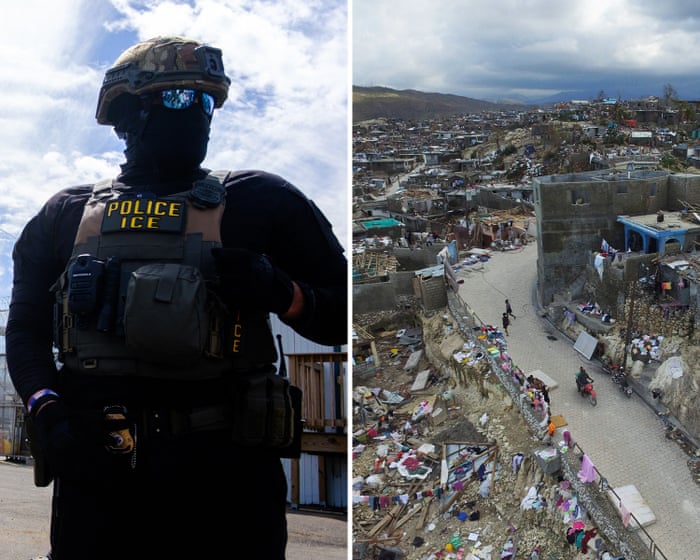
Donald Trump’s immigration crackdown is largely targeting people from the countries most vulnerable to displacement from climate-driven disasters, a Guardian analysis shows.
As the Trump administration pushes policies to boost planet-heating fossil fuels, millions of people are being forced to flee their homelands due to storms, floods and droughts worsened by the climate crisis.
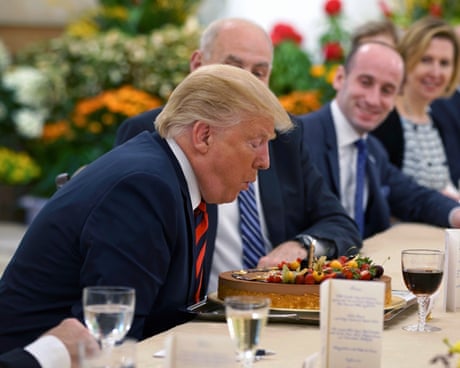
As the US prepares to celebrate its 250th anniversary and Trump turns 80, what state is the country in? And its president?
This weekend kicks off an extravaganza of celebrations for the US, marking 250 years of independence from Britain – and for Donald Trump, marking 80 years of being, well, him.
Presidents gone-by would have used a milestone anniversary to promote national unity. Trump is organising a cage fight. The president is adamant that every decent, flag-waving American will enjoy the festivities … or at least be talking about the party rather than what he’s brought to it.
Before the conflict began, inflation was at 2.4%, but the closure of the strait of Hormuz has affected energy prices
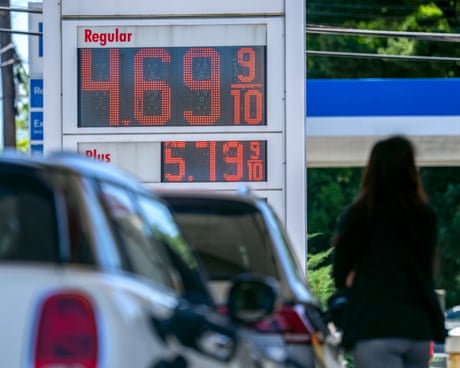
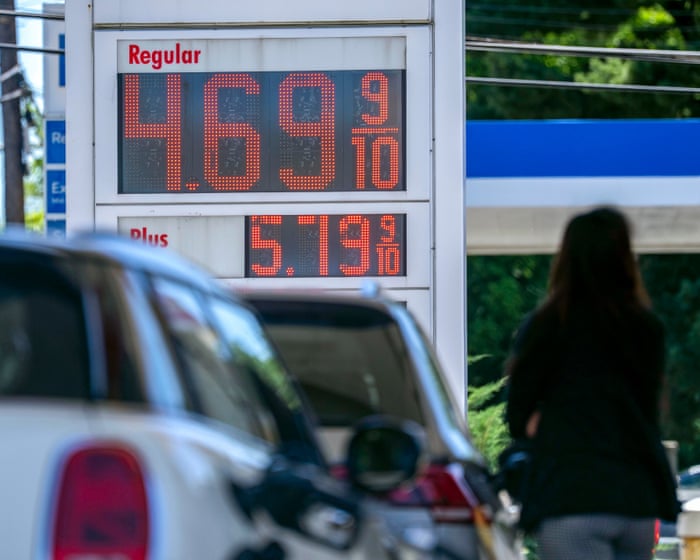
US inflation jumped to an annual rate of 4.2% in May, the third consecutive monthly increase since the start of the Iran war and a three-year high, as Americans continue to face steep oil prices.
Prices have increased sharply over the past several months, rising at an annual rate of 3.3% in March before going up to 3.8% in April. In February, before the conflict began, inflation was at 2.4%.
Elections chief says bid by ex-teacher to challenge senator with same name was filed ‘to confuse or mislead’ voters
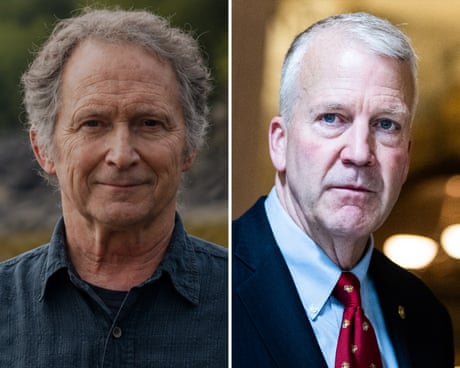
There will still be one Dan Sullivan on the ballot, but election officials in Alaska determined a second man by the same name cannot run against him in the high-stakes Senate race.
A man named Dan Sullivan, or Daniel J Sullivan Jr, filed to run as a Republican against incumbent Alaska senator Dan S Sullivan, also a Republican. Republicans filed complaints against the other Dan Sullivan, saying the candidate had coordinated with a Democratic campaign to confuse voters.
US president says in online post he reserves ‘ultimate alternative’ if Tehran refuses to sign agreement
Donald Trump said on Saturday that the US is set to sign a new agreement with Iran the following day, claiming that the deal would prevent Tehran from obtaining a nuclear weapon, as well as reopen the strait of Hormuz to international shipping.
In a Truth Social post, Trump said that Iran “no longer want a Nuclear Weapon, nor will they have one, either through purchase, development, or any other form of procurement”.
When U.S. trade representative Jamieson Greer met with President Claudia Sheinbaum in Mexico City on May 27 to discuss the upcoming review of the Canada–United States–Mexico Agreement (CUSMA), Canada’s chief trade negotiator Janice Charette was not at the table.
Although Canada and the U.S. have each met with Mexican officials in advance of the review, Canada’s negotiating team has not publicly met with U.S. representatives over CUSMA at all, and the Americans are becoming increasingly vocal about their complaints with Canada. U.S. Commerce Secretary Howard Lutnick went so far as to directly criticize Canada’s trade strategy in April, calling out the Carney administration, and saying that, “they suck.”
Tensions around trade have steadily been escalating between the Trump and Carney administrations over a series of disagreements in recent months. With the U.S. just freezing a long-standing military board with Canada and the Trump administration remaining upset over Canada lowering tariffs on some Chinese Electric Vehicles, the July 1 CUSMA review may be the next frontier for a fight.
On June 1, U.S. Trade Representative Greer will tell the US Congress what the Trump administration’s negotiating priorities are for the CUSMA review.
“Everything matters and nothing matters at the same time,” said Flavio Volpe, president of the Automotive Parts Manufacturers’ Association (APMA), in an interview with rabble.ca. Volpe has also served on the Ontario Premier’s Council on U.S. Trade.
“Our advice to the government has been to be tactical in giving us all a chance to see what the cards are, in as much as we can see them before we decide how to play them. It’s good that [the U.S. and Mexico are] meeting, but I do know that the Canadians and the Americans are constantly talking,” he said.
“There’s really no consequence either way of them not coming to an agreement this year,” said Stuart Trew, a Senior Researcher at the Canadian Centre for Policy Alternatives.
“The only important deadline from Canada’s perspective is some certainty around the tariffs, which are slowly destroying many of our industrial sectors, as they’re intended to do, right? That’s Trump’s plan. It’s not mysterious. He wants to kill our jobs so that they move to the States.”
What should we expect from the CUSMA review?
When the original CUSMA agreement was signed six years ago, it included a “sunset clause” that the deal would face a mandatory re-assessment on July 1, 2026. The “joint review,” as it’s called, was the first of its kind in a U.S. free trade agreement, and it forces the participants to decide every six years whether to extend the existing agreement, re-negotiate it, or abandon it for separate bi-lateral agreements. Unless the parties elect to continue with CUSMA, the agreement itself expires at the end of a 16-year period.
Initially, Canada and Mexico were opposed to these “sunset clauses,” saying they create uncertainty for business and investments between the North American trade block. Chrystia Freeland, who was Global Affairs Minister at the time, called it “absolutely unnecessary,” while other critics called it a “ticking time bomb.” At the time, the U.S. argued that the review process would prevent agreements from becoming “out of date,” and to make sure it was working as intended.
But according to Abram Lutes, Senior Research Officer at the Canadian Union of Public Employees: “The sunset clause is to keep the parties on their toes, right?” Lutes continued, “Basically to keep Canada and Mexico feeling a little bit uncertain, a little bit insecure in their relationship with the United States, as a way of the U.S. being able to table concessions or rearrangements down the line.”
Canada’s trade agreements with the U.S. have always been under some form of negotiation or another, ever since the very first Canadian–American Reciprocity Treaty between British North America and the United States in 1854. The so-called “Elgin-Marcy Treaty” was designed to reduce tariffs between the two fledgling populations and facilitate trade across their borders just as it was meant to remove any cause for Canadian annexation to the U.S., providing Canada economic benefits without the “political complications” of becoming part of the United States.
Fast forward more than 170 years to the present and now the economies of Canada and the United States, along with Mexico, are so profoundly intertwined, that it would be practically impossible to
“At the end of the day, we’re going to have a trade deal within North America. There’s no doubt about that. That will look pretty much the same as it does today,” said Jim Stanford, a Canadian economist and Director for the Centre for Future Work.
“This is similar to what Trump did in 2020, where for three years before that, you had bluster and threats and unilateral tariffs imposed. Obviously not as dramatic as what he’s doing this term, but then at the end he makes a couple tweaks and claims victory,” Stanford said.
Or as author Maude Barlow, founder of the The Council of Canadians, put it: “It’s not like before when we had no trade agreement. Now we have a trade agreement and we’re so integrated that so many of our workers are so dependent on the North American Free Trade integration that the eggs got scrambled into an omelet.”
What issues might actually be on the table?
Even if the U.S. is unlikely to abandon CUSMA upon review, and despite political bluster, there are some sticking points between Canada and the U.S. that can still be expected to surface this summer.
Trump’s “Section 232 tariffs” on steel and aluminum, which the U.S. administration says are meant to protect U.S. national security, have been especially painful for the Canadian and Mexican manufacturing sectors, and have also increased production costs for American manufacturers. It can be expected that this could become a significant issue on the negotiating table.
”They’re hurting General Motors, Ford, and the American divisions of Stellantis more than they’re hurting any other major company with these national security tariffs on automobiles,” said Volpe from the APMA.
Another point of contention is likely to be centered around the United States Trade Representative office’s Section 301 investigation, in which the U.S. has been assessing Canada’s ban on importing products that were made with forced labour.
Abram Lutes from The Canadian Union of Public Employees (CUPE) is also expecting issues around digital trade and services to also become contentious, and control over digital platforms in Canada could have far-reaching effects. The U.S. has expressed irritation at the Online News Act and Online Streaming Act in advance of the CUSMA review.
“The Trump administration is really interested in advancing language around digital trade and services, and this is basically coming from the US tech industry,” said Lutes. “This would really significantly restrict Canada’s policy space around developing domestic digital technology and around regulating US platforms.”
“There’s also things like basically dismantling regulations around Canadian content, regulations around French language content in places like Quebec. And also kind of making it very difficult for the Canadian government, for example, to combat disinformation that might be targeting Canadians on US platforms.”
Lutes has been closely following the effects the CUSMA joint review could potentially have on CUPE’s members, many of which work in the healthcare and energy sectors, and he said the interdependence of the energy grid is another issue that might come up.
“There’s a huge opportunity in this time to kind of rethink our energy mix and the way we approach energy policy,” he said. “A lot of energy development in Canada is very regionally uneven and is very oriented towards that kind of north-south integration. At the time Canada was electrifying, this was a very cheap and efficient way to go about it, but obviously has made us very reliant on the United States and it sort of limited the extent to which we have a genuine national energy system.”
Pharmaceutical regulation and U.S. access to the Canadian dairy market are also issues that arise during every recent trade negotiation between Canada and the U.S. just as fair wages and expanded rights for workers in Mexico also routinely come up.
It’s unlikely that Canada’s “trade diversification agenda” will meaningfully impact CUSMA because the new agreements with Europe, India, Japan, China and the UAE, as well as bi-lateral partnerships with Mexico, are with countries that have export economies, which sell products to Canada but import very little.
Nevertheless, all of these issues combined promise to transform the July 1 deadline from a boring review of the existing agreement into a high-stakes re-negotiation opportunity in which the Trump, Carney and Sheinbaum administrations might indeed be forced into a high-stakes game of chicken with 30 per cent of the world’s economy.
And for all the political theater and policy expectations that will ensue, we shouldn’t forget the irony of why we’re even reviewing free trade at all right now.
As the economist Jim Stanford said, “I will remind readers of rabble that when the CUSMA was signed, Trump hailed it as the best trade agreement ever signed in world history, and of course now he’s back to saying it’s horrible and neglecting the point that he’s the one who negotiated it.”
Strikes on Bemani damaged key water reservoir for 20,000 people living in area amid a historic drought in the country
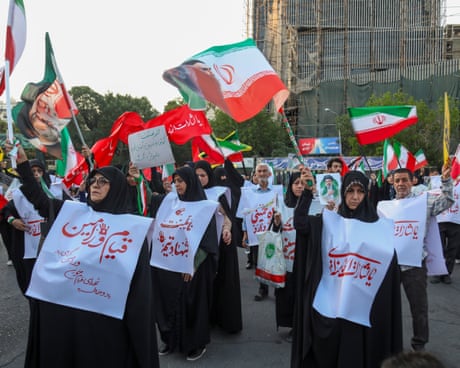
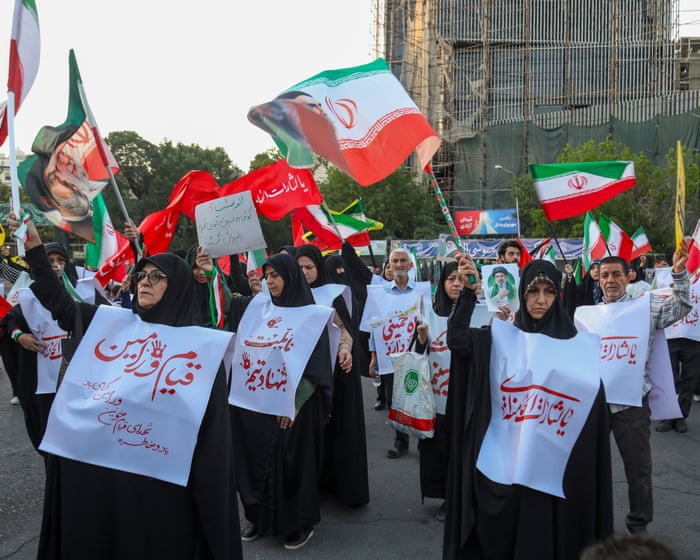
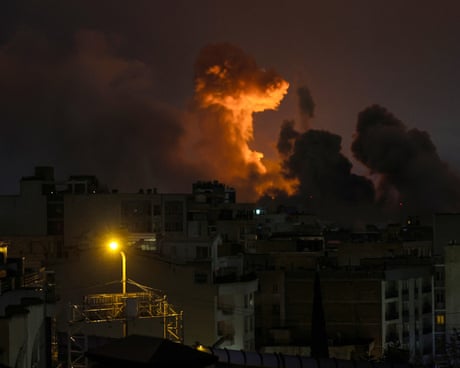
Military strikes that damaged two water storage facilities in southern Iran may constitute a war crime, military and legal experts say, after reviewing media reports and visual evidence of a 10 June strike on Bemani, a small district about 2 miles from the strait of Hormuz.
It’s unclear if the strikes deliberately targeted the district’s water tanks, or if they unintentionally destroyed a key reservoir for about 20,000 people living nearby. But if the tanks were the target, then the legal question becomes critical, Brian Finucane, a former state department lawyer, said. “It’s either a military objective or it’s a civilian object: attacking one is lawful, attacking the other is a war crime,” Finucane said.

 Login
Login