Ghana's parliament on Friday approved a law that would make the promotion, sponsorship or intentional support of LGBTQ activities punishable by three to five years in prison. The law is now awaiting ratification by President John Mahama.
MP Melanie Ward calls on Charity Commission to look into 32 organisations she says have given at least £28m
Thirty-two charities in England and Wales have donated at least £28m to Israeli settlements that are illegal under international law, an MP has said.
Labour’s Melanie Ward said that if gift aid were claimed against the donations in the usual way, it would mean taxpayers had subsidised illegal settlements to the tune of £5.6m, a situation she described as deplorable. The foreign secretary, Yvette Cooper, announced on Tuesday that the Charity Commission has been tasked with investigating UK charities’ links to settlements.
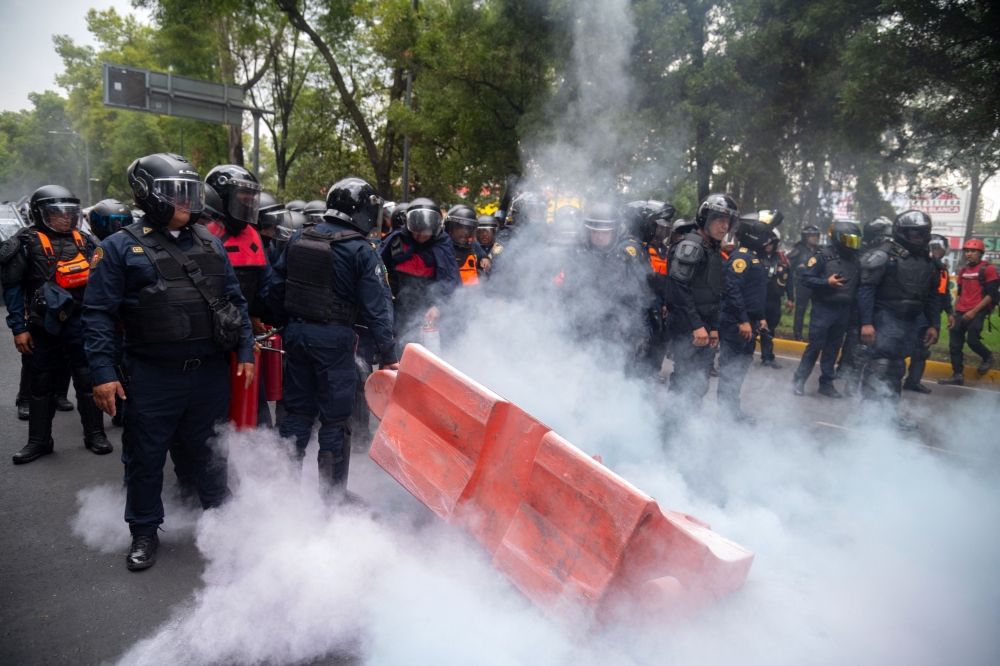
MEXICO CITY, June 12 — Dozens of protesters clashed with police yesterday outside the Estadio Azteca in Mexico City as South Africa and Mexico played the first match of the World Cup before 80,000 fans.
Groups of teachers, relatives of Mexicans who have gone missing, and student activists gathered early yesterday outside the stadium amid a heavy police presence.
Some protesters breached barriers and exchanged blows with officers guarding the stadium’s perimeter, moments after Mexico scored the tournament’s first goal.
A handful of youths smashed vehicle windows with bats as police fired tear gas and dispatched mounted officers to corral the protesters, who scattered on foot.
Mexico’s government has faced weeks of protests, mainly by teachers demanding better working conditions.
For a time it appeared the protests might prevent the city from staging an official World Cup fan zone in its famed Zocalo.
But thousands of fans poured into the plaza shoving and jostling their way through metal barriers, creating chaotic scenes shortly before kick-off in the opening game. — AFP
A court in Mali has sentenced a French intelligence agent with diplomatic status to 20 years in prison for “undermining state security”, judicial sources said Friday, in a ruling that further strains already fraught relations between the West African junta-led state and its former colonial ruler France.
As the story of the US-Iran war is written direct to social media, Donald Trump may be the genre’s premier unreliable narrator.
Since the war began, Trump has again and again threatened Iran with fearsome consequences if Tehran doesn’t come to the table and sign a peace deal that the US president said was imminent weeks ago. And he has also repeatedly claimed that an Iran deal is “close” – without any result. (A CNN tally put the number of times he’s claimed it at 38.)
When Moffat Takadiwa sees a pile of rubbish—old technology parts, personal care items, clothing—he doesn’t just see a bunch of junk. The Harare, Zimbabwe-based artist has spent the better part of two decades collecting thousands upon thousands of pieces of plastic and metals foraged from landfills near the city’s Mbare neighborhood, where heaps of electronic equipment waste, also known as e-waste, ends up in illicit dump sites. In his studio, vast collections of colorful objects are meticulously sorted into collections.
Takadiwa is known for his elaborate sculptures made from what he describes as “everyday consumer residue”—discarded computer keyboard keys, toothbrush heads, plastic combs, buttons, and more. The colors, textures, and patina of wear and age produce patterns that it’s tempting to describe as “organic,” even though the materials are the opposite.
Detail of “Muchapihwa Korona”
The artist’s current solo exhibition, The Crown! at Semiose, highlights the tension not only between visual harmony, consumer culture, and waste but also those of what curator Fernanda Brenner describes in the exhibition essay as “the tensions of Africa’s post-colonial afterlife.” Takadiwa describes it as the “colonial hangover.” For instance, afro combs appear throughout the show, “rooted in African traditions and the colonial self-fashioning they forced,” Brenner says. “Once tools for grooming and ritual, these combs now bear the weight of resistance and pride in Black political life.”
Takadiwa’s compositions drape, tapestry-like, with repetitive patterns and textures that alternate between softness and brittleness. From the distance, the details of unique components blur into a fabric-like substrate, but upon closer inspection, nail polish brushes, caps, and keyboard keys in various states of aged yellowing emerge as individual tributes to overconsumption and excess. “The result is beautiful, which is where the trouble begins,” Brenner writes. She continues:
If beauty could settle old scores, the art world would have solved more than it has…Rearranging the materials does not erase their origins. If you have ever pressed ‘delete’ and believed the problem was gone, his work offers a quiet correction. Nothing disappears; it only travels, usually to places like Mbare, where Takadiwa opened his artist-run space in what used to be a colonial beer hall.
The Crown! continues through May 16 in Paris. See more on the artist’s Instagram.
“Combed Hair” (2026), keyboard keys, buttons, plastic toothbrush heads, combs, and nail polish parts, 110 1/4 x 61 inches“The Crown (2)” (2026), keyboard keys, plastic toothbrush heads, and nail polish parts, 72 1/16 x 55 1/2 inchesDetail of “The Crown (2)”“Pink Nails” (2026), keyboard keys, plastic toothbrush heads, combs, and nail polish parts, 92 1/2 x 59 13/16 inchesDetail of “Pink Nails”“The Consumer Portrait” (2026), keyboard keys, plastic toothbrush heads, combs, and nail polish parts, 59 1/16 x 54 5/16 inches“Daily Reflections” (2026), keyboard keys, plastic toothbrush heads, combs, and nail polish parts, 70 7/8 x 45 11/16 inchesDetail of “Daily Reflections”
This live blog is now closed. For the latest, read more of our coverage on the Middle East conflict here.
Iranian media is reporting that there were no immediate casualties following apparent Israeli strikes on the Karun petrochemical plant in Mahshahr, a city in Iran’s southwestern Khuzestan province.
According to the Fars news agency, Iran’s Revolutionary Guards said they responded to what they described as an American-Israeli strike on the Iranian petrochemical site by launching a missile attack on a similar plant in the northern Israeli city of Haifa.
Senegal's National Assembly on Tuesday voted to reinstate ousted PM Ousmane Sonko as a member and appoint him speaker, just days after he was sacked by President Bassirou Diomaye Faye in an escalating power struggle between the two former allies.
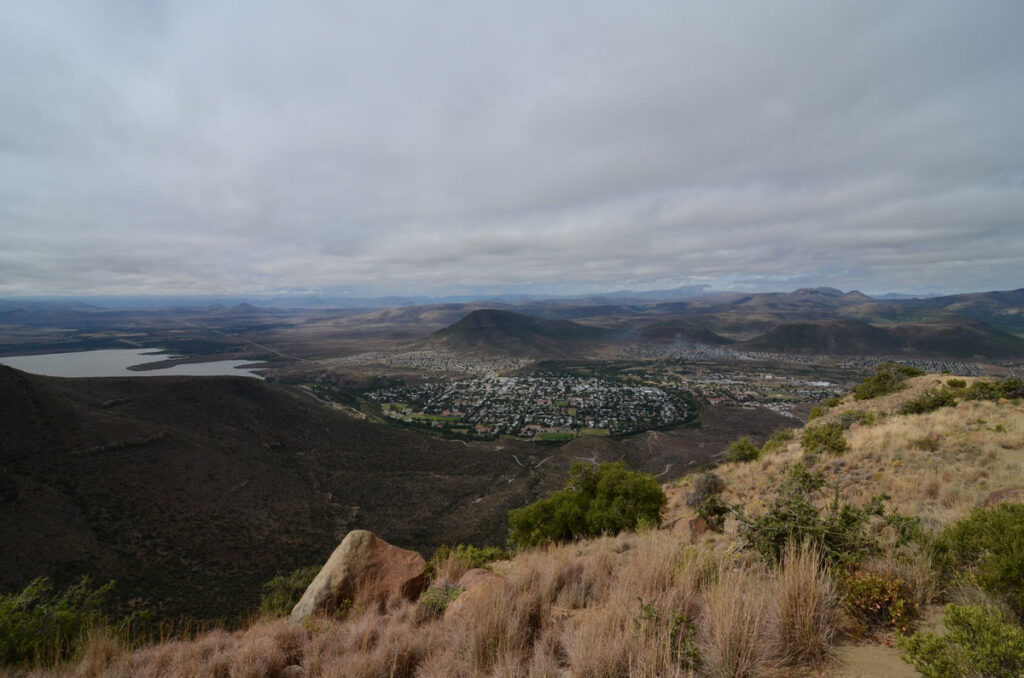
Roughly the size of Texas, the Karoo Basin of central western South Africa is brutally dry, sparsely populated, and known in part for its potentially “massive” hydrocarbon deposits.
South Africa, which consumes more energy than any other country in sub-Saharan Africa, has shown a growing interest in commercial fracking for shale gas and oil across the Karoo hinterland, with the country moving in late 2025 to lift a 13-year ban on shale gas exploration in the area.
However, a recent study from the University of Cape Town, published in Seismological Research Letters, cautioned that the Karoo might not be as seismologically calm as it appears, meaning fracking efforts could have the potential to induce earthquakes in the region.
A Swarm of Earthquakes
The researchers observed 66 earthquakes in this cluster between 2007 and 2022, ranging from 0.7 to 4.8 in magnitude.
The researchers investigated what they call a sudden swarm of earthquakes that occurred in the Leeu Gamka cluster, a region of the Karoo that was previously considered seismically stable. They observed 66 earthquakes in this cluster between 2007 and 2022, ranging from 0.7 to 4.8 in magnitude.
“The individual earthquakes here are very small,” said Alastair Sloan, a tectonics and structural geologist at the University of Cape Town.
Using ambient noise tomography, previous geophysical surveys, and information about the locations of past earthquakes, the researchers identified a critically stressed fault underlying the region. The fault appears to extend for at least 30 kilometers roughly west-northwest to east-northeast.
Looking at South Africa more generally, there are other places where there have been “fairly large” earthquakes with a similar orientation, Sloan said. He cited a series of large earthquakes in the early 20th century in a place called Koffiefontein, north of the study area, and the disastrous 1969 Tulbagh earthquake, west of the team’s study area.
Both of those earthquakes occurred in regions that are geologically similar to the Karoo, though they’re outside of the area being considered for shale gas exploration, Sloan said.
Fracking Risks?
In other parts of the globe, such as Oklahoma in the United States, processes related to oil and gas extraction have led to “induced earthquakes.” Most of these earthquakes have been triggered by wastewater disposal associated with oil production, not by fracking directly.
Researchers are unsure if industrial fluid injection in the Karoo, as is applied in shale gas fracking processes, could trigger significant seismic action in the region’s existing faults.
“Some locations which undergo shale gas development don’t see very much seismicity, and there is a catalog of things which need to be present for [seismicity] to be something that you would particularly worry about,” Sloan said.
For instance, if faults are only within the crystalline basement and therefore separated from the sedimentary layers where the fracking occurs, then it’s not likely they’ll be reactivated, because there’s no way for the fracking fluid to get down to the fault zone itself. Another factor, Sloan added, is that for significant earthquakes to occur, large faults that are already critically stressed need to be present in the region undergoing fracking.
The new study showed that both of these conditions may be met in the Karoo: Microseismicity does extend to the depths at which the carbonaceous shale is present. And this microseismicity is occurring on a reasonably extensive structure with a similar orientation to larger earthquakes that have already occurred in the region.
However, Sloan stressed, this isn’t a cause for immediate panic.
“I don’t want to be too alarmist; the size of the structure revealed by the microseismicity is not huge, and so we do not have evidence to expect an earthquake much larger than the damaging historical earthquakes that we have already seen in the wider region,” he said. “Globally, large earthquakes triggered by fracking (rather than associated deep wastewater exposure) are very rare, but the study suggests the necessary preconditions are present. And so the possibility needs to be considered and monitored carefully.”
Not Unique
Raymond Durrheim, a geoscientist and the South African Research Chair in Exploration, Earthquake and Mining Seismology at the University of the Witwatersrand, and who also examined the Ph.D. thesis on which the new study is based, said no area is perfectly seismically quiet.
“We know the way seismicity works in this whole area of southern Africa is that swarms occur,” he said. “They’ll last for years or even decades, and then they’ll die away. This is not a unique occurrence.”
This study was “useful,” though, Durrheim added, especially with the possibility of shale gas development in the Karoo. “It’s very important that we understand this because we know that when you inject fluid under high pressure, there’s always a chance you could trigger an earthquake,” he said, noting examples of fluid injection triggering earthquakes in places such as Canada. “It’s always a risk.”
To mitigate risks, Sloan suggested it would be useful to have a much denser network of seismometers within this region of South Africa.
Citation: Mwareya, R. (2026), A swarm of earthquakes in South Africa’s Karoo Basin poses questions for oil and gas development, Eos, 107, https://doi.org/10.1029/2026EO260159. Published on 20 May 2026.
Citizen science continues to spread across the world. It is becoming an acceptable and reliable practice to monitor and report on local conditions. Yet, it must adapt to local conditions and constraints – such as the profile of participants, their level of education, or the time that is available for them. So, how does citizen science adapt to Low- and Middle-Income Countries (LMIC)?
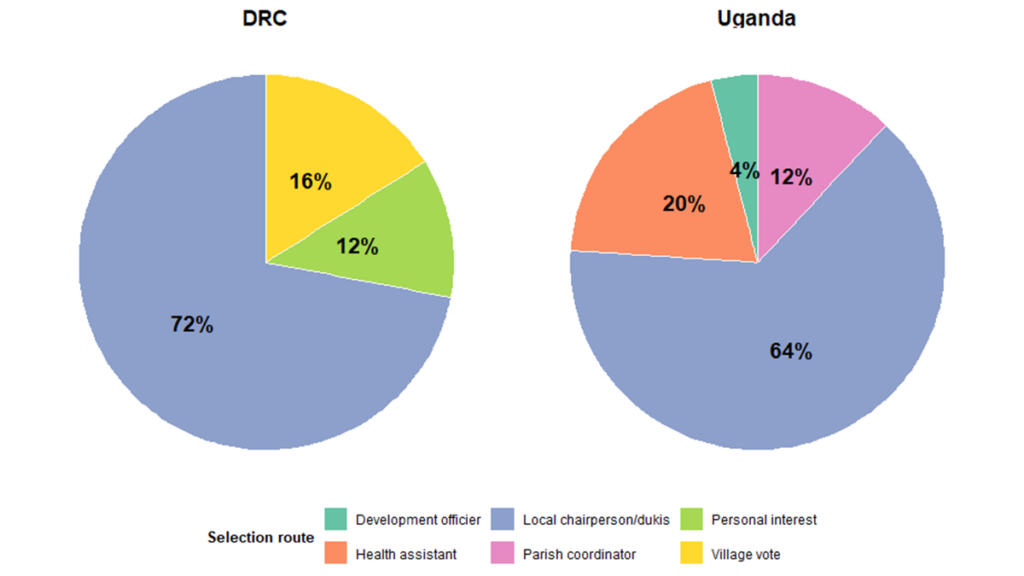
In Ashepet et al. [2026], we learn from the ATRAP (Action Towards Reducing snail-borne Parasitic diseases) project, which focuses on the monitoring of snail-borne disease in Uganda and the Democratic Republic of Congo (DRC). The researchers show how citizen science requires consideration such as material and social benefits for the participants, and how social structure and practices need to be taken into account. The paper also challenges the universality of the European Citizen Science Association (ECSA) 10 principles of citizen science.
Citation: Ashepet, M. G., Mulmi, J., Michellier, C., Jacobs, L., Pype, K., & Huyse, T. (2026). Citizen science principles in practice: Lessons from Uganda and the democratic Republic of Congo. Community Science, 5, e2025CSJ000149. https://doi.org/10.1029/2025CSJ000149

 Login
Login