❌

Normal view

Ebola spread in central Africa could match 2014 record outbreak, US health officials say

Modelling from US CDC shows Ebola spread could be on β€˜dangerous trajectory’, but experts warn outbreaks can be very hard to predict

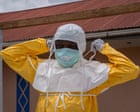
Central Africa’s Ebola outbreak could spread to be similar in scale to the worst outbreak in history, west Africa’s 2014-2016 outbreak that killed more than 11,000 people, according to a new analysis by US health officials.

The US Centers for Disease Control and Prevention (CDC) on Friday published a range of scenarios generated by computer models, from 10,000 cases to more than 20,000. In the west Africa outbreak, more than 28,000 cases were reported.

Continue reading...

Β© Photograph: Glody Murhabazi/AFP/Getty Images
Β© Photograph: Glody Murhabazi/AFP/Getty Images
Β© Photograph: Glody Murhabazi/AFP/Getty Images

  • βœ‡Eos
  • Snail-Borne Diseases in Central Africa: Lessons from Citizen Science Muki Haklay
    Editors’ Highlights are summaries of recent papers by AGU’s journal editors. Source: Community Science Citizen science continues to spread across the world. It is becoming an acceptable and reliable practice to monitor and report on local conditions. Yet, it must adapt to local conditions and constraints – such as the profile of participants, their level of education, or the time that is available for them. So, how does citizen science adapt to Low- and Middle-Income Countries (LMIC)?
     

Snail-Borne Diseases in Central Africa: Lessons from Citizen Science

16 April 2026 at 12:00
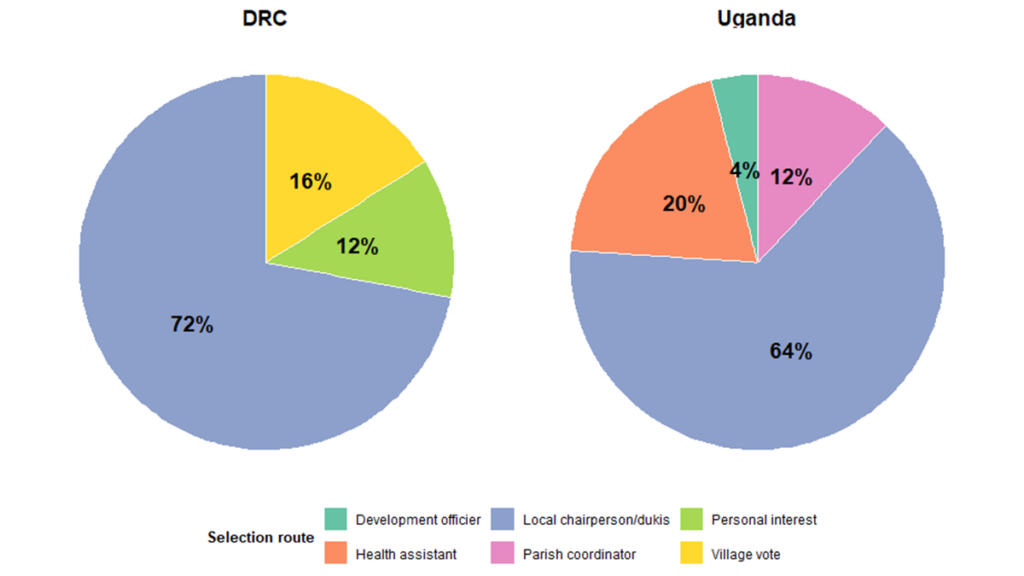
Two pie charts from the study.
Editors’ Highlights are summaries of recent papers by AGU’s journal editors.
Source: Community Science

Citizen science continues to spread across the world. It is becoming an acceptable and reliable practice to monitor and report on local conditions. Yet, it must adapt to local conditions and constraints – such as the profile of participants, their level of education, or the time that is available for them. So, how does citizen science adapt to Low- and Middle-Income Countries (LMIC)?

In Ashepet et al. [2026], we learn from the ATRAP (Action Towards Reducing snail-borne Parasitic diseases) project, which focuses on the monitoring of snail-borne disease in Uganda and the Democratic Republic of Congo (DRC). The researchers show how citizen science requires consideration such as material and social benefits for the participants, and how social structure and practices need to be taken into account. The paper also challenges the universality of the European Citizen Science Association (ECSA) 10 principles of citizen science.Β 

Citation: Ashepet, M. G., Mulmi, J., Michellier, C., Jacobs, L., Pype, K., & Huyse, T. (2026). Citizen science principles in practice: Lessons from Uganda and the democratic Republic of Congo. Community Science, 5, e2025CSJ000149. https://doi.org/10.1029/2025CSJ000149

β€”Muki Haklay, Editor, Community Science

Text Β© 2026. The authors.Β CC BY-NC-ND 3.0
Except where otherwise noted, images are subject to copyright. Any reuse without express permission from the copyright owner is prohibited.

Global brands β€˜likely’ using mineral that funds rebels accused of atrocities in DRC, investigation finds

10 June 2026 at 05:00

Amazon and Sony among firms that may have sourced coltan, used in phones, from supply chains controlled by the M23 rebels, says Global Witness

Leading global brands including Amazon, Ericsson and Sony are β€œlikely” to have sourced minerals linked to a militia accused of widespread sexual violence, summary executions and torture, a new investigation claims.

The companies allegedly, but unknowingly, acquired coltan smuggled from mines in the Democratic Republic of the Congo (DRC) that are occupied by the M23 militia, which has committed myriad atrocities in eastern DRC.

Continue reading...

Β© Photograph: Camille Laffont/AFP/Getty Images

Β© Photograph: Camille Laffont/AFP/Getty Images

Β© Photograph: Camille Laffont/AFP/Getty Images

❌
Subscriptions