Login
Login

ShutterNut... posted a photo:

Please be aware... ALL Photos are purely for entertainment. I am no expert. Titles are from recognition - what I was told - or a quick search. Polite comments or corrections are welcome.


ShutterNut... posted a photo:
Please be aware... ALL Photos are purely for entertainment. I am no expert. Titles are from recognition - what I was told - or a quick search. Polite comments or corrections are welcome.
dannyhennesy posted a photo:

...these green little men was hinted at in the lego catalogue as next years new, but sadly I had already decided to sell all my Castle Lego at the flea market...
...and did so, sold them, but whit a sad heart I would sneak in to the toyshops to study the new Robin hood inspired sets...
Peace and Noise! MushroomBrain in the orange hood (in the late 80s)

Get to the point with your instant messages!

©
In startup culture, “scrappy” is fun until it turns into operational chaos.

©
CEO Grant LaFontaine explains why the company takes the concept of “dogfooding” so seriously.

©
Where health, nutrition, weight loss, and even personal productivity are concerned, the best eating schedule is the one you can stick with.

©
A steady decline in the number of words people speak each day is a sign of our loss of community and connection, researchers warn.

©
I didn’t know I was doing exactly what Harvard researchers say makes your brain a lot healthier.

©
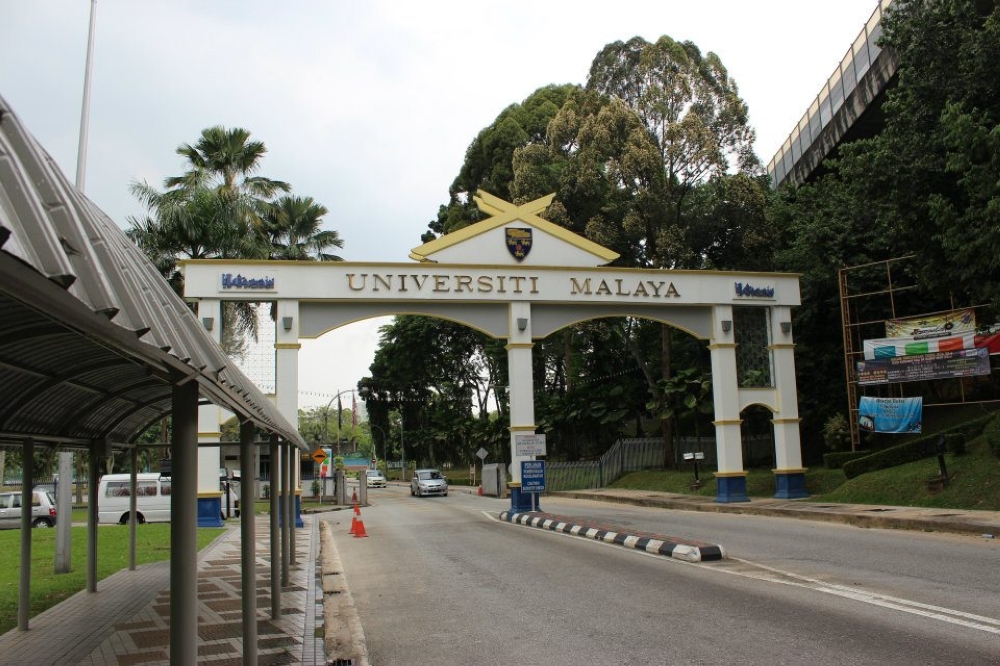
MAY 4 — Malaysia has just launched a new 10-year national education blueprint 2026-2035. Many have lauded the ambitious nature of the plan. Equally, many have warned about the many challenges of implementation. Malaysia’s ambition to become a global education hub is both laudable and logical. With a strong multilingual base, strategic location, and decades of investment in campus infrastructure, the foundation is solid.
The visible presence of Malaysian universities in international rankings, driven by a concerted push for publications, proves the strategy has momentum. However, in today’s hyper-competitive arena, where rankings increasingly value the impact and relevance of research, a simple “publish or perish” treadmill is no longer enough. To rise decisively, Malaysian universities must strategically pivot from quantity to quality, and from visibility to genuine global influence.
The first, and most critical, shift must be in the culture of publication itself. The current incentive system at many institutions often rewards quantity and journal prestige points (e.g., Q1 journals) above all else. This has yielded growth, but risks creating a factory-like output of incremental studies with limited resonance. The new strategy must incentivise research ambition and rigour.
This means providing protected time, seed funding for high-risk/high-reward ideas, and celebrating papers not just for where they are published, but for their citation impact, policy influence, or public engagement. Universities should actively foster interdisciplinary research clusters — mixing engineers with economists, medical researchers with data scientists — to solve complex problems. This is where groundbreaking science often happens.
This leads directly to the second pillar: authentically embedding the Sustainable Development Goals (SDGs) into the research DNA. SDG alignment is not a branding exercise; it is a powerful framework for relevance. Malaysian universities are uniquely positioned to lead on SDG research that speaks to both local and global challenges. Think of pioneering work on sustainable palm oil alternatives, climate-resilient urban planning for tropical megacities, equitable healthcare models for ageing societies, or biodiversity conservation in Asean rainforests.
This requires moving beyond tagging existing projects with SDG keywords. It demands strategic hiring, creating SDG-focused research institutes, and aligning postgraduate programmes to train the problem-solvers of tomorrow. Research on local issues with global parallels will attract international scholarly attention and partnerships organically.
Speaking of partnerships, the third pillar requires transforming international collaboration from a transactional metric to a transformational engine. The goal should not be to simply add foreign co-authors to papers. The strategy must be to build deep, equitable consortiums around shared challenges. Malaysian universities should position themselves as indispensable hubs for research in the Global South and on tropical themes.
Pursue joint PhD programmes, co-supervision networks, and shared laboratory access with top universities worldwide. Crucially, they must also become better at telling the story of their research. A powerful publication in a specialist journal is just the start. Investing in science communication, policy briefs, and media engagement to translate findings for public and government consumption amplifies impact — a factor rankings are increasingly attuned to.
Furthermore, universities must empower their greatest asset: their academics. The academics must be suitably empowered to bring change. This means reducing excessive administrative burdens, streamlining ethics approval processes, and providing robust grant-writing support. Simultaneously, they must be ruthless in upgrading critical infrastructure — not just labs, but high-speed computational resources and open-access publishing funds. Most important is the art of people management, especially how to effectively motivate them.
The race up the ranking ladder is not won by playing a short-term game. It is won by building a vibrant, confident, and impactful research ecosystem. For Malaysia, the opportunity is not merely to appear in the rankings, but to redefine what excellence from a non-Western hub looks like: excellence that is scientifically rigorous, globally connected, and passionately relevant to humanity’s pressing needs. The rankings are a symptom of health, not the cause.
By strategically focusing on quality, SDG-led relevance, and deep partnerships, Malaysian universities will not just climb the ladder — they will help build a new one. If universities can embrace such path, that would effectively silenced the growing critics of the ranking investment.
* Professor Datuk Ahmad Ibrahim is affiliated with the Tan Sri Omar Centre for STI Policy Studies at UCSI University and is an Adjunct Professor at the Ungku Aziz Centre for Development Studies, Universiti Malaya. He can be reached at ahmadibrahim@ucsiuniversity.edu.my
** This is the personal opinion of the writer or publication and does not necessarily represent the views of Malay Mail.

MAY 4 — There was a time when the rising sun of Japan was the guiding light for Malaysia’s economic ambitions. The “Look East Policy,” inaugurated by Tun Dr Mahathir Mohamad in the early 1980s, was more than just a diplomatic slogan; it was a national ethos. It painted Japan not just as a trading partner, but as a civilisational model — a testament to what an Asian nation could achieve through discipline, hard work, and a unique brand of corporate capitalism.
Today, however, the landscape tells a different story. The billboards that once championed Sony and Mitsubishi now glow with the branding of Huawei, BYD, and Samsung. China has unquestionably become Malaysia’s dominant economic partner. The question is why this tectonic shift has occurred, and whether the Land of the Rising Sun can ever reclaim its former glory.
To understand Japan’s diminished role, one must first look at the stagnation of its own economy. The “Lost Decades” following the asset bubble burst in the early 1990s transformed Japan from a aggressive global investor into a cautious, risk-averse player. Japanese corporations, once eager to build sprawling manufacturing complexes in places like Shah Alam and Johor, became conservative. Their model, based on lifetime employment and consensus-based decision-making, was ill-suited for the breakneck speed of the digital age and the hyper-competitive landscape of the 21st century world.
While Japan was looking inward, China was aggressively looking outward. The 2010s saw Beijing’s Belt and Road Initiative (BRI) pour billions into Malaysian infrastructure. The pace was dizzying. Where a Japanese feasibility study might take three years, a Chinese state-owned enterprise could break ground in three months. This speed, coupled with a willingness to invest in massive, visible projects like the East Coast Rail Link (ECRL), captured the Malaysian imagination and filled a vacuum that Japanese caution had created.
The simple truth is that the “special relationship” with Japan was sustained by strong personal rapport at the top. As Dr Mahathir’s direct influence waned and a new generation of Malaysian leaders and consumers came of age, they felt no such nostalgia. They witnessed Japan’s slow-motion retreat from the region and simply looked elsewhere for the economic dynamism they craved.
Regaining its place will not be easy. The world has moved on, and a return to the 1980s is impossible. However, Japan’s decline is not irreversible. To reclaim its relevance, Tokyo must fundamentally change its strategy, moving from a model of general manufacturing to one of high-tech, high-value specialisation.
First, Japan must pivot from competing on volume to leading in niche excellence. While China dominates mass-market EV production, Japan holds the keys to the future of mobility: advanced batteries, lightweight materials, and the complex supply chain for the semiconductors that will power the next generation of smart cars. Instead of trying to sell the most cars, Japanese giants like Toyota and Panasonic should position themselves as the indispensable technological partners for Malaysia’s own automotive ambitions, particularly in the EV sector.
Second, Japan needs to rediscover its innovative edge through genuine collaboration. The old model was Japan teaching, and Malaysia learning. That era is over. The new model must be one of co-creation. Japan is a global leader in robotics, IoT, and green technology. Malaysia, with its industrial base and digital aspirations, is the perfect testbed for these innovations. Instead of just building factories, Japanese firms should establish joint R&D centres with Malaysian universities and startups to solve local problems — from smart agriculture in Sabah to flood mitigation technology in Kuala Lumpur.
Third, and perhaps most importantly, Japan must engage in a new form of cultural diplomacy. The “Look East” policy needs a 2.0 version. This isn’t about asking Malaysians to bow more deeply or work longer hours. It is about showcasing Japan’s soft power in the 21st century. This means leveraging its global dominance in anime, gaming, and design to build bridges with Malaysian youth. It means promoting tourism not just for shopping, but for educational exchanges in tech and the arts. It means making Japan seem fun, accessible, and futuristic again.
The narrative that Japan has permanently lost its place in Malaysia is not yet a foregone conclusion. Its economic footprint may have shrunk, but its reputation for quality, precision, and reliability remains intact. If Japan can leverage these assets with the urgency and adaptability of a challenger, rather than the complacency of an established power, it can carve out a new and vital role. The sun may have faded, but it has not yet set. Whether it rises again depends entirely on whether Japan is willing to look east once more — and see a partner, not just a pupil.
* Professor Datuk Ahmad Ibrahim is affiliated with the Tan Sri Omar Centre for STI Policy Studies at UCSI University and is an Adjunct Professor at the Ungku Aziz Centre for Development Studies, Universiti Malaya. He can be reached at ahmadibrahim@ucsiuniversity.edu.my
** This is the personal opinion of the writer or publication and does not necessarily represent the views of Malay Mail.