Bogotá, Colombia – Bolivia’s government ordered Colombia’s ambassador to leave the country just days after Colombian President Gustavo Petro expressed support for ongoing anti-government protests.
“The Bolivian government has decided to request that the Ambassador of the Republic of Colombia accredited to the country conclude her diplomatic duties in Bolivian territory,” read a statement on Wednesday morning by Bolivia’s Ministry of Foreign Relations.
The ministry expressed its disapprov
Bogotá, Colombia – Bolivia’s government ordered Colombia’s ambassador to leave the country just days after Colombian President Gustavo Petro expressed support for ongoing anti-government protests.
“The Bolivian government has decided to request that the Ambassador of the Republic of Colombia accredited to the country conclude her diplomatic duties in Bolivian territory,” read a statement on Wednesday morning by Bolivia’s Ministry of Foreign Relations.
The ministry expressed its disapproval of Colombia’s involvement in its domestic affairs amid mounting anti-government protests.
“Bolivia considers it essential that any external assessment or statement regarding the country’s internal situation be made with responsibility, diplomatic prudence, and full respect for… institutions,” continued the statement.
While the government did not explicitly mention Petro, the measure came just days after the Colombian president weighed in on the protest movement, describing it as a “popular insurrection” in an X post last Sunday.
In recent weeks, miners, teachers, farmers and Indigenous groups have been calling for President Rodrigo Paz to resign over economic hardships, including soaring inflation and the suspension of fuel subsidies.
Bolivia’s foreign ministry responded to Petro the same day, saying his words, “do not reflect the relation of friendship, respect and cooperation between the peoples of Bolivia and Colombia.”
Petro, whose term ends in August, did not backtrack following the Ambassador’s dismissal.
“If they expel the ambassador simply for proposing dialogue and mediation, it means we’re sliding toward extremism that could lead to a very difficult situation for the Bolivian people,” the president told Caracol radio today.
Despite the spat, Bolivia’s foreign ministry said diplomatic channels remained open and the expulsion did not count as a full-scale rupture in relations.
The government added that it had granted Ambassador Elizabeth García Carrillo “the appropriate period of time in accordance with current international standards” to leave the country.
Featured image description: President Gustavo Petro (L) and President Rodrigo Paz (R). I
Bogotá, Colombia – United States President Donald Trump apologized today to Colombian President Gustavo Petro for not inviting him to the ‘Shield of the Americas’ summit in Miami last week, according to the Colombian government.
In a post on X, the Office of the President said the two leaders spoke on the phone for roughly half an hour, during which Trump “reiterated that President Petro will always be welcome in the United States and apologized for any previous inconvenience related to an i
Bogotá, Colombia – United States President Donald Trump apologized today to Colombian President Gustavo Petro for not inviting him to the ‘Shield of the Americas’ summit in Miami last week, according to the Colombian government.
In a post on X, the Office of the President said the two leaders spoke on the phone for roughly half an hour, during which Trump “reiterated that President Petro will always be welcome in the United States and apologized for any previous inconvenience related to an invitation to Miami.”
The apology comes days after Petro criticized Trump for sidelining Colombia in the ‘Shield of the Americas’ summit, in which Washington convened 17 Latin American and Caribbean nations to sign an anti-drug cooperation pact.
During the phone call today, the two leaders reportedly discussed a host of issues, including energy, security, and counter-narcotics operations.
The statement from Bogotá added that Petro had invited Trump to visit Cartagena, a city on Colombia’s Caribbean coast, prompting the U.S. president to apologize for having excluded the South American leader from the Miami summit.
The ‘Shield of the Americas’ summit was held last Saturday at Trump’s Miami golf club and predominantly hosted delegates from conservative governments allied to the White House, including Argentina’s Javier Milei and Ecuador’s Daniel Noboa.
Following the conference, Petro said: “With 17 small, weak countries lacking experience in dealing with cocaine, you cannot make a southern shield; it will be punctured.” He also highlighted his country’s experience in combatting drug trafficking and noted his government’s record seizures of cocaine.
Petro and Trump have had a fractious relationship over the past year, clashing on issues from deportation flights to drug control. The White House imposed sanctions on the Colombian leader in October, with the president accusing Petro of being “an illegal drug dealer.
But a call in January led to a detente, with Petro visiting the White House in February.
In the call today, Trump “expressed his gratitude for the communication and his interest in maintaining closer contact with the Colombian president, to whom he reiterated his appreciation and friendship,” according to the statement from Bogotá.
Featured image description: President Donald J. Trump meets with Colombian President Gustavo Petro at the White House in February, 2026.
Colombia’s Senate passed a bill prohibiting Female Genital Mutilation (FGM) today after a long battle by women’s rights activists.
The ‘Law on Girls Without Mutilation’ passed unanimously in the final session of congress and just requires presidential approval to come into effect.
Colombia is the last country in the Americas where FGM is still practiced, a ritual that is linked to the Embera Indigenous community.
Between January 2024 and March 2026, the government registered 98 cases
Colombia’s Senate passed a bill prohibiting Female Genital Mutilation (FGM) today after a long battle by women’s rights activists.
The ‘Law on Girls Without Mutilation’ passed unanimously in the final session of congress and just requires presidential approval to come into effect.
Colombia is the last country in the Americas where FGM is still practiced, a ritual that is linked to the Embera Indigenous community.
Between January 2024 and March 2026, the government registered 98 cases of girls being subjected to FGM, which is defined by the World Health Organization (WHO) as “procedures that involve partial or total removal of the external female genitalia, or other injury to the female genital organs for non-medical reasons.” The WHO estimates that 230 million women worldwide are victims of FGM, the vast majority living in Africa.
The procedure poses risks such as bleeding, infection, extreme pain and death. The existence of FGM in Colombia was not known until 2007, when two Embera girls died after being mutilated.
The law was authored by lower house representatives Jennifer Pedraza, Alexandra Vásquez, and Carolina Giraldo, as well as Senator Angélica Lozano.
The legislation was developed in consultation with academics, social organizations, and women from the Embera community.
“As such, it takes a preventive and cultural approach—rather than a punitive one—with the aim of protecting victims and potential victims of this practice, which occurs primarily among newborn girls,” said a press release following the bill’s passing.
Featured image description: Carolina Giraldo, Jennifer Pedraza, and Alexandra Vásquez smile after the bill’s passing.
Bogotá, Colombia – The Cuban regime held a rally in Havana today to show solidarity with revolutionary leader Raúl Castro days after he was indicted by U.S. authorities.
Castro, the younger brother of longtime dictator Fidel, was charged in a U.S. court on Wednesday with conspiracy to commit murder over the downing of two civilian planes in 1996.
The measure is the latest in a mounting pressure campaign this year by the White House, which has said it aims to overthrow the communist regime
Bogotá, Colombia – The Cuban regime held a rally in Havana today to show solidarity withrevolutionary leader Raúl Castro days after he was indicted by U.S. authorities.
Castro, the younger brother of longtime dictator Fidel, was charged in a U.S. court on Wednesday with conspiracy to commit murder over the downing of two civilian planes in 1996.
The measure is the latest in a mounting pressure campaign this year by the White House, which has said it aims to overthrow the communist regime.
On May 20, the U.S. justice department unveiled an indictment against Castro, 94, for his alleged role in ordering Cuban forces to shoot down two civilian planes 30 years ago.
Four members of the Miami-based Cuban dissident group Hermanos Al Rescate (Brothers to the Rescue), who were operating the planes when they were shot down, lost their lives. U.S. authorities claim Castro, who was defense minister at the time, must have been involved in ordering the attack which killed three U.S. citizens.
But Cuba’s regime staunchly rejects the charges, with President Miguel Díaz-Canel writing on X, “This is a political move, with no legal basis, that seeks only to bolster the case they are fabricating to justify the folly of a military attack on Cuba.”
In the days since, the president has used his social media account to defend Castro’s honor.
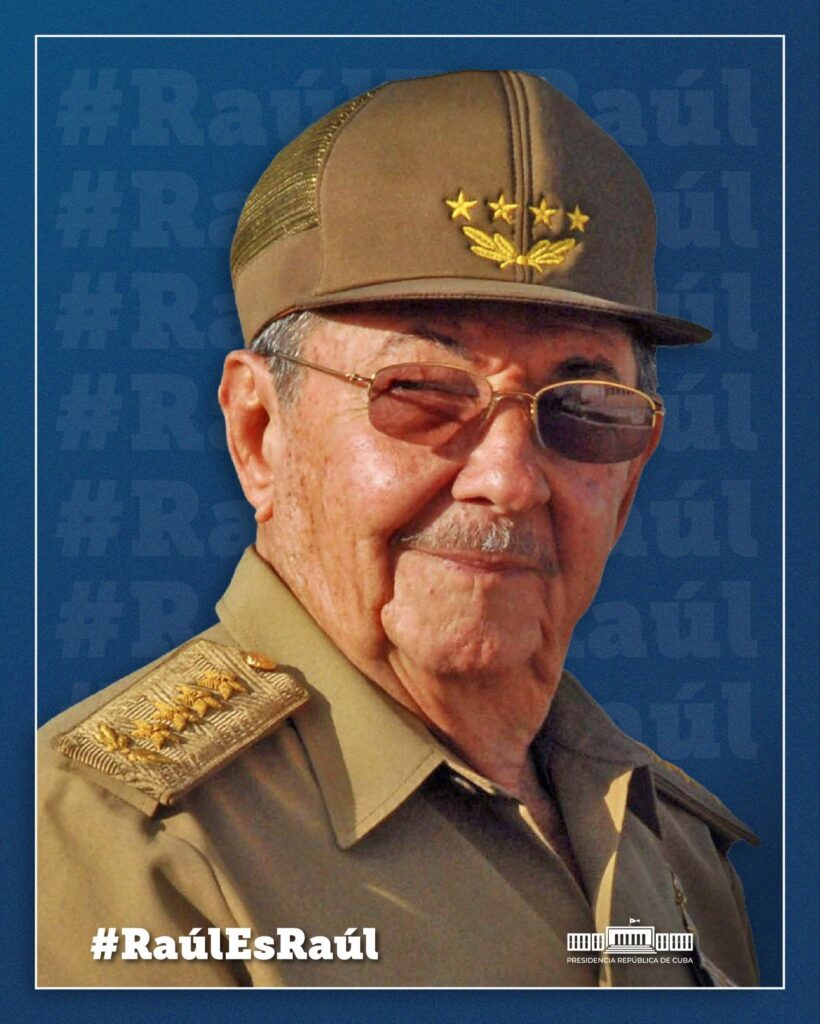
Yesterday, he shared an image of the revolutionary leader in a Cuban military outfit, writing, “You don’t disrespect the nation’s heroes, and you don’t insult its history and traditions without facing consequences. Not in #Cuba.”
A post on Díaz-Canel’s X account on May 21 reads “Raul is Raul”.
This morning, Castro shared photos from a rally in Havana in solidarity with Castro, writing, “Raúl is Raúl—he is Cuba, and he embodies heroism, dignity, and deep love for the people.”
Díaz-Canel also noted that the country was “just a few days away” from celebrating Castro’s 95th birthday, on June 3.
Photos showed a crowd of several thousand gathered on the Malecón (promenade) in Havana, some of them waving flags and others dancing.
Pictures from the rally show Cuban veterans waving flags and holding up images of the Castro brothers. Image credit: @DiazCanelB via X
While Raúl did not attend the rally – which was held in front of the U.S. Embassy – his daughter, Mariela Castro, did.
Fielding a question from the BBC about whether war was a possibility, she said: “We are used to receiving constant threats. There have been more dangerous moments but nothing has happened.”
Meanwhile, state newspaper Granma has been combatting U.S. claims that Cuba represents a national security threat to its northern neighbor.
‘Cuba neither threatens, challenges, nor provokes the United States or any other country in the world; Cuba is a peaceful nation’, read a headline on the paper’s website today, quoting Díaz-Canel.
It remains unclear what plans Washington has for the island; while some predict an operation similar to the extraction of Venezuelan strongman Nicolás Maduro in January, others say the White House may be trying to pressure Havana into striking a deal.
But with the government doubling down on its anti-imperialist rhetoric, a negotiated change of guard would mark a major shift in the regime’s position.
Featured image description: President Díaz-Canel and other high-ranking officials posed in military uniforms in front of a crowd waving Cuban flags at a solidarity march on May 22.
Less than three weeks before Colombians head to the polls in presidential elections, centrist candidate Claudia Lopez’s odds at victory are slim, to say the least.
Since winning the primary contest to lead the Consultation of Solutions (Consulta de las Soluciones) bloc in March, the silver-haired former mayor of Bogotá has been criss-crossing the country to win over moderate voters.
But the latest polls report the 56-year-old’s share of the vote as being in the low single digits.
Dresse
Less than three weeks before Colombians head to the polls in presidential elections, centrist candidate Claudia Lopez’s odds at victory are slim, to say the least.
Since winning the primary contest to lead the Consultation of Solutions (Consulta de las Soluciones) bloc in March, the silver-haired former mayor of Bogotá has been criss-crossing the country to win over moderate voters.
But the latest polls report the 56-year-old’s share of the vote as being in the low single digits.
Dressed in her signature gilet and sipping from a mug of coffee, the former Harvard University guest lecturer says in flawless English that she wants to do the interview in Spanish – “I need to get people to vote for me,” she jokes.
With little to lose, López speaks candidly about her time in office, her views on other politicians, and her experience on the campaign trail.
Watch the full interview here
Reflections on her mayorship
López, who steered Bogotá through the Covid-19 pandemic and a mass wave of anti-government protests, speaks proudly of her stint as mayor from 2020 to 2024.
The presidential hopeful rattles off a list of her achievements in office: her management of the Covid-19 pandemic, lifting 600,000 women out of poverty, and rolling out Bogotá’s public bicycle network.
López also speaks candidly about the problems during her mayorship, which spanned the administrations of presidents Iván Duque and Gustavo Petro.
“Interestingly, I ended up having an easier relationship with President Duque, a right-winger, than with my left-wing president, whom I voted for,” says López.
López, who publicly backed Petro’s candidacy, describes friction between the national government and the mayor’s office.
“President Petro is an effusive leader, but he is too effusive, very machista, and I, well, I don’t agree with that; if there’s one thing I can’t stand in my life, it’s the abuse of power.”
On the campaign trail
Today, the former senator finds herself trying to carve out a place in a noisy election cycle marked by political extremes and polarization.
Her coalition’s platform is based on three pillars: security and territorial governance; equality and social justice; and regional development without corruption.
López’s shift to the center has drawn some criticism, including from voters who note the former Green Alliance member’s u-turn on key environmental issues like fracking.
Last year, she declared: “If god gave us oil, coal, and gas, that is what we will use.”
“I maintain this stance,” insists López, adding she opposes the Petro administration’s pause on all oil and gas exploration. “Stopping gas exploration means halting Colombia’s energy transition – it’s a mistake.”
López argues the policy has damaged the economy and reduced funds for investment and development.
Instead, she backs a gradual transition: “I estimate that the transition in Colombia from fossil fuels to cleaner energy sources will take us about 25 years, give or take.”
The candidate believes in preserving biodiversity, saying she would not authorize mineral exploration in the country’s forests or protected areas, marking a softer stance than some of her opponents.
Among her rivals, López is especially critical of right-wing criminal defense attorney Abelardo de la Espriella.
“He is the only candidate – let’s put it this way – whom I would absolutely never vote for. He is a defender of mobsters. He is a shadowy character,” says López.
De la Espriella notoriously represented figures linked to paramilitary death squads, the head of the worst pyramid scheme in Colombian history, and Alex Saab, considered the frontman for corruption schemes by former Venezuelan dictator Nicolas Maduro.
López argues that he is an Uribista – a supporter of the politics of right-wing ex-president Álvaro Uribe – but is on a different “side of the coin” to Uribe’s chosen candidate, Paloma Valencia.
“Paloma is definitely a supporter of Uribe, but she’s never exactly been a defender of mobsters,” explains López.
The ex-mayor refused to rule out voting for Valencia or for leftist candidate Ivan Cepeda, the two frontrunners alongside de la Espriella.
But López, a lesbian woman, is staunchly critical of Valencia’s stance on LGBTQ+ rights. The candidate for Uribe’s Democratic Center (Centro Democrático) party opposes adoption by same-sex couples while her party has blocked bans on conversion therapy.
She is particularly critical of Juan Daniel Oviedo, a gay politician, for agreeing to be Valencia’s running mate in March.
“I regret that Juan Daniel Oviedo feels compelled to play along with that anti-rights agenda. In fact, I believe he is the only person who has been told to his face that he is not considered an equal human being, that he is not considered a citizen with the same rights, and that they do not trust him to raise a child,” says López.
Despite her objections to Valencia, López says she still will not rule out voting for her in the second round, citing the improbable possibility that Paloma faces de la Espriella in a run-off.
But the former mayor maintains she would not endorse Valencia and Oviedo in any eventuality: “I wouldn’t campaign for them, ask anyone to vote for them, or endorse them.”
Looking to the future
Finally, faced with nearly impossible odds in May’s elections, López projects a springy optimism about her political future.
“I’m very happy with the campaign I’ve run, and I’m very grateful to the Colombian people,” says the candidate, stressing that it is just her first stab at the presidency.
“Ours is a new grassroots movement; we only just collected the signatures last year, so I feel grateful, happy, and very excited, and I’m going to continue in politics and continue working to build Colombian social democracy.”
This article originally appeared on The Bogotá Post and was republished with permission.
Bogotá, Colombia – Iván Cepeda and Abelardo de la Espriella, two of the frontrunners to be the next Colombian president, have announced their choices for vice president following Sunday’s legislative elections and presidential primaries.
Cepeda selected Aida Quilcué, a senator and Indigenous leader, to join him on the ticket for the left-wing Historic Pact (Pacto Historico), which won the most congressional seats on Sunday. Meanwhile, de la Espriella, a hard-right outsider, announced today th
Bogotá, Colombia – Iván Cepeda and Abelardo de la Espriella, two of the frontrunners to be the next Colombian president, have announced their choices for vice president following Sunday’s legislative elections and presidential primaries.
Cepeda selected Aida Quilcué, a senator and Indigenous leader, to join him on the ticket for the left-wing Historic Pact (Pacto Historico), which won the most congressional seats on Sunday. Meanwhile, de la Espriella, a hard-right outsider, announced today that he will run alongside ex-finance minister José Manuel Restrepo.
But the big winner in Sunday’s primary, right-wing Paloma Valencia of the Democratic Center (Centro Democrático) party, has yet to announce her running mate amid mounting speculation.
Cepeda sticks to his guns
On Monday, Cepeda formally announced Aida Quilcué as his running mate. A leader of the Nasa Indigenous group, Quilcué has a record as a staunch defender of human rights and as an advocate for ethnic minorities in Colombia.
She was integral to the negotiation of the ethnic chapter of the 2016 peace accord with the Revolutionary Armed Forces of Colombia (FARC) and has been a key figure in Colombia’s Indigenous rights movement.
Last month, Quilcué made national headlines when she was kidnapped in her home state of Cauca, in the Colombian Pacific, by dissidents of the FARC.
Miguel Jaramillo Luján, a Colombian political strategist, described Cepeda’s choice of Quilcué as a “symbolic” one which entrenches his stance as an advocate of peace and human rights.
But the analyst also noted that the selection may not be the most politically savvy move: “From an electoral standpoint, I believe that this is a concentric circle and does not add much electoral power to Iván Cepeda, who I think is acting symbolically but overly prideful in this decision,” Jaramillo told Latin America Reports.
De la Espriella’s establishment pick
Abelardo de la Espriella, a criminal defense attorney, has styled himself as an anti-establishment political outsider. His traditional values, tough on crime campaign has been successful so far, regularly placing him in second place in presidential polls.
Today, ‘The Tiger’, as he has styled himself, announced his running mate: José Manuel Restrepo.
Restrepo is an economist at the Rosario University in Bogotá and served as President Ivan Duque’s Minister of Finance and Public Credit from May 2021 to August 2022, running the country’s finances during the COVID-19 pandemic. Before that he was Minister of Commerce, Industry, and Tourism beginning in 2018.
“I think the selection of José Manuel Restrepo… represents an attempt to counterbalance de la Espriella, who has no experience in public office,” said Jaramillo.
While de la Espriella is an outsider, he must take on Cepeda and Valencia, both sitting senators since 2014. Restrepo burnishes the criminal lawyer’s bid by adding proven governance credentials.
When announcing his running mate on Tuesday, de la Espriella said: “My choice of vice president was not driven by political calculation… it was clear to me that a renowned academic, an outstanding economist, and a highly qualified former minister and technician will undoubtedly be the best travel companion.”
Paloma Valencia in the spotlight
On Sunday, Paloma Valencia received over 45% of votes in presidential primaries, although Cepeda and de la Espriella were both absent from the contest.
Valencia’s win, as well as her Democratic Center party’s strong showing in legislative elections – winning the second highest number of seats – bolsters her position in the presidential race, according to experts.
“From the [primaries], it’s clear that Paloma Valencia is the right-wing’s principal candidate,” Sergio Guzmán, director at Colombia Risk Analysis, a political risk consultancy, told Latin America Reports.
Before Sunday’s vote, de la Espriella had been dominating conservative polls. Now, it is unclear which conservative candidate will attract the most voters in May’s election.
Whoever emerges as the winner must face off with Cepeda and will be under pressure to win over centrist Colombians, said Guzman.
One way to achieve this is by selecting running mates with a broader appeal.
Sunday’s primaries highlighted the widespread popularity of Juan Daniel Oviedo, who was on the same list as Valencia and won 17% of the total votes. The former director of the National Administrative Department of Statistics (DANE), Oviedo is considered center-right and notably more moderate than Valencia.
Valencia is under mounting public pressure to pick Oviedo as her running mate, according to Jaramillo, but the two differ on key issues and Oviedo has specified strict conditions for joining Valencia’s ticket.
“We openly show fundamental differences. For example, I believe in peace,” Oviedo told Colombian radio station Caracol on Monday. “You cannot take positions that do not recognize that the [2016 peace] agreement must be implemented and that it requires more than just bullets to get rid of criminals,” he added.
Valencia has staked her campaign on law and order, promising a ‘mano dura’, or ‘iron fist’, against crime and armed groups in Colombia. Her politics follow those of her party’s founder, ex-president Álvaro Uribe, who waged war on the FARC rebels from 2002 to 2010.
Today, Valencia told Caracol that she will not compromise on this: “I am an Uribista and I have my values and principles… Neither he [Oviedo] will change nor will I change.”
But Valencia said she remains open to running alongside Oviedo, with the two due to meet today to discuss a possible joint ticket. She is also considering four other possible running mates, according to Colombian newspaper El Tiempo, with her decision due by Friday.
Jaramillo argues the best move for Valencia is not to pick Oviedo, as he is legally bound to support her as they ran under the same list in the primaries.
He believes she should distance herself from Uribe – arguing Uribistas are more likely to back de la Espriella – and instead court the moderate vote by choosing a center-left candidate.
But Guzmán says that is unlikely: “She seems to be going in a different direction.”
Featured image description: Left to right: Iván Cepeda, Paloma Valencia, Abelardo de la Espriella.
Featured image credit: @PactoCol via X / @PalomaValenciaL via X / @ABDELAESPRIELLA via X
Bogotá, Colombia – Ecuador will impose a 100% tariff on all Colombian imports beginning on May 1, according to a statement by the Ministry of Production, Foreign Trade, and Investment today.
The move ramps up tensions between the two South American neighbors, which have imposed reciprocal levies of 50% in a trade war that began in January when Ecuador announced it would charge Colombia a “security fee”.
“This measure is based on national security criteria and seeks to reinforce shared resp
Bogotá, Colombia – Ecuador will impose a 100% tariff on all Colombian imports beginning on May 1, according to a statement by the Ministry of Production, Foreign Trade, and Investment today.
The move ramps up tensions between the two South American neighbors, which have imposed reciprocal levies of 50% in a trade war that began in January when Ecuador announced it would charge Colombia a “security fee”.
“This measure is based on national security criteria and seeks to reinforce shared responsibility in a task that must be undertaken jointly to address the presence of drug trafficking at the border,” read a statement by the trade ministry on Thursday announcing the tariff hike.
Bogotá and Quito have clashed over border security issues in recent months, with Ecuadorean President Daniel Noboa accusing his counterpart of failing to deter criminal groups operating in the region.
Colombian President Gustavo Petro has defended his administration’s security record and imposed reciprocal levies against Ecuador.
The two countries were due to hold talks next week to resolve the trade war but these were cancelled yesterday amid a dispute over former Ecuadorean Vice President Jorge Glas. Quito recalled its Ambassador from Bogotá after Petro suggested Glas was a political prisoner and had not been treated humanely in jail.
The tariffs threaten economic shocks on both sides of the border; Ecuador imports medicine, sugar, vehicles and coffee from Colombia and exports wood panels, canned fish, frozen seafood, palm oil, and rice.
Featured image description: Colombia-Ecuador border photographed in 2020.
Featured image credit: Burkhard Mücke via Wikimedia Commons
Bogotá, Colombia – After days of searching for missing American Airlines flight attendant Eric Gutiérrez, Colombian authorities discovered his body in a river in Antioquia province on Friday, several hours away from where he was last seen near Medellín.
While the coroner’s office has not issued an official cause of death, it quickly concluded Gutiérrez, a U.S.-citizen, had not died of natural means; officials are reportedly working on the hypothesis that Gutierrez’s death was a robbery gone w
Bogotá, Colombia – After days of searching for missing American Airlines flight attendant Eric Gutiérrez, Colombian authorities discovered his body in a river in Antioquia province on Friday, several hours away from where he was last seen near Medellín.
While the coroner’s office has not issued an official cause of death, it quickly concluded Gutiérrez, a U.S.-citizen, had not died of natural means; officials are reportedly working on the hypothesis that Gutierrez’s death was a robbery gone wrong, likely involving the incapacitating drug scopolamine.
Advocacy groups say the murder of Gutiérrez – a gay man – is part of a pattern of violence against members of the LGBTQ+ community in Colombia, while officials offer reassurances to travellers, saying these crimes are rare and could happen to anyone.
What happened to Eric Gutiérrez?
Gutiérrez, 32, arrived in Colombia on March 22 after working on a flight from Miami to Medellín. He reportedly went to the Perro Negro nightclub in the El Poblado neighborhood of the city with his colleagues, where they met two men.
Gutiérrez and his colleague then went with the men to Itagüí, a city on the outskirts of Medellín.
The flight attendant’s co-worker returned to their hotel the next day alone, feeling disoriented. He was admitted to hospital with suspected scopolamine poisoning.
Law enforcement began searching for Gutiérrez, but did not find his body until Friday, located in the Piedras River near the town of Jericó, a roughly three-hour drive from Medellín.
Authorities have also begun to share details of criminal investigations, saying they have found evidence linking the case to criminal rings known to use scopolamine to rob people.
Scopolamine is commonly used by thieves in Colombia to incapacitate victims in order to access their bank accounts and steal their possessions.
‘Pattern of violence’
Gutiérrez’s death reveals a broader trend of violence against gay men, according to Caribe Afirmativo, a Colombia-based LGBTQ+ rights observatory.
“This latest death should not be viewed as an isolated incident,” read a statement by the organization released a day after the flight attendant’s body was found.
“On the contrary, it is yet another sign—serious, painful, and deeply alarming—of a pattern of violence that continues to take hold in Antioquia and that now demands a forceful response from the Colombian government,” it continued.
Caribe Afirmativo said that Gutiérrez’s murder marked the 23rd killing of an LGBTQ+ person in Colombia this year, noting “a large proportion of the cases” had occurred in Antioquia.
“What has happened cannot be dismissed as a mere coincidence or an individual risk. We are facing a systematic form of urban violence that combines organized crime, substance abuse, and contexts of vulnerability,” continued the statement.
In April last year, Italian biologist Alessandro Coatti was found dead in Santa Marta. Authorities later discovered he had been lured into a robbery by a man on the gay dating app Grindr and was likely drugged with scopolamine.
The observatory called for “urgent” action by authorities, including information campaigns warning the public of the risks of scopolamine and robberies in the nighttime economy.
Authorities reassure LGBTQ+ travellers
Despite suggestions of a pattern of violence against LGBTQ+ people in Colombia, authorities in Medellin insist that LGBTQ+ travellers do not face a heightened risk.
“We have no evidence of a systematic trend of crime targeting exclusively LGBTQ+ travelers,” Manuel Villa Mejía, Medellín’s Secretary of Security, told Latin America Reports.
He maintained that the risks to travellers are the same, regardless of sexual orientation, and highlighted broader patterns in how tourists are targeted, including “the use of social media, dating apps, or fake offers of companionship to commit theft or extortion.”
Villa Mejía called on all tourists, regardless of who they are, to exercise caution and stay aware of their surroundings.
He also offered reassurances to travellers: “In Medellin we protect all people equally and our priority is to guarantee the security of all visitors, without distinction.”
Featured image description: Missing poster for Eric Gutierrez
Bogotá, Colombia – President Gustavo Petro rejected the results of first-round presidential elections on Sunday, alleging irregularities.
Hard-right populist Abelardo de la Espriella defied pollsters’ predictions to beat the candidate representing Petro’s leftist Historic Pact party, Iván Cepeda, although neither surpassed the 50% required to win outright.
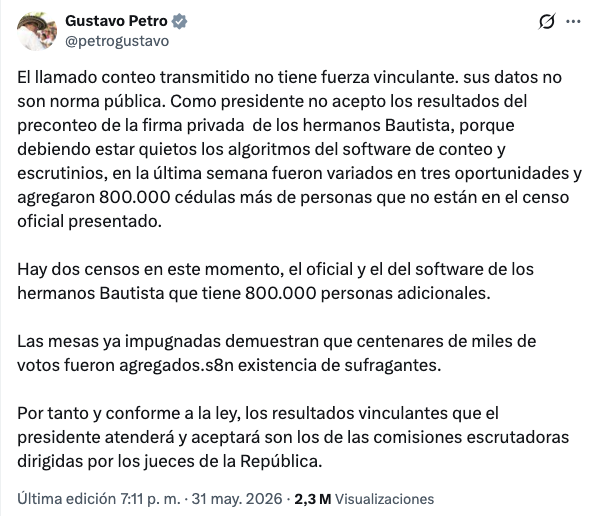
“The so-called count being transmitted is not legally binding. Its data is not considered official. As president, I do not accept the r
Bogotá, Colombia – President Gustavo Petro rejected the results of first-round presidential elections on Sunday, alleging irregularities.
Hard-right populist Abelardo de la Espriella defied pollsters’ predictions to beat the candidate representing Petro’s leftist Historic Pact party, Iván Cepeda, although neither surpassed the 50% required to win outright.
“The so-called count being transmitted is not legally binding. Its data is not considered official. As president, I do not accept the results of the preliminary count,” wrote Petro on X shortly after the election was called.
In Colombia, the “pre-conteo”, or preliminary count, is based on officials tallying the ballot sheets and entering them into an online software. But the “escrutinio”, or scrutinized results, usually take several days to be announced and are ratified by judges.
According to the Registrar’s Office, which is responsible for overseeing the voting process, the pre-count is “for informational purposes only” and has “no legal standing.”
But de la Espriella received nearly 700,000 more votes than Cepeda, a gap which is very unlikely to be closed after the scrutiny.
Delivering a speech after the results were released, Cepeda said he would not address the elections until the scrutinized count came out.
A post from President Gustavo Petro on May 31 saying he would not accept the pre-count results of Sunday’s elections.
“Only once the vote-counting committees have fully, clearly, and thoroughly clarified this matter will we comment on tonight’s results,” the senator told a crowd of supporters at the Hotel Tequendama in central Bogotá.
He also referred to historic efforts by Colombia’s traditional parties and institutions to repress the leftist movement embodied by the Historic Pact: “Our life has been a constant struggle.”
A crowd of Cepeda voters gathered nearby to watch the speech on a large screen, with some chanting the Spanish anti-fascist slogan “No Pasarán”. One pair held a sign reading “Fraud!”.
Petro has repeatedly warned that the elections may be stolen, part of a long-running dispute with Thomas Greg & Sons, a multinational company responsible for electoral logistics.
In 2022, the Historic Pact gained some 500,000 votes in legislative elections following the scrutiny.
Regardless of the final results of the election, Cepeda and de la Espriella are set to face off in a second round on June 21.
Featured image description: President Gustavo Petro at a cabinet meeting, October 22, 2025.
Bogotá, Colombia – Mexican authorities have said they will tighten security around tourist sites following a shooting on Monday that killed a Canadian tourist and injured twelve others.
The attack at the Teotihuacan pyramids by a lone gunman has renewed concerns about fan safety ahead of the 2026 World Cup Games, which will be co-hosted by Mexico.
But Mexican President Claudia Sheinbaum sought to re-assure visitors, maintaining that mass shootings are rare in the country and describing th
Bogotá, Colombia – Mexican authorities have said they will tighten security around tourist sites following a shooting on Monday that killed a Canadian tourist and injured twelve others.
The attack at the Teotihuacan pyramids by a lone gunman has renewed concerns about fan safety ahead of the 2026 World Cup Games, which will be co-hosted by Mexico.
But Mexican President Claudia Sheinbaum sought to re-assure visitors, maintaining that mass shootings are rare in the country and describing the incident as a one-off.
“Our obligation as a government is to take the appropriate measures to ensure that a situation like this does not happen again,” said Sheinbaum on Tuesday morning.
Mexican Security Secretary Omar García Harfuch added that state security forces had been ordered to “immediately strengthen security” at tourist destinations across the country.
The Teotihuacan pyramids are a UNESCO Heritage Site and one of Mexico’s most visited archaeological complexes.
But Sheinbaum was also careful to stress that attacks like the one on Monday are incredibly rare in Mexico: “Clearly, we all know — Mexicans know — that this is something that had not previously taken place.”
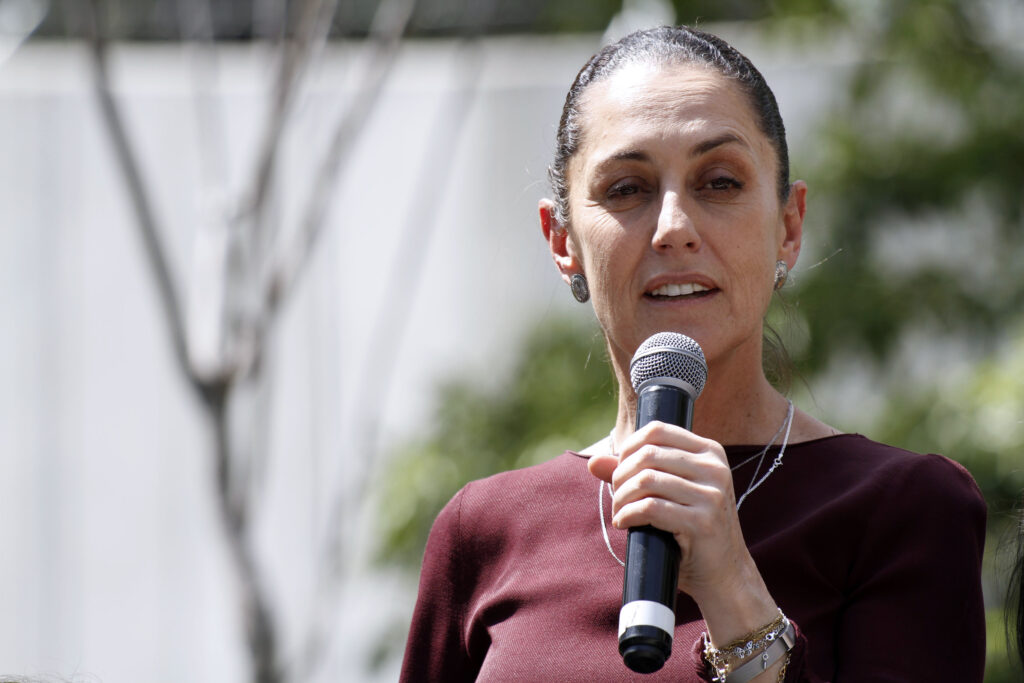
Claudia Sheinbaum pictured in 2020. Credit: Maritza Ríos / Secretaría de Cultura de la Ciudad de México
Unlike in the United States, guns are difficult to obtain legally in Mexico and mass shootings targeting members of the public are uncommon.
While Mexico has grappled for years with high homicide rates, shootings tend to happen in specific areas marked by cartel violence and rarely affect tourists.
Ideological motivations
Rather than a sign of broader security struggles, authorities maintain that Monday’s shooting was perpetrated by a ‘lone wolf’ actor driven by extremist views.
Sergio Ortiz Borbolla, head of campaigns and communications at the Global Project Against Hate and Extremism, maintained that Julio César Jasso Ramírez, 27, was a Nazi sympathizer inspired by other mass shootings.
“Although the investigation is still ongoing, several factors point to an ideological motive,” said Ortiz.
He noted that Monday’s shooting happened on Adolf Hitler’s birthday and the anniversary of the 1999 mass shooting at Columbine High School in the U.S., which killed 14.
The perpetrator’s social media included posts where he performed a Nazi salute and a framed AI-generated photo of him side-by-side with the Columbine shooters was found at the scene of the attack, according to authorities.
“The incident… highlights the growing influence of extremist online communities on acts of violence, a trend that transcends national borders,” noted Ortiz.
Mexican Attorney-General Cervantes also described “a psychopathic profile of the attacker, characterized by a tendency to imitate situations that occurred in other places, at other times, and involving other individuals – this tendency can be referred to as copycat behaviour”.
Countdown to the games
Monday’s shooting is the latest headache for the Mexican government ahead of this summer’s soccer competition.
A wave of cartel violence in February, including in World Cup host city Guadalajara, sparked concerns about the threat posed by organized crime in the country.
But the government has been engaged in a push to assure visitors that the country is safe, announcing plans to mobilize 100,000 security forces this summer. It also said it will deploy an additional 2,100 military vehicles, 24 aircraft, and 33 drones.
But, as Ortiz noted, the type of violence seen in Mexico this week is “not common.”
“There is no indication that this type of attack poses a widespread risk to tourists,” he concluded.
Featured image description: The Pyramid of the Moon in Teotihuacan – one of the largest in Mesoamerica, México.
Featured image credit: Marcelosan via WIkimedia Commons
Bogotá, Colombia – Colombian President Gustavo Petro arrived in Caracas today to meet with his counterpart in Venezuela, Interim President Delcy Rodríguez.
The visit makes Petro the first world leader to visit the South American nation since the United States captured longtime strongman Nicolás Maduro in a military operation on January 3.
Petro and Rodríguez are expected to discuss bilateral issues including energy and security cooperation on their more than 1,300 mile shared border.
T
Bogotá, Colombia – Colombian President Gustavo Petro arrived in Caracas today to meet with his counterpart in Venezuela, Interim President Delcy Rodríguez.
The visit makes Petro the first world leader to visit the South American nation since the United States captured longtime strongman Nicolás Maduro in a military operation on January 3.
Petro and Rodríguez are expected to discuss bilateral issues including energy and security cooperation on their more than 1,300 mile shared border.
The Colombian president landed in Caracas on Friday afternoon with his Foreign Minister, Rosa Yolanda Villavicencio, and Defense Minister, Pedro Sánchez.
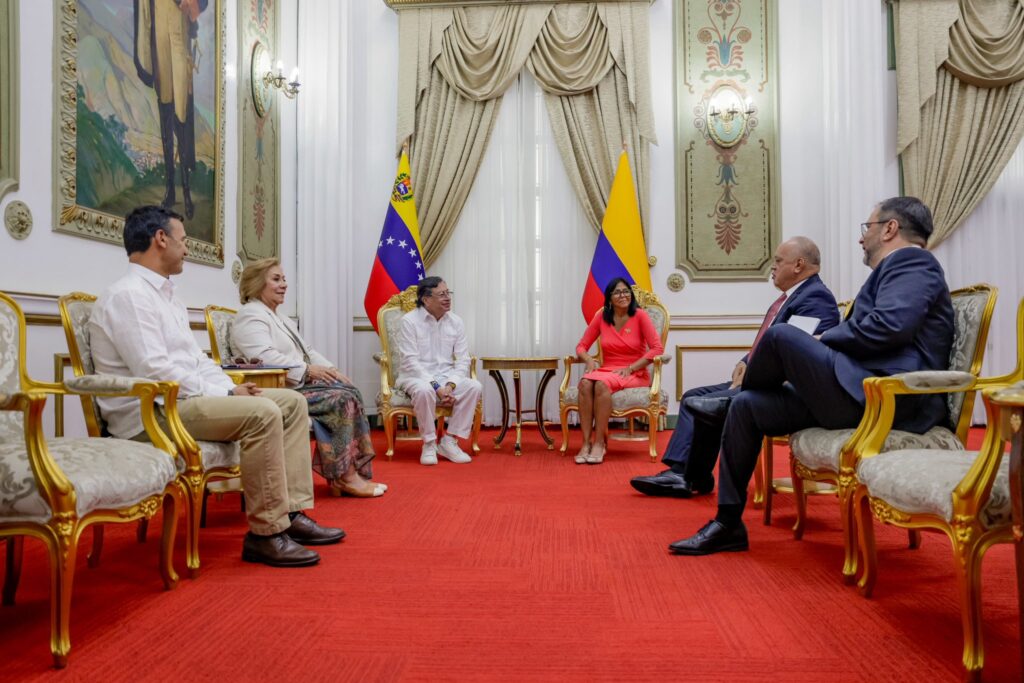
The delegation from Bogotá has been meeting with Rodríguez and her Interior Minister, Diosdado Cabello, alongside Foreign Minister Yván Gil at the Palacio de Miraflores – Venezuela’s presidential palace.
Petro and Rodríguez were flanked by top officials at their meeting. Image courtesy of @InfoPresidencia via X
Petro and Rodríguez were scheduled to meet in Cúcuta, a Colombian city bordering Venezuela, in March but the Venezuelan president cancelled at the last minute citing security concerns.
Then last Friday, the Colombian leader announced he would head to Venezuela, saying, “If Mohammed won’t come to me, I’ll go to the mountain.”
The primary purpose of the meeting is strengthening security cooperation, according to the Petro administration.
“The aim of this meeting is for both governments to make progress on a joint plan to strengthen security and intelligence in the border area,” wrote the Office of the President in a post on X today.
The sprawling frontier is a hotbed for guerrilla activity and is largely controlled by the Colombian National Liberation Army (ELN), a rebel group involved in drug trafficking and illegal mining on both sides of the border.
The ELN was known to have ties to the Maduro regime but the Venezuelan government is under pressure from the U.S. to crack down on the rebel group, which Washington considers a “terrorist organization.”
While the Petro administration maintains the importance of strengthening bilateral cooperation, the meeting has perturbed many in the Venezuelan exile community in Colombia.
“President Gustavo Petro’s visit to Venezuela, particularly his meeting with Delcy Rodríguez, raises serious concerns among Venezuelans,” Juan Carlos Viloria Doria, President of the Global Alliance for Human Rights and Vice-President of Venezuelans in Barranquilla, told Latin America Reports.
He noted that many Venezuelans do not consider Rodríguez to be a legitimate leader, describing her as “an extension of the regime led by Nicolás Maduro.”
“In this regard, such visits can be interpreted as a political endorsement or a form of international legitimization of a situation in Venezuela that still lacks adequate democratic guarantees,” maintained Viloria.
Petro and Rodríguez greet reporters. Image courtesy of @InfoPresidencia via X
There has also been pressure in Colombia for Petro to mediate the release of 16 Colombian citizens jailed in Venezuela.
The families of those detained allege the arrests were made “without a court order or evidence” and say their loved ones have faced human rights violations including torture.
While there has been an easing in repression following Maduro’s ouster, Venezuela remains an authoritarian state and rights groups continue to denounce abuses.
“The least that we Venezuelans expect is that [the meeting] be used as an opportunity to demand concrete progress on human rights and democracy,” said Viloria.
“Any dialogue or rapprochement must be aimed at improving the living conditions of the Venezuelan people and fostering a genuinely democratic transition, not at consolidating contested power structures.”
Featured image description: Colombian President Gustavo Petro and Venezuelan Interim President Delcy Rodríguez at a meeting in Caracas on April 24, 2026.
Bogotá, Colombia – The Supreme Court of Guatemala has overturned 26 arrest warrants issued last year by the country’s Public Prosecutor’s Office, which targeted high-profile figures including Colombian Attorney General Luz Adriana Camargo.
In a decision made public on Monday, the country’s high court ruled that the prosecutor’s office did not have the authority to issue the warrants in June last year.
The court order marks a setback for Guatemala’s Public Prosecutor’s Office, which right
Bogotá, Colombia – The Supreme Court of Guatemala has overturned 26 arrest warrants issued last year by the country’s Public Prosecutor’s Office, which targeted high-profile figures including Colombian Attorney General Luz Adriana Camargo.
In a decision made public on Monday, the country’s high court ruled that the prosecutor’s office did not have the authority to issue the warrants in June last year.
The court order marks a setback for Guatemala’s Public Prosecutor’s Office, which rights groups have condemned as a rogue and politically-motivated body.
“[The Prosecutor’s Office] exceeded its legal powers by unlawfully issuing arrest warrants without having the legal authority to do so,” declared the Supreme Court in its ruling.
“The issuance of arrest warrants is a power reserved for trial judges… who are responsible for overseeing the investigation,” it continued.
In addition to targeting Camargo, the warrants issued last year sought the arrest of former Colombian Defense Minister and current Ambassador to the Holy See, Ivan Velasquez.
Both high-ranking Colombian officials were accused of obstruction of justice, corruption, and influence peddling during their tenure overseeing an investigation into bribes paid to Guatemalan officials by Brazilian construction giant Odebrecht.
Camargo and Velasquez helped lead the United Nations-backed International Commission against Impunity in Guatemala (CICIG), which investigated the Odebrecht case, a sweeping corruption scandal in which the construction firm was found guilty of bribing officials in 10 Latin American countries.
But the warrants, spearheaded by Guatemalan public prosecutor Rafael Curruchiche, were widely decried at the time.
Guatemala’s own government condemned the move, writing, “these actions are carried out with a clear political objective, without grounding in the national and international legal system.”
“These are part of a series of actions by the Public Prosecutor’s Office, the Attorney General of the Republic and judges associated with corruption that have distorted the meaning of justice in Guatemala,” added the Guatemalan government at the time.
For years, Guatemala has seen a power struggle between its Attorney General’s Office, led by Maria Consuelo Porras, and the government.
Consuelo Porras has been condemned by rights groups for her efforts to block anti-corruption efforts in the country, which have seen her sanctioned by 40 countries, including the United States.
Public Prosecutor Curruchiche has also been widely condemned for interfering in democratic processes, suspending then-presidential candidate Bernardo Arevalo’s party during elections in 2023; Arevalo went on to win.
Following the Supreme Court’s ruling overturning the warrants, Curruchiche said he would launch an appeal in the country’s Constitutional Court.
Featured image description: Colombian Attorney General Luz Adriana Camargo gives a speech.

 Login
Login