Incorporating nature into local development can have a significant impact on human health. Examples include improved sleep and academic performance in children, metabolic risk reduction in adults, and longevity in seniors. Though there is evidence for human benefit, it is particularly important for other species who may call these spaces home.
This is highlighted by a rare visitor to the Simcoe area this winter, as a great grey owl took up residence in a local wooded lot. Great grey owls are n
Incorporating nature into local development can have a significant impact on human health. Examples include improved sleep and academic performance in children, metabolic risk reduction in adults, and longevity in seniors. Though there is evidence for human benefit, it is particularly important for other species who may call these spaces home.
This is highlighted by a rare visitor to the Simcoe area this winter, as a great grey owl took up residence in a local wooded lot. Great grey owls are not known to be migratory species, however, will travel south during particularly harsh winter months in search of food sources. Great grey owls typically live in coniferous forests and muskegs. They will hunt during the day while watching prey from a low perch as they are elusive and often go unnoticed.
The owl brought birders from hours away for a chance to observe and photograph the rare visitor. It has been given the nickname, the “Phantom of the North” for its elusive nature, silent flight and ability to disappear into the forest, making it particularly special to witness.
With the rarity of the species brings challenges with ethical implications. Here are some practical tips to keep in mind:
In the day and age of social media, photographers and observers should caution on location sharing to avoid overcrowding and stressing the bird. Additionally, observers should obtain permission to post observations from Indigenous Reserve lands, respecting both community protocols and cultural considerations. It is recommended to delay sharing images until the bird has left the area.
Give a respectable distance to observe the species so they can behave normally and utilize their full senses for hunting. Noise and movement can make hunting more challenging, and flushing the owl forces it to expend valuable energy.
It is best to limit the amount of time spent with the animal so that it can both rest and hunt as needed. A constant flow of observers, even if brief, can be detrimental to any species.
Be aware of baiting – a harmful practice that can leave owls more prone to vehicle collisions and expose them to pathogens carried through rodents. It also brings attention to the importance of choosing ethical tours and workshops.
As the owl spent several months in the area, it was an amazing opportunity to observe such a magnificent species. It also highlighted the large role that humans play in their survival. The area that the owl spent most of the winter in is approximately 0.1-0.2 km² and is surrounded by commercial, industrial and medical infrastructure.
Though a strong case can be made for larger uninterrupted green spaces, the small size of the area highlights the significant impact a small area can have in conservation and wildlife protection. While urban development can follow many models, the 3-30–300 rule developed by Dr. Cecil Konijnendijk suggests that every resident see at least three decently-sized trees from home, have 30 percent tree canopy in their neighbourhood and live within 300 metres of the nearest park or public green space. These small changes can have a significant impact on both human health and provide valuable habitat for migratory species. For this rare visiting great grey owl this small green space meant survival in the harsh winter months.
Recycling in Ontario is changing in a big way. As of January 1, 2026, the province has fully transitioned to a new Blue Box system that changes who is responsible for recycling and is intended to make the process more consistent across Ontario.
Under the new rules, recycling is now managed and funded by the companies that produce packaging and paper products, rather than municipalities. This shift is known as Extended Producer Responsibility (EPR). The idea is that companies should take more r
Recycling in Ontario is changing in a big way. As of January 1, 2026, the province has fully transitioned to a new Blue Box system that changes who is responsible for recycling and is intended to make the process more consistent across Ontario.
Under the new rules, recycling is now managed and funded by the companies that produce packaging and paper products, rather than municipalities. This shift is known as Extended Producer Responsibility (EPR). The idea is that companies should take more responsibility for the waste they create, while making recycling systems easier for residents to navigate.
The goal is to recycle more, send less waste to landfills, and move toward a more circular economy. But for many Ontarians, the new rules also raise a lot of questions. Here are some of the most common ones.
Frequently Asked Questions
1. What changed in Ontario’s recycling system in 2026?
Ontario’s Blue Box program is now fully run by producers – the companies that create packaging and paper products. That means they are responsible for collecting, sorting, and recycling those materials.
An organization called Circular Materials now helps operate the Blue Box program across Ontario.
For most residents, the day-to-day experience may still look similar. The province will continue using the same blue boxes, the same curbside pickup and will continue to accept many of the same items. But behind the scenes the system has changed significantly, with the goal of creating more consistent recycling rules across the province.
2. Why is Ontario changing its recycling system?
Before this transition, municipalities shared the cost and responsibility of recycling programs, and each city or region often had its own rules. That meant something recyclable in one community might not be accepted in another.
The new system is meant to reduce that confusion. By making producers responsible for the materials they put into the marketplace, the Blue Box program should, in theory, put more pressure on companies to reduce unnecessary packaging and design products that are easier to recycle. However, advocates have raised concerns about the true efficacy of this program, including looser reporting requirements, lack of transparency in operations, increased incineration of recyclable materials, and the exclusion of many groups like multi-residential buildings, public spaces and schools.
3. Will recycling rules still differ depending on where I live?
Historically, yes. What you could recycle in Toronto might not have been accepted in London, Kingston, or another municipality.
The new Blue Box system is designed to make accepted materials more consistent across Ontario. However, some local differences may still exist in how recycling is collected. For example, some municipalities may use blue boxes, while others use large recycling carts. Pickup schedules and collection contractors may also vary by region.
So while the rules about what can be recycled are becoming more standardized, the way recycling is collected may still look different from place to place.
4. Can I recycle…?
If you’ve ever stood over your recycling bin wondering, “can I recycle this?” You’re not alone.
Some cities across Ontario have helpful tools. For example, if you live in Toronto, one of the easiest ways to check is by using the Waste Wizard, an online tool that lets you search specific items and find out whether they belong in recycling, garbage, organics, or special drop-off.
Although Toronto’s Waste Wizard is one of the best-known examples, other municipalities across Ontario offer similar search tools or waste apps. They can be especially helpful for sorting items like black plastic, coffee pods, takeout containers, or mixed-material packaging.
The updated Blue Box program expands the list of accepted materials. In many cases, you can now recycle more types of packaging than before, including items like foam containers, black plastic, and certain flexible plastics. But contamination — such as food waste, liquids, or hazardous materials — can still create major problems in the recycling stream.
5. If the province has one system, why do municipalities still matter?
Even though the recycling rules are now set at the provincial level, municipalities still play a major role in waste management.
They are often responsible for services like garbage collection, green bins or organics, household hazardous waste depots and local public education. Municipalities also help residents understand changes to collection schedules, bin types and local disposal options.
In other words, the province may be standardizing the recycling system, but municipalities are still an important part of how that system works in practice.
This is one of the most important questions and one of the hardest to answer simply.
Recycling can help reduce landfill waste and recover useful materials, but it is far from a perfect solution. In Canada, recycling rates remain low. Currently, only 7% of Ontario’s waste is recycled through the Blue Box. This is due to a combination of factors, including contamination, complex materials, and limited recycling markets.
Ontario’s new recycling system is intended to improve outcomes by making producers more accountable and expanding what can be collected. But recycling alone will not solve the waste crisis.
Reducing waste in the first place and reusing materials whenever possible remains essential.
7. What should I do with electronics or hazardous waste?
Electronics and hazardous materials should never go in your Blue Box.
Items like batteries, old phones, chargers, paint, propane tanks, light bulbs, and cleaning chemicals require special handling. If they are placed in recycling, they can contaminate other materials, damage equipment, or create safety risks for workers.
Instead, these items should be taken to a designated drop-off depot, household hazardous waste site, or e-waste collection program in your municipality. Many communities in Ontario offer permanent depots or seasonal collection events for these materials.
If you are unsure, your municipality’s waste lookup tool is the best place to check.
The Bottom Line
Ontario’s new recycling rules are a major shift. By making producers responsible for the packaging they create the province is trying to improve recycling and reduce confusion for residents.
But even the best recycling system depends on public understanding and participation. Knowing what belongs in your Blue Box and taking the extra moment to check when you’re unsure can make a real difference.
At the same time, recycling is only one part of the solution. If Ontario is serious about reducing waste and protecting the environment, we also need to focus on addressing the systemic root of continuous waste generation in the first place.
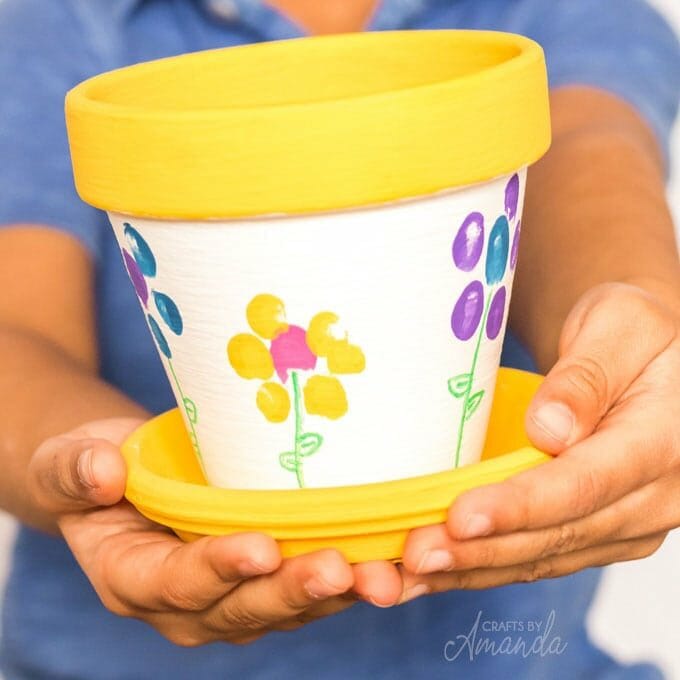
This sweet fingerprint flower pot can be made with supplies you probably have on hand. This project will easily engage kids from 3-10 years old with a lot of creative steps and makes a perfect project for Spring! Fingerprint Flower Pot Tutorial These flower pots are a great keepsake for Mother’s Day or as a... Go To project
The post Fingerprint Flower Pot appeared first on Crafts by Amanda.
This sweet fingerprint flower pot can be made with supplies you probably have on hand. This project will easily engage kids from 3-10 years old with a lot of creative steps and makes a perfect project for Spring! Fingerprint Flower Pot Tutorial These flower pots are a great keepsake for Mother’s Day or as a... Go To project
Manuel Gual posted a photo:
Vintage Meccano Workshop: Mechanical Dreams in Brass and Steel
Description:
A detailed visual collection inspired by classic Meccano engineering, captured inside a warm vintage workshop filled with metal strips, brass gears, pulleys, axles, wheels, tools, blueprints, cranes, bridges, clockwork mechanisms, model vehicles and carefully organized construction parts. The series celebrates the beauty of mechanical imagination, precision assembly, old workshop craftsma
Vintage Meccano Workshop: Mechanical Dreams in Brass and Steel
Description:
A detailed visual collection inspired by classic Meccano engineering, captured inside a warm vintage workshop filled with metal strips, brass gears, pulleys, axles, wheels, tools, blueprints, cranes, bridges, clockwork mechanisms, model vehicles and carefully organized construction parts. The series celebrates the beauty of mechanical imagination, precision assembly, old workshop craftsmanship and the nostalgic charm of hands-on model engineering. Each scene evokes the atmosphere of an inventor’s bench, where miniature machines, structural frames and experimental mechanisms come together like a tribute to industrial design, educational toys and timeless creative tinkering. These images have been generated by Artificial Intelligence.
A cartoon illustration of a witch and wizard holding hands and walking their bat dog through a forest trail. Caption reads "They had definitely had their differences over the centuries, but the Witch and Wizard had made it work despite it all."
GEORGE TOWN, June 13 — Education Minister Fadhlina Sidek today handed over the letter of approval for the construction of a new building for Sekolah Jenis Kebangsaan Cina (SJKC) Heng Ee, which will be developed within the jurisdiction of the Barat Daya district education office (PPD).She said the construction of the new building is important to provide more comfortable and conducive educational infrastructure, in line with growing demand from residents and the l
GEORGE TOWN, June 13 — Education Minister Fadhlina Sidek today handed over the letter of approval for the construction of a new building for Sekolah Jenis Kebangsaan Cina (SJKC) Heng Ee, which will be developed within the jurisdiction of the Barat Daya district education office (PPD).
She said the construction of the new building is important to provide more comfortable and conducive educational infrastructure, in line with growing demand from residents and the local community.
“Efforts to improve conducive school infrastructure will support the education agenda, particularly the implementation of the new curriculum next year and the Malaysia Education Blueprint.
“Comfortable and conducive infrastructure is crucial to further enhancing the quality of learning for our children,” she told reporters after handing over the letter here today.
Fadhlina said the school will relocate from its current site to the area under the administration of the Barat Daya PPD, while the existing site will be returned to its original owner.
She said the school, the Parent-Teacher Association (PTA), the school board of governors, alumni and related committees had been working to raise funds to finance the development project.
“I understand that RM22 million has been raised so far, and they require a little more to ensure the entire school is fully conducive for learning, including the provision of classrooms, laboratories, furniture and other infrastructure,” she said.
She said fundraising efforts would continue, including through a dinner event held in conjunction with the school’s 70th anniversary.
Fadhlina said that as a government-aided school, the Ministry of Education (MOE) would continue to examine the forms of support it could provide, particularly in terms of maintenance after the building is completed. — Bernama
JUNE 11 — If you’ve flown recently, you’ve felt it. The cancellations. The ticket prices. The carbon footprint. The uncomfortable truth: the aviation industry isn’t just having a bad year. According to a new analysis, the sector is facing a “perfect storm” of three serious, simultaneous crises. And unlike a cracked engine, you can’t just bolt a patch on these problems.Let’s break down the three demons haunting the business. You might think that with all the tech
JUNE 11 — If you’ve flown recently, you’ve felt it. The cancellations. The ticket prices. The carbon footprint. The uncomfortable truth: the aviation industry isn’t just having a bad year. According to a new analysis, the sector is facing a “perfect storm” of three serious, simultaneous crises. And unlike a cracked engine, you can’t just bolt a patch on these problems.
Let’s break down the three demons haunting the business. You might think that with all the tech in the cockpit — auto-pilot, AI, satellite navigation — we need fewer pilots. Wrong. We’re running out. Fast. The authors point out that thousands of seasoned captains hit mandatory retirement age every year. Meanwhile, the pipeline of new pilots is bone dry. Why? Because flight school now costs as much as a medical degree, and the hours required to get a license are brutal. During Covid, airlines encouraged early retirements and buyouts. Now, they’re shocked — to find that those pilots aren’t coming back.
For the common man, this means your regional flight to the small city is getting cancelled not because of weather, but because there is literally no one legally allowed to land the plane. Airlines are scraping the bottom of the barrel, lowering hiring standards, and burning out the pilots they have with mandatory overtime. The result? Exhausted crews and a safety net that is stretching thinner than it has in decades.
The Second Demon: The aging fleet & the “Spare Parts Apocalypse”. Remember the supply chain mess that emptied grocery store shelves? It hit airplanes ten times harder. The researchers highlight a terrifyingly mundane problem: spare parts. Modern planes are wonders of engineering, but they rely on hyper-specialised components made by single factories in single countries. When those factories shut down during the pandemic — or when geopolitical fights like in Ukraine cut off titanium and nickel supplies — the whole system seized up.
The aviation industry isn’t just having a bad year. According to a new analysis, the sector is facing a perfect storm of three serious, simultaneous crises. — AFP pic
Airlines are now keeping their old, gas-guzzling Boeing 737s and Airbus A320s flying years past their intended retirement dates because they can’t get the parts to build new ones. We are literally flying museum pieces. This isn’t just inefficient; it’s expensive. Older planes break more often, leading to the “mechanical issue” delays that ruin your connection. The industry calls it “fleet aging” or duct-tape engineering at 35,000 feet.
The Third Demon: The Green Paradox. Here is the cruellest irony. The aviation industry knows it has a carbon problem. It accounts for about 2.5 per cent of global CO2 — and that’s rising fast. So, what’s the solution? According to the paper, the proposed fixes — Sustainable Aviation Fuels (SAF), hydrogen engines, electric planes — are either decades away or laughably impractical. Right now, SAF costs three to five times more than regular jet fuel. To make a dent, you’d have to cover a landmass the size of Spain in crops just to grow the fuel. So, the industry is stuck. If they fly less, they go bankrupt. If they fly the same, they cook the planet. If they raise ticket prices to pay for green fuel, they lose passengers to high-speed rail or Zoom calls. The researchers call this the “sustainability trap”. We want guilt-free flying, but the physics of lifting 200 tons of metal into the sky means there is no guilt-free option.
What does the study actually tell us? It tells us that aviation’s golden age is over. The era of cheap, reliable, guilt-free flights was a historical anomaly powered by cheap oil, a surplus of ex-military pilots, and zero carbon accountability. Now, the bill has come due. Passengers will face three new realities: Expensive (to pay for green fuel and pilot wages), Unreliable (due to old planes and missing parts), and Controversial (because flying will be seen like smoking — a habit you know is bad).
The researchers don’t offer magic wands. They offer a warning. The next time you’re sitting on a tarmac, delayed for the third hour because “the crew timed out” or “a sensor is on backorder”, don’t just blame the airline. Blame a decade of kicking the can down the runway.
* The author is affiliated with the Tan Sri Omar Centre for STI Policy Studies at UCSI University and is an Adjunct Professor at the Ungku Aziz Centre for Development Studies, Universiti Malaya.
** This is the personal opinion of the writer or publication and does not necessarily represent the views of Malay Mail.
Use your child’s fingerprints and paint to make a useful keepsake Father’s Day mug. This simple but adorable fingerprint Daddy & Me mug says it all! Great for Father’s Day or a birthday and perfect for taking to the office. Fingerprint Daddy & Me Father’s Day Mug When I originally created this Father’s Day mug project... Go To project
The post Fingerprint Daddy & Me Coffee Mug appeared first on Crafts by Amanda.
Use your child’s fingerprints and paint to make a useful keepsake Father’s Day mug. This simple but adorable fingerprint Daddy & Me mug says it all! Great for Father’s Day or a birthday and perfect for taking to the office. Fingerprint Daddy & Me Father’s Day Mug When I originally created this Father’s Day mug project... Go To project
The 78th Issue of Hi-Fructose includes a cover a feature on Nieves Gonzalez, the art of Grip Face, The landscapes of Jennifer Nehrbass, the soft sculptures of Ela Fidalgo, the stitched urban landscapes of Laura Ortiz Vega, the art Jeffrey Gibson, Yu Jin Young’s once transparent figures, and the paintings of Fatima De Juan. Plus […]
The post Hi-Fructose issue 78 is Coming! first appeared on Hi-Fructose Magazine.
The 78th Issue of Hi-Fructose includes a cover a feature on Nieves Gonzalez, the art of Grip Face, The landscapes of Jennifer Nehrbass, the soft sculptures of Ela Fidalgo, the stitched urban landscapes of Laura Ortiz Vega, the art Jeffrey Gibson, Yu Jin Young’s once transparent figures, and the paintings of Fatima De Juan. Plus […]

 Login
Login