 Login
LoginBK1684 Better Meals At Lower Cost 1951 (13)
29 May 2026 at 05:55


If you’ve been searching for foods that help skin elasticity, you might be surprised to learn that many of them are everyday foods.
A steady pattern of protein-rich foods, vitamin C-rich produce, healthy fats, and colorful plants can help support the structures that give skin its strength and bounce, while still fitting into real life, real schedules, and real meals. (1)
If you’re curious how often these foods show up in your routine, logging your meals in MyFitnessPal for a few days may help you spot patterns in protein, produce, and healthy fats.
“Skin-supportive eating is less about chasing one ‘perfect’ beauty food and more about consistently pairing protein, vitamin C, and colorful plants across the day,” says Brookell White, MS, RDN, MyFitnessPal dietitian.
Skin elasticity is your skin’s ability to stretch and spring back. In the deeper layer of the skin, cells produce collagen and other proteins that help keep skin firm and flexible. As we age, these structures naturally change, and factors like sun exposure can speed up visible signs of aging. (1,2)
This is where food comes in—not to stop aging, but to support your skin from within. Food cannot freeze time, but it can help supply the nutrients involved in collagen formation, antioxidant defense, and the skin’s everyday repair process. (1,2)
A quality diet to help skin is not built around one miracle ingredient. It is built around a pattern.
Vitamin C is one of the most important nutrients in that pattern because it is required for collagen biosynthesis. (3) Protein matters because your body needs it to build and repair tissues. (1) Fatty acids and antioxidant-rich plant compounds also play useful roles in skin health and photoaging support. (1)
That means the best foods for skin are usually not trendy at all. They are often the same foods that support your overall health.
If your goal is to support collagen production, this is the place to start. Vitamin C is required for collagen biosynthesis, and many of the foods people already think of as “fresh” or “glowy” foods happen to fit the bill perfectly. (2,3)
Great options include:
These are some of the most practical foods that help the skin because they are easy to add to breakfast, lunch, dinner, or snacks. A kiwi with yogurt, sliced peppers with hummus, strawberries in oatmeal, or broccoli next to salmon may not look glamorous, but those small choices add up.
A strong foods-for-skin plan needs enough protein. Skin is a protein-rich tissue, and dietary protein helps support the body’s ongoing repair and renewal processes. (1)
Think: (19)
If you’re unsure whether you’re getting enough protein throughout the day, tracking meals in MyFitnessPal can give you a quick snapshot of your daily intake.
White says, “when it comes to skin health, consistency matters more than a single ‘superfood.’ Regularly including a quality protein source in your meals is often a more practical and sustainable approach.”
If you’ve been wondering what foods have collagen, the answer is straightforward: collagen is naturally found in animal-based foods that contain connective tissue. (4)
So, when people ask about foods with high collagen, the conversation usually points toward animal foods that include skin or connective tissue, along with collagen-derived foods such as gelatin. (20)
After digestion, collagen is broken down into smaller peptides that can be absorbed and may help support skin structure and elasticity (1). But they work best as part of a balanced diet that also provides protein, vitamin C, and other nutrients involved in collagen production (1).
Fatty fish deserves a place on nearly every list of what foods are best for your skin. It offers protein, and it also provides omega-3 polyunsaturated fats that have been studied for protective effects related to UV-induced skin damage and photoaging. (1,6)
Smart picks include: (6)
Fatty fish is one of those ingredients that quietly does a lot of work. It is satisfying, versatile, and easy to build into meals. A simple salmon bowl, sardines on toast, or trout with roasted vegetables can be a meaningful habit with very little effort.
Tomatoes are especially interesting in the skin-aging conversation because they provide lycopene, a carotenoid that has been studied for photoprotective effects. In one randomized controlled trial, women who consumed tomato paste daily for 12 weeks showed changes consistent with better protection against UV-induced skin damage. (7,10)
More broadly, carotenoids have been studied for anti-oxidative, anti-inflammatory, and photoprotective roles in skin aging. (10)
That makes tomatoes, pumpkin, sweet potatoes, carrots, leafy greens, and other colorful produce worth keeping in rotation. These help support healthier skin over time. (10)
A handful of almonds could be doing your skin a favor, too. In a study of postmenopausal women, participants who ate almonds every day had improvements in wrinkles and facial pigmentation compared with those who ate a calorie-matched snack. (8)
That does not mean almonds are a wrinkle cure. It does mean they are a compelling example of how an everyday food can fit into a skin-supportive routine. Nuts and seeds also bring healthy fats, vitamin E, and Biotin to the table, which is one reason they show up so often in conversations about healthy food for good skin. (8,11)
Easy ways to use them:
If you prefer plant-based options, soy is worth considering. Soy foods are the main dietary source of isoflavones, compounds that have been studied for their potential skin benefits. (9) In one randomized trial of postmenopausal women, soy protein with isoflavones improved several signs of facial photoaging and skin hydration over time. (9)
Practical soy foods include: (9)
This is also a nice reminder that a diet to help skin does not have to be built around animal foods. Plant-based meals can still provide a variety of nutrients that contribute to overall skin health.
You do not need to overhaul your life to eat in a way that supports healthier-looking skin. A more useful approach is to build meals around a simple formula:
That could look like:
Dermatologists generally recommend meeting nutrient needs through food first when possible, which is one more reason this approach works so well. (11) It may be more sustainable and flexible to do so.
“If your goal is healthy skin, focus on what you can repeat: Consuming fatty fish a few times a week, adding vitamin C rich produce to your breakfasts, eating a serving of nuts and seeds as your go-to snack, or any habit that feels easy enough to keep,” says White.
The best foods for skin are those that provide nutrients involved in collagen production and protection against skin damage. These include vitamin C-rich fruits and vegetables like citrus and peppers, protein-rich foods such as fish, eggs, and yogurt, healthy fats from foods like fatty fish, and antioxidant-rich produce such as tomatoes and leafy greens. (1,2,3,6,7)
Collagen is naturally found in animal flesh like meat and fish that contain connective tissue, and collagen-derived foods such as gelatin also come from animal tissues. Plant foods do not contain collagen, but they can help support collagen production through nutrients such as vitamin C. (4,3)
Not completely. Skin aging is influenced by multiple factors, including age and environmental exposure, not just nutrition. Food can delay the process, but it works best alongside habits like sun protection and overall healthy living. (1,6)
The most effective foods that help skin elasticity are not exotic, expensive, or hard to find. They are the foods that can easily be found at your local grocery store and continue to show up in a balanced kitchen.
That is good news. It means healthier-looking skin does not have to come from a dramatic reset. It can come from a handful of repeatable choices. Small habits are often the most reliable ones because they tend to have more lasting power. (21)
Tools like MyFitnessPal may also help you notice those habits over time. By tracking your meals for a few weeks, you may start to see patterns between the foods you regularly eat and how your skin looks and feels.
The post Foods That Help Skin Elasticity: 7 Picks for Firmer-Looking Skin appeared first on MyFitnessPal Blog.
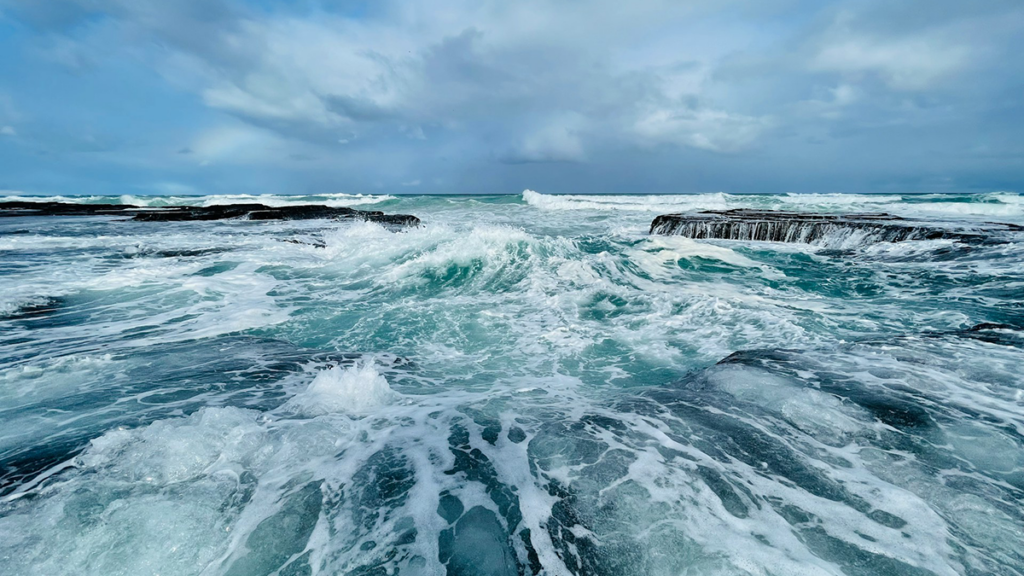
Mesoscale and submesoscale ocean processes influence ocean circulation, air-sea fluxes, ecosystem variability, and transport of materials. A new article in Reviews of Geophysics examines how these fine-scale processes shape the Indian Ocean, an ocean basin with unique monsoon behavior and a disproportionate impact on global climate. Here, we asked the authors to explain what mesoscale and submesoscale processes are, the techniques and challenges of observing and modeling fine-scale processes, and how biogeochemical cycles and climate change interact with these processes.
In simple terms, what are mesoscale and submesoscale processes?
Mesoscale processes pertain to oceanic features such as eddies and fronts, which
typically span a range of approximately 10 to 100 kilometers and can persist from
weeks to months. Submesoscale processes are of an even smaller scale, ranging
between approximately 100 meters and 10 kilometers, and evolve rapidly within a time frame of hours to days. These encompass sharp fronts, filaments, and small vortices.
Mesoscale processes account for more than 80% of the total kinetic energy. Submesoscale motions are of particular significance as they generate robust vertical movements that establish a connection between the surface ocean and deeper layers. As elaborated in our review, mesoscale and submesoscale processes function as a crucial link between large-scale ocean circulation and small-scale turbulence, facilitating the transfer of energy across different scales and regulating the distribution of heat, salt, and nutrients throughout the ocean.
Why is it important to understand how fine-scale processes operate in the Indian Ocean?
The Indian Ocean has a disproportionate influence on global climate.
The Indian Ocean has a disproportionate influence on global climate. It absorbs over a quarter of the ocean’s net heat gain and directly affects the environment and food security of nearly one-third of the world’s population. Unlike other ocean basins, the Indian Ocean is uniquely shaped by seasonally reversing monsoon winds and is strongly coupled with climate modes like the Indian Ocean Dipole and the Madden- Julian Oscillation. Mesoscale and submesoscale variability in this region modulates biogeochemical cycles, air-sea fluxes, and even large-scale energy balance. As our review highlights, understanding these fine-scale dynamics is essential for improving predictions of monsoon rainfall, tropical cyclone behavior, and long-term climate change.
How do scientists study mesoscale and submesoscale ocean processes?
Scientists employ a combination of field measurements, satellite observations, and numerical models, all of which were summarized in our review. In-situ observations serve as the foundation for mesoscale and submesoscale processes in the ocean. They encompass research cruises, moored arrays such as the RAMA network, Argo profiling floats, and autonomous platforms. The in-situ observations capture the three-dimensional structures and multiple variables during mesoscale and submesoscale processes.
Satellite altimetry has long been the principal tool for observing mesoscale eddies. However, the newly launched Surface Water and Ocean Topography (SWOT) mission is revolutionary, as it offers sea surface height measurements at an unprecedented resolution, enabling the direct observation of submesoscale features for the first time.
High-resolution regional models with grid spacings of a few kilometers or less enable researchers to simulate these processes and test dynamical theories under controlled conditions.
What are some of the challenges in observing and modeling these processes?
In our review paper, we tackled the challenges in observations by adhering to four principles, namely high-resolution (more observations in a relatively small region), synchrony (observations conducted at the same time), persistence (observations for a long time), and interdisciplinary (observations of multiple ocean properties). These principles are anticipated to offer valuable guidance for future observational endeavors to surmount the corresponding challenges.
Modeling also poses difficulties. Even state-of-the-art climate models are unable to explicitly resolve submesoscale processes. Consequently, their effects have to be approximated via parameterizations. The development of accurate parameterizations continues to be an active area of research. Moreover, as the model resolution improves, the widely employed hydrostatic approximation may lose its validity, necessitating more intricate non-hydrostatic formulations. Data assimilation for such rapidly evolving features presents a particularly arduous challenge.
How do fine-scale processes interact with biogeochemical cycles in the Indian Ocean?
Mesoscale and submesoscale motions exert a strong regulatory influence on biogeochemical cycling.
Mesoscale and submesoscale motions exert a strong regulatory influence on biogeochemical cycling through the control of nutrient supply to the sunlit upper ocean. Cyclonic eddies elevate nutrient-rich deep waters into the euphotic zone, thereby promoting phytoplankton blooms. In contrast, anticyclonic eddies typically suppress surface productivity by deepening the mixed layer.
In the Arabian Sea, eddies and filaments can contribute up to 70% of the nutrients that support the monsoon-driven biological bloom. These fine-scale dynamics also have an impact on carbon dioxide exchange; mesoscale variability accounts for approximately 40% of the CO₂ flux variability in the western Arabian Sea. Moreover, eddies modulate oxygen minimum zones in the Arabian Sea and Bay of Bengal, where low oxygen levels have a profound effect on marine ecosystems.
How is climate change expected to influence these fine-scale processes in the Indian Ocean?
With the continuous progression of climate change, alterations in upper-ocean stratification, propelled by warming and modified freshwater inputs, are anticipated to transform the conditions giving rise to fine-scale instabilities. High-resolution climate model simulations suggest that in a warming global scenario, the eddy-active region associated with the Agulhas Current system may shift westward and poleward. This shift is correlated with the intensification of Agulhas leakage, which refers to the transport of warm Indian Ocean water into the Atlantic. These changes could exert far-reaching effects on global ocean circulation.
Warming is augmenting the frequency and intensity of marine heatwaves in the Indian Ocean.
Moreover, warming is augmenting the frequency and intensity of marine heatwaves in the Indian Ocean. These heatwaves disrupt vertical mixing and nutrient supply, thereby having cascading impacts on biological productivity. Nevertheless, substantial uncertainties persist in quantifying these long-term responses.
In general, there are two-way interactions between climate change and fine-scale processes. Alterations in one component will induce changes in the other, and the former will be subject to feedback from the latter.
What are the remaining questions or knowledge gaps where additional research is needed?
Our review reveals several key priorities. In the short term, specialized multi-scale observational campaigns are acutely required, especially in regions with insufficient sampling, to capture the three-dimensional structure and rapid evolution of submesoscale features. Additionally, a more in-depth understanding is needed regarding how eddies interact with barrier layers—regions characterized by strong salinity stratification that are unique to the northern Indian Ocean—and how these interactions regulate air-sea fluxes and marine heatwaves.
Longer-term challenges encompass integrating fine-scale dynamics into climate models and refining submesoscale parameterizations. Emerging tools from artificial intelligence and machine learning hold potential for representing unresolved processes and enhancing data assimilation. Finally, considering the logistical and financial requirements of fine-scale ocean research, sustained international collaboration will be indispensable.
—Lei Zhou (zhoulei1588@sjtu.edu.cn, 0000-0002-0433-3991) Shanghai Jiao Tong University, China; Dongxiao Wang (dxwang@mail.sysu.edu.cn, 0000-0001-8778-2188) Sun Yat-Sen University School of Marine Sciences, South China Sea Institute of Oceanology, China; Lin Wang (wanglin58@mail.sysu.edu.cn, 0009-0003-1062-5207) Sun Yat-Sen University, China; and Chunhua Qiu (qiuchh3@mail.sysu.edu.cn, 0000-0001-9684-6067) Sun Yat-sen University School of Marine Sciences, China
Editor’s Note: It is the policy of AGU Publications to invite the authors of articles published in Reviews of Geophysics to write a summary for Eos Editors’ Vox.
Choosing a CAVA order can feel simple even with so many great options of bases, dips, proteins, toppings, and dressings. Below, Emily Sullivan, RD, MyFitnessPal Registered Dietitian, shares five picks she would recommend, plus tips for making each one work for your unique goals.
CAVA food is flexible in the best way. You can keep things simple with a curated bowl or pita, or build your own meal from greens, grains, proteins, dips, toppings, and dressing.
That flexibility is helpful. It can also make the menu feel limitless. The quiet move is to decide what you want the meal to do first.
Maybe you want more protein. Maybe you want a higher-fiber bowl. Maybe you want to keep calories or sodium more moderate. Or maybe you want something filling that still tastes like the order you actually wanted. A tool like MyFitnessPal can also help you compare meals when you want a clearer look at calories, protein, fiber, or sodium.
Once you have that goal in mind, the menu gets easier to navigate. You can choose the ingredients that help you get there, then adjust the extras depending on what matters most to you.
This bowl pairs glazed salmon with arugula, saffron basmati rice, hummus, Crazy Feta, fire-roasted corn, tomato + onion, cucumber, and yogurt dill dressing. CAVA lists the Salmon + Yogurt Dill at 710 calories, 35 grams of protein, 5 grams of fiber, and 1,870 milligrams of sodium. (1,3)
“Salmon is a great source of heart-healthy omega-3 fatty acids, and the colorful mix of vegetables rounds out the dish with an array of vitamins and minerals,” Sullivan says. (4)
RD tip: To increase the fiber, swap the saffron basmati rice for black lentils. CAVA lists saffron basmati rice at 2 grams of fiber and black lentils at 15 grams of fiber, so that swap adds 13 grams of fiber. (1)
Other considerations: This bowl has 1,870 milligrams, compared to the FDA’s 2,300-milligram Daily Value for sodium. (1,2)
This bowl is built with spicy lamb meatballs, avocado, red pepper hummus, Crazy Feta, cucumber, pickled onions, tomato + onion, black lentils, Super Greens, and lemon herb tahini. It has 800 calories, 43 grams of protein, 17 grams of fiber, and 1,670 milligrams of sodium. (1,5)
“Creamy avocado and nutty tahini bring healthy fats and depth of flavor, while the black lentils and vegetables round out the bowl with a substantial boost of fiber.,” Sullivan says. (1)
This is one of the higher-fiber picks on the list. The FDA lists the Daily Value for dietary fiber as 28 grams, so 17 grams is a meaningful amount in one meal. (1,2)
RD tip: If you want to reduce the sodium and fat content, skip the feta. CAVA lists one serving of Crazy Feta at 70 calories, 6 grams of fat, and 230 milligrams of sodium. (1)
Other considerations: This is a bigger bowl. If you want the flavor but not the full portion, you could save part for later.
This pita includes grilled chicken, tzatziki, tomato + onion, Kalamata olives, feta, shredded romaine, and yogurt dill dressing. CAVA lists the Greek Chicken Pita at 720 calories, 48 grams of protein, 8 grams of fiber, and 2,230 milligrams of sodium. (1,6)
This can be a helpful CAVA order when you want something handheld, but still want protein and vegetables in the mix.
“With a hearty serving of protein, carbohydrates from the pita, and several different fresh vegetables, this sandwich is a convenient, balanced meal,” Sullivan says. (1)
RD tip: To reduce sodium, skip the Kalamata olives. CAVA lists Kalamata olives at 360 milligrams of sodium per serving. (1)
Other considerations: This pita is one of the higher-sodium picks on this list, with 2,230 milligrams of sodium. If sodium is something you are watching, this is a good place to customize. (1,2)
The Steak + Harissa Bowl includes grilled steak, Crazy Feta, red pepper hummus, tomato + onion, cucumber, feta, sumac slaw, brown rice, Super Greens, and hot harissa vinaigrette. It has 620 calories, 37 grams of protein, 7 grams of fiber, and 1,830 milligrams of sodium. (1,7)
This is the lowest-calorie option among the five picks in this article, but it still brings a solid amount of protein. The Super Greens, brown rice, and vegetables also help make the bowl feel more complete. (1)
RD tip: If you are looking to lower the carbs, swap the brown rice base for Super Greens or arugula. CAVA lists brown rice at 48 grams of carbohydrates per serving, compared with 6 grams for Super Greens and 3 grams for arugula. (1)
Other considerations: The sodium comes in at 1,830 milligrams. (1) Also, this is a bolder, spicier bowl, so it may not be the move if you want something mild.
The Falafel Crunch Bowl is a vegetarian option with falafel, hummus, black lentils, Crazy Feta, Persian cucumber, pickled onions, sumac slaw, romaine, tomato + onion, basmati rice, pita crisps, and skhug. CAVA lists it at 860 calories, 24 grams of protein, 18 grams of fiber, and 2,210 milligrams of sodium. (1,8)
“Packed with fiber-rich black lentils, chickpea-based falafel, and hummus, it delivers a combination of plant-based protein, fiber, and complex carbohydrates,” Sullivan says. (1)
RD tip: To reduce sodium, ask for the crumbled feta, or for light Crazy Feta if your location allows it. CAVA lists Crazy Feta at 230 milligrams of sodium per serving, while crumbled feta adds 35 calories, 2.5 grams of fat, and 125 milligrams of sodium. (1)
Other considerations: This bowl is the highest-calorie pick on this list and has 2,210 milligrams of sodium. Consider customizing or balancing with lower-sodium choices later in the day. (1)
Look for a protein you enjoy, then check whether the bowl has a fiber source like lentils, greens, avocado, hummus, or grains.
That combo can make the meal feel more complete without needing to rebuild the whole menu from scratch.
CAVA flavor often comes from briny, tangy, salty ingredients. That can be delicious, but it can add up.
If you are watching sodium, look at items like Kalamata olives, feta, pickles, and dressings. You do not need to remove all of them. Choosing one or two can be enough. (1)
If you are deciding between two bowls, MyFitnessPal can help you zoom out and compare calories, protein, fiber, and sodium. It is not about making the order perfect. It is about understanding where it fits in your day.
You do not have to make five changes to build a better bowl. One thoughtful swap can do the job.
Try black lentils instead of rice for more fiber. Choose greens instead of grains when you want a lighter base. Ask for light feta if you still want the flavor, just less of it. (1)
There is no single healthiest CAVA order for everyone. It depends on your goals and appetite. From this list, the Steak + Harissa Bowl is the lowest in calories, the Greek Chicken Pita is highest in protein, and the Falafel Crunch Bowl is highest in fiber. (1)
CAVA calories vary by bowl, pita, and customization. In this list, the picks range from 620 calories for the Steak + Harissa Bowl to 860 calories for the Falafel Crunch Bowl. (1)
Start with small changes. You can skip or go lighter on higher-sodium add-ons like Kalamata olives, feta, pickles, and certain dressings. CAVA lists Kalamata olives at 360 milligrams of sodium, Crazy Feta at 230 milligrams, and Hot Harissa Vinaigrette at 270 milligrams per serving. (1)
Yes. CAVA lists the Falafel Crunch Bowl as vegetarian, though it contains milk, sesame, and wheat. (8)
CAVA can be a strong fast-casual option when you know how to order to hit your goals. The menu has plenty of ways to build a meal with protein, vegetables, grains, lentils, dips, and flavorful toppings.
The main thing to watch is sodium, especially in bowls or pitas with feta, olives, pickles, dressings, and multiple savory add-ons. (1,2)
The best CAVA order is not the most “perfect” one. It is the one that fits your appetite, your goals, and the rest of your day.
And if you want more real-life ideas, the MyFitnessPal Community can be a helpful place to see how other people customize restaurant meals and make everyday food choices work for them.
Originally published July 9, 2024; Updated May 2026
The post How To Pick a Better CAVA Order appeared first on MyFitnessPal Blog.

A high protein for weight loss gets a lot of attention, and the evidence suggests there are a few good reasons why. Higher-protein diets do not ‘melt fat,’ but they do more than you think. However, it’s still not a magic fix.
“Protein does not cause weight loss on its own, but it can play a useful role by helping with fullness and supporting lean mass during a calorie deficit,” Katherine Basbaum, RD MyFitnessPal dietitian explains. (2,4,5,7)
Does protein help you lose weight? It can be helpful as part of a balanced weight-loss plan. Higher-protein eating patterns have been linked with better weight management outcomes in adults who are overweight or obese. (1)
A practical protein intake for weight loss is often higher than the adult minimum. The adult RDA is 0.8 g/kg/day, which is the amount set to meet the needs of nearly all healthy adults. Reviews focused on weight management often discuss somewhat higher intakes, around 1.2 to 1.6 g/kg/day, and sometimes roughly 25 to 30 g per meal to help with hunger and help you hold on to muscle. (2,6,5)
If you have chronic kidney disease or another condition that changes protein needs, do not use a generic target without consultation. Your protein goal may need to be adjusted with help from a doctor or dietitian. (11)
Good options include eggs, seafood, lean meats and poultry, soy foods, beans, lentils, nuts, and seeds. Protein is found in both plant and animal foods, and its label guidance suggests comparing foods by looking at the grams of protein per serving. (10)
Try MyFitnessPal’s Protein Calculator, which uses body weight and physical activity to estimate a target. The calculator’s default macro setup is 20% of calories from protein, and users can customize protein, carb, and fat goals in the Goals section.
Premium users can also view macros by meal, which makes it easier to see whether protein is being spread across breakfast, lunch, dinner, and snacks, or if it’s limited to one meal.
If you’re building a new protein habit, there’s a place to do it alongside others in the MyFitnessPal community.
Protein can support weight loss, but it does not replace the fundamentals. Weight loss still comes down to eating in a way you can stick with, staying active, and building healthy habits. Protein works best when it helps you stick to that structure, not when it is treated like a shortcut. (7)
Also, keep in mind that more protein is not automatically better for everyone, especially if you have chronic kidney disease. (11)
A higher-protein eating pattern can support weight loss by helping with fullness and by helping preserve lean mass while you are in a calorie deficit. It works best as part of an overall reduced-calorie, balanced eating pattern, not as a stand-alone fix. (1,4,5,7)
The adult RDA for protein is 0.8 g/kg/day. Reviews focused on weight management often discuss somewhat higher intakes, often around 1.2 to 1.6 g/kg/day. (6,2)
Protein has a higher thermic effect of food than carbohydrate or fat, so your body uses more energy to digest and metabolize it. That effect is real, but modest, so it is better thought of as a small advantage rather than the main driver of weight loss. (2,7)
Beans, peas, lentils, eggs, seafood, soy foods, nuts, seeds, and lean meats and poultry are all good sources of protein. And if you are comparing packaged foods, checking the grams of protein per serving on the Nutrition Facts label can help. (10)
Protein can fit into a balanced eating pattern for most healthy adults. But if you have chronic kidney disease or another condition that affects protein needs, it is best to talk with a clinician or dietitian before making major changes to your intake. (7,11)
Protein can be a helpful part of a weight-loss plan because it may help you feel fuller and support lean mass while you are eating in a calorie deficit. (2,4,5)
From there, you’re going to need to keep it practical: choose a realistic protein goal and use MyFitnessPal to check whether your intake is lining up with it.
Originally published October 11, 2016; Updated May 2026
The post High Protein Diet for Weight Loss: 5 Science-Backed Reasons It Helps appeared first on MyFitnessPal Blog.
