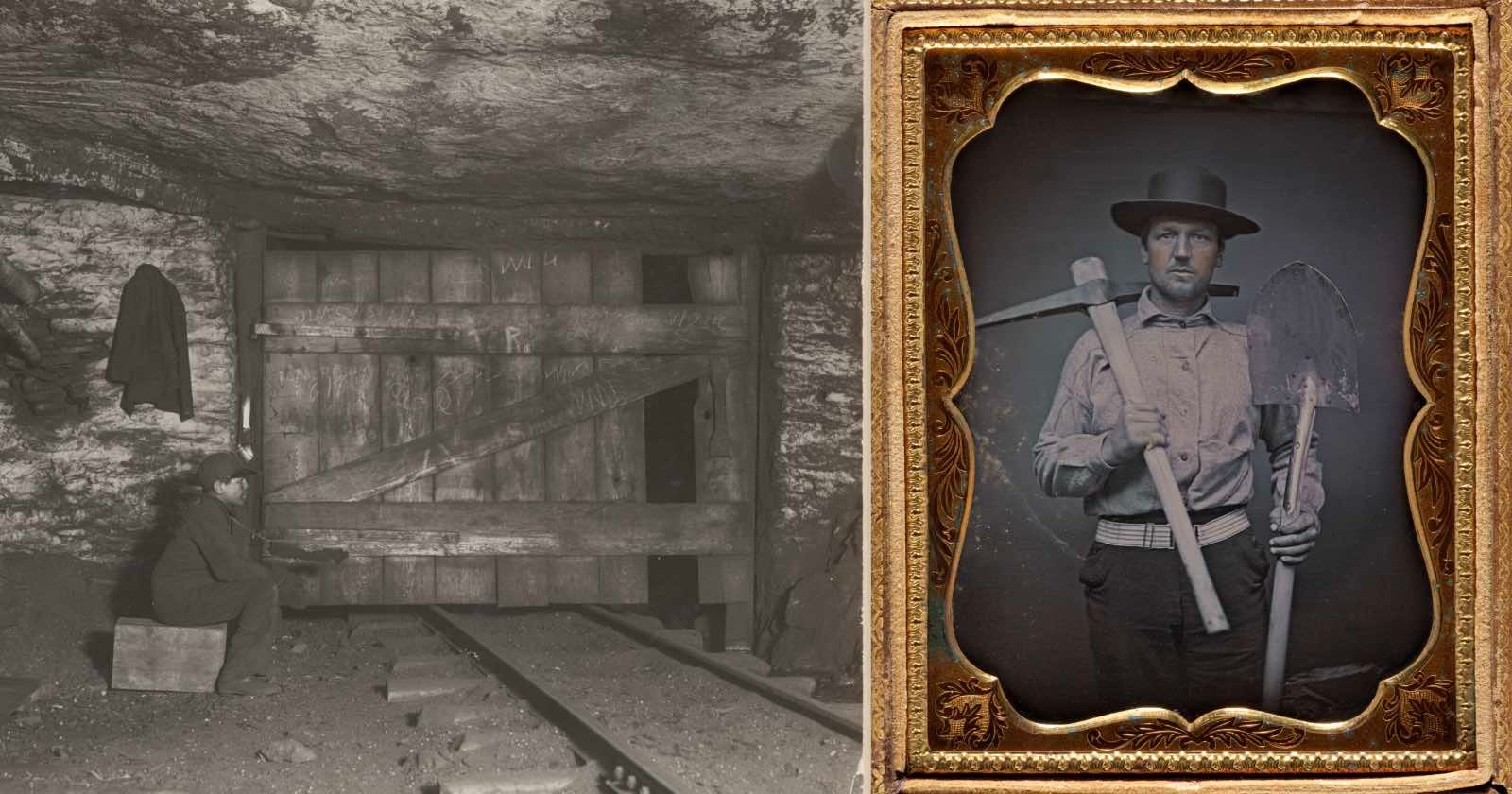
A new exhibition will examine how generations of photographers have captured mining and industry in the United States, from early daguerreotypes depicting the California Gold Rush to images of rapid industrialization in the 20th century.
[Read More]
A new exhibition will examine how generations of photographers have captured mining and industry in the United States, from early daguerreotypes depicting the California Gold Rush to images of rapid industrialization in the 20th century.
An explosion yesterday at a coal mine near Bogotá, Colombia has left nine miners dead and six more in hospital, with one in a serious condition.
The incident took place at the La Trinidad mine at 3PM local time in the town of Sutatausa, 44 miles north of Bogotá.
The accident happened despite the National Mining Agency (ANM) saying it warned of gas leaks at the site after an inspection of the mine on April 9.
Following the explosion, fifteen miners were trapped at a depth of around 600m
An explosion yesterday at a coal mine near Bogotá, Colombia has left nine miners dead and six more in hospital, with one in a serious condition.
The incident took place at the La Trinidad mine at 3PM local time in the town of Sutatausa, 44 miles north of Bogotá.
The accident happened despite the National Mining Agency (ANM) saying it warned of gas leaks at the site after an inspection of the mine on April 9.
Following the explosion, fifteen miners were trapped at a depth of around 600m below the surface. Three of the miners were able to exit the mine by their own means, while a further three were brought out alive after around an hour, according to the mayor of Sutatausa, Jhonatan Ojeda, speaking to El Dorado Radio.
The six surviving miners were taken to Ubaté Regional Hospital, where five were found to be in a stable condition, though showing signs of inhalation of toxic gases.
But the sixth survivor was reported this morning to be in a grave condition with possible central nervous system damage. He was kept alive by means of invasive mechanical ventilation until he could be transported to a critical care center at the Fundación Santa Fe in Bogotá.
The manager of the hospital at Ubaté thanked the governor and the ambulance service for the speed of their response.
A press release from the ANM confirmed that the emergency was caused by an accidental explosion inside the gallery of the section called La Ciscuda.
“The National Mining Agency expresses its solidarity with the families of the victims and regrets this mining accident in which, thanks to timely rescue efforts, six miners were rescued alive.”
The ANM have confirmed that their operatives visited the mine in question on April 9 and noted issues concerning the accumulation of gas, management of coal dust, and ventilation processes.
The inspectors delivered a list of safety recommendations to be enacted within thirty days. Twenty-five days had passed between the inspection and the accident. It is not yet clear which of the recommended safety measures had been taken. The mine is operated by the company Carbonera Los Pinos.
This is the second mining-related tragedy to afflict the town of Sutatausa in recent years. In March 2023, 21 miners were killed in an explosion at the El Hoyo coal mine, also caused by a build-up of gas.
Featured image description: Photograph of a section of the remaining tunnel at State Mine.
Amazon and Sony among firms that may have sourced coltan, used in phones, from supply chains controlled by the M23 rebels, says Global WitnessLeading global brands including Amazon, Ericsson and Sony are “likely” to have sourced minerals linked to a militia accused of widespread sexual violence, summary executions and torture, a new investigation claims.The companies allegedly, but unknowingly, acquired coltan smuggled from mines in the Democratic Republic of the Congo (DRC) that are occupied by
Amazon and Sony among firms that may have sourced coltan, used in phones, from supply chains controlled by the M23 rebels, says Global Witness
Leading global brands including Amazon, Ericsson and Sony are “likely” to have sourced minerals linked to a militia accused of widespread sexual violence, summary executions and torture, a new investigation claims.
The companies allegedly, but unknowingly, acquired coltan smuggled from mines in the Democratic Republic of the Congo (DRC) that are occupied by the M23 militia, which has committed myriad atrocities in eastern DRC.
Research & Developments is a blog for brief updates that provide context for the flurry of news that impacts science and scientists today.
Sand is the most exploited solid natural resource on Earth. It has been integrated into how we build homes, roads, buildings, and bridges as well as how we protect coastal infrastructure from rising seas. Sand underpins nearly every aspect of modern infrastructure and economics, plays crucial roles in supporting ecosystem biodiversity, and literal
Research & Developments is a blog for brief updates that provide context for the flurry of news that impacts science and scientists today.
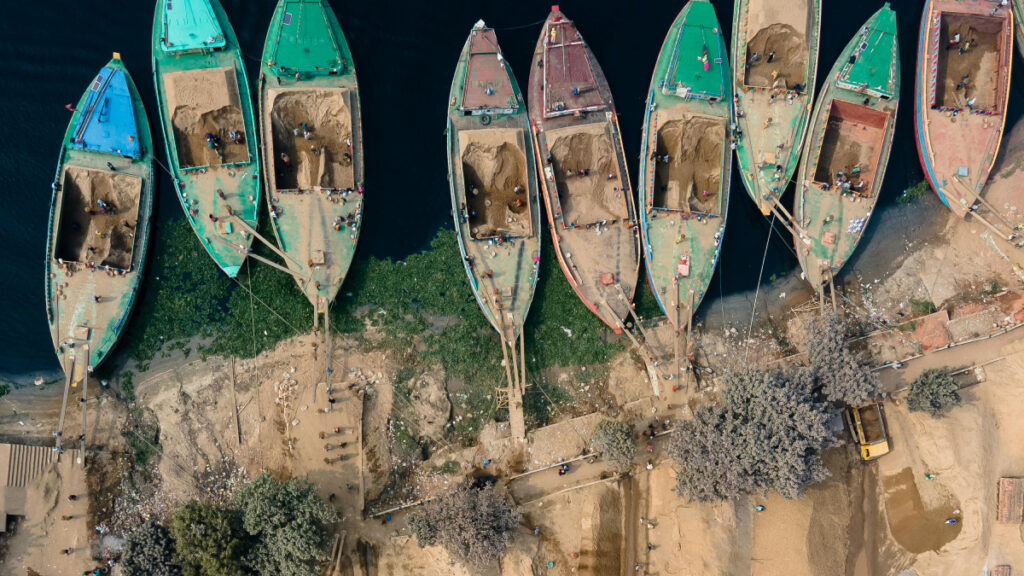
Sand is the most exploited solid natural resource on Earth. It has been integrated into how we build homes, roads, buildings, and bridges as well as how we protect coastal infrastructure from rising seas. Sand underpins nearly every aspect of modern infrastructure and economics, plays crucial roles in supporting ecosystem biodiversity, and literally shores up rivers and coasts.
A new report from the United Nations Environment Programme (UNEP) found that we are using 50 billion metric tons (50 trillion kilograms) of sand per year. As global development and industrialization expand, demand for sand in the building sector is expected to rise 45% by the year 2060, outpacing current efforts to sustainably harvest it. The report’s authors urge countries to establish sand as a strategic national asset and develop policies for sustainable extraction.
“Sand is sometimes referred as the unrecognized hero of development, but its essential role in sustaining the natural services on which we depend is even more overlooked,” Pascal Peduzzi, director of the UNEP Global Resource Information Database Geneva, said in a press release about the report. “Sand is our first line of defence against sea level rise, storm surges, and salination of coastal aquifers—all hazards exacerbated by climate change.”
Sand Wanted: Dead or Alive
Dead sand, or sand that has been extracted from its natural environment, is a key component in building materials like concrete and asphalt. Communities around the world use sand in water filtration systems, providing clean water for drinking and agricultural use. And although a transition to clean energy sources is necessary to curb the effects of climate change, many of those sources also depend on sand: solar panels require glass made from high-purity silica sand, and wind turbines, hydroelectric dams, and nuclear power plants all require concrete.
Mangroves, one of the most important coastal trees, can grow in sand. Credit: Diego Parra
Sand also plays a critical role in natural ecosystems. It is home to a wide array of critters from crabs, sharks, and turtles to microorganisms like bacteria and fungi. It supports the growth of corals, mangroves, and seagrasses that in turn support even more marine creatures. It is a key component of healthy soil and aids in surface drainage. It guides river evolution and acts as flood buffer and storm barrier. It also provides local economic benefits via tourism.
These are among the values of sand when it is left alone and unused, called “alive” sand. The UN report notes that these benefits are typically of greater value over time than if sand is dredged and used. But because these benefits are hard to see, they are often overlooked when nations calculate the value of their sand resources.
A Sustainable Sand Future
Despite sand’s importance whether dead or alive, the report notes that few countries have established sand as a strategic national asset or have developed strategies for sustainable extraction. At the current pace, humans are extracting sand from the natural environment at a faster pace than it is being replenished by geologic processes.
What’s more, the UNEP’s Marine Sand Watch tool shows that about half of sand dredging companies are operating within marine protected areas, accounting for about 15% of the volume of dredged sand. This practice, the report notes, is potentially trading in sand’s long-term benefits for short-term gains.
The UN report recommends a few actions to protect the long-term availability of sand as a natural resource, including:
Recognizing sand as strategic national asset, establishing national inventories, and creating long-term regional planning groups that consider sand as an essential resource for resilience;
Establishing circularity and recycling of building materials, especially in areas of conflict and natural disasters;
Strengthening environmental protection practices, and codifying international frameworks to strengthen accountability along the supply chain, including increased transparency about extraction; and
Integrating sand-related biodiversity and social risks into financial decisionmaking and governance.
“Over-reliance on short-term economic metrics risks obscuring, and further impacting, the geological and ecological processes that take centuries to form and may not be restored once critical thresholds are crossed,” the report states. “What is hardest to measure may be precisely what sustains both nature and human societies over the long term. The challenge ahead is not only to manage extraction, but to recognise and balance the full spectrum of sand’s values.”
These updates are made possible through information from the scientific community. Do you have a story about science or scientists? Send us a tip at eos@agu.org.

 Login
Login