CIPA recently released its global digital camera and lens shipment data for April, presenting a ripe opportunity to gauge the health of the photo industry after one-third of the year has passed. There is a lot of interesting data to consider, including evidence that the compact camera surge is far from a flash in the pan.
[Read More]
CIPA recently released its global digital camera and lens shipment data for April, presenting a ripe opportunity to gauge the health of the photo industry after one-third of the year has passed. There is a lot of interesting data to consider, including evidence that the compact camera surge is far from a flash in the pan.
The average American household uses about 150 pounds of glass containers each year, but more than two-thirds of that glass never gets recycled into new bottles. This isn’t because people aren’t trying. Glass is now the only common packaging material that costs recycling facilities more to process than they make from selling it, and the U.S. recycling system has been adapting to this problem for the past twenty years.
According to the EPA, the U.S. has recycled about 31 percent of its glass conta
The average American household uses about 150 pounds of glass containers each year, but more than two-thirds of that glass never gets recycled into new bottles. This isn’t because people aren’t trying. Glass is now the only common packaging material that costs recycling facilities more to process than they make from selling it, and the U.S. recycling system has been adapting to this problem for the past twenty years.
According to the EPA, the U.S. has recycled about 31 percent of its glass containers for the past ten years. In contrast, the European Union collected 80.8 percent of its glass containers in 2023. This gap isn’t because of how people act, but because of differences in infrastructure, policies, and the fact that glass is heavy, breakable, and not very profitable. As a result, glass no longer fits well in the single-stream recycling system most Americans use.
The math that broke glass recycling
Cullet, which is the industry term for crushed and sorted recycled glass, is a permanent material. It can be melted and reused over and over without losing quality. Adding 10 percent more cullet to a furnace reduces energy use by 2.5 to 3 percent and lowers CO₂ emissions by about 5 percent. If a furnace uses only cullet, it produces about 58 percent fewer emissions than making glass from raw materials like sand, soda ash, and limestone.
These numbers show that glass should be valuable to bottle makers. However, manufacturers want cullet that is color-sorted, clean, and ready for the furnace, which is rarely what comes out of single-stream recycling facilities.
A 2017 analysis by the Closed Loop Foundation found that single-stream glass costs U.S. recycling facilities $150 million each year in equipment damage, transportation, and disposal. On average, a facility loses about $35 for every ton of glass it handles. For example, a transfer station in Washington, D.C. spends about tens of thousands of dollars a year replacing screen baskets damaged by glass shards. When trucks unload, glass shards also get stuck in paper and cardboard, making those materials less valuable.
This is known as the negative-value problem. The glass itself isn’t worthless, because high-quality cullet can be sold. But the way glass is collected usually produces a dirty, color-mixed load, so it often ends up being used as road base, landfill cover when ground into sand-like consistency and laid over the day’s waste, or just thrown away.
How we built a system that loses money
The current U.S. glass recycling shortfall is largely the story of two infrastructure decisions made decades apart.
The first decision was moving to single-stream collection in the 1990s and 2000s. This change increased overall recycling rates but mixed glass with other materials. As a result, glass often arrived at recycling facilities already broken, contaminating other recyclables and damaging equipment designed for paper and plastic.
The second decision was to close glass-only drop-off programs as city budgets tightened. Without dedicated collection routes, like the ones used in Italy, Belgium, and Germany to recycle 90 percent of glass containers, American glass no longer had a clean way to be collected.
The exception is the 10 states with container deposit laws. These states, known for their bottle bills, recycle about 70 percent of beverage containers, which is more than twice the national average of 33 percent. Oregon’s deposit system achieved an 87 percent redemption rate in 2024, the highest in the country. Glass returned through deposit programs is typically clean, sorted, and unbroken — exactly what manufacturers want.
What does glass costs your household?
Consumers end up paying for glass twice. First, the cost of the bottle is included in the price of products like wine, beer, sauce, or seltzer. Second, people pay municipal recycling fees through property taxes, garbage bills, or both. These fees cover the average $ 62-per-ton landfill tipping fee in 2024, plus the extra cost of glass contamination that affects other recyclables.
The exact dollar figure varies wildly by region. New York City’s Department of Sanitation has estimated curbside recycling collection at $686 per ton, a number that includes labor, fuel, and equipment that reaches beyond what households see on their utility bills, but shows up in tax rates.
In states with bottle bills, the economics are different for households. A 5- or 10-cent deposit can be fully recovered, and if the home doesn’t recycle, others can generate income picking it up.
Glass that would have cost the city money instead becomes a small refund for the household and a clean material for manufacturers. This system covers the cost directly through fees for using glass, rather than spreading it across all taxpayers.
Glass emissions matter
Glass furnaces use a lot of energy compared to other packaging processes. Making 1 ton of container glass produces between 0.5 and 1.6 tons of CO₂, depending on the furnace’s efficiency and the amount of cullet used. Each ton of cullet used instead of raw materials saves about 0.67 tons of CO₂ and 1.2 tons of mined sand, soda ash, and limestone. soda ash, and limestone.
If you apply these numbers to the 6 million tons of glass containers that were landfilled in the U.S. in 2018—the most recent year for which the EPA provides data—the country misses out on about 4 million tons of avoided CO₂ emissions each year, plus more than 7 million tons of raw materials that could have been saved. This is a climate cost that the recycling rate alone cannot capture.
The Glass Packaging Institute and Boston Consulting Group have created a plan to raise the U.S. glass recycling rate to 50 percent by 2030. It focuses on expanding deposit programs, building dedicated glass processing facilities, and moving away from single-stream collection where possible. Reaching this goal would nearly double the current recycling rate without requiring people to change what they drink or how often they recycle.
What’s changing, and what isn’t
Seven states, including California, Colorado, Maine, Maryland, Minnesota, Oregon, and Washington, have passed extended producer responsibility (EPR) laws for packaging. These laws shift the cost of recycling from cities to the companies that sell the bottles. Oregon started enforcing its program in July 2025, and Colorado, Minnesota, and Maryland will phase in their programs by 2028.
EPR is the policy most likely to change the economics of glass recycling in the next decade. When producers pay recycling costs directly, they have to deal with contamination from single-stream recycling, not the recycling facility. This makes dedicated glass collection much more appealing. The European experience shows that this approach works, but it has not yet been tried on a large scale in the U.S.
What you can do
Check if your state has a bottle bill. If it does, redeem your deposit for a clean recycling stream and a small refund. If not, look up your local recycling options using the Earth911 recycling search before putting glass in your curbside bin.
If your area has glass-only drop-off sites, use them. Many cities offer free drop-off locations at transfer stations or grocery store parking lots. The glass collected from these sites is the type manufacturers prefer.
Rinse your bottles instead of crushing them. Whole bottles are easier to sort than broken pieces. Take off metal lids and recycle them separately.
Buy refillable bottles when possible. A refilled bottle does not use any cullet, raw materials, or the recycling system. Programs for returnable beer, milk, and water bottles are slowly becoming more common in the U.S.
Support extended producer responsibility and bottle-bill laws in your state. Most glass that gets recycled in the U.S. today comes from the 10 states with deposit programs. Expanding these programs is the most effective policy change available.
The legal technology industry is undergoing a period of rapid transformation, driven by advances in artificial intelligence and increasing demand for more efficient, accessible, and cost-effective legal services. What began as a market focused on practice management software and basic document automation has evolved into a sophisticated ecosystem of AI-powered tools capable of assisting with legal research, contract drafting and analysis, litigation support, and complex workflow automation.Much
The legal technology industry is undergoing a period of rapid transformation, driven by advances in artificial intelligence and increasing demand for more efficient, accessible, and cost-effective legal services. What began as a market focused on practice management software and basic document automation has evolved into a sophisticated ecosystem of AI-powered tools capable of assisting with legal research, contract drafting and analysis, litigation support, and complex workflow automation.
Much of the current momentum stems from the emergence of large language models, including ChatGPT in late 2022. These systems demonstrated the ability to generate coherent legal text and assist with analytical tasks, while also highlighting important limitations—particularly around hallucinated citations and the need for human oversight.
Today, both established legal information providers and a new generation of AI-native startups are investing heavily in the space. The result is a rapidly evolving landscape reshaping how legal services are delivered across law firms, corporate legal departments, and the consumer market.
Of course, this article was written with the research assistance of AI. But hallucinations and mistakes can be made by AI tools, so careful review and checking is prudent. For example, I also ran this article through Claude, Google Gemini, and ChatGPT, and asked for corrections and improvements.
This article provides an overview of leading AI-powered legal technology companies.
AI-Native Legal Platforms
Harvey AI
Harvey is an enterprise AI platform purpose-built for legal professionals. It assists attorneys with legal research, document drafting, contract review, due diligence, regulatory analysis, and litigation support. The platform is built on large language model infrastructure and adapted for legal workflows through integrations, prompt engineering, and domain-specific enhancements.
Harvey integrates with law firm knowledge management systems, enabling users to query internal precedent libraries alongside external legal sources. It supports multiple practice areas, including corporate transactions, litigation, tax, and compliance, and can generate memoranda, contract drafts, and structured research outputs. As with all generative AI tools, outputs require attorney verification.
The platform was initially designed for large law firms and enterprise legal departments, with an emphasis on data security and auditability. It then expanded to be useful for mid-size law firms, boutique specialty firms, banks and enterprise compliance groups, and alternative legal service providers.
Legora is a collaborative AI legal workspace that combines AI-assisted drafting and research with real-time multi-user collaboration. It enables attorneys to work simultaneously on documents while receiving contextual AI suggestions.
The platform integrates with existing workflows and supports a range of legal tasks, including contract drafting, memos, and regulatory analysis. Its context-aware approach aims to improve relevance, though outputs still require review.
Location: Stockholm, Sweden
CEO: Max Junestrand
Selected Investors: Accel, Benchmark, Bessemer, General Catalyst, ICONIQ, Y Combinator, Redpoint, Bain Capital, Menlo Ventures, Salesforce Ventures
Spellbook is an AI-powered contract drafting and review tool delivered as a Microsoft Word add-in. It enables attorneys to generate and analyze contract language within their existing drafting environment.
The platform suggests clauses, flags risks, and drafts sections based on user prompts. It is particularly accessible to smaller firms.
Location: Toronto, Canada
CEO: Scott Stevenson
Selected Investors: Khosla Ventures, Y Combinator, Two Small Fish Ventures, Garage Capital
Stella Legal is a leading legal and AI technology consultancy and advisory firm. The company operates as an “AI-native” strategic partner for enterprise legal departments and corporate procurement teams.
The company’s core offerings include AI enablement, e-discovery, strategic implementation of Contract Life Cycle Platforms, and software spend advisory. Their global team of lawyers and technologists work across Europe, Africa, and the United States. Their services are particularly valuable for in-house legal teams.
The company also has an M&A Division that allows M&A buyers and sellers to more efficiently prepare for and successfully close M&A transactions. The M&A team has participated in over 300 deals as founders, buyers, sellers, Board members, venture investors, and CEOs. The company’s AI platform and tools assist strategic acquirers, M&A sellers, venture capital firms, and private equity firms. The M&A AI-enabled assistance includes data room review, disclosure schedules, and due diligence/red flags analysis.
Location: New York, New York; London, United Kingdom; and Phoenix, Arizona
CEO: Tyson Ballard
Selected Investors: Venture and strategic investors
Ironclad is a leading contract lifecycle management (CLM) platform that enables legal and business teams to streamline the entire contract process from request through drafting, negotiation, execution, and renewal.
Location: San Francisco, California
CEO: Dan Springer
Selected Investors: Accel, Sequoia Capital, Emergence Capital, Y Combinator, BOND, Franklin Templeton
Luminance is an end-to-end Legal AI platform empowering businesses at every touchpoint they have with their contracts. Luminance's multi-agent platform automates entire workflows across the contract lifecycle, from creation and negotiation through to risk review and compliance. Built for enterprise legal teams, it acts as an intelligent layer that understands, reasons, and acts on contracts autonomously, continuously learning from every interaction and carrying context forward to become increasingly attuned to each organization.
Developed by AI experts from the University of Cambridge, its Legal-Grade™ AI is trained on over 220 million verified legal documents. This legal-specific specialism underpins its ability to understand and reason over complex contractual language. A proprietary orchestration layer, known as the “panel of judges” coordinates multiple specialist AI agents, cross-checking outputs to ensure accuracy and consistency.
Location: London, United Kingdom
CEO: Eleanor Lightbody
Selected Investors: Point72, Forestay Capital, March Capital, RPS Ventures, Schroeders Capital, National Grid Partners
Avvoka is a document automation and AI-assisted drafting platform designed for law firms and in-house legal departments. It enables legal teams to build intelligent templates with conditional logic, automate document generation through guided questionnaires, create a “drafting engine” via the API and manage the document lifecycle from first draft through final execution.
The platform's AI layer analyzes incoming documents and converts them to automated templates. Its drafting features combine deterministic drafting with AI to enable complex and accurate drafting at scale.
Avvoka is used by 20% of the Am Law 100 and leading in-house legal teams across the world.
LegalOn is an AI-powered contract review platform that analyzes commercial contracts against market-standard playbooks, identifying non-standard terms, high-risk provisions, and missing clauses with specific redline suggestions tailored to the reviewer's perspective. The platform covers a broad range of commercial contract types across multiple industry verticals.
Location: San Francisco, California
CEO: Daniel Lewis, CEO of LegalOn’s U.S. operations; Nozomu Tsunoda, co-founder and Group CEO
Selected Investors: Goldman Sachs, World Innovation Lab
Juro is a British legal technology company that develops browser-based contract lifecycle management (CLM) software, used by corporate legal and business teams to draft, negotiate, and manage contracts. The platform accelerates contracting through the full lifecycle with AI automation for drafting, collaborating, and post-signature analysis, and offers plug-and-play integrations that let teams initiate and manage contracts in the tools they already use every day.
Juro was co-founded in 2015 by Richard Mabey, a former corporate lawyer at the Magic Circle firm Freshfields, and Pavel Kovalevich, a former IT consultant. In 2024, the company was named one of the 100 fastest-growing private technology companies in the UK by The Sunday Times, ranking 31st based on annual sales growth, and in 2025, European technology investment bank GP Bullhound named Juro "Software Company of the Year" at its Allstars Awards.
Location: London, United Kingdom (headquarters), with an engineering presence in Riga, Latvia, and a U.S. office in Boston, Massachusetts
CEO: Richard Mabey
Selected Investors: Eight Roads, Union Square Ventures (USV), Point Nine Capital, and Seedcamp, along with the founders of Indeed, Gumtree, and Wise
Draftwise is an AI-powered contract and negotiation platform founded in 2020, built specifically to help law firms work more efficiently by giving lawyers instant access to their firm's collective institutional knowledge and data. The company was co-founded by former Palantir engineering leaders James Ding and Emre Ozen, alongside Ozan Yalti, a Stanford Law graduate who practiced at top global firms including Clifford Chance.
The platform provides precedent-driven drafting, automated playbook creation, and AI-assisted contract review and redlining, integrating directly into Microsoft Word and Outlook to streamline the contract process from first draft through final negotiation. Top law firms across North America, Europe, and Australia use the platform, including Vault 10, Am Law 100, Magic Circle, and Seven Sisters firms. The platform states that it is SOC 2 Type II and ISO 27001 certified, GDPR compliant, and mirrors document management system permissions to maintain tight control over firm data.
Location: New York, New York
CEO: James Ding
Selected Investors: Index Ventures , Y Combinator, and Earlybird Digital East Ventures
Sirion is a leading AI-native Contract Lifecycle Management platform that allows enterprises to manage the entire lifecycle of contracts, from creation to compliance management. The company specializes in using advanced artificial intelligence, including specialized agents and Large Language Models, to automate contract authoring, negotiation, and risk management. Sirion has the ability to convert static, text-based contracts into actionable digital data, aiding legal, procurement, and sales teams in improving compliance and reducing risk.
Sirion serves major global enterprises such as BNY Mellon, Vodafone, IBM, Morgan Stanley, and DHL. In 2026, Sirion secured a majority investment from the private equity firm Haveli Investments, valuing the company at approximately $1 billion.
Location: Lehi, Utah (with 10 offices globally)
CEO: Ajay Agrawal
Selected Investors: Haveli Investments, Lumina, Sequoia Capital India (Peak XV Partners), Tiger Global Management
LexisNexis is one of the world’s leading providers of information, analytics, and AI-powered workflow solutions. Its flagship legal AI platform, Lexis+ with Protégé, helps legal professionals draft, summarize, analyze, and validate legal work faster and with greater confidence using AI grounded in trusted LexisNexis content.
The platform combines multiple AI models, plugins and skills, agentic workflows, and LexisNexis-developed legal AI capabilities within a single, intuitive, private, and secure environment. Shepard’s® Verify Trust Markers and citation capabilities help legal professionals validate work against authoritative sources.
All capabilities are grounded in LexisNexis’s repository of more than 200 billion legal documents and records, enabling users to generate final formatted, ready-for-review legal documents and spreadsheets linked to verifiable legal authority.
LexisNexis recently announced the integration of Anthropic’s Claude legal plugins and skills into Lexis+ with Protégé.
Westlaw is a premier legal research platform, offering comprehensive access to case law, statutes, regulations, administrative materials, secondary sources, and legal analytics across all U.S. jurisdictions and many international legal systems. Thomson Reuters has invested heavily in integrating AI capabilities throughout the Westlaw platform.
Westlaw's AI features include natural language search, key number system-enhanced research, KeyCite citation analysis, and the integration of generative AI through CoCounsel. The platform's legal analytics tools allow attorneys to analyze judicial and attorney behavior, help predict outcomes, and identify strategic insights from historical court data.
Bloomberg Law is a comprehensive legal research and analytics platform with deep integration of AI-powered features, including AI-assisted research summaries, brief analysis, draft document assistance, and transactional intelligence tools. Its AI capabilities are built upon Bloomberg's extensive database of legal content, court filings, regulatory materials, and business and financial information.
Bloomberg Law's Brief Analyzer uses AI to review draft legal briefs, identifying cited authorities, checking for negative treatment of relied-upon cases, and suggesting additional supporting precedents. The AI research features enable attorneys to receive synthesized answers to complex legal research questions with citations to Bloomberg Law's authoritative content.
Wolters Kluwer is a global information services company with a major legal division that provides research, compliance, workflow, and practice management tools to legal professionals worldwide. Its legal technology portfolio includes VitalLaw (legal research), ELM Solutions (enterprise legal management for corporate legal departments), and CT Corporation (registered agent and compliance services).
Wolters Kluwer has been integrating AI across its legal product suite, with AI-enhanced research tools, contract analytics capabilities, and intelligent workflow features embedded in platforms used by thousands of law firms and corporate legal departments globally. The company's AI strategy focuses on practical, domain-specific AI applications within its established product ecosystem.
ChatGPT, developed by OpenAI, is a large language model that has been extensively adopted by legal professionals for drafting, research, summarization, legal strategy brainstorming, and client communications. Its broad capabilities and high-quality language generation make it useful across a range of legal tasks, from drafting NDAs to analyzing complex regulatory frameworks.
Legal professionals use ChatGPT to draft initial contract language, summarize legal documents, explain complex concepts in plain language, prepare deposition outlines, and structure legal arguments. ChatGPT Enterprise offers enhanced privacy protections, larger context windows, and administrative controls appropriate for law firms and legal departments handling confidential client information.
Claude, developed by Anthropic, is a large language model with strong capabilities in legal research, contract drafting, document review, regulatory analysis, and legal writing. Claude has been adopted by a number of legal professionals and legal technology companies due to its sophisticated reasoning, nuanced language understanding, acknowledgment of uncertainty, and ability to handle very long documents.
Claude's extended context window allows it to process entire contracts, briefs, regulatory filings, or deposition transcripts in a single session, making it uniquely capable of large-document legal analysis. Legal technology companies have also built specialized legal applications on top of Claude's API, making it an important infrastructure component in the broader legal AI ecosystem.
Anthropic recently launched Claude for Legal, a dedicated AI offering for law firms and in-house legal teams, featuring more than 20 integrations with tools lawyers already rely on. It includes 12 role-specific plugins covering areas such as commercial contracts, employment, privacy, corporate, litigation, and AI governance. The platform also includes connectors that wire Claude directly into legal software lawyers often use—such as DocuSign, iManage, Ironclad, and Westlaw. Claude for Legal is designed to act as an AI layer across a lawyer's entire work environment, handling the time-consuming first-pass work of reviewing, drafting, and researching, while keeping a human attorney responsible for every final decision.
Location: San Francisco, California
CEO: Dario Amodei
Selected Investors: Amazon, Google, Salesforce Ventures, Sequoia, General Atlantic, Goldman Sachs, Blackstone, Hellman & Friedman, Apollo, Leonard Green
Google Gemini is Google's multimodal large language model, available to legal professionals through Google's consumer products, Google Workspace integration (Gemini for Workspace), and enterprise API access. Legal professionals use Gemini for drafting, document summarization, legal research assistance, and analysis of documents that include text, tables, charts, and images.
Gemini's deep integration with Google Workspace—including Google Docs, Gmail, and Google Drive—makes it practical for organizations already operating within the Google ecosystem, enabling AI-assisted drafting and review within familiar tools. Gemini can draw on a user's existing Google Drive documents to provide contextually relevant assistance.
Microsoft Copilot is an AI-powered assistant embedded within the Microsoft 365 suite—Word, Outlook, Teams, Excel, and PowerPoint. It uses large language models combined with an organization's private data, including emails, documents, and calendars, to generate personalized, actionable insights. Microsoft has increasingly taken a multi-model approach across its AI products.
For legal work, Copilot's primary strength is eliminating operational friction. Word with Copilot drafts and summarizes documents; Teams with Copilot generates meeting summaries and captures action items; and Excel with Copilot handles data analysis useful for damages calculations and billing. Legal departments also use it for contract review against standard terms, analyzing negotiation language, processing large document sets for relevant arguments, and supporting intellectual property monitoring.
Hebbia provides AI tools for analyzing large volumes of unstructured data, including legal and financial documents used in due diligence and investigations.
Location: New York, New York
CEO: George Sivulka
Selected Investors: Andreessen Horowitz, Index Ventures, GV, Peter Thiel
EvenUp is a legal AI platform purpose-built for personal injury law, focused on improving one of the most time-intensive parts of plaintiff-side practice: case valuation and demand letter generation. The platform uses artificial intelligence trained on large datasets of medical records, case histories, and settlement outcomes to produce structured, data-driven demand packages. These outputs include detailed narratives, medical chronologies, liability summaries, and calculated damages estimates, helping attorneys present more comprehensive and consistent claims to insurers.
Darrow is a litigation intelligence platform that uses AI to identify meritorious litigation opportunities, assess case strength, predict outcomes, and support litigation strategy. The platform scans large volumes of public data including court filings, regulatory enforcement actions, corporate disclosures, and news to identify patterns that suggest viable mass tort, class action, or commercial litigation opportunities.
Darrow's AI analyzes historical litigation data to estimate damages, assess the strength of potential legal claims, and predict judicial and settlement outcomes. It is primarily used by plaintiff-side law firms and litigation finance companies to identify and evaluate high-value litigation opportunities more efficiently than traditional intake and investigation methods.
Clio is a leading cloud-based legal practice management platform for small to mid-size law firms, used by hundreds of thousands of legal professionals worldwide. In 2025, Clio acquired vLex for $1 billion, an AI legal intelligence platform with comprehensive global research resources. Clio Duo is the platform's integrated AI assistant, which provides attorneys with intelligent support for drafting client communications, summarizing matter history, suggesting next actions, and analyzing billing and time data.
Unlike most legal AI tools that focus exclusively on substantive legal analysis, Clio Duo addresses the operational and administrative dimensions of running a legal practice. It helps attorneys draft professional emails, prepare client-facing summaries, identify matter patterns, and manage their practices more efficiently within the Clio ecosystem.
Filevine is a legal practice management platform designed for litigation-focused firms, offering tools for case management, document handling, and workflow automation.
The platform has incorporated AI features for document generation, summarization, and process optimization, aiming to improve efficiency in case-based legal work.
Location: Salt Lake City, Utah
CEO: Ryan Anderson
Selected Investors: Insight Partners, Accel, Halo Fund
LegalZoom is one of the most recognized consumer and small business legal services platforms in the United States, offering self-service legal document preparation, business formation services, registered agent services, legal plan subscriptions, and on-demand access to attorneys. The platform serves millions of consumers and small businesses who need legal services but seek alternatives to traditional law firm representation.
Location: Mountain View, California; Operations at Glendale, California
Rocket Lawyer is an online legal services platform offering document creation, attorney access, business formation, and legal plan subscriptions to consumers, small businesses, and legal professionals. The platform provides AI-assisted document generation tools that guide users through legal form completion, along with access to a network of attorneys for consultation and review. The company recently announced a new AI-native Rocket Copilot platform designed to help SMBs and consumers navigate legal issues more affordably and efficiently.
Clerky is a legal technology company focused on startup legal document preparation, offering automated generation of incorporation documents, financing documents, employee agreements, and other legal paperwork commonly needed by technology startups and venture-backed companies. The platform is designed to help early-stage companies complete standard legal processes with minimal attorney involvement.
Clerky has built expertise in startup-specific legal requirements, particularly in Delaware corporate law and Silicon Valley standard financing documents (including Y Combinator SAFEs and standard venture financing agreements). Its document generation tools guide founders through complex legal processes step by step, reducing errors and ensuring completeness.
General Legal is an AI-native law firm founded in 2025 and backed by Y Combinator, built to solve commercial legal work for founders and fast-growing companies. The firm was co-founded by Ryan Walker, a former CTO of Casetext (acquired by Thomson Reuters in 2023), and Javed Qadruddin and J.P. Mohler, both Harvard Law graduates who practiced at elite firms including Fenwick & West, Cooley, and WilmerHale. The company's premise is that most startup founders are overpaying for slow, opaque legal work—and General Legal aims to fix that by combining experienced BigLaw-caliber attorneys with AI-powered workflows.
General Legal operates as a law firm that delivers contract review, drafting, and negotiation to growth-stage companies at flat-fee pricing—typically around $500 for most contracts—with turnarounds measured in hours rather than the days or weeks typical of traditional firms. Communication happens through a private Slack channel with the client's dedicated attorney, and AI tools are used to control quality and speed, while a human lawyer remains responsible for every deliverable.
Location: San Francisco, California
CEO: Ryan Walker
Selected Investors: Y Combinator, SUSA Ventures, BoxGroup, AME Cloud Ventures, and Audacious
Crosby is an AI-first law firm that reviews commercial contracts in a few hours, including non–disclosure agreements, sales contracts, service agreements, and data processing agreements. Crosby’s AI agents collaborate with in-house lawyers to speed up review and suggest changes to commercial contracts. Unlike traditional law firms, Crosby charges a per page amount in the contract, not by a billable hour rate.
Location: New York, New York
CEO: Ryan Daniels
Selected Investors: Index, Lux, Sequoia, Bain Capital, Elad Gil
Of course, there are many additional companies in the growing AI-enabled legal technology space, and I couldn’t list all of them here. I will update this article periodically with new companies and fix any mistakes/hallucinations. If you have suggestions, contact me through LinkedIn.
In the meantime, here are some sites that provide valuable wisdom and updates:
Artificial intelligence is reshaping the legal industry, enabling new levels of efficiency while introducing important considerations around accuracy, oversight, and risk. The companies profiled here illustrate the breadth of innovation across the legal AI ecosystem.
While the technology continues to evolve, its most effective use will likely remain in augmenting—not replacing—legal professionals, combining computational capability with human judgment.
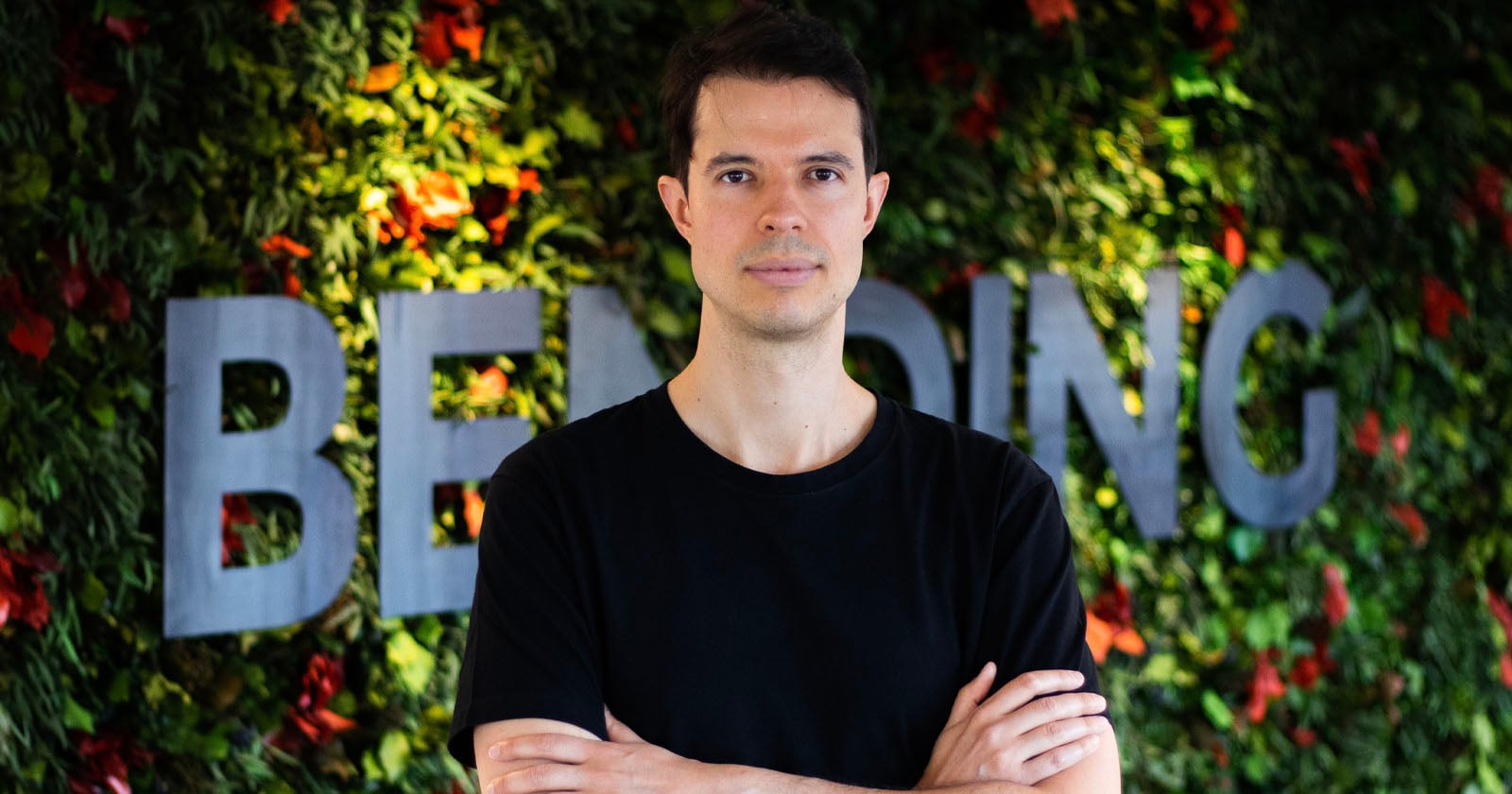
Milan-based app studio Bending Spoons has filed for an initial public offering (IPO) in the United States with a potential valuation of $20 billion.
[Read More]
KUALA TERENGGANU, June 2 — Bumiputera ownership should not be confined to small-scale businesses but must progress towards controlling larger segments of the value chain, says Deputy Prime Minister Datuk Seri Dr Ahmad Zahid Hamidi.Ahmad Zahid, who is also Rural and Regional Development Minister, said Bumiputera entrepreneurs should no longer be viewed merely as small vendors, ancillary suppliers or players at the end of the industrial chain, but instead be elevat
KUALA TERENGGANU, June 2 — Bumiputera ownership should not be confined to small-scale businesses but must progress towards controlling larger segments of the value chain, says Deputy Prime Minister Datuk Seri Dr Ahmad Zahid Hamidi.
Ahmad Zahid, who is also Rural and Regional Development Minister, said Bumiputera entrepreneurs should no longer be viewed merely as small vendors, ancillary suppliers or players at the end of the industrial chain, but instead be elevated to become principal manufacturers, technology owners and market leaders.
“In the halal industry, for instance, Malaysia’s strength cannot stop at certification alone. Halal must become a value chain that we control, from raw materials, processing, packaging and logistics to marketing and international markets.
“That is why the proposal to establish a consortium of large-scale Bumiputera anchor companies to produce critical raw materials such as halal gelatine, enzymes and active pharmaceutical ingredients should be regarded as a strategic move. We must reduce dependence on imports and build Bumiputera capabilities in high-value halal sectors,” he said when delivering the keynote address at the 2026 Bumiputera Entrepreneurs Economic Convention (KEUB) at the Terengganu Equestrian Resort here today.
At the same time, he said many Bumiputera entrepreneurs in the food and franchise sectors possessed quality products but continued to face challenges in terms of costs, operational scale, standards and market access.
“Therefore, approaches such as group purchasing, centralised commercial kitchens and franchise incubator models can serve as pathways to consolidate purchasing power, standardise quality and elevate Bumiputera brands to a higher level,” he said.
Ahmad Zahid also urged more Bumiputera entrepreneurs to venture into future-oriented sectors such as aero-tech, drones, automation and high-technology industries.
“Bumiputera youths cannot remain merely consumers of these technologies. They must become technicians, designers, component suppliers, service providers, and, ultimately, owners within the industrial value chain.
“This is the true meaning of economic empowerment. Bumiputera entrepreneurs must be moved out of limited and restricted spaces into more strategic positions within the nation’s value chain,” he said.
Meanwhile, Ahmad Zahid said the measurement of Bumiputera economic success must be redefined, no longer focusing solely on participation but placing greater emphasis on control and ownership in high-value economic sectors.
“For too long, we have measured success through participation. How many Bumiputeras are in business, how many entrepreneurs use digital platforms, and how many youths are involved in the gig economy. All these are important, but they are not sufficient because in today’s economy, particularly in the digital platform space, participation does not necessarily lead to ownership.
“That is why the true value of the digital economy lies not merely in transactions. Its real value is in platform ownership, data control and equity creation. In that spirit, I would like to see a bolder effort to develop large-scale, competitive Bumiputera digital platforms capable of becoming Malaysian brands,” he said.
In addition, Ahmad Zahid said Bumiputeras must move beyond being technology users and become value creators through technology to remain relevant and competitive in the new economy driven by data, automation and artificial intelligence (AI).
Accordingly, he said the necessary shift was to build Bumiputera strength in the technology sector so that they would not merely use applications but become application developers and owners of technology solutions.
Ahmad Zahid also called for the entire Bumiputera economic ecosystem to be mobilised in a more integrated manner, uniting policy, capital, technology, talent, markets and courage into a national movement capable of delivering meaningful impact.
“I believe that when Bumiputeras own platforms, master technology and lead value chains, we will not only build a stronger economy but also a community that is more confident about its future,” he said. — Bernama
Change in viewing habits offered by match times at 2026 tournament could mean using cheaper off-peak powerWatching late-night or early hours football could provide UK households with a practical opportunity to cut their energy bills, as even just doing the washing when cheaper electricity rates apply can net a decent saving.At a time when energy costs are back at worrying highs, research by E.ON Next shows the potential to save money on a time-of-use tariff – in this case, its Next Smart Saver d
Change in viewing habits offered by match times at 2026 tournament could mean using cheaper off-peak power
Watching late-night or early hours football could provide UK households with a practical opportunity to cut their energy bills, as even just doing the washing when cheaper electricity rates apply can net a decent saving.
At a time when energy costs are back at worrying highs, research by E.ON Next shows the potential to save money on a time-of-use tariff – in this case, its Next Smart Saver deal, which has three rates: peak, off-peak and super off-peak.
As Japanese retail analyst BCN+R described earlier this year, DJI had a massive market share in the video camera market in 2025. The Chinese tech company's dominance has only strengthened so far in 2026.
[Read More]
As Japanese retail analyst BCN+R described earlier this year, DJI had a massive market share in the video camera market in 2025. The Chinese tech company's dominance has only strengthened so far in 2026.
RIO DE JANEIRO, June 6 — Global airline chiefs open their annual summit in Rio de Janeiro on Saturday facing a sharper test of the industry’s post-pandemic recovery, as the Iran war drives up fuel costs and disrupts airspace while carriers try to cushion the blow with higher fares and tighter capacity.The June 6-8 annual meeting of the International Air Transport Association (IATA) comes as that fuel shock collides with another problem airlines cannot quickly fi
RIO DE JANEIRO, June 6 — Global airline chiefs open their annual summit in Rio de Janeiro on Saturday facing a sharper test of the industry’s post-pandemic recovery, as the Iran war drives up fuel costs and disrupts airspace while carriers try to cushion the blow with higher fares and tighter capacity.
The June 6-8 annual meeting of the International Air Transport Association (IATA) comes as that fuel shock collides with another problem airlines cannot quickly fix: a shortage of new aircraft.
Boeing and Airbus delivery delays have forced many carriers to keep older, less fuel-efficient jets in service for longer, raising maintenance and fuel bills just as oil prices have climbed. IATA, which represents more than 370 airlines accounting for about 85 per cent of global air traffic, had forecast a record US$41 billion in net profit this year for the industry before the war. Industry executives and analysts expect that outlook to be lowered at the meeting.
A Deloitte survey of 21 global airline CEOs published this week found that fuel price volatility and inflation sit at the top of the industry’s risk agenda, pushing carriers to focus more heavily on cost control and financial health.
“Together, they’ve turned what was supposed to be a record year into a fight for margin,” the survey said.
Airlines have two primary costs: fuel and labour. Sudden increases in fuel are hard to absorb because many tickets are sold weeks or months before travel. Longer routes also burn more fuel and make aircraft and crews less efficient.
The challenge is how much of the latest fuel hit can be passed on to travellers before higher fares start to weaken demand.
Fare power
So far, travel demand has held up in several large markets, especially among premium and corporate travelers, giving carriers more room to raise fares.
In the United States, domestic published fares as of May 25 showed robust demand and successful pass-through of higher fuel costs, with one-week-out fares up 35.8 per cent year-on-year and four-week-out fares up 39.4 per cent, according to Raymond James.
“The willingness to pay over the past few years, crisis and no crisis, from the premium side has been really strong, and we see that strength continuing,” Alexandre Lefevre, Air Canada’s vice president of network planning and global sales, told Reuters.
Still, there are limits. Higher fares can help airlines recover part of their fuel bill, but they also risk pushing out travellers with tighter budgets. That risk is greater in regions where currencies are weak, consumer spending is under pressure or airlines lack the pricing power of large network carriers. Some carriers are still planning for growth. Singapore Airlines is in talks for at least 50 large wide-body jets, while Qantas is weighing an order for about 20 Airbus or Boeing wide-body aircraft, Reuters reported this week. — Reuters
RIO DE JANEIRO, Brazil — Rio Mayor Eduardo Cavaliere announced a 225 million real ($45 million) investment package through 2028 that includes public policies, grant programs and initiatives aimed at strengthening the local cultural sector and film and TV industries. Cavaliere made the announcement during Rio2C, the largest creativity gathering in Latin America, in the […]
RIO DE JANEIRO, Brazil — Rio Mayor Eduardo Cavaliere announced a 225 million real ($45 million) investment package through 2028 that includes public policies, grant programs and initiatives aimed at strengthening the local cultural sector and film and TV industries. Cavaliere made the announcement during Rio2C, the largest creativity gathering in Latin America, in the […]
Other western acts have attempted to crack country’s music scene since singer’s breakout success in 2018One week after announcing she was “cancer free”, the British pop star Jessie J did what any recovering patient would do and travelled thousands of miles around the world to perform for an audience of more than a billion people.On 29 May, the singer-songwriter, whose real name is Jessica Cornish, belted out a stage-rattling rendition of Frank Sinatra’s My Way on the stage of Singer, a hugely po
Other western acts have attempted to crack country’s music scene since singer’s breakout success in 2018
One week after announcing she was “cancer free”, the British pop star Jessie J did what any recovering patient would do and travelled thousands of miles around the world to perform for an audience of more than a billion people.
On 29 May, the singer-songwriter, whose real name is Jessica Cornish, belted out a stage-rattling rendition of Frank Sinatra’s My Way on the stage of Singer, a hugely popular Chinese singing competition similar to The Voice. She also performed her new song, California, briefly adapting the lyrics to change California to Changsha, the Chinese city where Singer is hosted.
In the June 5, 1926 issue Editor & Publisher presented their “Third Annual Directory of Press Features.” The Newspaper Art section listed “Cartoons, Comic Strips, Magazine Covers and Sketches” available to, well, editors and publishers of newspapers and other publications. Note: most of the cartoons listed in the other sections are listed here under “Cartoons.” […]
In the June 5, 1926 issue Editor & Publisher presented their “Third Annual Directory of Press Features.” The Newspaper Art section listed “Cartoons, Comic Strips, Magazine Covers and Sketches” available to, well, editors and publishers of newspapers and other publications. Note: most of the cartoons listed in the other sections are listed here under “Cartoons.” […]

 Login
Login