 Login
LoginSea Front Service (No date)
28 May 2026 at 08:06


The US consulate in Hong Kong displayed commemorative candles in its windows on the 37th anniversary of the Tiananmen crackdown on Thursday, while other diplomatic missions paid tribute with social media posts.
The annual move is often blasted by local and Chinese authorities, and has been cited by Beijing as “evidence” of foreign interference in a 6,300-word “fact sheet.”
Hundreds, perhaps thousands, died when the People’s Liberation Army cracked down on protesters around Beijing’s Tiananmen Square in 1989.
Hong Kong used to be one of the few places on Chinese soil where annual vigils were held to commemorate the people who died in the 1989 crackdown.
But police banned the gathering at Victoria Park for the first time in 2020, citing Covid-19 restrictions, and imposed the same ban the following year.
No official commemoration has been held since the vigil organiser, the Hong Kong Alliance in Support of Patriotic Democratic Movements of China, disbanded in September 2021. Its leaders were arrested and are currently on trial.
Currently occupying Victoria Park – historically the site of Hong Kong’s vigils – is a five-day patriotic carnival organised by pro-Beijing groups.
Earlier on Thursday, Britain’s embassy in China shared a social media post featuring an animation with scenes from the bloody crackdown. It was shared without commentary.
The British consulate in Hong Kong posted a reel of a mobile phone held aloft with its torch on, apparently referencing the candlelit vigils.
Washington’s mission in Beijing shared a quote from US Secretary of State Marco Rubio stating: “Those who sacrificed to uphold their unalienable rights of free expression and peaceful assembly will be vindicated someday.”
In response, China’s Foreign Ministry spokesperson Mao Ning said Beijing had “long since reached a clear conclusion regarding that political turmoil that occurred in the late 1980s.”
The Canadian consulate in Hong Kong shared a Facebook post, which read: “Today, Canadians honour the memory of all who lost their lives, were injured or went missing during the Tiananmen Square crackdown on June 4, 1989. Canada stands with the survivors and the families and loved ones who continue to demand accountability.”
Meanwhile, the Australian consulate in Hong Kong shared on Facebook a photo of candles and a statement reading: “Today, we stand with communities worldwide in remembering those who lost their lives at Tiananmen Square on 4 June 1989. Australia remains steadfast in its commitment to upholding human rights, including freedom of association, of expression, and of political participation.”
In June 2019, then-leader Carrie Lam said that the city’s annual vigils were “proof that Hong Kong is a free place.”
A Hong Kong court is now hearing a landmark trial of the Alliance and two vigil leaders, Chow Hang-tung and Lee Cheuk-yan. They are accused of “inciting subversion” under the national security law, an offence that carries a maximum penalty of 10 years behind bars.
Another vigil leader – Albert Ho – pleaded guilty when the trial opened in January.


Paul Kearley posted a photo:
Photograph by H.C. Casserley. A digitally restored image from a poor quality original negative in my collection.
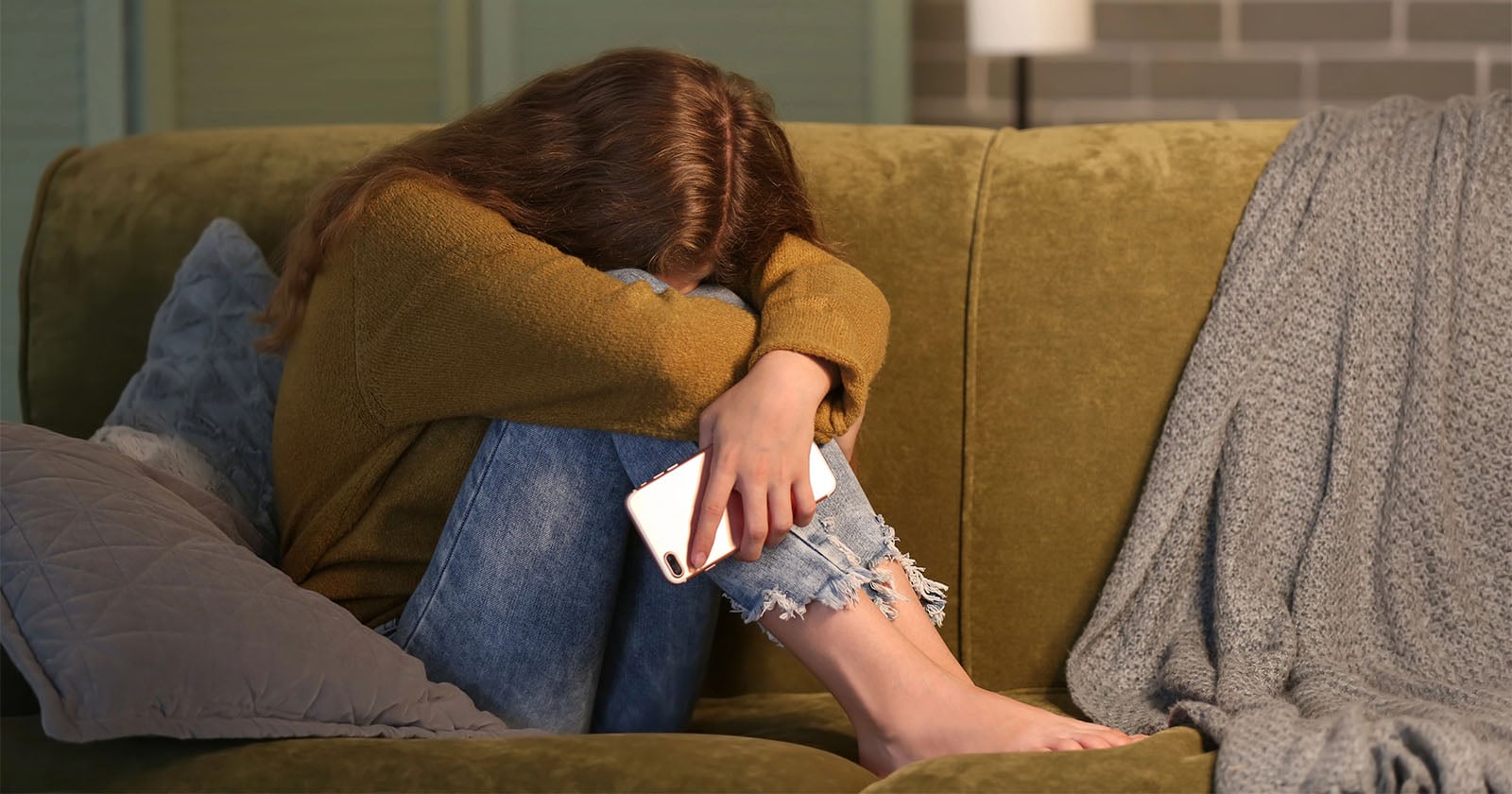
The United Kingdom wants to punish and potentially even jail tech company CEOs who refuse to develop and implement software solutions on smartphones and tablets to detect and block nude images of children.


Paul Kearley posted a photo:
Photograph by Ivan Finbow. The date the photo was taken is unknown. A digitally restored image from an original colour negative in my collection.

CamShaw74 posted a photo:
Event: Festival of 1000 Classic Cars
Location: Cholmondeley Castle, Cheshire, England
Camera: Canon AE-1 Program
Lens(s): Canon FD 35-70mm f/3.5-f/4.5
Film: Agfa Vista 200 - Expired 2017
Shot ISO: 125
Light Meter: Camera
Exposure: 1/125 & 'A' on lens
Lighting: Sunny
Mounting: Hand-held
Firing: Shutter button
Developer: Bellini C-41 Kit
Scanner: Epson V800
Post: Adobe Lightroom & Photoshop (dust removal)

By Matthew Walsh and Ludovic Ehret
Pentagon chief Pete Hegseth struck a measured tone towards China at a major defence forum on Saturday, noting “rightful alarm” over Beijing’s military build-up but saying the United States sought a “stable equilibrium” in Asia.
Hegseth’s headline speech at Singapore’s Shangri-La Dialogue, which brings together top defence officials and experts from around 45 countries, contrasted with his strongly confrontational remarks on China at last year’s gathering.
Unlike Beijing, which has sent a panel of military experts and scholars instead of defence minister Dong Jun for the second year running, Hegseth is leading a bumper US delegation to the event that provides chances for both open debate and behind-closed-doors diplomacy.
“When we look across the region today, there is rightful alarm regarding China’s historic military build-up and the expansion of its military activities in the region and beyond,” Hegseth said.
Washington does not seek “needless confrontation in the region”, but rather “a genuinely stable equilibrium (in Asia) that works for Americans as well as our allies”, he said.
That means “a favourable but durable balance of power in which no state, including China, can impose its hegemony and hold the security or prosperity of our nation and our allies in question”, he added.
He said the United States sought “respectful” and “good-faith” engagement with Beijing, adding: “I wish my counterpart was here at this conference, but I look forward to other options when we can cross paths.”
Trump visited China this month, talking up “fantastic” trade deals but giving few details and later suggesting Washington could use its arms sales to self-ruled Taiwan as a bargaining chip with Beijing.
There had been “no change” in Washington’s stance towards Taiwan, but “any decision about future Taiwan arms sales… will rest with” US President Donald Trump, Hegseth said.
The remarks contrasted sharply with last year’s event, when Hegseth painted China as a potentially “imminent” threat to security and outlined a swaggering vision of muscular American deterrence.
That day, he also took potshots at Beijing’s absent minister, saying: “We are here this morning, and somebody else isn’t.”
Chinese delegate Da Wei, director of the Center for International Security and Strategy at Beijing’s Tsinghua University, said this year’s address was “much more moderate”.
However, he found Hegseth’s depiction of China “ironic”, adding: “Everyone in the room must have been thinking: who is really hegemonic?
“Given what the US is doing in Iran and has done in Venezuela, I think it’s clear to everyone,” Da said.
US delegate Tammy Duckworth, a Democratic senator and strong Trump critic, said she was “somewhat disturbed” by Hegseth’s remarks, viewing them as overly conciliatory towards China.
“I worry that this administration is being distracted into wars that they’ve started in other parts of the world at the expense of our commitment here in the Indo-Pacific,” she told reporters.
Instead of Dong, China has sent experts and scholars from its army’s academic institutions, led by Major General Meng Xiangqing of the National Defense University.
Analysts have said Dong’s no-show reflects Beijing’s confidence as an established power with little inclination to answer publicly for its assertive moves in the region.
But some argue that China is also running the risk of having no senior policymaker present if two major security issues come up: reopening the Strait of Hormuz, and Beijing’s claim to Taiwan.
Hegseth again urged US allies to spend more on their own defence, singling out South Korea, Japan, Australia and the Philippines for praise while threatening consequences for nations that “free-ride on the generosity of the American taxpayer”.
“Those days are over. Allies who refuse to step up and carry their own weight for our collective defense will face a clear shift in how we do business.”
Hegseth’s remarks came as a peace deal between the United States and Iran to end their war remained elusive.
A White House official told AFP on Friday that Trump, who is weighing a final decision on a potential accord, would only commit if Iran met all his conditions.
But Iran has said “no final agreement” is in place, and its state media has rebutted parts of Trump’s characterisation of the deal.
Hegseth said Washington was “more than capable” of restarting the war if it wanted.
The head of the Pentagon is also due to meet his British and Australian counterparts as part of the AUKUS security alliance.
Australian media outlets have reported, citing unnamed sources, that the AUKUS nations are expected to announce a major project, perhaps involving uncrewed underwater vehicles.

