Researchers have found that Earth’s underlying crust in the Turkana Rift region has been significantly thinned, presaging Africa’s eventual breakup—and with that finding, the researchers offer a new perspective on Turkana’s fossil record of human evolution.
Researchers have found that Earth’s underlying crust in the Turkana Rift region has been significantly thinned, presaging Africa’s eventual breakup—and with that finding, the researchers offer a new perspective on Turkana’s fossil record of human evolution.
It would make more sense if only a few related cultures exhibited it, but the trait is everywhere. No matter where you are in the world, the humans living there are about 90 percent right-handed while the remaining 10 percent are predominantly left-handed. This curious facet isn’t seen in our primate relatives, either.
Evolutionary biologists and neuroscientists have spent decades trying to understand why the vast majority of Homo sapiens prefer using their right limb, but have since come up…
It would make more sense if only a few related cultures exhibited it, but the trait is everywhere. No matter where you are in the world, the humans living there are about 90 percent right-handed while the remaining 10 percent are predominantly left-handed. This curious facet isn’t seen in our primate relatives, either.
Evolutionary biologists and neuroscientists have spent decades trying to understand why the vast majority of Homo sapiens prefer using their right limb, but have since come up…well, empty handed. According to researchers at the University of Oxford in the U.K., the answer may finally be within our grasp. After comparing behavioral, neurological, and social characteristics from 41 species of monkeys and apes with humans, they say the answer isn’t found in our hands at all. It’s in our legs.
Their findings are detailed in a study recently published in the journal PLOS Biology. Using a statistical modeling framework focused on interspecies evolutionary relationships, researchers first considered some of the most prominent theories on handedness. These included aspects like diet, habitat, body mass, social structures, tool usage, and locomotion. In every case, we humans remained outliers in patterns that otherwise might explain the attribute in other primates.
They then introduced two hypothetical influences into their comparisons: brain size and the length ratios between legs and arms. That arm-leg ratio may seem arbitrary, but it’s considered a standard reference point for bipedal movement. Once these traits were included, humanity’s handedness exception disappeared entirely. Basically, big brains and long legs correlate directly with dominant hands.
“This is the first study to test several of the major hypotheses for human handedness in a single framework. Our results suggest it is probably tied to some of the key features that make us human, especially walking upright and the evolution of larger brains,” study co-author and University of Oxford evolutionary anthropologist Thomas Püsche said in a statement. “By looking across many primate species, we can begin to understand which aspects of handedness are ancient and shared, and which are uniquely human.”
The new approach meant that Püsche’s team didn’t have to stop there. With the same modeling, researchers estimated handedness preferences across extinct human ancestors. The results align with a slow evolutionary shift towards the right limb. Early hominin species like Ardipithecus and Australopithecus likely only had slight leanings towards right-hand dominance comparable to present-day great apes. However, the arrival of the Homo genus saw increasing right-handedness through Homo ergaster, Homo erectus and Neanderthals. The culmination can now be seen in Homo sapiens.
The study’s authors did note an interesting exception to the rule in Homo floresiensis, the famous “hobbit” ancestors native to Indonesia. At the same time, their physiology likely explains the outlier. H. floresiensis featured a small body and brain that specialized in upright climbing and walking, not full bipedalism.
With these conclusions, researchers now believe two phases took place for humanity’s transition to overwhelming right-handedness. Ancient ape ancestors first started walking upright, which then allowed them to use their upper limbs more frequently for other tasks. As brains continued to develop and grow, rightward focus solidified in today’s H. sapiens.
“Our findings identify bipedalism and neuroanatomical expansion as likely key drivers of uniquely human lateralization, while also revealing broader ecological patterns shaping handedness across primates,” the study’s authors wrote.
From here, researchers hope to study how human cultures further entrenched right-handed dominance, why left-handed alternatives still exist at all, and if similar limb trends are visible in other animals.
“This work provides a framework for disentangling human-specific adaptations from general primate trends in the evolution of behavioral asymmetries,” the team added.
When it comes to reproduction, animals will pull out all the stops to attract a mate. Sending out noisy mating calls, showing off colorful wings, inflating a throat pouch, and shaking a literal tailfeather all ensure that the next generation of a species happens. Some insects will go as far as making themselves look like an entirely different living thing—leaves.
Usually used as a means of camouflage, male katydids appear to use their leafy disguise to amplify mating calls and make themselve
When it comes to reproduction, animals will pull out all the stops to attract a mate. Sending out noisy mating calls, showing off colorful wings, inflating a throat pouch, and shaking a literal tailfeather all ensure that the next generation of a species happens. Some insects will go as far as making themselves look like an entirely different living thing—leaves.
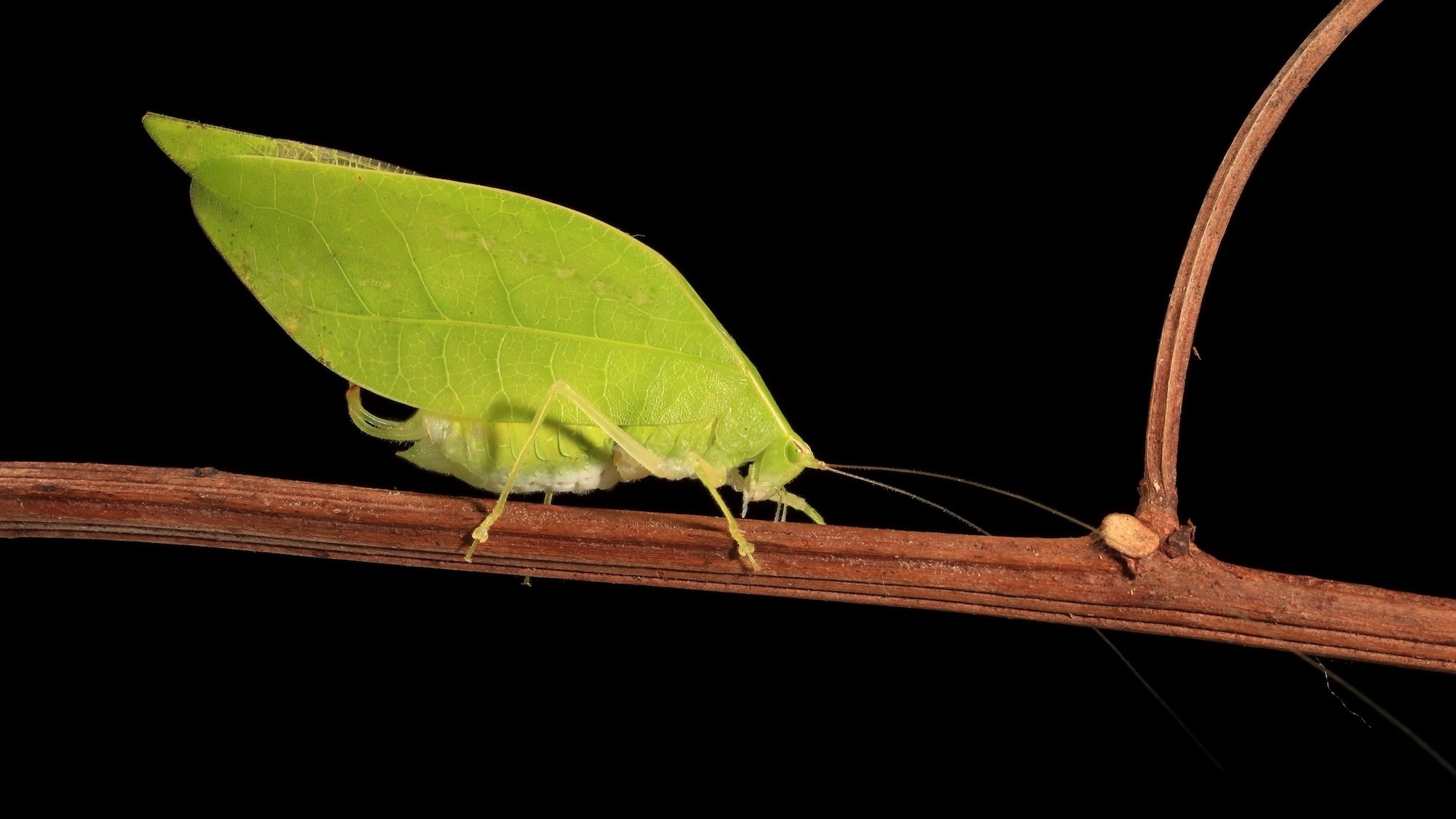
Usually used as a means of camouflage, male katydids appear to use their leafy disguise to amplify mating calls and make themselves more attractive to the opposite sex. The findings are detailed in a study published today in the journal Proceedings of the Royal Society B, and offer one of the first demonstrations of how leaf mimicry enhances a male katydids’ sexual signals.
To shield themselves from predators, various species of katydids have evolved wings with structures that look like leaves. Panama’s leaf-masquerading katydids (Arota festae) will even change from green to hot pink in order to better mimic leaves. What’s been less clear to entomologists is whether or not these leaf-mimicking structures play a role in katydid mating.
This new study looked at a species called Viadana brunneri from Barro Colorado Island, Panama. To attract mates, katydids create songs by rubbing together specialized structures on their wings. In many tropical species like V. brunneri, the portion that mimics leaves makes up the majority of their wing’s surface area.
Most of the wing structure is devoted to helping male katydids look more like a leaf. Image: Christian Ziegler.
Previously, scientists believed physical adaptations for survival and for attracting mates can function in conflict with one another, particularly if they are physically connected. A male peacock’s flashy tail feathers may help it attract a female, but it also makes it easier for predators to find them. Male katydids, on the other hand, are able to use the acoustic properties of the structures that they use for defense to their reproductive advantage. They are a rare example of how an adaptation for self-defence and reproduction can work together without necessarily putting the animal in jeopardy.
The team performed a series of bioacoustic, behavioral, and biophysical experiments, showing that these leafy structures on their wings make them more attractive to females, while also helping conceal them. After removing the leafy portions of a male V. brunneri’s wings, the pitch became higher and the volume of their songs also changed. The team then played these calls for females who preferred the lower pitch calls from males with their leafy wing sections still intact.
While male katydids do all the singing, females indicate their interest by replying to the song with clicks. The insects produce short, sporadic and infrequent calls, possibly for only two seconds in a single night. They perform these calls in ultrasounds, which our ears can’t pick up. They also found that the leafy portions of the male katydid wing will vibrate to amplify their songs, making them more detectable to females.
“Our study provides a rare example of natural and sexual selection acting in harmony, producing traits that simultaneously improve survival and mating success,” Dr. Benito Wainwright, a study co-author and evolutionary biologist at the University of St Andrews, said in a statement. “We are now extremely excited to start exploring how such an interesting interaction evolved in katydids.”
Sunburn and mosquito bites go together in the summer like a hot dog and ketchup. To keep from becoming a mosquito buffet, most of us turn to bug sprays with DEET. An acronym built from its scientific identification (diethyltoluamide), DEET was developed for the United States Army in 1946 and entered civilian use in 1957. It is generally considered safe when used as directed.
However, mosquitoes can learn to associate the repellant with food. They may even become attracted to it. The finding
Sunburn and mosquito bites go together in the summer like a hot dog and ketchup. To keep from becoming a mosquito buffet, most of us turn to bug sprays with DEET. An acronym built from its scientific identification (diethyltoluamide), DEET was developed for the United States Army in 1946 and entered civilian use in 1957. It is generally considered safe when used as directed.
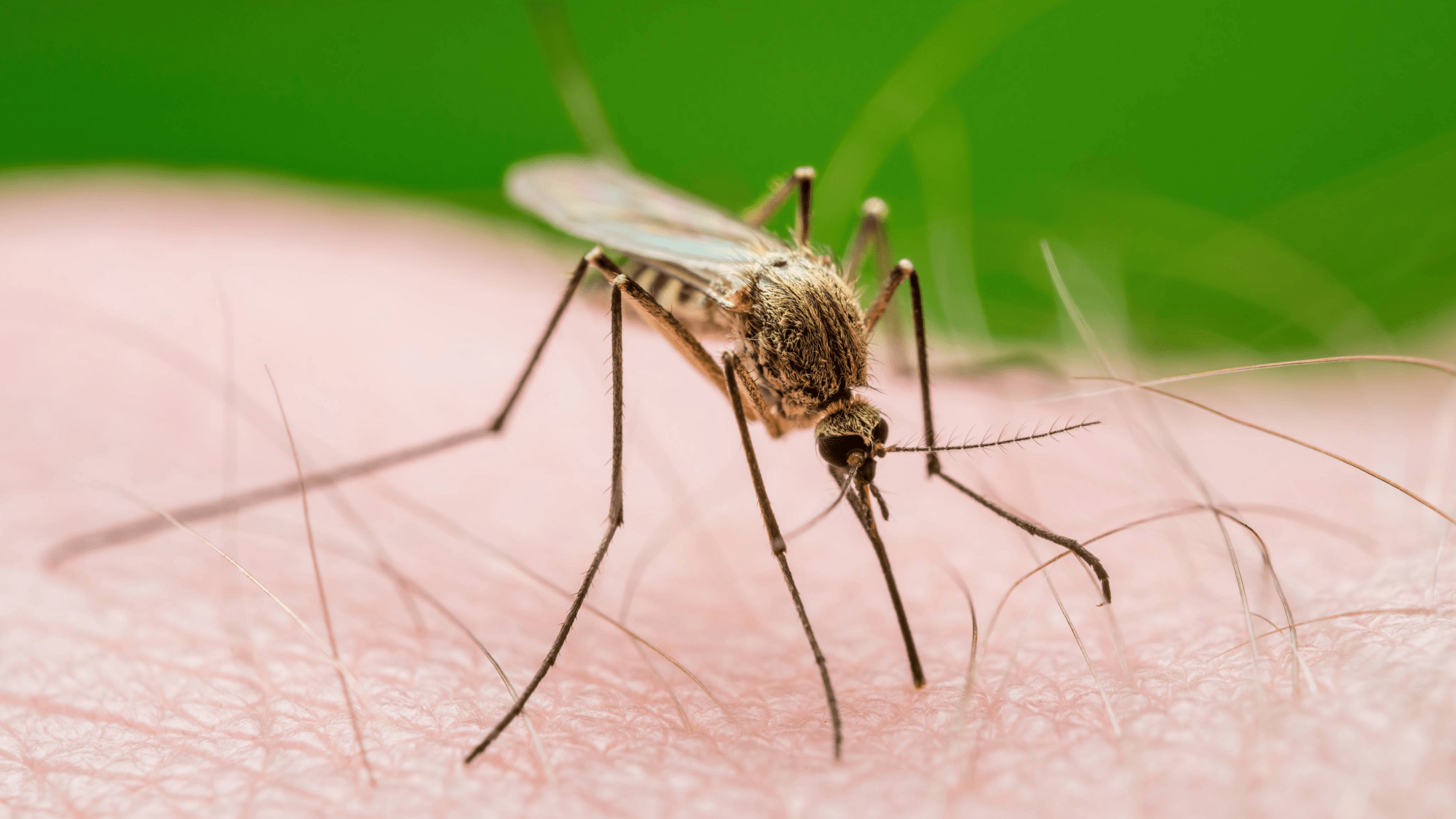
However, mosquitoes can learn to associate the repellant with food. They may even become attracted to it. The findings are detailed in a study published today in the Journal of Experimental Biology.
“If someone applies DEET and the concentration fades over time, but a mosquito still manages to feed, the insect may begin associating that smell with a reward,” Clément Vinauger, a study co-author and biochemist at Virginia Tech, said in a statement. “That’s a possibility we should take seriously when we think about how repellents are used in the real world.”
Ace processors
Like it or not, Earth’s over 3,500 known mosquito species are pretty smart and an evolutionary wonder. They use sensory information to find hosts and can adapt to changing environments.
“Mosquitoes are remarkable at processing information about their environment,” Vinauger said. “What we are trying to understand is not only how they detect us, but how their brains interpret those cues and turn them into behavior.”
A DEET-covered dinner bell?
In this new study, the team focused on the yellow fever mosquito (Aedes aegypti). This species spreads several diseases to tens of millions of people each year, including dengue fever, Zika, yellow fever, and chikungunya.
The mosquitoes were restrained behind a piece of fabric mesh. They then offered the mosquitoes a bag of warm blood (yum) that was just out of the insects’ reach to see how enthusiastically the insects stabbed at it with their proboscises. As expected, the mosquitoes were interested in the blood, particularly when the team rewarded them by lowering the bag within reach. Things changed a bit once DEET entered the experiment. When the team offered the insects blood when surrounded by the scent of DEET, they initially stayed away from the potential feast.
A female yellow fever mosquito (Aedes aegypti), feeding on a bag of warm blood. Image: Romina Barrozo.
To see if they could be trained to associate that smell with the dinner bell, the team fed the mosquitoes warm blood for 20 seconds, squirting the scent of DEET into the enclosure in the final 10 seconds of dining. They repeated the procedure three more times before noting how the mosquitoes responded to only the scent of DEET. In this trial, over 60 percent of mosquitoes tried to bite when they smelled DEET.
To examine further, the mosquitoes were given a choice between two human hands. The hand belonged to study co-author Ayelén Nally of the University of Buenos Aires. One of Nally’s hands was coated with DEET at normal concentrations and the other was bare. The untrained mosquitoes avoided the DEET-treated hand, while the trained mosquitoes were drawn to it.
Interestingly, the mosquitoes could form that same association when sugar, instead of blood, was used as the reward.
According to the team, they are seeing how the mosquito’s brain can rewrite its response based on their experiences. What they have learned matters just as much as what a chemical like DEET does.
“If mosquitoes are repeatedly exposed to DEET, it becomes less effective as a repellent,” study co-author Claudio Lazzari from University of Tours in France added.
Keep the bug spray
Importantly, this does not mean you should stop using DEET completely. It is still one of the most effective ways to keep the dangerous insects away, particularly where mosquito-borne disease is common.
“If you’re in tropical regions where disease risk is real, you should use it,” Vinauger said. “Instead of applying a lot at once, you may want to reapply regularly so it’s always active and providing continuous protection.”
Treated clothing may also be a challenge since DEET concentrations in fabric decline over time. Additional study to understand their behavior is crucial for public health as mosquito-borne illnesses increase due to climate change.
“We need to understand how mosquitoes keep outsmarting our control strategies,” Vinauger concluded. “And that takes understanding how they work—at the molecular level, the neural level, the behavioral level.”
For decades, many paleoarchaeologists believed Neanderthals went extinct largely because they just weren’t intelligent enough to compete with their Homo sapien relatives. However, mounting historical evidence suggests this was far from the case. The latest discovery to help the Neanderthal’s reputation ion? The ancient hominins knew when and how to safely snack on shellfish potentially thousands of years before their human descendants.
The findings published today in the Proceedings of the Na
For decades, many paleoarchaeologists believed Neanderthals went extinct largely because they just weren’t intelligent enough to compete with their Homo sapien relatives. However, mounting historical evidence suggests this was far from the case. The latest discovery to help the Neanderthal’s reputation ion? The ancient hominins knew when and how to safely snack on shellfish potentially thousands of years before their human descendants.
The findings published today in the Proceedings of the National Academy of Sciences focus on Neanderthals who lived at Los Aviones Cave in present-day Cartagena, Spain. Researchers discovered the remains of 115,000-year-old mollusks including gastropods and limpets that were clearly harvested as food. This contradicts past theories about Neanderthals, which suggested they had difficulty adapting to coastal environments and utilizing marine resources. What’s more, the Neanderthals here didn’t eat shellfish in large quantities all the time. Instead, they knew to make the most of them between November and April during the colder seasons.
Los Aviones Cave in Spain is a notable Neanderthal archaeological site. Credit: ICTA-UAB
“They consumed marine resources throughout the year, but with a very clear preference for winter and autumn months,” explained Asier García-Escárzaga, a study co-author and archaeologist at Spain’s Universitat Autònoma de Barcelona Institute of Environmental Science and Technology.
García-Escárzaga says this seasonal pattern often followed by more modern human populations in Europe wasn’t a coincidence. The winter reproduction cycle of many mollusks also results in higher amounts of meat as well as improved flavor and texture. Summer months increase health risks like toxic algae contamination or rapid spoiling.
But how did researchers determine exactly when these shellfish were harvested? It all has to do with the mollusks’ shell carbonate and their oxygen isotopic levels. This level fluctuates depending on seawater temperature and functions like a “prehistoric thermometer,” according to García-Escárzaga.
The findings reveal that Spain’s coastal Neanderthals relied on a diverse diet featuring high-quality oceanic proteins filled with Omega-3 and zinc, both of which aid in reproductive health and brain development. With that in mind, it’s entirely possible that humans’ closest evolutionary ancestors influenced our own love of shellfish.
“What we see at Los Aviones is a fully modern subsistence strategy,” García-Escárzaga and his colleagues wrote in their study.
UPDATED with quotes from L’Oeil d’or winner Pegah Ahangarani and jury president Mstyslav Chernov. Rehearsals for a Revolution, director Pegah Ahangarani’s film about decades of political repression in Iran, won the L’Oeil d’or Prize today, the Cannes Film Festival’s top prize for documentary. Accepting the award in the presence of Cannes Film Festival leader Thierry […]
UPDATED with quotes from L’Oeil d’or winner Pegah Ahangarani and jury president Mstyslav Chernov. Rehearsals for a Revolution, director Pegah Ahangarani’s film about decades of political repression in Iran, won the L’Oeil d’or Prize today, the Cannes Film Festival’s top prize for documentary. Accepting the award in the presence of Cannes Film Festival leader Thierry […]
Something strange is happening in the brackish waters of New York’s Hudson River. It sounds like a sort of low thundering, and while anything is possible in a lively body of water so closely associated with the Big Apple, it’s not the Teenage Mutant Ninja Turtles training with their rat sensei Splinter. Instead, scientists say that the mysterious sound is made by the reproductive antics of an endangered fish called Atlantic sturgeon (Acipenser oxyrinchus).
Writing in a recent Endangered Speci
Something strange is happening in the brackish waters of New York’s Hudson River. It sounds like a sort of low thundering, and while anything is possible in a lively body of water so closely associated with the Big Apple, it’s not the Teenage Mutant Ninja Turtles training with their rat sensei Splinter. Instead, scientists say that the mysterious sound is made by the reproductive antics of an endangered fish called Atlantic sturgeon (Acipenser oxyrinchus).
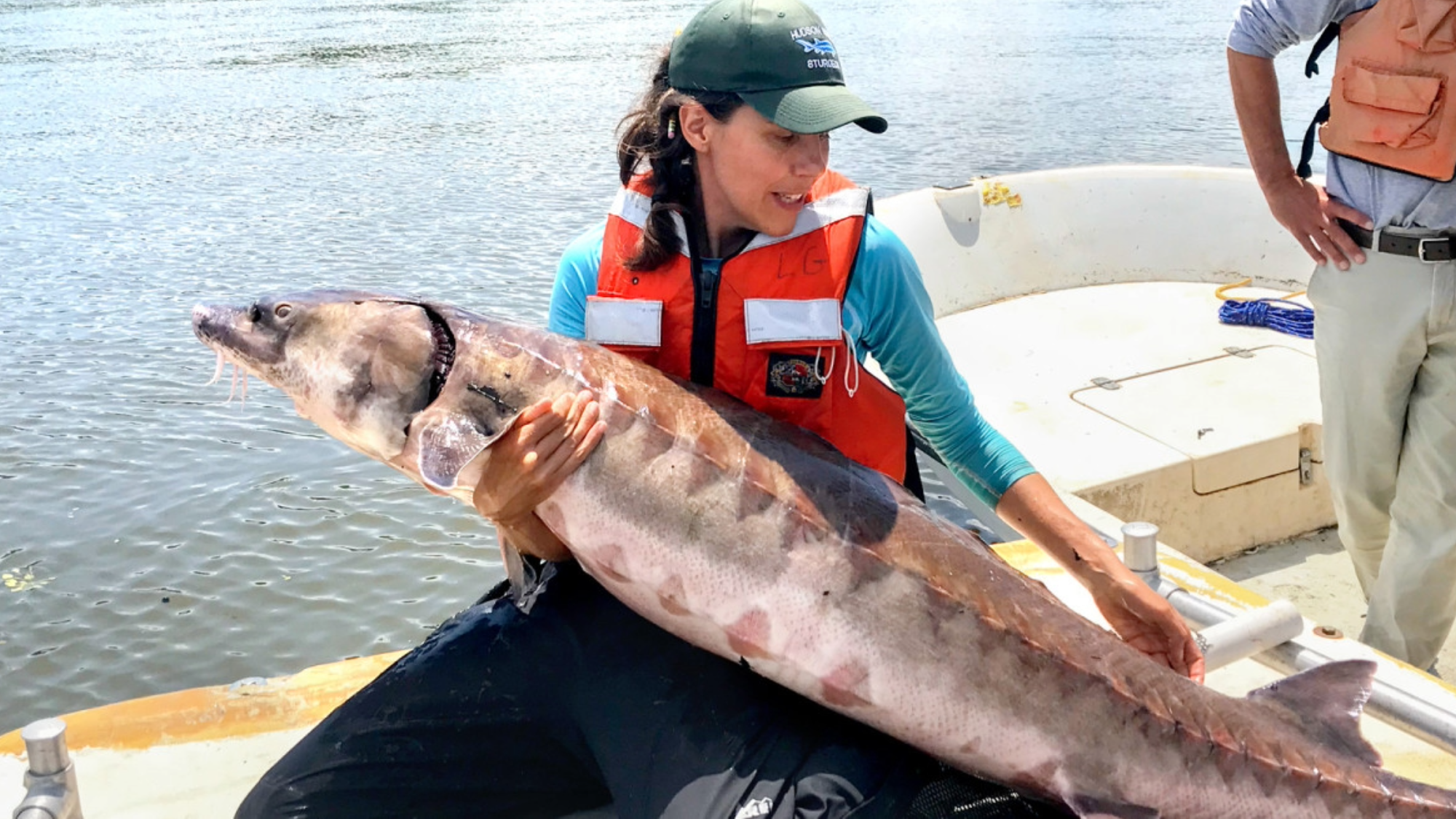
Writing in a recent Endangered Species Research paper, the team is the first to verify the Atlantic sturgeon’s thundering. The noise is probably caused by males thrashing—and their swim bladders’ resonance—as they fertilize eggs, according to researchers.
“It’s almost that you feel it more than you hear it,” Maija Niemistö, a researcher from the New York State Water Resources Institute and co-author of the study, said in a press release. “You can hear these chirps and squirts and bubbles underwater, but this is a different experience entirely. These are ancient fish, and the thunder – it’s almost like you’re brought back in time, because they’ve been making this sound, communicating with each other, for millions of years. It’s awe-inspiring.”
They are also classified as Endangered. In the spring, these giants leave the ocean to swim up the Hudson River to spawn. For sturgeon, this reproductive behavior involves males and females releasing their necessary parts into the water. In other words, the egg doesn’t fertilize inside of the female fish.
The team eavesdropped on the crucial life cycle process with passive acoustic monitoring. They recorded sound within the waters of the Hudson River with underwater microphones for long periods of time. Though this noninvasive strategy is a common approach in marine and terrestrial research, it hasn’t been used as much in rivers and lakes with more freshwater.
Now, the team’s discovery of sturgeon thundering provides the New York State Department of Environmental Conservation (NYSDEC) with an additional way to help monitor and better understand Atlantic sturgeon behavior. As we frequently report, the more researchers know about a species, the more equipped they are to protect it.
And the Atlantic surgeon certainly needs it. In the 19th and 20th century, overfishing greatly decreased their populations. Unfortunately, almost 30 years of protection hasn’t helped the species make a comeback. Part of the problem is that female Atlantic sturgeons can wait up to two decades before their first spawn.
“That’s why they’re so susceptible to overfishing,” added Amanda Higgs, also co-author of the study and a fisheries biologist with NYSDEC Hudson River Fisheries Unit.
Eggs could represent 20 percent of a female’s substantial weight and fisheries were interested in their caviar. “A female was a lucrative catch,” Higgs added, “and so they got wiped out relatively quickly because they don’t have the ability to reproduce and replace themselves quickly.”
While experts estimate that 6,000 Atlantic sturgeon spawned in its waters before the late 1800s, today less than 700 spawn here. Nonetheless, the Hudson River is home to the species’ largest population.
Moving forward, the team can listen for previously unknown spawning grounds, enabling the state to deal out protections for these endangered river giants.
In the wake of winning the top documentary prize at Cannes, director Pegah Ahangarani‘s Rehearsals for a Revolution has been scooped up by Sony Pictures Classics. SPC took rights in North America, Latin America, Asia (sans Japan), New Zealand, Turkey Portugal, and global airlines. The pic about decades of political repression in Iran won the L’Oeil […]
In the wake of winning the top documentary prize at Cannes, director Pegah Ahangarani‘s Rehearsals for a Revolution has been scooped up by Sony Pictures Classics. SPC took rights in North America, Latin America, Asia (sans Japan), New Zealand, Turkey Portugal, and global airlines. The pic about decades of political repression in Iran won the L’Oeil […]
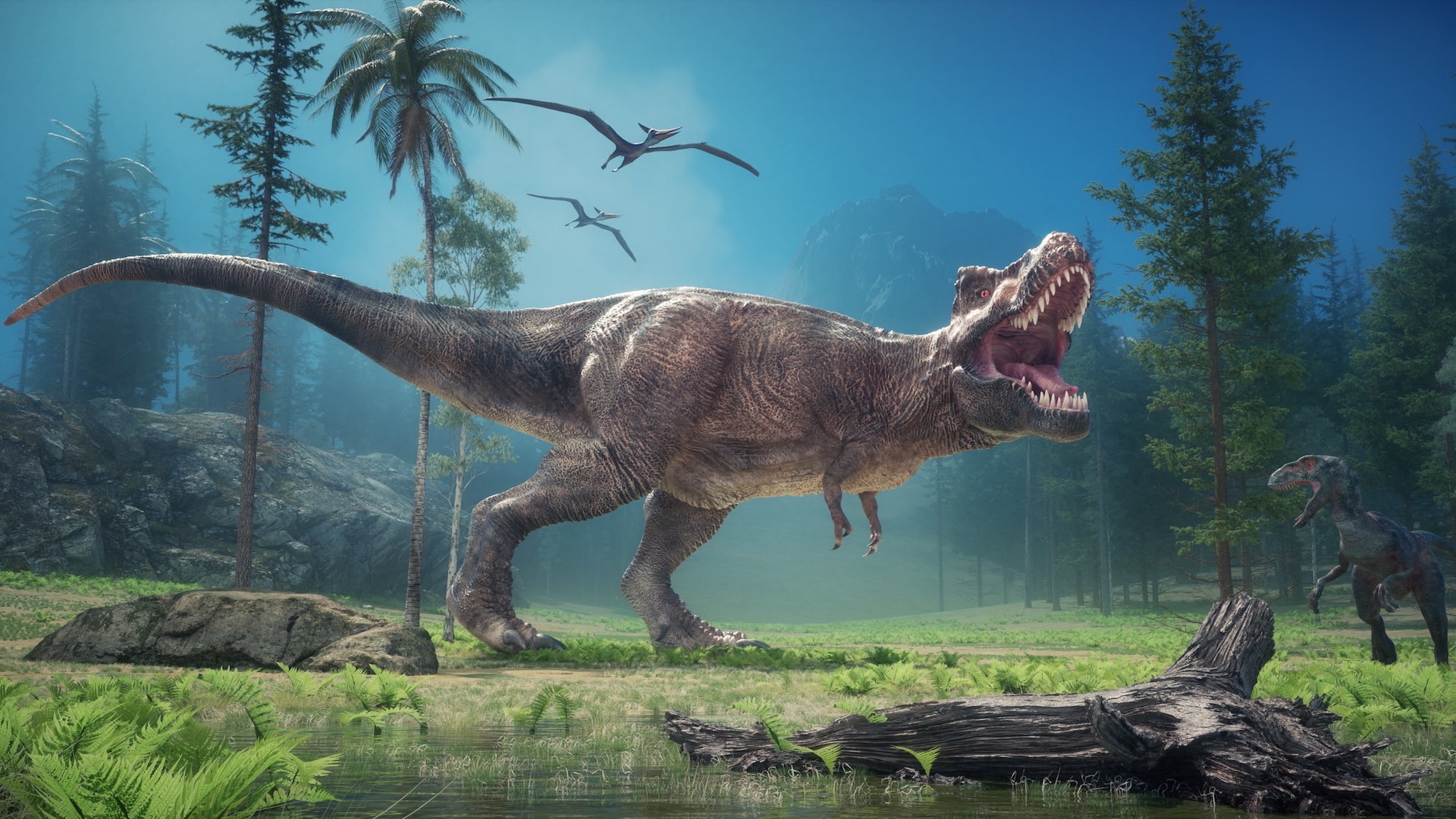
Tyrannosaurus rex is iconic for its ferocity and big teeth, as well as those teeny-tiny arms. The Cretaceous Period apex predator wasn’t the only carnivore with underdeveloped forelimbs, however. At least five groups of two-legged, mostly meat-eating theropod dinosaurs experienced a shortening of the upper arms over the course of their evolutionary journey. But why did they have such comically small claws? One team of researchers believes the answer is simple.
“It’s a case of ‘use it or lose
Tyrannosaurus rex is iconic for its ferocity and big teeth, as well as those teeny-tiny arms. The Cretaceous Period apex predator wasn’t the only carnivore with underdeveloped forelimbs, however. At least five groups of two-legged, mostly meat-eating theropod dinosaurs experienced a shortening of the upper arms over the course of their evolutionary journey. But why did they have such comically small claws? One team of researchers believes the answer is simple.
“It’s a case of ‘use it or lose it,’” University College London paleontologist Charlie Scherer said in a statement.
Scherer and his colleagues recently examined the data for 82 theropod species, including those in T. rex’s tyrannosaurid family. Their study published today in the Proceedings of the Royal Society B Biological Sciences argues a combination of massive skulls and crushing jaws—coupled with increasingly large prey—had many theropods relying increasingly less on their forearms.
“We sought to understand what was driving this change and found a strong relationship between short arms and large, powerfully built heads,” explained Scherer. “The head took over from the arms as the method of attack.”
The team based their conclusions on a new system of assessing dinosaur skull strength based on attributes like overall dimensions, how tightly bones were joined in the head, and bite force. Unsurprisingly, T. rex came in first place for bite force, followed by the Tyrannotitan. Almost as large as a T. rex, the Tyrannotitan lived in present-day Argentina during the Early Cretaceous over 30 million years before its famous descendent. In each example, the reason for short arms likely coincided with hunting larger and larger dinner targets.
“Trying to pull and grab at a 100–foot–long sauropod with your claws is not ideal. Attacking and holding on with the jaws might have been more effective,” added Scherer.
Overall, the team identified a bigger correlation between skull strength and smaller arms than with either skull or body size. This conclusion is further supported by some theropod dinosaurs with strong heads, tiny forelimbs, and a relatively small stature. For example, Majungasaurus roamed present-day Madagascar 70 million years ago while weighing about 1.75 tons—around a fifth the size of T. rex.
Not every dinosaur’s limbs shrank in the same way, either. Abelisaurids like Majungasaurus exhibited smaller arms past their elbows as well as their hands, while tyrannosaurid arms reduced proportionally. In each case, it seems that the theropods initially had far more success latching onto prey with their powerful jaws, then evolution did the rest of the work.
As to which dinosaur had the teeniest forearms, the answer according to Scherer is clear.
“The Carnotaurus had ridiculously tiny arms, smaller than the T. rex,” he said.
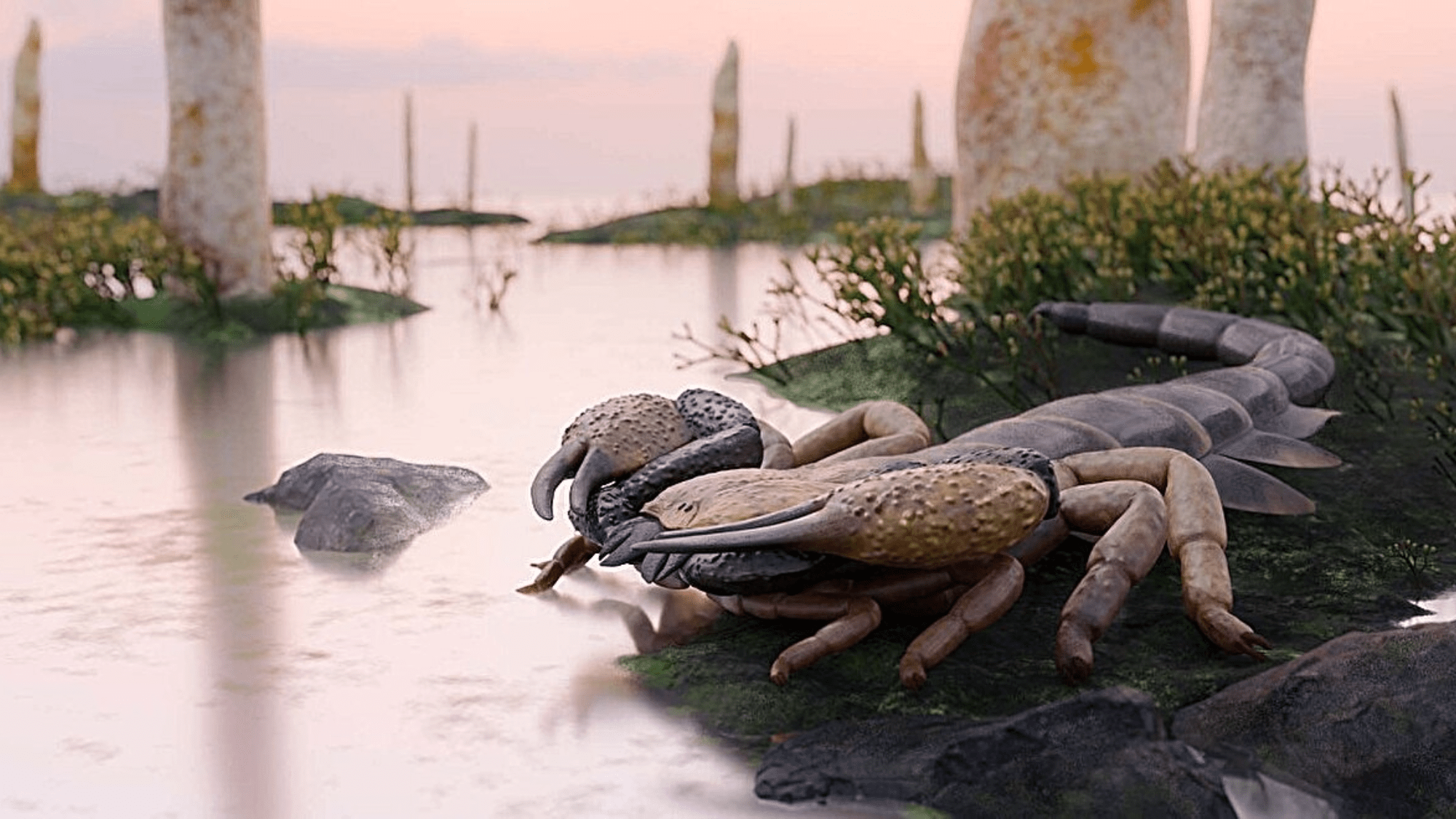
Giant scorpions the size of a baseball bat with pincers the size of a pencil once stalked what is now England and Wales. Praearcturus gigas is believed to be the largest scorpion to ever roam the Earth, and was discovered from fossils that have been tucked away in London’s Natural History Museum for more than 150 years. The findings are detailed in a study published in the journal Palaeontology.
Praearcturus gigas stalked the region’s floodplains about 415 million years ago, during the Early
Giant scorpions the size of a baseball bat with pincers the size of a pencil once stalked what is now England and Wales. Praearcturus gigas is believed to be the largest scorpion to ever roam the Earth, and was discovered from fossils that have been tucked away in London’s Natural History Museum for more than 150 years. The findings are detailed in a study published in the journal Palaeontology.
Praearcturus gigas stalked the region’s floodplains about 415 million years ago, during the Early Devonian. Small plants and fungi had only recently begun to spread, and more complex land ecosystems like forests did not exist yet.
“When we think of giant arthropods, people often picture Carboniferous rainforests with giant millipedes or dragonfly-like insects from later in Earth’s history,” Dr. Richard J. Howard, a study co-author and the Curator of Fossil Arthropods at the Natural History Museum, said in a statement. “But Praearcturus lived at least 50 million years earlier, well before the evolution of trees, when life on land was only just getting started.”
Howard and the team believe that Praearcturus’ enormous size indicates that they had very little competition from other large predators roaming around. Praearcturus might have grown to three-feet-long with six-inch pincers simply because there weren’t any other large animals nearby, so it could dominate its environment in a way that wouldn’t be possible years down the road.
Praearcturus gigas was first scientifically decided in 1871. Scientists originally thought it was some kind of giant crustacean, similar to a woodlouse. The fossils were very fragmented, and lacked key features (such as a tail) that help classify it. To get a better picture, the team compared their fossils with some more well-preserved specimens found in 1972 and 2010.
“Praearcturus has puzzled us palaeontologists for more than a century,” added Dr. Russell Garwood, a study co-author and palaeontologist at The University of Manchester. “By bringing together material from several collections and using cutting edge imaging techniques, we’ve been able to build a clearer picture of the animal than was previously possible, which is really exciting.”
The fossils hint that this giant scorpion may have lived in the water some of the time. Some specimens have flap-like structures on the abdomen that are similar to those found in modern crustaceans like lobsters. These flaps suggest Praearcturus may have been capable of moving between water and land. Their place in the wider arachnid fossil record shows that most scorpions are unusually abundant in rocks dating back to this time period, compared with other arachnid species. This supports the idea that Praearcturus may have lived in freshwater environments, where they are more likely to survive as fossils. Excitingly, it shows that Praearcturus lived at a pivotal moment in our planet’s history, when animals were first experimenting with living life outside the oceans.
Pincer of scorpion (about the size of today’s largest scorpion). Image: Natural History Museum.
“The boundary between land and sea was much less defined at this time,” said Dr. Greg Edgecombe, a study co-author and Natural History Museum researcher. “Praearcturus gives us a fascinating glimpse into how early animals adapted to these changing environments. It may even represent a lineage that returned to the water after earlier ancestors had already begun living on land.”
According to the team, a breakthrough like this shows how important discoveries are still being made from museum collections. It also challenges assumptions about why prehistoric arthropods reached such enormous sizes. Instead of being driven solely by environmental factors like oxygen levels, a lack of competition, and other ecological opportunities may have played a crucial role.
“Confirming that this animal is a scorpion fundamentally changes our understanding of how and when these creatures evolved to such extraordinary sizes,” said Howard.
A remarkable collection of ancient stone tools proves that human creativity can thrive in challenging times. The complexity of the stone tools found amidst the bones of butchered animals in central China demonstrate an elevated level of intelligence and creativity. Early humans forged the tools during an ice age 146,000 years ago, not during the relative ease of a warm period. According to a study published today in the Journal of Human Evolution, this challenges the idea that the early humans
A remarkable collection of ancient stone tools proves that human creativity can thrive in challenging times. The complexity of the stone tools found amidst the bones of butchered animals in central China demonstrate an elevated level of intelligence and creativity. Early humans forged the tools during an ice age 146,000 years ago, not during the relative ease of a warm period. According to a study published today in the Journal of Human Evolution, this challenges the idea that the early humans could not innovate.
“People often imagine creativity as something that flourishes in good times,” Yuchao Zhao, a study co-author and the assistant curator of East Asian archaeology at the Field Museum in Chicago, said in a statement. “Finding out that these stone tools were made during a harsh ice age tells a different story. Hard times can force us to adapt.”
A distant human cousin
The stone tools were found at the Lingjing archaeological site in central China. An early human species called Homo juluensis, a cousin of our own species, occupied the area. While they went extinct about 50,000 years ago, Homo juluensis had a very large brain size and traits seen in both eastern Asian archaic humans and Neanderthals in Europe.
Until recently, archaeologists believed that ancient humans in East Asia during the late Middle Pleistocene (300,000-120,000 years ago) did not make many significant technological advances, compared to the early humans living in Europe and Africa. However, the Lingjing stone tools tell a different story.
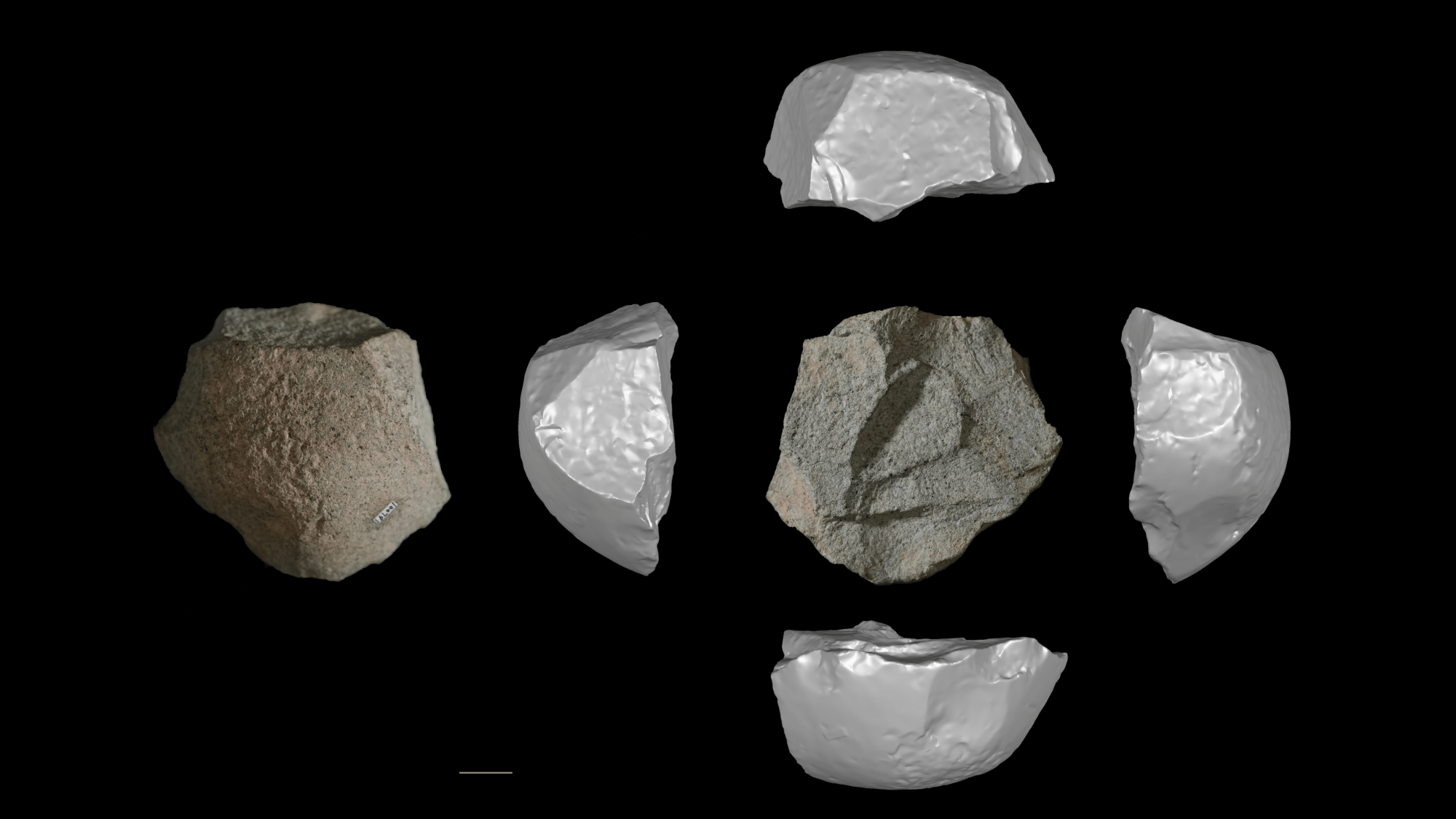
The disc-shaped stone cores at Lingjing were part of a detailed, carefully organized tool-making process. Homo juluensis built them by striking small stones against larger stone cores. Some of the cores were wired evenly on both sides. Other cores were more carefully built. One side was primarily a surface to strike from. The other side was shaped to produce sharp flakes.
According to the team, these asymmetrical cores are especially important. They indicate that prehistoric humans were not just knocking off pieces of a stone at random. Instead, they were managing the core as a three-dimensional object, where surfaces have different roles, while keeping the right angles for producing useful flakes.
“This was not casual flake production, but a technology that required planning, precision, and a deep understanding of stone properties and fracture mechanics,” said Zhao. “The underlying logic of this system—and the cognitive abilities it reflects—shows important similarities to Middle Paleolithic technologies often associated with Neanderthals in Europe and with human ancestors in Africa, suggesting that advanced technological thinking was not limited to western Eurasia.”
The stone artifacts left behind by the Homo juluensis’ living at Lingjing suggest that they were capable of complex thought and creativity. However, this story further complicates a shift in the timeline of how long ago these tools were made.
Aging bones
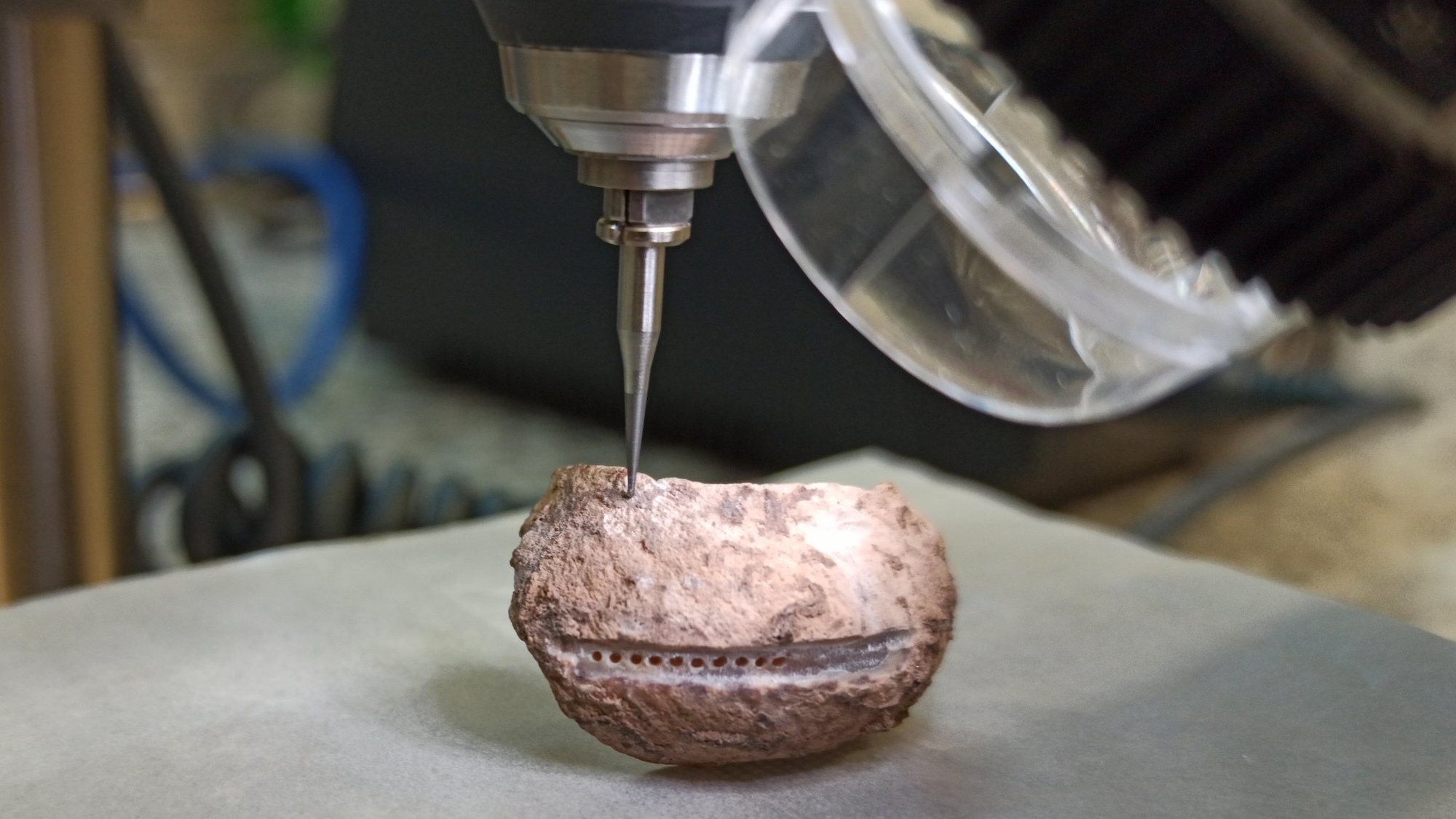
Homo juluensis at Lingjing would butcher animals like deer, with their bones found alongside the stone tools. A rib from a deer-like animal found at Lingjing contained several glittering calcite crystals—an important particle for dating objects. Calcite crystals have trace amounts of uranium, which degrades into another element called thorium over time. Scientists can then tell the age of the crystal by measuring the ratio of uranium to thorium present inside of a calcite crystal.
“The calcite crystals inside the bone acted like a natural clock, allowing us to refine the age of the site,” says Zhao.
Crystals growing inside a bone found at the Lingjing archaeological site; these crystals were used to date the site, and the tools found there, to an ice age 146,000 years ago. Image: Photo by Zhanyang Li.
Based on this new analysis, the team believes that these tools date back about 20,000 years older than scientists once believed. While 20,000 years doesn’t sound like a huge amount of time in the grand scheme of things, it’s an important difference. They were likely made during a harsh and cold ice age instead of a warm period. With this new timeline, these tools were likely adaptations for surviving hard times.
“Altogether, this research reveals a much richer story of innovation, intelligence, and human evolution in East Asia,” says Zhao.

 Login
Login