 Login
LoginCrete '26
3 May 2026 at 19:58



roli_b posted a photo:

paddle steam boat piroscafo Concordia
built 1926
53.77 m x 6.42 m
317 t
Kw 441
500 passenger
Last year I got an email from Tania Sammons, a curator at Ships of the Sea Maritime Museum in Savannah, Georgia who had previously licensed my guide to sailors’ tattoos for a show. Her pitch was irresistible: an exhibition of comics based on model ships from their collection. Four cartoonists would be hired, assigned a vessel, then given six months to produce a short comic for publication in an anthology alongside an accompanying museum display.
BELLWOOD CATNIP.
It’s still amazing to me when tailor-made opportunities like this land at my feet, even though I know there are only so many outspoken boat nuts in the comics world. I leapt at the chance and spent the second half of 2025 weaving together a variety of favorite themes (Le Guin’s Carrier Bag Theory of Fiction! Manguso’s cathedral architect! The Ship of Theseus!) to explore the legacy of the Anne, the vessel that carried the first colonists to Georgia in 1732. The story started in the realm of primary sources and historical nonfiction, but completely transformed in the aftermath of my dad’s death in July. By the time I was synthesizing all my notes in the fall of 2025, it had become a quest to give the extraordinary model maker behind most of the museum’s collection his due.
Drawn to the Sea, the exhibit collecting comics and process work by myself, Avery Hick, Rich King, and Sharon Norwood, finally opens this week! While I can’t attend the party in person, I’m very glad to be able to share my contribution online. The Scale of a Man took far more out of me than I expected, but in hindsight it makes perfect sense. I really hope you like it. (I’ve included some photos from the exhibit as well as my artist statement below. There’s also a brief essay about some the research here.)
Content Warning: this comic deals with suicide and parental mortality. Readers with trypophobia may want to skip pages 14 and 15.
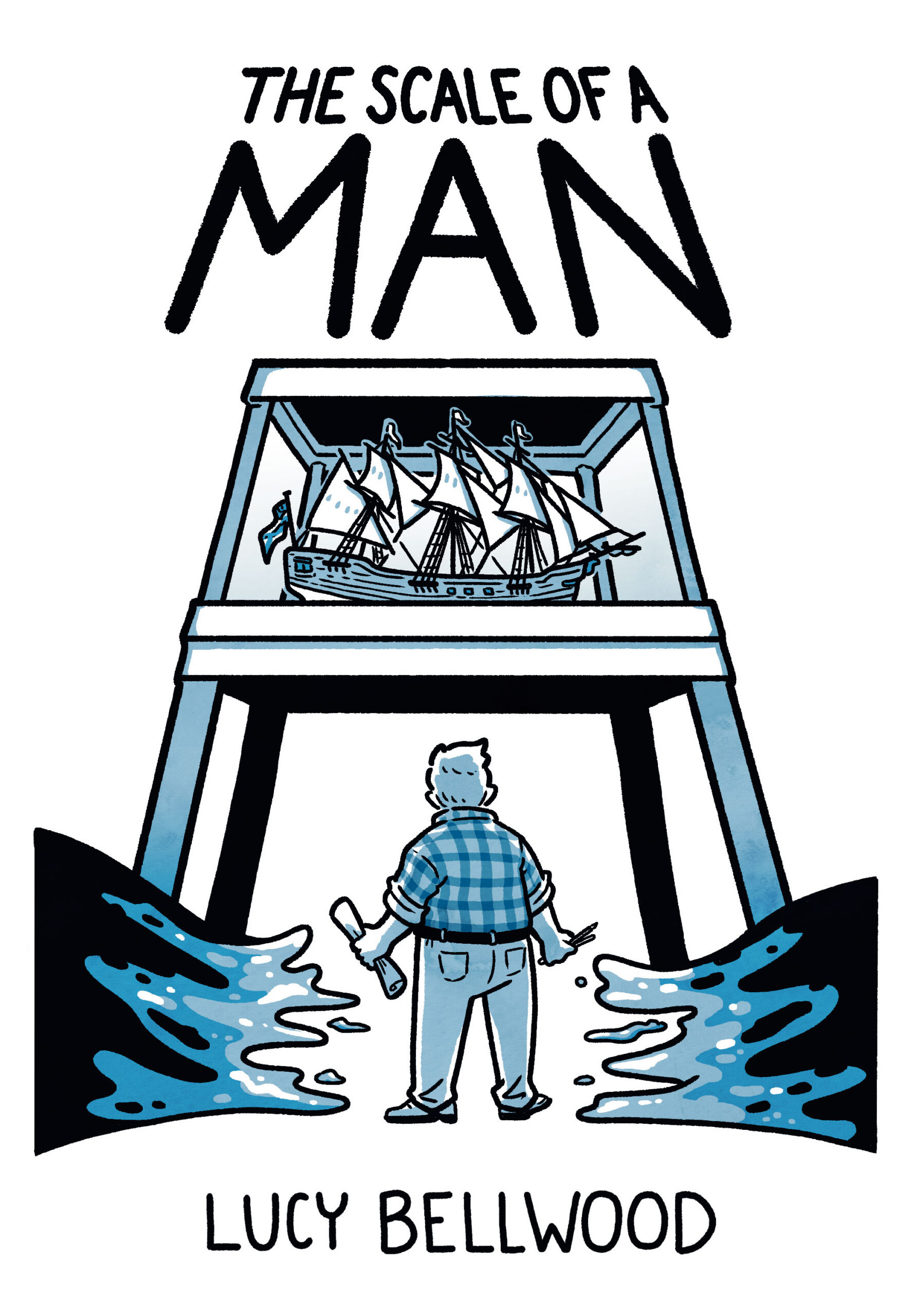
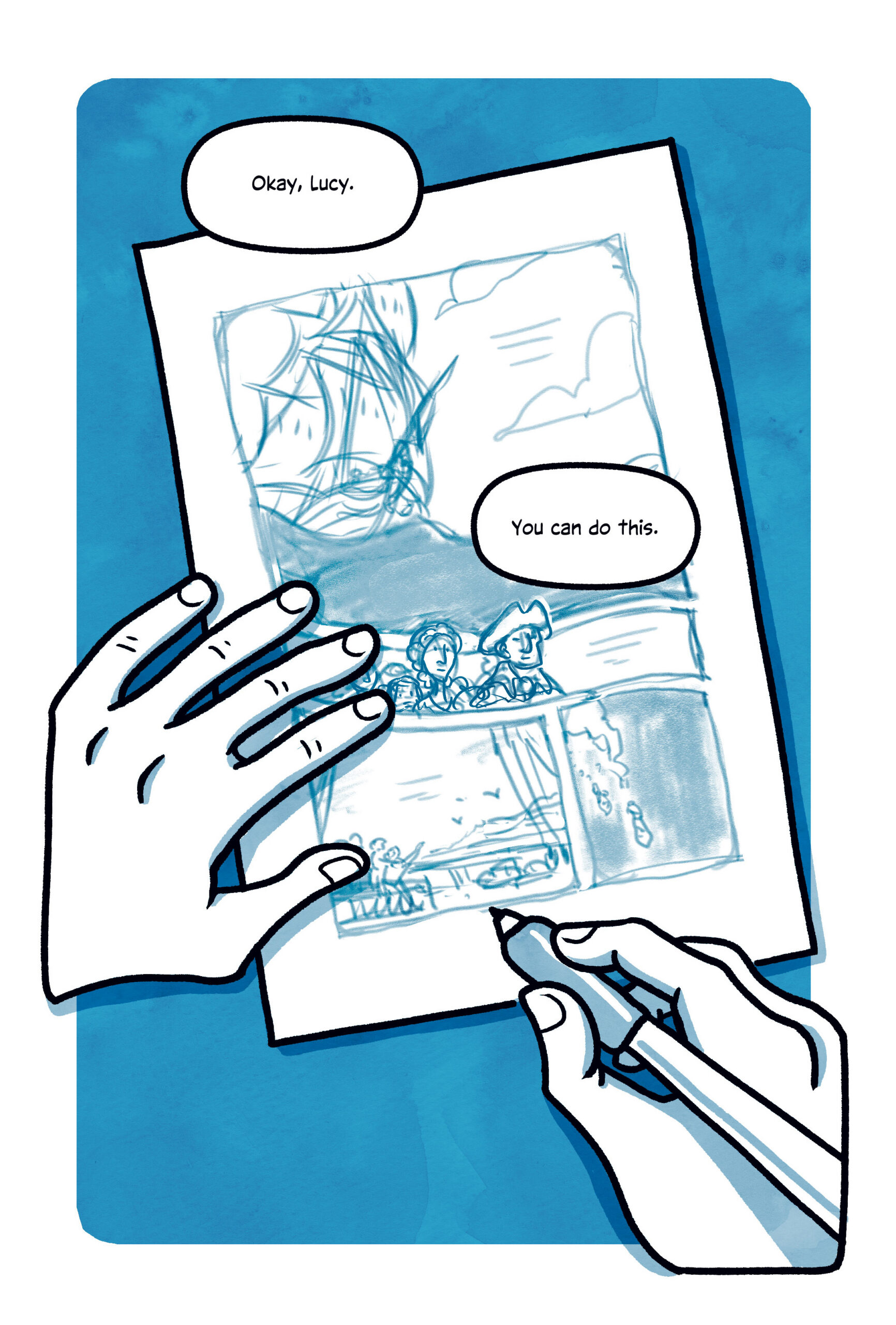
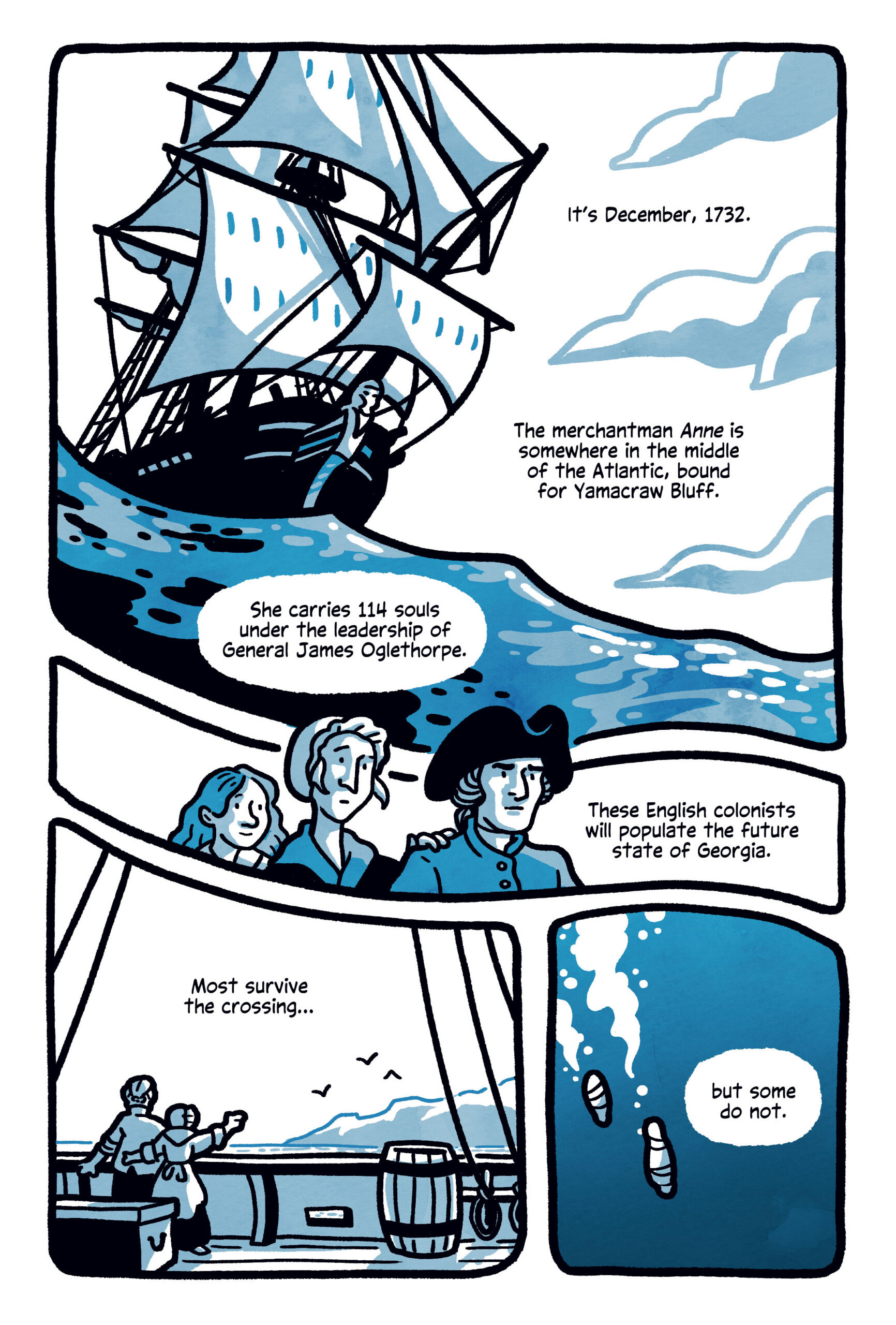
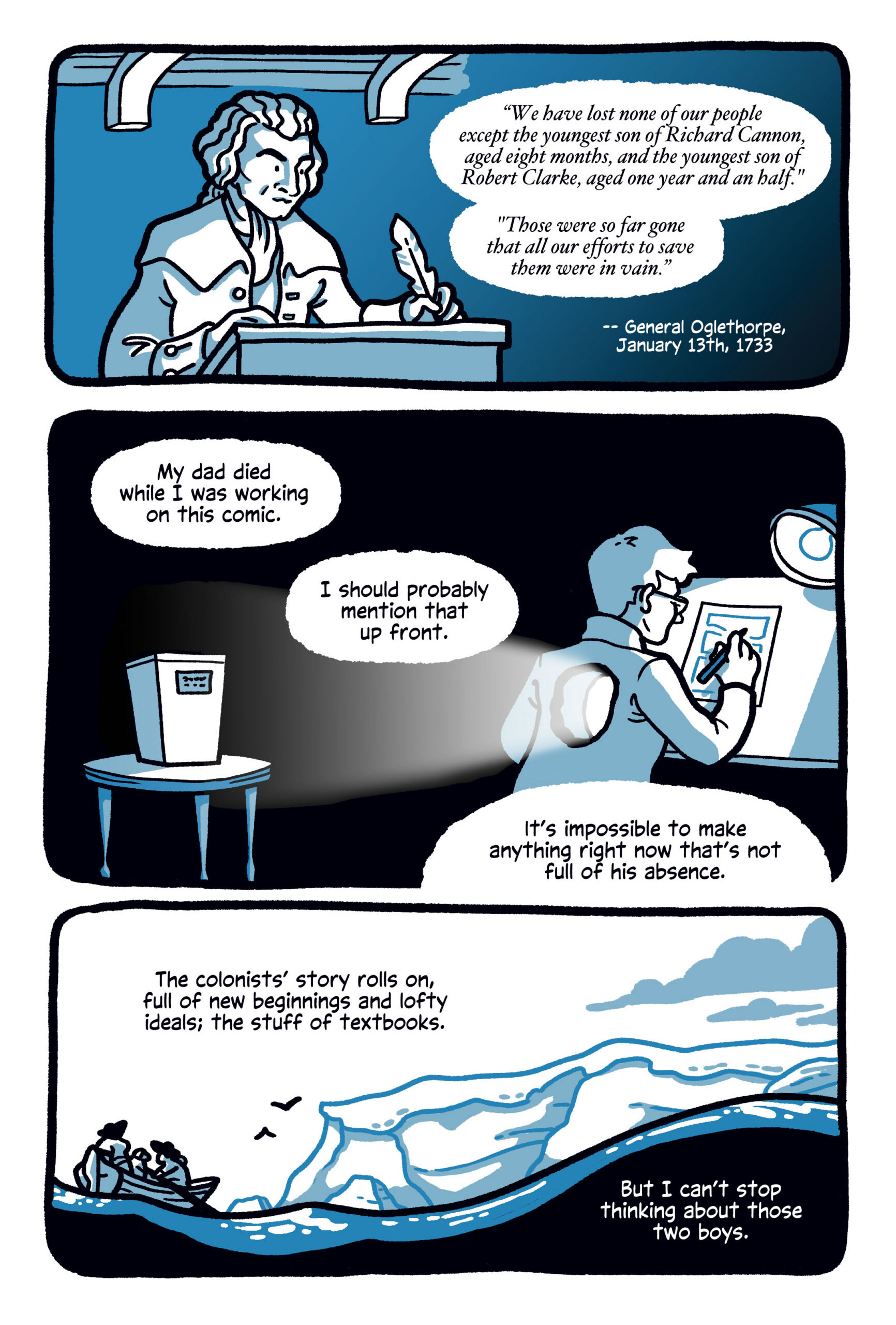
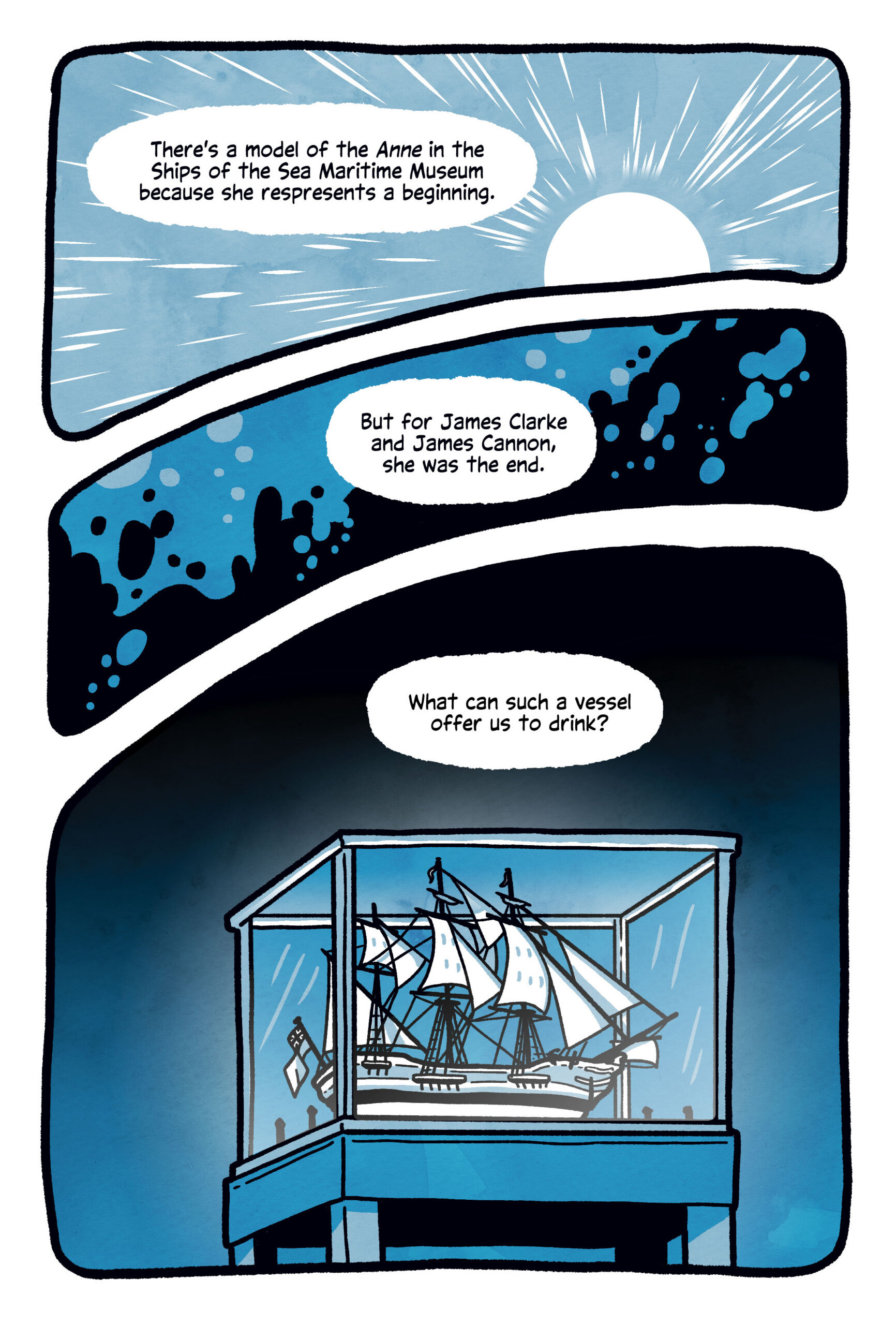
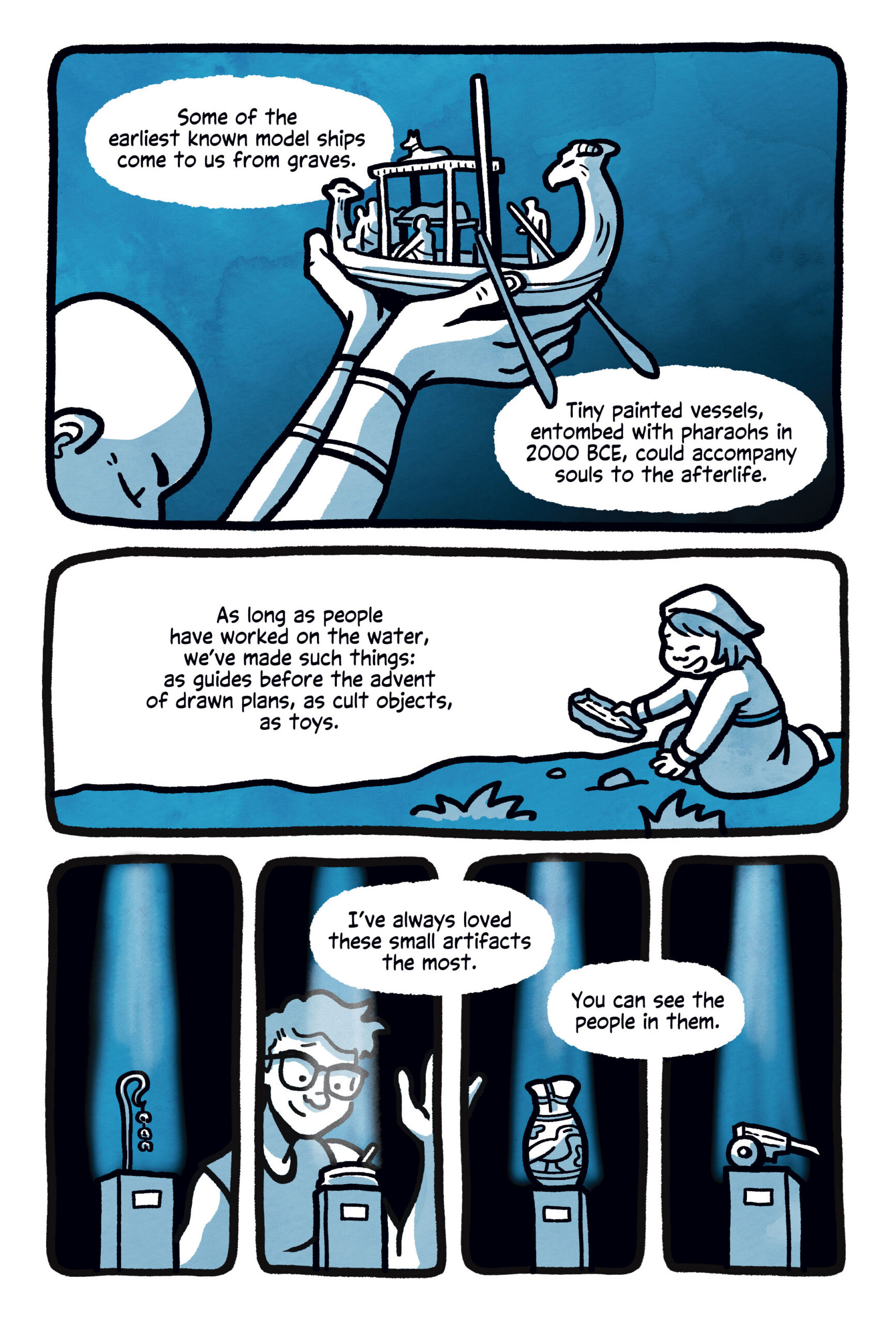
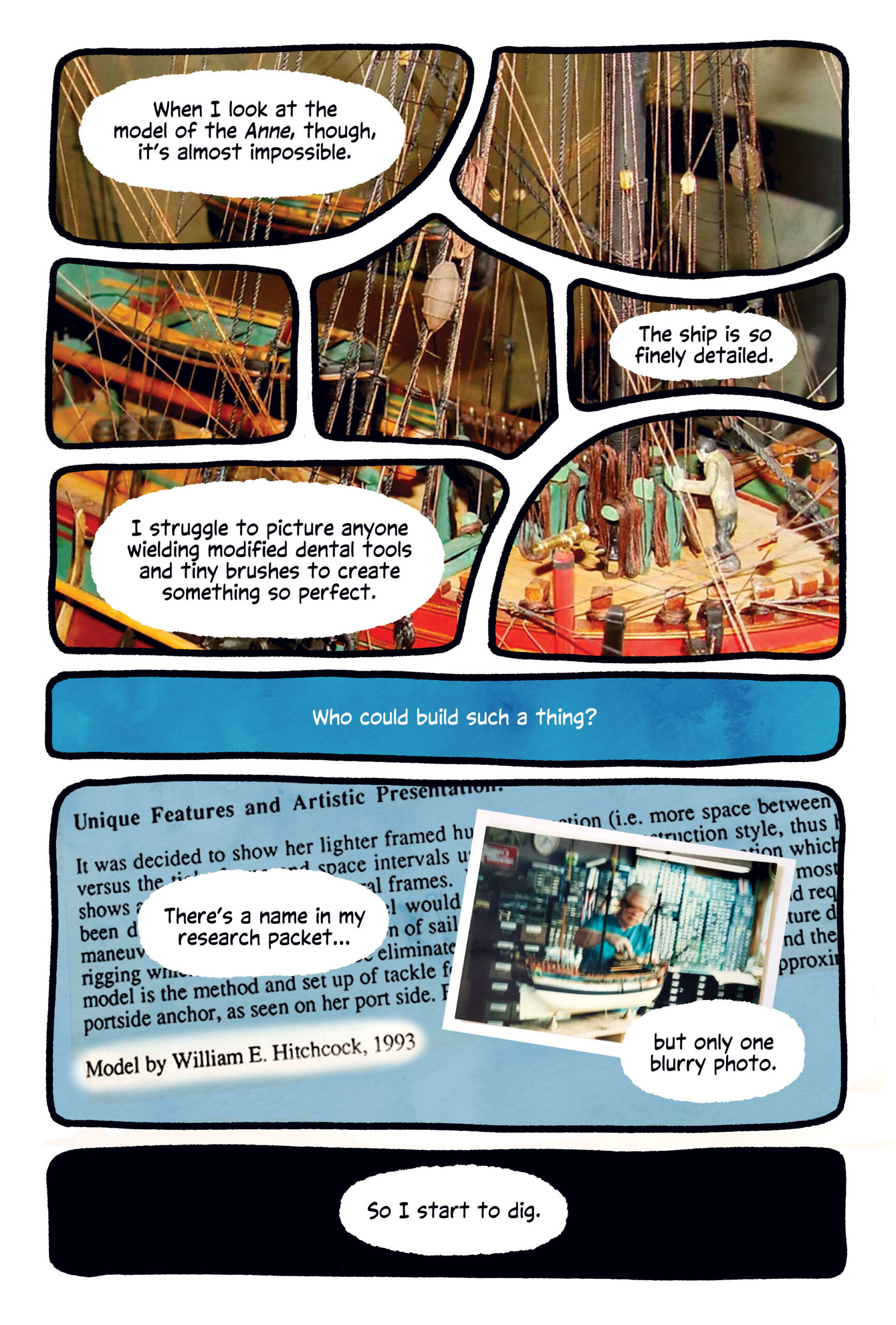
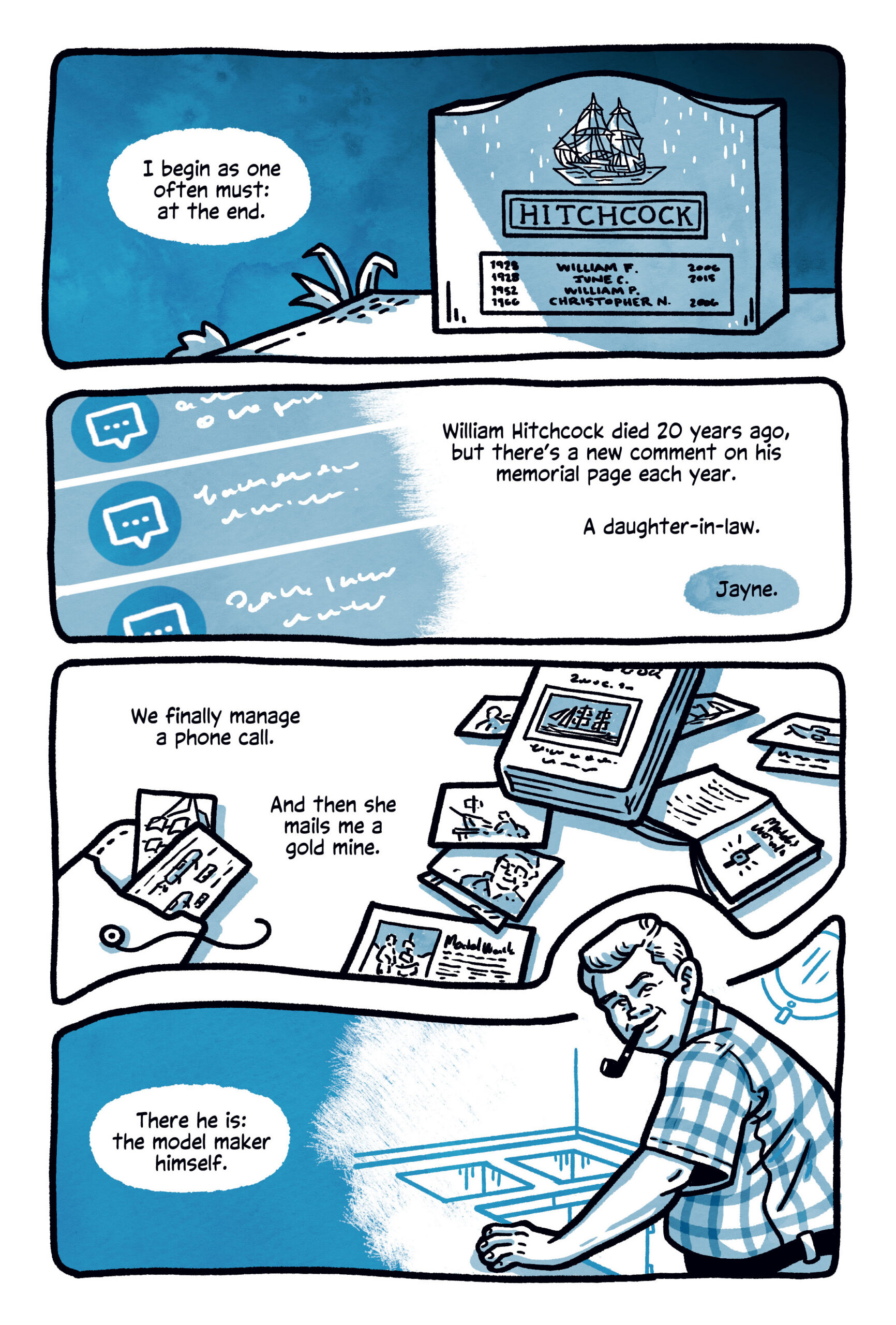
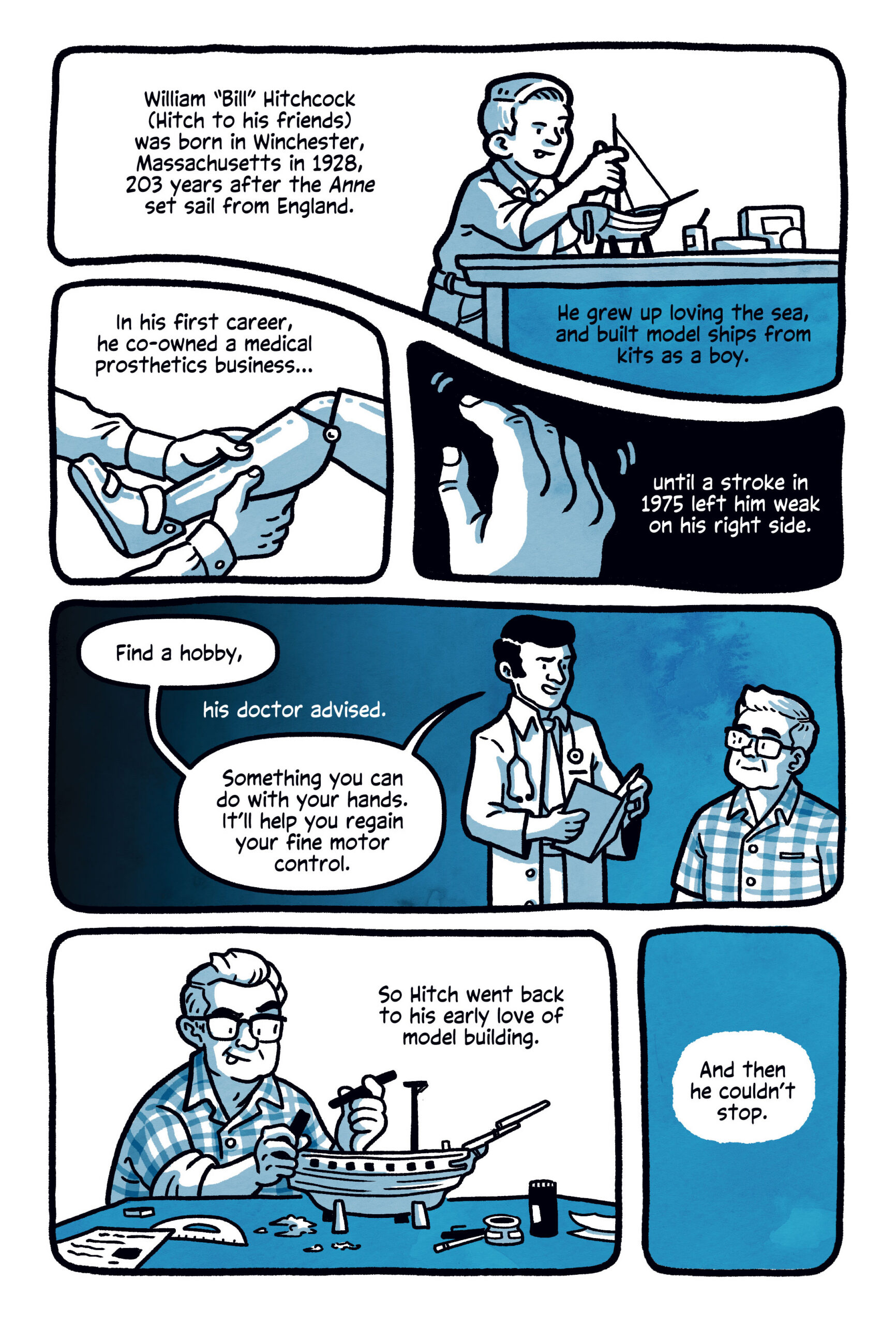
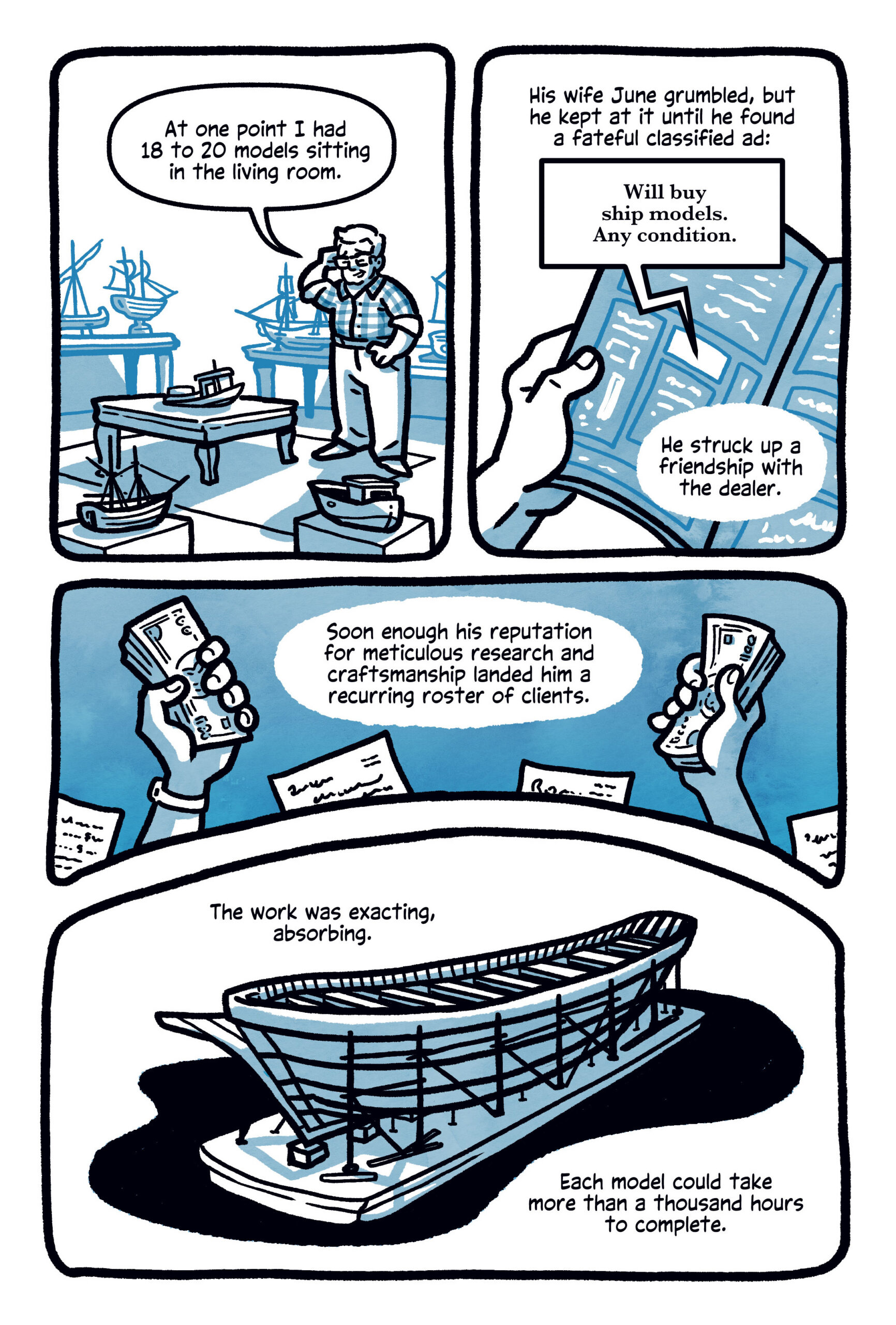
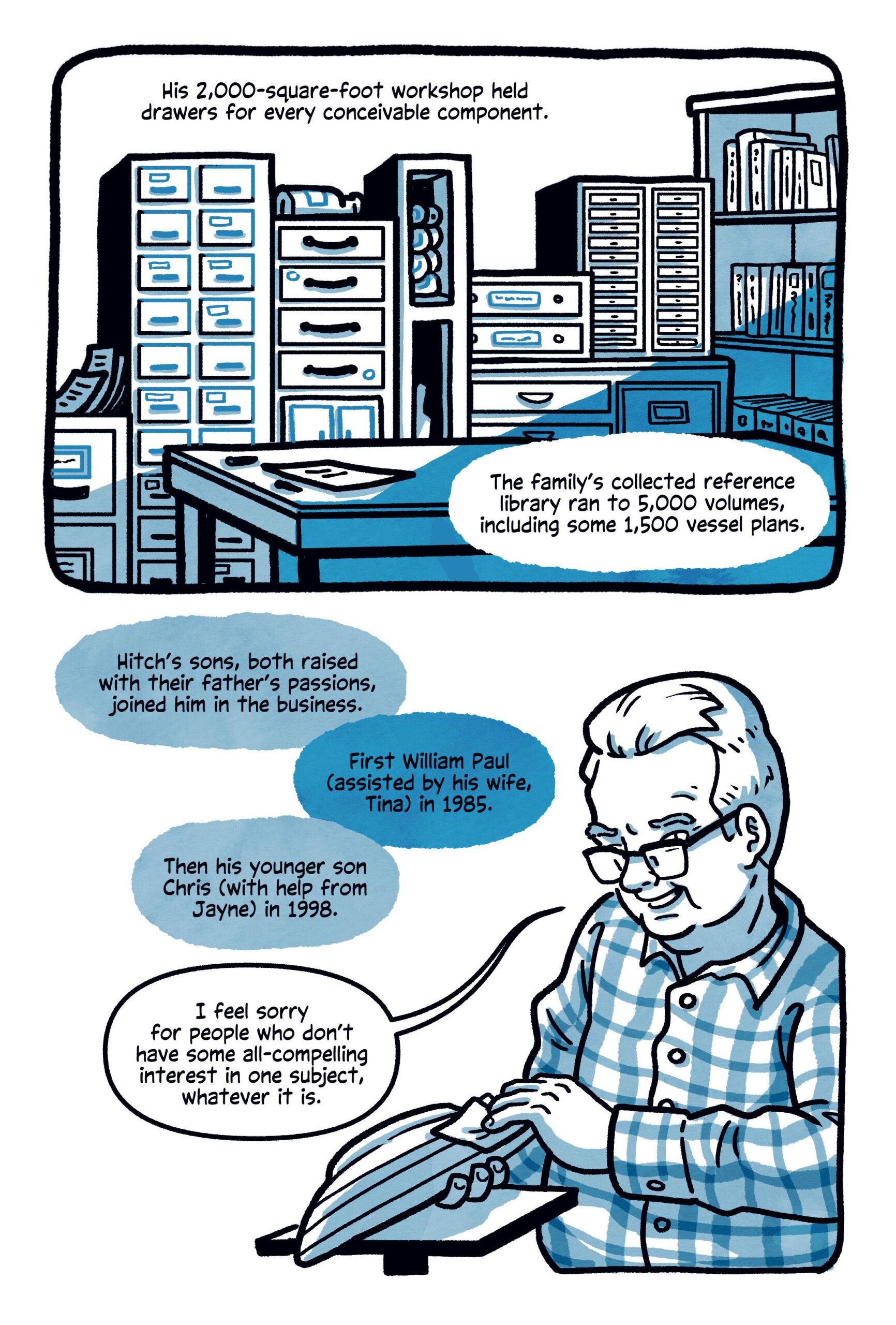
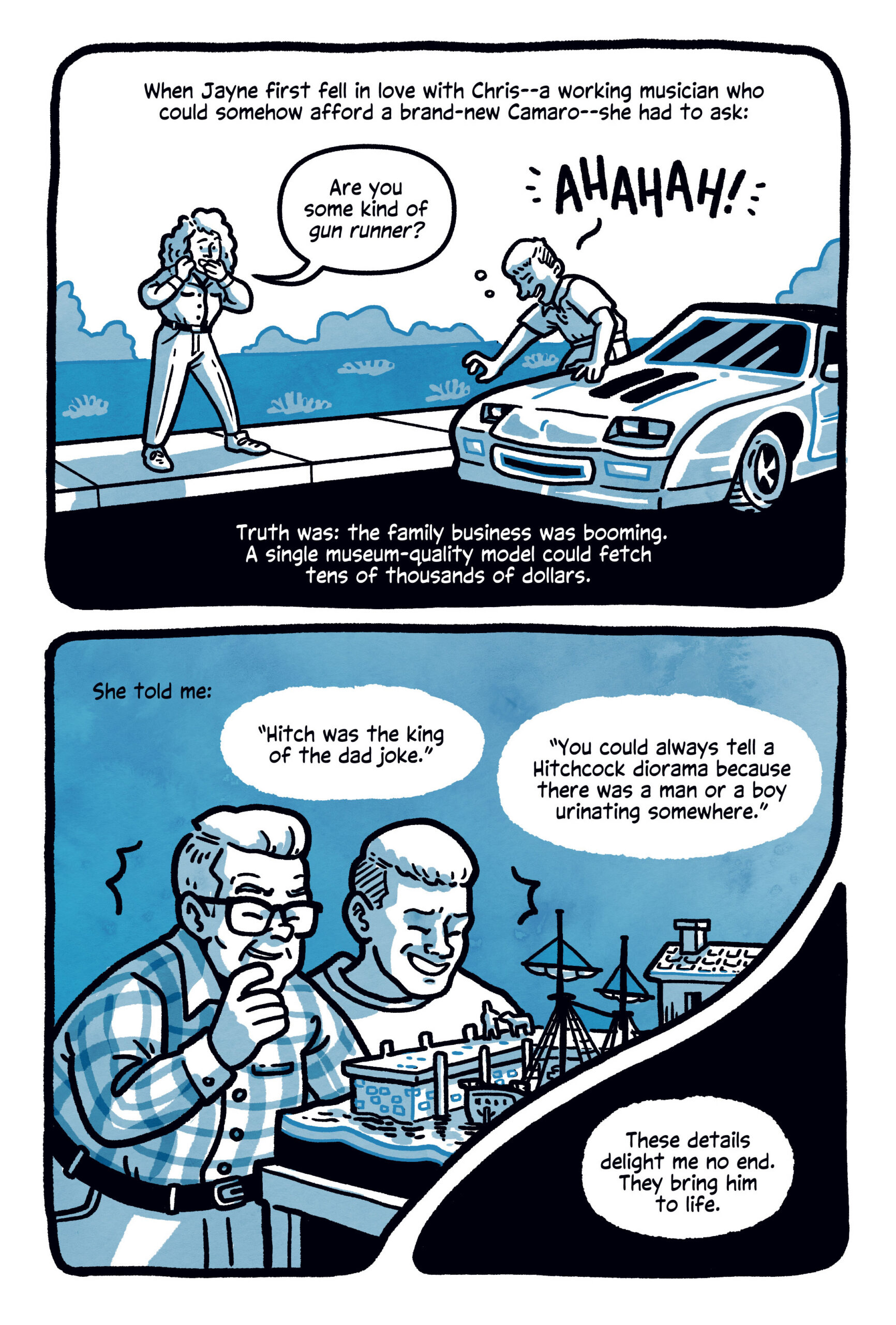
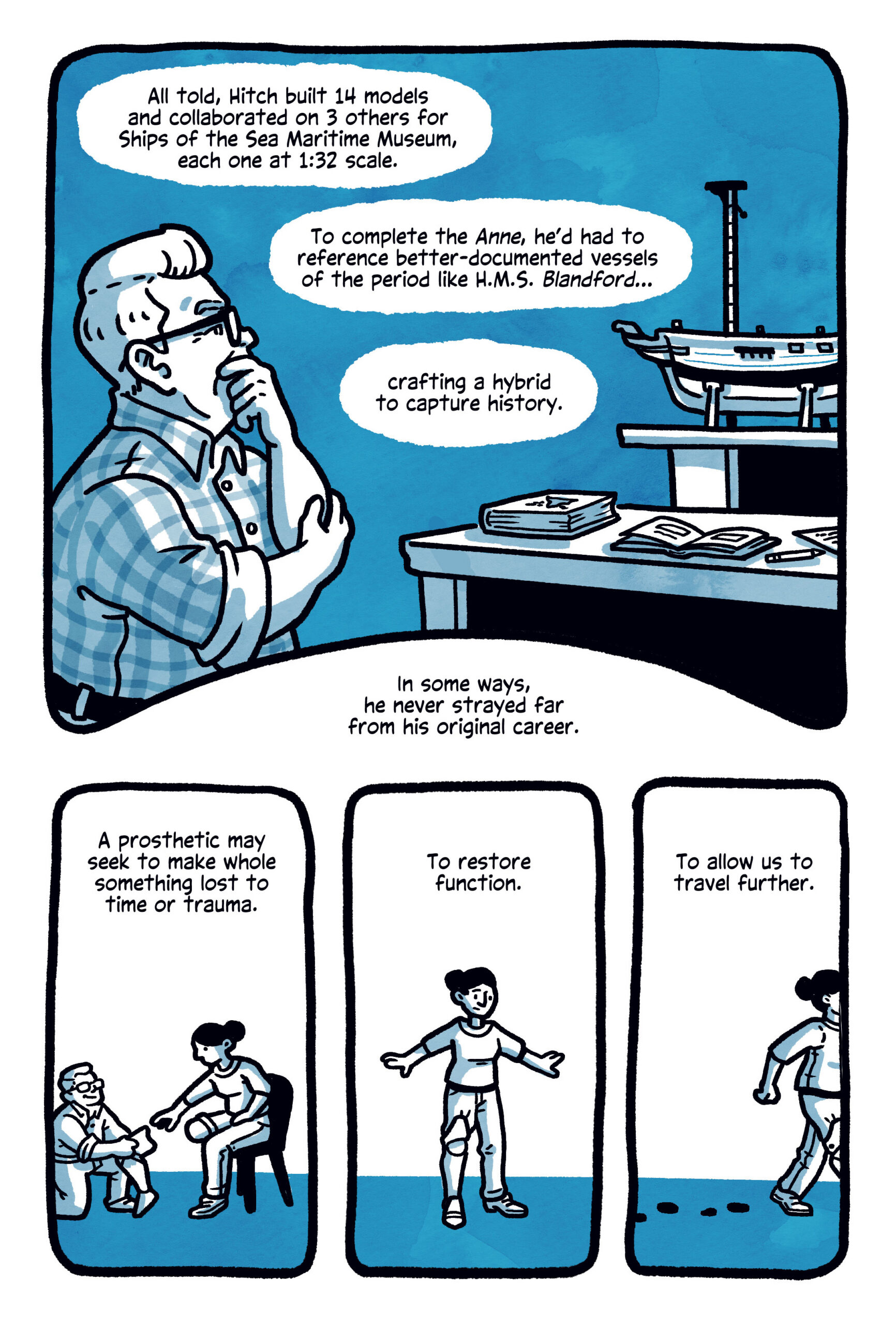
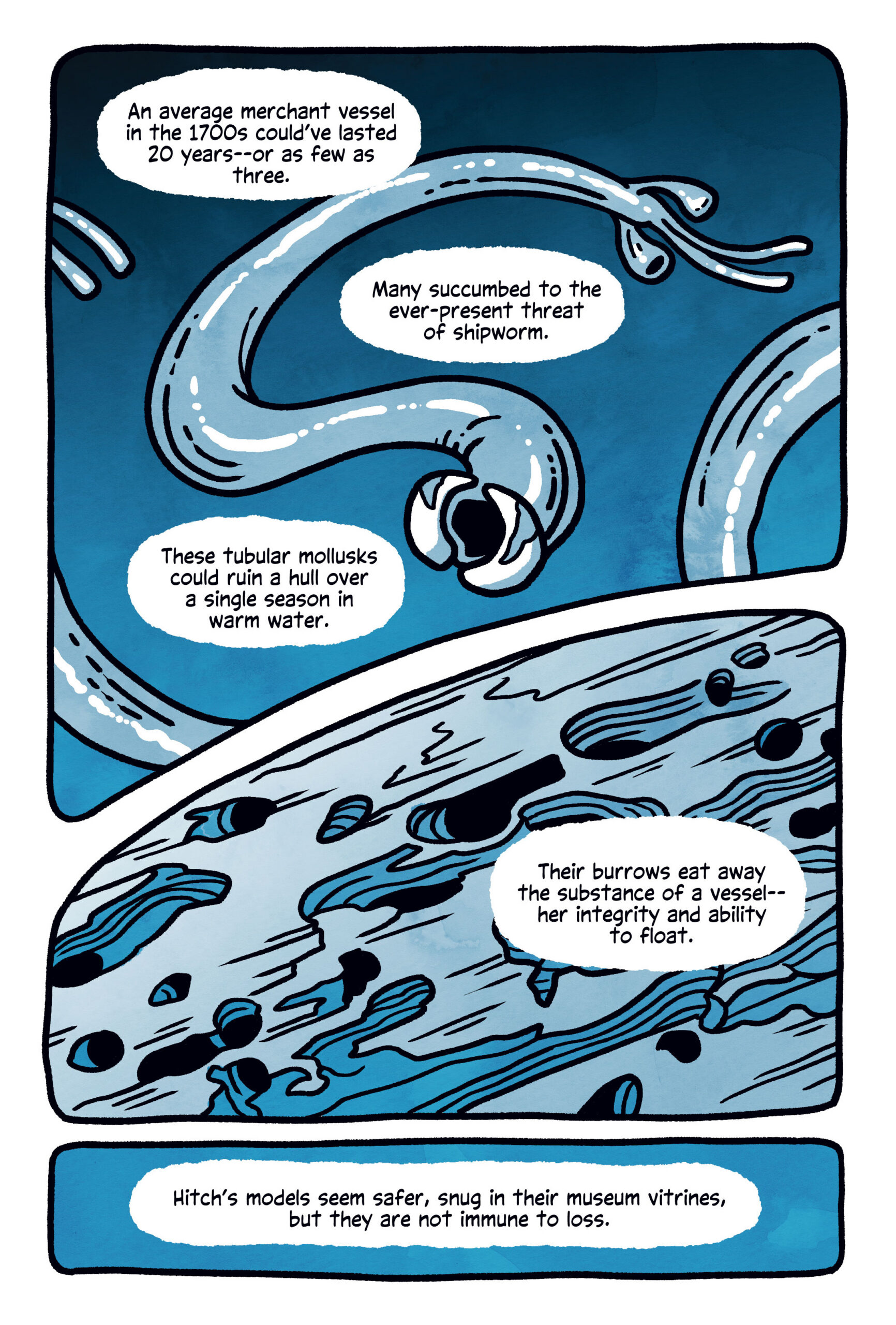
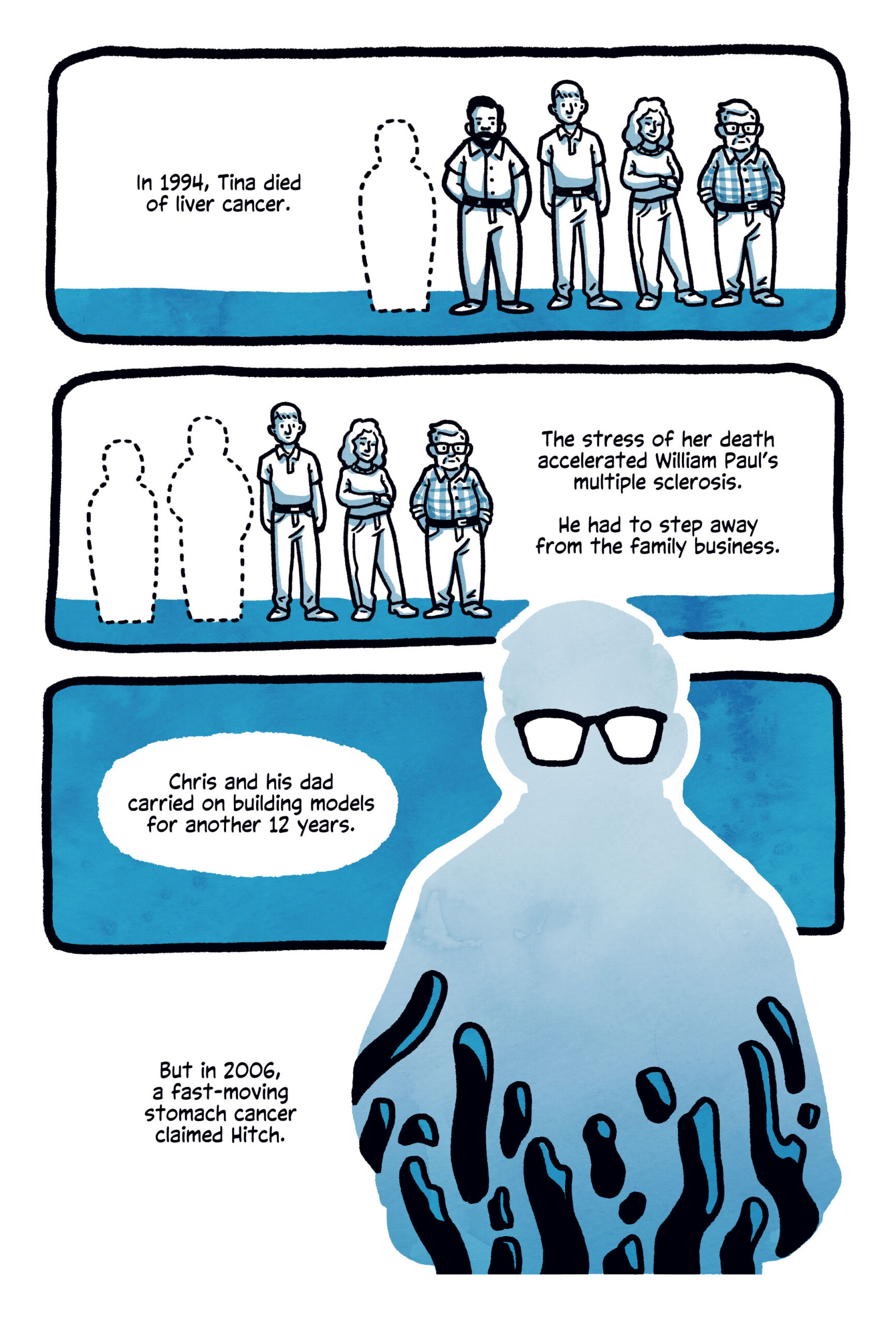
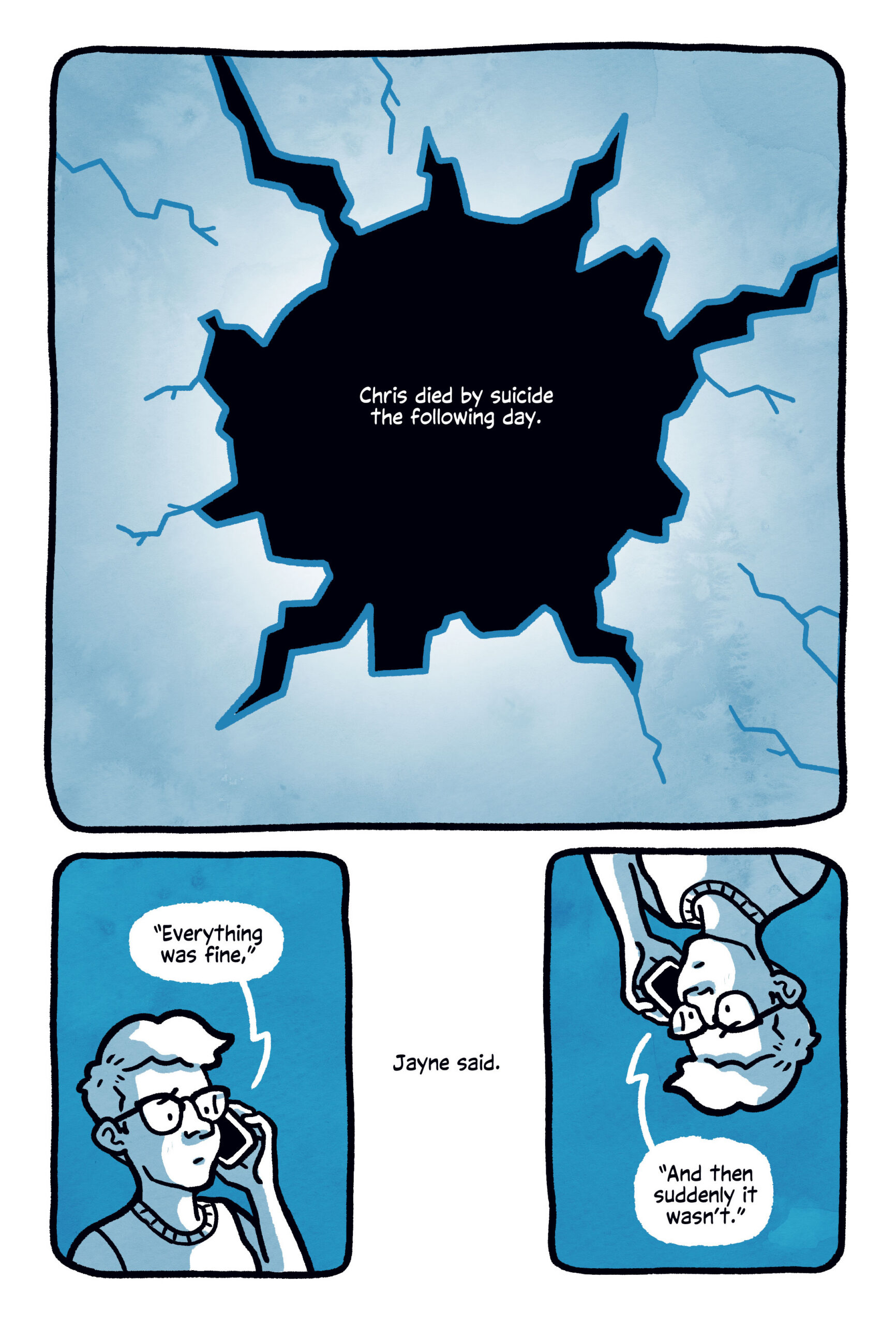
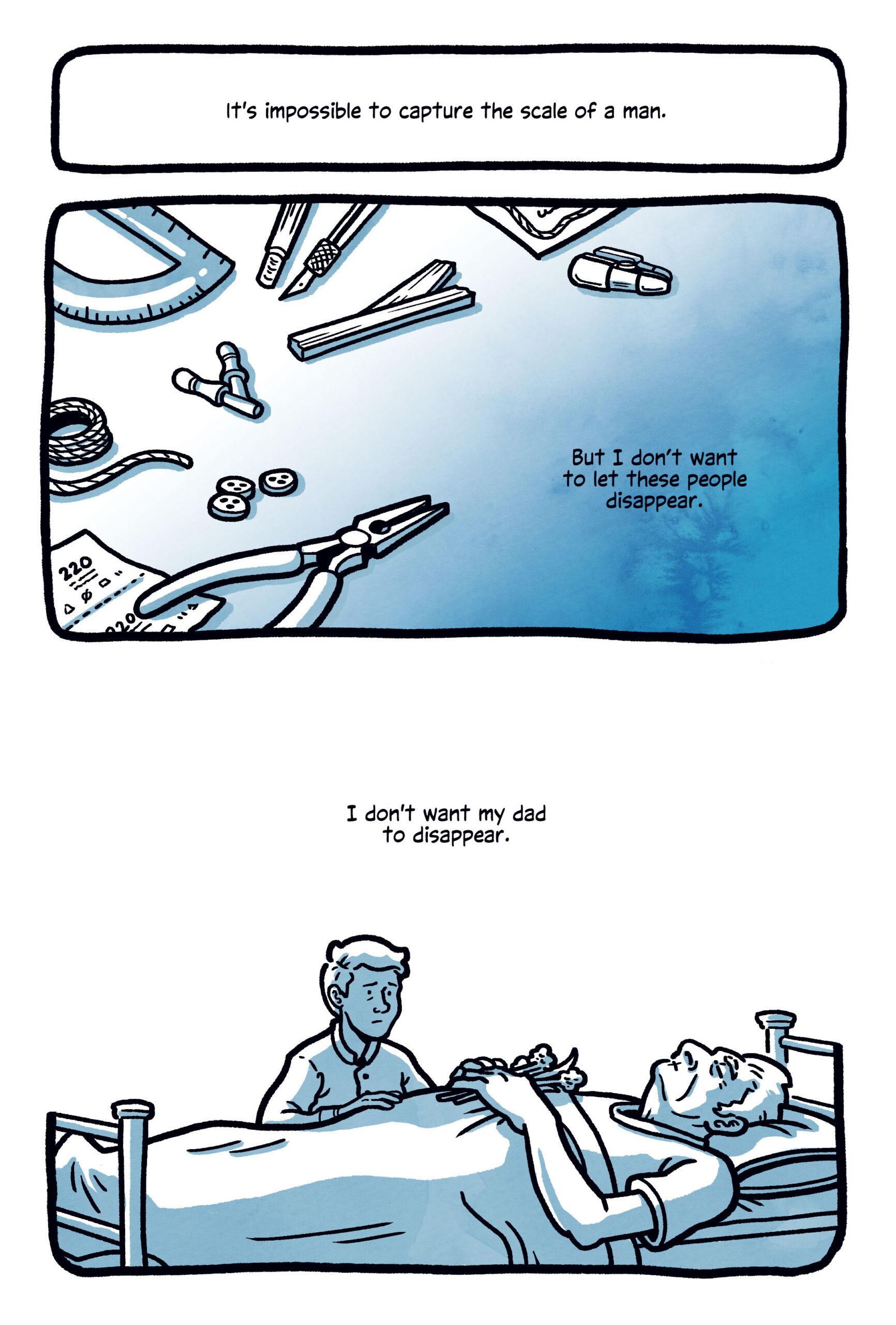
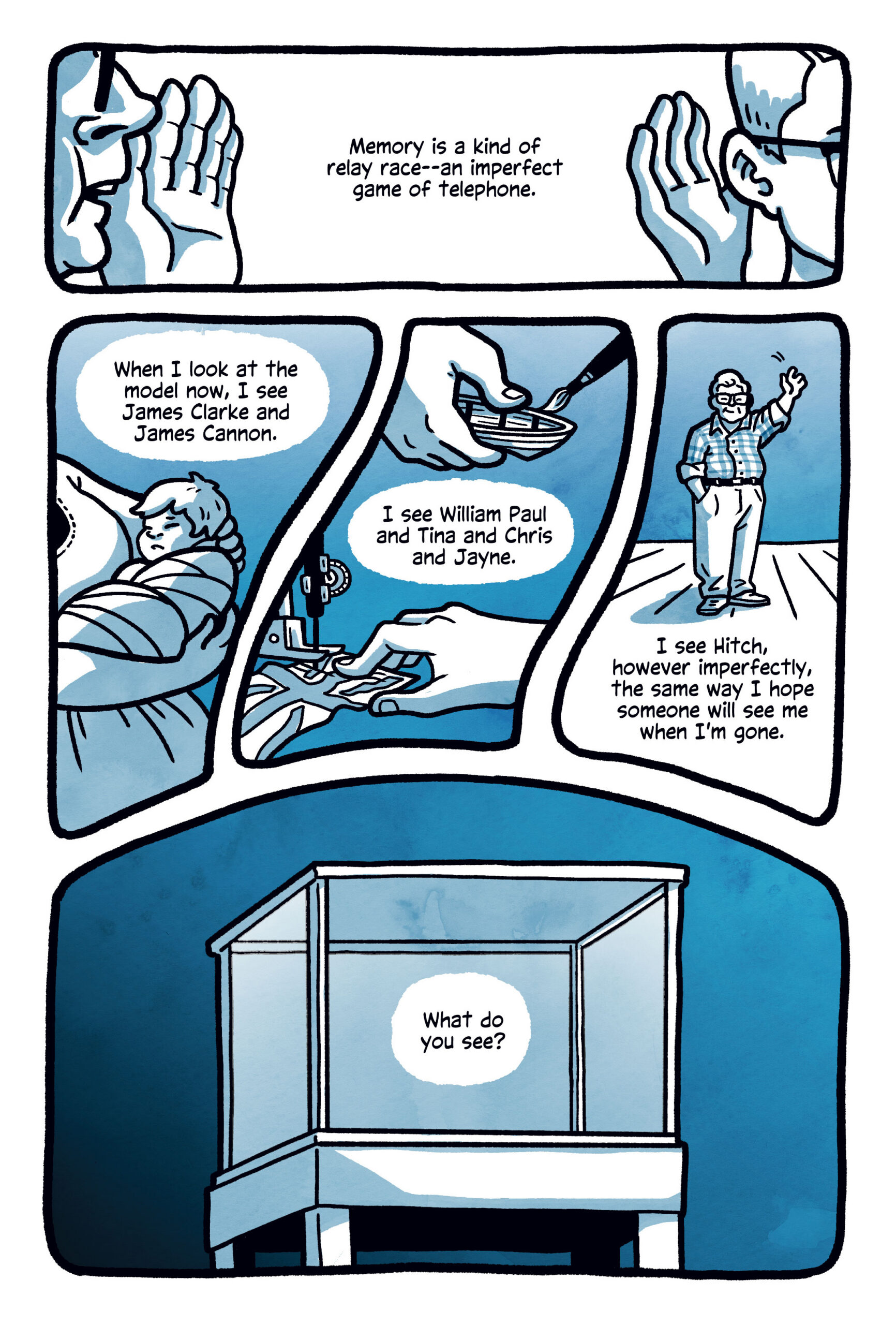
I joined the crew of my first tall ship at seventeen. I know more than most the temptation to cast a vessel as the hero of the story, but it’s a lie. We name them, adorn them, and rely on them, but ultimately ships are tools enlivened by the people who use them. They encompass exploration and cultural exchange, escape and immigration, enslavement and genocide. Rather than flattening the ship into a hero, I want to examine the ship as a vessel in every sense of the word, one brimming with discoveries and losses alike.
In her essay The Carrier Bag Theory of Fiction, Ursula K. Le Guin invites us to explore the implication of the container as the oldest human invention. What would it mean to acknowledge that we have carried sustenance and stories in baskets, nets, and bottles for far longer than we have centered narratives around a Hero’s Journey built on aggression and conquest? “It’s hard,” she admits, “to tell a really gripping tale of how I wrested a wild-oat seed from its husk, and then another, and then another, and then another, and then another—” but the essay encourages us to try.
Whether framing the hull of a ship or the panels of a story, we delineate the things we love. It is an affection that cannot be rushed. I was lucky enough to learn from many model ship builders in the course of creating this piece. Their generosity, enthusiasm, and expertise helped me appreciate what’s poured into each miniature vessel, and to recall something I need to keep close in my own practice: there is value in doing things that defy efficiency. These are fields where monotony walks hand in hand with craft. Some people throw their hands up and bemoan the death of such practices in the age of AI, but I believe we’re headed toward a resurgence in valuing the things machines cannot do.
There is nothing more human than dying. Steeped in my own grief at the loss of my father, I found my way into a story that took me places I couldn’t have foreseen. Early in the research process, I read that the colonists aboard the Anne slept below decks in suspended wooden cots—their similarity to coffins a reminder of how often such voyages become a passage to the underworld. Every journey requires a type of death. We leave behind our former selves, hoping to meet some new incarnation on the farther shore, but the past always comes with us in one guise or another.
We don’t know what became of the Anne in the end; her own death, whatever that means for a vessel, went undocumented. Sometimes such losses are inevitable. But the containers we build, whether they be ships, comics, or museums, offer us a chance to see ourselves woven into the minutiae of the past. It is a form of immortality, one that relies on engagement, imagination, and tenderness, and it is always worth reaching for.
Drawn to the Sea opens at Ships of the Sea Maritime Museum in Savannah, Georgia on Friday, May 1st and runs through January 31st, 2027. Learn more about the exhibit and related programming here.
One week from today (Tuesday, December 16th at 6pm) I’ll be at my beloved local outdoor bookstore, Bart’s Books, for an interactive evening with fellow Ojaian and powerhouse cartoonist Shay Mirk.
We’re celebrating the publication of Making Nonfiction Comics, a comprehensive illustrated guide for everyone who’s ever wanted to tell stories about the world around us in words and pictures. (If you can’t make the event, that link takes you to bookshop.org where you can buy the book online.)
This beast is a collaboration between Shay and fellow cartoonist Eleri Harris and it is so!! good!!! In addition to Eleri and Shay’s hard-won expertise, there are also interviews and tips from so many big names in the field. You can learn about crafting everything from on-the-ground protest reportage to deep dive historical research to authentic personal narrative. This book is going to be the gold standard for years to come.
I feel lucky to have a brief cameo talking about running a community drawing night in Portland for several years in the twenty teens. Here’s a look at that:
If you’re in the area, do come by. I’m gonna show off some kelp farming comics, Shay’s gonna talk about making the book, it’s gonna be very fun. Ojai may be 80º during the day right now, but it gets chilly after dark, so bundle up! We’ll have zine templates for folks to fill out and fun slides to share and, knowing Shay, killer snacks.
A quick one to say I’ve been thinking a lot about the different subtitles they’ve slapped on Lewis Hyde’s The Gift through the years, mostly because it was only this year I learned that the original 1983 edition looked like this:
I LOVE IT. WHY DID THEY CHANGE IT. WHAT GIVES.
The whole thing is a far cry from 2019’s:
As well as the copy I first encountered (published in 2007), which features a third option:
Which is…fine? It’s fine.
BUT WHO BURIED THE LEDE ON THE EROTIC LIFE OF PROPERTY?!
Audre Lorde originally presented “Uses of the Erotic: The Erotic as Power” as a paper in 1978, but it wasn’t published in Sister Outsider until 1984—just one year after the first edition of The Gift came out.
I wonder about this post-70s literary landscape, everything still reverberating with the energy of the 60s, the explosive visibility of sexuality in American youth culture, the rising tide of queer voices—but also the broader definition of eroticism.
I just re-read Katherine Angel’s Unmastered: a Book on Desire, Most Difficult to Tell, which I picked up after Tomorrow Sex Will Be Good Again. Her exploration of eroticism veers more towards the question of what to do with desire that resists being codified, named, and negotiated in explicit terms. How do we reckon with consent culture alongside the lure of the unknown? What of discovery? What of the secret third thing?
Kate Wagner coming in at the right moment here with this essay:
A situational eroticism is what is needed now, in our literalist times. […] Arousal is a matter of the self, which takes place within the body, a space no one can see into. It is often a mystery, a surprise, a discovery. It can happen at a small scale, say, the frisson of two sets of fingers in one’s hair at once. It is beautiful, unplanned and does not judge itself because it is an inert sensation, unimbued with premeditated meaning. This should liberate rather than frighten us. Maybe what it means doesn’t matter. Maybe we don’t have to justify it even to ourselves.
This draft has been languishing because I don’t have a neat bow to slap on the end of this. If there’s anything I’m thinking of, though, it’s that Hyde (or his publisher) wasn’t wrong to foreground eroticism in that first edition of the book. Eroticism is creativity, and neither are as much work as they are play.
Cat’s been out of the bag for a while: I’d rather be operating a switchboard than a megaphone these days.
To that end: I’ve been hosting more Zoom calls for my Patreon crew to hang out together, build community, and talk about their creative and adventurous projects on the regular. It turns out it’s extremely nice to do!
This month we’ve got a real treat: Patron Josh Horton will be giving a presentation about his journey around Cape Horn aboard the Dutch tall ship Oosterschelde. Josh joined up as part of Darwin200, an audacious voyage that’s been tracing the original path of HMS Beagle since 2023. They’re doing amazing work, and I’m really looking forward to getting a peek aboard.
The call happens Monday, May 12th at 11am Pacific Time. You can find the Zoom link and everything here. Can’t wait!

Simon Fieldhouse’s Latest 3D Portrait Sculpture: Peter Arno

Next up in artist Simon Fieldhouse‘s New Yorker series: Peter Arno. See the sculpture in various settings here.
And here are his other New Yorker 3D sculptures:
To see all of his 3D sculptures, go here.
___________________________________________________________________
Frank Cotham Returns As Guest On Cartoon Caption Contest Podcast

Frank Cotham, who began contributing to The New Yorker in 1993, returns to the CCCP in this episode (#248 for those keeping track). Listen here.
photo: clockwise, from top left…Frank Cotham, then the co-hosts Paul Nesja, Vin Coca, Nicole Chrolavicius, Beth Lawler.
_____________________________________________________________
Paul Karasik Presents…
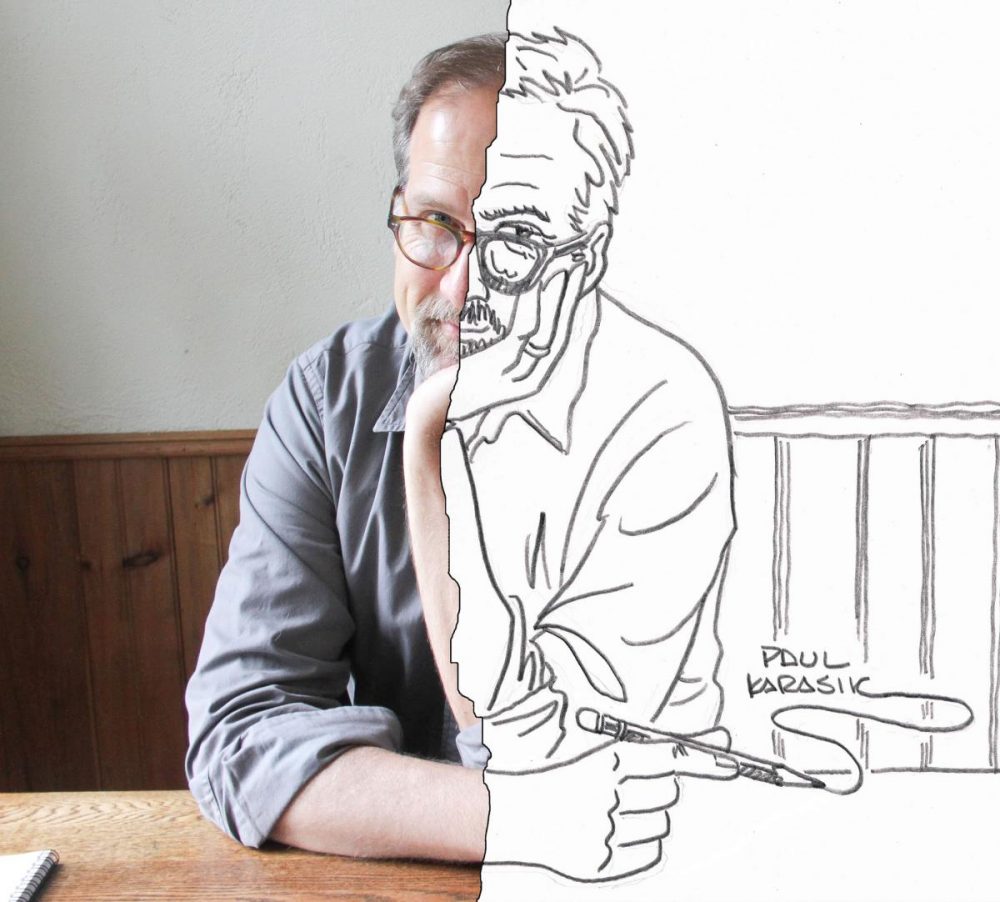
From The Vineyard Gazette, April 23, 2026, “Film Noir Takes Center Stage” — this piece on films and Mr. Karasik, who began contributing to The New Yorker in 1999. Visit his website here.
_____________________________________________________________
The post Friday Spill: Simon Fieldhouse’s Latest 3D Portrait Sculpture: Peter Arno; Frank Cotham Returns As Cartoon Caption Contest Podcast Guest; Paul Karasik Presents… first appeared on Inkspill.

Yes, this comic was inspired by evil non-genius Elon Musk. No one better epitomizes money cosplaying as competence.
He fell ass-backwards into big money, and our system protects big money. …Literally everything he touches gets fucked up, from self-driving cars to Twitter to the government, or almost anything at all; even PayPal—that’s why they fired him. He was so bad at it that his own staff revolted and insisted he be canned. Indeed, nearly everyone who has ever worked for him says he is a shitty leader who has no business running companies. But alas, like other rich people who fail upwards, Musk’s contracted severance package for being axed from (what was then) PayPal for incompetence launched his entire career as a moneybagged gunknozzle.
Musk hardly stands alone. Private Equity’s business model is for people who know nothing about an industry to buy out existing companies and often destroy them. Although with private equity, it’s often more like piracy than actual incompetence.
Why did Sears tank? Everyone knows that the 19th century business was an antique, incapable of mounting a challenge in the age of e-commerce. That was a great smokescreen for an old-fashioned bust out that saw corporate looters make off with hundreds of millions, leaving behind empty storefronts and emptier pension accounts for the workers who built the wealth the looters stole.
And of course, Donald “six bankruptcies” Trump is a tragic example of how inherited wealth (to the tune of $413 million) and a staggering ego can give an utter incompetent a rep as a business genius. Trump’s actual talents in are self-promotion and dodging taxes, not in creating value.
The challenge of drawing this cartoon was the factory setting, which is a zillion miles outside my comfort zone. I doubt I’ve ever drawn the interior of a factory before, and I wasn’t sure how to begin. I looked at photos of factories online and they seemed impossibly complex, and my attempts to streamline them just didn’t look good.
What finally got me over the “factories are too hard to draw! Waaaah!” wall was looking at the graphic novel Factory Summers by the brilliant cartoonist Guy Delisle. I didn’t directly copy Delisle’s drawings, but I took a lot of instruction from how he simplified factory interiors to make them work in comics.
Once I got started, it was fun. A factory setting in two-point perspective provides so many ways to fit in little visual gags.
I was worried about panel four. For the gag to work, readers definitely had to notice the burning factory disaster in the background, but a lot of readers kind of skip noticing the backgrounds. I asked Frank Young, who colored this cartoon, to make the conflagration in the distance impossible to miss, and I think Frank really delivered.
TRANSCRIPT OF CARTOON
This cartoon has four panels, plus a tiny “kicker” panel.
PANEL 1
Two workers in reflective vests and hard hats are on a factory floor when a man wearing a blazer over a t-shirt walks in, arms spread wide.
BLAZER: Greetings, workers! I just bought this weezotski factory.
WORKER: Oh, uh… Welcome! So you must have lots of experience with weezotskis?
PANEL 2
Grinning, Blazer keeps talking, looking very smug.
BLAZER: None! But success in an unrelated industry has made me freakishly wealthy! And that makes me a business genius who can run anything!
PANEL 3
Blazer puts his arm around the worker and makes a grand “envision the future!” gesture.
BLAZER: I’m gonna disrupt this company so hard! It’ll be amazing! You’ll see! (Not you personally. I’m firing you.)
PANEL 4
CAPTION: SIX MONTHS LATER
Blazer, still grinning, flees from a burning factory building.
BLAZER: Another business brilliantly saved!
KICKER PANEL
Blazer, looking smug, is talking to Barry the cartoonist.
BLAZER: Maybe I should run the government!
CHICKEN FAT WATCH
“Chicken fat” is long-obscure cartoonist talk for fun but unimportant details in the art.
Panel 1: A limp hand is sticking out a hole in the huge factory machine. A panel of the floor is missing, and a corpse in a funeral suit lies within. The box the worker is carrying is labeled “Caution: Irrelevant Prop.”
Panel 2: In the background, in supervisors windows, are Homer Simpson and Dr. Bunsen Honeydew.
Panel 3: An opening in the side of a big factory machine contains Brain, of “Pinky and the Brain.” A vent hose has a distressed face on it. In a window in a machine in the background, a grinning stoned person hands upside-down. The paper on the clipboard says “this text is way too small to be read, sorry”.
A sign says “URGENT: Always complete your shift and clean your area before fighting demonic forces.” Another says “WARNING: Studies show that most people’s largest deathbed regret is time not spent working.” A sign on a large red button says “NO. Do not press button. Nope.”
Panel 4: The dark cloud in the sky, if you rotate it 90 degrees to the right, is an enormous face in profile.
The tattoo storyline: In panel one, the worker has a tattoo of a snake on his right arm, and a tattoo of an apple on his left arm. In panel two, the snake tattoo has crossed to his left arm and is examining the apple. In panel 3, the apple has been eaten, and the snake – no longer merely a tattoo – is crawling out of a hole in a big factory machine.
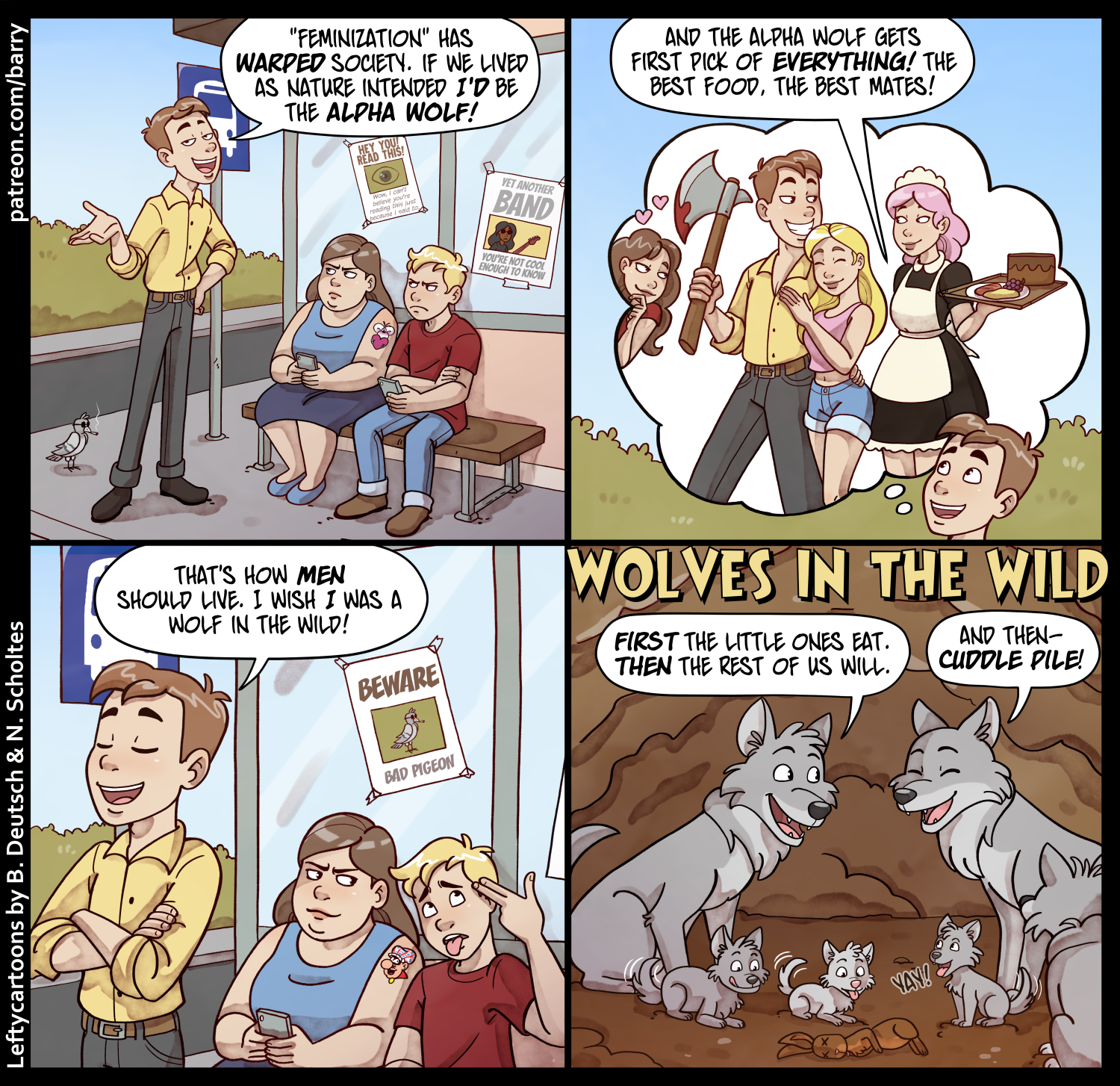
This cartoon is by me and Nadine Scholtes. And just look at how adorable the wolf pups she drew are!
The term “alpha wolf” was coined in 1947 by biologist Rudolph Schenkel.
At that time, science knew very little about wolves. About all science knew–and that means that’s all Schenkel would have known–is that they live in a pack. He knew they howled and all that. But as far as their social structure was concerned, they live in a group of animals. And he wanted to study the behavior of animals in a group–in this case, the wolves–and so he wanted to do that in captivity.
To do that, he had to make a pack. And so he just got a bunch of wolves– one or two from some zoo somewhere, another couple from another place– threw them all together, and that was his wolf pack.
Schenkel then observed the wolves fighting for dominance – but a wolf “pack” formed in captivity, with unrelated wolves thrown together willy-nilly, won’t act like wolves in nature do. But Schenkel didn’t know that.
When keeping wolves in captivity, humans typically throw together adult animals with no shared kinship. In these cases, a dominance hierarchy arises, Mech adds, but it’s the animal equivalent of what might happen in a human prison, not the way wolves behave when they are left to their own devices.
In contrast, wild wolf packs are usually made up of a breeding male, a breeding female and their offspring from the past two or three years that have not yet set out on their own—perhaps six to 10 individuals. …Infighting for dominance is basically unheard of in a typical pack.
Wildlife biologists have known the “alpha wolf” is a myth for decades. But the term persists, mainly because some people really like the myth. They’re really excited by the image of a strong, dominant man dominating others through sheer physical strength.
To be fair, a lot of people are excited by that image – which is why we see it over and over in action movies, and of course, in superhero stories.
I don’t think there’s anything wrong with having fun watching a Jason Statham movie. But for some people, the alpha wolf myth is compelling not just because it’s fun to watch a hero kick a heel, but because they use it to legitimize their sexist beliefs as natural. I don’t say men should dominate because I’m a misogynist – I’m just reporting what nature says! Don’t shoot the messenger!
And even people who aren’t that extreme might still be influenced by a watered-down version of the alpha male myth. Men – to be properly male – are expected to be confident, strong, take-charge, and emotionally muted. That stereotype long precedes the term “alpha wolf,” of course; but I think that pre-existing cultural belief is one reason the alpha wolf myth took off.
This is an aside, but do you ever wonder why Superman is so muscular? It’s not like he exercises to be able to juggle trucks; there’s no in-story reason he can’t be a scrawny dude with a bit of a potbelly juggling trucks. The answer, obviously, is that comics artists and readers – and also, filmmakers and film audiences – want to be able to see Superman’s power and dominance at a glance.
I offered this cartoon to Nadine to draw because I thought she’d have fun drawing the wolves in panel four. As expected, she did a terrific job with the whole cartoon. For some reason the blatant way the “alpha” and the maid are eying each other in panel two really cracks me up.
Hey, while we’re doing animal myths:
1) Ostriches don’t bury their heads in the sand when frightened. (They do bury their nests and stick their heads in the hole now and then to turn their eggs).
2) Bats aren’t blind.
3) Elephants, like humans, can be startled by unexpected scurrying near the ground, but no, they’re not terrified of mice.
You may have already known all that. But did you know that every time you debunk an animal myth, you’re harming cartoonists? We depend on those myths to earn our livelihoods! Why do you hate us so much, wildlife biologists?
TRANSCRIPT OF CARTOON
This cartoon has four panels.
PANEL 1
A man in a yellow shirt is at a bus stop, cheerfully lecturing the other two people at the stop.
MAN: “Feminization” has warped society. If we lived as nature intended I’d be the alpha wolf!
PANEL 2
The man with a huge thought balloon, showing him imagining walking with one hand holding a bloody axe and the other around a woman’s waist. A second woman, in a maid outfit, is carrying a tray of cake and steak. A third woman looks at him adoringly.
MAN: And the alpha wolf gets the first pick of everything! The best food, the best mates!
PANEL 3
MAN: That’s how men should live. I wish I was a wolf in the wild!
PANEL 4
Inside a wolf den, two adult wolves are talking. There are four kids (three small puppies, one medium sized) and a dead rabbit.
CAPTION: Wolves in the Wild
DAD WOLF: First the little ones eat, then the rest of us will.
MOM WOLF: And then — cuddle pile!
PUPPY: Yay!
CHICKEN FAT WATCH
“Chicken fat” is an archaic cartoonists’ term for unimportant little details in the art.
PANEL 1 – The tattoo is of a German cartoon mouse named Diddl, holding a heart.
A poster says “HEY YOU! READ THIS! Wow, I can’t believe you’re reading this just because I said to.”
Another poster shows a cool woman in sunglasses holding a guitar. Text says “YET ANOTHER BAND… you’re not cool enough to know.”
A pigeon standing on the sidewalk is wearing sunglasses and smoking a cigarette.
PANEL 3 – A poster has a picture of the panel 1 pigeon, with the caption “BEWARE Bad Pigeon.”
The guy waiting at the bus stop is miming shooting himself in the head so he doesn’t have to listen to this alpha wolf prattle any more.
The woman’s tattoo now shows the character Superjhemp (a parody of Superman and other superheroes). He’s very popular in Luxembourg – “he has appeared in over 29 graphic novels that have the highest sales rate for Luxembourgish publications.”
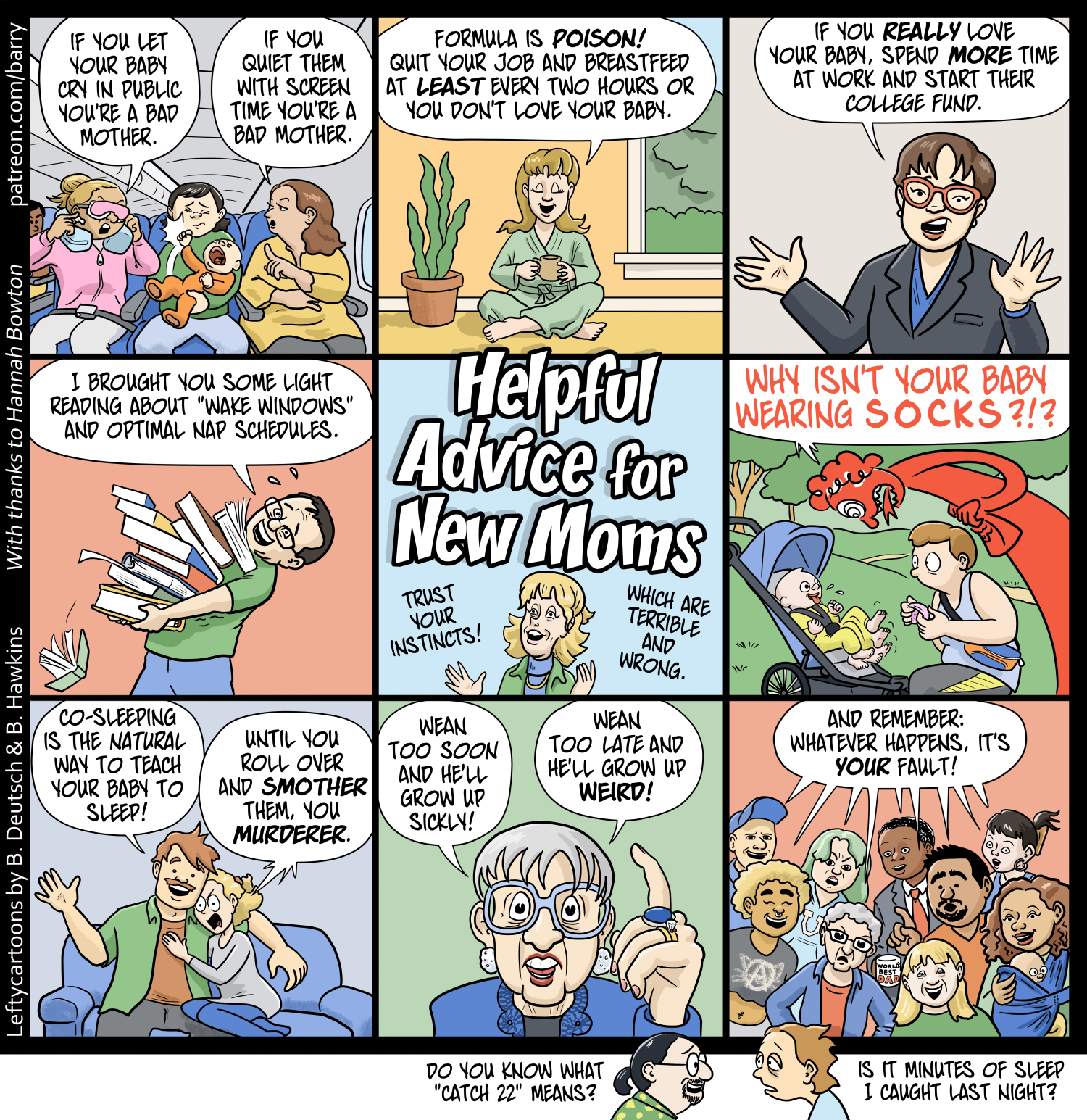
This cartoon is by me and Becky Hawkins.
Becky commented, “It’s always fun and challenging to come up with enough unique character designs for these cartoons. All resemblance to acquaintances living or dead is entirely coincidental. Maybe not coincidental, but not at all a reflection on their character.” So please don’t sue us!
Neither Becky or I are parents, and when I showed Becky the script she eagerly said something like “time to get my secondhand anger on!” (Except what she said was funnier, and I didn’t think to write down the exact wording at the time, and now I’m annoyed with my past self for not being considerate enough of my future cartoon-introduction-writing needs.)
The research for a comic like this is always fun. I dive into online discussion boards and I’m guaranteed to learn something new – or many something news.
For instance, I would never have guessed that strangers actually come up to new parents to criticize them – sometimes quite harshly – if their baby isn’t wearing socks or a hat. But I read multiple people complaining about just that! (Becky here! Panel 6 is dedicated to Jackie, who learned about this phenomenon mere weeks into parenthood.)
And while of course I knew that sleep schedules are a major issue, the full extent of it – and the extent to which many parents feel overwhelmed by all the contrary advice they’re given, including from medical professionals – was eye-opening to me. I didn’t even know what “wake windows” were before I wrote this cartoon (ah, those innocent days of youth).
The title of one Reddit thread really says it all: “I was not prepared for society making you feel like a bad parent NO MATTER WHAT you do.”
The pressure on new parents to do everything perfectly – even though perfect parenting isn’t something that ever has or ever can exist – is ridiculous. And, predictably, that pressure is even greater on mothers.
Becky originally put Big Bird as one of the crowd in the final panel, just as a joke. But – as much as it kills me to remove chicken fat – I was worried that people would read that, not just as a fun cameo, but as a pointed criticism of Sesame Street. So Big Bird was out, alas.
TRANSCRIPT OF CARTOON
This cartoon has nine panels, plus a tiny “kicker” panel at the bottom.
PANEL 1
A mother in the middle seat of an airplane is holding her crying baby, while the annoyed women on either side of her offer their advice.
AISLE SEAT LADY: If you let your baby cry in public you’re a bad mother.
WINDOW SEAT LADY: If you quiet them with screen time you’re a bad mother.
PANEL 2
A smiling woman wearing a mint green gi sits crosslegged next to a potted plant, holding a mug of tea. A large picture window faces a natural scene.
WOMAN: Formula is poison! Quit your job and breastfeed at least every two hours or you don’t love your baby.
PANEL 3
A woman in business wear and red glasses speaks directly to us.
WOMAN: If you really love your baby, spend more time at work and start their college fund.
PANEL 4
A middle-aged man is carrying a tall stack of books and pamphlets, so heavy that he’s bent backwards.
MAN: I brought you some light reading about “wake windows” and optimal nap schedules.
PANEL 5
Most of this center panel is taken up by the title: HELPFUL ADVICE FOR NEW MOMS. Below that, a blonde woman in a green jacket smiles.
WOMAN: Trust your instincts! Which are terrible and wrong.
PANEL 6
A mom has her baby in a stroller in a park, and is just kneeling down to put on some socks. A woman behind her turns red and curves over the mom in an impossible arc to get in her face and yell.
WOMAN: Why isn’t your baby wearing SOCKS?!?
PANEL 7
A couple relaxes on a sofa, her head resting on his shoulder. They talk to us, his expression genial, hers angry.
HIM: Co-sleeping is the natural way to teach your baby to sleep!
HER: Until you roll over and smother them, you murderer!
PANEL 8
An older woman leans close to us and holds up a finger as she gives advice.
WOMAN: Wean too soon and he’ll grow up sickly. Wean too late and he’ll grow up weird!
PANEL 9
A large crowd of people, of various ages and ethnicities and fashion choices, speak in unison. Some are angry, some friendly. One is a mother with a baby in a sling.
EVERYBODY: And remember: Whatever happens, it’s your fault!
“KICKER” PANEL AT THE BOTTOM
Barry is talking to a woman who looks absolutely exhausted.
BARRY: Do you know what “catch 22” means?
TIRED WOMAN: Is it minutes of sleep I caught last night?
CHICKEN FAT WATCH
Chicken fat is ancient cartoonist lingo for fun but unimportant little details in the art.
In panel six, the sockless baby is kicking their feet so much that Becky drew the baby with six adorable little feet.
In panel nine, one woman is wearing a T-Shirt design that’s a mix of an anarchy symbol and a cat’s head. That same design showed up as a poster on the wall in a previous Becky cartoon.
Also in panel nine, one man in the crowd carries a “World’s Best Dad” mug, and the baby’s eyes are hilariously wide and shocked-looking.
