The RCMP major crimes unit is investigating the aggravated assault with a truck in Evansburg, which led to the victim being airlifted from the Drayton Valley Hospital to Edmonton.
The RCMP major crimes unit is investigating the aggravated assault with a truck in Evansburg, which led to the victim being airlifted from the Drayton Valley Hospital to Edmonton.
SAINT PETERSBURG, June 5 — The Kremlin’s economic envoy told AFP yesterday that Europe needed Russian oil and gas to “survive” the energy crisis triggered by the war in the Middle East.Western nations have hit Russian energy with sanctions since the start of the war in Ukraine, but European countries have continued to buy Russian gas — LNG in particular — from their former key supplier.Surging prices due to the US-Israeli war on Iran and Tehran’s closure of the S
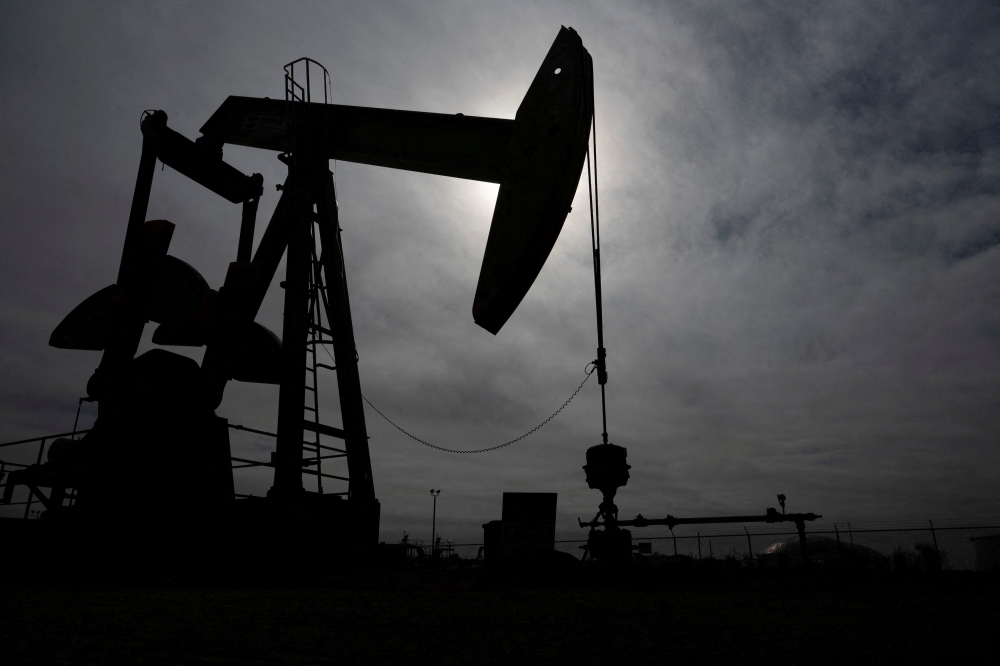
SAINT PETERSBURG, June 5 — The Kremlin’s economic envoy told AFP yesterday that Europe needed Russian oil and gas to “survive” the energy crisis triggered by the war in the Middle East.
Western nations have hit Russian energy with sanctions since the start of the war in Ukraine, but European countries have continued to buy Russian gas — LNG in particular — from their former key supplier.
Surging prices due to the US-Israeli war on Iran and Tehran’s closure of the Strait of Hormuz have even pushed some countries, including the US and Britain, to ease some of the restrictions on Russian oil.
“The world is on the brink of a very serious energy crisis because of the instability in the Middle East,” Kremlin economic envoy Kirill Dmitriev told AFP on the sidelines of the Saint Petersburg International Economic Forum (Spief).
“In order for Europe to overcome this crisis, Europe needs to find options for partnership with Russia and to restore the flows of both oil and gas from Russia,” he said.
Analysts say the EU imported more Russian liquefied natural gas (LNG) in the first quarter of 2026 than in any period since 2022, with Russia the bloc’s second-largest supplier.
Europe plans to ban the import of Russian LNG from next year and has ruled out any easing of existing sanctions.
The EU’s top diplomat, Kaja Kallas, has urged more pressure to be put on Moscow.
“So far we haven’t seen the willingness from the Russian side to actually negotiate” to end the war, she told AFP in Brussels on Wednesday.
Nevertheless, Russia has sensed an opportunity to have the sanctions relaxed or overlooked amid the crisis.
At the start of the war in the Middle East, Russian President Vladimir Putin said he was ready to supply European countries with oil and gas if they committed to “lasting and stable cooperation” with Moscow.
Russia has increased its energy sales to China and India since 2022, often selling at a discount to global benchmark prices. — AFP
caspar40 posted a photo:
Schloss Nymphenburg.
Munich is a top European city for urban vibrancy, culture, and a fascinating, beautiful heritage spanning the Middle Ages, the baroque and rococo periods of the 18th century, and beyond. The city reflects well the massive wealth of the Bavarian nobility over the centuries. Although not captured here, I also loved the extensive neighbourhoods immediately surrounding Munich's Altstadt, with its many trendy cafes, great restaurants, and young peopl
Munich is a top European city for urban vibrancy, culture, and a fascinating, beautiful heritage spanning the Middle Ages, the baroque and rococo periods of the 18th century, and beyond. The city reflects well the massive wealth of the Bavarian nobility over the centuries. Although not captured here, I also loved the extensive neighbourhoods immediately surrounding Munich's Altstadt, with its many trendy cafes, great restaurants, and young people, as well as beautiful, lively parks such as the English Garden.
dannyhennesy posted a photo:
...as I said earlier I missed out on the Fright Knight theme, I started frequenting cafés, pubs and clubs... but a small AFOL was still around in me when I visited friends with Lego I was always ready to play with their kids (and their Lego...
Peace and Noise!
/Mushroombrain from the brick-block
...as I said earlier I missed out on the Fright Knight theme, I started frequenting cafés, pubs and clubs... but a small AFOL was still around in me when I visited friends with Lego I was always ready to play with their kids (and their Lego...
Until just the past few decades, textiles were generally created with only practical applications in mind. Although fiber and cloth in its myriad forms had been produced for millennia around the globe, fabrics were woven for either domestic or industrial use, and crafts such as knitting, weaving, basket- and net-making, and more were considered purely functional. Think clothing or decor. Even ornate medieval tapestries were conceived as utilitarian objects, used in stone buildings like church
Until just the past few decades, textiles were generally created with only practical applications in mind. Although fiber and cloth in its myriad forms had been produced for millennia around the globe, fabrics were woven for either domestic or industrial use, and crafts such as knitting, weaving, basket- and net-making, and more were considered purely functional. Think clothing or decor. Even ornate medieval tapestries were conceived as utilitarian objects, used in stone buildings like churches and large homes to soften sounds and insulate against the cold.
Within the canon of Western art history, in particular, the hierarchy of fine art has long been quite definite: painting and sculpture were chief among mediums. Anything else fell under categories of preparatory processes, craft, or ornament. But in the mid-20th century, that delineation began to shift. Anni Albers, who taught at the Bauhaus and later Black Mountain College, was one of the first artists to approach weaving as both a craft and an art. She laid the foundations for later artists like Sheila Hicks, Magdalena Abakanowicz, Cecelia Vicuña, Faith Ringgold, and many more. Today, artists like Bisa Butler, Do Ho Suh, Nick Cave, and countless others continue to challenge boundaries and redefine the role of textiles in art.
Chiachio & Giannone. “Conversación sobre arte” (2022), hand-embroidered quilt with cotton threads on toile de Jouy, 164 x 200 centimeters. Photo by Nacho Iasparra. Courtesy of Bendana | Pinel Art Contemporain, Paris
A new exhibition at Saatchi Gallery takes a fresh look at how fiber has become a celebrated facet of contemporary art. Textile Art Redefined is curated by Helen Adams, founder of the platform Textile Curator. Vibrant colors and patterns infuse the show with a sense of joy and optimism, while the selection highlights the broad range of approaches to different materials, such as Ian Berry’s large-scale installation titled “Secret Garden,” which mimics Delft tiles and yet is made entirely of recycled denim. And Kenny Nguyen’s large-scale wall piece, made of thousands of colorful strips of silk, appears to undulate and swirl.
For some of these artists, like Argentinian duo Chiachio & Giannone and knit designer Kaffe Fassett—who continues to work alongside his long-term partner, designer Brandon Mably—the union of art and craft lends itself to a entire lifestyle built around fiber as a form of expression, brimming with color and patterns. Colossal readers may also recognize work by Anne von Freyburg, Signe Emdal,Deniz Kurdak, and Benjamin Shine, in addition to Caroline Burgess, Sara Impey, Simone Pheulpin, Jakkai Siributr, Magda Sayeg, and Jenni Dutton. “In an increasingly digital world, creating by hand has taken on a new appreciation,” says a statement.
Textile Art Redefined continues through May 10 in London. Adams is also the author of the new book Textile Fine Art, published by Laurence King.
Anne von Freyburg, “In Flight Mode (After Fragonard, The Swing)” (2026), textile wall installation painting: acrylic ink, synthetic fabrics, PVC fabric, tapestry-fabric, sequin fabrics, hand-embroidery, polyester wadding and hand-dyed tassel fringes on canvas, 350 x 260 centimeters. Courtesy of K Contemporary Denver + Santa Fe. Photo by Pasquale ViglioneInstallation view of ‘Textile Art Redefined,’ Saatchi Gallery, London. Photo by Pasquale ViglioneIan Berry, “The Secret Garden” (2026), denim on denim, dimensions variable. Photo by Debbie BraggIan Berry, “The Secret Garden” (detail). Photo by Debbie BraggKenny Nguyen, “Echo Series No. 6” (2025), hand-cut silk fabric, acrylic paint, canvas, mounted on wall, 289.56 x 332.74 x 12.70 centimetersKaffe Fassett, “Geometric Sampler” (2019), cotton and wool, 150 x 188 centimeters. Photo by Brandon MablyInstallation view of ‘Textile Art Redefined,’ Saatchi Gallery, London. Photo by Pasquale ViglioneTop to bottom: Magda Sayeg, “The Machine Gun” (2017), replica of Bushmaster XM15-E2S: acrylic mix triple worsted yarn, vintage children’s sweaters, 200 x 68 centimeters. Magda Sayeg, “Yoga Balls” (2025), acrylic yarn and inflated PVC ball, approx. 55 x 75 centimeters. Photo by Pasquale ViglioneSigne Emdal, “Dreams of Gaia” (2024), Italian mohair, Shetland wool, Swedish cotton warp, gold-plated artist’s signature, 195 x 60 x 18 centimeters. Created with funding support from the Danish Beckett Foundation. Installation view of ‘Textile Art Redefined,’ Saatchi Gallery, London. Photo by Pasquale Viglione
caspar40 posted a photo:
Scholss Nymphenburg.
Munich is a top European city for urban vibrancy, culture, and a fascinating, beautiful heritage spanning the Middle Ages, the baroque and rococo periods of the 18th century, and beyond. The city reflects well the massive wealth of the Bavarian nobility over the centuries. Although not captured here, I also loved the extensive neighbourhoods immediately surrounding Munich's Altstadt, with its many trendy cafes, great restaurants, and young peopl
Munich is a top European city for urban vibrancy, culture, and a fascinating, beautiful heritage spanning the Middle Ages, the baroque and rococo periods of the 18th century, and beyond. The city reflects well the massive wealth of the Bavarian nobility over the centuries. Although not captured here, I also loved the extensive neighbourhoods immediately surrounding Munich's Altstadt, with its many trendy cafes, great restaurants, and young people, as well as beautiful, lively parks such as the English Garden.

 Login
Login