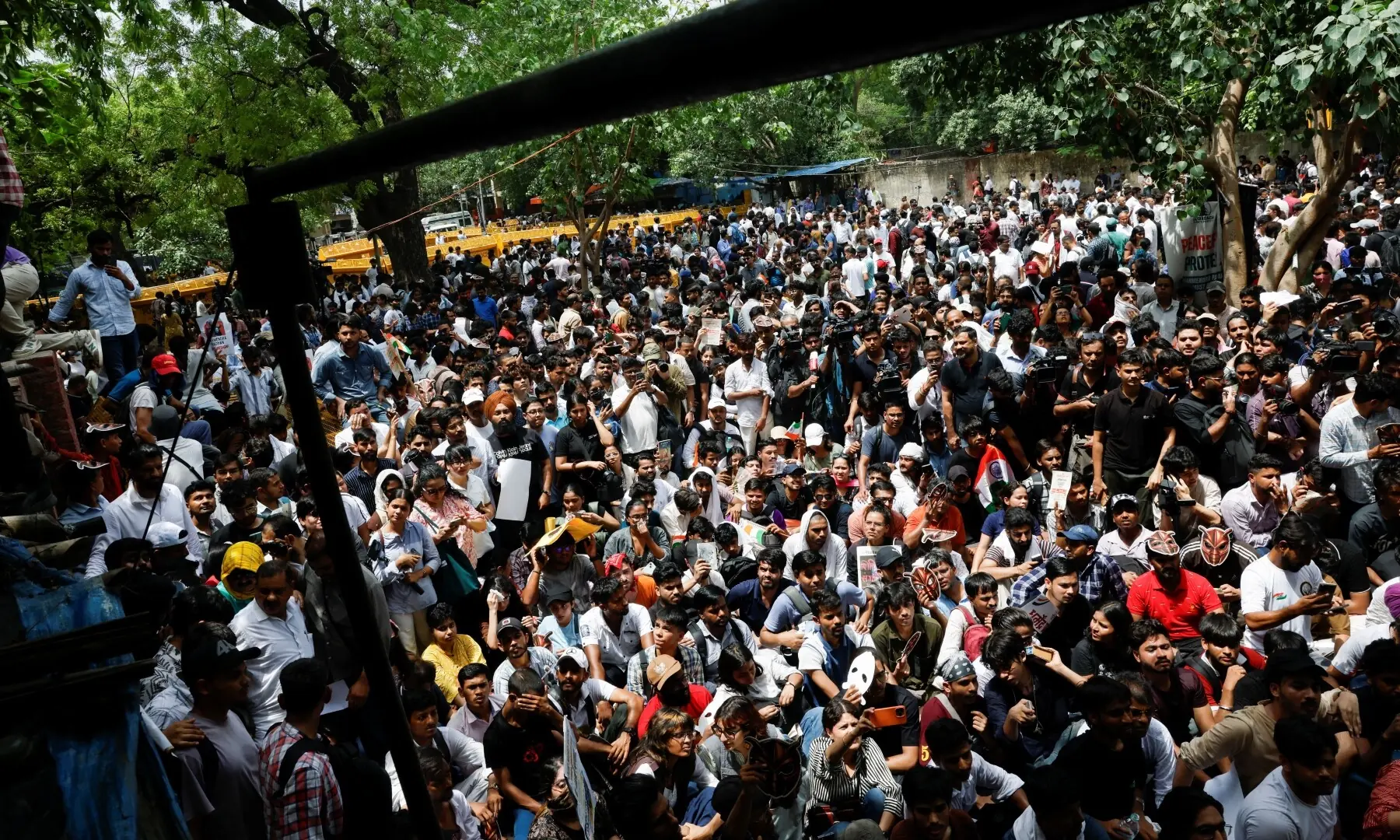
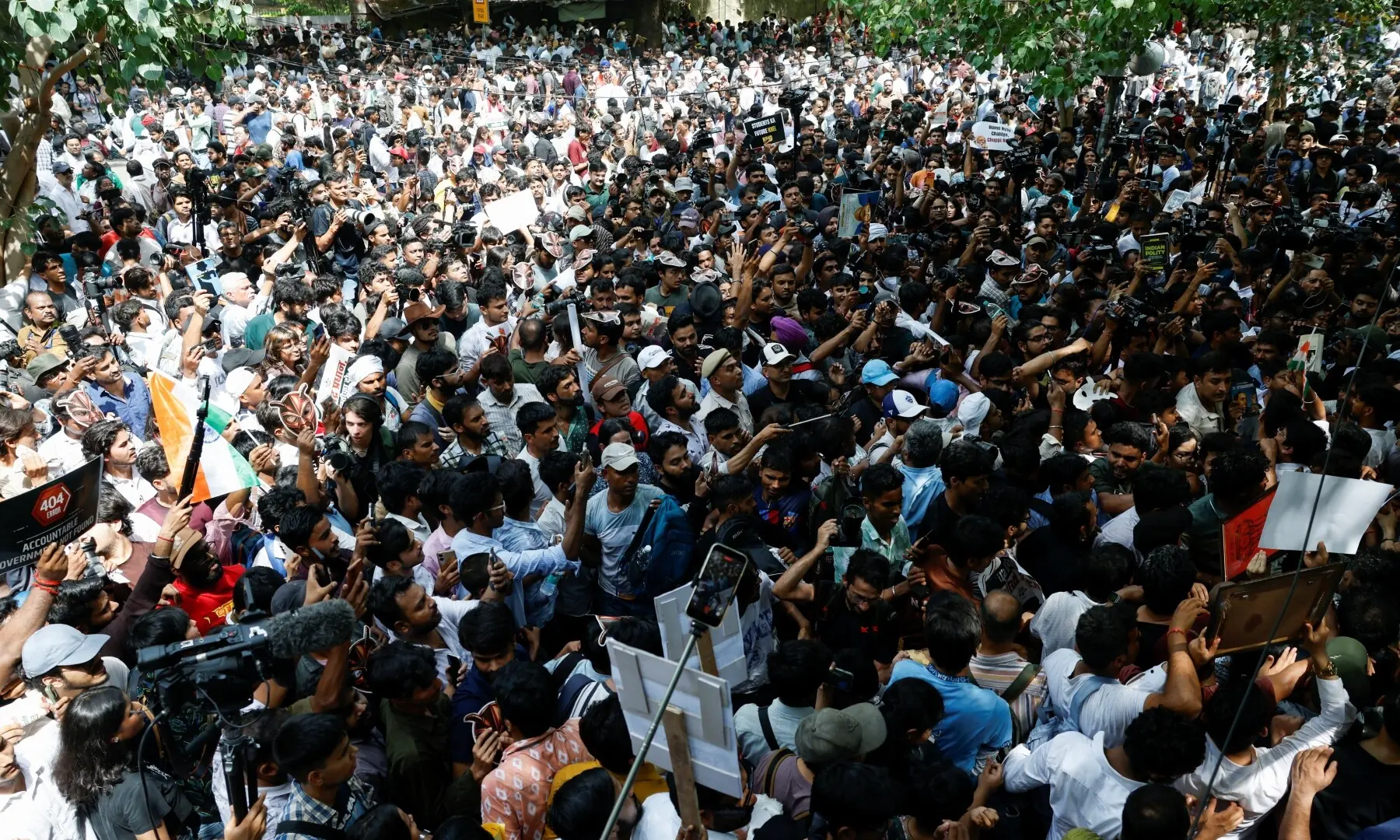
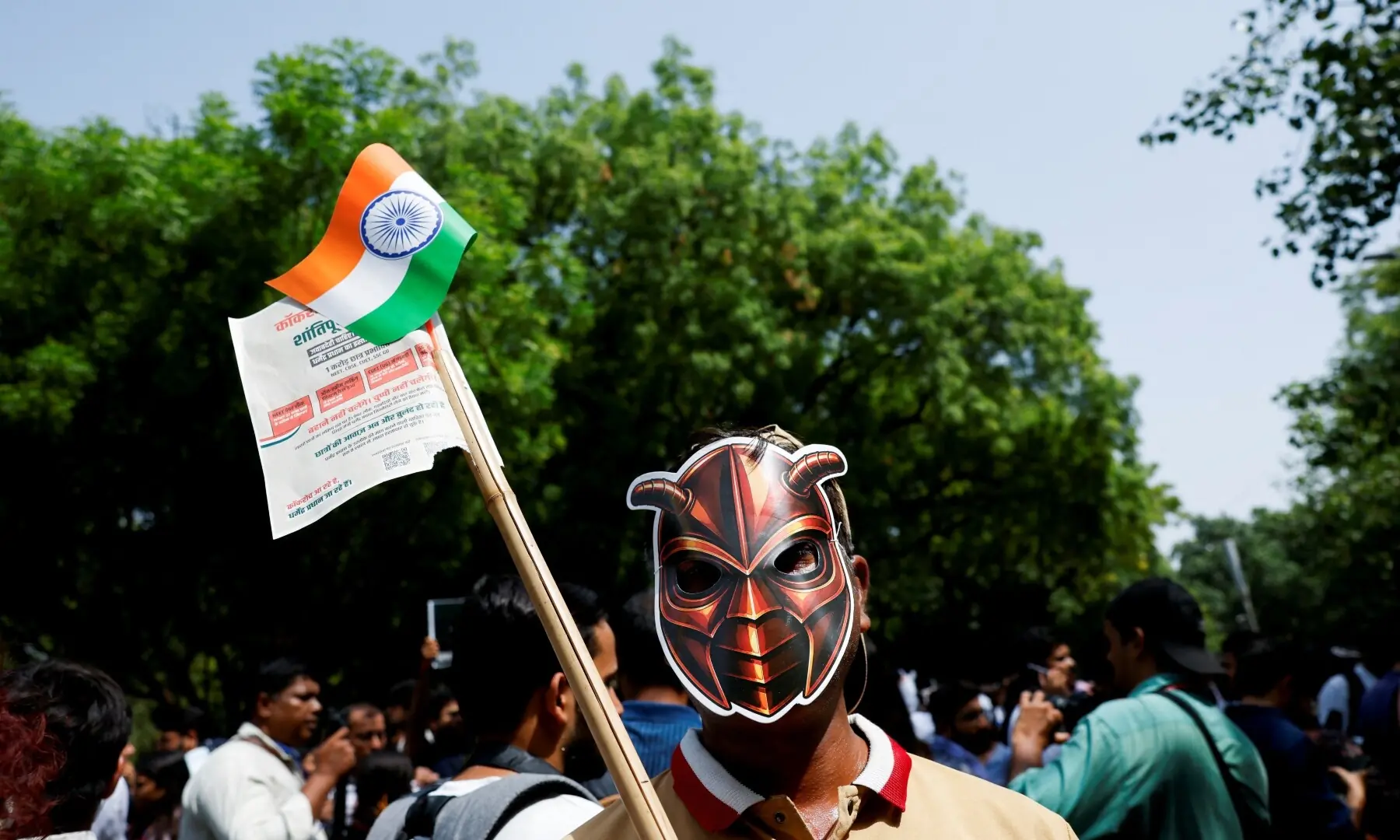
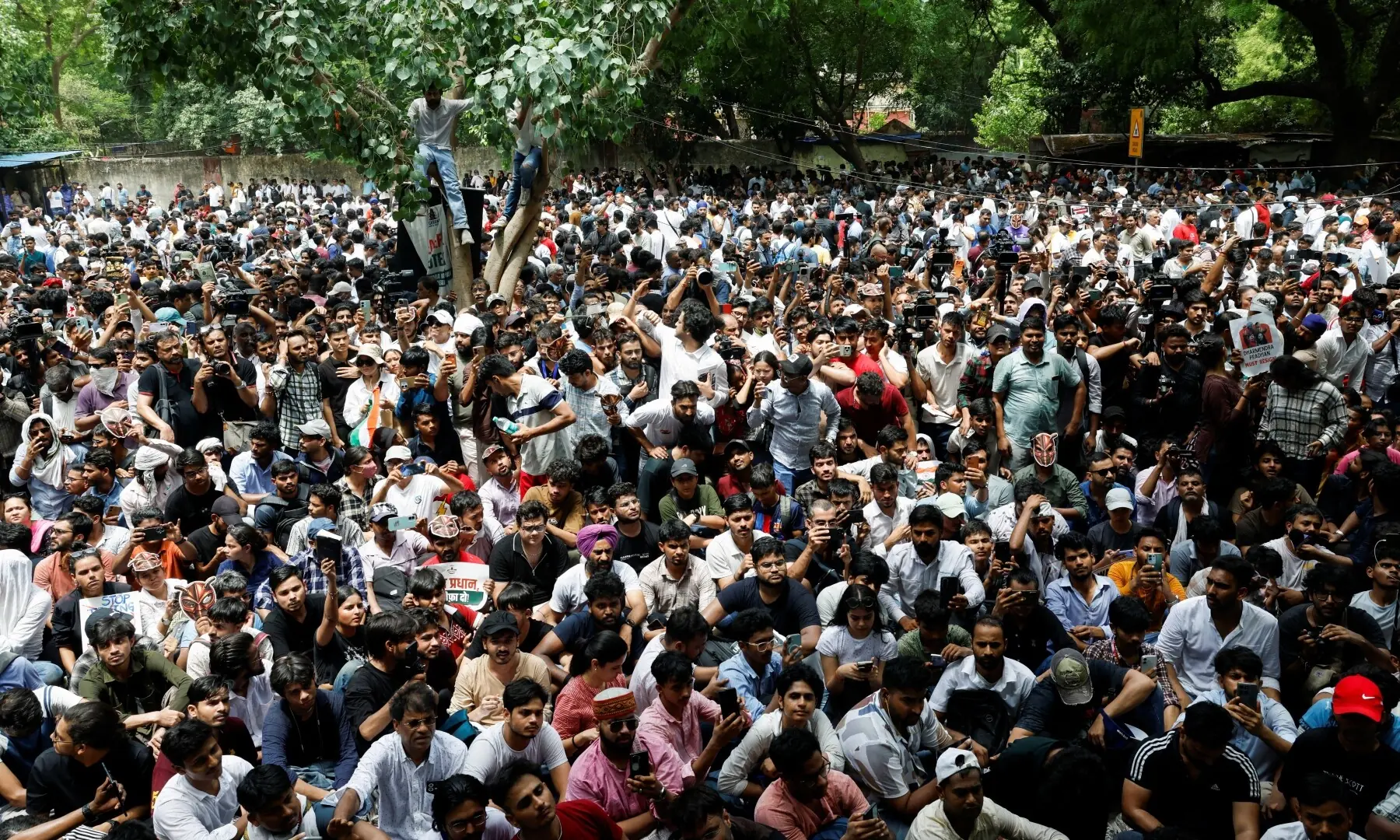
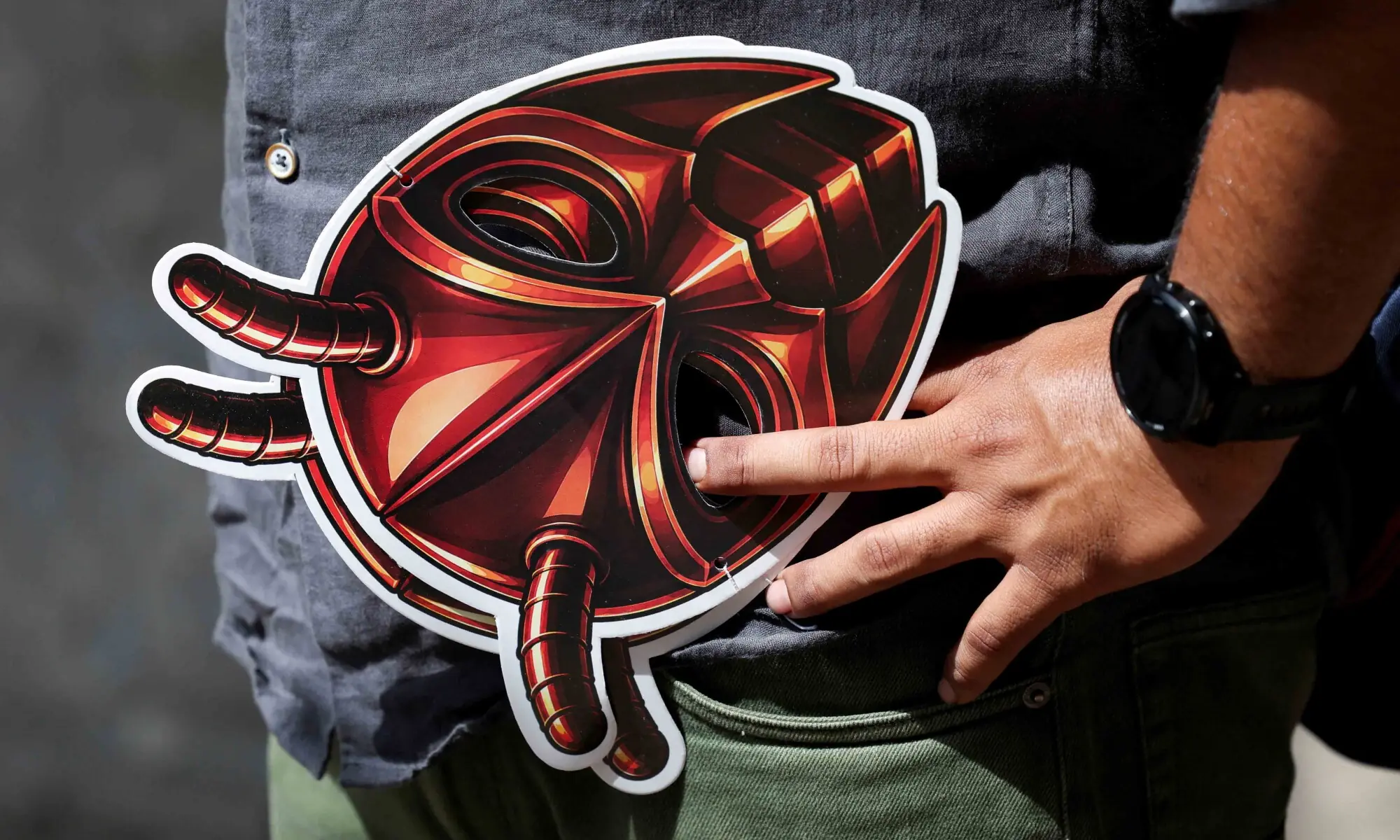
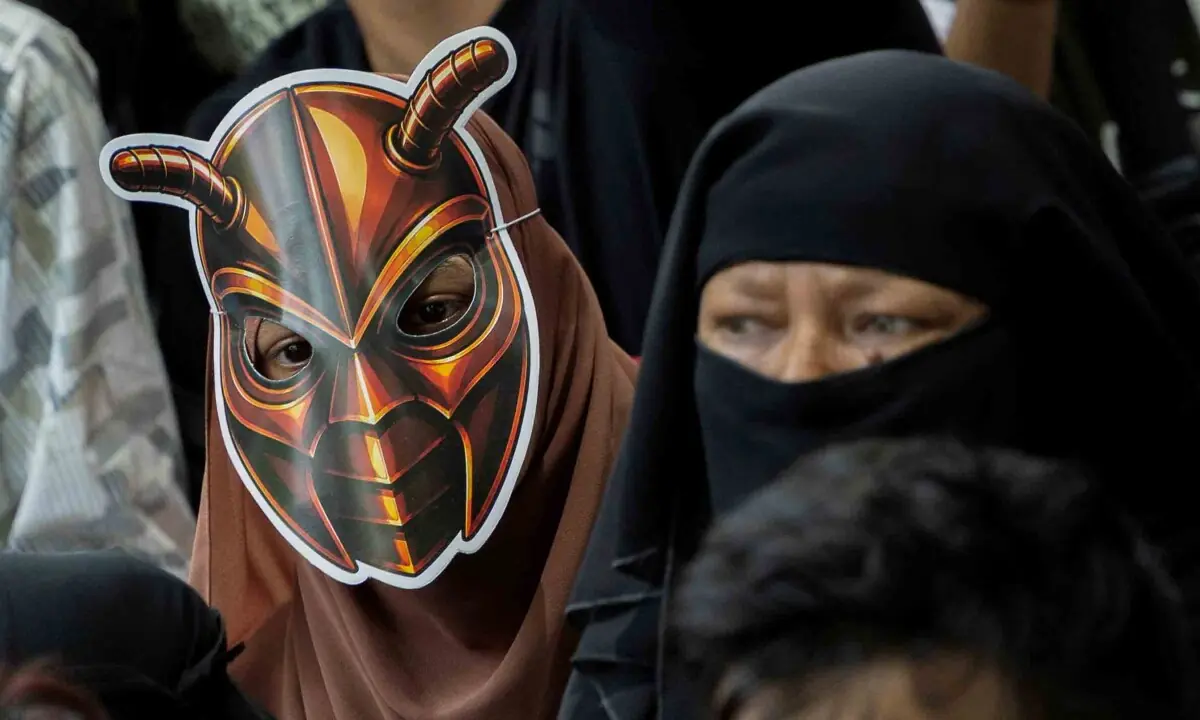
Young students gathered in New Delhi on Saturday for the first street protest by the satirical “Cockroach Janta Party” (CJP) over alleged irregularities in recent major examinations.
Carrying paper cockroach masks and pamphlets, the protesters called for the resignation of Education Minister Dharmendra Pradhan who has faced criticism over the irregularities, including question paper leaks and technical glitches.
The CJP has garnered millions of followers on social media since its launch last month.
Modi’s government has blocked the movement’s X account in the country, a move the CJP has challenged in a Delhi court.
Political analysts say the group’s popularity has begun to dent Modi’s image despite his party’s recent victories in key state elections, even as wider frustration grows over rising fuel prices and gas shortages brought by the Iran war.
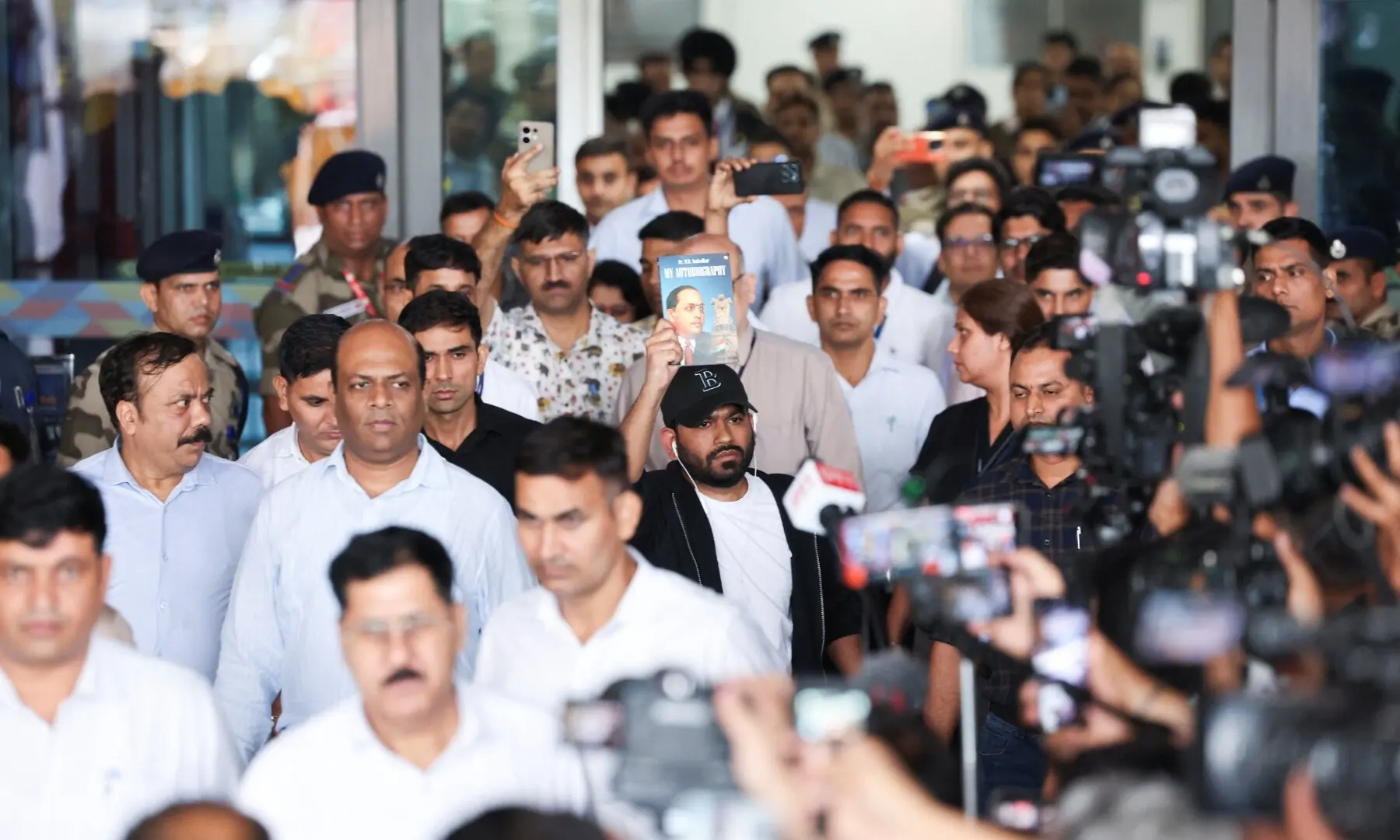
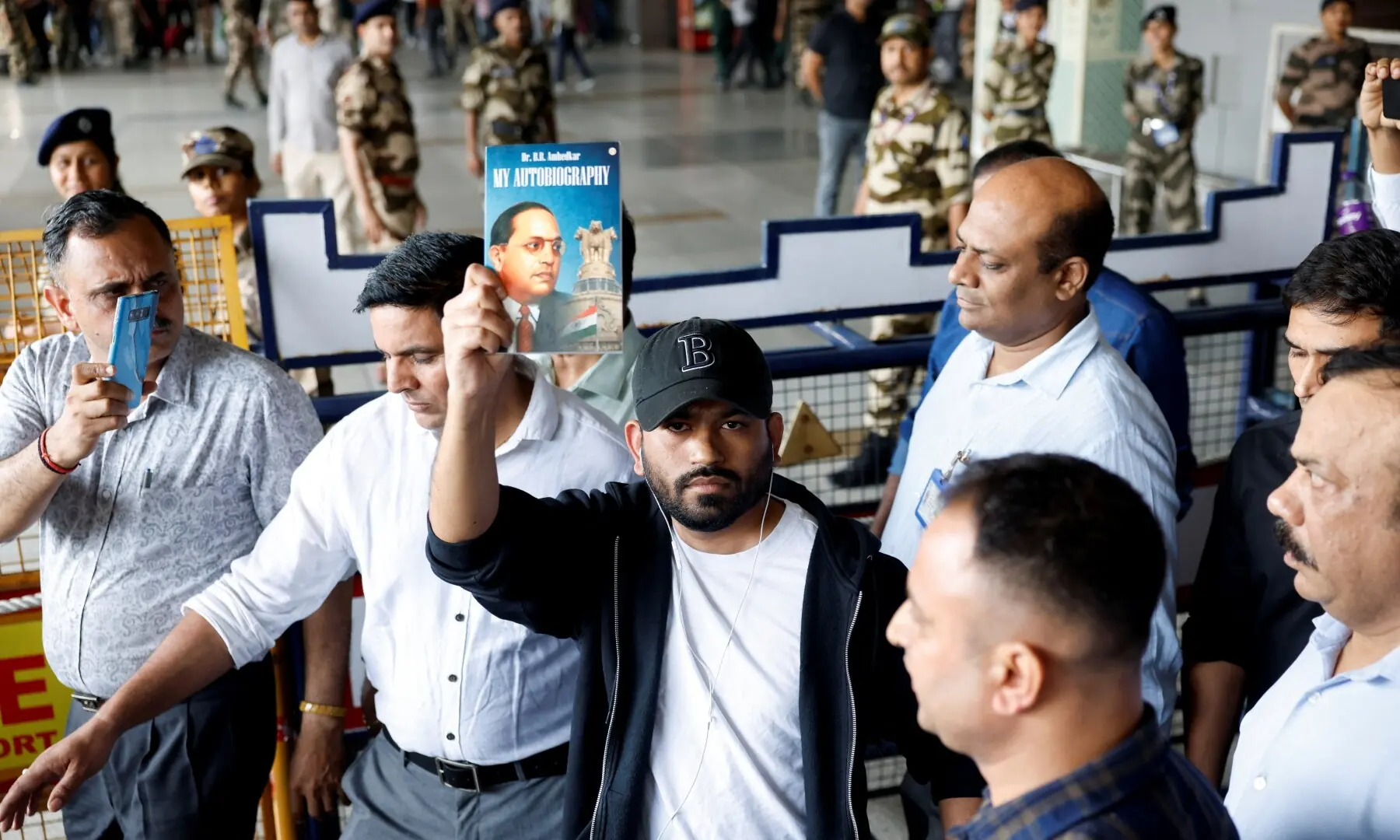
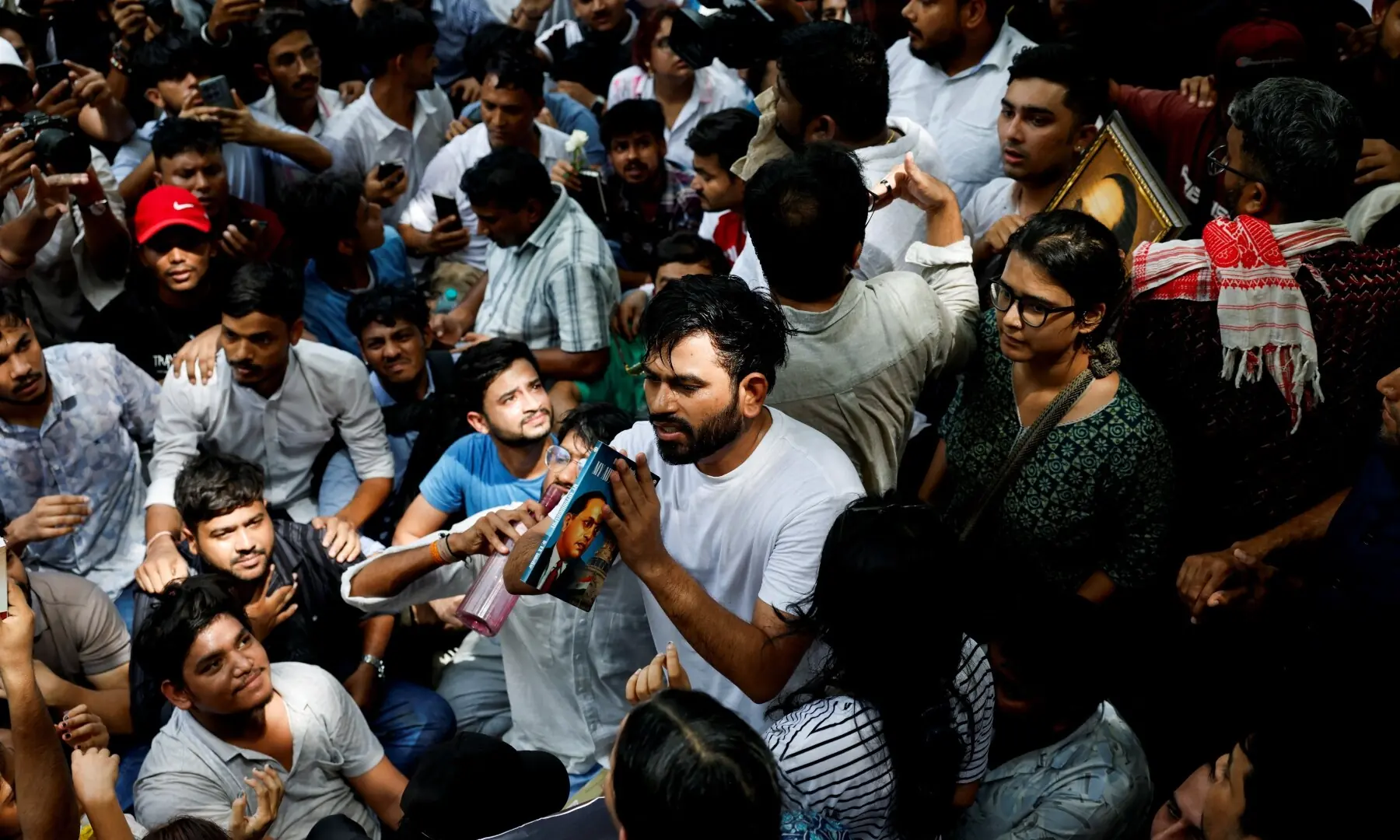
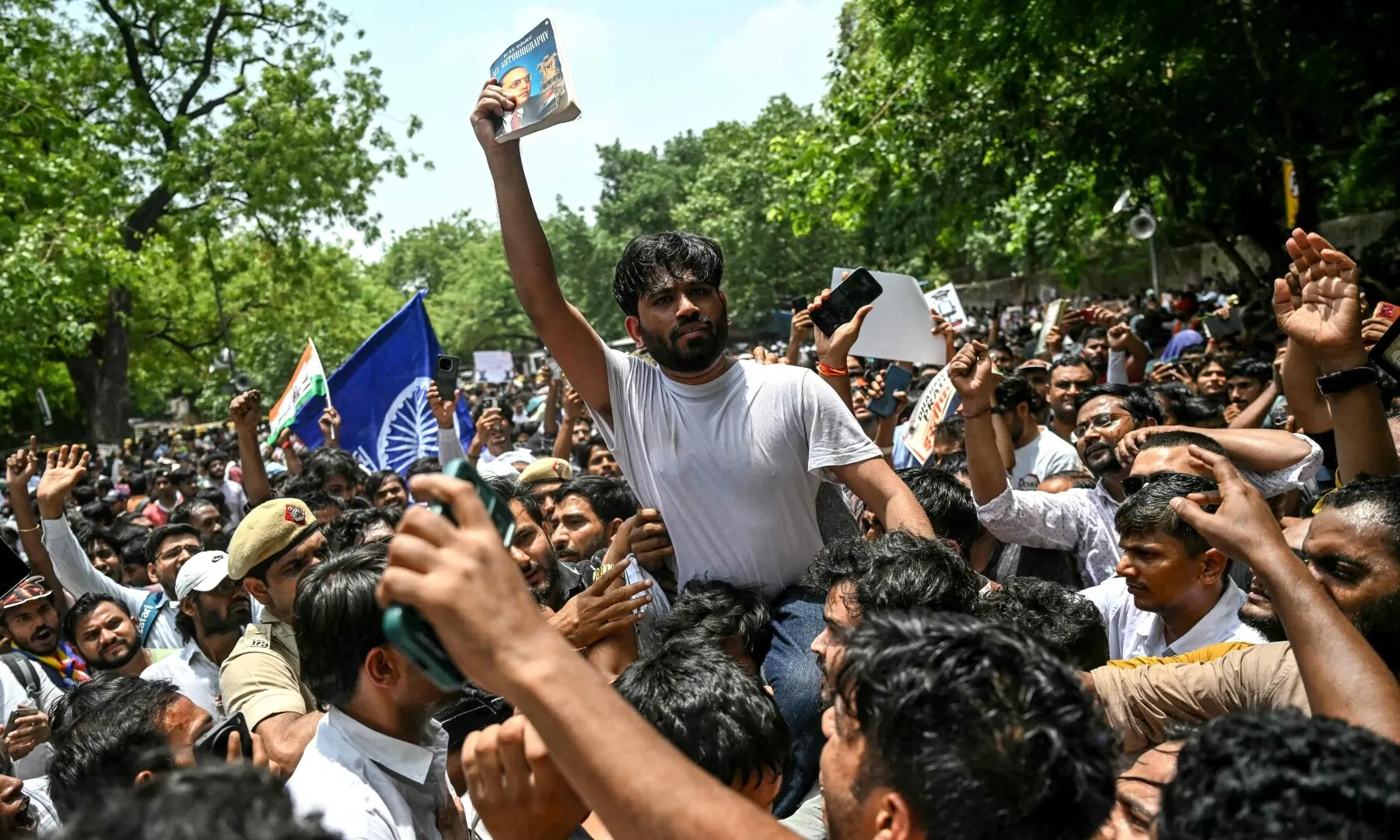
Abhijeet Dipke, head of the Cockroach Janta Party (CJP), holds a copy of “My Autobiography” by Dr. B. R. Ambedkar as he gestures towards his supporters upon his arrival at an airport in New Delhi, India on June 6, 2026. —Reuters
Abhijeet Dipke, head of the Cockroach Janta Party (CJP), holds a copy of “My Autobiography” by Dr. B. R. Ambedkar upon his arrival at an airport in New Delhi, India, June 6, 2026. —Reuters
Supporters of the Cockroach Janta Party (CJP) gather during a sit-in protest demanding the resignation of Indian Education Minister Dharmendra Pradhan, in New Delhi, India on June 6, 2026. —Reuters
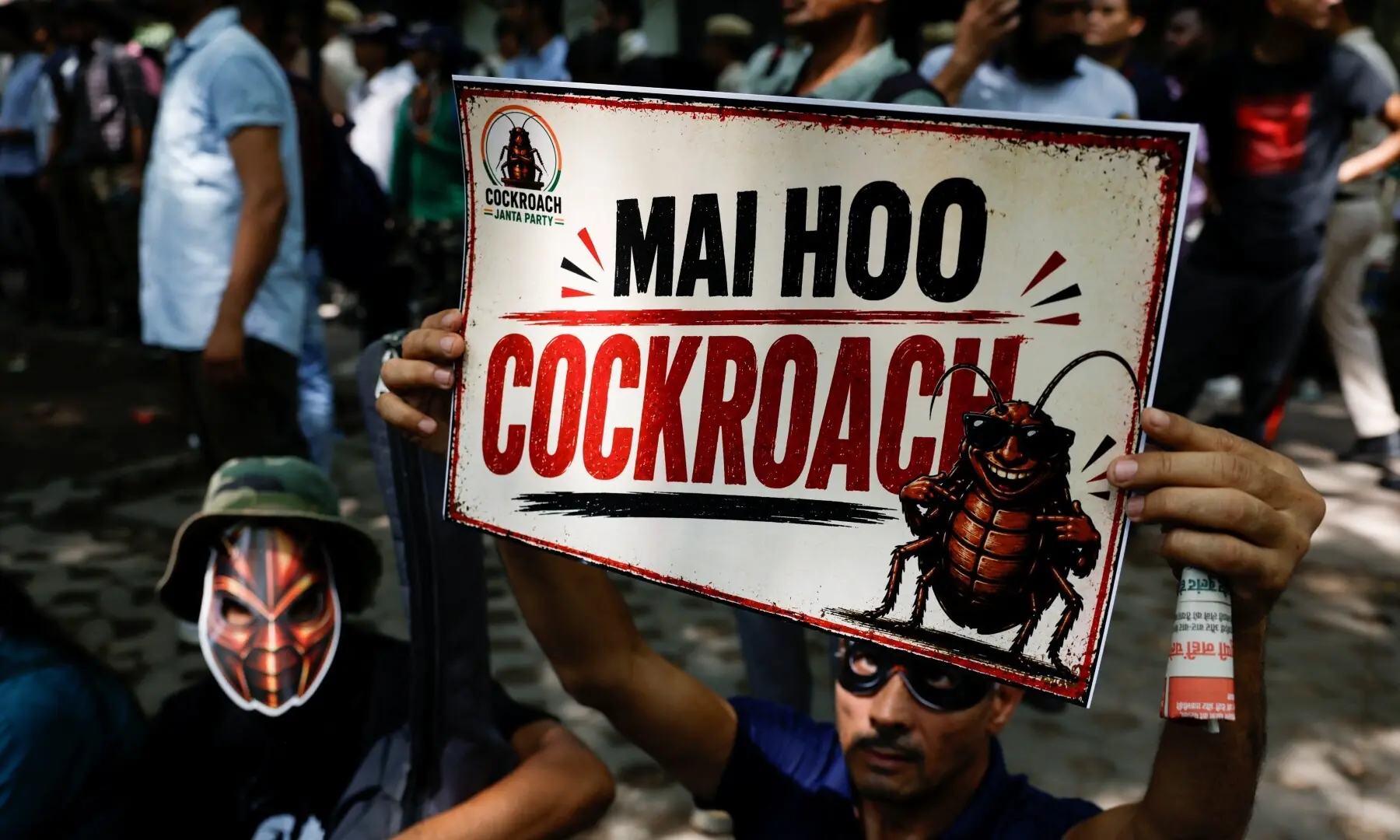
A person wearing a mask holds a poster which reads “I am a Cockroach”, as supporters of the Cockroach Janta Party (CJP) await the arrival of Abhijeet Dipke, head of the CJP, on the day of a sit-in protest demanding the resignation of Indian Education Minister Dharmendra Pradhan, in New Delhi, India on June 6, 2026. —Reuters
Supporters of the Cockroach Janta Party (CJP) gather during a sit-in protest demanding the resignation of Indian Education Minister Dharmendra Pradhan, in New Delhi, India on June 6, 2026. —Reuters
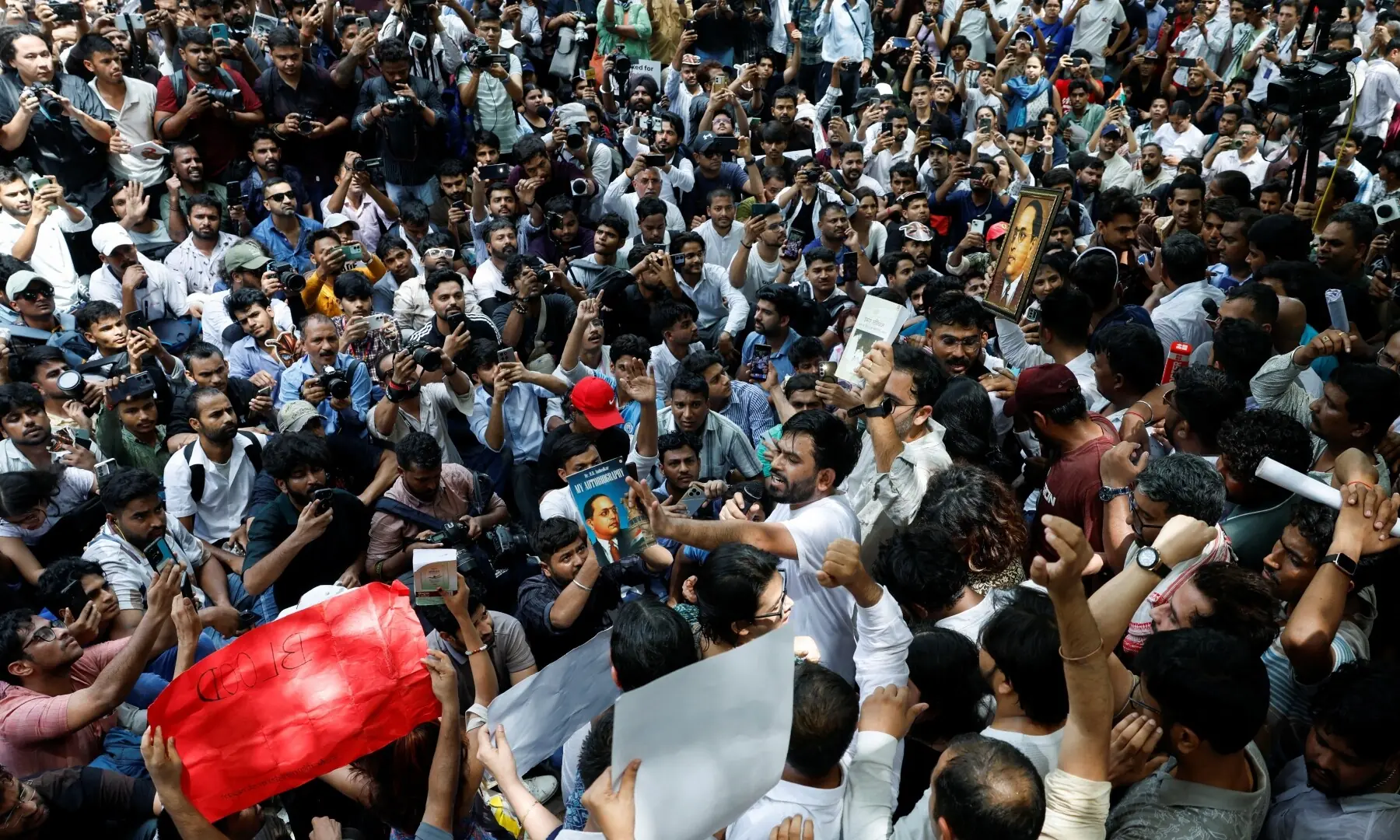
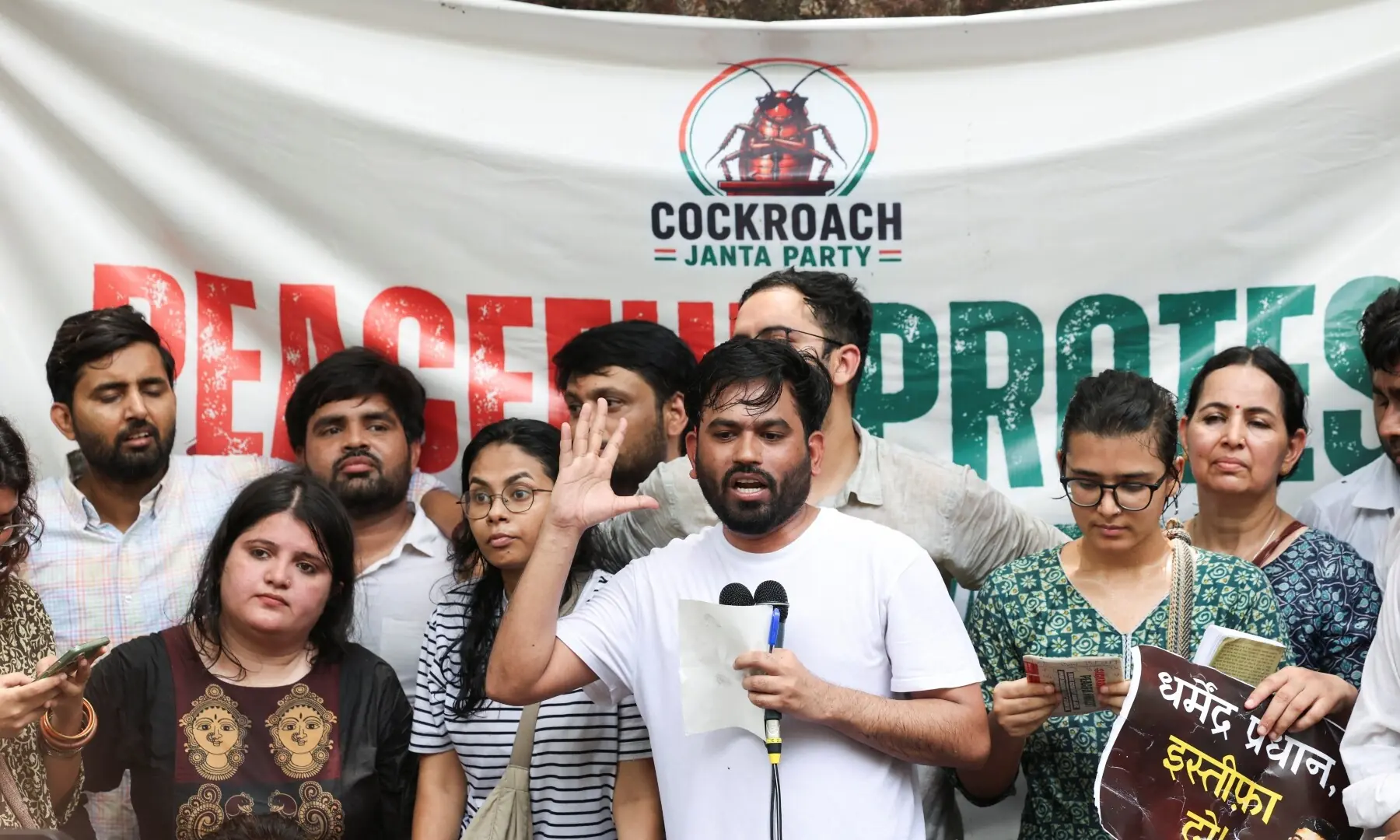
Abhijeet Dipke, head of the Cockroach Janta Party (CJP), speaks to supporters of the CJP during a sit-in protest demanding the resignation of Indian Education Minister Dharmendra Pradhan, in New Delhi, India on June 6, 2026. —Reuters
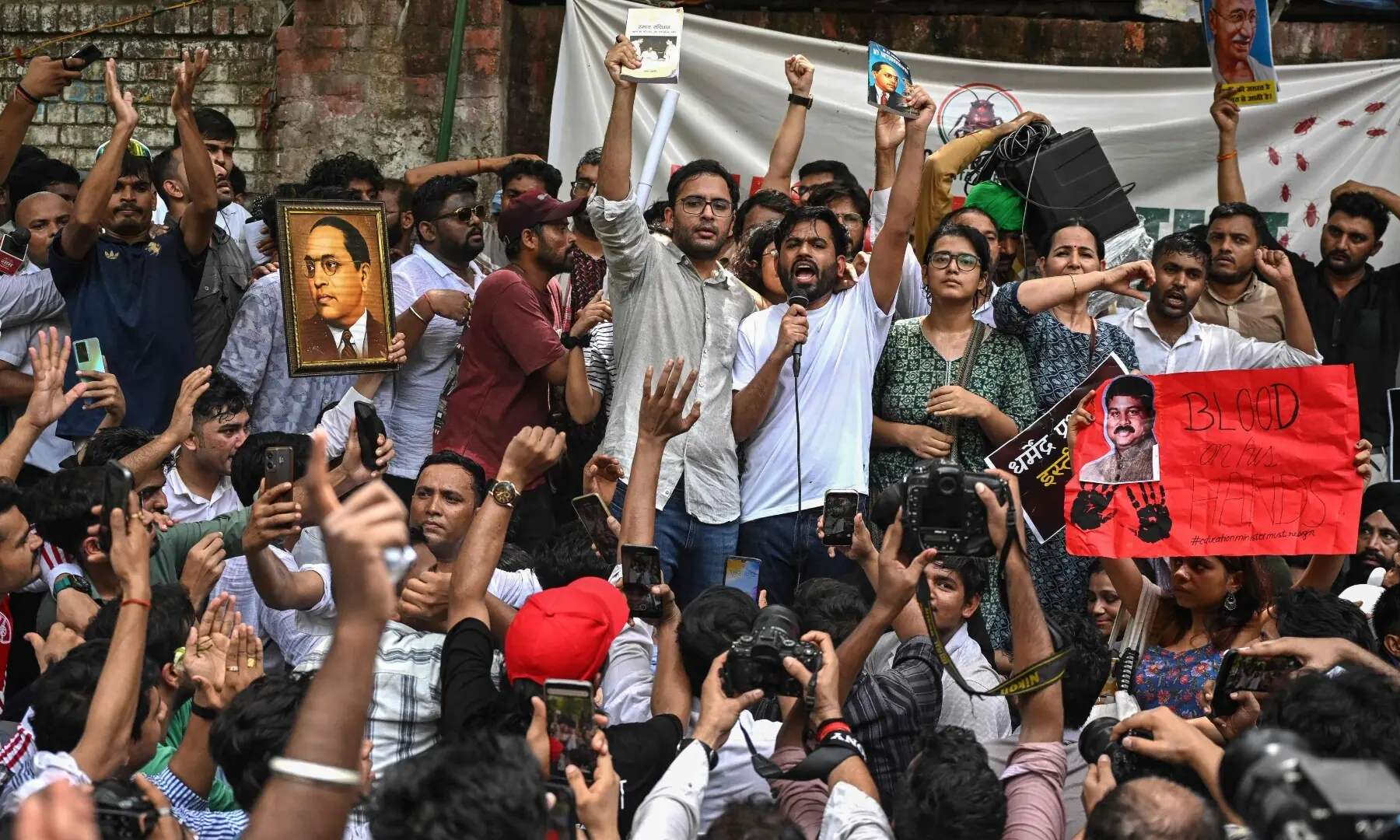
Cockroach Janta Party (CJP) founder Abhijeet Dipke (C, right) shouts slogans during a protest over alleged irregularities in the country’s major examinations, in New Delhi on June 6, 2026. —AFP
Abhijeet Dipke, head of the Cockroach Janta Party (CJP), requests supporters to maintain peace during a sit-in protest demanding the resignation of Indian Education Minister Dharmendra Pradhan, in New Delhi, India on June 6, 2026. —Reuters
A person wears a cockroach themed mask, as supporters of the Cockroach Janta Party (CJP) await the arrival of Abhijeet Dipke, head of the CJP, on the day of a sit-in protest demanding the resignation of Indian Education Minister Dharmendra Pradhan, in New Delhi, India on June 6, 2026. —Reuters
Abhijeet Dipke, head of the Cockroach Janta Party (CJP), speaks to supporters of the CJP during a sit-in protest demanding the resignation of Indian Education Minister Dharmendra Pradhan, in New Delhi, India on June 6, 2026. —Reuters
A person wears a cockroach themed mask, as supporters of the Cockroach Janta Party (CJP) await the arrival of Abhijeet Dipke, head of the CJP, on the day of a sit-in protest demanding the resignation of Indian Education Minister Dharmendra Pradhan, in New Delhi, India, June 6, 2026. — Reuters
Cockroach Janta Party (CJP) founder Abhijeet Dipke (C) takes part in a protest over alleged irregularities in the country’s major examinations, in New Delhi on June 6, 2026. —AFP
Cockroach Janta Party (CJP) supporters shout slogans during a protest over alleged irregularities in the country’s major examinations, in New Delhi on June 6, 2026. —AFP
Supporters of the Cockroach Janta Party (CJP) gather during a sit-in protest demanding the resignation of Indian Education Minister Dharmendra Pradhan, in New Delhi, India on June 6, 2026. —Reuters
A person holds a cockroach themed mask, as supporters of the Cockroach Janta Party (CJP) await the arrival of Abhijeet Dipke, head of the CJP, on the day of a sit-in protest demanding the resignation of Indian Education Minister Dharmendra Pradhan, in New Delhi, India, June 6, 2026. — Reuters
Header image: A girl wears a cockroach themed mask, as supporters of the Cockroach Janta Party (CJP) listens to Abhijeet Dipke, head of the CJP, during a sit-in protest demanding the resignation of Indian Education Minister Dharmendra Pradhan, in New Delhi, India, June 6, 2026. — Reuters
Australia has secured three shipments of jet fuel from China totalling 600,000 barrels, Prime Minister Anthony Albanese said Tuesday, doubling the national supply.
Australian Prime Minister Anthony Albanese. File photo: Anthony Albanese, via Facebook.
The Middle East conflict and closure of the Strait of Hormuz have caused fuel prices to soar and left many Asia-Pacific nations facing an energy crisis.
Tourism and freight exports in the island continent are reliant on air travel, a sector heavily impacted by the climbing prices.
The jet fuel shipments are expected to arrive in June and follow talks between Albanese and Chinese Premier Li Qiang on energy security last month.
China supplied a third of Australia’s aviation fuel last year and is a major importer of Australian iron ore, coal and liquefied natural gas (LNG).
Canberra has highlighted to Beijing that jet fuel supports the Australian resources sector, officials said.
Australia’s Trade Minister Don Farrell is expected to meet his Chinese counterpart Wang Wentao in Suzhou this week on the sidelines of an APEC trade ministers meeting in the Chinese city.
Trade between Australia and China reached Au$326 billion (US$233 billion) last year, dominated by Australian commodities exports.
Farrell is expected to arrive in Tokyo on Tuesday to discuss energy security and trade.
Japan is another major buyer of Australian LNG and coal.
Australia said this month it will reserve the equivalent of 20 percent of gas exports for the domestic market to avoid supply shortfalls.
President Xi Jinping hailed China and Russia’s “unyielding” ties in talks with Vladimir Putin on Wednesday, as the pair met to underscore their alliance days after Donald Trump’s own visit to Beijing.
Chinese President Xi Jinping (left) welcomes Russian President Vladimir Putin at the Great Hall of the People in Beijing on May 20, 2026. Photo: The Kremlin.
The two countries’ ties have deepened since Moscow’s 2022 invasion of Ukraine, as Russia has become increasingly dependent on China, its main oil customer.
Putin was received by Xi outside Beijing’s opulent Great Hall of the People in much the same fashion as Trump last week, complete with chanting children and military fanfare.
But the language was much warmer, with Xi telling the Russian leader Beijing and Moscow have “continuously deepened our political mutual trust and strategic coordination with a resilience that remains unyielding”, according to Chinese state media.
Opening talks, both were quick to laud their countries’ special ties as they extended their treaty of “friendly cooperation”.
Putin, quoting a Chinese phrase, told Xi: “A day apart feels like three autumns”, adding that relations had reached an “unprecedentedly high level” despite “unfavourable external factors”, Russian media footage showed.
In an apparent swipe at the United States, Xi warned of “unilateral and hegemonic countercurrents running rampant” in the world.
Children greet Chinese President Xi Jinping (left) and Russian President Vladimir Putin during the welcome ceremony at the Great Hall of the People in Beijing on May 20, 2026. Photo: The Kremlin.
In contrast to Trump’s visit last week, which yielded little in the way of immediate concrete announcements, Putin and Xi signed a slew of agreements on Wednesday on trade, media and energy.
The two leaders later had talks over tea, which the Kremlin had previously said would be reserved for “the most important issues” such as Ukraine, Iran and relations with the US.
That session lasted around 1.5 hours before Putin headed to the airport, according to Russian media.
Fossil fuel push
Beneath the camaraderie, Putin is now perceived by many to be the junior partner in the relationship.
The Russian leader has been weakened over four years of the Ukraine conflict, with his country’s economy shrinking in the first quarter of the year as factors such as wartime spending, labour shortages and sanctions take their toll.
Analysts believed Putin would use his visit to push for progress on the “Power of Siberia 2”, a major natural gas pipeline running from Russia to China through Mongolia.
But Kremlin spokesman Dmitry Peskov told Russian media Wednesday that while the two sides had reached a “basic understanding” — including on “the route and how it will be built” — there was no “clear timeline”, and “there are still some details to be worked out”.
Chinese President Xi Jinping (left) and Russian President Vladimir Putin inspect the honour guard at the Great Hall of the People in Beijing on May 20, 2026. Photo: The Kremlin.
The US-Israeli war on Iran has hampered crude and gas flows from the Middle East, giving an opportunity for Putin to offer Russian energy sources as an alternative.
“Russia and China are actively cooperating in the energy sector… We are, of course, ready to continue reliably supplying all these types of fuel to the rapidly growing Chinese market,” Putin said Wednesday.
His priorities may differ from China’s, which wants the Middle East conflict concluded as soon as possible.
Underlining that, Xi told Putin on Wednesday that “a comprehensive ceasefire is of utmost urgency, resuming hostilities is even more inadvisable and maintaining negotiations is particularly important”.
‘Sovereign foreign policy’
Xi has played host to a series of world leaders as an increasingly unpredictable United States under Trump has pushed many to shore up alliances with Beijing.
Many have urged him to use his influence with Russia and Iran to help bring an end to the respective conflicts there.
US President Donald Trump and Chinese President Xi Jinping tour the Hall of Prayer of Good Harvest at the Temple of Heaven in Beijing on May 14, 2026. Photo: The White House, via Flickr.
Ukrainian President Volodymyr Zelensky had asked Trump to discuss ending the war during his meetings with Xi last week.
The pair did talk about the issue, but the US president left China without a breakthrough.
Beijing has regularly called for talks to end the war in Ukraine, but has never condemned Russia for sending in troops — presenting itself instead as a neutral party.
The two leaders talked about Ukraine, Chinese state media said after the visit had ended, without giving further details.
On Wednesday Putin said that Russia and China were “committed to an independent and sovereign foreign policy”.
In a joint statement released by the Kremlin, Russia said it “positively assesses the objective and unbiased position of the Chinese side regarding the situation in Ukraine and welcomes China’s aspiration to play a constructive role”.
The Philippines defence minister was defiant on Friday after Beijing sanctioned him for what it termed “irresponsible remarks” as the two nations grapple over the disputed South China Sea.
Gilberto Teodoro as well as his spouse and child will be banned from entering China’s mainland, Hong Kong and Macau, an unnamed foreign ministry spokesperson said in an online statement on Thursday.
Philippines’ Secretary of National Defense Gilberto Teodoro delivers a speech as he attends the 23rd Shangri-La Dialogue summit in Singapore on May 31, 2026. Photo: Philippines’ Department of National Defense, via X.
It added that “organisations and individuals in China” will not be allowed to “engage in any transaction, cooperation or other activities with him and his spouse and child”.
The two countries have in recent years regularly dealt with flare-ups in tensions over the disputed South China Sea.
Beijing claims the strategic waterway nearly in its entirety, despite an international ruling that said its assertions are baseless.
In a statement early Friday, Teodoro said he had been sanctioned for “speaking truth”.
“Their own countrymen and the others under their control suffer far worse,” he said. “I will just keep doing my duty and uphold our nation in the face of the wickedness they are committing here and even in our seas.”
Manila reacted to the sanctions late Thursday by saying that “the Philippines views it as an unfriendly act that further complicates the bilateral relations”.
China regularly deploys navy and coast guard vessels to bar the Philippines from important reefs and islands in the area.
The Chinese statement said Teodoro’s rhetoric “undermines China’s legitimate interests and sabotages China-Philippines relations”, without specifying to which remarks it referred.
The Republican-led US House of Representatives approved a resolution on Wednesday to block President Donald Trump from continuing the war against Iran, reflecting growing concern among members of his party about the three-month-old conflict.
The House voted 215 to 208, as four Republicans voted with Democrats in favor of the war powers resolution, which directs Trump to withdraw US troops from Iran unless Congress declares war or authorises the use of military force.
The move marked the first time the Republican-controlled House had approved a measure seeking to force Trump to wind down military operations against Tehran since the war began three months ago.
It was the latest setback for Trump in Congress despite his party’s slim majorities in both the House and Senate.
For now, the vote is largely symbolic, as legislation must pass the Senate as well as the House to become effective, and there is debate over whether war powers resolutions would be constitutional even if they are approved by Congress.
The vote, nonetheless, reflects unease among some Republicans over Trumps handling of the conflict and marks a rare bipartisan effort to curb presidential war powers as the war has entered a fourth month.
Three previous war powers resolutions had failed in the House by increasingly slim margins and the chamber’s Republican leaders abruptly postponed a vote on this one last month when it looked likely to pass.
The Senate advanced a separate, but similar resolution last month in a procedural vote, after seven previous attempts had failed. Further votes on the Senate measure have not yet been scheduled.
The four House Republicans who voted for the war powers resolution were Representatives Tom Barrett of Michigan, Warren Davidson of Ohio, Brian Fitzpatrick of Pennsylvania and Thomas Massie of Kentucky.
No Democrats voted against it. Seven House members did not vote.
Recent pushback against Trump
Trump recently has faced some opposition from members of his party in Congress, after months in which very few Republicans pushed back against his policy initiatives.
Separately on Wednesday, the House approved a procedural motion that clears the way for a vote on the Ukraine Support Act, which would provide security aid to Ukraine as it fights a Russian invasion. The act reached the floor only after a petition reached a 218-signature threshold last month to move ahead.
Six Republicans and one independent who normally votes with Republicans voted in favor of the Ukraine measure.
Republicans recently have revolted against Trump’s plans to create a “weaponisation” fund to pay his political allies who said they had been the subject of government abuse.
Republican lawmakers on Wednesday also criticized Trump’s pick of loyalist Bill Pulte — a mortgage regulator with no national security experience — to serve as acting director of national intelligence.
Separation of powers
Democrats have called on Trump to come to Congress for authorisation to use military force in the Iran conflict, noting that the US constitution says only the legislature, not the president, can declare war.
They warned that Trump may have pulled the country into a long conflict without setting out a clear strategy and also railed against higher prices for gasoline, food and other products since the joint US-Israeli air strikes on Iran began on February 28.
“The passage of this WPR today signals a significant turning point: more and more Republicans are listening to their constituents who do not want another open-ended war in the Middle East,” Representative Gregory Meeks, who sponsored the war powers resolution and serves as ranking member of the Foreign Affairs Committee, said in a statement after the vote.
“This is a loud and unambiguous message to Donald Trump on behalf of the American people: it’s time to end his deeply unpopular and illegal war of choice in Iran,” the House Foreign Affairs Committee Democrats posted on X.
Democrats have made affordability a central theme of their economic message ahead of midterm elections in November that will decide whether Republicans keep control of Congress.
US producer prices posted their biggest increase in four years in April, boosted by soaring costs for goods and services since the war began.
The Trump administration insists that the war on Iran is necessary for US national security, citing an urgent need to prevent the Islamic republic from developing a nuclear weapon.
Republican critics of the war powers resolutions call them political grandstanding by Democrats who want to weaken the United States and score points against Trump.
Chinese President Xi Jinping will visit North Korea next week, state media said Friday, his first trip abroad this year after hosting a series of leaders as Beijing asserts itself as a global diplomatic superpower.
Chinese President Xi Jinping (right) and North Korean leader Kim Jong Un pose for a photo at the Great Hall of the People in Beijing on September 4, 2025. File photo: China’s Ministry of Foreign Affairs.
State broadcaster CCTV said Xi would visit from June 8 to 9 at the invitation of North Korean leader Kim Jong Un, his first trip to Pyongyang in seven years.
Beijing is a vital source of political and economic support to North Korea, which is one of the most diplomatically isolated countries in the world and under heavy international sanctions.
“China is meeting leaders from around the world, coordinating positions and playing a mediating role,” Lim Eul-chul, a North Korea expert at South Korea’s Kyungnam University, told AFP.
“As China’s international standing rises, Beijing is likely seeking to draw Pyongyang more actively into its diplomatic orbit as a partner in advancing a more multilateral order.”
The two leaders will “exchange views on bilateral relations and issues of common concern”, Chinese foreign ministry spokeswoman Mao Ning said at a press briefing on Friday.
The visit was “an opportunity to promote the development” of bilateral relations and “make greater contributions to regional and even world peace”, Mao said.
Chinese foreign ministry spokesperson Mao Ning. File photo: China’s Ministry of Foreign Affairs.
Pyongyang depends on China for up to 95 percent of total trade and 85 percent of its exports, according to 2022 statistics from the National Committee on North Korea, a Washington-based think tank.
But North Korea has drawn closer to Russia since Moscow’s full-scale invasion of Ukraine in 2022, with Pyongyang sending thousands of troops and weapons to support the war effort.
In return, analysts say North Korea is receiving financial aid, military technology, food and energy, helping it circumvent sanctions over its banned nuclear programmes.
Xi’s choice of Pyongyang for his first overseas trip of 2026 is “a deliberate visual rebuttal to the prevailing read in Western capitals that Pyongyang had quietly migrated into Moscow’s orbit”, said Seong-Hyon Lee from the George H. W. Bush Foundation for US-China Relations.
Managing the relationship
Xi last met Kim in September, when he invited the North Korean leader and Putin as guests of honour to a military parade in Beijing marking the 80th anniversary of the victory over imperial Japan in World War II.
Chinese President Xi Jinping (centre), flanked by Russian President Vladimir Putin and North Korean leader Kim Jong Un, walks before the military parade marking China’s 80th anniversary of Victory Day at Tiananmen Square, Beijing, on September 3, 2025. Photo: The Kremlin.
In 2019, Xi and his wife Peng Liyuan were welcomed to North Korea with great pomp and fanfare to celebrate the two countries’ “unbreakable friendship”.
Beijing’s Foreign Minister Wang Yi said during a visit to Pyongyang in April that China and South Korea should “enhance coordination” on international and regional issues.
China’s interests include keeping an eye on North Korea’s nuclear programme, the advancement of which is “extremely rapid”, Hong Min of the Korea Institute for National Unification (KINU) told AFP.
“This aspect needs to be managed. If North Korea acts in a provocative and belligerent manner, it could trigger regional conflict, which could run counter to China’s interests,” Hong said.
Kim vowed an “exponential” increase in nuclear military capabilities on Wednesday as he visited a new atomic facility, Pyongyang’s state-run Korean Central News Agency reported.
South Korea’s foreign ministry has said it hopes exchanges between North Korea and China contribute to peace and stability, and that China can play a constructive role.
Pyongyang has repeatedly shunned efforts by the South Korean government to improve relations, calling Seoul its most “hostile” adversary.
Analysts have viewed Xi’s recent diplomatic flurry as part of attempts to position China as a stable, strategic alternative to an unpredictable United States.
Taiwan said Saturday it is an “independent” nation, hours after US President Donald Trump warned the democratic island against declaring formal independence.
Taiwan’s flag. Photo: Walid Berrazeg/HKFP.
Trump wrapped up a state visit to Beijing on Friday where Chinese President Xi Jinping had pressed him not to support Taiwan, which China claims is part of its territory.
Taiwan depends heavily on US security backing to deter China from carrying out its threat to annex the island by force.
Taiwan “is a sovereign and independent democratic nation, and is not subordinate to the People’s Republic of China”, Taiwan’s foreign ministry said in a statement.
The ministry also insisted that US arms sales were part of Washington’s security commitment to Taiwan, after Trump said it “depends on China” and was a “very good negotiating chip for us”.
Taiwan’s statements came after Trump issued a warning to the island against making a declaration of independence.
“I’m not looking to have somebody go independent. And, you know, we’re supposed to travel 9,500 miles to fight a war. I’m not looking for that,” he told Fox News’ “Special Report with Bret Baier”.
“I want them to cool down. I want China to cool down,” Trump said.
“We’re not looking to have wars, and if you kept it the way it is, I think China’s going to be OK with that.”
But Trump added that “nothing’s changed” on US policy towards Taiwan.
The United States recognises only Beijing and does not support formal independence by Taiwan, but historically has stopped short of explicitly saying it opposes independence.
Under US law, the United States is required to provide weapons to Taiwan for its defence, but it has been ambiguous on whether US forces would come to the island’s aid.
Xi had begun the summit with a warning on Taiwan, whose President Lai Ching-te considers the island already independent, making a declaration unnecessary.
The Chinese leader told Trump that missteps on the sensitive issue could cause “conflict”.
US President Donald Trump and Chinese President Xi Jinping attend a welcome ceremony at the Great Hall of the People in Beijing on May 14, 2026. Photo: The White House, via Flickr.
Taiwan’s Presidential Office noted Saturday the “multiple reaffirmations from the US side, including President Trump and Secretary of State Marco Rubio, that the consistent US policy and position toward Taiwan remain unchanged”.
“Taiwan looks forward to continuing to work with the US under the firm commitments of the Taiwan Relations Act,” spokeswoman Karen Kuo said in a statement.
US weapon sales
Ahead of the summit, Trump had said he would speak to Xi about US arms sales to Taiwan, a departure from Washington’s previous insistence that it would not consult Beijing on the matter.
Taiwan’s parliament recently approved a US$25 billion defence spending bill that will be used for US weapons.
Lawmakers have said the funds will cover nearly US$9 billion of the US$11.1 billion arms package announced by Washington in December and a second phase of arms sales — not yet approved by the United States — worth more than US$15 billion.
Speaking to reporters on Friday en route to Washington, Trump said on arms sales: “I’ll make a determination over the next fairly short period of time.”
Taiwan’s foreign ministry said arms were “not only a US security commitment to Taiwan clearly stipulated in the Taiwan Relations Act, but also a form of joint deterrence against regional threats”.
Tzeng Wei-feng of the National Chengchi University’s Institute of International Relations in Taipei said the Trump administration was “leaning to China’s position” on Taiwan in order to have better relations with Beijing and could “change the arms sale package a little bit to show their goodwill”.
Trump “overtly stating that arms are a bargaining chip is exactly what Taiwan didn’t want to hear,” Lev Nachman, a political science professor at National Taiwan University, told AFP.
“The hope is that arm sales were non-negotiable, because it’s part of the six assurances, and what Donald Trump is essentially saying is that one of those assurances no longer matters.”
The enormous costs of Israel’s multi-front war and Prime Minister Benjamin Netanyahu’s determination to turn his country into a “super-Sparta” of the Middle East are driving up the defence budget and raising fears of cutbacks in education and healthcare.
The total cost of the series of interconnected regional conflicts that began with Hamas’s attack on Israel on October 7, 2023 stood at 405 billion shekels ($138bn) as of late April, according to the governor of the Bank of Israel, Amir Yaron.
“That’s a huge figure, more than 17 per cent of GDP,” he said during a recent economic conference in Herzliya, north of Tel Aviv.
Just the military campaign against Iran, which began with a wave of US-Israeli strikes on February 28, incurred an additional cost of 35bn shekels ($12bn) for the state up until a ceasefire took effect on April 8, according to an initial estimate by the finance ministry.
Following the adoption of the 2026 budget in late March, the government noted the defence ministry’s budget had more than doubled since October 2023.
To support the war effort, the government borrowed heavily on international markets in 2024 and 2025.
It has reached the point where public debt now accounts for more than 69pc of GDP, compared to 60pc before the war, according to the Treasury.
Taxes and social security contributions have also increased.
‘Trauma economy’
Israelis are “paying twice” for the war, said Esteban Klor, an economics professor at Jerusalem’s Hebrew University.
The first cost, he told AFP, is via the decline in government social spending and reduced investment in public services resulting from several successive “across-the-board” budget cuts, even as “we are… increasing the debt”.
“Education will suffer, the quality of infrastructure will decline, as will the performance of the healthcare system,” he said.
The second cost is to economic growth, though this has been less visible as the Israeli economy quickly overcame the initial shock of the war. GDP had returned to its 2022 level by 2024 and is continuing to grow at an enviable rate.
But the ongoing mobilisation of tens of thousands of reservists since October 2023 is also taking a toll.
“Since… many of our workers are in the army rather than at their jobs, this affects production,” Klor explained.
According to a survey published on June 1 by the Israel Democracy Institute (IDI) think tank, 31pc of respondents said they had experienced a decline in their wages or income since October 7, 2023.
The phenomenon is hitting the self-employed and lowest-income workers the hardest.
At the Herzliya conference, the deputy head of budgets at the finance ministry, Tamar Levy-Boneh, warned against a “trauma economy” — in which the sense of shock and failure from October 7 leads the military to constantly demand more funding to ensure the country’s security.
“The security establishment must learn to meet its needs in a way that does not undermine the standard of living and must assume its share of responsibility,” Levy-Boneh said.
‘Super-Sparta’
But Netanyahu advocates the opposite view. In September 2025, he said Israel had no choice but to become a “super-Sparta”, a reference to the ancient Greek city-state devoted entirely to war.
As divergences emerge between Netanyahu and US President Donald Trump regarding Israel’s offensive against Hezbollah in Lebanon and how to end the war with Iran, the Israeli premier is pushing for greater self-sufficiency.
Under his vision, Israel would gradually wean itself off its reliance on the massive military aid it receives from the United States.
He confirmed as such on May 3, vowing to invest 350bn shekels over the next decade in the national defence industry to ensure “overwhelming aerial superiority”.
Economics professor Klor warned that the defence budget could exceed 10pc of GDP and called for a swift return to a “more reasonable” level.
Israel is one of the developed countries where inequality is most glaring, and the dragging war is not helping.
According to the latest available study by the Israeli National Insurance Institute, the proportion of children living below the poverty line rose from 27.6pc to 28pc between 2023 and 2024.
WASHINGTON: President Donald Trump appointed a loyalist with no national security experience as head of US intelligence on Tuesday — and said he would also retain his existing jobs overseeing federal housing and mortgage policies.
Federal Housing Finance Agency chief Bill Pulte — who is known for publicly attacking Trump’s political enemies — was named as the acting director of national intelligence (DNI), replacing Tulsi Gabbard.
Gabbard, herself a controversial pick for the job, resigned in late May, ending a tenure that saw her appear to be at odds with Trump over his war on Iran. The DNI — who heads the US intelligence community and serves as the president’s main advisor on intelligence issues — is legally required to have “extensive national security expertise”, which Pulte lacks.
Trump hailed Pulte in a social media post announcing the appointment, saying he “has deep experience managing the most sensitive matters in America, the safety and soundness of the Markets”.
The president added that Pulte, who also leads mortgage giants Fannie Mae and Freddie Mac, will continue to serve in his housing-related roles.
US media describes Bill Pulte as the president’s ‘attack dog’
Pulte, 38, has been described by some US media as the president’s “attack dog.” Pulte has accused Democratic Senator Adam Schiff and New York Attorney General Letitia James of falsifying documents on mortgage applications.
The Wall Street Journal reported that, according to an internal complaint at Fannie Mae, Pulte had improperly accessed the mortgage records of James and other Democratic officials.
A federal grand jury indicted James in October, but the case was dismissed without prejudice — which leaves open the possibility of the charges being filed again — a month later by a federal judge.
‘Political retribution’
Pulte has also championed a mortgage fraud case against US Federal Reserve Governor Lisa Cook, based on which Trump attempted to fire the monetary policy maker. That case is pending before the Supreme Court.
President Donald Trump said he had made “fantastic trade deals” with China’s Xi Jinping, as the pair met on Friday at final talks of a superpower summit that according to the US leader has also reaped a Chinese offer to help open the Strait of Hormuz.
US President Donald Trump (left) poses for photos with Chinese President Xi Jinping during a visit to Zhongnanhai Garden in Beijing on May 15, 2026. Photo: Evan Vucci/Pool/AFP.
Trump had arrived in Beijing seeking to seal deals in sectors including agriculture, aviation and artificial intelligence, as well as to contain differences between the two sides in a number of tense geostrategic areas — not least the Middle East war.
Trump’s overtures to Xi, whom he described as a “great leader” and “friend”, have so far been met with more muted tones by the Chinese leader.
But the US leader said “a lot of good” has come out of the visit.
“We’ve made some fantastic trade deals, great for both countries,” he said after a walk with Xi among the rosebushes in the gardens of Zhongnanhai, a central leadership compound next to Beijing’s Forbidden City.
“We’ve settled a lot of different problems that other people wouldn’t have been able to solve,” he added, without providing details.
Xi said it was a “milestone visit”, and that the two sides had to date established “a new bilateral relationship, which is a relationship of constructive strategic stability”.
He promised to send Trump seeds for the White House Rose Garden.
‘Help on Hormuz’
In an interview with Fox News after the first day of the summit wrapped, Trump said Xi had agreed to several US wishlist points.
China’s President Xi Jinping (right) and US President Donald Trump at the Great Hall of the People in Beijing on May 14, 2026. Photo: Mao Ning Chinese Foreign Ministry Spokesperson, via Facebook.
On the topic of the war in Iran, the US president said Xi had effectively assured his counterpart that China was not preparing to militarily aid Tehran, which has essentially closed the Strait of Hormuz.
“He said he’s not going to give military equipment… he said that strongly,” Trump told Fox.
“He’d like to see the Hormuz Strait open, and said ‘if I can be of any help whatsoever, I would like to help,'” Trump added.
Asked whether the two leaders had discussed Iran, the Chinese foreign ministry on Friday released a statement calling for “a comprehensive and lasting ceasefire”.
“Shipping lanes should be reopened as soon as possible in response to the calls of the international community,” it added.
Taiwan policy ‘unchanged’
The warm handshakes and pomp on Thursday were somewhat overshadowed by a blunt warning from Xi on a much longer standing geopolitical flashpoint, Taiwan.
Taiwan flag aboard the island’s coast guard vessel. Photo: Kuan Bi-ling, via Facebook.
Shortly after talks started, Chinese state media reported Xi had told Trump that missteps on the sensitive issue of Taiwan could push their two countries into “conflict”.
The Fox News interview did not touch upon Taiwan, and Trump did not comment to reporters when asked about the matter on Thursday.
US Treasury Secretary Scott Bessent told CNBC the president would say more “in the coming days”.
Secretary of State Marco Rubio told NBC on Thursday though that “US policy on the issue of Taiwan is unchanged… as of the meeting”.
Beijing had raised the topic, he said, but “we always make clear our position, and we move on to the other topics”.
Taipei responded Friday thanking Washington “for repeatedly expressing its support”.
Boeing, oil, soybeans
Trump did not spell out on Friday the trade agreements that he said had been sealed with China.
Chinese President Xi Jinping and US President Donald Trump attend talks with high-ranking officials in Beijing on May 14, 2026. Photo: Mao Ning Chinese Foreign Ministry Spokesperson, via Facebook.
However, in the Fox interview, Trump said one big business deal struck involved Xi agreeing to purchase “200 big” Boeing jets.
Shares of the US aviation giant fell after Trump’s comments, in a sign the market had expected a more robust purchase from China.
The US president also said Beijing had also voiced interest in buying US oil and soybeans.
China, which is the key foreign customer of Iranian oil, bought small amounts of US oil before Trump imposed tariffs last year.
It has sharply slowed down purchases of US soybeans, turning instead to Brazil.
Bessent told CNBC that Trump and Xi were talking about setting up “guardrails” for the use of artificial intelligence.
Bessent said the world’s “two AI superpowers are going to start talking”, though US export controls on the advanced technology to China remain a sore point in relations.
US President Donald Trump is due to visit China on May 14-15, where he is expected to meet leader Xi Jinping, after delaying an earlier summit because of the Iran war.
US President Donald Trump (left) greets Chinese President Xi Jinping before a bilateral meeting at the Gimhae International Airport terminal, in Busan, South Korea, on October 30, 2025. Photo: The White House, via Flickr.
Here is what Beijing could be hoping to achieve:
What does China want?
Beyond diplomatic niceties and behind closed doors, Beijing will be looking for small, concrete achievements, analysts said, but will stay “realistically pragmatic” given Trump’s unpredictable nature.
China wants a broad reset in ties but knows this would be unlikely, said Benjamin Ho from Singapore’s S. Rajaratnam School of International Studies.
Beijing and Washington had been locked in a blistering trade war in which US levies on many Chinese goods reached an eye-watering 145 percent.
The tit-for-tat escalation cooled off after Trump and Xi agreed in October to a one-year truce, with experts saying Beijing’s baseline goal for the upcoming meeting would be to extend that agreement.
“What China needs is for Trump to follow through on his promise to engage, with at least a few concrete outcomes discussed at the highest level,” said Yue Su from the Economist Intelligence Unit (EIU).
Beijing will be satisfied with “targeted” results such as limited tariff reductions that would justify a measured rollback of its own tariffs or export restrictions, she said.
What about the Iran war?
The topic of Iran will be “hard to avoid” in the Trump-Xi meeting, experts said, but “this is not a domain China is eager to engage deeply on”.
“The US is already raising pressure pre-summit on China by targeting its economic ties with Tehran,” said Lizzi Lee at the Asia Society Policy Institute.
Chinese Foreign Minister Wang Yi (right) and Iranian Foreign Minister Abbas Araghchi in Beijing on May 6, 2026. Photo: China’s Ministry of Foreign Affairs.
Trump warned last month he would hit China’s goods with a 50 percent tariff if it provided military assistance to Iran.
Beijing is a close partner of Tehran and has called US-Israeli strikes on Iran illegal, but it has also criticised Iranian attacks on Gulf countries and called for the Strait of Hormuz to be reopened.
However, China will not accept pressure from the United States to take action on Iran or Russia, over whom it “may have some influence but not decisive control”, the EIU’s Su said.
Beijing will also aim to avoid “additional complications” such as new US tariffs linked to China’s trade with Iran being introduced into an “already complex relationship”, Su said.
The Iran war will add “another layer of mutual pressure”, Lee said, but the real negotiating terrain remains in trade and investment.
What are China’s bargaining chips?
One of China’s key bargaining chips is its rare earths — metals crucial in the production of everything from smartphones to electric cars.
China’s dominance in the rare earths industry, from natural reserves and mining through processing and innovation, is the result of a decades-long drive.
It remains China’s strongest tool if meaningful concessions from the United States are needed, Su said.
Trump has shown that he “cares a lot about” rare earths, said Joe Mazur, a geopolitics analyst at Beijing-based consultancy Trivium China.
“I think that’s sort of something that the US doesn’t really have an answer to,” he said.
Mazur thinks that China is “going to line up… quick wins” before the visit, which may include buying more US agricultural products or Boeing jets.
China, he said, might hope “that will put Trump and his team in a positive frame of mind when they’re then discussing more complex, thornier issues”.
How has Beijing prepared?
China has hedged against instability brought about by Trump through diversifying trade towards Southeast Asia and the Global South, and strengthening regional ties, said the Asia Society’s Lee.
However, a lot of these measures, including diversification of energy imports, a push towards electrification and tech self-sufficiency, predate Trump’s second term, Mazur said.
“If this meeting goes exceptionally well, it’s not going to change the trajectory that China’s on,” he said.
“This push to America-proof the Chinese economy is going to continue, no matter what happens.”
Is China confident?
Beijing will enter talks “cautiously confident”, Lee said.
It believes it can absorb pressure better now and is more comfortable playing “a long game” than Trump, who is facing midterm election pressure, she said.
A visit to Beijing by Russian President Vladimir Putin is also on the cards, with Foreign Minister Sergei Lavrov — who met Xi in April — saying it would happen in the first half of this year.
A back-to-back visit would send the message that “just because he (Xi) had a good meeting with Trump, it doesn’t mean that Chinese support for Russia is going anywhere”, Mazur told AFP.
• Planned protests abandoned amid fears of clash as armed patrols, checkpoints blanket city
• UN experts say Taliban fired on men, women and children
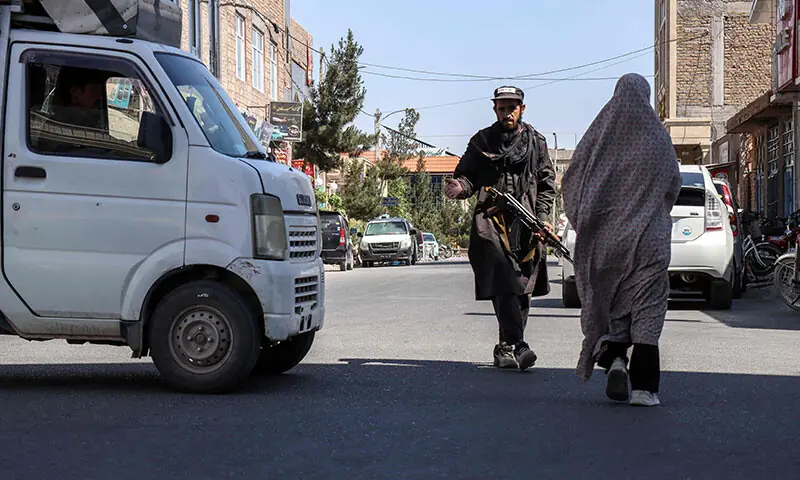
HERAT: Heavily armed security forces deployed across Herat on Friday, prompting residents to scrap planned protests following a crackdown where morality police arrested at least 30 women for alleged dress code violations and violently dispersed a subsequent rally, killing at least two people.
Independent experts noted that Taliban forces allegedly fired on men, women, and children on Tuesday, administering beatings to some. Among the two reported dead was a boy, and more than 20 others were injured.
Local police denied that any weapons were used during the demonstration and accused the protesters of seeking “to disturb public order.”
Taliban authorities rule according to their extreme interpretation of Islamic law. While the hijab or flowing abaya robe is common in many Muslim-majority countries, the Taliban mandate that women must be almost entirely covered when they leave home.
This includes a requirement to wear a body-cloaking burqa or chador with a face mask, an interpretation of face-covering that is widely considered extreme.
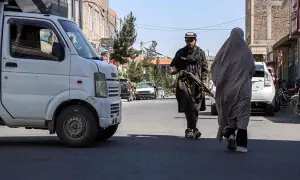
Following calls on social media for further demonstrations against the crackdown after Friday prayers, military vehicles and heavily armed security forces were stationed around the city.
Armed police officers patrolled on motorcycles, and extra checkpoints were manned by police and intelligence agents.
“People gave up on the demonstration today to prevent more bloodshed,” said a 34-year-old teacher, whom the AFP did not name for safety reasons. “Even the movement of a small number of people from one area became difficult due to these security measures. The atmosphere is very bad.”
A 27-year-old resident described the heavy security presence as horrible.
“On every street there is a suspicious private car with (people wearing) casual clothing, sitting in their cars and observing people,” the resident said.
The UN mission in Afghanistan (Unama) documented the initial arrests of the women over the weekend. The women allegedly violated decrees that include a ban on perfume and the strict face-covering requirement.
Among those detained was a hospital worker employed by Doctors Without Borders (MSF) who the organisation said was held for two days.
Before her release, the medic, her husband, and relatives had to sign a written commitment to wear clothing mandated by the Propagation of Virtue and the Prevention of Vice authorities. MSF said it was outraged by the detention.
The arrests have heightened fear and apprehension among women and girls across the country. UN Women, the world body’s gender equality agency, voiced grave concern over the profound and long-term impacts of arbitrary detentions.
“A woman’s detention in Afghanistan carries enormous stigma, which can put women at risk of further violence and isolation in their families and communities even after they are released,” said Georgette Gagnon, the UN deputy special representative leading Unama.
UN Human Rights Council-appointed experts expressed deep concern over reports of excessive force.
On Wednesday, Herat’s Propagation of Virtue and the Prevention of Vice wing published a new list of rules for women. The notice included a ban on wearing makeup or having any hair visible, alongside an order to wear socks and face masks. Failure to comply may result in “detention and imprisonment,” the notice warned.
Across the country, women are already banned from a host of public places, including parks and gyms, while girls’ education is halted at age 12.

 Login
Login