 Login
Login

Milkcaps: Betty Boop by The Hearst Company
https://archive.org/embed/milkcaps_betty-boop
#advertising #ads #marketing #media #beehappy


Milkcaps: Betty Boop by The Hearst Company
https://archive.org/embed/milkcaps_betty-boop
#advertising #ads #marketing #media #beehappy
cigcardpix posted a photo:

Liebig's Extract of Meat. Back of card from series S94 "Girls in Branches"
Early French issue with small black signature

dannyhennesy posted a photo:

...as I said earlier I missed out on the Fright Knight theme, I started frequenting cafés, pubs and clubs... but a small AFOL was still around in me when I visited friends with Lego I was always ready to play with their kids (and their Lego...
Peace and Noise!
/Mushroombrain from the brick-block


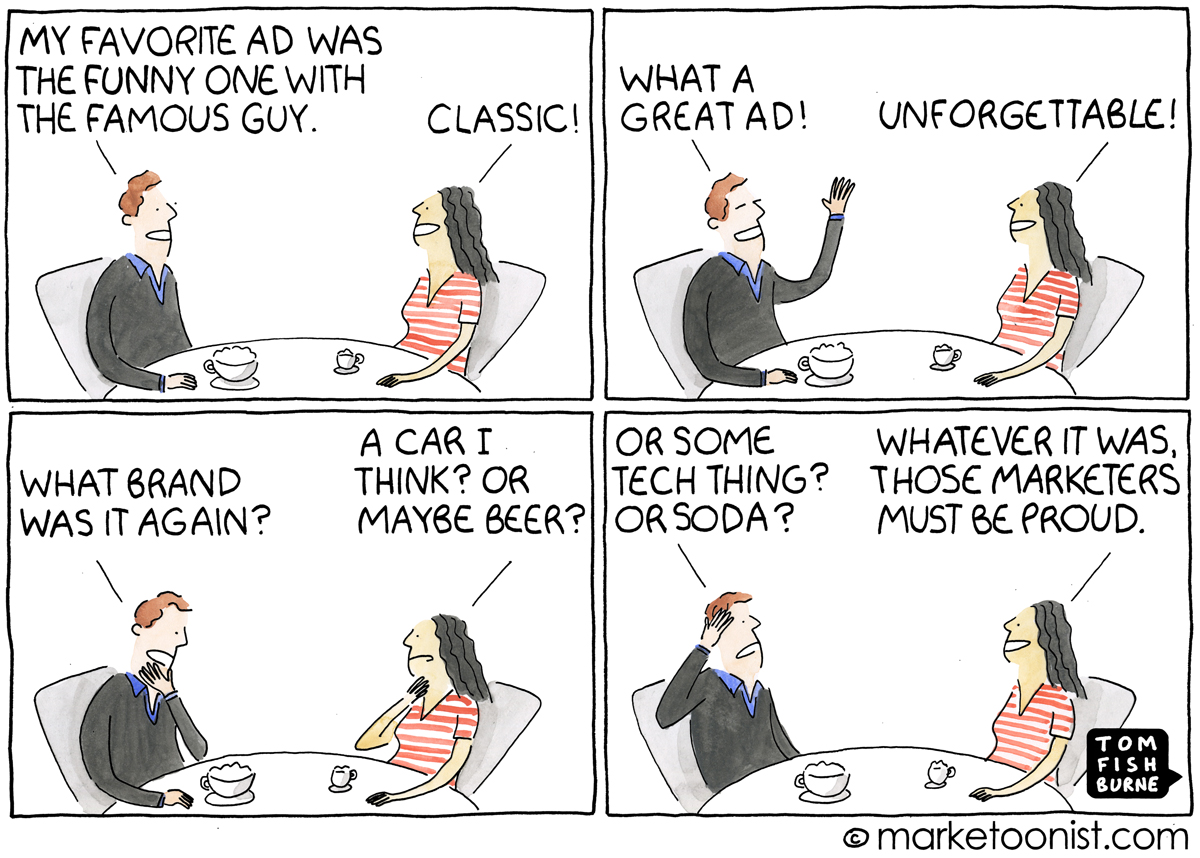
Super Bowl ads have always juggled story power and star power. But the overall swing toward celebrities has been an ongoing trend.
In 2010, just 31% of Super Bowl ads included a famous face. Last year, a whopping 68% of Super Bowl ads featured celebrities and 51% featured multiple celebrities, according to iSpot.tv and EMARKETER.
(I haven’t seen the final numbers for 2026, but early teasers looked like another big celebrity year.)
With all the positive things that celebrities can bring to an ad (attention, humor, trust, status, etc.), the big risk has always been that celebrities overshadow the brand.
In the 80s, Robin Evans first termed this risk as the “vampire effect.”
My old friends at System1 track Super Bowl ads on a number of dimensions, including “Fluency” — the accuracy and speed of brand recognition.
System1 Head of Marketing Jess Messenger summarized their findings on celebrity and brand recall recently:
“In 2025, the average Fluency Rating for Super Bowl ads was a modest 78, meaning, on average, 22% of viewers couldn’t correctly name the brand after watching the ad.
“Of the top 10 Big Game ads for Fluency, three leveraged well-known stars and one featured a group of influencers. Meanwhile, six of the top 10 ads did not use celebrities.”
At an $8 million ad spend for 30 seconds, the stakes of poor brand recall in the Super Bowl are high. But the importance of paying attention to “Fluency” is relevant for marketers at all spend levels.
The celebrity lever is one of the easiest to pull. But too many ads use celebrities shallowly, interchangeably, and as a one-off. And when 68% of Super Bowl ads use celebrities, celebrities alone are not going the move the needle.
As I’ve written before, we can’t break through the clutter by adding to it.
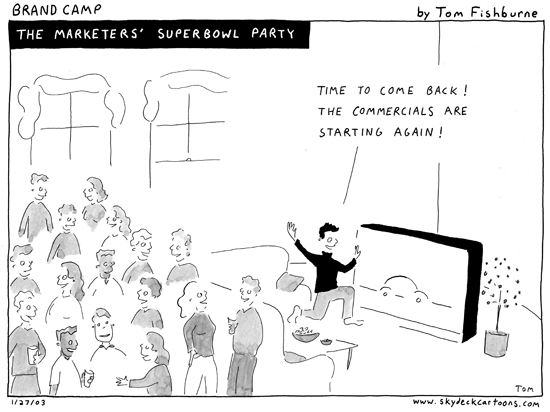
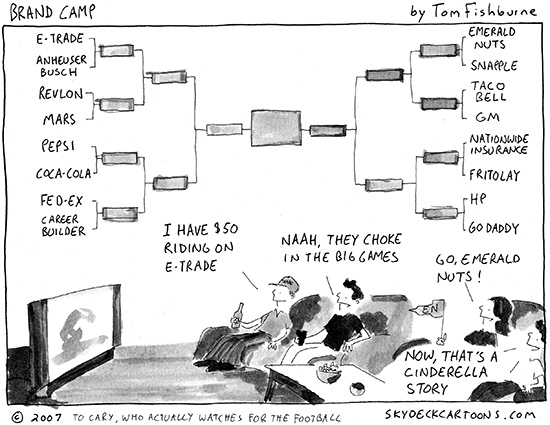
Here are some of my favorite Super Bowl cartoons I’ve drawn over the years:

The post Advertising, Brand Recall, and Celebrities first appeared on Marketoonist | Tom Fishburne.


In a distraction-free “dream lab,” Zendaya has carte blanche to create a new wardrobe in a short, stop-motion film written and directed by Spike Jonze. The advertisement, which announces a clothing line the actor co-created with apparel brand On, merges dance and playful optics as she maneuvers through some otherworldly trial and error.
You might also enjoy Jonze’s mind-melting dance video for Apple featuring FKA twigs.


Do stories and artists like this matter to you? Become a Colossal Member today and support independent arts publishing for as little as $7 per month. The article Zendaya Taps into the Creative Process in a Quirky Ad Directed by Spike Jonze appeared first on Colossal.


