Login
Login
Christmas Miracle Part 1



Hong Kong authorities have declined to comment on reports that an activist wanted by the city’s national security police could face deportation to China after being arrested in Thailand for allegedly overstaying her visa.

Responding to media queries about concerns that wanted activist Zhang Xinyan could be transferred to China, the Security Bureau said on Monday that it would not comment on news reports about law enforcement actions in other jurisdictions.
“Endangering national security is an extremely serious crime… no fugitive should harbour the illusion that they can evade criminal liability by fleeing Hong Kong,” the bureau said in a statement.
Zhang, 54, is wanted by national security police for allegedly committing subversion, a crime under Article 23 – also known as Hong Kong’s homegrown national security law.
NGO Human Rights Watch (HRW) said on Saturday that Zhang could face deportation from Thailand. She is now being held at the Suan Phlu Immigration Detention Centre in Bangkok.
Zhang holds refugee status issued by the United Nations High Commissioner for Refugees (UNHCR), the NGO said.

According to media reports, overseas activist group the Hong Kong Parliament said she had overstayed her visa in Thailand.
Hong Kong and Thailand do not have any extradition agreements, although the transfer of fugitives can still be arranged. In February, a 62-year-old man accused in a murder case nearly 37 years ago was arrested in Thailand and extradited to Hong Kong.
HRW senior Thailand adviser Sunai Phasuk said sending Zhang to Hong Kong would put her in “grave danger.”
“Thai authorities should do the right thing by immediately releasing her and ensuring that she is not put in harm’s way,” he said.
Zhang is among a group of 19 activists named in a round of arrest warrants issued in July 2025, with bounties between HK$200,000 and HK$1 million.
Authorities cited their involvement from February to June 2025 in the “Hong Kong Parliament,” a group of overseas activists who held unofficial polls outside the city to form a shadow legislature to “pursue the ideal of Hong Kong people ruling Hong Kong.”

According to the Hong Kong Parliament’s YouTube channel, Zhang ran for a seat in the shadow legislature earlier that year.
According to the police force’s notices, Zhang and the others wanted for their involvement in the Hong Kong Parliament have a view to achieve self-determination and subvert state power.
In total, 34 people are wanted under the national security law on suspicion of committing offences including subversion, inciting secession and colluding with foreign forces.
Some of them have bounties of HK$1 million on their heads, including former pro-democracy lawmakers Ted Hui, Dennis Kwok and Nathan Law.
Activists Anna Kwok and Frances Hui, as well as political commentator Elmer Yuen, who is accused of launching a “referendum” to form the Hong Kong Parliament, are also among those targeted with million-dollar bounties.
clgkhkrf54 posted a photo:

WPA Photographs of the Great Depression by Dorothea Lange. These images are on file at the Library of Congress under the 8 digit alpha-numeric code at the end of the file name. See: guides.loc.gov/migrant-mother

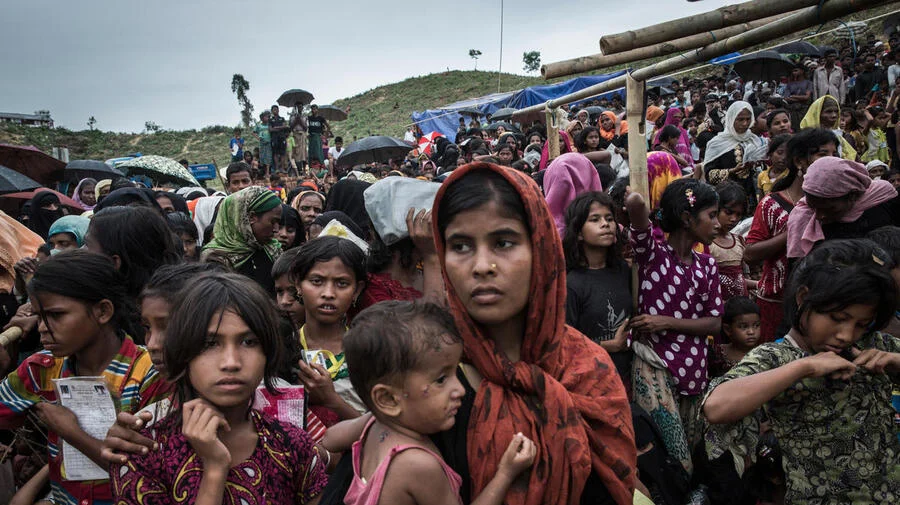
MALAYSIA: The “Remove Rohingya from Malaysia” petition, which had amassed over 424,000 signatures by June 8, was taken down by Change.org following civil society criticism of its hate‑driven narrative.
The campaign, fueled by misinformation and viral artificial intelligence (AI)‑generated content, targeted the vulnerable Rohingya refugee community and sparked widespread xenophobic commentary online. Rights groups warned the petition echoed propaganda tactics used in Myanmar before the 2017 genocide, raising alarm over rising hostility and disinformation against refugees in Malaysia.
The leader of the Rohingya refugees, Zafar Ahmad Abdul Ghani, condemned rising hate campaigns against the Rohingya, calling them disinformation.
He urged Malaysia and ASEAN to defend refugee rights, stressing that daily hostility, false claims, and Islamophobia deepen divisions and threaten the safety of his already vulnerable community.
Despite official statements, some social media users argue the issue should spill into the streets. On X, one asked if Malaysians are prepared to demonstrate against the removal of the anti‑Rohingya petition and the continued presence of refugees in the country.
Additionally, some argue that the government is ignoring the voices of over 400,000 taxpayers who signed the petition demanding the removal of Rohingya refugees. They claim Malaysia was initially expected to host only 10,000 refugees, but that figure has since ballooned to more than 120,000. The frustration reflects growing resentment online.
Some social media users allege that a Malaysian political party once used undocumented migrants as a tactic. One claimed that in past years, a former political powerhouse granted citizenship to illegals or refugees in exchange for votes.
However, this rhetoric appears speculative and lacks verified evidence. While such claims resonate with public frustration over refugee issues, they remain controversial.
Unfortunately, harsh remarks from some X users have shifted the debate into troubling territory, questioning morality itself. A few even asked whether Malaysia needs the return of an infamous past leader, remembered largely for controversy. Such rhetoric underscores how online frustration over refugee issues can spiral into extreme narratives.
The situation shows little sign of improving, yet it must be remembered that the Rohingya remain human beings deserving dignity. If the Malaysian government truly intends to help, support should go beyond temporary aid.
Offering access to skills training and education would allow refugees to progress in life, gain independence, and contribute productively.
This article (‘Are Malaysians ready to protest?’: Petition removal fuels anger online) first appeared on The Independent Singapore News.
clgkhkrf54 posted a photo:

WPA Photographs of the Great Depression by Dorothea Lange. These images are on file at the Library of Congress under the 8 digit alpha-numeric code at the end of the file name. See: guides.loc.gov/migrant-mother
People flee historic district of ancient city after airstrikes hit residential areas and damage archaeological sites
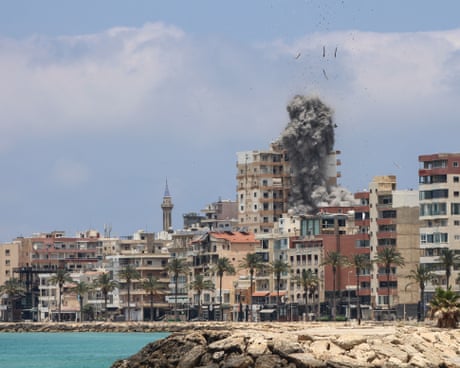
Israel has bombed the city of Tyre, killing eight and injuring at least 32 people, and struck dozens of other villages in south Lebanon as it issued forced evacuation orders for the historic Christian quarter of the ancient city for the first time.
Israel struck the al-Masaken neighbourhood without warning on Tuesday morning, sending smoke plumes high above the city’s buildings and igniting fires. Further airstrikes were carried out across the city and a series of bombings hit Abbasieh, a village north of Tyre.
Continue reading...
© Photograph: Kawant Haju/AFP/Getty Images
© Photograph: Kawant Haju/AFP/Getty Images

© Photograph: Kawant Haju/AFP/Getty Images
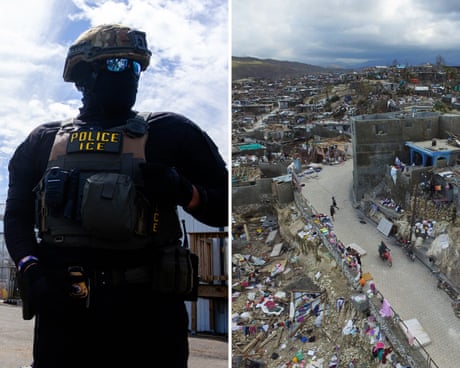
A Guardian analysis reveals how most of 39 countries facing US entry restrictions are most vulnerable environmentally
Donald Trump’s immigration crackdown is largely targeting people from the countries most vulnerable to displacement from climate-driven disasters, a Guardian analysis shows.
As the Trump administration pushes policies to boost planet-heating fossil fuels, millions of people are being forced to flee their homelands due to storms, floods and droughts worsened by the climate crisis.
Continue reading...
© Composite: The Guardian, AFP via Getty Images
© Composite: The Guardian, AFP via Getty Images
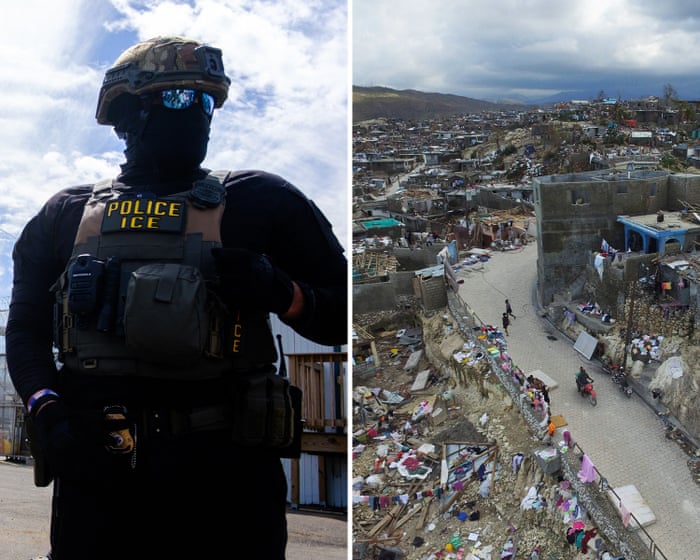
© Composite: The Guardian, AFP via Getty Images
clgkhkrf54 posted a photo:

WPA Photographs of the Great Depression by Dorothea Lange. These images are on file at the Library of Congress under the 8 digit alpha-numeric code at the end of the file name. See: guides.loc.gov/migrant-mother