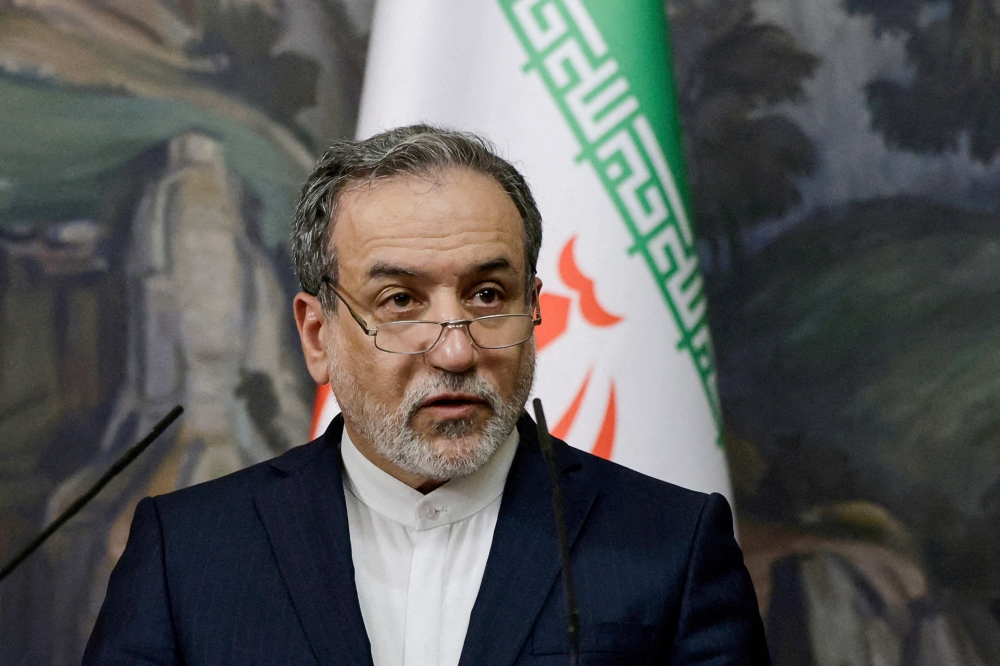
China’s Foreign Minister Wang Yi said Beijing would play a “greater role” in ending hostilities in the Middle East during talks with his Iranian counterpart on Wednesday, a week before US President Donald Trump is due to meet Xi Jinping.
Chinese Foreign Minister Wang Yi meets with Iranian Foreign Minister Abbas Araghchi in Beijing on April 23, 2025. File photo: China’s Ministry of Foreign Affairs.
China is a key customer for Iranian oil, defying sanctions imposed by the United States, and is directly affected by the blockage of the Strait of Hormuz bordered by Iran.
Beijing has quietly engaged in efforts to resolve the weekslong crisis and its diplomacy is credited with playing an important role in the fragile ceasefire agreed between Washington and Tehran.
China “will work harder to ease tensions and end the fighting, continue to support the launch of peace talks, and play a greater role in restoring peace and tranquility to the Middle East”, Wang told Iran’s Abbas Araghchi in Beijing.
“China considers that a complete cessation of fighting must be achieved without delay, that it is even more unacceptable to restart hostilities, and that continuing to negotiate remains essential,” Wang said, according to a statement from his ministry after the talks.
Manufacturing giant China has been comparatively sheltered from fuel shortages thanks to oil reserves and renewable energy, but costs of oil-derived materials like plastic and fabric have risen significantly.
More than half of the crude imported by sea to China comes from the Middle East and mainly transits through the Hormuz strait, according to maritime analytics firm Kpler.
Analysts have warned the war’s impact on China will be felt for months.
During Wednesday’s talks Wang said China hopes “the parties concerned will respond as quickly as possible to the urgent call of the international community” for a resumption of normal and safe maritime traffic through the Strait of Hormuz.
Trump trip looms
The Wang-Araghchi talks came as Trump said the US would pause escorting commercial ships through the Hormuz Strait — which drew Iranian attacks — barely a day after it began doing so.
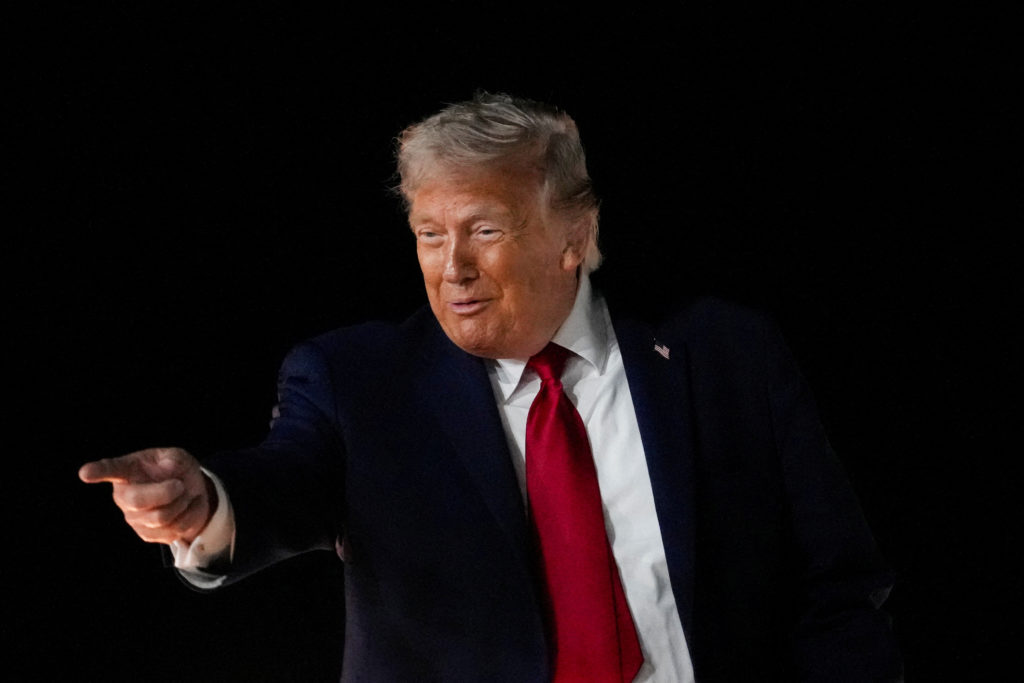
US President Donald Trump in Miami, Florida, on March 9, 2026. Photo: The White House, via Flickr.
Trump cited a desire to reach a peace deal with Iran.
Washington demands tight controls on Tehran’s nuclear programme, which Iran has refused to agree to and has led to talks crumbling.
“On the nuclear issue, China welcomes Iran’s commitment not to develop nuclear weapons, while considering that Iran has the legitimate right to the peaceful use of nuclear energy,” Wang said.
A foreign ministry spokesman again refused to share details when asked about Trump’s visit at a regular news conference on Wednesday.
Trump would join rulers from the Gulf, Europe and Southeast Asia that have recently landed face time with Xi, who has sought to position China as a stable partner in the face of the US- and Israeli-led conflict.
Trump’s visit would also come more than a year after his sweeping global tariffs wreaked havoc on the supply chain, causing chaos in China’s manufacturing sector.
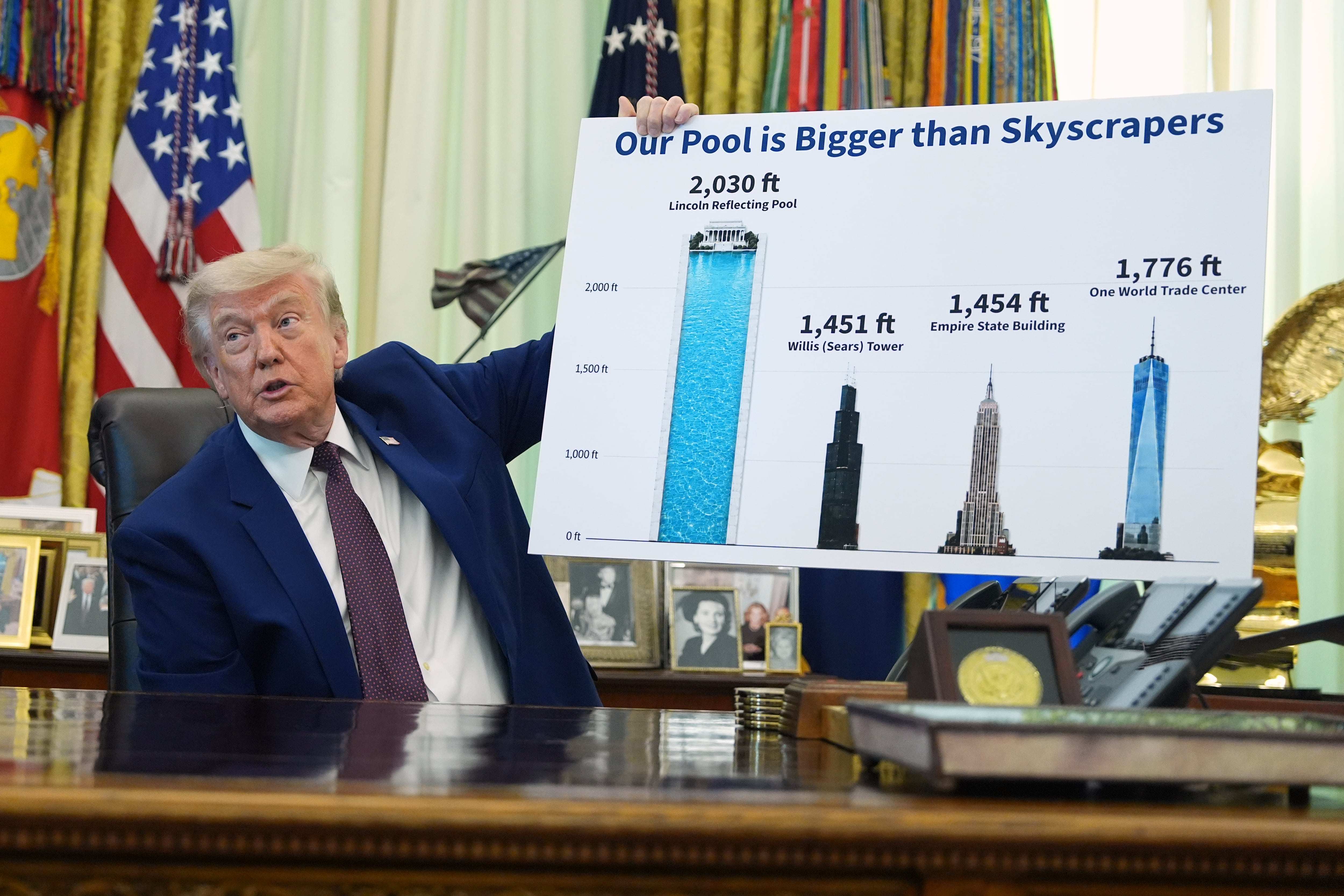
President Donald Trump in the Oval Office of the White House on June 10, 2026. | Aaron Schwartz/CNP/Bloomberg via Getty Images
This story appeared in The Logoff, a daily newsletter that helps you stay informed about the Trump administration without letting political news take over your life. Subscribe here.
Welcome to The Logoff: The US-Iran “ceasefire,” such as it is, is breaking down.
What’s happening? After Iran downed a US helicopter earlier this week, violence between the two sides is escalating once again. The US struck targets inside Iran on Wednesday, and President Donald Trump subsequently threatened to “hit them again hard today,” while Iran has launched new attacks against multiple Gulf states, as well as nearby Jordan.
Iran also struck at Israel for the first time since early April over the weekend, amid ongoing fighting between Israel and Iran-backed Hezbollah; Israel responded with strikes of its own.
What’s the context? The current chaos comes after Trump started the week on a relative high note; on Tuesday, he told reporters that a “very, very good deal” was imminent. As CNN’s Aaron Blake points out, though, Trump’s prognostications are rarely worth the (figurative) paper they’re written on: He’s now predicted a negotiating breakthrough at least 38 times with nothing to show for it.
What’s the big picture? Trump’s Wednesday claim about a “secret” (not actually secret) effort to help vessels through the Strait of Hormuz aside, the crucial maritime passage is still largely closed to commercial traffic, and its impact on the global economy is only growing.
The US Bureau of Labor Statistics released new data on Wednesday showing inflation jumping to 4.2 percent, its highest level in three years. Much of that increase comes from higher energy prices, a consequence of the strait’s closure. (Abroad, economic pressure from the war is doing even more damage; it’s resulted in deadly protests in multiple countries.)
None of that necessarily means Trump will give ground and agree to end the war any more quickly — as my colleague Josh Keating wrote late last month, he still seems to think he’s winning. But Trump doesn’t actually have a path to the kind of big win he seems to be seeking, and in the meantime, the consequences will keep piling up.
As my colleague Dylan Scott explains, the key ingredient in the sunscreen, bemotrizinol, isn’t actually new — only new to those of us in the States, where it’s been a challenge to get new sunscreens approved by the FDA. But it’s an improvement in all sorts of important ways, which you can read about here with a gift link.
Have a great evening, and we’ll see you back here tomorrow!
I had been looking forward to the 250th anniversary of our Declaration of Independence, but it seems to be falling flat, and Anderson pinpoints the issue. It doesn’t seem to be widely known, but there are two very different groups set up for the commemoration: America250 is a non-partisan group set up by Congress to […]
RFE/RL spoke with Lisa Gable, a former US ambassador who served during the George W. Bush administration and is now the chairwoman of World In 2050, about the prospects for diplomacy with Iran, the challenges of verification, and the broader geopolitical stakes of the current conflict.
Welcome to The Hill's Defense & NatSec newsletter {beacon} Defense &National Security Defense &National Security The Big Story Impact in Iran after Trump orders more strikes The U.S. military launched another round of strikes Wednesday evening against Iran, less than an hour after Defense Secretary Pete Hegseth warned that forthcoming attacks would be “strong...
Nearly a year and a half into his second term, the Trump White House appears to be losing momentum. | Kent Nishimura/AFP via Getty Images
President Donald Trump’s second term began at a breakneck pace, with a wave of executive orders and other actions imposing tariffs; targeting law firms, universities, and individuals he believed had wronged him while he was out of office; and reshaping the US immigration system.
Nearly a year and a half into his second term, the White House appears to be losing momentum. Much of Trump’s legislative agenda has stalled in Congress, the war with Iran has dragged on longer than the administration seems to have expected, and Trump’s proposed “anti-weaponization” fund” went down in flames after some unusual pushback from Republican lawmakers.
To understand the current state of the Trump White House, Today, Explained co-host Sean Rameswaram spoke with Megan Messerly, a White House reporter at Politico, who recently wrote about the “funk” Trump and his staff are in.
Below is an excerpt of the conversation, edited for length and clarity. There’s much more in the full podcast, so listen to Today, Explained wherever you get podcasts, including Apple Podcasts, Pandora, and Spotify.
You recently wrote for Politico about how the president and his administration are kind of in a funk — and not just over the slush fund fiasco. Remind us how else we’re seeing this funk, for those who have disassociated.
We are now more than three months into the Iran war, and this is just not going anywhere anytime soon. We have seen the president over the last week and a half now say that he’s close on a deal to extend this ceasefire with Iran that still has not come through. There was this two-hour Situation Room meeting on Friday. Nothing came out of that after two hours.
Talking to folks in and around the White House, they just want to find a face-saving way out of this war, but they have been unable to do that. They’ve been unable to get Iran to agree to something that would open the Strait of Hormuz. And in the meantime, everyone’s just very over it.
According to my reporting, that’s including staff inside the White House; one of my sources said that pretty much everyone is in a funk and described it as being stuck in this quicksand of Iran.
Is there a legislative funk too with this administration? Because it doesn’t feel like the Trump administration is getting anything done.
That was one of the big things that I was talking to folks about for this story — this idea that Iran has really taken up so much of the president’s time that it is in some ways distracting from some of these other priorities. And that includes the president’s legislative agenda.
Some allies I spoke with also blamed that squarely on Senate Majority Leader John Thune and said, Thune is being too much of an institutionalist, protecting the filibuster. The president has called for firing the Senate parliamentarian. And so you have a very frustrated Trump, but a frustrated Trump who has rhetorically turned the screws a bit on Thune, but really hasn’t put the full force of pressure on Thune to get his legislative agenda through.
That includes things like the president has talked a lot about this Save America Act, an elections-focus piece of legislation. That’s one of his top legislative priorities. There’s this housing bill that includes this institutional investor ban that he wants to see across the finish line. And then of course he wants to see security funding for his ballroom/bunker.
It feels like [Trump] doesn’t care about the midterms. But then there’s all the gerrymandering that he’s pushing, which implies that he very much cares about the midterms and his endorsement of candidates. What’s your read on what’s going on with the president when it comes to the midterms?
Yes, it definitely feels like those two things are at odds with one another.
I think the way that White House allies view it is the president needs to be able to say, I don’t care about the midterms. I don’t care about high gas prices because that language is for Iran.
He’s saying, I’m willing to take this gamble because he needs Iran to believe that he will take the maximalist position, that he will let gas prices rise however high they need to rise in order to notch a deal. White House allies would say that that’s a negotiating tactic. So what might be helpful rhetorically with Iran is not helpful rhetorically with Republicans as they’re fighting it out in these really key midterm races.
It feels like it’s such a tough spot that even the things that should be easy wins — like a sesquicentennial concert on the National Mall. What is going on with this concert?
What we’re seeing is even some of those folks now pulling out and saying, “Hey, we were interested in sort of celebrating America’s 250th anniversary, but this is far too political for us. This is not what we wanted. This is not what we signed up for.”
And to me, and many of the folks that I spoke with, this is just such a deviation from where we were at the beginning of the president’s term last year when he was just really taking the culture by storm. He was just steamrolling these law firms and Ivy League institutions, and you’ve seen other pop culture figures come on board to the president’s agenda like Nick Minaj.
This is a moment where the president wants to be taking a victory lap and yet he’s stuck in this quagmire that is Iran, one that he desperately wants to get out of.
And Trump even lost his name on the Kennedy Center?
This has been one that has been near and dear to the president for months now — his fight to rename it the Trump-Kennedy Center and this planned massive renovation of the center, all put on hold by a federal court last week. We saw the president take to Truth Social to express his sincere displeasure at that decision.
Do they have any wins that they should be celebrating right now that they could be parading in front of the American people?
The White House pushed back on my story and said we do have things that we are doing.
For instance, their efforts to reduce the cost of prescription drugs through TrumpRx and the coming launch of “Trump accounts” for millions of children. Treasury Secretary Scott Bessent was on the road last week in California and elsewhere touting these investment accounts that are supposed to sort of build generational wealth for the next generation. But that is all getting overshadowed right now by Iran.
But ultimately, I think the challenge, and this is what I hear when I’m talking to regular voters, is, “Okay, these Trump accounts are great, but I’m being crunched right now by the cost of gas, by the cost of my groceries when I’m buying ground beef and it’s $9, $10 a pound.”
So these wins are great, but when the pressing concern is putting food on the table and making ends meet and paying the bills, that has been cold comfort and that sort of exposes some of the challenge of the White House’s efforts to message here.
The president is a longtime fan of the [Ultimate Fighting Championship] and we are certainly seeing him celebrate his 80th birthday, which is the day of the UFC fight. In accordance with that, the president is sort of this mercurial figure and something like that really could raise his mood and honestly produce a policy breakthrough, because he has been stuck for so long.
Talking to allies, I think they think that if the president gets a win, that could sort of put them back on track to passing the president’s agenda. And that could be a policy win or it could just be a triumphant UFC fight on the White House lawn.
Trump said in a social media post that military officials told him "the Iranians shot down one of our highly sophisticated Apache Helicopters." He added that both service members "are safe and uninjured."
The vote in the House of Representatives on Wednesday to limit Donald Trump’s authority to continue his war in Iran will not bring that conflict to an end. But it does represent a symbolic setback for the U.S. president on an issue — the Middle East — that has become, both domestically and in foreign policy, the most painful stone in the shoe of his return to the White House. Meanwhile, the weeks go by and, with the peace deal with Tehran stalled, it seems clear that Washington has no idea how to extract itself from a quagmire of its own making.
WASHINGTON, June 10 — US forces carried out strikes against Iran yesterday in what President Donald Trump said was retaliation for the downing of an American helicopter by the Islamic Republic a day earlier.
Iranian media said that following a series of explosions along Iran’s southern coast near the Strait of Hormuz, the situation was “now reported to be calm.”
Digital news outlet Axios reported that US forces had attacked several Iranian air defense systems and radar systems around the strait.
Following the strikes, Iran’s Foreign Minister Abbas Araghchi threatened to retaliate.
“Despite its defeats on the battlefield, the U.S. opted to test our determination. Our Powerful Armed Forces will leave no attack or threat unanswered. Leave our region if you want to be safe,” Araghchi posted on X.
The US strikes came just hours after Trump had said negotiations to end the Middle East war were in their final stages—a claim he has made repeatedly in the past few weeks.
But after the downing of a US Army Apache helicopter on Monday, Trump said the United States was responding “in a strong manner” after “what they did with our helicopter last night,” in a telephone interview with ABC News.
“And I believe the response should be very strong, very powerful, and that’s what this one is,” he said.
US Central Command (CENTCOM) said American forces “began launching self-defense strikes against Iran, at 5 pm yesterday at the Commander in Chief’s direction” and “the mission is a proportional response to unjustified Iranian aggression.”
A shaky ceasefire between the warring parties has been in place since April 8, but it faced a major test when Iran and Israel renewed attacks over the weekend, before each side announced a halt.
Israeli attacks on Lebanon continued, however, and Lebanese officials said 11 people were killed in airstrikes on Tuesday on the historic city of Tyre in the south of the country.
The Israeli military also warned the entire city to evacuate.
An AFP correspondent saw residents of Tyre, including from the Christian quarter, fleeing and heavy traffic heading north after the Israeli warning.
Another correspondent in the coastal city of Sidon, further north, saw displaced people arriving from Tyre, some with belongings hastily strapped to the roofs of their cars.
Tehran has insisted a halt to the war must include a truce in Lebanon, which was drawn into the conflict when Iran-backed Hezbollah militants fired rockets at Israel on March 2.
Israel responded with an extensive campaign of airstrikes and a ground invasion that has killed more than 3,600 people. Exchanges of fire with Hezbollah have not stopped despite an ongoing truce.
Constant risk
Iran’s Foreign Minister Abbas Araghchi urged foreign forces meanwhile to leave the Strait of Hormuz and surrounding areas, warning that they faced a risk of being caught in the crossfire if they remained.
“The Strait of Hormuz is NOT international waters but shared between Iran and Oman,” Araghchi said. “Foreign forces in proximity to our territory are at constant risk on account of their own human errors, plain accidents, or potentially being caught in crossfire.
“To reduce risk, best solution is for them to leave. We prefer language of diplomacy but speak other languages too,” he said.
The US Army Apache helicopter is the second crewed aircraft that Washington has confirmed was shot down by Iran during the war, following the loss of an F-15 fighter plane in April.
CENTCOM said the two crew members were rescued after their helicopter went down near the coast of Oman.
“The Soldiers were safely rescued within approximately two hours and are in stable condition,” CENTCOM said in a post on X.
A spokesperson said a naval surface drone helped rescue the crew members.
The US-Iran conflict has severely disrupted shipping via the Strait of Hormuz, through which about a fifth of global oil usually passes, while Washington has imposed a blockade on Iranian ports.
The price of the main US oil benchmark—West Texas Intermediate—jumped 1.4 percent shortly before Asian markets opened Wednesday, reaching $89.40 per barrel following the news of renewed US strikes.
Oil prices had retreated previously after Trump hinted at a deal with Iran in the coming days. — AFP
More than three months into Iran's conflict with the United States and Israel, Iranians say they are desperate about meeting basic needs. Some are down to one meal a day, meat is rare, and household appliances are sold off to pay bills. Some Iranians sent messages to RFE/RL's Radio Farda.
Welcome to The Hill's Defense & NatSec newsletter {beacon} Defense &National Security Defense &National Security The Big Story Trump takes double whammy with Iran, Ukraine votes President Trump took two hits on Wednesday with House lawmakers passing legislation designed to force him to end the Iran War, and a vote that flies against his...

 Login
Login