Reading view

Environmental NGO urges stronger climate policies as Hong Kong faces extreme summer heat

hot weather featured image

An environmental NGO has urged the Hong Kong government to prioritise the climate crisis and strengthen its climate adaptation policies, as the city is expected to endure an extremely hot summer this year.

A heatwave in Hong Kong in late May 2026. Photo: Kyle Lam/HKFP.

Friends of the Earth said on Monday that as May drew to a close, Hong Kong and many parts of the world had already experienced mid-summer temperatures ahead of schedule.

“Early onset of extreme heat in many parts of the world is a clear warning of the intensifying climate crisis,” the NGO said in the Chinese-language statement.

“We urge the government to put the climate crisis at the top of its agenda, by placing carbon reduction at the core and setting more aggressive emission reduction targets.”

Friends of the Earth
Logo of Friends of the Earth. Photo: Friends of the Earth.

Authorities should make a thorough climate risk assessment, utilising big data, artificial intelligence, and Geographic Information Systems (GIS) to analyse the vulnerability of various districts to extreme heat, torrential rain, storm surges, and sea-level rise, the statement said.

The NGO also called on the government to enhance the city’s infrastructure to withstand the climate crisis, including improving coastal flood defence facilities and drainage systems in older districts.

According to the statement, “global warming is making extreme weather more frequent and severe, and the climate crisis already poses a significant threat to public health, economic security, urban resilience, and social justice.”

Friends of the Earth also called for the protection of vulnerable groups, including the elderly, children, people with chronic illnesses, low-income families, homeless people, and those who work outdoors.

El Niño

Hong Kong has endured particularly high temperatures since early last week.

The Hong Kong Observatory (HKO) issued the “very hot weather warning” three times within a week: last Tuesday, Saturday, and Tuesday.

Choy Chun-wing, the HKO’s acting assistant director, said at a press conference on Thursday that Hong Kong would see “hotter than normal” temperatures this year and next year under the influence of climate change and El Niño.

Firefighters clean a drain during a flood in Wong Tai Sin on July 20, 2025, as Typhoon Wipha nears the city. File photo: Kyle Lam/HKFP.

Sea surface temperatures in the central and eastern equatorial Pacific will continue to rise, developing into an El Niño event during the summer and autumn, which will persist at least until the end of this year or the beginning of next year, Choy said.

Scientists have warned that the El Niño weather phenomenon will bring hotter temperatures, stronger storms, drought, and flooding.

Planet warming

The Intergovernmental Panel on Climate Change has warned that the intensity and frequency of heatwaves have continued to increase since the 1950s due to human-caused climate change. The prevalence of greenhouse gases like carbon dioxide – which trap heat in the atmosphere – raises the planet’s surface temperature, with hotter, longer heatwaves putting lives at risk.

See also: How extreme heat became the deadliest silent killer among world weather disasters

Hong Kong has already warmed by 1.7 degrees Celsius since the Industrial Revolution, research NGO Berkeley Earth says. Heat and humidity may reach lethal levels for protracted periods by the end of the century, according to a 2023 study, making it impossible to stay outdoors in some parts of the world.

  •  

NGO warns hot weather can worsen air quality, urges gov’t action on pollutants and cooling measures in hot districts

hot weather

NGO Green Power has urged the Hong Kong government to better regulate ozone precursors as hot weather exacerbates air pollution across the city.

A heatwave in Hong Kong in late May 2026. Photo: Kyle Lam/HKFP.

Chemical compounds – such as nitrogen oxides, methane, Volatile Organic Compounds (VOC) and carbon monoxide – form ground-level ozone by reacting in the lower atmosphere in the presence of sunlight. Ground-level ozone attacks and inflames lung tissue, but reducing underlying pollutants prevents harmful smog.

According to a Sunday press release, Green Power’s director, Cheng Luk-ki, said VOCs – which are emitted through oil and gas operations, petrol evaporation and chemical solvents – should be better regulated.

See also: How extreme heat became the deadliest silent killer among world weather disasters

“In the future, the public’s health may be affected by both high temperatures and air quality at the same time,” the press release said.

Last week, Hong Kong sweltered amid a days-long heatwave. Whilst rain brought some respite over the weekend, the Observatory predicts highs of 35 degrees Celsius by the end of this week.

Cooling measures for hottest areas

Green Power’s review of Hong Kong’s air quality situation in 2025 found that 15 air quality monitoring stations recorded “a total of 2,080 hours at High, Very High and Serious levels – collectively referred to as ‘High Risk (HR) hours.'”

See also: How Hong Kong’s elderly face deadly heat inside cramped cage homes

Cheng said Hong Kong was affected by a northern Chinese dust storm last April, pushing up the statistics. However, the NGO also noted that overall air quality has been improving thanks to the city’s diversification away from coal towards natural gas, as well as efforts to tighten emission standards for fuel-powered vehicles.

air pollution Hong Kong
Air pollution in Hong Kong. File Photo: GovHK.

The director said he had analysed last summer’s Air Quality Health Index data, and found that the nine days ranked as “high risk” all saw temperatures exceeding 29 degrees Celsius, “demonstrating a strong connection between heat and air quality.”

He warned that hot weather will become more frequent, as he urged the authorities to take action in the territory’s hottest districts.

The NGO recommended cooling measures in Tuen Mun, Tai Po, North District, Yuen Long and Tung Chung, “such as increasing greenery coverage, revitalising local rivers, and incorporating more ventilation corridor designs.”

See also: How extreme heat became the deadliest silent killer among world weather disasters

Hong Kong has already warmed by 1.7 degrees Celsius since the Industrial Revolution, research NGO Berkeley Earth says. Heat and humidity may reach lethal levels for protracted periods by the end of the century, according to a 2023 study, making it impossible to stay outdoors in some parts of the world.

  •  

Trump targeting immigrants from countries hit most by climate shocks

A Guardian analysis reveals how most of 39 countries facing US entry restrictions are most vulnerable environmentally

Donald Trump’s immigration crackdown is largely targeting people from the countries most vulnerable to displacement from climate-driven disasters, a Guardian analysis shows.

As the Trump administration pushes policies to boost planet-heating fossil fuels, millions of people are being forced to flee their homelands due to storms, floods and droughts worsened by the climate crisis.

Continue reading...

© Composite: The Guardian, AFP via Getty Images

© Composite: The Guardian, AFP via Getty Images

© Composite: The Guardian, AFP via Getty Images

  •  

Hong Kong swelters as temperatures exceed 36°C; rain to bring temporary respite this weekend – Observatory

Heatwave Hong Kong

Hong Kong sweltered on Friday, with temperatures exceeding 36 degrees Celsius in the northern New Territories by mid-afternoon.

A heatwave in Hong Kong in late May 2026. Photo: Kyle Lam/HKFP.

Acting Assistant Director of the Hong Kong Observatory (HKO) Choy Chun-wing told RTHK on Friday that minimum temperatures remained at, or above, 28 degrees Celsius over the past six days – matching a record seen in mid-May 2021. The longest continuous record could be broken by the weekend.

The HKO has suggested some relief from the weeklong heatwave is in store, with rain predicted for the weekend.

“The anticyclone aloft will weaken tomorrow, while upper-air disturbances will bring showers and thunderstorms to Guangdong. An easterly airstream will affect the coast of Guangdong in the next couple of days. High temperature weather will be alleviated,” the weather service said on Friday.

Temperatures as of 2.45pm on May 29, 2026. Photo: HKO.

But it added that high temperatures may soon return. “With the easterly airstream being replaced by a southerly airstream early next week, the weather over the coastal areas will be very hot again midweek next week.”

See also: How extreme heat became the deadliest silent killer among world weather disasters

At a Thursday press briefing, the Senior Citizen Home Safety Association’s CEO Maura Wong said that it had handled over 7,700 heat-related emergency assistance cases requiring hospitalisation last summer.

“The Association urges the elderly to take precautions against the heat during the height of summer, and carers should also take a more proactive role in looking after the elderly by providing timely care and support,” she said.

A heatwave in Hong Kong in late May 2026. Photo: Kyle Lam/HKFP.

At the same event, the HKO’s Choy warned that sea surface temperatures in the central and eastern equatorial Pacific are predicted to continue rising, with an El Niño event set to develop in the summer and autumn.

See also: How Hong Kong’s elderly face deadly heat inside cramped cage homes

chart visualization

Stronger El Niño events often increase the likelihood of abnormally high temperatures across different regions. Choy warned of a high chance that this summer would be among Hong Kong’s 10 hottest on record.

A heatwave in Hong Kong in late May 2026. Photo: Kyle Lam/HKFP.

The Labour Department hoisted the amber Heat Stress at Work Warning on Friday, urging employers to conduct risk assessments for staff who work outdoors or in non-air-conditioned environments.

Employers “should take necessary preventive and control measures, including rescheduling work periods, setting up shading covers, providing ventilation and heat dissipation equipment, and reminding employees to replenish water and rest in a timely manner,” the department said in a press release.

Planet warming

The Intergovernmental Panel on Climate Change has warned that the intensity and frequency of heatwaves have continued to increase since the 1950s due to human-caused climate change. The prevalence of greenhouse gases like carbon dioxide – which trap heat in the atmosphere – raises the planet’s surface temperature, with hotter, longer heatwaves putting lives at risk.

See also: How extreme heat became the deadliest silent killer among world weather disasters

Hong Kong has already warmed by 1.7 degrees Celsius since the Industrial Revolution, research NGO Berkeley Earth says. Heat and humidity may reach lethal levels for protracted periods by the end of the century, according to a 2023 study, making it impossible to stay outdoors in some parts of the world.

  •  

Hong Kong International Airport 6th most polluting hub in the world, 2nd in Asia-Pacific

polluting hk airport

Hong Kong International Airport is among the top polluting hubs in the world, a UK thinktank has found.

Travellers in the Hong Kong International Airport. Photo: GovHK.

On Wednesday, new data from global affairs thinktank ODI Global ranked Hong Kong’s airport as the world’s sixth most polluting in terms of flight CO2 emissions, and second in Asia-Pacific.

The study, based on 2023 data from the International Council on Clean Transportation, concluded that the fossil-fuel dependent aviation sector would be the fifth-largest emitter if it were a country.

Hong Kong emitted 15.1 million tonnes of CO2, and saw 138,764 flights, in 2023.

Seoul was Asia-Pacific’s most polluting airport, responsible for 16.8 million tonnes of CO2 emissions in 2023. Dubai topped the global ranking with 23.2 million tonnes of CO2, followed by London’s Heathrow.

The 20 cities with the highest airport emissions
The 20 cities with the highest airport emissions. Chart: ODI Global.

The research also showed that Hong Kong’s airport was a significant source of local pollutants – it ranks ninth in the world, emitting 4,572 tonnes of nitrogen oxides in 2023.

The thinktank warned against reliance on so-called “sustainable” aviation fuels to bring down emissions, citing “high production costs and price premiums, limited policy support, weak long-term offtake commitments, bankability challenges and constraints on feedstock availability and sustainability.”

It also said that jet fuel emissions are predicted to increase and eat up future carbon budget: “The sector’s own high-growth scenario projects passenger demand could increase by 3.3% annually, from 9.0 trillion revenue passenger-kilometers (RPKs) in 2024 to 21.9 trillion RPKs in 2050. Between now and 2050, aviation is projected to consume 15% of the remaining carbon budget associated with 1.7ºC of warming.”

HKFP has reached out to the Environmental Protection Department and the Airport Authority for comment.

  •  

‘Super El Niño’ is officially here, scientists say. What can we expect?

Experts say climate pattern could supercharge extreme weather events and push temperatures to record highs

EL Niño has officially arrived, US officials at the National Oceanic and Atmospheric Administration (Noaa) said on Thursday, and scientists predict it could be the strongest of the century.

Forecasters had previously anticipated that a phenomenon known as a super “El Niño” would emerge this summer – supercharging extreme weather events and pushing global temperatures to record heights.

Continue reading...

© Photograph: Patrick T Fallon/AFP/Getty Images

© Photograph: Patrick T Fallon/AFP/Getty Images

© Photograph: Patrick T Fallon/AFP/Getty Images

  •  

Hong Kong data centres have among world’s worst energy carbon footprints – UN study

data centre hong kong

A new UN study has named Hong Kong’s data centres as some of the most carbon-intensive in the world, blaming the city’s heavy dependence on a fossil-fuel-powered energy grid.

A government data centre in Cheung Sha Wan.
A government data centre in Cheung Sha Wan. Photo: Googlemaps.

The report, titled “Environmental Cost of AI’s Energy Use,” examined the global carbon, land and water impacts of the infrastructure powering AI, saying that by 2030, data centres could consume 945 terawatt-hours.

That is “nearly triple the combined annual electricity use of Pakistan, Bangladesh, and Nigeria, countries collectively home to more than 650 million people,” according to a UN press release.

coal energy electric Lamma power station
Lamma power station. File photo: Tom Grundy/HKFP.

“Indonesia, India, and Hong Kong (SAR) are among the most carbon-intensive grids with carbon footprints 62%, 51%, and 43% higher than the global average, respectively. Poland and Mainland China rank lower with carbon intensities at 30% and 21% higher than the global average,” the UN University’s Institute for Water, Environment and Health said in a report on Wednesday.

In comparison, the carbon footprint of electricity in the US, Germany, and Italy is 18 per cent, 24 per cent, and 32 per cent below the global average, respectively.

Energy in Hong Kong is 67 per cent derived from fossil fuels, 32 per cent from nuclear and just 1 per cent from renewables, the report said.

Energy sources for countries and territories across the world.
Energy sources for countries and territories across the world. Photo: UN.

There is also a water footprint for cooling heat-intensive data centres, as well as a land footprint. “AI-related water consumption could equal the basic annual domestic needs of 1.3 billion people by the end of the decade, while its land footprint may exceed 14,500 square kilometres – roughly twice the size of the Jakarta metropolitan area,” the UN said.

However, Hong Kong was ranked among the lightest for water and land consumption, mostly because its energy mix does not rely on renewable energy sources, which require large amounts land.

The environmental cost of data centres.
The environmental cost of data centres. Photo: UN.

As a trade and logistics hub, with around 300 internet service providers, Hong Kong remains a prime location for data centres. Its telecommunication networks connect to 12 external submarine optical fibre cable systems, with more under construction, according to the city’s Digital Policy Office.

The government is building a new 110,00 square metre data facility in Sandy Ridge, 90 per cent of which will be dedicated to data centres, according to a government press release in March.

Daily AI use, not training

The UN report said that day-to-day use of AI models accounted for around 80 to 90 per cent of total energy demand, as opposed to just model training. It cited the case of ChatGPT, which was processing around 2.5 billion prompts per day, with image generation requiring a thousand times more energy than a simple text query.

“China’s DeepSeek, launched in January 2025, attracted more than 20 million daily active users within three weeks, and had about 125 million monthly active users by mid-2025,” the report said.

An aerial view of Alibaba’s Zhangbei data centre cluster in Hebei, China.
An aerial view of Alibaba’s Zhangbei data centre cluster in Hebei, China. Data sources: Epoch AI; Sentinel-2 false-colour imagery, February 2026. Photo UN.

According to the Digital Policy Office website, “data centre operators are all striving to enhance energy efficiency , so as to reduce their power consumption, their operating expense and also their environmental impacts.”

It cites existing policies by the Electrical and Mechanical Services Department (EMSD), which set rules for ensuring the energy efficiency of buildings and regulate the use of fresh water in cooling towers for air conditioning systems.

The EMSD’s Green Data Centres Practice Guide lays out initiatives for efficient data centre design, procurement, operations and disposal, whilst also promoting the use of assessment tools to measure environmental impacts.

  •  

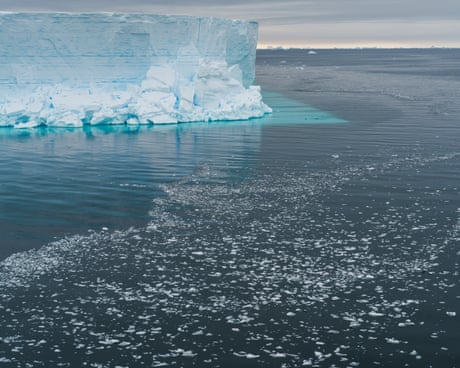
Antarctica’s west coast missing an area of sea ice the size of France as temperatures peak 20C above average

Exclusive A vast area of the Bellingshausen Sea should be covered by sea ice by now, with one expert calling the loss of ice ‘depressing’

Antarctica’s west coast is missing an area of winter sea ice the size of France, sparking concerns for threatened penguins other marine life and global sea levels.

One expert said the loss of ice in the Bellingshausen Sea was “depressing” and the failure of ice to form could have intensified a heatwave over the continent’s peninsula last week that saw daytime temperatures peak at 15.4C which is more than 20C above average.

Continue reading...

© Photograph: Alex Ingle/Schmidt Ocean Institute

© Photograph: Alex Ingle/Schmidt Ocean Institute

© Photograph: Alex Ingle/Schmidt Ocean Institute

  •  

Hong Kong issues first very hot weather warning of the year, with heatwave expected through Friday

hot weather

Hong Kong has issued its first “very hot weather” warning of the year, with the city expected to endure a heatwave through Friday.

The Hong Kong Observatory (HKO) issued the warning at 7.45am on Tuesday, with the mercury expected to reach 35 degrees Celsius.

A man in hot weather.
A man is running in Hong Kong ‘s public space File photo: Kyle Lam/HKFP.

The warning is triggered when the mercury is set to reach, or exceed, 33 degrees Celsius. As of around 1:30pm on Tuesday, Cheung Chau was seeing temperatures of 32.1 degrees Celsius.

The city recorded its hottest day of the year on Monday, as temperatures hit 32 degrees Celsius.

The HKO has alerted the public of the risks of heat stroke and sunburn.

The heatwave is expected to continue through to Friday, as an anticyclone aloft brings very hot weather and low pressure to the coast of Guangdong, according to the HKO.

Highs of 33 degrees Celsius are predicted between Tuesday and Friday, while the lows will range between 27 and 29 degrees.

Hong Kong may see showers during this weekend, as temperatures dip slightly to 26-30 degrees Celsius.

The Intergovernmental Panel on Climate Change has warned that the intensity and frequency of heatwaves have continued to increase since the 1950s due to human-caused climate change. The prevalence of greenhouse gases like carbon dioxide – which trap heat in the atmosphere – raises the planet’s surface temperature, with hotter, longer heatwaves putting lives at risk.

See also: How extreme heat became the deadliest silent killer among world weather disasters

Hong Kong has already warmed by 1.7 degrees Celsius since the Industrial Revolution, research NGO Berkeley Earth says. Heat and humidity may reach lethal levels for protracted periods by the end of the century, according to a 2023 study, making it impossible to stay outdoors in some parts of the world.

In a Tuesday statement, the Centre for Health Protection of the Department of Health reminded members of the public to hydrate regularly, and to avoid strenuous exercise and prolonged activities such as hiking.

It also suggested that outdoor or manual workers should reschedule work to cooler hours as far as possible.

Nevertheless, as of Tuesday lunchtime, the Labour Department had not yet issued a heat stress warning – a three-tier warning system introduced in 2023 to help protect Hong Kong workers from heatstroke. 

Outbound travel during long weekend

Hongkongers enjoyed a three-day weekend, with Monday marking Buddha’s Birthday.

People at Shenzhen Bay Port. File photo: GovHK.

According to the Immigration Department, Hong Kong residents made over 615,000 outbound journeys on Saturday, with over 557,000 travellers heading northbound to Shenzhen and other destinations in mainland China.

The figure marks a week-on-week increase of 36.7 per cent.

From Friday to Monday, Hong Kong residents made nearly 1.87 million outbound trips – a rise of 30.8 per cent compared to the same period last week.

  •  

Australia can switch from fossil fuel exports to renewables, says next Cop president

Climate minister Chris Bowen says country must prepare for changing world and can play bigger role in reducing emissions

Australia will find exporting fossil fuels increasingly difficult but can switch to exporting clean energy products, the president of the next UN climate negotiations has declared.

Speaking at a climate conference in Bonn, Germany, Chris Bowen, Australia’s minister for climate change and energy, argued his country had led the global push to “transition away from fossil fuels” – based on the rapid growth of renewable energy and batteries in its domestic power grids – and that its economy could manage the switch.

Continue reading...

© Photograph: Bec Lorrimer/The Guardian

© Photograph: Bec Lorrimer/The Guardian

© Photograph: Bec Lorrimer/The Guardian

  •  

Trees may store less planet-heating carbon than hoped, study suggests

Photosynthesis does not always result in wood growth, a key factor in carbon dioxide sequestration

Trees may not be able to store as much planet-heating carbon as hoped, a study suggests, with researchers finding photosynthesis does not always lead to wood growth.

Scientists studied 137 sites across the US and found trees stopped growing months before the point in the year at which photosynthesis stopped.

Continue reading...

© Photograph: Drbouz/Getty Images

© Photograph: Drbouz/Getty Images

© Photograph: Drbouz/Getty Images

  •  
❌