 Login
Login
Studio decor for newborn photoshoot
Dóres posted a photo:

Wooden basin decor for newborn studio photoshoot filled with knitted blanket closeup. Infant baby photo furniture and flower bouquet


Dóres posted a photo:
Wooden basin decor for newborn studio photoshoot filled with knitted blanket closeup. Infant baby photo furniture and flower bouquet
SINGAPORE, April 29 — Markets found their footing in Asian trading on Wednesday as worries about the Iran conflict and health of the AI sector eased, optimism over corporate earnings grew, and attention turned to the Federal Reserve’s decision due later.
MSCI’s broadest index of Asia-Pacific shares outside Japan reversed earlier losses to rise 0.2 per cent, as gains for stocks trading in Hong Kong steadied the index. Japanese markets were closed for a holiday.
S&P 500 e-mini futures edged up 0.2 per cent, while Brent crude rose 0.2 per cent to US$111.51 (RM440) per barrel as efforts to end the Iran conflict hit an impasse.
“For us, earnings are the most important part of the story right now,” said Kate Moore, chief investment officer at Citi Wealth. “Q1 earnings are tracking year-over-year growth and climbing,” she said.
“Analysts typically spend earnings season revising numbers down. This season, the opposite appears to be happening.” Corporate America has shown resilience in the face of the Iran conflict: with slightly more than one-third of S&P 500 sectors having already reported profits, 81 per cent of companies have beaten estimates.
Earnings from US tech giants Microsoft, Alphabet, Amazon and Meta Platforms, due later on Wednesday, will further test the AI-driven rally.
Tech shares took a hit on Tuesday after The Wall Street Journal reported that AI heavyweight OpenAI had missed internal targets for weekly users and revenue, raising concerns over the ChatGPT parent’s ability to support its massive spending on data centres.
The report weighed on shares of Oracle and CoreWeave on Wall Street on Tuesday, with the S&P 500 sliding 0.5 per cent and the Nasdaq Composite falling 0.9 per cent as investors also assessed the impasse in Iran.
US President Donald Trump is unhappy with the latest proposal from Tehran as he wants nuclear issues dealt with from the outset, a US official said. The Journal also reported on Tuesday, citing US officials, that Trump had instructed aides to prepare for an extended blockade of Iran.
Market attention will turn later on Wednesday to the outcome of the Federal Reserve’s April meeting, which will be Jerome Powell’s last as Fed chair. Traders believe a hold is a certainty. Fed funds futures are pricing an implied 100 per cent probability the US central bank will maintain rates, with no policy changes expected until late in 2027, according to the CME Group’s FedWatch tool.
“Given the challenging war-impacted inflation environment, it won’t cost much for the Fed to adopt a hawkish tilt; while remaining in a wait-and-see mode,” analysts from ING wrote in a research report.
“There will also be questions on the incoming Kevin Warsh and Powell’s intention to stay or go.” The yield on the US 10-year Treasury bond was up 0.8 basis point at 4.344 per cent, while the US dollar index, which measures the greenback’s strength against a basket of six currencies, edged up 0.1 per cent to 98.71, rising for a second consecutive day. Markets also digested the surprise exit of the United Arab Emirates from OPEC, though the rest of the oil producer alliance is expected to stick together.
“On any other given day, this news may have seen the Brent price move down US$5 to US$6 off the bat, given the UAE accounts for around 10 per cent of OPEC output,” said Chris Weston, head of research at Pepperstone Group Ltd in Melbourne.
“However, with the UAE’s production facilities currently close to capacity, it is perhaps no surprise that Brent front-month futures quickly erased the initial drop.”
Gold was down 0.2 per cent at US$4,583.40. In cryptocurrency markets, bitcoin gained 1.1 per cent at US$77,296.62 while ether rallied1.5 per cent at US$2,331.23. — Reuters
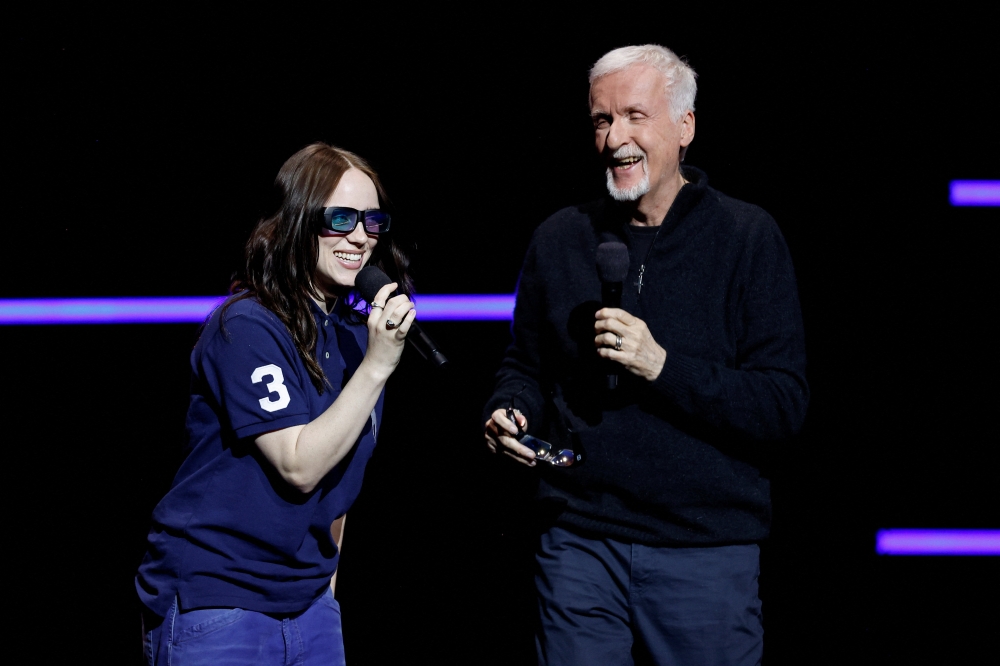
LONDON, April 29 — Pop star Billie Eilish joined forces with famed filmmaker James Cameron to bring her “Hit Me Hard and Soft” tour to the big screen.
Released theatrically by Paramount Pictures on May 8, Billie Eilish – Hit Me Hard and Soft: The Tour (Live in 3D) is co-directed by the multi-Grammy winner, 24, and the Avatar and Titanic filmmaker, 71.
Shot mainly during the Manchester leg of the musician’s 2024-25 world tour, the film combines Eilish’s hit-packed performance with intimate and reflective moments off the stage.
Cameron reached out with an “idea ready to go”, said Eilish, premiering the film in London today, and getting to work with him was “a complete dream”.
“This is my favourite show that I’ve ever created and favourite tour I’ve ever been on. And the fact that it’s going to be captured forever, and it’s also in 3D so everyone that didn’t get to see it can live it... I’m just so grateful,” she said.
Cameras, at times operated by Cameron, capture Eilish as she prepares to take the stage, warming up her voice, getting her ankles taped and applying her make-up. In calmer moments, buoyed by the director, she opens up about the origins and the motivations of her performance style and attire.
“It gets more into her heart and her mind and her kind of creative soul and into her relationship with the fans and what it means to them,” said Cameron. “I find it quite heartfelt, in addition to the music and the show being great,” he said.
The candid behind-the-scenes moments were Cameron’s idea, Eilish said.
“I wasn’t originally going to do that,” she said. “He was like, ‘People want to see it’ and I’m now really, really glad that is part of the movie and I’m excited for people to see it.”
The performance is brought to life with 17 cameras, said Cameron, many placed in the audience and catching raw emotions.
This is Eilish’s second concert film and follows successful tour movies by superstars Taylor Swift and Beyonce, which topped the box office and gave a boost to cinemas.
“I think people like that communal experience. I think Billie’s fans like to go together, it creates not only a bond with Billie, but a bond with each other,” said Cameron.
“They feel like it’s a shared emotional experience. I’d be surprised if they don’t sing back.” — Reuters
OAKLAND, April 28 — A trial that could help shape the future of artificial intelligence begins today, with billionaires Elon Musk and Sam Altman at odds over the evolution of ChatGPT maker OpenAI from a nonprofit to a profit-seeking juggernaut worth hundreds of billions of dollars.
Opening statements in Musk’s civil lawsuit against OpenAI and Altman will take place in the Oakland, California, federal court, following the selection yesterday of nine jurors.
Musk claims that Altman and Greg Brockman, respectively OpenAI’s chief executive and president, betrayed him and the public by abandoning the company’s mission to be a benevolent steward of AI for the benefit of humanity, and turning it into a “wealth machine” for themselves and investors.
The world’s richest person is seeking US$150 billion (RM593 billion) in damages from OpenAI and Microsoft, one of its largest investors, with proceeds going to OpenAI’s charitable arm.
He also wants OpenAI to revert to a nonprofit, with Altman and Brockman removed as officers and Altman removed from its board.
Musk, the Tesla and SpaceX founder, has said he provided about US$38 million of seed money to OpenAI for its original mission, only to see OpenAI create a for-profit entity in March 2019, a little over a year after he left its board.
OpenAI countered that Musk knew about and supported the transformation, and sued only after failing to become CEO, and starting his own AI company to stunt its growth.
Musk is no longer seeking damages for himself as he pursues breach of charitable trust and unjust enrichment claims.
U.S. District Judge Yvonne Gonzalez Rogers has said she wants jurors to begin deliberations on the defendants’ liability by May 12.
The jurors include nurses, city workers and retirees. If they find the defendants liable, both sides will argue possible remedies to the judge.
Musk, Altman and Microsoft chief Satya Nadella are among the witnesses expected to testify, with Musk taking the stand as soon as this week.
Egos and personalities
Musk and Altman co-founded OpenAI in 2015 with a goal of developing AI to benefit humanity and fend off rivals such as Google.
The trial could offer a window into some of the egos and personalities that shaped OpenAI as it evolved from a nonprofit research lab in Brockman’s apartment to a company worth more than $850 billion.
It risks complicating OpenAI’s plans for a potential initial public offering by casting doubt on its leadership, and could also intensify Americans’ fears about AI technology more broadly.
OpenAI has argued that Musk was motivated by jealousy in trying to undermine its growth and prop up his own xAI, which he founded in 2023 shortly after OpenAI launched ChatGPT.
It has said Musk was involved in discussions to create OpenAI’s new structure and demanded to be CEO.
Microsoft has denied having colluded with OpenAI and says it teamed up with OpenAI only after Musk left.
OpenAI faces growing competition from rivals including Anthropic, and is spending billions on computational resources. A potential IPO could value the company at US$1 trillion, Reuters has reported.
Musk’s xAI trails far behind OpenAI in usage. He has folded that business into his rocket company SpaceX, whose own potential IPO this year could be the largest ever.
Last fall, OpenAI overhauled its structure again to become a public benefit corporation, in which the nonprofit and other investors including Microsoft hold stakes. The nonprofit holds a 26 per cent stake, plus warrants if OpenAI hits certain valuation targets.
A public benefit corporation could make OpenAI more investor-friendly while retaining its charitable origins. — Reuters
OAKLAND, April 28 — Elon Musk’s courtroom showdown with Sam Altman got underway here Monday with the selection of jurors entrusted to decide whether the co-founders of OpenAI betrayed a mission to build artificial intelligence for the good of humanity, not for money.
The legal clash in a courtroom across the bay from San Francisco pits Musk, the world’s richest person, against a startup he once backed and now competes with in the booming AI sector.
OpenAI’s ChatGPT is a formidable rival to the chatbot Grok, made by Musk’s xAI lab.
“This is a tech soap opera that all investors will be watching,” Wedbush analyst Dan Ives said in a note to investors.
“There will be a lot of dirt and slings thrown around in court between Musk and Altman and that is not a good thing for anyone involved...but Musk has made this personal.”
Jurors were asked their thoughts of Musk and Altman, and whether they could put aside any bias while considering evidence at trial.
“Elon doesn’t care about people, much like our president,” said a US retiree being considered for the panel.
An Oakland city employee in the jury pool referred to Musk as “a jerk.”
“Brilliant engineer, brilliant businessman, but many of his actions were very harmful for the country,” a prospective juror who works for a climate tech company said of Musk.
In contrast, Altman’s name struck potential jurors as familiar but did not evoke strong opinion.
Musk’s lawsuit is part of a feud between him and OpenAI Chief Executive Sam Altman, but it also spotlights a debate about whether AI should ultimately serve to benefit a privileged few or society as a whole.
Court filings lay out how Altman convinced Musk to back OpenAI in 2015, acting as a co-founder for a non-profit lab whose technology “would belong to the world.”
Musk pumped millions of dollars into the lab, which he subsequently left.
However, OpenAI established a commercial subsidiary, as it needed hundreds of billions of dollars for data centers to power its technology.
Microsoft has poured billions of dollars into OpenAI and its CEO Satya Nadella is among those slated to testify at the trial.
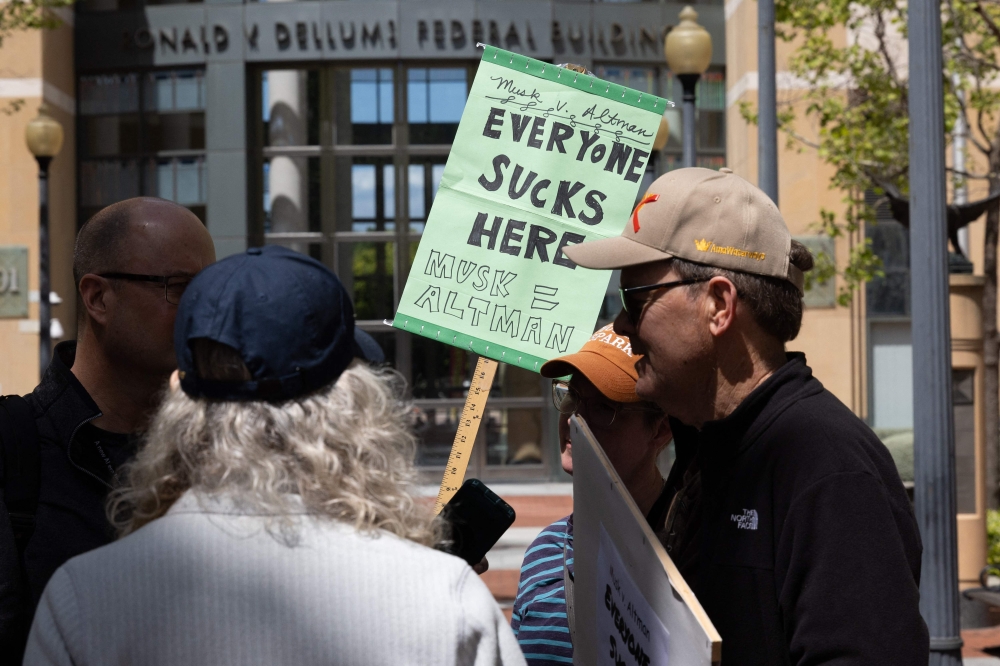
Benevolence or power?
Musk argues in his lawsuit that he was deceived about OpenAI’s mission being altruistic.
He fired off a social media post on Monday calling the OpenAI chief “Scam Altman.”
San Francisco-based OpenAI has countered in court filings that its break-up with Musk was due to his quest for absolute control rather than its non-profit status.
“This case has always been about Elon generating more power and more money for what he wants,” OpenAI said in a recent X post. “His lawsuit remains nothing more than a harassment campaign that’s driven by ego, jealousy and a desire to slow down a competitor.”
The startup noted that days after Musk entered the AI race in 2023 he called for a six-month moratorium on development of advanced AI.
The judge presiding over the trial will decide by late May – guided by an advisory jury’s findings – whether OpenAI broke a promise to Musk in a drive to lead in AI, or just smartly rode the technology to market dominance.
Along with calling for OpenAI to be forced to revert to a pure non-profit, Musk’s suit urges the ouster of Altman and co-founder Greg Brockman, who is the startup’s president.
Musk, who had sought as much as US$134 billion (RM529 billion) in damages, has since renounced any personal benefit, pledging to redirect any award to the OpenAI non-profit. Judge Yvonne Gonzalez Rogers has reserved the right to determine any remedies herself.
OpenAI now has a hybrid governance structure giving its non-profit foundation control over a for-profit arm.
Musk, who gutted the trust and safety team at Twitter after buying the social media platform that he renamed X, faces the challenge of convincing a jury and a judge that the company behind ChatGPT was built on a lie. — AFP


Legally questionable confidentiality clause adopted almost word for word from demands of Microsoft and trade groups
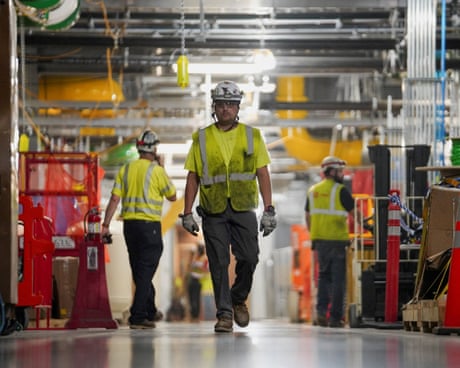
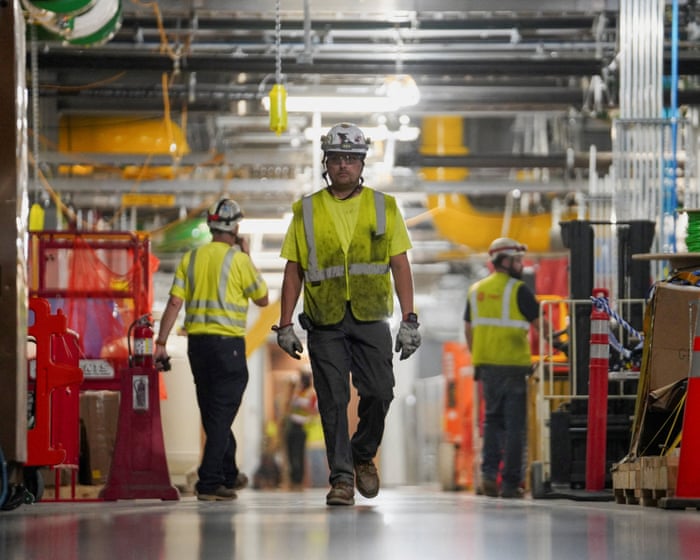
Microsoft and other US tech companies successfully lobbied the EU to hide the environmental toll of their datacentres, an investigation has found, with demands to block a database of green metrics from public view written almost word for word into EU rules.
The secrecy provision, which the European Commission added to its proposal almost verbatim after industry lobbying in 2024, hinders scrutiny of the pollution that individual datacentres emit. It leaves researchers with just national-level summaries of their energy footprints.
Continue reading...
© Photograph: Audrey Richardson/Reuters
© Photograph: Audrey Richardson/Reuters
© Photograph: Audrey Richardson/Reuters
