Reading view

Why is electricity spotty and fuel so expensive in Africa’s largest oil-producing nation?

When the street siren sounded outside Mr. Kofi’s tailoring shop in Ikeja, Lagos, it meant only one thing: the grid was back. His team had been sitting in the dark for most of the day. They had run out of generator fuel. Mr. Kofi joked that NEPA — local shorthand for the long-defunct agency that once ran the national grid — must have known a visitor was coming, and that’s why they “brought back the light.” He has been running his tailoring business for 25 years. His shop sits in Band A, Nigeria’s highest-priority electricity zone, promised 20 hours of power a day under the tariff reform introduced in April 2024. The fuel to bridge the gaps now costs around ₦1,300 per liter — up from a national average of ₦1,034 in January, according to the Nigerian Bureau of Statistics.

Seguir leyendo

© Sodiq Adelakun (REUTERS)

Drone view of an oil tanker anchored in Lagos in December 2025.
  •  

A California mayor admits to having acted as an agent of the Chinese government

Eileen Wang, the now-former mayor of Arcadia, a city in the Los Angeles area, has resigned from office after federal prosecutors revealed that she agreed to plead guilty to acting illegally as an agent of the Chinese government within the United States. Her departure from the mayor’s office comes shortly before a planned summit between President Donald Trump and Chinese President Xi Jinping.

Seguir leyendo

© City of Arcadia - City Hall via ( via REUTERS)

Eileen Wang in Arcadia, California, on April 16, 2025.
  •  

How the raid of the ‘Arconian’ led to the largest cocaine haul in history

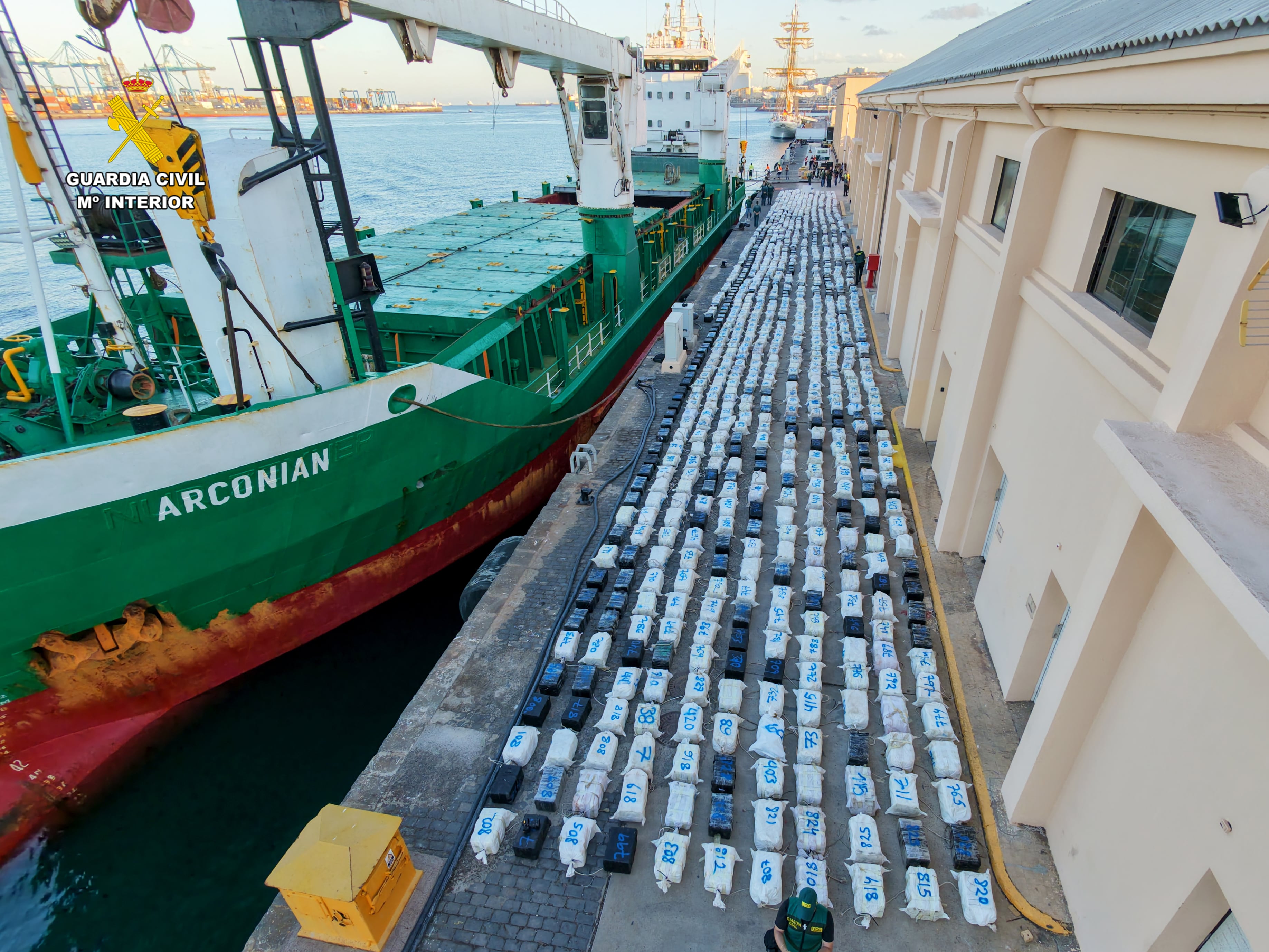
On Friday, May 1st, a public holiday, Spain’s Civil Guard launched a complex operation to board a merchant ship that, according to intelligence reports, was suspected of carrying a massive shipment of cocaine in its holds. That afternoon, eight Civil Guard officers in dark uniforms, helmets and bulletproof vests disembarked from the Civil Guard vessel Duque de Ahumada and boarded a motorboat that took them to the suspicious ship. It was an hour-long journey during which the waves tossed the boat around, as captured on video by another vessel that participated in the operation. Finally, they positioned themselves alongside the Arconian. The cargo ship, with its hull painted green and red and about the length of a football field, was sailing off the coast of Dakhla in Western Sahara, around 200 nautical miles (370 kilometers) south of the Canary Islands.

Seguir leyendo

💾

©

The cocaine bales lined up on the dock after lifting them out of the Arconian.
  •  

The women who went where even punk failed to go

During the financial crisis that rocked New York in 1977, a raw, short-lived artistic movement emerged — one that had no chance of breaking out of the underground — reaching places that even punk failed to go. “No Wave was brutal,” summarizes Adele Bertei, one of the promoters of that chaos orchestrated by musicians, filmmakers, and visual artists. “We had read [Antonin] Artaud’s The Theater and Its Double, a book that already spoke of electronic instruments that would make piercing sounds before electric guitars proliferated. It was also very theatrical.” Newly arrived in the city, Bertei had found her place in a scene that acted as a successor to the Ramones and Talking Heads. She played keyboards with The Contortions, acted in several underground films, and ended up founding The Bloods, the first all-lesbian band to proclaim their identity at a time when it was common to keep it hidden.

Seguir leyendo

© Mónica Orozco (Beacon Press)

Adele Bertei was a leader of the No Wave movement.
  •  

Hollywood in the Trump era doesn’t go to Cannes

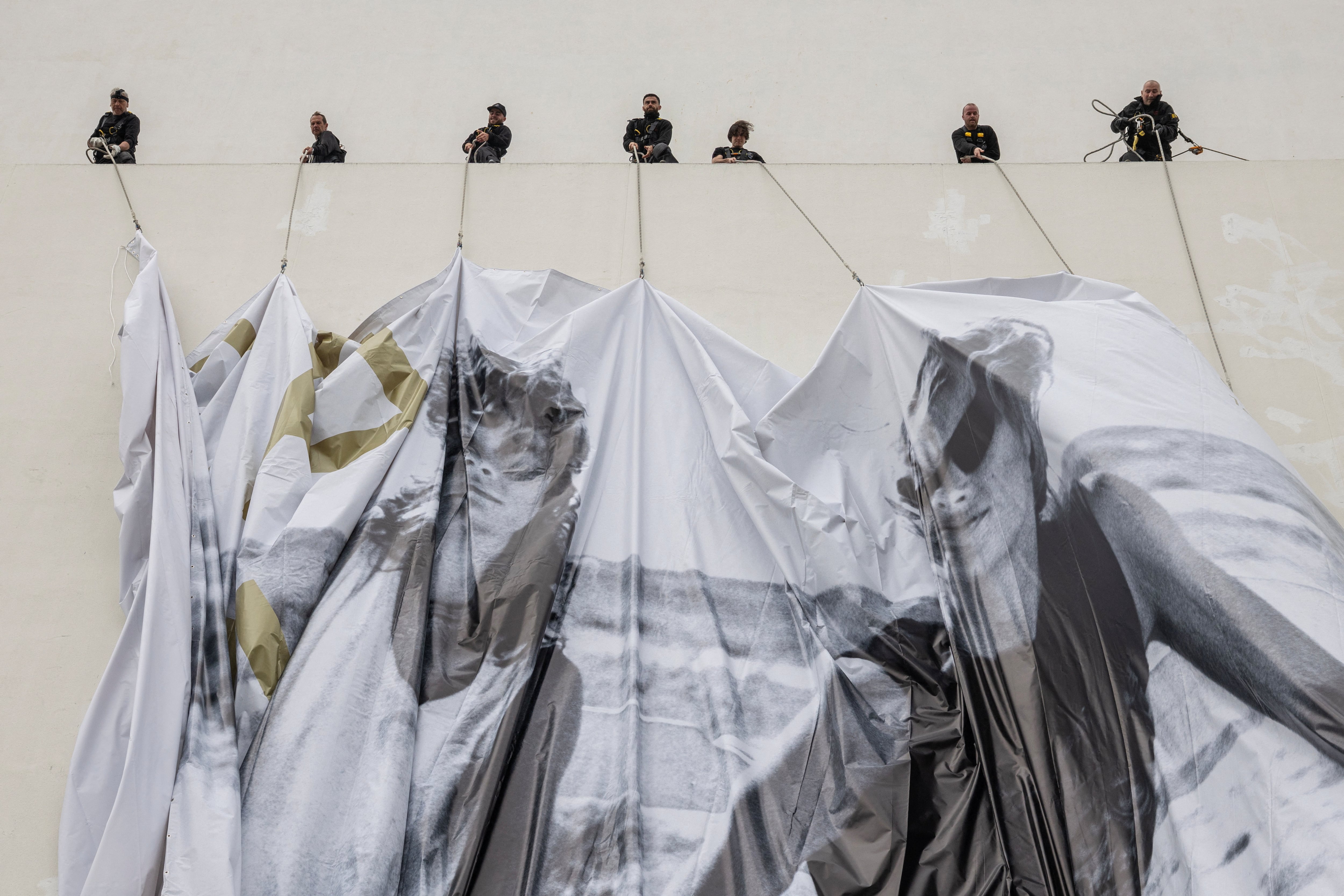
There will be no Tom Cruise reveling in low‑level flyovers along the beach at La Croisette by the French Air Force’s aerobatic team, as happened at the 2022 premiere of Top Gun: Maverick. Harrison Ford — or a similar star — will not climb the steps of the Palais des Festivals to the beat of an iconic theme, as he did in 2023 when bidding farewell to the whip‑cracking archaeologist in Indiana Jones and the Dial of Destiny. There will be no screenings of major animated films from Pixar, Disney, or Universal. There will be no parade of models and celebrities set to songs by the King of Rock, as in 2022 with Elvis. Quentin Tarantino will not arrive to showcase his vast film knowledge, as he did in 2019 with Once Upon a Time in… Hollywood.

Seguir leyendo

© Marko Djurica (REUTERS)

Several workers unfurling a banner in Cannes on Sunday featuring the faces of Susan Sarandon and Geena Davis from 'Thelma and Louise.'
  •  

Meme Solís, the timeless pianoman

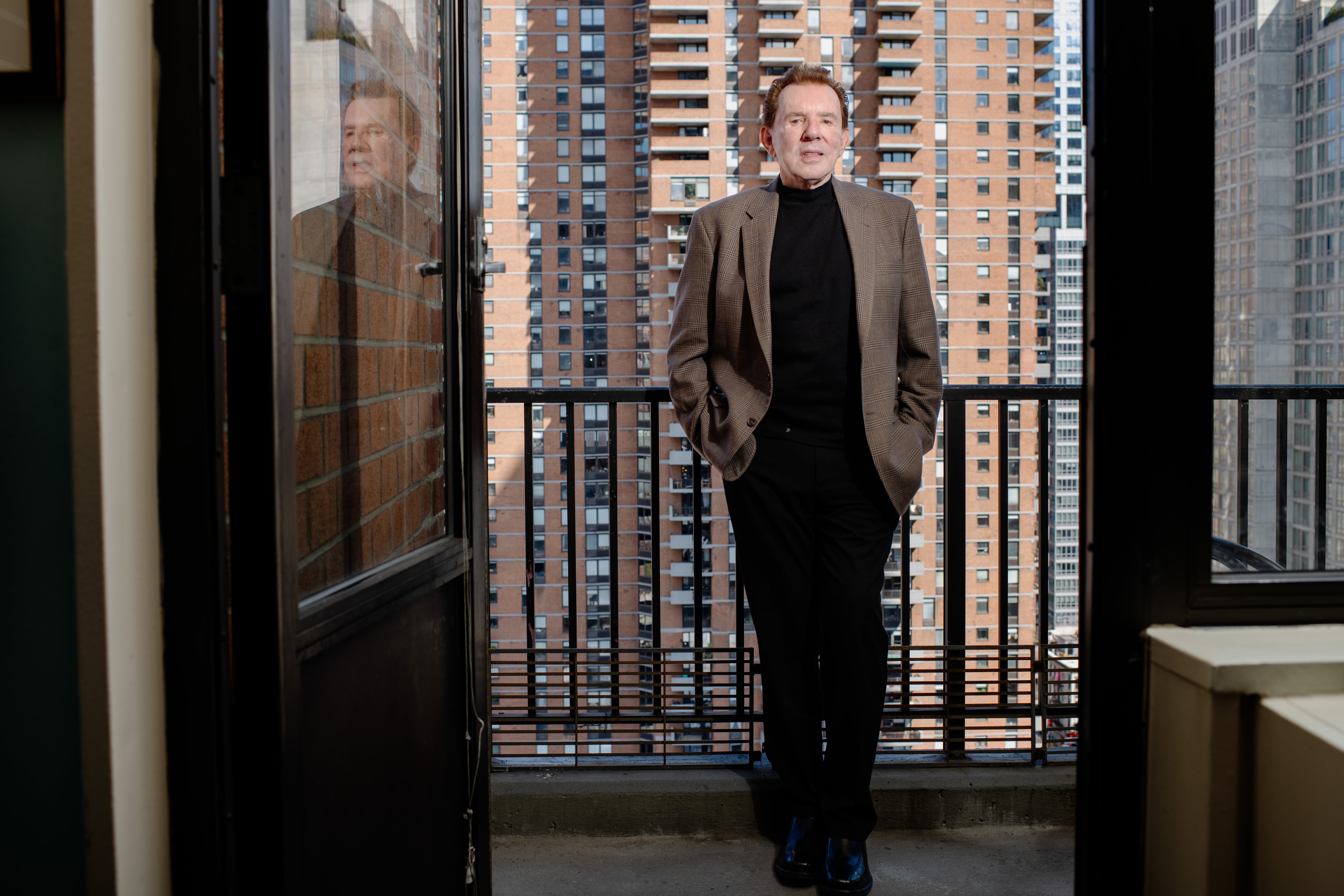
Meme Solís, in New York, on May 5.

It’s not the Havana of the 1960s but today’s New York, yet the pianist has sometimes felt they are one and the same. He wakes up at noon in his 25th-floor Manhattan apartment, which has a view of buildings arranged like a scale model on the horizon, where everything human seems momentarily wiped out. The pianist had always wanted to live in New York, and here he is. He went to bed late the night before, as he’s used to being a nocturnal creature. “I worked in cabaret all my life,” he says. “The early morning hours have always inspired me.”

Seguir leyendo

Meme Solís, pianist and composer in New York.Part of Meme Solís' discography.The Cuban singer performing one of his melodies.
  •  

From the ‘Prince of Puerto Rican letters’ to Bad Bunny: the urgency of reclaiming Puerto Rico as a linguistic and cultural affirmation

It’s common for Puerto Rico to be overlooked when the topic is its literature. Both in Spain and Latin America, its literary production remains largely unknown despite its power and quality. With few exceptions, due to editorial policies, what is written in Puerto Rico stays in Puerto Rico. The neglect is widespread. In a book as emblematic as Open Veins of Latin America, Eduardo Galeano doesn’t mention the island even once. Needless to say, there was no intention to offend. It’s simply a matter of invisibility. Often, perhaps too often, Puerto Rico is simply left out.

Seguir leyendo

© Christina House / Edu Bayer (El País/Getty)

Puerto Rican writer Luis Rafael Sánchez and musician Bad Bunny.
  •  

Traveling without a passport, boarding pass, or hotel key: The seamless travel Amadeus dreams of

Prepare to be scanned. Taking a flight without a boarding pass, traveling without a passport, or entering a hotel room without keys or cards is becoming increasingly likely. Tech companies dream of facilitating these “seamless journeys” through biometrics, which uniquely identifies people based on their individual biology. And whoever controls the biometric system will control a significant part of the future tourist experience, becoming a key supplier for infrastructure operators (and governments).

Seguir leyendo

© Tomohiro Ohsumi (Getty Images / NEC Corporation) (EL PAÍS)

Facial recognition at Narita Airport (Japan).
  •  

Fiber-optic drones, the weapon Hezbollah has adopted to attack Israel: ‘Using them is easier than playing a video game’

The Lebanese militia Hezbollah has found a crack in Israel’s defensive wall for which the Jewish state still lacks a definitive solution. After more than two years of conflict, during which the Iron Dome, Israel’s air defense system, has stopped most of the pro-Iranian group’s rockets, Hezbollah has deployed a type of drone that circumvents this traditional system during the latest escalation. These unmanned aerial vehicles, already deployed by the Russian and Ukrainian armies, are manufactured for a few hundred dollars using readily available civilian components and have already caused at least four deaths — the latest announced on Monday — and several serious injuries among Israeli soldiers and contractors. “Using them is even easier than playing a video game,” says Yehoshua Kalisky, a senior researcher at the Israel Institute for National Security Studies (INSS).

Seguir leyendo

© HEZBOLLAH MILITARY MEDIA (via REUTERS)

Image taken from a Hezbollah video of a drone attack on an Israeli military vehicle in Qantara (Lebanon) on April 26.
  •  

Wars displace more people than floods, storms, and other natural disasters for the first time

Imagine one of those dusty, precarious informal settlements that the world usually observes from afar, through photographs taken in Africa, Asia, or the Middle East: shacks and tents erected with branches, plastic sheeting, tarpaulins, and corrugated iron, where their inhabitants survive amid poverty and vulnerability, suspended in a state of perpetual uncertainty. Now imagine such a settlement that housed over 82 million people — practically the entire population of Germany. This is real, even if they are not all in the same place: it is the number of people who were internally displaced within their own countries at the end of 2025 after fleeing armed conflict or natural disasters, according to the latest estimates from the Internal Displacement Monitoring Centre (IDMC), the leading global organization for measuring and analyzing this phenomenon, which published its annual report Tuesday. This year’s findings paint a picture of a collective failure: a world unable to protect millions of people from increasingly destructive conflicts and climate disasters caused or exacerbated by human activity.

Seguir leyendo

© Anadolu via Getty Images

Internally displaced persons in northern Sudan, November 9, 2025.
  •  

Keir Starmer maintains his red lines on reversing Brexit

British politics has fallen back into a familiar pattern: its battles and its salvation once again center on Europe. British Prime Minister Keir Starmer knows that the Labour Party’s crushing defeat last week in England’s municipal elections was driven by two very specific fronts: the far right of Reform UK, the party led by Nigel Farage, the politician who did most to secure the triumph of Brexit; and the combined strength of the Green Party and the Liberal Democrats, whose voters remain bitter over the Labour Party’s decision to give up on returning to the European Union.

Seguir leyendo

© James Manning (AP)

Keir Starmer, on Monday, at an event in central London.
  •  

In Argentina, professors, students and university authorities march against Milei’s cuts

On Avenida Córdoba, one of Buenos Aires’ busiest avenues, one lane remains closed. With desks set up on the asphalt, about 50 economics students listen to a professor who, while sketching on a plastic whiteboard, tries to rise above the noise of cars and buses. The same scene was repeated this Monday on different streets and squares in the Argentine capital, as well as in other cities across the country.

Seguir leyendo

© UBA

Dean Leandro Vergara gives a public lecture on the steps of the Law School on Monday.
  •  
❌