If you’re one of the roughly 1.6 million people who took a cruise in Alaska last year, chances are you sailed through the Tracy Arm fjord. The picturesque, narrow fjord is a popular sightseeing area and is part of the Tongass National Forest, about 40 to 50 miles south of the capital city of Juneau.
In the early hours of August 10, 2025, an enormous landslide triggered a massive tsunami down the fjord. The tsunami was 1,578-feet-tall, or one-and-a-half times the height of the Eiffel Tower. Fortunately, no one was caught in the wave since it hit around 5:30 a.m. local time. If the tsunami hit later that day, about 20 cruise ships and numerous recreational boaters and kayakers could have been impacted by the giant wave.
In a study published today in the journal Science, researchers studied this “near miss” event, finding that the continued effects of climate change were likely the cause.
The team studied several eyewitness stories from that day. In one account, a group of kayakers reported waking around 5:45 a.m. to water flowing past their campsite and carrying away a kayak and much of their gear. Another observer aboard a cruise ship near the mouth of the fjord saw currents and white water with no wave, while another eyewitness described a six-foot wave along the beach.
The team of researchers also studied satellite data with NASA’s new Surface Water Ocean Topography satellite before and after the event, in addition to seismic data and numerical modelling to understand exactly what happened that August morning.
Field photos from reconnaissance trip for 2025 Tracy Arm landslide on August 13, 2025. Image: U.S. Geological Survey
“Until now, we simply didn’t have a way to observe these waves directly, but our study has demonstrated that using data from the new Surface Water Ocean Topography satellite can reveal the full sea-surface structure of these events, even if no one witnesses them directly,” Dr. Thomas Monahan, a study co-author and engineer at the University of Oxford in the United Kingdom, said in a statement.
Monahan and the other study authors also found that there was not much warning before the landslide hit.
“Normally with these gigantic rock avalanches, they often give some sort of warning signs in the weeks, months, years prior, when the slope is slowly moving down the mountain. It’s sagging and then it catastrophically gives way in a rock avalanche,” said Dr. Dan Shugar, a geomorphologist at the University of Calgary in Canada. “In this case, that didn’t happen.”
Instead, there was some minor seismic noise that was so slight it went completely undetected
“This one was truly a surprise,” Shugar added, noting that this presents some challenges for disaster reduction in high-risk areas.
Importantly, they found that the glacial retreat in the Alaska fjord led to the tsunami. From 1985 to 2020, glacier-covered areas in Alaska decreased by 13 percent. As temperatures continue to rise, glaciers will melt more and begin to retreat or shrink. These frosty mountainsides then can become unstable if the ice that has been in place for centuries melts away.
As cold regions continue to warm, glacier retreat increases the risk of hazards like this landslide, the study argues. Landslide-generated tsunamis like this can produce extreme, localized water inundation that is even bigger than those caused by the tsunamis generated by earthquakes. The size of the waves and narrowness of the fjords can be a recipe for disaster.
However, carefully monitoring glaciers could help catch these kinds of tsunamis before they happen. This is especially important as climate change continues to affect these regions. The Tracy Arm fjord alone sees upwards of 500,000 visitors per year, so catching tsunamis early is crucial for public safety
“Ultimately what we hope is that coastal municipalities, the cruise ship industry, and other stakeholders take these threats seriously,” said Shugar.
At least six cruise lines, including Carnival Cruise Line, have altered their itineraries in Alaska for 2026 due to the hazards that remain in the Tracy Arm fjord. Additionally, the United States Geological Survey warns that steep, mountainous landslide areas are “inherently unstable.” The Tracy Arm fjord tsunami will likely continue to change the landscape for years to come.
Every dad is different. Some of them are weird (like me) and some of them are weirdly normal. Either way, finding the best Father’s Day gift can be a challenge. That’s why we’re here. We spend all day reviewing and recommending products, so we have fantastic alternatives to the typical ties and beef jerky fare. So, regardless of what your pops is into, there’s something on this list for them. And hey, chuck a crayon drawing in there instead of a card. A little sappy nostalgia never hurts on Father’s Day.
Best tabletop campsite lantern: GigaPower Tabletop Lantern
The Snow Peak Tabletop LED Lantern is a $100 dimmable camp light that produces a warm even glow rather than the white blast of most camp lanterns. Snow Peak is the Japanese outdoor brand that designs camp gear like high-end furniture: matte aluminum body, frosted diffuser, tactile aluminum knobs. It runs on Snow Peak’s proprietary battery or USB. It looks at home on a campsite picnic table or on a nightstand in your bedroom, which is the design language Snow Peak has made its signature.
Best illustrated reference book: Hungry Minds The Book
The Hungry Minds Book is a hand-illustrated encyclopedia of mechanisms, biology, optics, and social systems, 400 pages from a small Florida-based studio. Every illustration starts as a pencil sketch and finishes in lithographic ink. The cover is silver-embossed and the binding is sewn. Chapters cover anatomy, bicycles, animation, festivals, and sushi, which sounds scattered until you spend twenty minutes inside one. A five-pound coffee-table object that rewards being opened. Popular Science readers can get the premium gift box for free by clicking ‘see it’ above. The first 20 customers can get 20% off with LEARNLIKEDAD20.
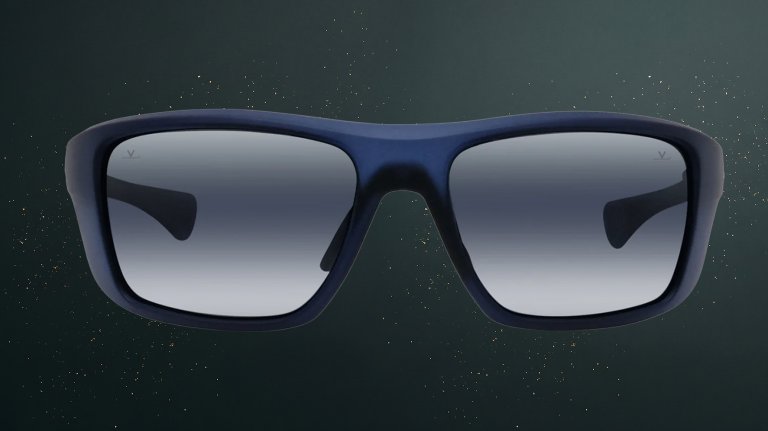
The Vuarnet Racing 05 sunglasses come equipped with mineral glass lenses instead of polycarbonate, which makes them slightly heavier but offers a visibly sharper image with optical clarity polycarbonate doesn’t match. The acetate frame is hand-finished in Italy. The Racing 05 is the investment pair that replaces three rounds of $100 sunglasses and tends to outlast the cars it rides along in.
The Norrøna Falketind dri1 is a $399 lightweight rain shell built around dri1, Norrøna’s own waterproof-breathable membrane. The cut is alpine, seams are minimized to reduce failure points, and the jacket packs into its own hood pocket. Skimp on a jacket in this category and it will start to flake and disintegrate a year or two in. You won’t have that problem here. With proper care, this will last for years, even under heavy use.
Best limited-edition notebook: Moleskine NASA-Inspired Edition
The Moleskine NASA-Inspired Notebook is a $37 limited edition with Apollo-era graphic design on the cover and a sealed envelope at the back containing a small commemorative print. Inside, it’s the classic Moleskine ruled paper that has barely changed in decades because users love it so much. The whole package feels like a nice gift and it’ll actually come in handy for everyday use.
Best digital writing tablet: reMarkable Paper Pure
The reMarkable Paper Pure is a $399 e-ink writing tablet that drops the front light and color display of the Paper Pro to bring the price down by $180, per our full review. The textured screen and 21-millisecond pen-to-ink latency match the Pro’s, so the writing feel doesn’t compromise. The chassis is built with screws and snaps for repairability, weighs 0.79 pounds, and the battery runs three weeks on an hour of daily note-taking.
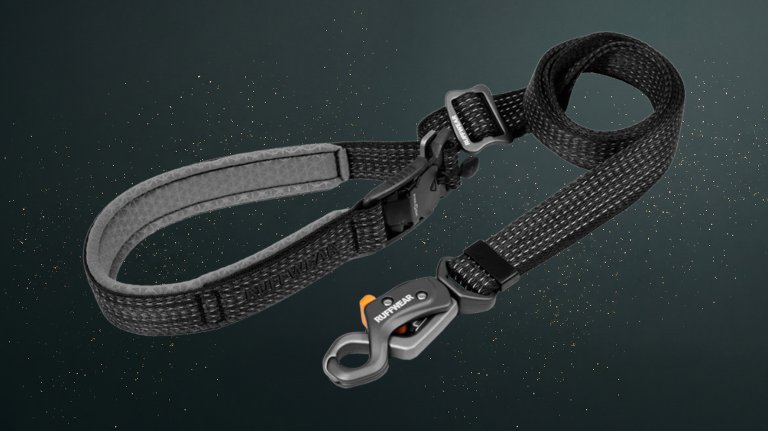
If your pop loves his pooch, get him a leash worthy of his best friend. The reflective mesh leash is super durable, so even large dogs can pull on it without worry. The wrist loop closes with a simple magnetic Fidlock clip, so it’s easy to get on and off, but only when you want to. The auto-locking Talon Clip provides a super-sturdy point of contact with a leash or a harness, so the whole package is secure (and handsome) from end to end.
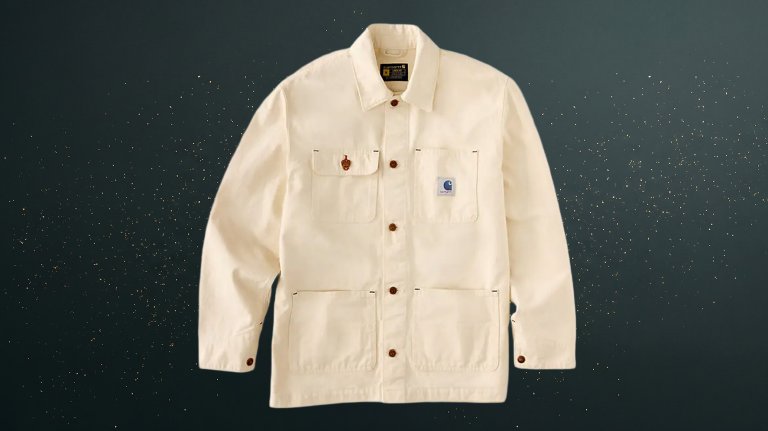
Best chore coat: Carhartt Crafted Series Drill Painter Chore Coat
Carhartt Crafted Series Drill Painter Chore Coat $150
Carhartt jackets look better once they’re broken in and that’s especially true here. Made from 9-ounce 100% cotton drill, this jacket is designed to break in and patina the way Carhartt’s original painter coats did a century ago. The rest of the feature sheet includes Two-piece sleeves for mobility, metal button front, snap cuffs, an interior chest pocket, and exterior pockets sized for brushes and carpenter pencils. The Crafted Series is Carhartt’s elevated line with cleaner cuts over the same construction. You’ll want to steal it once your dad has worked in it for a while.
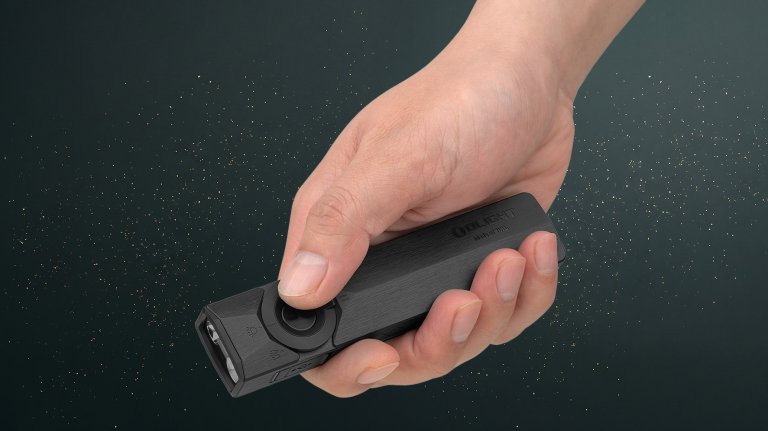
This is four light sources in one body: a 1,700-lumen flood, an 800-lumen spot, a 365-nanometer UV mode for inspection work, and a green laser pointer. It charges magnetically or over USB-C, and the flat aluminum body is comfortable in a pocket in a way most cylindrical flashlights are not. This is a gift he’ll carry around with him every single day.
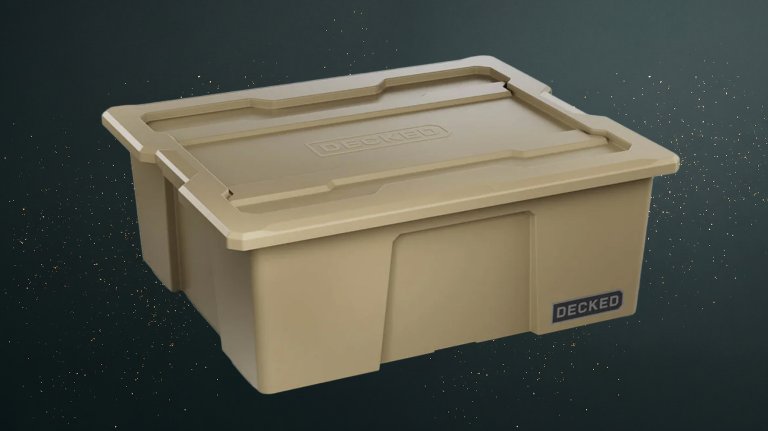
DECKED is best known for engineered truck-bed drawer systems, but the Payloader is a stackable garage storage bin engineered to bring tough storage into the house. Sizes run 32 to 133 liters, lids hold up to 200 pounds static, and the bins lock into a Stable Stack formation so a tower of three doesn’t slide off itself. Lifetime warranty. I’ve been testing these in my house for a few weeks and I’ve already dropped them several times with no breakage.
Best cutting board: STEELPORT SteelCore Cutting Board
This edge-grain Oregon big-leaf maple board has a steel matrix embedded inside it, which keeps the board flat against the dimensional movement that warps and splits ordinary wooden boards over time. STEELPORT hand-finishes them in Portland. The Oregon Maple variant has a recycled paper-composite reverse with a juice groove for raw proteins. At 0.75 inches thick, STEELPORT claims it’s the thinnest end-grain board on the market. Plus, it looks nice enough to keep on the counter all the time without having to stash it away in a cabinet.
A 1.5-inch AMOLED screen peaks at 2,000 nits of brightness, so this adventure-ready watch is visible in just about any conditions. Dual-frequency GNSS provides accurate location data even if you’re battling a canyon or tree-cover. Free downloadable offline maps and a 65-hour run time per charge (with GPS turned on) make this a wearable that you can rely on during off-grid adventures.
Best high-resolution camera: Sony Alpha 7R VI
Alpha 7R VI: Full-frame Mirrorless Interchangeable Lens Camera $4,499.99
Yes, this is an expensive camera, but consider this a passive aggressive attempt on my part to get my kids to buy me one. The A7R VI is built around a 66.8-megapixel fully-stacked Exmor RS sensor and shoots blackout-free continuous bursts at 30 frames per second. That means photographers don’t have to choose between high-res images and high-speed shooting. Dynamic range hits 16 stops. In-body stabilization claims up to 8.5 stops under ideal circumstances. Real-time Recognition AF+ uses skeletal pose estimation to predict where a moving subject’s face will be next. This is a beast of a camera that’s worthy of pro work.
Not every dad is great at building a fire with wood, and that’s OK. The Infinity relies on a propane tank you swap when it runs dry. Twin burners put out up to 72,000 BTUs combined, the unit runs five and a half hours on a 20-pound tank at maximum output, and the dual-burner geometry recreates the swirl pattern of a real wood fire. You get all the ambiance and warmth without the kindling, false starts, and ash cleanup.
Despite its small size, this box delivers 1,000 amps of starting power, enough for any gas engine up to six liters or any diesel up to three. It weighs 2.4 pounds and works as a portable USB power bank. The built-in 100-lumen LED offers seven modes of illumination depending on your needs. All those featured are wrapped in an IP65-rated case to protect against dust and water. It may really get your dad (or you) out of a jam down the line.
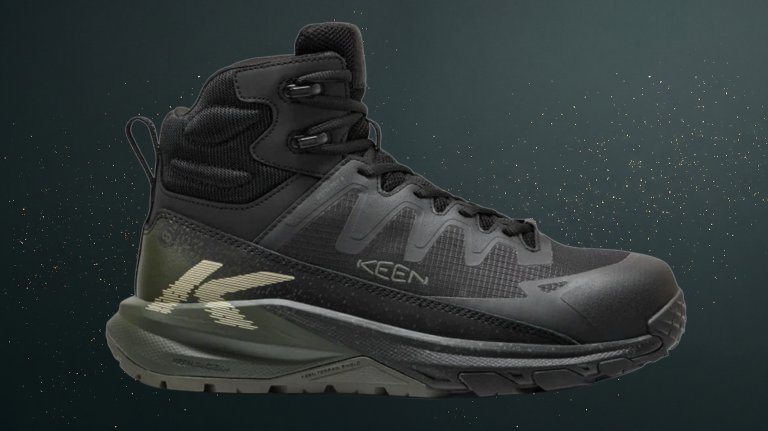
The KEEN Utility Targhee Blur is a $210 lightweight work boot, the work-boot version of KEEN’s long-running Targhee hiker. KEEN’s ReGEN+ midsole returns 60 percent of energy per step, the carbon-fiber composite safety toe is 15 percent lighter than steel and meets ASTM F3445 and F2413. Inside, the KEEN.DRY membrane keeps water out without trapping moisture in. The Targhee Blur is available in mid or low collar heights, both with reflective webbing for low-light visibility. Plus, they look a lot cooler than your dad’s old boots.
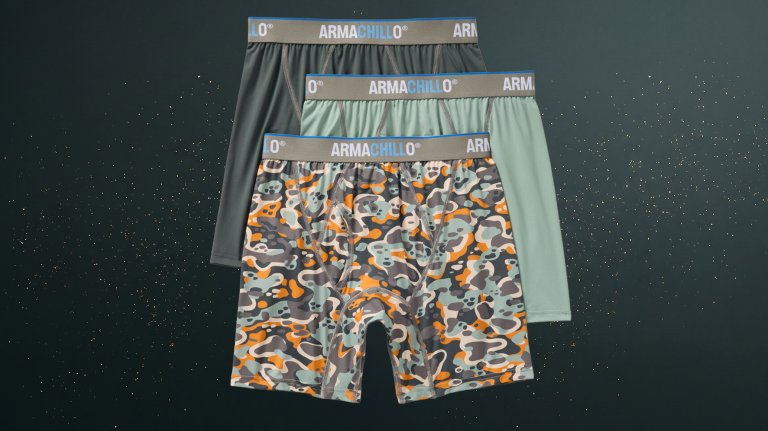
Best cooling underwear: Duluth Trading Armachillo Cooling Boxer Briefs 3-Pack
Many dads aren’t willing to splurge on underwear, so you have to do it for them. Jade-infused cooling fabric make these boxer briefs some of the most comfortable we’ve ever worn at work or the gym. Microscopic jade particles embedded in the nylon-spandex knit are dense enough to draw heat away from the skin, which makes the fabric measurably cool to the touch and not just moisture-wicking. The Armachillo briefs solve an actual hot-summer problem in a way most $25-a-pair boxer briefs cannot.
Best electric shaver: Philips Norelco i9000
Philips Norelco i9000 Wet & Dry Shaver with SenseIQ $229.96
Disposable razors are over. This rechargeable shaver has a SenseIQ sensor inside that reads beard density 500 times per second and modulates cutting power on the fly. The Triple Lift & Cut head pulls flat-lying hairs upright before cutting them, which is the difference between a clean shave and a close-but-not-quite one. The motor and battery carry a five-year warranty. Self-sharpening blades last two years between replacements.
Best gaming headset: Turtle Beach Stealth Pro II
Turtle Beach Stealth Pro II Wireless Gaming Headset $349.99
The Turtle Beach Stealth Pro II runs 60-millimeter Eclipse dual drivers, Japan Audio Society-certified 24-bit/96kHz hi-res wireless over a 2.4GHz USB transmitter, Dolby Atmos spatial audio, and adjustable active noise cancellation. Does that sound nerdy? Yes, but it’s also awesome and if your dad is a true gamer, he’ll appreciate all of it. Dual swappable 40-hour batteries mean zero downtime between charges. CrossPlay 2.0 handles up to four USB transmitters, so the Stealth Pro II moves between PC, PlayStation, Xbox, and Bluetooth without rewiring.
Best washable wool rug: Revival Rugs Mori
Revival Rugs Mori Washable Wool Rug (6' x 9', Guava) $799
Dad needs a rug to tie the room together. The Revival Rugs Mori is a $799 hand-knotted wool rug (in the 6′ × 9′ size) built around a washable construction most wool rugs can’t claim. Revival works with artisan partners on washable yarns and weave geometry that survive a wash cycle without the dry-cleaning intervention traditional wool rugs require. Three colorways: Guava, Matcha, Sakura. The Mori is the rug pick for someone who appreciates the look of a hand-knotted wool rug without the maintenance overhead.
Best mechanical keyboard: CHERRY XTRFY MX 8.2 Pro TMR Wireless
You don’t have to know how magnets work to appreciate this high-end keyboard. Tunnel Magnetoresistance (TMR) switches replace the typical sensors most premium gaming keyboards rely on. CHERRY claims 0.01-millimeter precision and lower power draw than Hall-effect equivalents. The 8,000Hz polling rate works in 2.4GHz wireless, Bluetooth, or wired modes. Hot-swappable sockets accept the brand’s magnetic switches or traditional mechanical switches, which is rare in the category. TKL layout, PBT keycaps, 300 hours of gaming on the 8,000mAh battery. Plus, it sounds awesome.
The Traeger Irontop 2-Burner is a $499 flat-top grill provides edge-to-edge heat across the cooktop as default rather than luxury. That means the burgers at the center of the surface cook at the same speed as those around the edge. The two-burner has 504 square inches of cooking surface. The four-burner steps up to 648 square inches at $599. Both ship with integrated wind guards, a P.A.L. accessory rail, side shelves, and a three-year warranty.
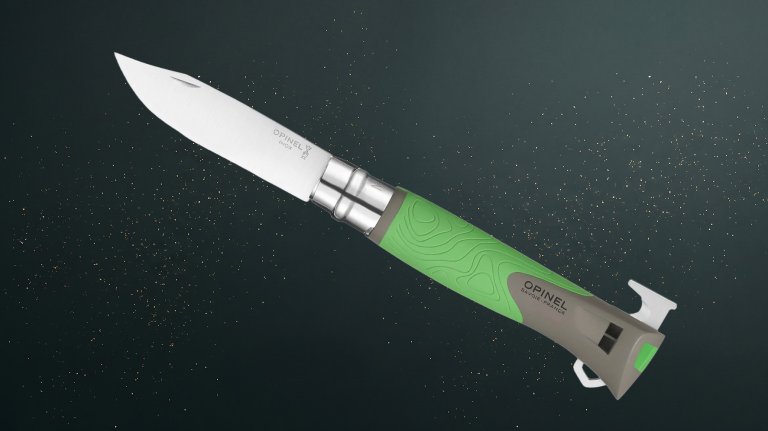
Ticks are the worst, but they’re a way of life when you spend a lot of time outside. The Opinel No. 12 Explore is a $60 folding knife with a built-in tick remover, a notched slot on the handle that slides under an embedded tick and lifts the head out cleanly. If you don’t get the whole bug out, it could regenerate over time and increase your risk of disease. A Virobloc safety ring locks the blade and the handle is glass-filled polyamide.
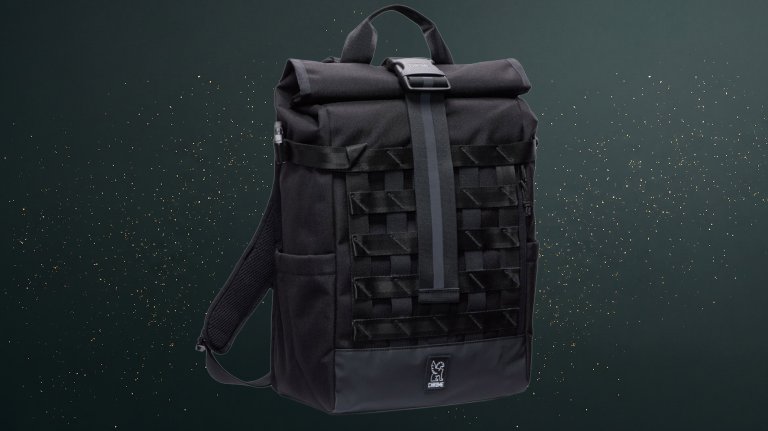
Best commuter backpack: Chrome Industries Barrage 18L
Roll top bags can save your gadgets and everyday carry during bad weather. The welded main compartment is exceptionally resistant to the elements, which makes this a great pack for commuting or spending time outdoors. The Barrage has an exterior webbing cargo net for awkward loads and an internal 15-inch laptop sleeve. The floating tarp liner is made from recycled auto-glass and the main fabric is 1050D recycled nylon. PFAS-free. Best of all: it looks really cool.
The smallest cooler in Yeti’s lineup is sized for one person going out for the day rather than a family tailgate. It holds 12 cans or nine pounds of ice with the same Permafrost pressure-injected polyurethane insulation and ColdLock gasket as the big Tundra. The AnchorPoint tie-down slots are built to strap the cooler to a paddleboard, motorcycle saddle, ATV, or golf cart. To make it an even better gift, fill it up with cans of Arnold Palmer (or any other beverage he may like).
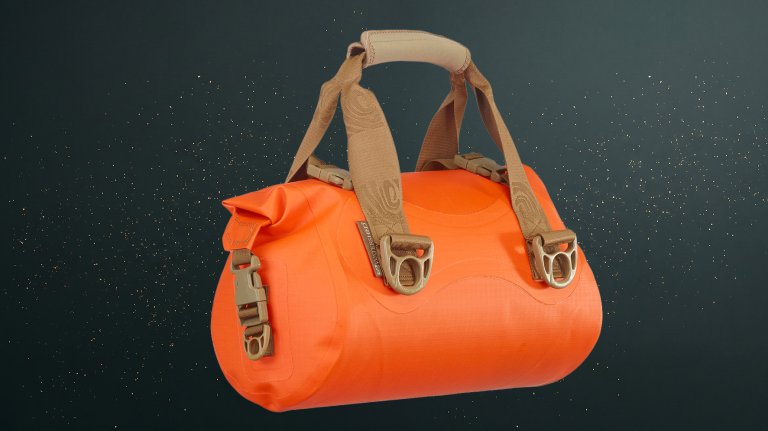
The Watershed Ocoee is a submersible dry bag from $167 in standard colors, sized to fit under a kayak deck or a boat seat. The ZipDry zipper is the same closure Watershed sells into the military waterproof-gear category, rated IP68 for full submersion rather than splash resistance. 10.5 liters of capacity, 1.5 pounds, plus rugged carry handles and hard lash points for tie-downs.
If your dad is the type whose tee shots occasionally need a search party, the Cobra OPTM X driver is 2026’s rescue club. Bringing “stay in play” energy, this glossy black fairway finder has a carbon crown that looks sharp at address, plus a subtle “C” that works as a clean, non-distracting alignment cue. It feels well-balanced, especially in 44.5” Tour Length for increased accuracy, and brings real forgiveness through the MOI (Moment of Inertia) and POI (Products of Inertia) design that helps reduce twisting and side spin when contact gets spicy. Plus, FutureFit33 fine-tuning allows Dad to dial it in and stop donating balls to the woods. The adjustability makes it especially great if you don’t know how the recipient plays. (And if you’re feeling really generous and Dad’s into 3-D printing, you can help with his putting, too.)
Best high-end low-profile turntable speaker: Andover-One SB
Andover-One SB Audiophile Powered Speaker Base $1,999
Vinyl dads can easily take over any space while building a shrine of glowing components. But they don’t have to redecorate an entire room with cascading chords to prove they care about sound. They just need an Andover-One SB and a well-maintained turntable. This powered speaker base proves component hi-fi can be high-end. It’s clean in look and sound, packing a built-in phono preamp, 200 watts powering six speakers for a fleshy, full-range response, a Class A headphone amplifier, and multiple inputs into furniture-grade wood with a tempered-glass top. For the digital-friendly dad, add a reference streamer like the Bluesound Node ICON or use Bluetooth aptX HD. The multi-driver array, featuring four 3.5-inch ultralinear aluminum-diaphragm woofers and two Air Motion Transformer folded-ribbon tweeters, works with panoramic S/M/L audio modes to tune presentation no matter the placement. And Isogroove feedback elimination keeps the platter vibration-free, no matter how freely the volume knob turns.
Coffee nerds have so much in common with audiophiles. Both are obsessed with micro-calibrated gear and swapping components in and out in the pursuit of clarity. So if you know a dad as obsessed with puck preparation as he is running a carbon-fiber anti-static brush over every album, you know a dad who needs the Mazzer Philos premium light commercial single-dose grinder. Like a summit-fi digital audio converter, this $1,495 hand-assembled, heirloom-quality Italian appliance (available in black and silver) takes whatever beans it’s fed and extracts previously masked tasting notes with minimal morning commotion. A wide dial covers espresso to pour-over to batch brew coarseness, and the near-zero-retention vertical burr + chute knocker + Dose Finisher system lets you move between origins and brewing methods without yesterday’s beans staging a comeback. Swappable 64mm flat burrs give him a chance to tune for vibrant light and full-bodied dark roasts, and the option to switch from stepped to stepless mode gives grind settings the same obsessive precision as establishing the perfect listening position.
Dad undoubtedly has a vibe. But what if he could have an aura?!? That’s what this collection from BrüMate brings. That and all-day hydration. The Dark Aura collection’s brushed metallic blue-purple gradient looks good on thirst-quenchers of every size, from the Strova 18oz with its flavor-preserving ceramic liner and leakproof BevLock lid to the Era Flip 40oz, a cup holder-friendly tumbler with its SoftSip straw and leakproof SlideSeal lid. Whether it’s hot coffee (ground with the Mazzer above, obviously) or a reservoir of some cold refreshing beverage, dad will feel stylish hydro-hauling in one of these twilight chrome containers.
Best compact connected speakers: Bose LifeStyle Ultra
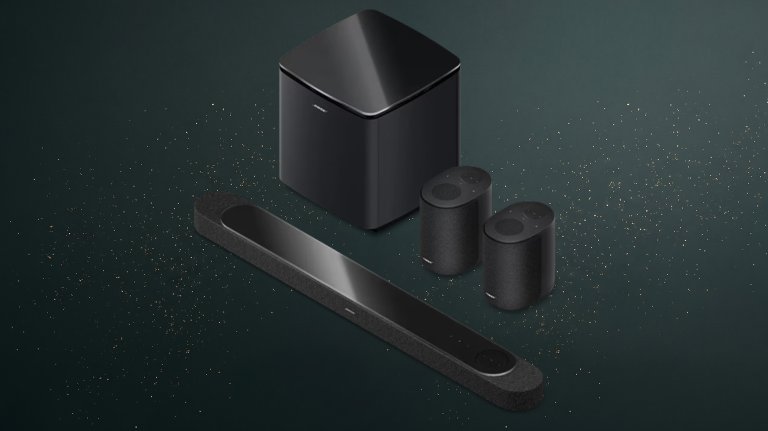
If your dad won’t admit his hearing isn’t what it used to be, but the TV volume when he watches something might be threatening to give everyone else in the room tinnitus, the Bose LifeStyle Ultra soundbar is the upgrade he needs. AI-powered Speech Clarity separates dialogue from explosions, scores, and general streaming-service murk, so he gets bigger, clearer sound without turning the living room into an endurance challenge. Add the glass-topped Subwoofer for serious low-end response, then bring in the compact Ultra Speakers as wireless rears when you want a more immersive experience. After that, dad can build a whole-home system room by room, placing speakers as compact height-enhanced endpoints or even more expressive stereo pairs fed by AirPlay 2, Google Cast, Spotify Connect, and Bluetooth. More detail, less subtitles and shouting matches.
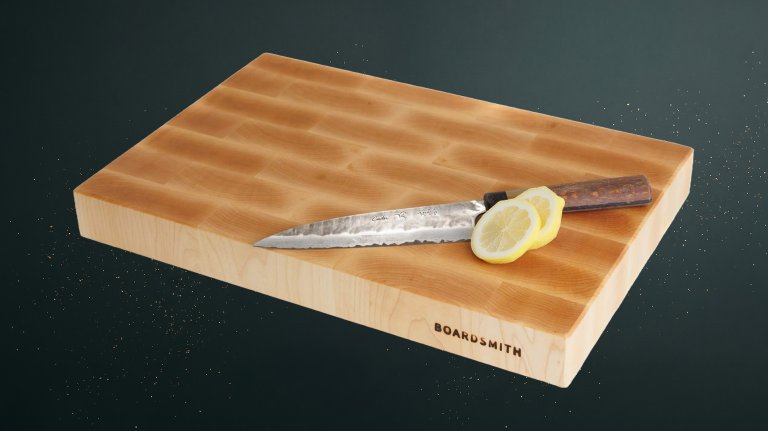
Best kitchen upgrade: Boardsmith butcher block
The Boardsmith Premium End Grain Butcher Block $230+
When it comes to cooks, you already think Dad is a cut above. Even before you taste anything, you know based on his taste in knives and his actual knife skills. He turns mise-en-place into theater. And the Dad that is the kind of chef who gets weirdly specific about his blade’s edge needs an appropriate prep surface. Knife-friendly Boardsmith premium end grain butcher blocks … or cutting boards, or charcuterie boards, or utensil sets … are made in a family-owned shop in Frisco, Texas. And they bring a substantial stage for slicing, dicing, carving, etc. You can pick from four sizes of maple, walnut, cherry, or some handsome combination, customized with or without finger grooves and juice grooves and feet. Dad will never get bored with this board.
Best balanced and aligned putter: L.A.B. Golf VZN.1i
Cresswell, Oregon, iconoclasts L.A.B. Golf have a vision for getting zero-torque putters in more golfers’ bags, and part of that is getting their VZN.1i in more golfers’ hands. If Dad is looking for stability and repeatability, but he’s not looking to answer any “What is that?!?” questions on the course, this more familiar, still ultra-forgiving shape could quiet his aesthetic concerns and also any worries that he won’t lock the target line. Still center-shafted and hand-balanced, the VZN.1i goes beyond the D-shaped mallet head of the OZ.1i and brings a fang-style putter to the lineup. A 303 stainless-steel insert with deeper milling gives a crisp, deeply satisfying zing and hotter launch off the face. As for that cutout and the crown lines, their geometry helps with optical alignment. Plus, it’s also a “gimmie getter”/ball scoop, so it takes more pressure off the back while it keeps more putts on track. Get hexagonal, stay squared.
Our digital lives often drive fandoms in the very analog: record players, cassettes, and yes, fountain pens. For some people, they’ve always been the thing, but plenty of newcomers are arriving via social media—and that’s exactly what makes this such a good gift. Your dad likely doesn’t already have one, but if he is always talking about writing that novel, he’s probably at least a little curious and not sure where to start.
LAMY, a German writing instrument brand, is known for reliability, and the AL-star is an easy entry point that feels more premium than its price tag suggests, thanks to its lightweight aluminum body. It refills with cartridges and comes in a range of nib sizes; we recommend starting with medium. LAMY does make a left-handed nib, but pro tip: We have yet to find any left-handers who want to deal with ink that can easily smear before it has time to dry. Add a pack of refill cartridges in a few fun colors to make it feel a little more special right out of the box.
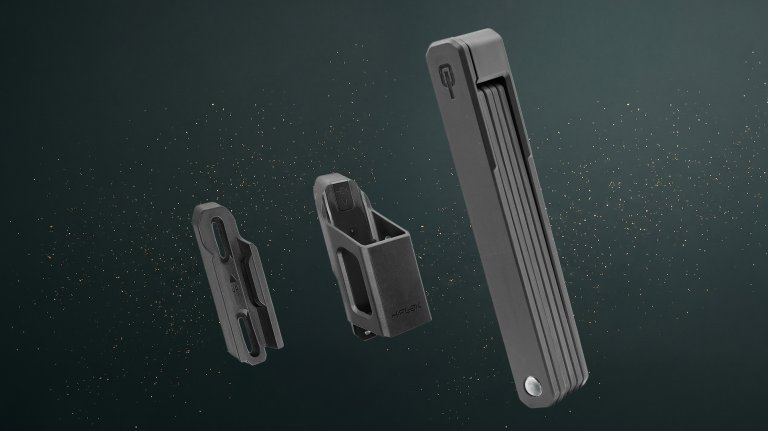
Cycling dads will happily upgrade everything on their bike—except the lock, which somehow stays “good enough” until it’s very much not. The Hiplok Switch 105 fixes that. It’s a 105 cm (about 41 inches) folding lock made from hardened steel bars and solid rivets, offering real security (Sold Secure Bronze) without the usual bulk. It folds down compactly and clicks into a boss-mounted bracket, so whether it’s on the frame or the fork, it’s always along for the ride instead of rattling around in a bag. At just over a pound, it’s manageable, and long enough to loop through larger frames, including many e-bikes.
Still prefer a heavy-duty chain for some urban adventures where you’re not obsessing over every ounce or wanting to drag a bag? The Hiplok GOLD Wearable Chain Lock is a burly belt that’s not as awkward as it appears and gives you confidence that your bike is secure outside of the coffee shop.
Like all high schools, Cavour Scientific High School has its fair share of rumors. For years, students swore that their classrooms were built atop ancient, unexplored Roman ruins. Their theories were understandable given the school’s impressive view.. From its front steps on Via degil Annibaldi, Cavour Scientific High School is less than a five minute stroll to the Colosseum. Yes, that Colosseum.
The monumental symbol of ancient Rome is only one example of the surrounding neighborhood’s historical significance. Famous figures including Pompey, Cicero, and Emperor Augustus all lived there, but much of the vital archaeological record remains buried underneath centuries of municipal development. The school, originally built during the late 19th century as a missionary complex, is its own testament to this constant change. Although construction work at the time revealed portions of a large Roman villa home known as a domus, no one conducted extensive surveys of the remnants. Instead, the domus’ true size and condition was a matter of speculation for generations.
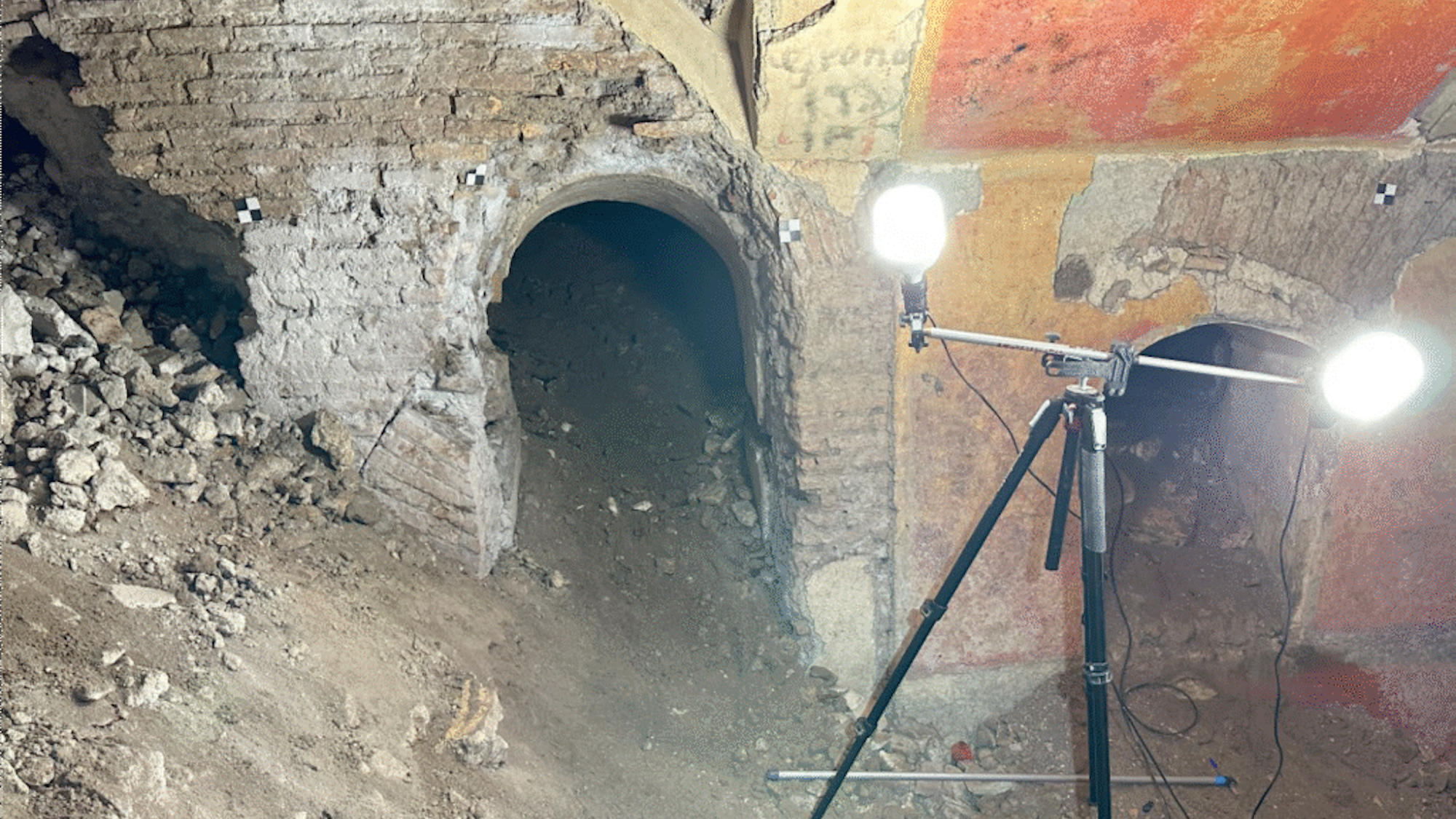
Knowing this, local students recently undertook multiple clandestine explorations through passageways underneath the gymnasium and finally confirmed longtime suspicions: an ancient, luxurious Roman abode resides beneath their hallways. After their history and Latin teacher reported the findings to the Special Superintendency of Rome, archaeologists spent months excavating the area earlier this year. Now known as the Domus Liceo Cavour (House of the Cavour High School), is offering experts a remarkable glimpse of Roman life circa the mid-second century CE.
The house is impressively preserved despite its age. Archaeologists documented decorative stucco along the vaulted ceilings, floral wall frescos, and even a detailed mosaic featuring irregularly shaped tiles that were popular with wealthy Romans at the time. An inscription left during the first excavation project in the 19th century reports the home likely belonged to someone in the Umbrius family. Although not much is known about them, they possibly originated in Samnium, an area in south-central Italy near Pompeii.
Archaeologists hope to continue their work sometime in the future, and school officials plan to eventually open the site to the public. Until then, much more of Domus Liceo Cavour remains to be examined—including a fair amount of graffiti from former students and urban explorers.
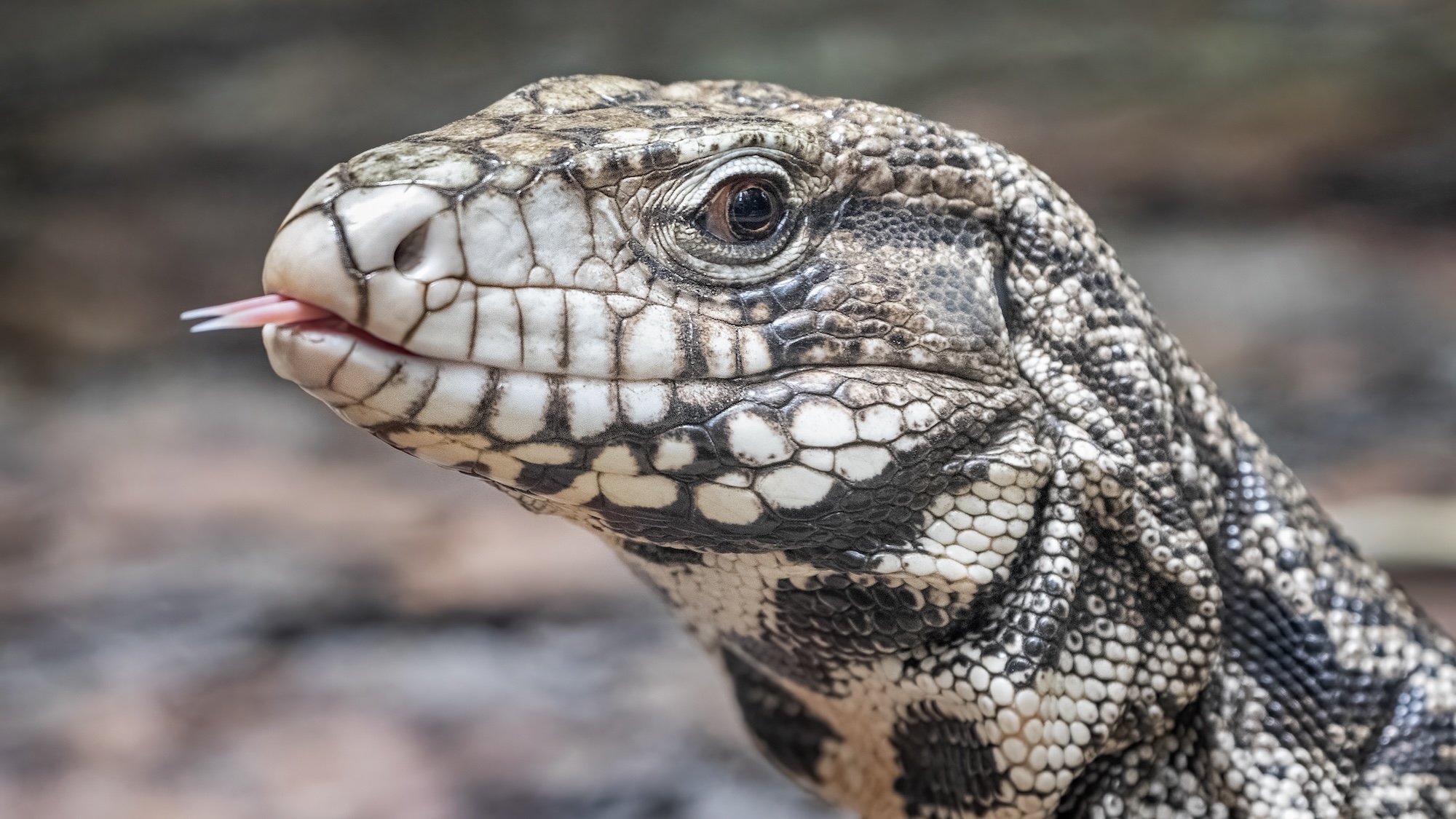
Wildlife experts in Georgia are urging locals to keep on the lookout for any four-foot-long lizards wandering around the Peach State. As its name implies, the Argentine black and white tegu (Salvator merianae) isn’t native to the United States, and it’s quickly becoming a nuisance.
Although the black and white tegu resembles many monitor lizard species, they are actually only distantly related to the reptiles. The speckled omnivores can weigh upwards of 10 pounds, largely thanks to a diet that regularly includes eggs, small animals, fruits, and vegetables. They are also extremely prolific animals, with a single female capable of producing around 35 eggs every year. These typically hatch during the summer between June and July, meaning many in Georgia have a decent chance of spotting a tegu in the near future.
It’s still unclear how the tegus were first introduced into the state, although illegal releases by exotic pet owners are the most likely explanation. Georgia’s Department of Natural Resources (DNR) first responded to reports of the rogue reptiles in 2018, with sightings spreading ever since. Tegus are currently particularly concentrated in southeastern Georgia’s Toombs and Tattnall counties, but experts fear a lack of predators means the lizard population could soon explode without concerted conservation efforts. As non-native “wild” species, trapping and hunting tegus is legal in Georgia throughout the year.
That said, the DNR still cautions hunters against coming into direct contact with the reptiles. Although not particularly aggressive or dangerous, tegus may carry exotic parasites as well as harmful bacteria including salmonella. Experts encourage people to instead contact the DNR if they see one of the lizards, either by emailing gainvasives@dnr.ga.gov or calling (478) 994-1438.
Unfortunately, Georgia isn’t the only state contending with an unwanted tegu problem. According to an ongoing mapping project from the U.S. Geological Survey and Georgia Southern University, residents across Florida, Alabama, South Carolina, and Texas have also reported sightings in recent years.
It’s four in the morning and you wake from a dream. It wasn’t a nightmare exactly, but it was vivid and unsettling—a circus of imagery in which the other commuters stuck in gridlock beside you were all octopi or your feet were transformed into a pair of horse hooves while going through airport security.
Maybe you don’t often remember your dreams but this one, this episode that fused the mundane with the outlandish, it sticks. Even days later, you can still see those tentacles gripping the steering wheels or feel the awkwardness of your gait running to catch your flight.
It couldn’t have been that joint you smoked before bed, could it? Science says maybe.
How weed effects sleep cycles
Reports of vivid dreams are “very well known” in cannabis and neuroscience research, says Andrew Kesner, assistant professor of psychology at Indiana University in Indianapolis. But “we still don’t really know the neurobiology of dreaming and what sort of features make you remember your dreams better or worse.”
Cannabinoids are found naturally in the brain in a non-psychoactive form called endocannabinoids. Endocannabinoids control our sleep/wake cycle, aka our circadian rhythms, by modulating and maintaining the brain’s biological balance through an abundant receptors neuroscientists call CB1.
“When people fall asleep, the brain makes its own cannabinoids that increase and decrease throughout the sleep-wake cycle, and throughout the day,” explains Kesner.
Marijuana contains a different form of cannabinoid than the one naturally produced by the brain, THC or tetrahydrocannabinol. THC also works on the brain’s CB1 receptors but, unlike endocannabinoids, it is psychoactive, meaning it makes users feel high by producing feelings like euphoria and paranoia.
Blooming cannabis plant ready to be harvested into various THC-based products. Image: Sunan Wongsa-nga / Getty Images Sunan Wongsa-nga
When you smoke weed before bed, the THC added to the brain’s natural endocannabinoids sends the brain’s CB1 receptors into overdrive. And when those CB1 receptors are in overdrive, they change the way you sleep.
Natural sleep in healthy adults begins with a short period of nodding off followed by a stage of “slow-wave” sleep, that deep sleep from which it’s hard to wake someone up. Cycles of lighter sleep punctuated by bouts of REM (rapid eye movement) sleep follow, growing longer and longer throughout the night.
“REM sleep is classically the time when you’re dreaming,” says Kesner, when “your brain acts like it’s awake but the brain stem paralyzes your body so you can’t act out your dreams.”
Consuming THC appears to suppress REM sleep: It causes it to arrive later in the sleep cycle and to make up less of the overall percentage of sleep. THC also causes more frequent interruptions to REM sleep. That, says Kesner, may be the origins of its reputation for causing weird dreams.
“We know if you wake someone up in REM sleep, that’s when they have the highest chance to remember their dreams,” he explains. So, while there’s no evidence that dreams under the influence of THC are any different than THC-free dreams, the ability to remember them more easily may make the sleeper believe they are more bizarre or intense.
“It’s possible that the THC could be making dreams more intense by changing cortical activity [the way the brain functions], making them wonkier and maybe adding some variability to what you’re dreaming about,” Kesner continues. But the huge variability among individuals in both sleep and the effects of THC use makes objectively studying weed-induced dreams “kind of a nightmare”—pun not intended.
Researchers still don’t even know exactly what dreams are or why they happen—though there’s a good chance that it may be the brain coming up with different learning scenarios, according to Kesner. Someone who plays with puppies all day may, for example, dream that night about being chased by wolves. That way, if it ever happens in real life, the dreamer is better prepared to react to them.
Whether the weed was smoked or taken in edible form is probably also important; THC immediately affects the brain when smoking while edibles take time for the body to metabolize. One study in which participants reported weird dreams after smoking weed before bedtime, therefore, may have had to do more with the way REM sleep “rebounds,” or immediately returns to longer and more robust natural cycles, when the brain experiences THC withdrawal than with THC’s psychoactive effects.
It’s well documented, says Kesner, that chronic THC users experience more intense REM sleep after they stop using it. The same might happen in occasional users, whose REM sleep could theoretically become more intense as the acute effects of weed wears off during the night. In other words, you don’t sleep as well while weed’s psychoactive THC is bouncing around your brain but it becomes much more restorative as soon as its effects wear off.
Ultimately, there probably is no “one-size-fits-all for what cannabis does to sleep or how it affects dreams,” Kesner concludes. As of now, there’s simply not enough data to come to any meaningful verdict. THC or not, dreams are, by their very nature, weird.
In Ask Us Anything, Popular Science answers your most outlandish, mind-burning questions, from the everyday things you’ve always wondered to the bizarre things you never thought to ask. Have something you’ve always wanted to know? Ask us.
Following a record-breaking nesting season in 2025, the Great Lakes’ first piping plovers (Charadrius melodus) of the season have hatched. The nonprofit Great Lakes Piping Plover Recovery Effort reported that 12 chicks hatched in Wisconsin and Michigan in late May, with more expected to hatch.
Piping plovers are small migratory shorebirds. The United States is home to three piping plover populations. One lives along the rivers and lakes of the northern Great Plains, another along the East Coast, and one in the Great Lakes. They weigh about 1.5 to 2.25 ounces and are only 5.5- to 7-inches long, and can be nearly invisible until they sprint short distance, stop, and then tilt forward to pull an insect or worm up from the sand.
The chicks are also considered precocial birds like turkeys. Within hours of hatching, piping plowers chicks can run around and forage for themselves.
Despite this independence at a young age, the species has struggled. The International Union for the Conservation of Nature (IUCN) lists them as Near Threatened, and the Great Lakes population is listed as endangered under the Endangered Species Act. Nearly 800 nesting pairs once lived along the shores of the Great Lakes, but that number plummeted to 13 in 1990. According to the Great Lakes Piping Plover Recovery Effort, the population decline is partially due to nest disturbance and predation as well as habitat deterioration.
The population has grown to over 80 nesting pairs thanks to their federal protection and conservation efforts. Last year was the fourth consecutive year of growth, with 88 unique nesting pairs recorded in the Great Lakes.
“It is a joy to observe them racing around in all directions, foraging as soon as they are hatched,” Mary Lundeberg, a photographer, volunteer and co-author of Raised to Be Wild: The Tale of a Great Lakes Piping Plover, told MLive. “Being in the wild with these tiny creatures ignites a piece of the wild in me and brings a smile to my face.”
When observing piping plovers, it’s important to stay a safe distance away for the sake of the birds. Michigan’s Friends of Sleeping Bear Dunes recommends using the Rule of Thumb—if you can’t cover-up a bird with your thumb when held at arm’s length, you are too close.
The Great Lakes Piping Plover Recovery Effort also likes to remind birdwatchers to watch their step. Chicks don’t observe closed areas, so they could be anywhere on the beach.
Since the mere presence of a dog can cause them to abandon their nests, keeping dogs on a leash and out of nesting sights is important for the bird’s wellbeing. The plovers often perceive pets as predators, so that heightened danger awareness can make the adults abandon eggs and chicks.
Many Great Lakes beaches will have areas marked off with orange rope or fencing to protect plover nests, with eggs hidden in rocks and sand. Visitors can still walk the shoreline, but are advised to steer clear of the roped off areas.
When you want to use a smile GIF, at least one in 10 are of dogs that grin or appear to smile, with their mouths wide open. But do dogs really smile? And if they do, does that mean they’re happy? Maybe, but a lot depends on context, say canine experts.
The dogs in those GIFs really are doing something with their faces. The lips are pulled back. The mouth is open. But what we see, i.e. a smile, and what the dog feels don’t always line up.
Dog faces are wired for expression
Anne Burrows, an anatomist at Duquesne University who studies the comparative anatomy of facial expression in dogs, has studied enough dog and wolf faces to know that the muscles underneath work very differently. Dog facial muscles are mostly fast-twitch—meaning they contract quickly and can produce the fleeting movements we associate with spontaneous expression.
“The faster your muscles are, the more genuine the facial expression is,” Burrows tells Popular Science. “Dogs are our best friends. They tell the truth. We can count on them to let us know how they’re feeling.”
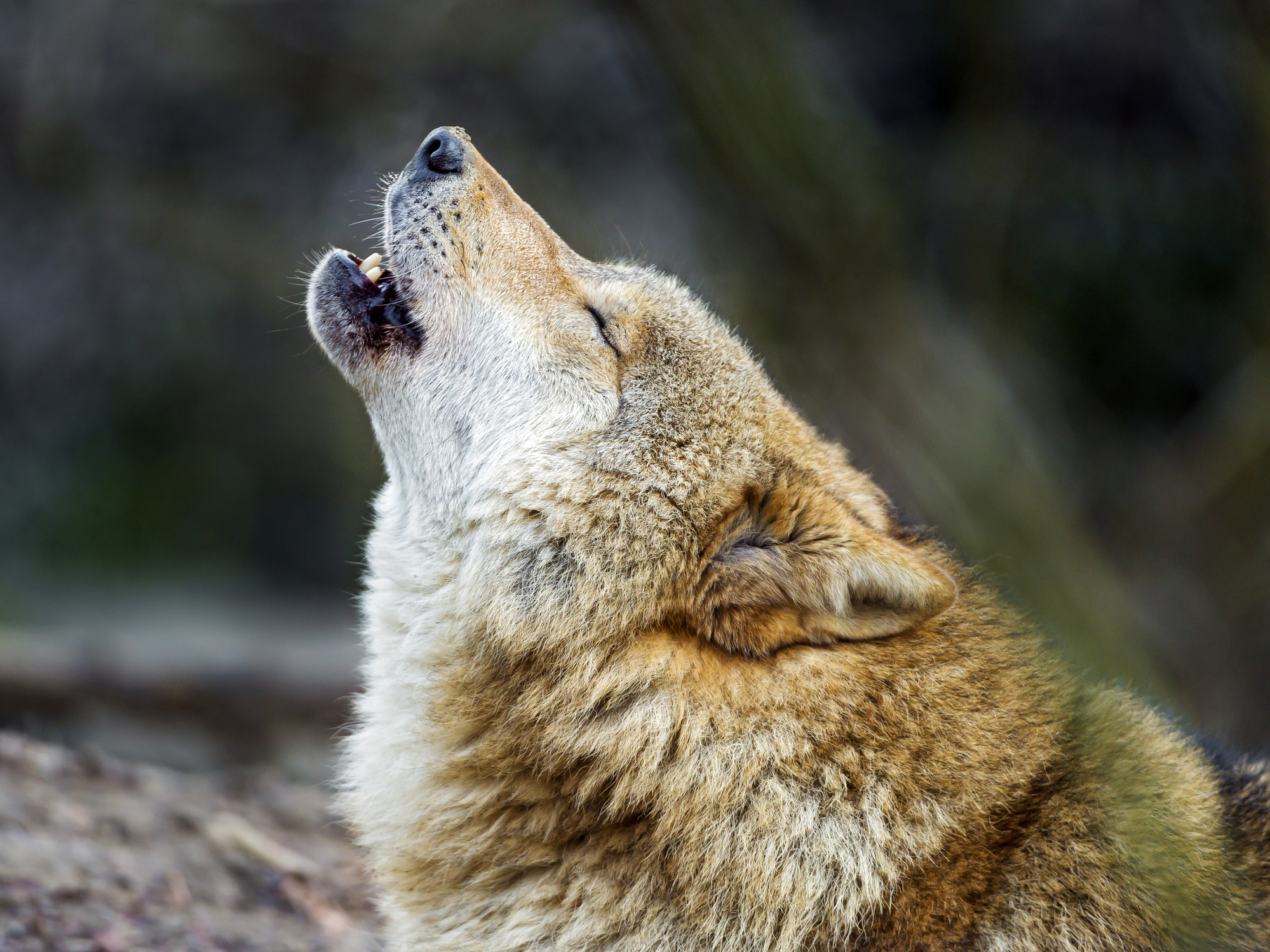
Wolves have more slow-twitch face muscles, Burrows says. Those muscles are better suited to holding the lips in a steady funnel to howl than to flicker through expressions. Dogs aren’t just friendlier wolves. Their faces evolved differently.
Unlike dogs, wolves have slow-twitch facial muscles that are better suited to howling than smiling. Image: Getty Images / Picture by Tambako the Jaguar
Burrows has noted in a study that dogs’ shift to fast-twitch facial muscles wasn’t accidental. Dogs whose faces moved quickly were easier to read, and over tens of thousands of years, those were the dogs that humans kept around. Wolves signal to wolves. Dogs signal to us.
But a dog “smile” isn’t always a smile
That doesn’t mean every dogs’ grin-shaped expression means what we think. Karen Jesch, a PhD student at Boston College’s Canine Cognition Center, points out that human smiling is a strange behavior to begin with, and not always a happy one.
“If you look at our closest relative, the chimpanzee, when they pull their cheeks back and part their lips and expose their teeth, that’s usually a fear grimace. It signals that they’re anxious, displaying submission, or ready to fight,” Jesch says.
Dogs do something similar. A dog might pull its lips back into something that looks like a smile, but that expression might actually mean the dog is uneasy, not happy. A relaxed mouth hanging loosely open is more likely to mean a dog is at ease. But humans tend to read both as smiling.
We’re worse at reading dog faces than we think
Research has shown that humans are not as good at reading dog facial expressions as they assume, Jesch says. Part of that is anthropomorphism, the urge to map our own feelings onto animals.
“We want to assume that dogs love us and are happy. So, we’ll look at a dog running around with other dogs and think, ‘If I were them, I’d be happy. So, they must be smiling.’” Sometimes, she says, that does the dog a disservice when they aren’t actually having a good time.
The classic example is the “guilty look.” A dog cowers when its owner discovers a chewed shoe, and we read shame on its face. But experiments suggest the look isn’t really about guilt. It’s what Jesch calls an “appeasement signal” triggered by the owner’s body language—the dog’s way of trying to defuse the situation before it gets worse.
“They’re more likely just doing an appeasement signal to say, please don’t be mad at me,” Jesch says.
Dogs’ guilty expression isn’t actually about them feeling guilty. Image: Getty Images / Capuski / NADALIN FOTOGRAFIA
Context matters. A “smiling” dog curled up on the couch next to you is probably content, Burrows says. The same expression in a loud, chaotic environment, paired with a tucked tail, might mean the dog wants to leave.
Why dogs have such expressive faces
Burrows favors a version of the domestication story in which dogs domesticated themselves. Ancestral wolves that were less afraid of humans began following hunting parties and scavenging leftovers. The ones better at showing that they meant no harm got closer to the camps.
“There’s some back and forth about how dogs and humans decided to be together,” Burrows says, “but it’s almost like dogs figured out a way to domesticate themselves.” Easier-to-read faces likely gave some dogs an edge—humans grew attached to them and kept them close.
Dogs don’t communicate just using their faces, however. Burrows points out that dogs rely heavily on their ears, too. Relaxed ears usually mean a dog is approachable; ears pinned flat against the head usually signal fear or stress. (Her lab is now studying the muscles that move dog ears, and how they differ from those of cats, who barely move theirs.)
Breeds like pugs, with their flattened faces, can be especially hard to read, Jesch adds. Their squashed-in features make subtle expressions harder to interpret than they would be on a Labrador.
So is a smiling dog actually happy?
Sometimes, yes. A relaxed open mouth, soft eyes, a loose body, and a wagging tail in a calm setting probably mean a dog is enjoying itself. The same teeth-baring grin in a tense moment, with a stiff body and pinned ears, is something different, and worth paying attention to.
The good news, Jesch says, is that humans can get better at this. “If everybody who loves dogs were to spend a little bit of time learning how to interpret their signals, I think we could help them live much happier lives.”
So, the next time you fire off the smiling-dog GIF, know that might not be an expression of joy. Certainly, the dog in the image is doing something with its face—what it means depends on what else is happening around it.
In Ask Us Anything, Popular Science answers your most outlandish, mind-burning questions, from the everyday things you’ve always wondered to the bizarre things you never thought to ask. Have something you’ve always wanted to know? Ask us.
The Gozney Dome is our pro-grade pick in PopSci’s best pizza ovens guide, and the brand almost never runs a real discount outside of seasonal sales. Its Summer Sale is one of those rare windows, with sitewide cuts on every oven, every bundle, and most of the accessory lineup. If a Dome, Arc XL, or Tread has been parked on your shortlist for a year, this is the week to actually buy one.
Gozney Arc XL 16" Gas Pizza Oven $899.99 (was $999.99)
The Arc XL is Gozney’s mid-tier gas oven, and the one most people should buy if they aren’t going Dome. It hits 950 degrees in about half an hour, fits a 16-inch pie, and runs a rolling flame across the back that gives crusts the leopard-spotted char a Neapolitan is supposed to have. Gozney almost never cuts the Arc XL outside seasonal sales, so the $100 off is the right window if it’s been on your list.
Gozney Dome XL (Gen 2) Sale Bundle – Hybrid Fuel Propane $2,799.99 (was $3,124.96)
The Dome XL is Gozney’s biggest residential oven, with a 24-inch deck wide enough for two pies side by side or a whole chicken next to a tray of vegetables. The Hybrid Fuel version runs propane or wood, so weeknight pizza happens on gas and weekends can lean into real wood-fired flavor. This bundle stacks the 24-inch placement peel and pizza server on top of the oven for free over the bare-oven price, which makes it the cheapest way into the platform.
The Tread is Gozney’s portable propane oven, built to break down into a carry bag and ride along to a campsite, tailgate, or friend’s backyard. The Trail Bundle adds the stand and the Venture carry bag, which is what turns the Tread from technically smaller into actually portable. At $699 it costs less than the Tread Basecamp Bundle while including the gear that matters if you’re really taking it anywhere.
Gozney Pizza Oven Deals
Every full-size Gozney oven is $100 off. The new Dome Gen 2 and Dome XL Gen 2 swap the direct cut for a gift with purchase, but the Sale Bundles below land the bigger savings on the same ovens.
Bundles are where the biggest dollar savings hide because they stack the sitewide cut on top of an already-discounted accessory pack. The Dome XL Sale Bundle is $324 off and the Tread Peak Bundle is $247 off, both bigger than any standalone oven cut.
Every peel, rocker, cutter, and server is 20 percent off, with Gozney’s infrared thermometer down to $39.99 if you actually want to read deck temps before you launch a pie. This is the right pass if you already own a Gozney and your peels have started looking like they survived a small fire.
Dough trays, scrapers, cutters, and Gozney’s three regional dough mixes are all 20 percent off. The Dough Mix Set is the cheapest way to taste-test Neapolitan, New York, and Detroit in one weekend, then settle which style reheats best for Monday lunch.
Stands, covers, mantels, and the Tread carry kit are all 20 percent off. The Arc and Arc XL Stand at $239.99 is the cheapest way to get an oven off the patio table and onto a permanent spot in the yard.
The deepest cuts hit the legacy Roccbox and original Dome accessories at 40 to 50 percent off. The Roccbox Wood Burner 2.0 is half off at $49.99, which is still the only way to convert a gas Roccbox to wood-fired without a third-party kit.
Leopards (Panthera pardus) in India are doing pretty well, all things considered. According to a report published in 2024, experts estimate their population in the country at a range of 12,616 to 15,132 individuals, which wildlife biologist Thomas Sharp calls “a healthy number.”
Part of their success could be due to the fact that leopards are enduring in areas close to human settlements where their bigger feline relatives, like tigers or lions, simply can’t—partly thanks to their secretive nature and the fact that they subsist on smaller prey.
“This is a good thing in many ways, with the way the world’s been changing and habitat degradation and everything else,” Sharp, who is the director of conservation and research at the organization Wildlife SOS tells Popular Science. “It’s a good thing that they can hang on in some of these areas. But there’s always a tradeoff, and the negative is they get involved in a lot of human-leopard conflict.”
Unsurprisingly, this sort of conflict is usually to the detriment of the leopard. The big cats rarely attack humans, and when they do, the animal is usually acting defensively, Sharp explains. Leopards will more frequently prey on small animals, such as goats or dogs.
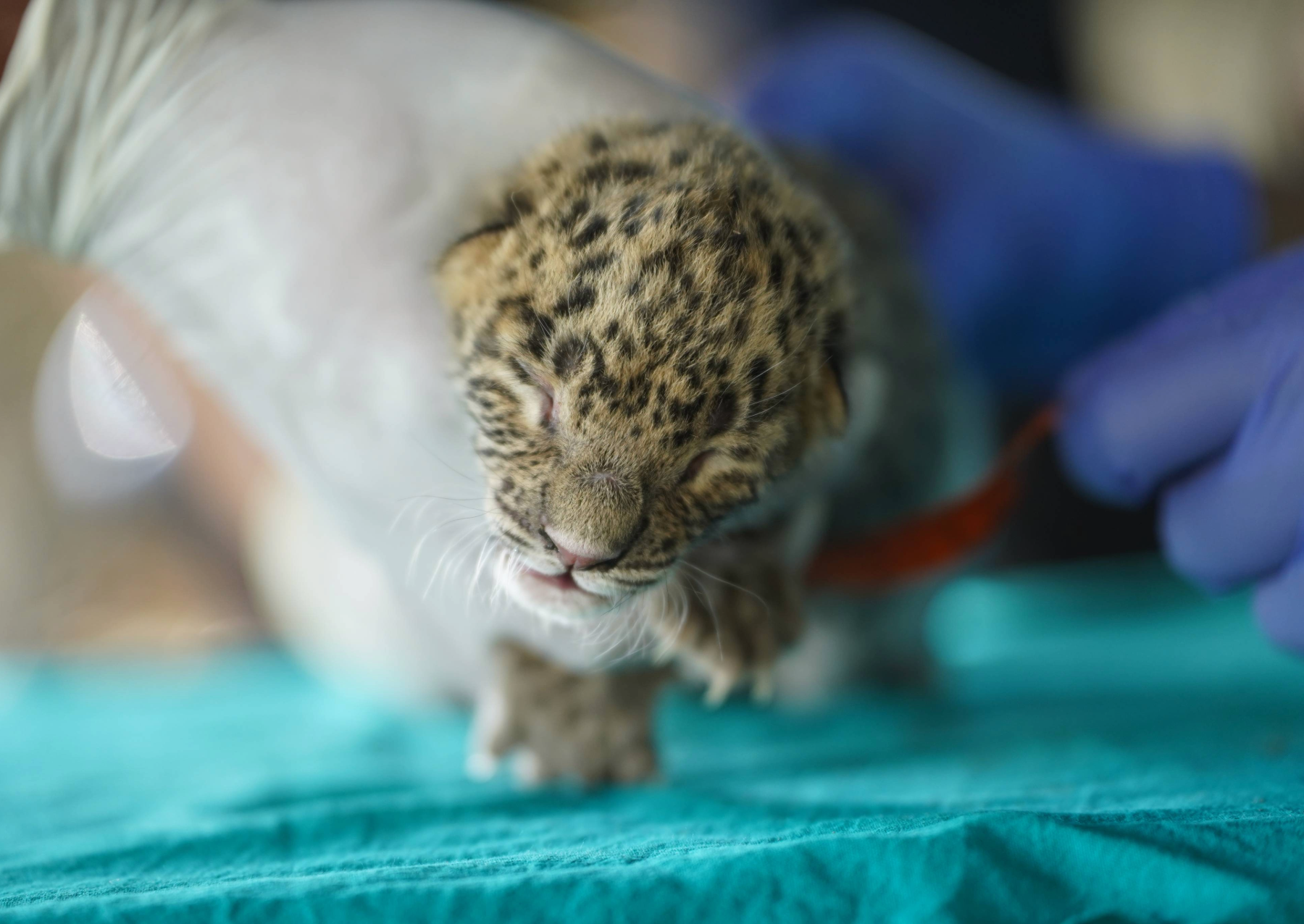
Rescue teams will check the cub’s health as quickly as possible before leaving them near where they were found. Image: Wildlife SOS.
However, areas in India are now seeing more and more cases of a much more cute encounter: leopard cubs hanging out in sugarcane. The dynamic sounds relatively simple. Humans replace leopard habitat with thick sugarcane fields, and so leopards take the change in stride and start to live—and make babies—in the new flora.
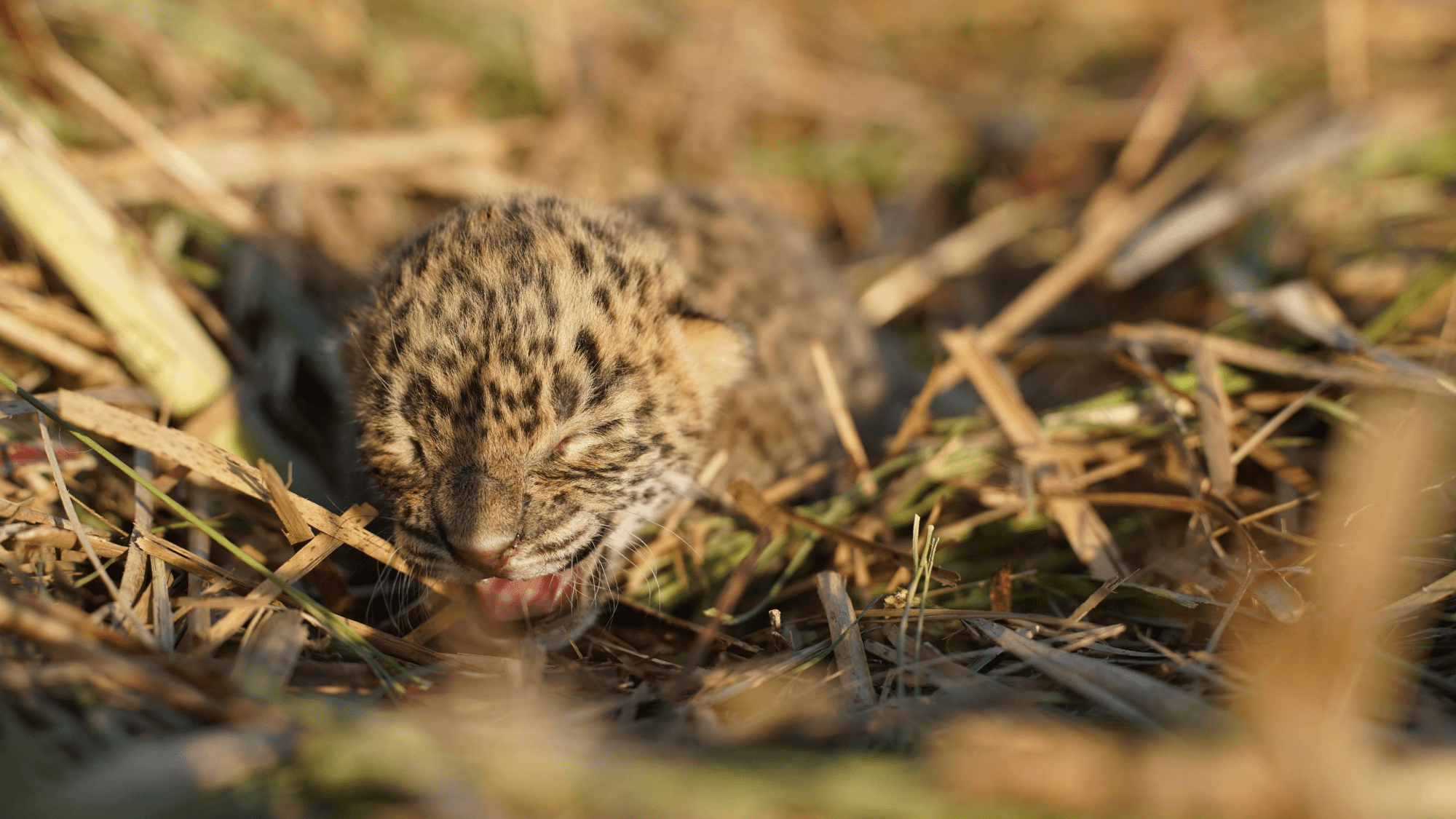
With this new dynamic, humans may come across leopard cubs on their own while the mother is off hunting. The discovery could consist of a passerby hearing their meowing, or a farmer finding them as they harvest their crop. Often the well-intentioned individual will think the cubs are abandoned and move them, “or even take them home because they are so cute and willing to play with humans,” Sharp says.
This might sometimes be necessary for their own safety, so they don’t get injured by harvesting machinery. But the removal separates the cubs from their mother.
“A big part of what Wildlife SOS does in these areas is to make sure people know that, if possible, the cubs should be left where they are found,” Sharp explains. “Their mother’s likely going to come back for them within a few hours.”
If the cubs are moved, Wildlife SOS sends a rescue team to check on the cub’s health and then send them back to their mother as fast as possible. Not only do cubs belong with their mothers, but some evidence indicates that a leopard mother can become more aggressive while looking for her babies, so it’s also in the best interest of nearby humans, according to Sharp.
A female leopard reunited with her cub. Image: Wildlife SOS. Akash Dolas
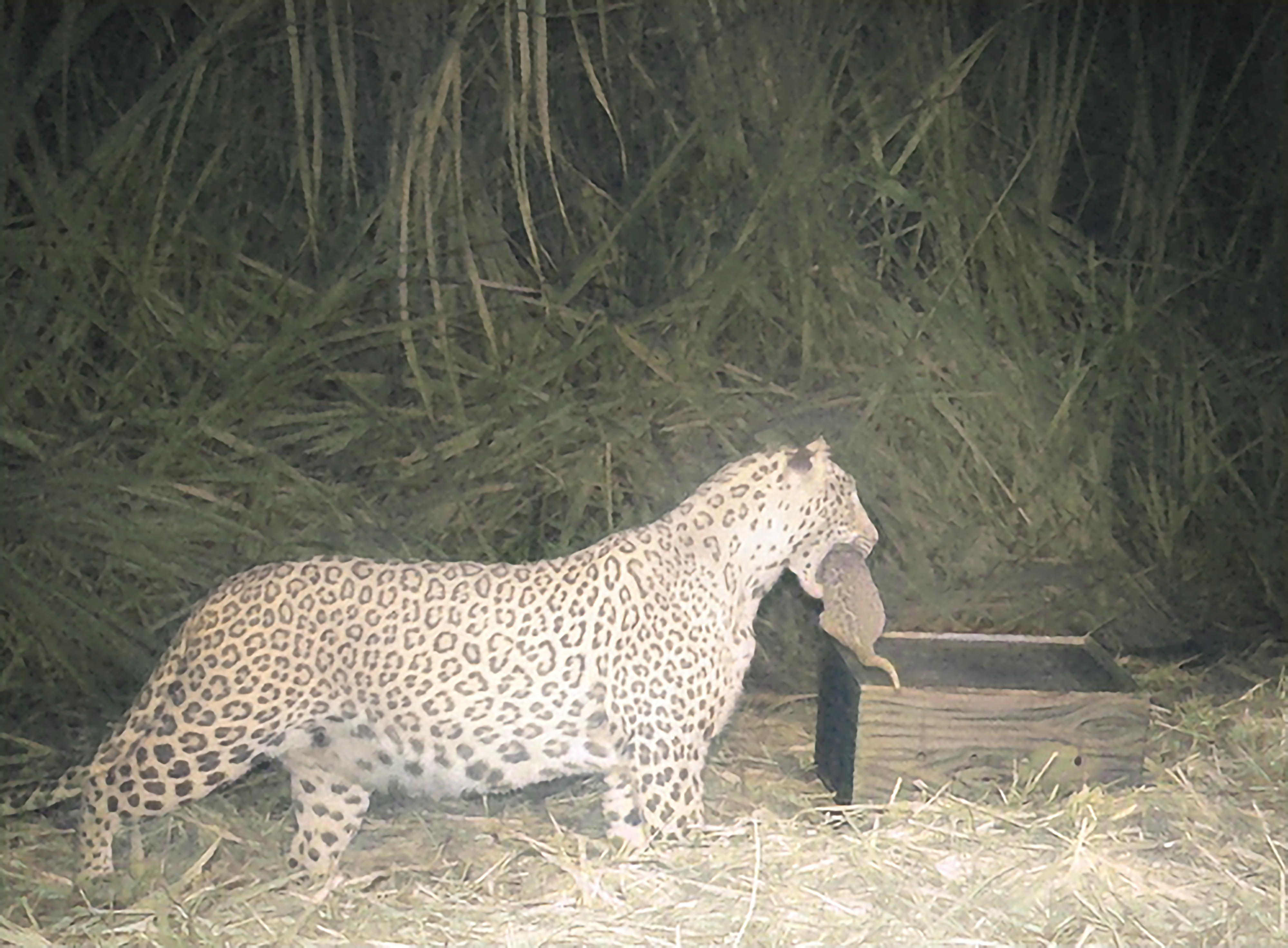
To make the reunion happen, Wildlife SOS will put the leopard cub or cubs in a box where they were found, or as close to that location as possible. The box has holes so that the leopard mother can hear and smell them, and it protects the cubs from other predators while also keeping them from wandering off. When the mother finds them, she’ll usually knock the box over, and then carry her one or more babies somewhere else.
The organization sets up camera traps to keep an eye on the dynamic, making sure that the family is indeed reunited. To date, they have returned 112 cubs back to 73 mothers, and the five cubs that couldn’t be reunited live at the Wildlife SOS leopard rescue center.
The latest red alert report comes from the engineering components company, Accu, and is based on information compiled from the U.S. Space Surveillance Network and its Space-Track database. According to their assessment, there are at least 12,550 tracked orbital debris fragments circling the planet “with no control or purpose.” That’s around 47 percent of the 33,269 known objects, which includes almost 17,690 satellites. But with many of those satellites now inactive along with nearly 2,400 jettisoned rocket bodies, the total space junk is likely worse than the current numbers suggest.
Countries are racing to establish a long-term human presence in space and on the moon, but there are a lot of little problems to consider. More specifically, these issues range from the size of screws and paint chips to dead satellites. All that space junk orbits the planet at roughly 17,400 miles per hour, meaning even a tiny collision could derail an entire mission. In 2016, for example, debris no bigger than a few thousandths of a millimeter smacked into one of the International Space Station’s quadruple-glazed Cupola windows and left behind a quarter-inch-wide crater.
Crunching the numbers further, Accu calculated that there are seven debris objects for every 10 satellites orbiting Earth. The responsibility almost entirely falls on three contributors—China has generated 34 percent of the junk, while the United States and the Russian-aligned Commonwealth of Independent States (CIS) have both provided about 31 percent of the debris.
Most abandoned objects revolving around Earth follow a decaying orbit due to the planet’s gravity and will burn up during atmospheric re-entry. But that often takes years to occur, and as Accu points out, it doesn’t always erase the issue. Material like aluminum, copper, and lithium may vaporize before they hit the ground, but their particulates remain in the upper atmosphere. More research is needed to understand the full impact, but evidence already suggests harmful effects on the ozone.
So what’s being done to address the issue? Not much, unfortunately. Accu notes there are no major projects in development to remove space junk, although there is growing investments in at least maintaining or reducing the overall problem. The European Space Agency (ESA) is leading the charge with programs like ClearSpace-1, the first active debris collection mission. Meanwhile, a number of private companies are also beginning to implement their own endeavors. Technology like robotic arms, drag sails, and even harpoons are all being researched as potential ways to help address the problem.
The bottom line is that the roughly 15,550 tons of space junk currently above everyone’s heads is literally not going anywhere anytime soon. That’s about the same weight as 40 jumbo jets, and it’s only increasing. Accu’s report isn’t meant to offer concrete solutions, so much as highlight that this is a very real problem that requires international coordination and efforts to control. Without that, humanity is going to have a much more difficult time exploring the cosmos.
A hiker who paused to examine an old, uprooted tree found something much rarer than roots during a recent walk in the hills of Norway. According to a team of archaeologists from the University of Stavanger, the man’s morning stroll unexpectedly revealed a 1,500-year-old sword scabbard crafted from gold. Its owner likely wasn’t a lowly soldier, either. Based on the artistic skill and material, the embellishment’s original weapon probably belonged to a prominent leader or chieftain who ruled during the 6th century.
The remarkable find remained buried for centuries in the Norwegian district of Austrått, not far from the country’s southwest coast. The small adornment measures about 2.4 inches wide and less than one inch tall, while weighing around 1.15 ounces. Although tiny, the accessory signified immense authority and power. It’s also an incredibly rare artifact.Only 17 other similar pieces are known throughout northern Europe.
“The odds of finding something like this are minimal,” University of Stavanger archaeologist Håkon Reiersen said in a statement, translated from Norwegian.
Drawing of the decor in the main field of the fitting from Austrått. The animal figure is drawn with violet color. The ribbon that has been thrown into the figure has been given a pink color. Credit: Ellen Hagen / Archaeological Museum / University of Stavanger
Even after generations underground, the scabbard retains much of its original design. Although somewhat difficult to discern now, researchers identified clear regional artistic stylings that match those seen during the Migration Period (300s–600s CE), an era known for its widespread shifting power dynamics across Europe and the fall of the Western Roman Empire. These decorations include animal and potential human-animal hybrid illustrations arranged symmetrically across the piece. There are even still remnants of filigree embellishments, and evidence of finely beaded gold wiring that helped create an overall shimmering effect.
Reiersen and his team believe the artifact belonged to a major leader or chief in Hove, a region along Norway’s western coast. This man probably oversaw many warrior followers, and relied on items like impressive weaponry to highlight his influence and power. But while similar relics exist, the Hove discovery is distinct for its clear evidence of heavy usage and wear. Many decorative swords of the era were purely ceremonial or intended only for display. In this case, it appears its owner actually wielded the weapon in battle. Or at the very least regularly carried it around with him in public.
The location of the find also tells its own story. After examining the site, archaeologists determined that the scabbard wasn’t accidentally deposited or discarded, but carefully placed inside a crack in the bedrock. This strongly suggests the ultimate fate of the gold accessory was a religious offering to the gods. Even this act would have been its own signifier of power and wealth. The 6th century was particularly difficult for communities living in the area, who faced many economic, agricultural, and cultural trials. Giving up such a rich adornment would have been a leader’s way of both reiterating his power while pleading for divine aid. Taken altogether, the discovery represents an extraordinary moment for archaeologists that will help them better understand the region’s social dynamics during the Migration Period.
“We just have to say a big thank you to a very attentive hiker for the fact that we now have a new puzzle piece linked to the power center at Hove,” added archaeologist and University of Stavanger museum director Kristin Armstrong-Oma.
Regular coffee drinkers know there is a big difference between a brew’s aroma and its taste. A cup may smell warm and full-bodied only to leave you with a lingering bitterness behind the first sip. Researchers have long known a coffee’s potentially acrid flavor profile is dictated at a molecular level thanks to your tongue’s taste receptors, but how that occurs has remained a mystery. Now, a team at the University of North Carolina at Chapel Hill has the answer thanks to precise imaging technology—and their findings may have much wider ramifications beyond the coffee pot.
The details were published in the journal Nature Structure & Molecular Biology, and focuses on TAS2R43, one of our 26 different bitter taste receptors. These mechanisms are expressed throughout the human body, and likely evolved to guard the species against toxic substances as well as helping regulate our metabolisms.
“Bitter taste receptors are thought to be important for detecting toxins, pathogens, and harmful bacteria in the airways, gut, skin, and organs, initiating immune responses, clearing pathogens, regulating immune cells, influencing hormone secretion, and aiding digestion,” explained study co-author and molecular biologist Bryan Roth.
Scientists first determined the microscopic structure of TAS2R43 a few years ago, but until Roth’s team, no one had analyzed how it responds to bitter compounds. To accomplish this, researchers relied on a technique called cryogenic electron microscopy (cryo-EM). This method involves flash-freezing biological molecules, then employing electrons to generate highly detailed 3D images of their overall shape. Roth and his colleagues recorded how TAS2R43 receptors responded to coffee’s bitter elements including caffeine and mozambioside, then compared those to the reaction of other receptors.
“In this work, we solved the structures of TAS2R43 bound to bitter compounds and showed, in molecular detail, how this receptor detects bitter molecules,” said molecular biologist and study co-author Yoojoong Kim.
Researchers now have a molecular framework for creating future compounds that intentionally control how someone experiences bitterness in drugs or foods. Aside from finally understanding how taste receptors like TAS2R43 physically respond to bitter molecules, the discoveries could also help develop new medical treatments.
“In the long term, this could help guide the development of new therapeutic strategies for diseases involving airway defense, gut function, inflammation, or host responses to microbes,” Kim added.

 Login
Login







 2-in-1 Walnut Cutting Board"
width="768"
height="432"
loading="lazy" />
2-in-1 Walnut Cutting Board"
width="768"
height="432"
loading="lazy" />