I drew this week’s cartoon inspired by some of the latest growing pains of human-AI collaboration.
As AI gets more autonomous, the traditional “human in the loop” oversight model is showing strain. With pressure to “10X productivity” with fleets of AI agents, how best to keep up with the avalanche and complexity of approvals?
The “human in the loop” risks becoming a tick box exercise, rather than genuine oversight.
Julia Zarb, founder of Blue x Blue, recently illustrated the problem in
I drew this week’s cartoon inspired by some of the latest growing pains of human-AI collaboration.
As AI gets more autonomous, the traditional “human in the loop” oversight model is showing strain. With pressure to “10X productivity” with fleets of AI agents, how best to keep up with the avalanche and complexity of approvals?
The “human in the loop” risks becoming a tick box exercise, rather than genuine oversight.
Julia Zarb, founder of Blue x Blue, recently illustrated the problem in high stakes healthcare:
“Consider the busy clinician, nurse or manager asked to make a call quickly with partial context … under pressure, review can become a screen-level action rather than an informed decision.”
That AI approval bottleneck is surfacing challenge in every domain, including customer experience.
Connext released a Global AI Oversight Survey last month that found only 17% of workers believe AI is reliable without human oversight, 64% expect the need for human review to increase, and 20% said AI made customer situations worse.
The Financial Times profiled Amazon’s growing pains a few weeks ago with major website service outages caused by AI-generated code. Amazon now plans for additional human oversight.
The “human in the loop” model is hard-pressed to keep up with modern AI systems at the current speed, scale, and complexity. Organizations are experimenting with a shift from “human in the loop” to “human on the loop” (more hands-off) but it will be a bumpy ride.
And when AI makes mistakes, customers tend to blame the company, not the algorithm.
Here are a few related cartoons I’ve drawn over the years:
Dave Manhire posted a photo:
Created in Google Gemini, aka, "Nano Banana."
Based off a real vintage ad.
See more here: www.youtube.com/@journeymanplayer7459
The average person works 80,000 hours over the course of their career. Ideally, that time should be fulfilling, well-paid, and spent doing things that make the world a better place.
Of course that’s much, much easier said than done. In an increasingly fragile job market made still more fraught by AI, there’s no longer such a thing as a safe bet.
According to Benjamin Todd, most people lack a systematic approach to thinking about their career choice. Todd is the co-founder and preside
The average person works 80,000 hours over the course of their career. Ideally, that time should be fulfilling, well-paid, and spent doing things that make the world a better place.
Of course that’s much, much easier said than done. In an increasingly fragile job market made still more fraught by AI, there’s no longer such a thing as a safe bet.
According to Benjamin Todd, most people lack a systematic approach to thinking about their career choice. Todd is the co-founder and president of 80,000 Hours, a nonprofit dedicated to helping people move into careers focused on tackling the “world’s most pressing problems” — issues that include AI safety, biosecurity, global health, and animal welfare. 80,000 Hours uses the effective altruismframework of importance, neglectedness (how many resources are devoted to the problem), and tractability (or solvability) to decide which causes to prioritize.
In his new book 80,000 Hours: How to Have a Fulfilling Career That Does Good, which was released this week, Todd pulls together more than a decade of research and advising into a guide for making career decisions. It’s aimed at people just starting out as well as more experienced workers looking to make a switch, providing a framework to make career choices.
I spoke with Todd about careers and skill sets that are more resistant or adaptable to AI job disruptions, why “going with your gut” (usually) isn’t good advice, tips for landing a high-impact job offer, and other topics.
Our conversation below has been lightly edited for length and clarity.
There’s a lot of anxiety around advances in AI and job displacement, how that affects people’s job prospects and how they should think about career choices.
Yeah, I feel like when I talk to people about their careers these days, that’s the main thing that’s on their mind. … I think a lot of the simple answers about which jobs will be best [in the age of AI] are too simple.
How have the last few years — thinking about AI but also other disruptions and changes to the job market — changed your core assumptions about how people should choose their careers?
The main thing that comes to mind is we seem to be getting more and more evidence that far more capable AI will be here soon.
Then I think that just has a lot of implications for which problems are most pressing, and then potentially also which skills are most valuable. If there’s going to be a lot of change and things will be more unpredictable 10 years from now, then it makes sense to focus on shorter-term plans than to spend 10 years training to do something. Starting medical school now seems a lot more risky than it would have been 10 or 20 years ago.
When you say AI is coming and going to change things, are you talking about artificial general intelligence (AGI) specifically?
I mean there’s multiple levels. I think [where the technology is now], if it just froze here, would be kind of similar to the internet and how important it was. But the big-picture thing that seems most important is the idea that you could get to some kind of AI that can do a lot of remote work jobs at roughly a human level. That seems like it could bring the economy and science into a significantly different regime.
I’m probably a bit more skeptical than most technologists of mass near-term unemployment from AI, though I also think that most economists are still underrating how big a deal it could eventually be.
You mention in the book that managing AI agents is a skill less likely to be replaced by AI. Why is that?
I talk about four things that could make skills become more valuable in the future given technology and automation. And the second one is complementarity to AI. So it’s not that AI won’t be able to do that, it’s that it’s a skill where as AI gets better, that skill becomes more valuable. Because if AI is more useful and being used to do more things, and you can make it like 1 percent or 10 percent more efficient, then the value of that additional efficiency increases as AI becomes more useful.
Right now, AI is pretty bad at these messy, nebulous, long-horizon things where you need to coordinate between lots of people and decision-makers. I think in an intermediate future there will be a lot of the more routine work tasks that are being done by AI agents, but then there’s human managers who are needed to stitch them together.
That seems to me like that might be a very lucrative job, but that might not add up to a lot of jobs.
That comes down to how much more stuff can get done in total. And those people would be way more productive than people have been in the past, because everyone is running a team of 10 AIs. So we would want many more people doing that type of thing.
One way to think about it is that a lot of things that in the past would have been too expensive to do would become economically feasible because now you don’t need a team of 30 people to start this new nonprofit. You can do it with a team of three people and a bunch of AI. So then a lot of people could start new projects and you just get a lot more total things being done with [the aid of] AI rather than, “Oh, we have to do the same stuff as before, but with only 10 percent as many people employed.”
I think that’s maybe good for people at a mid- or senior level in their career, but it could make things harder for more entry-level people.
I think that’s a little bit too early to say. So there is some research that finds that skilled human managers are also better at managing AI agents, and there’s a kind of correlation in that skill set. There is research about the most junior software engineers, [that finds] their jobs are down 20 percent. But in some ways young people are just much more adaptable to new technology, and I find a lot of college students seem to be significantly more sophisticated at using AI.
So in some ways, and because it’s changing so fast as well, young people might be better placed to learn how to use these tools faster and adapt as they keep changing. I’m a bit less confident it’s going to be bad for the younger workers.
That’s interesting because I’ve seen quite a lot of headlines and quite a lot of anxiety from younger people around their job prospects.
I think it’s very understandable to be anxious because they’re facing far more change to the job market than any recent generation has had to face. No one really knows exactly how it’s going to shake out. I would say one point for optimism is in theory it will mean that many projects are possible that weren’t possible before. That does also open up a lot of extra opportunities for young people who I think in some ways are better placed to take on these more risky and novel things because they’re less set in their ways.
“I would say one point for optimism is in theory it will mean that many projects are possible that weren’t possible before.”
Because better or worse, AI is a force multiplier.
Totally. We were talking about this skill [at managing AI agents] being lucrative. It would also be applicable to a lot of social problems as well.
What does effective altruism get right about career choice — and wrong?
I think most people just aren’t thinking enough about the impact of their career at all, and they actually have this amazing opportunity to at a minimum save people’s lives and maybe do a lot more by helping prevent the next pandemic or being one of the only people working on AI risks.
When people are thinking about choosing a career, that should really be one of the first things they say: “The world’s facing massive problems. You could do something about them. Wouldn’t that be fulfilling and interesting? Why not do it?”
But people within effective altruism can think too much about their impact. I think people naturally compare themselves to others, but then people who get into effective altruism will tend to compare themselves based on impact. That’s better than comparing it based on how many yachts you have, but there’s still always someone who has more impact than you, and it’s easy for people to have this sense they’re not doing enough. They can potentially go into careers where they think there’s an intellectual case for being really impactful, but it’s not actually a good day-to-day lifestyle for them and they can end up getting pretty demoralized several years down the line. Those are some of the more common pitfalls.
I think you make a very compelling case that when people go with their gut, when they try to make career choices based on intuition, they aren’t always very good at that. You recommend a more systematic approach to thinking this through. Do you think people usually benefit from an outside observer acting as a sounding board?
I do encourage people to work through a systematic approach, especially when it comes to assessing personal fit. A lot of the advice is really about getting out of your head. I think oftentimes the most useful thing people can do is just apply to lots of positions and see what they get.
Often the best way to assess your fit is to speak to someone who has experience hiring in [that] area, they’re the people who’ve done the most assessing of who is going to succeed in a path.
In general, getting an outside perspective is super useful. That’s part of one of the big benefits of the one-on-one advice we offer on the 80,000 Hours website. … You can not consider enough options or factors, so getting an outside perspective is one of the best ways to help broaden your frame and make sure you haven’t missed something.
The key is to have a mixture of a more systematic approach and not do something your gut is actively worried about without understanding the reasons. There’s lots of research that shows that guts are bad at stock picking or predicting which person is going to succeed in some 10-year career path. But your gut is really good at things like, “Do I trust this person?” because that’s what we’ve evolved to be really good at guessing, and it’s something you have had a decent amount of practice about over your life. So if your gut is worried about a path, that might be picking up on something that actually you’re not excited about. The advice I give is don’t go with your gut, but do check with it. So I also wouldn’t say to totally ignore your gut either.
I think some people will chafe at the idea that some career paths are far more impactful than others. What would you say to more skeptical readers? People who would be reluctant or unable to retrain?
In the introduction, I mention this study where people were surveyed on how much they thought different charities more effectively save lives than others. They thought the best charity would be about 50 percent more effective than an average one at saving lives. Our intuitions are very bad at grasping big differences in scale. … When you ask experts in global health, they say there’s a hundred times difference between the most effective charity and the average for saving lives. It seems like no one knows about these differences even though it’s a huge deal. It means you could work for 10 years on a path and then retire and do whatever you most enjoy for the remaining 30 years and still achieve what would have taken hundreds of years working in one of the less effective charities.
I would actually advocate that people keep working rather than retire, but because there’s these huge differences in impact, it actually means it should be possible to find something that is both better for you personally and more impactful for the world.
There is a chapter in the book about what you can do that’s the most impactful thing without changing jobs if you’re already in a career. I talk about donating 10 percent of your income [to effective charities], political advocacy, and even just “slacktivism.” When most people do that they just tweet into their echo chamber … but if you’re talking about something that actually is a huge deal that no one knows about, [it can be effective.]
Another example I use is if you can help someone else find a really impactful job, then that has just as much impact as doing the job yourself. … I talk about being a multiplier.
How can people realistically transition into higher-impact careers, especially if those paths come with greater uncertainty in the age of AI?
It depends a lot where someone is starting from. … There’s more and more fellowships that are designed to help people transition [into higher-impact careers] quickly. You did the Horizon Institute for Public Service fellowship, which I would say is in this genre.
For more experienced people, if you’re an accountant or something like that, lots of organizations need people doing operations and accounting so they might sometimes hire people from outside the field pretty quickly. If that doesn’t work, it’s more of a case of thinking over one or two years, asking, “How can I best position myself to get one of these jobs?”
For that, you could look at the list of skill sets in the guide and think about whether you could learn any of these skills. There’s also a chapter on types of jobs that are really good for gaining skills quickly. One example is working at smaller, rapidly growing organizations, because you can advance faster and those roles tend to be more generalist. That type of generalist skill set is really useful in a lot of social impact organizations, and it means you can do things with AI earlier and get stuff done using those tools. Whereas if you go to a larger organization instead where the work tends to be more routine, that’s closer to something that AI is going to be able to do sooner.
What advice do you have for people with financial constraints that require them to secure a role right away, even if it may not be the highest impact or greatest fit?
I see impact as one important factor, but your own well-being matters too. You might also have dependents as well. Ultimately, you have to make your list of options and then choose the one that’s best given your goals. If money is a priority for you right now, then I think you should focus on that. There’s no shame in it.
I also talk about the idea of having a plan Z, [if your plan A and B don’t work out] that on some level you’re okay with. If you can’t do that, then you should focus on getting yourself into a stronger position first. Maybe you need to focus more on things like building skills or saving money which will mean you can take bigger risks later.
There’s this axiom that the best time to get a job is when you have a job, so you have more leverage or experience. How true do you think that is?
What most helps in getting a job is doing something as close as possible to the actual work. Obviously being in a job already is a very good way to demonstrate that you can do the work. But people who don’t have jobs already can often find ways to do that, like a portfolio project.
I talk about the “pre-interview” project, where you come to the interview with a specific proposal [to the company you’re applying] for how you would help them with some challenge the organization is facing … most jobseekers don’t have that level of understanding of a position. So you’re already standing out just by having thought about it.
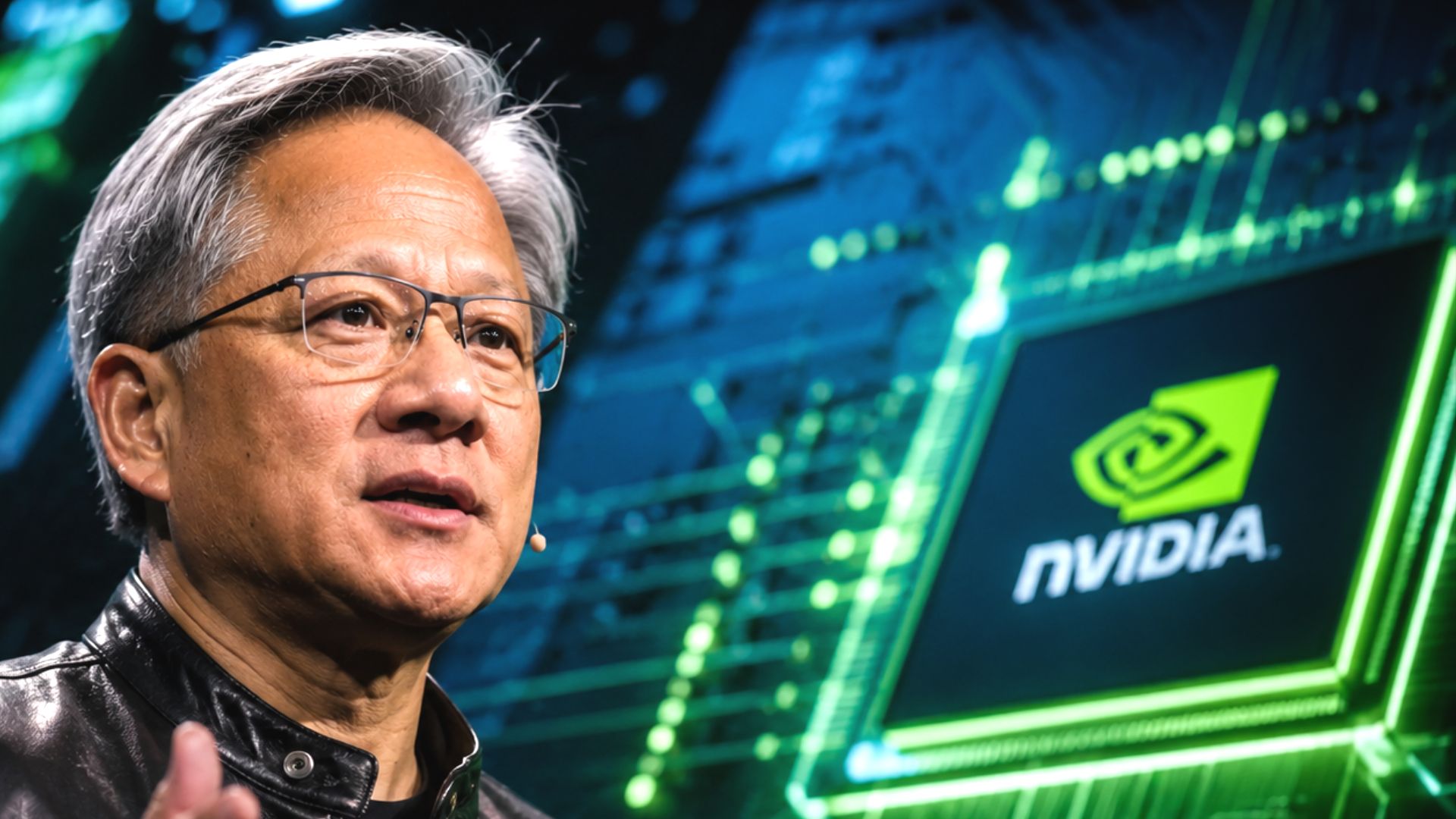
TAIWAN: Artificial intelligence (AI) may be portrayed as a threat to jobs for many workers around the globe at present times, but NVIDIA Chief Executive Officer (CEO) Jensen Huang believes that fear is simply overblown.
Speaking at Computex 2026 in Taipei, Huang pushed back against claims that AI will lead to widespread unemployment among software engineers. He described the idea that AI is reducing jobs as “complete nonsense” and argued that the technology is having the opposite effect. Instead
TAIWAN: Artificial intelligence (AI) may be portrayed as a threat to jobs for many workers around the globe at present times, but NVIDIA Chief Executive Officer (CEO) Jensen Huang believes that fear is simply overblown.
Speaking at Computex 2026 in Taipei, Huang pushed back against claims that AI will lead to widespread unemployment among software engineers. He described the idea that AI is reducing jobs as “complete nonsense” and argued that the technology is having the opposite effect. Instead of shrinking workforces, companies are hiring more engineers to take advantage of AI’s growing capabilities.
Huang’s remarks coincide with a growing effort by businesses across the globe to integrate AI into products, services and daily operations, raising ongoing questions about how the technology will restructure the workforce.
AI’s profitability is making engineers more productive
Huang’s argument centres on productivity. He said software engineers who use AI effectively can now produce far more work than before. Rather than making engineers obsolete, that increase in output makes them more valuable to employers.
Huang estimated that the world’s 30 to 40 million software developers, who collectively earn around US$3 trillion (S$3.85 trillion) in annual salaries, are now generating roughly three times as much productive output with the help of AI tools.
From his perspective, higher productivity creates more business opportunities. As companies discover new products and services they can build, they need more engineers to develop and maintain them.
He suggested that employers would only reduce hiring if overall output remained unchanged. Instead, businesses are expanding because AI is allowing them to do much more.
AI has become a business tool, not just an experiment
Huang also argued that AI has reached a turning point. He pointed to the rise of “agentic AI,” systems that can perform tasks using tools such as web browsers, spreadsheets and coding platforms with limited human input. Unlike traditional chatbots that mainly answer questions, these systems can plan and carry out actions.
Such upgrades are helping companies generate revenue from AI products and services. To support his view, Huang cited data from GitHub showing that software development activity continues to rise despite rapid advances in AI.
Developers made nearly one billion software updates in 2025, while more than 36 million new developers joined the platform during the year. The figures suggest that interest in software development remains strong even as AI tools become more capable.
NVIDIA’s vision for the next generation of computing
Beyond the jobs debate, Huang used the event to unveil Nvidia’s RTX Spark AI superchip, developed with Microsoft and MediaTek.
The chip is designed to run powerful AI models directly on personal computers without requiring an internet connection. Huang described it as one of the biggest changes to personal computing in decades.
He also outlined a future where dedicated AI systems operate in homes, offices, factories and robots, helping people manage everyday tasks and work more efficiently.
The long-term impact of AI on jobs remains a subject of debate. However, Huang’s message was that workers who learn to work alongside AI may find themselves in greater demand, not less.
As companies continue to invest heavily in technology, the challenge may be adapting skills fast enough to keep pace with the changes ahead.
Pope Leo has released an encyclical about artificial intelligence, urging authorities to regulate the technology and warning that AI image tools have become a "powerful amplifier" for those spreading disinformation.
[Read More]
Pope Leo has released an encyclical about artificial intelligence, urging authorities to regulate the technology and warning that AI image tools have become a "powerful amplifier" for those spreading disinformation.
A jury ruled against Elon Musk in his lawsuit against OpenAI on Monday. | Benjamin Fanjoy/Getty Images
Friendship breakups are never easy, but few are as messy and expensive as the collapse of Elon Musk and Sam Altman’s once thriving tech bromance, which has — for now — reached a legal end.
On Monday, a jury ruled against Musk in his lawsuit against OpenAI, which contended that Altman and other executives “stole a charity” (as one of Musk’s lawyers put it) by turning much of what was on
A jury ruled against Elon Musk in his lawsuit against OpenAI on Monday. | Benjamin Fanjoy/Getty Images
Friendship breakups are never easy, but few are as messy and expensive as the collapse of Elon Musk and Sam Altman’s once thriving tech bromance, which has — for now — reached a legal end.
On Monday, a jury ruled against Musk in his lawsuit against OpenAI, which contended that Altman and other executives “stole a charity” (as one of Musk’s lawyers put it) by turning much of what was once a nonprofit research lab into a corporate behemoth. (Disclosure: Vox Media is one of several publishers that have signed partnership agreements with OpenAI. Our reporting remains editorially independent.) For three weeks, lawyers on both sides deployedan increasingly unhinged body of evidence in an attempt to discredit both men and prove they’re untrustworthy and power-hungry.
Musk claimed he was duped into donating roughly $38 million to OpenAI under false pretenses, and was suing for $150 billion in financial restitution alongside major changes to OpenAI’s leadership and governance structure. Judge Yvonne Gonzalez Rogers accepted the jury’s decision that Musk failed to bring his lawsuit within the three-year statute of limitations, given that OpenAI first added its for-profit arm in 2018. However, it’s possible that the evidence put forth at trial will still beenough to convince state regulators to revisit the agreements that allowed OpenAI to restructure into a for-profit enterprise to begin with.
Lawyers tell me that Musk will likely choose to appeal the ruling, meaning the catfight might not be over yet. But even beyond the outcome, the trial shone an often uncomfortable spotlight on the inner workings of Silicon Valley and the AI industry.Here are five major revelations from the trial.
OpenAI’s board members questioned Sam Altman’s honesty
Musk’s legal team sought to paint Altman as a deeply untrustworthy person, prone to lying to his co-founders, employees, and board members if it meant advancing his interests.
Multiple former OpenAI employees and board members testified as much in the courtroom. Altman’s “pattern of behavior related to his honesty and candor” led directly to his temporary ouster as CEO in 2023, said Helen Toner, a former board member, in a video deposition. He had a tendency of “saying one thing to one person and completely the opposite to another person,” Mira Murati, OpenAI’s former chief technology officer, testified. In one instance, she said, Altman explicitly lied to her about the safety review required to vet a new AI model.
Greg Brockman kept a diary — and he probably wishes he hadn’t
Some of the more salacious evidence entered into trial came from a personal diary kept by OpenAI president Greg Brockman, who chronicled his “stream of consciousness” as he weighed whether it would be “morally bankrupt” to pivot OpenAI into a for-profit enterprise.
“Can’t see us turning this into a for-profit without a very nasty fight,” he wrote in one 2017 entry. “It’d be wrong to steal the nonprofit from him,” meaning Musk, who co-founded OpenAI and provided most of its start-up funding. “He’s really not an idiot,” Brockman later wrote. “His story will correctly be that we weren’t honest with him in the end.”
Brockman was also candid about his personal ambitions; “It would be nice to be making the billions,” he wrote. He later received a stake in OpenAI now estimated to be worth about $30 billion.
Surprise, surprise: Elon Musk is difficult to collaborate with
OpenAI built a bot in 2017 that was so advanced, it could beat top professional players at strategic multiplayer battle game Dota 2, a major milestone for the budding lab. “Time to make the next step for OpenAI. This is the triggering event,” Musk emailed Brockman.
Musk gave Brockman and cofounder Ilya Sutskever new Tesla Model 3 cars, presumably to “butter us up,” Brockman testified. The Tesla CEO then summoned them to his self-described “haunted mansion” for discussions of a possible OpenAI for-profit arm, where whiskey was served by Musk’s then-girlfriend Amber Heard.
At one point, Musk became so irate at his guests’ insistence that they share control of OpenAI — rather than cede absolute control to Musk — that “I actually thought he was going to hit me, physically attack me,” Brockman testified. In the following months, Musk repeatedly pitched having Tesla absorb OpenAI, Altman testified. And, in one “particularly hair-raising moment,” he mused that OpenAI should pass on to his children.
Musk ultimately left OpenAI in 2018 to begin building his own competitor. During an all-hands meeting, Musk got into another tense verbal tussle with Josh Achiam, now OpenAI’s chief futurist, over the race to develop artificial general intelligence. “He snapped and called me a jackass,” Achiam testified. For Achiam’s valor, two OpenAI employees — including Dario Amodei, who later departed to form Anthropic — awarded him a small golden statue of a donkey’s rear end, inscribed with the message, “Never stop being a jackass for safety.”
Microsoft cozied up to OpenAI to avoid being left behind in the AI race
Musk first funded OpenAI because of another friendship breakup, this one with Google cofounder Larry Page, who Musk says mocked him at his own birthday party for preferring humans over computers. Microsoft — which is named in Musk’s lawsuit for aiding and abetting OpenAI’s abandonment of its nonprofit mission — later became OpenAI’s first major corporate investor in 2019, because it, too, wanted to compete with Google as the AI race heated up.
“I don’t want to be IBM,” Microsoft CEO Satya Nadella wrote to executives, referring to that company’s decline in the personal computing race, according to emails revealed at trial. “It was becoming even more core and important that we had real agency at every layer of the stack,” Nadella testified.
That meant ingratiating itself in every corner of OpenAI’s world. Microsoft played a crucial role in bringing Altman back to power after the failed board coup in 2023, which Nadella referred to as “amateur city, as far as I was concerned.” In a text thread revealed at trial, Altman asked Microsoft executives to vet various members of OpenAI’s reconstituted board of directors, who now control both the for-profit company and the original nonprofit.
By this summer, Microsoft will have invested over $100 billion in OpenAI, one of the company’s executives testified. The company was awarded a 27 percent stake in OpenAI last fall.
Everybody wants to rule the world (of artificial general intelligence)
Microsoft. Musk. Altman. Brockman. Almost everyone who testified at trial pointed fingers at a different boogeyman whose motives were too impure and whose character was too corruptible, to be trusted with control of what all agreed would be an extremely consequential technology. By contrast, their own introspection mostly took a back seat to ambition.
“We don’t want to have a Terminator outcome,” Musk testified, to apparent eyerolls from Judge Gonzalez Rogers, who tried and sometimes failed to steer the trial away from discussions of AI’s existential risks. “If you have someone who is not trustworthy in charge of AI,” Musk said, “I think that’s a very big danger for the whole world.”
Over a decade ago, Musk came together with OpenAI’s cofounders to build a charity equipped to take on a different threat then poised to lead the AI race: Google, which had recently acquired Demis Hassabis’ DeepMind. Now, like Altman and Brockman, who testified that they resisted Musk’s dictatorial attempts to secure absolute control of artificial general intelligence, Musk portrayed himself as someone selfless and transparent enough to be put in charge.
“It is ironic that your client, despite these risks, is creating a company that is in the exact space,” Gonzalez Rogers at one point told Musk’s lawyer, in reference to xAI, which has come under fire this year for facilitating the mass creation of nonconsensual deepfakes. “I suspect there are plenty of people who wouldn’t like to put the future of humanity in Mr. Musk’s hands.”
Update, May 18, 2026, 2 pm ET: This story has been updated to reflect the conclusion of the trial.
SINGAPORE: Singapore’s delivery economy may soon gain a new co-worker; one that doesn’t ride a bike, wait for lifts, or search for block numbers.
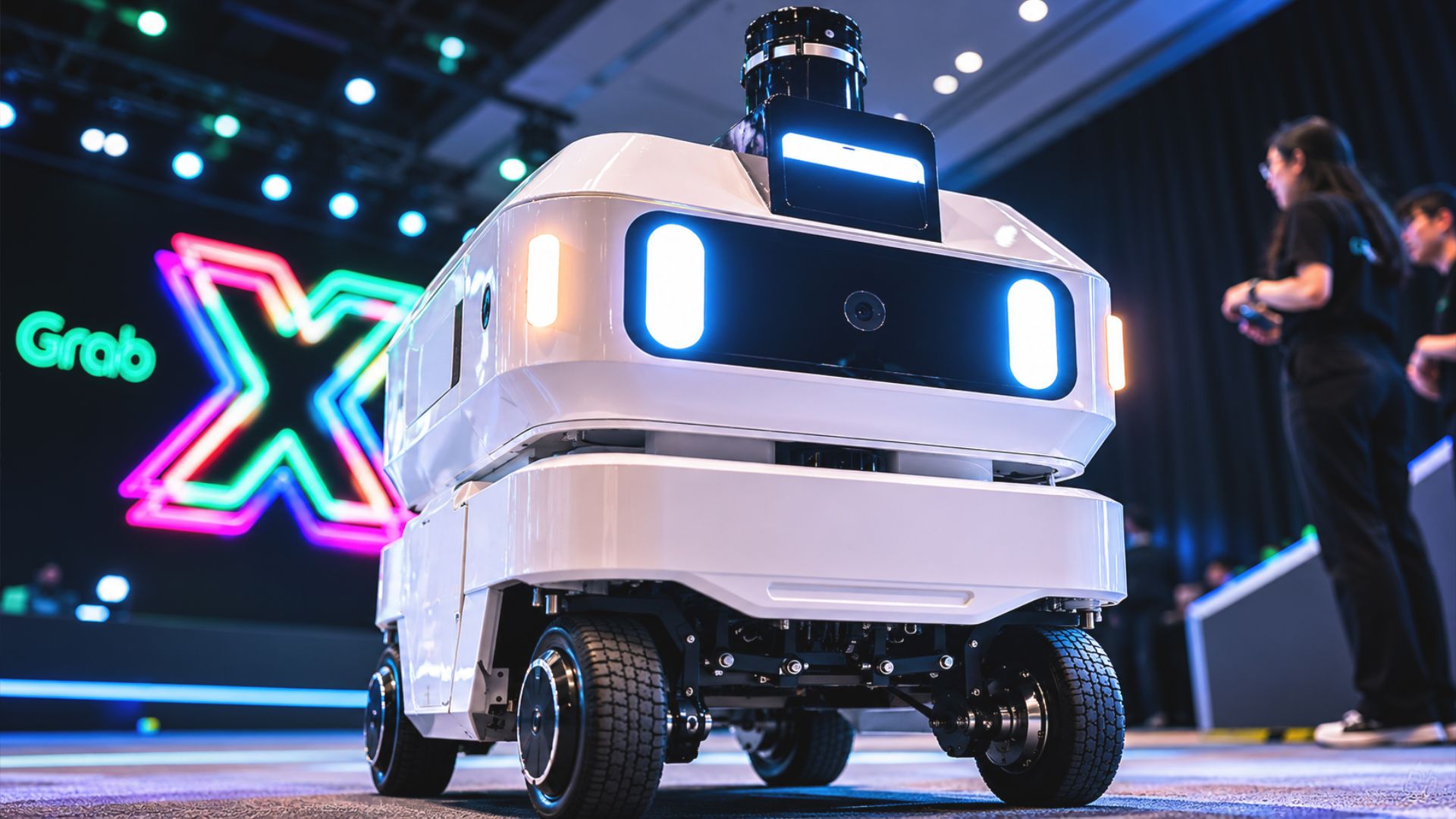
Grab plans to launch a pilot of its first delivery AI robot in Punggol in late 2026 as it pushes further into physical artificial intelligence (AI) and robotics, according to Fortune’s report.
The move is to address a problem many Singapore businesses already know all too well: service demand keeps growing, but workers remain hard to find, and labour c
SINGAPORE: Singapore’s delivery economy may soon gain a new co-worker; one that doesn’t ride a bike, wait for lifts, or search for block numbers.
Grab plans to launch a pilot of its first delivery AI robot in Punggol in late 2026 as it pushes further into physical artificial intelligence (AI) and robotics, according to Fortune’s report.
The move is to address a problem many Singapore businesses already know all too well: service demand keeps growing, but workers remain hard to find, and labour costs keep staying high. So rather than replacing Grab drivers outright, Grab says the robots are meant to handle the least efficient parts of delivery.
Carri, Grab’s AI robot, will handle the first and last 100-metre deliveries
Grab’s robot, called Carri, is built to handle the first and final 100 metres of delivery journeys, including tasks such as moving food or parcels from roadside pickup points to apartment doorsteps.
Speaking at the Asia Tech (ATx) summit on May 20, Grab chief technology officer Suthen Paradatheth said these small stretches consume meaningful time across thousands of deliveries each day.
Mr Paradatheth further explained that most Grab deliveries already travel more than two kilometres. The usual friction happens before and after the actual trip, where drivers spend time walking, locating units, waiting, and completing handoffs. Grab estimates that these final steps account for around 10% of delivery time.
For Grab drivers, that could mean fewer repetitive tasks. For customers, the company hopes to improve delivery coverage in areas with demand where drivers are less likely to wait around.
Punggol becomes a testing ground for AI robots and autonomous vehicles on the ground
Mr Paradatheth said autonomous vehicles could help expand services in supply-constrained markets such as Singapore.
Grab will not be alone in AI, robotics, and autonomous vehicle tests. Seven other firms, including logistics company DHL and local startup Quikbot, are expected to test autonomous systems in Punggol. The pilots extend beyond food delivery. Other projects will focus on parcel handling, cleaning, and security work.
Singapore’s Minister for Digital Development and Information, Josephine Teo, said at the ATx summit that the government plans to support these trials through shared testing systems, operating rules, and infrastructure that enable robots to move safely across the district. Her view was that these tools can help workers extend services into places that are harder to serve consistently.
Singapore’s public messaging around AI has increasingly focused on augmentation rather than replacement, helping workers do more instead of reducing headcount.
Grab’s bigger AI ambition goes beyond just delivery
The robot trial also fits into Grab’s wider AI strategy. The company has already partnered with OpenAI since 2024 to improve areas including mapping, accessibility and customer support.
Grab is also working with the Chinese autonomous driving company WeRide and has invested in autonomous vehicle firms, including May Mobility and Momenta.
Grab’s chief executive officer, Anthony Tan, previously said automation could create new job paths instead of eliminating the work entirely. Examples discussed included remote safety monitoring, data work, and maintenance of sensing equipment.
Mr Paradatheth described Grab’s internal direction as one in which people and AI systems work side by side, an idea that is already evident within the company. He said most Grab engineers now use AI coding tools in their daily work while keeping human review before the software goes live.
Singapore’s broader AI race is also gathering speed. On the same day as the announcement, OpenAI said it would invest S$300 million into Singapore’s AI capabilities, including its first applied AI lab outside the United States. NVIDIA also announced a local research centre focused on embodied AI.
The more important question is not robots; it is where drivers and people fit in
Delivery AI robots tend to ignite the same debate each time: convenience versus jobs. But Singapore’s labour market has long relied on finding ways to stretch limited manpower.
If these pilots succeed, the real test may go beyond whether the robots can deliver food. It may be a question of whether companies can redesign work so people spend less time on repetitive tasks and more time on work where human judgment still matters.
Because, at the end of the day, technology still works best when it removes friction, not people.
AI company CEOs Sam Altman (OpenAI), Demis Hassabis (Google DeepMind), and Dario Amodei (Anthropic) disagree on a lot, like how fast the technology should develop, the best way to regulate it, and how to prepare society for smarter-than-human AI, among other things.
That makes it all the more remarkable that they — along with 85 other experts in tech, biology, and national security policy — recently signed on to an open letter calling for more robust regulations around gene synthesis.
AI company CEOs Sam Altman (OpenAI), Demis Hassabis (Google DeepMind), and Dario Amodei (Anthropic) disagree on a lot, like how fast the technology should develop, the best way to regulate it, and how to prepare society for smarter-than-human AI, among other things.
That makes it all the more remarkable that they — along with 85 other experts in tech, biology, and national security policy — recently signed on to an open letter calling for more robust regulations around gene synthesis. They’re all concerned that AI systems might be used to help develop and even deploy dangerous biological weapons designed through gene synthesis, which is used to chemically build custom DNA sequences in a lab, rather than relying solely on existing natural DNA templates.
The simple fact of multiple CEOs of fiercely competitive AI companies aligning on anything is remarkable. But to understand how they came to this agreement, we have to take a step back to understand what gene synthesis is, how it works, and why the possibility of AI-assisted misuse of the technology generates so much fear.
Modern microbiology owes a lot to gene synthesis. Researchers can order synthetic genes from commercial DNA providers to develop new vaccines, drugs, and gene therapies for inherited diseases like hemophilia; produce human insulin, boost agricultural output, and more. Gene synthesis is a foundational technology for successful CAR-T cell therapies for cancer and many diagnostic tools. The demand for synthetic DNA is growing globally, and it’s never been cheaper or simpler to write genetic code.
But for all its power, gene synthesis also carries substantial risk. The same technology that can enable life-saving new gene therapies can also assist in the creation of deadly pathogens by assembling some of the same nucleotides — the genetic building blocks that create the code for all of life — in a different order.
Most US companies that provide gene synthesis services screen orders for genetic sequences of concern, such as those that can make a pathogen more dangerous or transmissible, and to verify that customers are legitimate. They do so voluntarily, well aware of the potential dangers.
But not every provider does so. “As long as screening remains voluntary, some companies will not do it,” Becky Mackelprang, the director for security programs at the Engineering Biology Research Consortium, told me over email. There’s a real risk that bad actors could find a gene synthesis company with more lax standards, and that might mean disaster.
We’ve been fortunate so far. “This technology has been commercially deployed for more than 20 years and has never been misused to cause harm,” James Diggans, the vice president of policy and biosecurity at gene synthesis company Twist Bioscience, told me over email.
But AI threatens to complicate matters, opening up new frontiers of risk.
For good or for ill
Both large language models (LLMs) and AI biodesign tools enable scientists to design entirely novel genetic sequences. This is a boon for industrial and medical applications — and a challenge for current screening systems, which use similarity to known pathogenic or toxic sequences in order to detect risk. A screening system should catch someone trying to order sequences of a known dangerous virus like Ebola, for example, but it might miss a new sequence that could still be risky. Last year, a study published in Science demonstrated that our screening systems have kept pace with AI capabilities so far. “But the industry clearly understands this will not be the case forever,” Diggans said.
Mackelprang is worried that AI could reduce the knowledge barriers that have historically prevented bad actors from developing bioweapons. Frontier AI systems, for example, seem to already outperform expert virologists on questions about performing complex laboratory procedures.
But there is knowing and there is doing, and biological lab work is still hard. “Researchers spend years trying to make a protocol work even after consulting directly with others who have perfected that exact same protocol. I think AI can help someone ‘level up’ their laboratory skills, but I do not think AI can enable someone without any biological training to create a serious hazard,” Mackelprang told me.
That means that gene synthesis companies are still a primary chokepoint for anyone trying to produce a novel genetic sequence. Mackelprang’s main concern is that aspiring bioterrorists might use AI to generate harmful genetic sequences that can evade current or future screening systems. “In the near term, I think the likelihood of these types of misuse are quite low. But when the potential consequences are severe and technologies continue to develop rapidly, we have a responsibility…to develop reasonable prevention and mitigation options,” she said.
Maximizing the benefits of gene synthesis while minimizing the risks is difficult, but not impossible. That’s why Diggans and Mackelprang — along with Altman, Hassabis, and Amodei, as well as other gene synthesis providers, tech entrepreneurs, life science executives, and national security experts — signed the open letter calling for mandatory gene synthesis screening and recordkeeping of orders.
Co-organized by the think tanks Institute for Progress and the Foundation for American Innovation, the open letter also calls for providers to record synthesis orders and sequence data to support biosecurity investigations “so that any threat that might evade initial screening can be traced back to its source…Awareness of traceability itself deters misuse.” This would, ideally, address Mackelprang’s concern that AI might eventually help bad actors evade existing screening protocols.
“Screening every DNA synthesis order before it’s manufactured is the kind of unglamorous, common-sense step that prevents a much bigger problem later,” DJ Kleinbaum, the co-founder of the biotech startup Emerald Cloud Lab, an automated lab scientists can access remotely, and one of the signatories, said.
But Altman, Hassabis, and Amodei’s shared signatures may be the most meaningful evidence that the letter matters. For all their disagreements, they are well aware that their tools can be used for tremendous — even catastrophic — harm.
AIxBio risk: A thing on which we can all agree
While it’s far from the first time frontier AI companies have spoken to AI-enabled biological risk, the open letter is the first place they’ve come together to do so in a single voice. “Support for screening does not depend on any particular view of AI,” the letter reads. “This is a rare moment of agreement across stakeholders that are often at odds.”
The letter calls for Congress to act now. “We applaud the legislative efforts currently underway,” the letter says, alluding to the bipartisan Biosecurity Modernization and Innovation Act, a bill that gives the Department of Commerce a year to develop new gene synthesis screening rules. The letter also suggests that US states should implement screening requirements based on federal and industry guidelines to create a unified national standard rather than an inconsistent set of laws.
The letter isn’t about applying biosecurity regulations to the AI companies themselves, which likely would have limited the number of tech signatories. (Though major companies do actively try to prevent their models from giving away dangerous biological knowledge, albeit not always successfully.) Focusing on screening is tractable, has the buy-in of several gene synthesis providers, and provides a concrete example of how AI can lower the barrier to doing both great and terrible things. And of course, it’s ultimately something a human being has to do at this point.
The AI companies are actively thinking about the catastrophic risks that their technologies might enable. Anthropic is hiring a technical chemical, biological, radiological, and nuclear threat investigator for its threat intelligence team. In May, after launching GPT-Rosalind, a frontier model to accelerate life sciences research and drug discovery, OpenAI introduced Rosalind Biodefense, a program that allows trusted developers to use GPT-Rosalind to build biodefense tools. On June 4, the day after the open letter went live, security specialists at OpenAI and Anthropic served as panelists at the Bipartisan Commission for Biodefense’s meeting on AI and biological threats.
But according to Twist Biosciences’s Diggans, the best way to defend against misuse of AI models to design harmful pathogens is to use AI models as defense. These defensive models can be used to detect attempted misuse before anything happens. DNA synthesis companies can employ these models to ensure orders for highly-engineered sequences are given the same scrutiny and evaluation as orders for naturally occurring sequences.
“[Gene synthesis] companies have to agree to have their order screened not just against a list of sequences but by an AI that people agree is smart enough to recognize and thwart an adversary who’s trying to build a deadly pathogen,” David Haussler, the scientific director of the UC Santa Cruz Genomics Institute and a signatory of the open letter, told me.
Using AI to protect against AI
The good news is that this work is already underway. Last year, I reported that OpenAI provided $30 million in seed funding to biodefense startup Valthos, which develops frontier AI systems to detect biological threats and create medical countermeasures. Valthos’s co-founder Kathleen McMahon signed the open letter.
In September 2025, the Coalition for Epidemic Preparedness Innovations (CEPI) and philanthropic nonprofit Sentinel Biocreated the Pandemic Preparedness Engine AI platform (sometimes referred to simply as “the Engine”). They’re taking a biosecurity-by-design approach, considering biosecurity risks from the outset. “This includes a multi-layered approach to biosecurity: from protecting biosecurity-sensitive data needed to train the AI to carefully managing who has access to the Engine and monitoring how they use it,” Sarah Carter, a biosecurity consultant at CEPI, told me over email.
Users of the Pandemic Preparedness Engine would use AI prompts to interact with the system, similar to how people use consumer platforms. User prompts could be monitored in real time by a specialized AI agent built to assess the risk of misuse potential or attempts to “jailbreak” an LLM to get it to generate prohibited content, such as the “recipe” for assembling a deadly virus.
Still, even commercially available technologies may present problems of their own. This week, Anthropic launched Claude Fable 5, a version of its highly powerful and restricted Mythos model that the company has aimed to make safe for public use. Claude automatically stops use of Fable if it detects requests involving cybersecurity, biology, chemistry, or distillation (attempting to extract Claude’s capabilities to train competing AI models), shunting those requests to a less powerful model. Users have complained that trying to discuss biology for legitimate purposes with Fable 5 results in the model refusing to engage or defaulting to less capable models instead. The Fable example shows that it’s possible to overcorrect, limiting the potential upside of using AI for the life sciences.
“The major providers of LLMs are doing their best to prevent the models from answering questions that would enable somebody to do something dangerous,” Haussler told me. “[But] the end product of jailbreaking an LLM that’s capable of teaching you how to build a deadly virus is that you now have an LLM that’s capable of teaching anybody how to build a very dangerous virus. And we don’t want that to happen.”
It’s here that the letter’s signatories hope they can stop a still-simmering problem before it comes to a full boil. “Mandatory synthesis screening is that rare case where a threat is clearly visible and substantial prevention clearly achievable before any crisis has occurred,” said Richard Danzig, a natural security expert who served as the 71st Secretary of the Navy under former President Bill Clinton. “Opportunities to act in advance are unusual in this field. I think we should take this one.”
Manuel Gual posted a photo:
A Cinematic Journey Through the History of Aviation
Description:
A wide cinematic collection celebrating the evolution of aviation, from fragile early biplanes and daring pioneer pilots to flying boats, wartime fighters, classic airliners, supersonic icons, stealth aircraft, and futuristic aerospace designs. The series combines golden hour light, dramatic skies, ocean crossings, misty runways, military silhouettes, retro travel atmosphere, and science fiction con
A Cinematic Journey Through the History of Aviation
Description:
A wide cinematic collection celebrating the evolution of aviation, from fragile early biplanes and daring pioneer pilots to flying boats, wartime fighters, classic airliners, supersonic icons, stealth aircraft, and futuristic aerospace designs. The series combines golden hour light, dramatic skies, ocean crossings, misty runways, military silhouettes, retro travel atmosphere, and science fiction concepts to create a visual timeline of flight as both engineering achievement and human dream.
These images have been generated by Artificial Intelligence.
JUNE 2 — We are living through one of the most rapid waves of digital transformation in modern history. Artificial intelligence drafts our emails, generates our presentations and increasingly supports decision-making processes that once required teams of analysts. The dominant instinct in many organisations is to adopt more tools, automate more workflows and accelerate everything that can be accelerated.Yet amid this surge toward optimisation, an interesting coun
JUNE 2 — We are living through one of the most rapid waves of digital transformation in modern history. Artificial intelligence drafts our emails, generates our presentations and increasingly supports decision-making processes that once required teams of analysts. The dominant instinct in many organisations is to adopt more tools, automate more workflows and accelerate everything that can be accelerated.
Yet amid this surge toward optimisation, an interesting counter current has begun to emerge. A recent Fast Company article argues that in order to think clearly, learn deeply and remain cognitively sharp, professionals may need significantly less technology in certain aspects of their work. The idea may sound nostalgic at first. In practice, it is strategic.
The more we automate cognitive effort, the more we must be intentional about preserving it.
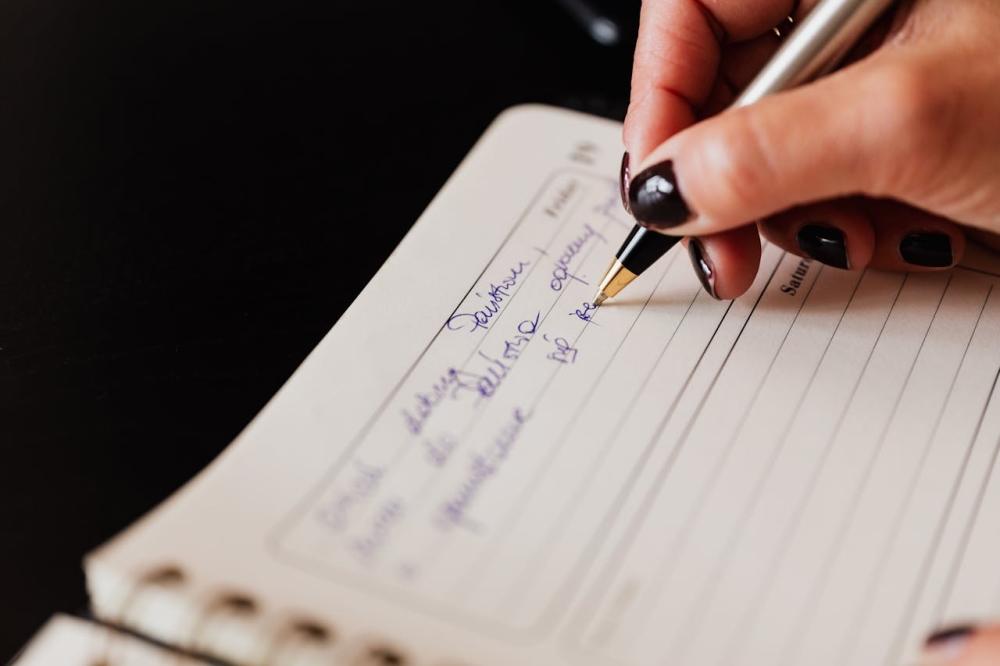
One of the simplest examples is the habit of writing by hand. Research cited in the article suggests that handwriting engages deeper cognitive processing than typing. When we write by hand during meetings or while thinking through a problem, we cannot capture everything verbatim. We are forced to prioritise, to interpret and to synthesise in real time. That mental filtering process strengthens understanding.
In many leadership discussions, I have observed that digital note-taking often encourages volume over insight. Screens allow us to record extensively, but not necessarily to reflect. Handwriting, by contrast, slows the pace just enough to deepen thought. In an environment where AI can instantly summarise a transcript, the true advantage lies not in how quickly we capture information, but in how well we internalise it.
For Gen Z professionals who have grown up in fully digital environments, this may feel unfamiliar. Yet I have noticed a growing number of younger employees experimenting with analogue tools precisely because they sense the cognitive fatigue that constant screen exposure creates. This is not a rejection of technology. It is a recalibration.
When we write by hand during meetings or while thinking through a problem, we cannot capture everything verbatim. We are forced to prioritise, to interpret and to synthesise in real time. — Pexels pic
The same principle applies to collaboration.
Remote meetings and digital whiteboards have expanded flexibility and reduced logistical friction. However, the Fast Company piece highlights research indicating that physical co-presence generates more spontaneous and diverse creative exchanges. When individuals share a physical space, subtle cues, interruptions and informal contributions often produce ideas that would not surface in a structured video call.
In sectors such as healthcare or biomedical innovation, where interdisciplinary collaboration is essential, these nuances matter. A prototype may begin as a half-articulated thought sketched on a physical whiteboard. A regulatory concern may emerge from a casual remark during a live discussion. Creativity rarely follows a neat agenda.
As organisations integrate AI tools into daily workflows, the temptation is to make collaboration increasingly efficient and structured. Yet over-structuring can narrow the range of perspectives considered. Real brainstorming, without screens and without slide decks, creates space for exploration before refinement. It signals that ideas are allowed to evolve before they are judged.
The third habit that deserves renewed attention is the simple act of sharing time face to face, often over something as ordinary as coffee. Casual exchanges are frequently dismissed as unproductive. However, research referenced in the article points to the strong connection between in-person social interaction and cognitive performance. Beyond individual well-being, these interactions build trust and belonging.
In hybrid workplaces, loneliness is an emerging risk, particularly for younger professionals who are still forming their professional identity. Early-career employees learn not only through formal training but through observation and informal conversation. A brief discussion about how a senior colleague approaches a problem can transmit more tacit knowledge than a formal document ever could.
For leaders, the lesson is not to retreat from technology. AI will continue to shape the workplace, and rightly so. The lesson is to recognise that as digital systems become more capable, human capabilities must be cultivated deliberately rather than assumed.
Handwriting reinforces disciplined thinking. In-person brainstorming strengthens collective creativity. Informal conversations deepen trust and cultural cohesion. These practices may appear modest in comparison to sophisticated AI systems, yet they sustain the cognitive and relational infrastructure on which those systems ultimately depend.
Gen Z will enter workplaces defined by digital fluency. Their advantage, however, will not come from mastering the most applications. It will come from balancing fluency with depth. The organisations that understand this balance will be better positioned to navigate technological acceleration without eroding the human judgment that gives technology its value.
As we invest in more advanced tools, we would do well to invest equally in habits that preserve attention, reflection and genuine connection. In doing so, we are not stepping backward. We are ensuring that progress remains anchored in the very qualities that make work meaningful and sustainable.
* Ts. Elman Mustafa El Bakri is CEO and Founder of HESA Healthcare Recruitment Agency and serves on the Industrial Advisory Panel for the Department of Biomedical Engineering, Universiti Malaya.
** This is the personal opinion of the writer or publication and does not necessarily represent the views of Malay Mail.
BARCELONA, June 11 — Six-sevening crowds and joking about Bad Bunny, AI and football rivalries — 70-year-old Pope Leo XIV has appealed to a younger crowd during his visit to Spain as part of his efforts to revive the Catholic Church.On popemobile rides, the leader of the world’s 1.4 billion Catholics has frequently been seen doing the 6-7 hand gesture — a reference to a meme that has spread widely on social media and is popular with teens.Along with the masses an
BARCELONA, June 11 — Six-sevening crowds and joking about Bad Bunny, AI and football rivalries — 70-year-old Pope Leo XIV has appealed to a younger crowd during his visit to Spain as part of his efforts to revive the Catholic Church.
On popemobile rides, the leader of the world’s 1.4 billion Catholics has frequently been seen doing the 6-7 hand gesture — a reference to a meme that has spread widely on social media and is popular with teens.
Along with the masses and institutional events, there have also been multiple meetings with young people where the pope has used more down-to-earth language and spoken about topical issues like mental health.
The pontiff, fluent in Spanish, also held a private meeting with Puerto Rican music superstar Bad Bunny, just after addressing a crowd of 80,000 people at Real Madrid’s famed Bernabeu stadium.
On the plane to Madrid, the pope had joked about facing competition from Bad Bunny who was giving concerts in the Spanish capital at the same time.
“If they are confronted with the question ‘Do you want to go see Bad Bunny or do you want to go to see the pope?’ I think many will see Bad Bunny.
“But I think there will also be a few here to see the pope. And that says something,” he told reporters.
‘Spontaneous moments’
“He’s clearly making an effort to reach out to young people,” said US Vatican expert Elise Ann Allen, who has written a biography of the pope.
But she said there were also many “spontaneous moments” — like when the football-mad pope confessed to reporters that he was a supporter of Real Madrid, not Barcelona.
“I think these are just the pope being himself,” she said.
On the flight from Madrid to Barcelona, the pope rode part of the way in the cockpit — visibly enjoying himself and waving out of the window to a fighter jet accompanying the plane.
He joked with the pilots, according to video released by the Spanish carrier, Iberia.
When one of the pilots told him he was a fan of Real Madrid, whose players wear white shirts, the pope responded: “I’m all in white. In Barcelona you have to be careful.”
The pope has spoken about the challenges and opportunities of the digital age for the young and devoted his first encyclical — a sort of papal manifesto — to artificial intelligence.
He joked about AI’s limitations with an anecdote at a lunch in Madrid, where he told guests that he had asked AI before his visit what he should say to Spanish bishops.
“The artificial intelligence told him that ‘Pope Francis would say’... so he stopped it and said: ‘I think there’s another pope’,” Yago de la Cierva, coordinator of the papal visit, told reporters.
“Then the artificial intelligence said, ‘Ah, that’s right, it’s now Pope Leo.’”
In his speech to Spanish bishops, he urged them to “build a new reality through respectful dialogue and the use of new languages” to evangelise, urging them to recognise young people’s “search for meaning”.
‘Listens to young people’
“I think this pope listens a lot to young people,” said Alejandra Landae, a 28-year-old Mexican student in Barcelona, as she waited Wednesday near the Sagrada Familia basilica to see Pope Leo XIV.
Jose Maria Romero, a 20-year-old student from Seville who was also waiting nearby, agreed, saying the pope “is trying to unite young people”.
Allen said more and more young people were taking an interest in the Catholic Church.
“There’s something stirring in the waters, and he sees that and he wants to take advantage of it,” she said.
Rafael Ruiz, professor of sociology at the Complutense University of Madrid, told El Pais daily that recent surveys showed a rise of Catholicism among younger Spaniards.
“We do not know whether this is a Catholic resurgence or simply a stabilisation of the secularisation process,” he said.
“What we are seeing more clearly is an increase in the visibility of Catholicism and in the normalisation of Catholicism among young people,” he said.
Around 56 per cent of Spaniards identify as Catholic compared to 90 percent in the 1970s, according to a survey last month by the Centre for Sociological Research, an autonomous government body.
An opinion piece in Spanish daily La Vanguardia said the pope was “making God fashionable”. — AFP
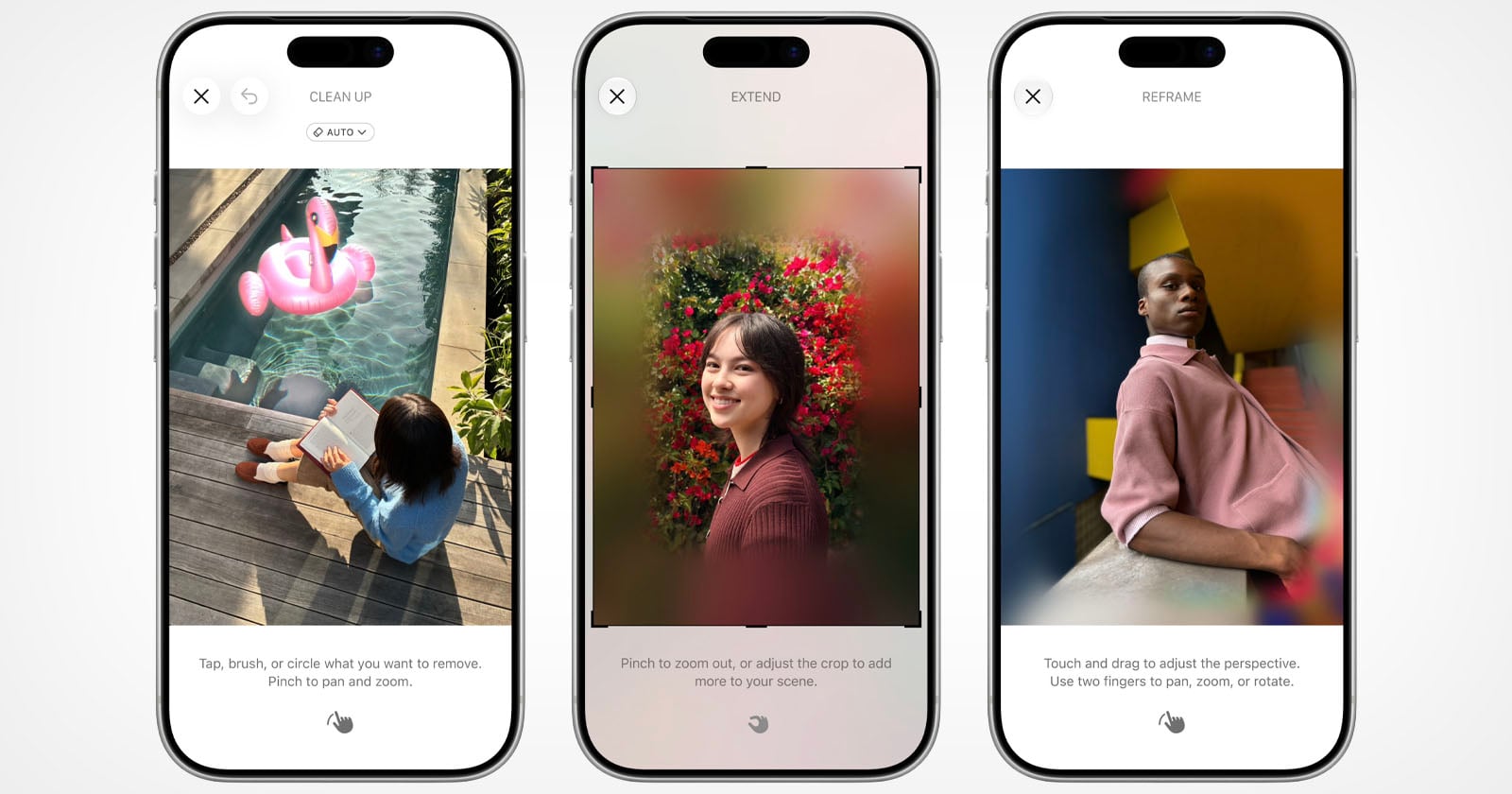
Apple is enhancing the photo editing tools available in the Photos App with the next version of iOS. Three new features are coming: enhanced Cleanup, Extend, and Reframe.
[Read More]
Apple is enhancing the photo editing tools available in the Photos App with the next version of iOS. Three new features are coming: enhanced Cleanup, Extend, and Reframe.

 Login
Login